160+ Fun “Did You Know?” Facts for Students

 Discover a Free Education Video App for Kids
Pastory uses AI to personalize educational video content based on your child’s interests and personality. Safe, engaging, and built for curious young minds. Sign up now to stay updated and enjoy early access with a free trial

Sharing a quick fun fact with children can spark curiosity, break up a long lesson, and make learning feel more active and engaging. Short, classroom-friendly facts are easy to share and memorable for students of many ages. This list of fun facts for kids is organized by school subject to help educators, parents, and students find bite-sized knowledge to share at home or in school presentations.
Key Takeaways
- Curated for Education: Explore fun, educational facts across more than 15 school subjects, from chemistry to ancient history.
- Age-Appropriate Sections: Easily find facts tailored to elementary, middle, and high school students.
- Interactive Classroom Value: Learn practical ways to integrate trivia into daily lessons, bell ringers, and slide decks.
- Source-Checked Facts: The facts in this guide are reviewed against reputable educational, scientific, and institutional sources where possible.
Main fact categories
This guide features interesting facts and trivia divided into clear, subject-based sections. Students can browse dedicated categories including science, space, animals, food, history, geography, math, sports, technology, the human body, weather, dinosaurs, oceans, insects, entertainment, and everyday inventions.
Classroom and homework value
Teachers and parents can use these facts to enrich daily learning routines. These short entries work well as morning bell ringers, trivia game questions, inspiration for school presentations, hooks for persuasive essays, text for classroom posters, or prompts for independent student research.
Student-friendly format
To make the guide easy to read and engaging, each piece of trivia is written in short, punchy language. The layout avoids complex jargon so kids can browse independently, focus on topics they enjoy, and find quick facts to share with friends at school.
Teacher-use ideas
Beyond simple reading, this resource includes activity ideas that teachers and parents can adapt for the classroom or home. Discover how to transform standard text into a live “Fact or Fiction” challenge, active gallery walk, morning announcement, or custom-printed flashcard set for small-group review.
Accuracy and source note
Maintaining a trustworthy educational resource requires careful fact-checking. This guide has been reviewed against reputable educational, scientific, and institutional sources where possible. Because scientific facts, space discoveries, and world records can change over time, teachers and students should verify time-sensitive claims against primary sources before using them in formal classroom materials.
160+ “Did You Know?” Facts for Students

Adding fun facts to a child’s day can make learning feel more surprising, memorable, and enjoyable. Surprising facts can capture students’ attention and create a natural opening for discussion, questions, and deeper learning. This section provides a master list of fun and educational facts split by grade level so the language matches student reading comprehension.
Short facts for middle school students
Middle school students in grades 5 to 8 thrive on weird fun facts that challenge their understanding of the physical world. These bite-sized data points are selected to introduce surprising complexities in accessible terms.
- The 21-Hour Day: Earth’s rotation has gradually slowed over deep time due to tidal friction from the Moon. Geological data shows that roughly 600 million years ago, a single day lasted just 21 hours.
- Ancient Honey: Archaeologists exploring historic tombs frequently discover food items preserved across millennia. Modern excavations have found pots of honey in ancient Egyptian tombs that are more than 3,000 years old and remarkably well preserved because honey is low in moisture and naturally acidic.
- The Accidental Ice Pop: In 1905, an 11-year-old child left a mixture of powdered soda water and liquid out on a porch overnight with a stirring stick inside. The temperature dropped below freezing, and the child invented the ice pop entirely by accident.
- The Longest Breath: Marine mammals possess highly adapted respiratory systems designed for deep ocean hunting. A sperm whale can hold its breath for up to 90 minutes while searching for food in the deep ocean.
Smart facts for high school students
High school students require advanced science facts and historical insights accompanied by brief contextual explanations. These entries connect directly to secondary school curricula.
- Galaxy Densities: The cosmos contains vast spatial arrangements that defy basic human intuition. Astrophysicists estimate that the Milky Way contains about 100 billion stars, a number so large that it is hard to imagine.
- Diamond Planets: Extreme atmospheric pressures can alter chemical structures across the universe. The exoplanet 55 Cancri e is a super-hot world nearly twice Earth’s radius, with a global lava ocean and possibly sparkling skies.
- Shifting Mountain Peaks: Tectonic plate collisions constantly alter global topography. Mount Everest rises by a few millimeters per year on average as the Indian tectonic plate continues to push against the Eurasian plate, although earthquakes and measurement methods can affect exact height estimates.
Easy facts for younger students
Younger children are highly visual learners who love simple, clear animal facts for kids. These statements focus on concrete concepts that stimulate basic observational skills.
- Penguin Sweaters: Flightless marine birds possess special physical traits to navigate sub-zero temperatures. A penguin is covered in feathers, packs up to 100 feathers per square inch, and uses its thick layer of down to trap warm air next to its skin.
- Dolphin Sleep: Marine creatures must maintain conscious control over their breathing mechanisms. A dolphin sleeps with only one half of its brain at a time, keeping the other half awake so it can swim to the surface to take a breath.
- Space Journeys: The solar system is in constant, rapid motion. Earth travels at a speed of roughly 67,000 miles per hour as it completes its yearly orbit around the Sun.
Random Fun Facts for Students
Sometimes, the best way to catch a student’s attention is with a completely unexpected fact for kids. This collection focuses on the unusual oddities of nature, history, and daily objects.
Weird but true facts
| Entity | Unique Attribute | Measurable Value |
| Pando Aspen Colony | Heaviest Single Organism | 13 million pounds |
| Human Fingernails | Growth Acceleration in Heat | 10–15% faster in summer |
| Deep Space Light | Photon Travel Distance | 13 billion light-years |
- Ancient Forest Systems: The heaviest single biological entity on Earth is a massive underground root system of quaking aspen trees located in Utah. This single organism connects thousands of individual trees and has been growing for thousands of years.
- Galactic Time Travel: When astronomers peer through powerful telescopes, they are actually looking backward in time. The light coming from galaxies billions of light-years away has spent billions of years traveling across space before reaching telescopes today.
- Finger Nutrition: Fingernails may grow slightly faster in warmer weather because circulation to the fingertips can increase, delivering more nutrients to the nail matrix.
Silly facts students will remember
- Rabbit Lookalikes: The newborn offspring of certain large mammals possess confusing physical traits. A newborn kangaroo is so tiny at birth that it looks more like a pink jellybean than a full-grown marsupial.
- The Formal Uniform: In the 19th century, some uniforms included stiff collars and tight neckwear that could be uncomfortable and restrictive.
- The Long Day: Celestial mechanics dictate that planetary days fluctuate wildly across the cosmic map. One single day on the planet Venus lasts longer than an entire Venusian year due to the planet’s very slow rotation on its axis.
Quick facts for trivia games
- The Heavy Water: Earth’s oceans contain an enormous amount of water. The total volume of water on Earth weighs approximately 1.5 quintillion metric tons.
- The Lunar Golf Course: Human exploration has occasionally introduced sports to celestial bodies. In 1971, astronaut Alan Shepard hit a golf ball while standing on the surface of the Moon, and because of the Moon’s low gravity, it traveled much farther than it would have on Earth.
- The Massive Ocean: The largest body of water on Earth covers a staggering amount of geographic space. The Pacific Ocean spans more than 165 million square kilometers, making it larger than all of Earth’s landmasses combined.
Science Fun Facts for Students
Science education teaches students to observe, hypothesize, and analyze the natural world. These science facts bring textbook chapters to life by highlighting unexpected physical phenomena.
Chemistry facts students can test safely
- The Rusting Reaction: Steel wool undergoes a chemical reaction when exposed to oxygen. If steel wool is burned safely in a lab, it can gain mass because iron reacts with oxygen to form iron oxide.
- The Density Float: Carbonated beverages interact differently with water depending on their ingredients. A can of regular soda usually sinks in water, while a can of diet soda often floats because it contains far less dissolved sugar.
- Saltwater Freezing: Dissolving table salt into water alters its molecular freezing mechanics. Adding salt to water lowers its freezing point below 32 degrees Fahrenheit, which is why communities spread salt on icy winter roads.
Physics facts from everyday life
- The Speed of Sound: Sound waves travel at different speeds depending on the medium they pass through. Sound travels roughly four times faster through liquid water than it does through open air.
- Light Traps: Pure water can act as a natural fiber-optic cable under specific physical conditions. When a beam of light is aimed into a streaming jet of water, total internal reflection traps the light inside the water stream.
- Magnetic Earth: Earth behaves somewhat like a giant magnet because movement in its liquid outer core helps generate a magnetic field. This field helps shield the planet from harmful solar and cosmic particle radiation.
Nature facts that feel surprising
- Lightning Heat: A bolt of lightning releases a tremendous amount of thermal energy in a fraction of a second. A single strike can heat the surrounding air to 50,000 degrees Fahrenheit, which is five times hotter than the surface of the Sun.
- The Moving Crust: Earth’s tectonic plates move at a slow but steady pace. On average, tectonic plates shift at roughly the same speed that human fingernails grow, which equals about 1 to 2 inches per year.
- The Heavy Cloud: Cumulus clouds look light and fluffy, but they actually hold massive amounts of water vapor. A typical cumulus cloud can contain roughly 1.1 million pounds of water droplets, about the weight of 100 elephants.
Space and Astronomy Facts for Students

Space exploration provides a fun way to introduce physics, geometry, and chemistry. These solar system insights help students visualize the vast scale of outer space.
Planet facts students love
| Planet | Key Atmospheric Attribute | Measurable Value |
| Venus | Surface Temperature | 864 degrees Fahrenheit |
| Jupiter | Total Known Satellites | 101 officially recognized moons |
| Saturn | Planetary Density | About 0.687 grams per cubic centimeter |
- The Melting World: Venus experiences an extreme runaway greenhouse effect due to its dense carbon dioxide atmosphere. This traps heat so effectively that the average surface temperature hits 864 degrees Fahrenheit, making it the hottest planet in the solar system.
- The Floating Giant: Saturn is composed almost entirely of hydrogen and helium gas. Because its average density is less than water, Saturn is often described as a planet that could float in water — if such an enormous “bathtub” could exist.
- The Stormy Eye: Jupiter features a massive, swirling atmospheric storm known as the Great Red Spot. This active storm is still larger than Earth, although it has been shrinking for many years.
Moon facts for school projects
- The Static Footprint: The Moon lacks a substantial atmosphere, wind, and liquid water on its surface. Because there is no wind or rain to erode the surface, the footprints left by Apollo astronauts could remain visible for millions of years unless disturbed by impacts or future missions.
- Lunar Quakes: Just like Earth, the Moon experiences seismic activity. These events, known as moonquakes, are triggered by the tidal pull of Earth’s gravity and can last for up to 30 minutes.
- The Far Side: The Moon takes about the same amount of time to rotate once on its axis as it does to complete one orbit around Earth. This phenomenon is called tidal locking, and it means humans can only ever see one side of the Moon from Earth.
Star and galaxy facts
- The Solar Journey: Sunlight does not reach our eyes instantly. The Sun is roughly 93 million miles away from Earth, so sunlight takes about 8 minutes and 20 seconds to reach us.
- The Cosmic Center: Black holes are areas of space where gravity is so strong that even light cannot escape. At the very center of our Milky Way galaxy sits a supermassive black hole named Sagittarius A*, which weighs as much as 4 million Suns combined.
- The Color of Heat: In astronomy, blue stars are actually much hotter than red stars. Red stars have surface temperatures around 5,500 degrees Fahrenheit, while massive blue stars can burn at a scorching 70,000 degrees Fahrenheit.
Human Body and Behavior Facts for Students
The study of human anatomy becomes far more engaging when students learn weird but true facts about their own bodies. This section highlights the strange mechanics behind human biology.
Brain facts for students
- The Sleep Talkers: Certain individuals possess neurological variations that trigger verbal expressions during deep sleep. In rare cases, a person who uses sign language may sign in their sleep.
- The Energy Hog: The human brain is a highly demanding organ. While the brain accounts for only about 2% of an individual’s total body weight, it consistently consumes more than 20% of the body’s daily energy and oxygen intake.
- The Memory Network: Human memory relies on a dense web of brain cells. The human brain contains roughly 86 billion neurons, and many neurons can form thousands of connections with other brain cells.
Bones, muscles, and movement facts
- The Shrinking Adult: Human skeletal systems undergo major fusion as they grow. A newborn baby is born with approximately 300 separate bones, but by the time that baby reaches adulthood, many bones fuse together, leaving a final total of just 206 bones.
- The Iron Jaw: The human body uses highly optimized muscle fibers for chewing food. The masseter muscle, located in the jaw, is considered one of the strongest muscles in the human body based on its weight, exerting a closing force of up to 200 pounds on the molars.
- The Growth Spurt: Children can grow slightly faster during the night than during the day. Human growth hormone is released in much higher amounts while a child is in a deep stage of sleep, allowing the body to repair and extend tissue.
Senses and body reactions
- The Cold Sneeze: Sneezing is a powerful, involuntary reflex designed to clear the nasal passages. A sneeze can send tiny droplets into the air at high speed.
- Unique Prints: Most students know that their fingertips have unique patterns, but fingerprints are not the body’s only unique identifiers. Some researchers have studied tongue prints as possible biometric markers, and each person’s tongue may have distinctive patterns.
- The Blink Rate: Humans blink their eyes thousands of times every day to keep them clean and moist. On average, a person blinks about 15 to 20 times per minute, which adds up to more than 20,000 blinks over the course of a single day.
Animal and Wildlife Facts for Students
Children naturally love learning animal facts for kids. Exploring wildlife adaptations helps students understand biodiversity and evolutionary biology.
Mammal facts students can share
| Mammal | Behavioral / Physical Trait | Measurable Value |
| Blue Whale | Total Physical Length | Up to 100 feet long |
| Cheetah | Acceleration Window (0–60 mph) | Less than 3.0 seconds |
| Sloth | Complete Digestion Timeline | Up to 30 days for one leaf |
- The Giant Heart: The blue whale is the largest known mammal to ever exist on Earth. This ocean giant can grow up to 100 feet long, and its heart is the size of a small car, weighing roughly 400 pounds.
- The Speed Record: Cheetahs possess highly specialized muscular and skeletal structures designed for high-speed hunting. A cheetah can accelerate from 0 to 60 miles per hour in less than 3 seconds, making it faster off the line than many modern sports cars.
- The Slow Eater: Sloths have a very slow metabolic rate to conserve energy in the rainforest canopy. It can take a sloth up to 30 days to fully digest a single leaf because its multi-compartment stomach processes food very slowly.
Bird and reptile facts
- The Fast Bird: The peregrine falcon is the fastest member of the animal kingdom. When diving out of the sky to catch its prey, this incredible bird can reach top speeds of over 240 miles per hour.
- The Heavy Egg: Ostriches are the largest living birds on the planet, and they lay massive eggs to match. A single ostrich egg can weigh up to 3 pounds, which is equal in weight to about 24 standard chicken eggs.
- The Ancient Turtle: Some reptile species can live for multiple centuries. One of the oldest known living land animals is Jonathan, a Seychelles giant tortoise believed to have been born around 1832.
Strange animal behaviors
- The Underwater Click: Dolphin pods use complex echolocation clicks to navigate dark waters and locate prey. These marine mammals can send out up to 1,000 clicking noises per second, reading the returning echoes to map their surroundings.
- The Tree Planters: Tree squirrels play an accidental but crucial role in maintaining forest ecosystems. Every year, millions of new trees grow because squirrels bury thousands of acorns and nuts for the winter and completely forget where they hid them.
- The Silent Flyer: Owls possess specialized, velvet-soft feathers that absorb air currents and muffle sound waves. This unique adaptation allows them to fly in near silence, preventing prey from hearing them approach in the dark.
Insect Facts for Students
Insects make up the largest group of animals on Earth. Studying these tiny creatures provides incredible insights into engineering, teamwork, and survival.
Bee and butterfly facts
- The Sweet Preservation: Honeybees perform an incredible amount of work to create their hives’ food supply. To produce one pound of honey, a colony may visit millions of flowers and fly a combined distance that can circle the globe more than once.
- The Tasting Feet: Monarch butterflies use specialized chemical receptors located on their legs to identify plants. When a butterfly lands on a leaf, sensors in its feet instantly taste the plant to see if it is a safe place to lay eggs.
- The Dance Language: Honeybees communicate the exact location of distant food sources using a complex series of movements known as the “waggle dance.” The angle and duration of the dance tell other bees the precise direction and distance to the flowers.
Ant, beetle, and termite facts
- The Super Strength: Ants are incredibly strong compared to their small body size. A single leafcutter ant can carry a load in its jaws that weighs up to 50 times its own body weight, which is like a human lifting a car.
- The Iron Shell: The diabolical ironclad beetle has an exceptionally tough exoskeleton that can withstand extreme pressure. Its armor pieces interlock like jigsaw puzzle pieces, distributing heavy pressure across its body.
- The Tower Builders: African termites are master architects of the insect world. They build massive mud mounds that can stand over 20 feet tall, complete with built-in ventilation shafts that act as a natural air conditioning system.
Bug facts that sound impossible
- The Glow Lights: Fireflies produce light through a chemical reaction inside their abdomens called bioluminescence. This natural light is highly efficient, producing very little heat compared with a regular light bulb.
- The Ice Bugs: Certain insect species can survive being completely frozen solid during harsh winters. The Alaskan darkling beetle produces special antifreeze proteins in its blood that prevent ice crystals from damaging its internal organs.
- The Long Sleep: Periodical cicadas spend the vast majority of their lives living quietly underground. Depending on the specific brood, these insects spend either 13 or 17 years developing in the soil before emerging all at once.
Ocean Facts for Students
The ocean covers more than 70% of Earth’s surface, yet it remains one of the least explored environments on our planet. This section uncovers the mysteries of the deep sea.
Deep sea facts
- The Deepest Trench: The lowest known point on Earth’s crust is located in the western Pacific Ocean. Known as the Mariana Trench, its deepest zone plunges nearly 36,000 feet below sea level, deep enough to submerge Mount Everest with more than a mile of water to spare.
- The Heavy Pressure: The deep ocean features intense physical forces due to the weight of the water above. At the deepest parts of the ocean, pressure can reach several tons per square inch — like the weight of a large animal pressing on a tiny area.
- The Hot Vents: Hydrothermal vents on the ocean floor spew mineral-rich water that can reach temperatures of 750 degrees Fahrenheit. Despite the extreme heat and total darkness, unique ecosystems of giant tube worms, mussels, shrimp, and specialized crabs thrive around hydrothermal vents.
Marine animal facts
| Marine Animal | Heart / Brain Attribute | Quantifiable Value |
| Octopus | Multiple Hearts and Neural Centers | 3 hearts and 8 highly independent arms |
| Blue Whale | Massive Vascular System | Exceptionally large blood vessels |
| Great White Shark | Intense Scent Detection | Detects tiny traces of scent in water |
- The Multi-Tasker: An octopus possesses a highly complex nervous and circulatory system. It has three hearts and a highly distributed nervous system, with each arm able to process information and move with remarkable independence.
- The Sharp Sensor: A shark does not have a single bone in its entire body. Instead, its skeletal system is made completely of cartilage, which is the same flexible material that shapes human ears and noses.
- The Immortal Jellyfish: The Turritopsis dohrnii jellyfish can reverse its aging process when it gets sick or injured. It can transform back into a younger polyp-like stage under stress, which is why it is often called “biologically immortal,” though it can still die from disease, predators, or injury.
Ocean and climate facts
- The Oxygen Provider: Many people associate oxygen production with rainforests, but scientists estimate that roughly half of Earth’s oxygen production comes from the ocean. Marine organisms such as phytoplankton produce a large share of the oxygen generated on Earth each year.
- The Giant Reef: The Great Barrier Reef is the world’s largest coral reef system. Spanning more than 1,400 miles off the coast of Australia, this massive coral reef system can be seen from space.
- The Deep Heat: The ocean stores a huge amount of heat and plays a major role in regulating Earth’s climate.
Food and Drink Facts for Students
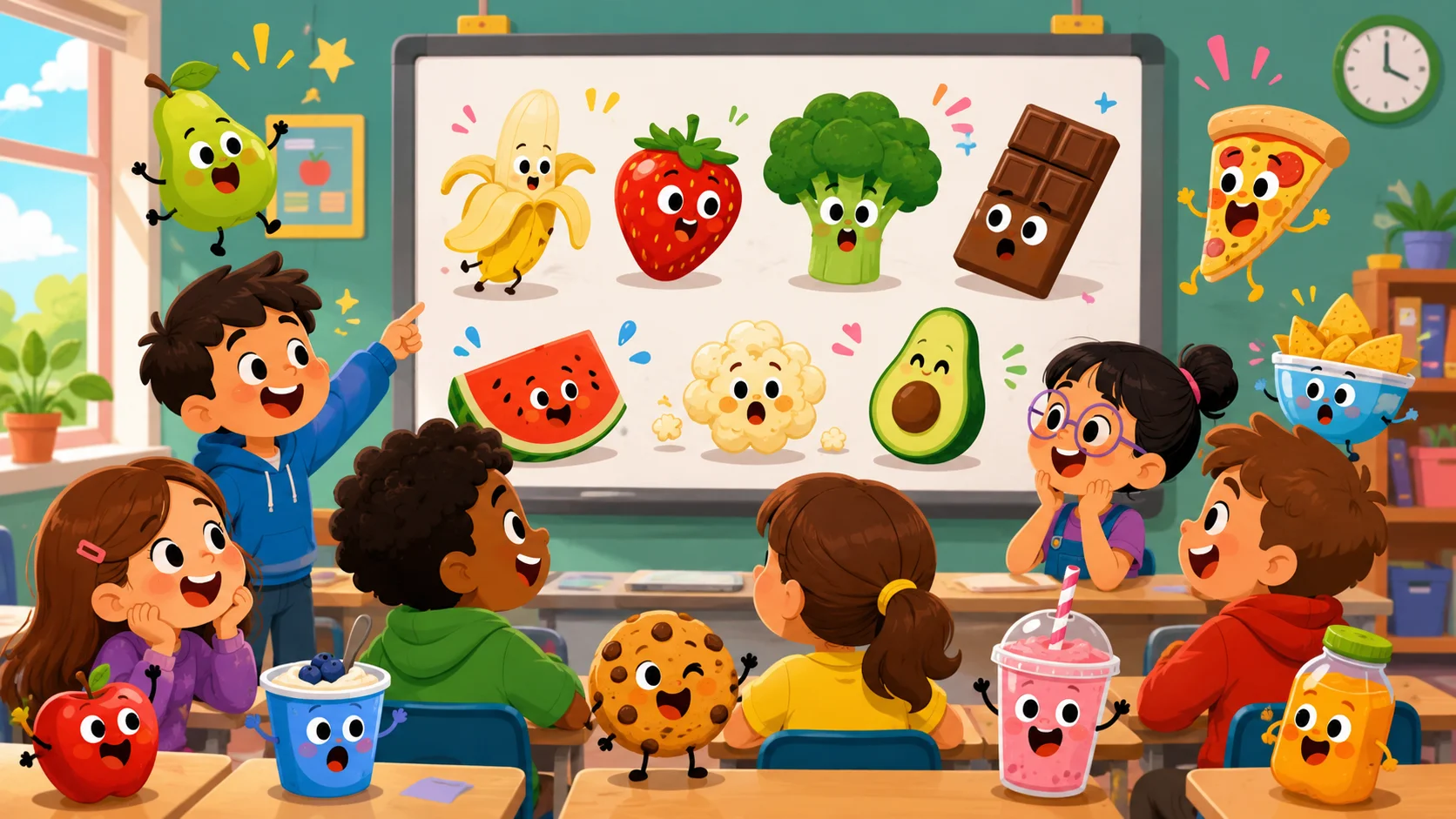
Food science is an excellent way to connect everyday lunchbox items to chemistry, history, and botany. These fun facts to share will surprise students the next time they sit down to eat.
Fruit and vegetable facts
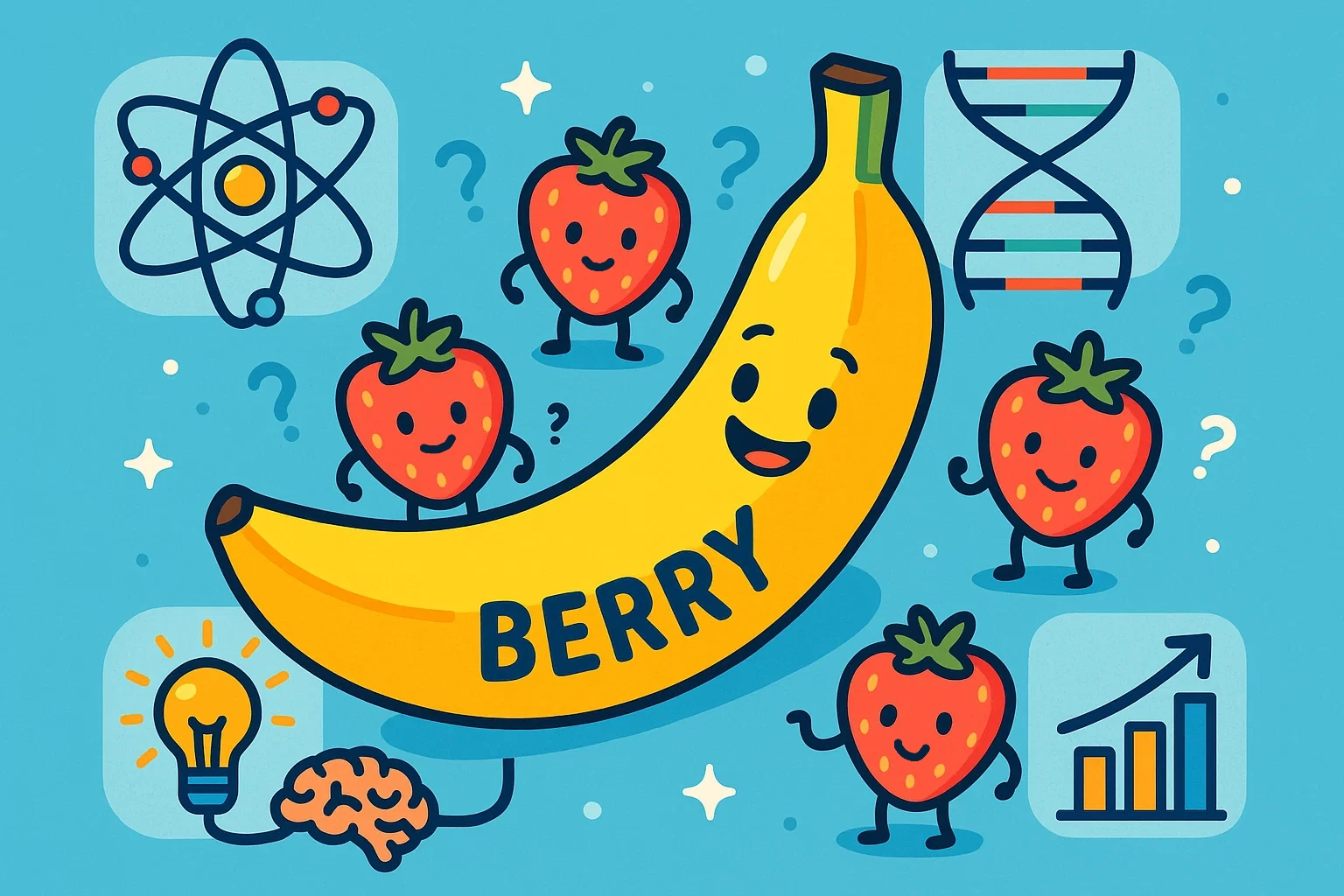
- The Berry Paradox: In botanical terms, the classification of fruits depends entirely on their specific seed structures. Botanically, bananas and watermelons are classified as berries, while strawberries are not true berries.
- The Floating Apple: Apples are made of surprisingly loose cellular structures that trap pocketed air. Approximately 25% of an apple’s total volume consists of air, which explains why they float during Halloween games.
- The Glowing Drink: Tonic water contains a bitter chemical compound called quinine. When exposed to ultraviolet blacklight, the quinine molecules absorb the invisible energy and glow with a vibrant blue color.
Snack and candy facts
- The Sticky Physics: Some chewing gums use synthetic rubber-like polymers that give gum its stretch and durability.
- The Ancient Currency: In parts of ancient Mesoamerica, cacao beans were so valuable that Mayans and Aztecs used them as a form of currency.
- The Bubbly Chocolate: Chocolate contains cocoa butter crystals that affect its texture and appearance. If chocolate melts and cools down too quickly, the fat separates and forms a harmless white film on the surface called a “fat bloom.”
Food science facts
- The Bouncing Cranberry: Ripe cranberries contain small, hollow air pockets inside their bright red skin. These pockets cause fresh, high-quality cranberries to bounce like rubber balls when dropped on a hard surface.
- The Hot Pepper Burn: Spicy chili peppers contain a chemical compound named capsaicin. Capsaicin triggers the same heat receptors on the human tongue that register actual fire, tricking the brain into feeling a burning sensation.
- The Rising Dough: Bakers use yeast to make bread dough rise before baking. Yeast is a microscopic living fungus that consumes sugars in the flour and releases carbon dioxide gas, creating thousands of tiny air bubbles in the dough.
History and Culture Facts for Students
History education helps students understand how past human choices shaped modern societies. These history fun facts for kids highlight the unusual side of historic eras.
Ancient history facts
- The Pyramid Painters: When the Great Pyramid of Giza was originally constructed by ancient builders, it looked completely different than it does today. It was covered in a smooth layer of polished white limestone that gleamed brightly under the desert sun.
- The Roman Concrete: Ancient Roman architects developed a highly durable concrete recipe using volcanic ash. This unique material grows stronger when exposed to saltwater, allowing Roman harbors to survive intact for over 2,000 years.
- The First Writing: One of the oldest known writing systems is cuneiform, which developed in ancient Mesopotamia around 3200 BCE. Scribes used sharpened wooden reeds to press wedge-shaped symbols into wet clay tablets.
Famous people facts
- The Royal Mechanic: Before ascending the throne as Queen Elizabeth II, the future monarch trained as a driver and mechanic during World War II, learning to service military vehicles.
- The Artistic Scientist: Leonardo da Vinci was a master of conceptual engineering alongside his classic painting skills. Hundreds of years before modern versions existed, his notebooks included imaginative sketches of flying machines, armored vehicles, and parachute-like devices.
- The Presidential Wrestler: Before becoming the 16th President of the United States, Abraham Lincoln was a skilled wrestler. He competed in wrestling matches throughout his youth and is often credited with winning nearly all of his recorded bouts.
Strange history facts
- The Alarm Clock Job: Before mechanical alarm clocks became affordable, workers in industrial England hired professional “knocker-uppers” to wake them up. These individuals used long bamboo sticks to tap on bedroom windows every morning.
- The Pineapple Luxury: In 18th-century Europe, fresh pineapples were rare and expensive imports. Wealthy aristocrats would actually rent a single pineapple for an evening just to carry it around at parties as a symbol of high social status.
- The Forgotten Year: In the year 1582, Pope Gregory XIII introduced the modern Gregorian calendar to correct timing errors. To align the dates, the countries switching over had to erase 10 days from the month of October.
Geography and Landmarks Facts for Students
Geography teaches students about spatial distributions, cultural regions, and natural formations. These unique facts make global maps feel alive.
Country facts for students
- The Multi-Time Zone Nation: Because its territory spans across a large geographic area, France has more time zones than any other country when its overseas territories are included, with 12 commonly counted time zones.
- The Lake Country: Canada contains an incredible amount of freshwater surface area. The nation features over 2 million individual lakes, meaning Canada contains more than half of all the natural lakes on Earth.
- The Desert Continent: Most people picture hot sand when they think of deserts, but a desert is scientifically defined by low rainfall. Because it receives less than 2 inches of precipitation per year, the continent of Antarctica is the largest desert on Earth.
Landmark facts
| Historic Landmark | Physical Dynamic Attribute | Measurable Modification |
| Eiffel Tower | Thermal Expansion in Summer | Grows up to 6 inches taller |
| Great Wall of China | Total Combined Construction | Over 13,000 miles long |
| Leaning Tower of Pisa | Foundation Stabilization Shift | Straightened by 1.5 inches |
- The Growing Tower: The Eiffel Tower in Paris is constructed from puddled iron. When summer heat strikes the monument, thermal expansion causes the metal structure to expand, making the tower grow up to 6 inches taller than in winter.
- The Hidden Wall: The Great Wall of China is a massive series of historical brick and stone fortifications. When you measure all its individual branches, the entire wall extends for over 13,000 miles, though it is not visible from the Moon and is difficult or impossible to see from low Earth orbit without powerful lenses.
- The Shifting Tower: The Leaning Tower of Pisa began tilting during construction because its heavy foundation was built on soft, unstable soil. Engineering teams completed a complex stabilization project in 2001 that successfully straightened the tower by 1.5 inches.
Map facts and border facts
- The Island Nation: Sweden has hundreds of thousands of islands, though only a small share are inhabited.
- The Close Neighbors: The borders separating Russia and the United States are surprisingly close in the Bering Strait. The two Diomede Islands are separated by just 2.4 miles of water, and the International Date Line runs between them, so one island is usually a calendar day ahead of the other.
- The Landlocked Double: A doubly landlocked country is completely surrounded by nations that are also landlocked. There are only two such countries in the entire world: Uzbekistan in Central Asia and Liechtenstein in central Europe.
Weather and Earth Facts for Students
Earth science investigates dynamic environmental systems like atmospheric weather and geology. These insights explain the powerful natural forces students witness every day.
Weather facts students notice daily
- The Colorful Arc: A rainbow is actually a full, perfect circle of light centered on the observer’s head. From the ground, people usually see only an arc because the horizon blocks much of the full circle.
- The Speed of Wind: Tornadoes contain some of the most violent winds on Earth. The fastest tornado winds ever estimated by Doppler radar reached about 301 miles per hour.
- The Scent of Rain: The clean, earthy smell that fills the air right after a rainstorm is called petrichor. The distinct scent is created when falling raindrops strike soil and release trapped plant oils and bacterial compounds into the air.
Volcano and earthquake facts
- The Underwater Volcano: The vast majority of volcanic eruptions occur completely out of human sight. Approximately 75% of Earth’s total volcanic magma output is released by underwater vents located along the ocean floor.
- The Ring of Fire: The Pacific Ocean basin features a massive horseshoe-shaped path called the Ring of Fire. This highly active region contains over 450 individual volcanoes and is where 90% of all global earthquakes happen.
- The Floating Stone: Pumice is a unique volcanic rock that forms during explosive eruptions when hot lava cools down very rapidly. The sudden pressure drop traps thousands of gas bubbles inside the stone, allowing it to float on water.
Desert, ice, and extreme weather facts
- The Giant Hailstone: Severe thunderstorms can form incredibly large pieces of ice. The largest officially recorded hailstone fell in South Dakota, measuring a massive 8 inches in diameter and weighing nearly 2 pounds.
- The Melting Reserve: Glaciers and ice caps hold an immense amount of environmental resources. A large share of Earth’s freshwater is stored in glaciers and ice sheets.
- The Habitable Zone: Earth sits at the perfect distance from the Sun within a region astronomers call the Goldilocks Zone. This specific spacing allows planetary temperatures to remain stable enough for liquid water to exist on the surface.
Dinosaur Facts for Students
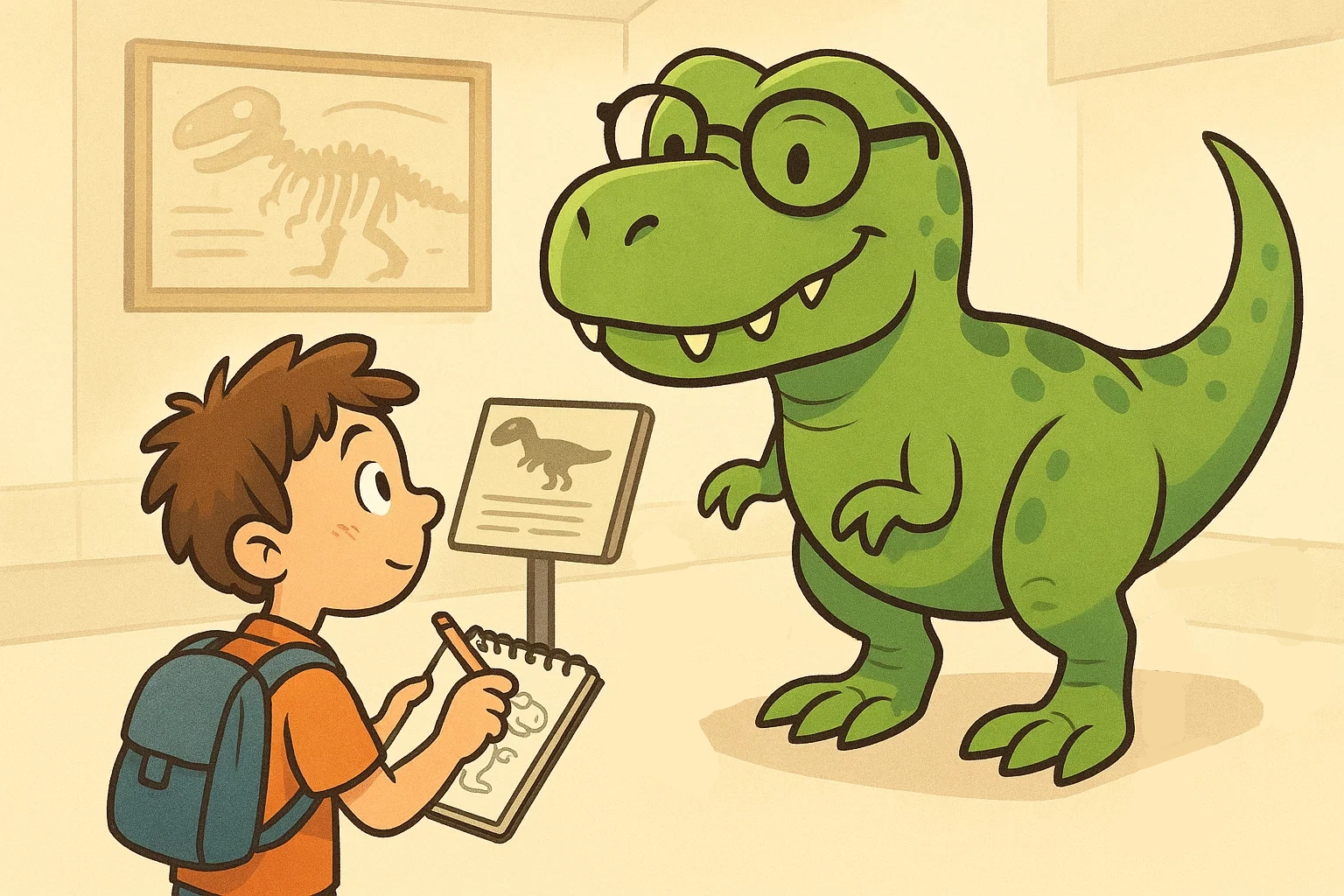
Paleontology captures the imagination of students like few other scientific fields. These dinosaur insights help kids visualize prehistoric environments.
Famous dinosaur facts
- The Giant Predator: The Tyrannosaurus rex was an incredibly powerful carnivore, possessing a bite force of up to 12,000 pounds. This allowed the predator to easily crush the bones of its prey with a single bite.
- The Brain Case: The Stegosaurus was a massive herbivore covered in bony armor plates, yet its skull was incredibly small. The brain of a full-grown Stegosaurus was roughly the size of a single walnut.
- The Speed Star: The Velociraptor was not the giant creature seen in Hollywood movies. In reality, it was about the size of a large turkey and likely hunted small animals.
Fossil facts for students
- The Ghost Footprint: Paleontologists do not just study ancient bones; they also look at trace fossils. These are fossilized footprints, nests, and bite marks that reveal how dinosaurs actually behaved millions of years ago.
- The Amber Trap: Ancient tree resin can harden over millions of years into a gemstone called amber. If a prehistoric insect landed on the sticky resin, it could become perfectly preserved down to its microscopic hairs.
- The Fossil Finders: Many important fossil discoveries are made by everyday people, including hikers, construction workers, and students.
Dinosaur size and speed facts
| Dinosaur Species | Scale Metrics Attribute | Comparative Value |
| Argentinosaurus | Total Body Weight | Equal to 15 African elephants |
| Brachiosaurus | Total Physical Height | As tall as a 4-story building |
| Compsognathus | Overall Physical Mass | Size of a modern chicken |
- The Weight Record: The Argentinosaurus was one of the largest land animals to ever walk the Earth. This massive long-necked dinosaur weighed up to 100 metric tons, making it heavier than 15 full-grown African elephants combined.
- The Tall Browser: The Brachiosaurus possessed an incredibly long neck designed to reach high treetop foliage. Standing over 40 feet tall, its head could easily peer into the windows of a four-story building.
- The Tiny Dino: Not all dinosaurs were massive monsters. The Compsognathus was a small, fast hunter that lived during the Late Jurassic period, measuring just 3 feet long and weighing about as much as a modern chicken.
Math Facts for Students
Mathematics is full of beautiful patterns, historical mysteries, and real-world applications. These math concepts help transform abstract numbers into fascinating puzzles.
Number facts students will remember
- The Silent Zero: The concept of zero as a number did not always exist in mathematics. Ancient mathematicians used empty spaces for placeholders until Indian scholars developed zero as a specific numerical value around the 5th century.
- The Word Game: Numbers contain unique linguistic patterns when spelled out in English. If you write out every number in order, you will not use the letter “A” a single time until you reach the number one thousand.
- The Mirror Pattern: A palindrome is a sequence that reads the exact same way forward or backward. In mathematics, equations like 11*11 = 121 creates perfect palindromic number patterns.
Geometry facts in real life
- The Bee Structure: Honeybees use advanced geometric principles when building their hives. They construct honeycomb cells as perfect hexagons because this specific shape uses the absolute minimum amount of wax while holding the maximum volume of honey.
- The Stable Shape: Triangles are considered the strongest shape in structural engineering. When pressure is applied to a triangle, the force is distributed evenly across all three sides, which is why bridges and cranes are built with triangular frames.
- The Endless Circle: The mathematical constant Pi represents the ratio of a circle’s circumference to its diameter. Because it is an irrational number, its decimal digits continue infinitely without ever repeating a pattern.
Probability and puzzle facts
- The Birthday Paradox: Probability theory contains many counterintuitive patterns. In a random group of just 23 people, there is slightly more than a 50% chance that at least two people share a birthday.
- The Shuffled Deck: Every time you thoroughly shuffle a standard deck of 52 cards, you arrange them in an order that has likely never existed before in human history because the total number of possible combinations is astronomical.
- The Chess Map: The game of chess features a massive tree of tactical choices. After three moves by each player, there are over 9 million distinct board positions that players can create.
Sports Facts for Students
Sports history connects physics, biology, and sociology. These energetic trivia entries offer an engaging window into athletic feats and unusual games.
Olympic facts
- The Artistic Games: From 1912 to 1948, the modern Olympic Games awarded official gold medals for creative arts alongside standard athletic events. Competitors won medals for creating sports-themed architecture, literature, music, painting, and sculpture.
- The Ancient Uniform: In the ancient Greek Olympic Games, athletes did not wear specialized running gear. Competitors performed every single event completely naked as a tribute to the gods and to show off physical fitness.
- The Cold Mix: The Olympic torch relay is a highly engineered tradition. The Olympic torch has traveled underwater with divers, gone into space, and crossed frozen terrain by dog sled.
Basketball, soccer, and baseball facts
- The Peach Baskets: When Dr. James Naismith invented the game of basketball in 1891, he did not have net hoops. He nailed two simple peach baskets to the gymnasium balcony railings, and the referee had to climb a ladder to retrieve the ball after every score.
- The Moon Shot: During an official game, a professional baseball batter can launch a ball with incredible force. On a powerful home run, a baseball can leave the bat at more than 110 miles per hour.
- The Fast Goal: Soccer matches feature lightning-fast tactical executions. The fastest men’s football goal in a top-flight fixture was scored 3.69 seconds after the opening whistle.
Weird sports facts
- The Cold League: Professional athletes must adapt to high-speed ice surfaces. The National Hockey League uses frozen rubber pucks during games, keeping them chilled before play so they glide smoothly and bounce less.
- The Tug of War: From 1900 to 1920, tug-of-war was an official Olympic sport. Teams of eight athletes would pull against each other, and the first team to pull their opponents forward by 6 feet won the match.
- The Cheese Roll: Every year in England, competitors take part in a traditional race where they chase a heavy wheel of cheese down an incredibly steep hill, with the first person across the finish line winning the entire wheel of cheese.
Technology, Records, and Inventions Facts for Students
STEM fields drive human progress by turning creative concepts into reality. These invention and technology milestones show students how human curiosity shapes the future.
Invention facts students should know
- The Sticky Accident: In 1941, an engineer named George de Mestral went for a hike and noticed tiny burr seeds sticking to his clothes. He examined them under a microscope, saw tiny hooks, and used the concept to invent Velcro fasteners.
- The Toy Wire: The classic Slinky toy was invented by a mechanical engineer working on naval ships. He accidentally dropped a specialized tension spring onto the floor, watched it flip end-over-end across the room, and realized it would make a great toy.
- The Microwave Cook: The microwave oven was discovered when an engineer working on military radar systems stood near an active vacuum tube. He noticed that the radar waves had completely melted a chocolate bar in his pocket, inspiring him to build a cooking box.
Technology facts from daily life
- The First Search: The first Internet search engine, Archie, was created in 1990 by Alan Emtage, then a postgraduate student at McGill University. He named his system Archie, and it paved the way for modern search technology.
- The Tiny Computer: A modern smartphone has vastly more computing power and memory than the computers that helped guide Apollo 11 to the Moon in 1969.
- The Robot Roots: The word “robot” did not originate in a science laboratory. It was coined in 1920 by a Czech playwright in a science fiction play, pulling from an old Slavic word that means “forced labor.”
World record facts
- The Long Breath: Human respiratory limits can be extended through intense dive training. Croatian diver Budimir Šobat set a Guinness World Record for the longest voluntary breath hold, with a time of 24 minutes and 37.36 seconds.
- The Paper Fold: Most students believe you can only fold a single piece of paper in half 7 times. However, a student named Britney Gallivan used advanced math to fold a long sheet of specialty paper in half exactly 12 times.
- The Tall Structure: The tallest completed building in the world is the Burj Khalifa in Dubai, standing 2,717 feet tall. It is so tall that visitors can sometimes see sunset from one level, then travel to a higher observation level and see the sun set again.
Entertainment and Pop Culture Facts for Students
Pop culture and entertainment offer unique insights into artistic design, cultural trends, and media history. These facts show the creative work behind the screen.
Movie and cartoon facts
- The First Voice: The legendary animator Walt Disney was highly involved in his studio’s early creative productions. He personally provided the original voice acting for Mickey Mouse from 1928 until 1947.
- The Toy Stars: The 1995 animated movie Toy Story was a massive milestone for media technology. It was the first full-length feature film in cinema history to be created entirely using 3D computer animation.
- The Voice Master: Mel Blanc was a famous voice actor known as “The Man of a Thousand Voices.” He single-handedly provided the voices for Bugs Bunny, Daffy Duck, Porky Pig, and dozens of other classic cartoon characters.
Music and game facts
- The Classic Block: The famous video game Tetris was created in 1984 by a computer programmer in the Soviet Union. He named the game by combining “tetra” (the Greek word for four) with “tennis” (his favorite sport).
- The Oldest Tune: The oldest known surviving piece of musical notation is a 3,400-year-old hymn discovered inscribed on a clay tablet in ancient Syria, complete with instructions for a musician playing a lyre.
- The Giant Board: A widely repeated Monopoly story claims that one game lasted 70 days, making it one of the most famous long-game legends in board game history.
Book and character facts
- The Dr. Seuss Challenge: The famous children’s book Green Eggs and Ham was written because of a friendly bet. A publisher challenged Dr. Seuss to write an entire book using exactly 50 different words, and he successfully completed the challenge.
- The Comic Hero: The character of Spider-Man was almost rejected by comic book publishers because the creators believed that people would find a spider-themed hero too creepy to read about.
- The Magic Train: Author J.K. Rowling first had the idea for Harry Potter while sitting on a delayed train journey between Manchester and London in 1990.
Fun and Quirky Oddities for Students
This section gathers facts that do not fit neatly into a standard school subject. These oddities demonstrate the quirky side of our daily world.
Language facts
- The Ghost Word: In 1934, a major dictionary company accidentally printed a completely made-up word: “dord.” Due to an editing mix-up, the nonexistent word remained in the dictionary for five years before anyone noticed it had no meaning.
- The Sentence Mix: The phrase “The quick brown fox jumps over the lazy dog” is a specific linguistic tool called a pangram. It is used to test typing equipment because it contains every single letter in the English alphabet.
- The Shorter Alphabet: The language of Rotokas, spoken on an island in Papua New Guinea, has the smallest alphabet in the world, featuring just 11 letters to spell out every word.
Everyday object facts
- The Yellow Pencil: Pencils were historically painted bright yellow as a symbol of luxury. In the 1890s, high-grade graphite was mined in China, and European manufacturers painted their pencils yellow — the Chinese color of royalty — to show they used top materials.
- The Hidden Zipper: If you look closely at the metal zipper on your backpack, you will likely see the letters “YKK.” This stands for Yoshida Kogyo Kabushikikaisha, a Japanese manufacturer that produces a large share of zippers worldwide.
- The Ridged Coin: The tiny ridges along the edges of quarters and dimes were originally designed to prevent criminal activity. When coins were made of pure silver, people would clip precious metal off the edges; the ridges proved the coin was intact.
Strange tradition facts
- The Leftovers Holiday: Boxing Day is a traditional holiday celebrated in many countries on December 26th. It originally began during the Middle Ages as a day when wealthy families would pack up leftover food and gifts in boxes to give to their servants.
- The Floating Festival: In Thailand, people celebrate a beautiful annual festival called Loi Krathong. Thousands of citizens gather along rivers to release small, floating baskets decorated with banana leaves and candles to wash away bad luck.
- The Leap Year Prop: Most years divisible by four add an extra day in February to keep the calendar aligned with Earth’s orbit, although century years have special rules. According to an old Irish tradition, Leap Day was a time when women could propose marriage to men.
Creative Ways to Use “Did You Know?” Facts in the Classroom
Educational tools often work best when they foster active participation rather than passive reading. Teachers and parents can integrate this list of facts into interactive learning activities that build critical thinking and team collaboration.
Fact or fiction challenge
Transform standard reading into an active game by reading a fun fact aloud alongside two fabricated statements. Students must use their analytical skills to debate which statement is accurate, encouraging them to spot logical fallacies and verify data before accepting claims.
Trivia warm-up questions
Use short entries as daily bell ringers or exit tickets. Teachers can write a question on the board at the start of class, such as “How many hearts does an octopus have?”, to focus students’ attention and activate their working memory for the upcoming lesson.
Student fact presentation ideas
Have each student choose facts that spark their personal interest and conduct a mini-research project around them. Students must locate two independent primary sources to verify their fact, create a single presentation slide, and present their findings to the class.
Weird world gallery walk
Print individual fact cards and post them around the classroom walls. Students walk through the space in pairs, take detailed notes on graphic organizers, and vote for the most surprising entry, using the experience to inspire creative writing or essay hooks.
FAQ About Fun Facts For Kids
What are good “Did You Know?” facts for students?
Good “Did You Know?” facts for students are short, surprising, and easy to understand. The best examples often combine amazing facts, random facts, and weird but true fun facts that spark their curiosity without overwhelming them with too much detail.
Why do kids love fun facts?
Kids love fun facts because they turn learning into a quick discovery. A surprising fact about space, animals, the human body, or history can make students pause, ask questions, and become more interested in the topic.
Are random fun facts for kids useful in the classroom?
Yes. Random fun facts for kids can work well as warm-up questions, trivia for kids, writing prompts, or quick discussion starters. When used thoughtfully, they help kids learn new ideas in a light, memorable way.
What types of facts are best for kids of all ages?
Kids of all ages usually enjoy facts that are visual, surprising, or easy to imagine. For example, facts about animals that can hold their breath for a long time, planets around twice the size of Earth, or the number of stars in our galaxy are likely to remember because they feel big, strange, and exciting.

Take a short quiz to find out what your everyday choices say about your parenting style
When your child is curious about something new, what’s your instinct?
Take a short quiz to find out what your everyday choices say about your parenting style
“Can I download this app?” What happens next?
Take a short quiz to find out what your everyday choices say about your parenting style
When it comes to rules at home, which sounds most like you?
Take a short quiz to find out what your everyday choices say about your parenting style
If you could give your child one life skill today, what would you pick?
Take a short quiz to find out what your everyday choices say about your parenting style
Your child gets to choose what to watch. What would your ideal setup look like?
Take a short quiz to find out what your everyday choices say about your parenting style
Pick your parenting superpower ✨