41 Creative Activities for Kids: Fun Ideas for Home, School, and Outdoor Play

 Discover a Free Education Video App for Kids
Pastory uses AI to personalize educational video content based on your child’s interests and personality. Safe, engaging, and built for curious young minds. Sign up now to stay updated and enjoy early access with a free trial
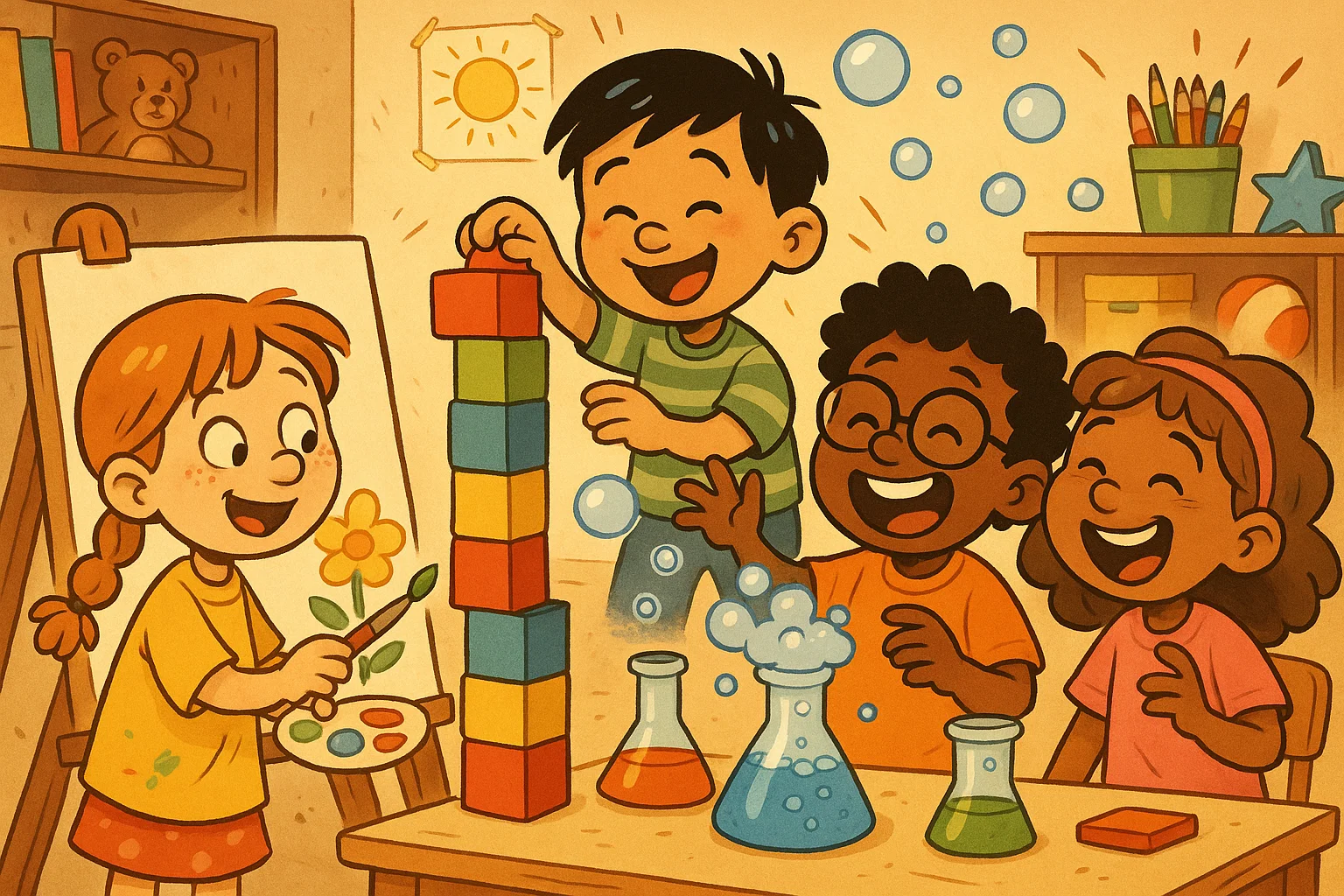
Engaging children in creative activities can support cognitive development, emotional expression, and motor skills. This comprehensive guide details 41 creative activities spanning arts and crafts, simple science, storytelling, outdoor play, coding, building, pretend play, and low-cost projects for different developmental stages.
Parents, teachers, and caregivers can use these structured activities at home, in classrooms, during school breaks, or on rainy days when children need flexible indoor options. By offering a balanced mix of unstructured play and guided arts-and-crafts activities, adults can support child development while reducing reliance on passive screen-based entertainment.
Key Takeaways
- Developmental Benefits: Creative activities can support fine motor skills, problem-solving, and emotional regulation.
- Low-Cost Accessibility: Many of these fun activities use household materials such as cardboard boxes, plastic bottles, and old magazines.
- Age-Appropriate Design: Projects are categorized for preschoolers ages 3 to 5, school-age children ages 6 to 9, and preteens or teens ages 10 to 18.
- Screen-Time Alternatives: These engaging activities can replace passive screen time with active, imaginative problem-solving.
- Versatile Environments: Most activities can be adapted for home use, classroom lesson plans, or structured after-school programs.
- Balanced Formats: The guide balances independent creative tasks with collaborative projects that build social skills.
Creative Arts and Crafts Activities for Kids Ages 3 to 5
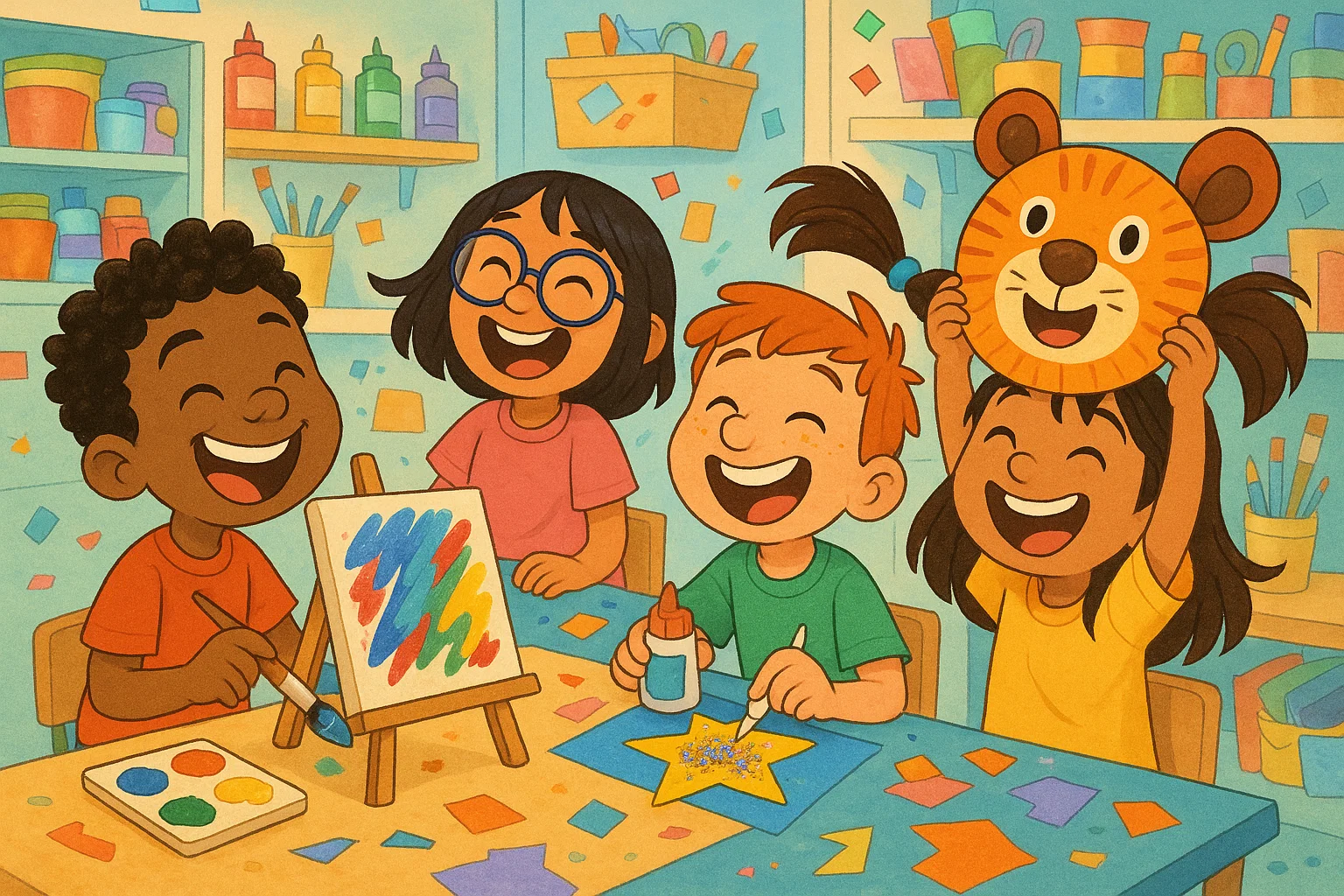
Preschool-aged children benefit from creative activities that prioritize sensory exploration, bright colors, and short time frames that match their developing attention spans. When organizing an arts-and-crafts session for this age group, safety should be the top priority. Caregivers should choose only non-toxic supplies, provide close adult supervision, avoid small parts that could pose choking hazards, and set up spaces that are easy to clean.
1. Splashes and Blotches
This preschool painting activity gives children a simple way to explore colors and textures. Children drop washable, colorful paint onto a thick sheet of paper, fold the paper in half, and press it firmly before opening it again.
This arts-and-crafts technique creates symmetrical, abstract patterns that encourage children to observe, compare, and imagine what they see. The process supports fine motor skills as children manipulate the paper edges and learn basic cause-and-effect relationships by seeing how the paint spreads.
2. Collage
Paper collage gives preschoolers a structured way to explore textures, colors, and categories. Children collect paper scraps, dried leaves, stickers, fabric pieces, and cutouts from old magazines, then arrange them on thick cardstock.
Parents can suggest themes such as local animals, family members, seasons, or favorite foods to guide the collage. This activity helps children practice the pincer grasp as they pinch and place small pieces with a glue stick.
3. Art from Waste
Upcycled crafting turns everyday household waste into a simple starting point for sustainable design and spatial exploration. Preschoolers can use discarded items such as small cardboard boxes, paper towel tubes, plastic caps, and clean food packaging to make simple three-dimensional sculptures.
This eco-friendly activity teaches resourcefulness and encourages children to balance irregular shapes. By joining pieces with child-safe tape, children develop hand-eye coordination and spatial reasoning.
4. Pebble and Shell Art
Pebble and shell art connects outdoor exploration with hands-on indoor art by using natural materials. Children gather smooth stones, pebbles, or seashells from outdoor spaces and decorate them using child-safe paints or paint pens.
The project encourages children to turn these natural surfaces into animals, monsters, faces, or storybook characters. To help the pieces last longer, adults can apply a clear, non-toxic sealant; the finished stones or shells can then be used as garden markers or paperweights.
5. Mold and Sculpt
Tactile dough sculpting delivers a rich sensory experience that builds hand strength through physical manipulation. Children can use modeling clay, store-bought play dough, homemade salt dough, or kinetic sand to flatten, roll, press, and shape different three-dimensional forms.
Caregivers can suggest simple challenges such as molding animals, making pretend food, forming alphabet letters, or running a pretend bakery. This sensory exercise strengthens the hands and helps prepare children for early writing tasks.
6. Marbling and Printing
Stamping and printing allow young children to explore pattern recognition and symmetry through repeated impressions. Preschoolers dip natural or household objects – such as textured leaves, halved potatoes, sponges, toy wheels, or bubble wrap – into shallow trays of washable paint and press them onto large sheets of paper.
Set up an organized workspace lined with recycled newspaper, and keep an adult nearby to supervise. The repeated motion supports motor control and helps children notice visual patterns.
7. Doodles and Scribbles
Freeform scribbling is an important early step toward formal writing because it helps children build basic hand control. Children use thick pencils, chunky crayons, or washable markers to create free-flowing lines, loops, and shapes across large sheets of paper.
Caregivers can later invite children to identify shapes within the lines, transforming abstract loops into monsters, maps, flowers, or funny faces. This supportive approach builds creative confidence, makes drawing feel approachable, and reinforces a comfortable, functional grip.
8. Paper Plate Craft
Paper plate crafts use a simple, low-cost base to encourage three-dimensional thinking. Children paint, cut, and decorate a standard paper plate to make wearable masks, animal faces, sun designs, learning clocks, or expressive emotion faces.
The round shape of the plate helps preschoolers practice facial symmetry and place features more evenly. This targeted exercise transforms a simple household item into a versatile tool for emotional literacy and creative storytelling.
9. Draw with Prints
Print art combines body awareness with paint media to produce highly personalized designs. Children apply safe, water-based paint to their fingertips, palms, or feet and stamp the impressions onto paper to create the basic shapes of different figures.
Caregivers can demonstrate how to add fine details with a fine-tip marker, turning simple prints into seasonal flowers, autumn trees, flying birds, or winter snowflakes. The activity reinforces body awareness while showing how simple shapes can build more complex compositions.
Creative Arts and Crafts Activities for Kids Ages 6 to 9
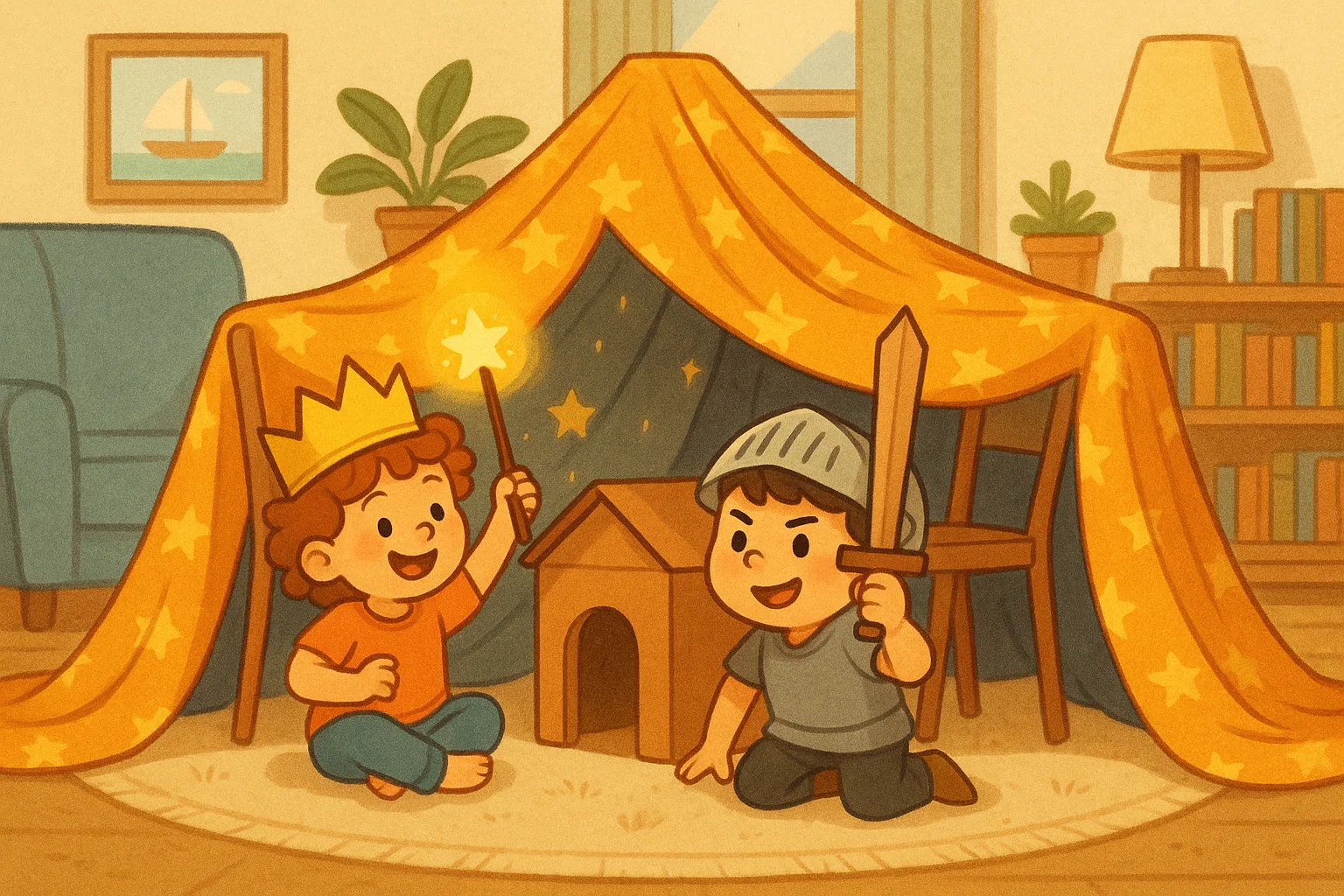
School-age children are usually ready to follow multi-step instructions, combine different types of materials, and stay focused for longer periods. The following arts-and-crafts activities work well in both elementary school classrooms and home settings. They encourage children to refine their techniques and make personal choices in their projects.
10. Handmade Paper Crafts
Handmade paper crafts introduce school-age children to the principles of geometric transformation and structural design. Children follow diagrams or printable templates to construct origami figures, linked paper chains, custom greeting cards, or dimensional bookmarks.
This structured craft approach can strengthen spatial reasoning as flat sheets of paper become three-dimensional objects. The careful folding process requires precise finger pressure, which helps refine fine-motor planning skills.
11. Paper Masks
Paper masks combine character design with wearable art. Using heavy cardstock or paper plates as a base, children can design animal masks, superhero characters, or historical figures.
They can then decorate these surfaces with feathers, glitter, yarn, and vibrant markers to add depth and texture. This project serves as an excellent bridge to imaginative play, as children often transition their finished masks into improvisational theater or living-history school presentations.
12. Mug Painting
This mug-painting activity introduces children to product design by letting them decorate a functional everyday object. Using specialized ceramic markers or non-toxic porcelain paints, children apply original patterns, quotes, or illustrations to plain white ceramic mugs.
Adults should handle the baking step according to the paint or marker instructions, and children should avoid decorating the rim or inside of the mug unless the product is clearly labeled food-safe. This practical project teaches children to consider how an object’s physical form affects the layout of its visual design.
13. DIY Coasters
DIY coasters teach children basic product design and material durability by creating protective household items. Children cut bases from thick corrugated cardboard, cork sheets, wood slices, or craft sticks, then decorate them with geometric designs using permanent markers or acrylic paint.
Once the designs are dry, an adult can seal the surfaces with water-resistant varnish so the coasters can handle moisture from cups. This project teaches children how to select and process raw materials to meet specific functional needs, making it an ideal choice for handmade gifts.
14. Homemade Wooden Bracelets
Homemade wooden bracelets enhance sequencing and design through wearable craft projects. Children can paint wooden beads or decorate pre-bent wooden craft sticks to make wristbands, while adults handle any steaming or bending if needed.
They can thread beads into color sequences and repeating geometric patterns to create custom friendship gifts. Threading small beads onto cord builds finger dexterity and reinforces patterning skills.
15. Wood Magnets
This mini magnet project combines small-scale art with a practical display item. Children apply detailed acrylic designs to small, pre-cut wooden shapes or pieces of recycled rigid cardboard, focusing on themes such as fruits, solar system planets, or stylized initials.
Once dry, a small craft magnet is glued to the back using durable adhesive. This project challenges children to paint detailed designs within a small space, helping them refine precise finger control.
16. Scrapbooking
Scrapbooking provides an engaging framework for narrative writing and chronological sequencing through personal media curation. Children collect personal photos, drawings, stickers, event tickets, and travel stubs, then arrange them chronologically in a blank notebook.
They then write short, descriptive captions beneath each item to document dates, locations, and personal memories. This project works well as an after-school activity, helping children organize their thoughts and preserve meaningful life experiences over time.
17. Color Mandala
Mandala coloring can support relaxation and spatial awareness through structured geometric coloring. Children use printable templates or draw their own radial grids with a compass and ruler, then fill the repeating spaces with balanced color palettes.
The repetitive, focused nature of mandala coloring can feel calming and encourage longer periods of focus in school-age children. This exercise highlights how complex, orderly designs can be built from simple, repeating shapes.
18. Master Calligraphy
Calligraphy refines fine motor control by teaching children the art of stylized handwriting. Using brush pens, calligraphy markers, or fine graphite pencils, children practice controlling line thickness by adjusting hand pressure on downstrokes and upstrokes.
They can apply these new skills to design elegant name cards, motivational room posters, custom bookmarks, or family holiday cards. This disciplined practice helps children view handwriting as a creative art form while strengthening the muscle memory needed for everyday penmanship.
Creative Activities for Preteens and Teens Ages 10 to 18
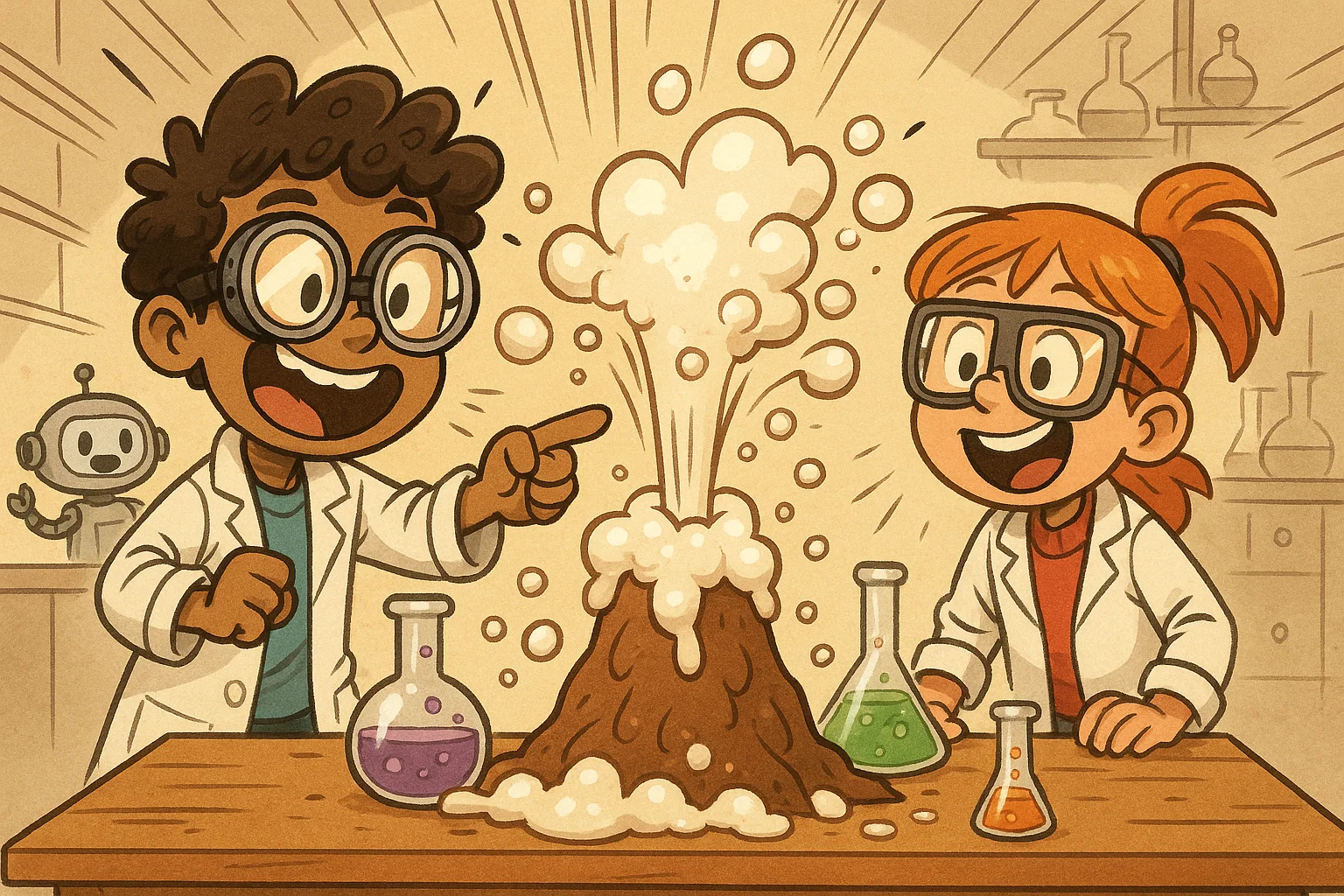
Older children and teenagers often benefit from creative ideas that offer autonomy, authentic self-expression, digital media integration, and real-world outcomes. Many older children and teens respond well to open-ended projects that challenge their technical skills and allow them to explore topics that matter to them.
19. Comic Strip
A comic strip combines creative writing with graphic design by challenging teens to build multi-frame visual stories. Using a structured grid, participants develop original characters, write dialogue, design panels, and sketch sequential plots.
This format is highly adaptable for school projects, allowing students to illustrate complex historical events, scientific processes, or literary themes. The process balances concise storytelling with visual pacing, helping teens learn how to deliver information efficiently through a mix of words and images.
20. Sketch and Shade
Sketching and shading introduce teens to formal visual techniques such as perspective, lighting, and dimensional rendering. Using a range of graphite pencils, from hard H grades to soft B grades, teens practice shading techniques such as hatching, cross-hatching, and blending with still-life arrangements or portraits.
This focused practice teaches participants to look closely at real-world objects and translate light and shadow onto a flat piece of paper. The analytical nature of sketching strengthens visual literacy and deepens spatial reasoning skills.
21. Paint on a Larger Canvas
Large-scale painting allows teens to experiment with liquid pigments across various textured surfaces. Using acrylics, watercolors, or poster paint, participants can paint on stretched canvas, canvas tote bags, or even an interior wall for a room mural.
These larger projects give teens a constructive outlet for self-expression and let them experiment with color on a larger scale. Working on a vertical or large-format surface engages different muscle groups and requires broader spatial planning than standard desk work.
22. Blog It
Blogging provides teens with a structured framework for digital literacy, analytical writing, and safe online self-expression. Using a private or supervised blogging platform, teens can write long-form articles, book reviews, art critiques, or posts documenting their school science experiments.
This practice helps participants develop a personal voice, learn the basics of digital formatting, and understand how to structure online articles. The project introduces digital publishing safely, encouraging teens to share their insights with clarity and purpose.
23. Community E-Zine
A community e-zine models real-world media production by having a group of teens create a shared digital magazine. Participants take on distinct roles, such as managing editor, graphic designer, interviewer, poet, or reviewer, to compile a cohesive collection of articles and artwork.
The process requires regular editorial meetings, constructive peer feedback, and shared project timelines. This collaborative workflow builds essential social skills, teaches conflict resolution, and introduces teens to digital design software.
24. Event Management
Event planning teaches teens how to coordinate activities by planning and hosting a mini art exhibition, talent night, or family game evening. Participants manage the event planning process, including designing flyers, coordinating schedules, setting up displays, and hosting the event.
Assigning specific, measurable roles, such as event coordinator, lighting designer, or lead photographer, builds practical leadership skills. The project transforms individual creative work into a shared community experience, building confidence and a sense of shared achievement.
25. Master Photo Editing
Photo editing introduces preteens and teens to professional digital design using raster graphics software or safe, browser-based alternatives. Participants learn how to work with layers, adjust color balance, apply filters, and combine images to create posters, photo collages, or digital cards.
This technical skill set bridges the gap between traditional fine art and modern commercial design. Learning these digital tools strengthens media literacy and can open pathways to future creative careers.
26. Coding and Game Design
Coding and game design combine creative storytelling with logical reasoning by teaching teens how to build interactive games. Using block-based languages or text-based coding environments, participants write scripts, design custom characters, and program interactive branching stories.
This multidisciplinary project challenges teens to think as both writers and engineers, making sure characters move logically through a digital world based on user input. The process develops computational thinking, iterative testing skills, and creative problem-solving.
Creative Activities at Home for Kids
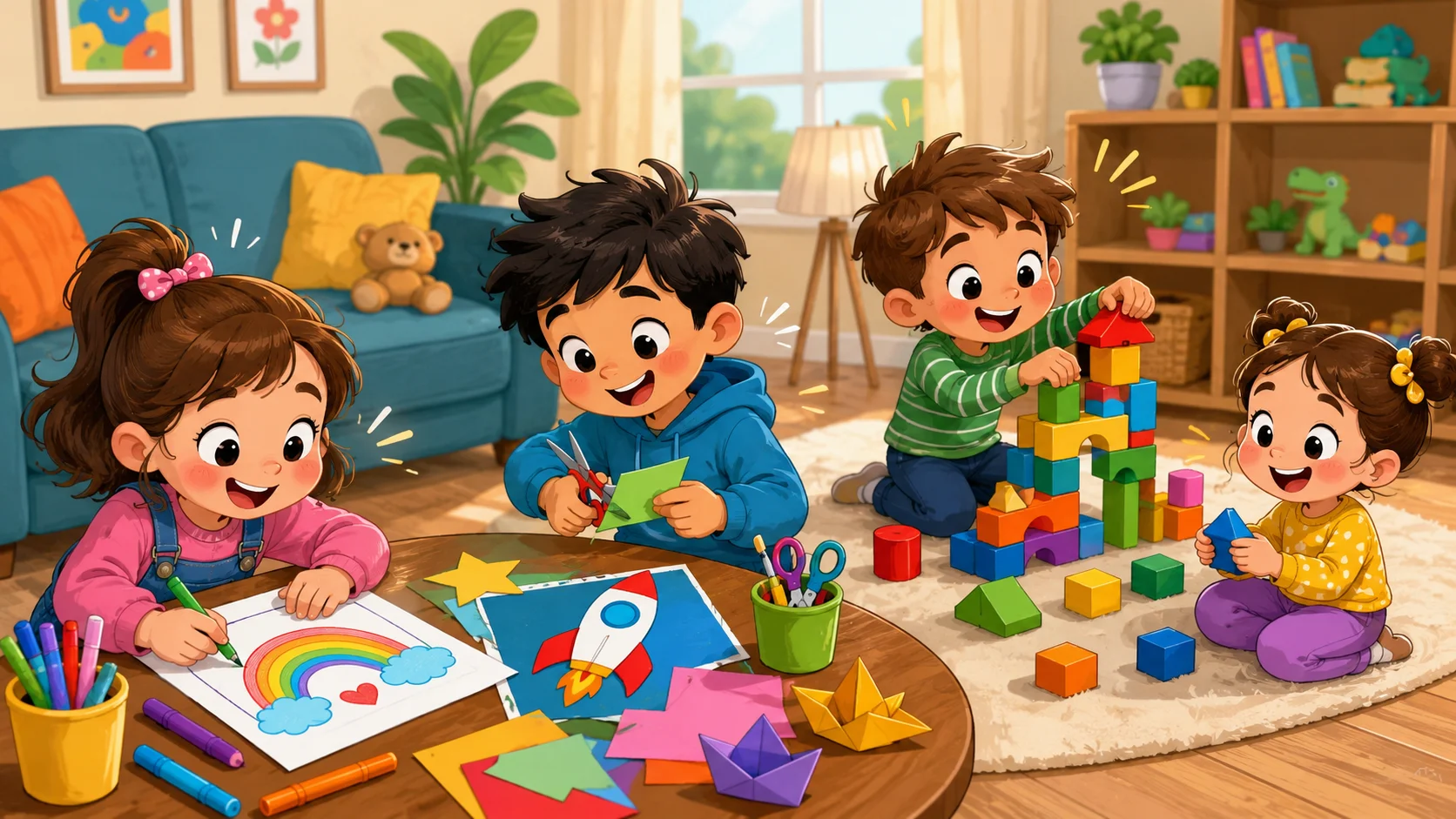
Home environments often call for flexible boredom busters during school closures, bad weather, or unstructured weekends. These low-cost, engaging home games use everyday household objects to promote movement and collaborative problem-solving.
| Activity Name | Primary Materials Required | Physical Intensity | Developmental Focus |
| Mini Golf at Home | Plastic cups, cardboard ramps, soft balls | Low | Spatial awareness, angle estimation |
| Hold Ball Challenge | Balloons, paper plates, paint stirrers | Medium | Hand-eye coordination, reaction time |
| Balloon Tennis | Balloons, paper plate rackets, open space | High | Gross motor tracking, agility |
| Hopscotch Game at Home | Painter’s tape, flat indoor floor | High | Balance, numerical sequencing |
| DIY Tic-Tac-Toe | Cardboard base, painted stones or caps | Low | Strategic planning, pattern logic |
| Cardboard Box Labyrinth | Large boxes, cushions, yarn, tape | Medium | Gross motor navigation, engineering |
| Blanket Fort | Blankets, chairs, pillows, clothespins | Low | Imaginative role-play, collaboration |
| Pretend Beauty Salon | Paper hands, markers, hair brushes | Low | Fine motor precision, empathy |
| Pretend Shop | Recycled containers, play currency | Low | Practical math, social skills |
27. Mini Golf at Home
Mini golf at home turns hallways or living rooms into a hands-on physics lab through simple obstacle-course building. Children can set up mini-golf holes using plastic cups taped sideways to the floor as targets, along with cardboard ramps, books, and soft foam balls.
Players adjust how hard they hit the ball and think about bounce angles as they guide it around furniture legs and homemade obstacles. This playful exercise sharpens spatial reasoning and gives kids a hands-on introduction to movement, direction, and trajectory.
28. Hold Ball
Aerial balloon volley challenges children’s coordination by asking them to keep a balloon in the air while following simple rules. Participants must keep the balloon or a soft lightweight ball from touching the floor using only their hands, paper plates, or homemade cardboard paddles.
Parents can introduce advanced rules, such as alternating hands or counting consecutive hits aloud, to turn it into a lively game. This exercise supports visual tracking, encourages quick reactions, and keeps kids active indoors without risking damage to household items.
29. Balloon Tennis
Balloon tennis adapts a traditional sport for indoor play by scaling down the equipment and reducing the speed of the ball. Children attach wooden paint stirrers or plastic spoons to paper plates to create sturdy rackets, using a lightweight balloon as the ball.
The naturally slow descent of the balloon gives younger children plenty of time to position their bodies and coordinate their swings. This adjustment helps build confidence in physical timing while protecting indoor walls and windows from heavy impacts.
30. Hopscotch Game at Home
Indoor floor hopscotch brings an outdoor classic inside by mapping out a custom grid on the floor with low-tack painter’s tape. Caregivers can modify the traditional numbered layout to include colors, vocabulary words, or math problems within the squares, prompting children to solve them as they jump.
This dynamic game exercises gross motor control, balance, and spatial orientation while reinforcing academic concepts. The combination of physical movement and cognitive processing can help children remember information more effectively.
31. DIY Tic-Tac-Toe Game
DIY tic-tac-toe turns a classic logic puzzle into a reusable tactile toy made from upcycled household items. Children cut a square base from rigid cardboard and draw a standard three-by-three grid onto the surface.
They then collect two sets of five identical objects, such as smooth river stones, colorful buttons, or plastic bottle caps, and paint them with distinctive markers to create the playing pieces. This compact, durable project serves as a fun travel game that reinforces basic strategy and pattern recognition.
32. Labyrinth Made of Cardboard Boxes
A cardboard box labyrinth encourages large-scale engineering by transforming empty boxes into a physical maze. Children can connect large boxes, cushions, and yarn boundaries to create twisting pathways across a room or hallway.
For a smaller-scale alternative, kids can glue straws inside a shoebox lid to build a tabletop labyrinth, then tilt the box to guide a small marble through the tracks. Both versions challenge spatial planning and encourage creative problem-solving as kids design and navigate pathways.
33. Blanket Fort
A blanket fort invites children into imaginative storytelling by helping them design and build their own indoor shelters. Using dining chairs, heavy blankets, pillows, and wooden clothespins, children can build a cozy indoor fort that doubles as a pretend hideaway.
Once inside, caregivers can provide a storytelling prompt to spark a narrative adventure or encourage children to read books by flashlight. This cozy setup offers a reassuring space for independent play, reading, storytelling, or quiet time away from screens.
34. Pretend Beauty Salon
A pretend beauty salon lets children explore personal styling and fine motor control through creative role-play. Children trace their hands onto sheets of heavy paper to practice applying colorful designs, drawing nail art and rings with fine markers.
They can also style hair using brushes and hair clips or design custom appointment cards and menus to simulate a real salon business. This playful interaction encourages conversation, builds fine motor control, and helps children practice polite social exchanges.
35. Pretend Shop
A pretend shop teaches foundational math and financial literacy by turning a room into a mock grocery store or toy shop. Children gather empty food boxes and clean plastic bottles, organize them on shelves, write custom price tags, and use play currency for transactions.
Switching between the roles of cashier and customer allows children to practice counting change and speaking politely. This structured role-play models real-world social interactions and applies basic math concepts to an everyday scenario.
Building and Construction Activities for Kids
Construction-based play gives children a hands-on way to explore structural engineering, architectural design, and iterative testing. By manipulating everyday materials, children learn to solve problems visually and discover how shapes interact to build strong structures.
36. Constructors
Block construction challenges children to solve complex spatial problems by building structurally sound, three-dimensional designs. Using wooden blocks, interlocking bricks, magnetic tiles, or paper cups, children work through specific architectural challenges, such as building the tallest tower or a bridge that can support a toy car.
These open-ended tasks introduce children to center of gravity, structural balance, and weight distribution. The process of rebuilding after a collapse teaches patience and encourages children to improve their designs through trial and error.
37. Assembly Challenge
An assembly challenge sparks resourcefulness by asking children to build specific objects under fixed time constraints. Children are given a selection of clean recyclables, such as egg cartons, plastic bottles, and cardboard tubes, and prompted to build a floating boat, a robot model, or an animal shelter within 15 minutes.
This fast-paced exercise encourages rapid prototyping and flexible thinking. It shows children how to look at common recyclables and reimagine them as useful parts of engineering projects.
38. Construction
Construction-site dramatic play combines imagination with structural planning. Children can wear paper helmets, sketch simple building plans on grid paper, and use cardboard bricks or foam blocks to bring their designs to life.
This structured play teaches children to plan ahead, moving systematically from an initial drawing to a finished physical structure. The inclusion of play tools helps children practice realistic hand movements and coordinate their building plans safely.
39. DIY Plane Made from Straws
A DIY straw plane introduces children to the basics of flight physics through the construction of simple, lightweight gliders. Using plastic or paper straws, construction paper strips, and clear tape, children build aerodynamic gliders and test how adjustments affect their flight.
By changing the size of the paper loops or shifting the placement of the tape, kids can observe changes in lift, drag, and flight distance. This hands-on testing models the scientific method, encouraging children to record their observations and fine-tune their designs.
40. Star Wars–Inspired Lightsaber
A movie-inspired foam lightsaber combines prop design with active play by letting children build soft, safe pretend-play props. Children wrap colored duct tape or metallic paper around the base of a foam pool noodle to create a custom hilt.
This quick craft project gives children a soft prop they can use for active role-play and imaginative games. The building process channels children’s energy into a creative design task and gives them a soft prop for pretend play.
41. Make a Disk Spinner
A disk spinner demonstrates how motion changes our perception of color using a simple hand-spun paper disk. Children cut a neat circle out of heavy white cardstock, divide it into equal segments, paint it with alternating primary colors, and thread a loop of twine through the center.
When they twist and pull the string to spin the disk rapidly, the individual colors visually blend into a new shade. This simple toy offers an entry point into color science and kinetic energy, showing children how speed changes what our eyes see.
How to Keep Kids Engaged in Creative Activities
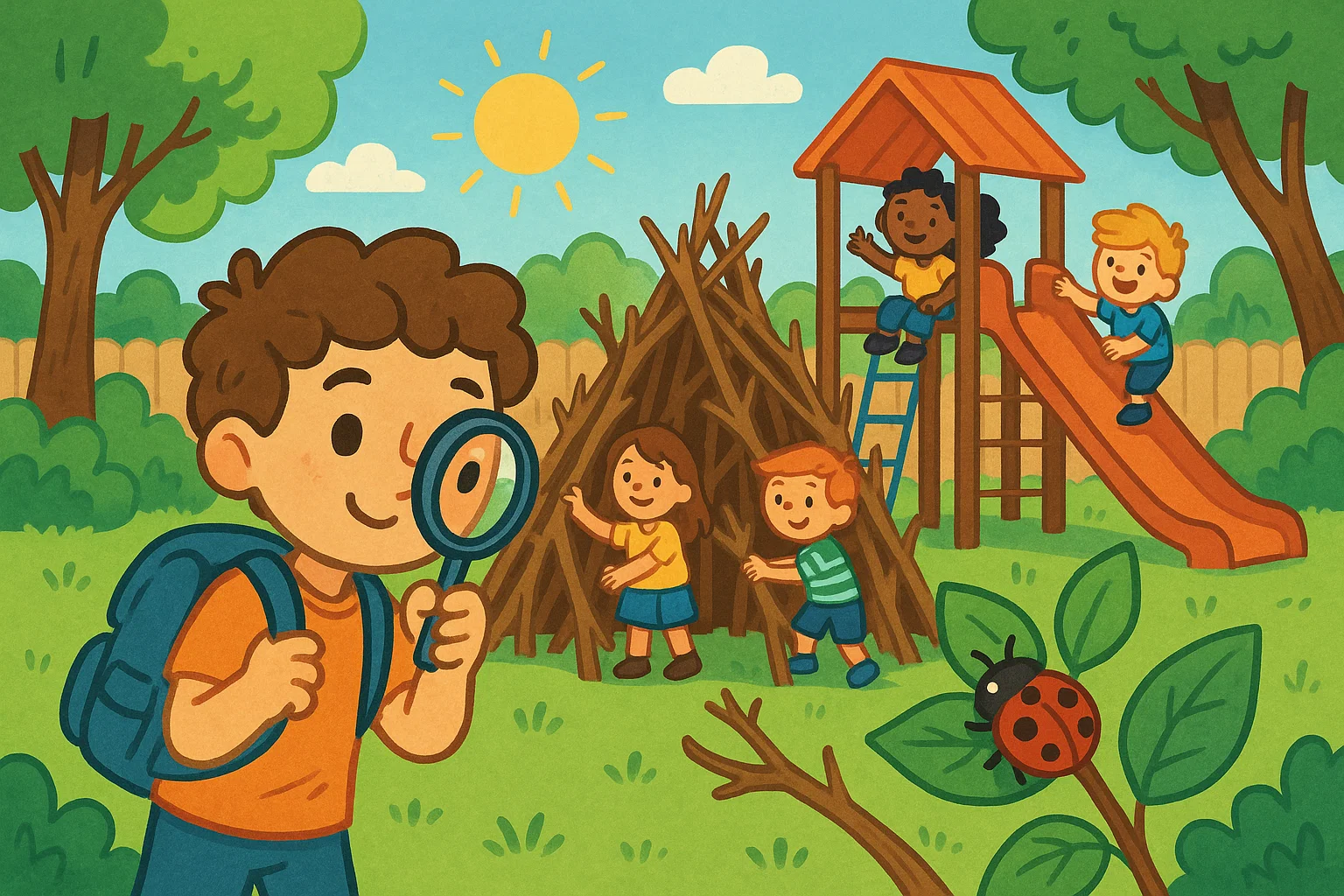
- Match Activities to Attention Span: Keep projects aligned with a child’s natural attention span by scheduling brief 15-minute tasks for preschoolers and breaking complex, multi-day projects into clear steps for older kids.
- Incorporate Guided Autonomy: Give children a sense of ownership over their projects by letting them select their own color schemes, design themes, character styles, and raw materials.
- Keep an Accessible Creative Corner: Set up an easy-to-reach shelf or basket stocked with clean paper, non-toxic glue, safety scissors, assorted tape, and recycled materials to encourage spontaneous crafting.
- Praise Process Over Final Output: Focus feedback on effort, original ideas, patience, and creative problem-solving rather than how neat or perfect the final product looks.
- Model Creative Curiosity: Sit alongside children and work on your own projects, showing them firsthand how to try new ideas, embrace mistakes, and enjoy the creative process.
Match the Activity with the Child’s Age and Attention Span
To keep children engaged without causing frustration, match the complexity of the project to their developmental stage. Preschoolers thrive with short, highly tactile tasks that show results quickly, whereas older children are capable of handling multi-step projects that unfold over several sessions.
If a project is too complex, breaking it down into smaller, manageable steps prevents children from feeling overwhelmed and helps them stay focused. This step-by-step approach helps children practice time management and persistence.
Offer Choices, Not Just Instructions
Children are often more likely to stay focused and enthusiastic when they have a say in their projects instead of simply following rigid instructions. Providing choices, such as letting them pick the story characters, select the paint colors, or decide how to display their finished work, gives them a sense of personal ownership.
This approach transforms a simple craft exercise into a meaningful form of self-expression. By making these decisions, children build confidence in their own ideas and learn to trust their creative choices.
Create a Simple Creative Corner
Setting up a dedicated, organized space for art supplies makes it easy for children to dive into projects whenever inspiration strikes. A low shelf or portable basket stocked with child-safe scissors, different types of tape, non-toxic glue, paper scraps, and clean recyclables allows kids to start creating without needing an adult to set everything up.
This accessible setup encourages independent play and teaches children to gather and manage their own materials. Having supplies ready to go helps normalize creativity as a regular, everyday activity.
Focus on the Process, Not the Perfect Result
When adults focus too much on making a project look perfect, children can become anxious about making mistakes and lose interest in creating altogether. Shifting praise toward effort, unique ideas, and problem-solving helps build a healthier, more adventurous mindset.
Asking open-ended questions such as “How did you come up with that idea?” shows children that their thoughts and choices matter more than a flawless final product. This supportive environment teaches resilience and encourages kids to view mistakes as a natural part of learning.
Conclusion
Engaging children in regular creative activities offers a screen-free way to support cognitive development, fine motor control, and emotional resilience. By using simple, low-cost household materials such as cardboard boxes, paper plates, and plastic bottles, parents and teachers can set up enriching activities without a lot of prep work or expense.
The key to long-term engagement is creating a supportive, low-pressure environment that celebrates original ideas and effort over a perfect final product. Introducing a steady variety of art, building, and storytelling projects keeps children’s minds active, curious, and excited to learn about the world around them.
Start with One Easy Activity
The easiest way to build a creative routine is to start small by picking a single project that matches your child’s current mood and the supplies you already have on hand. Do not worry about setting up an elaborate workstation; even a quick 15-minute drawing or building project can spark a child’s imagination and make the afternoon feel more engaging.
Starting with a simple success builds confidence for both you and your child, making it easier to try more complex projects later on.
Rotate Activities Weekly
Switching up the types of projects you offer each week – alternating between messy painting sessions, structural building challenges, outdoor nature crafts, and quiet storytelling – keeps things fresh and exciting.
This rotation introduces children to a wide variety of textures, tools, and problem-solving styles, keeping boredom at bay. It also helps parents and teachers notice a child’s natural interests, allowing them to tailor future activities to what the child enjoys most.
Save Favorite Creative Ideas
Keeping a simple log of your child’s favorite projects – whether through photos, a dedicated scrapbook, a gallery wall, or an activity jar filled with written ideas – provides a go-to resource for future rainy days.
Displaying finished artwork around the house builds a sense of pride and shows children that their creative work is valued. These saved memories serve as a wonderful record of their growth and offer a quick dose of inspiration whenever you need a fresh activity idea.
FAQs About Creative Activities for Kids
What Are Easy Creative Activities for Children at Home?
Easy creative activities for children at home include paper plate masks, cardboard mazes, stone painting, collage, pretend shops, and simple building challenges. These activities for kids at home work well because they use familiar materials and can be adjusted for different ages, skill levels, and attention spans. For parents looking for creative activities, the best starting point is usually a fun and low-cost project that does not require a long setup. A box, paper scraps, washable paint, tape, and recycled containers can quickly become the basis for meaningful play.
How Can Parents Keep Kids Entertained Without Screens?
Parents can keep kids entertained by choosing fun and engaging activities with a clear starting point and an open-ended result. Sensory activities such as play dough sculpting, leaf printing, pebble painting, or a rice-bin dinosaur dig give children something to touch, sort, build, and imagine. The goal is not to keep kids busy for hours with one perfect activity. Short, flexible projects often work better because children can move between art, pretend play, building, and storytelling without losing interest.
What Are Fun and Educational DIY Projects for Kids?
Fun and educational DIY projects for kids include straw planes, cardboard box labyrinths, homemade coasters, paper masks, and simple science experiments. A baking soda volcano, for example, introduces children to basic chemical reactions while still feeling playful and hands-on. These projects for kids are most useful when children can test an idea, change one detail, and observe what happens next. That process turns a simple craft into an early problem-solving activity.
Take a short quiz to find out what your everyday choices say about your parenting style
When your child is curious about something new, what’s your instinct?
Take a short quiz to find out what your everyday choices say about your parenting style
“Can I download this app?” What happens next?
Take a short quiz to find out what your everyday choices say about your parenting style
When it comes to rules at home, which sounds most like you?
Take a short quiz to find out what your everyday choices say about your parenting style
If you could give your child one life skill today, what would you pick?
Take a short quiz to find out what your everyday choices say about your parenting style
Your child gets to choose what to watch. What would your ideal setup look like?
Take a short quiz to find out what your everyday choices say about your parenting style
Pick your parenting superpower ✨