Best Board Games for 4-Year-Olds: Easy Rules and Matching Fun

 Discover a Free Education Video App for Kids
Pastory uses AI to personalize educational video content based on your child’s interests and personality. Safe, engaging, and built for curious young minds. Sign up now to stay updated and enjoy early access with a free trial
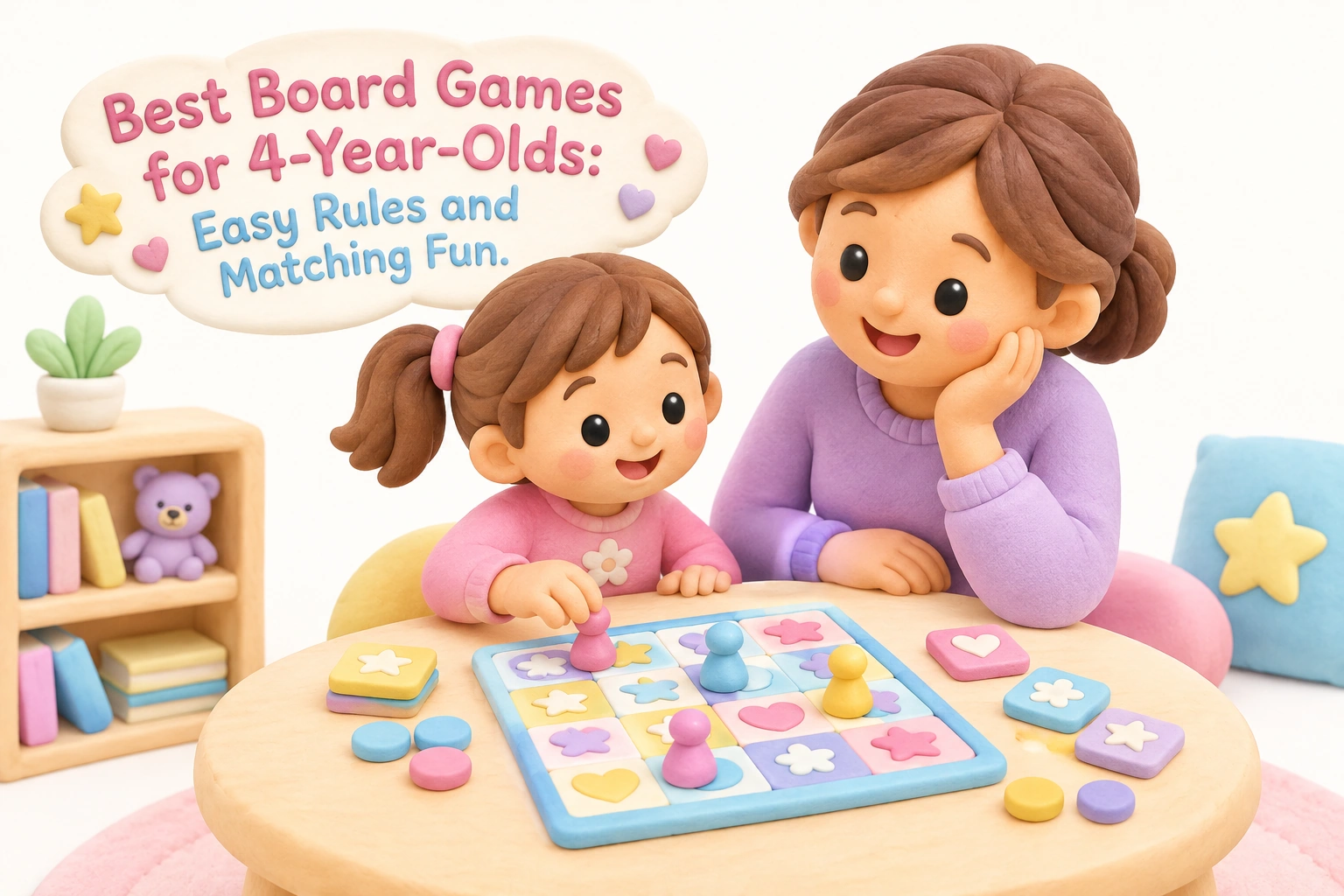
Choosing the right board game for a 4-year-old is less about finding the most elaborate box on the shelf and more about matching the game to where a preschooler actually is developmentally. At this age, children are building color recognition, turn-taking, early counting, and the emotional skill of handling winning and losing — all within an attention span that typically runs about 10 to 20 minutes before interest drifts. The good news is that a well-chosen preschool board game can support all of these areas at once, while making family game night genuinely enjoyable for everyone at the table.
Key Takeaways
- The best board games for 4-year-olds use simple gameplay, picture-based cues, and chunky game pieces that are easy for small hands to manage — no reading required.
- Cooperative games are generally a better fit for younger preschoolers because everyone works toward the same goal, which reduces frustration and supports emotional regulation.
- Games that last 10–15 minutes play time align well with a 4-year-old’s natural attention span and reduce the chance of mid-game meltdowns.
- Matching games, color-based games, and tactile pieces all support pre-reading skills, fine motor skills, and visual discrimination without requiring literacy.
- Playing board games together — rather than leaving a child to play alone — significantly increases the social and emotional learning value of the experience.
What Makes a Board Game Age-Appropriate for a 4-Year-Old?
A genuinely age-appropriate preschool board game for a 4-year-old shares a few consistent characteristics. Rules should be explainable in under two minutes, ideally using demonstration rather than reading from a rulebook. Components should be large enough for small hands to grip and manipulate without frustration — wooden pieces, oversized cards, and chunky game pieces all help here. The game should rely on visual matching, color recognition, or simple counting rather than literacy, since most 4-year-olds are still developing pre-reading skills. And the experience should feel complete within about 10 to 15 minutes, which aligns with the realistic attention span of most children this age.
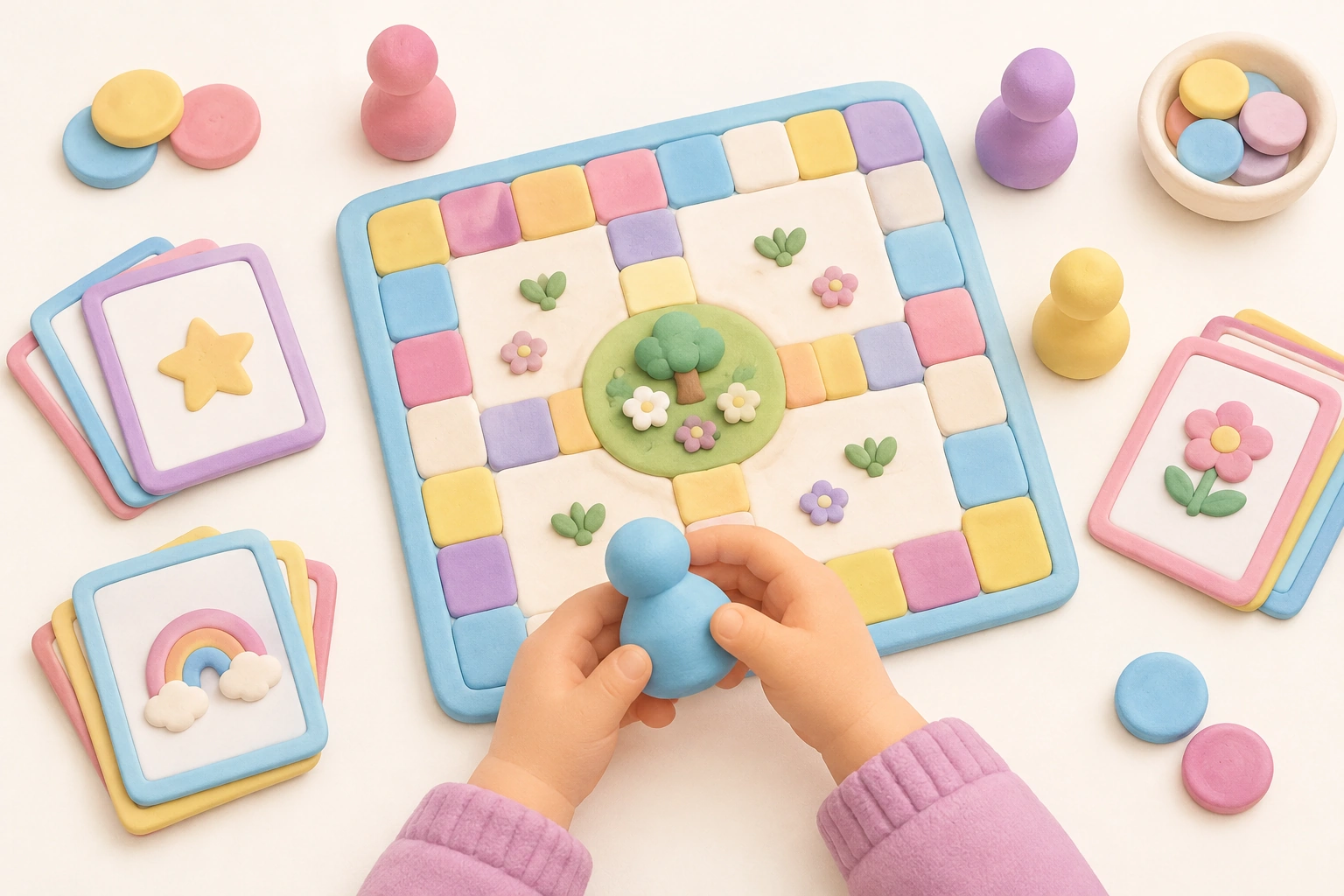
Beyond mechanics, the emotional design of a game matters. Four-year-olds are still learning to regulate the feelings that come with competition. A game that ends with one child winning and another losing can quickly derail an otherwise positive experience. This is why many child development specialists and educators suggest starting with cooperative games — where all players work together against the game itself — before introducing competitive formats. That said, some 4-year-olds, particularly those with older siblings, may already have some exposure to competitive play and can handle it with caregiver support.
The Developmental Case for Board Games at Age 4
Board games are not simply entertainment for preschoolers — they are structured social experiences that engage multiple developmental domains simultaneously. When a 4-year-old plays a matching game, they are practicing visual discrimination and pattern recognition, skills that underpin early reading and mathematics. When they wait for their turn, they are exercising impulse control and patience. When they move a piece across a board, they are developing hand-eye coordination and fine motor skills. And when they navigate the outcome of a game — whether they win or lose — they are building frustration tolerance and early emotional intelligence.
Research in early childhood development consistently identifies play as the primary vehicle through which young children learn social rules, self-regulation, and cognitive flexibility. Board games provide a particularly useful form of structured play because they introduce rule-following in a low-stakes, enjoyable context. Unlike free play, board games have a defined beginning, middle, and end, which helps children practice sustaining attention and following a sequence — both important school-readiness skills. The social dimension is equally significant: sitting across from a caregiver or sibling, making eye contact, and communicating during play supports language development and relationship-building in ways that solitary activities cannot replicate.
Cooperative vs. Competitive: Which Is Better for a 4-Year-Old?
The cooperative vs. competitive question is one of the most practically important decisions when selecting board games for 4-year-olds. In a cooperative game, all players work together toward a shared goal — for example, helping animals escape before a fox catches them, or collecting fruit before winter arrives. Because there is no individual winner or loser, cooperative games remove the emotional pressure that can make competitive games difficult for younger preschoolers. Children who are still developing the capacity to handle losing gracefully tend to have more positive, longer-lasting experiences with cooperative formats.
Competitive games are not off-limits for 4-year-olds, but they work best when the outcome is largely determined by chance rather than skill, so no child feels personally responsible for losing. Classic games like Candy Land and Chutes and Ladders fall into this category — the spinner or card draw decides everything, which makes losing feel less personal. The key caregiver role in competitive play is to model good sportsmanship: narrating emotions calmly, celebrating effort rather than outcome, and keeping the mood light. Over time, this kind of guided experience with handling winning and losing builds genuine emotional resilience.
Best Matching and Visual Games for 4-Year-Olds
Matching games deserve particular attention for this age group because visual matching is one of the cognitive skills most naturally suited to a 4-year-old’s developmental stage. These games require no reading, rely on picture recognition and color recognition, and can be played at varying speeds to suit different children’s temperaments.
Zingo (ThinkFun) is one of the most consistently recommended preschool board games for pre-reading skills. Players match picture tiles to their bingo-style cards as a sliding dispenser reveals them. The game moves quickly, supports visual matching and early vocabulary, and works well for 2–6 players. It typically plays in about 10–15 minutes, making it a reliable fit for a 4-year-old’s attention span.
Sneaky Snacky Squirrel (Educational Insights) combines color matching with fine motor development. Children use a squirrel-shaped spinner and a squirrel-claw tool to pick up colored acorns and fill their log. The tactile pieces and the novelty of the claw tool make this game particularly engaging for preschoolers, and the color-matching mechanic is genuinely accessible with no reading required.
Go Away Monster! (Gamewright) is a simple matching game in which children reach into a bag, identify pieces by touch, and place room tiles into their dollhouse board while sending monster pieces back into the bag. This game adds a tactile and sensory dimension to visual matching, and its cooperative structure means everyone succeeds together. It is one of the few games that a 4-year-old can largely manage without an adult directing every step.
Spot It! Jr. Animals (Dobble) uses the same elegant matching mechanic as the original Spot It — every two cards share exactly one matching symbol — but with larger cards and simpler images suited to preschoolers. The game can be played in multiple ways, which extends its lifespan as children grow. It supports visual discrimination, reaction speed, and pattern recognition in a format that feels more like a game than a learning exercise.
Classic memory card games — where pairs of face-down cards are flipped and matched — remain a reliable choice for this age. They directly build working memory, concentration, and visual matching skills. Starting with a smaller set of pairs (8–10 rather than 24) keeps the game within a manageable attention span and reduces frustration.
Best Cooperative Board Games for 4-Year-Olds
Cooperative games are widely regarded as the most developmentally appropriate starting point for preschool-aged children, and several titles stand out for their combination of simple gameplay, engaging themes, and genuine developmental value.
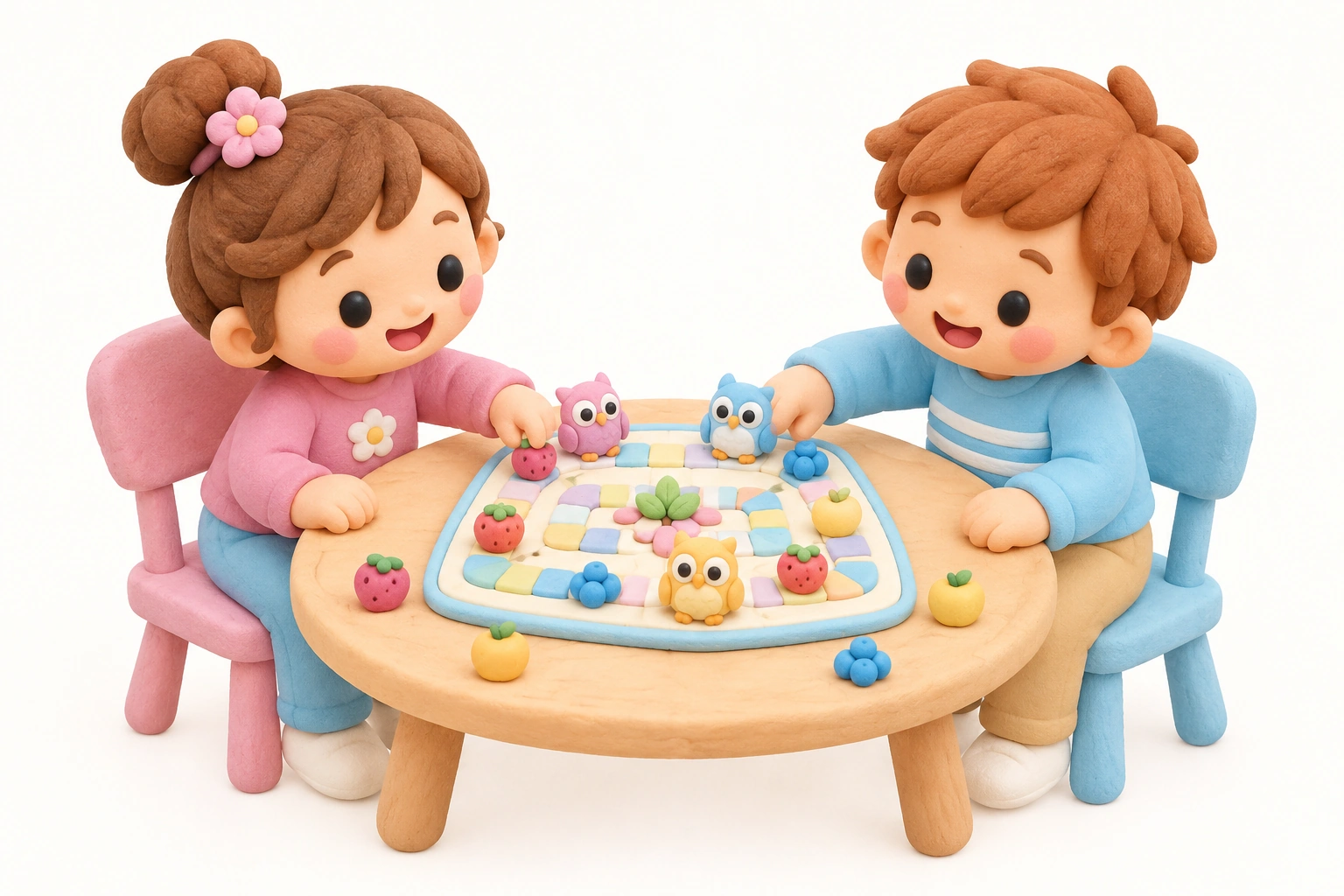
Hoot Owl Hoot! (Peaceable Kingdom) is a color-matching cooperative game in which players work together to fly owls back to their nest before sunrise. The mechanics are straightforward — match the color on your card to a space on the board — and the cooperative structure means children experience the satisfaction of collective success. Peaceable Kingdom as a publisher specializes in cooperative games for young children, and Hoot Owl Hoot! is consistently cited as one of their most accessible titles for ages 4 and up.
My First Orchard (HABA) is one of the most recommended introductory cooperative games for children as young as 2, but it remains engaging and appropriately challenging for 4-year-olds. Players roll a die and collect fruit from the orchard before a raven reaches the end of its path. HABA’s wooden pieces are durable, tactile, and visually appealing — a meaningful consideration for parents who want components that survive enthusiastic handling.
Dinosaur Escape (Peaceable Kingdom) asks players to work together to rescue dinosaurs from an island before a volcano erupts. The game introduces a light memory element — players must remember which dinosaur is hiding under which rock — while keeping the cooperative structure intact. It plays in about 15 minutes and supports color recognition, memory skills, and teamwork.
Count Your Chickens! (Peaceable Kingdom) adds a simple counting element to cooperative play. Players move a mother hen around the board, collecting chicks, and must count how many spaces to move. This makes it a useful bridge between pure matching games and games that introduce early number recognition and counting practice.
Outfoxed! (Gamewright) sits at the slightly more complex end of the spectrum for 4-year-olds but is worth mentioning because it introduces deductive reasoning in a cooperative format. Players work together to identify which fox stole a pot pie by eliminating suspects. Some 4-year-olds — particularly those with older siblings who model the reasoning process — engage with this game enthusiastically, though it may suit children closer to 5 better as a starting point.
Classic Board Games That Work for 4-Year-Olds
Several classic games remain popular with this age group precisely because their mechanics are simple, luck-based, and require no reading. Candy Land is the archetypal example: players draw a colored card and move to the matching color on the board. There is no strategy involved, which means the outcome is entirely chance-based and no child can feel outplayed. The bright color recognition element and the familiar sweet theme make it consistently appealing to preschoolers.
Chutes and Ladders (also known as Snakes and Ladders) introduces a slightly more complex board with numbered squares, but the core mechanic — spin and move — remains accessible. The game can run longer than ideal for some 4-year-olds, so caregivers may want to use a smaller section of the board or set a time limit to keep it within a manageable session.
Don’t Break the Ice (Pressman) and Hungry Hungry Hippos (Hasbro) are not traditional board games in the strategic sense, but they develop fine motor skills, hand-eye coordination, and turn-taking in a highly engaging format. Both are well-suited to 4-year-olds and tend to generate genuine excitement at the table.
Durability, Piece Safety, and Practical Buying Considerations
Parents shopping for board games for 4-year-olds should look beyond the game mechanics to the physical quality of the components. Games with small pieces present a choking hazard for younger siblings who may be present during play — this is a meaningful safety consideration in households with children under 3. Always check the manufacturer’s age recommendation and small-parts warning on the box, and store games out of reach of toddlers when not in use.
Durability is a practical concern that rarely appears in game reviews but matters significantly in real-world family use. HABA games are widely praised for their solid wooden components, which withstand rough handling far better than thin cardboard pieces. Games with thick, laminated cards and sturdy boards tend to survive preschool play better than those with standard cardboard. If a game will be played frequently, investing in a slightly more expensive but more durable option often makes more sense than replacing a cheaper game after a few months.
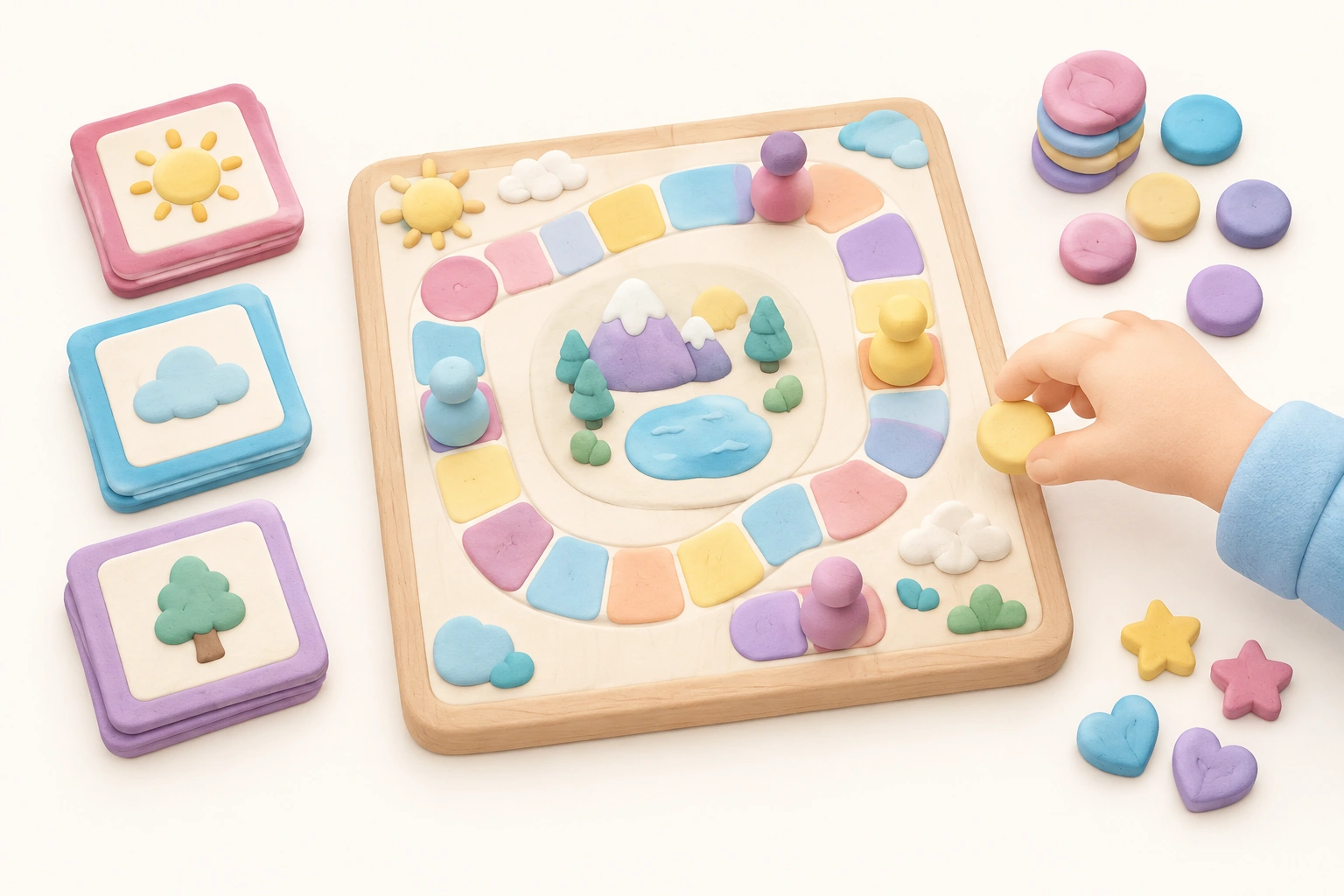
It is also worth noting that manufacturer-stated play times are often optimistic for preschool-aged players. A game listed as 15 minutes may take 25–30 minutes with a 4-year-old who needs reminders about rules, gets distracted, or wants to examine every piece. Building in extra time — or being prepared to pause and resume — helps keep the experience positive rather than rushed.
Handling Winning and Losing: A Practical Guide for Caregivers
One of the most valuable things a caregiver can do during board game play with a 4-year-old is to model emotional regulation around outcomes. When a child loses, naming the feeling —

Take a short quiz to find out what your everyday choices say about your parenting style
When your child is curious about something new, what’s your instinct?
Take a short quiz to find out what your everyday choices say about your parenting style
“Can I download this app?” What happens next?
Take a short quiz to find out what your everyday choices say about your parenting style
When it comes to rules at home, which sounds most like you?
Take a short quiz to find out what your everyday choices say about your parenting style
If you could give your child one life skill today, what would you pick?
Take a short quiz to find out what your everyday choices say about your parenting style
Your child gets to choose what to watch. What would your ideal setup look like?
Take a short quiz to find out what your everyday choices say about your parenting style
Pick your parenting superpower ✨