35 Fun Trampoline Games for Kids and Adults (+ Bonus Variations)

 Discover a Free Education Video App for Kids
Pastory uses AI to personalize educational video content based on your child’s interests and personality. Safe, engaging, and built for curious young minds. Sign up now to stay updated and enjoy early access with a free trial
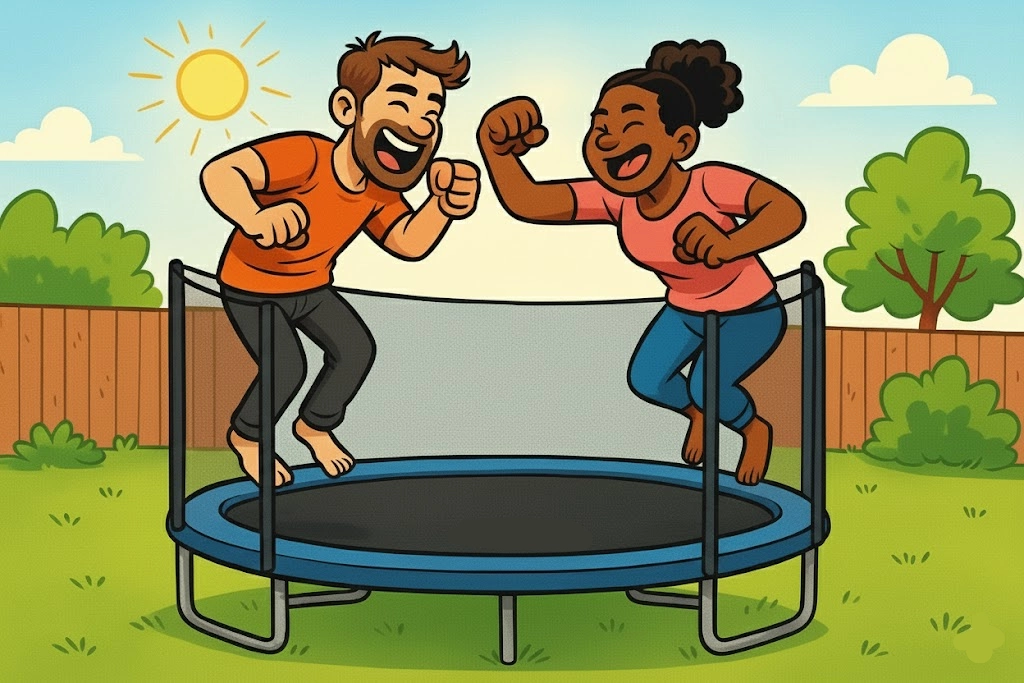
Adventure-themed trampoline games turn an ordinary bounce session into a backyard event worth remembering. Whether you are planning a birthday party, a solo challenge, or a high-energy afternoon with the whole family, the right games make every jump count — and this guide covers 35 of them, plus bonus variations for every age and group size.
From creative themed games like Castle Attack and Birds in Nest to water games, balance challenges, and sports-inspired rounds, each idea comes with simple rules and age-appropriate safety notes so families can get straight to the fun.
Key Takeaways
- This guide covers 35 trampoline games plus bonus cooperative, dancing, and sports-inspired variations for kids, adults, and families.
- Adventure-themed trampoline games like Castle Attack, Birds in Nest, and Chalk Games add creative storytelling to backyard bounce sessions.
- Games are organized by type — single-player, ball, water, and balance — making it easy to choose by age or group size.
- Find quick-reference options by group size: solo games for 1 player, head-to-head challenges for 2, and high-energy rounds for 4 or more players.
- Adult-friendly options include fitness circuits, competitive tournaments, and skill-based games suited to the whole family.
- Safety tips, gear recommendations, and setup guidance are included to support safe backyard play before the game lists begin.
- Bonus sections cover cooperative games, dance battles, and low-bounce activities for younger or mixed-age groups.
Quick Content Overview
Readers will find 35 core games, followed by bonus ideas that add more trampoline fun without overwhelming the list.
- Ball-based trampoline games such as Poison Ball and Monkey in the Middle.
- Water-based games with sprinklers and water balloons for warm-weather play.
- Balance and dance games that help build core strength, rhythm, and body control.
- Solo challenges for one player, including high-score jumping and target practice.
- Adult-friendly options, including fitness circuits and competitive family tournaments.
Best Game Choices by Age Group
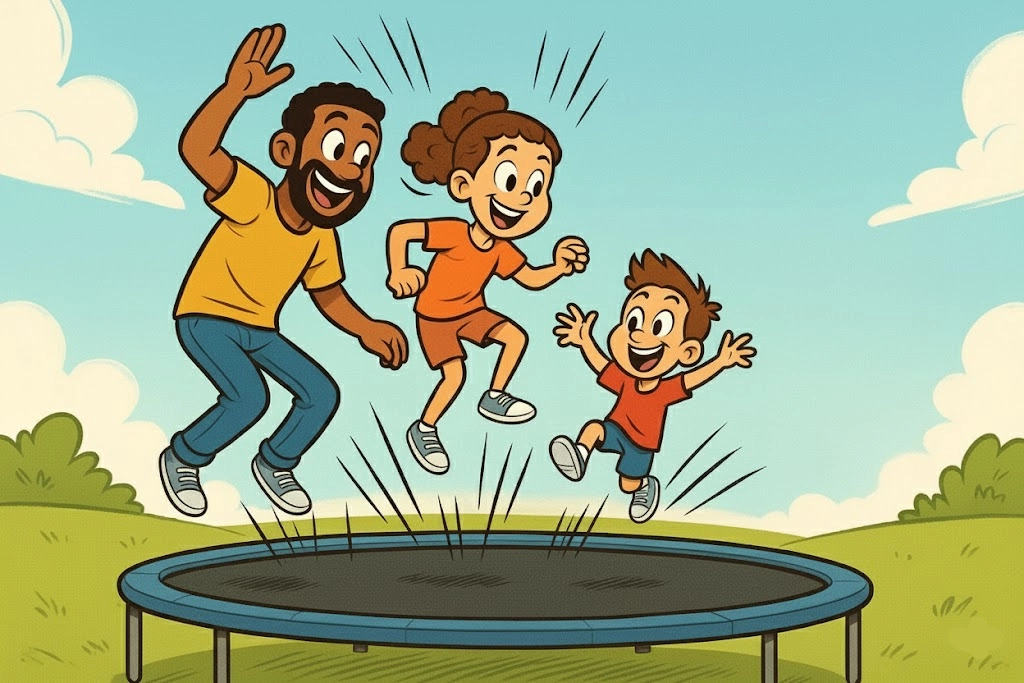
The right game depends on the age, size, and skill level of the jumpers, especially when choosing activities for kids with different abilities. For children under 6, avoid active trampoline jumping; if parents still use the trampoline as a supervised play surface, stick to non-bouncing sensory activities such as bubbles or seated ball play.
Older kids and teens often enjoy the best trampoline games for friendly competition, such as Crack the Egg or trampoline tag, provided the rules keep movement controlled. For adults, the most engaging options include structured fitness challenges and skill-based games such as HORSE or trick-shot competitions with a trampoline basketball hoop.
Safety Before Fun
Before anyone enters the trampoline enclosure, set clear safety rules to reduce the risk of injury. The American Academy of Pediatrics advises against recreational trampoline use for children; if families still choose to use a home trampoline, they should follow strict safety rules, including active adult supervision, one jumper at a time, and no flips or somersaults.
Make sure the trampoline net is securely zipped, the padding covers all springs and frame parts, and no more than one jumper uses the trampoline at the same time. Group games should be treated as higher-risk variations and avoided for young children. Always remove shoes and jewelry before anyone enters the play area to protect the mat and the jumpers.
Safety note: Many trampoline games are safest when played one jumper at a time. Multiplayer games should be treated as higher-risk variations and used only with older, similarly sized participants, active adult supervision, low jumps, soft equipment, and clear rules. Children under 6 should avoid active trampoline jumping.
Backyard Setup, Rules, Gear
Choosing the Right Trampoline
Brands such as Vuly offer trampolines in different sizes and shapes, but a large round or rectangular model usually works best for games and activities. A protective enclosure is an essential safety feature that helps reduce the risk of jumpers falling off the trampoline.
When selecting a model, make sure its weight limit fits the intended users and check whether the mat is UV-resistant, durable, and designed for good traction. For accessory-based games, parents can consider compatible trampoline add-ons, but soft, low-impact gear is best for most home use.
First Bounce Tips
Beginners should learn the “stop bounce” technique: jump, land softly on both feet, and immediately bend the knees to stop the momentum. Establishing a no-flip policy is vital for safety, as falls and failed flips are among the common causes of serious backyard injuries.
Before play begins, check the edges of the trampoline for gaps in the padding and make sure the surrounding area is clear of hard objects or debris.
Needed Accessories
Most trampoline games require only a few soft, simple accessories. Useful items include:
- Soft foam balls for ball games to reduce the risk of bruises.
- Washable sidewalk chalk for marking targets or grids, if the manufacturer allows chalk on the mat.
- Trampoline basketball hoop attachments for controlled shooting games.
- Bubble machines or child-safe bubble solution for supervised sensory play.
- Sprinklers placed outside the trampoline for controlled water play.
Safety Tips
One Jumper or Group Rules
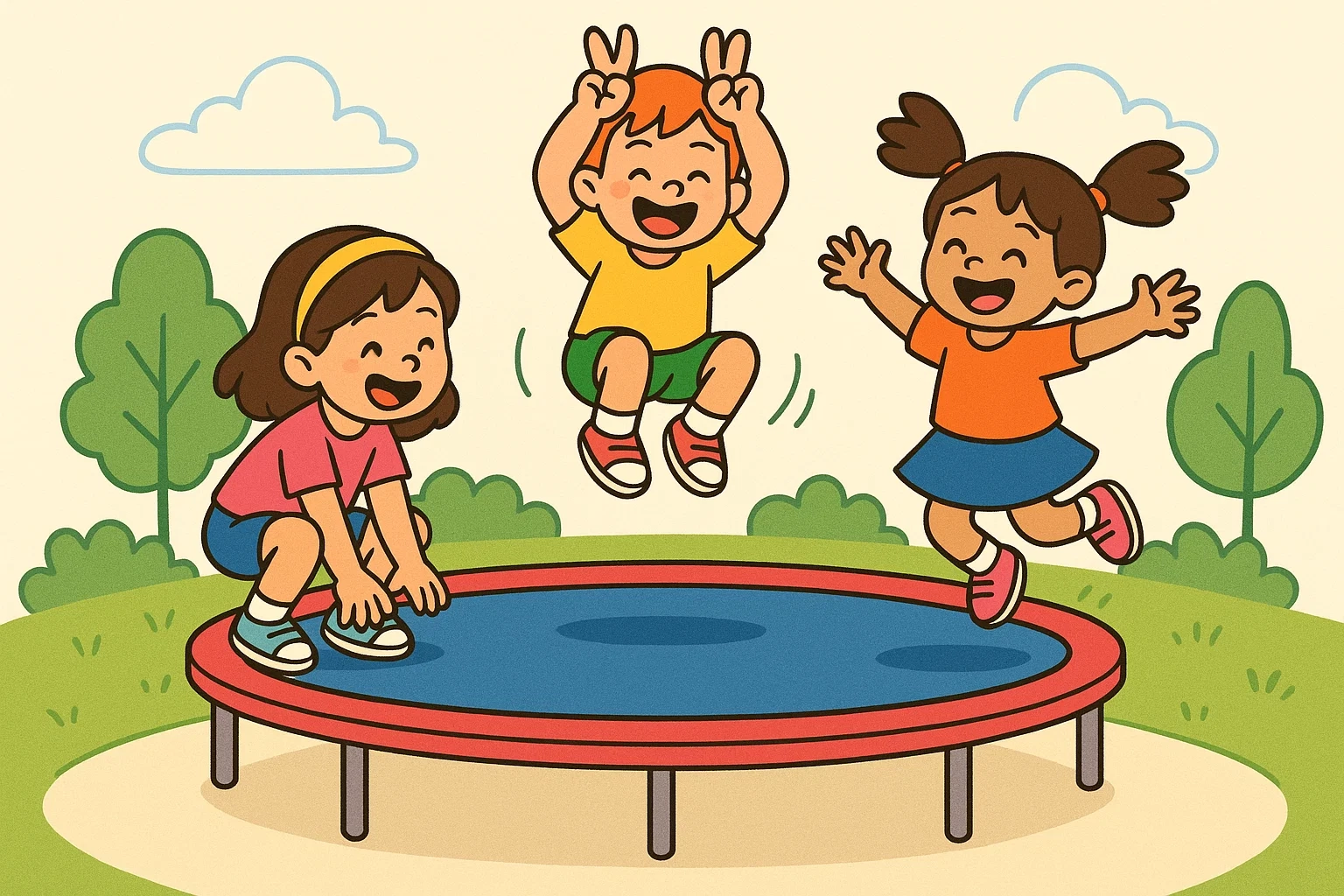
The safest way to use a trampoline is one jumper at a time, which greatly reduces the risk of mid-air collisions. However, many popular games involve multiple participants; in these cases, rules must require players to stay in clearly marked zones and keep movements slow and controlled.
Group games should focus on low-impact movements, and any participant who feels unstable should stop immediately, exit the trampoline, and rest outside the enclosure.
Safe Landing and No-Flip Rules
Every jumper should learn to land softly on both feet with slightly bent knees. Landing on the knees, back, neck, or head can lead to serious joint, head, neck, or spinal injuries.
To maintain a safer bounce experience, flips and somersaults should be banned for recreational backyard play. Expert coaching is required for such maneuvers, as improper execution in a backyard setting poses a high risk of double-bouncing, where one person’s jump energy is transferred unexpectedly to another.
Weather, Water, and Ball Safety
Wet weather makes the trampoline mat slippery, changes traction, and increases the risk of slips and falls. During water games, jumpers should stay low, move slowly, and avoid fast or high jumps.
Use only soft accessories; hard basketballs or soccer balls can injure players or damage the trampoline net. Regular safety checks should include inspecting the mat for holes and ensuring the basketball hoop attachment is securely fastened.
Benefits of Bounce Play
Physical Fitness and Coordination
Rebounding can provide a cardiovascular workout and support full-body coordination. Trampoline activities can also support proprioception — the body’s ability to sense its position in space — which helps with balance and core stability.
When kids jump in controlled ways, they practice landing, rhythm, posture, and body awareness.
Social Skills and Cooperation
These games give children a fun way to practice taking turns, listening, and communicating clearly. When kids play together, they learn to follow rules, share space, and solve small disagreements.
Cooperative games encourage players to work toward a shared goal, such as keeping a balloon in the air, which builds teamwork among kids and adults.
Screen-Free Family Time
In an era dominated by screens, active backyard games create an easy way to encourage outdoor play. A backyard trampoline can encourage spontaneous play, family challenges, and other outdoor activities on weekends and holidays.
How to Choose the Right Trampoline Game
How to Pick a Game by Age
To ensure everyone has fun on the trampoline, games must be age-appropriate. For younger children, focus on non-bouncing sensory play or very low-movement activities. School-aged children often enjoy challenges with clear goals, while teens and adults may prefer sport-style scoring or high-intensity fitness challenges.
Before starting a group activity, base the rules on the youngest or least experienced player.
How to Adapt Rules for Adults
Adults can adapt trampoline games by adding timed rounds, skill-based scoring, or low-impact fitness goals, as long as the trampoline’s weight limit and safety rules are followed.
Introduce timed rounds, specific basketball trick-shot requirements, or elimination-style rules for balance games. Incorporating fitness metrics, such as “most star jumps in 60 seconds,” can turn a simple game into a rewarding workout.
Check the manufacturer’s weight limit before adult use, and avoid multiple adults on the mat unless the trampoline is specifically designed and rated for it.
How to Score and Rotate Turns
Structured scoring keeps games and activities organized and competitive. Use a “first to 10 points” system for ball games or a “winner stays on” format for one-on-one challenges.
To give everyone equal trampoline time, use a stopwatch and limit turns to 3–5 minutes. A physical scoreboard, such as a whiteboard placed near the trampoline, helps track progress and prevents disputes during popular games.
Single-Player Trampoline Games
1. Jump Contest
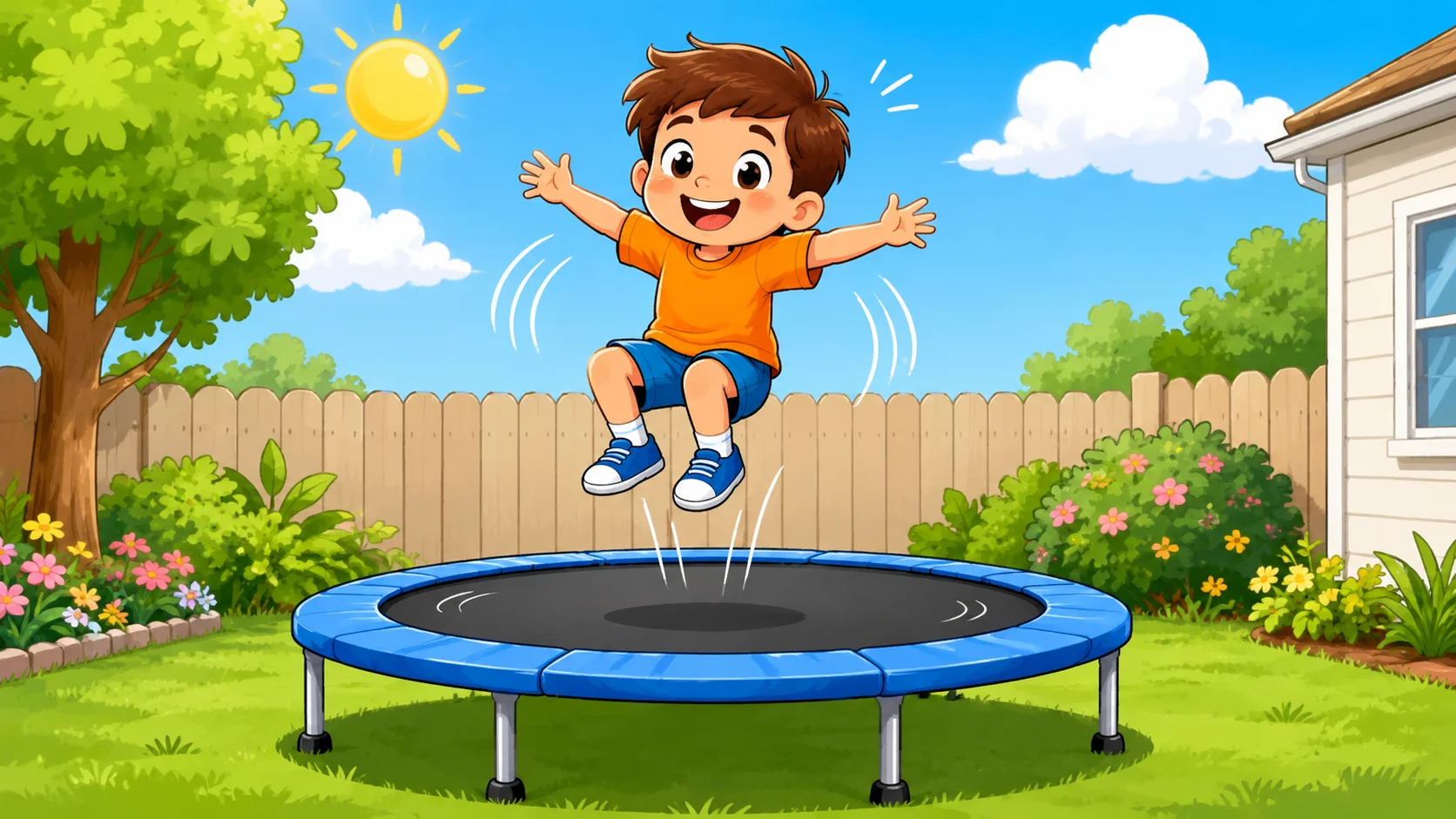
The player sets a 60-second timer and counts how many controlled jumps they can complete. Variations include “Highest Jump” or “Quietest Landing,” where the goal is to land with minimal sound, promoting better body control and leg strength.
This is one of the easiest trampoline games for kids who want to practice on the trampoline alone before joining group play.
2. Balance Test
This game requires the player to bounce three times and then freeze in a specific pose, such as a star shape or a tuck position. The objective is to stay perfectly still for five seconds without wobbling.
This activity helps improve core stability, body control, and reaction time.
3. Single-Leg Stand
The jumper performs low, controlled bounces and then attempts to land and balance on one leg. The player should switch legs every 10 bounces.
This balance game is excellent for strengthening ankles and improving symmetry in the lower body.
4. Bird Dog Balance
Inspired by yoga, the player kneels on the mat and extends the opposite arm and leg at the same time while maintaining a flat back.
The moving surface makes this core-strengthening exercise more challenging.
5. Bubble Pop
An adult or sibling stands outside the trampoline and blows bubbles over the enclosure. The solo player must jump gently and pop as many bubbles as possible using only their head, shoulders, or hands.
For younger children, this can be adapted into a seated or standing non-bouncing activity.
6. Target Practice
Using washable sidewalk chalk, draw several circles with point values, such as 5, 10, and 20, on the mat. The player bounces and tries to land on a target or toss a beanbag into the highest-value circle.
This game works best with low, controlled jumps and soft accessories.
7. Mimic Me
In this solo version, the player creates a routine of five moves, such as jump, clap, sit, spin, and freeze, and repeats it five times without making a mistake.
This game builds memory, rhythm, and physical coordination.
Trampoline Ball Games
8. Monkey in the Middle
If this higher-risk variation is played, one player stays in the center while two others stand in clearly marked, stable zones away from the frame, pads, and net.
The outer players pass a soft ball back and forth while the “monkey” tries to intercept it. If the monkey catches the ball, the person who threw it takes their place.
9. Piggy in the Middle
This is a regional variation of Monkey in the Middle. The rules remain the same, emphasizing quick reflexes and lateral movement.
It is one of the best games for groups of three, but it should be played with low jumps, a soft ball, and similarly sized participants.
10. Lava Balls
Scatter 10–15 soft foam balls on the mat. Players try to keep moving without letting any “lava” balls touch their feet or legs.
As players move, the balls roll unpredictably, requiring constant awareness and careful foot placement.
11. Bombs Away
One person stands outside the trampoline and gently tosses soft balls onto the trampoline. The jumpers inside must avoid being hit by the “bombs.”
Only soft, lightweight balls should be used to reduce the risk of injury.
12. Mid-Air Catch
Two players bounce in sync, keeping the jumps low and controlled. One player throws a soft ball into the air, and the other must catch it while both are near the top of their jump.
This ball game rewards timing and hand-eye coordination.
13. Keepy-Uppy
Players work together to keep a balloon or beach ball in the air using their hands, heads, or feet.
The goal is to prevent the ball from touching the trampoline surface for as long as possible.
14. Hot Potato
Players pass a soft ball quickly while music plays. When the music stops, the player holding the “potato” must perform a silly challenge, like five frog jumps, before the next round begins.
This game works best with gentle movement and enough space between players.
15. Poison Ball
Place a large soft ball in the center of the trampoline. Players bounce gently, causing the ball to roll around the mat.
If the “poison” ball touches a player, that player is out for the round. This game helps teach spatial awareness and controlled movement.
Water Games on the Trampoline
16. Water Balloon Dodge
Players use small water balloons for a low-impact version of dodgeball. Because the mat becomes wet, players must move slowly and focus on dodging rather than high-intensity jumping.
This game should only be played with low movement and close adult supervision.
17. Sprinkler Jump
Place a lawn sprinkler outside the trampoline so the mist falls onto the mat. The light spray helps kids and adults stay cool in warm weather.
Keep bounces low to maintain traction on the damp surface.
18. Bubble Arena
Fill the inside of the trampoline enclosure with bubbles from a machine. This creates a sensory-rich environment for kids of all ages.
The bubbles can make the mat slightly slick, so this activity is best for sitting, standing, or very low bouncing.
Bonus Tip: DIY Child-Safe Bubbles for Bubble Arena
Mix 1 cup of dish soap, 6 cups of water, and 1 tablespoon of glycerin. This solution provides long-lasting bubbles for the enclosure.
After play, rinse the mat with clean water to remove soap residue.
19. Wet Balance Challenge
On a wet mat, players attempt to perform slow-motion movements or balance on one leg. The reduced traction makes this a more advanced balance game that requires focus and core engagement.
Players should move slowly and avoid high jumps.
Balance Games
20. Trampoline Twister
Use washable sidewalk chalk to draw colored circles on the mat, if the trampoline manufacturer allows chalk on the surface. A caller names a color and a limb, such as “Left hand, red.”
This version can be gentler on knees than the floor version, but it still requires slow movement, clear spacing, and adult supervision.
21. Hopscotch
Draw a standard hopscotch grid with chalk on a dry mat. Players must jump through the sequence.
The added bounce of the trampoline makes landing in the squares a fun challenge for motor control.
22. Four Corners
Assign a number to each section of the enclosure. While one player counts to ten, the others move to a section.
The counter calls out a number, and anyone in that section is out for the round.
23. Sound Seeker
One player sits in the middle of the trampoline as the “seeker,” while the other players move slowly and keep enough space to avoid contact.
The seeker tries to tag a player by listening to movement and turning carefully. For a safer version, keep everyone’s eyes open and require low, slow movement.
24. Freeze Bounce
A designated leader plays music while everyone jumps gently. When the music stops, everyone must freeze.
Anyone who moves or falls over loses a point. This is a classic favorite for children who are old enough to jump safely.
Multiplayer Trampoline Challenges
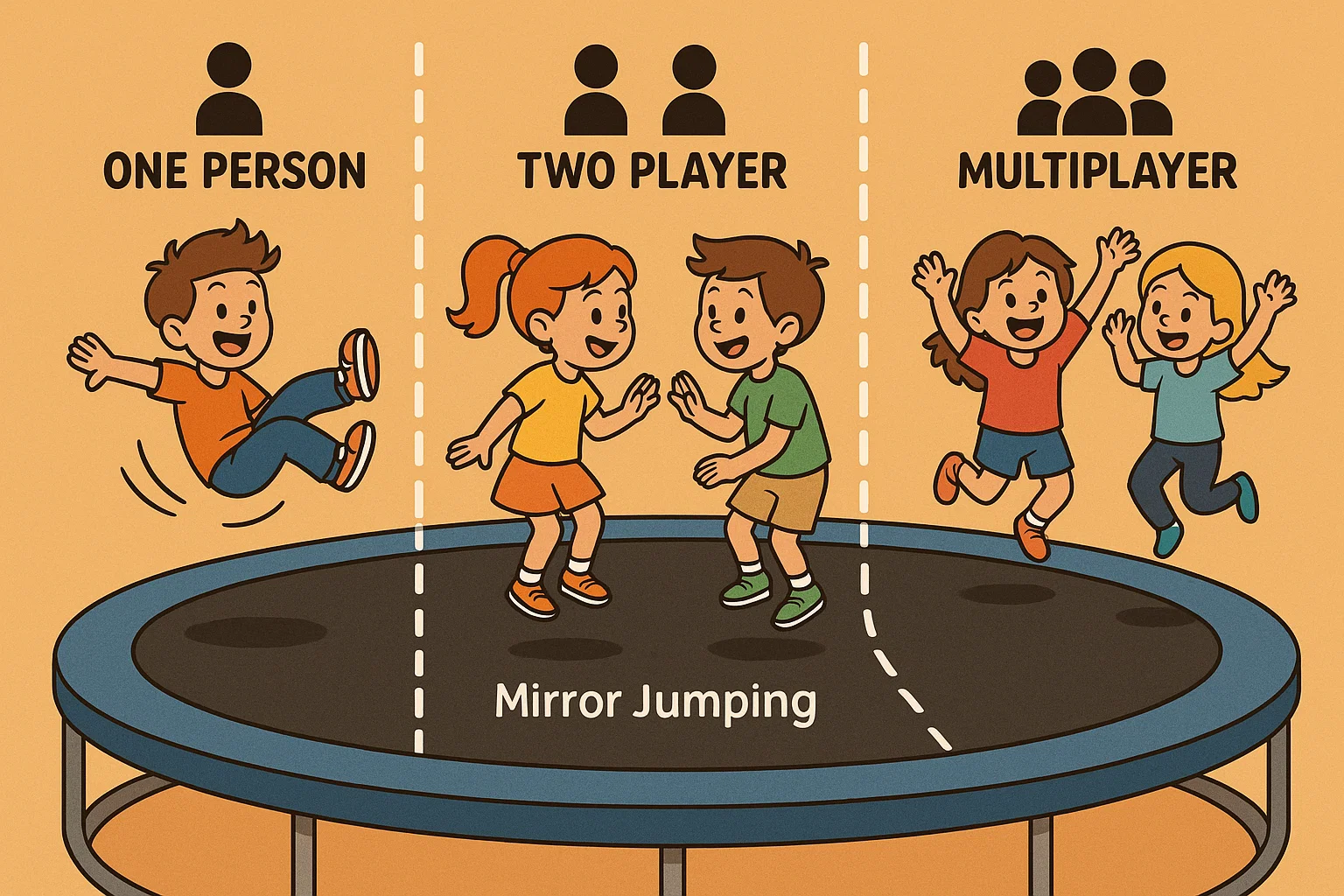
25. Crack the Egg
One player sits in the center and hugs their knees to their chest, becoming the “egg.” Other players bounce gently around them, trying to make the egg “crack,” which means releasing their knees.
This game requires very gentle movement so the player in the center can stay safe and stop the round at any time.
26. Marco Polo
Adapted for the jumping area, one player calls “Marco,” while the others answer “Polo.” Players should keep their eyes open, move slowly, and avoid high jumps so no one steps on or collides with the seeker.
This version keeps the familiar call-and-response structure while reducing risk.
27. Telephone Game
Players sit in a circle on the mat. One player whispers a phrase or performs a subtle movement. The next player must repeat it and pass it on.
The final version is usually a funny twist on the original.
28. Simon Says
The leader gives commands like “Simon says sit” or “Simon says star jump.” If the leader gives a command without saying “Simon says,” and a player performs it, they are out.
Keep commands simple, controlled, and appropriate for the age of the players.
29. Bum Wars
Players start seated and use gentle bouncing to return to their feet or back to a seated position.
The goal is to see who can maintain the rhythm the longest without using their hands. This game should be played carefully, with plenty of space between players.
30. Rock Paper Scissors Bounce
Two players bounce in unison three times. On the third bounce, they land and immediately show the hand signal for rock, paper, or scissors.
This adds movement and timing to the classic game.
Creative and Themed Trampoline Games
31. Chalk Games
Beyond targets, you can use washable chalk to draw a simple obstacle course on the mat. Include instructions like “spin here,” “crawl here,” or “freeze here.”
Chalk is easily removed with a hose, making it a versatile tool for active play and one of the most exciting games to play with simple supplies.
32. Fashion Show
Participants use the mat as a runway and perform their best model walk with gentle, controlled bounces.
This is a great party game and can be fun for kids who enjoy performing. Make sure no loose clothing, long scarves, or accessories are worn that could trip the players.
33. Castle Attack
Divide the jumping area into “kingdoms.” Players use soft foam balls to attack the opposing team’s “castle,” which can be a designated corner or chalk-marked zone.
This game focuses on throwing accuracy rather than high jumping or rough contact.
34. Birds in Nest
Place several “eggs,” such as soft balls, in the center. One player is the “bird” protecting the nest, while the others try to steal the eggs and move them to the edge without being tagged.
Use soft balls only and keep movements slow and controlled.
35. Ring-Around-Rosy Mat Play
This is a gentle, non-bouncing activity for young children where they sit or step slowly on the mat with close adult support.
Instead of jumping, children can move in a circle, clap along with the rhyme, and gently sit down together at the end. This version keeps the activity playful while avoiding active bouncing for very young kids.
Bonus Cooperative Trampoline Games
Team Count Bounce
Grouped players attempt to hit a specific number of collective bounces, such as 100, without anyone losing their rhythm or falling.
This game provides a sense of shared accomplishment and encourages group synchronization. For safer play, keep jumps low and use similarly sized participants.
Follow the Leader
One player on the trampoline performs a controlled move, such as a clap jump, star jump, or simple freeze pose. Every other player must mimic the move exactly.
Rotate the leader every two minutes to keep the bounce experience fresh.
Group Shape Challenge
Players work together to form a shape, such as a triangle or a square, or a letter of the alphabet using their bodies while sitting on the trampoline.
This encourages creativity, teamwork, and spatial awareness.
Kindness Challenge
Before each player starts their turn to jump on the trampoline, they must say one kind thing about another participant.
This adds a simple social-emotional learning element to outdoor play.
Bonus Dancing Bounce Games
Dance Battle
Players take turns performing a 30-second dance using gentle bounces to enhance their moves.
Judges, usually parents or other kids, score based on creativity, rhythm, and safety.
Strike a Pose
Similar to Freeze Bounce, but when the music stops, players must strike the most creative pose possible.
This is one of the best games for capturing fun photos during a backyard party.
Bounce With the Beat
Play a song with a clear beat. Players must time their jumps so they hit the mat exactly on the beat.
Switch between slow and fast songs to change the difficulty.
Musical Bounce
This is a chair-free version of musical chairs. When the music stops, players must perform a specific action, such as sitting down or touching a chalk-drawn circle.
The last person to do so is out for the round.
Trampoline Whispers
The first player does one move, such as a jump. The second player does that move plus a new one, such as jump and clap.
The sequence continues until someone forgets the order, making it a fun memory game.
Bonus Sports-Inspired Trampoline Games
| Sport-Inspired Game | Equipment Needed | Main Skill |
| Trampoline Basketball | Hoop attachment, foam ball | Shooting accuracy and controlled jumps |
| Volleyball | Soft rope or low net, beach ball | Team passing and reflexes |
| Soccer | Small pop-up goals, soft ball | Gentle ball control and balance |
| Baseball | Foam bat, balloon | Hand-eye coordination |
Basketball on the Trampoline
Using a trampoline basketball hoop, players can practice controlled shooting games or simple dunk-style challenges.
Because the mat provides extra height, players should focus on controlled jumps, safe landings, and simple shots rather than risky mid-air tricks. Always use a foam ball to reduce the risk of injury.
HORSE
Players take turns attempting a trick shot or a specific safe bounce move. If the second player fails to replicate the first player’s move, they get a letter.
The first person to spell “HORSE” loses.
Soccer Rebound
Players use a soft ball to pass or tap the ball toward a target marked on the trampoline net or a small goal.
This ball game emphasizes balance, as even gentle ball control while bouncing requires core strength and body awareness.
Low-Bounce Trampoline Activities for Little Kids
For toddlers and preschoolers, avoid active bouncing. Any trampoline-based activity should be limited to supervised, seated, non-jumping play if parents choose to use the mat at all.
Animal Bounce can be adapted into a non-bouncing pretend-play activity where kids imitate a frog, kangaroo, or bunny while seated or standing still. Soft Ball Toss allows them to sit and roll balls to one another, helping them get used to the movement of the mat without the fear of falling.
Always ensure an adult is near the trampoline to provide immediate support.
Trampoline Games for Adults, Fitness, and the Whole Family
Adults can use the mat for high-intensity interval training, as long as the trampoline is rated for adult use. Adult fitness challenges can involve 30 seconds of tuck jumps followed by 30 seconds of rest.
For family bonding, a family tournament format can include a rotation of games like HORSE, Dance Battle, and Keepy-Uppy, with a prize for the winning team. For mixed ages, choose trampoline game formats that keep jumps low and make turns easy to rotate.
Adults looking for structured jumping activities can get a solid workout without needing any extra equipment. Here are four adult-friendly game formats that work well solo or with a group:
- Fitness Circuit: Set a timer for 20 minutes and rotate through 30 seconds of tuck jumps, 30 seconds of star jumps, and 30 seconds of rest. This interval format keeps heart rate elevated and mimics a light cardio session. Always confirm the trampoline’s weight rating before adult use.
- Trick-Shot Tournament: Using a trampoline basketball hoop and a foam ball, adults take turns attempting increasingly difficult shots — standard, one-handed, or jump-release. Score one point per successful basket and play to 15. This game rewards skill and controlled jumping rather than raw height.
- Endurance Bounce: One player bounces at a steady, moderate pace while a second player counts aloud. The goal is to maintain a consistent rhythm for as long as possible without breaking form. Switch roles every two minutes. This is a low-competition option that works well for adults who want a mindful, low-impact jumping activity.
- Family Tournament Night: Rotate through three or four games — HORSE, Dance Battle, Keepy-Uppy, and Freeze Bounce — awarding one point per round win. The adult or team with the most points after all rounds wins. Keep jumps low and turns short so mixed-age groups can participate safely.
Before adults use the trampoline, always check the manufacturer’s stated weight limit. Most home trampolines are rated for a single adult at a time; avoid multiple adults on the mat unless the model is specifically designed and certified for it.
Trampoline Games by Number of Players (1, 2, 3, 4+)
Not sure which game fits your group? Use this quick-reference guide to find the right activity based on how many players you have. All games listed here are covered in full detail in the sections above.
| Players | Recommended Games | Notes |
| 1 (Solo) | Jump Contest, Balance Test, Single-Leg Stand, Bird Dog Balance, Bubble Pop, Target Practice, Mimic Me | Great for skill-building and fitness practice; no equipment needed for most |
| 2 Players | Mid-Air Catch, Rock Paper Scissors Bounce, HORSE, Wet Balance Challenge, Bounce With the Beat | Head-to-head formats; keep jumps low and use soft accessories |
| 3 Players | Monkey in the Middle, Piggy in the Middle, Hot Potato, Follow the Leader | One player in the middle; requires clear zone rules and adult supervision |
| 4+ Players | Freeze Bounce, Simon Says, Four Corners, Castle Attack, Team Count Bounce, Musical Bounce, Dance Battle, Lava Balls | Group games carry higher risk; use low jumps, similarly sized participants, and active adult supervision |
For games with no equipment, the best solo options are Jump Contest, Balance Test, and Mimic Me. For two players, Rock Paper Scissors Bounce and Bounce With the Beat need nothing but a music source. Groups of four or more will find Freeze Bounce and Simon Says easy to start immediately with no setup required.
Tips and Tricks for Enhancing Backyard Play
- Upgrade Your Setup: Adding a trampoline basketball hoop or a misting system can instantly make an old setup feel new.
- Use Visuals: Use washable sidewalk chalk to create zones for different games, which helps manage traffic and improves safety.
- Rotate Games: Keep a game menu posted near the trampoline so kids can choose a new activity every 20 minutes, preventing boredom and overexertion.
Other Backyard Activities Beyond Games
Beyond high-energy play, a trampoline can also function as versatile outdoor play equipment. It can be used for stargazing with pillows and blankets at night or turned into an outdoor reading nook.
Some families even host backyard sleepovers, using the net to hang fairy lights and create a cozy, elevated camping spot.
Trampolining FAQs
What games can families play on a trampoline?
Families often enjoy games that balance skill and fun, such as Monkey in the Middle, Hot Potato, and Simon Says. These games allow different physical abilities to participate, but group play should always involve low jumps, soft equipment, and active adult supervision.
How can I make a trampoline more fun?
You can make your trampoline more exciting by adding accessories like lights for night jumping, a sprinkler for warm-weather play, or washable chalk for creative drawing and target games.
How do you play 1-2-3 Sit on a trampoline?
Players bounce together while a caller counts “1, 2, 3.” On “SIT,” everyone must land in a seated position.
To play this game more safely, keep jumps low and make sure no more than one player tries to sit in the same spot. This game is best for older children who can control their landings.
Which trampoline games work for adults?
Adults often enjoy fitness challenges, volleyball-style games, and basketball-style shooting games on the trampoline. These activities provide a workout while remaining engaging and social.
Adults should always check the manufacturer’s weight limit before using the trampoline.
How can children play safely?
To play more safely, children should remove shoes, avoid flips, use soft accessories, and take turns instead of crowding the mat.
Parents should supervise closely whenever kids use the trampoline, and they should avoid allowing more than one child to jump at a time.
What is a good trampoline to try first?
For beginners, the best trampoline to try is a stable model with strong padding, a secure enclosure, and enough space for low, controlled movement. Start with balance drills before moving on to more active game ideas.
Take a short quiz to find out what your everyday choices say about your parenting style
When your child is curious about something new, what’s your instinct?
Take a short quiz to find out what your everyday choices say about your parenting style
“Can I download this app?” What happens next?
Take a short quiz to find out what your everyday choices say about your parenting style
When it comes to rules at home, which sounds most like you?
Take a short quiz to find out what your everyday choices say about your parenting style
If you could give your child one life skill today, what would you pick?
Take a short quiz to find out what your everyday choices say about your parenting style
Your child gets to choose what to watch. What would your ideal setup look like?
Take a short quiz to find out what your everyday choices say about your parenting style
Pick your parenting superpower ✨