Bee Activities for Kids: 25 Fun Crafts, Games, Lessons

 Discover a Free Education Video App for Kids
Pastory uses AI to personalize educational video content based on your child’s interests and personality. Safe, engaging, and built for curious young minds. Sign up now to stay updated and enjoy early access with a free trial
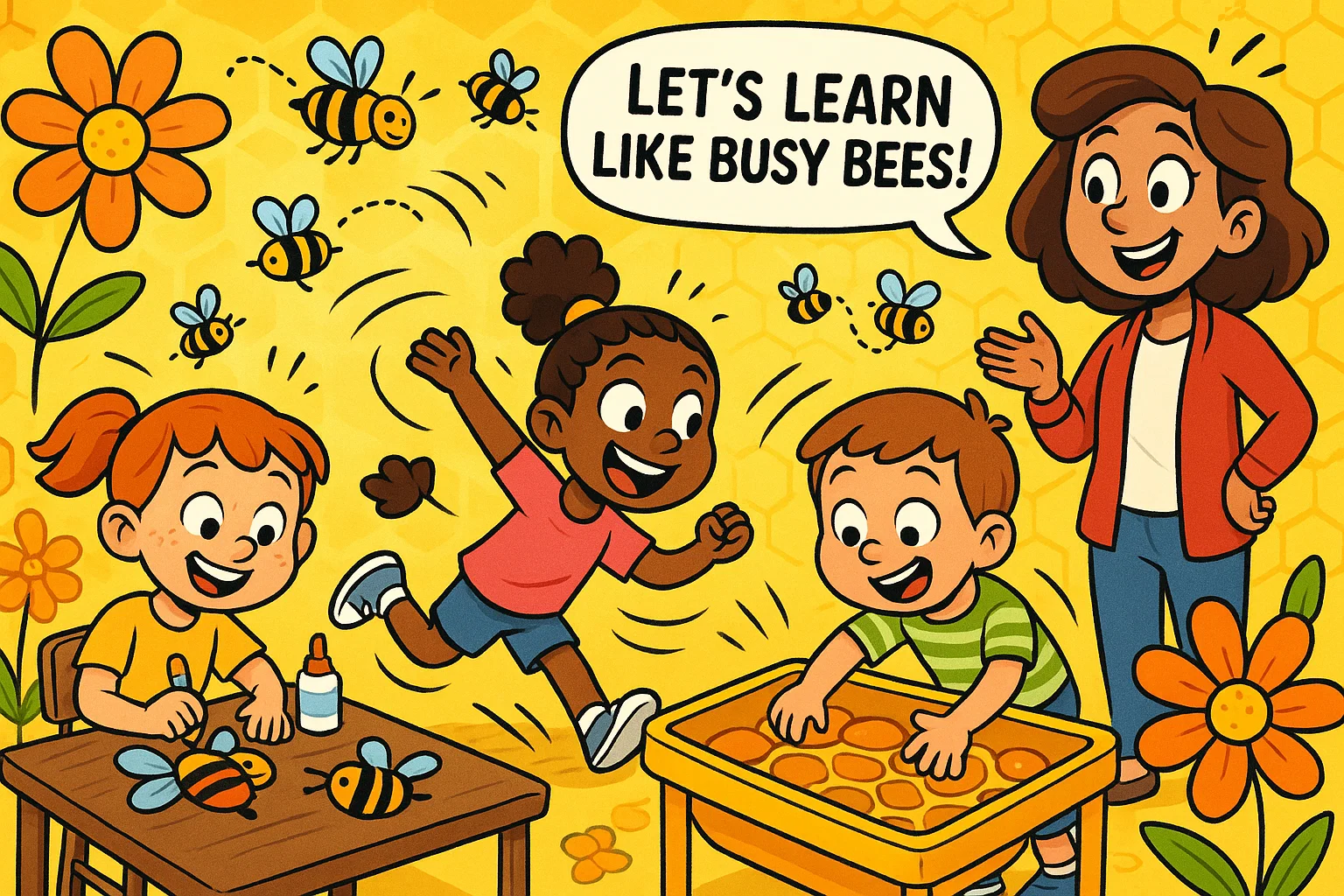
Introducing children to pollinators is a wonderful way to combine science, art, and environmental awareness. This practical guide offers 25 hands-on bee activities for parents, preschool and kindergarten teachers, Early Years Foundation Stage (EYFS) practitioners, and homeschoolers. The activities below include bee crafts, sensory play, pollination games, counting activities, simple science lessons, movement exercises, and conservation projects.
These educational activities are designed to spark curiosity while supporting key early childhood skills.
Key Takeaways
- Holistic Development: Bee activities can support early literacy, math thinking, and fine motor skills through purposeful play.
- Accessible Materials: Most projects use common household recyclable materials such as egg cartons, cardboard tubes, and bubble wrap.
- STEM Alignment: Core science ideas such as pollination and the honey bee life cycle become easier for young learners to understand through hands-on play.
- Environmental Stewardship: Children learn the important role pollinators play in our food supply, helping them build respect for nature.
Bee Activities Combine Crafts, Science, and Movement
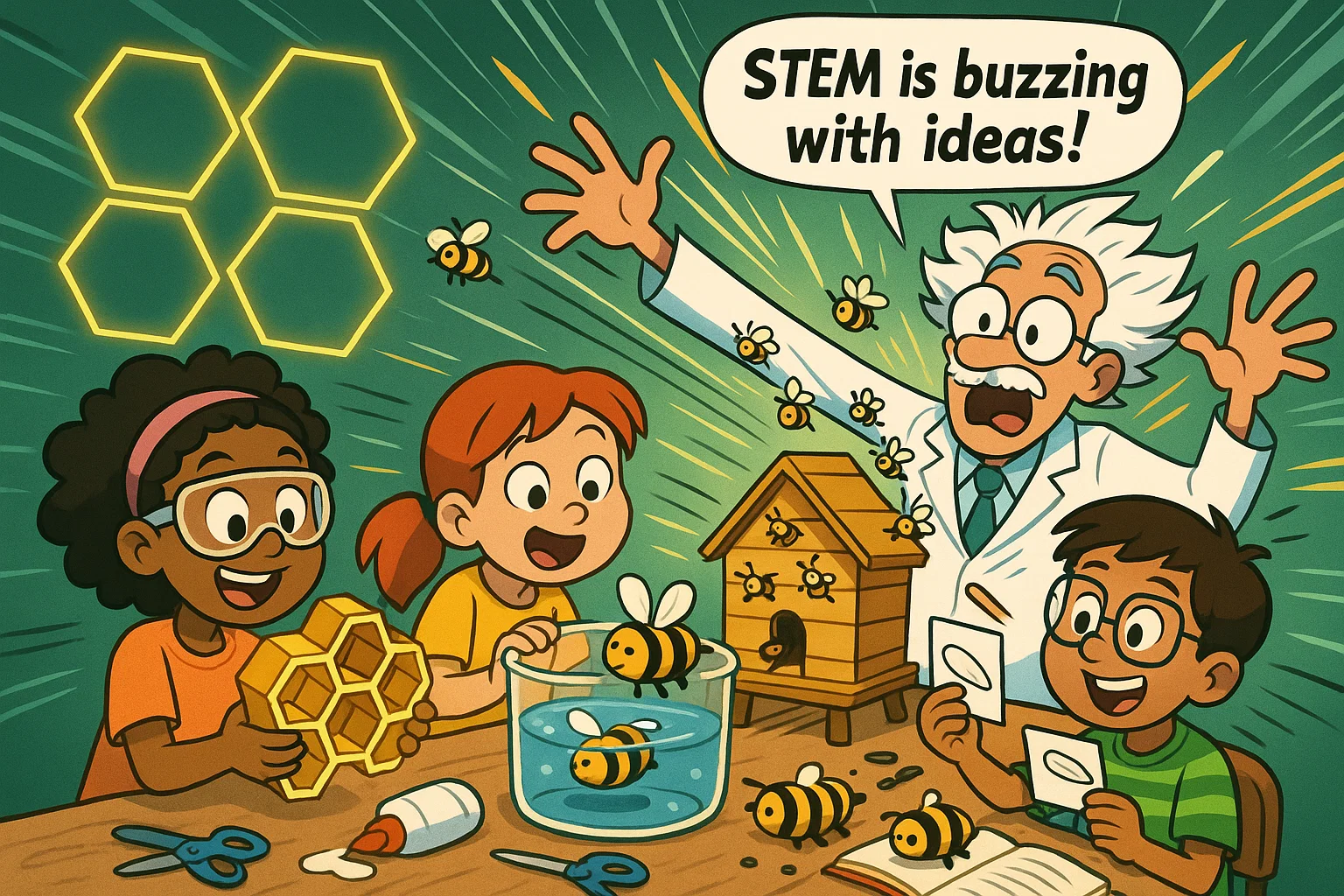
Early childhood education resources often emphasize that young children learn science well through exploration, conversation, and hands-on activities. A bee theme allows educators to introduce biological ideas through multi-sensory experiences.
By blending bee crafts, movement games, sensory play, and nature observation, children build stronger connections between what they make, see, hear, and do. This approach reinforces new vocabulary through hands-on practice.
Pollination Games Help Kids Learn Through Action
Kinesthetic learning plays a foundational role in early childhood learning because it turns abstract ideas into concrete experiences. A pollination game in which children move from flower to flower can model how bees visit blossoms while foraging.
In play-based learning, dramatic play and role-play can help preschoolers understand the relationship between bees and flowers. This physical simulation helps children see how bees gather food and move pollen between flowers.
Bee Crafts Support Fine Motor Skills
Fine motor skills are important for preschool and kindergarten readiness. A structured bee craft gives children a chance to use scissors, apply glue, tear paper, thread pipe cleaners, and arrange small materials.
These movements strengthen the small hand muscles needed for pencil grip, drawing, writing, and everyday classroom tasks. Activities such as building a bee from recycled materials also support bilateral coordination and spatial awareness.
Garden Projects Teach Children to Care for Wildlife
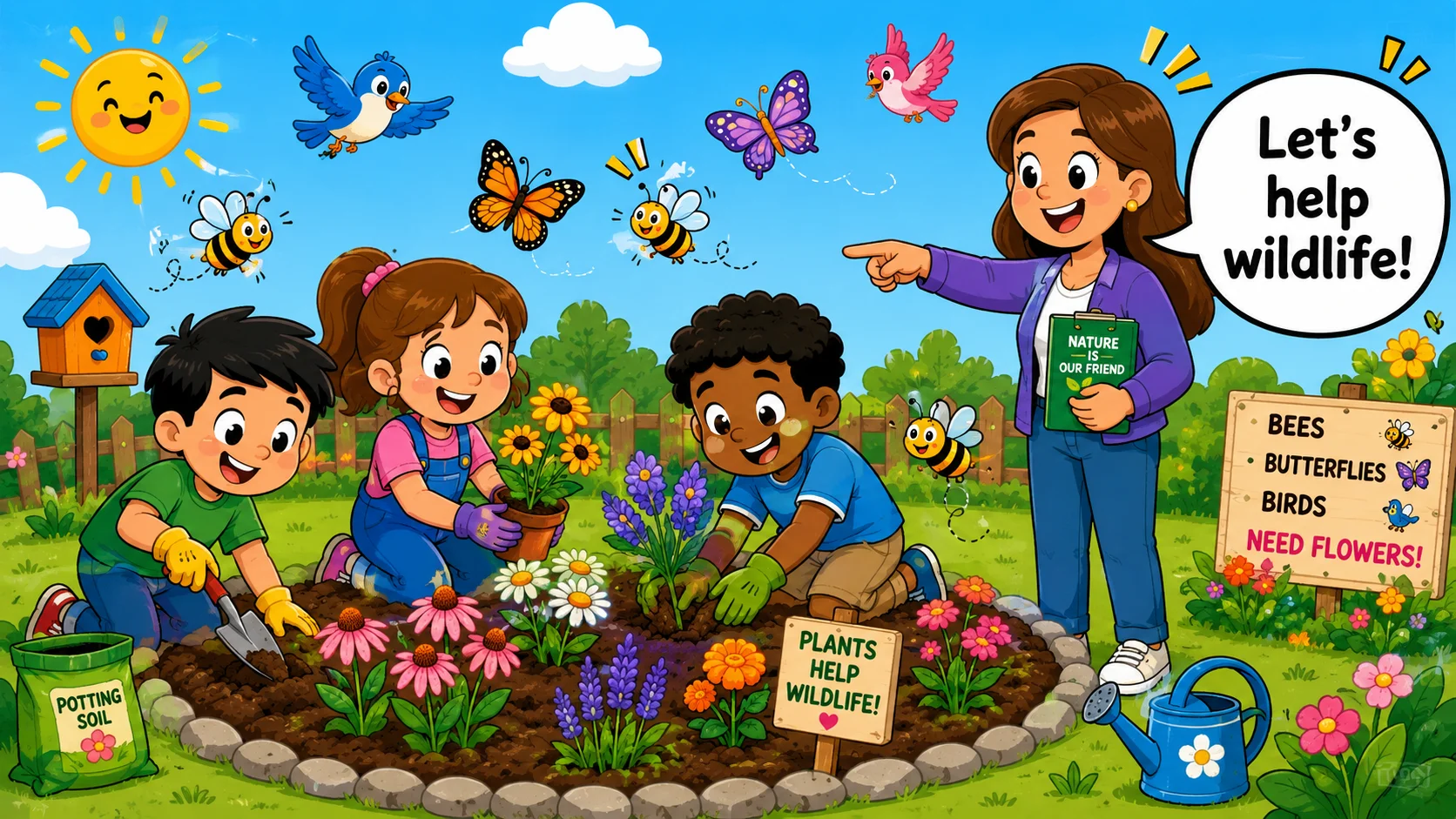
Early childhood education often uses nature-based projects to develop empathy, responsibility, and curiosity. Setting up safe backyard observations, creating a simple bee water station, or planting bee-friendly flowers teaches children that pollinators are part of a larger ecosystem.
These activities move learning outdoors and show children how human choices can affect habitats for solitary bees, bumblebees, honey bees, and other pollinators. They connect classroom learning with practical conservation habits.
Why Teach Kids About Bees?
Understanding the role of insects helps children build early ecological awareness and curiosity about science.
Pollination, Food, and Flowers
Bees are among the world’s most important pollinators, and animal pollinators help produce a significant share of the fruits, vegetables, nuts, and seeds people eat. When a honey bee lands on a blossom to collect nectar, tiny grains of pollen stick to its fuzzy body. As the bee moves from flower to flower, some pollen rubs off, helping plants make seeds, fruits, and vegetables.
Without pollination, crops such as apples, berries, pumpkins, and almonds would be much harder to produce at scale.
Bee Safety and Respect
Teaching children how to behave around bees requires clear, calm safety rules that build respect rather than fear. Educators should emphasize that foraging bees are usually focused on finding nectar and pollen, not on bothering people.
Children should learn to keep a calm, safe distance and observe quietly under adult supervision. Understanding that bees usually sting only when they feel threatened helps reduce fear while protecting the insects from harm.
Nature Curiosity and Conservation
Early exposure to the bee life cycle can encourage curiosity and care for nature. By observing how honey bees make honey, build comb, and visit flowers, children learn to appreciate the complexity of the natural world.
This curiosity can help children value gardens, wild spaces, and insect populations. Over time, learning about bees can encourage children to become more thoughtful observers and protectors of local nature.
Supplies for Bee Crafts, Games, and Lessons
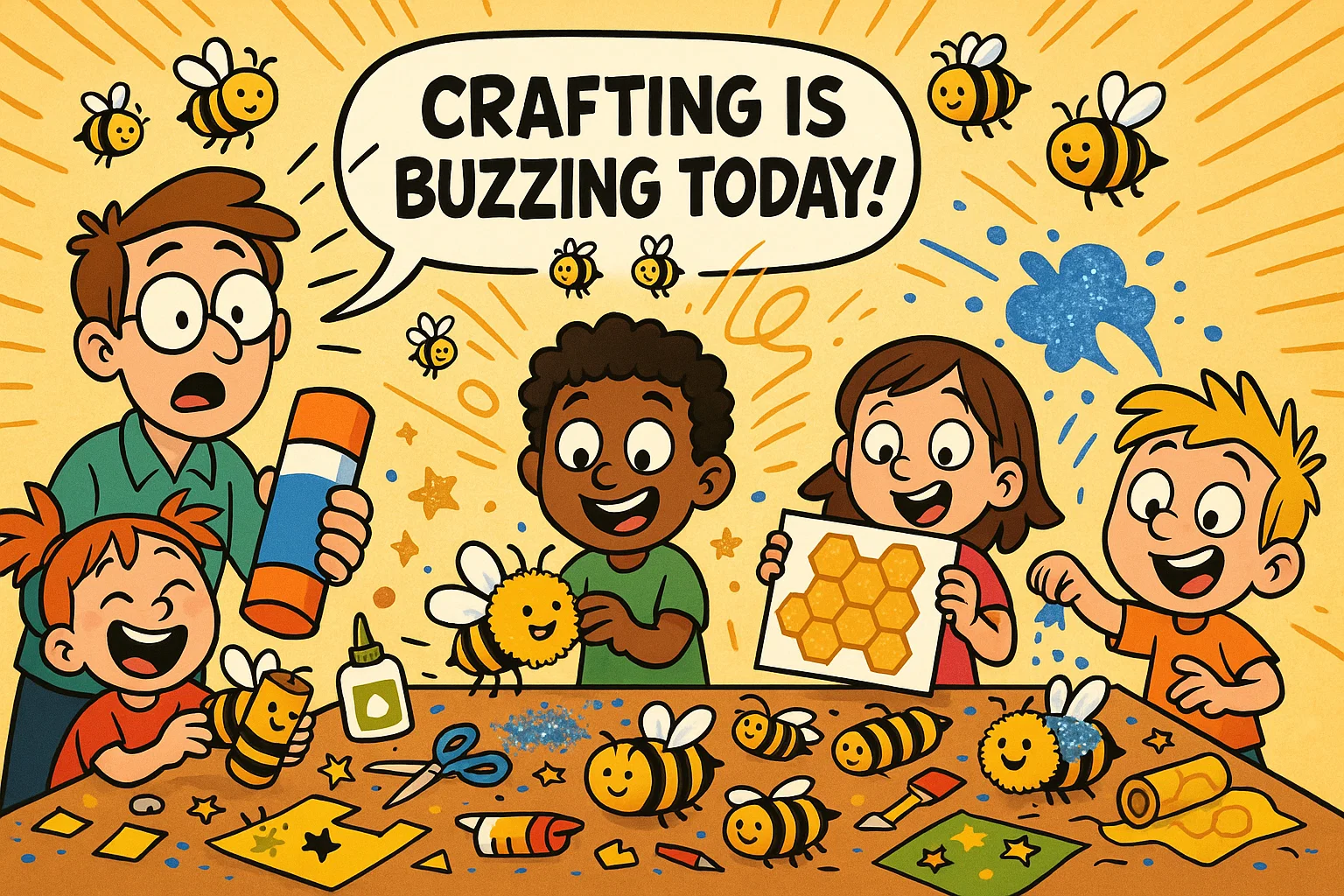
Before starting a bee unit, gather a versatile kit of low-cost materials so you can move smoothly between activities.
Craft Supplies
- Cardboard tubes, such as toilet paper rolls or paper towel rolls
- Recycled egg cartons
- Yellow and black construction paper or cardstock
- Washable paint in yellow, black, orange, and white
- School glue, glue sticks, and safety scissors
- Black and yellow pipe cleaners
- Googly eyes and tissue paper
- Bubble wrap and paper plates
- Natural items such as pine cones, pebbles, and yarn
Science and Garden Supplies
- Fresh flowers or realistic artificial flowers
- Small pom-poms, cornmeal, or yellow paper confetti as pollen substitutes
- Tweezers, plastic fine motor scoops, and small cups
- Locally appropriate wildflower seed packets and potting soil
- Recycled containers or biodegradable pots
- Shallow dishes and large smooth stones or oversized glass gems for adult-supervised setup
- Child-safe magnifying glasses and clipboards for observation notes
Printable and Classroom Supplies
- Printed life cycle diagrams showing the honey bee life cycle
- Number flashcards and bee counting mats
- Bee body label worksheets
- Storybooks about bee facts, pollination, and hive life
- Washable markers, crayons, and colored pencils
- Reusable dry-erase sleeves for tracing paths
25 Bee Activities for Kids
1. Make a Bee Craft
This simple paper craft helps young learners identify basic bee body parts and practice spatial arrangement.
| Content Type | Format | Main Focus |
| Foundation Craft | Paper Assembly | Spatial layout and basic anatomy |
Materials and Setup
Give each child heavy yellow cardstock, pre-cut black paper strips, white paper wing shapes, safety scissors, a glue stick, and black markers. For younger toddlers, pre-cut the yellow body into an oval to make assembly easier.
Activity Steps
- Guide the child to glue the black paper strips horizontally across the yellow oval body to form the yellow and black pattern.
- Ask the child to trim any extra black paper hanging over the edges with safety scissors.
- Apply glue to the base of the white wing shapes and attach them to the upper back section of the bee body.
- Draw eyes and a smile on the front of the oval using a black marker.
Learning Extension
Add early math practice by asking children to count aloud the number of black stripes they attached to their bee. For older kindergarten students, encourage them to label the head, thorax, abdomen, and wings.
2. Create Cardboard Tube Bees
This activity turns everyday recycled materials into a three-dimensional bee while supporting spatial awareness and design skills.
Materials and Setup
Collect clean toilet paper rolls or paper towel tubes, and cut longer tubes into thirds. Prepare washable yellow paint, paintbrushes, pre-cut black paper strips or black paint, black pipe cleaners, white coffee filters or vellum for wings, school glue, and markers.
Activity Steps
- Ask the child to paint the outside of the cardboard tube yellow and set it aside to dry.
- Wrap and glue three black paper strips around the dried yellow tube to create body stripes.
- Have an adult poke two small holes near the top of the tube, then thread a cut pipe cleaner through them to make antennae.
- Glue the coffee filter wings onto the back of the cylinder and draw two large eyes on the front.
Learning Extension
Use the finished models for a flying bee game or dramatic play area. Children can move their cardboard tube bees around the room while practicing directional words such as “over,” “under,” “near,” and “behind.”
3. Make Egg Carton Bees
This eco-friendly project shows children how recycled materials can become art while they practice finger dexterity.
Materials and Setup
Before the lesson, cut cardboard egg cartons into individual cups using sturdy scissors or shears. Supply yellow tempera paint, paintbrushes, black permanent markers or yarn, white tissue paper, craft glue, and hanging twine.
Activity Steps
- Have the child paint the outside of the egg carton cup yellow, adding a second coat if needed.
- Once the paint is dry, help the child draw thin black horizontal rings around the cup with a marker.
- Scrunch small rectangles of white tissue paper in the center and glue them to the top of the painted cup to make wings.
- Pierce a small hole through the top, then thread twine through it so the finished craft can be hung up.
Learning Extension
Gather all the finished egg carton bees to create a large classroom beehive display. Ask the children to count how many bees are in the class hive and practice simple addition.
4. Try Torn Paper Bee Craft
Tearing paper gives toddlers and preschoolers helpful hand-strengthening practice.
Materials and Setup
Provide a sturdy sheet of blue construction paper with a lightly penciled oval in the center. Give each child strips of yellow and black construction paper along with a washable glue stick.
Activity Steps
- Show the child how to use their thumb and forefinger to tear the yellow and black paper strips into small pieces.
- Ask the child to apply glue inside the penciled oval on the blue backing sheet.
- Have the child press the torn paper pieces down, alternating colors to recreate a yellow and black pattern.
- Glue a pre-cut translucent wax paper wing over the mosaic body to complete the artwork.
Learning Extension
Engage children in a descriptive vocabulary discussion during the activity. Ask them to describe how the torn paper feels compared with smooth sheets, focusing on texture, repeating patterns, and rough edges.
5. Paint Watercolor Bumblebee Art
This mixed-media art activity introduces crayon resist while highlighting visual differences between honey bees and bumblebees.
Materials and Setup
Print a bold black-line bumblebee outline on heavy watercolor paper. Provide thick yellow and black wax crayons, watercolor paint sets, small cups of clean water, and soft-bristled paintbrushes.
Activity Steps
- Ask the child to color inside the alternating body stripes using heavy pressure with a yellow wax crayon.
- Ask them to leave the remaining stripes and background uncolored or add light black crayon accents.
- Have the child brush a dark blue or purple watercolor wash across the entire sheet of paper.
- Observe together how the waxy crayon sections repel the water-based paint and keep the bee bright.
Learning Extension
Display reference images comparing a slender honey bee with a plump, fuzzy bumblebee. Ask children to notice differences in size, shape, and fuzziness, then record their observations on a comparison chart.
6. Print Bees with Fingers, Potatoes, and Mirrors
Printmaking offers a sensory way to explore symmetry, repetition, and fine motor control.
| Content Type | Format | Main Focus |
| Printmaking Art | Multimedia Print | Symmetry, tracking, and counting |
Materials and Setup
Prepare shallow trays of yellow washable paint. Provide raw potatoes sliced neatly in half by an adult, heavy cardstock sheets folded down the center for mirror prints, and black fine-tip markers for details.
Activity Steps
- Fingerprints: Have children dip their thumbs into yellow paint and press them onto paper to create small oval bee bodies.
- Potato Prints: Dip the flat cut side of a potato half into paint and stamp it on paper to make a larger bumblebee shape.
- Mirror Prints: Paint half a bee body on one side of a folded sheet, then press the sides together to create a symmetrical image.
- Let the paint dry, then draw black antennae, stingers, wings, and dotted flight paths around the page.
Learning Extension
Turn these prints into a personalized counting page or classroom art gallery. Have students number each stamped insect in order, creating a simple counting page that pairs numbers with objects.
7. Build a Bubble Wrap Beehive
This texture-focused printing project uses common packaging materials to suggest the look of a beehive.
Materials and Setup
Cut clean small-bubble wrap into simple hive shapes. Provide yellow and orange tempera paint, foam brushes or rollers, large sheets of white paper, and pre-cut paper bee accents.
Activity Steps
- Ask the child to apply an even layer of yellow or orange paint directly onto the raised bubbles using a foam brush.
- Carefully flip the painted bubble wrap sheet over and press it flat onto the white paper like a large stamp.
- Lift the plastic wrap slowly to reveal a repeating pattern that suggests the texture of a beehive.
- Glue small paper bee cutouts onto the dried print to show the bees returning home.
Learning Extension
Introduce basic geometry by comparing the bubble wrap print with pictures of real honeycomb. Explain that real honeycomb is made of hexagonal cells, which fit together efficiently and help bees store honey while using wax wisely.
8. Make a Honeycomb Model
This early engineering and STEM challenge encourages spatial reasoning by asking children to replicate a shape found in nature.
Materials and Setup
Gather yellow paper hexagon shapes, cut cardboard tubes, hexagon pattern blocks, or modeling clay with short pieces of yellow drinking straws.
Activity Steps
- Challenge children to arrange the hexagonal pieces flat on a table.
- Ask them to fit the pieces closely together without leaving large gaps between the walls.
- Secure the paper tubes, pattern blocks, or paper shapes with a light layer of craft glue or masking tape if needed.
- Place miniature toy bees inside the hollow cells to represent activity inside a hive.
Learning Extension
Encourage critical thinking by asking children why hexagons might work better than circles for building a honeycomb. Explain that hexagons fit together with no gaps and help bees use less wax.
9. Create a Beeswax Candle
Working with beeswax gives children a rich sensory experience and shows them how a natural material can come from a bee colony.
Materials and Setup
Purchase natural honeycomb-textured beeswax sheets from a craft or educational supplier. Pre-cut cotton candle wicks into lengths slightly longer than the width of the wax sheets, and keep the workspace clean.
This activity should be done with close adult supervision. Children should roll the candles only; adults should handle any lighting or flame-related steps.
Activity Steps
- Lay one textured beeswax sheet flat on a table and let the child feel the hexagon pattern and notice its natural scent.
- Place the cotton wick strip along the edge of one short side of the wax sheet.
- Show the child how to fold the edge of the wax over the wick, pressing down firmly to hold it in place.
- Use steady finger pressure to roll the sheet tightly until it forms a cylindrical candle.
Learning Extension
Explain that worker bees use nectar and special wax glands to make wax flakes, which they use to build honeycomb.
10. Build a Bee House or Nesting Site
This conservation activity focuses on solitary bees and shows children that not all bees live in large communal hives.
| Content Type | Format | Main Focus |
| STEM / Eco-Project | Outdoor Assembly | Conservation and habitat awareness |
Materials and Setup
Provide clean empty tin cans with smooth, safe edges or small open-front wooden boxes. Gather hollow bamboo stakes, dried plant reeds, paper straw tubes, jute twine, and safety scissors or shears for adult use.
Activity Steps
- Help the child cut bamboo stalks or paper straws so they match the depth of the chosen container.
- Ask the child to pack the hollow tubes horizontally inside the can until the interior is filled.
- Make sure the tubes fit snugly so they do not fall out when the container is held sideways.
- Wrap twine around the outside so an adult can hang the finished nesting site horizontally in a sunny garden spot protected from heavy rain.
Learning Extension
Explain that many solitary bees look for small tunnels where they can lay eggs, and monitor the house weekly from a distance. To keep the nesting site safer for bees, clean or replace the tubes after use and make sure the house stays dry.
11. Play a Pollination Game
This interactive activity uses movement to teach how cross-pollination helps plants produce seeds and fruit.
| Content Type | Format | Main Focus |
| Kinesthetic Game | Active Simulation | Cross-pollination mechanics |
Materials and Setup
Create large paper flowers with deep plastic cups taped into the center. Fill half the flower cups with yellow pom-poms, cornmeal, or yellow paper confetti, and give each child a pair of jumbo tweezers.
Activity Steps
- Spread the paper flowers across an open classroom rug or grassy lawn to create a pretend meadow.
- Give children simple bee headbands and a small cup to represent a pollen basket.
- Ask the children to fly to a flower, use their tweezers to pick up one piece of “pollen,” and place it in their basket.
- Have them fly to a different flower, drop one piece of collected “pollen” into the new cup, and pick up a fresh piece.
Learning Extension
Gather the students after the game to review what happened. Show how moving from flower to flower mixed the pollen, and explain that this process helps plants make seeds and fruit.
12. Try Pollination Role-Play
This dramatic play activity supports early literacy and social-emotional skills through cooperative storytelling.
Materials and Setup
Prepare role cards or simple costume props for parts of a backyard ecosystem: foraging bees, flowers, gardeners, wind, and rain.
Activity Steps
- Assign each child a role and give them a simple prop, such as fabric flower petals or mesh bee wings.
- Narrate a simple story: “The morning sun rises, and the sleepy worker bees leave their cozy hive to find food.”
- Prompt the bee actors to fly out, approach the flower actors gently, and exchange colorful yarn balls.
- Have the gardener actors pretend to water the flowers, while the flower actors stretch their arms wide to show blooming.
Learning Extension
After the role-play, add a simple storytelling and comprehension discussion. Ask children to share their perspective: What did the flower need from the bee, and what did the bee collect to take home?
13. Learn How Bees Feed
This demonstration turns a complex idea about insect anatomy into a simple hands-on visual.
Materials and Setup
Place a shallow demonstration cup filled with colored water inside a large artificial flower bloom. For an optional tasting version, give each child a separate cup with water and a small amount of honey or sugar water, plus their own straw to model a bee’s proboscis.
Do not give honey to children under 12 months old. Check for allergies and dietary restrictions before any tasting activity.
Activity Steps
- Gather the children around the flower setup and point out the liquid hidden inside the center of the petals.
- Explain that bees have a long, straw-like tongue called a proboscis that helps them lap up sweet liquids.
- For the optional tasting version, give each child a separate cup and straw, then let them take a small sip to model how a bee uses its proboscis.
- Show how pollen can cling to the outside of a bee’s body when it brushes against flower parts.
Learning Extension
Address common misconceptions by comparing how people eat with how bees feed. Discuss how honey bees use nectar for energy and collect pollen to feed developing larvae in the hive.
14. Learn How Honey Is Made
This sequencing activity shows how honey moves from flowers to the hive and then to a jar.
Materials and Setup
Print a set of illustrated sequence cards showing the journey of honey production. Include images of a blooming flower, a foraging bee, a flight path, a honeycomb cell, a beekeeper harvesting honey, and a honey jar.
Activity Steps
- Lay the sequence cards out in an intentionally scrambled order across the floor or table.
- Read a simple informational book aloud that explains how honey bees collect nectar and reduce extra water from it inside the hive.
- Invite children to select the cards one by one and arrange them into the correct left-to-right order.
- Have the group chant the sequence aloud: “Flower to bee, bee to hive, hive to jar!”
Learning Extension
Add an optional honey-tasting activity at the end of the lesson, but only for children over 12 months old and with caregiver approval for allergies or dietary restrictions. Ask children to describe the thickness, sweetness, and smell using sensory words.
15. Build a Bee Life Cycle Diorama
This three-dimensional science project gives children a hands-on way to explore the honey bee life cycle.
| Content Type | Format | Main Focus |
| Scientific Model | Shoebox Diorama | Chronological development stages |
Materials and Setup
Provide an empty cardboard shoebox to each participant. Supply modeling clay in white, yellow, and brown; soft white cotton balls; yellow construction paper; scissors; craft glue; and preprinted life stage labels.
Activity Steps
- Line the inside bottom of the shoebox with yellow paper cells to represent the nursery comb of the hive.
- Model a tiny white oblong shape out of clay to represent the egg stage and place it in the first cell.
- Roll a slightly larger curved white shape to represent the larva and place it in the second cell.
- Wrap a cotton ball with yellow thread to represent a pupa, place it in the third space, and add a completed adult bee model at the end.
Learning Extension
Ask children to present their finished life cycle models to a partner. Encourage them to describe each stage using words such as egg, larva, pupa, adult, cell, and metamorphosis.
16. Play a Honey Bee Sequencing Game
Reinforce sequencing and cause-and-effect thinking through a quick card game.
Materials and Setup
Gather durable laminated cards that show the honey bee life cycle and simple honey-making steps. Make sure the cards are large enough for small hands to handle comfortably.
Activity Steps
- Divide students into small pairs and give each group a mixed deck of sequencing cards.
- Set a timer for three minutes and challenge the teams to work together to put the honey bee life cycle in the correct order.
- Have children check another team’s timeline to make sure the egg comes before the larva.
- Ask children to turn all cards face down and try to rebuild the timeline from memory.
Learning Extension
Use this card game to build early literacy skills. Have children explain their reasoning with transition words such as first, next, then, and finally.
17. Create a Bee-Themed Sensory Bin
Sensory bins give young children an open-ended play space where they can explore math, vocabulary, and fine motor skills at their own pace.
| Content Type | Format | Main Focus |
| Unstructured Play | Plastic Storage Bin | Tactile input and vocabulary practice |
Materials and Setup
Fill a large shallow plastic storage bin with dried yellow split peas, black beans, or colored pasta shapes. Scatter toy bees, plastic flower stems, miniature tongs, clear scoops, and yellow silicone cupcake liners throughout the mix.
Use age-appropriate materials and supervise closely, especially with toddlers or children who may put small objects in their mouths.
Activity Steps
- Allow children to place their hands in the dry filler to explore the cool, shifting texture.
- Encourage them to use plastic tweezers to pick up toy bees and place them into silicone cupcake liners as pretend hives.
- Let them scoop dry yellow peas with measuring spoons and pour them into cups to pretend they are storing honey.
- Hide small flower tokens in the sensory bin and ask children to search for the hidden blossoms.
Learning Extension
Add vocabulary cards to the sensory bin area. When a child finds a specific item, ask them to match it to a card with a written word such as pollen, nectar, or beehive.
18. Play a Bee Counting and Sorting Game
This simple math activity helps children practice counting, sorting, and grouping with bee-themed items.
Materials and Setup
Print ten large flower mats and number each one from 1 to 10. Provide a basket of small yellow pom-poms as pollen counters along with mini toy bees or painted yellow pebbles.
Activity Steps
- Spread the numbered flower mats across a table in front of the child.
- Ask the child to identify the number printed in the center of the first flower mat.
- Ask them to count out the matching number of yellow pom-poms, using plastic tongs to place them on the petals.
- Have the child sort the bee figures by size or color, placing smaller bees on lower numbers and larger bees on higher numbers.
Learning Extension
For older kindergarten students, introduce simple addition and subtraction. Ask: “If your flower has 3 pollen balls and a bee carries 1 away, how many are left on the mat?”
19. Use Bee Worksheets and Printables
Printable resources support lesson planning and give teachers simple ways to check children’s understanding.
Printable Coloring Pages
Coloring sheets with a beehive or garden scene help children practice hand-eye coordination and coloring within lines. Encourage children to follow simple coloring directions, such as coloring the hive yellow and the garden background green, to build focus.
Printable Math Pages
Distribute math sheets with ten-frames, simple dot-to-dot paths, and object tracking grids. Children can count pictures of bees and write the matching numbers in the spaces provided to practice pencil control.
Printable Science Pages
Use simple anatomy sheets where children draw lines from words such as wings, antennae, and abdomen to a honey bee picture. Pair these with observation journals where children can record the date, time, weather, and bee sightings during outdoor activities.
20. Read Bee-Themed Books
Combining storytelling with science topics deepens reading comprehension while encouraging empathy for living things.
Book Choice Tips
Choose high-quality children’s books that combine engaging stories with accurate science. Look for titles that focus on hive life, seasonal changes, pollination, or the importance of bees in nature. Avoid books that portray insects only as scary characters.
Read-Aloud Questions
- What job does this worker do inside the colony?
- Why is the bee flying to the bright flower instead of the green leaves?
- How do you think bees find good patches of nectar?
Book Extension Activity
Connect the main idea of the read-aloud book to a hands-on classroom project. If the story highlights a bee looking for a home, move into a cardboard tube bee craft or an outdoor water station activity.
21. Sing Bee Songs and Fingerplays
Rhythmic songs and fingerplays support language development, phonemic awareness, and circle-time participation.
Bee Songs for Circle Time
Introduce simple songs set to familiar children’s melodies and include playful buzzing sounds. Encourage children to wave their arms like wings and hop from spot to spot on the rug, pretending to fly toward garden flowers.
Beehive Fingerplay
Here is the beehive, but where are the bees?
Hide a fist behind the back.
Hidden away where nobody sees.
Keep the fist hidden.
Watch them come creeping out of their hive,
Bring the fist forward.
One, two, three, four, five!
Pop fingers out one by one.
Buzz-z-z-z-z-z!
Wiggle fingers all around.
Movement and Language Skills
Participating in group rhymes helps build auditory memory and vocabulary retention. The finger movements in the rhyme support hand control and help toddlers prepare for using tools such as crayons and scissors.
22. Play a Bee Movement Game or Flying Bees
Gross motor games encourage full-body movement while introducing spatial words and listening skills.
Materials and Setup
Scatter colorful foam mats across an open floor space to represent flower landing pads. Play upbeat instrumental music in the background and give each child lightweight fabric bee wings or a yellow ribbon.
Activity Steps
- Ask children to move around the room like busy flying pollinators while the music plays.
- Prompt them to change their speed and direction based on listening cues, buzzing quickly or slowly.
- Pause the music suddenly to signal that children should find the nearest flower pad and freeze.
- Call out specific spatial directions: “Fly near the wall!” or “Buzz far from the table!”
Learning Extension
Add descriptive spatial words and speed words to the game. Ask children to take turns flying high near trees or low like insects visiting clover.
23. Plant Pollinator-Friendly Flowers and Sunflowers
This hands-on biology project shows how plants and pollinators rely on each other.
Materials and Setup
Provide small biodegradable pots, potting soil, child-sized trowels, watering cans, and packets of locally appropriate wildflower seeds or large sunflower seeds.
Activity Steps
- Guide the child to scoop potting soil into the pot until it is nearly full.
- Ask them to press their index finger gently into the center of the soil to make a shallow hole.
- Drop a sunflower seed into the hole, cover it gently with soil, and water it lightly.
- Place the pots on a sunny classroom windowsill and observe their growth each day.
Learning Extension
Connect this planting activity back to insect feeding. Explain that when these flowers mature, their bright colors and nectar can attract local pollinators.
24. Make Wildflower Seed Balls and Let Native Flowers Grow
This community nature project introduces conservation by creating small seed balls that can support local pollinators when planted responsibly.
| Content Type | Format | Main Focus |
| Nature Project | Clay-Seed Mixture | Responsible planting and pollinator support |
Materials and Setup
Prepare natural red pottery clay or recycled gray paper pulp slurry. Mix in organic compost and a blend of locally native, non-invasive wildflower seeds recommended for your region.
Activity Steps
- Give each child a palm-sized portion of the moist clay or paper pulp mixture.
- Show them how to roll the material between their palms to shape it into a firm, round ball.
- Roll the outside of the wet ball through a tray of loose wildflower seeds, pressing them into the surface.
- Place the finished seed balls on a tray to dry completely before planting them in a suitable garden area with permission.
Learning Extension
Discuss the ecological value of leaving small patches of the schoolyard or home lawn unmowed where it is safe and allowed. Explain how common non-invasive wild plants, such as dandelions, can provide an early-spring food source for foraging bees when few other flowers are blooming.
25. Go on a Bee Safari and Create a Water Station
This outdoor activity lets children act like field scientists while they observe bees and create a simple water station.
Bee Safari Checklist
Equip each young explorer with a clipboard, observation sheet, and magnifying glass. Ask children to look for the following clues from a safe, respectful distance:
- Brightly colored flower blossoms
- Soft buzzing sounds
- Yellow and black body patterns
- Insects carrying yellow pollen on their legs
Water Station Setup
Pollinators need clean water to drink, and honey-making colonies also use water to help cool the hive, but insects can drown in deep water. Create a safe water station by filling a shallow dish with large glass gems or smooth stones, then adding water halfway up the stones and changing it regularly. This gives insects a secure place to land while they drink.
Nature Journal Extension
Have children return indoors to record their observations in a nature journal. Encourage them to draw the flower shapes they saw, graph the number of sightings, and note how the weather may affect insect activity.
Pollinator Safety Tips for Kids
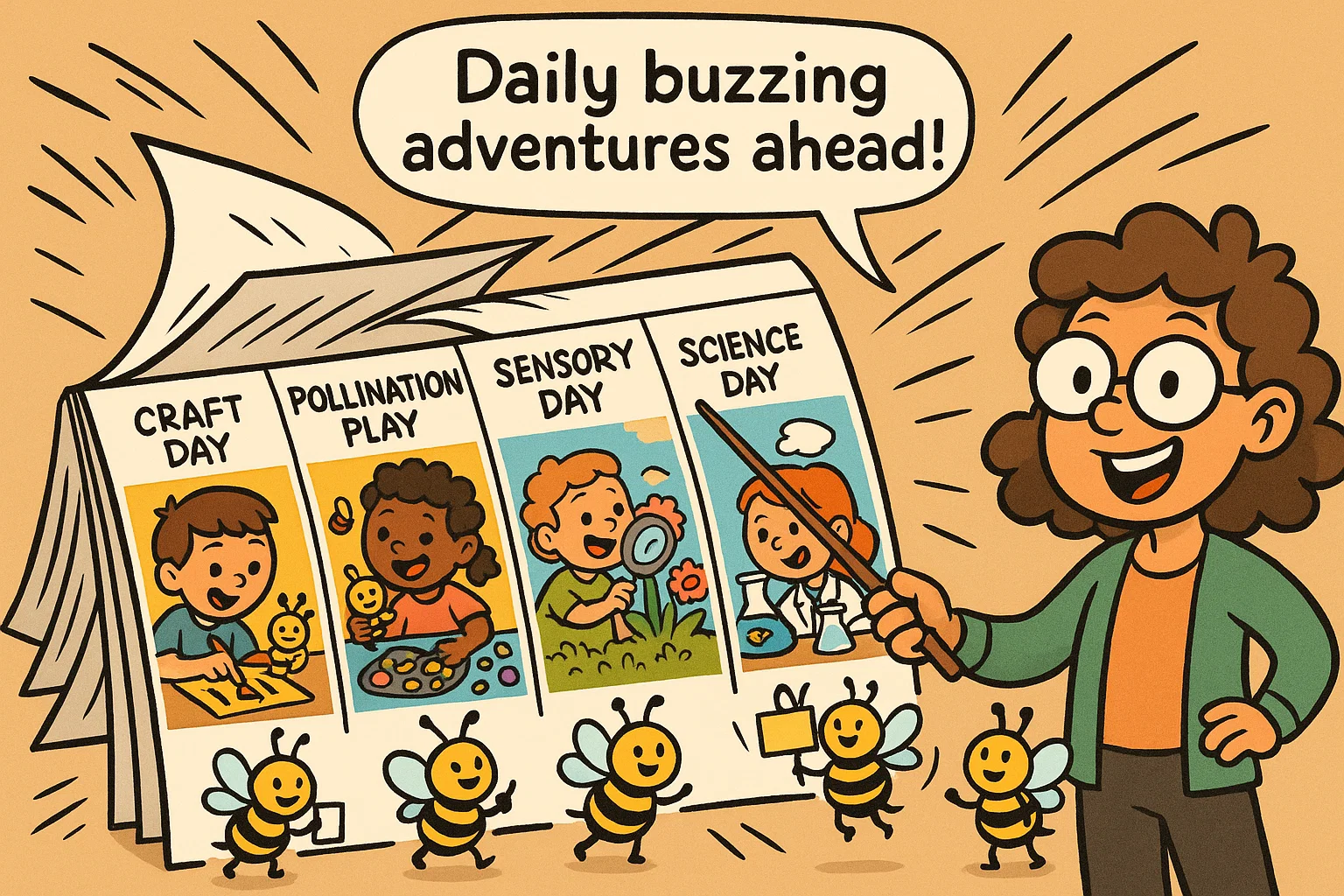
Clear safety guidelines protect both children and pollinators during outdoor activities.
Watch Bees from a Distance
Teach children that foraging insects are usually busy looking for food and are unlikely to bother people if left alone. Encourage quiet observation from a respectful distance, ideally several feet away, and make sure no one blocks the insect’s flight path to a flower.
Avoid Swatting Bees
Explain that waving arms wildly or swatting at a passing bee can scare the insect and make it feel threatened. If a single stinging insect flies nearby, tell children to stay calm and still until it moves away. If many bees appear or a nest is disturbed, an adult should lead children away quickly.
Ask an Adult Before Outdoor Bee Activities
Remind children to always check with a teacher, parent, or caregiver before exploring an outdoor area. Adults should inspect the area for hidden nests, make sure children wear proper footwear, and plan for any known insect allergies.
Frequently Asked Questions
What are the best bee crafts for kids?
The best bee crafts for kids are fun and simple projects that let children cut, glue, paint, count, and create. Paper crafts, cardboard tube insects, egg carton models, and bubble wrap bee art all help children develop fine motor skills while making an adorable bee to display at home or in the classroom.
What bee crafts and activities are best for preschool and kindergarten?
Bee crafts and activities that combine movement, pretend play, counting, and hands-on learning are perfect for preschool and kindergarten. Good options include a pollination role play game, a themed sensory bin, a honey bee sequencing activity, and simple activities like paper crafts or planting flowers that attract pollinators.
How can children learn all about bees through play?
Children can learn all about bees through engaging bee activities that bring the world of bees to life. Crafts, movement games, storybooks, garden observations, and pretend play help children understand how pollinators live, how they pollinate flowers, and why these insects matter.
How do pollinators help flowers grow?
Pollinators move pollen from one flower to another while collecting nectar and pollen for food. When an insect lands on a flower, pollen sticks to its fuzzy body. On the next blossom, some of it rubs off, helping the plant make seeds, fruits, or vegetables. This makes science concepts like pollination easier for young learners to understand.
Why are pollinators important for kids to learn about?
Bees are fascinating creatures, and bees are important because they play a vital role in nature. They pollinate many plants, support gardens and farms, and provide food for other living things. Teaching children that bees are essential helps them build respect for insects, flowers, and the wider natural world.
What is the life cycle of a bee?
The life cycle of a bee includes four main stages: egg, larva, pupa, and adult. Children can explore the bee lifecycle with sequencing cards, clay models, or a shoebox diorama. These hands-on activities make the cycle of a honey bee easier to see, remember, and explain.
Take a short quiz to find out what your everyday choices say about your parenting style
When your child is curious about something new, what’s your instinct?
Take a short quiz to find out what your everyday choices say about your parenting style
“Can I download this app?” What happens next?
Take a short quiz to find out what your everyday choices say about your parenting style
When it comes to rules at home, which sounds most like you?
Take a short quiz to find out what your everyday choices say about your parenting style
If you could give your child one life skill today, what would you pick?
Take a short quiz to find out what your everyday choices say about your parenting style
Your child gets to choose what to watch. What would your ideal setup look like?
Take a short quiz to find out what your everyday choices say about your parenting style
Pick your parenting superpower ✨