200+ First Grade Writing Prompts for Stories, Journals, and Seasons

 Discover a Free Education Video App for Kids
Pastory uses AI to personalize educational video content based on your child’s interests and personality. Safe, engaging, and built for curious young minds. Sign up now to stay updated and enjoy early access with a free trial
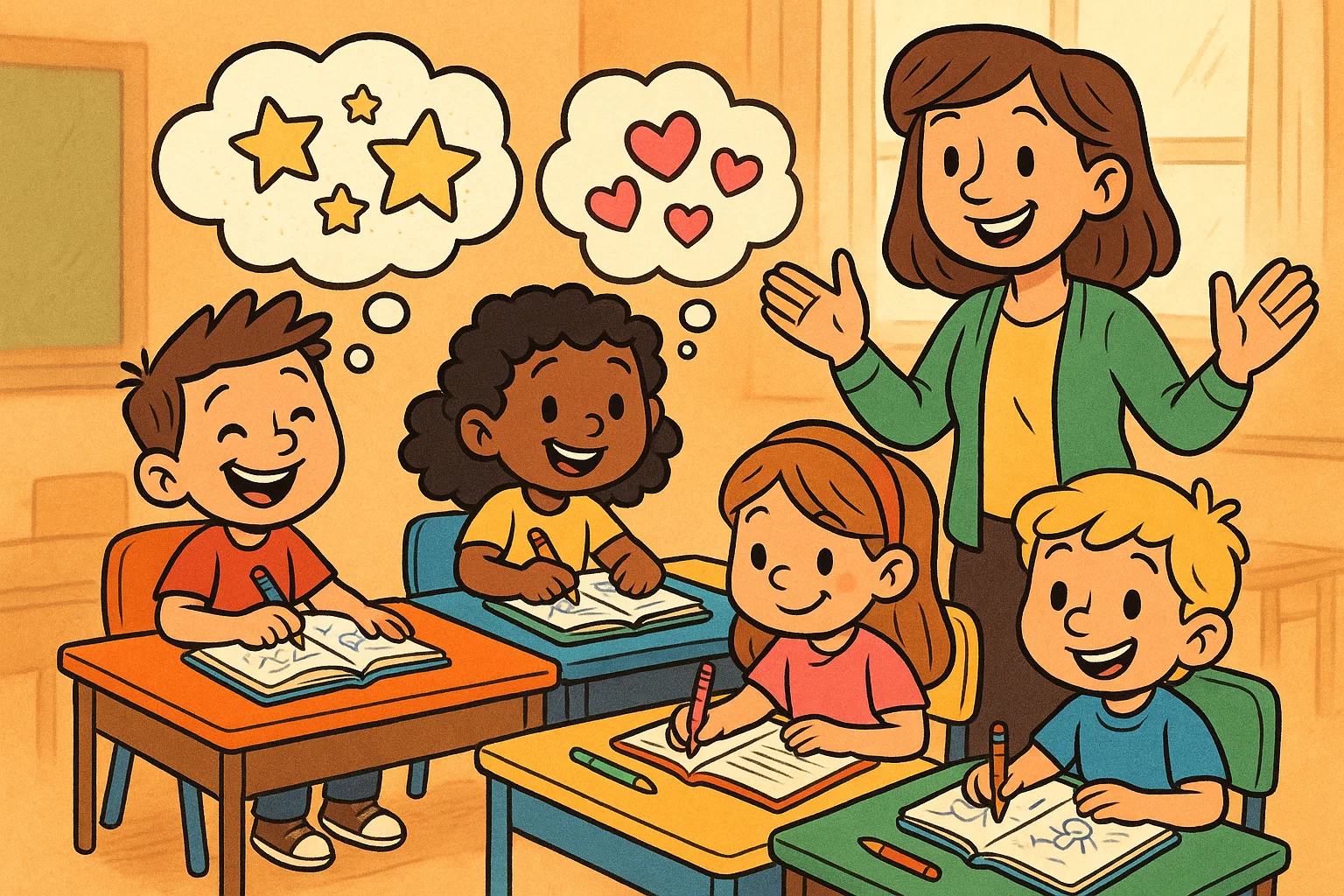
Finding the right 1st grade writing prompts can make a real difference for young learners who are just beginning to put their thoughts into sentences. This collection covers more than 200 prompts across narrative, fiction, opinion, informational, descriptive, seasonal, and journal writing — giving teachers and parents a ready-to-use resource for any day of the school year.
Whether you need a quick morning warm-up, a creative story starter, or a reflective end-of-class prompt, the ideas here are organized by genre, theme, and season so you can find the right fit without searching through a pile of worksheets.
Key Takeaways
- This article includes 200+ writing prompts designed specifically for first-grade students.
- Prompts are organized by genre, including narrative, fiction, opinion, informational, and descriptive writing.
- A dedicated journal prompts section covers morning journal, weekend, and reflection ideas for daily classroom routines.
- Story starters give students a ready-made opening sentence so they can jump straight into creative writing.
- Narrative writing prompts help first graders practice sequencing events with a clear beginning, middle, and end.
- Seasonal sections cover fall, winter, spring, and summer with month-by-month prompt ideas.
- Tips for reluctant writers and guidance on sentence starters versus open-ended prompts are also included.
Best Prompt Types for First Grade
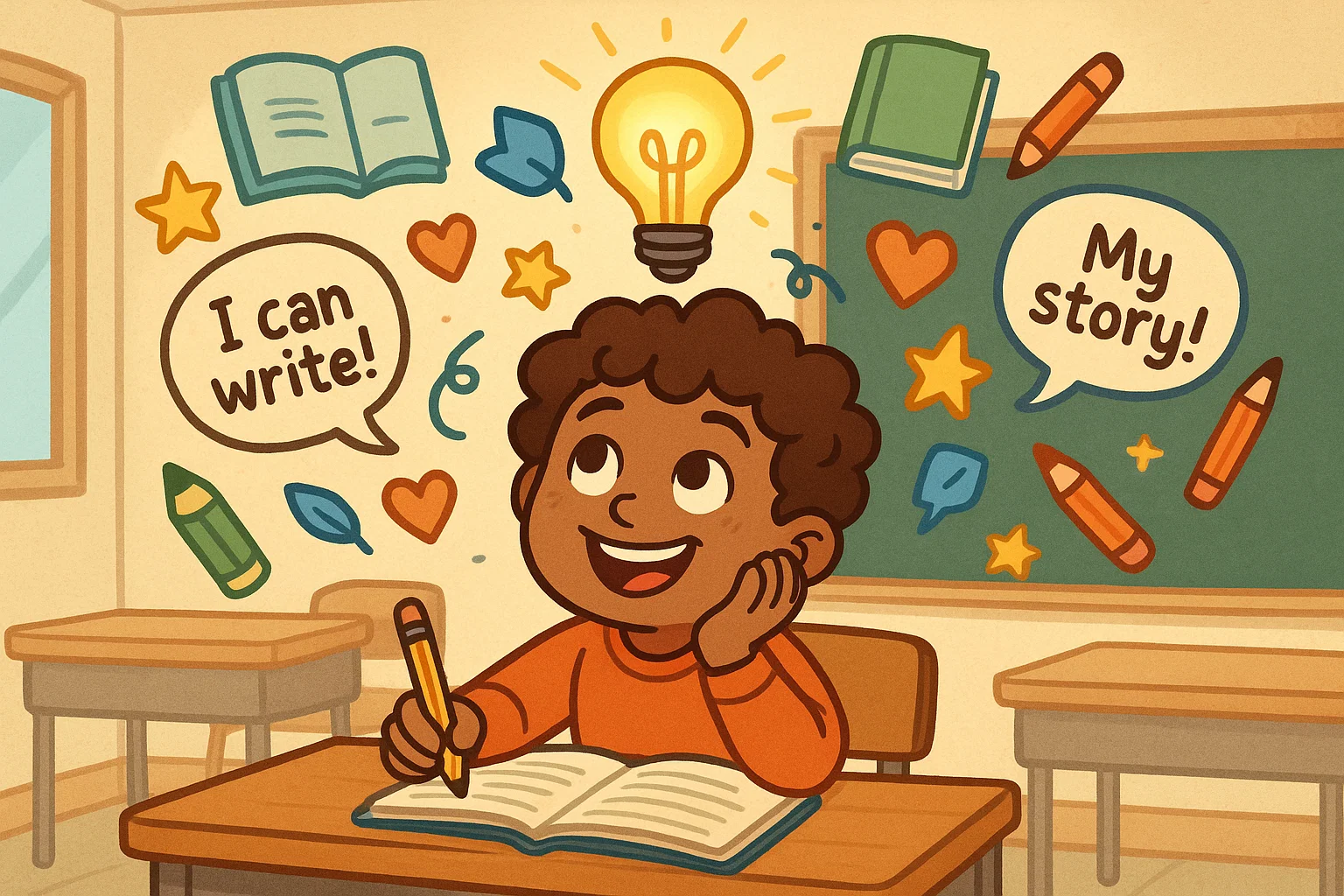
Different types of first-grade writing prompts target specific cognitive and language-development milestones. Narrative writing prompts focus on sequencing and storytelling, while opinion prompts encourage critical thinking by asking children to justify their preferences. Informational prompts teach students how to convey facts and explain simple “how-to” processes. Picture prompts are particularly effective for first graders who are visual learners because they provide a concrete starting point for descriptive writing. By rotating through these types, you help students practice a range of literacy skills.
Best Ways to Use First Grade Writing Prompts
A writing prompt can be adapted for different lesson formats depending on the time available. For daily journal sessions, a quick response of 5–10 minutes is ideal. In literacy centers, students can use a graphic organizer to map out a more detailed practice task. For fast finishers, keeping a literacy station stocked with printable prompts can help them stay productive. Teachers can adjust expectations based on each student’s level, ranging from one clear sentence to a full paragraph with a beginning, middle, and end.
Best Prompts for Reluctant Writers
Reluctant first graders often feel overwhelmed by the demands of grade-level writing. To help students improve, start with high-interest topics like animals, food, or silly “what if” scenarios. Using picture prompts allows the child to “see” the story before they start drafting. A helpful strategy is to have the student give a verbal response first; once they have articulated their idea, they can then structure their thoughts on paper. This can reduce anxiety and create a more positive association with classroom writing.
Sentence Starters vs. Open-Ended Prompts
Choosing the right prompt format is essential for meeting the diverse needs of first graders. Educational frameworks often emphasize scaffolding because the right level of support can help early writers build confidence and independence.
| Feature | Sentence Starters | Open-Ended Prompts |
| Primary Goal | Confidence and structure | Creativity and detail |
| Target Learner | Beginning writers / English learners | Confident writers / more advanced learners |
| Example | “My favorite animal is…” | “Describe your dream pet.” |
| Outcome | Completion of a single thought | Development of a unique “voice” |
Sentence Starters for Early Learners
Sentence starters act as a “bridge” for students who need help getting an idea started. For first-grade literacy, starters like “I like to play…” or “One day, I saw…” remove the initial hurdle of how to get started. These are particularly effective for morning work, where the goal is a quick, successful writing task. By providing the first few words, you allow the first grader to focus on the topic and build a sentence that expresses their own idea.
Open-Ended Prompts for Creative Work
Open-ended prompts like “What would you do if you found a magic key?” or “Describe your dream playground” encourage first graders to use their imagination. These creative writing prompts do not dictate a specific starting phrase, allowing for more variety in students’ responses. These prompts help students develop their “voice” and encourage them to add descriptive details, such as colors, sounds, and feelings, to their stories.
When to Use Each Prompt Format
Deciding which format to use depends on the student’s current writing skills and the goals of the lesson. Sentence starters are best for beginning writers, English learners, or quick-response sessions when time is limited. Open-ended prompts are better suited for journaling, storytelling, or students who are ready to develop more complex writing skills. Using both formats in a resource pack helps first graders feel both supported and challenged.
Narrative Writing Prompts
Narrative writing prompts are one of the most effective tools for building first-grade literacy. A good narrative prompt gives students a clear starting situation and encourages them to think about what happens next. When introducing narrative writing to first graders, it helps to model a short example aloud — describe a character, a problem, and a solution — before asking students to write their own. The prompts below are grouped by type to make it easy to match the right prompt to your lesson goal.
Narrative writing helps students tell a story with a clear sequence of events. For first graders, this means learning to include a beginning, middle, and end.
Personal Story Ideas
These prompts focus on real-life events, which are often among the easiest for first graders to describe because they have experienced them.
- Describe your very first day of first grade.
- Describe a time you went to the park with your family.
- What was the funniest thing that ever happened to you?
- Tell the story of your last birthday party.
- Tell about a time you helped a friend or teacher.
Adventure Story Ideas
Adventure story prompts invite first graders to write about exciting imaginary journeys.
- You find a treasure map under your bed. Where does it lead?
- You walk through a magic door in your classroom. What do you see?
- Imagine you are an astronaut exploring a new planet.
- Imagine spending a whole day under the sea with fish. What happens?
- You find a secret forest behind your house. What lives there?
Beginning, Middle, and End Ideas
To help students practice story structure, these prompts require a clear sequence using transition words like first, next, and finally.
- Explain how to make a peanut butter and jelly sandwich step by step.
- Tell a story about a lost dog finding its way home.
- Describe what happens when a seed turns into a flower.
- Create a story about a snowman that comes to life and then melts.
- Describe your routine from the moment you wake up until you get to school.
More Narrative Writing Ideas
- Write about a time you tried something new and how it made you feel.
- Tell the story of a day when everything went wrong but turned out okay.
- Write about a time you made a new friend. How did it happen?
- Describe a moment when you felt really brave.
- Tell the story of a rainy afternoon and what you decided to do.
- Write about a time your family did something together that you will never forget.
Fiction Writing Prompts
Fiction writing prompts are designed to spark imagination and allow first graders to move beyond the real world.
Magical Story Ideas
- If you had a magic backpack, what would you keep inside it?
- You find a wand that can turn anything into chocolate. What do you do with it?
- What would you do if you could fly like a bird for one day?
- Imagine you go to a school for wizards. What is your first lesson?
- You receive a bottomless gift box. What do you pull out first?
Animal Character Ideas
Giving animals human traits is a classic imaginative storytelling exercise for first-grade students.
- Create a story about a cat that decides it wants to go to first grade.
- What happens when a dog becomes the principal of your school?
- Imagine a squirrel who is afraid of heights. What happens when it has to climb a tree?
- Create a story about a hamster who builds a rocket ship.
- What would a bear say if it could talk to you?
Make-Believe World Ideas
- Describe a land where everything is made of candy.
- What is it like to live in a city in the clouds?
- Imagine an island where dinosaurs are still alive.
- You go to a classroom on the moon. What is school like there?
- Describe a forest where the trees are made of giant lollipops.
Opinion Writing Prompts
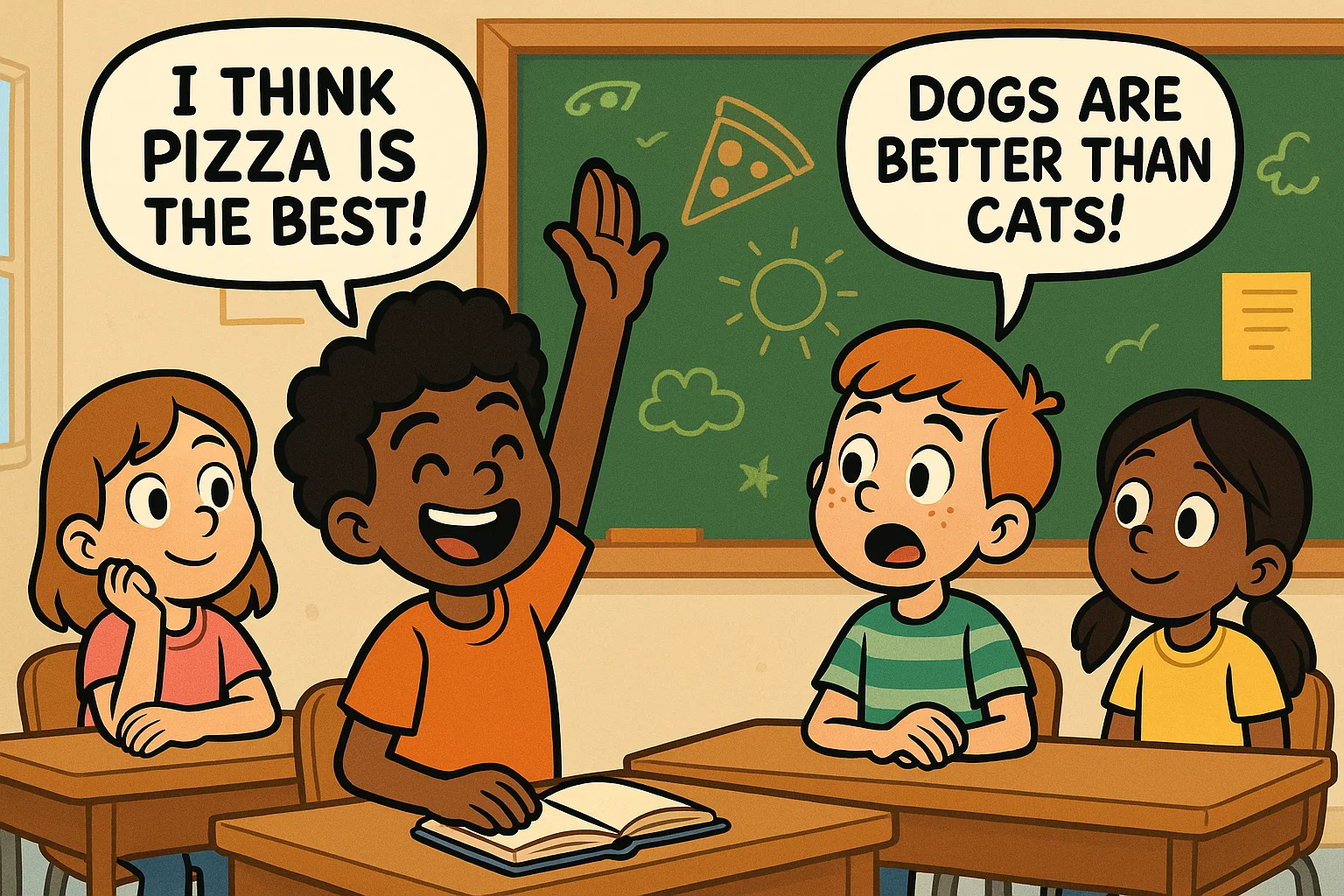
Opinion writing helps first graders develop their voice and learn to give reasons for their ideas.
Favorite Things Questions
- What is your favorite animal and why?
- Which book is the best one you have ever read?
- What is the best toy in the world?
- Which season is better: summer or winter?
- What is the tastiest food to eat for lunch?
Would You Rather Questions
These fun writing prompts work well as a hook for first-grade writing.
- Would you rather be able to fly or swim underwater?
- Would you rather have a pet dragon or a pet unicorn?
- Would you rather have every day be your birthday or every day be Halloween?
- Would you rather live in a house made of ice or a house made of cake?
- Would you rather be very tall or very tiny?
School Opinion Questions
- Should first graders have a longer recess? Why or why not?
- What is the best classroom job to have?
- Where is the best place to go on a field trip?
- Should students have to do homework?
- Why is reading time important for our class?
Informational and Expository Writing Prompts
Expository prompts guide students to explain a topic or process clearly using facts.
How-To Tasks
- Explain how to brush your teeth correctly.
- List the steps for making a sandwich.
- How do you pack your backpack for school?
- Tell someone how to take care of a pet fish.
- Explain how to plant a seed and help it grow.
Fact-Based Topics
- Share three facts you know about frogs.
- What are some important facts about apples?
- Explain how rain happens.
- Explain what a firefighter does to help people.
- Name three things you know about the sun.
Explain Topic Ideas
- Explain what it means to be a kind friend.
- How do plants use sunlight to grow?
- What makes someone a hero?
- Why is it important to recycle?
- Explain what happens during a thunderstorm.
Research Writing Prompts

Even first graders can practice research writing by looking at simple books or pictures to find facts.
Animal Research Topics
- Penguins: Where do they live and what do they eat?
- Butterflies: How do they change as they grow?
- Sharks: What makes them good swimmers?
- Bears: What do they do during the winter?
- Frogs: Describe their life cycle in three steps.
Community Helper Research Topics
- What does a doctor use to help sick people?
- How does a mail carrier get letters to your house?
- Why are librarians important to our school?
- What does a police officer do to help the community?
- How do farmers help provide food for us?
Weather and Season Research Topics
- What are some common types of clouds?
- Why does the wind blow?
- What happens to trees during the fall?
- How do animals stay warm in the snow?
- What causes a rainbow to appear in the sky?
Funny Writing Prompts
Playful writing is one of the best ways to help students who feel bored or intimidated by standard writing prompts.
Silly Animal Ideas
- A dog is driving the school bus. Where does he take you?
- A duck puts on a pair of sneakers and starts running. Where does it go?
- Your pet hamster is elected mayor of your town.
- A cow tries to jump over the moon but gets stuck.
- An elephant tries to hide in your bathtub.
Weird School Day Ideas
- One morning, all the desks in your classroom start talking.
- Your lunch grows into a giant monster. What happens next?
- Every time you use your pencil, it turns into a noodle. What do you do?
- Your teacher turns into a giant frog during math class. What happens next?
- All the colors in the school disappear except for purple.
Giggle Journal Ideas
- What is the silliest hat you can imagine?
- If you could eat only one food forever, but it had to be blue, what would it be?
- Share a joke and explain why it is funny.
- What would happen if today was “Backwards Day”?
- Describe a monster that is afraid of children.
Personal Writing Prompts
These journaling prompts help build the classroom community by allowing children to share their unique identities.
All About Me Topics
- What is the story behind your name?
- Describe your favorite outfit to wear.
- What is something you are really good at doing?
- Who are the people in your family?
- What is your favorite thing about yourself?
My Goals Topics
- What is one thing you want to learn how to do this year?
- How can you be more helpful at home?
- What is a “kindness goal” you have for this week?
- What is a book or story you are excited to finish reading?
- What do you want to be when you grow up?
My Feelings Topics
- Write about a time you felt very proud of yourself.
- What do you do when you feel a little bit nervous?
- Describe a place that makes you feel calm and happy.
- How do you feel when you have to try something new?
- What is something that always makes you smile?
Animal Writing Prompts
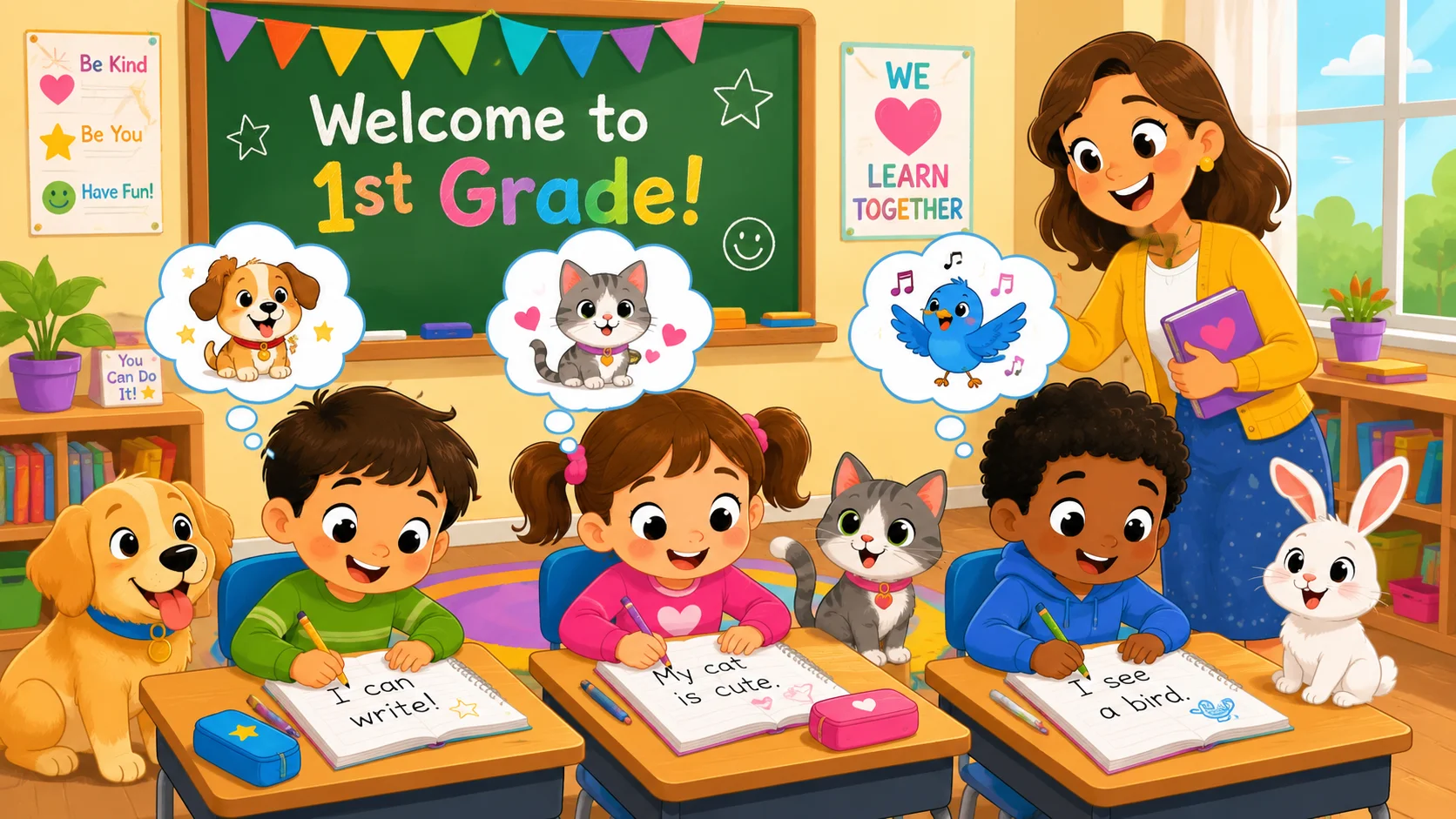
Animals are a universal interest for first-grade students, making these prompts highly effective for engagement.
Pet-Themed Ideas
- If you could have any animal as a pet, which would you pick?
- Describe a day in the life of a pet cat.
- How do you show a dog that you love it?
- Describe a pet fish that can perform tricks.
- What would you name a pet rabbit and why?
Wild Animal Ideas
- Imagine you are a lion leading your pride.
- What is it like to be a tall elephant in the wild?
- Describe a dolphin playing in the ocean waves.
- Imagine you are a monkey swinging through the trees.
- Explain how an owl sees at night.
Imaginary Animal Ideas
- Invent a new animal. What does it look like?
- Where does your imaginary animal live?
- What kind of special power does your animal have?
- What does your imaginary animal like to eat?
- If your animal made a sound, what would it be?
Activities to Help Kids Explore Emotions
Social-emotional learning is important in first grade. These prompts help children understand and name their feelings.
Gratitude Ideas
- Name three things you are thankful for today.
- Who is one person you want to say “thank you” to?
- What was the best part of your morning?
- Describe a toy or book that you are glad you have.
- Describe a person who makes you feel safe.
Kindness Ideas
- How could you help someone today?
- What is a nice thing you could say to a classmate?
- Why is it important to share your toys?
- Tell about a time someone was kind to you.
- How can you make a sad friend feel better?
Calm-Down Journal Ideas
- What is your favorite quiet activity to do?
- When you are upset, what helps you feel better?
- Describe what “calm” feels like in your body.
- Draw and describe your “happy place.”
- What is a song that makes you feel peaceful?
Journal Writing Prompts for First Graders
Daily and morning journal prompts are among the most searched resources for first-grade teachers. The prompts below are organized into morning, weekend, and reflection categories so you can rotate them throughout the week. Using a consistent journal routine — even just five minutes at the start of the day — helps students build writing stamina and develop the habit of putting their thoughts into sentences.
Journaling is a daily practice that builds writing stamina. Consistency is key for first-grade students.
Morning Journal Ideas
- How do you feel this morning?
- What is one thing you are looking forward to today?
- What is your plan for recess today?
- What did you have for breakfast today?
- What is one goal you have for school today?
Weekend Journal Ideas
- What was the most exciting thing you did this weekend?
- Who did you spend time with on Saturday?
- Did you go to any new places over the break?
- What was the best food you ate this weekend?
- Tell about a game you played with your friends or family.
Reflection Journal Ideas
- What is the most interesting thing you learned today?
- What was something hard you did today?
- What is something you want to practice more tomorrow?
- Who was a good friend to you today?
- If you could change one thing about today, what would it be?
Daily Journal Starter Ideas
These short daily journal prompts work well as morning warm-ups or end-of-day reflections. They are designed to be low-pressure so every first grader can respond with at least one sentence.
- What is one word that describes how you feel right now?
- Write about something you saw on the way to school today.
- What is one thing you hope happens today?
- Name one person you want to be kind to today and explain how.
- What is something you are curious about right now?
- Describe the weather outside using two describing words.
- What is one thing you did yesterday that made you happy?
- Write one sentence about your favorite place to sit in school.
Descriptive Writing Prompts
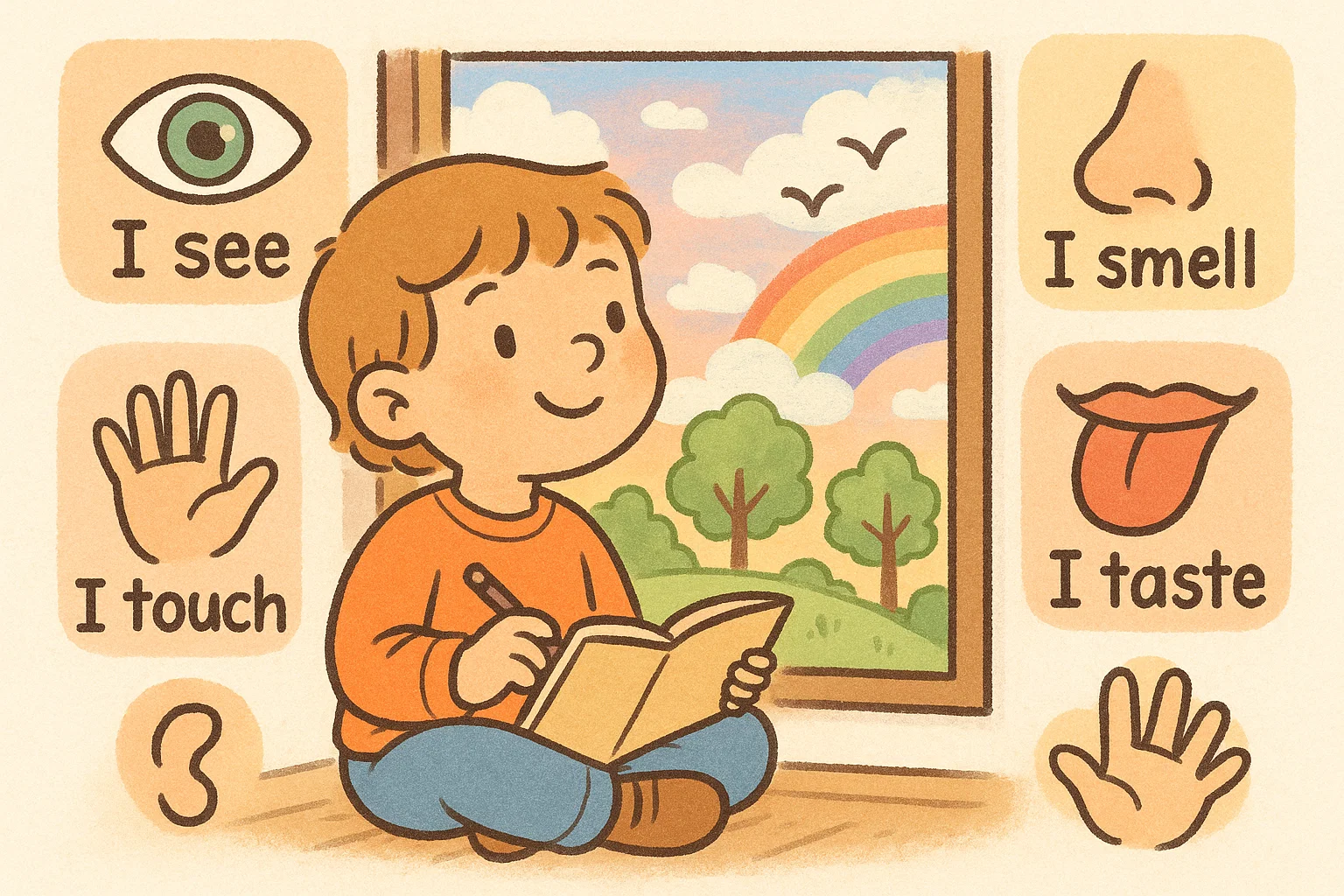
Description practice encourages the use of adjectives and sensory details, which are vital writing skills for first graders.
Describe Place Ideas
- Describe your favorite playground using three words that describe sounds.
- What does your bedroom look like?
- Describe the beach to someone who has never been there.
- What do you see and hear in the school library?
- Describe your classroom using only colors.
Describe Object Ideas
- Describe your favorite toy. Is it soft, hard, big, or small?
- What does your backpack look like on the inside?
- Pick one item from your lunchbox and describe it.
- Describe your bicycle or a scooter you like to ride.
- Describe a beautiful flower you found outside.
Describe Food Ideas
- Describe how a hot slice of pizza tastes and smells.
- What does ice cream feel like when you eat it?
- Describe a crunchy red apple.
- What does your favorite birthday cake look like?
- Describe the smell of cookies baking in the oven.
Writing About Images
Picture prompts are essential for first graders who may struggle to generate ideas from text alone.
Picture-Based Questions
When using a picture writing prompt, ask:
- Who is the main character in this picture?
- Where is this story taking place?
- What happened right before this picture was taken?
- What is going to happen next?
Picture Story Ideas
Choose a picture from a magazine or a printable pack. Have the first grader identify the “problem” in the picture and write a story about how the characters solve it. This builds the foundation for narrative writing and logical thinking.
Picture Description Ideas
Ask the student to look at a detailed image and list five things they see. Then, have them turn those five things into complete sentences. This transition from observation to writing is a powerful way to improve students’ writing skills.
Class Closure Prompts
Using prompts at the end of the day can serve as an “exit ticket,” allowing the teacher to gauge student understanding.
Today I Learned Prompts
- What is one new word you learned today?
- Share one fact you remember from our science lesson.
- What was the most important thing we talked about today?
Favorite Part Prompts
- What was your favorite activity we did in class?
- Who did you enjoy working with today?
- What made you laugh during school today?
Question Before Leaving Prompts
- What is one question you still have about today’s lesson?
- What is something you want to learn more about tomorrow?
- What part of the day was the most confusing for you?
First-Grade Writing Prompts for Fall
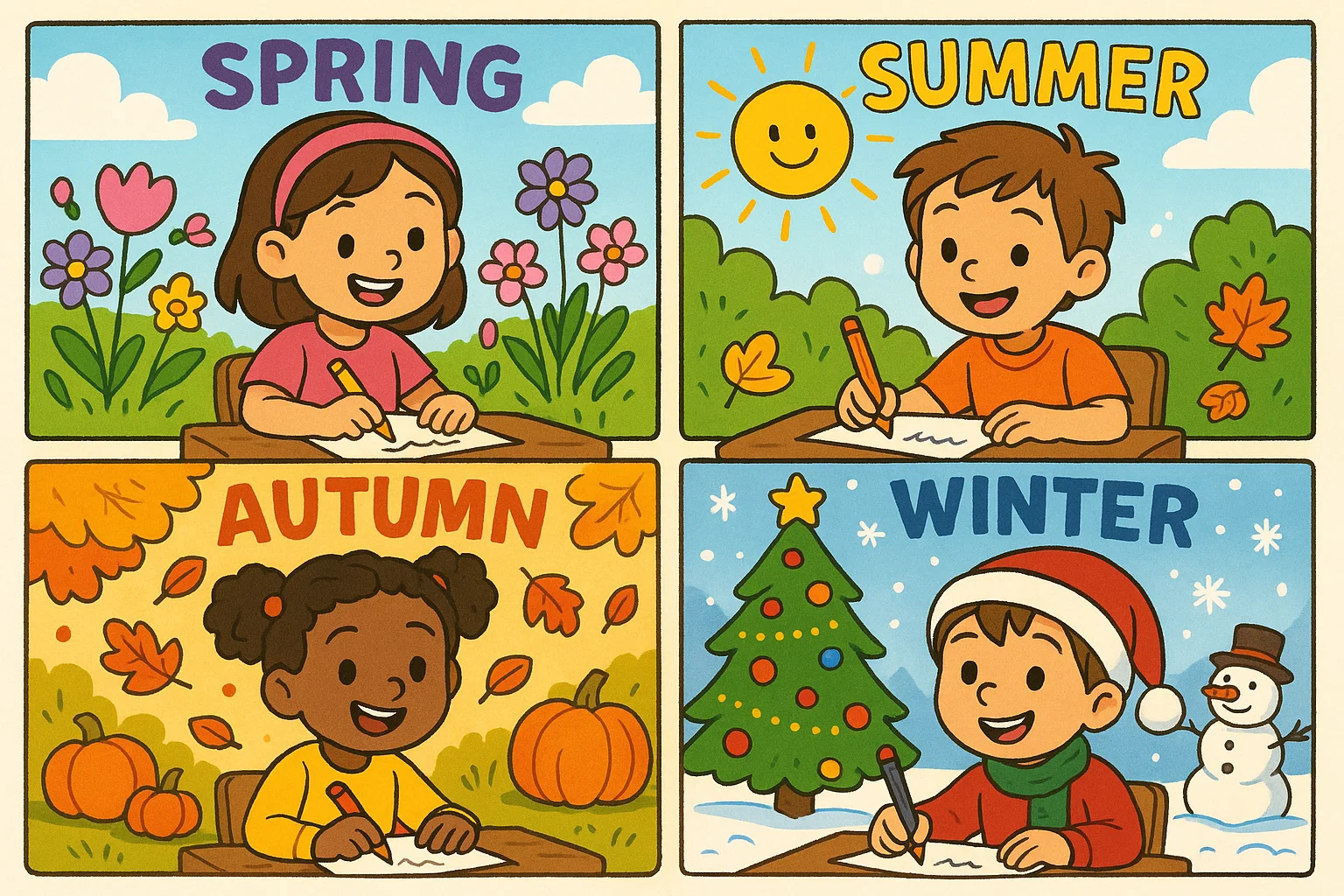
These seasonal prompts are written with a U.S./Northern Hemisphere school calendar in mind.
September Writing Prompts
- Describe your new teacher and classroom.
- What are three rules we follow in our school?
- Describe the taste of a fresh apple.
October Writing Prompts
- What would you do with a giant pumpkin?
- Describe your Halloween costume in detail.
- What do the leaves look like when they fall off the trees?
November Writing Prompts
- Make a list of people you are thankful for.
- What is your favorite food to eat at Thanksgiving?
- Describe what the weather feels like in November.
First-Grade Writing Prompts for Winter
December Writing Prompts
- What is your favorite winter holiday tradition?
- Describe the perfect “snow day.”
- Write a kind letter to someone.
January Writing Prompts
- What is one new thing you want to try this year?
- How do you build the perfect snowman?
- Describe what it feels like to wear warm mittens.
February Writing Prompts
- Create a kindness note to a friend in your class.
- What do you think a groundhog does all day?
- Why is it important to be a good friend?
First-Grade Writing Prompts for Spring
March Writing Prompts
- Describe what you see when a rainbow appears.
- What does the wind feel like in spring?
- Look for signs of spring outside and describe one.
April Writing Prompts
- Why do we need umbrellas in the rain?
- How can we take care of the Earth?
- Describe a tiny bug you found in the grass.
May Writing Prompts
- What is your favorite memory from first grade so far?
- Describe a flower as it begins to bloom.
- Where would you like to go on a spring field trip?
First-Grade Writing Prompts for Summer
June Writing Prompts
- What do you want to do during summer break?
- Describe the perfect summer picnic.
- What is your favorite thing to do at the swimming pool?
July Writing Prompts
- Describe the colors of fireworks in the sky.
- What is the best flavor of ice cream for a hot day?
- Imagine a day at the beach. What do you build in the sand?
August Writing Prompts
- Describe your favorite trip this summer.
- How do you feel about starting a new school year?
- What was the best book you read this summer?
Writing Prompt Ideas Based on Themes
Organizing prompts by theme helps guide students through specific vocabulary sets.
- Writing About Me: My name, my family, my favorite things, my dreams.
- Writing About Places: The zoo, the library, the park, the grocery store.
- Writing About Holidays: Christmas, Earth Day, Mother’s Day, Halloween.
- Writing About People: My teacher, my neighbor, a famous person from history.
- Writing About Activities: Soccer, drawing, playing tag, cooking with a parent or caregiver.
Quick Tips for Helping a First Grader Improve Writing Skills
To help students improve their writing skills, try these classroom-tested strategies:
- Start With Drawing: Have the child draw a picture of their idea before they start drafting. This serves as a visual organizer.
- Use Word Banks: Provide a word bank of themed words, such as animal names and color words, to reduce the struggle with spelling.
- Celebrate Ideas First: Focus on the creativity and effort before correcting every spelling or punctuation error. This builds a love for writing.
- Read Aloud: Encourage children to read their sentences aloud to hear whether they make sense.
Start With the Best Prompts That Appeal to Kids
The most effective prompts focus on what the child already loves. If a first grader is obsessed with dinosaurs, use creative writing prompts about a time-traveling T. rex. If they love to laugh, use funny or silly writing prompts. By matching the prompt to the student’s interests, you can increase engagement and support stronger writing development. Rotate your writing activities weekly—perhaps “Journal Monday” and “Funny Friday”—to keep classroom writing fresh and exciting.
First Grade Story Starters
Story starters are different from full writing prompts — instead of a question or topic, they give students the very first words of a story so they can jump straight into writing. These are especially useful for reluctant writers or as a quick morning warm-up. Simply print one starter, have the student copy it onto their paper, and then keep going with their own ideas.
Adventure and Imagination Story Starters
- One rainy morning, I found a tiny door in the back of my closet…
- The dragon landed in our school playground and said…
- I was walking home when I noticed my shadow was doing something different…
- Deep in the forest, there was a tree with a glowing door, and I decided to open it…
- The spaceship landed right in my backyard, and out stepped…
- I found a map inside my library book that led to…
Funny and Silly Story Starters
- My dog learned to talk, and the first thing he said was…
- When I opened my lunchbox, a tiny chef jumped out and announced…
- Our teacher turned into a penguin during math class, and everyone…
- I put on my shoes this morning and they started walking by themselves to…
Personal Story Starters
- The best day I ever had started when…
- I will never forget the time my family and I…
- One morning I woke up and everything felt different because…
- My favorite place in the whole world is _______ because…
FAQ
What are good writing prompts for 1st grade?
Good first-grade writing prompts are short, clear, and connected to topics children already care about — animals, family, food, seasons, and imaginative scenarios. The best prompts either give a sentence starter to reduce anxiety or ask an open-ended question that invites creativity. Rotating between personal, narrative, opinion, and journal prompts throughout the week keeps writing time fresh and helps students practice different skills.
What are first grade journal prompts?
First grade journal prompts are short questions or sentence starters used during daily journaling time. They typically focus on feelings, observations, goals, or weekend events — topics that are easy for young writers to respond to from personal experience. Morning journal prompts (like “How do you feel today?” or “What is one thing you are looking forward to?”) are especially popular because they settle students into the school day while building writing stamina.
What are story starters for first grade?
Story starters are the opening words of a story — usually one sentence or phrase — that a student copies down and then continues in their own words. For example: “One rainy morning, I found…” or “The dragon landed in our school playground and said…” They differ from full writing prompts because they remove the hardest part of starting a story, making them ideal for reluctant writers or quick warm-up activities.
What is narrative writing for 1st grade?
Narrative writing in first grade means telling a story — real or imagined — with a clear beginning, middle, and end. Students learn to introduce a character or situation, describe what happens, and wrap up with how things turned out. Transition words like “first,” “next,” and “finally” help first graders organize their ideas. Narrative writing prompts that draw on personal experiences (like a birthday or a trip to the park) are often the easiest starting point for young writers.
How do you use writing prompts in a first grade classroom?
Writing prompts can be used in many ways: as a morning warm-up written in a journal notebook, as a literacy center activity with a graphic organizer, as an exit ticket at the end of a lesson, or as a fast-finisher task. For best results, read the prompt aloud, give students a moment to think or talk with a partner, and then have them write. Adjust expectations based on ability — some students may write one sentence while others write a full paragraph.
How many writing prompts should a first grader do per week?
Most first-grade classrooms benefit from three to five short writing sessions per week, each lasting five to fifteen minutes. A simple weekly structure might include a morning journal prompt on Monday, a narrative or story starter mid-week, and a fun or opinion prompt on Friday. Consistency matters more than length — regular short sessions build writing habits more effectively than occasional longer assignments.
How Do I Select the Right Writing Prompts for My First Grader?
The best way to select a writing prompt is to consider your child’s current writing skills and interests. For a beginning writer, choose sentence starters or picture prompts. If you want to build critical thinking, use opinion prompts. Always aim for topics they find engaging, like pets or funny stories.
How Do I Improve Participation and Excitement for Writing Prompts?
To increase excitement, give your first grader a choice between two or three different prompts. Allow them to use colored pencils for their drawings and offer plenty of praise for their unique ideas. Using silly or fun writing prompts can also turn a “chore” into an enjoyable writing activity.
What Are Some Ways to Improve My Child’s Writing?
Improvement comes through daily practice. Encourage your child to keep short notes, maintain a daily journal, and use word banks to help with spelling. Reading aloud together also helps children understand story structure, which they can then apply to their own narrative writing.
What Are Some Writing Activities for First Graders?
Great activities include journal writing, creating how-to guides, writing “opinion cards” for their favorite movies, and using seasonal writing prompts. Printable worksheets that include space for a drawing and several primary-ruled lines are also helpful for morning work.
How Many Sentences Should a First Grader Write?
Many first graders can work toward writing 2–5 sentences by the end of the school year. However, it is important to be flexible. A beginning writer may start with just one clear sentence, while more advanced students might write a short paragraph with a beginning, middle, and end.
Are Printable Writing Prompts Useful for First Grade?
Yes, printable writing prompts are excellent for creating a consistent writing process. They provide a structured space for both drawing and writing, making them useful for homework, literacy centers, or substitute plans. Having a dedicated writing folder for these printables also allows you to track progress over time.
Take a short quiz to find out what your everyday choices say about your parenting style
When your child is curious about something new, what’s your instinct?
Take a short quiz to find out what your everyday choices say about your parenting style
“Can I download this app?” What happens next?
Take a short quiz to find out what your everyday choices say about your parenting style
When it comes to rules at home, which sounds most like you?
Take a short quiz to find out what your everyday choices say about your parenting style
If you could give your child one life skill today, what would you pick?
Take a short quiz to find out what your everyday choices say about your parenting style
Your child gets to choose what to watch. What would your ideal setup look like?
Take a short quiz to find out what your everyday choices say about your parenting style
Pick your parenting superpower ✨