150 Tricky Riddles With Answers for 7-Year-Olds

 Discover a Free Education Video App for Kids
Pastory uses AI to personalize educational video content based on your child’s interests and personality. Safe, engaging, and built for curious young minds. Sign up now to stay updated and enjoy early access with a free trial
Looking for tricky riddles with answers for 7-year-olds? This collection of 150 riddles is built for kids who are ready to think through clues, spot patterns, and enjoy the satisfaction of cracking a puzzle. From easy warm-ups to genuinely tricky brain teasers, every riddle includes the answer so adults can guide the fun without any guesswork.
The riddles are organized by category — animals, math, food, science, planets, holidays, and more — so you can quickly find the right fit for a car trip, classroom warm-up, or family game night. A section on helping kids create their own riddles is also included.
Key Takeaways
- This article includes 150 riddles with answers designed for 7-year-olds, ranging from easy to tricky.
- Riddles are organized by category, including animals, math, food, science, planets, and holidays.
- Tricky and hard riddle sections challenge clever kids while building logic and vocabulary skills.
- A step-by-step guide helps children create their own riddles from scratch.
- Tips for parents and teachers show how to use riddles during reading time, math practice, and car trips.
Best Puzzle Types for 7-Year-Olds
Seven-year-olds do best with brain teasers that use familiar images and concrete ideas. The best puzzles for this age focus on everyday objects, animals, school life, and family. Because their working memory is still developing, short questions with answers are more effective than long, convoluted stories.
How to Use Answers
When presenting a brain teaser, resist the urge to provide the answer immediately. Encourage the child to process the clues; if they struggle, offer a small hint related to the object’s function or color. Reveal the answer only after the child has had a couple of chances to guess, because the “aha!” moment helps build confidence.
Quick Picks by Mood
Depending on the energy in the room, you can select specific riddles and brain teasers:
- Funny questions for kids: Perfect for breaking the ice or lightening the mood.
- Math brain teasers: Ideal for a quick brain warm-up before homework.
- Animal puzzles: Great for younger siblings to join in the fun.
- Harder riddles: Use these when your child is ready for a bigger challenge.
Puzzle Definition for 7-Year-Olds
Explaining the concept of a word puzzle to a child helps them understand the “rules of the game.” Giving children a simple definition of the task can reduce frustration and make word puzzles easier to enjoy.
What Is a Riddle?
A riddle is a special kind of word puzzle that describes something without naming it. It is like a game of “I Spy,” but with only words and clues. You can tell your child: “A riddle is a question that hides an answer behind a secret description.”
How the Clues Work
Solving these puzzles requires a child to listen to specific attributes – like size, shape, or sound – and combine them to find a match. Riddles often use comparisons or personification, which means an object may “talk” as if it were alive. This encourages children to look at common objects from a brand-new perspective.
Why 7-Year-Olds Like These Puzzles
Around age 7, many children enter what Jean Piaget called the “concrete operational” stage of development. They enjoy tricky puzzles because they are beginning to understand logical rules and love the confidence boost of figuring out an answer before an adult does. It builds both confidence and thinking skills.
150 Fun Riddles for 7-Year-Olds With Answers
This comprehensive list of brain teasers is designed for the reading level and logic skills of a typical second grader. Each section is self-contained for easy browsing.
Easy Riddles for 7-Year-Olds
These easy puzzles focus on very common objects to build confidence.
- I have a face and two hands, but no arms or legs. What am I? (A clock)
- What has to be broken before you can use it? (An egg)
- I am tall when I am young, and I am short when I am old. What am I? (A candle)
- What month of the year has 28 days? (All of them)
- What is full of holes but still holds water? (A sponge)
Short Riddles With Answers
Short riddles with answers are perfect for quick transitions between activities.
- What has a thumb and four fingers but is not alive? (A glove)
- What has one eye but cannot see? (A needle)
- What has a neck but no head? (A bottle)
- What gets wet while drying? (A towel)
- What goes up but never comes down? (Your age)
Tricky Riddles for Clever Kids
These tricky riddles require a bit more focus and lateral thinking.
- If you drop me, I’m sure to crack, but give me a smile and I’ll always smile back. What am I? (A mirror)
- What can you catch but not throw? (A cold)
- I have teeth but cannot bite. What am I? (A comb)
- What belongs to you, but others use it more than you do? (Your name)
- What has many keys but can’t even open a single door? (A piano)
Hard Riddles for 7-Year-Olds
These harder questions may require a small hint to help children reach the answer.
- I am always running, but I never get tired. I have a bed, but I never sleep. What am I? (A river)
- The more of this there is, the less you see. What is it? (Darkness)
- I have cities, but no houses. I have mountains, but no trees. I have water, but no fish. What am I? (A map)
- What follows you everywhere but disappears when the sun goes down? (Your shadow)
- What starts with T, ends with T, and has T in it? (A teapot)
Funny Riddles for Young Children
Humor is a fantastic way to engage children in learning. Funny questions use puns and “kid logic” to elicit giggles while exercising the brain.
Silly Riddles With Answers
- Why did the cookie go to the hospital? (Because he felt crumb-y!)
- What do you call a bear with no teeth? (A gummy bear!)
- Why did the math book look so sad? (Because it had too many problems.)
- What do you call a sleeping dinosaur? (A dino-snore!)
- What is a witch’s favorite subject in school? (Spelling!)
Laugh-Out-Loud Riddles
- What did the zero say to the eight? (“Nice belt!”)
- Why can’t a nose be 12 inches long? (Because then it would be a foot!)
- What did the ocean say to the beach? (Nothing, it just waved.)
- Why did the strawberry cross the road? (His mom was in a jam!)
- What do you call a pig that knows karate? (A pork chop!)
Knock-Knock Style Riddles
- Knock, knock! Who’s there? Lettuce. Lettuce who? (Lettuce in – it’s cold out here!)
- Knock, knock! Who’s there? Cows go. Cows go who? (No, cows go moo!)
- Knock, knock! Who’s there? Interrupting cow. Interrupting cow wh – (MOO!)
Animal Riddles for 7-Year-Olds
Animal questions for kids are often the most popular because children have a natural affinity for creatures. These animal prompts help reinforce biological facts through play.
Easy Animal Riddles
- I am the “King of the Jungle,” and I have a big mane. Who am I? (A lion)
- I am very tall, and I have a very long neck to eat leaves. Who am I? (A giraffe)
- I am small, I love cheese, and I say “squeak.” Who am I? (A mouse)
- I have a trunk but no suitcase. Who am I? (An elephant)
- I have wings, but I am not an airplane. I lay eggs. Who am I? (A bird)
Farm Animal Riddles
- I give you milk, and I say “moo.” Who am I? (A cow)
- I have wool, and people use it to make sweaters. Who am I? (A sheep)
- I like to roll in the mud, and I have a curly tail. Who am I? (A pig)
- I wake everyone up in the morning with a “cock-a-doodle-doo!” Who am I? (A rooster)
- I have a long tail and a mane, and you can ride on my back. Who am I? (A horse)
Wild Animal Riddles
- I have black and white stripes and look like a horse. Who am I? (A zebra)
- I can hop very far, and I carry my baby in a pouch. Who am I? (A kangaroo)
- I am a large bird that cannot fly, but I can run very fast. Who am I? (An ostrich)
- I live in the ocean, I am very big, and I breathe through a blowhole. Who am I? (A whale)
- I have no legs, and I hiss as I slither on the ground. Who am I? (A snake)
Pet Riddles
- I chase mail carriers and love to wag my tail. Who am I? (A dog)
- I purr when I am happy, and I love to chase laser pointers. Who am I? (A cat)
- I live in a bowl, and I swim in circles. Who am I? (A goldfish)
- I carry a shell on my back, and I move very slowly. Who am I? (A turtle)
- I can mimic the words you say, and I have colorful feathers. Who am I? (A parrot)
Food Riddles for Kids
Food questions for kids are excellent for mealtime engagement. These prompts focus on healthy eating and recognizing shapes and colors.
Fruit Riddles
- I am yellow, long, and monkeys love to eat me. What am I? (A banana)
- I am red, round, and crunchy. Teachers love to get me. What am I? (An apple)
- I am small, purple or green, and grow in bunches. What am I? (Grapes)
- I am red and sweet, with tiny seeds on the outside. What am I? (A strawberry)
- I am a fruit that sounds like a color. What am I? (An orange)
Vegetable Riddles
- I am orange, long, and rabbits love to crunch on me. What am I? (A carrot)
- I am yellow, and I grow on a cob. What am I? (Corn)
- I make people cry when they peel my skin off. What am I? (An onion)
- I am white inside, and you can mash me or turn me into fries. What am I? (A potato)
- I look like a little green tree. What am I? (Broccoli)
Snack Riddles
- I am cold and sweet, and I come in a cone or a bowl. What am I? (Ice cream)
- I pop when I get hot, and people eat me at the movies. What am I? (Popcorn)
- I am two pieces of bread with something yummy in the middle. What am I? (A sandwich)
- I am round and flat, and I have pepperoni on top. What am I? (Pizza)
Breakfast Riddles
- You pour milk on me in a bowl every morning. What am I? (Cereal)
- I am round and flat, and you pour syrup over me. What am I? (A pancake)
- I come from a chicken, and you can have me scrambled. What am I? (An egg)
- I am bread that has been heated until I am brown and crunchy. What am I? (Toast)
Math Riddles for 7-Year-Olds
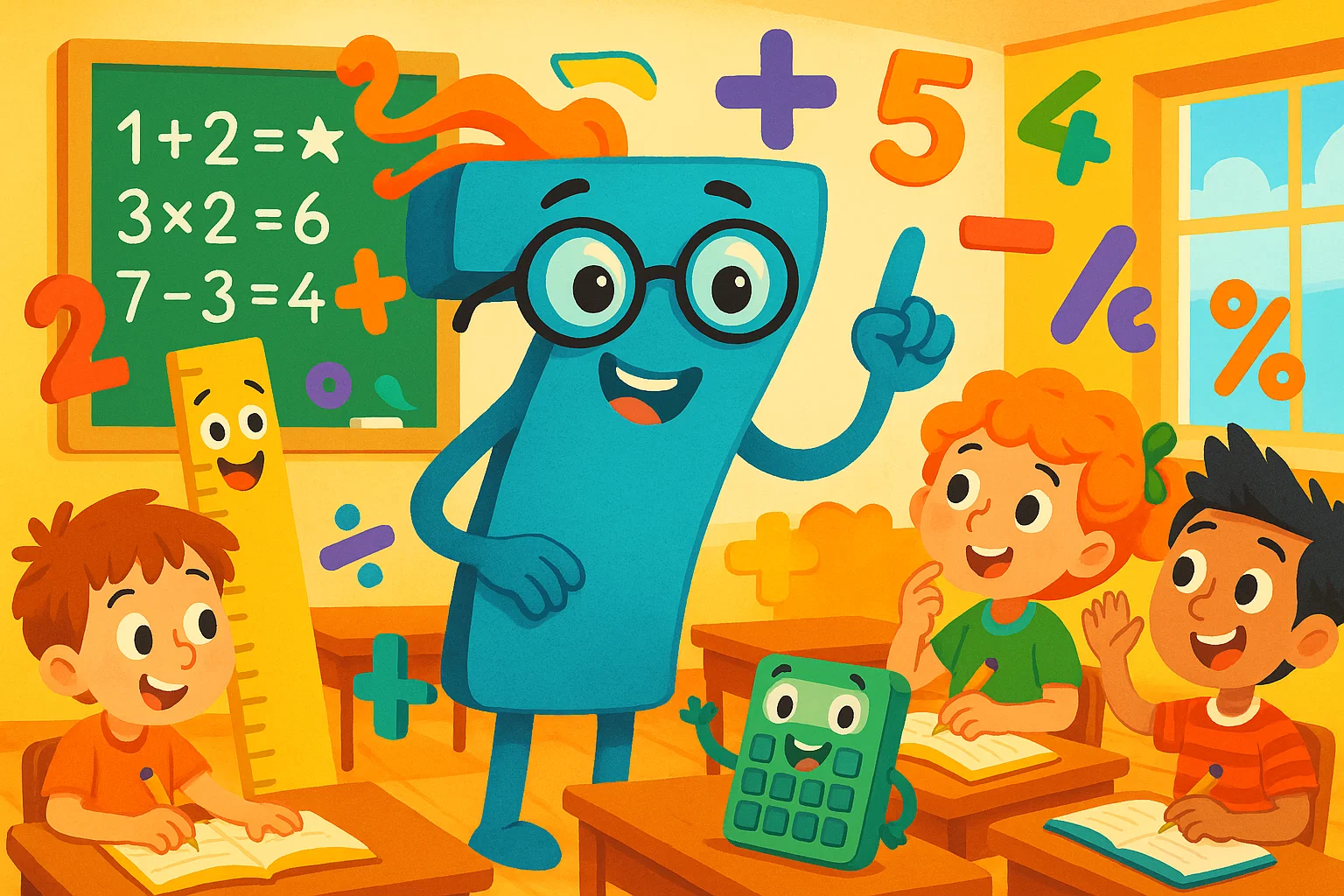
Integrating math brain teasers into play helps children see numbers as tools rather than chores. These brain teasers support early elementary math skills such as addition, subtraction, counting patterns, and shape recognition.
Addition Riddles
- I have 5 apples, and you give me 5 more. How many do I have now? (10)
- There are 3 birds on a branch. 4 more fly down to join them. How many birds are there? (7)
- I am the number you get when you add 10 plus 10. What am I? (20)
Subtraction Riddles
- I had 10 cookies, and I ate 3. How many are left? (7)
- There were 8 balloons, but 2 popped. How many are left? (6)
- If you have 12 crayons and you give 5 to a friend, how many do you have? (7)
Number Pattern Riddles
- What comes next in this pattern: 2, 4, 6, 8, ___? (10 — counting by twos)
- What comes next: 5, 10, 15, 20, ___? (25 — counting by fives)
- I am an odd number. If you take away one letter from me, I become “even.” What number am I? (Seven — S-E-V-E-N minus “S” is “EVEN”)
Shape Riddles
- I have three sides and three corners. What am I? (A triangle)
- I am perfectly round like a wheel. What am I? (A circle)
- I have four sides that are all exactly the same length. What am I? (A square)
- I have four sides, but two are long and two are short. What am I? (A rectangle)
English Riddles for Kids
Word puzzles and spelling games are fantastic for building vocabulary and phonemic awareness.
Word Riddles
- What letter of the alphabet is full of water? (The “C” — sea)
- What starts with “P,” ends with “E,” and has thousands of letters? (The post office)
- Which word becomes shorter when you add two letters to it? (The word “short” — short + er = shorter)
Rhyming Riddles
- I rhyme with “log,” and I love to chase a ball. What am I? (A dog)
- I rhyme with “sky,” and I help you see. What am I? (An eye)
- I rhyme with “red,” and you sleep on me. What am I? (A bed)
Spelling Riddles
- What word is spelled W-R-O-N-G in every dictionary? (Wrong)
- What starts with “E,” ends with “E,” but only has one letter in it? (An envelope)
- What word starts with “S,” ends with “N,” and has “U” in the middle? (Sun)
Science Riddles for Kids
Science questions encourage children to observe the natural world. These simple science puzzles cover basic concepts of biology and physics.
Nature Riddles
- I am tall, I have leaves, and I have a trunk. What am I? (A tree)
- I fall from the sky, but I am not a bird. I help plants grow. What am I? (Rain)
- I am bright and yellow, and I give the Earth heat and light. What am I? (The Sun)
Weather Riddles
- I am colorful, and I appear after it rains when the sun comes out. What am I? (A rainbow)
- I am white and fluffy, and I fall when it is very cold. What am I? (Snow)
- You can hear me roar during a storm, but you can’t see me. What am I? (Thunder)
Body Riddles
- We are on your face and help you see colors. What are we? (Eyes)
- I am in your chest, and I go “thump-thump” all day. What am I? (A heart)
- We are at the end of your legs and help you walk. What are we? (Feet)
Simple Experiment Riddles
- I am a rock that can pull metal toward me. What am I? (A magnet)
- If you put a heavy rock in water, it may sink. If you put a leaf in water, it may float. What are these two actions called? (Sinking and floating)
Riddles About Planets
Space is a captivating topic for 7-year-olds. These questions focus on the most recognizable parts of our solar system.
Solar System Riddles
- I am the planet you live on. I am called the “Blue Planet.” Who am I? (Earth)
- I am the “Red Planet” and the next planet after Earth in order from the Sun. Who am I? (Mars)
- I am a giant planet with beautiful rings made of ice and dust. Who am I? (Saturn)
Moon Riddles
- I glow in the night sky, and I change my shape every month. What am I? (The Moon)
- You can often see me in the night sky. I am not a star, but I look big and round. What am I? (The Moon)
Star Riddles
- We look like tiny dots of light in the night sky. What are we? (Stars)
- I am the closest star to Earth. Who am I? (The Sun)
Back to School Riddles
Back-to-school questions are perfect for the first week of class to help children feel comfortable in their new environment.
Classroom Riddles
- I have a board, many desks, and a teacher. What am I? (A classroom)
- I have many pages and stories inside, but I cannot talk. What am I? (A book)
- I am flat, usually black or green, and the teacher writes on me with chalk. What am I? (A chalkboard)
School Supply Riddles
- I am long, made of wood, and you use me to write. What am I? (A pencil)
- I help you fix your mistakes when you write with a pencil. What am I? (An eraser)
- I have zippers, and I carry your books on your back. What am I? (A backpack)
- I help you draw straight lines and measure things. What am I? (A ruler)
Teacher Riddles
- I stand at the front of the room and help you learn new things. Who am I? (A teacher)
- I help you learn your ABCs and 123s. Who am I? (A teacher)
Riddles for 1st Grade Students
Children in the first grade are developing basic literacy. These easy questions for kids use high-frequency words.
Simple Logic Riddles
- Which is heavier: a pound of feathers or a pound of rocks? (Neither, they both weigh one pound!)
- What has a face but no eyes? (A clock)
Reading Practice Riddles
- I am a pet. I say “meow.” I rhyme with “hat.” What am I? (A cat)
- I am in the sky. I am hot. I rhyme with “run.” What am I? (The sun)
Riddles for 2nd Grade Students
By second grade, children can handle tricky questions that involve more than one step of logic.
Longer Riddles
- I have a head and a tail, but no body. I am made of metal, and you can find me in your pocket. What am I? (A coin)
- I am full of keys, but I cannot open any locks. I can make music if you press my keys. What am I? (A piano)
Problem-Solving Riddles
- A person was walking in the rain. They didn’t have an umbrella or a hat. Their clothes got soaked, but not a single hair on their head got wet. How? (They were bald!)
- What can travel around the world while staying in a corner? (A stamp)
Summer Riddles
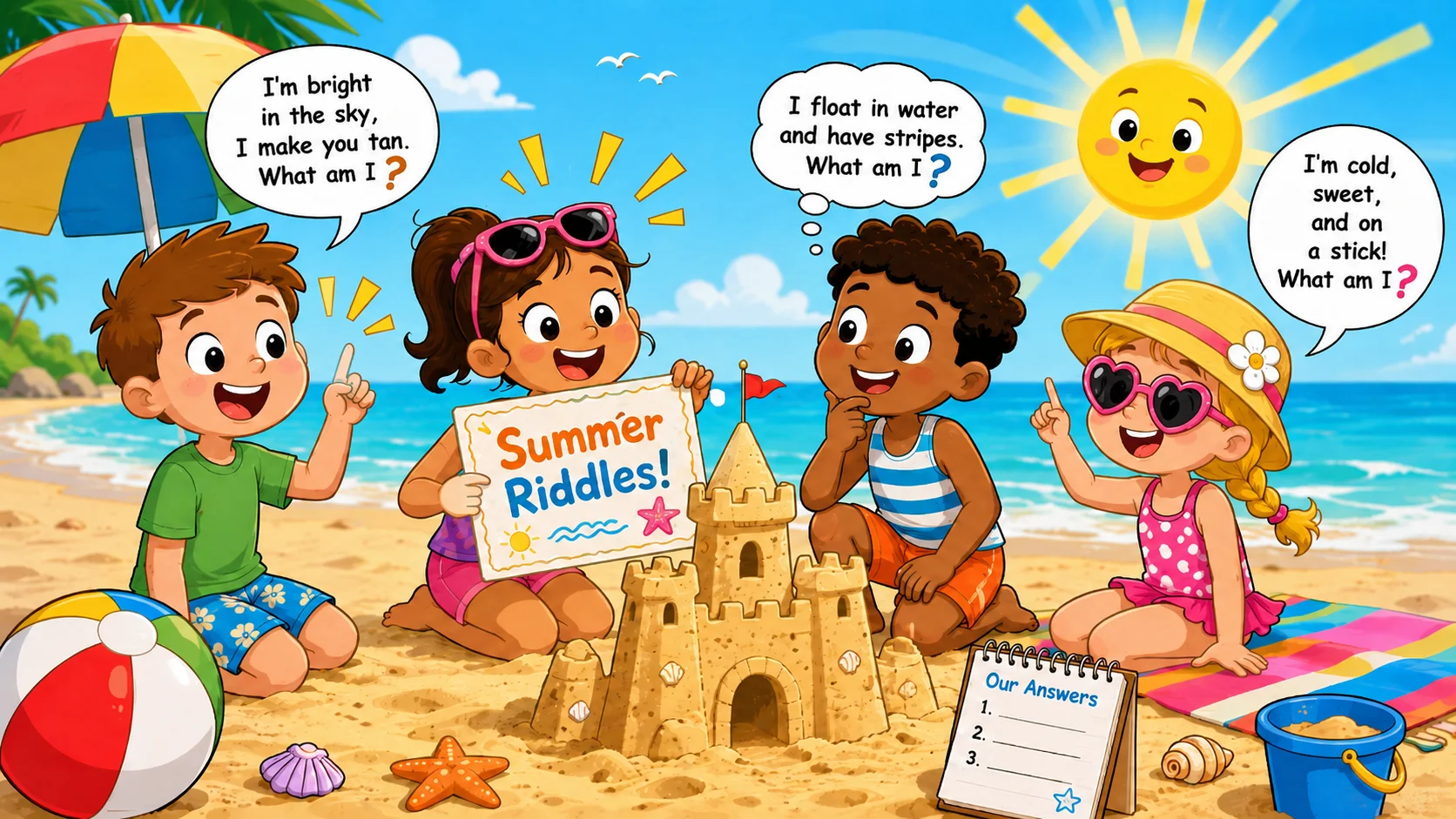
Celebrate the sunny season with these fun questions for kids about the beach and vacations.
Beach Riddles
- I am tiny grains of rock that you find at the beach. You can build castles with me. What am I? (Sand)
- I come from the ocean, and you might find me on the sand. If you hold me to your ear, you can hear the sea. What am I? (A seashell)
Ice Cream Riddles
- I am a summer treat that melts if you don’t eat me fast. What am I? (Ice cream)
- I am a cold, fruit-flavored treat on a stick. What am I? (A popsicle)
Holiday and Seasonal Riddles
Winter Riddles
- I am made of three snowballs, and I have a carrot for a nose. What am I? (A snowman)
- I wear these on my hands to keep them warm in the snow. What am I? (Mittens)
Halloween Riddles for Kids
- I am orange, I grow in a patch, and you carve a face into me. What am I? (A pumpkin)
- I am white, I say “boo,” and I can fly through walls. What am I? (A ghost)
Family Riddles
Parent and Sibling Riddles
- I am your father’s child, but I am not your sibling. Who am I? (You!)
- I am your mother’s sister. Who am I? (Your aunt)
Home Riddles
- I have four legs, but I cannot walk. You sit at me to eat your dinner. What am I? (A table)
- I have a handle and a lock. You walk through me to enter a room. What am I? (A door)
General Riddles for Kids
- What has a thumb but no fingers? (A mitten)
- What has a bottom at the top? (Your legs!)
- What has a ring but no finger? (A bell)
- What gets sharper the more you use it? (Your brain!)
- What has words but never speaks? (A book)
- What has an eye but cannot see? (A storm)
- What goes up and down but never moves? (Stairs)
- What has hands but cannot clap? (A clock)
- What is easy to get into but hard to get out of? (Trouble!)
- What can fill a room but takes up no space? (Light)
Benefits of Riddles for Kids
Engaging in solving brain teasers is not just about entertainment; it is a vital part of cognitive development. Organizations such as the National Association for the Education of Young Children emphasize that play and playful learning support children’s development and learning.
Logic Skills
Brain teasers require children to practice deductive reasoning. By analyzing clues and eliminating impossible answers, children build the foundational skills necessary for scientific inquiry and mathematical logic. This process of “connecting the dots” gives children practice in critical thinking.
Vocabulary Growth
Word puzzles introduce children to new vocabulary in a context that is easy to remember. When children learn a new word through a puzzle, they are more likely to remember it because the word is tied to context, humor, and active problem-solving. They also learn about double meanings and puns, which enhances their linguistic flexibility.
Reading Confidence
For a 7-year-old, a full page of text can be intimidating. Easy questions for kids offer small, bite-sized successes. Reading a short brain teaser and getting the answer right gives children a quick sense of success, which can encourage them to read more and see literacy as rewarding.
Family Bonding
Using a collection of brain teasers for kids during family dinners or car trips creates a shared intellectual experience. It shifts attention away from screens and toward verbal, face-to-face interaction. This strengthens emotional intelligence as children learn to read social cues and enjoy the give-and-take of a joke or puzzle.
How to Help Your Child Create Their Own Riddles
Once a child has mastered solving puzzles, the next step is creation. This shifts them from simply consuming content to creating their own, which supports writing, vocabulary, and critical-thinking skills.
1. Start With the Answer
The easiest way to write a riddle is to work backward. Ask your child to pick a simple object or animal, such as a pencil or a cat. Knowing the destination makes it easier to build the path.
2. Brainstorm Clues
Ask the child to list five things about the object. For a pencil, they might list: yellow, wood, lead, eraser, writes. These details will become the core clues of the puzzle.
3. Think Like the Answer
Encourage the child to use “I” statements. Instead of saying, “A pencil is yellow,” they can write, “I am yellow.” This personification helps children think creatively and makes the puzzle more engaging for the listener.
4. Add a Twist
Add a twist or a comparison. For example, “I have an eraser for a hat” or “I get shorter the more I work.” This adds the tricky element that defines the best riddles for kids.
5. Write Your Riddle
Assemble the sentences into a short paragraph. Have the child read it aloud to a friend or family member. If the person guesses too quickly, help the child remove one of the obvious clues to make the question harder.
Looking for More Ways to Challenge Kids?
If your child flies through this list of riddles, try raising the difficulty.
Add a Timer
Introduce a “speed round” in which the child has 30 seconds to solve a brain teaser. This adds a little friendly pressure in a fun, low-stakes way and helps children stay calm while thinking.
Ask Why the Answer Works
This is the most important step for cognitive growth. After they give the answer, ask, “Which clue helped you figure it out?” This forces the child to verbalize their logic, reinforcing their problem-solving skills.
Mix Easy and Hard Riddles
To keep engagement high, use the “sandwich method.” Give an easy question, then a harder one, then another easy question. This prevents the child from getting discouraged while still providing a mental workout.
Make Learning Fun
The primary goal of using riddles and brain teasers is to associate learning with joy. When a child views a challenge as a game, they are more willing to persist through difficult tasks.
Riddles During Reading Time
Try adding a word puzzle after a few pages of a book. This acts as a “brain break” and can help children reset their attention before returning to the story.
Riddles During Math Practice
If a child is struggling with addition practice, offer a quick math puzzle after they finish a row. This changes the focus from “doing work” to “solving a fun challenge,” which can improve motivation.
Riddles During Car Trips
Since these questions require no physical materials, they are the perfect anti-boredom tool for travel. They keep children’s minds active without a screen, supporting a healthier screen-time balance.
FAQ About Riddles for 7-Year-Olds
How Many Riddles Should a 7-Year-Old Solve Daily?
Solving 3 to 5 brain teasers a day is a good starting point for maintaining interest without causing fatigue. Consistency is more important than quantity.
What Riddles Are Best for 7-Year-Olds?
The best puzzles for kids this age involve animals, food, school, family, and household items. They should be 1–3 sentences long and have a concrete, visual answer.
Are Math Riddles Good for 7-Year-Olds?
Yes, math brain teasers are excellent for 7-year-olds because they reinforce basic arithmetic and shape recognition in a playful, low-pressure format.
How Can Parents Make Riddles Easier?
If a child is stuck, provide a category hint, such as “It’s something you find in the kitchen,” or act out the answer using gestures to provide a visual clue.
Should Answers Be Shown Right Away?
No. Give children a little think time first, usually about 30 to 60 seconds. If they are still struggling, provide a hint. Reveal the answer only after offering a hint, so the challenge still feels fun.
Take a short quiz to find out what your everyday choices say about your parenting style
When your child is curious about something new, what’s your instinct?
Take a short quiz to find out what your everyday choices say about your parenting style
“Can I download this app?” What happens next?
Take a short quiz to find out what your everyday choices say about your parenting style
When it comes to rules at home, which sounds most like you?
Take a short quiz to find out what your everyday choices say about your parenting style
If you could give your child one life skill today, what would you pick?
Take a short quiz to find out what your everyday choices say about your parenting style
Your child gets to choose what to watch. What would your ideal setup look like?
Take a short quiz to find out what your everyday choices say about your parenting style
Pick your parenting superpower ✨