
100 Sight Words for 1st Grade

 Discover a Free Education Video App for Kids
Pastory uses AI to personalize educational video content based on your child’s interests and personality. Safe, engaging, and built for curious young minds. Sign up now to stay updated and enjoy early access with a free trial
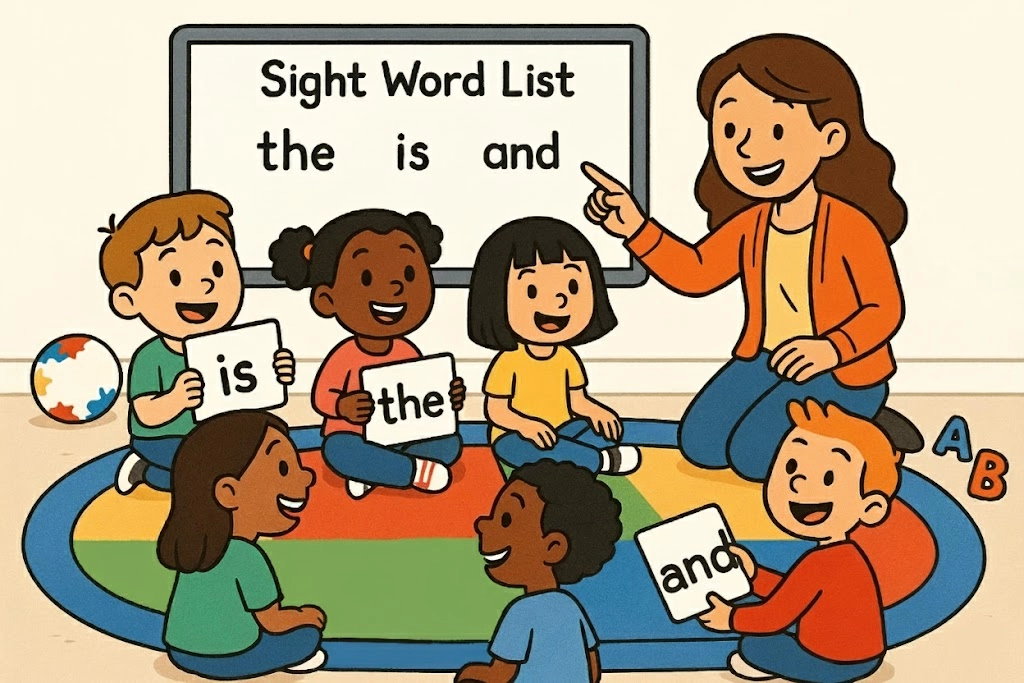
Learning a core set of sight words is an important step in early reading development. This guide provides a curated list of 100 common first-grade high-frequency words to support your first grader’s reading practice. In this resource, you’ll find a printable checklist, example sentences, literacy games, flashcard routines, and practical teaching tips for home and classroom practice. Literacy research supports a balanced approach that combines systematic phonics instruction with repeated recognition and reading practice. Sight words do not replace phonics, but they help children recognize common text more quickly and focus more attention on understanding what they read.
This guide combines high-utility entries from the Dolch and Fry lists, along with other common sight words that are appropriate for first graders. With regular practice, parents and teachers can help first graders build confidence, fluency, and stronger sentence comprehension.
Key Takeaways
Printable List of 100 First-Grade Sight Words
This article provides a practical high-frequency checklist for parents, teachers, and homeschoolers who want structured reading practice. The selected list includes many common terms children encounter in early reading materials.
A printable checklist gives adults a simple way to track what a child has practiced and mastered.
Fry, Dolch, and High-Frequency Lists Combined
This first-grade sight word list combines entries inspired by the Dolch and Fry lists. Instead of asking teachers and parents to compare multiple lists, this collection offers one practical 100-item starting point.
Short Daily Practice Is Usually Best
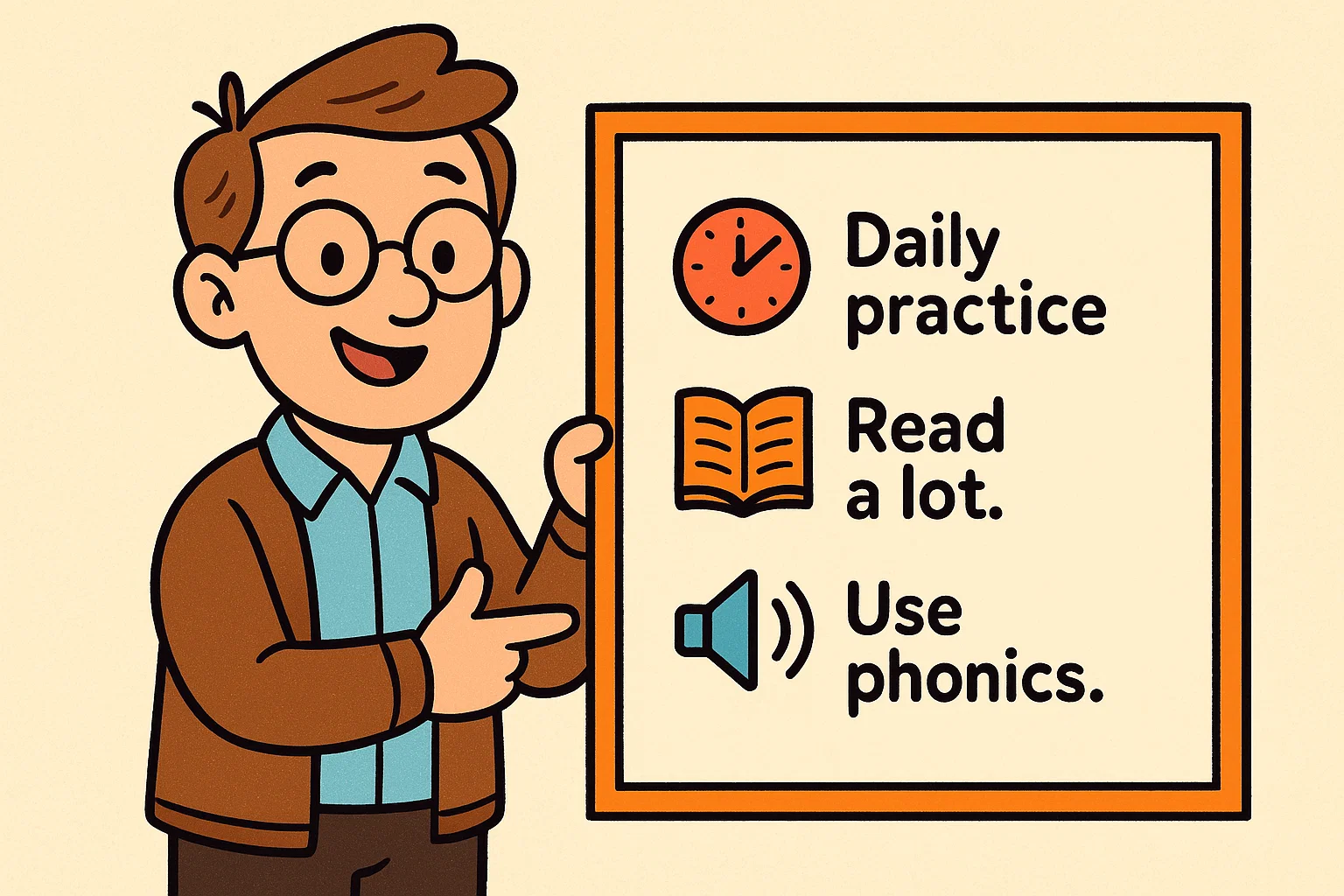
Short, consistent practice sessions are easier for most first graders to manage than long drills. A daily 5- to 10-minute routine can help children build faster recognition without the frustration that often comes from long practice sessions.
Sight Word Practice Supports Phonics and Reading Fluency
Sight word activities are designed to complement, not replace, systematic phonics instruction. Phonics helps first graders decode unfamiliar text, while quick recognition of common high-frequency words helps them maintain reading speed and focus on comprehension.
100 Sight Words for 1st Grade List
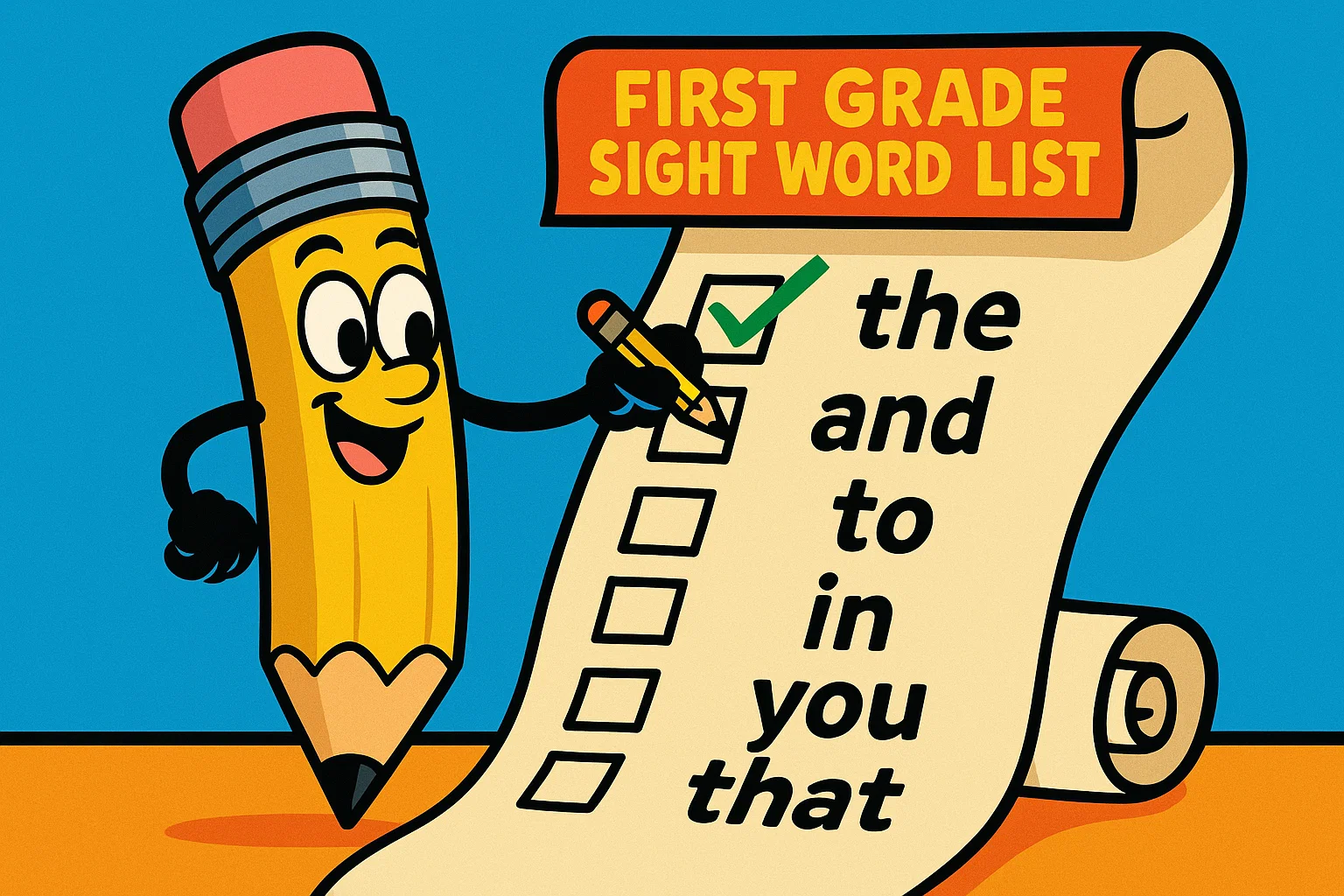
Complete 100-Item Checklist
The following grid contains 100 high-frequency words selected for first-grade practice. The entries are organized alphabetically so the list is easy to scan, copy, print, and use for daily tracking.
| a | about | after | all | am | an | and | are | as | at |
| be | big | but | by | came | can | come | day | did | do |
| down | for | from | get | give | go | good | had | has | have |
| he | her | him | his | how | I | if | in | into | is |
| it | like | look | many | me | more | my | new | no | not |
| of | on | one | or | out | over | play | run | said | saw |
| see | she | so | some | stop | take | than | that | the | their |
| them | then | there | these | they | think | this | three | time | to |
| too | up | us | use | very | was | we | went | were | what |
| when | which | who | will | with | words | would | write | you | your |
Fry First 100 Words
The Fry list organizes high-frequency vocabulary by how often it appears in print, commonly grouped in sets of 100. The first 100 Fry words are often cited as making up about half of written English, which is why they are useful for early fluency practice.
This list draws from both Fry and Dolch resources, so it includes many Fry First 100 words along with additional entries appropriate for first graders.
Dolch First-Grade Words
The Dolch list includes service terms that children are encouraged to recognize automatically as they build reading fluency. These entries often include pronouns, prepositions, conjunctions, and verbs that appear frequently in simple sentences.
Recognizing these items quickly helps first graders avoid getting stuck on common function terms such as “the,” “that,” “from,” and “there.”
High-Frequency Practice Levels
To make practice easier to organize, the 100 sight words can be divided into three groups based on spelling complexity and familiarity.
Tier 1: Foundational
a, am, at, can, go, I, in, is, it, me, my, no, on, see, to, up, we
Tier 2: Transitional
after, all, and, big, but, by, day, did, do, get, had, has, have, he, her, him, his, how, if, like, look, not, one, out, play, run, said, saw, she, so, their, then, there, this, was, went, will, with, you
Tier 3: Challenging
about, an, are, as, be, came, come, down, for, from, give, good, into, many, more, new, of, or, over, some, stop, take, than, that, the, them, these, they, think, three, time, too, us, use, very, were, what, when, which, who, words, would, write, your
Printable Single-Page List
Teachers and parents can use a downloadable, single-page first-grade sight word checklist for printing and progress tracking. A strong printable checklist should use large type, clear spacing, and empty checkboxes so parents and children can mark each item once it is mastered.
Sight Word Flashcards
Flashcard Setup
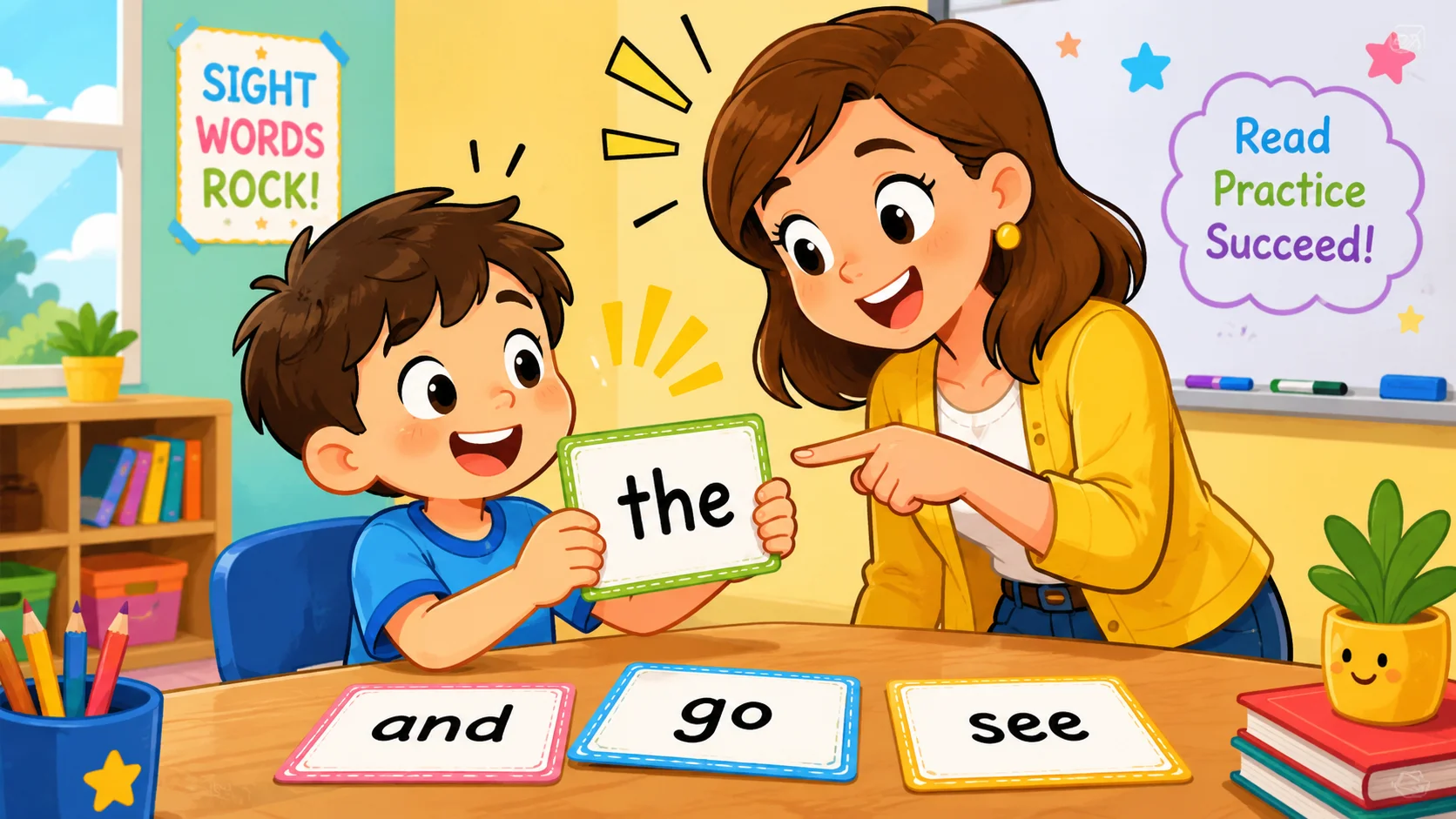
To create durable sight word cards, print the selected entries on heavy cardstock. Laminate the cards if you want them to last longer. Organize the flashcards into weekly sets of 5 to 10 items so the practice stays manageable.
Daily Flashcard Routine
A simple 5-minute flashcard routine gives children repeated practice without making the session feel overwhelming. Have the first grader follow these steps for each card:
- Read: Look at the card and say it aloud.
- Use it in context: Say a simple sentence with it.
- Spell: Say the letters in order.
- Read again: Say the full item one more time.
Flashcard Sorting Games
Sorting activities help children notice patterns by grouping cards according to features such as length, beginning sound, vowel sound, or difficulty level. For example, students can compare “the,” “them,” and “then” to notice how small spelling differences change meaning.
Progress Pile System
The progress pile system uses three boxes labeled “New,” “Practice,” and “Mastered” to help track learning.
| Pile | What It Means |
| New | The child is just beginning to learn it. |
| Practice | The child can read it with support or hesitation. |
| Mastered | The child recognizes it quickly and consistently across several sessions. |
This visual system shows progress clearly and helps adults avoid repeating items the child has already mastered.
12 Ways to Teach First-Grade Sight Words
1. Online Literacy Games
Interactive digital games can provide repetition, audio support, and visual feedback to help first graders practice challenging items. These games often ask students to look, click, match, and respond in a playful environment.
2. Memory Games
The classic memory match game uses duplicate sets of vocabulary cards placed face down in a grid. Players turn over two cards, read each one aloud, and try to find a matching pair. If the cards match, the player keeps the pair; if they do not match, the cards are turned face down again.
This game supports visual memory and repeated recognition.
3. Sight Word Book Activity
Building a personalized sight word book turns recognition practice into a creative activity. Give the child a small booklet, with each blank page dedicated to one item from the current weekly set.
The student writes the target item in large print, creates a simple sentence with it, and draws a picture to show the meaning.
4. Roll, Read, and Race Board Game
This board game uses a simple path of spaces, with one high-frequency item on each square. The student rolls a standard six-sided die, moves that number of spaces, and reads the square before keeping the move.
If it is read incorrectly, the player returns to the previous space. This turns reading accuracy into a fun game goal.
5. Simple Crossword Game
Short crossword puzzles with sight words help children move from recognition to spelling practice. Parents can provide simple sentence clues, such as “The opposite of up is ___,” to help the child spell a target item letter by letter.
This activity connects meaning, spelling, and sentence context.
6. Sight Word Bingo
Sight word bingo replaces traditional numbers with high-frequency entries on a 5-by-5 grid. The adult calls out an item from the master list, and students scan their cards to find and cover the match.
This group activity helps children connect spoken language with print.
7. Read Stories Together
Reading real stories helps children encounter high-frequency vocabulary in meaningful context instead of only seeing it in isolated lists. When a first grader reads a storybook, they see how “said,” “there,” and “would” help build dialogue and connect ideas.
8. Act It Out
Movement-based activities can be especially helpful when children practice action terms and prepositions. When practicing terms such as “go,” “run,” “look,” or “over,” the adult shows the card and the child performs a matching action.
This movement-based connection can make the target item more memorable.
9. I Spy
In the “I Spy” activity, place current practice cards around a room or classroom. The parent says, “I spy with my little eye a word that rhymes with me,” and the student looks for “we” and reads it aloud.
This movement-focused practice breaks up desk work and keeps children actively engaged.
10. Flashcards
Traditional flashcards can still be effective for quick recognition practice when sessions are short and encouraging. The instructor shows one card for a few seconds, encouraging quick recognition rather than slow guessing.
Keep these sessions brief and positive to preserve motivation.
11. Hide-and-Seek Vocabulary Hunt
In a hide-and-seek vocabulary hunt, the adult hides five to ten flashcards in a room before practice begins. The child finds the hidden cards and brings each one to a central spot, where they read it aloud and write it once on a practice sheet.
Combining movement with reading practice can help active children stay engaged.
12. Letter Ladder
A letter ladder helps children notice spelling patterns by showing how changing one letter can create a new term. Write a simple item at the bottom of a ladder and ask the child to change one letter at a time to make a new one.
This activity is especially useful when the items share familiar spelling patterns.
Sight Word Games for 1st Graders
Online Literacy Games
Digital games for first graders can offer helpful features such as audio models, repetition, and adjustable difficulty. Some platforms track which items a child misses and repeat them more often.
Bright animations and quick feedback can make repetitive practice feel more like a game.
Cat Catch Sight Word Game
In this game idea, an animated cat stands at the bottom of the screen while text falls from above. The player hears a target sight word and guides the cat to catch only the match.
Incorrect selections can pause the game briefly, teaching children to focus on accuracy instead of guessing.
Run, Chicken, Run Sight Word Game
In this fast-paced game, an animated character crosses a path by stepping only on logs or stones labeled with first-grade sight words. If the player clicks a stone with a nonsense item or a misspelling, the character has to start again.
This game helps children scan print quickly and tell similar-looking terms apart.
Sight Word Rocket Game
In this space-themed game, a rocket appears next to three fuel cards, each labeled with a different sight word. A voice reads a sentence with one missing item, and the student selects the correct fuel card to complete the sentence and launch the rocket.
This format connects recognition with sentence meaning.
Carnival Vocabulary Challenge
The carnival vocabulary challenge turns physical learning centers into playful skill-building stations. Teachers can set up a “Vocabulary Toss” station where students throw a beanbag onto a grid and read whichever item it lands on.
These hands-on activities can make reading practice feel more playful and less stressful.
Home Practice Plan for Parents
5-Minute Daily Routine
A simple, low-stress home routine helps children practice consistently without feeling overwhelmed. Parents can follow a three-part routine each day:
| Part | Activity | Time |
| Review | Read 3 previously mastered items. | 60 seconds |
| Focus | Introduce or review 5 weekly items. | 120 seconds |
| Application | Say 2 oral sentences using focus items. | 120 seconds |
This routine uses short, spaced practice, which is usually more effective than one long weekend study session.
Weekly Sight Word Schedule
Introduce 5 to 10 new items per week, adjusting the number based on how easily your child remembers them. Introduce the new set early in the week, practice it through games during the week, and do a casual mastery check at the end of the week.
Keep the checklist on the refrigerator or a family bulletin board so you can review it briefly during natural breaks in the day.
Progress Tracking Checklist
A simple visual progress chart can help children see what they have learned and feel proud of their progress. Parents can use a tracking table to monitor the current target list.
| Entry | Date Introduced | Practice Status | Date Mastered |
| about | May 11, 2026 | Practicing | May 15, 2026 |
| many | May 11, 2026 | New | — |
| there | May 18, 2026 | New | — |
Updating the checklist with your child shows that progress happens one step at a time.
Common Mistakes to Avoid
The biggest risk in home-based sight word practice is turning short practice into high-pressure drilling. Avoid introducing more than 10 items at once, because too many new entries can make practice frustrating.
Also, avoid scolding a child for missing an item they knew yesterday. It is normal for young readers to remember something one day and need help with it the next.
Reading Practice With Real Books
To help high-frequency vocabulary stick, move from flashcards to real reading practice with books and decodable readers. During bedtime stories, play “Reading Detective” by asking your child to find and point to entries such as “said” or “have.”
Seeing these items inside a story helps children understand the real purpose of reading: making meaning and enjoying a narrative.
Classroom Practice Plan for Teachers
Small-Group Vocabulary Work
Differentiated small-group instruction allows teachers to match practice to the needs of different readers. In a small group of four to six students, a teacher can challenge advanced readers with more complex spelling patterns while giving extra sound and tracking support to students who need it.
This targeted approach helps students who need more support keep up during whole-class instruction.
Centers and Stations
Rotating literacy stations can keep students engaged by adding variety, movement, and peer interaction. Teachers can use a four-station rotation model in the classroom.
| Station | Activity |
| Station 1: Spelling | Stamp or build high-frequency entries with clay. |
| Station 2: Games | Play sight word board games or card-matching puzzles. |
| Station 3: Digital | Use self-paced tablet apps or online literacy games. |
| Station 4: Exploration | Search for flashcards in a classroom hunt. |
Each rotation can last about 10 to 15 minutes, depending on the class’s attention span and schedule.
Assessment and Review Cycles
Teachers can use brief formative assessments every two weeks to check retention and adjust pacing. A simple one-on-one recognition check can include ten random items from the list.
Cards that students recognize quickly and accurately can move into a mastery folder. Items that cause hesitation can be reviewed again in the next small-group lesson.
Differentiation for Students Who Need More Support
When a student has persistent difficulty remembering high-frequency vocabulary, reduce the active weekly load to three items and introduce multisensory tracing techniques.
Ask the child to trace each target item on sandpaper with an index finger while saying the letters or sounds aloud. This tactile practice gives children another way to connect spelling, sound, and meaning.
Extension Tasks for Advanced Readers
Advanced first-grade readers who quickly master the basic 100 items need higher-level challenges to stay engaged. Instead of using isolated recognition drills, ask these students to use multiple sight words in longer sentences, write short narrative paragraphs, or find antonyms and synonyms.
Shifting the task from basic identification to creative language production supports deeper vocabulary understanding.
Should First Graders Memorize Sight Words?
Memorization and Phonics Balance
Early reading development works best when sight word practice is balanced with systematic phonics instruction. Some terms, often called “tricky” or irregular high-frequency entries, do not follow the most basic letter-sound patterns and need extra practice for quick recognition.
At the same time, many regular high-frequency entries should still be analyzed phonetically so children learn to connect spelling patterns with spoken sounds.
According to the theory of orthographic mapping, children do not simply memorize items as whole visual shapes. Instead, they connect letter sequences with the sounds in spoken language until recognition becomes automatic.
Terms Kids Should Recognize Instantly
Automatic recognition matters because working memory has limits. If a first grader spends too much effort sounding out common terms like “the,” “that,” “from,” and “there,” they have less attention left for understanding the sentence.
Knowing these foundational items quickly helps children focus on the plot, the message, and new vocabulary.
When Decoding Still Matters
Even though quick sight word recognition is helpful, phonics-based decoding remains essential for long-term reading independence. When a child encounters unfamiliar text, memorized lists are not enough.
The reader also needs phonics skills to break unfamiliar terms into parts and blend the sounds.
For this reason, sight word drills should support reading fluency, not replace a strong phonics foundation.
Signs a Student Needs Extra Practice
The following signs may suggest that a child needs additional, structured practice:
- Frequent Guessing: The child guesses based only on the first letter, such as reading “them” as “that.”
- Noticeable Fluency Drops: The child’s reading pace slows down when they encounter common irregular or function terms.
- Context Skipping: The student often skips short items like “an,” “or,” or “by,” which changes the meaning of the sentence.
- High Frustration: The child avoids reading practice, becomes tense, or gets upset during short reading tasks.
Frequently Asked Questions
What Is a First-Grade Sight Word List?
A first-grade sight word list is a collection of sight words that young readers practice until they can recognize them quickly and confidently. These are frequently used terms that appear often in early books, worksheets, classroom materials, and simple sentences. A good first-grade sight word list usually includes common high-frequency words such as “the,” “said,” “you,” “was,” and “have.” When children recognize these items automatically, they can spend less time decoding every line and more time understanding what they read.
How Many Sight Words Should First Graders Know?
Many first-grade students work toward mastering about 100 high-frequency words by the end of the school year. The exact number can vary by school, curriculum, and grade level, but a list of 100 sight words is a good starting point for most first graders. Some children move through the list quickly, while others need more time with a smaller set. The goal is not just memorizing a checklist, but helping children recognize familiar text as they read and write.
Are Fry Sight Words and Dolch Sight Words the Same?
Fry sight words and Dolch sight words are related, but they are not the same list. The Fry sight words list is organized by frequency and includes high-utility vocabulary that appears often in written English. The first 100 Fry sight words are especially useful for early readers, while the second 100 Fry set is often introduced as children move beyond the beginner stage. Dolch sight words include 220 service entries selected because they appear frequently in children’s reading materials. Many first grade sight words overlap with items in the Fry list and the Dolch list, which is why teachers often use both as sight word resources.
Why Are Terms Like “The,” “Said,” and “Was” So Important?
Terms like “the,” “said,” and “was” are important because they are among the most commonly used words in the English language. These high-frequency items appear again and again in early reading texts, so children benefit from recognizing them instantly. Some are easy to sound out, while others have irregular spelling patterns. Sight word practice helps children read these frequently used words smoothly instead of stopping every few items to decode from scratch.
What Is the Best Way to Teach Sight Words?
The best way to teach sight words is to combine short daily practice with reading, writing, games, and review. Flashcards can help, but children also need to see the target vocabulary in real sentences and stories. Effective ways to help first graders learn sight words include reading simple books together, using a printable sight word worksheet, playing matching games, writing short sentences, and keeping the sight word list handy for quick review. These activities help first graders master the list through repetition without making practice feel stressful.
Should I Use a Worksheet to Practice Sight Words?
A worksheet can be helpful when it gives children a clear, simple way to practice reading and writing sight words. For example, a good sight word worksheet might ask children to trace an item, read it aloud, use it in a sentence, and find it in a short passage. However, worksheets should not be the only activity. Children learn new vocabulary best when worksheets are combined with hands-on games, oral practice, decodable readers, and real reading time.
How Can I Help My Child Learn New Sight Words at Home?
To help your child learn sight words at home, introduce only a few items at a time and review them for several days. Choose practice material that matches your child’s current reading level, then keep each session short and positive. You can keep the sight word list on the refrigerator, near a reading corner, or inside a homework folder. When the list is easy to see, quick review becomes part of the daily routine.
Are 1st Grade Sight Words Different From 2nd Grade Sight Words?
Yes, 1st grade sight words are usually simpler and more common than 2nd grade sight words. In first grade, children often focus on basic high-frequency words that appear in beginner books. In 2nd grade, they may continue reviewing those items while learning longer terms, new spelling patterns, and more advanced vocabulary. By third grade, most students are expected to recognize many common sight words automatically and use stronger decoding skills for unfamiliar text.
Do Sight Words Replace Phonics?
No, sight words do not replace phonics. Children need sight words but also need phonics skills to read unfamiliar text. Sight word practice helps with quick recognition, while phonics helps children understand spelling patterns and decode new material. Together, phonics and sight word practice help first graders become more confident readers.
How Do I Know If a Sight Word List Is Good for My Child?
A sight word list is a good fit if it matches your child’s grade level, includes frequently used terms, and supports the books your child is already reading. The list should include high-frequency items that appear often in simple sentences and early reading materials. A strong first grade sight word list should also be easy to print, review, and track. If your child can read most of the list quickly, it may be time to add more challenging material or begin reviewing items for grade-level growth.

Take a short quiz to find out what your everyday choices say about your parenting style
When your child is curious about something new, what’s your instinct?
Take a short quiz to find out what your everyday choices say about your parenting style
“Can I download this app?” What happens next?
Take a short quiz to find out what your everyday choices say about your parenting style
When it comes to rules at home, which sounds most like you?
Take a short quiz to find out what your everyday choices say about your parenting style
If you could give your child one life skill today, what would you pick?
Take a short quiz to find out what your everyday choices say about your parenting style
Your child gets to choose what to watch. What would your ideal setup look like?
Take a short quiz to find out what your everyday choices say about your parenting style
Pick your parenting superpower ✨



