180 Writing Prompts for Year 4: Fun Ideas, Story Starters, and Journal Prompts

 Discover a Free Education Video App for Kids
Pastory uses AI to personalize educational video content based on your child’s interests and personality. Safe, engaging, and built for curious young minds. Sign up now to stay updated and enjoy early access with a free trial
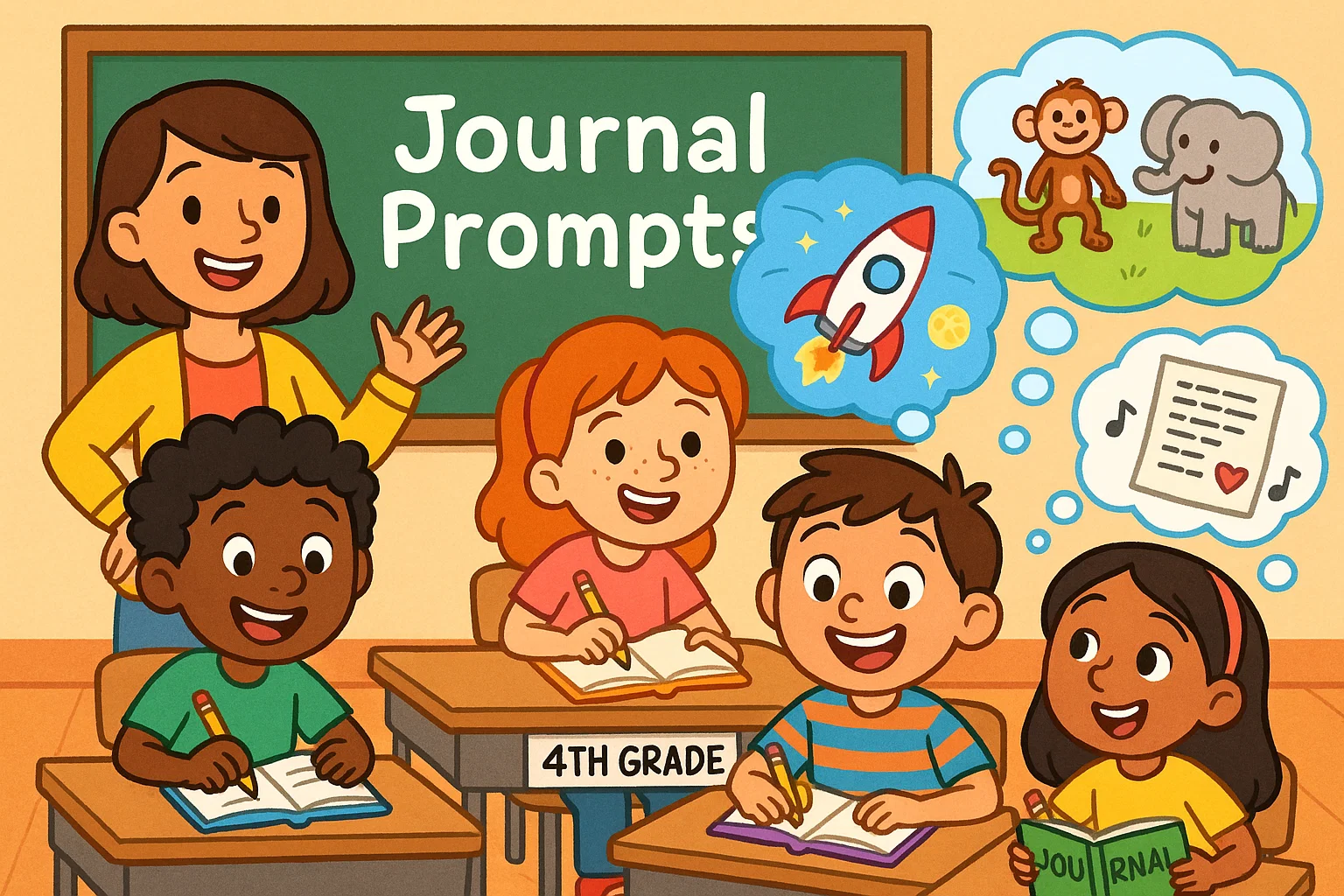
Year 4 pupils need varied writing tasks to build a broad and flexible writing toolkit. Engaging nine- and ten-year-old children in regular narrative, opinion, creative, descriptive, informative, seasonal, humorous, and journal-style writing activities helps prevent boredom and expand vocabulary. Varying the style of writing prompts can help prevent task fatigue and encourage children to see writing as a multifaceted creative outlet.
Teachers and parents can use writing prompts strategically throughout the school day. Using a short narrative prompt or an opinion topic can work well for morning work, homework, structured literacy lessons, creative writing sessions, and independent practice. Providing a structured prompt reduces cognitive load, allowing young writers to focus on accuracy, sentence structure, and descriptive vocabulary without the anxiety of facing a blank page.
Key Takeaways
- Comprehensive Skill Development: Year 4 writing prompts help pupils systematically practise story structure, sensory description, logical opinions, informative facts, emotional expression, and imaginative creativity.
- Extensive Resource Index: This article provides 180 curated prompts categorised by narrative, opinion, creative, funny, informative, poetry, animal, holiday, and journal writing to support curriculum planning.
- Flexible Instructional Deployment: Teachers and parents can use these structured prompts for morning arrival activities, independent homework assignments, classroom writing stations, or quick literacy warm-ups.
- Measurable Literacy Growth: Every category contains targeted writing ideas that actively support pupil confidence, descriptive vocabulary growth, compound sentence variety, and independent writing stamina.
- Actionable Teaching Guidance: Embedded teaching tips offer adults practical strategies to make writing practice structured, interactive, and productive for Year 4 pupils.
Narrative Writing Prompts
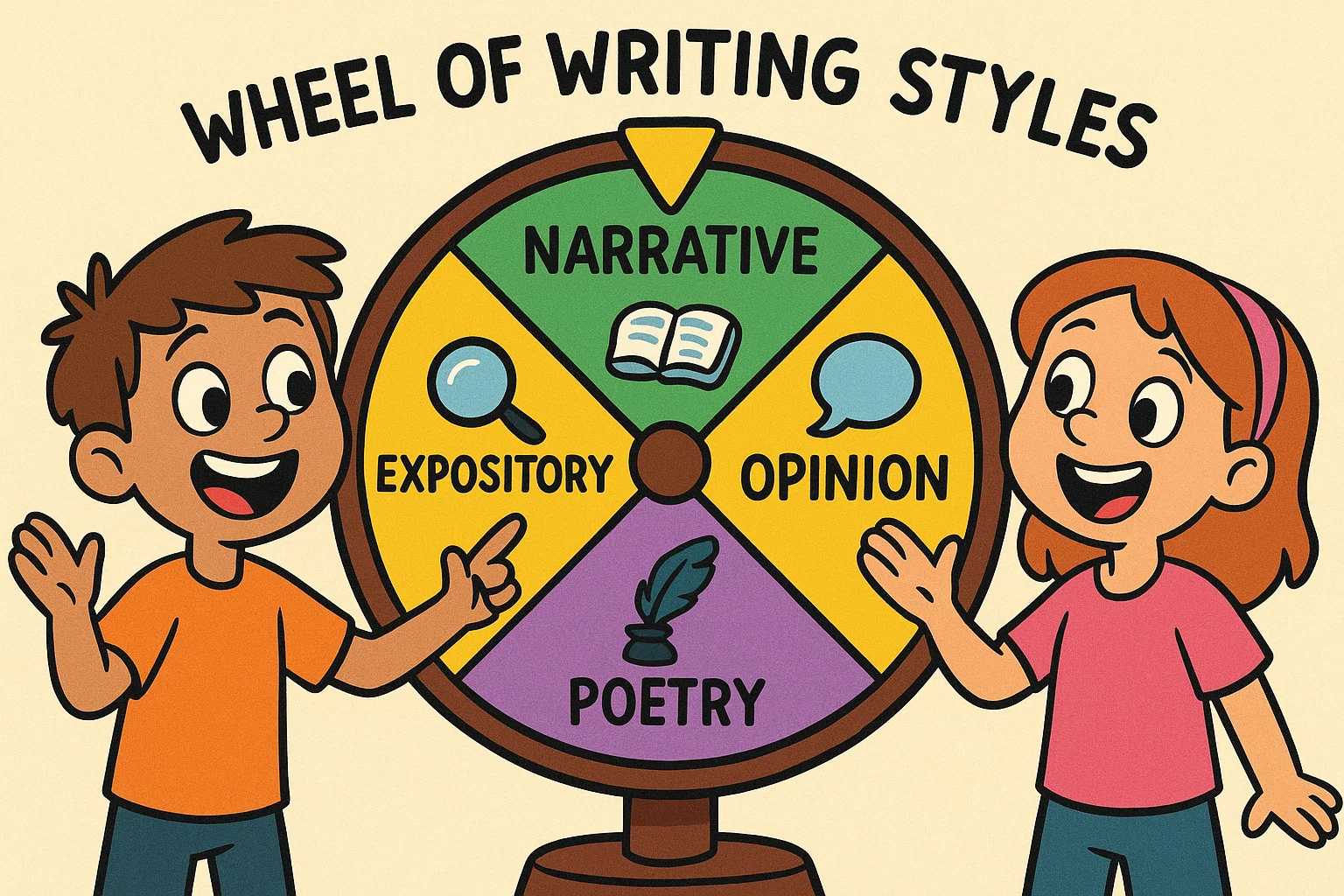
Narrative writing prompts encourage pupils to invent original characters, vivid settings, central conflicts, and logical resolutions. Engaging in narrative writing helps Year 4 pupils master chronological plot progression, realistic dialogue punctuation, paragraph transitions, and compelling story openings. Structured story starters can help pupils build writing stamina, plan more confidently, and develop stronger story openings over time.
Adventure Story Prompts
Adventure stories usually feature a clear protagonist who leaves a familiar environment to complete a quest or face an unexpected challenge. Pupils must structure these tales with a clear beginning, an escalating problem, an exciting climax, and a satisfying resolution.
- You discover an ancient, leather-bound treasure map tucked inside an old library book, and the first clue points directly to your own school garden.
- A hidden stone door behind the ivy wall in your garden swings open only when the moon is completely full.
- Your sea voyage goes off course, landing your crew on an uncharted tropical island where the trees grow purple leaves and the stones float in mid-air.
- You are chosen to lead a critical space mission to repair a communications satellite orbiting Mars, but your ship’s navigation computer goes offline.
- While walking through an ancient forest, an emerald-green bird drops a silver key into your hand and whispers, “Find the iron chest before sunset.”
- A mysterious journey begins when your usual school bus accidentally takes a motorway exit that leads directly into a valley of swirling blue mist.
- You discover a pair of old explorer boots in your attic that instantly teleport you to the base of Mount Everest the moment you lace them up.
- During a museum field trip, an ancient Egyptian artefact begins to hum softly, and you suddenly realise you can read the carved hieroglyphics perfectly.
- Your sailboat becomes trapped in a sudden whirlpool, pulling your team down into a glowing subterranean river system.
- A map hidden inside an antique globe reveals that a legendary time capsule is buried exactly twelve paces north of the oldest tree in your town.
Mystery Story Prompts
Mystery writing encourages pupils to build suspense, introduce logical clues, plant red herrings, and resolve a puzzling event. Year 4 pupils learn to reveal information gradually to keep readers engaged throughout their short stories.
- The school trophy case is completely locked, yet the historic headmaster’s cup has vanished, leaving behind only a faint scent of peppermint.
- You discover a trail of glowing, neon-blue footprints leading from the kitchen window straight to the garden tool shed.
- A coded message written in invisible ink appears on your bedroom mirror only when the glass fogs up from a hot shower.
- Every digital clock in your house suddenly starts counting backwards at exactly 3:14 PM, and the front door locks automatically.
- A strange, rhythmic tapping sound echoes from inside your classroom wall every time the teacher stands up to write on the board.
- The town librarian opens the oldest safe in the building and finds a fresh, warm piece of toast sitting on a velvet cushion instead of the town charter.
- You pick up your telephone and hear a mysterious voice say, “The package has been delivered to the hollow oak tree,” before hanging up.
- Your neighbour’s prize-winning dog disappears, and the only clue left behind is a small, silver whistle that humans cannot hear.
- A locked wooden room appears overnight in the centre of the school playground, with no visible windows or keyholes.
- Your favourite school jacket goes missing from your peg, but you find it later that afternoon with a strange, gold coin tucked inside the pocket.
Personal Experience Story Prompts
Personal experience narratives allow children to explore real events, emotional reactions, and memories from their own lives. Incorporating sensory details and explicit emotional vocabulary helps young writers build a personal connection with their text.
- Describe your very first day in Year 4, focusing on the sights of the classroom, the smell of new books, and how you felt inside.
- Write about a difficult challenge you faced, such as learning to ride a bicycle or performing in a school play, and how you overcame it.
- Describe an incredibly proud moment when you received an award, mastered a difficult skill, or helped someone in your community.
- Recall a surprising trip or family holiday where something totally unexpected happened, changing your entire plan for the day.
- Share a funny family memory involving a cooking disaster, a pet doing something unexpected, or a silly misunderstanding during a holiday dinner.
- Describe a time you had to make a difficult choice between telling the truth or protecting a close friend from getting into trouble.
- Write about an afternoon when you got lost in a public place, describing how you stayed calm and found your family.
- Reflect on a special celebration, such as a birthday or cultural festival, focusing entirely on the sights, sounds, and tastes around you.
- Describe a day when you were tasked with babysitting a pet or looking after a younger sibling, detailing the unexpected challenges that arose.
- Write about a time you tried a brand-new food or activity that you thought you would hate, but you ended up thoroughly enjoying.
Narrative Writing Practice Tips
Before pupils start writing, they should use a graphic organiser to map out the narrative arc. This structured planning phase ensures that characters, settings, conflicts, and resolutions are clearly defined before drafting begins.
| Narrative Element | Pupil Focus Activity | Measurable Goal |
| Character Creation | Define two physical traits and one main motivation. | Avoid generic characters. |
| Dialogue Punctuation | Place quotation marks around spoken words; start a new line for a new speaker. | Clear conversational flow. |
| Paragraph Transitions | Use fronted adverbials of time (e.g., “Suddenly,” “Three hours later,”). | Logical chronological sequence. |
| Story Resolution | Explain how the main conflict was solved and what the character learned. | Avoid abrupt “then I woke up” endings. |
Narrative Essay Writing Prompts
Narrative essays require greater writing stamina, clear multi-paragraph structure, and a well-developed theme. These tasks are ideal for assessment preparation and for developing more advanced writing skills in Year 4 and Year 5 pupils.
Beginning, Middle, Ending Prompts
Multi-paragraph narrative essays should have a clear structure: the introduction sets the scene, the body paragraphs build the conflict, and the conclusion provides a satisfying resolution.
- Write an essay about an old clockmaker who creates a pocket watch that can pause time for exactly sixty seconds each day.
- Compose a story about a young explorer who finds a map leading to an underwater kingdom hidden beneath a local lake.
- Create a narrative about a school camping trip in which the pupils must work together to find their way back to base camp after a storm.
- Write a story about a stray cat that accidentally hitches a ride on a delivery truck and must navigate a bustling new city to find its way home.
- Craft an essay about an amateur inventor whose homemade robot companion accidentally creates absolute chaos during the annual town science fair.
- Write a story in which a young chef accidentally uses salt instead of sugar while baking a cake for the mayor’s official visit.
- Write a full narrative essay about a family that discovers an overgrown maze in their new garden and finds that it leads to the past.
- Create a tale about a pupil who loses their homework diary, only to find it has been collected by an underground society of intelligent mice.
- Write a multi-paragraph story about an astronaut who makes friends with a helpful creature while exploring an isolated lunar crater.
- Compose a narrative essay about a town where all colour suddenly vanishes from the landscape, leaving only shades of grey until a child discovers the cause.
Character Journey Prompts
Character-driven narratives focus on internal development, emotional resilience, and behavioural transformation. Pupils must demonstrate how a protagonist changes through their actions and choices over time.
- A timid pupil signs up for the school public speaking competition to advocate for an environmental cause they deeply care about.
- An arrogant young athlete suffers a minor injury and must learn the value of supporting their teammates from the sidelines.
- A child who is terrified of the dark is forced to enter a dim basement to rescue a puppy that became trapped behind a storage box.
- A disorganised pupil must completely change their habits when they are put in charge of the school’s most important charity event.
- A character who struggles to make friends meets a new classmate who speaks a different language, forcing them to find creative ways to communicate.
- An artistic child who doubts their own talent enters a massive community mural contest after receiving encouragement from an unexpected mentor.
- A young boy who dislikes nature is sent to spend the summer at his grandfather’s remote forest cabin, which gradually changes the way he sees the world.
- A pupil who often exaggerates the truth faces a major dilemma when something unbelievable really happens and no one believes them.
- A fiercely competitive gamer learns the true meaning of sportsmanship after losing a major tournament to a kinder, more humble opponent.
- A character who always relies on their older sibling must take full responsibility for planning a surprise anniversary party for their parents.
Setting-Based Narrative Prompts
Atmospheric narratives focus on vivid settings, a strong sense of place, and sensory language. The setting can feel almost like a character, influencing the plot and mood of the story.
- Write an extended narrative set entirely inside an ancient, crumbling castle that sits on the edge of a jagged ocean cliff.
- Compose a story taking place within a dense tropical rainforest where the canopy is so thick that daylight never reaches the forest floor.
- Detail an adventure set inside a gleaming underwater city protected by a massive, transparent glass dome.
- Create a multi-paragraph story centred on an abandoned, three-storey library where the books are arranged by scent rather than title.
- Write an essay set in a futuristic school where desks float, artificial intelligence teaches history, and break time takes place in a gravity-free zone.
- Craft a narrative set in a magical mountain village where the houses are carved directly out of massive, glittering crystals.
- Describe a journey through an underground cavern system illuminated entirely by patches of rare, bioluminescent moss.
- Set a story in a bustling, Victorian-style marketplace filled with steam-powered machines, exotic spices, and street performers.
- Write an adventure that takes place entirely aboard a massive wooden zeppelin travelling through a permanent cloud kingdom.
- Create a narrative set in an Arctic research station during a winter when the sun does not rise for three consecutive months.
Story Starters
Story starters provide an unfinished opening line that reduces the anxiety of getting started. These prompts create immediate narrative momentum, allowing Year 4 pupils to move straight into descriptive and structured writing practice.
Mysterious Opening Lines
- “The brass key fit perfectly into the rusted lock, but as I turned it, the entire wall began to slide backwards…”
- “I knew it was going to be a strange morning when I looked out my bedroom window and saw my shadow running across the lawn without me.”
- “A faint, musical whisper echoed from behind the old grandfather clock in the hallway, repeating my name over and over.”
- “The old book sat on my desk, completely blank, until a single droplet of water hit the page and words began to form in glowing gold ink.”
- “Exactly at midnight, a bright green envelope slid underneath our front door, sealed with a stamp shaped like a dragon’s wing.”
- “I opened my school locker and found a small, pulsing glass sphere sitting on top of my science textbook.”
- “The television screen went black, and a typed message appeared: ‘Your help is required at the old lighthouse immediately.’”
- “As the train entered the tunnel, every passenger’s watch stopped ticking at precisely the same second.”
- “I picked up the smooth stone from the beach and realised it was perfectly warm, despite sitting in the freezing ocean water.”
- “A pair of glowing purple eyes peered out from the depths of my wardrobe, but when I flicked the light switch on, I found…”
Funny Opening Lines
- “My dog looked at me, cleared his throat, and said, ‘Look, we need to talk about the quality of the biscuits you’ve been buying.’”
- “The moment I opened my backpack in maths class, my homework erupted into a swarm of miniature paper aeroplanes and flew out the window.”
- “Tuesday was officially declared ‘Backwards Day’ by our headteacher, which meant we had to walk into the school heels-first.”
- “I took a big bite of my lunchbox sandwich and suddenly found myself floating three feet above the canteen floor.”
- “Our teacher stood up to explain fractions, but instead of words, loud circus music came out of her mouth every time she spoke.”
- “The alarm clock didn’t buzz this morning; instead, it began singing opera at the top of its electronic lungs.”
- “When I put on my dad’s old winter coat, my arms suddenly grew three feet long and started flapping like a pair of wings.”
- “The school cat walked into the assembly hall wearing a tiny business suit and carrying a miniature leather briefcase.”
- “I tried to write my name on the whiteboard, but the marker pen kept writing silly jokes about the history teacher instead.”
- “Everything in our house turned completely upside down at noon, leaving us sitting on the ceiling staring down at the sofa.”
Fantasy Opening Lines
- “The dragon landed softly on our garage roof, careful not to crack the tiles with its massive, ruby-red claws.”
- “As I stepped through the hollow trunk of the ancient oak tree, the suburban sounds vanished, replaced by the chimes of an enchanted city.”
- “My grandmother handed me a small silver thimble and warned, ‘Never drop this into a glass of milk, or you will summon the frost sprites.’”
- “The old stone fountain in the town square didn’t hold water; it bubbled with a thick, sparkling blue potion that smelled like starlight.”
- “A tiny griffin, no larger than a newborn kitten, hatched right inside my desk organiser during our spelling test.”
- “The reflection in my bedroom mirror didn’t copy my movements; instead, it waved at me and pointed urgently toward a secret compartment.”
- “Every flower in the botanical garden began to glow with a soft luminescent light the moment the eclipse reached its peak.”
- “I put on the antique silver ring and suddenly understood exactly what the backyard birds were arguing about.”
- “The map showed a kingdom that didn’t exist on Earth, but when I traced the border with my finger, a real doorway appeared in my wall.”
- “A travelling merchant sold my parents a rug that refused to stay on the floor, constantly drifting toward the open windows.”
Finish-the-Story Writing Prompts
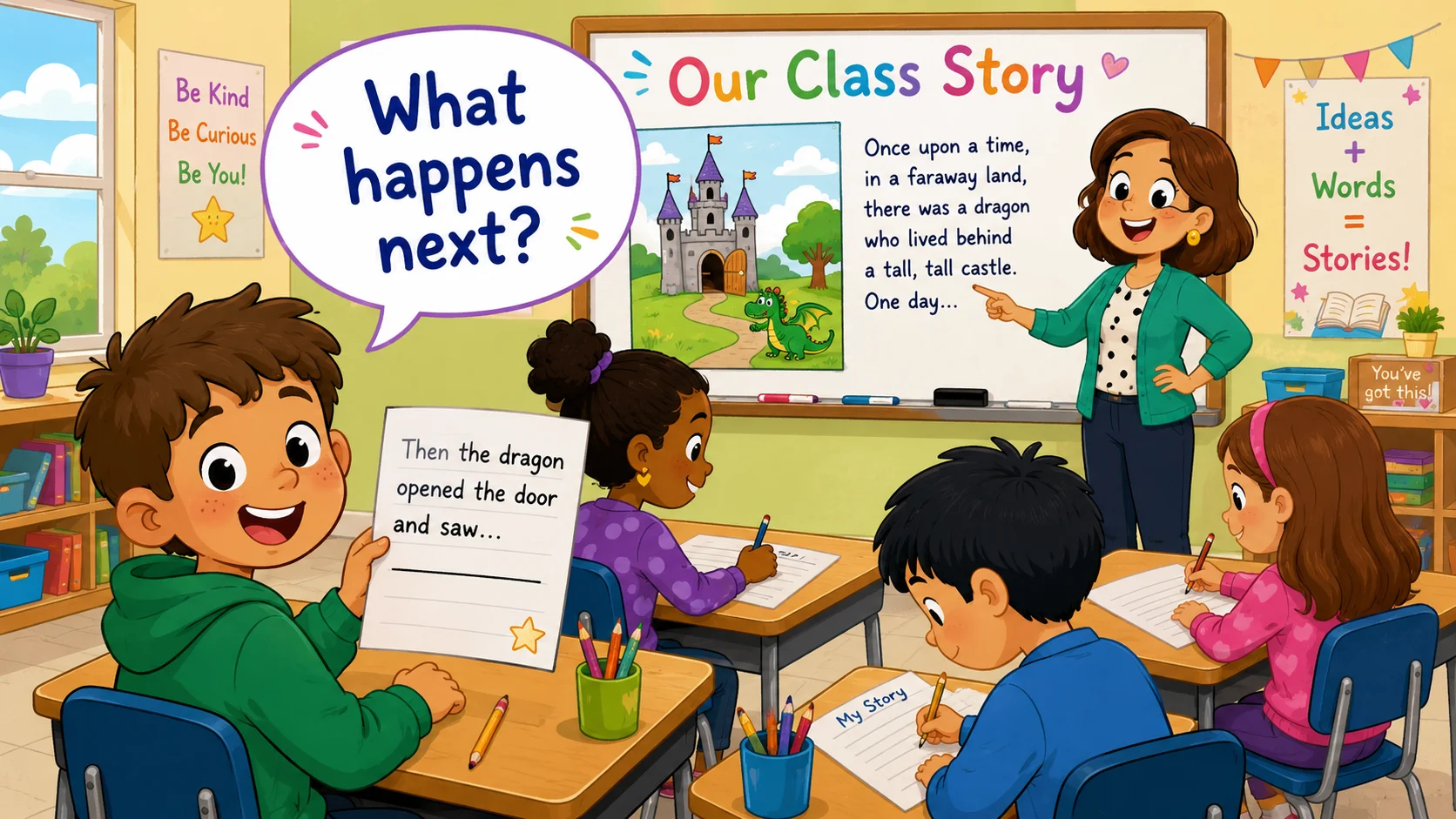
Finishing an incomplete scene helps pupils practise logical sequencing, narrative continuity, and creative problem-solving. Pupils need to consider the established tone and vocabulary before concluding the story.
Finish Adventure Story
- The Setup: Leo and Sam reached the edge of the canyon. The rope bridge was frayed, swaying violently in the mountain wind. Behind them, the tracking drones were closing in, their red lights flashing through the trees. Your Task: Finish the story by describing how they cross the canyon, evade the drones, and secure the ancient artefact.
- The Setup: The submarine’s headlights suddenly flickered and died, plunging the crew into absolute darkness. Outside, a massive, bioluminescent tentacle gently tapped against the reinforced viewing glass. Your Task: Conclude the scene by describing how the crew restores power and safely navigates away from the deep-sea creature.
- The Setup: Maya climbed the final step of the stone ziggurat. In the centre of the platform sat a stone pedestal holding a golden chalice. As her fingers brushed the cold metal, a loud rumbling sound echoed from deep below. Your Task: Write the ending, showing how Maya escapes the collapsing structure with the prize.
- The Setup: The hot air balloon was losing altitude rapidly over the dense pine forest. To stay airborne, the passengers had to discard three heavy items from the basket, but each item was vital to their survival. Your Task: Finish the story by detailing which choices they make and how they safely land the balloon.
- The Setup: Alex found himself face-to-face with the gatekeeper of the hidden city—a massive stone golem with emerald eyes. The golem boomed, “To pass, you must answer one question correctly, or remain outside forever.” Your Task: Complete the narrative by inventing the riddle, Alex’s clever answer, and his entry into the city.
Finish Mystery Story
- The Setup: Detective Clara found a single white feather and a small drop of candle wax on the desk where the royal diamond had been sitting just minutes prior. The room had no windows, and the heavy iron door had been guarded by two soldiers all night. Your Task: Finish the mystery by showing how Clara interviews suspects and solves the impossible theft.
- The Setup: Every bicycle in the neighbourhood was found painted bright orange on Saturday morning. Inspector Tom noticed that the local hardware store had sold out of orange spray paint to a mysterious customer wearing a trench coat and oversized sunglasses. Your Task: Conclude the tale by revealing the identity of the painter and their unusual motive.
- The Setup: A mysterious rhythmic clicking was coming from the school piano during music class. When the teacher lifted the top lid, she found a small mechanical device attached to a note written entirely in musical symbols. Your Task: Write the ending, decoding the musical note and tracking down the prankster.
- The Setup: The baker’s secret recipe book vanished right before the national pastry competition. A trail of flour led from the kitchen island directly to the back door, where a pair of unusually large boot prints disappeared into the grass. Your Task: Finish the story by identifying the rival baker who took it and how the recipe is recovered.
- The Setup: An anonymous package arrived at the school office containing a rare artefact and a letter stating, “Return this to the historical museum before the clock strikes five, or the curse begins.” Your Task: Write the final chapters, detailing the race against time to return the object safely.
Finish Funny Story
- The Setup: Professor Pumpernickel’s latest invention, the ‘Pet Translator 3000’, worked perfectly. Unfortunately, nobody expected that the neighbourhood pug would spend the entire afternoon loudly criticising everyone’s fashion choices. Your Task: Finish the story by describing the hilarious arguments between the dog and the local residents.
- The Setup: The school canteen menu promised a standard vegetable soup, but an accidental ingredient swap turned the soup into a powerful bouncing potion. By lunchtime, twenty pupils were bouncing off the walls and ceilings like rubber balls. Your Task: Conclude the story by showing how the headteacher and caretaker restore order and ground the pupils.
- The Setup: A local magician accidentally performed his rabbit trick backwards, turning his assistant into a giant carrot while the rabbit grew to six feet tall and started performing card tricks. Your Task: Finish the comedy by detailing the chaotic performance that followed.
- The Setup: My younger brother accidentally washed his favourite white socks with a red sweater and a box of Mexican jumping beans. Now, our laundry basket is filled with hyperactive, bright pink socks that refuse to be captured. Your Task: Complete the story by describing the chaotic chase through the house to catch the clothing.
- The Setup: The substitute teacher turned out to be a literal alien from Jupiter who spoke English perfectly well but insisted that standard maths problems had to be solved by doing jumping jacks and singing nursery rhymes. Your Task: Write the ending of this chaotic school day and the headteacher’s reaction.
Creative Writing Prompts
Creative writing allows maximum freedom of expression, helping pupils experiment with narrative voice, complex characters, and vivid language. This practice encourages Year 4 and Year 3 pupils to stretch their imaginations beyond realistic boundaries.
Magical Object Prompts
- You discover an ordinary yellow pencil that writes down events that will happen exactly twenty minutes in the future.
- Your new school backpack contains an endless space inside, allowing you to carry furniture, libraries, and even a full snack bar.
- You find a pair of old, worn-out trainers that instantly teleport you to any location on Earth, provided you have a printed postcard of that place.
- A mysterious antique pocket watch allows you to freeze time for everyone except yourself by pressing down on the top button.
- You receive a box of magical chalk; whatever door or scene you draw on a brick wall becomes a real path you can walk through.
- An old umbrella allows you to float gently through the air whenever the wind speed exceeds fifteen miles per hour.
- You inherit a paintbrush that brings any animal or object you paint into three-dimensional, living reality.
- A small glass marble allows you to hear the inner thoughts of any domestic pet within a ten-metre radius.
- You find a pair of sunglasses that reveal the hidden history of any object you look at via a digital overlay.
- A silver key found in a vintage shop opens any locked door in the world, regardless of the size or type of lock.
Imaginary World Prompts
- Design a planet called Aqua-Terra, where the gravity is low enough that humans can walk on water, and the clouds are made of pink cotton candy.
- Describe a secret underwater town hidden inside a coral reef, where the citizens ride trained seahorses and use glowing pearls for currency.
- Create a cloud city that floats directly above London, where the roads are made of solid light and the main form of transport is gliding.
- Invent a hidden kingdom tucked behind the silver backing of an antique mirror, where everything moves in absolute reverse.
- Describe a valley where all lost objects—such as missing socks, keys, and toys—gather to build a bustling civilisation of their own.
- Design a planet where the ecosystem relies entirely on music; plants only grow when people sing, and storms are caused by discordant sounds.
- Describe a city built entirely inside the canopy of a massive ancient oak tree that is taller than a skyscraper.
- Describe a subterranean world located miles beneath the Earth’s crust, where the oceans are made of liquid crystals and the sky is a cavern of diamonds.
- Create an island where time stands completely still; the season is always autumn, and the date never changes from October 31st.
- Design a futuristic metropolis built entirely out of recycled materials, where the buildings can reshape themselves based on the weather.
Creative Character Prompts
- Write about an unusual hero who can control mechanical devices with their mind, but only when they are wearing a pair of bright yellow socks.
- Describe a brilliant inventor who is only eight years old and has just created a machine that turns household rubbish into clean fuel.
- Create a character who is a talking owl serving as the chief librarian of an ancient, underground university for magical creatures.
- Describe a child who possesses the secret power to walk through solid walls, but loses this ability completely if they hear someone whistle.
- Create a misunderstood villain who is a dragon that hates fire and simply wants to open a peaceful bakery in a small human village.
- Detail an eccentric explorer who travels the world collecting rare sounds—like a whale’s yawn or a snowflake hitting the ground—in glass jars.
- Write about a young girl who wakes up to discover her long hair has turned into a vibrant, living garden filled with real butterflies.
- Describe a private detective who happens to be a highly intelligent raccoon working from a bin in a local park.
- Create a character who can speak every language on Earth fluently, but can only communicate via rhythmic rhymes and poetry.
- Describe an ancient king who gave up his throne to become a school crossing patrol officer because he loves helping children cross the road safely.
Creative Writing Ideas for Year 3 and Year 4 Pupils
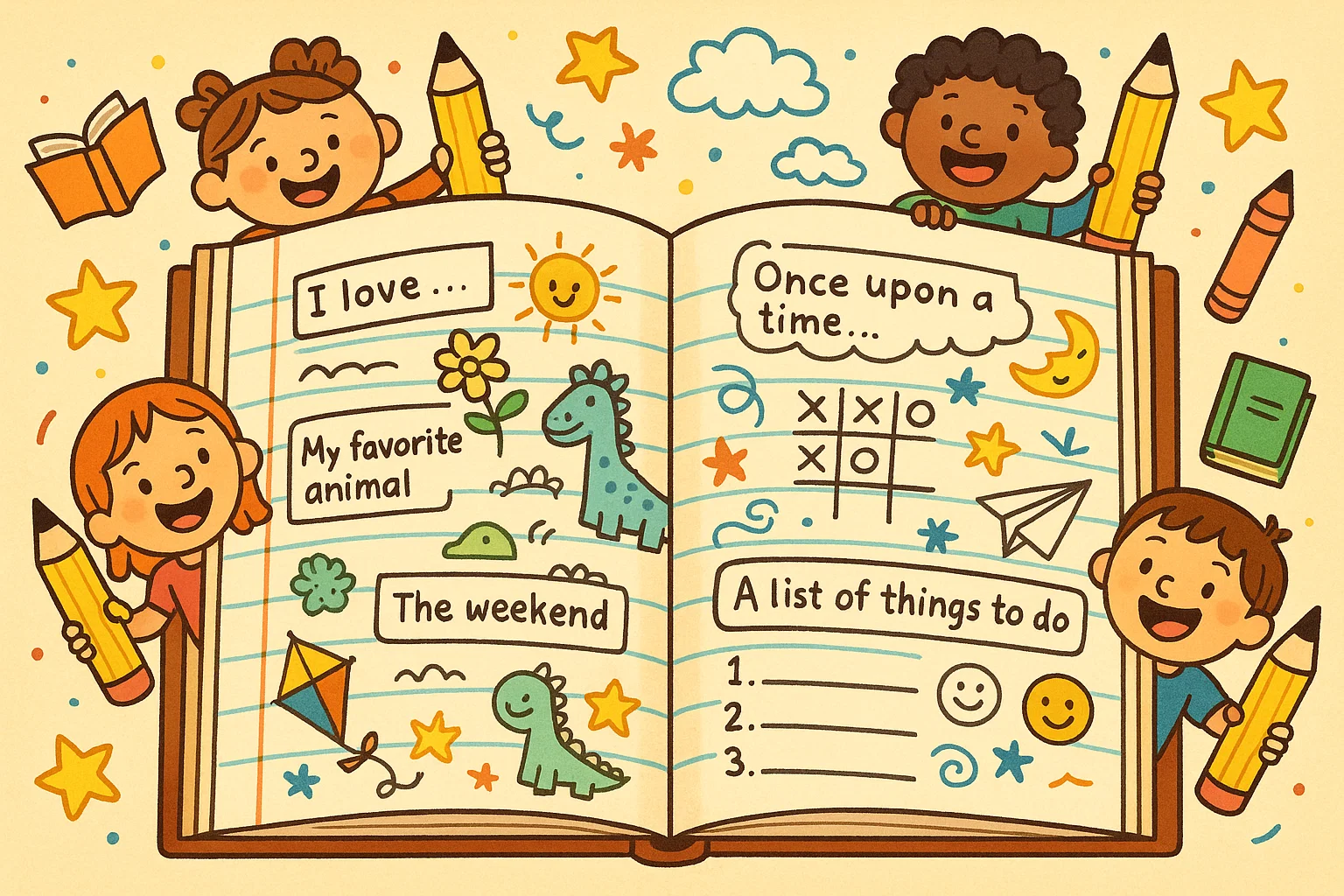
These practical strategies help primary school teachers integrate writing challenges into mixed-ability classrooms, literacy centres, or independent morning routines.
Morning Activity Ideas
Short daily writing challenges of ten to fifteen minutes can help pupils focus and prepare for learning.
- Picture Analysis: Display a single, surreal photograph (e.g., a boat floating in a tree) and require pupils to write a three-sentence explanation of how it arrived there.
- Sentence Expansion: Provide a simple sentence (e.g., “The cat ran.”) and challenge pupils to expand it using an adjective, an adverb, and a prepositional phrase within five minutes.
- Quick Character Sketch: Ask pupils to list three distinct personality traits and a favourite food for a character named “Captain Crimson” before the morning bell finishes ringing.
- One-Paragraph Story: Challenge pupils to write a complete narrative paragraph containing a clear beginning, middle, and end using exactly fifty words.
Short Story Ideas
Compact story concepts can be fully drafted, edited, and completed within a single sixty-minute literacy lesson.
- A child accidentally drops their favourite action figure down a storm drain, where it is found by a community of friendly, underground creatures.
- Two classmates discover that their headteacher has a secret twin brother who is trying to take over the school during sports day.
- A magical garden appears on an empty urban plot overnight, growing oversized fruits that grant temporary flying abilities to anyone who eats them.
- A surprise visitor—a friendly extraterrestrial tourist—knocks on a family’s front door asking for directions to the nearest petrol station.
- A young artist discovers that the animals they doodle in the margins of their notebooks come to life whenever they close the book.
Creative Writing Slide Ideas
Using digital slides gives children a clear visual framework to guide their writing process. An effective writing prompt slide should include clear sections that make it easier for pupils to start writing.
A strong writing prompt slide can include:
- Narrative genre: Adventure quest
- Prompt: You discover a glowing map under your desk.
- Visual cue: An image that suggests the setting, character, or conflict.
- Vocabulary bank: Words such as luminous, treacherous, and foliage.
- Success criteria: One fronted adverbial, two complex sentences, and a clear resolution.
- Sentence starter: “Without a second thought, I lunged forward into…”
Fun Writing Prompts
Fun writing prompts reduce academic pressure and make writing practice more engaging for reluctant writers who struggle with traditional essay formats.
Silly Scenario Prompts
- The school principal swaps roles with a Year 4 pupil for an entire week, leading to a mandatory school policy of ice cream for lunch.
- Domestic pets take over the local town council, passing strict laws regarding mandatory belly rubs and outlawing vacuum cleaners entirely.
- Your maths homework develops a personality overnight, loudly arguing that two plus two equals five and refusing to be erased.
- Every time you snap your fingers, your clothes instantly shift colour and pattern based entirely on your current mood.
- A local supermarket accidentally stocks cereal boxes that contain real miniature dinosaurs instead of plastic toy prizes.
Would You Rather Prompts
- Would you rather be able to fly at ten miles per hour or be completely invisible, but only when your eyes are closed? Explain your reasoning.
- Would you rather live in a high-tech colony beneath the Atlantic Ocean or in an experimental greenhouse research station on Mars? Provide three distinct operational reasons.
- Would you rather have a personal robot helper that completes all homework but speaks only in loud animal noises, or a miniature dragon friend that can cook meals but occasionally singes the furniture?
- Would you rather be able to speak fluently with every species of land animal or master every musical instrument on Earth instantly? Detail your choice.
- Would you rather live in a house constructed entirely out of structural blocks of cheese or a castle built completely out of solid ice? Discuss the structural and comfort implications.
Classroom Challenge Prompts
- Write a comprehensive descriptive paragraph about a mysterious jungle journey using the words: cactus, submarine, glowing, whisper, and bicycle.
- Describe your favourite school lunch in full detail without using any actual food names or direct colour words.
- Write a short narrative in which each sentence begins with the next consecutive letter of the alphabet, starting with ‘A’ and ending with ‘J’.
- Compose a dialogue scene between a pupil and a teacher using only questions; neither character is allowed to make a statement.
- Draft a ten-sentence story in which every word has four letters or fewer while maintaining a logical plot throughout.
Funny Writing Prompts
Humorous prompts allow pupils to experiment with comedic timing, intentional exaggeration (hyperbole), and absurd plot twists.
Talking Animal Prompts
- A highly critical household cat decides to write a weekly advice column about human behaviour and domestic organisation.
- A golden retriever successfully runs for town mayor on a political platform of universal park access and free tennis balls for all residents.
- A hyperactive hamster is hired as the school’s head mathematics teacher and uses sunflower seeds to demonstrate complex long division.
- A local parrot learns how to use a smartphone via voice commands, ordering a hundred pounds of premium walnuts directly to your house.
- A philosophical squirrel gives a dramatic speech to its friends about the deep meaning of storing acorns for winter.
School Comedy Prompts
- The school headteacher accidentally drinks an experimental potion and becomes completely invisible right before a major inspection.
- Your ordinary school bus suddenly malfunctions and begins travelling backwards through historical periods during the morning run.
- The school kitchen staff lose the usual lunch menu and decide to serve experimental dishes like broccoli ice cream and spaghetti tacos.
- A strange spell hits your classroom, causing everyone to burst into a dramatic Broadway-style song and dance routine every time they answer a question.
- The letters on the classroom whiteboard go on strike, scrambling themselves into nonsense anagrams because they are tired of spelling tests.
Funny Diary Prompts
- Write a series of dramatic diary entries from the perspective of a school pencil that is terrified of the electric pencil sharpener.
- Compose a diary from the viewpoint of a left shoe that is constantly jealous of the right shoe always getting to take the first step.
- Detail twenty-four hours in the life of a lunchtime cheese sandwich waiting anxiously inside a dark, insulated school backpack.
- Write a humorous journal from the perspective of the classroom door, reflecting on the varying speeds and forces with which pupils push it open.
- Create a diary entry from a computer mouse that is completely exhausted from being clicked thousands of times during a single computing lesson.
Opinion Writing Prompts
Opinion writing teaches Year 4 pupils to state a clear opinion, support it with evidence, and use persuasive language.
School Opinion Prompts
- Should standard morning break times be extended by fifteen minutes, even if it means extending the school day? Provide three distinct arguments.
- Defend or oppose the mandatory requirement of school uniforms, focusing on pupil equality, financial cost, and personal expression.
- Argue whether traditional homework should be completely abolished in primary schools, analysing its impact on family time and learning retention.
- Should every classroom be allowed to keep a class pet, such as a guinea pig or fish? Evaluate the educational benefits against maintenance duties.
- Determine which primary school subject is the absolute most valuable for a future career, supporting your choice with specific logical examples.
Everyday Opinion Prompts
- Convince your reader which of the four seasons is the best, focusing on weather, activities, and holidays.
- State your position on whether breakfast or dinner is the most important meal of the day, using nutritional and social arguments.
- Choose between organised team sports and individual recreational hobbies as the best way for children to stay physically fit.
- Argue whether children should have the total freedom to choose their own personal bedtime on weekends, evaluating sleep requirements.
- State your opinion on whether digital books are better than traditional printed books for primary school reading development.
Benefits of Short Story Ideas
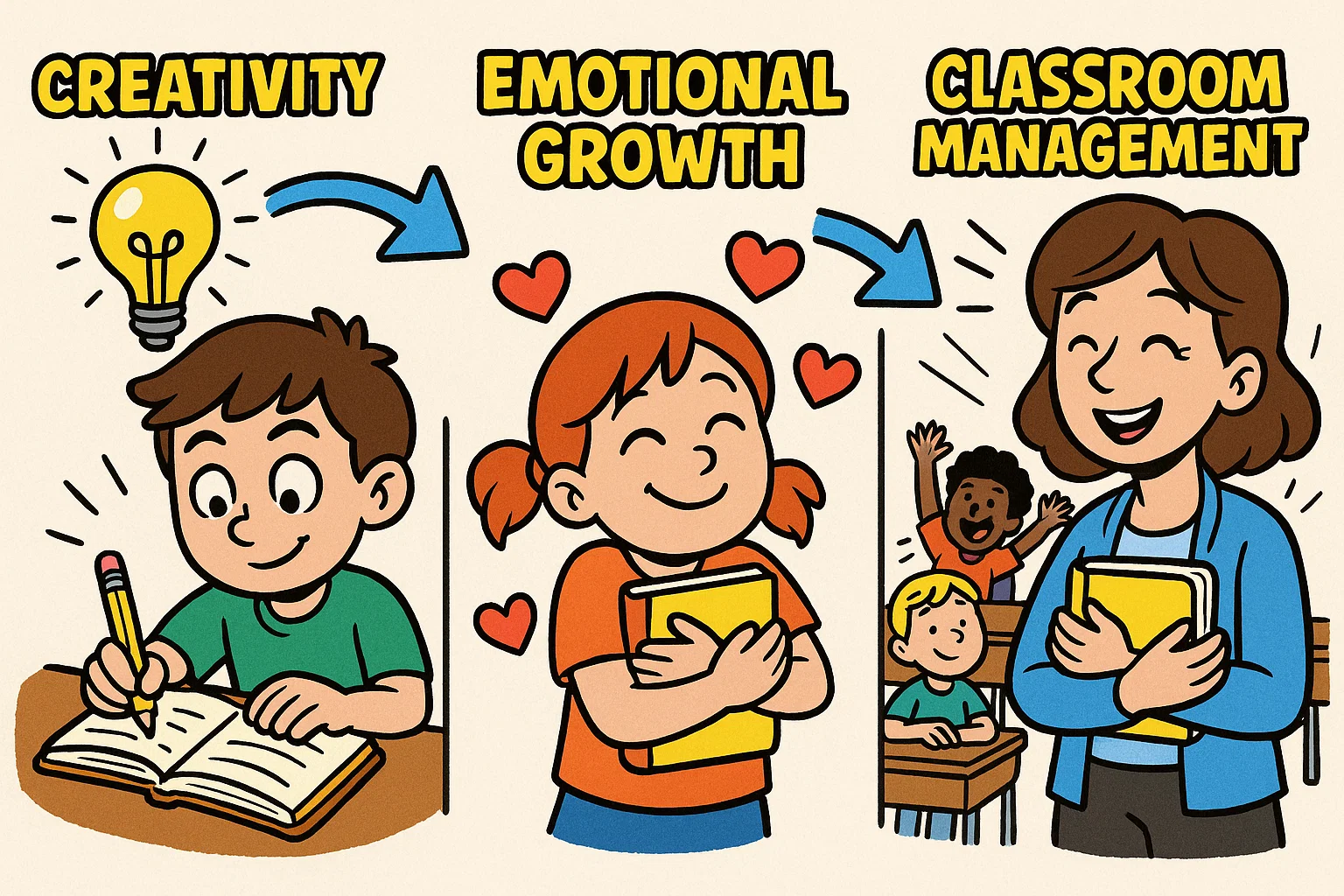
Using short story writing prompts can support cognitive, academic, and behavioural development in primary school learners.
Confidence Building
Long, open-ended essay assignments can easily overwhelm struggling writers, leading to frustration and avoidance. Short, structured writing prompts break writing practice down into achievable steps. This approach helps young writers build confidence as they successfully finish complete paragraphs and short stories.
Imagination Growth
Imaginative writing challenges push pupils to design original worlds, solve unexpected problems, and look at situations from a variety of unique perspectives. This creative work strengthens critical thinking skills, helping pupils learn to connect abstract ideas with concrete descriptions in their writing.
Writing Fluency
Regular timed writing practice helps pupils translate thoughts into written words with less hesitation. Over time, this consistent routine builds writing stamina, helping pupils write longer pieces with better mechanical control and less mental fatigue.
How to Use Writing Prompts for Year 4 Pupils
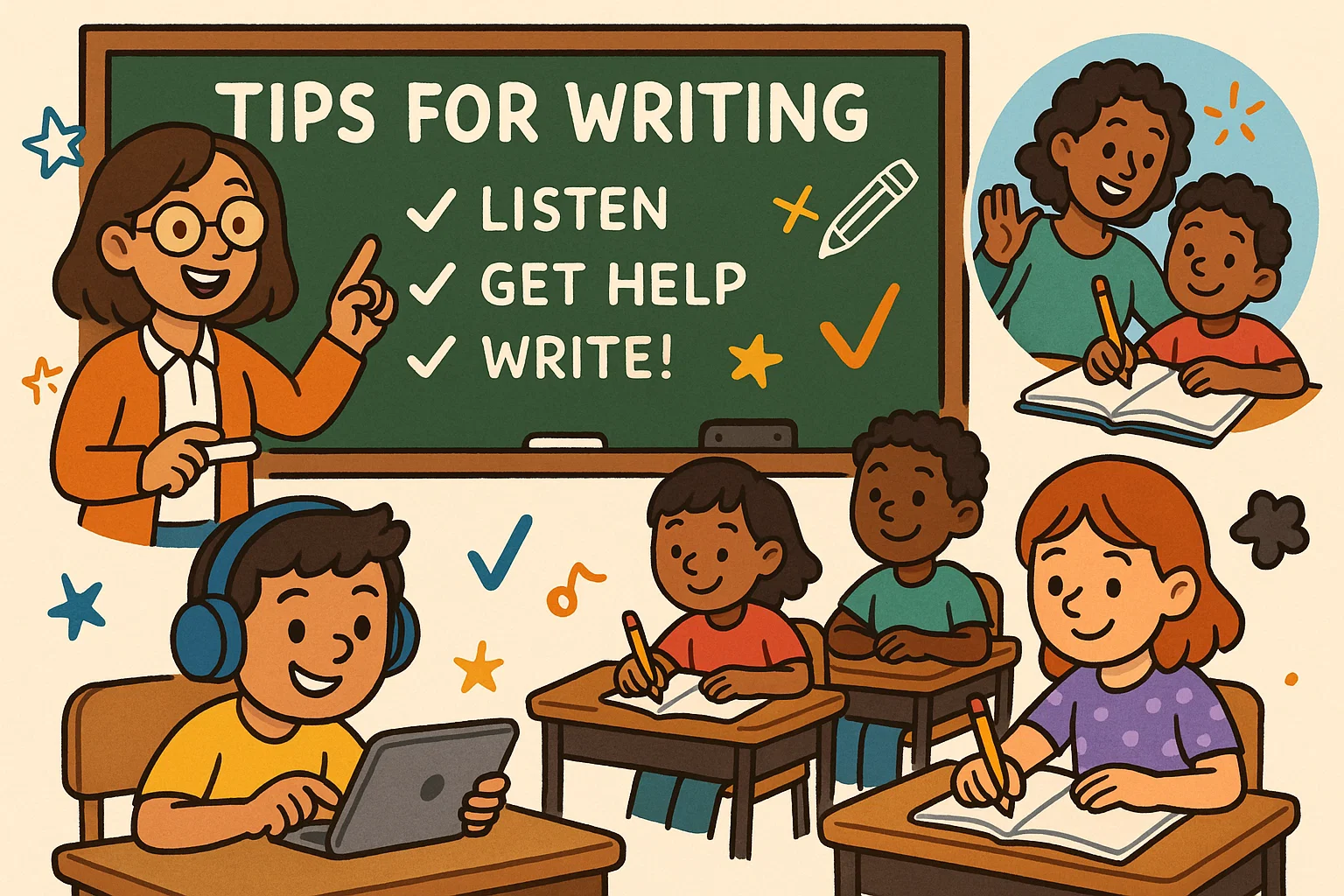
Integrating structured writing prompts into daily routines helps teachers and parents increase pupil engagement and support literacy development.
Morning Work Routine
Display one carefully chosen writing prompt on the classroom board at the start of each day. Give arriving pupils exactly ten minutes to write quietly in their journals. This routine creates a calm, focused start to the morning while activating language skills straight away.
Literacy Lesson Starter
Use descriptive or opinion prompts as a quick five-minute warm-up to introduce specific grammar goals. For instance, before a lesson on complex sentences, have pupils write a quick response to an adventure prompt using at least two subordinating conjunctions.
Homework Activity
Assign one writing prompt every week, providing a clear editing checklist and vocabulary word bank to go with it. This structure gives parents a clear framework to support regular writing practice at home, ensuring pupils maintain high standards outside the classroom.
Frequently Asked Questions
What Are the Best Writing Prompts for Year 4, Grade 4, and Fourth Grade Pupils?
The best writing prompts for kids at these grade levels are clear, age-appropriate, and flexible enough to spark original ideas. For Year 4 students, strong grade writing prompts often combine imaginative story starters, descriptive writing tasks, persuasive writing questions, and informative writing prompts. These prompts can also support grade 4 and fourth grade learners in international classrooms, as well as confident grade 5 pupils who need fresh inspiration for writing. A balanced set of prompts should help children plan stories, express opinions, describe settings, and organise ideas with growing independence.
How Can Writing Prompts Inspire Children to Express Their Ideas?
Writing prompts inspire children by giving them a clear starting point without deciding the whole response for them. A question such as “What happens next after a mysterious landmark appears in the playground?” can kickstart a story while still leaving room for imagination. Good prompts can also ask pupils to write a letter, describe a strange setting, use onomatopoeia, or add sensory details to a scene. Creative ideas like these help children express thoughts, build vocabulary, and develop confidence in descriptive writing, journaling, and storytelling.
Can I Use These Writing Prompts as Printable Worksheets or Classroom Activities?
Yes. Teachers and parents can use these writing prompts as a printable worksheet, morning starter, homework task, or quick classroom challenge. They can also be adapted into flashcards, writing stations, or interactive lessons where pupils choose a prompt and respond independently or in pairs. For example, one worksheet might focus on persuasive writing, while another could use informative writing prompts to help pupils explain facts clearly. This makes the prompts flexible enough for different grade levels, mixed-ability groups, and a student’s individual writing needs.
Take a short quiz to find out what your everyday choices say about your parenting style
When your child is curious about something new, what’s your instinct?
Take a short quiz to find out what your everyday choices say about your parenting style
“Can I download this app?” What happens next?
Take a short quiz to find out what your everyday choices say about your parenting style
When it comes to rules at home, which sounds most like you?
Take a short quiz to find out what your everyday choices say about your parenting style
If you could give your child one life skill today, what would you pick?
Take a short quiz to find out what your everyday choices say about your parenting style
Your child gets to choose what to watch. What would your ideal setup look like?
Take a short quiz to find out what your everyday choices say about your parenting style
Pick your parenting superpower ✨