31 Fun Babysitting Games to Play With Kids: Indoor, Outdoor, Creative, and Bedtime Ideas

 Discover a Free Education Video App for Kids
Pastory uses AI to personalize educational video content based on your child’s interests and personality. Safe, engaging, and built for curious young minds. Sign up now to stay updated and enjoy early access with a free trial

Finding fun babysitting games that work across different ages, moods, and settings is one of the best things a babysitter can prepare in advance. This guide covers 31 games and activities organized by type, from traditional favorites like Hide-and-Seek and Simon Says to creative crafts, outdoor challenges, sensory play, and quiet bedtime wind-downs.
Whether you are caring for a toddler, a school-age child, or a mixed-age group, the ideas here are low-cost, easy to set up, and adaptable to each family’s space and rules. Age-based suggestions, preparation tips, and a bedtime routine section are also included to help every session run smoothly.
Key Takeaways
- This guide includes 31 fun babysitting games organized across 12 categories, covering indoor, outdoor, creative, and bedtime options.
- Games are matched to age ranges from infants to age 10, making it easy to choose the right activity for any child.
- Most activities require no special supplies and can be set up using everyday household items.
- A preparation section helps babysitters ask the right parent questions and build a simple game kit before the session starts.
- Bedtime wind-down games are included to help children transition calmly from active play to sleep.
The Best Types of Babysitting Games
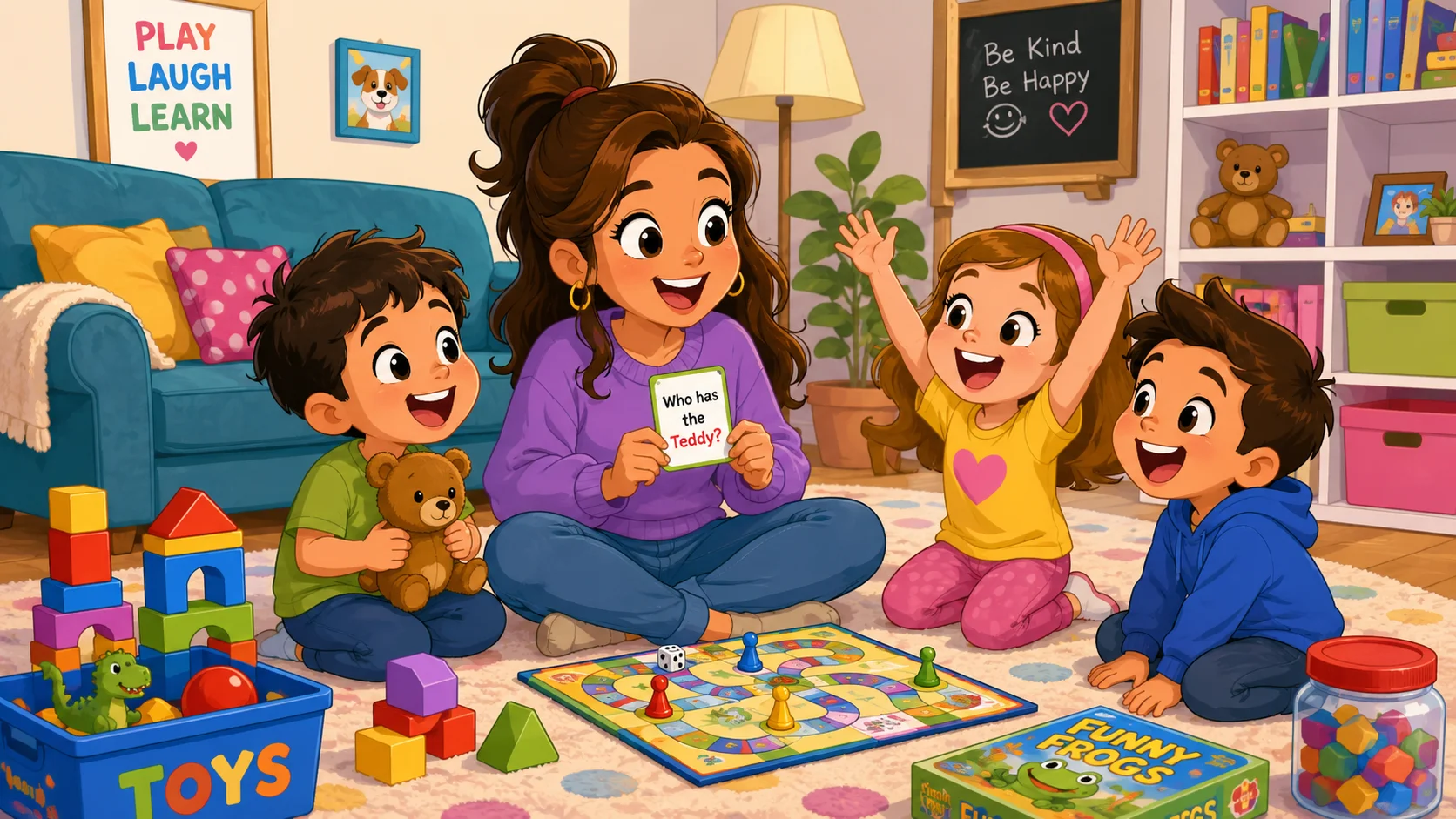
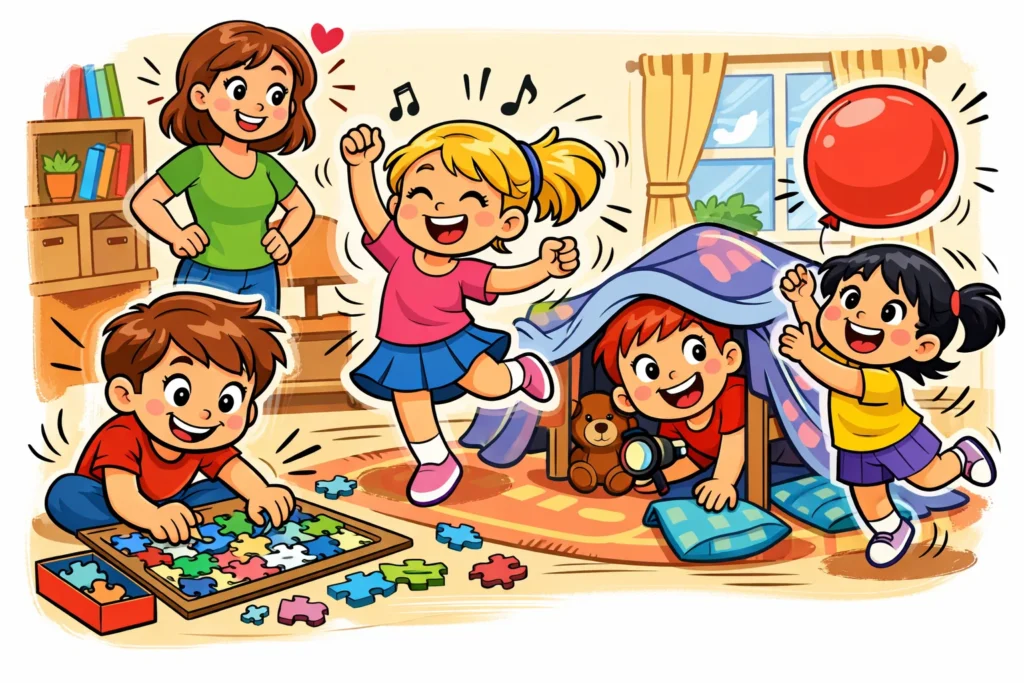
To provide a well-rounded experience, a babysitter should rotate through various play styles. These include traditional games like hide-and-seek, educational games that build motor skills, music and acting games for self-expression, and outdoor activities that help children move and burn energy. Sensory games are especially helpful for younger children, while kitchen activities and bedtime games can help the day wind down calmly.
Quick Safety Rules
Safety is the foundation of every babysitting job. Before playing games, inspect the area for small choking hazards, sharp edges, or accessible stairs. Always check for food allergies before any kitchen activities, and make sure you have explicit permission before taking children outside the home or backyard. Child safety guidance consistently emphasizes close, active supervision during play, especially outdoors, around water, and with younger kids.
Also keep age-specific risks in mind. For example, balloons can be a choking hazard for younger children, so balloon games should only be used with kids old enough to handle them safely and under close supervision.
How to Choose the Right Game
Selecting the right game depends on the time of day, the weather, and the children you’re watching. High-energy outdoor activities are ideal for mid-morning or late afternoon, whereas quiet games like puzzles or I Spy are better suited for the hour before sleep. Consider what is age-appropriate for each child: older children may find a simple board game too easy, while younger children may become frustrated by complex rules.
Babysitting Games and Activities
Engaging games and activities help prevent boredom and build a positive bond between the babysitter and the child. By offering structured fun, you can make the transition after the parents leave smoother and more comfortable for the child.
Let the Child Lead
A professional babysitter observes the child’s natural interests to foster engagement. If the child loves dinosaurs, a dinosaur scavenger hunt will work better than a generic one; if they enjoy art, a drawing challenge may be the perfect activity. Adapting your plan to their preferences shows you value their individuality and builds immediate trust.
Be Guided by the Parents
Before the parents leave, establish clear boundaries to ensure the babysitting job goes smoothly. Ask specifically whether the children may use supplies such as paint or glitter, whether outdoor play is allowed, and which areas of the house are strictly off-limits. Respecting these boundaries prevents conflicts and demonstrates professional reliability.
Use Surroundings for Inspiration
You do not need a bag full of toys to entertain children; most homes are full of inspiration. Plastic cups can become towers, paper plates can turn into flying discs, and pillows can create an obstacle course. Using household items encourages imaginative play and shows kids that creativity can be more valuable than expensive gadgets.
Craft Supplies for Babysitting
Bringing a small activity kit can make you a favorite babysitter instantly. A basic kit might include:
- Washable markers and crayons
- Stickers and a glue stick
- Balloons for indoor tennis, only for children old enough to use them safely and with close supervision
- Sidewalk chalk
- Construction paper and child-safe scissors
Preparation Before a Babysitting Job
Preparation is the hallmark of an expert babysitter. Being organized helps ensure you are not caught off guard when the children say, “I’m bored.”
Babysitting Game Kit
Carrying a dedicated babysitting game kit lets you introduce fresh activities without relying on the family’s existing toy box. Items such as bubbles, a deck of cards, or coloring pages can work as excellent icebreakers. NAEYC resources emphasize that thoughtfully chosen play materials can support children’s cognitive, social-emotional, and physical development.
Parent Questions Before Playtime
To keep kids safe and happy, ask the parents these questions before playtime:
- Are there specific rooms or pieces of furniture that are off-limits?
- Is there a messy play limit, such as no slime or glitter?
- What is the preferred routine for bedtime?
- Are there any specific fears, such as the dark or loud noises, that I should be aware of during play?
Indoor and Outdoor Backup Plan
Weather and moods are unpredictable, so a babysitter needs a contingency plan. If rain cancels your outdoor activities, transition to balloon tennis, a puzzle, or an indoor camping adventure. Having a Plan B helps children stay calm and entertained when the original schedule changes.
Traditional Games
These classic games are timeless for a reason: they are easy to explain and require little or no setup.
1. Hide-and-Seek
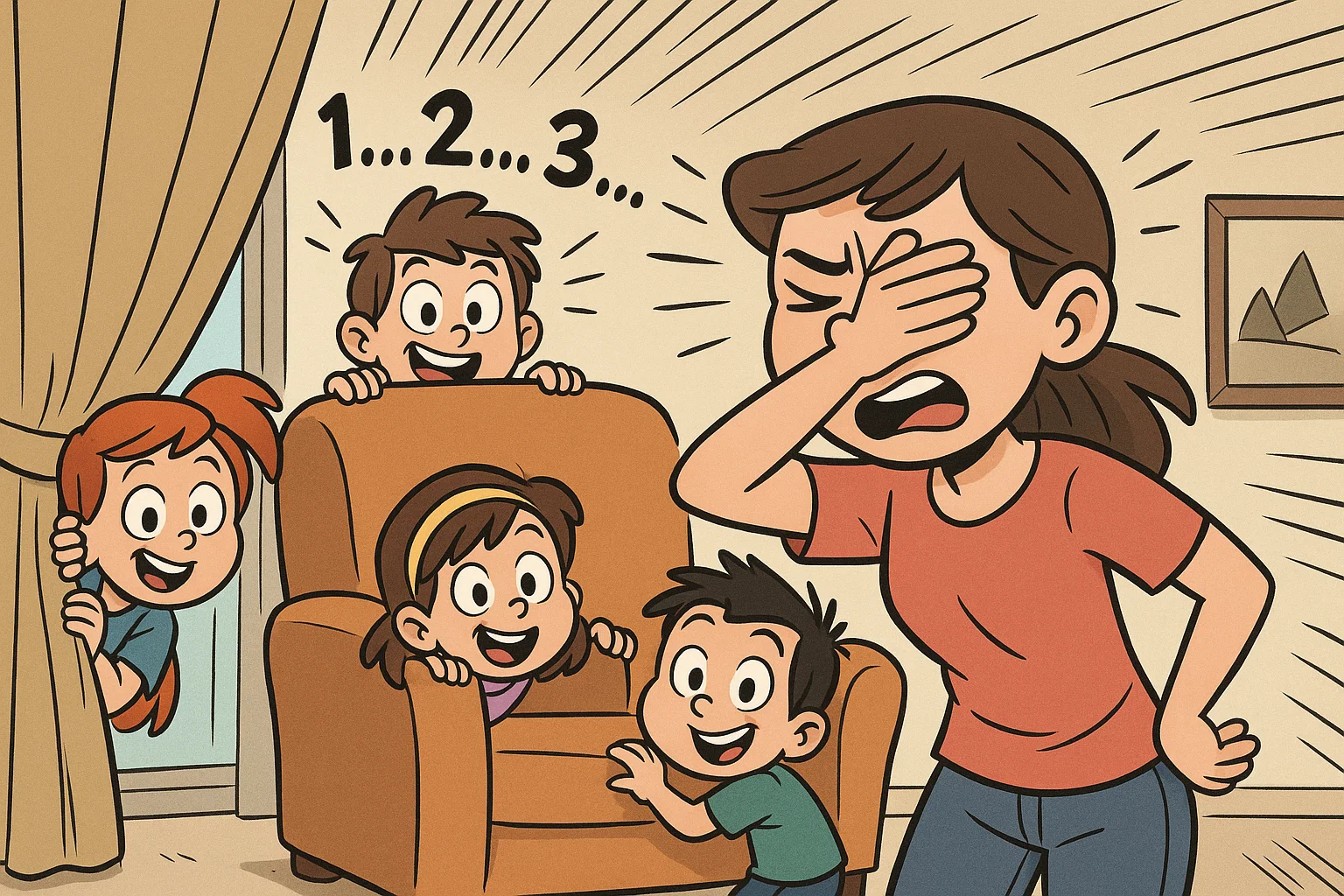
Hide-and-seek is a classic babysitting game that works in most homes. Establish clear boundaries, such as no hiding in bathrooms, laundry machines, or behind heavy furniture, to ensure safety. For younger children, stay in the same room and choose obvious hiding spots so they feel confident and safe.
2. Simon Says
Simon Says is an excellent tool for developing listening skills and following directions. Use commands like “Simon says jump,” “Simon says freeze in place,” or “Simon says touch your toes.” This game allows a babysitter to manage a child’s energy level by alternating between fast and slow movements.
3. I Spy
I Spy is an ideal game for quiet moments or transitions. By saying, “I spy with my little eye something blue,” you encourage children to scan their environment and build visual discrimination skills. It’s a perfect bedtime wind-down activity.
4. Red Light, Green Light
For outdoor play or a large basement, Red Light, Green Light teaches impulse control. When you call out “Green Light,” the kids run; “Red Light” means they must freeze. This game is highly effective for burning off extra energy before a meal or snack.
5. Tic-Tac-Toe with a Twist
Go beyond the pencil-and-paper version of this classic game. Use masking tape to create a grid on the floor, then use socks or plastic cups for the X’s and O’s. This tactile version engages older children and makes a simple game feel like a new event.
Indoor Games
When you are stuck indoors, choose games and activities that keep the atmosphere light but structured.
6. Jigsaw Puzzles
Jigsaw puzzles are fantastic for cognitive development. For a little one, use wooden puzzles with large pieces to build fine motor skills. For older children, set a timed challenge to see how fast they can complete a 50-piece puzzle, promoting focus and problem-solving.
7. Indoor Camping Adventure
Turn the living room into a campsite using blankets, pillows, and flashlights. You can “roast” pretend marshmallows and tell stories. This pretend play activity stimulates the imagination and makes being indoors feel like an exciting getaway.
8. Build a Fort
Many children love building forts. Use chairs and couches as the frame and let the kids drape sheets over them. Building a fort involves basic engineering and teamwork, and it creates a cozy space for reading later in the evening.
9. 100-Cup Challenge
Provide a stack of plastic cups and challenge the kids to build the tallest tower or a complex wall. This activity is a babysitting classic because it is low-mess but highly engaging. It teaches patience and hand-eye coordination as the tower grows.
10. Paper Tetris
Cut out various shapes from construction paper, such as squares, L-shapes, and rectangles. The goal is to fit all the pieces into a box drawn on another sheet without overlaps or gaps. This is a quiet, brain-boosting activity perfect for babysitting older children.
Outdoor Games
If you have permission to play outside, use the space for movement and fresh air.
11. DIY Scavenger Hunt
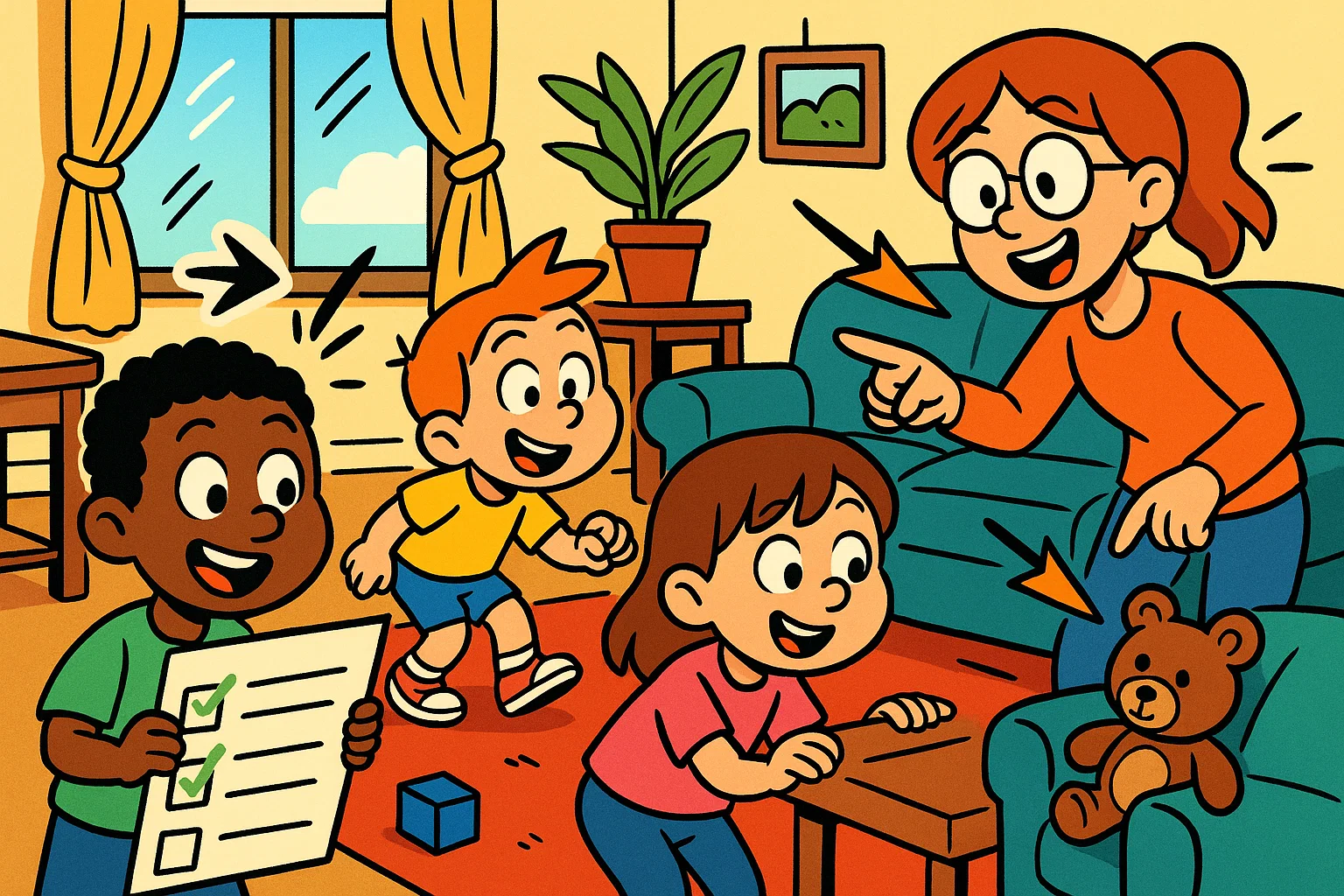
Create a list of items for the children to find, such as a smooth rock, a yellow leaf, or something round. A scavenger hunt encourages exploration and can be adapted for any environment. The National Wildlife Federation offers nature scavenger-hunt activities that encourage kids to use observation skills and notice the natural world.
12. Fun with Chalk
Chalk is a versatile tool for outdoor activities. You can draw a hopscotch grid, create chalk roads for toy cars, or make a giant alphabet path where children jump to the letter you call out. It’s easy to clean up with a splash of water and offers creative games for all ages.
13. Obstacle Course
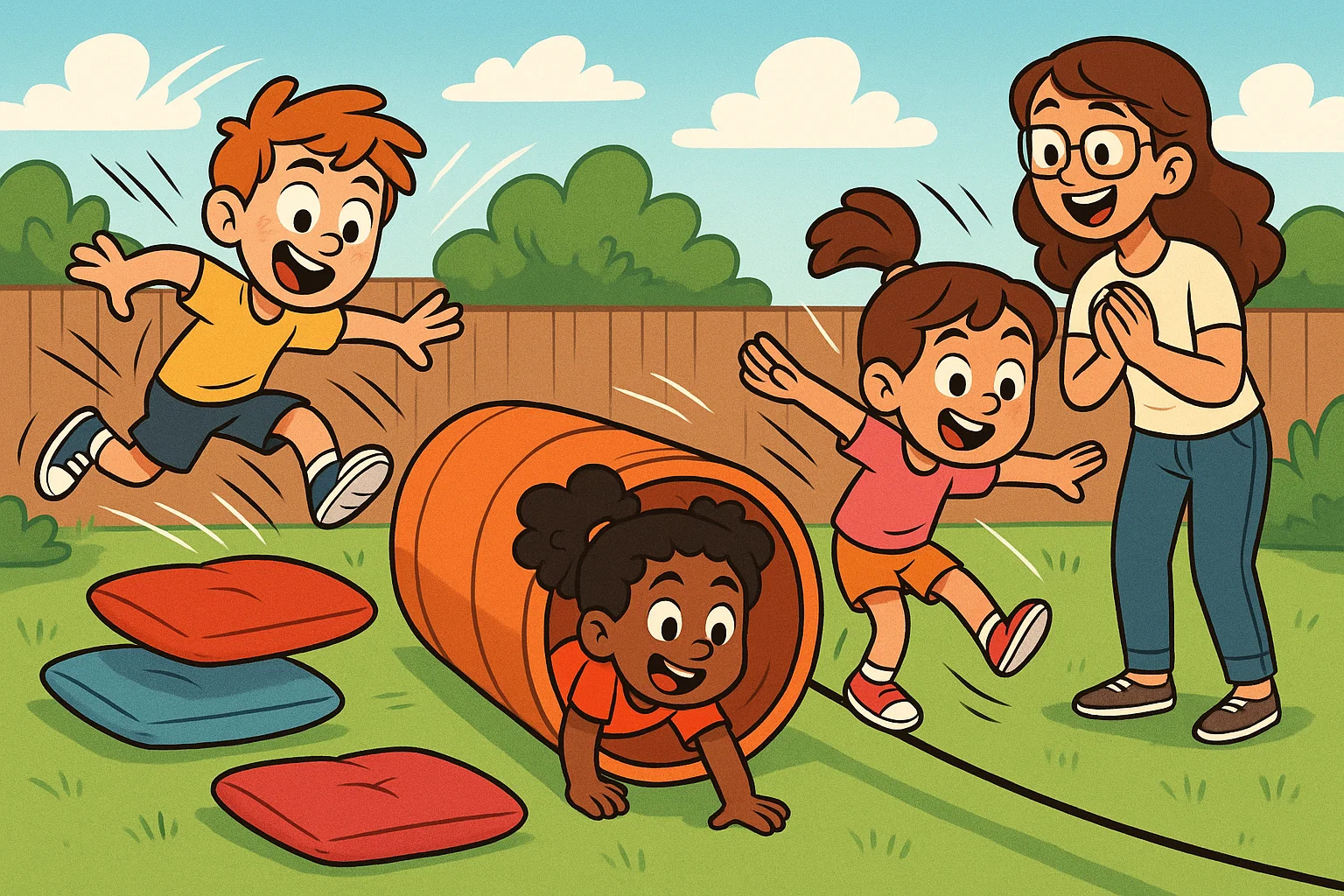
Use household items such as hula hoops, cones, or chalk lines to create an obstacle course. Include tasks like “jump three times,” “crawl through the tunnel,” and “spin once.” This activity is great for building gross motor skills and burning off energy.
14. Paper Plate Flying Disc
Tape two paper plates together, with the rims facing each other, to create a lightweight flying disc. These are softer than plastic flying discs and can be used in a backyard or park with a lower risk of injury or damage.
15. Water Balloon Toss

In warm weather, a water balloon toss can be a hit with older children. Take turns stepping farther apart after each successful catch. Make sure you have parental permission, close supervision, and a towel ready, as this is a messy but memorable babysitting activity.
Sports and Active Games
Keeping children active can reduce restlessness and may help them settle down later.
16. Balloon Tennis
Using paper plates as rackets and a balloon as the ball, this game works well indoors for older children who can use balloons safely. Because a balloon falls slowly, it is less likely to damage household items, making it a lower-risk way to keep older children active indoors.
17. Balloon Volleyball
Clear a small space and use a piece of string or the back of a couch as a net. The goal is for the kids to hit the balloon back and forth without letting it touch the ground. It is a simple way to keep children entertained for a while.
18. Cup Bowling
Line up plastic cups like bowling pins and use a soft ball or a rolled-up pair of socks as the bowling ball. Have the children sit behind a line and take turns knocking the cups down. This is an excellent way to practice counting and turn-taking.
19. Paper Towel Roll Ring Toss
Construct rings from paper plates with the centers cut out. Use a paper towel roll taped to a base as the target. This game helps younger children develop aim and coordination, and you can make it more challenging for older kids by increasing the distance.
20. Bubble Blowing Contest
Bubbles can be endlessly entertaining for little ones. You can host a contest for the biggest bubble or the most bubbles blown in one breath. This activity is visually stimulating and provides a calming yet engaging experience.
Educational and Brain-Boosting Games
Games are especially valuable when they teach a skill without feeling like schoolwork.
21. Memory Game
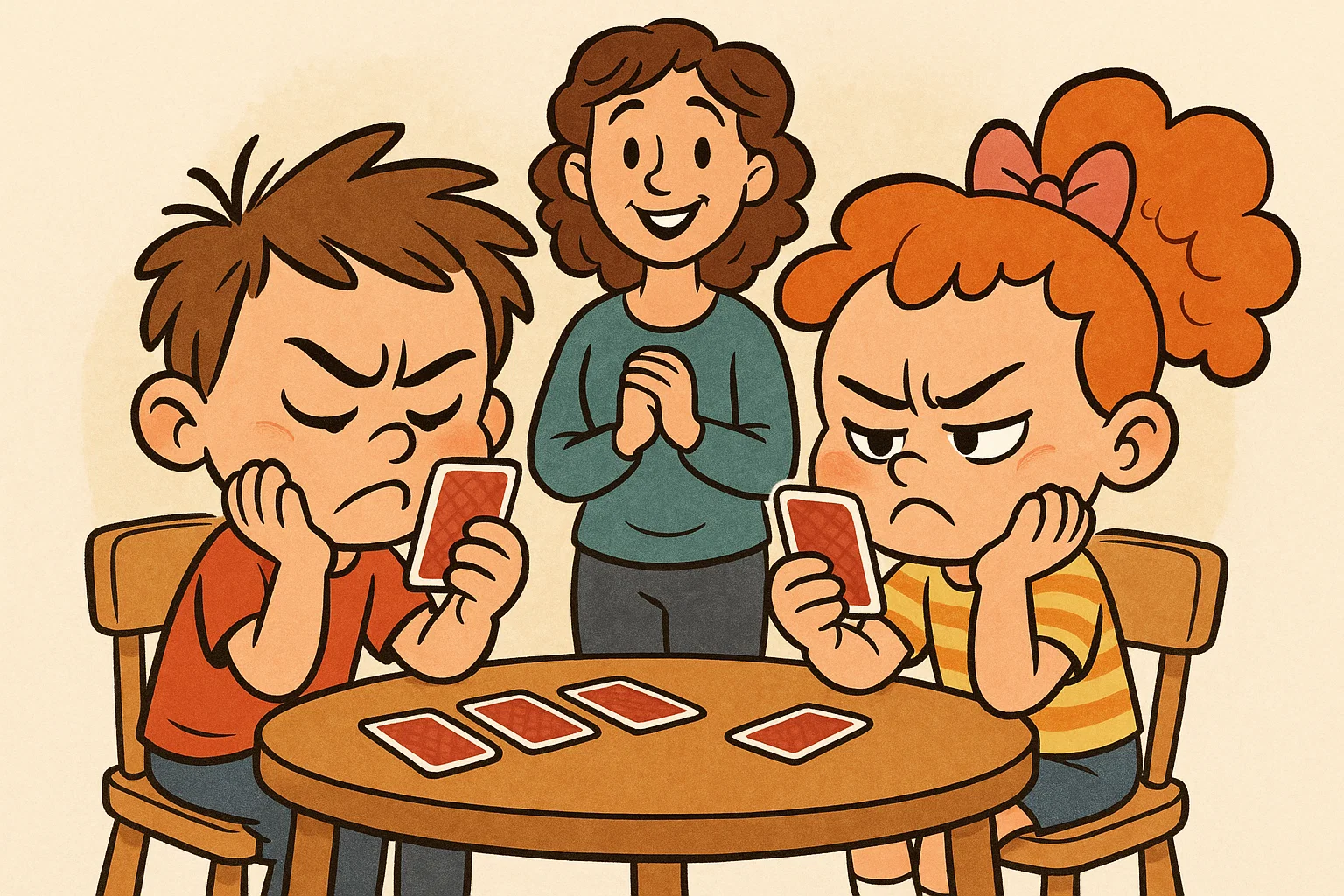
Place several small items on a tray and let children look at them for 30 seconds. Cover the tray, remove one item, and ask the children to guess what is missing. This game helps build short-term memory and concentration.
22. Giant Scrabble-Style Word Game
Write one letter of the alphabet on each large square of paper. Have the children arrange the letters on the floor to form words or their names. For younger children, simply finding the “letter of the day” can be a rewarding babysitting activity.
23. Mini Science Experiments
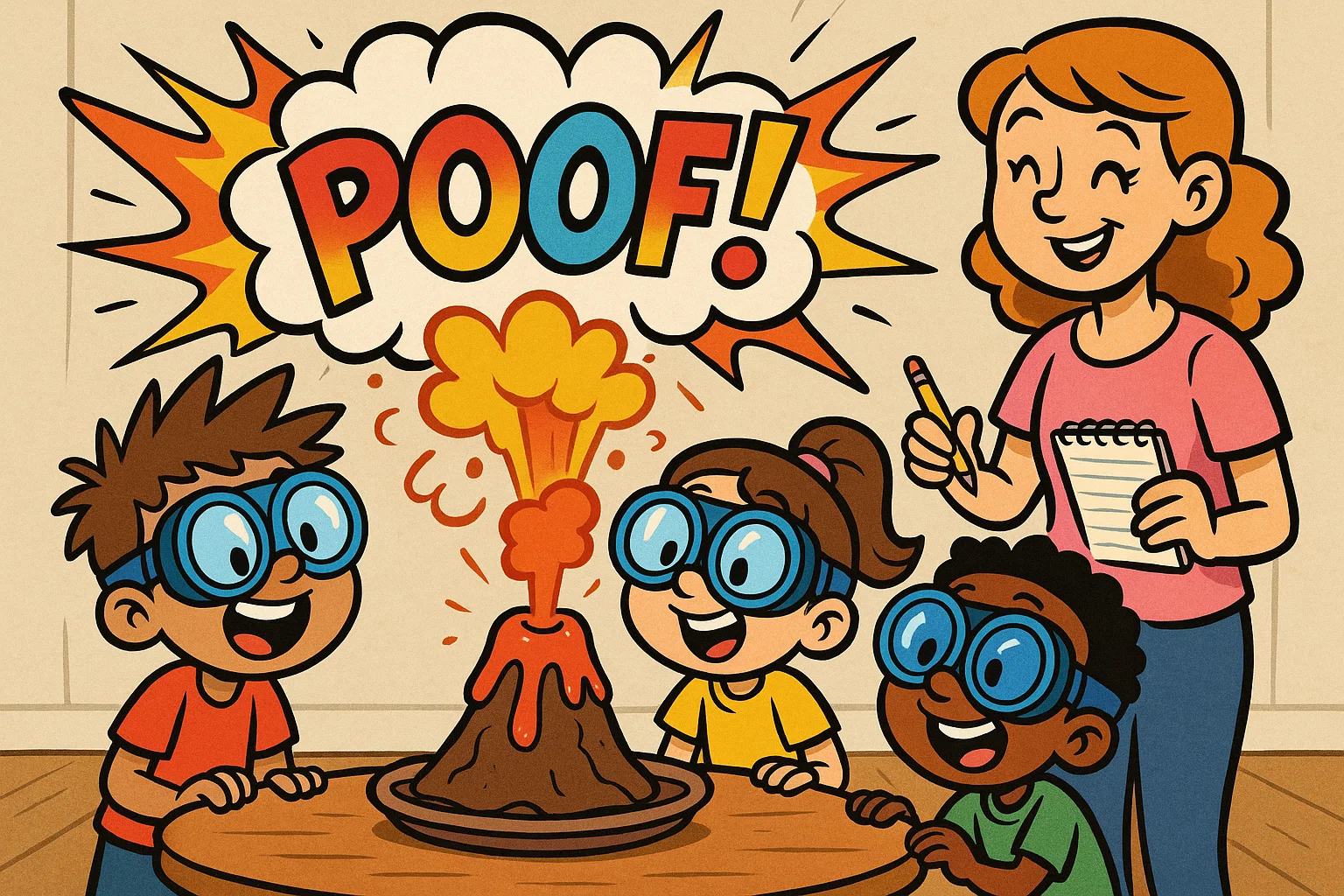
Simple experiments like “Sink or Float,” where children test household objects in a bowl of water, are highly educational. Simple hands-on experiments can introduce children to early problem-solving and critical-thinking skills. Only perform experiments with clear parental approval.
24. Animal Sound and Movement Die
Create a die from a cardboard box and add pictures of animals to each side. The child rolls the die and must make the animal’s sound and act out its movement. It’s a playful way for younger children to learn about animals, movement, and coordination.
25. Make Your Own Board Game
For older children, building a board game from scratch is a fantastic project. They can draw the path, write the rules, and use buttons, coins, or pebbles as game pieces. This activity can take hours and results in a game they can play with their parents later.
Music and Acting Games
Expression through music and drama helps keep children confident and socially engaged.
26. Freeze Dance
Put on an upbeat playlist and let the children dance. When the music stops, everyone must freeze in place. This is one of the best babysitting games for high-energy groups and can help children practice listening skills.
27. Lip-Sync Competition
Encourage the children to pick their favorite song and perform a lip-sync version. You can use a wooden spoon as a microphone. This encourages creativity and performance without the pressure of actual singing.
28. Charades
Charades is a classic game that requires no equipment. Act out animals, sports, or favorite cartoon characters. For younger children, use pictures to help them choose what to act out.
29. Storytelling
Start a story with one sentence, such as “Once there was a purple dragon,” and have the child add the next line. Storytelling is a fantastic quiet-time activity that builds language skills and imagination.
30. Puppet Show
Use socks or paper bags to create puppets. The children can put on a show from behind a chair. This babysitting activity can help children build social-emotional skills through role-play.
Creative Games
Art-based activities allow children to express themselves while developing fine motor skills.
31. Drawing Challenge
Give the children a prompt like “Draw a monster with six eyes” or “Draw a house made of candy.” Timed challenges, such as “You have two minutes!”, can add excitement for older children.
32. Art Corner
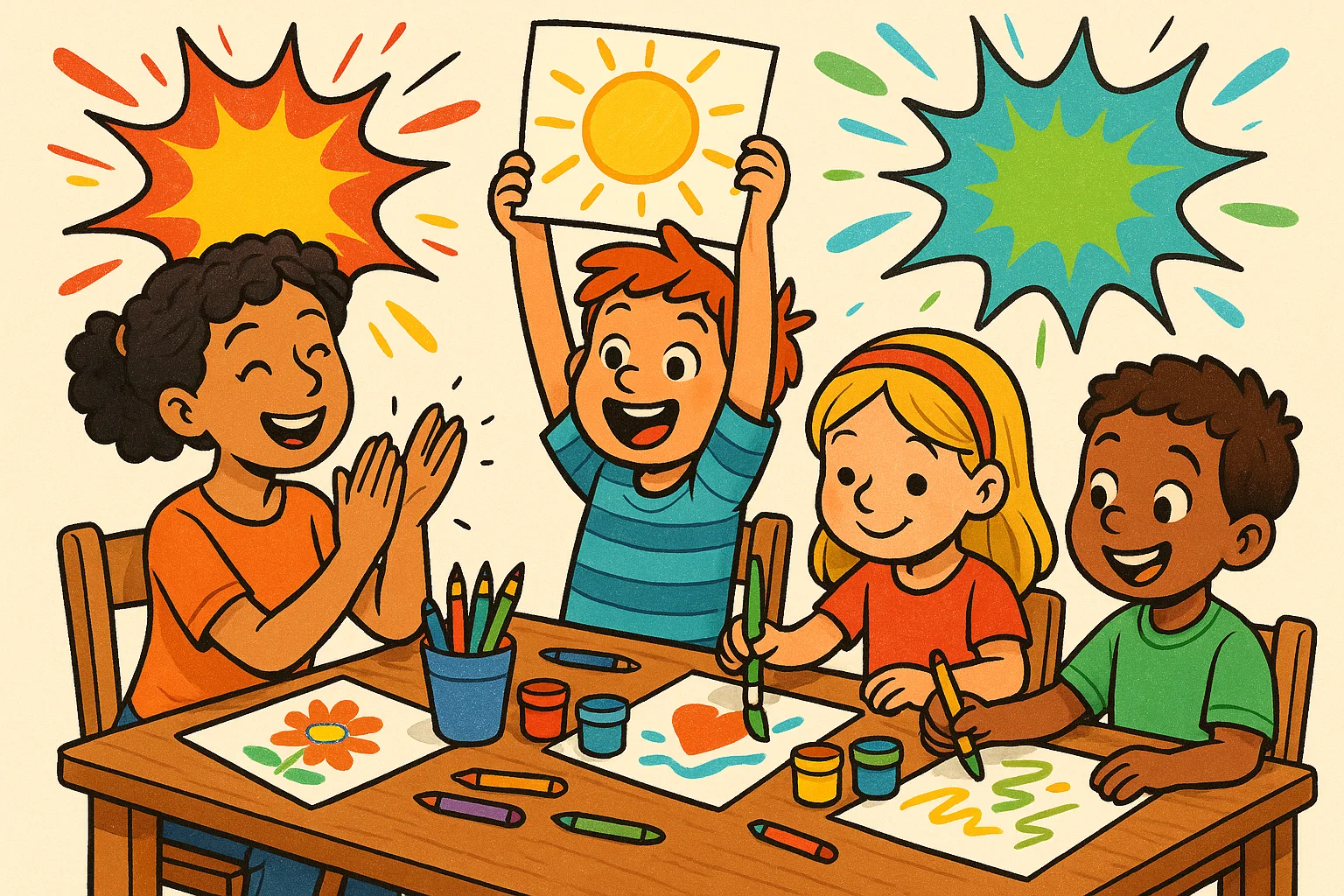
Set up a dedicated art corner with paper, crayons, and stickers. Keeping the supplies in one place helps manage the mess and makes children feel like they have a special studio for their work.
33. Handprint Art and Sticker Play
Younger children love using their hands to create art. You can turn a handprint into a turkey or a tree. Sticker play is also excellent for motor skills, as peeling the stickers requires precision and focus.
34. Seasonal Craft Themes
Match your arts and crafts to the season. Make paper snowflakes in winter, leaf rubbings in autumn, or paper flowers in spring. Seasonal crafts keep the activities relevant and exciting.
35. Dress-Up Adventure
Pretend play with hats, scarves, and old, child-safe clothes allows children to pretend to be anything from a doctor to a superhero. Role-playing builds empathy and helps children process the world around them.
Sensory Development Games
Sensory play can help toddlers and young children explore and understand their physical environment.
| Activity Type | Benefit | Materials Needed |
| Peek-a-Boo | Object permanence | Hands or a light cloth |
| Soft Blocks | Hand-eye coordination | Foam or fabric blocks |
| Tape Shape Game | Visual recognition | Masking tape on the floor |
| Slime Lab | Tactile exploration | Glue and activator, with parental approval |
Peek-a-Boo and Baby Games
For infants and toddlers ages 0–2, peek-a-boo is a foundational game. It teaches the concept of object permanence. Clapping games and nursery rhymes can also help encourage vocalization in this age group.
Soft Blocks and Matching Games
Stacking and knocking down soft blocks is a favorite activity for little ones. You can also play matching games by asking the child to find all the blue blocks or all the square blocks, which supports color and shape recognition.
DIY Music Sessions
With parental permission, use plastic bowls and wooden spoons to create a pretend drum set. Exploring different rhythms and volumes is a great sensory development activity that many children find thrilling.
Tape Shape Game
Use masking tape to create a circle, square, and triangle on the floor. Ask the child to “jump to the circle” or “crawl to the triangle.” This combines physical movement with geometric learning.
Slime Lab
For older children, making slime is a high-engagement babysitting activity. Slime activities provide rich tactile sensory input. Always perform this on a protected surface and with strict parental permission, as it can be difficult to clean.
Kitchen Activities
Cooking together can be a rewarding part of a babysitting job, provided it is done safely.
- Fruit skewers: Let children slide small pieces of cut fruit onto blunt skewers.
- Yogurt parfaits: Have children layer yogurt, berries, and granola in plastic cups.
- Cookie decorating: Use pre-made cookies and let children add icing or sprinkles.
- Sandwich shapes: Use cookie cutters to make stars or hearts out of bread.
Easy Things to Bake or Make with Kids
Stick to no-bake recipes or simple assembly tasks. Making mini pizzas on English muffins is a great option because children can choose their own toppings, which may encourage them to try new foods.
Baking Together
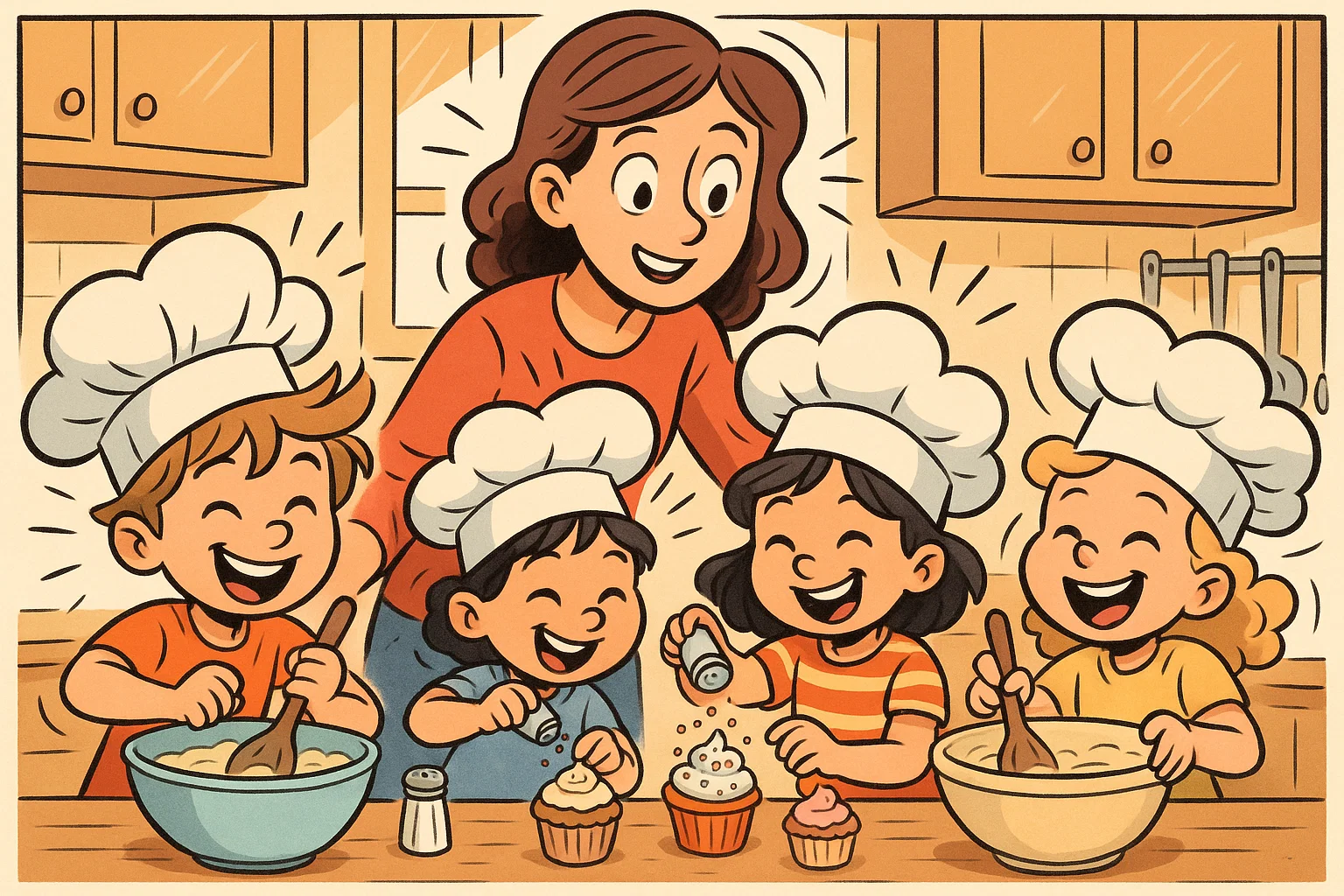
If parents approve of using the oven, let the children help with stirring, pouring, and measuring. These tasks teach basic math and following a sequence of steps. Child-nutrition guidance often encourages involving children in preparing and eating healthy foods, as it can make healthy eating feel more familiar and engaging.
Healthy Oatmeal Cookies
Mixing oats, mashed bananas, and a few chocolate chips is a simple, healthy activity. This simple activity results in a snack that many parents may appreciate for its nutritional value. Always double-check for nut or gluten allergies.
Cupcake Challenge
If the family already has cupcakes, host a decorating contest. Award titles like “Most Colorful” or “Silliest Face” so every child feels like a winner.
Pretend Grocery Store
If cooking is not allowed, play “Grocery Store” instead. Use empty, clean food boxes and plastic cups. Use pretend money to practice basic addition and subtraction while shopping.
Age-Based Babysitting Game Ideas
Tailoring your approach to the specific age group is the best way to keep children entertained.
Ages 0–2: Indoor and Outdoor Play
Focus on sensory play and soft movements. Indoors, use soft blocks and picture books. Outdoors, bubbles and stroller walks can work well with parental permission and close supervision. Keep children in this age group within sight at all times to reduce the risk of choking, falls, or wandering.
Ages 3–5: Creative Adventures
Preschoolers love pretend play and Simon Says. They often have high energy and short attention spans, so choose babysitting games and activities that can be completed in 15–20 minutes. Chalk and simple obstacle courses are ideal for their development.
Ages 6–7: Structured Fun
Children this age enjoy board games, charades, and more complex arts and crafts. They are starting to understand rules and competition, making timed challenges or score-keeping more exciting for them.
Ages 8–10: Strategy and Projects
Older children appreciate autonomy. Invite them to create their own board game or help lead a mini science experiment. They may be interested in video games, but you can balance screen time by offering engaging outdoor activities such as a photo scavenger hunt.
Indoor and Outdoor Balance
A successful babysitting session has a natural flow that follows the child’s energy level.
Active Games First
Start the session with outdoor play or balloon tennis, if it is age-appropriate and allowed by the parents. Moving early can help children feel less restless later in the evening and make quiet time easier.
Calm Games Later
As the evening progresses, transition to puzzles, storytelling, or drawing. This signals to the child’s brain that the day is winding down, making the bedtime transition smoother and less stressful.
Backup Games for Mood Changes
If a child becomes frustrated with a board game, be ready to switch to something entirely different, such as a quick dance party, a puzzle, or a snack break. Flexibility is what separates a good babysitter from a great one.
Bedtime Wind-Down Games
Bedtime games should be calm, predictable, and easy to stop when it is time to sleep. The goal is not to energize children, but to help them feel safe, settled, and ready for the bedtime routine.
Quiet I Spy
Play I Spy with soft voices from the bed or reading corner. Choose simple objects in the room, such as a lamp, pillow, book, or stuffed animal. This keeps the child engaged without encouraging running, jumping, or rough play.
Three Good Things
Ask the child to name three good things that happened during the day. You can also share one simple positive moment from your time together. This creates a calm emotional transition and can help children end the day on a reassuring note.
Soft Story Chain
Start a gentle story with one sentence and invite the child to add the next line. Keep the theme soothing, such as a sleepy bear, a quiet forest, or a moonlit walk. Avoid scary, loud, or overly exciting storylines before bed.
Picture Book Search
Choose a picture book and ask the child to find specific items on each page, such as a red hat, a small bird, or a sleeping cat. This is quieter than a full game but still interactive enough to hold attention.
Stuffed Animal Check-In
Invite the child to help “put the stuffed animals to bed.” They can line them up, tuck them in, or say goodnight to each one. This simple pretend-play activity helps shift the atmosphere from active play to rest.
Conclusion: Fun Babysitting Games Across All Ages
The most successful babysitting games are not necessarily the most complex; they are the ones that create connection, support safety, and bring children joy. By having a varied list of indoor, outdoor, and creative ideas, you ensure that the children you’re watching stay engaged and happy throughout your shift.
Simple Babysitting Ideas Work Best
Classic activities like hide-and-seek, I Spy, and balloon tennis remain favorites because they are easy to start and highly adaptable. When you focus on the child’s interests and the parents’ rules, you create an environment where fun ideas can flourish.
Safe Play Builds Parent Trust
Prioritizing safety and following house rules builds a foundation of trust with parents. Leaving the house tidy and the children happy makes parents more likely to call you again for the next babysitting job.
A Flexible Game Plan Keeps Children Happy
The real secret to successful babysitting is flexibility. Being able to read the room and switch from a high-energy obstacle course to a quiet storytelling session helps keep the atmosphere positive and enjoyable for everyone involved.
FAQ: Babysitting Games and Activities
What are the best things to do while babysitting?
The best things to do while babysitting are simple, safe, and age-appropriate games that match the child’s mood and energy level. A useful list of games and activities might include hide-and-seek, I Spy, puzzles, drawing challenges, water play, and quiet bedtime storytelling. These fun activities help keep kids entertained, kids happy, and kids occupied without requiring expensive supplies.
What are fun games to play while babysitting?
Fun games to play while babysitting depend on the child’s age and interests. Younger kids often like Simon Says, bubbles, soft blocks, and pretend play, while older kids may enjoy charades, mini science experiments, DIY board games, or group games. If you need a quick fun game indoors, cup bowling is a fun option that many kids can play with very little setup.
How do I keep the kids entertained without screens?
To keep the kids entertained without playing video games, rotate active play with calmer activities. Let the kids build a fort, encourage the kids to draw, create a fun scavenger hunt with items for the kids to find, or let kids make their own board game. These games to entertain children work well because they give kids choices while still keeping the session structured.

Take a short quiz to find out what your everyday choices say about your parenting style
When your child is curious about something new, what’s your instinct?
Take a short quiz to find out what your everyday choices say about your parenting style
“Can I download this app?” What happens next?
Take a short quiz to find out what your everyday choices say about your parenting style
When it comes to rules at home, which sounds most like you?
Take a short quiz to find out what your everyday choices say about your parenting style
If you could give your child one life skill today, what would you pick?
Take a short quiz to find out what your everyday choices say about your parenting style
Your child gets to choose what to watch. What would your ideal setup look like?
Take a short quiz to find out what your everyday choices say about your parenting style
Pick your parenting superpower ✨