Christmas Gift Ideas for Preschoolers: Best Gifts for Ages 3–5

 Discover a Free Education Video App for Kids
Pastory uses AI to personalize educational video content based on your child’s interests and personality. Safe, engaging, and built for curious young minds. Sign up now to stay updated and enjoy early access with a free trial
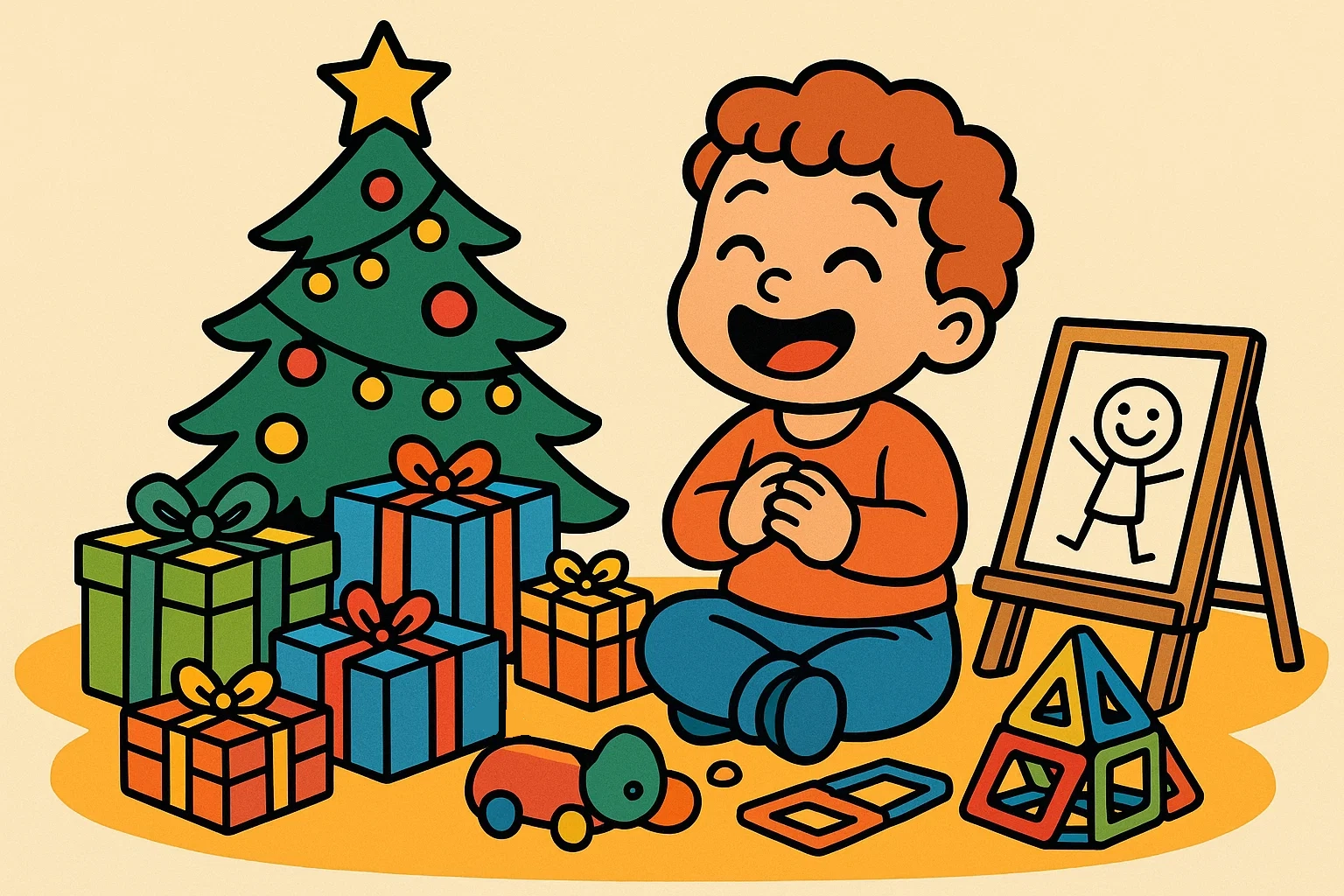
Finding the right Christmas gifts for preschoolers means balancing fun, safety, durability, and developmental fit. Between ages 3 and 5, children develop rapidly in their thinking skills, social abilities, language, imagination, and physical coordination. The best gifts are safe, age-appropriate, durable, and matched to a child’s interests.
This gift guide offers practical recommendations for books, STEM toys, pretend play sets, outdoor gear, hands-on learning subscriptions, and small holiday surprises that preschoolers can enjoy well beyond Christmas morning.
Key Takeaways
Best Preschool Gift Picks
- Open-Ended Building Toys: Magnetic tiles and large building blocks help develop early spatial reasoning.
- Story-Driven Picture Books: Richly illustrated stories support early literacy and language development.
- Introductory STEM Toys: Preschool-rated marble runs with oversized balls, puzzles, and simple coding games encourage problem-solving.
- Pretend Play Sets: Costumes, play kitchens, and toy workbenches support imagination and social-emotional learning.
- Active Outdoor Gear: Balance bikes, scooters, and simple lawn games help build gross motor skills.
Age-Safe Christmas Gift Rules
For preschoolers, choose toys that match the manufacturer’s age recommendations and include clear safety labeling. For children who still mouth objects, avoid toys with small removable parts, and always check choking-hazard warnings and age labels.
Look for non-toxic materials, sturdy finishes, and clearly stated safety certifications, especially for toys that will be handled often. Gift buyers should also choose sturdy construction that can withstand everyday drops and rough handling while still following the toy’s recommended supervision guidelines.
Smart Gift Strategy
An effective holiday shopping approach matches potential Christmas presents with a child’s specific interests and developmental stage. Children at this age often show strong preferences for themes such as dinosaurs, animals, music, vehicles, or favorite characters.
Choosing a gift that fits a child’s current interests can keep them engaged for longer and reduce the chance that the toy is ignored after a few days. Pairing a child’s current interests with a simple learning element can make a gift both fun and developmentally useful.
Most Popular Christmas Gifts for Preschoolers
Trending Toys for Ages 3–5
Many popular toys for preschoolers are building-based play systems that encourage creativity and problem-solving. Magnetic construction pieces, colorful building blocks, and wooden building kits are reliable holiday gift options for this age group.
These items support open-ended imaginative play, allowing young children to build three-dimensional structures while exploring balance, gravity, and shape recognition. Open-ended toys often stay interesting longer than single-purpose electronic toys because children can use them in many different ways.
Parent-Approved Gift Ideas
Parents often appreciate gifts that are durable, easy to store, and quiet during play. Toys with storage bins or stackable pieces help reduce clutter and make cleanup easier.
Many caregivers prefer quiet educational toys because they encourage focused play without extra noise. Toys that support 20 to 30 minutes of independent play can give parents a short break while helping children practice focus.
Gifts Kids Open First
The gifts that get the biggest reaction on Christmas morning often have bright packaging, recognizable characters, or an impressive size. Brightly colored costume sets, large toy vehicles, and interactive animal plushies frequently spark instant enthusiasm when unwrapped.
A toy that looks exciting and is ready to use right away is more likely to hold a child’s attention on Christmas morning. Installing batteries, removing excess packaging, and keeping instructions nearby before wrapping can make Christmas morning play smoother.
Best Gifts by Budget
| Budget Tier | Gift Category | Examples | Target Skill Development |
| Stocking Fillers ($5–$15) | Compact Activities | Washable crayons, sticker sheets, mini vehicles | Fine motor coordination, artistic expression |
| Mid-Range ($16–$40) | Structural Play | Standard magnetic tile sets, floor puzzles, board games | Spatial orientation, turn-taking, literacy |
| Premium ($41–$100) | Complex Play Sets | Wooden play kitchens, modular marble runs, scooters | Gross motor skills, pretend play, social-emotional development |
| Splurge Gifts ($101+) | Large Play Sets | Indoor wooden climbing gyms, convertible balance bikes | Balance, coordination, and active play habits |
Big Christmas Gifts for Preschool Wish Lists
Big Wow Gifts
Large play sets can become the centerpiece of a child’s room and offer years of imaginative play. Sturdy wooden play kitchens, train track tables, multi-level dollhouses, and convertible indoor climbing frames give preschoolers space for deep imaginative play.
Larger toys such as ride-on toys, climbing frames, and pretend play centers can support active play, social interaction, and cooperation. These larger gifts can stay useful as children grow from toddlers into older kids.
Small Gifts With Big Play Value
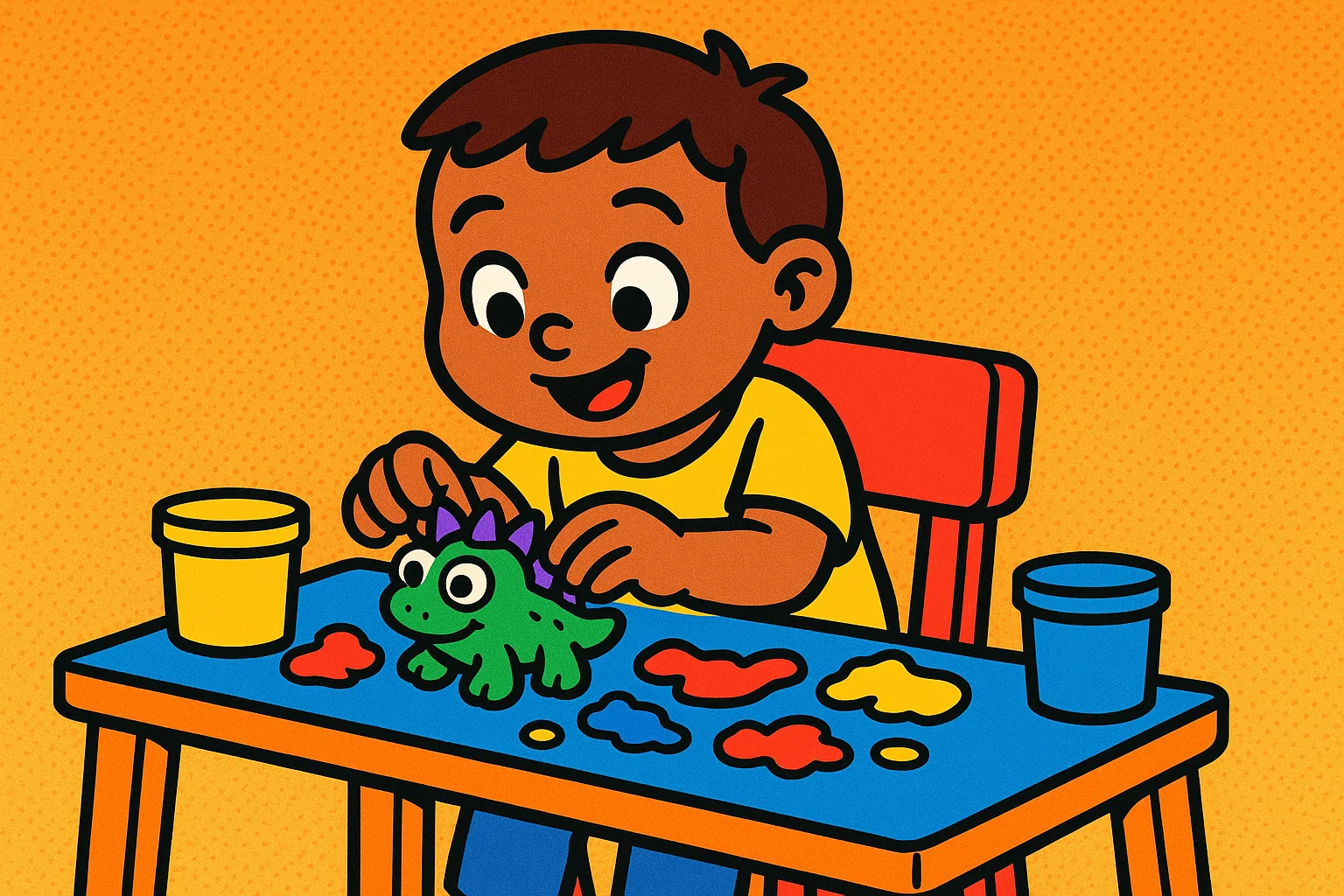
Compact, travel-friendly gifts can offer plenty of focused play without taking up much storage space. Thick cardboard floor puzzles, reusable sticker books, non-toxic play dough kits, and pocket-sized animal figurines are excellent small gift options.
These compact toys help children practice fine motor skills through pinching, grasping, sorting, and molding. Portable activity sets are especially helpful for maintaining a calm, focused environment during holiday travel or restaurant outings.
Gifts for Curious Preschoolers
Children who ask lots of questions often enjoy hands-on discovery tools. Kid-safe magnifying glasses, ventilated bug-viewing jars, large-piece color mixing sets, and illustrated animal encyclopedias satisfy early curiosity.
These foundational tools encourage direct exploration of backyard habitats and introduce simple ideas about animals, plants, color, and the natural world. Observational play encourages children to ask questions, make guesses, and compare what they notice in nature.
Gifts for Preschoolers With Big Energy
High-energy preschoolers benefit from active toys that turn movement into balance, coordination, and strength-building play. Adjustable three-wheeled scooters, sturdy balance boards, textured foam stepping stones, and lightweight sports balls encourage active play.
Regular physical play supports core strength, balance, and coordination. Weather-resistant outdoor gear can help children stay active during the winter months and reduce indoor restlessness.
Books, Books, and More Books
Picture Books for Christmas Morning
Sharing a picture book on Christmas morning creates a warm bonding moment between parents and children. Great picture books have clear storylines, rhythmic language, and vibrant artwork that captivates pre-readers.
Reading aloud introduces children to new vocabulary and sentence patterns, which can support language comprehension. Regular reading also supports emotional connection and creates cozy family moments during the festive season.
What Makes a Great Preschool Picture Book?
| Feature | Why It Matters |
| Beautiful illustrations | Helps children follow the story visually |
| Rhythmic language | Makes read-aloud time more engaging |
| Shared reading | Builds connection between adults and children |
| Emotional warmth | Creates positive associations with books |
Educational Books for Preschoolers
Preschool nonfiction books introduce early learning concepts through clear visuals, simple layouts, and age-appropriate language. Alphabet guides, counting books, and simple overviews of space, dinosaurs, or world geography present factual information in an accessible way.
Clear diagrams and real-world photographs can help children build observation and early reasoning skills. Early exposure to simple educational concepts can help children feel more comfortable with kindergarten-style learning.
Interactive Books Preschoolers Love
Interactive books turn traditional reading into an active, hands-on learning experience. Sturdy lift-the-flap pages, sound buttons, age-appropriate hidden-picture puzzles, and touch-and-feel panels can keep young children engaged.
These interactive elements help children practice finger dexterity, fine motor skills, and cause-and-effect understanding. Interactive books are excellent for children who prefer hands-on reading over traditional sit-down storytime.
Book Gift Bundles
Pairing a classic storybook with a related physical item creates an immersive, multi-sensory holiday present. Combining a wildlife storybook with a plush animal, themed fleece pajamas, or a colorful custom bookmark brings the narrative to life.
This kind of bundle connects reading with comfort and imaginative play, making books feel special and fun. Custom book baskets offer an appealing, personalized gift option that relatives can easily assemble for the holidays.
Character Gifts and Preschool-Friendly Game Picks
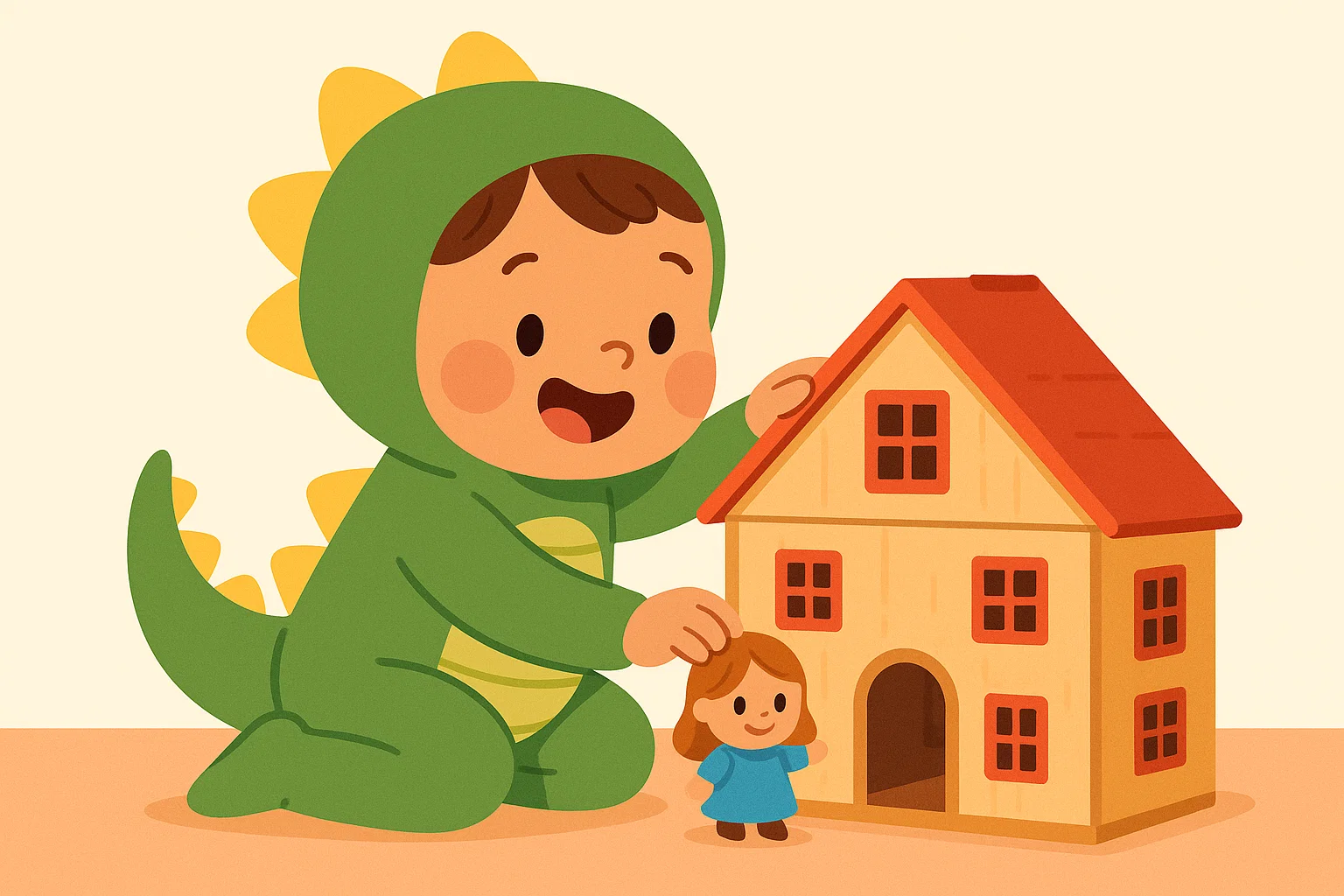
Favorite Character Toys
Preschoolers often form strong emotional attachments to popular media characters from animated television series and films. Action figures, plush toys, dress-up costumes, and character-themed bedding let children act out their favorite on-screen adventures.
This character-based play provides an accessible entry point for creative storytelling and helps children work through familiar feelings in a playful way. When buying character merchandise, choose reputable retailers and still check age labels, choking-hazard warnings, and safety certifications.
Screen-Free Character Gifts
Caregivers looking to minimize digital screen time can choose offline, character-branded alternatives. Memory matching cards, wooden character puzzles, illustrated coloring sets, and themed dramatic playsets deliver the excitement of favorite media figures without digital devices.
These hands-on alternatives let children enjoy favorite characters while practicing spatial, creative, and social skills. These toys let children enjoy favorite characters through hands-on, screen-free play.
First Video Game Alternatives
For young children who are not ready for console games, low-screen or movement-based alternatives can offer a more age-appropriate introduction to technology. Motion-activated dance mats, music-making toys, and carefully selected educational tablet apps can provide age-appropriate digital interaction.
When families use digital media, it is best to keep it age-appropriate, limited, and guided by a parent or caregiver rather than relying on passive viewing. These options can introduce basic digital skills while still encouraging movement and active participation.
Subscription Gifts for Kids
Educational Magazine Subscriptions
A print magazine subscription can keep the learning and excitement going long after the holiday season. Preschool-friendly magazines can include wildlife photos, simple activities, and interactive puzzles.
These magazines expose children to early concepts in biology, ecology, and geography using age-appropriate language. Receiving a magazine in the mail can make reading feel personal and exciting.
Monthly Activity Boxes
Monthly delivery kits provide a steady stream of curated, hands-on learning projects sent right to the home. These subscription boxes often include age-appropriate materials for simple science activities, art projects, and sensory play.
What Monthly Activity Boxes Can Include
| Box Component | Child Development Benefit |
| STEM assembly kits | Encourages problem-solving skills |
| Art and craft projects | Supports creative expression |
| Sensory materials | Helps refine fine motor coordination |
| Simple instruction cards | Builds sequencing and task-following skills |
These monthly projects give families a reliable framework for structured, educational activities without requiring extensive parental preparation time.
Subscription Gift Pros and Cons
| Subscription Advantages | Subscription Disadvantages |
| Provides ongoing educational engagement throughout the year. | Requires recurring payments and auto-renewal tracking. |
| Reduces toy accumulation by spreading deliveries over months. | May experience delivery delays during peak holiday seasons. |
| Delivers age-appropriate, curated materials directly to families. | Usually requires adult supervision and some clean-up. |
| Fosters a sense of anticipation and reading excitement in kids. | Materials can become disorganized without designated storage. |
Word Games and Early Learning Games
Preschool Word Games
Early language games introduce pre-readers to basic literacy skills such as letter recognition and sound awareness. Large wooden alphabet blocks, magnetic letter tiles, rhyming card pairs, and simple spelling puzzles teach word structure through tactile manipulation.
Practicing with concrete letter shapes helps children connect visual symbols with spoken sounds. These language games build early reading readiness by turning letters and sounds into fun, hands-on puzzles.
Counting and Number Games
Introductory math games help young children practice early number concepts through visual and tactile play. Using counting tokens, color-coded dominoes, and number-matching cards helps make early math ideas more concrete.
Children learn to pair written numerals with physical quantities, building a strong conceptual framework for early math. These simple math games cultivate basic number sense and problem-solving skills, preparing children for future academic settings.
Examples of Early Math Toys
| Toy Type | Skill Supported |
| Counting tokens | Number sense and one-to-one correspondence |
| Color-coded dominoes | Matching, counting, and pattern recognition |
| Number puzzles | Numeral recognition and problem-solving |
| Balance scales | Early comparison and measurement skills |
Memory and Matching Games
Memory card decks and color-sorting games strengthen visual discrimination and cognitive focus in young children. Turn-based matching games help preschoolers remember where cards are, recognize patterns, and sort items by shape or color.
These simple games can support attention span, visual memory, sorting skills, and concentration in an accessible, game-based format.
Family Games for Christmas Break
Introducing simple board games during the winter holidays is a wonderful way to teach early social skills and cooperative play. Games designed for this age group feature straightforward rules, minimal text, and short playing times of 10 to 15 minutes.
Playing simple group games helps preschoolers practice taking turns, following rules, and handling wins and losses. These shared activities build family connections while helping children practice emotional regulation and social confidence.
Walkie-Talkies and Outdoor Adventure Gifts
Walkie-Talkies for Preschoolers
Kid-safe walkie-talkies let young explorers add pretend communication and teamwork to their outdoor adventures. The best preschool-friendly models have chunky, impact-resistant cases, large push-to-talk buttons, and parent-friendly volume limits.
Using walkie-talkies helps children practice turn-taking, listening, and clear speech during pretend play. These durable devices encourage cooperative outdoor play, allowing friends or siblings to coordinate secret missions across backyards or parks.
Backyard Explorer Gifts
Giving children functional outdoor observation tools encourages healthy curiosity about the natural world. Lightweight binoculars, ventilated insect-viewing jars, compact flashlights, and simple nature journals turn standard backyard strolls into exciting discovery walks.
Children can observe local wildlife, collect leaves or rocks, and notice changes in the weather and seasons. These outdoor activities can encourage curiosity, observation skills, and an early appreciation for nature.
Backyard Explorer Gift Ideas
| Gift | What It Encourages |
| Lightweight binoculars | Distant observation and visual tracking |
| Ventilated bug-viewing jars | Safe, temporary observation of insects |
| Compact LED flashlights | Low-light exploration and spatial awareness |
| Nature journals | Drawing, noticing details, and early documentation |
Active Outdoor Presents
Durable outdoor play equipment encourages children to engage in active, full-body movement through the holiday season and beyond. Adjustable balance bikes, stable three-wheeled scooters, safety-certified helmets, and colorful sidewalk chalk sets invite active outdoor play.
Regular physical play builds core stability, spatial awareness, and muscular coordination. Outdoor play helps children get their energy out while building confidence, coordination, and physical resilience.
Rainy-Day Adventure Ideas
When winter weather keeps families indoors, active toys can help turn the living room into a simple indoor play space. Collapsible pop-up tunnels, modular foam balance beams, and lightweight indoor tents provide active fun while minimizing the risk of household damage.
Navigating these indoor obstacle courses helps children develop motor planning and spatial awareness in restricted spaces. These indoor setups help children stay physically active and entertained, even on rainy or snowy days.
Dinosaur and Fossil Dig Kits
Dino Fossil Dig Kits
Fossil excavation sets capture a preschooler’s imagination by letting them step into the role of a paleontologist. Preschool-friendly kits should include soft plaster blocks, hidden dinosaur replica bones, blunt tools, and simple brushes.
The physical actions of digging, scraping, and cleaning require focused concentration and precise fine motor movements. Completing an excavation activity builds patience and rewards persistence as children piece together their prehistoric discoveries.
Dinosaur Toys for Pretend Play
Dinosaur figures, prehistoric play mats, and themed dress-up costumes let children create immersive ancient worlds right in the living room. Playing with realistic dinosaur models helps preschoolers learn dinosaur names, what different dinosaurs ate, and where they may have lived.
This imaginative play expands vocabulary as children learn complex dinosaur names and descriptive terms. Reenacting prehistoric scenes builds creative storytelling skills and helps children express complex ideas through active play.
Safe Science Kits for Ages 3–5
Science kits for preschoolers should use non-toxic materials, large pieces, and easy-to-grip tools. These sets may include oversized plastic test tubes, spill-resistant droppers, safety goggles, and simple picture-based instruction cards.
Simple science activities, such as mixing baking soda and vinegar for a volcano, teach basic cause-and-effect relationships. Trying safe, simple experiments can build confidence and show children that hands-on discovery is fun.
Dinosaur Gift Bundles
Combining an excavation activity block with a matching dinosaur storybook and themed pajamas makes for a wonderful, coordinated holiday present. This themed gift lets children dig for fossils, read a related story, and enjoy cozy dinosaur pajamas at bedtime.
Connecting physical play with reading materials reinforces educational themes and appeals to a child’s deep interest in dinosaurs. These matching sets create a complete gift experience that feels both fun and educational.
World, Nature, and Animal Gifts
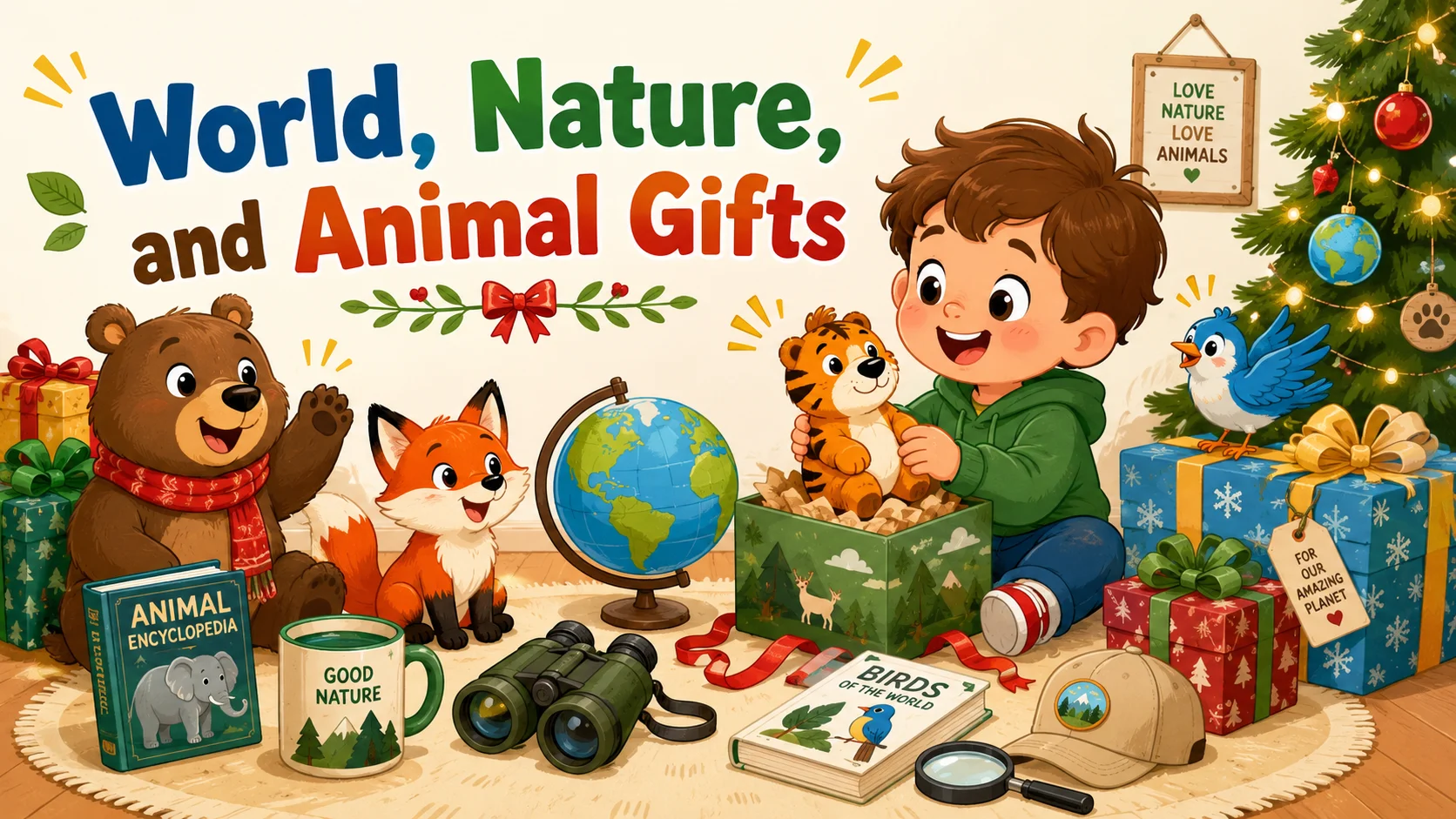
First Geography Games
Introductory geography tools help young children learn about the wider world through bright colors and clear visual layouts. Large magnetic world map puzzles, world-themed matching cards, and simple picture books introduce different continents, cultures, and famous landmarks.
Seeing the Earth on maps and puzzles helps children build early spatial awareness and curiosity about the wider world. Learning about different places, cultures, and environments can encourage curiosity about the wider world.
Animal Learning Toys
Detailed animal figures and habitat sets are great tools for hands-on sorting and animal learning. Sorting animal models into ocean, desert, rainforest, and farm habitats helps children understand basic ecological concepts.
Pairing physical animal toys with realistic wildlife sound books creates a rich, multi-sensory learning experience. This interactive play expands animal vocabulary and teaches children about the diverse creatures that share our planet.
Animal Sorting Play Ideas
| Sorting Category | Example Animals | Learning Benefit |
| Ocean animals | Whales, dolphins, sea turtles | Introduces marine habitats |
| Safari animals | Lions, elephants, giraffes | Builds wildlife vocabulary |
| Farm animals | Cows, sheep, chickens | Connects animals with familiar settings |
| Forest animals | Bears, foxes, deer | Encourages habitat recognition |
Nature Gifts for Curious Kids
Simple gardening kits and bird feeders bring children into direct, hands-on contact with local ecosystems. Planting quick-sprouting seeds or tracking local birds teaches preschoolers about life cycles and seasonal changes.
Watching a seed grow into a plant shows children how living things change over time. These activities build patience and help children learn to care for living things.
Travel-Themed Christmas Gifts
Travel-themed toys prepare young children for new adventures while building real-world organizational skills. Child-sized rolling suitcases, sticker travel maps, and airport pretend-play sets turn travel preparation into a fun game.
Packing their own small bag helps children practice responsibility, sorting, and organization. These interactive items can make travel routines feel more familiar, predictable, and fun.
Magnetic Marble Runs and STEM Building Toys
Magnetic Marble Runs
Preschool-rated marble runs with oversized balls can offer a fun, screen-free way to explore cause and effect, balance, and simple building. Assembling tubes, supports, and gates helps children explore gravity, speed, direction, and cause and effect.
Children learn to adjust the tracks so the marble can move smoothly through the course. This constructive play builds trial-and-error problem-solving skills, spatial reasoning, and hand-eye coordination.
What Magnetic Marble Runs Help Children Practice
| Skill | How the Toy Supports It |
| Cause and effect | Children see how track changes affect the marble |
| Structural logic | Pieces must connect in a stable way |
| Hand-eye coordination | Children place pieces carefully and track movement |
| Problem-solving | Children test and adjust the design |
Magnetic Tiles and Building Sets
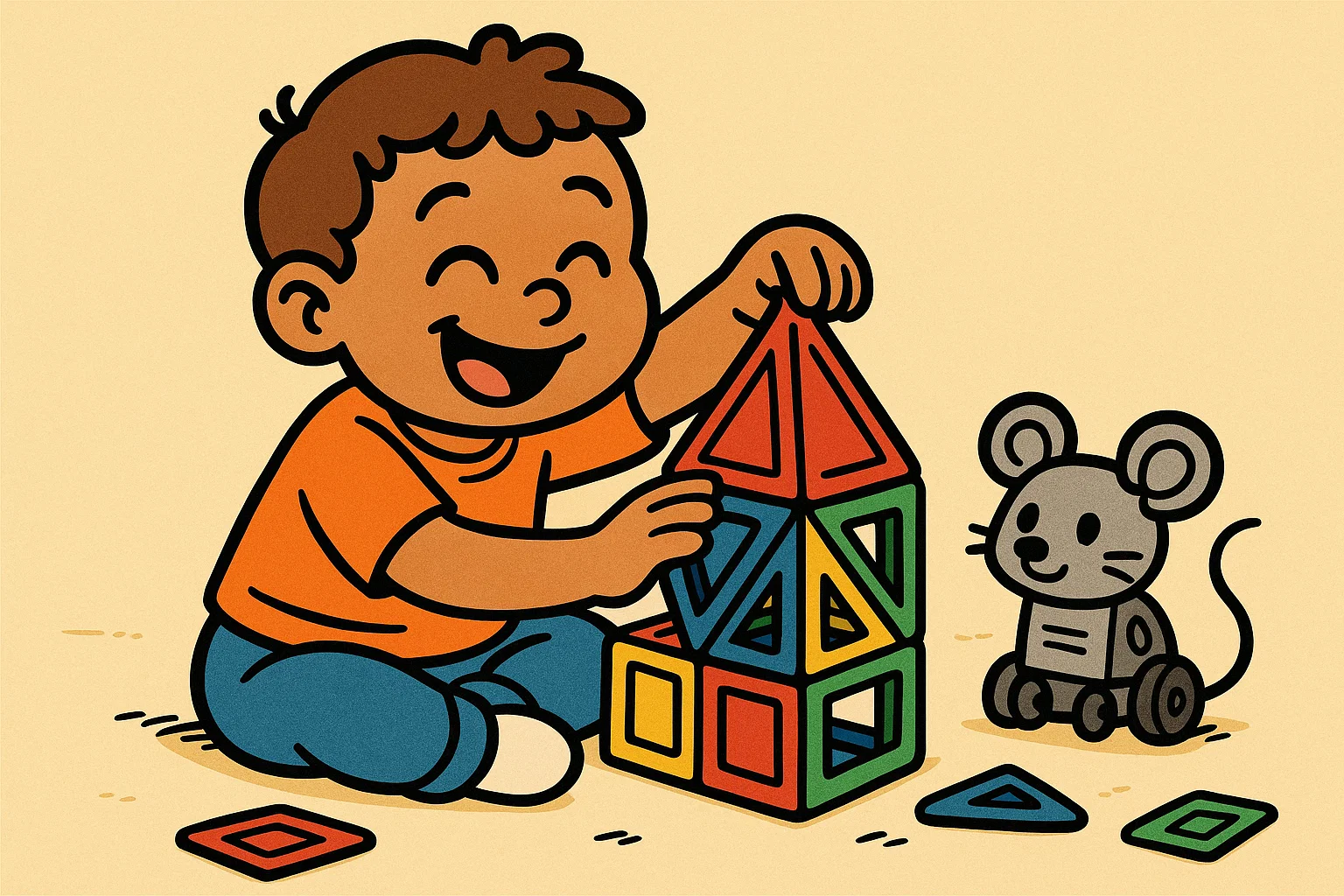
Vibrant magnetic building tiles allow preschoolers to easily turn flat, two-dimensional shapes into complex, three-dimensional structures. Easy-to-snap magnetic pieces reduce frustration and help children build towers, houses, and simple geometric shapes with confidence.
Building with geometric tiles can support early math thinking, spatial reasoning, and problem-solving. These open-ended construction sets adapt beautifully to a child’s growing imagination, offering years of creative play value.
First Engineering Toys
Introductory engineering toys feature oversized gears, interlocking tubes, and large, child-safe construction fasteners. Connecting these pieces helps children explore motion, balance, and simple cause and effect.
Building simple machines or vehicles from scratch rewards logical planning and finger dexterity. These early engineering activities turn simple science ideas into fun, hands-on building play.
STEM Toys Without Screens
Hands-on STEM toys encourage critical thinking and logical reasoning without relying on digital screens or tablets. Pattern blocks, grid-based sorting boards, and coding-free robot toys teach sequencing and logic through physical manipulation.
Children practice following simple visual instructions to build a specific design. Screen-free STEM toys can support problem-solving, patience, and focused play without relying on a tablet or video screen.
Christmas Gift Ideas by Preschooler Personality Type
Gifts for Creative Preschoolers
Creative children often enjoy high-quality art supplies that let them express themselves. Sturdy two-sided art easels, washable paint sets, thick triangular crayons, and non-toxic stamping kits are excellent creative outlets.
Open-ended art projects help refine finger control, visual planning, and an understanding of color mixing. The right creative tools give children a supportive way to express ideas, feelings, and imagination.
Gifts for Animal Lovers
Children who love animals may enjoy toys that let them pretend to care for pets, wildlife, or zoo animals. Plush animal figures, fully equipped veterinary check-up kits, and interactive wildlife habitat sets encourage nurturing pretend play.
Roleplaying as a veterinarian or zookeeper builds early empathy, compassion, and communication skills. These activities connect a child’s love of animals with simple lessons about care, kindness, and living things.
Gifts for Builders
Children who love building often stay engaged with modular blocks, train tracks, and construction sets. Large interlocking bricks, wooden train tracks, and sturdy toy workbenches allow children to design and build simple structures.
This kind of play supports spatial reasoning, hand-eye coordination, and an understanding of how objects fit together. Completing a construction project from start to finish builds focus, patience, and confidence in problem-solving.
Building Gift Ideas by Play Style
| Builder Type | Gift Ideas | Main Benefit |
| Block builder | Large bricks, magnetic tiles | Fine motor skills and spatial reasoning |
| Track builder | Wooden train tracks, road sets | Planning and sequencing |
| Construction fan | Toy workbenches, construction vehicles | Pretend play and problem-solving |
Gifts for Pretend Play Fans
Imaginative children expand their social-emotional skills through realistic roleplay toys and environments. Detailed play kitchens, doctor kits, grocery store checkout stands, and soft hand puppets make great props for pretend play.
Acting out familiar real-world routines helps preschoolers process daily experiences, build social confidence, and practice conversational turn-taking. Collaborative pretend play helps children build everyday language skills and practice cooperation with peers.
Christmas Gift List Builder
Gift Ideas by Age
- 3-Year-Olds: Focus on large DUPLO-style bricks, simple wooden puzzles, and sturdy matching cards to support early motor coordination.
- 4-Year-Olds: Choose magnetic tiles, introductory board games, and simple science kits that match their growing attention span and problem-solving skills.
- 5-Year-Olds: Choose age-rated marble runs, early word games, and adjustable scooters to challenge growing physical and problem-solving skills.
Gift Ideas by Price
- Under $15: Reusable sticker pads, non-toxic sensory dough packs, and age-rated toy vehicles make great, budget-friendly choices.
- Under $25: Classic memory matching games, floor puzzles, and washable art supply cases offer fantastic mid-range value.
- Under $50: Larger magnetic tile sets, beginner coding toys, and pretend doctor kits often fit this price range.
- Premium ($100+): Multi-level wooden dollhouses, convertible balance bikes, and indoor climbing frames provide excellent long-term play value.
Gift Ideas by Play Style
- Active Play: Three-wheeled scooters, sturdy balance beams, and textured foam stepping stones keep children moving in healthy ways.
- Quiet Play: Richly illustrated picture books, simple search-and-find books, and solo sorting puzzles encourage calm, focused play.
- Creative Play: Dual-sided art easels, non-toxic washable paints, and complete stamp sets inspire artistic expression.
- Educational Play: Magnetic letter tiles, counting balances, and introductory science kits build early math and literacy skills.
- Social Play: Simple cooperative board games, matching card games, and hand puppets encourage turn-taking and teamwork.
Printable Preschool Gift Checklist
| Toy Description | Target Age | Price Point | Primary Play Style | Developmental Benefit |
| Magnetic Tile Set | Ages 3–5 | $30.00 | Creative / Structural | Strengthens spatial orientation and geometry awareness |
| Cooperative Board Game | Ages 4–5 | $20.00 | Social / Group | Teaches turn-taking, rule-following, and patience |
| Adjustable Balance Bike | Ages 3–4 | $90.00 | Active / Outdoor | Refines gross motor skills and physical balance |
| Letter-Sound Puzzle | Ages 4–5 | $15.00 | Educational / Quiet | Builds letter recognition and early literacy foundations |
More Holiday Fun for Preschoolers
Easy Christmas Activities
Crafting simple holiday decorations at home provides a wonderful opportunity for family bonding and artistic development. Cutting out reusable foam ornaments with child-safe scissors, stamping custom wrapping paper, and shaping salt-dough keepsakes are fun festive projects.
These hands-on activities help young children practice finger dexterity, creativity, and planning. Displaying their handmade decorations around the home builds a sense of personal pride and holiday belonging.
Festive Holiday Activity Ideas
| Activity | Skill Supported |
| Reusable foam ornaments | Fine motor practice and creativity |
| Salt-dough handprint keepsakes | Tactile sensory play and memory-making |
| Stamped wrapping paper | Pattern recognition and artistic expression |
| Simple paper garlands | Sequencing and hand-eye coordination |
Christmas Books and Movies
Pairing festive storybooks with short holiday films creates a cozy, relaxing family tradition during winter break. Reading a holiday classic aloud before watching a brief animated adaptation helps children build narrative comprehension and comparison skills.
Caregivers can ask simple questions about the characters and plot to spark helpful conversations. This balanced mix of books and short videos can create a calmer moment during the busy holiday season.
Stocking Filler Ideas
Small, practical items can transform standard holiday stockings into useful sensory discovery packs. Filling stockings with washable sticker rolls, chunky crayons, kid-safe bath fizzies, mini toy cars, and healthy treats provides plenty of small surprises.
These compact toys are excellent for keeping children happily occupied while breakfast is prepared on Christmas morning. Choosing a thoughtful mix of practical items and small toys avoids excessive clutter while bringing plenty of joy.
Christmas Morning Play Ideas
Parents can make Christmas morning run smoothly by setting up dedicated play zones for new toys right away. Removing complicated packaging, installing necessary batteries, and setting up toys beforehand lets children start playing right away.
Setting up specific spots for active toys, art projects, and quiet reading keeps the morning organized and calm. This thoughtful preparation reduces frustration and allows the whole family to enjoy a peaceful, joyful holiday morning together.
FAQ: Christmas Gift Ideas for Preschoolers
What are the best Christmas gifts for kids aged 3 to 5?
The best Christmas gifts for kids aged 3 to 5 are safe, durable, age-appropriate, and easy to use right away. Good top picks include magnetic tiles, picture books, pretend play sets, simple board games, scooters, art supplies, and outdoor explorer kits. These gifts give little ones room to play, imagine, move, and learn at their own pace.
How do I find the perfect present for a preschooler?
To find the perfect present, start with the child’s current interests. A dinosaur lover may enjoy a fossil dig kit, while a child who loves animals may prefer a vet play set or wildlife book. The perfect present is usually something the child is going to love immediately but can also keep using as they grow.
What makes a gift recommended for kids in the preschool age range?
A gift recommended for kids in this age range should match the child’s abilities and safety needs. Look for large pieces, sturdy materials, clear age labels, and simple instructions. Gifts for children ages 3 to 5 should encourage hands-on play rather than require complicated setup or constant adult help.
What is the best Christmas gift for a preschooler who has lots of toys?
The best Christmas gift for a child who already has many toys is often something open-ended or experience-based. Experience gifts, such as museum memberships, children’s theater tickets, music classes, or nature-center passes, can be a fantastic gift because they create memories instead of adding clutter.
Are craft ideas good Christmas gifts for preschoolers?
Yes, craft ideas are a great way to encourage creativity, fine motor skills, and self-expression. Washable paints, chunky crayons, stamping kits, sticker books, and creative art sets allow children to create something of their own. These gifts are especially useful during winter break when families need calm indoor activities.
What are good gift ideas for kids who love building?
Good gift ideas for kids who love building include magnetic tiles, large interlocking bricks, wooden train tracks, marble runs with oversized pieces, geoboards, and simple engineering sets. These toys help your child practice problem-solving, spatial reasoning, patience, and hand-eye coordination.
Are there good Christmas gift ideas for toddlers too?
Some ideas for toddlers overlap with preschool gifts, but safety rules are stricter. If you need gift ideas for toddlers or a gift for a toddler, choose toys with extra-large pieces, soft materials, simple cause-and-effect features, and no small removable parts. Toys for ages 18 months and up should always be checked carefully against the manufacturer’s age label.
Take a short quiz to find out what your everyday choices say about your parenting style
When your child is curious about something new, what’s your instinct?
Take a short quiz to find out what your everyday choices say about your parenting style
“Can I download this app?” What happens next?
Take a short quiz to find out what your everyday choices say about your parenting style
When it comes to rules at home, which sounds most like you?
Take a short quiz to find out what your everyday choices say about your parenting style
If you could give your child one life skill today, what would you pick?
Take a short quiz to find out what your everyday choices say about your parenting style
Your child gets to choose what to watch. What would your ideal setup look like?
Take a short quiz to find out what your everyday choices say about your parenting style
Pick your parenting superpower ✨