100 Teacher Appreciation Messages and Thank You Notes From Parents

 Discover a Free Education Video App for Kids
Pastory uses AI to personalize educational video content based on your child’s interests and personality. Safe, engaging, and built for curious young minds. Sign up now to stay updated and enjoy early access with a free trial
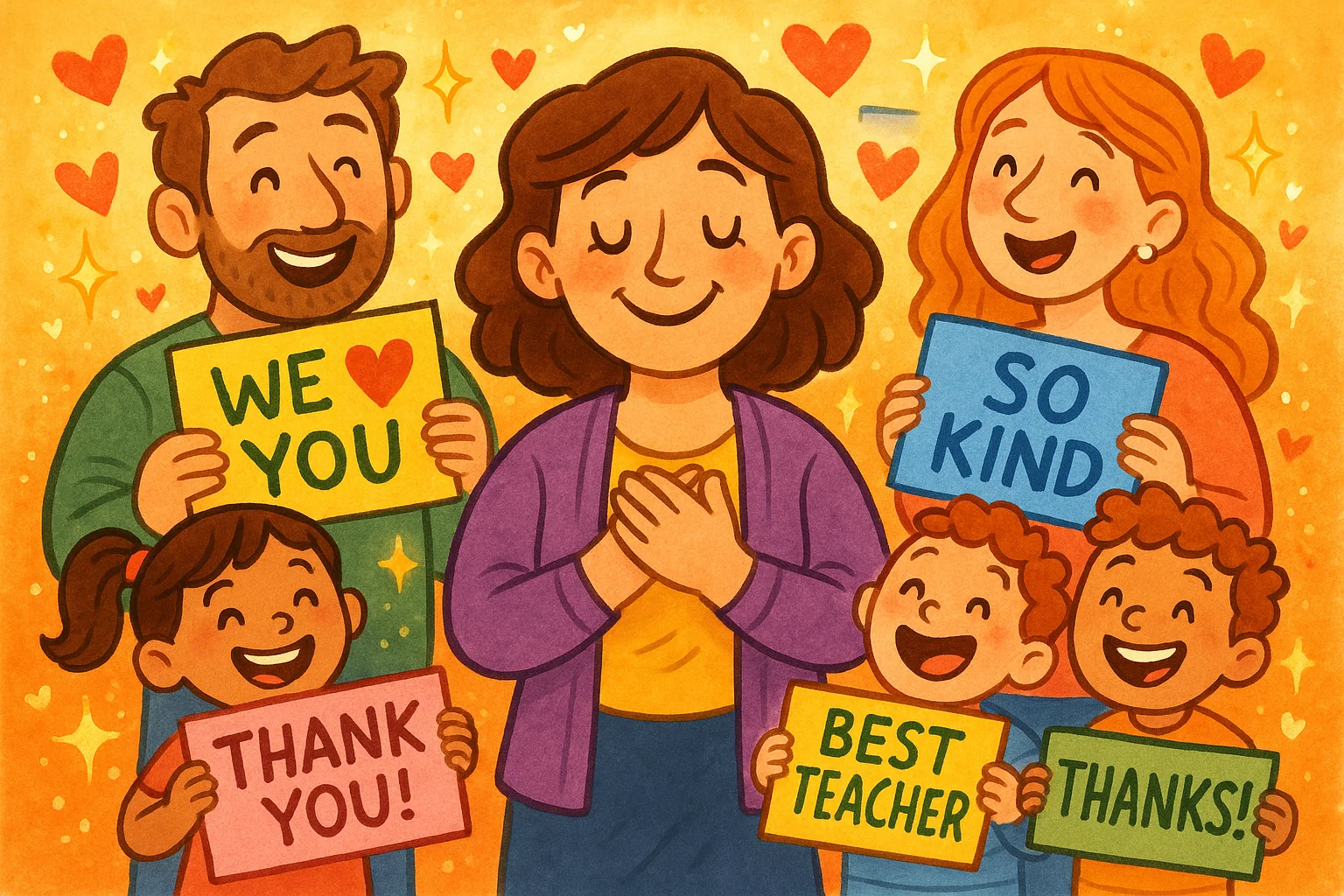
Expressing genuine gratitude to a teacher can have a meaningful impact on their morale and sense of appreciation. Personalized messages from students and parents can remind teachers that their work is seen, valued, and remembered. Writing a thank-you message is a simple, sincere way for families to recognize the hard work and dedication behind a successful school year.
This comprehensive collection includes 100+ copy-ready thank-you notes for teachers, organized by grade level, milestone, and classroom need. Whether you need a short phrase for a Teacher Appreciation Week gift tag, a heartfelt end-of-term message, or a longer letter, these examples will help you express your gratitude clearly and sincerely.
Key Takeaways
- Discover 100 ready-to-use thank-you messages for teachers tailored to different grade levels and milestones.
- Learn how to personalize a teacher thank-you note by including specific classroom moments and signs of student growth.
- Find sections for preschool, kindergarten, elementary, middle school, high school, and teachers who support students through challenges.
- Use simple guidance for writing a thank-you note with your child that highlights the teacher’s impact.
The Best Note Depends on the Occasion
The tone and structure of an appreciation message should match the occasion or milestone. A note written for Teacher Appreciation Week usually emphasizes general gratitude and encouragement, while an end-of-year teacher message focuses on growth, progress, and memorable moments from the school year. Special milestones, such as graduation or a transition to a new school, call for messages that acknowledge how the teacher helped prepare the child for what comes next.
Personal Details Make Notes Stronger
A highly effective teacher thank-you message goes beyond generic praise by mentioning specific behavioral changes, academic achievements, or memorable classroom projects. Mentioning a subject where your child experienced a breakthrough, or a quality such as the teacher’s patience, immediately makes the note feel more personal. Specific praise is more meaningful because it shows teachers exactly which moments, habits, or classroom strategies made a difference.
Short Notes Can Still Feel Meaningful
Brief expressions of gratitude work well on greeting cards, emails, or gift tags for teacher gifts. A short teacher thank-you phrase can still feel meaningful when every word acknowledges the teacher’s care and effort. These compact messages are ideal for busy parents who want to show appreciation clearly and sincerely.
Parents Can Involve Children
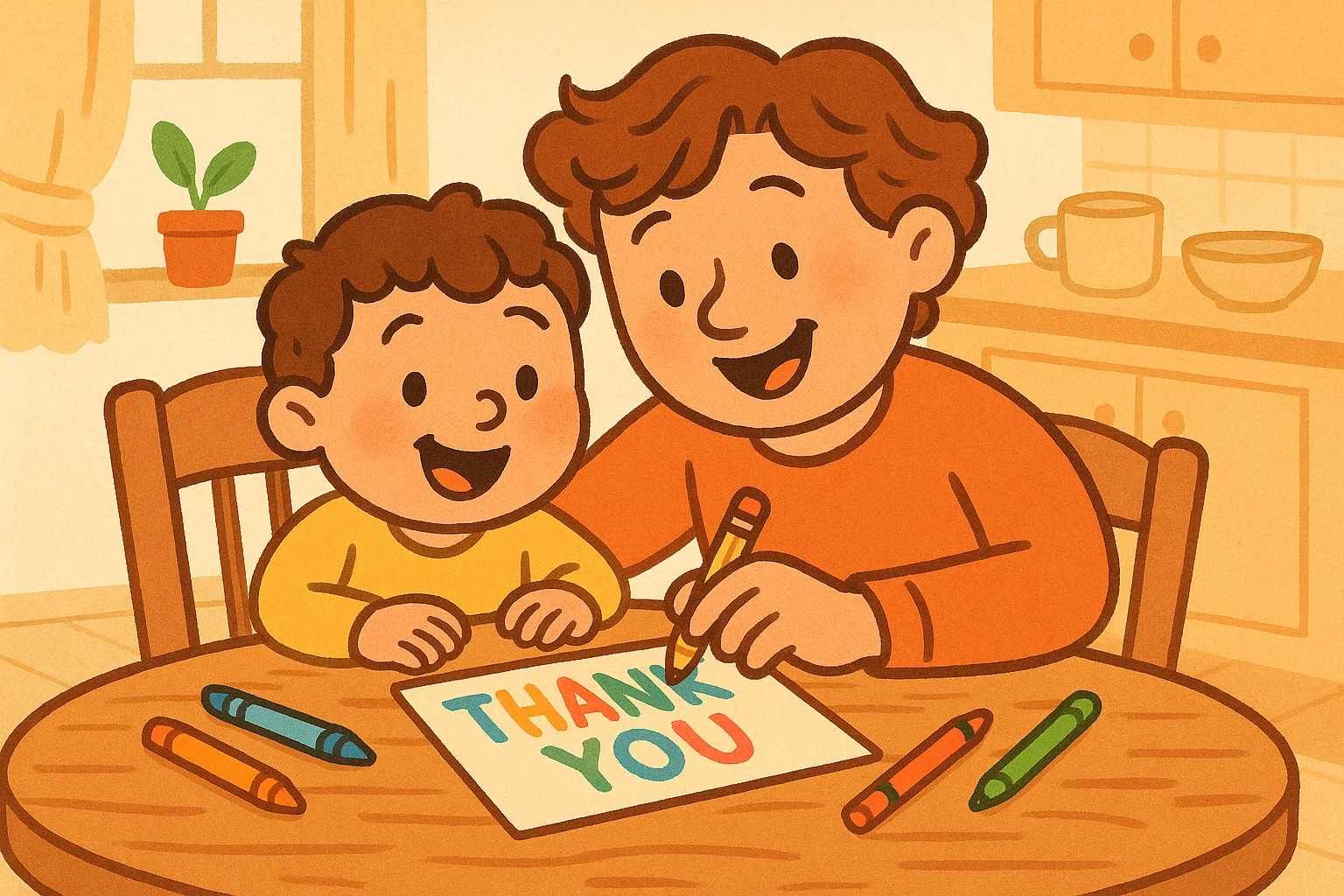
Writing a thank-you card with your child helps the final message include an authentic student perspective. Parents can ask open-ended questions about the child’s favorite classroom activities, a memorable lesson, or a moment when they felt supported. Blending a child’s own words with a parent’s observations about growth creates a meaningful, well-rounded message of appreciation.
General Teacher Appreciation Notes From Parents
General teacher appreciation messages work as flexible templates for any point in the school year. These notes focus on core qualities such as patience, daily energy, care, and the commitment required to maintain an organized, engaging classroom.
Simple Thank-You Notes Expressing Everyday Gratitude
- “We appreciate your daily commitment to creating an organized, engaging classroom where every student feels motivated to learn.”
- “We appreciate the steady energy and care you bring to school every day, which helps students feel secure and excited to learn.”
- “Thank you for keeping us informed and supported throughout this term; your steady guidance makes a noticeable difference.”
- “We are so grateful for the positive, structured atmosphere you create each day, helping every student stay focused and inspired.”
Warm Appreciation Messages About Classroom Care
- “Thank you for creating a warm, welcoming environment where students feel safe to express ideas and explore new concepts.”
- “Your gentle guidance and consistent kindness have helped [Student’s Name] settle smoothly into the daily routines of the classroom.”
- “We appreciate the genuine care you show to every student, making sure they feel valued, heard, and respected each day.”
- “Thank you for always taking the time to understand each student’s personality and individual learning needs.”
Respectful Notes About Professional Dedication
- “Your thoughtful lesson planning and clear communication show a dedication to teaching that we truly appreciate.”
- “We appreciate your dedication to your students and your commitment to maintaining high academic standards throughout the school year.”
- “We appreciate your thorough feedback and professional approach, which have helped our child stay focused and make steady progress.”
- “Thank you for going above and beyond to make the curriculum both accessible and challenging for your students.”
Copy-Ready Messages to Use in Cards or Emails
- “Dear [Teacher’s Name], thank you for your patience, guidance, and the steady encouragement you give your students every day.”
- “We wanted to take a moment to thank you for your support this year; your classroom has been a place of real growth for [Student’s Name].”
- “We appreciate your hard work and consistent care; we are grateful to have you as this year’s teacher.”
- “Please accept our sincere thanks for your excellent communication and your commitment to student success this year.”
Thank You Notes From Parents
Parent-to-teacher messages can highlight the partnership between home and classroom. These messages acknowledge the collaborative effort required to support student academic, social, and emotional growth.
| Note Category | Primary Focus Area |
| From One Parent | Direct, personal impact on the child and family |
| From Both Parents | Shared family gratitude for the school-home partnership |
| Group/PTA Context | Shared recognition from the classroom community |
| Communication Focus | Appreciating clear feedback and open communication |
Heartfelt Notes From Mom or Dad
- “As a parent, I am truly grateful for the calm confidence and steady support you have brought into daily school life.”
- “I appreciate you as a wonderful teacher and role model; your positive influence shapes how [Student’s Name] approaches challenges outside the classroom.”
- “I appreciate how you recognize [Student’s Name]’s potential and provide the right balance of challenge and encouragement.”
- “Your classroom has given [Student’s Name] a sense of belonging and purpose, and for that, I offer my sincere appreciation.”
Messages From Both Parents
- “We are incredibly grateful for the partnership we have experienced with you throughout this school year.”
- “Thank you for reinforcing the values of curiosity, discipline, and kindness that we strive to build at home.”
- “Our family has benefited so much from your guidance, and we appreciate your commitment to student growth.”
- “We want to acknowledge your steady support; your classroom environment has truly brought out the best in [Student’s Name].”
Notes From Parent Group
- “The entire parent community would like to express its appreciation for the leadership, care, and consistency you bring to this class.”
- “Thank you for managing our children’s diverse needs with such professionalism, grace, and dedication.”
- “We recognize the effort it took to coordinate this year’s milestones, and we appreciate everything you did for the class.”
- “On behalf of all the classroom families, we thank you for creating a supportive and successful academic community.”
Appreciation Notes About Teacher Communication
- “Thank you for maintaining clear, timely, and thoughtful communication about student academic progress and social growth.”
- “We deeply appreciate your proactive updates, which help us reinforce classroom concepts and goals at home.”
- “Your prompt responses and thoughtful insights during parent-teacher conferences have made you an invaluable partner in the learning process.”
- “We appreciate your openness to dialogue, which helps us stay aligned in supporting student development.”
Short Teacher Appreciation Notes

When space is limited on a gift tag, small card, or quick email, concise phrases can still make a strong impact. These brief options help you express appreciation clearly in just a few words.
One-Line Thank-You Notes
- “We appreciate your dedication and your ability to make learning feel exciting every day.”
- “We appreciate your patience and the steady guidance you provide to your students.”
- “We are grateful to have worked with one of the best teachers our family has ever known.”
- “Your hard work, dedication, and daily kindness have made such a difference in [Student’s Name]’s education.”
Short and Sweet Messages
- “We appreciate your consistent support this year; your encouragement has helped change the way [Student’s Name] approaches school.”
- “We appreciate the positive energy you bring to the classroom each day, helping every student reach their potential.”
- “Thank you for going above and beyond to make sure every student feels confident, capable, and valued.”
- “Your classroom is wonderfully organized, and we are truly grateful for your commitment to your students.”
Quick Text or Email Messages
- “Hi [Teacher’s Name], I just wanted to send a quick note to thank you for your support and patience this week.”
- “We appreciate the detailed feedback you sent yesterday; your dedication to student progress means a lot to our family.”
- “We are grateful for your steady guidance in class; [Student’s Name] comes home happy and motivated every day.”
- “Thank you for managing the recent classroom projects so smoothly; your organization makes a real difference for our family.”
Mini Notes Suited to Gift Tags
- “To an incredible teacher: thank you for everything you do to support student growth.”
- “With sincere appreciation for your patience, hard work, and thoughtful classroom leadership this year.”
- “Thanks for helping students grow, learn, and thrive throughout this wonderful school year.”
- “To the best teacher ever: we appreciate your dedication and constant encouragement.”
Meaningful Teacher Appreciation Messages
A teacher’s long-term impact often extends beyond academics into confidence, resilience, and social growth. These messages highlight deeper changes in self-esteem, independence, and learning habits.
Notes About Teacher Impact
- “Your teaching methods have helped [Student’s Name] develop stronger critical thinking skills this year.”
- “Thank you for recognizing [Student’s Name]’s potential and giving them the support they needed to grow.”
- “The adjustments you made to your teaching approach have helped [Student’s Name] progress beyond expectations.”
- “We appreciate how your well-organized lessons have helped [Student’s Name] develop stronger study habits and academic discipline.”
Messages About Confidence and Encouragement
- “Thank you for bringing out the best in [Student’s Name] by consistently praising their effort, not just their final results.”
- “Your steady encouragement has helped [Student’s Name] feel more confident when facing mistakes and challenges.”
- “We have noticed a real increase in [Student’s Name]’s confidence, thanks in large part to your supportive and structured feedback.”
- “Thank you for encouraging [Student’s Name] to tackle complex concepts and see that they are capable of high achievement.”
Notes About Patience and Kindness
- “Your patience and emotional awareness have created a calm classroom where students feel safe.”
- “Thank you for taking the time to listen to [Student’s Name]’s concerns and make them feel respected as an individual.”
- “We appreciate your gentle approach during moments of frustration, which has taught [Student’s Name] how to handle academic stress.”
- “Your consistent kindness has been a steady anchor throughout the changes of the school year.”
Messages About Lasting Influence
- “The habits of curiosity and organization you have encouraged will benefit students long after the school year ends.”
- “We appreciate you as a wonderful teacher whose lessons in integrity and effort will stay with students for years to come.”
- “You have set a high standard for what a teacher can be, leaving a lasting impression on [Student’s Name].”
- “We know that the independence students learn in your classroom will support their future success.”
Teacher Appreciation Notes About Positive Impact
Visible progress in attitude and behavior often reflects a strong, supportive classroom culture. These notes celebrate meaningful shifts in how a child learns, participates, and connects with others.
Notes About Academic Progress
- “We have seen a clear improvement in [Student’s Name]’s reading fluency thanks to your targeted support.”
- “We appreciate your clear math explanations and steady practice routines, which have helped [Student’s Name] build confidence and understanding.”
- “We appreciate the clear, systematic way you teach science, which has helped turn a once-difficult subject into one of [Student’s Name]’s strongest areas.”
- “Thank you for providing the writing frameworks that helped [Student’s Name] compose more organized and thoughtful essays.”
Notes About Renewed Love of Learning
- “Thank you for making learning fun and engaging; [Student’s Name] now starts conversations about school at home.”
- “Your project-based lessons have helped rekindle [Student’s Name]’s curiosity and interest in learning.”
- “We are amazed to see [Student’s Name] reading independently at home, thanks in part to the inspiring reading culture you created in class.”
- “Thank you for turning complex history lessons into interactive classroom experiences that capture [Student’s Name]’s imagination.”
Notes About Confidence Growth
- “Our child now participates more actively in group discussions, thanks to the supportive speaking opportunities you provide.”
- “Thank you for helping our child see mistakes as opportunities to learn, which has helped reduce their test anxiety.”
- “We appreciate the leadership opportunities you provided, which allowed our child to discover their own organizational strengths.”
- “Your encouragement of our child’s problem-solving methods has given them more confidence with challenging work.”
Notes About Positive Classroom Environment
- “Thank you for establishing clear, fair classroom boundaries that allow all students to collaborate without distraction.”
- “We appreciate your focus on mutual respect, which has made the classroom a socially safe space for our child.”
- “Your emphasis on inclusive peer interactions has helped our child build healthy, supportive friendships this year.”
- “Thank you for creating an equitable learning environment where different learning styles are welcomed and supported.”
Thank You Notes About Going Above and Beyond

Exceptional educators often go beyond their regular responsibilities to provide personal support. These notes acknowledge the extra time, care, and effort teachers invest in student success.
Notes About Extra Help After Class
- “Thank you for taking extra time after school to provide our child with the algebra support they needed.”
- “We deeply appreciate the extra study guides and personalized review sessions you provided to help our child master the material.”
- “Your willingness to stay late and clarify complex assignments gave our child the support they needed.”
- “We appreciate your dedication in offering regular lunchtime check-ins to review writing and editing skills.”
Notes About Emotional Support
- “We are deeply grateful for the gentle support you gave our child during a difficult family transition.”
- “Thank you for noticing our child’s quiet anxiety and giving them a discreet, supportive space to collect themselves.”
- “Your sensitivity to peer dynamics helped our child navigate a difficult social conflict with dignity.”
- “We appreciate your daily check-ins during a stressful semester, which helped our child feel grounded and focused.”
Notes About Special Projects or Events
- “We appreciate your careful organization of the annual science fair, which gave our child a wonderful opportunity to shine.”
- “We appreciate the many personal hours you spent directing the school performance, creating lifelong memories for our family.”
- “Thank you for coordinating the educational field trips, which connected classroom concepts to real-world experiences.”
- “Your dedication to organizing the classroom exhibitions allowed every student to proudly showcase their talents.”
Notes About Constant Encouragement
- “Thank you for always taking the extra step to write personalized, encouraging notes on our child’s assignments.”
- “Your unwavering belief in our child’s abilities kept them motivated through the most challenging parts of the curriculum.”
- “We appreciate how you consistently support students who need extra encouragement, making sure every child feels seen and valued.”
- “Thank you for never giving up on our child, even when they struggled to stay focused and disciplined in their studies.”
Teacher Appreciation Notes During Challenges
When a child faces learning challenges or behavioral difficulties, a teacher’s steady support can make a major difference. These notes thank teachers for their patience, consistency, and developmentally appropriate support.
| Challenge Type | Strategic Teacher Intervention |
| Learning Difficulties | Differentiated instruction and pacing adjustments |
| Behavioral Challenges | Clear boundaries and positive behavior reinforcement |
| Separation Anxiety | Predictable routines and warm emotional support |
Notes About Helping a Child Through a Tough Year
- “We appreciate your steady, reassuring presence during an academically and personally challenging school year.”
- “Your classroom routine provided the stability our child needed to stay productive during a chaotic phase.”
- “We appreciate your steady optimism, which helped our child stay focused through several setbacks.”
- “Thank you for helping turn a stressful year into a season of growth and confidence for our child.”
Notes About Learning Struggles
- “Your specialized teaching strategies helped our child decode words more effectively and overcome a major reading barrier.”
- “Thank you for breaking down multi-step math problems into clear, manageable steps that reduced our child’s frustration.”
- “We deeply appreciate your willingness to modify assignments so our child could demonstrate knowledge without becoming overwhelmed.”
- “Thank you for working alongside our private tutors to create a consistent and supportive academic plan.”
Notes About Behavior Growth
- “Thank you for using consistent, fair behavior strategies that helped our child build stronger self-regulation.”
- “We have noticed real improvement in our child’s classroom focus and impulse control, thanks to your structured feedback.”
- “Your calm approach to boundary-setting taught our child to take more responsibility for their daily actions.”
- “We appreciate your partnership in reinforcing the positive behavior plan, which led to real progress.”
Notes About School Transitions
- “Thank you for easing our child’s separation anxiety through predictable, warm morning routines.”
- “Your thoughtful orientation strategies helped our child settle smoothly into a brand-new school district mid-semester.”
- “We appreciate how quickly you helped our child adjust to the faster pace and higher expectations of this new grade level.”
- “We appreciate your sensitivity during our child’s return to school after an extended medical absence.”
Teacher Appreciation Notes About Personal Growth
Social-emotional skills such as resilience, independence, and collaborative problem-solving play an important role in a child’s growth and readiness to learn.
Notes About Building Independence
- “Thank you for teaching our child how to use a planner consistently and build stronger organizational habits.”
- “We appreciate your classroom routines, which encourage students to solve small problems more independently.”
- “Your structured routines have helped our child become a more independent learner who starts homework with fewer reminders.”
- “Thank you for fostering the personal accountability our child needs to manage long-term project deadlines.”
Notes About Social Growth
- “Your thoughtful small-group pairings have helped improve our child’s cooperation and communication skills.”
- “Thank you for cultivating an inclusive classroom community where empathy, sharing, and active listening are valued.”
- “We appreciate how you guided our child to express their boundaries clearly and respect the boundaries of others.”
- “Your focus on collaborative problem-solving has helped our child build meaningful and supportive friendships.”
Notes About Creativity
- “Thank you for designing open-ended assignments that allowed our child to express their artistic and analytical ideas.”
- “Your enthusiastic support for original writing projects has helped unlock our child’s creative confidence.”
- “We appreciate the range of multimedia formats you introduced in class, which helped expand our child’s imagination.”
- “Thank you for creating a space where unconventional ideas are explored rather than immediately dismissed.”
Notes About Resilience
- “By framing mistakes as part of the learning process, you have helped our child build real resilience.”
- “Thank you for encouraging our child to revise their drafts and see the value of persistent effort.”
- “We appreciate your supportive coaching when projects did not go as planned, which taught our child how to adjust and keep going.”
- “Your focus on persistence and steady improvement has helped reduce our child’s fear of complex academic challenges.”
End-of-Year Teacher Appreciation Notes
The end of the school year is a natural time to reflect on progress, celebrate growth, and thank teachers for the support they provided from the first day to the last.
Notes About Closing the School Year
- “As the school year comes to a close, we look back on our child’s growth with deep appreciation for your guidance.”
- “We appreciate your steady professionalism from the first day of school to the last.”
- “We are incredibly proud of the work our child brings home, which reflects your thoughtful instruction and support.”
- “Thank you for guiding this school year with clear expectations and steady support, which helped make it so successful.”
Goodbye Messages for a Favorite Teacher
- “Our child is genuinely sad to leave your classroom; you have held a truly special place as their favorite teacher.”
- “We appreciate the individual connection you formed with our child; our family will miss your daily presence next year.”
- “Your warmth has made a lasting impact on our hearts, and we say goodbye with sincere gratitude.”
- “We are sad to see this year end, but we are truly thankful for the wonderful mentorship you provided.”
Messages About Summer Sendoff
- “We wish you a restful summer break that reflects the care and energy you gave to your students all year.”
- “We appreciate your tireless efforts this year; may your summer vacation be filled with relaxation and well-deserved joy.”
- “Our family hopes you take plenty of time to recharge, knowing you have made a lasting difference for this class.”
- “Sending you warmest wishes for a peaceful summer; thank you for your dedication throughout the year.”
Notes About Moving to the Next Grade
- “Thank you for equipping our child with the study skills they will need to succeed in the next grade.”
- “We feel confident about our child’s next academic transition because of the thoughtful preparation you provided.”
- “Your thoughtful instruction has helped ensure our child has the foundation they need for future success.”
- “Thank you for building the foundational skills that will allow our child to thrive in higher-level classes.”
Graduation Teacher Appreciation Messages
Graduation milestones mark important transitions. These notes highlight the teacher’s support at each stage of a student’s school journey.
Preschool Graduation Messages
- “Thank you for helping our child reach early milestones and become emotionally and socially ready for kindergarten.”
- “Your gentle guidance during this first school experience has built a positive foundation for future learning.”
- “We appreciate the structured play routines you created, which helped develop the fine motor and social skills our child will need in the future.”
- “Thank you for celebrating our child’s earliest academic steps and sending them forward with confidence.”
Elementary Promotion Messages
- “Your instruction has helped guide our child through the foundational years of elementary school with confidence.”
- “Thank you for preparing our child to transition from a self-contained classroom to the structure of middle school.”
- “We appreciate your focus on literacy and math fluency, which provides a strong foundation for future coursework.”
- “Thank you for helping our child leave elementary school as a more confident and capable student.”
Middle School Graduation Notes
- “We appreciate your steady guidance during a period of major social, emotional, and academic growth.”
- “We appreciate how you held our middle schooler to high standards while helping them prepare for high school.”
- “Your subject-matter expertise has helped our child master more advanced analytical concepts.”
- “We appreciate you as a reliable, trusted mentor who helped our child navigate the social and academic challenges of middle school.”
High School Graduation Messages
- “Thank you for providing college-level academic preparation that has helped our senior feel ready for higher education.”
- “We deeply appreciate the thoughtful letters of recommendation and career guidance you generously provided this year.”
- “Your advanced seminars have taught our student how to analyze complex information and express ideas clearly.”
- “Thank you for treating our graduating senior as an emerging scholar and inspiring them to pursue long-term goals.”
Teacher Appreciation Notes to Preschool Teachers
Preschool classrooms focus on safety, early self-regulation, sensory-motor development, and foundational peer relationships. Notes in this section highlight patience, warmth, and the trust built during a child’s earliest school experiences.
Notes About the First School Experience
- “Thank you for making our child’s first separation from home feel safe, reassuring, and joyful.”
- “Your warm morning welcome has helped replace tears with curiosity and excitement to learn.”
- “We appreciate how your structured early-childhood classroom helped our child form positive first impressions of school.”
- “Thank you for responding to our child’s vulnerability with warmth, patience, and professional care.”
Notes About Patience With Young Children
- “Your calm response to toddlers’ big emotions reflects a deep understanding of early childhood development.”
- “Thank you for gently guiding our child through big emotions and teaching them how to name their feelings.”
- “We appreciate your endless patience with repeated questions, spilled supplies, and the busy energy of early learners.”
- “Your steady voice gives the classroom a sense of safety and calm that helps our child feel secure.”
Notes About Early Learning Milestones
- “We are thrilled to hear our child singing the alphabet and sorting objects by color and shape at home.”
- “We appreciate your support with toilet training, handwashing, and independent outerwear routines.”
- “We appreciate the sensory-bin activities you design, which have helped strengthen our child’s fine motor skills.”
- “Thank you for teaching our child how to share, take turns, and listen during circle time.”
Notes About a Nurturing Classroom
- “Your classroom feels like a loving extension of home, filled with warmth, structure, and joyful discovery.”
- “We appreciate your care and attentiveness, whether our child comes to you with a scraped knee or a hurt feeling.”
- “We appreciate the bright, safe, and organized learning stations you create to spark early exploration.”
- “Your gentle smile and reassurance give our child the emotional security they need to play and learn freely.”
Teacher Appreciation Notes to Kindergarten Teachers
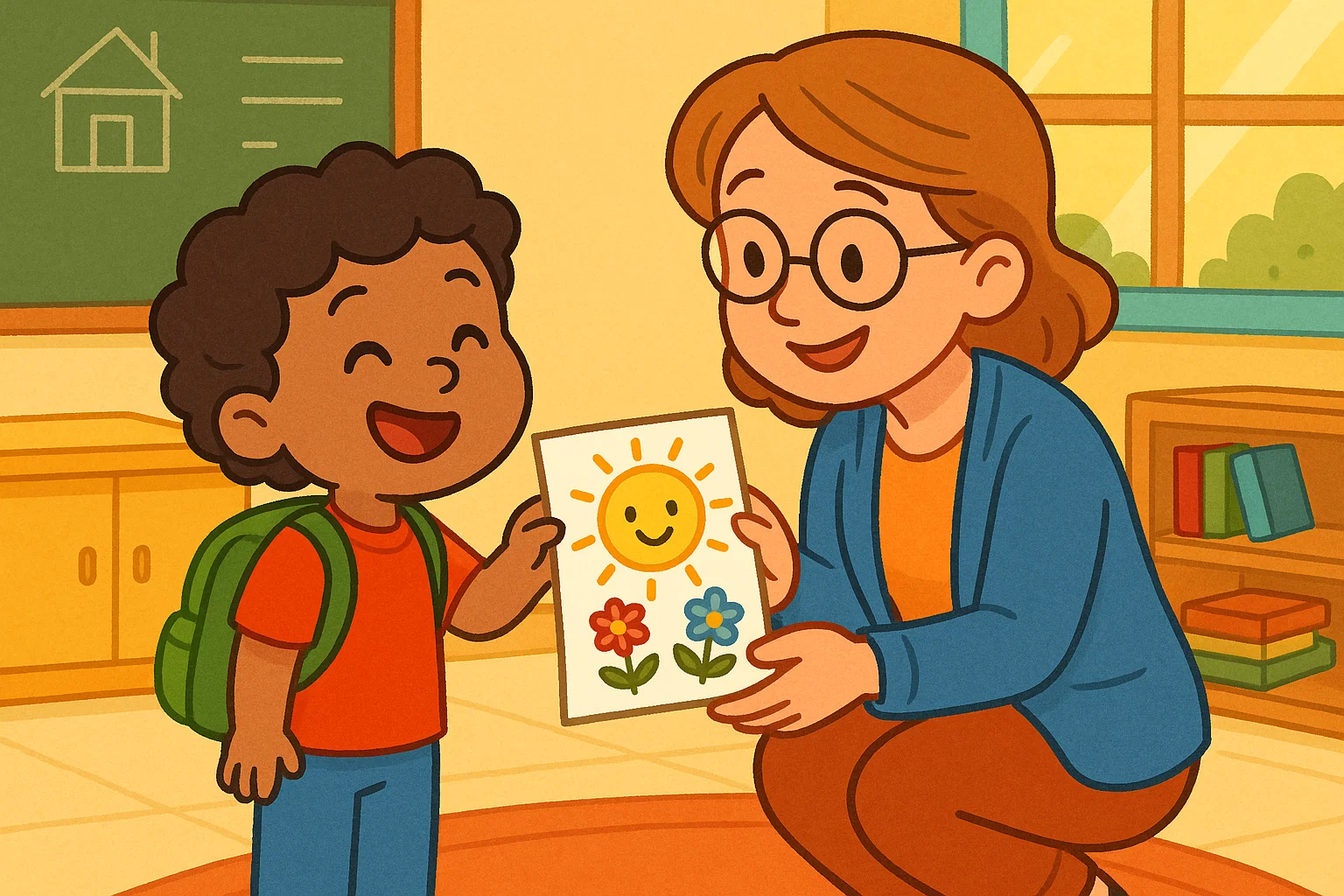
Kindergarten bridges the gap between play-based early childhood and the more structured academic expectations of primary school.
Notes About the First Big Classroom Year
- “Thank you for guiding our child through the demands of a full-day school schedule with patience and care.”
- “We appreciate how systematically you taught our child to manage their backpack, folders, and desk space.”
- “Your classroom beautifully balances foundational instruction with necessary, developmentally appropriate movement breaks.”
- “Thank you for turning the big transition to kindergarten into a positive, empowering experience for our child.”
Notes About Early Reading and Writing
- “We are amazed to watch our child blend sounds and read their first phonics books independently.”
- “We appreciate your handwriting exercises, which have helped improve our child’s pencil grip and letter formation.”
- “We appreciate the daily sight-word routines that have expanded our child’s print recognition and reading confidence.”
- “Thank you for fostering a love of storytelling and inspiring our child to create their own illustrations and write their own sentences.”
Notes About Social Skills
- “Your structured recess and lunch routines have helped our child navigate large-group peer interactions successfully.”
- “Thank you for teaching simple conflict-resolution phrases that help our child resolve sharing disputes peacefully.”
- “We notice a real improvement in our child’s ability to wait patiently for their turn during family conversations.”
- “Your emphasis on kindness and classroom community has taught our child how to be a supportive friend.”
Notes About Confidence in School
- “Thank you for displaying our child’s work prominently and helping them feel proud of their efforts.”
- “Your positive reinforcement of small improvements has motivated our child to follow classroom routines more confidently.”
- “We appreciate how you celebrate incremental milestones, helping our child see themselves as a capable student.”
- “Your encouraging feedback has given our child the confidence to step onto the school bus with pride each morning.”
Teacher Appreciation Notes to Elementary Teachers
Elementary educators, covering Grades 1–5, focus on building fluency in literacy and mathematics while cultivating sustained task focus.
| Subject Area | Student Growth |
| Guided Reading Fluency | Stronger comprehension and more independent reading |
| Math Fluency | Reduced math anxiety and more confident problem-solving |
| Project-Based Science | Hypothesis testing and collaborative presentation skills |
Notes About Reading Progress
- “We appreciate your tailored guided reading groups, which helped our child move past a mid-year comprehension plateau.”
- “We appreciate the vocabulary work you introduce, which has strengthened our child’s expressive language.”
- “Your structured book reports have taught our child how to analyze plot and character motivation more thoughtfully.”
- “Thank you for helping our reluctant reader become a student who now chooses chapter books independently.”
Notes About Math Confidence
- “Your visual math manipulatives have helped our child understand long division and fractions more clearly.”
- “Thank you for easing our child’s math anxiety through low-pressure practice that prioritizes progress over perfection.”
- “We appreciate the real-world word problems you design, which show our child how useful math can be.”
- “Your step-by-step explanations have given our child the confidence to solve multi-step problems independently.”
Notes About Classroom Enthusiasm
- “Our child returns home excited to explain the scientific ideas behind your classroom experiments.”
- “Thank you for designing interactive history activities that make social studies come alive for your students.”
- “We appreciate the creative art connections you build into core subjects, keeping visual learners engaged.”
- “Your enthusiasm for the curriculum transforms everyday schoolwork into something our child looks forward to.”
Notes About Daily Support
- “We appreciate your steady presence at the classroom door, helping our child start each day grounded.”
- “We appreciate your consistent support with organization, helping our child keep their work neatly sorted.”
- “Your prompt communication about missed assignments helps us keep our child accountable and organized at home.”
- “We appreciate the balanced care you show each day, making sure our child feels both challenged and supported.”
Teacher Appreciation Notes to Middle School Teachers
Middle school educators guide early adolescents through changing schedules, more abstract academic work, and important social-emotional growth.
Notes About Guiding Growing Students
- “We appreciate your patience in helping our middle schooler navigate the logistics of moving between multiple classrooms.”
- “We appreciate how you teach time management, helping students balance deadlines across different subjects.”
- “Your understanding of early adolescents helps you respond to changing emotions with patience and professionalism.”
- “Thank you for encouraging our child to take ownership of their schedule, locker, and academic responsibilities.”
Notes About Subject-Specific Support
- “Thank you for making abstract algebra concepts more accessible to our child.”
- “We appreciate your lab safety routines and lab report expectations, which help build real scientific literacy.”
- “Your approach to historical documents has taught our student how to identify bias and evaluate primary sources.”
- “Thank you for helping students build a stronger appreciation for literary analysis and grammar in your English curriculum.”
Notes About Motivation
- “Your dynamic, debate-based classroom activities keep our middle schooler engaged.”
- “Thank you for establishing clear grading rubrics that show students how their effort connects to their final grades.”
- “We appreciate your proactive check-ins with students who seem disengaged, helping prevent them from falling behind.”
- “Your high expectations and clear support keep our child motivated to do their best.”
Notes About Positive Influence
- “Thank you for serving as a positive, respected role model during such a formative stage in our child’s development.”
- “Your classroom boundaries teach students how to discuss different viewpoints with civility and respect.”
- “We deeply appreciate the mutual respect you expect, which makes your classroom feel safe and steady.”
- “Your mentorship has helped our child build a more positive identity around learning and achievement.”
Teacher Appreciation Notes to High School Teachers
High school educators deliver advanced instruction while preparing students for college admissions, career paths, and independent adulthood.
Notes About Academic Preparation
- “Thank you for maintaining college-level academic rigor that has helped our student develop stronger study habits.”
- “We appreciate your detailed feedback on research papers, which has strengthened our student’s formal writing.”
- “Your challenging problem sets have helped prepare our child for the pace of upcoming college entrance exams.”
- “Thank you for encouraging our high schooler to do their best and develop the discipline they will need beyond school.”
Notes About College or Career Support
- “Thank you for dedicating your evening hours to writing a thoughtful, personalized college recommendation letter.”
- “We appreciate your practical guidance on career pathways, internship applications, and goal-setting.”
- “Your insights into university selection gave our family clarity as we navigated the admissions process.”
- “Thank you for organizing the professional networking panel and exposing students to real industry expectations.”
Notes About Mentorship
- “You have been a trusted adult mentor our teenager can look to for guidance and inspiration.”
- “Thank you for fostering mature, analytical discussions that encourage students to develop well-reasoned views.”
- “We appreciate how you coach students through high-pressure academic moments and teach useful stress-management strategies.”
- “Your guidance has helped our teen turn personal interests into focused, productive academic goals.”
Notes About Inspiring Future Goals
- “Your passion for chemistry has inspired our student to pursue a biochemistry major in college.”
- “Thank you for opening our child’s eyes to global economics and helping shape their career goals.”
- “We appreciate how you encourage independent research, inspiring our teen to enter competitive regional symposiums.”
- “Your belief in our student’s abilities has given them the courage to apply to highly selective universities.”
Teacher Appreciation Quotes
Original, concise expressions of gratitude can work well on printed cards, email signatures, classroom displays, or gift tags.
Short Appreciation Quotes
- “An exceptional educator does more than deliver lessons; they help build a lifelong foundation for learning.”
- “True gratitude belongs to the teachers who turn everyday classrooms into places of discovery.”
- “To teach a child well is to help shape the future with patience, care, and skill.”
- “The mark of an amazing teacher is a student who leaves school believing in their own potential.”
Inspirational Teacher Quotes
- “Igniting a lifelong love of learning requires clear expectations, consistency, and genuine empathy.”
- “The most brilliant educators do not simply tell students what to think; they teach them how to think critically.”
- “Patience is the quiet engine behind many successful academic breakthroughs.”
- “A teacher’s daily dedication is a lasting investment in every student they support.”
Parent-to-Teacher Quote Messages
- “When we trust you with our children each day, you help them become more confident, articulate, and compassionate people.”
- “Your classroom is the bridge where our hopes for our child become real, measurable growth.”
- “We give our child love and support at home, and you help shape their mind with care and skill.”
- “A teacher is one of a parent’s most important partners in helping a child grow.”
Card Design Quotes
- “With deep respect for the hard work, tireless hours, and heart you bring to your students every day.”
- “To the world, you are a teacher; to our child, you are a guide, encourager, and source of discovery.”
- “Thank you for explaining difficult concepts and helping our child recognize their own potential.”
- “Honoring your professionalism, patience, and dedication throughout this school year.”
How to Write a Teacher Appreciation Note With Your Student

Writing an appreciation card with your child teaches gratitude and gives the note an authentic student perspective.
Ask Your Student What the Teacher Does Best
Start by asking your child a few open-ended questions. Their answers can give the note a warm, personal detail that parents may not think of on their own.
- “What is the most exciting project you completed this month?”
- “What does your teacher do that helps you feel confident?”
- “What is one funny, kind, or memorable moment from class?”
- “What would you like your teacher to know before the school year ends?”
Let Your Student Add a Drawing or Memory
With younger students in preschool through second grade, add a visual element alongside the written message. A handmade drawing can give the teacher something personal to keep or display.
- Ask your child to draw their desk, classroom, or favorite learning activity.
- Encourage them to draw a favorite science experiment, art project, or book character.
- Let them draw their teacher leading the class or helping students.
- Add a short caption in the child’s own words.
Combine Parent Message With Student Voice
Use a simple two-part structure to combine the parent’s message with the child’s own words. This keeps the note polished while preserving the student’s authentic voice.
- Start with a parent message about growth, communication, or classroom support.
- Add one specific example of progress you have noticed at home.
- End with a short section labeled “[Student’s Name]’s Favorite Memory.”
- Include the child’s direct quote, drawing, or handwritten sentence.
Keep Tone Natural
Avoid forcing your child to use overly formal or adult language. A child’s natural wording often makes the note more memorable.
- Keep simple phrases if they sound genuine.
- Preserve your child’s exact wording when it is sweet, funny, or sincere.
- Balance the parent’s polished appreciation with the child’s natural voice.
- Avoid overly dramatic language that does not sound like your family.
Tips on Writing a Heartfelt Teacher Thank You Note
To make your message more meaningful, follow these practical writing tips.
Be Specific
Vague descriptions like “better” or “high-quality” do not always convey authentic meaning. Replace generic statements with concrete details and real examples.
- Instead of: “My child is doing better in school.”
- Write: “Your daily phonics practice has helped my child complete independent reading assignments with more confidence.”
- Mention a specific project, skill, habit, or classroom routine.
- Include one visible change you have noticed at home.
Keep the Message Sincere
Avoid overly dramatic language or buzzwords that can make the note feel less personal. Focus on simple, direct statements that reflect what you have genuinely noticed.
- Use honest observations rather than exaggerated praise.
- Keep the tone warm and respectful.
- Mention realistic growth rather than perfect results.
- Let the note sound like your family, not like a formal report.
Match the Note to the Relationship
Match the formality of your note to the relationship you have with the teacher. A close, year-long partnership may call for more detail, while a brief note to a departmental teacher can still be meaningful.
- Write a longer note if the teacher has worked closely with your family.
- Keep the message concise for a teacher you know less personally.
- Focus on academic growth, confidence, or communication.
- Use a warmer tone when the relationship has been personal and ongoing.
Proofread Before Sending
Before finalizing any note, carefully check the details. A clean, error-free message shows care and respect.
- Check the spelling of the teacher’s last name.
- Make sure titles such as Mr., Ms., Mrs., or Dr. are correct.
- Double-check your child’s name and grade.
- Read the note once more for grammar, clarity, and tone.
FAQ About Thank You Messages For Teachers
What Should Parents Write in a Teacher Appreciation Note?
A strong teacher thank-you note should feel personal, specific, and sincere. The best thank-you message usually includes one clear expression of gratitude, one example of student growth, and one detail that shows the teacher’s genuine care for your students.
How Do You Write a Thank You Message for a Great Teacher?
To write a thank-you message for a great teacher, focus on the qualities that made the teacher this year especially meaningful for your child. A great teacher does more than explain lessons; they notice effort, build confidence, and show a real passion for teaching.
What Is the Best Thank You Teacher Message From Parents?
The best thank-you teacher message from parents is warm, specific, and easy to read. It should sound natural rather than overly formal, and it should show your appreciation without feeling exaggerated.
How Long Should Thank You Notes for Teachers Be?
Thank-you notes for teachers can be short or detailed depending on the occasion. A quick thank-you message works well for gifts for teachers, while a longer teacher thank-you note may be better for the end of the year, graduation, or a major milestone.

Take a short quiz to find out what your everyday choices say about your parenting style
When your child is curious about something new, what’s your instinct?
Take a short quiz to find out what your everyday choices say about your parenting style
“Can I download this app?” What happens next?
Take a short quiz to find out what your everyday choices say about your parenting style
When it comes to rules at home, which sounds most like you?
Take a short quiz to find out what your everyday choices say about your parenting style
If you could give your child one life skill today, what would you pick?
Take a short quiz to find out what your everyday choices say about your parenting style
Your child gets to choose what to watch. What would your ideal setup look like?
Take a short quiz to find out what your everyday choices say about your parenting style
Pick your parenting superpower ✨