Gift Ideas for Kids with Autism: 30 Sensory, Calming, and Creative Picks

 Discover a Free Education Video App for Kids
Pastory uses AI to personalize educational video content based on your child’s interests and personality. Safe, engaging, and built for curious young minds. Sign up now to stay updated and enjoy early access with a free trial
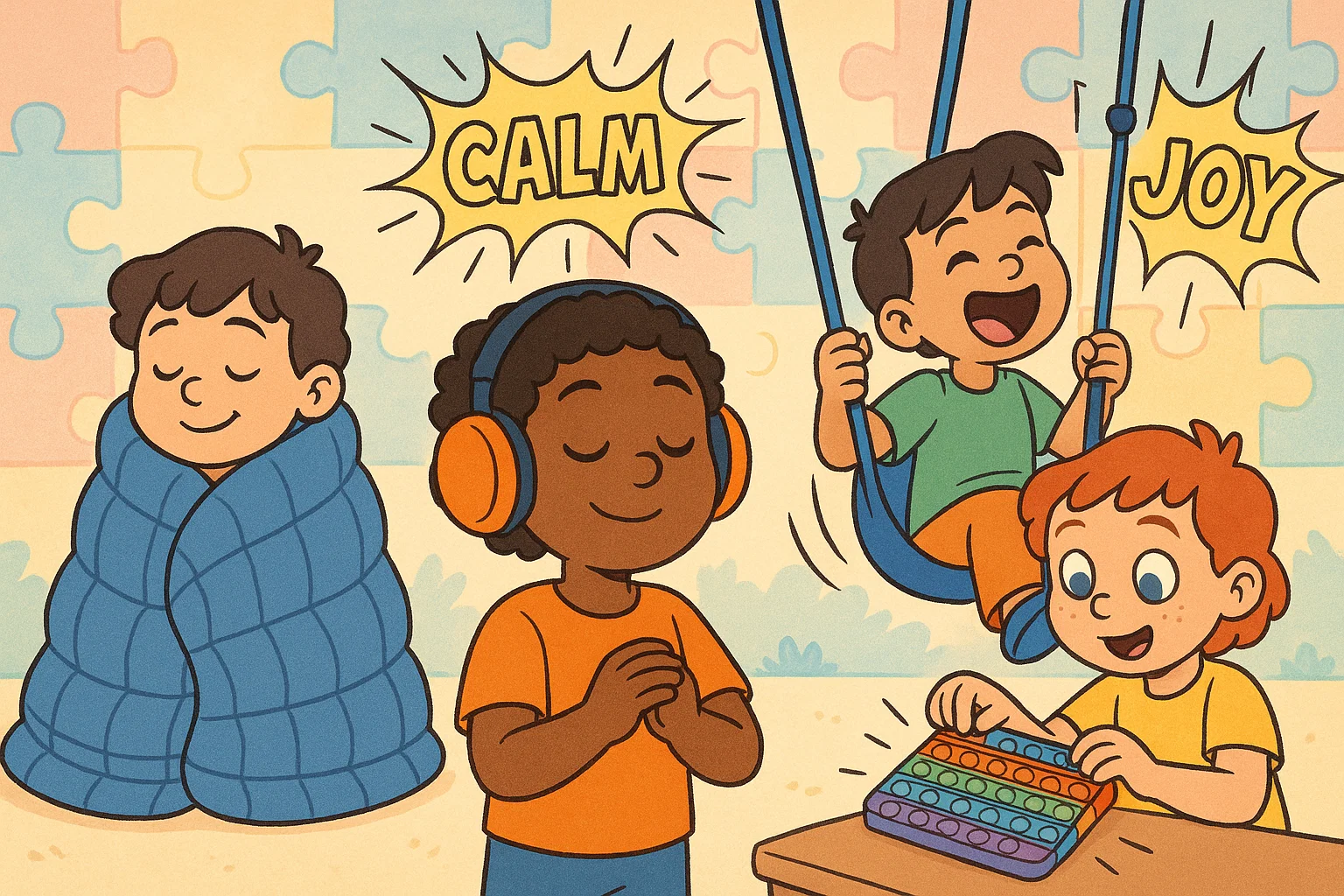
Finding the perfect gift for an autistic child often means looking beyond generic age recommendations on product packaging. Parents, relatives, teachers, and caregivers often look for practical, safe, interest-based gifts that respect each child’s individual developmental path.
The most successful gifts are usually chosen around a child’s sensory preferences, motor skills, communication style, and personal interests. A thoughtful approach focuses on the child’s abilities, comfort level, and interests rather than the diagnosis alone.
Key Takeaways
- Prioritize sensory profiles: Select gifts based on whether the child tends to seek out or avoid certain sensory input.
- Value interest over age labels: Choose gifts according to the child’s developmental stage and specific interests rather than rigid age guidelines.
- Consult primary caregivers: Always check safety needs, potential duplicate items, and specific household routines with parents before purchasing.
- Balance functionality: Look for items that support daily routines, emotional regulation, and skill development.
Best Gifts Match Sensory Needs
Autistic children can respond to sensory input in very different ways. Some kids seek movement, deep pressure, tactile textures, bright lights, or certain sounds because these inputs may help them feel regulated. Other autistic kids may avoid loud noises, unexpected touch, or intense visual stimulation because these inputs can feel overwhelming.
Gift-givers can make better choices by noticing how the child responds to textures, lights, sounds, and movement in daily life. A gift that feels calming to one child may feel overstimulating to another, so the best option is always the one that fits the individual child.
Age Matters Less Than Interest
Developmental stage and personal interests are often better guides than chronological age alone. For example, an autistic teen may genuinely enjoy plush toys, sensory lights, or another item connected to a favorite interest. A younger child may be ready for complex building sets or educational apps if those match their skills and interests.
Focusing on the child’s abilities and interests makes the gift more likely to feel useful, engaging, and respectful.
Calming Gifts Can Support Daily Routines
Calming gifts can be helpful when they fit naturally into a child’s predictable schedule. Items like weighted blankets, sensory lamps, and noise-reducing earmuffs can provide predictable sensory input that helps some children relax in overwhelming spaces.
Some kids find deep-pressure tools calming, but evidence varies by product and individual. These items should be presented as supportive options rather than guaranteed therapeutic tools. When chosen carefully, they may help children manage sensory fatigue during school-to-home transitions, travel, or busy family gatherings.
Active Play Gifts Support Movement Needs
Gross motor toys can provide vestibular and proprioceptive input, giving movement-seeking kids a safer way to move indoors. Equipment such as indoor trampolines, therapy swings, and scooter boards can help satisfy movement needs within controlled home environments.
Structured physical play can support body awareness, bilateral coordination, and core strength. These active play options can also support regulation by giving children a safer outlet for movement before structured tasks or bedtime routines.
Best Choice Starts With Child Preferences
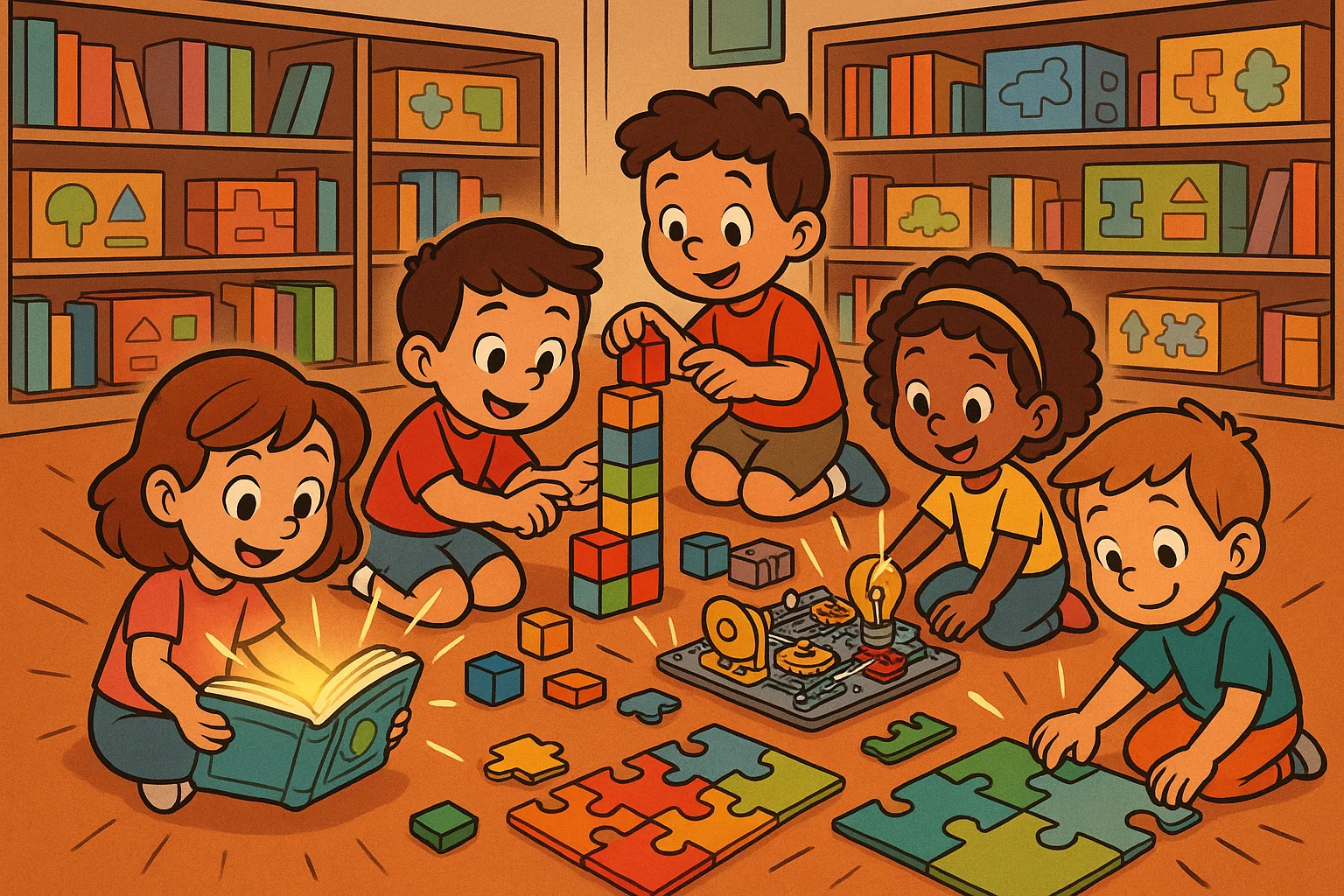
The best starting point is a conversation with the child’s parents or primary caregivers. Caregivers know the child’s tactile preferences, noise sensitivities, favorite characters, household routines, and safety needs.
Asking first helps avoid choking hazards, unsafe materials, duplicate gifts, or items that do not fit the family’s routines. This collaborative step helps ensure that toys and gifts for autistic kids are safe, functional, and genuinely appreciated.
30 Gift Ideas for Kids with Autism
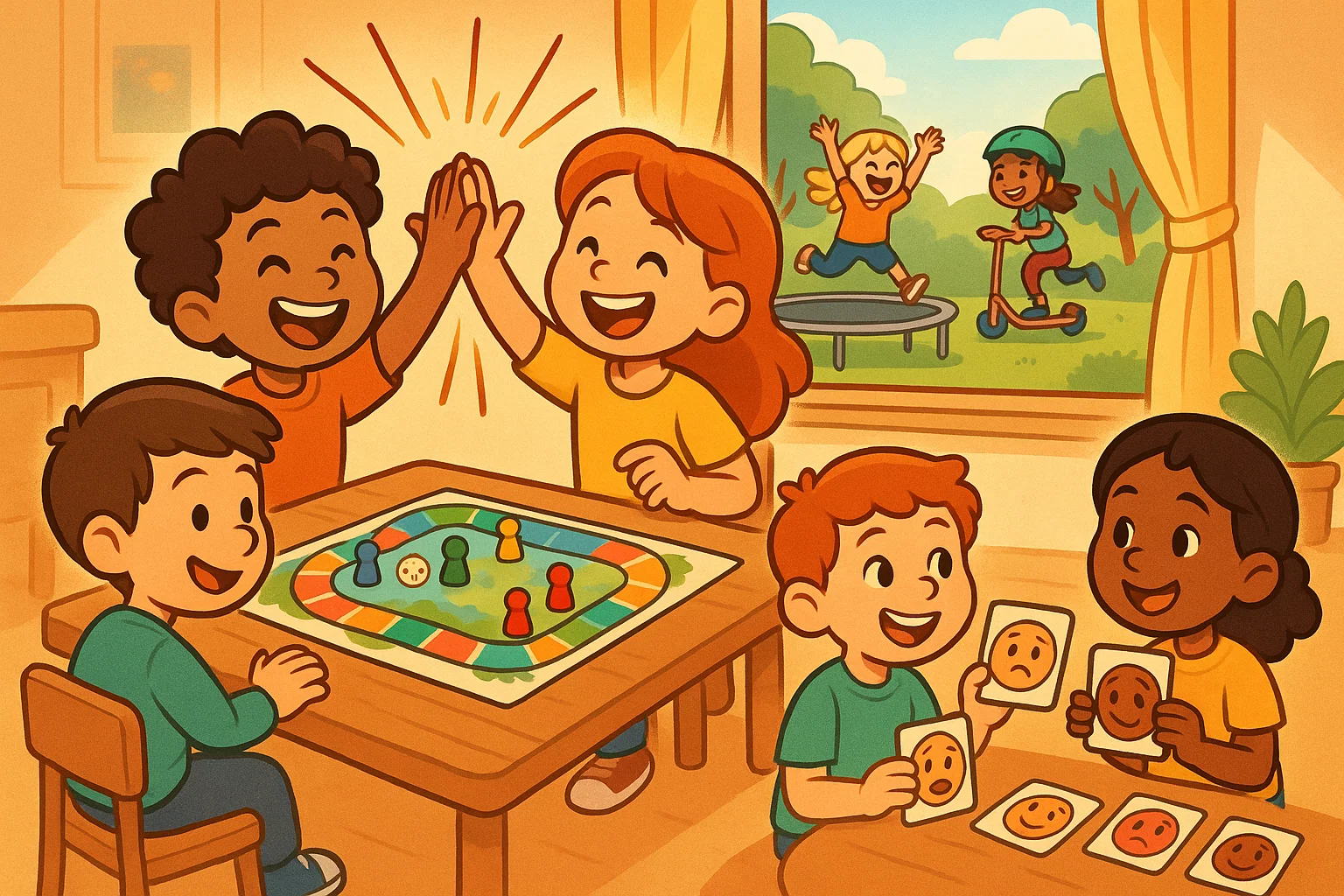
The following list highlights 30 gift ideas for kids on the autism spectrum, with notes on who each item may suit and what to check before buying.
1. Noise-Reducing Earmuffs
Noise-reducing earmuffs give sound-sensitive children a simple way to reduce noise in overwhelming places such as shopping malls, school assemblies, or family celebrations. These devices reduce overall noise while still allowing some nearby speech and environmental sound to come through, depending on the model.
- What it supports: Auditory comfort, reduced overwhelm, and focus in busy spaces.
- Who it may suit: Children who cover their ears around loud noises or show distress in crowded rooms.
- What to check: Verify the Noise Reduction Rating (NRR) and make sure the headband adjusts easily without creating too much pressure.
2. Weighted Blanket
A weighted blanket delivers consistent deep-pressure input across the body, creating a sensation that some kids find calming and comforting. The gentle pressure may feel relaxing for some children, but weighted blankets should be described as a comfort tool rather than a guaranteed sleep aid.
- What it supports: Proprioceptive input, physical relaxation, and bedtime comfort.
- Who it may suit: Children who experience bedtime anxiety, physical restlessness, or a strong preference for deep pressure.
- What to check: A common starting point is about 10% of the child’s body weight, but parents should follow manufacturer guidance, make sure the child can remove the blanket independently, and check with a clinician when safety is uncertain.
3. Sensory Bubble Tube
Sensory bubble tubes use rising water bubbles and slowly changing LED lights to create a predictable visual focal point. This predictable, rhythmic movement can provide a calming focal point during stress, sensory overload, or anxiety.
- What it supports: Visual tracking, emotional regulation, and independent relaxation.
- Who it may suit: Visual-seeking kids who enjoy sensory rooms, quiet corners, or calming bedtime routines.
- What to check: Make sure the base is stable, check plug safety, and confirm whether the unit requires distilled water.
4. Galaxy Projector
A galaxy projector transforms a bedroom ceiling into a soothing display of moving stars, nebulae, and soft light patterns. This customizable display offers gentle visual input that may help with fear of the dark during bedtime transitions.
- What it supports: Visual relaxation, bedtime comfort, and room personalization.
- Who it may suit: Children and teens who prefer gentle ambient lighting at bedtime.
- What to check: Look for models with an auto-shutoff timer, adjustable brightness, and a quiet motor.
5. Therapy Swing
Therapy swings can offer vestibular input through gentle, rhythmic swinging or other carefully supervised movement activities. Some therapy swings use stretchy fabric that wraps around the child and provides gentle tactile pressure.
- What it supports: Vestibular processing, core strength, and spatial awareness.
- Who it may suit: Movement-seeking kids who frequently spin, pace, rock, or seek swinging motions.
- What to check: Check the weight limit, mounting requirements, hardware quality, and available indoor clearance before use.
6. Mini Trampoline
An indoor mini trampoline with a sturdy safety handlebar can provide a structured outlet for movement and sensory regulation. Regular bouncing can support movement, coordination, and proprioceptive input.
- What it supports: Gross motor skills, cardiovascular activity, and physical energy release.
- Who it may suit: Energetic kids who often jump on furniture or struggle with long sedentary periods.
- What to check: Confirm that the frame is padded, the handle is stable, and adult supervision is available.
7. Scooter Board with Handles
A heavy-duty scooter board allows children to glide across hard floors while sitting, kneeling, or lying on their stomach. This type of play is similar to activities used in occupational or physical therapy settings.
- What it supports: Bilateral coordination, upper-body strength, core stability, and motor planning.
- Who it may suit: Children who benefit from structured, low-to-the-ground movement activities at home.
- What to check: Make sure the handles are wide enough to protect the child’s fingers from accidental wheel pinches.
8. Crash Pad
A large, foam-filled crash pad offers a cushioned landing area for kids who seek jumping, crashing, or falling input. The cushioned impact can provide strong proprioceptive feedback for children who seek deep pressure and movement.
- What it supports: Safer crashing and jumping input, deep-pressure input, and motor control.
- Who it may suit: Highly active kids who need a dedicated space for rough-and-tumble play.
- What to check: Confirm that the cover is durable, non-toxic, and easy to wipe clean.
9. Balance Stepping Stones
Balance stepping stones are textured, non-slip modules of varying heights that children can arrange into custom obstacle courses. Moving across these pathways encourages balance, body awareness, and careful foot placement.
- What it supports: Dynamic balance, spatial planning, and lower-body strength.
- Who it may suit: Children working on coordination or those who enjoy structured floor-based challenges.
- What to check: Make sure the non-slip bottoms grip securely on both carpet and hard floors.
10. Fidget Toy Set
A fidget toy set provides small, portable tactile objects designed to keep restless hands engaged. Keeping fingers engaged with these discreet tools may help some children manage waiting rooms, travel, or other low-stimulation moments.
| Fidget Type | Primary Sensation | Best Use Case |
| Pop-it Bubble Pads | Auditory/tactile pop | Classroom breaks, car rides |
| Tangle Toys | Fluid twisting movement | Quiet focus, desk tasks |
| Mesh Marble Pouches | Discreet sliding resistance | Public spaces, waiting rooms |
- What it supports: Fine motor engagement, focus support, and stress management.
- Who it may suit: Children and teens who need hand movement to stay engaged.
- What to check: Avoid sets with overly noisy pieces or very small parts if the child mouths objects.
11. Stress Balls
Textured stress balls offer different levels of squeezing resistance, helping children build hand strength while channeling tension. Slow-rising or gel-filled interiors provide predictable tactile feedback during stressful moments.
- What it supports: Grip strength, emotional regulation, and portable tactile feedback.
- Who it may suit: Children who show anxiety through fist-clenching, nail-biting, or skin-picking.
- What to check: Look for a puncture-resistant outer layer and fillings labeled non-toxic and hypoallergenic.
12. Pop Tubes
Pop tubes are corrugated plastic tubes that expand, bend, and snap together while making a crisp popping sound. The sound and resistance create an engaging cause-and-effect experience.
- What it supports: Bilateral coordination, hand-eye coordination, auditory feedback, and cause-and-effect learning.
- Who it may suit: Younger children who enjoy repetitive mechanical movements and clear auditory feedback.
- What to check: Inspect the plastic thickness to make sure the tubes will not crack or form sharp edges with heavy use.
13. Shape-Shifting Cube
A magnetic shape-shifting cube unfolds along hidden geometric hinges, forming many different structures. This quiet fidget toy offers a more complex challenge for older children and teenagers.
- What it supports: Visual-spatial awareness, problem-solving, and quiet hand engagement.
- Who it may suit: Older children on the spectrum who prefer puzzles over simple sensory toys.
- What to check: Verify that the magnets are secure and cannot come loose from the internal housing.
14. Kinetic Sand
Kinetic sand consists of fine sand grains coated with a non-toxic silicone-based binder, giving it a soft, flowing texture. This texture allows children to mold, squeeze, and shape it with less mess than regular sand.
- What it supports: Tactile exploration, fine motor skills, and calming independent play.
- Who it may suit: Children who enjoy soft textures but dislike wet, sticky messes.
- What to check: Provide a high-walled activity tray for easier cleanup and storage.
15. Slime Kit
A child-safe slime kit lets children mix ingredients to create gooey, stretchy, or crunchy sensory textures. Kneading, pulling, and stretching slime offers strong tactile engagement.
- What it supports: Fine motor dexterity, cause-and-effect learning, and texture exploration.
- Who it may suit: Tactile-seeking children who enjoy malleable, interactive materials.
- What to check: Choose formulas labeled non-toxic and hypoallergenic, avoid harsh activators when possible, and supervise use to protect clothing, carpets, and skin.
16. Play Dough Set
A traditional play dough set with rolling pins, plastic safety cutters, and stamps encourages imaginative play. Pressing, rolling, and stamping the dough can help build hand strength used in early handwriting.
- What it supports: Fine motor strength, pretend play, and color recognition.
- Who it may suit: Preschool and early elementary-aged children who benefit from structured, low-pressure creative activities.
- What to check: Confirm that the dough is non-toxic and keep all containers tightly sealed to prevent drying.
17. Air-Dry Clay
Air-dry clay offers a firmer modeling experience and usually hardens over 24–72 hours without kiln firing. This medium lets children create durable pieces inspired by their favorite interests.
- What it supports: Sustained attention, finger control, and creative self-expression.
- Who it may suit: Older children and teens who enjoy structured craft projects with a permanent end product.
- What to check: Provide storage bags or airtight containers to keep unused clay from drying out between sessions.
18. Paint Set
A paint set with easy-grip brushes, washable colors, and heavyweight paper gives children a flexible outlet for creative expression. Painting can give some autistic children a nonverbal way to express preferences, emotions, and interests without relying entirely on speech.
- What it supports: Visual exploration, nonverbal expression, and fine motor control.
- Who it may suit: Creative children who enjoy color but prefer fluid, less structured materials.
- What to check: Look for certified non-toxic, washable formulas that rinse easily from skin and fabrics.
19. Building Bricks
Classic interlocking building bricks encourage precise fine motor control, structural patterning, and step-by-step sequencing. Whether children follow instructions or build freely, bricks offer an orderly and predictable play experience.
- What it supports: Visual-spatial skills, independent sequencing, and fine motor dexterity.
- Who it may suit: Autistic children who enjoy structured tasks, patterns, and physical assembly.
- What to check: Choose brick sizes that match the child’s current hand strength and dexterity to reduce frustration with tiny parts.
20. Marble Run
A marble run set allows children to design, build, and test vertical track structures using tubes, tracks, and spinning pieces. Watching the marbles move through the track provides a rewarding, repetitive visual tracking experience.
- What it supports: Cause-and-effect thinking, structural planning, and visual tracking.
- Who it may suit: Children who are fascinated by mechanical motion, gravity, and predictable paths.
- What to check: Make sure the marbles are appropriate for the household and avoid small parts around children who mouth objects.
21. Puzzle Blocks
Soft foam or smooth wooden puzzle blocks feature geometric shapes, bright colors, and different textures. Stacking and sorting these pieces helps early learners practice spatial awareness and balance without the loud noise of collapsing hard blocks.
- What it supports: Hand-eye coordination, early shape sorting, and low-noise tactile play.
- Who it may suit: Toddlers and preschool children on the spectrum who prefer quiet, constructive floor play.
- What to check: Make sure painted wooden pieces use lead-free, non-toxic finishes that resist chipping during daily play.
22. Picture Schedule Kit
A picture schedule kit uses clear, durable visual icons to break daily routines into manageable steps. Visual schedules can help many autistic children understand routines and transitions by showing what comes next.
- What it supports: Independence, predictable routine transitions, and time-management skills.
- Who it may suit: Children who struggle with unstructured morning, bedtime, or school-to-home transitions.
- What to check: Choose durable laminated cards with hook-and-loop backings that can be mounted where the child can easily see them.
23. Communication Cards
Communication cards or AAC picture cards can help minimally speaking or nonspeaking children express needs, preferences, and emotions. These tools can help reduce communication barriers and frustration for the child and their caregivers.
- What it supports: Alternative communication, choice-making, and emotional expression.
- Who it may suit: Children who have difficulty communicating physical needs, feelings, or choices through speech alone.
- What to check: Choose a well-organized kit that includes everyday words, food and drink choices, activities, and basic emotions.
24. Pretend Play Set
A themed pretend play set, such as a doctor kit or play kitchen, provides a structured way to practice familiar social scenarios. Acting out these roles can help children prepare for real-world situations in a safe and predictable way.
- What it supports: Imaginative play, social script practice, and turn-taking.
- Who it may suit: Children working on interactive social skills or preparing for medical, dental, or community experiences.
- What to check: Choose themes that match the child’s real-life interests, routines, or favorite characters.
25. Interactive Plush Toy
An interactive plush toy combines soft fabrics with gentle movement, recorded phrases, or soothing melodies. This combination can offer comfort and predictable interaction without the demands of caring for a live pet.
- What it supports: Nurturing play, predictable cause-and-effect interaction, and sensory comfort.
- Who it may suit: Children who seek soft tactile input and feel comforted by steady music or gentle movement.
- What to check: Make sure the electronics include adjustable volume control to prevent sudden auditory startling.
26. Mood Plushies
Reversible mood plushies feature a flip design that shows a happy expression on one side and a sad or angry expression on the other. This simple visual aid gives children a clear, nonverbal way to show how they are feeling to caregivers and educators.
- What it supports: Nonverbal emotional communication, self-awareness, and tactile comfort.
- Who it may suit: Children who find it difficult to verbally express frustration, anger, sadness, or sensory overwhelm.
- What to check: Confirm that the seams are durable and the plush fabric is machine-washable.
27. Night Light
A multifunctional night light can project soft, warm colors while playing steady white noise or calming sounds. This dual sensory support may help mask household noises while providing a gentle visual reference point if a child wakes up overnight.
- What it supports: Bedtime routines, comfort in the dark, and a predictable visual cue.
- Who it may suit: Children who struggle with complete darkness or wake up easily from household noises.
- What to check: Look for adjustable brightness levels and a reliable continuous-loop sound option.
28. Character Bedding
Character bedding featuring the child’s favorite theme can make the bed feel more inviting. Familiar characters, animals, vehicles, dinosaurs, or space themes may help create positive associations with the bedroom and bedtime routine.
- What it supports: Bedroom routine consistency, emotional comfort, and positive sleep associations.
- Who it may suit: Children with strong attachments to specific animated characters, trains, dinosaurs, animals, or space themes.
- What to check: Prioritize soft, breathable fabrics and check for seams, tags, or textures that may bother sensitive skin.
29. Tablet
A tablet can support educational apps, AAC tools, interactive visual schedules, and travel entertainment. This tech tool can provide customizable learning and communication options tailored to the child’s pace and needs.
- What it supports: Digital communication access, cognitive skill-building, and portable travel entertainment.
- Who it may suit: Autistic children who benefit from visual communication systems or highly responsive educational content.
- What to check: Use a durable shock-absorbing case and set up strong parental controls before giving the device to the child.
30. Electronic Accessories
Electronic accessories, such as sturdy tablet stands, volume-limiting headphones, and ergonomic styluses, can make daily device use safer and more comfortable. These items help children interact with digital educational media more independently.
- What it supports: Fine motor accuracy, independent device use, and more controlled sound exposure.
- Who it may suit: Children and teens who use tablets for learning apps, communication tools, or sensory decompression videos.
- What to check: Choose headphones with reliable volume limiting, and remember that listening time, fit, and background noise also affect hearing safety.
Sensory Gifts and Calming Favorites
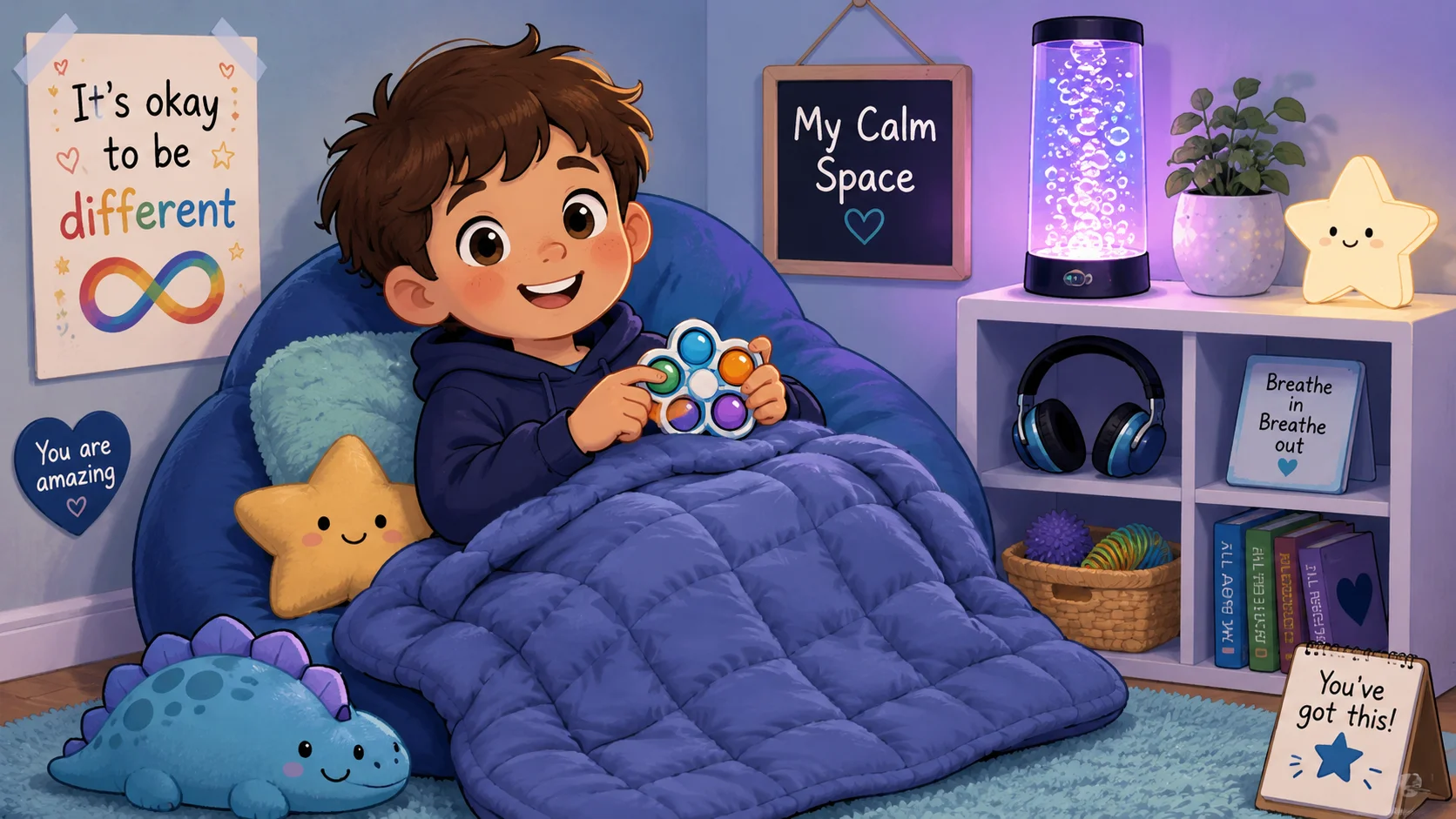
Beyond standard toys, sensory and calming gifts can support rest, smoother transitions, and routine sensory breaks. These items can help create a predictable space where children can decompress after school days, travel, or busy outings.
Calming Gifts for Quiet Time
Quiet downtime works best when the environment feels predictable, comfortable, and low-demand. Weighted blankets, soft seating, and plush comfort items may help some children feel more settled during sensory overload.
These calming options work best when they are chosen around the child’s actual preferences. Some children enjoy deep pressure, while others may find it uncomfortable or restrictive.
Sensory Gifts for Light Seekers
Children who seek visual input may enjoy lighting tools with predictable, rhythmic color changes. Bubble tubes, galaxy projectors, and visual timers can give light-seeking children predictable visual input.
These focal points may help redirect visual attention in a calmer way, especially in rooms with harsh lighting.
Sensory Gifts for Texture Seekers
Tactile play can support fine motor practice while giving the hands a repetitive, grounding activity. Children who seek tactile input may enjoy kinetic sand, non-sticky sensory putty, textured balls, or fabric boards.
These tactile tools can provide a physical outlet for nervous energy without creating too much mess when used with trays, mats, or washable surfaces.
Gifts for Sound-Sensitive Kids
Loud, unpredictable environments can be easier to manage with comfortable sound-dampening tools. Noise-reducing earmuffs and soft padded headphones can shield sensitive ears from sudden or intense background sounds.
Pairing these items with quiet fidget toys may help children participate in public events more comfortably.
Sensory Room Gift Ideas
A sensory corner can be created in a bedroom with a few carefully chosen items. A crash pad, a securely mounted therapy swing, an ambient light projector, and a basket of quiet fidget toys can help create a familiar place for self-regulation.
This dedicated space gives children a familiar place to reset when they feel overwhelmed, tired, or overstimulated.
Gift Ideas for Active Play and Gross Motor Skills
Active play options can support movement needs while building stamina, balance, and core strength. These gifts can give energetic children safer indoor and outdoor ways to move while practicing gross motor skills.
Movement Gifts for Indoor Play
When outdoor weather prevents backyard play, indoor movement equipment can help sensory-seeking children meet their physical needs. Mini trampolines with safety handles, scooter boards, and low-profile indoor swings can help children stay active within safer boundaries.
These items offer reliable ways to move without relying on standard household furniture.
Gifts for Balance and Coordination
Body awareness can be supported through simple physical challenges that engage the core and legs. Textured stepping stones, non-slip balance boards, and illustrated yoga cards encourage controlled foot placement and core stability.
These structured activities can support motor planning and spatial confidence during everyday movement.
Gifts for Energy Release
Strong needs for jumping, crashing, or falling require safer impact zones. Thick foam crash pads, pop-up crawl tunnels, and soft climbing blocks allow children to explore movement in more controlled ways.
These cushioned zones can soften landings while providing strong proprioceptive feedback during high-energy play.
Gifts for Outdoor Movement
Outdoor activities offer opportunities to develop full-body coordination in open spaces. Wide-wheel scooters, adjustable balance bikes, backyard swings, and sidewalk chalk obstacle courses invite active play.
These outdoor activities encourage whole-body movement, coordination, and confidence in open spaces.
Toys for Fine Motor Skills
Fine motor development can be supported through play that builds hand strength, grip control, and hand-eye coordination. These hands-on toys turn strengthening and coordination practice into engaging, repeatable play.
Building Toys for Hand Strength
Interlocking building bricks, magnetic tiles, and snap-together construction sets require children to apply controlled force with their fingers. This repeated push-and-pull movement can strengthen hand muscles used for dressing, writing, and other daily tasks.
The clear patterns and predictable structure of these toys may appeal to children who enjoy order and repetition.
Craft Gifts for Finger Control
Structured craft activities encourage precise finger movements that support everyday dexterity. Air-dry clay kits, reusable sticker scenes, lacing cards, and wooden tracing boards require focused hand-eye coordination.
These activities teach patience while building the muscle control needed for buttons, zippers, and school tools.
Puzzles for Problem-Solving
Foam puzzles, wooden peg puzzles, and shape sorters challenge spatial reasoning and fine motor planning. Matching puzzle pieces can encourage wrist rotation, precise finger placement, and visual problem-solving.
These self-correcting activities offer clear visual goals and help children build problem-solving confidence.
Sensory Putty for Fine Motor Practice
Sensory putty provides resistance that can help children practice grip strength and finger control. Hiding small plastic charms inside the putty encourages children to pull, stretch, and search with individual fingers.
This playful exercise can be useful before writing, drawing, or other tabletop activities.
Creativity, Craft, and Activity Gifts
Creative materials offer open-ended ways to explore color, texture, and personal expression. These kits let children experiment with colors and textures while keeping mess easier to manage.
Art Gifts for Self-Expression
Washable paints, thick markers, heavyweight sketchbooks, and sticker sets offer flexible ways for children to communicate visually. Creative self-expression allows children to show emotions, ideas, and interests without the pressure of spoken conversation.
Keeping these activities open-ended reduces pressure and helps children focus on expression rather than perfection.
Mess-Control Craft Kits
For households that prefer easier cleanup, contained craft kits can provide tactile engagement with less mess. Water-reveal drawing mats, magnetic drawing tablets, and high-walled tray kits help keep creative play more manageable.
These tools allow children to paint, draw, or explore patterns repeatedly using water, magnetic styluses, or contained materials.
Clay and Modeling Gifts
Malleable modeling materials respond to every pinch, press, and roll. Air-dry clay kits, non-toxic play dough sets, and non-drying sculpting foam allow kids to build three-dimensional models of their favorite interests.
This tactile feedback can satisfy sensory needs while building design awareness and hand strength.
Activity Gifts for Routine Days
Portable activity books can help keep travel, waiting periods, or rainy afternoons more structured. Reusable search-and-find books, magnetic pattern boards, and simple color-matching card games offer predictable tabletop tasks.
These activities provide calm, low-demand engagement when sensory stimulation needs to stay low.
Communication and Imaginative Play Gifts
Gifts that support communication and structured play can reduce stress and help children practice interaction skills. These options provide clear visual structures that make abstract social concepts easier to understand.
Visual Support Gifts
Daily schedules can become easier to understand when they are shown through visual tools. Picture schedule kits, emotion cards, and countdown visual timers can help children understand daily routines more independently.
These visual supports can provide predictability, which may reduce stress during routine changes.
Pretend Play Gifts
Themed imaginative play sets provide a predictable framework for exploring real-world roles and household routines. Play kitchens, toy medical kits, miniature tool benches, and vehicle play mats let kids practice familiar routines at their own pace.
This structured role-play can make new experiences feel more familiar and less intimidating.
Social Skill Gifts
Children can practice turn-taking and cooperative play through games with clear, simple rules. Matching games, cooperative card games, and emotion-matching games teach social boundaries without intense competition.
These shared activities can help build communication habits in a supportive family setting.
Books for Autistic Kids
Books with high-contrast illustrations, deep dives into specific interests, or clear social stories can be highly engaging. Graphic novels, personalized picture books, and encyclopedia-style manuals can support different literacy profiles while validating personal interests.
Reading together offers a low-demand opportunity to build vocabulary, connection, and emotional understanding.
Fun Gifts for Kids Who Are Hard to Buy For
When a child’s interests do not fit standard toy aisles, finding the right gift may require a more creative approach. These gift ideas focus on novelty, specific interests, and accessible technology.
Games with Simple Rules
Board games with clear visual components and minimal text allow for more immediate family participation. Matching games, visual stacking challenges, and simple card games reduce the burden of complex verbal instructions.
These structured interactions can create rewarding social moments where success relies on recognition, matching, and turn-taking.
Quirky Gifts with Novelty Appeal
Unusual sensory effects and surprising textures can capture a curious child’s attention. Instant-expanding snow, color-changing lamps, shape-shifting cubes, and pop tubes can offer engaging cause-and-effect feedback.
These novelty gifts can stand out from ordinary toys while still supporting sensory exploration.
Character Gifts Based on Special Interests
A deep interest in a specific train system, historical era, animal species, or media franchise can be meaningful and joyful for many autistic kids. Official figurines, reference books, character bedding, or themed clothing can honor these interests directly.
This kind of gift shows that the child’s interests are noticed, valued, and respected.
Tech Gifts for Older Kids
For older kids and teenagers on the autism spectrum, technology can support recreation, communication, and creativity. Tablets, digital drawing screens, and gaming accessories offer controllable, predictable digital environments.
Pairing these devices with rugged, impact-resistant cases can help them last longer across home, school, and travel settings.
Gifts by Age
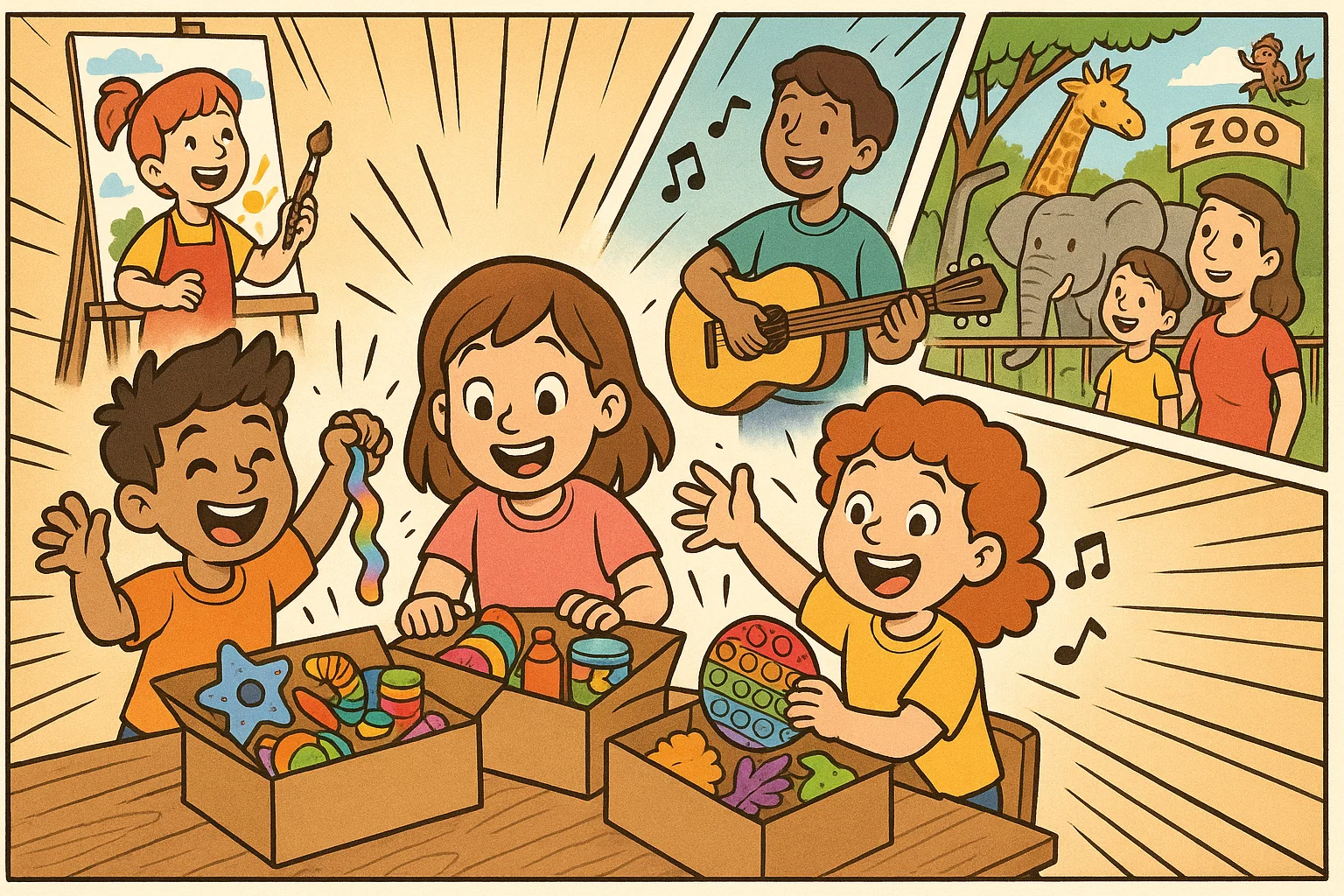
Individual interest is always the most important factor, but broad age bands can help ensure that items match a child’s general size, safety profile, and developmental stage.
Toddlers
Toddler-friendly gifts should focus on safe tactile exploration, simple cause-and-effect play, and low-noise options.
- Bite-resistant, textured sensory balls.
- Silent wooden stacking rings and nesting cups.
- High-contrast, non-electronic bath toys.
Preschool Kids
Preschool-aged children often benefit from basic routine tools, early pretend play, and fine motor practice.
- High-contrast picture schedule kits.
- Non-toxic play dough sets with easy-grip stamps.
- Structured role-play sets based on familiar real-world routines.
Elementary Age Kids
School-aged kids may enjoy construction challenges, mechanical systems, and safe indoor movement options.
- Interlocking building bricks or colorful magnetic tiles.
- Marble runs with clear visual tracking paths.
- Indoor mini trampolines with secure handlebars.
Kids Ages 10 and Up
Preteens may appreciate more sophisticated creative kits, room personalization items, and complex puzzles that offer subtle sensory regulation.
- Magnetic shape-shifting puzzle cubes.
- Galaxy light projectors with automatic shutoff timers.
- Air-dry clay sculpting kits for permanent craft projects.
Gift Ideas for Autistic Teenagers
Teenagers often prefer subtle fidget tools, tech accessories, and comfortable room upgrades that support independent relaxation.
- Certified noise-reducing earmuffs or comfortable wireless headphones.
- Weighted blankets sized appropriately for the teen’s body weight.
- Digital drawing tablets, specialized gaming accessories, or high-interest books.
How to Choose the Best Gifts for Kids with Autism
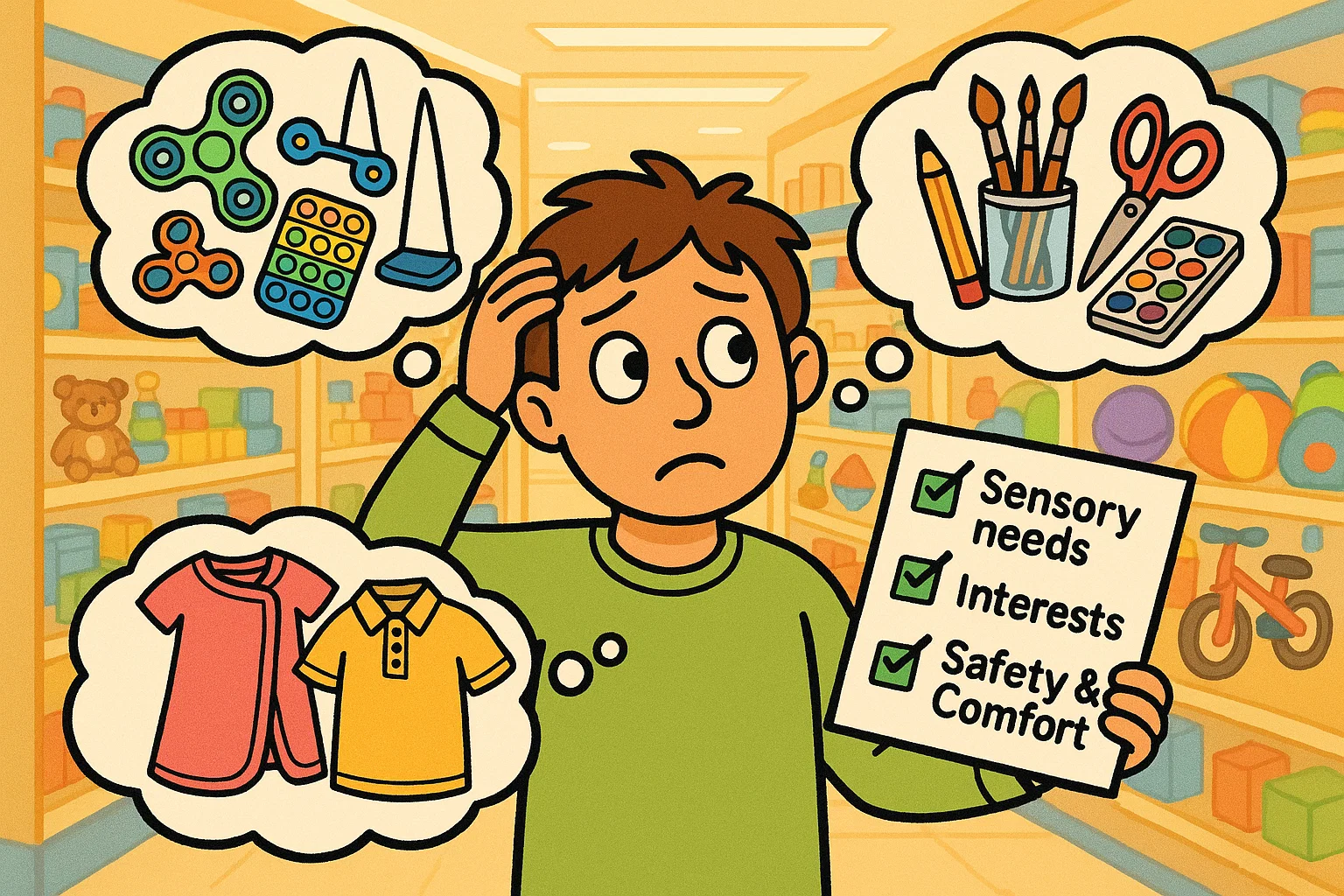
Choosing a successful gift means looking beyond marketing labels and considering how the item fits the child’s sensory preferences, skills, and interests.
Start with Sensory Preferences
Before buying a gift, observe or ask about the child’s sensory processing profile. Determine whether the child seeks movement, deep pressure, bright lights, or rich textures, or whether they prefer quiet, low-lit environments.
Matching the toy’s sensory input to the child’s comfort zone reduces the risk of sensory overload and makes the item more likely to be useful.
Ask Caregivers Before Buying
Always consult with the child’s parents or primary caregivers before finalizing a gift choice. Caregivers can share important information about chewing habits, allergies, noise sensitivities, household routines, and space limitations.
This quick check helps your gift fit the household’s routines and reduces the chance of duplicate purchases.
Match the Gift to Special Interests
An autistic child’s deep interest in a specific topic can support learning, comfort, and connection. Choosing items that feature favorite animals, vehicles, historical eras, characters, or hobbies can make the gift more meaningful.
Incorporating these interests shows the child that their preferences are valued and respected.
Consider Safety and Durability
Children with developmental differences may use toys in unexpected ways, making safety and durability important. Look for sturdy construction, secure battery compartments, non-toxic materials, and pieces that can withstand dropping or throwing.
If a child tends to put objects in their mouth, avoid small parts that could present a choking hazard, even if the toy’s age label seems appropriate.
Avoid Overstimulating Gifts
Toys with unpredictable flashing lights, loud non-adjustable volume, or strong synthetic scents can trigger distress or sensory overload in some kids. Instead, choose items with adjustable volume, steady lighting, or quiet mechanical features.
Controllable, predictable sensory input can help the child feel more comfortable and in control during play.
FAQs
What are the best gift ideas for kids with autism?
The best gift ideas for kids with autism are usually based on the child’s sensory preferences, interests, communication style, and safety needs. A great gift does not need to be expensive or complicated. It simply needs to feel suitable for a child’s daily routines, comfort level, and developmental stage.
How do I choose a gift for a child with autism?
When buying gifts, start by asking caregivers what the child enjoys, avoids, or already owns. Every child is unique, so it is better to choose a gift around the child’s ability rather than their age alone. This makes gift shopping more thoughtful and helps avoid items that may be overwhelming, unsafe, or unused.
Are sensory toys good gifts for children with autism?
Sensory toys can be excellent gifts for kids with autism when they match the child’s sensory profile. Some children enjoy sensory toys that provide movement, texture, pressure, or visual input, while others may prefer quieter, less stimulating options. The goal is to create a positive sensory experience rather than simply choosing the most colorful or interactive toy.
What gifts help autistic children and teens relax?
Gifts that provide predictable sensory input may help some autistic kids and teens relax. Weighted toys, soft blankets, noise-reducing headphones, calming lights, and quiet fidget tools can all be helpful when they fit the child’s preferences. These items should support comfort and self-regulation without forcing the child to use them.