Parenting Resources for Toddlers

 Discover a Free Education Video App for Kids
Pastory uses AI to personalize educational video content based on your child’s interests and personality. Safe, engaging, and built for curious young minds. Sign up now to stay updated and enjoy early access with a free trial
The toddler years, generally spanning ages 12 to 36 months, bring both joy and distinct developmental challenges. During this stage, parents and caregivers often look for reliable guidance on communication delays, sleep regressions, feeding decisions, and emotional outbursts. Screen-time boundaries and early learning activities can also leave families looking for a clear, trustworthy parenting framework. High-quality toddler parenting resources can help families build a secure foundation for a child’s long-term growth and development.
Key Takeaways
- Evidence-Based Support: Research-informed guidance and practical frameworks can help reduce parenting stress during challenging developmental transitions.
- Targeted Information: Using age-appropriate resources helps parents address specific milestones, language milestones, and behavior challenges.
- Positive Discipline: Proactive routines, emotional validation, and calm boundaries can reduce power struggles and toddler tantrums.
- Holistic Growth: Supporting a child’s social-emotional development involves sensory play, balanced nutrition, and consistent sleep routines.
- Caregiver Wellness: Supporting the primary caregiver’s mental health and confidence can strengthen the overall parent-child relationship.
Quick Toddler Resource Checklist
When evaluating any resource for parents, it is important to make sure the information is safe, practical, and grounded in reliable guidance. Caregivers can use the following criteria to assess online and offline resources:
- Clinical Credibility: The material is authored or reviewed by a qualified health professional, child psychologist, or pediatric organization such as the American Academy of Pediatrics (AAP).
- Developmental Realism: The advice aligns with verified developmental milestones rather than expecting unrealistic behavioral control from a young child.
- Practicality: The resource provides hands-on activities, sample phrases, or step-by-step strategies to support daily routines.
- Safety and Inclusivity: Strong resources account for diverse learning needs, cultural backgrounds, and child safety standards.
Best Starting Point for Busy Parents
To avoid information overload during the toddler years, parents should focus on one specific parenting challenge at a time. Identifying the single most pressing issue – whether it relates to sleep disruption, a specific behavior, language development, or mealtime resistance – allows families to select a targeted resource that supports their child’s current needs. Focusing on one area at a time helps caregivers make consistent changes without feeling overwhelmed by conflicting advice.
How This Guide Helps Parents
This guide serves as an organized directory to help parents find support based on age, behavior, and learning needs. By categorizing complex child development topics into clear, standalone sections, families can quickly find actionable tips for handling daily challenges. Whether you are a parent or a professional caregiver, these structured insights can help you support your child’s development.
Evidence-Based Toddler Parenting Approach

An evidence-based parenting approach emphasizes the deep connection between a child’s development and the responsiveness of their primary caregiver. Research on early brain development shows that “serve-and-return” interactions – responsive back-and-forth exchanges between a young child and a caring adult – help shape brain architecture. By relying on research-informed guidance rather than punitive approaches, parents can create a positive environment that supports emotional development and cognitive resilience.
Responsive Parenting Strategies
Responsive parenting strategies involve observing, understanding, and responding intentionally to a toddler’s signals. Instead of dismissing emotional expressions, a parent can name the emotion clearly, such as, “You’re frustrated that the block fell.” Offering limited choices, such as choosing between two shirts, supports the child’s autonomy while maintaining adult boundaries. ZERO TO THREE emphasizes that responsive caregiving – responding appropriately, promptly, and consistently to an infant’s or toddler’s needs – supports healthy development and secure caregiver-child attachment.
Positive Discipline Basics
Positive discipline focuses on teaching alternative skills rather than using isolation or physical punishment. This approach relies on proactive redirection, where a caregiver shifts a child’s attention from an unsafe object to a safer alternative before a conflict escalates. Establishing predictable daily routines can reduce anxiety, which may minimize challenging behaviors rooted in exhaustion or confusion. When boundaries are crossed, immediate and related consequences can help the child connect actions with outcomes in a non-punitive way.
Emotional Regulation for Parents
A caregiver’s internal emotional state serves as an important model for a child’s developing nervous system, a process linked to co-regulation. When a toddler experiences an emotional breakdown, a parent’s calm demeanor can signal to the child that they are safe. Taking a brief pause, breathing slowly, and speaking in a quiet tone can help prevent power struggles from escalating. Research on mindful parenting suggests that mindfulness-based practices can reduce parenting stress, although the exact effect varies by study and family context.
Toddler Developmental Milestones
Tracking developmental milestones allows parents and health professionals to monitor a child’s progress across physical, cognitive, social, and emotional domains. While every child grows at an individual pace, developmental milestones can serve as a screening tool for identifying when additional support may be needed. Recognizing these markers helps families celebrate progress while identifying areas where targeted strategies may support development.
| Developmental Domain | 12- to 24-Month Milestones | 24- to 36-Month Milestones |
| Physical / Motor | Walking independently; stacking 2–4 blocks; drinking from an open cup with support. | Running; climbing stairs with support; turning knobs or opening simple lids with help. |
| Language / Speech | Trying to say a few single words; using gestures; responding to simple one-step directions. | Speaking in short phrases; naming familiar items; asking simple questions. |
| Social / Emotional | Showing separation anxiety; imitating adult actions; playing next to peers through parallel play. | Demonstrating independence; showing early empathy; beginning to play with or near other children. |
| Cognitive | Finding hidden objects; exploring items by shaking or banging; identifying common body parts. | Sorting shapes and colors; completing 3- to 4-piece puzzles; following two-step instructions. |
12 to 24 Months
The period between 12 and 24 months is marked by rapid physical mobility and the emergence of early communication. Toddlers in this phase often move from crawling to walking, which changes the way they explore their environment. Expressive language typically develops from single words to simple word combinations and is often supported by pointing and other gestures. Separation anxiety may intensify during this window as the child develops object permanence and a growing sense of independence from their caregiver.
24 to 36 Months
Between 24 and 36 months, older toddlers show major growth in language skills and a strong desire for independence. Children in this age range begin combining words into short phrases and engaging in imaginative, symbolic play. This phase can also include intense emotional shifts, often called the “terrible twos,” as a child’s growing desires outpace their ability to communicate or self-regulate. Physical signs such as staying dry for longer periods may suggest readiness for toilet learning during this stage.
Early Brain Development
In the first few years of life, the brain can form more than one million neural connections per second. This intense period of growth and development is shaped by everyday experiences, sensory exposure, nutrition, sleep, and emotional security. Regular interactive conversations, shared reading, and secure emotional attachments support the development of attention, communication, and early problem-solving skills. Providing a stable, low-stress environment helps direct more of a toddler’s energy toward learning rather than stress-based coping.
When to Ask for Professional Support
While individual variations in development are normal, certain signs warrant a consultation with a qualified pediatrician or health professional. Parents should seek expert advice if a toddler loses previously acquired speech, motor, or social skills at any age. Parents should also discuss early intervention with a pediatrician if an 18-month-old loses skills, does not use gestures such as pointing, avoids eye contact, or is not trying to say at least three words besides “mama” or “dada.” Early identification of sensory, motor, or speech delays can help families access early intervention services that may improve long-term outcomes.
Responding to Challenging Toddler Behaviors
Challenging behavior in the toddler years is a normal, expected part of development rather than a sign of willful defiance. Because the prefrontal cortex is still developing, a young child does not yet have the mature brain systems needed to inhibit impulses or manage big emotions independently. Viewing challenging behavior as communication can help parents respond with support and teaching rather than anger.
Tantrum Support
A toddler tantrum is often a sign of emotional overload caused by stress, frustration, fatigue, or overstimulation. To respond to a tantrum effectively, parents can use a simple, supportive sequence:
- Ensure Physical Safety: Move the child away from sharp objects, stairs, or public hazards to a secure space.
- Maintain a Calm Presence: Stay physically close to the child without forcing physical contact unless requested, acting as an emotional anchor.
- Validate the Core Emotion: Use brief, clear phrasing to label the experience, such as, “You are mad that park time is over.”
- Offer Post-Tantrum Comfort: Once the tantrum passes, offer comfort, physical affection if the child wants it, and a simple redirection.
Hitting, Biting, Kicking
Physical aggression such as hitting, biting, or kicking can happen when a toddler has strong impulses but limited verbal skills. When aggressive behavior occurs, the caregiver should calmly block the action and state a firm, neutral boundary, such as, “I won’t let you hit. Hitting hurts.” Avoid long lectures or emotional reactions, as intense adult responses can inadvertently reinforce the behavior through attention. After establishing safety, offer a safe physical outlet for the child’s energy, such as stomping feet or squeezing a soft pillow.
Toddler Refusal
The common toddler phase of saying “no” often reflects a healthy drive for autonomy and self-identity. Parents can navigate this developmental stage by offering choices within structured, acceptable limits, such as, “Do you want to brush your teeth before or after putting on your pajamas?” Visual schedules and picture charts can help children anticipate upcoming changes, reducing the anxiety that may trigger refusal. Incorporating play into daily transitions, such as pretending to fly like an airplane to the dinner table, can turn a potential power struggle into a cooperative game.
Calm-Down Tools
Providing tangible calm-down tools can help toddlers move from high emotional arousal toward a more regulated state. A designated calming corner with soft cushions, picture books about emotions, and sensory bottles can serve as a safe space for practicing self-regulation. Teaching simple breathing exercises, such as “smelling the flower and blowing out the candle,” offers a practical physical tool for slowing down. These tools teach children that all emotions are acceptable while guiding them toward safe ways to express those feelings.
Browse Resources by Ages and Stages

Specialized directories can help families find targeted information for their child’s age and stage. Selecting age-appropriate parenting resources helps ensure that expectations match the child’s developmental abilities.
Prenatal Development
Finding reliable parenting resources before childbirth can help families prepare a safer, more stable home environment before the baby arrives. Expectant parents benefit from researching home safety modifications, learning infant CPR, and understanding the basic principles of early attachment. Educational resources from organizations such as the American Academy of Pediatrics offer guidance on preparing a home for a newborn.
Birth to 12 Months
The first year of life focuses heavily on building secure attachments, establishing primary sleep patterns, and monitoring physical milestones such as rolling and crawling. Resources for families during this phase often emphasize responsive feeding, understanding infant cues, and introducing basic nonverbal communication tools such as baby sign language. Building these early foundations can make the transition into toddlerhood smoother.
12 to 24 Months
During the early toddler phase, parenting challenges often center on new mobility, childproofing, and the onset of tantrums. Useful resources for this stage offer guidance on separation anxiety, the transition to one afternoon nap, and ways to encourage first words. Basic sensory play and structured daily routines support the child’s natural drive for exploration.
24 to 36 Months
Resources for older toddlers focus on social development, advanced language acquisition, toilet learning readiness, and preschool preparation. At this stage, resources often cover peer socialization, sharing, turn-taking, and more complex behavioral resistance. Structured play activities and shared reading support the expanding cognitive capacities of older toddlers.
Learning Resources for Toddlers

Early learning for toddlers should not rely on formal worksheets or rigid academic instruction; instead, it develops through play, language exposure, and shared daily experiences. Creating an environment with open-ended materials helps children build problem-solving skills, creativity, and persistence at their own pace.
Language and Literacy
Building early literacy relies on consistent verbal interaction and shared reading habits between the caregiver and child. Reading picture books aloud every day exposes toddlers to words and sentence patterns that are less common in everyday conversation. Asking open-ended questions about illustrations, singing nursery rhymes, and repeating child utterances with proper grammar expands a toddler’s language framework. A study published in the Journal of Developmental & Behavioral Pediatrics estimated that children who read about five picture books a day may hear approximately 1.4 million more words before kindergarten than children who are never read to.
Early Math Through Play
Foundational mathematical concepts can be naturally integrated into daily household activities without using digital screens or academic flashcards. Counting steps while walking upstairs, sorting laundry by color, and matching pairs of socks introduce early skills such as classification, comparison, and pattern recognition. Comparing sizes during mealtime – such as discussing a “large” apple versus a “small” grape – helps build spatial awareness and mathematical language. These informal, hands-on activities turn abstract mathematical principles into tangible, easily understood concepts.
Sensory and Learning Toys
High-quality toys for toddlers are typically simple and open-ended, allowing the child’s imagination to direct the play experience. Wooden blocks, shape sorters, basic puzzles, nesting cups, and non-toxic art supplies encourage fine motor control and spatial reasoning. Incorporating simple sensory materials such as water, sand, or safe modeling dough engages multiple senses and supports hands-on exploration. These play materials prompt independent discovery, helping children build a longer attention span and stronger frustration tolerance.
Digital Content and Learning Quality
| Unrestricted Digital Content | Curated, Age-Appropriate Content |
| Rapidly changing imagery may overstimulate some children. | Slower pacing can make content easier to follow. |
| Passive consumption may contribute to behavior challenges. | Active engagement can encourage real-world play. |
| Minimal caregiver involvement limits learning opportunities. | Co-viewing and conversation can support comprehension. |
| Content may replace sleep, movement, or social interaction. | Balanced use can fit within a broader routine of play, rest, and connection. |
For children around age 2 and older, many pediatric guidelines emphasize high-quality content, caregiver involvement, and limits that prevent screens from replacing sleep, movement, and social interaction.
Screen-Free Learning Ideas
Prioritizing screen-free learning activities supports healthy physical development and encourages creative thinking. Building an indoor obstacle course using pillows and chairs develops gross motor skills, balance, and spatial orientation. Involving a toddler in safe kitchen tasks, such as rinsing vegetables or stirring batter, teaches practical life skills and basic scientific concepts like texture changes. Setting up themed story baskets with small objects related to a book’s plot can turn reading into a hands-on, multisensory experience.
Food and Mealtime Resources
Mealtimes are a common area for power struggles, anxiety, and behavioral pushback during the toddler years. Understanding nutritional needs and normal developmental shifts in appetite helps parents foster a healthy relationship with food while reducing family stress.
Picky Eating Support
Selective eating habits, sometimes described as food neophobia, often become more noticeable in toddlerhood and are a common part of development. Caregivers can reduce mealtime pressure by using Ellyn Satter’s Division of Responsibility framework:
- The Parent’s Responsibility: Decide what food is served, when it is served, and where it is served.
- The Child’s Responsibility: Decide whether to eat and how much to eat.
Serving tiny, non-intimidating portions alongside a familiar “safe food” can reduce a child’s mealtime anxiety. Consistently offering a refused food without pressure or bribes may gently increase familiarity and acceptance over time.
Healthy Toddler Snacks
Because toddlers have small stomachs and high energy needs, nutritious snacks are important for maintaining balanced energy and mood throughout the day. Balanced snacks often combine carbohydrates with protein or healthy fats to support steadier energy.
- Fresh fruit slices paired with plain, unsweetened whole-milk yogurt.
- Whole-grain crackers served with thin slices of pasteurized cheddar cheese.
- Hard-boiled eggs with soft-cooked vegetable sticks.
- Mashed avocado spread thinly on whole-wheat toast.
Mealtime Routines
Establishing consistent, predictable meal and snack times helps regulate a toddler’s internal hunger cues and reduces behavioral pushback. Reducing distractions – such as turning off televisions, tablets, and smartphones – helps the child focus on food and fullness cues. Gathering the family for shared meals allows adults to model balanced eating habits and positive table manners in a natural setting. Keeping the atmosphere relaxed and free from pressure prevents mealtimes from becoming a source of conflict.
Food Safety for Toddlers
Ensuring child safety during meals requires careful food preparation and direct adult supervision to reduce choking hazards. High-risk foods such as whole grapes, cherry tomatoes, and hot dogs should be cut into very small pieces; round, firm foods should be completely chopped into tiny pieces; grapes and similar foods can also be quartered lengthwise to reduce choking risk. Hard fruits and vegetables, such as raw apples or carrots, should be cooked, grated, or cut into developmentally appropriate pieces. If you suspect an allergic reaction or notice persistent digestive issues, consult a pediatrician or pediatric dietitian to protect your child’s health.
Sleep, Routines, and Daily Care
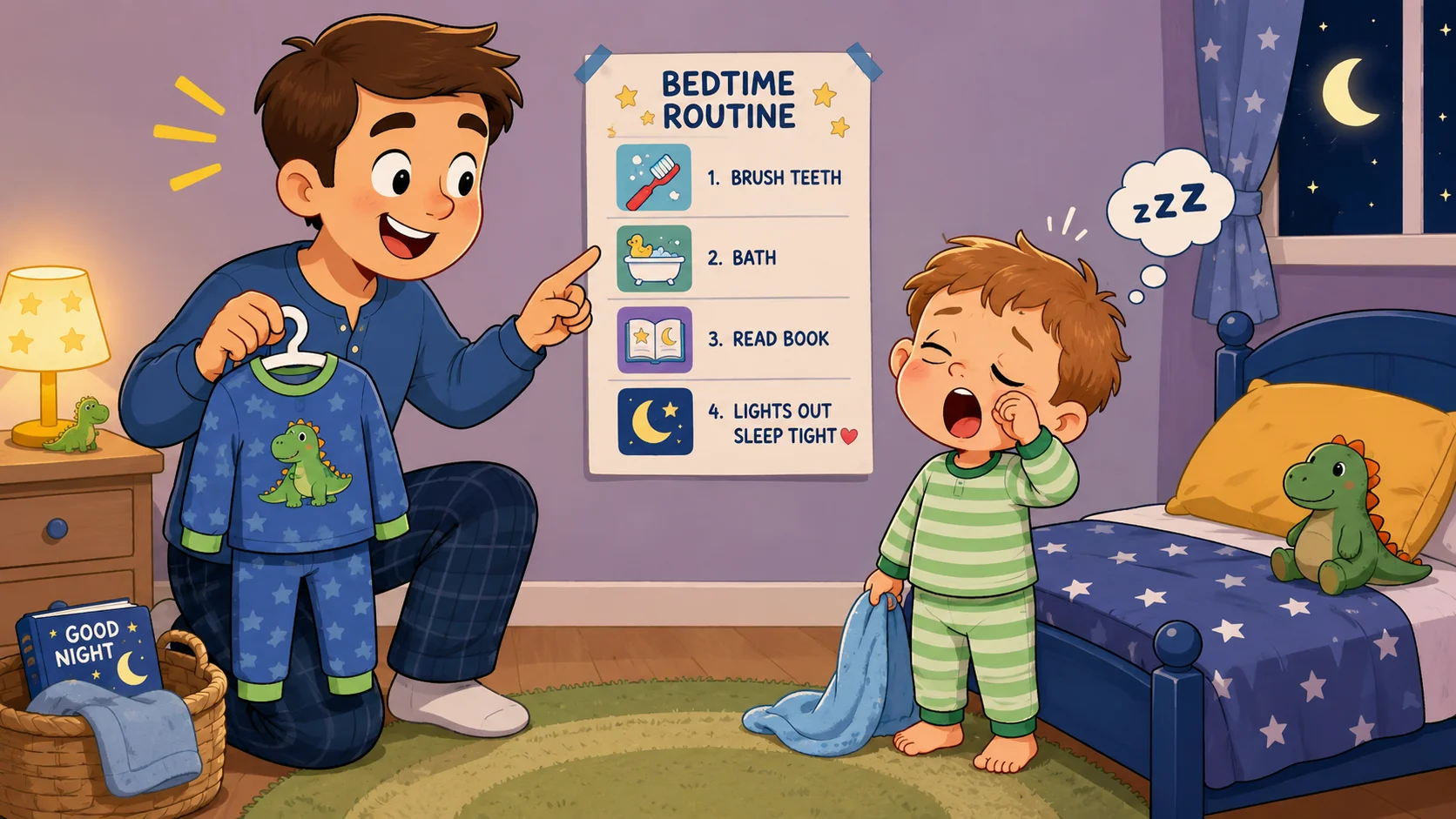
Consistent daily routines give toddlers the predictability they need to feel secure and move through the day with more confidence. Prioritizing structured sleep, clear morning and evening routines, and safe physical spaces can reduce behavioral challenges rooted in fatigue or overstimulation.
Toddler Sleep Challenges
Toddler sleep challenges often surface as bedtime resistance, frequent night awakenings, and shifting daytime nap needs. These disruptions are commonly tied to separation anxiety, teething discomfort, or major milestones such as learning to talk or run. Toddlers ages 1 to 2 generally need about 11 to 14 hours of total sleep per day, including naps, although individual needs vary. Maintaining a dark, quiet, and comfortably cool bedroom environment can support sleep; parents should also avoid overheating and adjust sleepwear to the child’s comfort. Addressing bedtime fears with reassurance rather than punishment can help children feel safer and gradually return to sleep more independently.
Morning and Bedtime Routines
Predictable routines help ease transitions between active parts of the day and rest periods. A reliable evening routine can be structured as follows:
- Hygiene: Take a warm bath, brush teeth, and put on comfortable pajamas.
- Quiet Connection: Read two selected picture books together in a dimly lit room.
- Auditory Cue: Play a specific lullaby or turn on a white noise machine.
- Final Goodnight: Use a consistent phrase, such as “I love you. You are safe. Goodnight,” and then leave the room.
Toilet Learning Readiness
Starting toilet learning before a child shows readiness can lead to power struggles and frustration. Signs of readiness may include staying dry for longer periods, showing awareness of a wet diaper, and expressing interest in using the toilet. Using a relaxed, child-led approach and praising effort rather than perfection can reduce anxiety around accidents. Patience, extra clothing, and consistent routines can support a smoother transition to underwear.
Safety at Home
As toddlers become more active, updating home safety measures is essential to prevent accidental injuries. Installing secure safety gates at both the top and bottom of stairs protects exploring children from dangerous falls. Heavy furniture, televisions, and bookshelves should be securely anchored according to manufacturer instructions to reduce tip-over hazards. Storing household medications, cleaning chemicals, and small choking objects in locked cabinets keeps dangerous materials out of a child’s reach.
Parent Self-Care and Mental Health Resources
A parent’s emotional health is an important foundation for a child’s development and the overall stability of the home. When caregivers are chronically depleted, they may have less capacity for responsive parenting, which can increase family stress. Prioritizing parental mental health is a necessary investment in your child’s emotional well-being.
Burnout Support for Parents
Parental burnout is a state of severe exhaustion resulting from chronic parenting stress without sufficient recovery periods. Common signs include persistent irritability, emotional detachment from one’s child, and a pervasive sense of inadequacy or guilt. Acknowledging these feelings without self-judgment can be an important first step toward support and recovery. Caregivers may benefit from seeking support from family members, trusted friends, or community organizations to share responsibilities and make time for rest.
Stress Management During Toddler Years
Managing stress while parenting a toddler requires realistic, small pockets of relief throughout the day rather than waiting for extended breaks. Taking intentional micro-pauses – such as three deep breaths before responding to a behavioral issue – helps reset a reactive nervous system. Lowering daily household expectations and simplifying routines can free up energy for meaningful connection. Connecting with local parenting groups or moderated online communities can provide peer support and reduce the isolation that often accompanies early parenthood.
Mental Health Resources
When everyday stress grows into persistent anxiety, deep depression, or a feeling of hopelessness, professional support is important. Licensed family therapists, counselors, and other mental health professionals can provide tailored coping strategies. If you are in immediate danger or experiencing a life-threatening emergency, call local emergency services. If you are in the United States and experience an acute emotional crisis, call, text, or chat 988 for immediate crisis support. For treatment referrals related to mental health or substance use, contact SAMHSA’s National Helpline.
- Substance Abuse and Mental Health Services Administration (SAMHSA) National Helpline: 1-800-662-HELP (4357), a free, confidential U.S. treatment-referral and information service.
- 988 Suicide & Crisis Lifeline: Call, text, or chat 988 in the United States for 24/7 crisis support.
- For readers outside the United States: Contact local emergency services or a local crisis hotline in your country.
Coparenting Support
Maintaining a consistent approach between partners or co-parents can reduce household confusion and provide toddlers with clearer boundaries. Adults should work together to establish shared rules regarding discipline, sleep schedules, screen-time limits, and mealtime expectations. Scheduling regular, brief check-ins to discuss parenting approaches can reduce conflicting messages and help children feel more secure. Resolving adult disagreements privately and avoiding high-conflict arguments in front of the child protects the child’s sense of emotional security.
Trusted Toddler Parenting Resources
Established, high-quality parenting resources can provide families with practical, research-informed guidance. Using recognized platforms can help families align their parenting approach with current child development recommendations.
Tantrum Guides
For detailed guidance on handling intense emotional outbursts, the American Academy of Pediatrics offers parent-facing articles through HealthyChildren.org. Their evidence-based guides focus on preventing tantrums through consistent routines and responding to aggressive behaviors safely. The clinical archives at ZERO TO THREE also provide useful resources for understanding the developmental factors behind toddler emotional distress.
Sleep Resources
The National Sleep Foundation provides age-specific information about toddler sleep needs, nap transitions, and bedtime challenges. For structured, step-by-step sleep habit changes, books and digital modules from qualified pediatric sleep consultants can offer practical guidance for establishing healthy sleep routines. These tools can help parents address sleep issues while preserving a secure emotional connection.
Speech and Language Resources
The American Speech-Language-Hearing Association (ASHA) provides communication milestone resources to help parents monitor language development. Their public resources offer practical, everyday ideas for encouraging speech through simple home activities, shared reading, and interactive play. If a family suspects a communication delay, ASHA’s professional directory can help connect them with local speech-language pathologists for specialized evaluations.
Play and Activity Resources
For curated ideas on screen-free learning, sensory play, and motor skill development, Harvard’s Center on the Developing Child offers valuable guidance on serve-and-return play strategies. ZERO TO THREE also provides age-appropriate information about toys, hands-on activities, and everyday interactions that support early math, literacy, and emotional development. Using these expert resources can help parents feel more confident that everyday interactions support their child’s long-term growth and development.
FAQ
How can parents support toddler development at home?
To support your child during the toddler years, focus on predictable routines, warm communication, safe exploration, and age-appropriate play. Toddler development is shaped by everyday moments, including shared reading, simple conversations, sensory activities, movement, and calm responses to big emotions. Parents do not need a perfect plan; consistent, responsive interactions are often the most effective way to nurture growth.
Do parenting resources matter before the toddler years?
Yes. Reliable parenting resources can be helpful as early as pregnancy because they prepare families for the stage of early parenthood before daily routines become overwhelming. Learning about infant sleep, feeding, attachment, safety, and early childhood development can make the transition into the baby and toddler years feel more manageable. Early preparation also helps parents build a positive home environment from the start.
What is the difference between baby and toddler resources and resources for toddlers and preschoolers?
Baby and toddler resources usually focus on attachment, sleep, feeding, safety, first words, mobility, and early emotional regulation. Resources for toddlers and preschoolers often add more guidance on language growth, peer interaction, toilet learning, independence, preschool readiness, and behavior challenges. Preschoolers generally have more advanced communication skills than toddlers, but they still need patient adult support, clear limits, and plenty of play-based learning.
How can quality child care support a toddler’s growth?
Quality child care can support a child’s social, emotional, and cognitive development when it provides safety, responsive adults, predictable routines, and developmentally appropriate play. A strong child care setting should help toddlers feel secure while giving them opportunities to explore, communicate, move, and practice early social skills. Parents can look for resources to support the transition into child care, especially if separation anxiety or routine changes are difficult.

Take a short quiz to find out what your everyday choices say about your parenting style
When your child is curious about something new, what’s your instinct?
Take a short quiz to find out what your everyday choices say about your parenting style
“Can I download this app?” What happens next?
Take a short quiz to find out what your everyday choices say about your parenting style
When it comes to rules at home, which sounds most like you?
Take a short quiz to find out what your everyday choices say about your parenting style
If you could give your child one life skill today, what would you pick?
Take a short quiz to find out what your everyday choices say about your parenting style
Your child gets to choose what to watch. What would your ideal setup look like?
Take a short quiz to find out what your everyday choices say about your parenting style
Pick your parenting superpower ✨