
Letter N Activity for Kindergarten: Fun Crafts, Games, Worksheets

 Discover a Free Education Video App for Kids
Pastory uses AI to personalize educational video content based on your child’s interests and personality. Safe, engaging, and built for curious young minds. Sign up now to stay updated and enjoy early access with a free trial
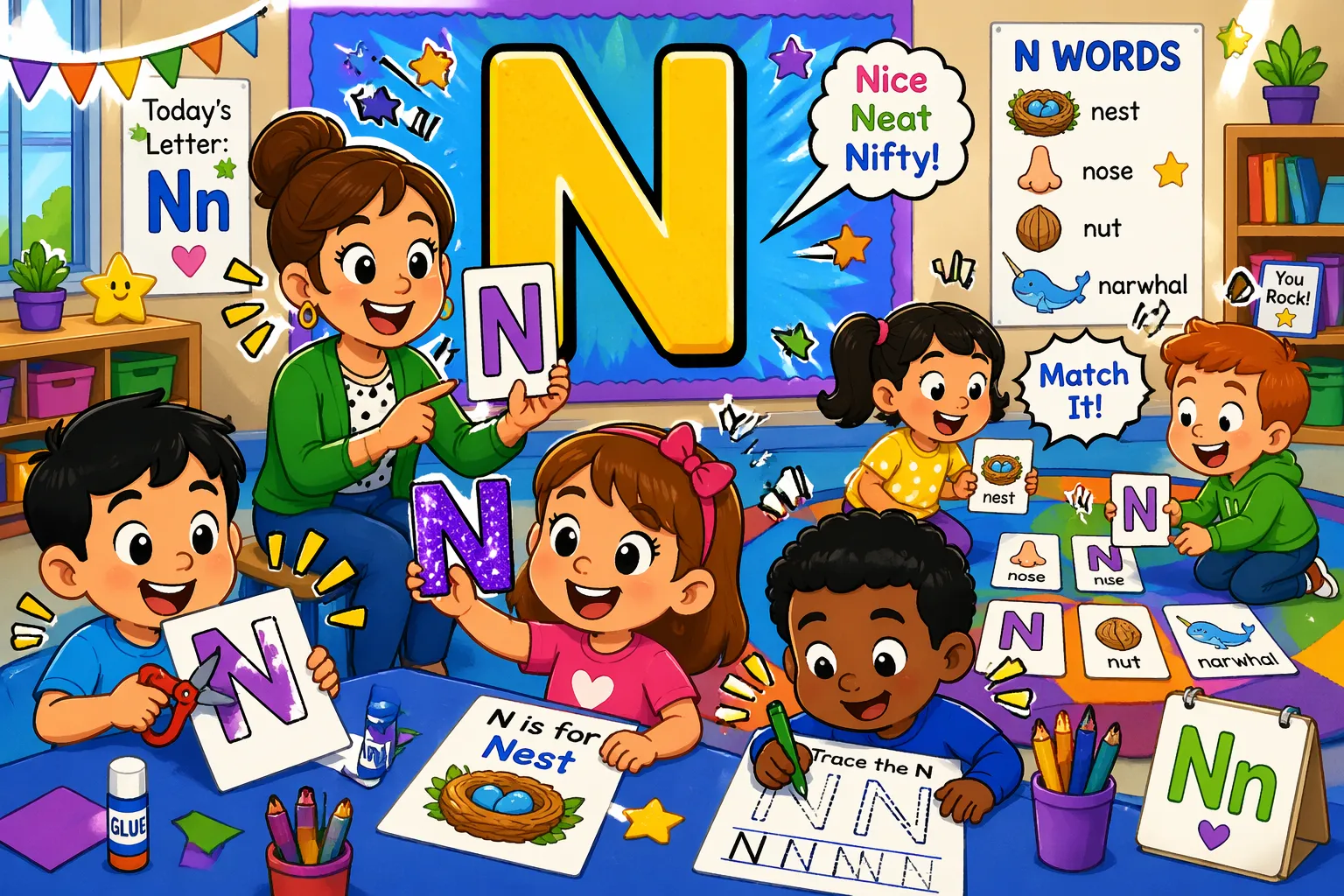
Learning the alphabet is one of the most exciting milestones in early childhood education — and letter N activities for kindergarten give young learners a hands-on, playful entry point into phonics, literacy, and creativity.
This guide covers a wide range of letter N activities for preschoolers and kindergarteners, from crafts and sensory bins to worksheets, tracing practice, and interactive games. Whether you’re a teacher building lesson plans or a parent looking for fun ideas at home, you’ll find practical, age-appropriate strategies here.
Letter N Activities for Kindergarten Classroom and Home
Letter N activities bring together multiple areas of early development in one focused theme. From hands-on crafts to printable worksheets and movement games, learning the N supports foundational literacy while keeping children genuinely engaged.
Benefits of Alphabet Activities for Early Learners
Letter N activities for kindergarten support several key developmental skills at once. Children practice letter recognition, learn the phonics sound /n/, build fine motor skills through writing and cutting, and expand their vocabulary with N words like nest, net, nose, and night.
Research from the National Early Literacy Panel consistently shows that early alphabet knowledge is one of the strongest predictors of reading success. Hands-on, multi-sensory activities are especially effective for young learners who are still developing their attention spans and abstract thinking.
Materials Commonly Used in Activities
Most activities for preschool and kindergarten require simple, low-cost supplies. Here are the basics worth having on hand:
- Paper (plain, construction, or cardstock) and cardboard for crafts and worksheets
- Glue sticks, scissors, and tape for hands-on crafts like collages and noodle necklaces
- Markers, crayons, and colored pencils for tracing, coloring, and drawing
- Sensory materials such as sand, salt, playdough, noodles, nuts, and tissue paper
- Stickers, cotton balls, and twigs for filling and building outlines
- Printed worksheets for tracing and recognition exercises
How to Choose the Right Activity
Choosing the right letter N activity depends on the child’s age, attention span, and preferred learning style. For children ages 3–4, simple sensory activities and crafts with few steps work best. Kindergarteners ages 5–6 are ready for structured worksheets, phonics games, and short writing tasks.
Visual learners benefit from picture-based matching worksheets, while hands-on learners thrive with playdough, sensory bins, and building activities. Mixing activity types across a week keeps engagement high and reinforces learning from multiple angles.
Letter N Handwriting and Tracing Practice
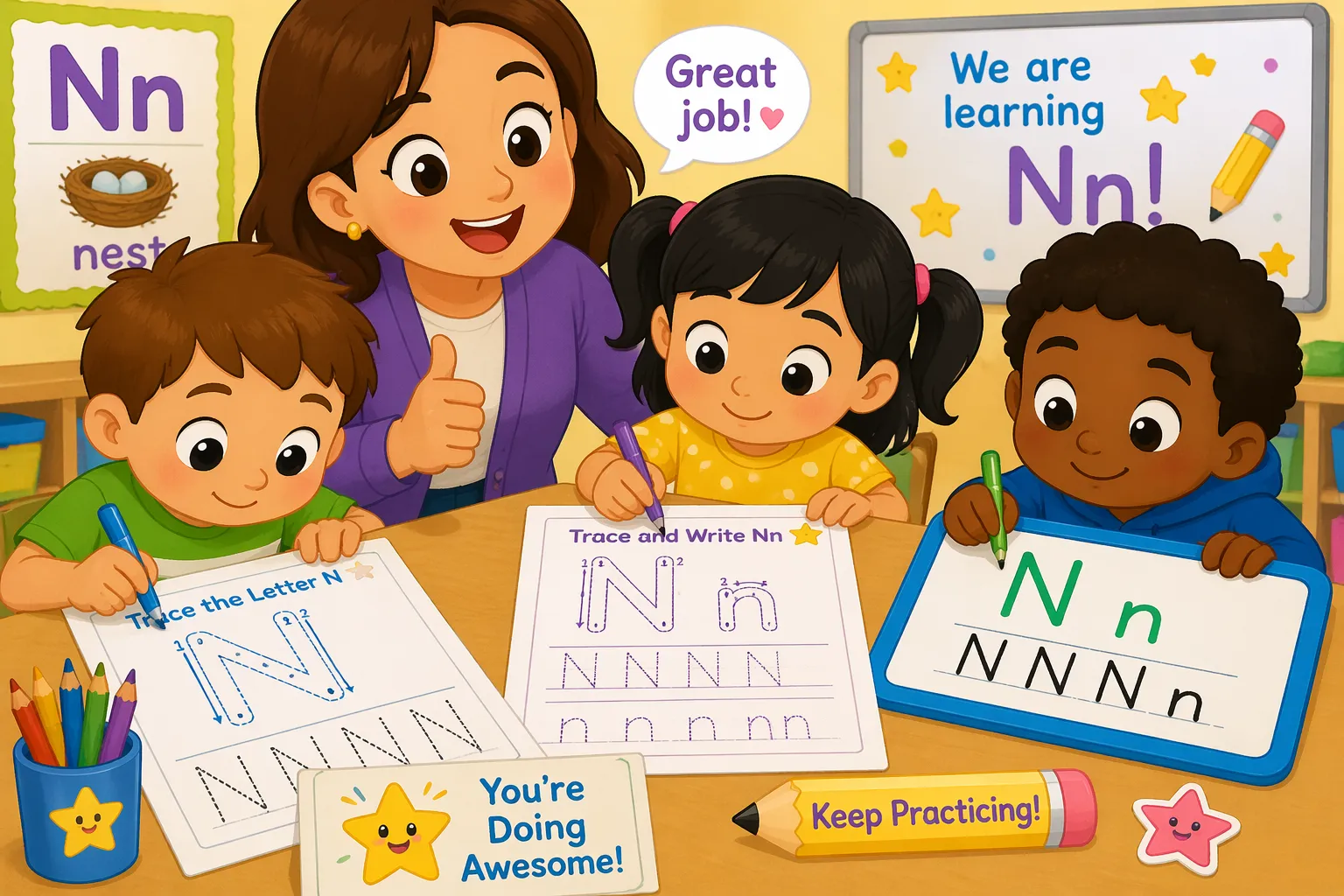
Handwriting practice is one of the most important foundations for early literacy. Tracing the N — both uppercase and lowercase — helps children develop letter formation habits, fine motor control, and visual memory for its shape.
Uppercase and Lowercase Letter N Tracing
Teaching uppercase N first gives children a simpler, more distinct shape to practice before introducing the lowercase n. Uppercase N is formed with three strokes: down, diagonal, and down again. Lowercase n uses a curved hump shape, which can feel less intuitive at first. Repetition is key — short daily tracing sessions of five to ten minutes are more effective than longer, infrequent practice.
Salt Tray and Sensory Writing
Sensory writing is a multi-sensory approach that builds fine motor control and letter memory without relying on pencil and paper. Fill a shallow tray with salt, sand, or shaving cream and ask the child to trace the N using one finger. This tactile method activates different neural pathways than visual learning alone, reinforcing retention. Children who struggle with traditional tracing often respond well to sensory writing because the low-pressure format feels more like play than practice.
Online Tracing Games
Digital tracing games offer an interactive way to practice letter formation on tablets or computers. Platforms like Starfall and ABCmouse include guided tracing activities with audio feedback that helps children connect the shape of the letter with its sound. Screen-based activities work best in short sessions of ten to fifteen minutes, ideally paired with offline practice to reinforce the physical skill of writing.
Letter N Recognition and Identification Activities
Before children can read or write, they need to visually identify letters — distinguishing one symbol from another with accuracy and confidence. Recognition activities focus on spotting, sorting, and differentiating the letter in a variety of contexts.
Dot Marker Letter Hunt
In a dot marker hunt, children are given a page filled with mixed letters and use bingo daubers or stickers to mark every N they find. This activity builds visual discrimination and is especially useful for improving alphabet fluency. It also supports fine motor skills through the controlled pressing motion of the dauber.
Tick the Correct N Pictures
Worksheet-based identification activities ask children to look at pictures of familiar objects and tick or circle those that start with the N. For example, a page might show a nest, a nail, a book, and a nose, with children identifying which images begin with N. This format connects letter recognition with phonics and vocabulary in a structured, printable format.
Color Confusing M and N
The letters M and N are among the most commonly confused in early alphabet learning because of their visual similarity. A targeted activity — where children color M’s one color and N’s another — helps them focus on the key differences in shape and stroke count. Using this kind of focused comparison activity is a recommended strategy in structured literacy frameworks for catching confusion early before it affects reading fluency.
Letter N Phonics and Sound Activities
Phonemic awareness — the ability to hear and manipulate sounds in spoken words — is a critical precursor to reading. Letter N phonics activities help children connect the written symbol with the /n/ sound and recognize it at the beginning, middle, and end of words.
Beginning Sound Sorting Game
In a beginning sound sorting game, children sort picture cards into two groups: words that start with the /n/ sound and words that do not. Objects like a nest, net, nut, and nose go in the N pile, while other pictures are set aside. This activity strengthens phonemic awareness and prepares children for blending sounds into words during early reading instruction.
Song and Chant Activities
Rhythm-based learning is one of the most effective tools in early literacy because it makes sounds memorable. Songs and chants that repeat the /n/ sound — like “N-N-N, Nest! N-N-N, Night!” — help children internalize the phonics connection through repetition and fun. Many kindergarten teachers use the Jolly Phonics program, which includes a specific action and song for each sound, including N.
Words That Begin and End with N
Expanding beyond beginning sounds, children can also explore words that end with N, such as sun, man, and ten. Here is a simple vocabulary list to use in exercises:
- Words beginning with N: nest, net, nose, nut, night, name, nail, number
- Words ending with N: sun, fan, ten, moon, can, hen, green, rain
Practicing both positions helps children develop a more complete understanding of letter N’s role in spoken and written language.
Letter N Crafts for Kindergarten
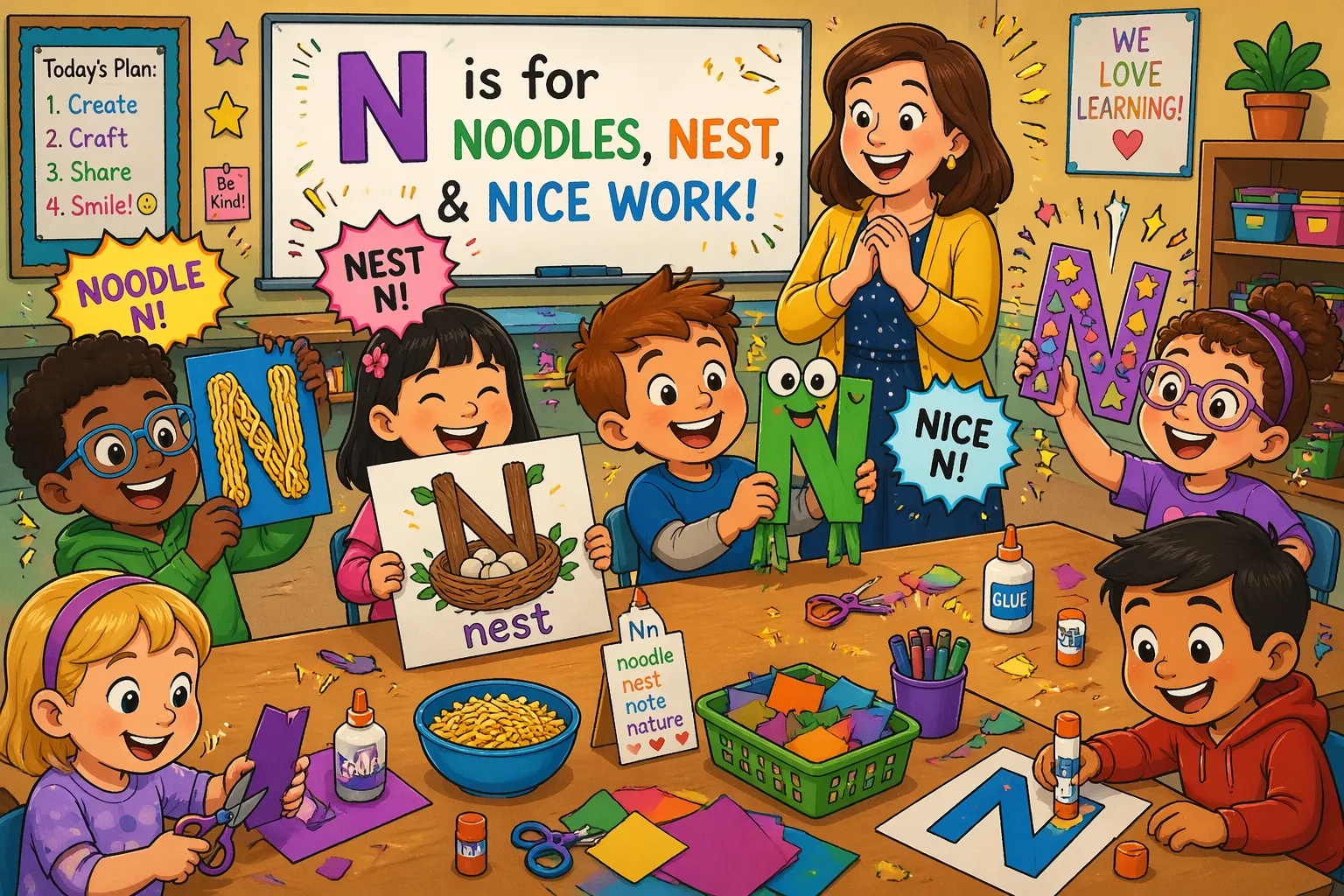
Hands-on crafts connect creative expression with learning. Each craft reinforces the shape, sound, or vocabulary of the N while building fine motor skills and imagination.
N is for Nest Craft
Nest craft is one of the most popular letter N activities for kindergarten because it uses simple materials and creates a memorable visual connection. Children glue small twigs, torn paper strips, or dried grass onto a circular paper base to form a nest, then add paper or cotton ball eggs inside. This activity reinforces that nest starts with the letter N and supports vocabulary development alongside creativity.
N is for Narwhal Art Project
Narwhals are a favourite with kindergarteners — and their unusual appearance makes them easy to remember. Children can draw or cut out a narwhal shape, decorate it with tissue paper or paint, and label it with the letter N. This animal-themed craft reinforces the /n/ sound and gives children a strong visual anchor.
Noodle Necklace Craft
Threading noodles onto a piece of string to make a noodle necklace is a classic fine motor activity that also introduces a fun N word. Children can paint the noodles beforehand for an extra creative element. The activity builds the pincer grip needed for writing while keeping learning light and enjoyable.
Newspaper Collage
In this recycled-materials activity, children cut or tear pieces of newspaper and glue them inside a large letter N outline to create a collage. This activity builds scissor skills, hand-eye coordination, and shape awareness at the same time. Encouraging children to find words or pictures in the newspaper that start with N adds an extra literacy layer to the project.
Letter N Sensory and Fine Motor Activities
Sensory activities engage the whole body in learning and are particularly effective for children who learn best through touch and movement. Sensory activities build fine motor control while reinforcing letter shape and sound.
- Sensory Bin: Fill a bin with nuts, noodles, natural leaves, or hide plastic N’s for children to find and identify.
- Playdough Letter Formation: Ask children to roll playdough into long snakes and shape them into an uppercase or lowercase N. This builds spatial awareness and letter formation memory.
- Sticker Fill Letter Activity: Give children a large N outline and a sheet of stickers. Children fill the entire outline with stickers, developing fine motor precision while reinforcing the letter’s shape.
Letter N Games and Interactive Activities
Games make learning feel like play, which supports motivation and retention. These engaging letter N activities work well in both classroom and home settings.
Word Search for Kids
A simplified word search featuring short N words like NET, NUT, and NOD gives children practice scanning for letter patterns — a key pre-reading skill. Word searches for kindergarten should use large font, simple grid layouts (5×5 or 6×6), and only words the children already know.
Search and Match Letter Game
In a search and match activity, children pair uppercase N cards with lowercase n cards scattered around the room or laid out on a table. This game reinforces the connection between capital and lowercase forms of the letter and can be played as a memory game or a timed challenge.
Letter Floor Hop Game
Write or tape letters on the floor and call out a sound or word. When the /n/ sound is called, children hop onto the N. This movement-based activity burns energy, supports active learning, and turns letter recognition into a full-body experience.
Letter N Worksheets and Printable Resources
Printable letter N worksheets give children structured practice they can complete independently or with minimal guidance. Free printables are widely available from trusted educational platforms.
- Letter Recognition Worksheets: Activities where children circle, underline, or colour every N in a row of mixed letters.
- Word Bank and Vocabulary Sheets: Structured lists of N words with matching pictures for children to trace, copy, or colour.
- Coloring and Matching Worksheets: Pages where children match pictures to their beginning letter or colour objects that start with N.
Free printable worksheets are available at Education.com, K5 Learning, and Super Teacher Worksheets.
Tips for Teaching Letter N Effectively
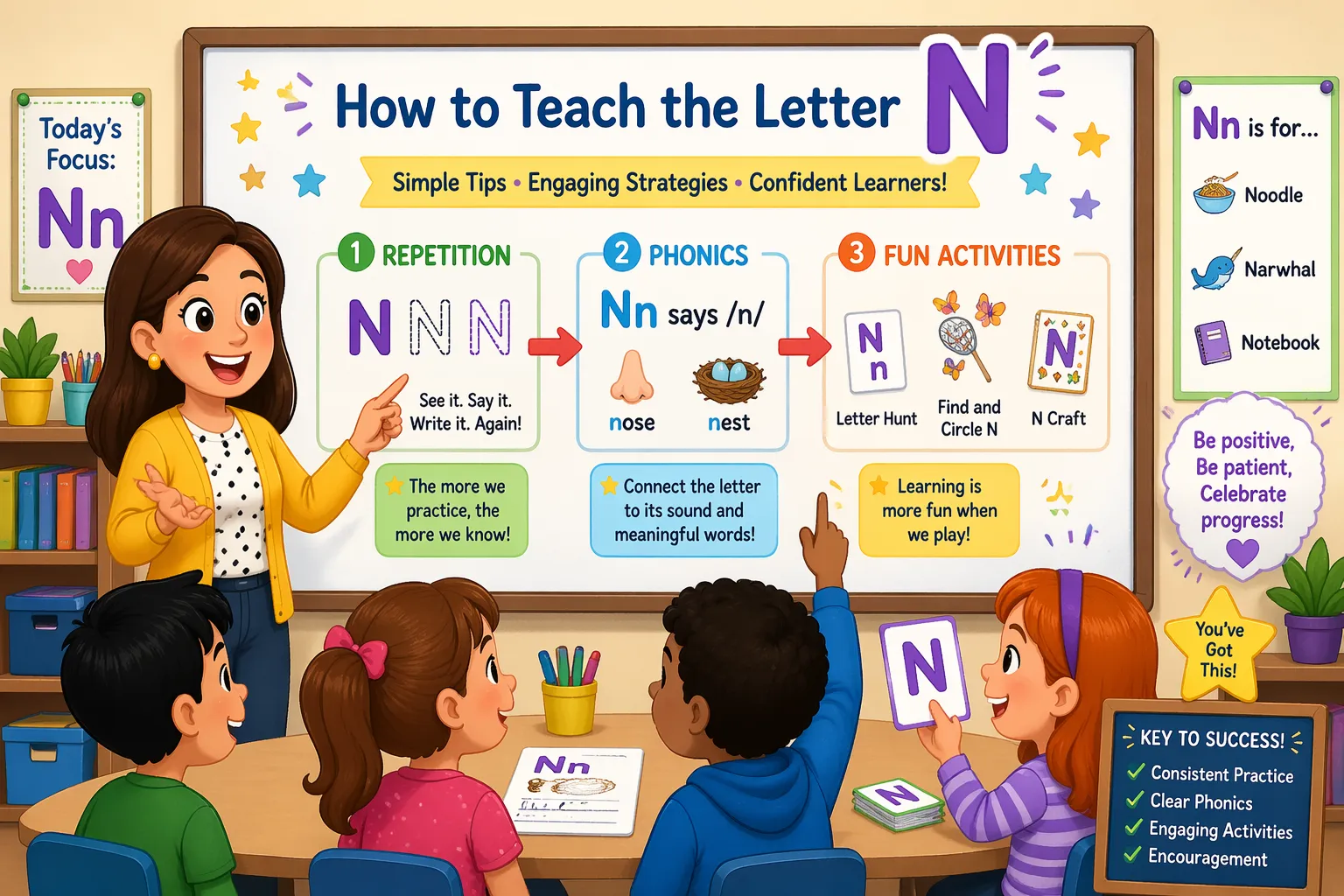
Effective letter N instruction combines clear progression, consistency, and a play-based approach that matches children’s developmental needs.
Start with Uppercase, Then Lowercase
Introducing the uppercase N first gives children a more visually distinct shape to master before tackling the more subtle lowercase n. Once the uppercase form is secure, introduce lowercase through comparison activities that highlight the differences.
Focus on the Sound /n/
Emphasising the phonics sound early — and connecting it to familiar words like nose and nest — helps children build the sound-symbol relationship that underpins reading. Use the /n/ sound consistently, rather than the letter name alone.
Keep Activities Play-Based and Engaging
Kindergarteners have attention spans of roughly ten to fifteen minutes for structured tasks. Keeping letter N activities short, varied, and playful prevents frustration and supports genuine engagement. Rotating between crafts, games, and worksheets across a week ensures all learning styles are addressed.
Repeat Activities for Better Retention
Repetition is essential for alphabet learning. Revisiting the same activity two or three times — with slight variations — helps children consolidate their understanding without feeling bored. A child who builds a nest craft one week and does a nest-themed worksheet the next is reinforcing the same knowledge through different modalities.
More Alphabet Activities for Kindergarten
Mastering letter N is one step in a rich journey through the full alphabet. Exploring each letter with the same variety of crafts, games, sensory activities, and worksheets gives children a strong, well-rounded foundation in early literacy.
Consider building a complete alphabet activity series, tackling one or two letters per week, so children build familiarity and confidence across all 26 letters before they enter formal reading instruction.
Frequently Asked Questions
What are fun letter N activities for kindergarten?
Fun letter N activities include the N is for Nest craft, narwhal art projects, noodle necklace making, sensory bins filled with nuts and noodles, floor hop games, and dot marker letter hunts. Mixing hands-on crafts with movement games and printable worksheets keeps learning varied and engaging.
How do you teach letter N to kindergarten students?
Start by introducing the /n/ sound with familiar words like nose, nest, and nut. Show both uppercase and lowercase forms, then move into tracing practice using worksheets or sensory writing trays. Reinforce learning through crafts, matching games, and phonics activities spread across several sessions.
What are fun ways to introduce N to kindergarten students?
You can use songs, storytelling, and hands-on activities like crafts and games. For example, children can create nests, play matching games with words like “nose” and “net,” or practice sounds through music and repetition. Keeping activities playful helps them stay engaged and remember concepts better.
What words start with the letter N for kids?
Simple, child-friendly words that begin with N include: nest, net, nose, nut, night, name, nail, and number. Using pictures alongside each word helps young learners build vocabulary and connect it to real-world objects.
What are easy letter N crafts for preschool and kindergarten?
Easy N crafts include the noodle necklace (threading pasta onto string), newspaper collage (filling an N outline with torn paper), the nest craft (gluing twigs onto a circular base), and the narwhal art project (drawing and decorating a narwhal shape). All of these require minimal materials and support both creativity and fine motor development.
How can I make letter N learning fun at home?
Combine short, varied sessions using everyday objects — count the N sounds in dinner ingredients, go on a nature walk to find things that start with N, or make a noodle necklace together. Printable worksheets from free resources like Education.com can supplement hands-on activities, and N songs add a musical dimension that helps the sound stick.
How can I help kids remember the sound of N?
Focus on repetition and everyday examples. Encourage children to say the sound out loud while pointing to familiar objects like “nose” or “nap.” You can also use visual aids, movement, and simple games to reinforce the sound in a natural and memorable way.

Take a short quiz to find out what your everyday choices say about your parenting style
When your child is curious about something new, what’s your instinct?
Take a short quiz to find out what your everyday choices say about your parenting style
“Can I download this app?” What happens next?
Take a short quiz to find out what your everyday choices say about your parenting style
When it comes to rules at home, which sounds most like you?
Take a short quiz to find out what your everyday choices say about your parenting style
If you could give your child one life skill today, what would you pick?
Take a short quiz to find out what your everyday choices say about your parenting style
Your child gets to choose what to watch. What would your ideal setup look like?
Take a short quiz to find out what your everyday choices say about your parenting style
Pick your parenting superpower ✨



