30+ St George’s Day Activities for Kids

 Discover a Free Education Video App for Kids
Pastory uses AI to personalize educational video content based on your child’s interests and personality. Safe, engaging, and built for curious young minds. Sign up now to stay updated and enjoy early access with a free trial
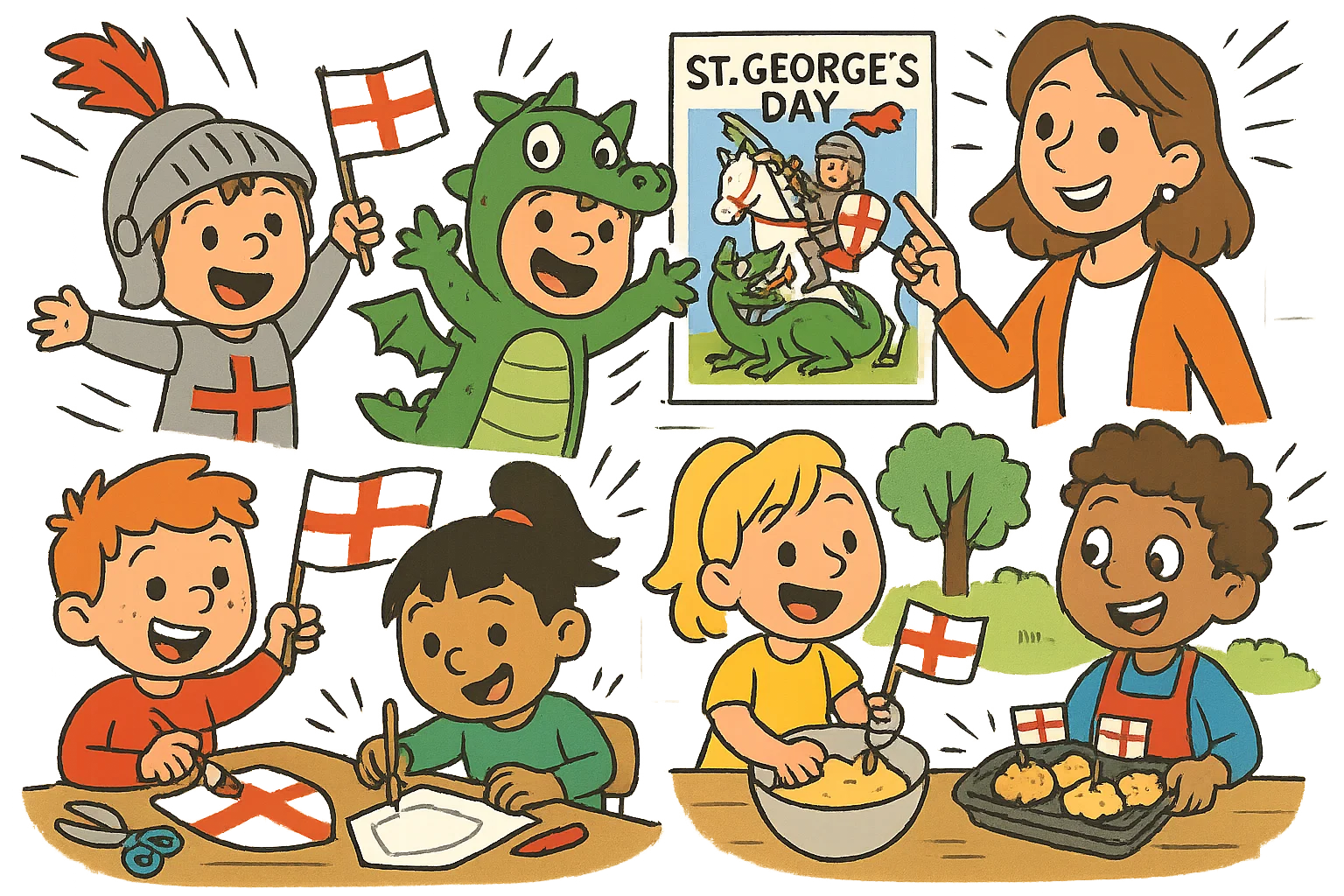
Taking part in cultural celebrations can help young children build social awareness, historical understanding, and emotional confidence. For parents, teachers, nurseries, youth clubs, and party hosts, well-planned St George’s Day activities can turn a traditional calendar date into a fun learning opportunity. St George’s Day is celebrated on 23 April each year, making it a useful theme for spring lessons, craft sessions, and community events.
This guide includes more than 30 activities designed to spark children’s imagination across different age groups. Schools, nurseries, community groups, and families can use these ideas to plan crafts, active games, simple English food activities, imaginative role play, and printable resources. Whether you are planning a whole-school celebration, running activities for a local community group, or looking for a simple way to celebrate at home, these activities can be adapted for Early Years Foundation Stage (EYFS), Key Stage 1 (KS1), and Key Stage 2 (KS2).
Key Takeaways
- Imaginative Dragon Crafts: Using paper plates, egg boxes, and recycled materials to make colourful dragons helps develop fine motor skills.
- Flag and Shield Making: Creating St George’s Cross flags and personalised knight shields helps children explore English symbols and their own ideas of bravery.
- Active Treasure Hunts and Games: Organising dragon egg hunts and obstacle courses promotes physical development and collaborative teamwork.
- Interactive Storytelling and Drama: Retelling the classic tale through puppet shows, role play, and school plays builds language comprehension and self-confidence.
Best Ages for St Georges Day Activities
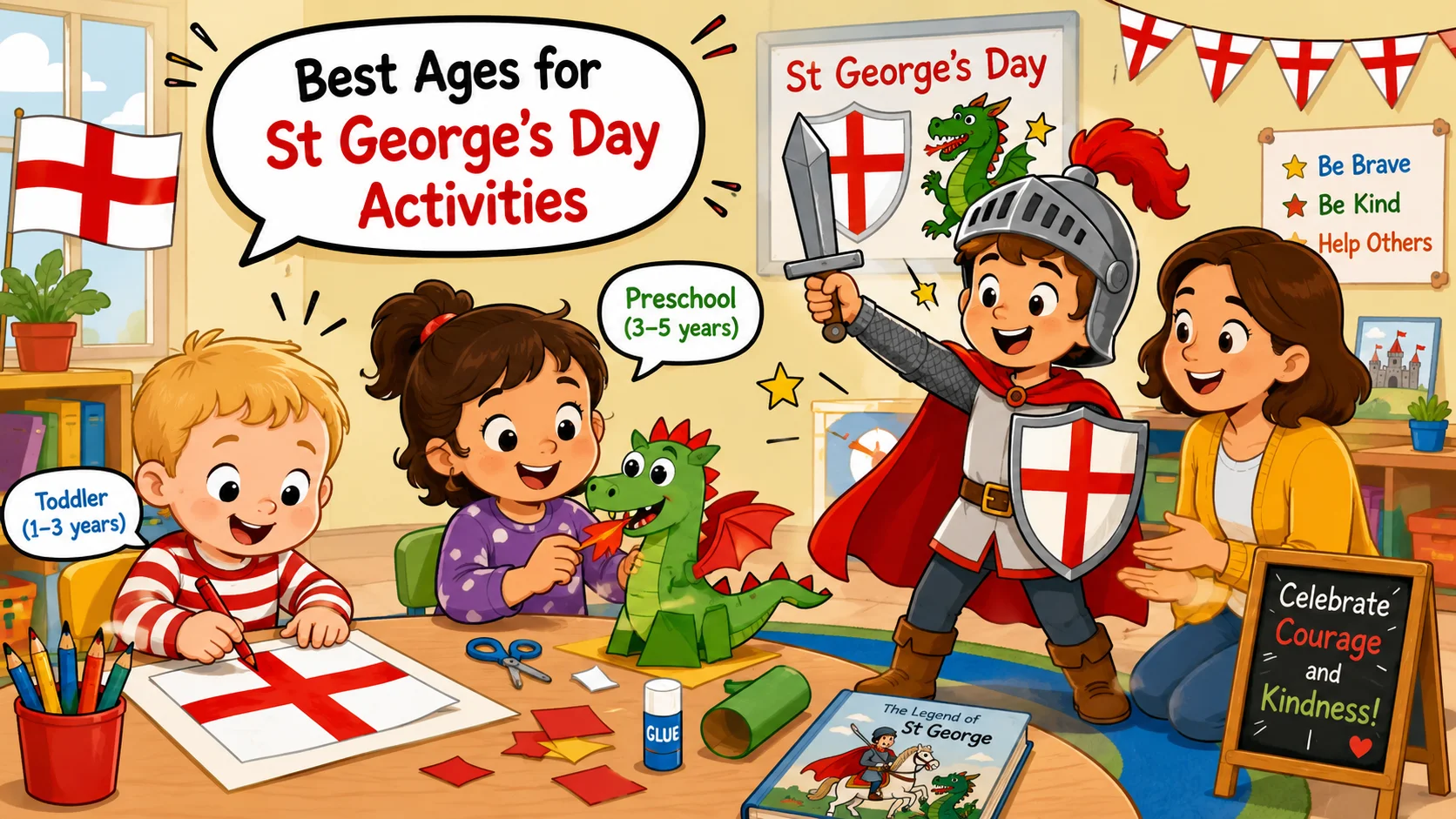
Early years guidance generally recommends matching themed play to children’s age, attention span, and developmental stage. Toddlers and EYFS children usually benefit from sensory activities such as finger-painting St George’s Cross, making simple paper-chain dragons, and exploring colourful visual prompts.
KS1 and KS2 children can try more detailed tasks, such as designing coat-of-arms patterns, writing diary entries, and taking part in team quizzes. These St George’s Day activities are easy to adapt, so teachers with large classes and parents with children of different ages can adjust the difficulty level.
Best Setup Tips
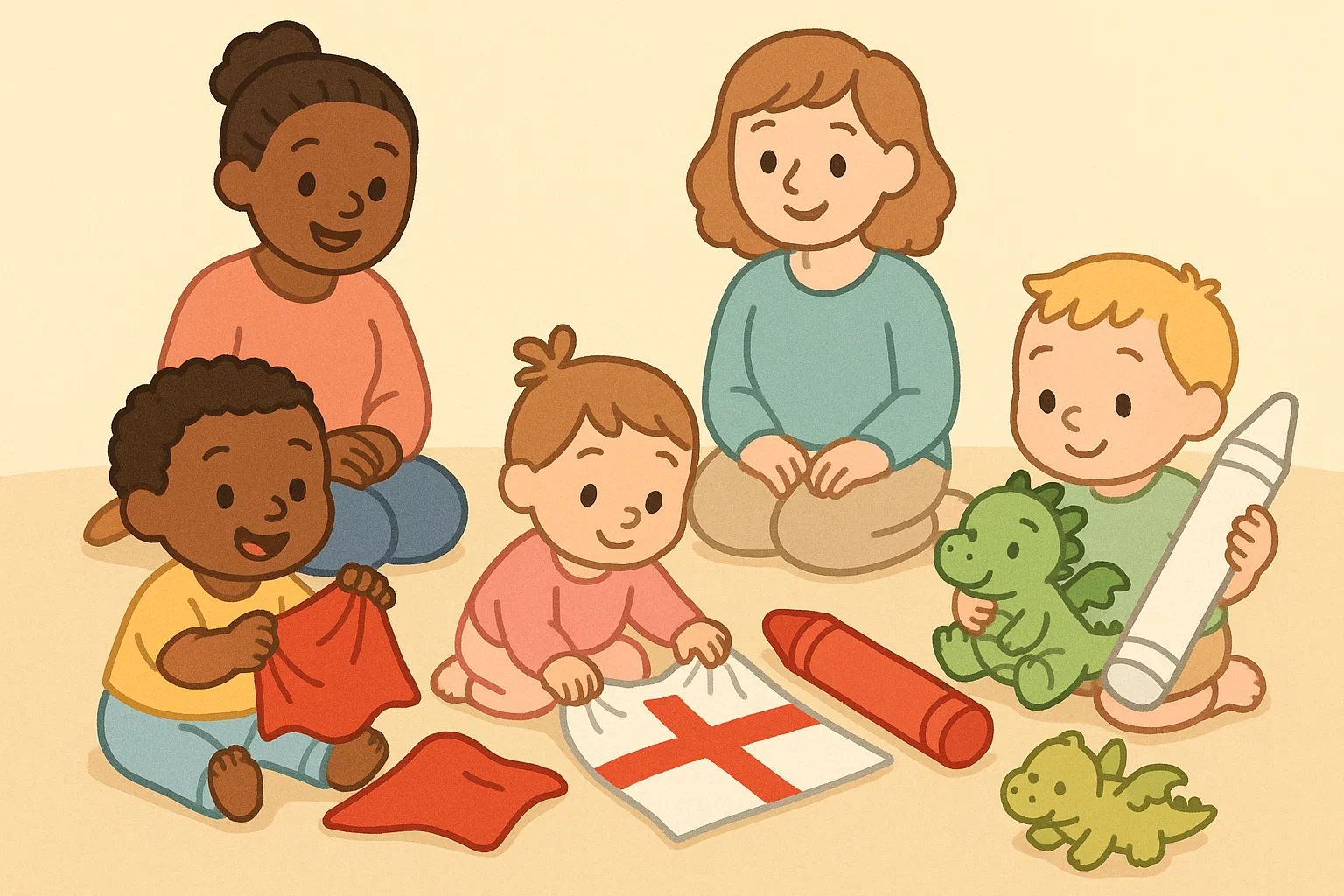
- Material Preparation: Gather essential supplies such as non-toxic red and white paint, recycled cardboard boxes, safety scissors, coloured paper, and string before beginning.
- Time Management: Allow 20 to 30 minutes for craft activities with younger children, and 45 to 60 minutes for more complex group projects or active outdoor games.
- Safety Protocols: Make sure all pretend-play items, such as cardboard swords, have soft, blunt edges, and ensure adult supervision during cutting tasks or active games.
- Mess-Free Alternatives: Use pre-cut shapes, self-adhesive foam sheets, and washable markers instead of wet paint or loose glitter when hosting events in carpeted rooms or community centres.
- Integrated Thematic Flow: Start with a storytelling session, then use the afternoon craft activity to make props for a final role-play game.
Quick List of St George’s Day Activities for Kids
1. Make St George’s Flag
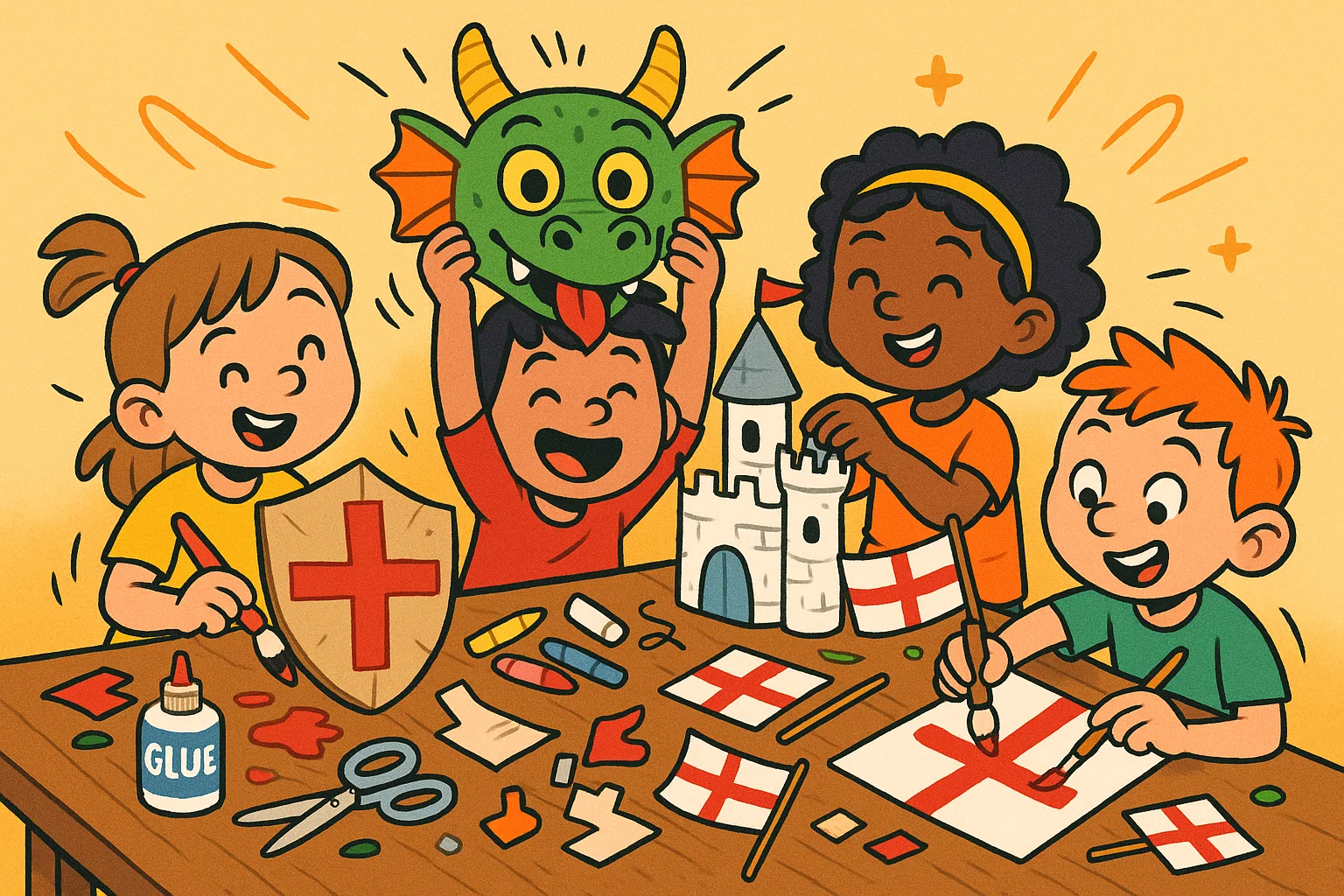
Creating St George’s Cross flags is a simple way to introduce young learners to one of England’s best-known national symbols. Children can make the classic red cross on a white background using white card, red tissue-paper squares, washable paint, or collage scraps.
Tactile collage work can support early fine motor skills, including grip, hand control, and coordination. Teachers can display the completed flags across the classroom to create a festive atmosphere while explaining that Saint George is the patron saint of England.
2. Create Dragon Crafts
Constructing a dragon allows children of all ages to explore folklore through three-dimensional art. Easy low-mess ideas include turning paper plates into folding dragon bodies, using green egg boxes for spiked tails, and tracing handprints on paper to make wings.
By using clean items from household recycling, educators can introduce sustainability alongside history. This budget-friendly craft also supports spatial awareness as children assemble wings, scales, and fiery paper tongues.
3. Design Knight Shields
Designing a personalised cardboard shield connects the idea of medieval knighthood with a child’s own interests and imagination. Cut sturdy backing shapes from packing boxes, then provide children with foil, markers, and emblems such as the red cross or stylised dragon silhouettes.
Creating a personal coat of arms can encourage children to think about their own strengths as they choose symbols that represent them. These sturdy shields can then be used as props for playground games or indoor role play.
4. Build a Cardboard Castle
Building a cardboard castle is a collaborative project that works well in primary classrooms and activity packs. Gather large delivery boxes, kitchen roll tubes for turrets, and plastic cups for battlements, allowing groups of children to tape and paint the structure together.
This spatial reasoning task aligns with STEM learning principles by requiring children to balance structures and measure entrances. Once complete, a large cardboard castle can become a centrepiece for a classroom display, reading corner, or party area.
5. Make Dragon Masks
Making a wearable dragon mask gives children an immediate tool for dramatic expression and emotional exploration. Adults can provide pre-cut paper plates or printed colouring templates with eye holes, which children can personalise using green feathers, shiny foil scales, and elastic string.
Once the craft is finished, the masks can be used for storytelling, drama, and group play. Wearing a mask helps more reserved children step outside their comfort zone during language and performance exercises.
6. Try Sock Puppet Dragons
Assembling a sock puppet dragon turns simple fabric scraps into an interactive storytelling tool. Children can use old socks and glue on felt teeth, wool manes, button eyes, and long red paper ribbons to represent fire.
Puppetry can support speech development by giving children a playful, low-pressure way to practise new vocabulary. Children will enjoy using their finished puppets to retell the story of St George from their own imaginative perspective.
7. Craft a Knight’s Helmet
Crafting a knight’s helmet helps children feel immersed in the world of medieval legends. Construct the base using thick silver card or strips of grey paper measured to fit around the child’s head, then add a moving visor attached with split pins.
This process develops measuring skills as children work out the right headband length for a comfortable fit. The completed helmet can be combined with a handmade shield and sword to create a self-made costume set.
8. Make a Safe Cardboard Sword
Constructing a safe cardboard sword allows children to explore the idea of a heroic knight without introducing unnecessary safety risks. Cut sword shapes from double-walled corrugated cardboard, cover the edges with soft foam tape, and let children decorate the blades with metallic foil.
Important Safety Note: Establish clear playground rules for non-contact pretend play before distributing these items. Supervised play helps children channel their energy into active, imaginative movement rather than unsafe behaviour.
9. Create Bunting for the Celebration Space
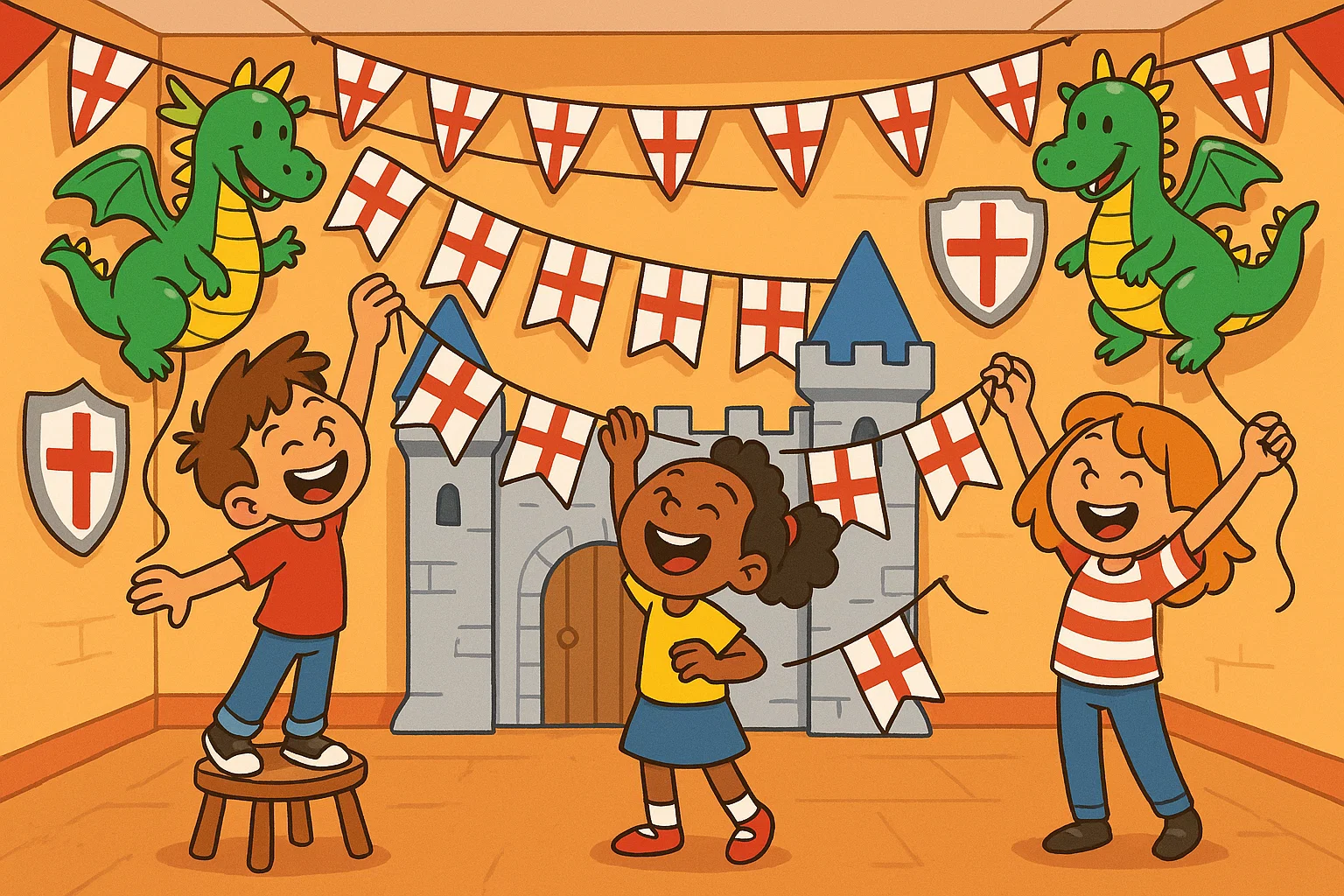
Assembling red-and-white bunting offers an effective way to decorate community centres, classrooms, or living rooms for a themed party. Children can decorate individual triangular paper flags with illustrations of castles, roses, and knights before an adult strings them together on a long cord.
This cooperative decoration project fosters a strong sense of community belonging and shared achievement among young participants. The red-and-white display quickly transforms an ordinary room into a festive celebration space.
10. Design Happy St George’s Day Posters
Organising a poster competition encourages children to show what they have learned about England’s patron saint through graphic art. Provide large sheets of paper and ask children to combine bold lettering, illustrations of the English rose, and scenes from the St George story in an eye-catching poster.
Displaying the completed entries along school corridors or on home notice boards validates the hard work of the young artists. This task refines visual literacy and layout planning for older primary school children.
Why Celebrate St George’s Day with Kids?
St George’s Day Meaning for Children
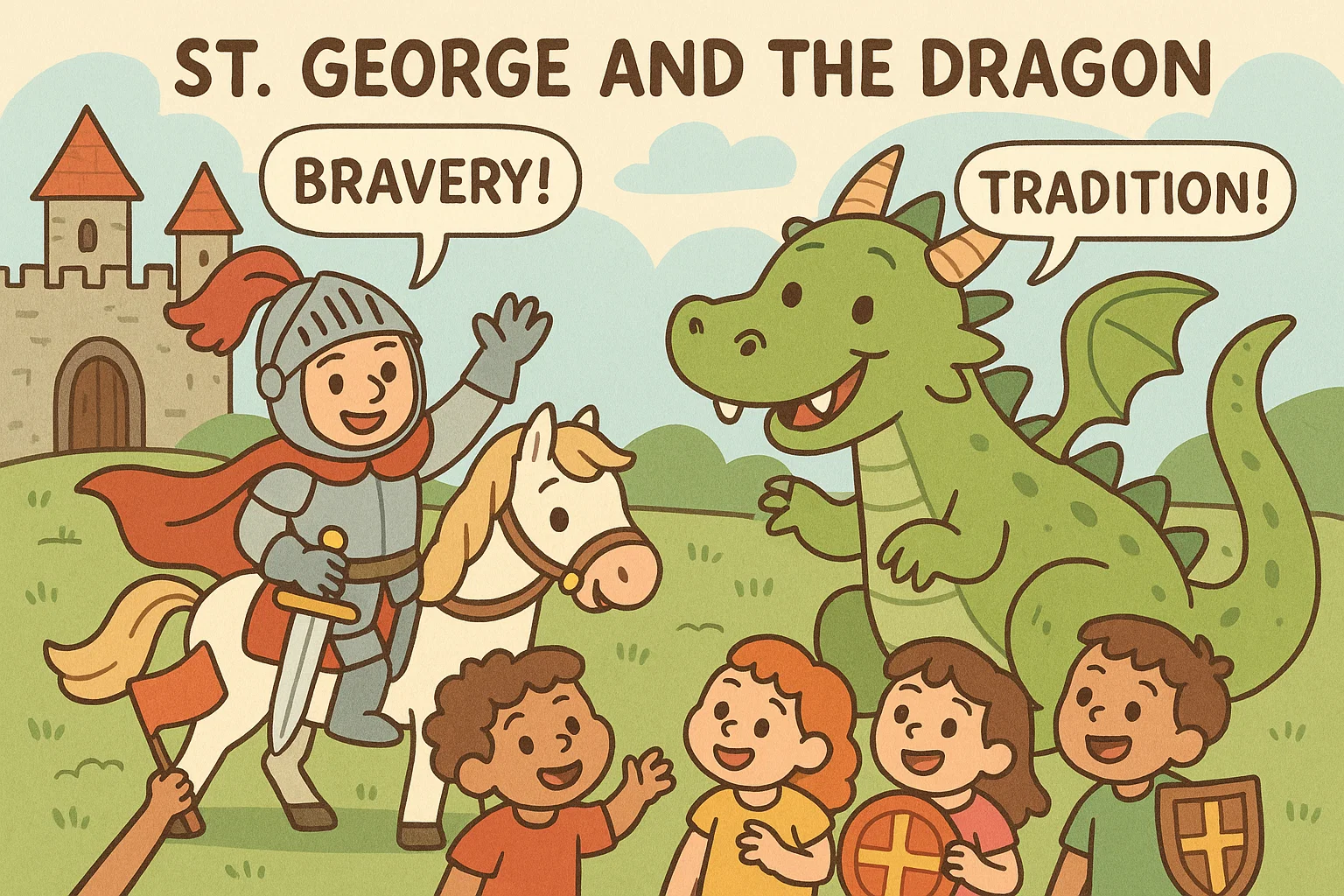
Explaining the background of cultural celebrations helps children understand the wider world and different traditions. Saint George is recognised in several countries and traditions, and his feast day falls on 23 April.
For young learners, introducing the concept of a patron saint provides context for national holidays, flags, and community traditions. Keeping the explanation grounded in history and folklore ensures the material remains accessible, neutral, and engaging for children of all backgrounds.
Story of St George and the Dragon
The traditional tale of St George and the dragon is an excellent tool for imaginative engagement when framed appropriately for young audiences. In the traditional story, a brave knight protects a town from a dangerous dragon and restores peace through courage and skill.
| Story Element | Traditional Focus | Modern Educational Adaptation |
| The Conflict | Battle and slaying the dragon | Problem-solving and overcoming fears |
| The Knight | Martial strength and weaponry | Bravery, protection, and helping others |
| The Outcome | Defeat of an enemy | Restoring peace and safety to a community |
By shifting the focus away from violence and towards themes of protection and conflict resolution, teachers can maximise the positive impact of the folklore. This approach allows children to enjoy the traditional legend while thinking about bravery, kindness, and peaceful problem-solving.
English Culture and Symbols
Exploring St George’s Day opens a natural doorway to learning about the geography, symbols, and history of England. Children can identify the red cross on the flag, discover why the red rose is associated with England, and examine historic castles across the countryside.
The celebration can also be linked to English literature, as 23 April is traditionally associated with William Shakespeare’s birthday and is also the date of his death. Introducing these connected topics enriches children’s cultural literacy and gives them a broader introduction to traditional English heritage.
Values Kids Can Explore
The legends surrounding Saint George can help children explore values such as courage, kindness, teamwork, and helping others. These stories also allow educators to highlight courage in the face of difficulty, kindness towards others, and teamwork when solving problems.
By connecting these values to modern playground scenarios, children learn how to stand up against bullying or assist a classmate in need. The stories can serve as concrete examples for developing emotional intelligence and strong moral reasoning.
Creative St George’s Day Crafts
11. Paint Dragon Rocks
Painting smooth river pebbles provides a tactile activity that combines nature exploration with artistic creativity. Children can use acrylic paint pens or outdoor craft paint to turn stones into green dragon scales, speckled dragon eggs, or miniature knight shields.
Once dry, these durable items can be hidden around an outdoor garden or school field for a treasure hunt. This activity promotes hand-eye coordination and gives children a durable keepsake they can display outdoors.
12. Make Paper-Chain Dragons
Constructing a paper-chain dragon uses a simple but effective technique to develop fine motor skills in EYFS and KS1 classrooms. Children cut strips of red and green paper, loop them together to form a long interlocking body, and then glue on a custom-drawn dragon head and tail at either end.
This classic craft teaches sequencing, pattern recognition, and careful use of glue. The completed long chains can be hung across classroom ceilings to create an immersive themed environment.
13. Create Dragon Eggs
Creating mythical dragon eggs encourages imaginative play and lets children explore different textures. Children can wrap plastic craft eggs or oval stones in aluminium foil, press colourful sequins into air-dry clay, or apply layers of green tissue paper with papier-mâché paste.
This project allows children to experiment with different material properties and adhesive types. The finished glittering eggs can then be used as treasures in an outdoor hunt.
14. Make an English Rose Craft
Crafting the traditional red rose of England introduces children to floral symmetry and delicate material manipulation. Young learners can layer red cupcake cases inside one another, or roll strips of red tissue paper around a green pipe cleaner stem to form a blooming flower.
This delicate process helps develop the small muscles in a child’s fingers, supporting the fine motor control used in early writing. These paper roses can be gathered into bouquets for a central display or pinned onto shirts as festive buttonholes.
15. Build Mini Jousting Figures
Assembling mini jousting figures allows children to create their own small-scale medieval toy sets using simple materials. By attaching paper horse cut-outs to wooden craft sticks and painting clothes pegs to look like armoured knights, children can build movable figures for tabletop games.
This activity supports structural planning and creative storytelling as children use the figures to create their own tournament stories. It provides a safe, non-contact way to explore the idea of medieval tournaments through play.
16. Create a Group Mural
Coordinating a large group wall mural brings children together to achieve a shared artistic goal. Teachers can pin a long roll of paper along a hallway wall, assigning individual sections to different teams to draw a continuous scene containing hills, castles, flags, knights, and friendly dragons.
Large-scale collaborative art projects can encourage communication, turn-taking, and shared decision-making. Every child contributes one unique piece, fostering collective pride in the final public display.
Active St George’s Day Games
17. Dragon Treasure Hunt
An outdoor dragon treasure hunt combines physical activity with observation, problem-solving, and teamwork. Educators can hide pre-made dragon eggs, toy shields, or clues written on parchment-style paper across the playground or garden, providing children with a simple map or rhyming hints to guide their search.
For younger children, use direct visual prompts such as red arrows, while older players can solve riddles involving local landmarks or maths problems. This game keeps children moving while testing their observation skills.
18. Knights and Dragons Obstacle Course
Setting up a themed obstacle course turns physical education into an exciting narrative adventure. Children can practise motor skills by crawling through a “castle gate” fabric tunnel, jumping over a “river” blue mat, balancing carefully along a “drawbridge” wooden beam, and retrieving hidden treasure.
Obstacle courses can support spatial awareness, agility, balance, and fundamental movement skills. The immersive storytelling theme encourages sustained participation and enthusiasm.
19. Mini Jousting Tournament
A mini jousting tournament provides a safe, high-energy activity that channels competitive spirit into coordination goals. Give children soft foam pool noodles to act as lances and have them run towards stationary hanging plastic rings, attempting to catch the rings on the end of their noodle while moving.
This non-contact setup reduces the risk of collisions while testing depth perception and balance. Keep score on a whiteboard to introduce simple maths and tallying during the game.
20. Dragon Slaying Target Game
Framing a target game as a heroic quest helps develop upper-body strength and hand-eye coordination. Set up decorated cardboard boxes painted with friendly dragon illustrations and instruct children to toss soft beanbags or lightweight foam balls into designated openings or targets.
Assign different point values to various targets to encourage children to calculate sums as they play. This structured game offers an orderly, skill-based activity that keeps children focused and entertained during indoor parties.
21. St George Sports Day
Transforming traditional track events into a themed sports afternoon adds novelty to routine school exercise programmes. Include a “dragon egg and spoon race” using painted plastic or foam balls, a “shield balance relay” where runners keep a paper plate balanced on their heads, and a “castle construction sprint” to move cones across a line.
These light-hearted variations promote a supportive team dynamic and personal fitness. The structured nature of a sports day teaches children sportsmanship, taking turns, and celebrating the successes of their peers.
22. Fun Run or Family Walk
Hosting a themed fun run or family walk around the school field provides a healthy, inclusive community event. Participants can dress in red-and-white clothing or wear their homemade knight helmets while completing a designated number of laps to music.
This simple but effective walk can be tied to community fundraising or school health initiatives. It requires very little equipment and allows lots of adults and children to take part together.
Educational St George’s Day Activities
23. Storytelling Session
A storytelling session can be the starting point for a language-rich St George’s Day theme. Read age-appropriate picture books about the life and legends of Saint George, pausing to ask open-ended questions about characters’ choices and what might happen next.
Interactive reading can help children improve comprehension and build vocabulary. Use vibrant visual aids, character voices, and dramatic pauses to hold the attention of younger listeners.
24. Learn About England
Adding geography gives children practical context for the legends and traditions linked to St George’s Day. Introduce children to a map of the United Kingdom, point out London as the capital city, identify iconic landmarks such as Stonehenge or Windsor Castle, and explain regional traditions.
Children can complete worksheets that connect places, landmarks, and historical facts. This approach broadens children’s understanding of geography and cultural traditions.
25. Writing Activities
Providing structured writing frames allows children to express their historical knowledge and creative imagination through written text. Depending on literacy levels, children can write descriptive paragraphs about a mythical dragon’s appearance, create an acrostic poem using the word “KNIGHT”, or write a fictional diary entry from the perspective of a medieval villager.
Example acrostic:
- K – Kind and protective
- N – Noble in actions
- I – Imaginative in play
- G – Gentle with others
- H – Heroic and brave
- T – True to friends
These tasks help children practise grammar, structure stories, and use descriptive vocabulary. They also give older primary pupils a creative way to show their ideas and critical thinking skills.
26. St George’s Day Quiz
Conducting a team quiz provides an engaging, low-stress way to review historical and cultural facts learned throughout the week. Divide the group into small teams and ask questions about the date of the celebration, the colours of the flag, and the core values of the traditional story.
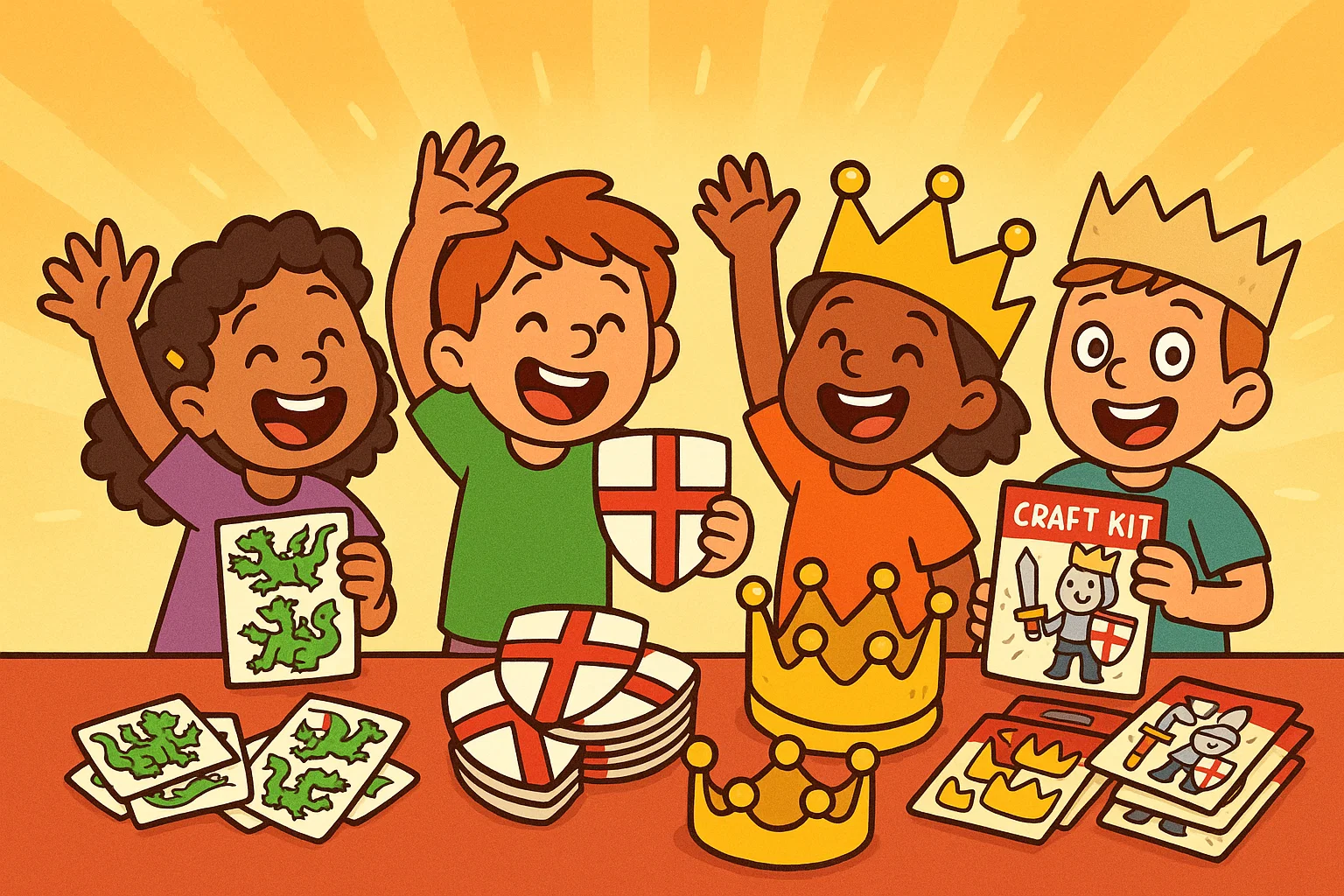
Using a collaborative quiz format encourages peer-to-peer discussion, memory retention, and compromise. Reward participation with themed stickers or printable certificates to maintain high engagement levels.
27. Libraries and English Writers
Connecting St George’s Day to English literature highlights the rich history of storytelling within the region. Set up a special library display featuring books on medieval history, traditional legends, and child-friendly introductions to classic English writers such as William Shakespeare.
Encourage a weekend reading challenge where children earn stamps for each folklore or history book they explore. This strategy helps foster a lifelong love of reading and independent historical research.
28. Local History Walks and Talks
Families and school groups can explore regional heritage by arranging local walks focused on historical architecture and monuments. Visit nearby old churches, civic buildings, or town halls to look for architectural carvings of dragons, knight emblems, or depictions of Saint George.
Connecting history lessons to real-world buildings and monuments makes abstract timelines more tangible and engaging for children. It builds a deeper appreciation for the preservation of local community history and art.
St George’s Day Storytelling, Role Play, and Drama
29. Dress Up and Role Play
Imaginative role play is a valuable way to support children’s social and emotional development. Provide a costume box with green fabric capes for dragons, silver tops for knights, and simple tunics for villagers, or use the homemade cardboard armour created in earlier sessions.
When children step into a character, they practise empathy by looking at the world from another person’s perspective. Role play also builds conversational skills as children negotiate plotlines and dialogue with their playmates.
30. School Play
Organising a short, structured school play brings together literacy, public speaking, and artistic stage design. Assign clear roles, including a narrator to guide the audience, villagers to explain the town’s problem, a brave knight, and a group of children to operate a large paper dragon costume.
Performing in front of peers or parents builds self-confidence, voice projection, and memorisation skills. This inclusive activity ensures that every child can take part, whether by speaking lines, operating props, or designing background scenery.
31. Shakespeare Shout
A “Shakespeare Shout” activity introduces classic dramatic language to children through vocal play. Children can practise projecting their voices by reading child-friendly lines from English drama with exaggerated expression, or by practising traditional town-crier announcements.
This dramatic exercise helps break down barriers of self-consciousness, teaching children how to use posture, tone, and breath control effectively. It transforms historical language into an energetic and amusing game.
32. Mummers’ Play for Kids
Adapting a traditional English mummers’ play introduces children to historic folk theatre. These short, comic performances rely on rhyming couplets, stock characters, and simple slapstick actions that children can easily memorise.
The exaggerated, playful style of folk plays is accessible to primary-aged children who might find formal theatre intimidating. It keeps historical traditions alive through active, laughter-filled group participation.
33. Town Crier Competition for Children
Hosting a town crier competition builds public speaking confidence through structured vocal performance. Children write a short news announcement about the day’s upcoming festivities, starting their speech with the traditional bold cry of “Hear ye! Hear ye!”
Judges can award points for clarity, projection, and expressive delivery rather than volume alone. This activity helps children overcome stage fright and practise clear communication in front of an audience.
FAQ
When Is St George’s Day?
St George’s Day is celebrated on 23rd April, also written as April 23. In England, this special day is often used as a day to celebrate English folklore, national symbols, and the story of St George and the dragon. The day is celebrated on 23rd April every year, although schools, nurseries, and community groups may plan their St George’s Day celebrations during the nearest school day if the date falls at the weekend.
Why Is St George Important?
St George is the patron saint of England, and his story is often linked with courage, protection, and helping others. He is also known as the patron saint of Scouts, which makes St George’s Day a useful opportunity to talk about bravery, service, and teamwork in an age-appropriate way. Older children may also be interested to learn that the historical Saint George is often associated with the Roman army. For younger children, however, it is usually best to focus on the legend, the values behind the story, and simple learning ideas connected to English culture.
What Are the Best St George’s Day Activities for Kids?
The best St George’s Day activities are hands-on, simple to set up, and suitable for different age groups. Crafting the England flag, making dragon masks, designing knight shields, and organising a dragon treasure hunt are all fun activities that children will love. Creative tasks are always popular because they allow children to get creative while learning about the story of St George. Active games, storytelling, role play, and simple writing tasks also provide an engaging way to build confidence, vocabulary, teamwork, and fine motor skills.
What St George’s Day Resources Can Teachers Use?
Useful St George’s Day resources include colouring pages, printable worksheets, storytelling prompts, map activities, flag templates, quiz questions, and craft instructions. Teachers can adapt these teaching resources for EYFS, KS1, or KS2 depending on the children’s age and ability level. For busy classrooms, primary resources that are quick to prepare are often the most practical. Simple day resources such as printable dragon masks, England flag templates, word mats, and writing frames can help teachers build a themed lesson without needing complicated materials.

Take a short quiz to find out what your everyday choices say about your parenting style
When your child is curious about something new, what’s your instinct?
Take a short quiz to find out what your everyday choices say about your parenting style
“Can I download this app?” What happens next?
Take a short quiz to find out what your everyday choices say about your parenting style
When it comes to rules at home, which sounds most like you?
Take a short quiz to find out what your everyday choices say about your parenting style
If you could give your child one life skill today, what would you pick?
Take a short quiz to find out what your everyday choices say about your parenting style
Your child gets to choose what to watch. What would your ideal setup look like?
Take a short quiz to find out what your everyday choices say about your parenting style
Pick your parenting superpower ✨