Mental Health Activities for Kids: 25 Well-Being Ideas, Games, and Classroom Activities

 Discover a Free Education Video App for Kids
Pastory uses AI to personalize educational video content based on your child’s interests and personality. Safe, engaging, and built for curious young minds. Sign up now to stay updated and enjoy early access with a free trial
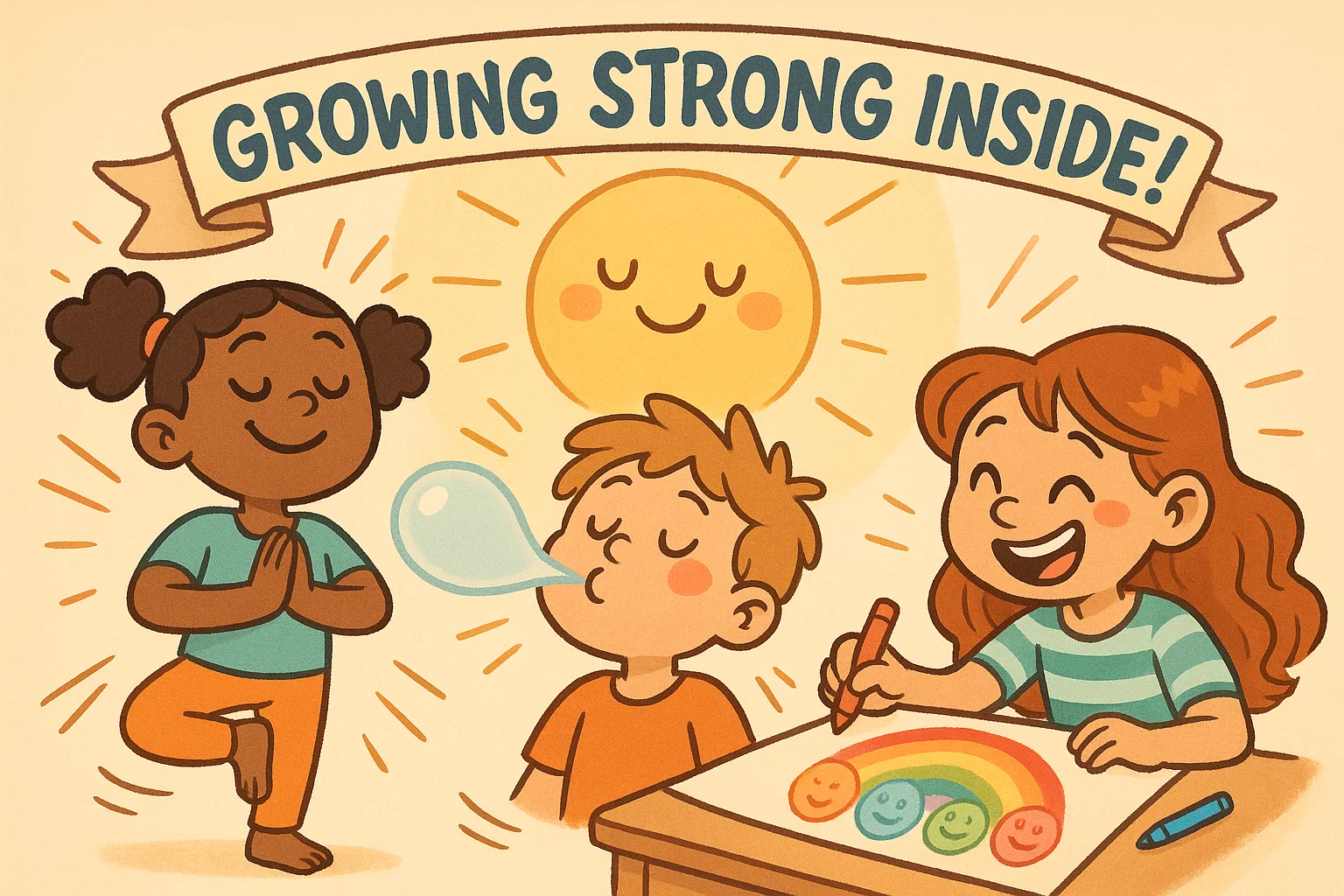
Children can benefit from simple, age-appropriate activities that support emotional regulation, self-confidence, physical relaxation, movement, social connection, and positive daily habits. Well-structured well-being activities can help kids recognize their feelings and build healthy coping skills.
This guide shares practical mental health activities for kids that parents, caregivers, teachers, and youth group leaders can use at home, in classrooms, or in group settings.
Key Takeaways
- Daily Routines Matter: Small, consistent activities such as breathing exercises and journaling can help kids build emotional resilience over time.
- Age-Appropriate Design: Toddlers, elementary-age kids, and teenagers need different types of activities that match their cognitive and emotional development.
- Adult Modeling: Parents, caregivers, and educators can make these activities more effective by modeling calm behavior and keeping emotional check-ins low-pressure.
- Diverse Approaches: A mix of quiet mindfulness, creative arts, physical movement, and social games gives kids a wider range of coping tools.
Mental Health Activities Support Daily Well-Being
Child development research suggests that consistent routines can support children’s emotional well-being. Simple practices—such as breathing exercises, journaling, movement, and creative arts—can help kids identify feelings and manage stress.
Supportive relationships, predictable routines, and safe environments can all help kids build resilience over time.
Best Activities Match Age, Setting, and Mood
Well-being activities work best when adults adapt them to the child’s age, setting, and current emotional state. Toddlers often respond well to sensory, movement-based games; elementary-age kids may benefit from structured peer activities; and adolescents may prefer more private reflective practices, such as journaling.
In classrooms, low-disruption techniques such as finger breathing often work best, while at home, kids may have more room for creative projects like setting up a calm-down space.
Adults Should Model Calm, Openness, and Consistency
Adults can make mental health activities more helpful by joining in, modeling calm responses, and practicing them consistently. When kids see adults name emotions, take breaks, breathe deeply, or ask for help, they learn that mental health is part of everyday life.
Presenting these exercises as low-pressure choices rather than chores can make kids more open to practicing coping skills.
Mix Quiet, Creative, Physical, and Social Activities
A balanced approach should include different types of activities because kids regulate emotions in different ways. Some kids calm down through movement, while others prefer drawing, journaling, sensory play, or quiet breathing.
Using a varied approach helps children build a flexible set of coping strategies they can use when they feel stressed, sad, or overwhelmed.
Benefits of Mental Health Activities for Kids
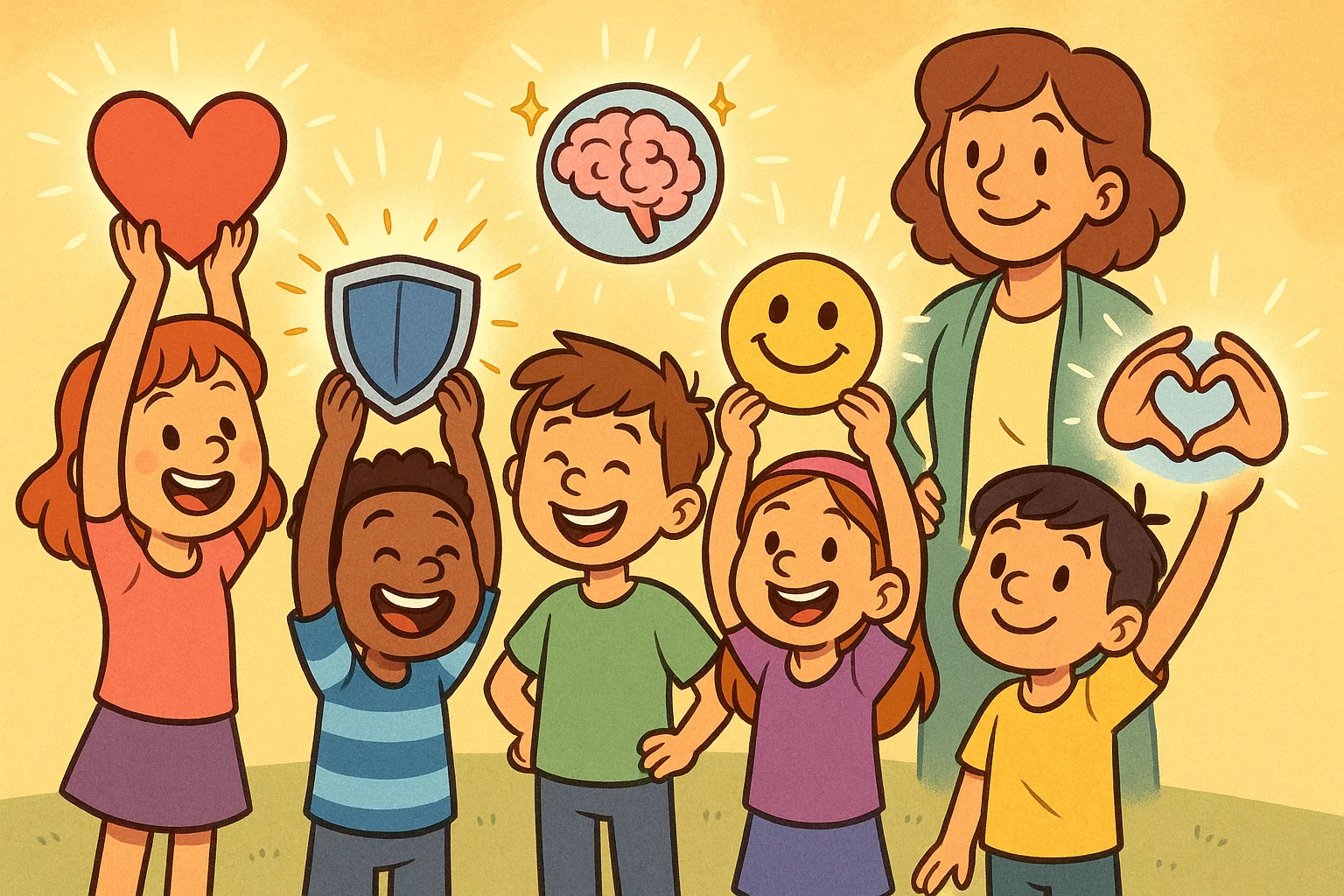
Understanding the potential benefits of regular well-being activities can help parents and educators make time for them in daily routines.
Stronger Emotional Awareness
Emotional well-being activities can help kids notice, name, and talk about their feelings without shame or fear of judgment. Social-emotional learning activities can also help kids choose calmer ways to respond when emotions feel intense.
As kids build self-awareness, they may become better able to communicate their needs before frustration escalates.
Better Stress and Worry Management
Movement, sensory tools, and breathing exercises may help kids calm their bodies and manage stress in the moment. Tools such as a worry box, sensory items, or a quiet calm-down space can help kids express worry before it builds up.
Coping skills do not remove every difficult feeling, but they give kids practical ways to respond when stress appears.
Improved Confidence and Self-Esteem
Positive affirmations, strengths-based crafts, and gratitude jars can help children notice their strengths and build a more positive self-image. Cognitive behavioral principles suggest that noticing personal strengths can help children challenge negative self-talk.
Over time, these activities may help kids feel more confident when they face new challenges.
Healthier School and Family Relationships
Cooperative mental health games, kindness challenges, and predictable family rituals can support empathy, communication, and trust. These activities work best when adults guide them gently and keep the focus on connection rather than performance.
| Relational Structure | Targeted Interpersonal Attribute | Potential Behavioral Outcome |
| Peer-to-peer games | Empathy and turn-taking | May reduce conflicts and support cooperative play |
| Teacher-led check-ins | Classroom trust and safety | May increase participation and emotional openness |
| Family rituals | Open communication | May make it easier for kids to ask for help |
How to Teach Kids About Mental Health
Teaching kids about mental health works best when adults use simple language and connect emotions to everyday experiences.
Use Simple Language for Feelings
Adults should use simple, concrete language to help kids understand basic emotions. Instead of using abstract terms, describe emotions in ways kids can picture or feel in their bodies.
- Sadness: Feeling like a heavy, slow raincloud that makes the body feel tired.
- Anger: Feeling like a hot, bubbling volcano that makes you want to stomp or yell.
- Worry: Feeling like a tight, spinning wheel in the stomach that makes the mind race.
- Calm: Feeling like a quiet, still lake that helps the body breathe slowly.
Normalize Mental Health Conversations
Regular emotional check-ins can make mental health conversations feel normal rather than scary or unusual. Caregivers can add a brief, predictable check-in during breakfast or car rides to ask how everyone is feeling.
Talking about emotional well-being as naturally as sleep, food, and physical health helps children see mental health as part of everyday life.
Connect Emotions With Body Signals
Teaching children to notice body signals can help them recognize emotions before those feelings become overwhelming. Ask children to notice body signals that often come with different emotions.
- Muscle tension: Tight fists or raised shoulders may signal frustration or anger.
- Heartbeat changes: A fast heartbeat may happen during worry, fear, or excitement.
- Stomach discomfort: A fluttery or aching stomach may appear during stress.
- Energy levels: Low energy or slumped posture may signal sadness, stress, or tiredness.
Give Kids Coping Choices
Offering children simple choices during stressful moments can help them practice self-regulation. Instead of telling a child to do one specific thing, offer two healthy options.
For example, a child might choose between a quiet breathing exercise and a short movement break. This kind of choice helps children learn which coping tools work best for them.
Planning Mental Health Activities for Kids
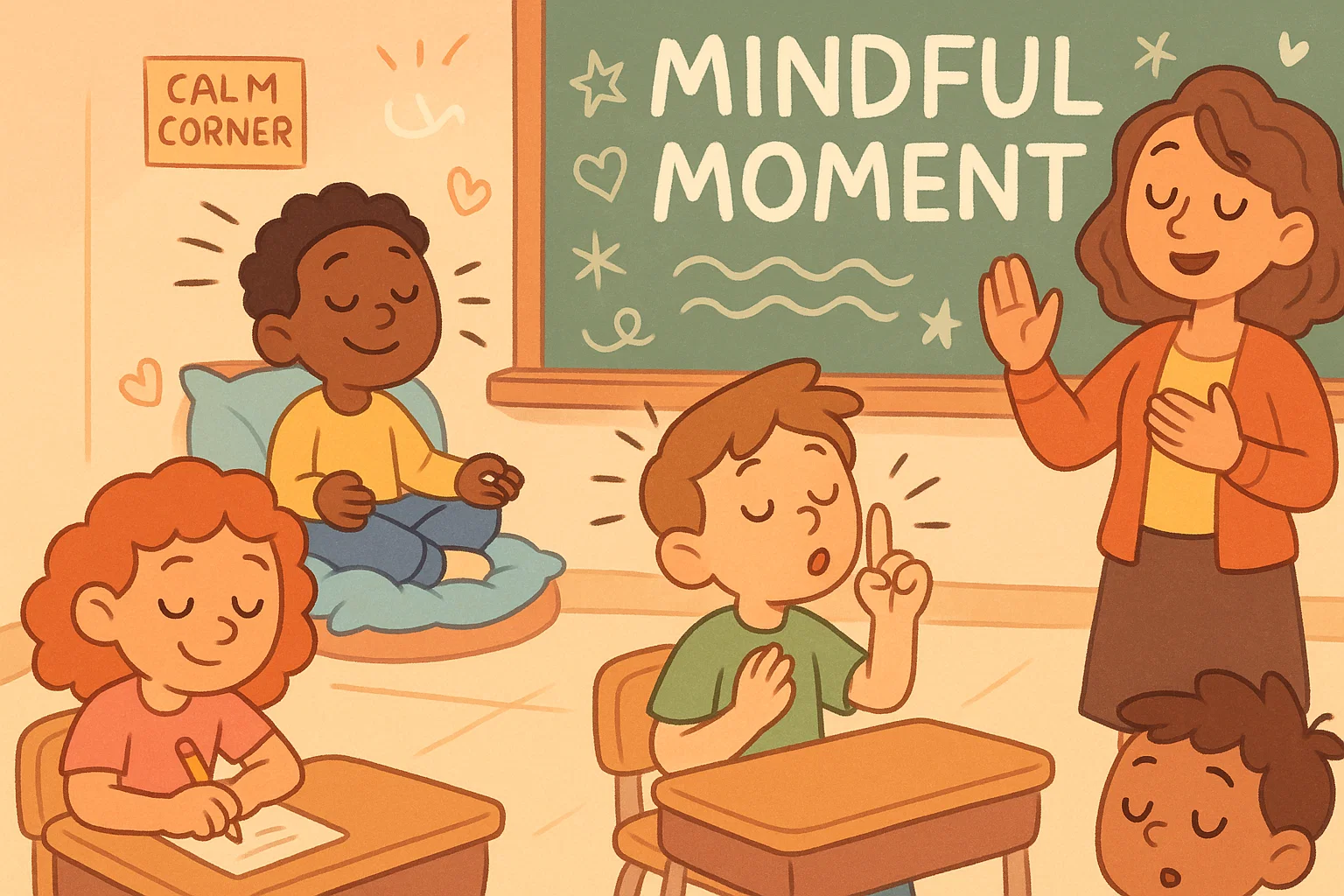
A little preparation helps parents, educators, and group leaders keep mental health activities safe, engaging, and age-appropriate.
Choose a Clear Well-Being Goal
Each activity should have one clear goal so children understand what they are practicing. Before starting, decide whether the main goal is calm, confidence, connection, or expression.
- Calm: Reducing stress through breathing, grounding, or sensory tools.
- Confidence: Building self-esteem through affirmations and strengths-based activities.
- Connection: Building empathy and trust through cooperative games.
- Expression: Helping children share emotions through journaling, drawing, or creative play.
Prepare Materials in Advance
Preparing materials ahead of time reduces delays and helps children stay focused. Keep an organized, easy-to-reach bin of materials for children’s well-being activities.
Useful supplies may include drawing paper, colored sticky notes, crayons, markers, emotion cards, stress balls, calming music, journals, and safe sensory items.
Match the Activity to the Age Group
Activities should match a child’s age, attention span, and developmental stage. Toddlers often do best with short, sensory-rich activities; elementary-age children may enjoy 10- to 15-minute structured games; and teenagers may be ready for longer reflective activities.
Expecting younger children to sit through long periods of abstract reflection can lead to frustration and make the activity less helpful.
Keep Activities Low-Pressure
Participation in emotional expression activities should be voluntary so the space feels safe for every child. Children should not be forced to share private thoughts, read journal entries aloud, or show drawings to a group.
Always offer low-pressure alternatives, such as private journaling, quiet observation, or independent coloring, so children can participate at their own comfort level.
25 Mental Health Activities for Kids
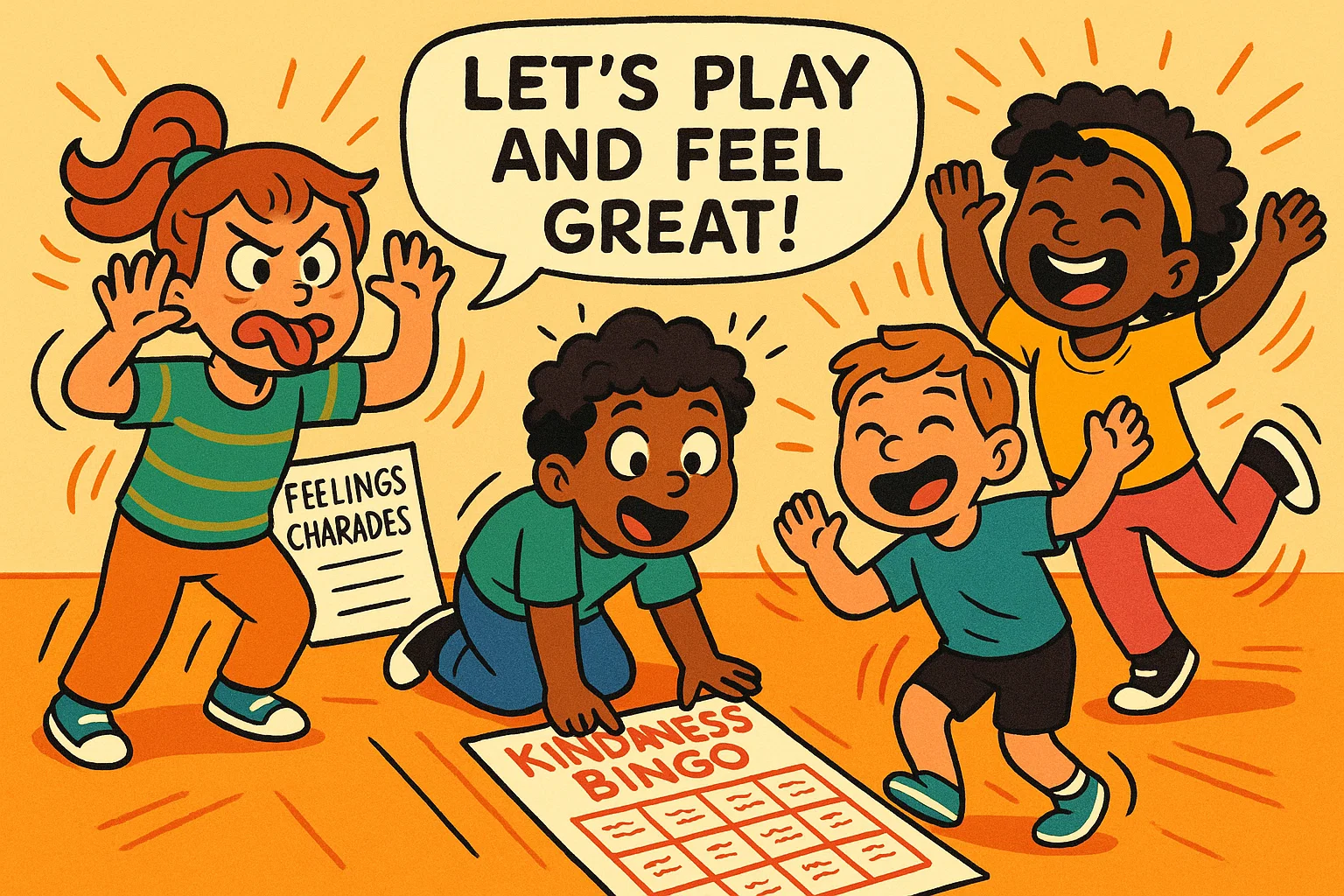
The following list provides practical, step-by-step ideas for fun mental health activities that can help children manage stress and practice emotional regulation.
1. Repeat Positive Affirmations Together
Positive affirmations can help children practice kinder self-talk and build confidence over time. Ask children to stand comfortably and repeat simple, encouraging statements aloud.
For elementary-age children, try phrases such as:
- “I can try hard things.”
- “My thoughts matter.”
- “I am allowed to make mistakes.”
- “I can ask for help when I need it.”
Teenagers can adapt affirmations into private inner dialogue, such as: “I accept myself as I am today.”
2. Wiggle Worries Out
This activity uses quick movement to help children release tension caused by stress or anxiety. Set a timer for 60 seconds and invite children to shake their hands, wiggle their legs, dance, stretch, or move freely.
These bursts of physical energy can help children release tension, boost their mood, and reset before returning to a calmer activity.
3. Try Teddy Bear Breathing
Teddy bear breathing is a simple exercise that helps younger children practice belly breathing. Have the child lie flat on their back and place a favorite soft toy on their belly.
Ask the child to breathe in slowly through the nose and watch the toy rise. Then ask them to breathe out slowly through the mouth and watch the toy fall.
4. Make a Magical Worry Box
A worry box can help children put worries on paper instead of keeping them bottled up. Give the child a small box to decorate with stickers, paper, markers, or paint.
Invite the child to write or draw their worries on strips of paper and place them in the box. Later, review the worries together during a calm conversation.
5. Create a Gratitude Jar
A gratitude jar helps children notice positive daily experiences and practice appreciation. Each evening, ask family members or students to write down one positive event, kind act, or happy moment.
Place the slips inside a clear jar and set aside time each week to read them together.
6. Start a Kindness Challenge
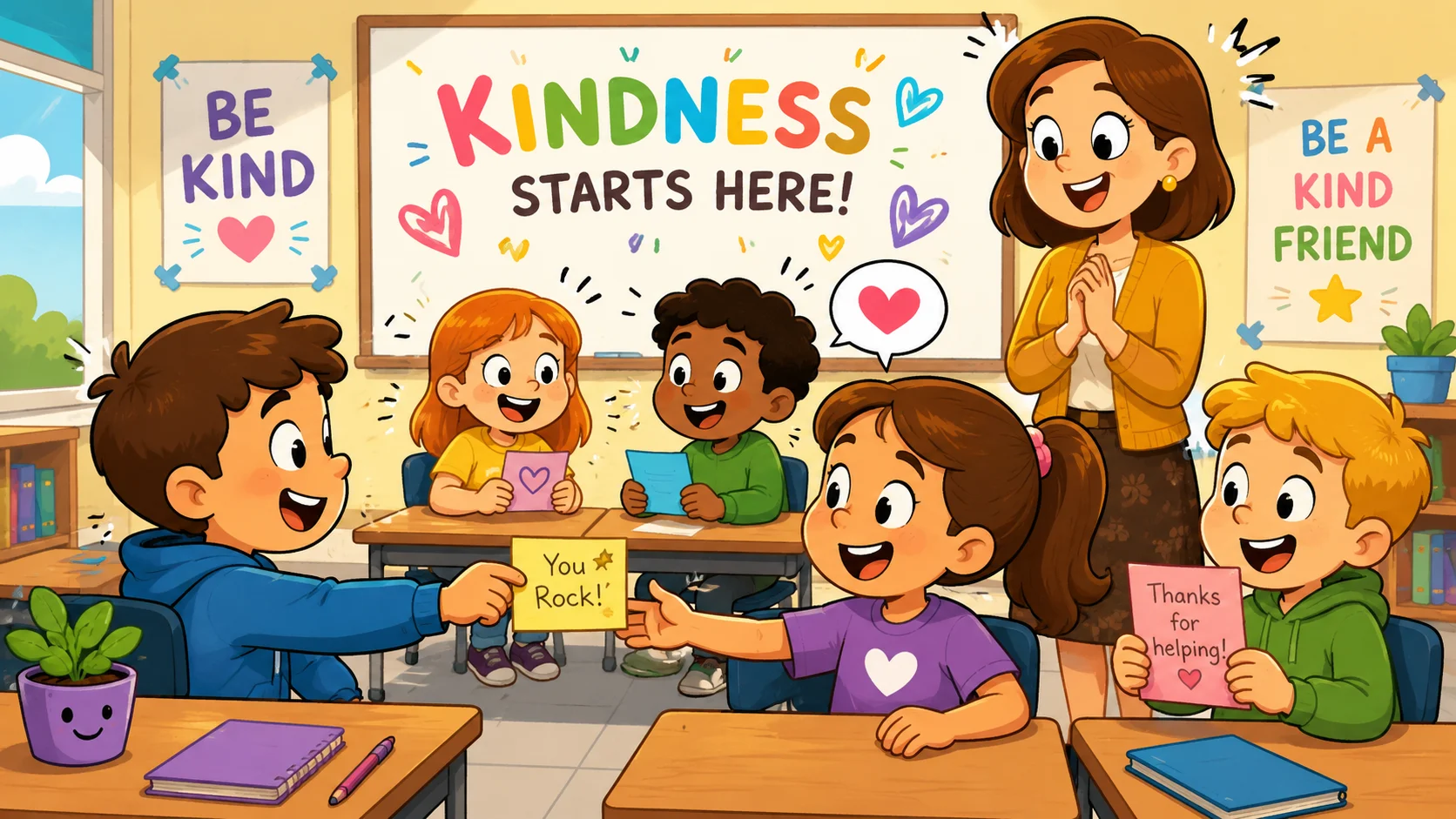
A kindness challenge helps children shift attention away from stress while practicing empathy and prosocial behavior. Create a short checklist of kind acts for the child to complete during the week.
Examples include:
- Give a genuine compliment.
- Help a family member with a small task.
- Invite someone to play.
- Thank a teacher, friend, or caregiver.
7. Go on a Listening Walk
A listening walk is an outdoor mindfulness activity that helps children focus on the present moment. Take a quiet walk through a park, school field, or neighborhood.
Ask children to stay silent for a few minutes and listen for sounds such as birds chirping, leaves rustling, passing traffic, footsteps, or distant voices.
8. Find a Gratitude Rock
This tactile exercise uses a small object to remind children to notice something positive each day. Ask the child to choose a smooth, pocket-sized pebble and decorate it with paint or markers.
The child can keep the gratitude rock on a bedside table or desk as a reminder to think of one good thing each day.
9. Build a Calm-Down Corner
A calm-down corner is not a punishment. It is a space at home or in the classroom where a child can take a break and practice calming strategies.
Add items such as soft cushions, picture books, coloring pages, noise-reducing headphones, sensory tools, and simple coping strategy cards. This helps children learn that stepping away to calm down is healthy and acceptable.
10. Make a Mind Jar
A mind jar gives children a visual way to understand how feelings can swirl and then settle. Fill a clean plastic bottle with warm water, clear non-toxic glue, and fine glitter. Seal the lid securely, and supervise younger children while they use it.
Invite the child to shake the jar, watch the glitter swirl, and then sit quietly as it settles, using it as a visual reminder that feelings can settle too.
11. Practice Finger Breathing
Finger breathing is a portable, discreet breathing technique that elementary-age children can use during quiet classroom moments.
Ask the child to hold up one hand with fingers spread wide. Using the index finger of the other hand, they trace up one finger while breathing in, then trace down while breathing out. Repeat until they have traced the whole hand.
12. Do a Full-Body Scan
A full-body scan can help children notice tension and relax their muscles. Ask the child to sit or lie down comfortably and bring attention to one body part at a time.
They can start with their toes and slowly move upward to the legs, belly, shoulders, hands, and face. Encourage them to notice tightness and gently relax each area.
13. Try Kids’ Yoga
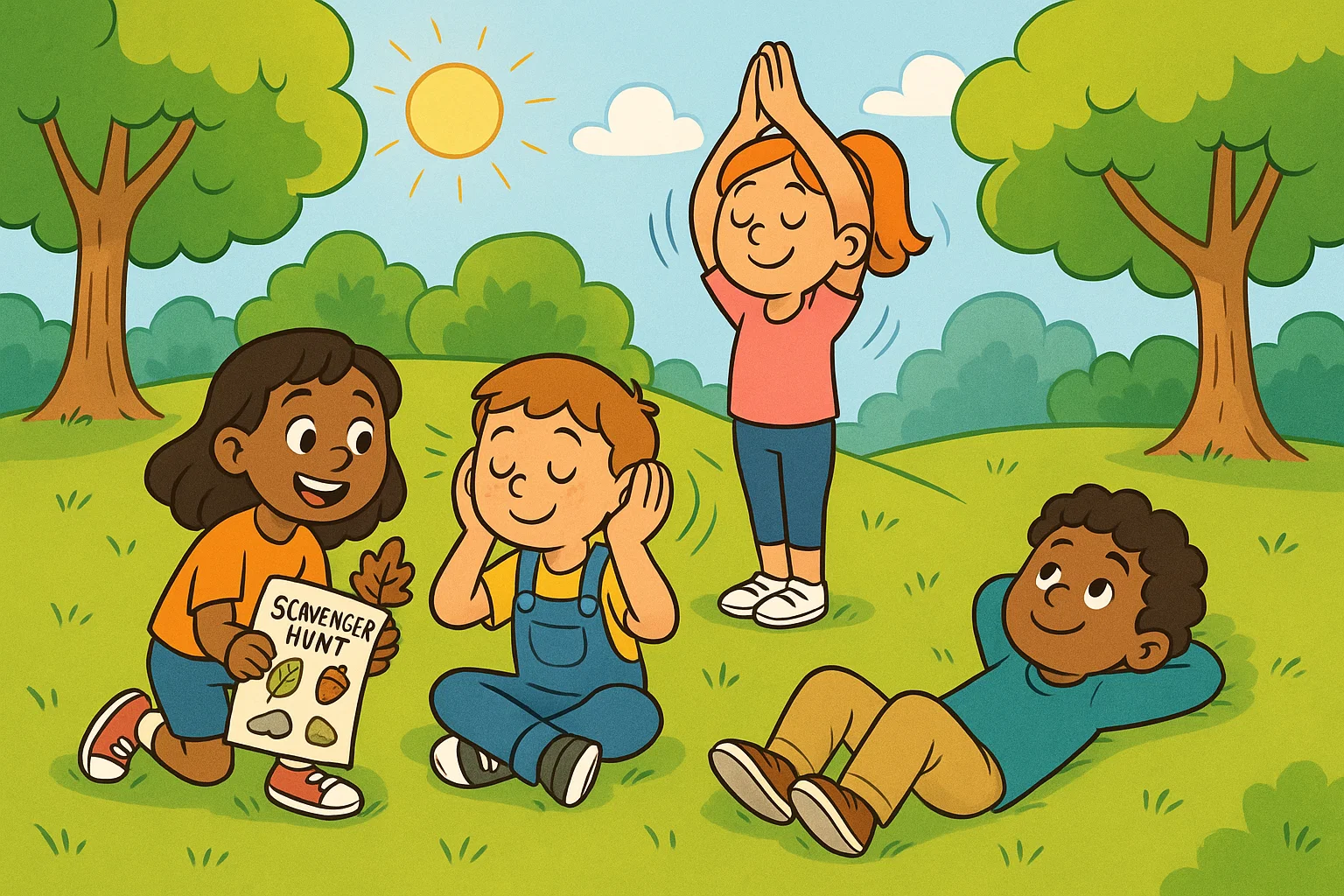
Simple yoga poses combine gentle movement with focus and breathing. Guide children through playful poses such as Tree Pose, Cat-Cow, Butterfly Pose, or Child’s Pose.
These movements can support body awareness, balance, and relaxation.
14. Dance for a Mood Boost
An energetic dance break can interrupt a low mood and help children reconnect with their bodies. Choose an upbeat, familiar song and invite everyone to move freely without worrying about how they look.
This playful movement can help children feel more energized and improve their mood.
15. Create a Feelings Journal
Journaling gives older children and teenagers a private outlet for processing emotions. Provide a dedicated notebook and offer simple prompts that feel safe and easy to answer.
Useful prompts include:
- “Today my body feels like…”
- “Something that brought me a little joy today was…”
- “Tomorrow, I can support my well-being by…”
- “One feeling I noticed today was…”
16. Draw Emotions as Weather
This art activity helps younger children turn abstract feelings into images. Give the child crayons or markers and ask them to draw their current inner weather.
A bright sun might represent calm or joy. Grey clouds might show sadness. A tornado might show anger. Lightning bolts might represent frustration or overwhelm.
17. Make a Feelings Carpet Adventure
This imaginative role-play activity helps preschool and early elementary-age children explore emotions through storytelling and movement.
Lay colored mats or paper squares on the floor and assign each one an emotional “place,” such as Joyful Jungle, Worried Woods, Angry Volcano, or Calm Lake. Guide children to move to each area, act out the feeling safely, and talk about what someone in that place might need.
18. Clear Personal Space
A tidy space can help some kids feel calmer and more in control. Set aside 10 minutes for the child to organize their desk, toy bin, backpack, or school locker.
The goal is not perfection. The activity simply gives kids a small, manageable way to reduce clutter and create a calmer environment.
19. Try an At-Home Spa Day
An at-home spa day shows kids simple ways to rest, relax, and care for their bodies. Create a calm routine with a warm bath, soft music, dim lighting, lotion, cozy pajamas, or quiet reading.
This activity can help kids understand that rest and self-care are important parts of well-being.
20. Practice Savoring the Moment
Savoring helps children slow down and notice pleasant moments through their senses. When a child is enjoying something simple—like eating a strawberry or sitting in the sunshine—invite them to pause and name five sensory details.
Ask:
- What do you see?
- What do you hear?
- What do you smell?
- What do you feel?
- What do you taste?
21. Play a Mental Health Board Game
Custom mental health games can make emotional regulation skills feel playful and interactive. Use a simple board game and add custom cards with small emotional-regulation tasks.
Players might move forward after answering an emotional check-in question, taking three deep breaths, sharing a positive affirmation, or naming one coping strategy.
22. Use Sensory Toys
Sensory tools can give kids a quiet way to manage restlessness and stay focused during lessons or calm routines. Useful items may include stress balls, textured strips, smooth worry stones, fidget tools, or, with adult guidance, weighted lap pads.
These tools work best when kids are taught how and when to use them respectfully.
23. Make a Self-Esteem Shield
This creative art project helps kids reflect on their strengths, support systems, proud memories, and coping strategies.
Draw a large shield on poster board and divide it into four sections. Ask the child to fill each section with drawings or words about:
- Personal strengths
- People who support them
- Proud memories
- Favorite coping strategies
24. Send a Love Note
Practicing appreciation can strengthen social connection and help kids notice positive relationships in their lives. Ask the child to write or draw a short note for a friend, teacher, sibling, parent, or caregiver.
The note can say thank you, share a compliment, or describe something the child appreciates about that person.
25. Try the “Go Home Laughing” Challenge
Ending a school day, group session, or evening routine with laughter can help kids transition with a lighter mood. Gather the group or family to share clean jokes, recall funny memories, or make harmless silly faces for five minutes.
This simple ritual supports connection and gives kids a positive ending to the day.
FAQ About Mental Health Activities for Kids
What are top mental health activities for kids?
Top activities include Mindful Breathing Techniques, building a Gratitude Jar, practicing Positive Affirmations, engaging in Emotion Journaling or art, and creating a sensory-friendly Safe Space Box. These activities are widely used to support children’s mental wellbeing.
How to support mental health in children?
You can support a child’s mental health and wellbeing by listening without judgment, validating their different emotions (“I hear you are feeling really angry right now”), modeling your own healthy coping, and consistently providing opportunities for mental health activities helps them practice emotional skills.
How to include mental health routines in daily life?
Integrate them naturally: two minutes of mindful breathing exercises before bed, a gratitude check at the dinner table, or an emotional check-in during the car ride to school. Consistency, not duration, is key to forming strong mental health habits.
Are mental health activities enough without professional help?
While engaging in mental health activities is crucial for development and prevention, they are not a substitute for professional intervention. If a child displays persistent changes in mood, sleep, appetite, or behavior, or if anxiety, anger, or sadness significantly impacts their daily functioning, professional help from a child and adolescent mental health specialist may be necessary.
What if a child shows no interest in activities?
If a child is reluctant, try play-based alternatives or embed the activity within something they already enjoy. For example, instead of formal journaling, suggest drawing their feelings. Use movement (like a silly dance break or outdoor play) to release tension before trying a calming activity. The key is to make it feel like a choice and a fun opportunity, not a chore.
Take a short quiz to find out what your everyday choices say about your parenting style
When your child is curious about something new, what’s your instinct?
Take a short quiz to find out what your everyday choices say about your parenting style
“Can I download this app?” What happens next?
Take a short quiz to find out what your everyday choices say about your parenting style
When it comes to rules at home, which sounds most like you?
Take a short quiz to find out what your everyday choices say about your parenting style
If you could give your child one life skill today, what would you pick?
Take a short quiz to find out what your everyday choices say about your parenting style
Your child gets to choose what to watch. What would your ideal setup look like?
Take a short quiz to find out what your everyday choices say about your parenting style
Pick your parenting superpower ✨