Best Teaching Methods for Effective Classroom Learning in 2026

 Discover a Free Education Video App for Kids
Pastory uses AI to personalize educational video content based on your child’s interests and personality. Safe, engaging, and built for curious young minds. Sign up now to stay updated and enjoy early access with a free trial
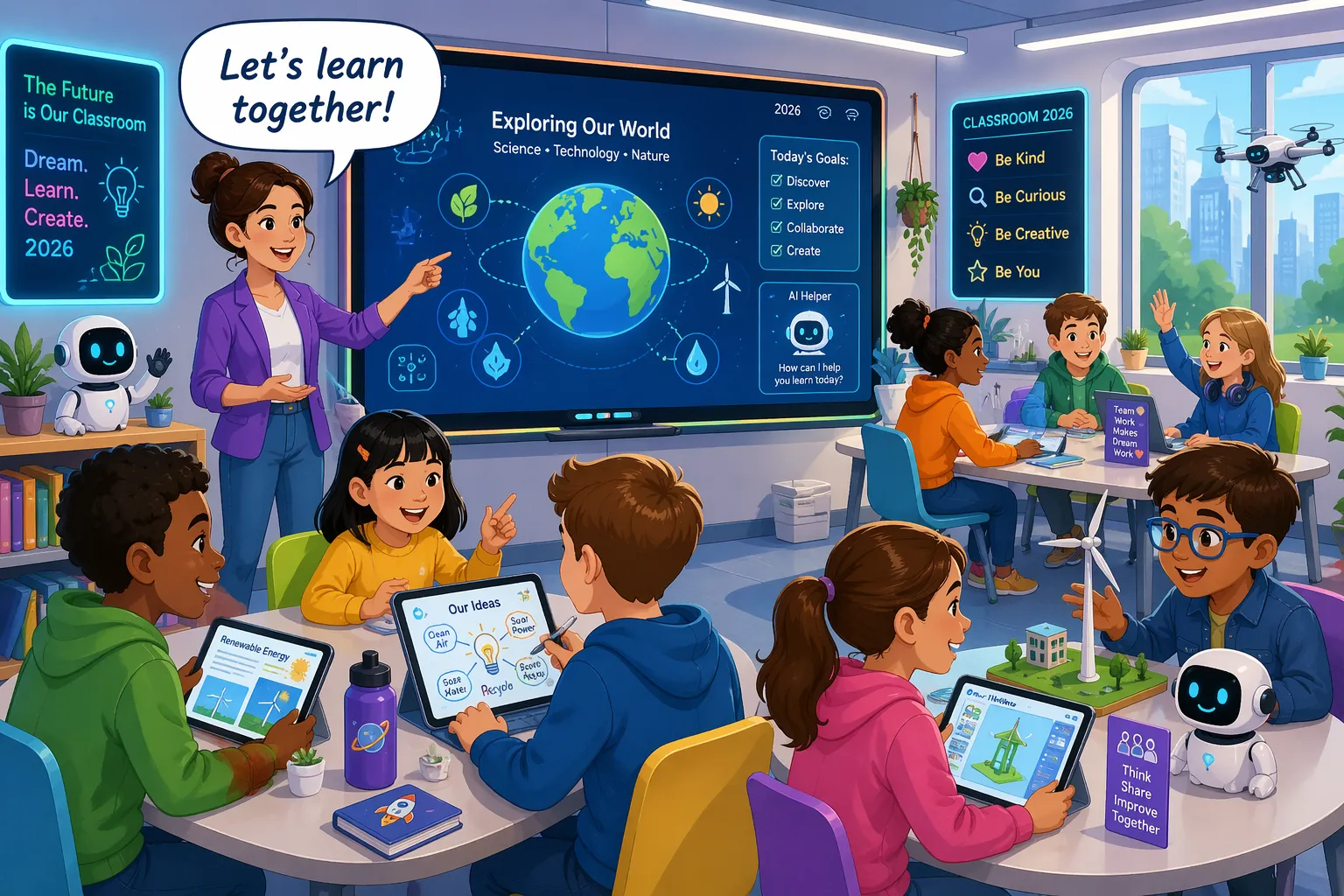
Choosing the right teaching method can make the difference between a student who merely memorizes facts and one who genuinely understands and applies them. This guide covers modern and traditional teaching methods, explains how they differ, and gives educators practical tools for applying them in real classrooms. Whether you teach kindergartners or fifth graders, the approaches here offer actionable insights grounded in current research and child development principles.
What Are Teaching Methods?
Teaching methods are the structured approaches educators use to deliver instruction, engage learners, and support student learning. Understanding how methods differ from related terms — and why they matter — helps teachers make informed decisions in any classroom environment.
Core Concept of Teaching Methods
A teaching method is the overarching framework an educator uses to organize and deliver instruction. It encompasses the philosophy behind how knowledge is shared, how learners are positioned in the process, and what kinds of thinking are encouraged. For example, a direct instruction method places the teacher at the center of knowledge delivery, while an inquiry-based method positions students as active investigators.
Difference Between Teaching Methods, Strategies, and Approaches
These three terms are often used interchangeably, but they describe different levels of planning:
- Teaching method — the broad system or model (e.g., project-based learning, flipped classroom)
- Teaching strategy — a specific technique used within a method (e.g., think-pair-share, graphic organizers)
- Teaching approach — the underlying philosophy or belief about how learning happens (e.g., constructivism, behaviorism)
Understanding the distinction helps educators build coherent lesson plans where the approach, method, and strategy all work in the same direction.
Role of Teaching Methods in Student Outcomes
The teaching method an educator selects directly shapes how students engage with content, retain information, and develop skills. Research published in the Review of Educational Research found that active learning strategies — compared to traditional lectures — produced significantly higher student performance across STEM subjects. The method is not just a delivery vehicle; it actively shapes the learning process and classroom environment.
Main Types of Teaching Methods
Teaching methods fall into a few broad categories based on where the focus of instruction lies — with the teacher, with the student, or distributed between both. Understanding these categories helps educators match their approach to learning goals and student needs.
Teacher-Centered Teaching Methods
In a teacher-centered approach, the educator holds primary responsibility for delivering content and directing the pace of instruction. Common formats include lectures, demonstrations, and scripted direct instruction. This approach works well when introducing new or complex concepts, establishing foundational knowledge, or managing large classroom sizes where individual facilitation is difficult.
Student-Centered Teaching Methods
A student-centered approach shifts the active role to the learner. Students explore, question, collaborate, and construct meaning through their own engagement with material. This model supports deeper understanding and intrinsic motivation.
Blended Learning and Universal Design for Learning (UDL)
Blended learning combines in-person instruction with digital tools, creating a flexible learning environment that accommodates different learning styles and paces. Universal Design for Learning (UDL) extends this further by building multiple means of engagement, representation, and expression into the classroom from the outset. Together, these approaches support diverse learners, including those with individualized education programs (IEPs).
Individual and Group Learning Approaches
Individual learning allows students to work at their own pace and focus on personal gaps. Group learning, by contrast, builds communication skills, shared problem-solving, and peer accountability. Most effective classrooms balance both: using group activities to develop social and collaborative skills while reserving individual tasks for consolidation and independent practice.
Effective Teaching Methods for Classroom Success
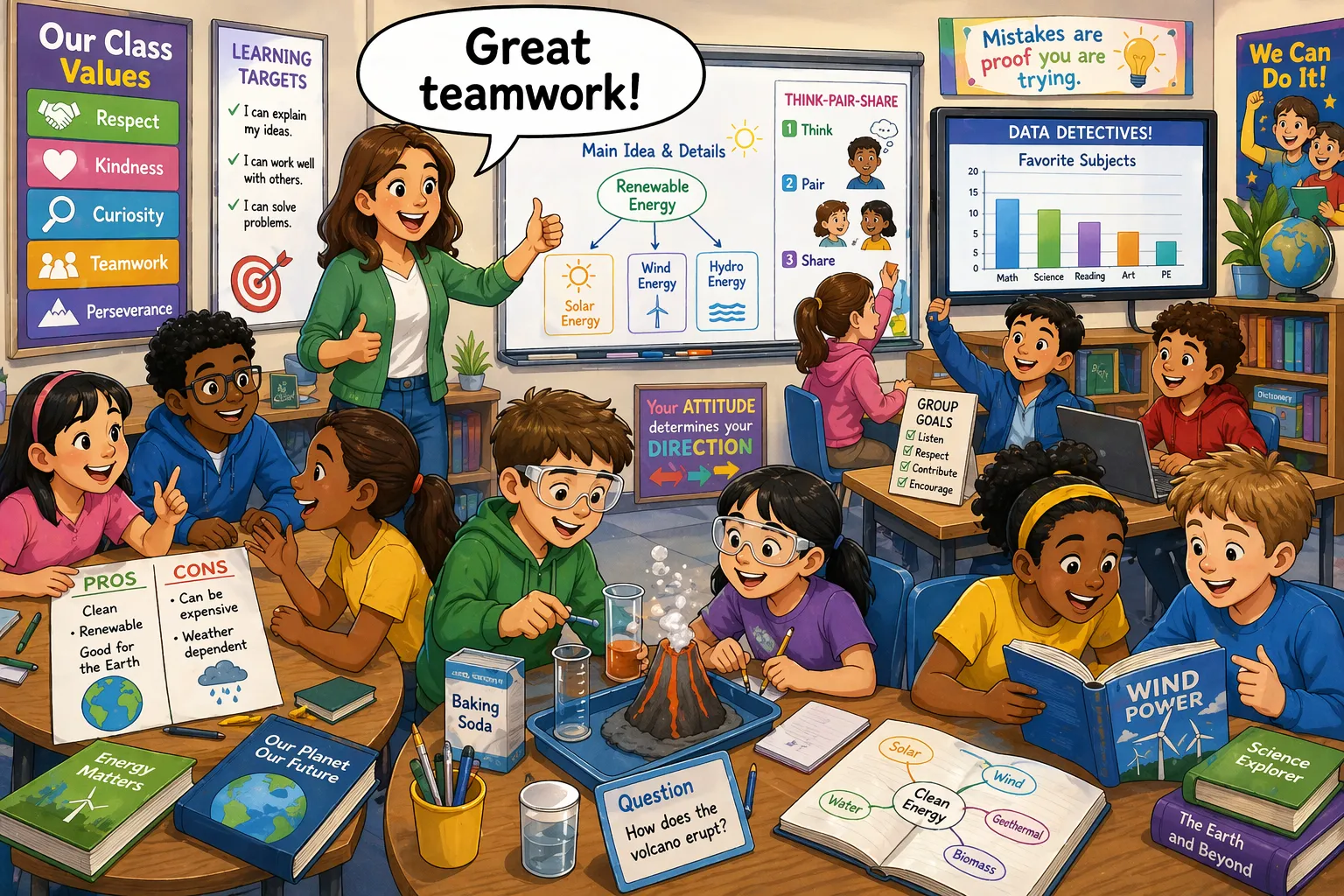
Below is a practical breakdown of the most widely used and research-supported teaching methods available to educators today.
Game-Based Learning
Game-based learning uses structured play — board games, digital simulations, or role-play scenarios — to reinforce academic concepts and motivate students. Games provide immediate feedback loops, which help students self-correct and stay engaged. This method is especially effective in early elementary classrooms, where play remains a primary vehicle for cognitive development.
Project-Based Learning
Project-based learning asks students to investigate a real-world question or problem over an extended period, producing a tangible outcome. This method develops critical thinking, research skills, and persistence. A science class might spend three weeks designing a water filtration system; a language arts class might create a community newspaper. The key is that the project drives instruction, not the reverse.
Social-Emotional Learning
Social-emotional learning (SEL) integrates emotional intelligence, self-regulation, and interpersonal skills directly into classroom instruction. SEL is not a separate subject — it is woven into daily routines, conflict resolution, and how teachers respond to student behavior.
Flipped Classroom Model
In the flipped classroom model, students engage with new content — typically through video or reading — before class, and classroom time is reserved for practice, discussion, and application. This inverts the traditional homework structure. Teachers can then use classroom time more responsively, addressing specific confusion rather than delivering one-size-fits-all lectures.
Inquiry-Based Learning
Inquiry-based learning centers on student-generated questions and guided investigation. Rather than receiving answers directly, learners develop hypotheses, gather evidence, and draw conclusions. This approach mirrors the scientific method and supports the development of analytical thinking skills applicable across subjects.
Problem-Based Learning
Problem-based learning presents students with a complex, real-world problem at the start of a unit. Students identify what they know, what they need to learn, and how to find that information. Medical and law schools have long used this approach, and it is increasingly adopted in K–12 settings for its ability to develop autonomous, self-directed learners.
Differentiated Instruction
Differentiated instruction involves adapting content, process, product, or learning environment to meet individual student needs. A teacher might offer the same math concept through visual models, hands-on manipulatives, or abstract notation — depending on what each student needs. This is particularly valuable in mixed-ability classrooms where students arrive with significantly different prior knowledge.
Kinesthetic Learning
Kinesthetic learning prioritizes physical activities as vehicles for understanding. Students learn through movement, building, and doing — not just watching or listening. Examples include counting steps on a number line, acting out historical events, or assembling models in science. This approach benefits students who struggle with passive instruction and need a more active classroom format.
Technology-Based Learning
Technology-based learning integrates digital platforms, educational software, and multimedia tools into instruction. Adaptive programs like Khan Academy or DreamBox adjust content in real time based on student performance. Technology-based approaches support both online education and in-person classrooms, and are especially effective when used to personalize the learning pace rather than simply digitize traditional lectures.
Collaborative Learning Strategies
Collaborative learning places students in structured groups to solve problems, discuss ideas, or complete tasks together. Unlike unstructured group work, effective collaboration includes defined roles, shared accountability, and facilitated reflection. Studies suggest that peer learning improves retention and comprehension more effectively than re-reading or re-listening alone.
Competency-Based Learning
Competency-based learning measures progress by skill mastery rather than time spent in class. Students advance when they demonstrate proficiency, not simply when the calendar dictates. This approach is particularly effective for learners who need more time with foundational skills before moving on, and reduces the risk of knowledge gaps accumulating over time.
Benefits of Using Diverse Teaching Methods
No single teaching method works for every student, every topic, or every classroom. Combining various teaching methods creates a richer, more responsive learning environment.
Improved Student Performance
Varied instruction engages multiple cognitive pathways, which deepens understanding and improves long-term retention. When students encounter a concept through direct instruction, then explore it through a hands-on project, then discuss it with peers, they process the material more thoroughly than through any one method alone.
Increased Classroom Engagement
Rotating between teacher-centered and student-centered activities prevents the passive disengagement that tends to build when instruction is monotonous. Students who feel varied, active, and relevant within their classroom learning are more likely to participate, ask questions, and stay on task.
Enhanced Critical Thinking Skills
Methods like inquiry-based learning, problem-based learning, and project-based learning consistently push students beyond recall into analysis, evaluation, and creation — the higher levels of Bloom’s Taxonomy. These skills transfer beyond the classroom into everyday reasoning and future academic work.
Tips for Using Teaching Methods Effectively
Knowing the methods is the first step. Using them well requires deliberate planning and ongoing adjustment.
Choosing the Right Method for Learning Objectives
Before selecting a teaching method, identify what students should be able to do by the end of the lesson. A method should serve the objective — not the other way around. Introducing a new vocabulary concept may call for direct instruction, while applying that vocabulary in context may call for collaborative discussion or creative writing.
Combining Multiple Teaching Methods
Most effective lessons blend more than one approach. A teacher might open with a short lecture (teacher-centered), transition to small-group problem solving (collaborative), and close with individual reflection (student-centered). The key is intentional sequencing:
- Open with clear instruction to establish the concept
- Move into guided practice with teacher support
- Release students to independent or collaborative application
- Debrief as a group to consolidate understanding
Adapting Methods for Different Age Groups
Teaching methods that work for ten-year-olds may not work for five-year-olds, and vice versa. Younger children benefit from kinesthetic learning, game-based learning, and very structured routines. Older elementary students can handle longer projects, more abstract inquiry, and greater autonomy. Adapting the approach to learning age and development stage is as important as the method itself.
Using Technology to Enhance Teaching Methods
Digital tools should amplify the method, not replace good teaching. A flipped classroom needs high-quality pre-class videos. Differentiated instruction benefits from adaptive software. Technology-based learning platforms are most effective when teachers review the data they generate and use it to adjust instruction — rather than letting the software run on autopilot.
Challenges in Implementing Teaching Methods
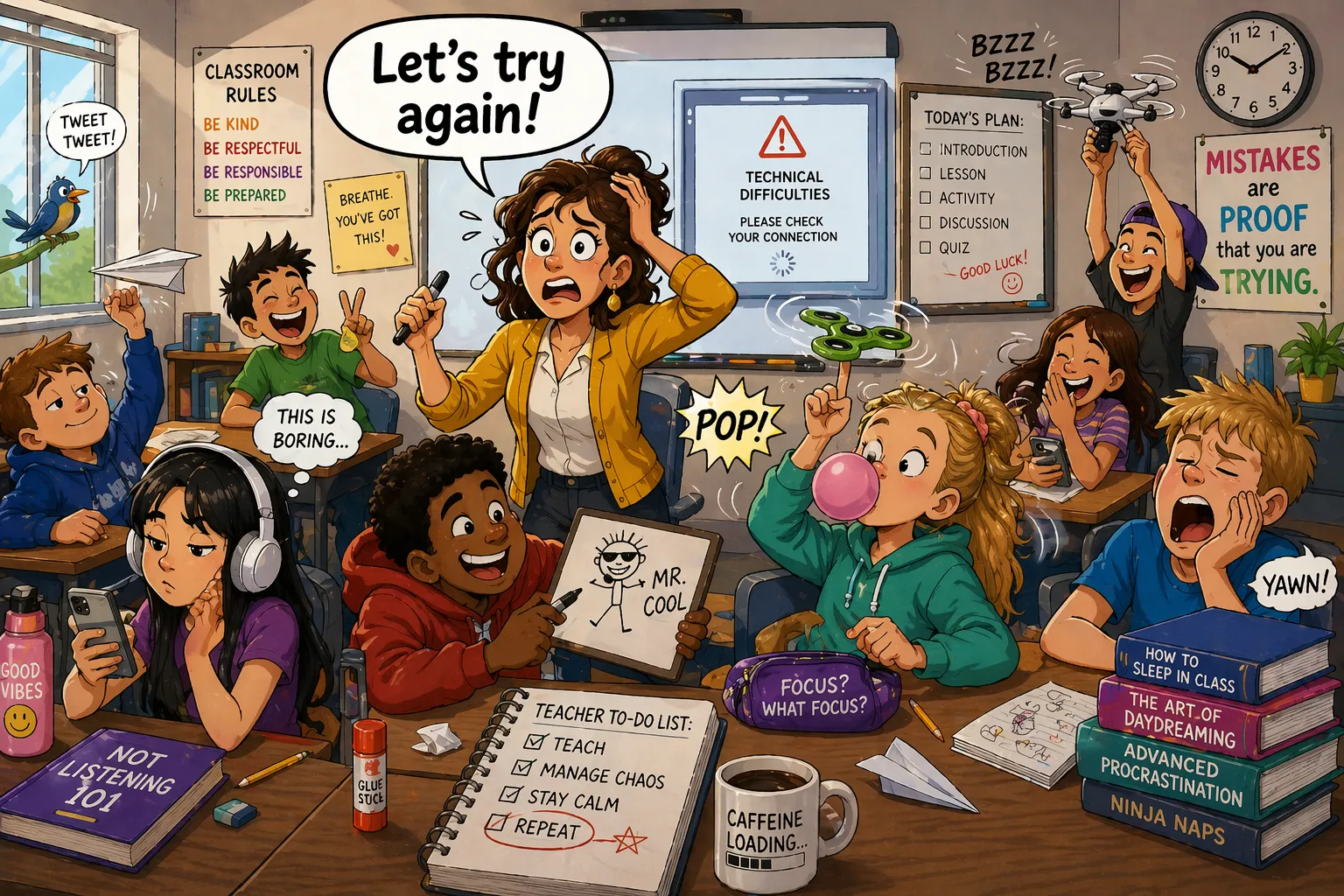
Even well-designed methods face real obstacles in classroom settings. Understanding these challenges helps educators plan around them.
Classroom Size and Resource Limitations
Large class sizes make student-centered approaches harder to manage. A teacher facilitating inquiry-based learning across 30 students simultaneously requires strong classroom management skills and often additional materials. Resource-limited schools may also lack the technology needed to support blended or competency-based approaches effectively.
Balancing Curriculum Requirements with Innovation
Educators are frequently caught between the flexibility required by modern teaching methods and the rigidity of standardized curriculum frameworks. Project-based learning, for example, takes more time than direct instruction and may be harder to align with pacing guides. The solution is often to embed innovative methods within existing units rather than replacing the curriculum wholesale.
Resistance to Change in Education Systems
Institutional inertia is real. Teachers trained in traditional models may be skeptical of student-centered approaches, and administrators may not have the resources to support professional development. Change in teaching practice tends to be most successful when it is supported by school leadership, introduced incrementally, and grounded in visible student outcomes.
Frequently Asked Questions
How can educators stay updated with teaching methods?
Professional development workshops, peer observation, education journals, and platforms like Edutopia or ASCD offer current, practical resources. Many universities also offer continuing education courses in pedagogy and curriculum design.
Are traditional teaching methods still relevant?
Yes. Direct instruction and lecture-based methods remain effective for introducing new content, particularly with younger learners or when time and resources are limited. The most effective classrooms blend traditional and modern approaches rather than abandoning one in favor of the other.
How does technology support teaching methods?
Technology enables personalization, immediate feedback, and access to diverse content types. Adaptive learning platforms adjust in real time to student performance. Digital collaboration tools support group work across distances. When integrated thoughtfully, technology enhances almost every teaching method covered in this guide.
Is it difficult to use multiple teaching methods in one classroom?
It requires planning, but it is very manageable. Starting with two methods — for example, pairing direct instruction with one collaborative activity — is enough to increase engagement meaningfully. Over time, rotating between methods becomes a natural part of lesson design rather than an extra burden.

Take a short quiz to find out what your everyday choices say about your parenting style
When your child is curious about something new, what’s your instinct?
Take a short quiz to find out what your everyday choices say about your parenting style
“Can I download this app?” What happens next?
Take a short quiz to find out what your everyday choices say about your parenting style
When it comes to rules at home, which sounds most like you?
Take a short quiz to find out what your everyday choices say about your parenting style
If you could give your child one life skill today, what would you pick?
Take a short quiz to find out what your everyday choices say about your parenting style
Your child gets to choose what to watch. What would your ideal setup look like?
Take a short quiz to find out what your everyday choices say about your parenting style
Pick your parenting superpower ✨