Best Modern Teaching Aids for Preschoolers: Types, Examples, and Tools for the Nursery Classroom

 Discover a Free Education Video App for Kids
Pastory uses AI to personalize educational video content based on your child’s interests and personality. Safe, engaging, and built for curious young minds. Sign up now to stay updated and enjoy early access with a free trial
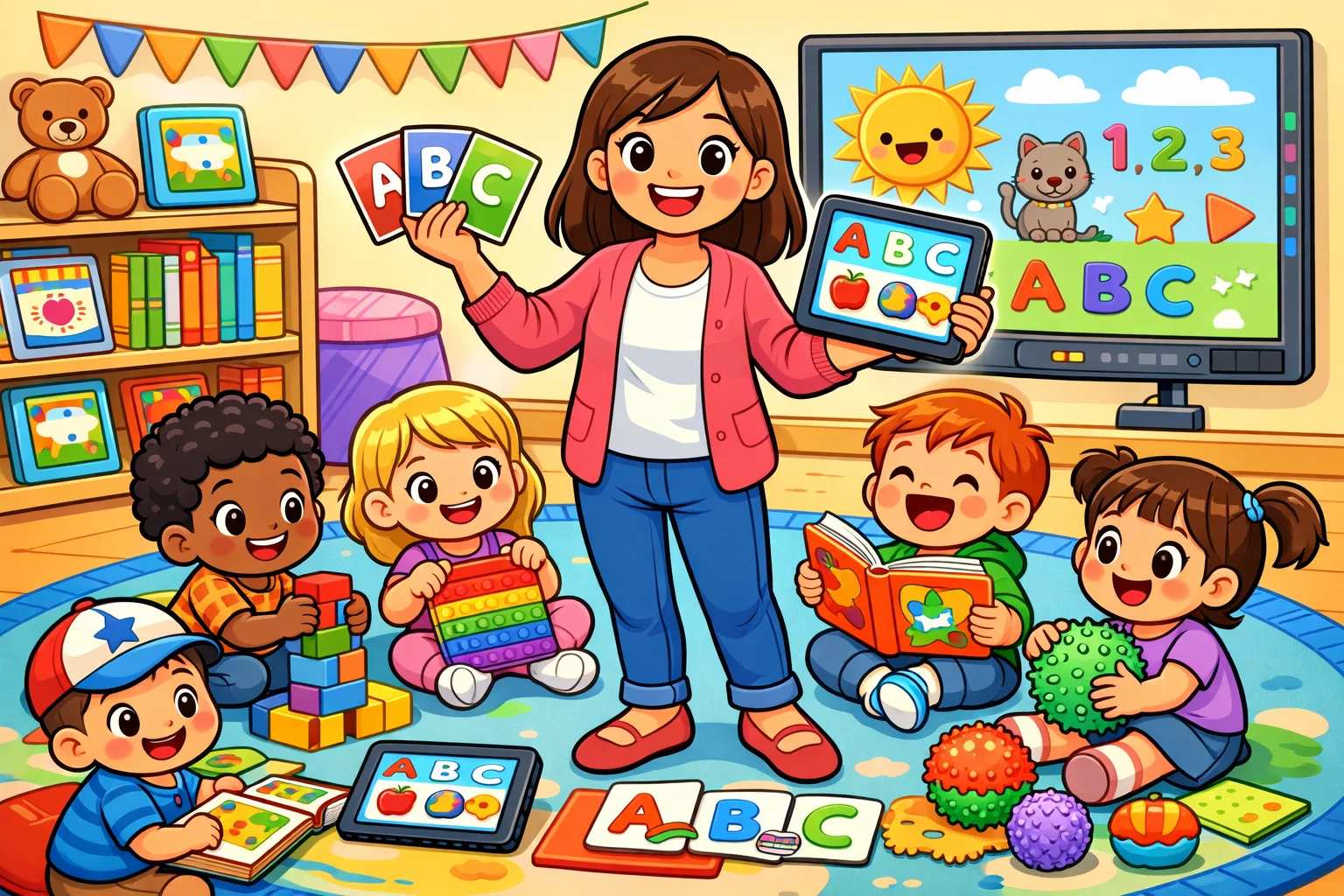
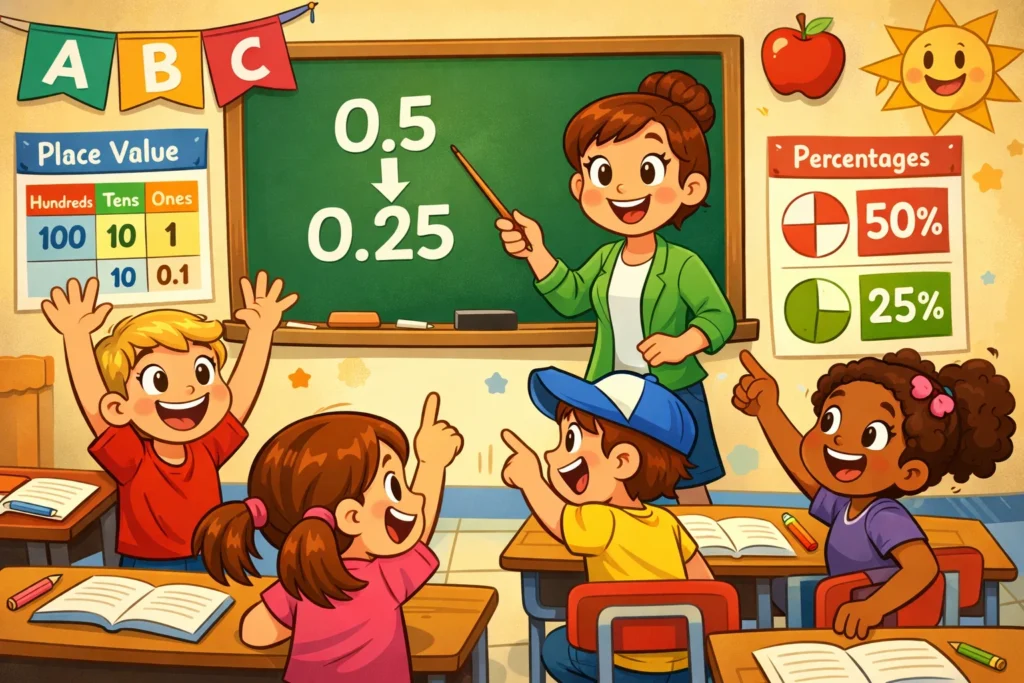
In the dynamic landscape of early childhood education, teaching aids have evolved from simple chalkboards into a sophisticated range of tools that blend tactile exploration with digital innovation. For children in preschool, learning is not a passive act of sitting and listening; it is an active process of discovery. Modern teachers use these tools to connect classroom learning with real life, making complex ideas easier for young children to understand and enjoy.
What Modern Teaching Aids for Preschoolers Are
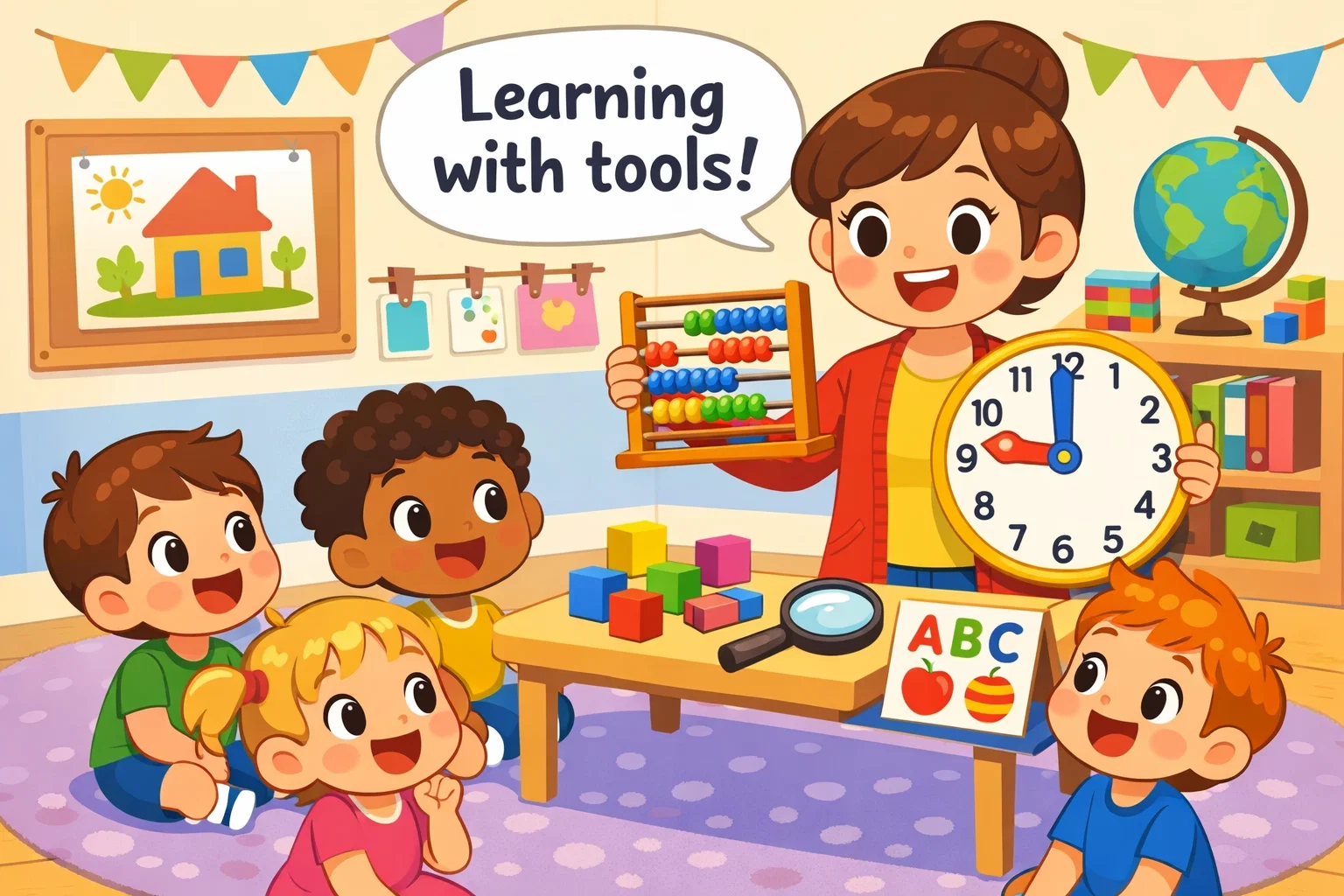
Modern teaching aids are instructional materials or devices used by educators to enhance the learning experience for children aged three to six. Unlike general educational tools, these are specifically designed to cater to the shorter attention spans and high sensory needs of the preschool and nursery segment. They serve as the primary material through which a child interacts with new information, moving beyond mere rote memorization to active engagement.
Meaning and Scope
The term “modern teaching aids” encompasses a broad spectrum of resources including visual aids, audio aids, and interactive whiteboards. The scope extends from teacher-made DIY puzzles to high-tech educational apps and digital projections. These aids help translate curriculum goals into hands-on experiences that children can see, touch, and understand, turning the classroom into a space for exploration and growth.
Difference Between Traditional and Modern Aids
Traditional aids primarily consist of chalk, printed books, and static posters. While these remain effective, modern aids include dynamic video content, smart boards, and augmented reality (AR). The primary difference lies in interactivity; modern tools involve the student in the process, allowing them to explore and manipulate the subject matter rather than just listen to a lecture. Modern does not mean “exclusively digital,” but rather “functionally interactive.”
Why Preschool Stage Needs Special Aids
Preschool children are in Piaget’s preoperational stage, so they learn best through hands-on experiences, play, and concrete examples. They naturally lose interest quickly when material is presented only through listening. Special aids make learning accessible by matching the child’s developmental milestones, such as fine motor practice and social-emotional learning (SEL). Teaching aids work because they match the curious nature of four-year-olds, who need to touch, build, and experiment in order to understand.
Teacher Role in Aid-Based Learning
A teaching aid is only as effective as the teacher implementing it. The educator acts as a facilitator who encourages children to ask questions and discover new things. Without guided interaction, a smart board is just a screen; with a teacher’s support, it becomes a tool for exploring age-appropriate topics through stories, images, and games. The expert selection and timing of these tools prevent overstimulation and ensure the material remains friendly and educational.
15 Best Types of Modern Teaching Aids for Preschoolers
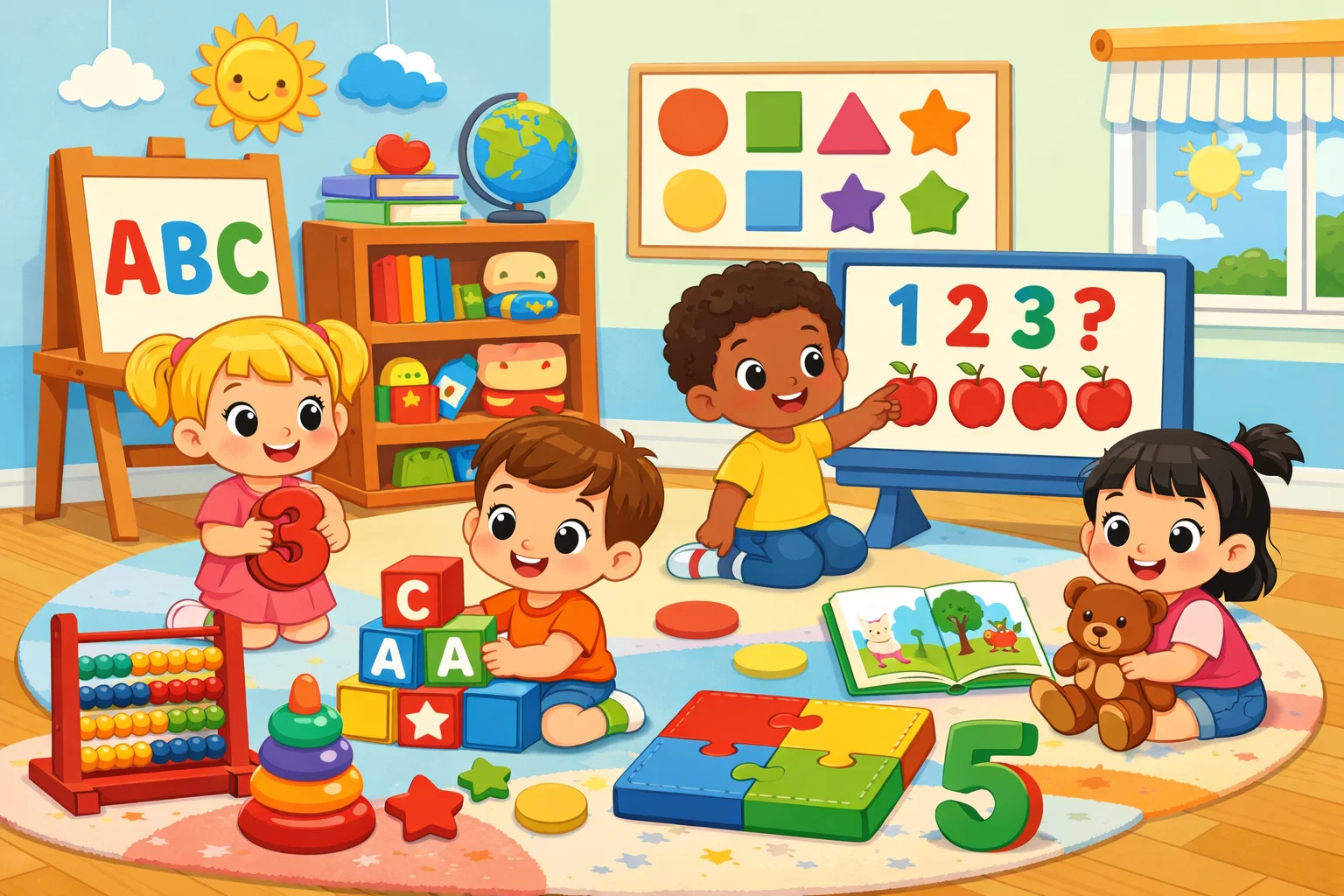
1. Computers and Tablets
Tablets provide a digital platform for interactive learning. They are most effective when used for short, 15-minute sessions to explore specific skills like letter tracing. According to AAP (American Academy of Pediatrics), tech use at this age should always involve a “co-viewing” teacher or parent to be truly educational.
2. Smart Boards and Interactive Panels
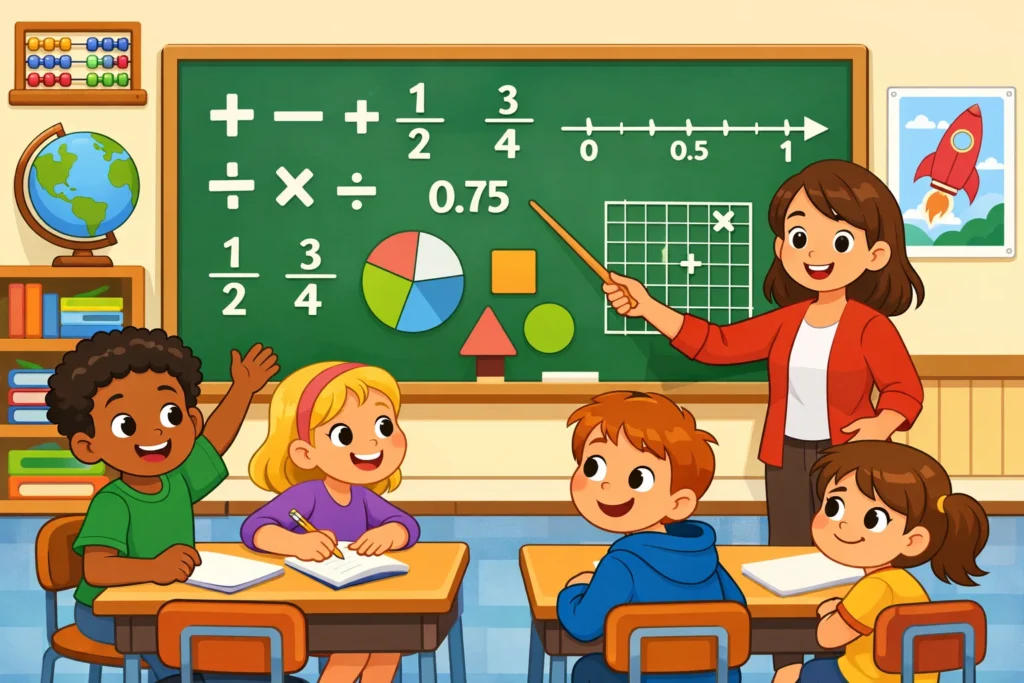
Smart boards transform the front of the classroom into a giant puzzle. Teachers use them to demonstrate concepts, allowing multiple students to actively participate by touching the screen to match shapes or colors.
3. Presentation Slides and Projector Lessons
Using a projector to display large, vivid slides can make storytelling more engaging for the whole group. It is an effective way of making large-scale diagrams or maps understandable for a room full of curious learners.
4. Educational Videos and Animations
Short video clips can bring lessons to life, especially for complex subjects like how a seed grows. The key is to choose content that is active rather than passive, prompting the child to listen, watch, and then do an activity.
5. Audio Aids and Listening Tools
Audio aids like podcasts or recording devices help children focus on phonemic awareness. A “listening corner” with headphones allows a student to listen to a story while following along in a physical book, reinforcing the link between sound and symbol.
6. Picture Cards and Storybooks
Modern storybooks often include textures or “hidden” visual elements. These aids help with vocabulary building and encourage children to retell stories, which is critical for speech and language practice.
7. Flashcards, Charts, and Posters
While classic, modern flashcards often feature high-contrast visuals or even QR codes that link to a sound. A classroom chart can be interactive, where children move their names to different categories to show their mood or daily task.
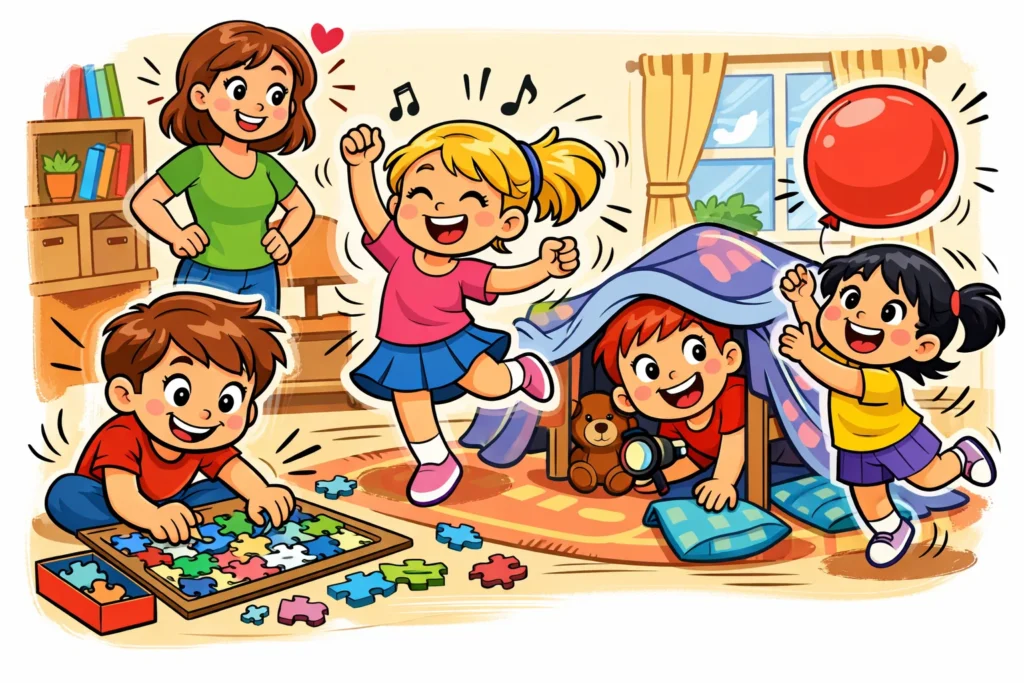
8. Sensory Bins and Tactile Trays
Sensory bins filled with sand, rice, pom-poms, or shredded paper encourage tactile exploration. They are effective for introducing early science concepts such as sinking and floating, as well as math concepts such as volume and counting.
9. Puzzles, Blocks, and Manipulative Sets
These materials are fundamental for developing spatial skills. Puzzles require critical thinking, while blocks encourage creativity and an early understanding of engineering and shape balance.
10. Puppets and Role-Play Kits
Puppets are a powerful teaching aid for social-emotional learning. They assist shy children in speaking and help the teacher demonstrate conflict resolution in a friendly, non-threatening way.
11. Montessori Materials
Montessori materials, such as “sandpaper letters,” provide a hands-on way to discover literacy. These tools are expert-designed to be self-correcting, allowing the student to improve without constant adult intervention.
12. Learning Apps and Interactive Games
The best educational apps for preschoolers are those with no ads and a clear educational goal. They should be used as a tool to assist a topic, not as a replacement for teacher interaction.
13. AR and VR Tools
Augmented Reality (AR) cards can make a 3D model of an animal appear on a tablet screen. Because young children still need rich real-world play, AR tools should be used sparingly, and VR is generally better reserved for older age groups.
14. Teacher-Created Printables and DIY Picks
Custom material designed by a teacher can target a specific “skill gap” in the classroom. Whether it’s a custom-made puzzle or a local map, these aids make learning deeply relevant to the child’s immediate environment.
15. Real-Life Materials and Nature Objects
Bringing “the outside in” with nature objects like stones or leaves is a powerful way of making science understandable. It encourages the student to actively explore and experiment with the world around them.
Teacher as Teaching Aid in Preschool Classroom
In the early years, the teacher is the most dynamic teaching aid available. No digital tool can replace the human element of demonstration and emotional connection.
Voice, Facial Expressions, and Gestures
A teacher uses their voice as an audio aid, varying tone and pitch to excite the learner or signal a transition. Facial expressions and gestures act as visual aids that help students understand complex concepts like “surprised” or “underneath.”
Demonstration and Modeling
Preschoolers are natural mimics. By modeling how to hold a pencil or how to participate in a group, the expert provides a living model for the student to follow. This “watch and do” approach is the most effective way of making new habits stick.
Classroom Routines and Transitions
The teacher uses rhythmic chants or visual hand signals to manage the classroom. These cues are effective aids that help children navigate the school day without anxiety, supporting their social-emotional health.
Objectives of Modern Teaching Aids for Preschoolers
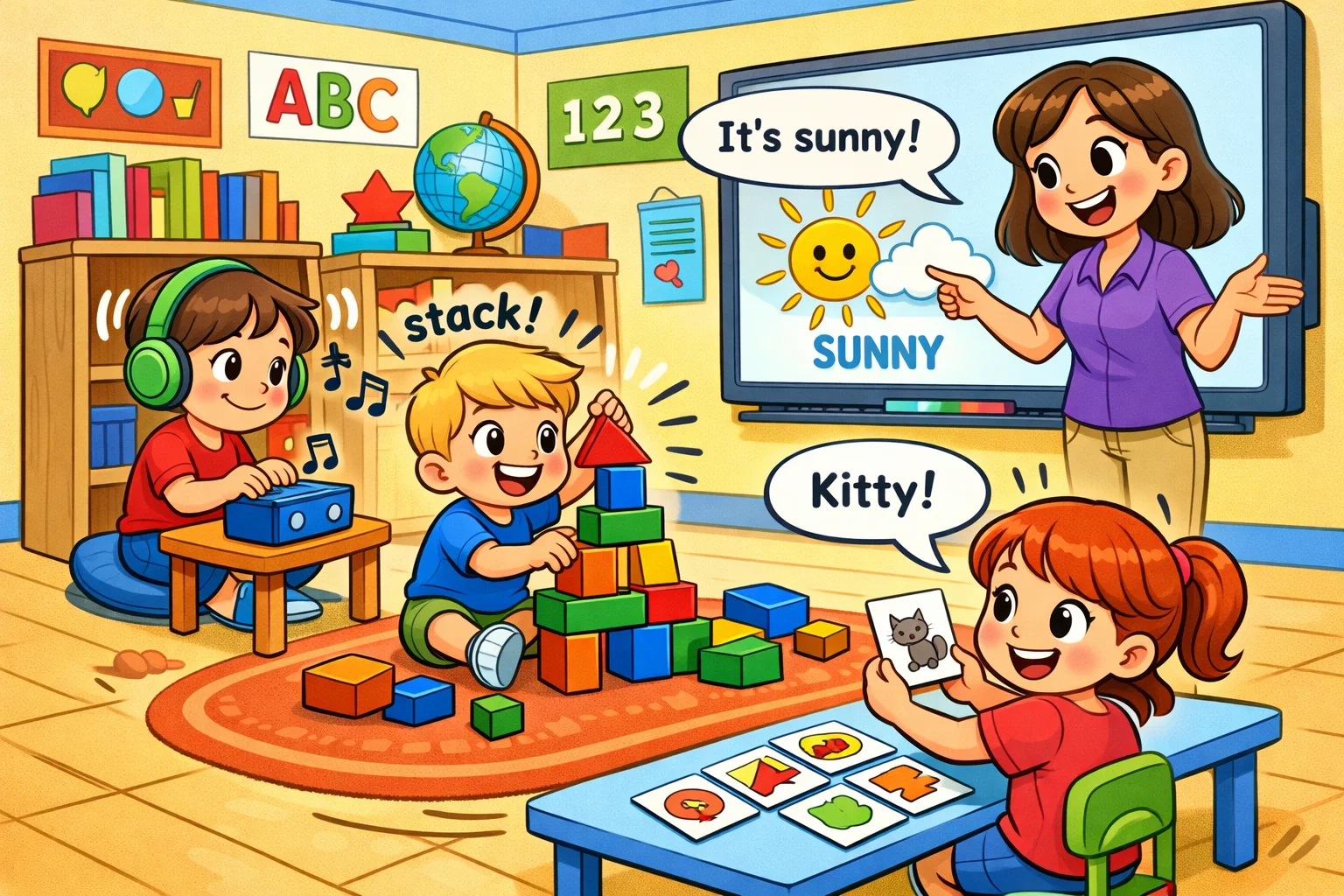
The primary goal of using a range of teaching aids is to create a holistic educational experience. These tools are not just “extras”; they are critical components of the learning process.
- Simplifying Complex Ideas: Using a model or diagram to show how rain falls makes physics and weather understandable.
- Creating Engaging Learning Experiences: Aids help transform a boring topic into an interactive session that keeps the student curious.
- Stimulating Multiple Senses: By involving sight, sound, and touch, teaching aids make learning more robust and inclusive for children with different needs and preferences.
- Improving Memory and Recall: Visual and audio repetition through different formats reinforces knowledge.
- Encouraging Active Participation: Good aids require the child to do something, not just watch.
12 Examples of Modern Teaching Aids in Preschool Activities
| Activity Type | Recommended Teaching Aid | Practical Application |
| Early Literacy | Alphabet Sand Trays | Tracing letters in sand to build muscle memory. |
| Early Math | Counting Bears | Sorting by color and quantity for early numeracy. |
| Science | Magnifying Glasses | Examining nature objects to discover details. |
| Speech/Language | Story Stones | Using pebbles with pictures to create a story. |
| Music/Movement | Rhythm Sticks | Tapping out beats to improve auditory timing. |
| Fine Motor | Tweezers & Beads | Moving small items to strengthen finger grip. |
| Social-Emotional | Emotion Mirrors | Looking at one’s face to identify feelings. |
| Dramatic Play | Doctor Kits | Role-playing to reduce anxiety and build empathy. |
| Outdoor Learning | Chalk Stations | Large-scale drawing to explore creativity. |
| Inclusive Learning | Visual Schedules | Using icons to show the school day’s flow. |
| Small-Group | Pattern Blocks | Working in pairs to replicate a visual shape. |
| Home Extensions | Activity Bags | Sending a puzzle home for family participation. |
Importance of Modern Teaching Aids for Preschoolers
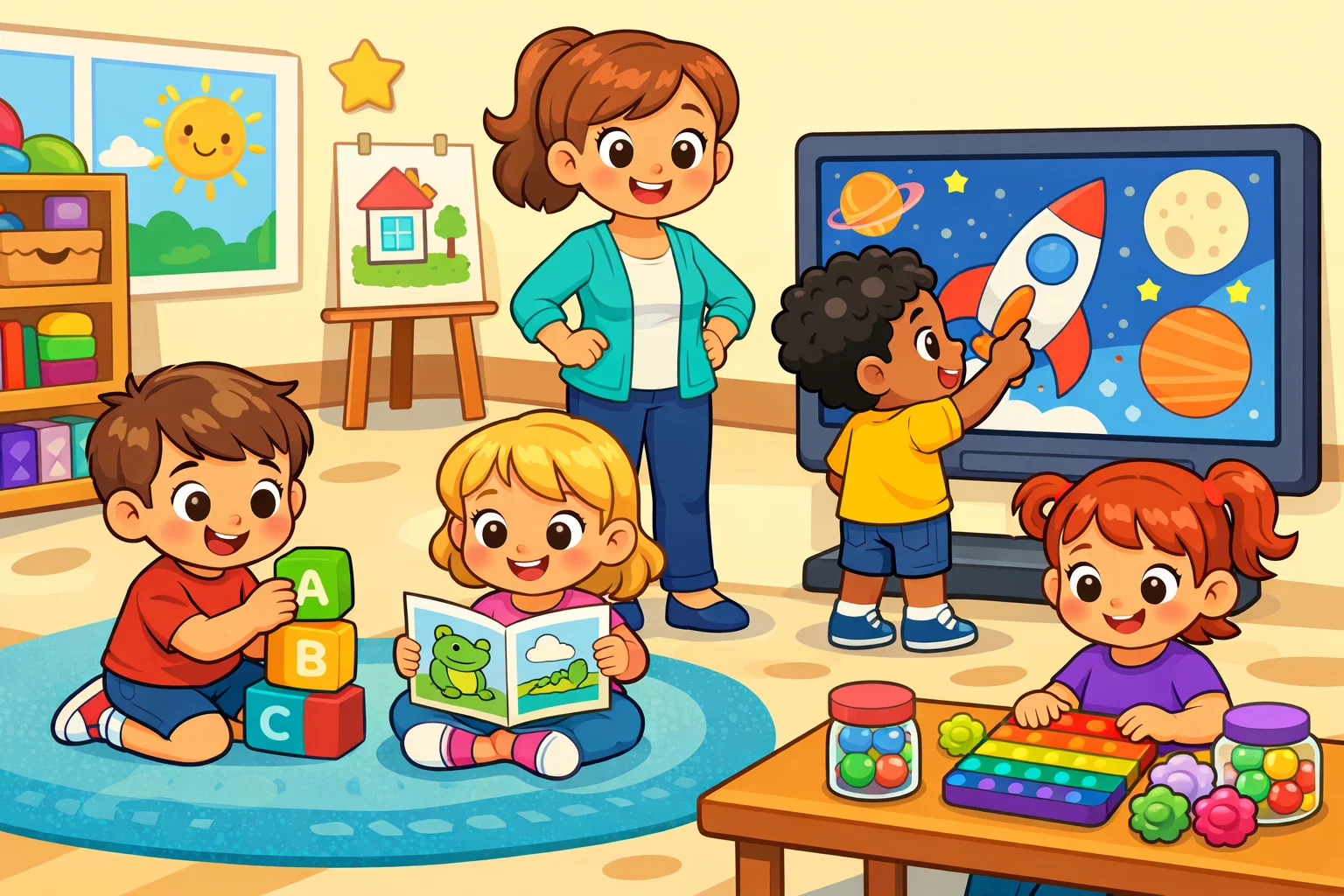
Research in early childhood education suggests that multi-sensory instruction can improve engagement and support retention in young children. Modern aids help achieve this by targeting multiple cognitive pathways simultaneously.
Making Learning Fun
When teachers use vibrant visual materials and interactive games, learning becomes an exciting adventure. Tools like puppets and educational apps turn a standard topic into a fun and effective game. This high level of engagement helps children stay focused and makes them less likely to get bored, which is important for maintaining a positive classroom environment.
Building Memory and Recall
Visual aids such as a chart, map, or diagram provide a mental anchor for the learner. By seeing a visual representation of the alphabet or a simple scientific idea through a model or demonstration, children form stronger associations between words, images, and meaning. Aids make learning much more likely to “stick” because they provide a concrete reference point that the ear and eye can process together.
Supporting Sensory and Motor Growth
Many modern aids include hands-on material like sensory bins and puzzles. These tools are effective for developing fine motor skills and hand-eye coordination. For example, manipulating a 3D model or tracing on an interactive whiteboard encourages children to develop control, coordination, and precision, all of which are important for early development.
Encouraging Active Participation
Unlike the traditional “sit and listen” model, modern aids involve the student actively. Whether it is clicking a button on a tablet or placing a shape in a puzzle, the child must participate to progress. This active involvement fosters critical thinking skills and helps the student feel a sense of ownership over their study habits from a young age.
Supporting Different Learning Styles
Every preschool classroom should include a range of teaching aids because children respond to different kinds of input and interaction. Some children respond especially well to songs, recordings, and oral storytelling, while others engage more readily with flashcards, pictures, and video. Visual input plays an important role in early learning, but using a mix of visual, auditory, and hands-on activities helps more children stay engaged.
| Learning Style | Preferred Teaching Aid | Developmental Benefit |
| Visual | Charts, Videos, Maps | Better spatial awareness and pattern recognition. |
| Auditory | Songs, Podcasts, Recordings | Enhanced vocabulary and phonemic awareness. |
| Kinesthetic | Sensory Bins, Blocks, Models | Development of fine/gross motor skills. |
| Digital | Apps, Smart Boards | Early digital literacy and interactive logic. |
Linking Play and Early Academics
Teaching aids help bridge the world of play and the world of early academics. By using a puzzle to teach numbers or a storyboard to explore social cues, teachers remove the difficulty of formal schooling. This approach makes early learning more accessible while supporting creativity, curiosity, and confidence during the foundational years.
Classification of Modern Teaching Aids for Preschoolers
To use these tools effectively, it helps to understand their different categories. Classifying teaching aids allows teachers to balance their classroom environment, ensuring a healthy mix of digital and hands-on material.
Traditional vs Modern Aids
While traditional aids like chalk and posters are cost-effective, they are often static. Modern aids include digital resources that can change in real-time. The best classroom setup uses traditional tools for tactile stability and modern tools for innovation and dynamic storytelling.
Visual, Audio, Tactile, and Audio-Visual Aids
- Visual Aids: Flashcards, charts, and posters that the student can see and understand.
- Audio Aids: Podcasts, recording tools, and music that stimulate the ear.
- Tactile Aids: Sensory bins, blocks, and puzzles for hands-on exploration.
- Audio-Visual Aids: Educational videos and interactive whiteboards that combine sight and sound.
Real-Life and Virtual Aids
Real-life aids involve nature objects like shells or leaves, which encourage the child to discover the natural world. Virtual aids include educational apps or AR experiences that allow a student to explore environments (like the deep ocean) that are not physically accessible in the classroom.
Teacher-Made and Commercially Available Aids
Teacher-made aids are highly personalized and can be tailored to the needs of a specific group. Commercially available aids, like professional Montessori materials, offer durability and standardized educational value. Both are effective when used in tandem to improve the learning environment.
Individual and Group Aids
Some aids help a single student focus on a specific difficulty, such as a tablet app for phonics. Others, like a large chart or smart board, are designed for group interaction during “circle time,” fostering social skills and collaboration.
Screen-Based and Screen-Light Aids
A critical distinction in modern education is between screen-based tools (tablets, TVs) and “screen-light” or screen-free tech (audio players, light tables). Balancing these options helps children benefit from technology without relying too heavily on screens.
How to Choose Modern Teaching Aids for Preschool Classroom
Selecting the right material requires an expert eye. Not every “cool” gadget is an effective teaching aid.
Age Fit and Developmental Stage
A three-year-old has different motor skills and attention needs than a five-year-old. Choose aids that match the child’s developmental stage; for example, larger blocks for younger preschoolers and smaller, more complex puzzles for older children.
Learning Goals and Lesson Fit
The tool must match the subject. If the goal is speech, a puppet is better than a tablet. Every aid should assist in reaching a specific learning milestone.
Safety, Durability, and Hygiene
In a nursery setting, teaching aids are often dropped, mouthed, or shared. Choose materials that are non-toxic, free of sharp edges, and easy to clean.
Safety, Boundaries, and Screen-Time Rules
While innovation is great, boundaries are critical for child development. Teachers use strict rules to ensure digital tools remain friendly and safe.
Healthy Screen-Time Limits
For children aged two to five, screen use should be limited and carefully chosen, with an emphasis on high-quality, adult-guided content. In the classroom, teachers should use screens for 10-15 minute “bursts” of interactive learning followed by hands-on exploration.
Emotional Safety and Overstimulation Control
Too many moving visuals or loud sounds can overwhelm some children. Calm-down tools such as quiet books, sensory bottles, visual timers, or a quiet corner can help balance high-energy activities.
Final Thoughts on Modern Teaching Aids for Preschoolers
Modern teaching aids are the heartbeat of an effective preschool classroom. By combining the tactile satisfaction of hands-on material with the innovation of digital tools, teachers can create an environment where every student feels encouraged to explore.
Best Mix for Small-Budget Classroom
You do not need a huge budget to create an effective learning environment. A starter pack of teacher-made flashcards, nature objects, puppets, and a few high-quality storybooks can bring lessons to life just as well as expensive tech.
Best Mix for Tech-Enabled Classroom
In a tech-rich school, the key is balance. Use the smart board for group participation, tablets for individual logic games, and plenty of sensory bins to keep the learner connected to the physical world.
FAQs
What Are the Best Low-Cost Modern Teaching Aids for Preschoolers?
DIY sensory trays, printed visuals, and teacher-made puppets are excellent low-cost options. Even natural objects from the schoolyard can become effective tools for exploring early science concepts.
Which Teaching Aids Work Best in a Nursery Classroom?
Hands-on tools like blocks, puzzles, and sensory bins are the most effective for this age group, as they support fine motor skills and active exploration.
How Much Screen Time Is Appropriate in Preschool Lessons?
Screens should be used as a tool, not a filler. Limit digital sessions to 10-15 minutes and always follow up with a real-life activity to reinforce the topic.
Can Homemade Aids Work as Well as Ready-Made Aids?
Yes! Teacher-made aids are often more personalized and can be tailored to a specific child’s needs.
Which Aids Work Well for Children With Special Educational Needs?
Visual schedules, tactile “fidget” tools, and audio aids like noise-canceling headphones are effective in supporting an inclusive classroom environment.

Take a short quiz to find out what your everyday choices say about your parenting style
When your child is curious about something new, what’s your instinct?
Take a short quiz to find out what your everyday choices say about your parenting style
“Can I download this app?” What happens next?
Take a short quiz to find out what your everyday choices say about your parenting style
When it comes to rules at home, which sounds most like you?
Take a short quiz to find out what your everyday choices say about your parenting style
If you could give your child one life skill today, what would you pick?
Take a short quiz to find out what your everyday choices say about your parenting style
Your child gets to choose what to watch. What would your ideal setup look like?
Take a short quiz to find out what your everyday choices say about your parenting style
Pick your parenting superpower ✨