11 STEM and STEAM Activities for Elementary Students Kids Will Actually Love

 Discover a Free Education Video App for Kids
Pastory uses AI to personalize educational video content based on your child’s interests and personality. Safe, engaging, and built for curious young minds. Sign up now to stay updated and enjoy early access with a free trial
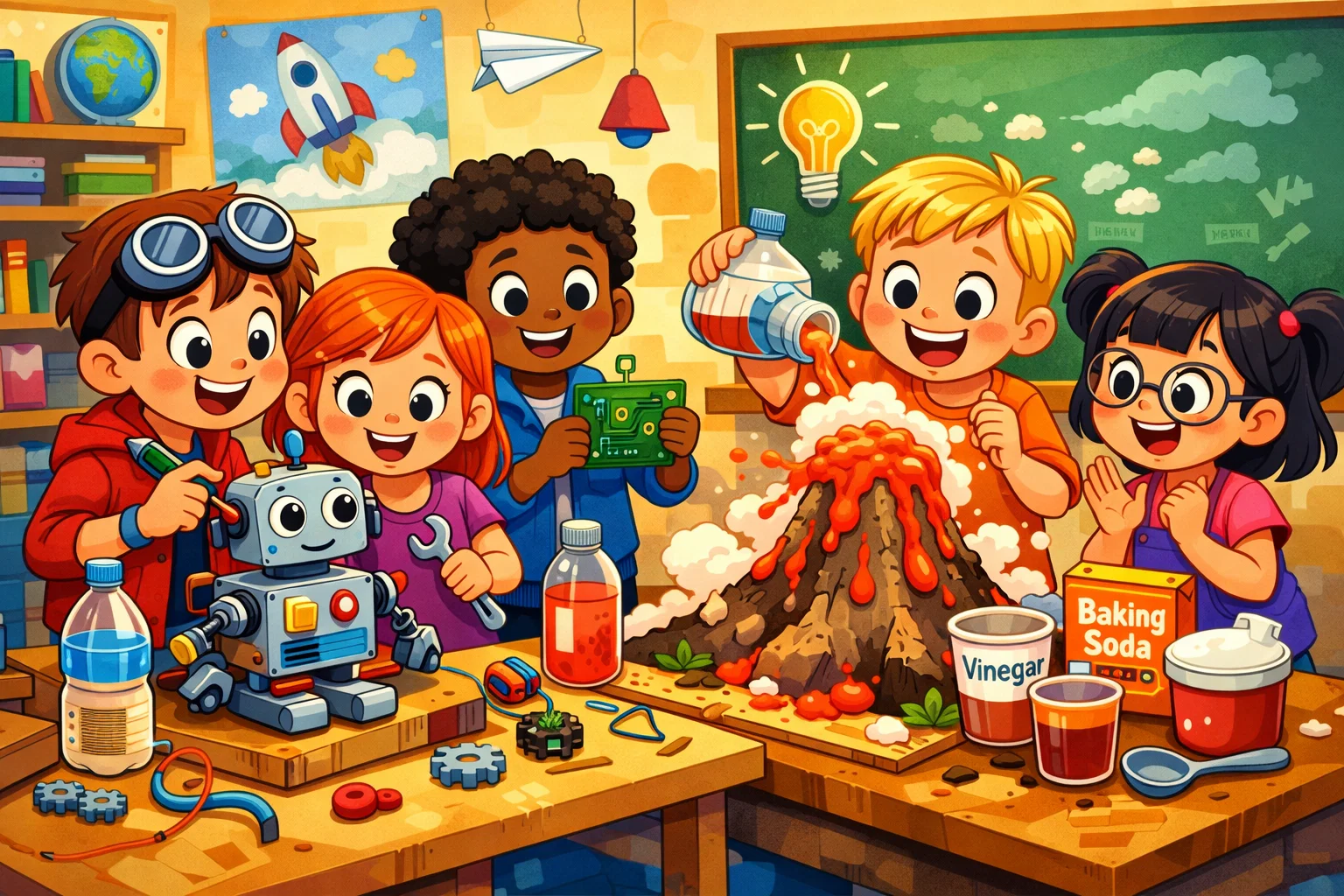
Finding STEM activities for primary schools that are genuinely engaging and simple to set up can change how young learners connect with science, technology, engineering, and math. This article brings together 11 hands-on DIY projects designed for elementary-aged children, using everyday materials to spark curiosity and build problem-solving skills.
Each activity is organized by subject area, from engineering challenges and coding games to recycled-material builds and sensory science experiments. Whether you are a teacher planning a classroom session or a parent looking for after-school ideas, these projects are practical, low-cost, and designed to keep kids actively thinking.
Key Takeaways
- This article covers 11 hands-on STEM and STEAM activities suited for elementary-aged children across science, math, technology, engineering, and arts.
- Activities use everyday materials such as cardboard, toothpicks, recycled items, and basic craft supplies, keeping costs low.
- Projects are organized by subject area, making it easy for teachers and parents to find the right activity quickly.
- The guide includes timed challenge formats and quick STEM activities that work well for both classroom sessions and after-school settings.
- The guide includes tips on encouraging critical thinking and adapting projects for different age groups within elementary school.
- Safety guidance for DIY STEM projects is included to help adults supervise activities with confidence.
Introduction to STEM Activities for Elementary Students
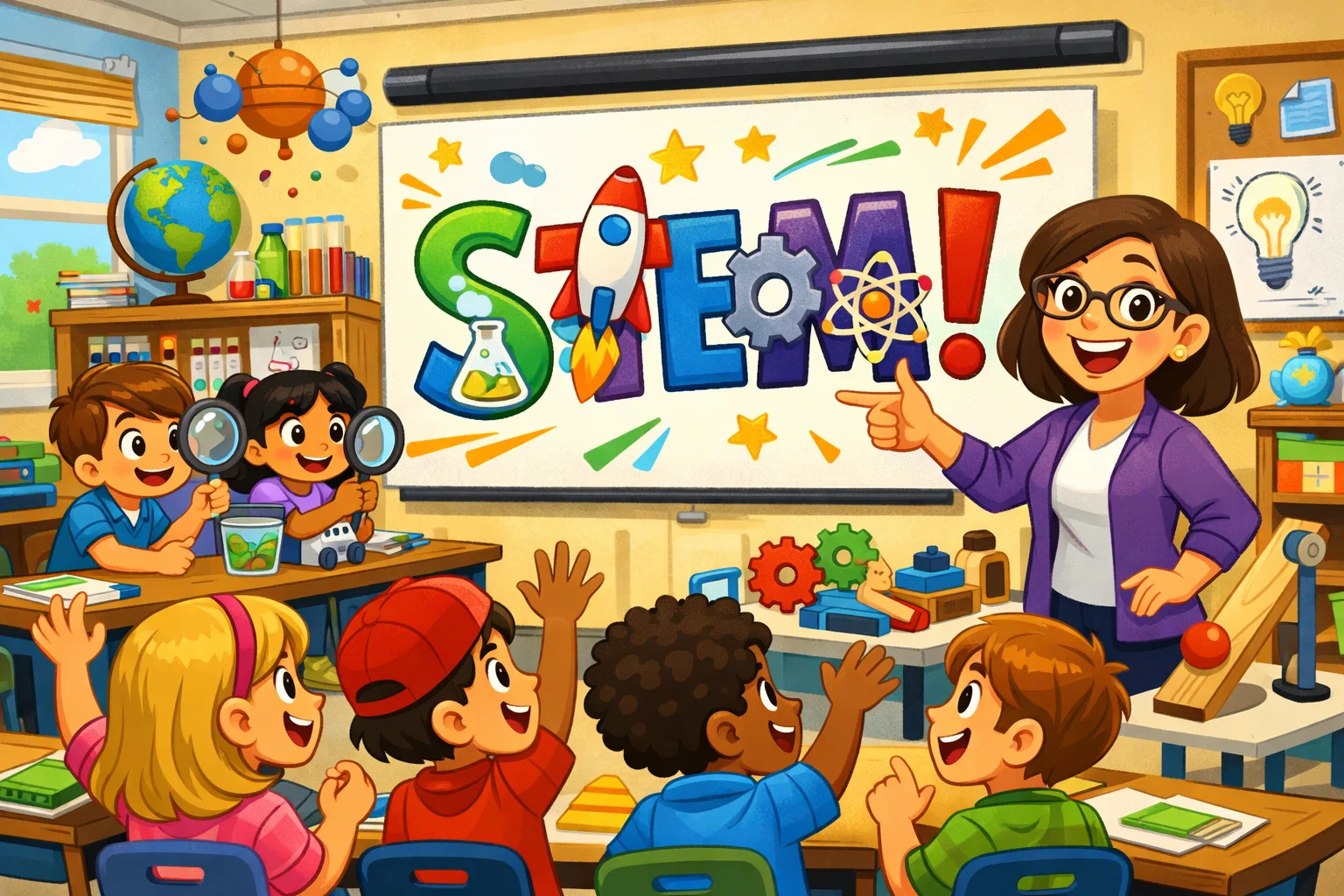
STEM education – an acronym for Science, Technology, Engineering, and Mathematics – serves as a critical framework for cognitive development in young learners. By engaging in hands-on STEM projects, elementary students move from passive observers to active participants in the learning process. It is known that early exposure to STEM and STEAM (Science, Technology, Engineering, Arts, and Math) fosters a ‘growth mindset’ that helps children view challenges as opportunities for growth.
Hands-on STEM activities help children internalize complex abstract concepts through physical manipulation. When a child performs a science experiment, they are not just following a recipe; they are practicing the scientific method by forming hypotheses and observing outcomes. These learning activities significantly enhance critical thinking and problem-solving skills, which are essential competencies in the 21st-century workforce.
Additionally, easy STEM activities nurture a child’s curiosity and creativity. By providing an exciting project, parents and educators can ignite a lifelong interest in STEM. These STEM ideas help children understand the real-world application of their school subjects, transforming mathematics and computer science from intimidating topics into fun, interactive adventures that kids will love.
You may also notice the term STEAM used alongside STEM. STEAM adds Arts to the mix, recognizing that creative thinking, design, and visual communication are inseparable from scientific and technical work. When elementary students build a robot from recycled materials, sketch a bridge design before constructing it, or incorporate a paper circuit into a greeting card, they are practicing STEAM. Integrating arts does not dilute the rigor of STEM — it deepens it by giving children more ways to explore, express, and refine their ideas. Throughout this guide you will find activities that fit both a pure STEM and a broader STEAM approach, so teachers and parents can choose what best suits their classroom or home setting.
Engineering DIY Projects for Elementary Students
Engineering-focused STEM challenges let students explore the design process by identifying problems and building physical solutions. According to the American Society for Engineering Education, elementary engineering projects improve spatial reasoning and logical sequencing. These engineering and math activities empower an explorer to construct and test structures using everyday materials.
Build a DIY Catapult
A DIY catapult is an exciting project that teaches the basics of physics, specifically potential and kinetic energy. To build this, students need popsicle sticks, rubber bands, and a plastic spoon. By securing the sticks with rubber bands and using the spoon as a launching arm, children create a simple machine that demonstrates how tension can be harnessed to propel an object.
The physics behind the catapult involves Hooke’s law and the conservation of energy. When the spoon is pulled back, it stores potential energy; when released, that energy turns into kinetic energy, launching a projectile like a pom-pom. This experiment helps kids understand that changing variables, like the number of rubber bands, will affect the distance the projectile travels.
Create a Paper Bridge Challenge
The paper bridge challenge is a classic paper stem activity where students must construct a bridge using only a single sheet of paper. The objective is to design a structure that spans a gap between two books and supports the weight of several paperclips or pennies. This activity introduces the concept of structural integrity and how folding a piece of paper changes its strength.
| Bridge Design | Materials Used | Observed Strength |
| Flat Sheet | 1 piece of paper | Very Low (collapses instantly) |
| Accordion Fold | 1 piece of paper | High (distributes weight) |
| Cylinder Tubes | 1 piece of paper | Very High (resists compression) |
This engineering and math task requires children to calculate the best way to distribute weight. By experimenting with different folds, students learn that geometry plays an important role in architecture. This easy STEM challenge is a great way to demonstrate the importance of the design process in real-world infrastructure.
Build a Simple Water Pump
Building a simple water pump using a plastic bottle, a flexible straw, and a balloon allows students to explore fluid dynamics. By sealing a straw into the side of a bottle and using the air pressure from a balloon to displace the water, children create a functional mechanical system. This experiment shows how pressure differences move liquids from one place to another.
This DIY project gives a real-world look at how irrigation systems and mechanical pumps function. As the balloon is released, it forces air into the jar or bottle, increasing the internal pressure and pushing the water out through the straw. This interactive project is a fantastic way to spark curiosity about how cities manage water resources.
Fun Science DIY Activities for Elementary Students

Fun science experiments offer a safe environment for children to explore chemical reactions and physical laws. Educational frameworks like the Next Generation Science Standards (NGSS) emphasize the importance of “discovering” rather than just “telling.” These fun stem activities engage the senses and make the thrill of discovery a daily occurrence.
DIY Volcano Eruption
The DIY volcano is a popular science experiment that uses a reaction between baking soda (a base) and vinegar (an acid). When these two substances combine, they create carbon dioxide gas, which produces a fizzy, bubbling “eruption.” For a more visual effect, students can add color using food coloring and a squirt of dish soap to create more foam.
This activity is a great way to teach the concept of chemical reactions. The vinegar and baking soda undergo a double displacement reaction that results in the release of CO₂. It is a safe, easy stem activity that uses everyday materials to demonstrate how different substances interact at a molecular level.
Magnetic Slime Experiment
Making magnetic slime involves mixing school glue, liquid starch, and iron oxide powder or iron filings. Unlike regular slime, this version responds to a strong neodymium magnet, allowing it to “dance” or stretch toward the magnetic source. This project explores the chemistry of polymers and the physical properties of magnetism.
- Polymer Science: The glue and starch combine to form long chains of molecules.
- Magnetism: The iron particles within the slime align with the magnetic field of the magnet.
- Interactivity: This experiment allows kids to move the slime without actually touching it.
The magnetic slime project is a high-engagement STEM activity that encourages exploration. It teaches students that adding a specific attribute (iron) to a substance (slime) completely changes its behavior in the presence of external forces.
Make Homemade Lava Lamps
A homemade lava lamp uses a jar, vegetable oil, water, food coloring, and an antacid tablet. Because oil is less dense than water and they are “immiscible” (do not mix), the water sinks to the bottom. When the antacid tablet is dropped in, it reacts with the water to create bubbles that carry the colored water to the top of the jar.
This experiment helps kids visualize the concept of density and gas expansion. As the bubbles reach the top, the gas escapes, and the dense water droplets sink back down, creating a continuous cycle of movement. This fun and engaging project is a great way to nurture an interest in fluid physics and chemistry.
Technology and Computer Science DIY Activities for Elementary Students
Introducing computer science and technology through hands-on STEM activities removes the barrier of entry for young learners. The Bureau of Labor Statistics projects that STEM occupations will grow significantly in the coming decade, making early exposure to coding and digital thinking a vital foundation for future careers. These easy STEM activities help elementary students begin to understand the digital world through projects they can build and control themselves.
Create a Simple Coding Game
Creating a simple coding game can be done without a computer by using a “Human Robot” maze. One student acts as the “programmer” and writes a series of commands on a piece of paper (e.g., “Step forward,” “Turn left”), while the other student acts as the “robot” following the code. This teaches the logic of algorithms and sequencing without needing a screen.
For a digital version, platforms like Scratch or Blockly offer printable coding blocks that help children understand the logic of programming. By building a simple maze, students learn how “If-Then” statements and loops work. This interactive approach ensures that the fundamental concepts of computer science are understood before they even begin typing.
DIY Circuit with Playdough
Conductive playdough is a unique STEM resource that allows students to build three-dimensional electrical circuits. By using two different batches of dough – one salty (conductive) and one sugary (insulating) – children can power a small LED light with a battery. This activity makes the invisible flow of electricity visible and tangible.
The concept of conductivity is easily demonstrated through this DIY project. If the conductive dough pieces touch each other directly (creating a short circuit), the LED will not light up. This teaches students about circuit paths and resistance in a fun and engaging way for the sensory-seeking child.
Build a Paper Circuit
A paper circuit involves using copper tape, a small LED, and a coin-cell battery on a sheet of paper. Students lay down the tape to create a path for electricity to flow from the battery to the LED. This project combines art and technology, as children can incorporate the light into a drawing or a greeting card.
- Components: Copper tape (path), LED (output), battery (power source).
- Logic: The circuit must be a “closed loop” for the light to turn on.
- Skill: This activity develops fine motor skills through the use of a scissor and precise tape placement.
Building a paper circuit is a great math and tech activity because it requires precise measurements and spatial planning. It helps students understand that technology is something they can construct and control with their own hands.
Mathematics DIY Activities for Elementary Students
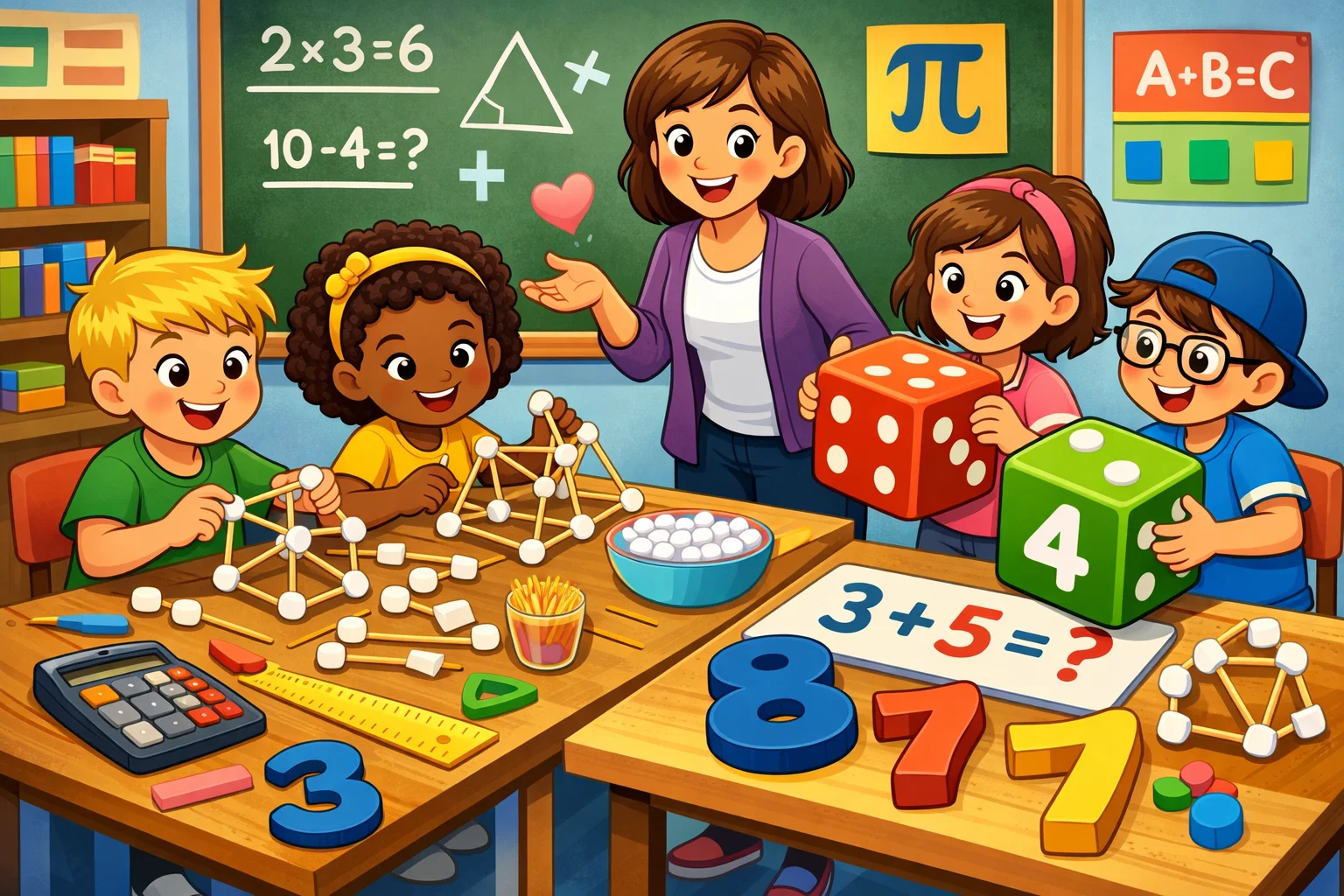
Mathematics is often the most abstract part of STEM, but hands-on stem activities can make it concrete. Incorporating math into physical builds helps children understand proportions, geometry, and data analysis. According to experts at the National Council of Teachers of Mathematics, kinesthetic learning (learning by doing) improves long-term retention of mathematical concepts.
Build Geometric Shapes with Marshmallows and Toothpicks
Building 3D geometric shapes using marshmallows and toothpicks is an easy stem activity that teaches vertices and edges. Students can construct cubes, pyramids, and triangular prisms. This activity allows them to feel the stability of different shapes – for example, discovering why triangles are more rigid than squares.
| Shape | Vertices (Marshmallows) | Edges (Toothpicks) |
| Cube | 8 | 12 |
| Triangular Pyramid | 4 | 6 |
| Square Pyramid | 5 | 8 |
This mathematics exercise helps children transition from 2D drawings to 3D understanding. It encourages critical thinking as they try to stack shapes to build taller structures. This fun science of geometry is a staple in many stem activities for kids.
DIY Measuring Tools and Units
Creating DIY measuring tools helps students understand the concept of standard versus non-standard units. For example, a child can use a paper plate to create a “trundle wheel” or mark a piece of paper to create a custom ruler. This experiment allows them to measure items around the house and graph their findings.
Understanding units of measurement is a fundamental skill in engineering and math. By making their own tools, students learn why accuracy is important. They can calculate the area of a room or the height of a chair, making math feel like a practical tool for everyday life.
Math Dice Games for Practice
Math dice games offer an interactive way to practice addition, subtraction, and multiplication. By rolling two or more dice and performing operations on the numbers, children engage in high-repetition practice without the boredom of worksheets. This activity is a great way to build “number sense” and mental math speed.
- Addition War: Roll two dice; the highest sum wins a paperclip.
- Multiplication Bingo: Roll dice and mark the product on a printable grid.
- Target Number: Use three dice and any operation to reach a “target number.”
These games foster a healthy competitive spirit while reinforcing core math skills. Because the games are fast-paced, they keep the thrill of discovery alive as students find new ways to combine numbers to win.
Recycled DIY STEM Activities for Elementary Students
Using recycled materials for STEM projects is a great way to teach sustainability while fostering creativity. It demonstrates to students that an explorer does not need expensive equipment to innovate. Upcycling cardboard, plastic bottles, and paper rolls teaches children to look at “trash” as valuable building blocks.
DIY Paper Roll Rockets
DIY paper roll rockets use empty toilet paper or paper towel rolls to explore physics and aerodynamics. Students can add a cone to the top and fins to the sides using a scissor and glue. This project introduces the concept of air resistance and how the shape of an object helps it cut through the air.
To demonstrate propulsion, students can use a balloon attached to the rocket. As the air escapes the balloon, the rocket is pushed forward along a string “track.” This experiment helps kids understand the principles that an astronaut uses to travel into space, making it a truly exciting project.
Create a Robot from Recycled Materials
Creating a “junk bot” or robot from recycled materials like cardboard boxes, bottle caps, and tin foil is a pinnacle of steam education. Students must construct a robot character and can even add simple tech like a vibrating motor or a battery-powered LED. This encourages the design process and artistic expression.
This stem challenge focuses on the “Engineering” and “Art” of STEAM. Children must problem-solve how to attach heavy materials like a plastic bottle to a light base like cardboard. It’s a fun and engaging way to spend an afternoon while developing fine motor skills and spatial awareness.
Build a Recycled Boat that Floats
The recycled boat challenge asks students to construct a vessel using everyday materials like a paper plate, plastic containers, or cardboard coated in wax. The goal is to see which design can float in a tub of water while carrying a “cargo” of pennies. This activity demonstrates the principles of buoyancy and displacement.
| Material | Buoyancy Level | Result |
| Plastic Bottle | High | Floats well with heavy load |
| Untreated Cardboard | Medium | Sinks once saturated |
| Aluminum Foil | High | Easy to shape but fragile |
This hands-on STEM activity requires students to calculate the balance between weight and surface area. It is a fantastic science experiment that illustrates why some heavy things (like giant ships) float while small things (like a paperclip) sink.
Sensory and Creative STEM DIY Activities
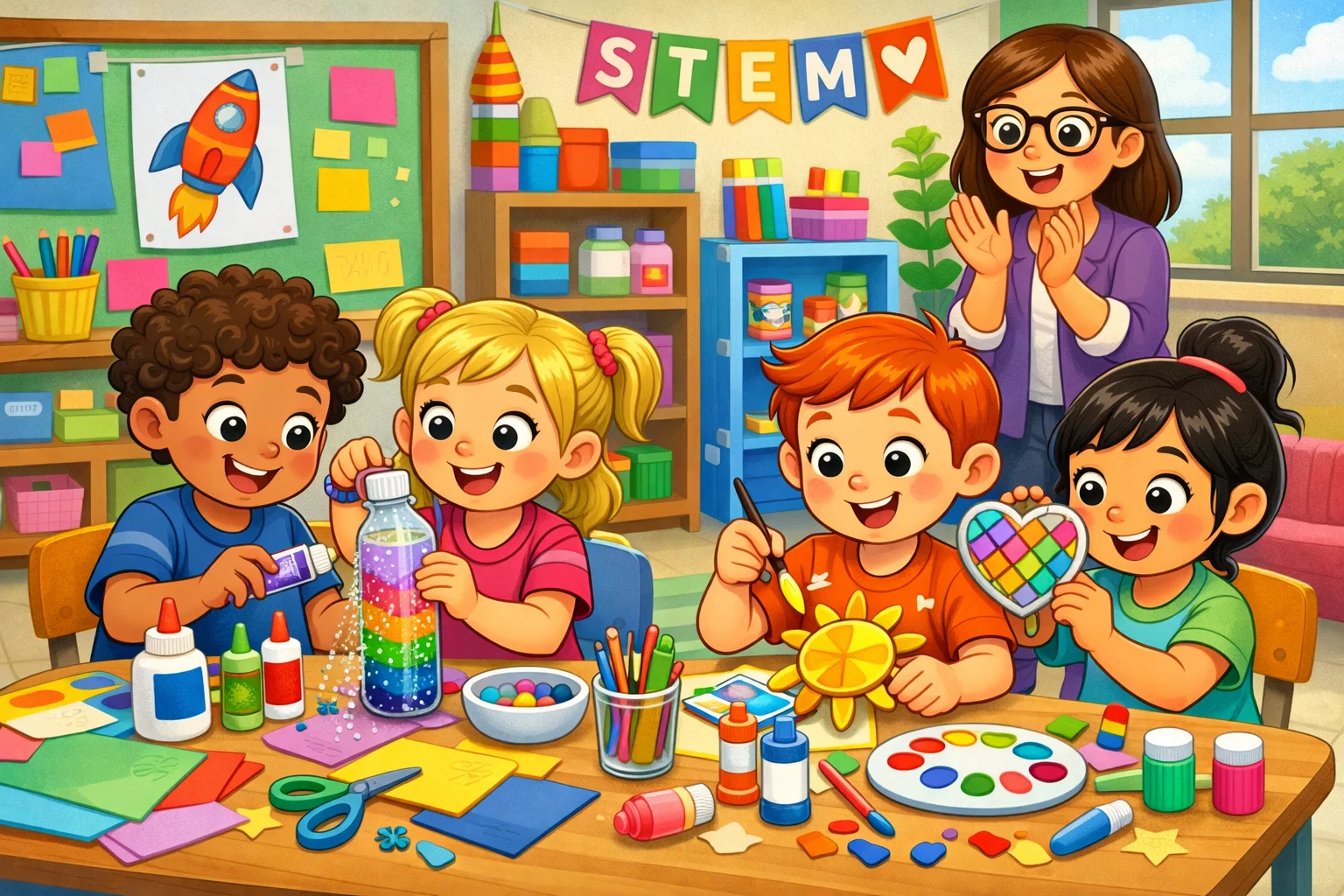
Sensory-based STEM activities are especially beneficial for younger elementary students as they develop fine motor skills and sensory processing. Combining color, texture, and scent with scientific principles creates a multi-sensory learning environment. These fun STEM activities make learning a more holistic, engaging, and memorable experience.
DIY Crystal Sun Catchers
Creating crystal sun catchers involves a supersaturated solution of salt or sugar in warm water. As the water evaporates over several days, crystals begin to form on a string or a paperclip submerged in the liquid. This project teaches the concept of evaporation and the formation of mineral structures.
Once the crystals have grown, they can be hung in a window to observe how light refracts. As sunlight passes through the crystals, it creates a rainbow effect. This is a beautiful way to demonstrate how light can unfold into different colors, combining fun science with artistic home decor.
Create a Sensory Bottle
A sensory bottle is made by filling a clear plastic jar or bottle with a mixture of water, clear glue or oil, and glitter. Because the liquid has a high viscosity (thickness), the glitter falls slowly when the bottle is shaken. This provides a calming effect and serves as a tool for teaching density and liquid resistance.
These bottles are excellent STEM resources for emotional regulation. From a scientific perspective, students can observe how adding more glue to the water increases the “drag” on the glitter. It’s an interactive way to learn about the properties of matter while creating something visually stunning.
Make Homemade Playdough with Science
Making homemade playdough is a lesson in chemistry and mixtures. By combining flour, salt, water, and oil, students observe how separate ingredients lose their individual properties to become a new, cohesive substance. Adding food coloring allows for the exploration of color mixing and primary/secondary colors.
The addition of cream of tartar acts as a preservative and changes the texture of the dough. This is a great easy stem activity for teaching the difference between a physical mixture and a chemical change. The result is a reusable toy that continues to foster creativity through sculpture and play.
Tips for Making DIY STEM Activities More Effective
To maximize the impact of stem activities for kids, preparation and mindset are key. The goal is not just to complete a project, but to foster an environment where critical thinking is the priority. Educators suggest that the most effective learning happens when the adult acts as a “guide on the side” rather than a “sage on the stage.”
Safety Tips for DIY STEM Projects
Safety is the most important aspect of any science experiment. While most easy stem projects use household items, some involve heat, sharp objects like a scissor, or chemicals like rubbing alcohol.
- Supervision: Always have an adult present when using a scissor, heat sources, or strong chemicals.
- Protection: Wear safety goggles or an apron when working with chemical reactions like the vinegar volcano.
- Space: Perform experiments in a clear, well-ventilated area to make cleanup easier.
- Materials: Ensure all recycled materials are cleaned (e.g., washing out a soda bottle) before use.
Following these guidelines ensures that the focus remains on the thrill of discovery without the risk of injury. A safe environment allows children the freedom to explore without fear.
How to Encourage Critical Thinking During STEM Activities
The best way to spark curiosity is to ask open-ended questions. Instead of telling a child why a bridge fell, ask, “What do you think happened to the structure when we added that last penny?” This forces the student to analyze the design process and come up with their own solutions.
Encourage students to keep a “STEM Journal” where they can graph results or draw diagrams of their builds. This documentation helps them see the progression of their ideas. By rewarding the effort and the “why” behind the project rather than just the final product, you nurture a deeper level of problem-solving skills.
Adapting STEM Projects for Different Age Groups
Not all STEM challenges are suitable for all ages, but most can be modified. For younger students (K-2), focus on the sensory and “what happens” aspect of the project. For older students (3-5), introduce more variables, math calculations, and detailed documentation.
| Age Group | Focus Area | Complexity Level |
| Grades K-1 | Observation & Sensory | Low (follow instructions) |
| Grades 2-3 | Cause & Effect | Medium (change one variable) |
| Grades 4-5 | Analysis & Design | High (independent project) |
By adjusting the complexity, you ensure that the learning activities remain challenging but not frustrating. This keeps children engaged and helps them build confidence as they tackle more difficult stem projects over time.
STEM Challenges and Quick Activities for Elementary Students
STEM challenges are a popular format for both classrooms and after-school programs because they add a competitive, time-limited element that keeps energy high. Unlike open-ended projects that unfold over several days, a timed challenge asks students to solve a specific problem — build the tallest structure, protect a fragile object, or span the widest gap — using only the materials provided. Most of the formats below can be completed in 20 to 30 minutes, making them practical for a single class period or a quick after-school session.
- Tallest Tower Challenge: Give each team 20 index cards and 30 cm of tape. The goal is to build the tallest freestanding tower in 20 minutes. Teams quickly discover that wide bases and triangular bracing outperform simple stacking.
- Marshmallow and Spaghetti Challenge: Using 20 strands of dry spaghetti, one metre of tape, and one metre of string, teams must build the tallest structure that can support a single marshmallow on top. This classic challenge teaches load distribution and iterative design.
- Egg Drop Challenge: Students design a protective casing from recycled materials — bubble wrap, cardboard, rubber bands, and cotton wool — to keep a raw egg intact when dropped from a set height. This challenge covers concepts of impact force, cushioning, and material selection.
- Paper Airplane Distance Challenge: Each student folds a paper airplane using any design they choose, then tests it for distance and accuracy. Comparing results introduces aerodynamics, variables, and data recording in a format that takes under 30 minutes from fold to flight.
- Straw Bridge Load Test: Teams build a bridge spanning a 30 cm gap using only drinking straws and tape, then test how many pennies it can hold before collapsing. This quick challenge reinforces structural engineering concepts from the paper bridge activity in a faster, more competitive format.
For best results, set a visible timer, give each team identical materials, and hold a brief debrief afterward where students explain what worked and what they would change. That reflection step is what turns a fun competition into a genuine STEM learning experience.
STEM Club and After-School Activity Ideas for Elementary Students
STEM clubs and after-school programs operate differently from a standard classroom lesson. Sessions are typically voluntary, mixed-age, and less constrained by curriculum requirements, which means activities can be more exploratory and project-driven. The ideas below are well suited to a STEM club, a STEM night event, or a STEM day where students rotate through stations.
- Rube Goldberg Machine: Challenge small groups to design a chain-reaction machine that completes a simple task — popping a balloon, ringing a bell, or dropping a ball into a cup — using at least five steps. This open-ended project works well across multiple club sessions and rewards creative, lateral thinking.
- Coding with Unplugged Activities: Use grid paper and movement cards to simulate how a computer processes instructions. Students take turns being the “programmer” and the “robot,” reinforcing sequencing and debugging logic without needing any devices — ideal for clubs with limited technology access.
- STEM Stations Rotation: Set up four or five activity stations — for example, a building challenge, a science experiment, a math puzzle, and a coding task — and let students rotate every 10 to 15 minutes. This format works especially well for STEM night events where families attend together.
- Nature and Outdoor STEM: Take the club outside to measure tree heights using shadow ratios, collect and classify natural materials, or build a simple sundial. Connecting STEM to the natural environment broadens the definition of where science happens and suits students who thrive outside a classroom setting.
Running a STEM club does not require a large budget. Many of the activities listed throughout this guide — the marshmallow tower, paper circuits, recycled boat, and coding games — translate directly into club sessions with minimal additional preparation.
FAQs on DIY STEM Activities for Elementary Students
What materials do I need for DIY STEM activities?
Most easy stem activities can be done with everyday materials found around the house. A basic STEM kit should include: Adhesives: Glue, tape, and rubber bands. Building blocks: Cardboard, popsicle sticks, straws, and paper plates. Household chemicals: Baking soda, vinegar, dish soap, and food coloring. Tools: Scissors, rulers, and jars.
How long do DIY STEM projects take?
The duration of a project depends on its complexity. A paper chain stem challenge where students try to make the longest paper chain from one sheet of paper might take 15 minutes. More involved projects, like growing crystals or building a complex maze, may take several days of observation. Generally, plan for 30–60 minutes for the building phase of most activities.
Can STEM activities be done without a lot of preparation?
Yes! Many hands-on stem activities require zero prep. For example, a “Tallest Tower” challenge using only a stack of plastic cups or a paper bridge challenge can be started in seconds. These “quick-fire” stem challenges are excellent for filling small gaps of time while still providing high educational value.
How can I encourage my child’s interest in STEM at home?
The best way to nurture an interest in STEM is to let your child see you being an explorer too. Show them that it’s okay for an experiment to fail. Use stem resources like books about an astronaut or a famous engineer to provide inspiration. Celebrate the curiosity they show when they ask “how does this work?” by looking for the answer together.
What are the educational benefits of DIY STEM activities?
DIY STEM activities provide a holistic learning experience that covers mathematics, science, and engineering. They help students develop critical thinking by requiring them to evaluate evidence and make decisions. Beyond academics, these projects build resilience and patience as students learn to troubleshoot and refine their designs during the design process.

Take a short quiz to find out what your everyday choices say about your parenting style
When your child is curious about something new, what’s your instinct?
Take a short quiz to find out what your everyday choices say about your parenting style
“Can I download this app?” What happens next?
Take a short quiz to find out what your everyday choices say about your parenting style
When it comes to rules at home, which sounds most like you?
Take a short quiz to find out what your everyday choices say about your parenting style
If you could give your child one life skill today, what would you pick?
Take a short quiz to find out what your everyday choices say about your parenting style
Your child gets to choose what to watch. What would your ideal setup look like?
Take a short quiz to find out what your everyday choices say about your parenting style
Pick your parenting superpower ✨