Grade 2 Sight Words: Full Dolch List, Games & Teaching Tips

 Discover a Free Education Video App for Kids
Pastory uses AI to personalize educational video content based on your child’s interests and personality. Safe, engaging, and built for curious young minds. Sign up now to stay updated and enjoy early access with a free trial
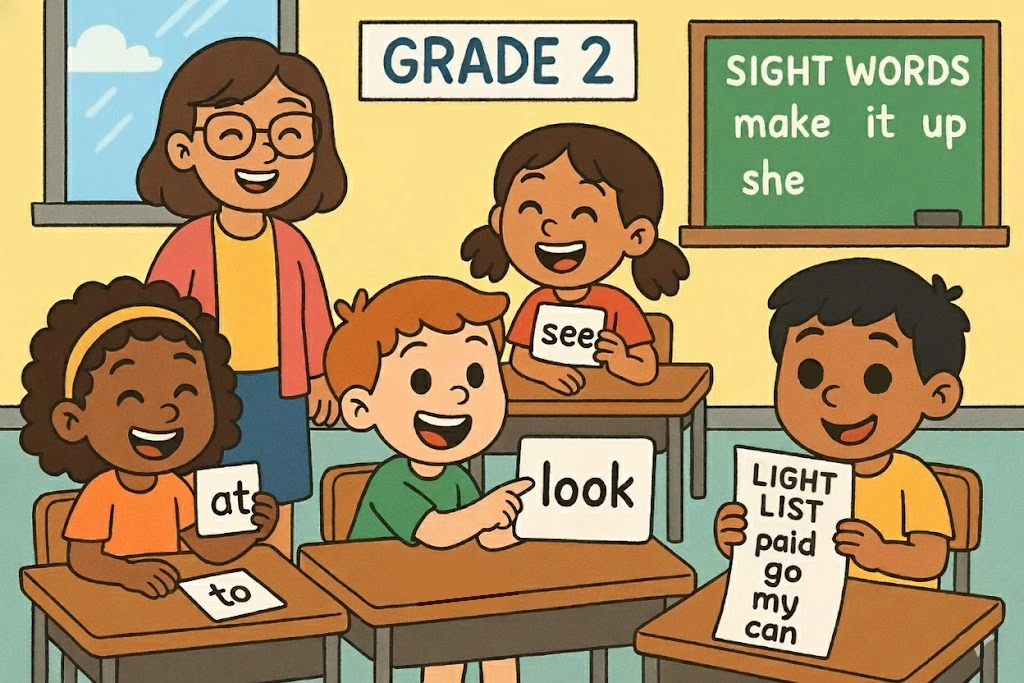
Sight words for 2nd graders are the high-frequency words children need to recognize instantly to build reading fluency, spelling accuracy, and writing confidence. This guide covers the full second grade sight word list organized by difficulty, along with practical teaching strategies for both home and classroom use.
You will find six interactive practice games, read-and-trace worksheets, tips for daily review, and a simple assessment routine to track progress. Whether you are a parent, classroom teacher, or homeschooling parent, this resource gives you a clear path to help second graders read with greater speed and independence.
Key Takeaways
- Sight words for 2nd graders are high-frequency words students should recognize instantly to improve reading fluency and confidence.
- This page includes the complete 46-word Dolch second-grade sight word list — the standard reference used by teachers and reading specialists.
- The Dolch list differs from Fry words in origin and organization; both are useful, but Dolch is the most common framework for K–3 sight word instruction.
- Six interactive practice games are covered, including Digital Memory Match, Flash Card Challenge, and Timed Reading Race.
- Teaching tips include daily 5-minute review, multisensory practice, small-batch rotation, and sentence and story practice.
- Visual display strategies and a simple home and classroom assessment routine help reinforce consistent word recognition.
Most Common 2nd Grade Sight Words
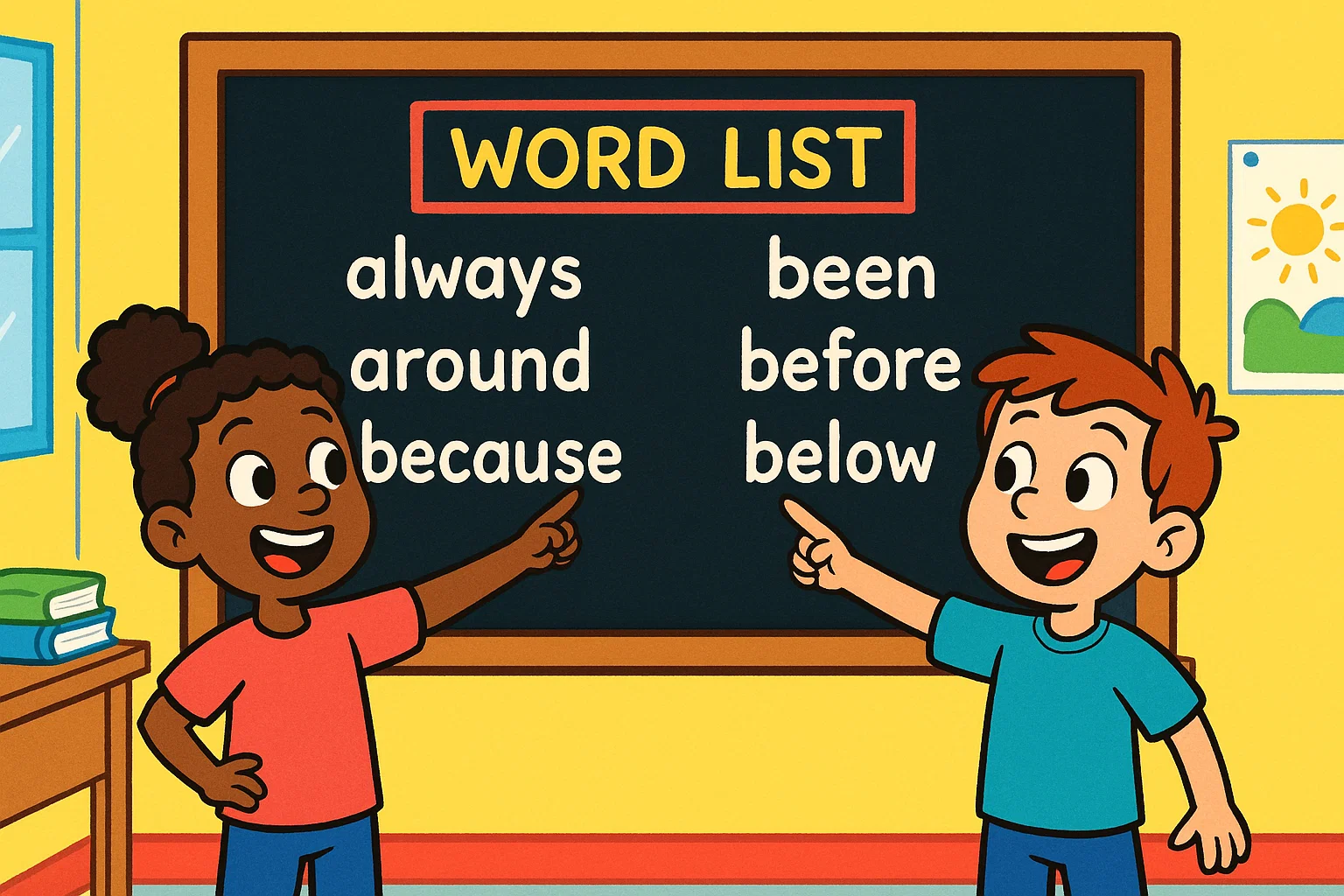
The most important foundational terms are the ones that appear most often in grade-level texts. Mastering this vocabulary allows students to spend less mental energy decoding unfamiliar forms and more energy understanding what they read.
Full Dolch 2nd Grade Sight Word List
The following list includes high-frequency vocabulary commonly found in second-grade reading and curriculum materials.
| Column 1 | Column 2 | Column 3 | Column 4 |
| always | before | because | brother |
| carry | could | don’t | enough |
| father | found | friend | funny |
| group | light | mother | night |
| often | once | please | pretty |
| school | should | their | there |
| these | think | thought | together |
| water | where | which | would |
Alphabetical 2nd Grade Sight Word List
An alphabetical list helps teachers and parents locate specific terms quickly during lesson planning or assessment.
- A-C: always, because, before, brother, carry, could
- D-F: don’t, enough, father, found, friend, funny
- G-N: group, light, mother, night
- O-S: often, once, please, pretty, school, should
- T-W: their, there, these, think, thought, together, water, where, which, would
2nd Grade Sight Vocabulary Challenges
Young learners often struggle with certain sight-word terms because of irregular spelling patterns or similar-looking forms. Learning these tricky forms takes consistent practice and patient guidance.
- Thought, through, and though: These terms look similar but are pronounced differently and have different meanings.
- Their, there, and they’re: These commonly confused words sound the same but have different meanings and uses, so students need practice with them in context.
- Would, could, and should: The silent l makes these terms difficult for many students to spell using standard phonics rules.
- Where and were: These two forms are often confused because they look similar on the page.
Early 2nd Grade Sight Vocabulary List
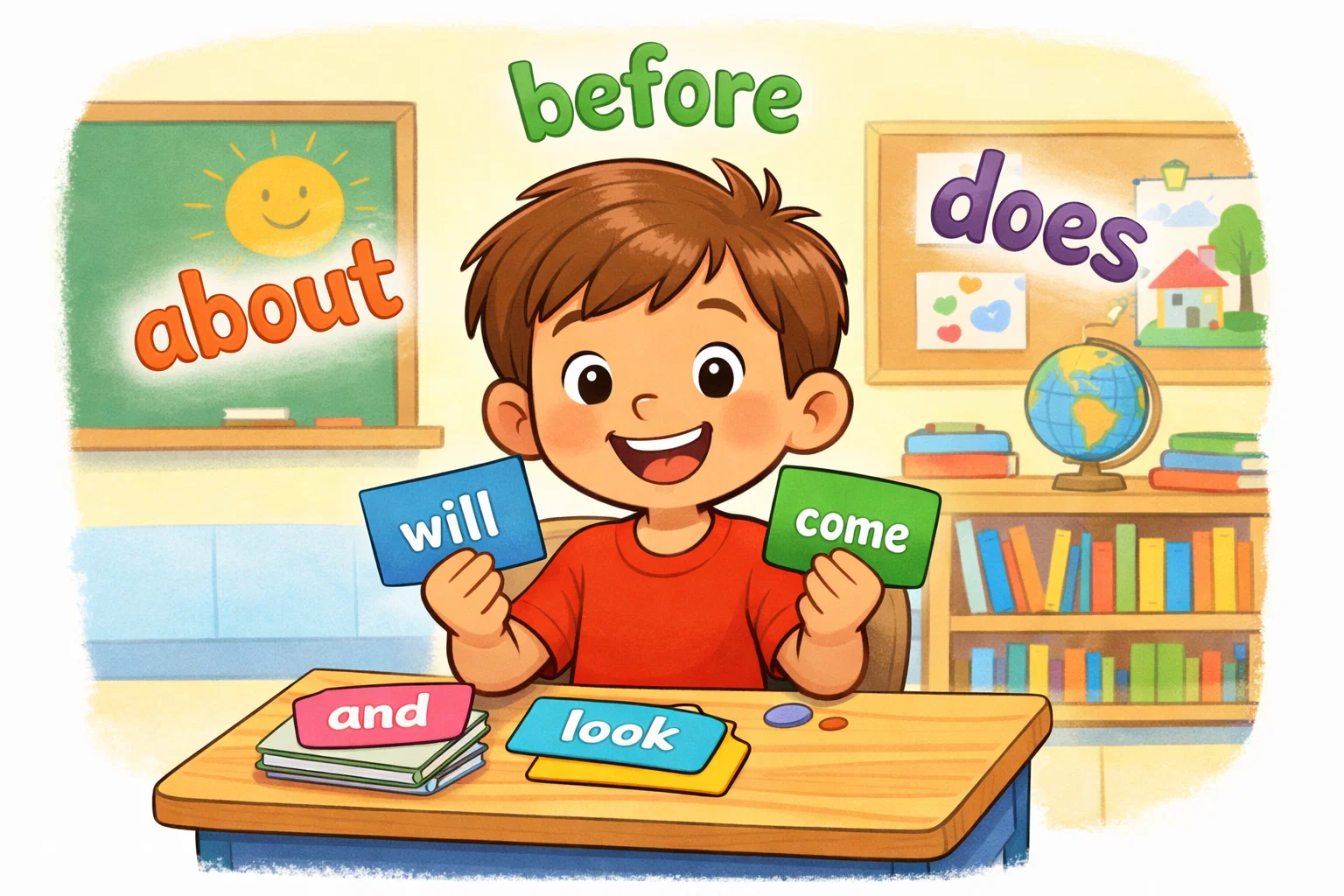
Early-year lists typically bridge the gap between first-grade review and new, more complex sight-word vocabulary. This transition helps children retain what they have already learned while building confidence for more challenging reading ahead.
Review Items from 1st Grade
Reviewing high-frequency words from first grade – such as the, and, was, said, and they – is a good practice during the first few weeks of school. Quick recall helps build the fluency and confidence students need for more difficult reading later in the year.
Easy High-Frequency Items for Early 2nd Grade
Teachers and parents can introduce new target vocabulary in small, manageable batches of five to ten terms per week to avoid overwhelming the learner. A recommended starter set includes: found, friend, light, night, once, school, water.
Early 2nd Grade Reading Practice
Using new vocabulary in context is essential for retention. A child might practice with a sentence such as, ‘My dear friend found a bright light at school.’ This helps students see how target vocabulary moves from isolated lists into meaningful language.
Mid to Late 2nd Grade Sight Vocabulary List
Lists used in the middle and later part of the school year often focus on more complex vocabulary found in longer, more sophisticated texts. Introducing this vocabulary later in the year helps ensure that students have a solid foundation before moving on to more advanced reading.
Next-Step 2nd Grade Vocabulary
These terms often appear in chapter books and informational texts. Mastering terms such as always, because, before, enough, together, and which helps students keep up with grade-level reading demands.
Longer and Trickier 2nd Grade Vocabulary
Some terms have less predictable spelling patterns or multiple syllables, so they may require extra attention. Terms such as together and because often require students to notice larger letter patterns rather than rely only on basic phonics rules.
Mid to Late 2nd Grade Reading Practice
A student at this level should be capable of reading short paragraphs that incorporate these essential items. For example: “We go to school together because we like to learn. It is always fun to see our friend.”
Benefits of Learning 2nd Grade Sight Vocabulary
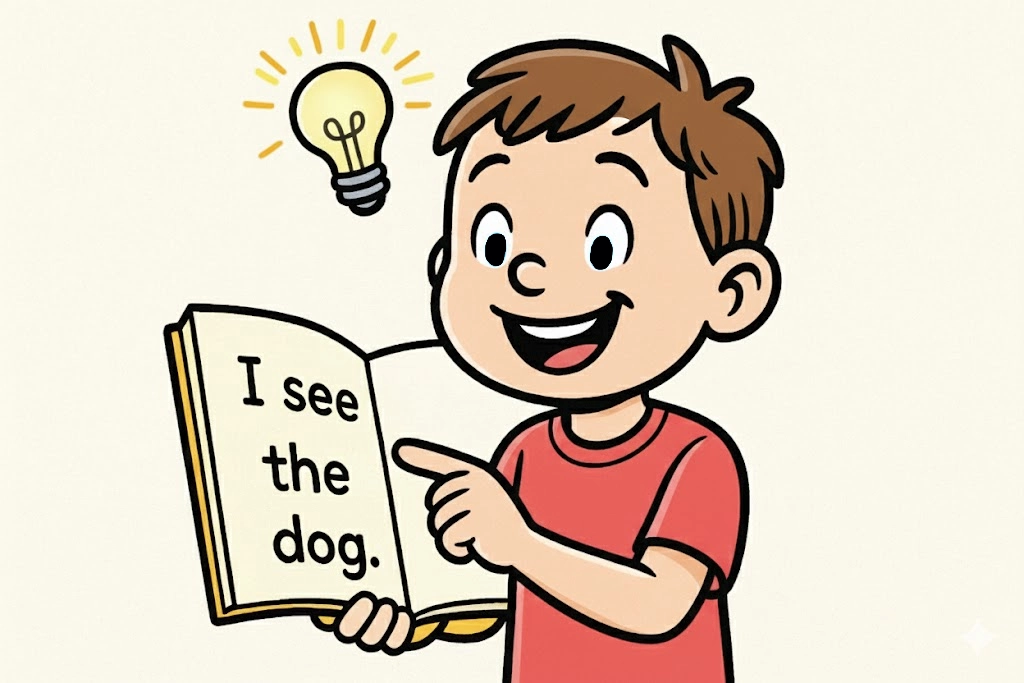
Learning this core set of sight-word vocabulary supports a child’s reading and writing development. Educators emphasize this vocabulary because it appears so often in early reading and writing.
Reading Fluency
Reading fluency is defined by the speed, accuracy, and expression with which a child reads text. When a child recognizes common terms instantly, they spend less time sounding them out and more time understanding the text.
Spelling Accuracy
Repeated exposure helps improve spelling accuracy. Because some of these terms do not follow regular phonics patterns, children often rely on repeated exposure and visual memory to spell them correctly in everyday writing.
Reading Comprehension in Short Texts
Reading comprehension improves when a child recognizes common words instantly. This allows the child to focus more on the plot, characters, and information in the text instead of stopping to decode every word.
Writing Confidence
Students who know these words well usually write with more confidence. When children can spell words such as because and thought from memory, they can write longer, more expressive sentences without stopping to ask for help or check every word.
Tips for Teaching 2nd Grade Sight Vocabulary
Effective instruction combines consistency with variety. These strategies help children stay engaged and remember the words over time.
Daily 5-Minute Review
A consistent daily 5-minute review is often more effective than a single, long session per week. Teachers and parents can use flashcards or quick oral quizzes to keep practice consistent.
Multisensory Practice
Multisensory practice can help children remember new words by involving sight, sound, touch, and movement. Examples include:
- Writing words in sand or shaving cream.
- Building words with magnetic letters on a cookie sheet or whiteboard.
- Tracing words on textured surfaces.
Sentence and Story Practice
Children learn best when new words are used in context. Teachers and parents can encourage students to write one short sentence or a mini-story using at least three of the week’s target words.
Small-Batch Rotation
Teaching words in small batches helps prevent cognitive overload. A useful routine is to introduce five new words while reviewing five from the previous week.
Independent Home Practice
Parents can support learning with simple at-home practice routines. Ideas include keeping a ring of word cards in the car, posting words on the bathroom mirror, or doing a quick two-minute review before bedtime.
How to Start 2nd Grade Sight Vocabulary Practice
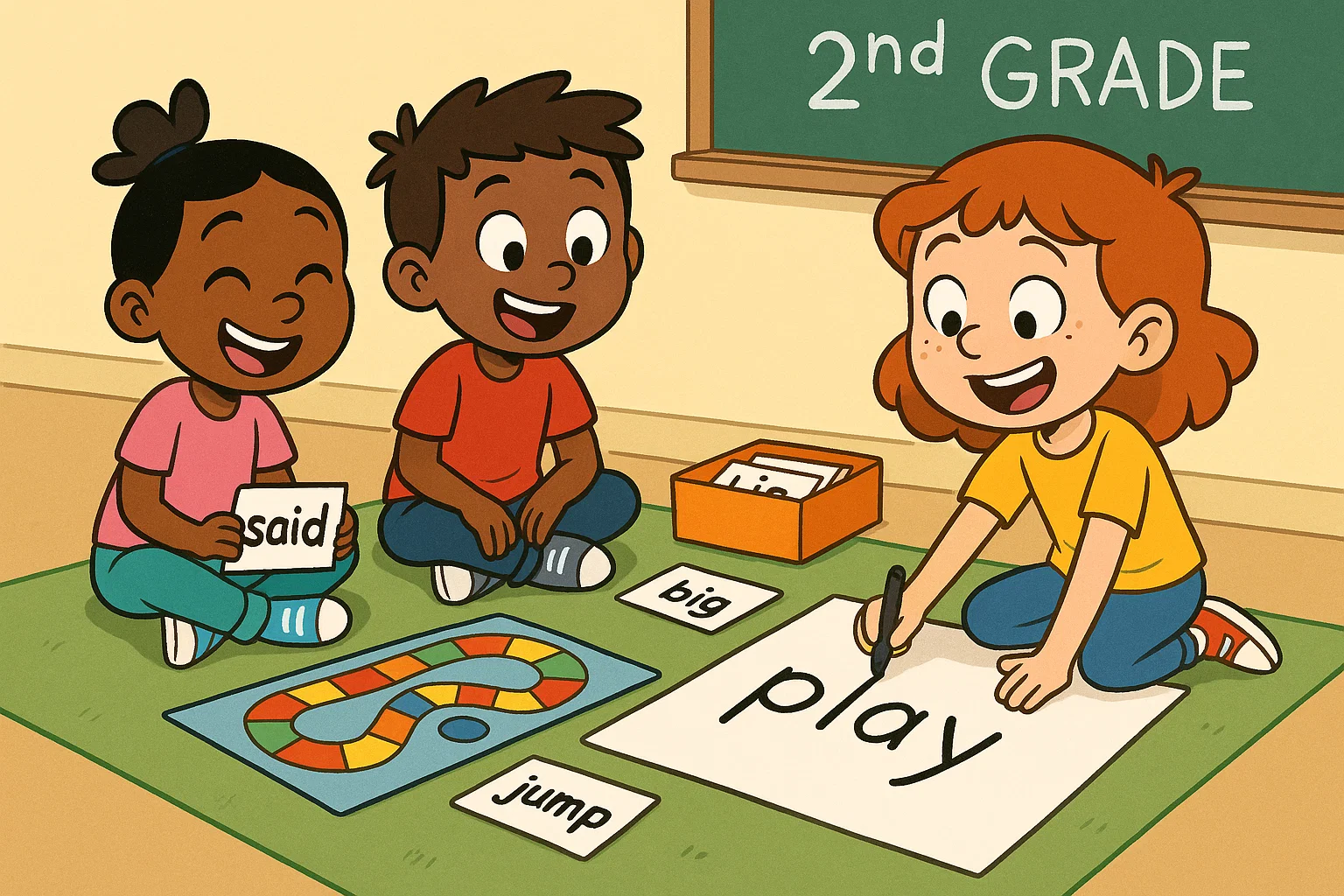
Establishing a clear, predictable plan for practice minimizes frustration for both the adult and the child.
Weekly Goal Setting
Setting a realistic weekly goal is essential. For many second graders, learning five to eight new words per week is a manageable goal. This pace gives students enough repetition to make progress without becoming discouraged.
Simple Assessment Routine
A simple, consistent assessment routine allows for progress tracking. Teachers and parents can use a simple Friday check-in in which the student reads a list aloud or writes words from dictation to show which areas need more practice the following week.
Home and Classroom Practice Plan
A shared practice plan between home and school often works best. A teacher might send home a list on Monday, while a parent conducts a 5-minute review on Tuesday and Thursday. This shared approach reinforces learning across all environments.
Interactive Practice Games
Games turn repetitive practice into an engaging activity. These activities help students learn sight words without relying only on rote memorization.
Digital Memory Match
A popular activity is Memory Match. The student flips over two cards; if the words match and are read correctly, the student keeps the pair. This game builds recognition and memory simultaneously.
Flash Card Challenge
The Flash Card Challenge is a timed activity that builds automaticity. The student tries to read a stack of 20 words in under 60 seconds. Tracking the time over several days can help the child see their progress.
Bingo, Memory, and Matching
- Classroom Bingo: The student marks off items on a grid as they are called out, reinforcing auditory recognition.
- Concentration: Similar to a standard memory game, the student matches pairs of identical words placed face down.
- Visual Matching: The student matches a printed word to the same word used in a sentence.
Timed Reading Race
In a timed reading race, the student reads a list of words while someone records the time. As the number of seconds decreases over several days, the child can see their progress.
Read and Trace Worksheets
Read and trace worksheets are effective for reinforcing handwriting alongside reading. A student reads the word aloud and then traces the letters to build muscle memory for the correct spelling.
Write and Spell Worksheets
Write-and-spell worksheets require the student to write the word from memory after seeing it briefly. These activities help show whether a word has moved into the child’s long-term memory.
Utilizing Visual Displays
A classroom word wall provides students with a permanent visual reference. This kind of display supports more independent reading and writing.
Classroom Setup
Teachers can organize the display alphabetically or by color to make the vocabulary easy for students to find. Placing the display at students’ eye level makes it easier for them to use independently.
Home Display Board
Parents can create a home display using sticky notes, index cards, or a dedicated poster board. Placing it in a central location, such as the kitchen, makes quick daily review easier during meals or other household routines.
Color Coding and Grouping
Color-coding target vocabulary by pattern or type – such as irregular spellings, common verbs, or commonly confused terms – can help students notice patterns more easily. This organizational method can help children remember words by noticing shared features and patterns.
Homophones and Irregular Spellings
Teachers and parents should create a specific section for homophones like their/there/they’re or where/were. Seeing these words side by side gives students an immediate visual comparison and can help prevent future mistakes.
Dolch Second Grade Sight Words Explained
The Dolch sight word list is the most widely recognized framework for teaching high-frequency words in early elementary school. Developed by educator Edward William Dolch in 1948, the list was compiled by analyzing the words that appear most often in children’s books and early reading materials. The second-grade Dolch list contains 46 words that students are expected to recognize automatically by the end of second grade.
Teachers and reading specialists rely on the Dolch list because it provides a clear, grade-by-grade sequence — from pre-kindergarten through third grade — making it easy to track progress and identify gaps. The full Dolch collection covers 220 service words (words that carry the structure of sentences) plus 95 common nouns.
How Dolch Words Differ from Fry Words
Both the Dolch list and the Fry word list are used in schools, and there is significant overlap between them. The key differences are:
- Origin: Dolch words were compiled in the 1940s from children’s reading materials; Fry words were developed in the 1950s and updated in the 1980s using a broader range of texts.
- Structure: The Dolch list is organized by grade level (pre-K through Grade 3); the Fry list ranks 1,000 words by frequency without grade-level groupings.
- Scope: The Dolch list has 220 service words; the Fry list extends to 1,000 words, making it more useful for upper-elementary instruction.
- Classroom use: Dolch is the more common framework in K–2 classrooms; Fry words are often introduced in grades 3 and above.
For second graders, the Dolch second-grade list is the standard starting point. Once students have mastered these 46 words, they are well prepared to begin working through the Fry word sequence as they move into third grade.
Sight Words for Grade 2 and Grade 3 Transition
As second graders approach the end of the school year, it is natural to wonder which words carry over into third grade and what new vocabulary to expect. Understanding this transition helps parents and teachers plan ahead and keep momentum going over the summer.
Words That Bridge Grade 2 and Grade 3
Many of the second-grade Dolch words — such as because, together, thought, and which — continue to appear frequently in third-grade texts. Students who have mastered the full second-grade list will encounter these words constantly in chapter books and informational reading, reinforcing their recognition naturally through volume of reading.
The Dolch third-grade list introduces 41 additional words, including about, better, bring, carry, clean, cut, done, draw, drink, eight, fall, far, full, got, grow, hold, hot, hurt, if, keep, kind, laugh, light, long, much, myself, never, only, own, pick, seven, shall, show, six, small, start, ten, today, together, try, and warm. Some of these words overlap with or closely resemble second-grade vocabulary, which makes the transition manageable for most students.
How to Prepare for 3rd Grade Sight Words
- Confirm mastery of all 46 Dolch second-grade words before introducing third-grade vocabulary.
- Use summer reading to reinforce second-grade words in context rather than drilling new lists.
- Introduce five to eight third-grade Dolch words per week once the school year begins, using the same small-batch rotation strategy that worked in second grade.
- Focus extra attention on words that appear in both lists, as repeated exposure across grade levels accelerates automatic recognition.
Frequently Asked Questions (FAQ)
What is the purpose of focusing on high-frequency words in early reading?
The main goal is to help students recognize these terms quickly and automatically. Some sight words do not follow regular phonics patterns, and even decodable high-frequency words appear so often that recognizing them automatically improves fluency and frees students to focus on meaning.
How can I effectively approach teaching sight words to a second grader?
A second grader benefits from short, varied practice that matches their pace and learning style. In addition to classroom instruction, consistent short practice at home can make a big difference. With enough meaningful repetition, these terms become a natural part of the child’s reading vocabulary.
What is the best way to introduce second grade sight words?
Start with the most common terms your child sees in everyday reading. When you introduce them in small, manageable batches and review them often in context, they are more likely to become part of the child’s active vocabulary. Consistency is the primary factor in building long-term reading confidence.

Take a short quiz to find out what your everyday choices say about your parenting style
When your child is curious about something new, what’s your instinct?
Take a short quiz to find out what your everyday choices say about your parenting style
“Can I download this app?” What happens next?
Take a short quiz to find out what your everyday choices say about your parenting style
When it comes to rules at home, which sounds most like you?
Take a short quiz to find out what your everyday choices say about your parenting style
If you could give your child one life skill today, what would you pick?
Take a short quiz to find out what your everyday choices say about your parenting style
Your child gets to choose what to watch. What would your ideal setup look like?
Take a short quiz to find out what your everyday choices say about your parenting style
Pick your parenting superpower ✨