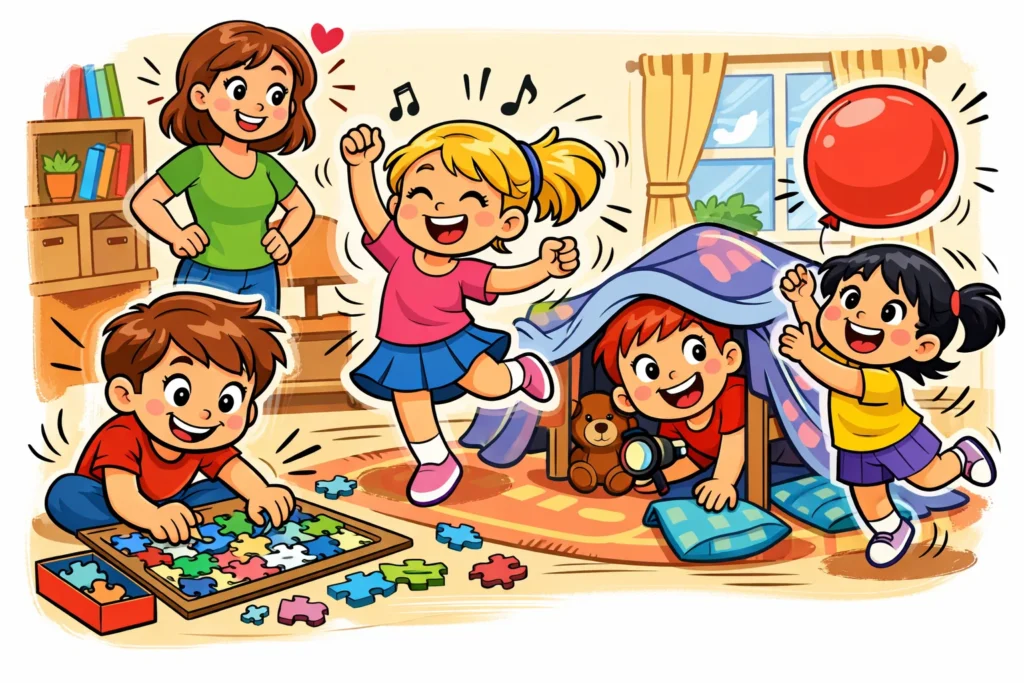
How to Set Healthy Boundaries with Your Child

 Discover a Free Education Video App for Kids
Pastory uses AI to personalize educational video content based on your child’s interests and personality. Safe, engaging, and built for curious young minds. Sign up now to stay updated and enjoy early access with a free trial
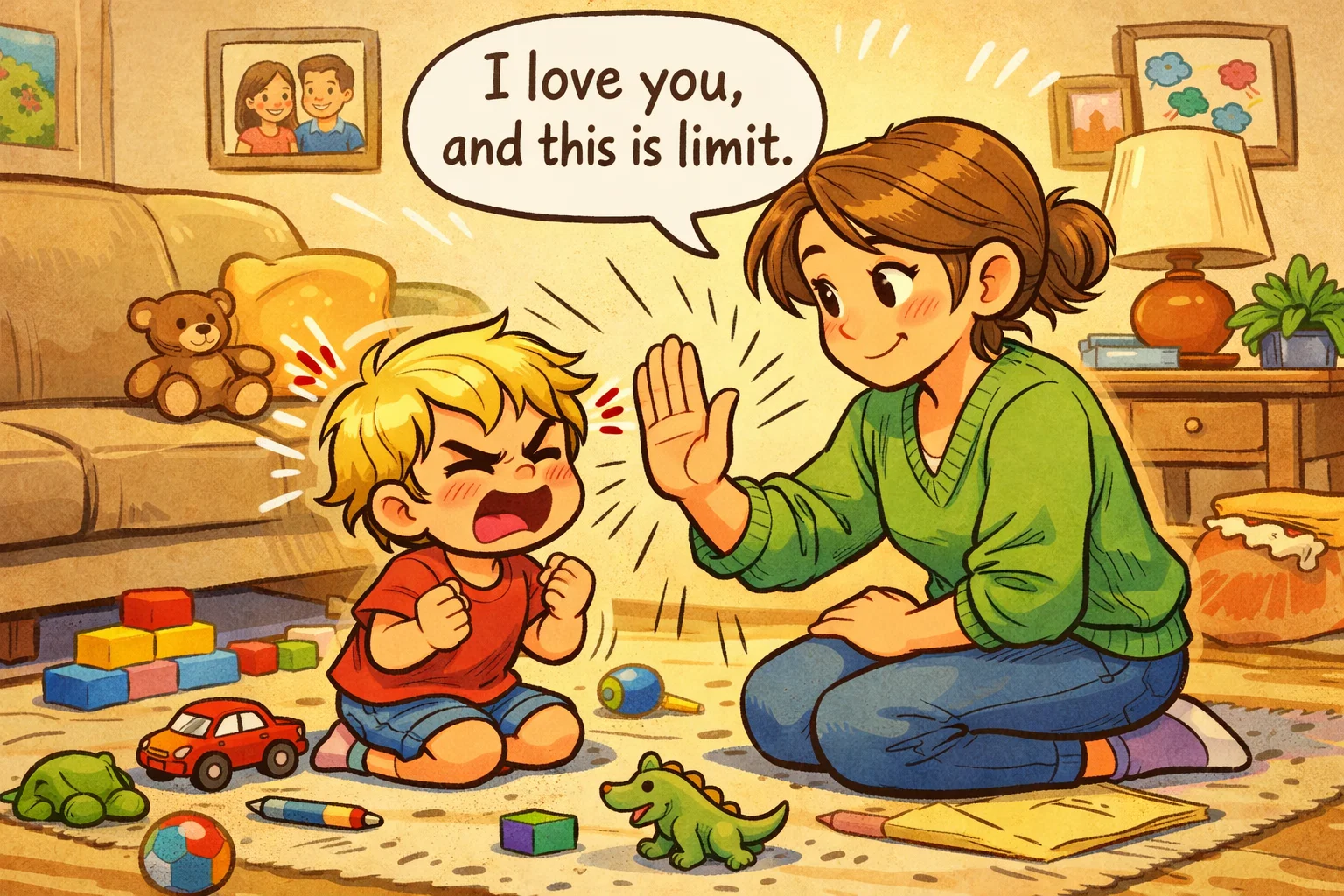
Knowing how to set healthy boundaries with your child is one of the most grounding things you can do as a parent. Boundaries are not about punishment or control — they give children a clear, safe structure that supports emotional development, self-regulation, and trust. When kids understand what is expected, they feel more secure, not less free.
This guide covers what healthy boundaries actually look like, practical techniques for staying consistent, how to handle pushback, and how to balance firmness with emotional warmth — whether you are starting fresh or resetting limits that have slipped.
Key Takeaways
- Healthy boundaries give children safety and predictability, supporting emotional growth and self-control rather than restricting freedom.
- Clear, calm language and consistent follow-through are more effective than repeated warnings or strict rules alone.
- Techniques like offering two choices, using natural consequences, and validating feelings help boundaries hold without power struggles.
- Involving children in building family rules increases cooperation and makes boundaries feel fair rather than imposed.
- Boundaries should be revisited and adapted as your child grows, with professional support available when challenges persist.
What Healthy Boundaries Mean
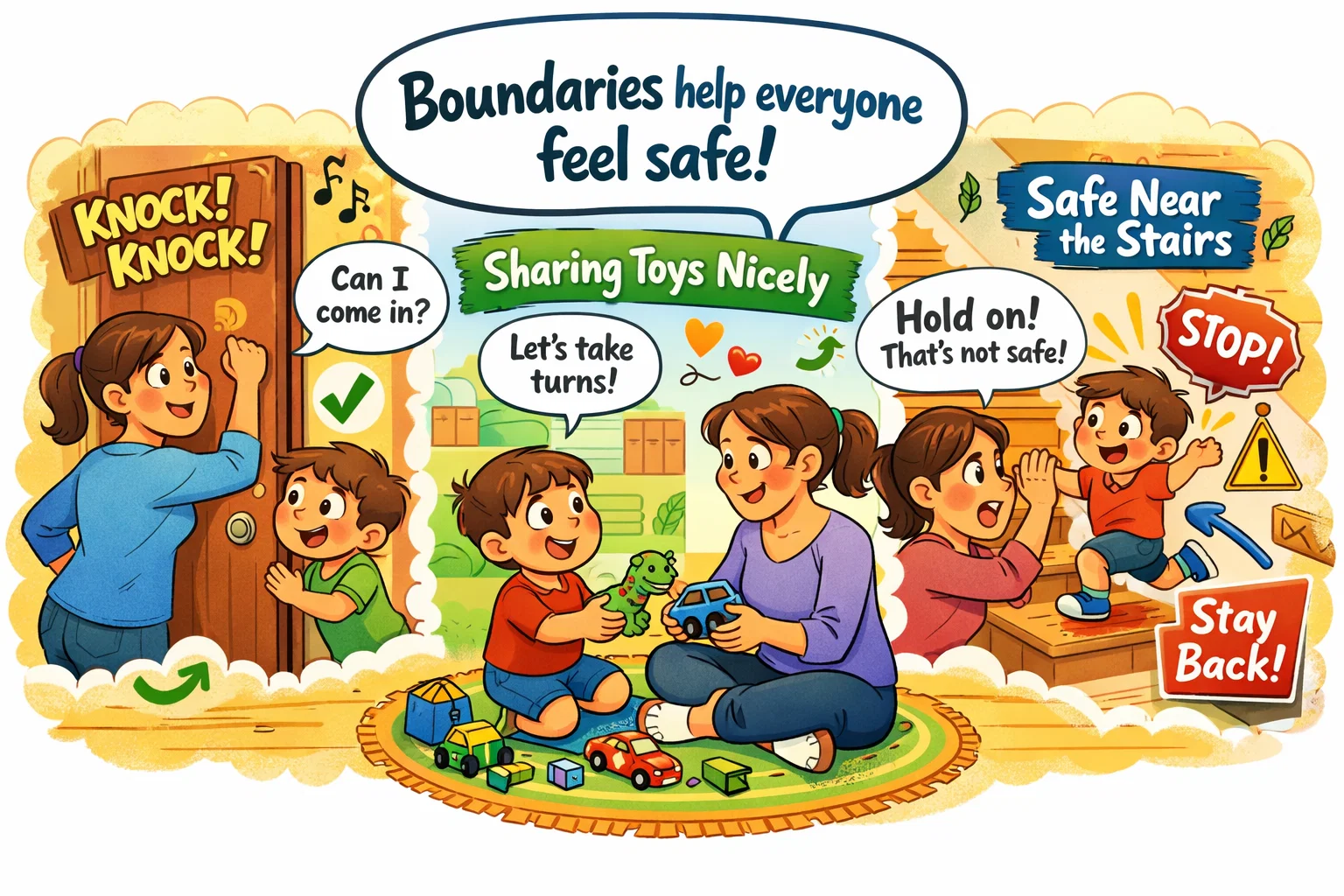
In a parenting context, healthy boundaries are the defined limits around behavior, time, physical space, tone of voice, and safety. They serve as the invisible lines that protect the well-being of both the parent and the child. Unlike arbitrary rules, a boundary focuses on what is acceptable and what is not, creating a functional environment for growth.
| Concepts | Focus | Goal |
| Boundaries | Parental action and limits | Safety and self-regulation |
| Rules | Household expectations | Order and cooperation |
| Punishment | Retribution for mistakes | Compliance through fear |
Boundaries vs. Rules vs. Punishment
A boundary is a limit coupled with a parental action (e.g., “If you throw the blocks, I will put them away to keep everyone safe”). A rule is a general household expectation (e.g., “We wear shoes outside”). Punishment is a reactive, often punitive measure intended to make a child suffer for a mistake. While rules guide, boundaries protect, and punishments often disconnect.
Signs Boundaries Are Blurred
You may notice boundaries are blurred if the child frequently commands adults, consistently violates parental privacy, or argues every single limit without pause. Another indicator is when a parent feels the need to “fix” every discomfort the child experiences, effectively removing the child’s opportunity to learn from natural consequences.
Why Saying No Supports Child Growth
Saying “no” is an essential tool that fosters self-control, frustration tolerance, and respect for others. When you tell your child no, you are giving them the chance to practice sitting with disappointment in a safe environment. This builds the emotional “muscle” they will need to handle life’s inevitable rejections later on.
Why Children Need Boundaries
Children need boundaries because their prefrontal cortex—the area of the brain responsible for impulse control—is not fully developed. Consistent limits help children regulate their behavior and reduce anxiety by making their world feel predictable.
Safety, Predictability, and Self-Control
When a toddler or older kid knows what to expect, their nervous system can relax. Predictable environments reduce the “chaos” factor in a child’s life. For example, knowing that bedtime always follows a bath helps a child understand the transition, reducing the likelihood of a tantrum.
Science Behind Child Development and Limits
Neurologically, young kids lack the executive function to manage strong impulses. A parent holding the boundary acts as an external prefrontal cortex. This “scaffolding” allows the child to interact with the world safely until their own brain develops the capacity for self-control.
Long-Term Benefits of Boundaries
Establishing boundaries with kids yields long-term results in resilience, decision-making, and emotional intelligence.
- Resilience: Learning to handle “no” prepares them for real-world setbacks.
- Respect: Understanding personal space and maintaining it leads to healthier adult relationships.
- Safety: Clear limits regarding unsafe behaviors (like crossing the street) become second nature.
Routines and Predictability
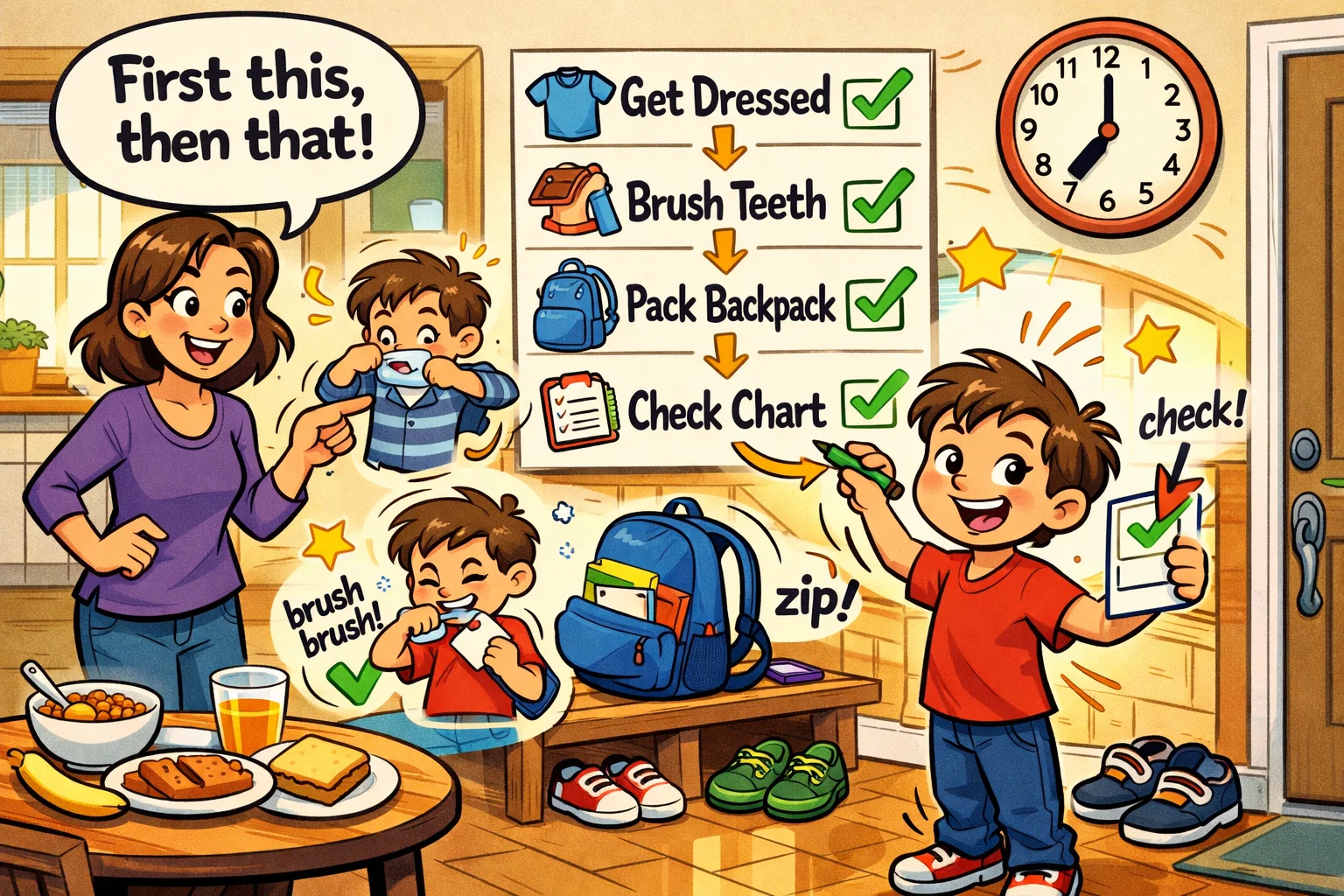
Integrating boundaries into daily routines is the most effective way to reduce power struggles. When a routine is established, the “routine” becomes the boss, not the parent, which reduces interpersonal friction.
Morning, Mealtime, and Bedtime Routines
Mealtime and bedtime are common pressure points where kids often test limits.
- Morning: Set a limit on screen time until dressed.
- Mealtime: Establish that toys go away before sitting at the table.
- Bedtime: Maintain a strict lights-out time to ensure adequate sleep or daily rest.
Visual Timetables and Visual Cues
For younger children, visual cues are more effective than verbal commands. Using a visual board with pictures of the morning routine helps a child learn to make decisions about what comes next without constant parental prompting. Visual aids can help increase task completion in kids, making tasks easier to follow.
Transitions and Daily Pressure Points
Kids get overwhelmed during transitions (e.g., leaving the park). Using a timer provides a neutral boundary. Instead of “We are leaving now,” try “When the timer beeps, it is time to go.” This gives the child a sense of agency and time to transition mentally.
Give Yourself Permission to Be a Parent
Many parents often feel like they are being “mean” when they set a boundary. However, effective parenting requires you to step into a leadership role. You have permission to be the adult in the room, even if your child protests your decisions.
Calm Leadership Before Correction
Setting boundaries is most effective when done from a place of “Calm Leadership.” If you are screaming, the child’s brain goes into “fight or flight” mode, preventing them from learning the lesson. Try not to shout; instead, use a firm, low-frequency tone to convey authority.
Check In with Yourself Emotionally
Before you set a boundary, check your own emotional “battery.” If you are exhausted, you might set a limit out of anger rather than necessity. Taking a deep breath helps you model the very self-control you want your child to develop.
Stop Over-Functioning for Child
Parents “over-function” when they do things for the child that the child is capable of doing themselves (e.g., cleaning up toys for a 6-year-old). This blurs the boundary of responsibility. By stepping back, you help your child gain confidence in their own abilities.
How to Set Boundaries That Actually Work
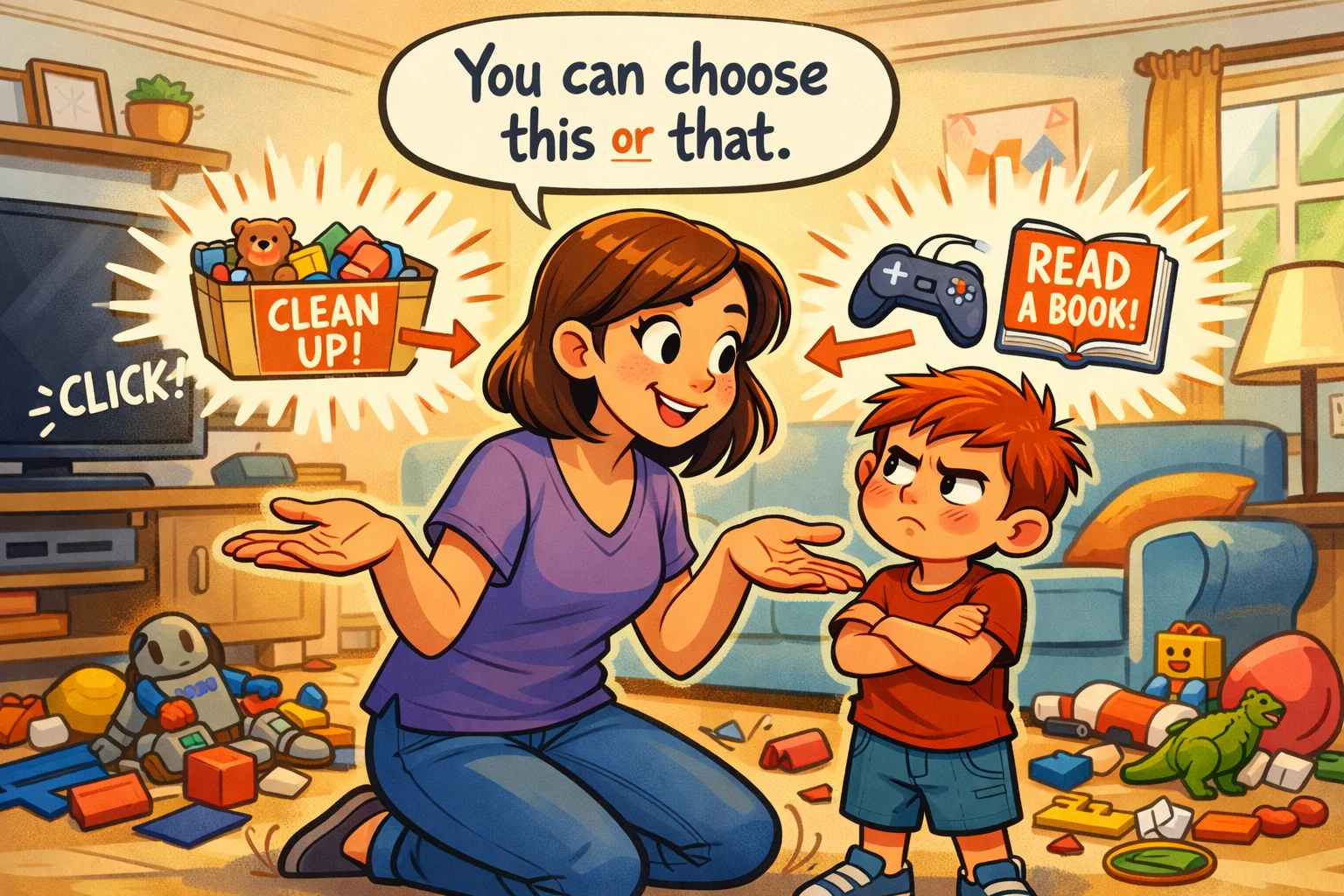
To create healthy boundaries, the delivery is just as important as the limit itself. Effectiveness relies on clarity and the removal of ambiguity.
Be Clear About Expectations
Vague instructions like “be good” are difficult for a child to follow. Instead, use specific instructions: “Keep your feet on the floor” or “Use a quiet voice in the library.” Specificity reduces the “gray area” where most behavior issues occur.
Use Firm Yet Loving Language
You can be empathetic and firm at the same time. This is often called the “Empathetic Limit.”
Example Script: “I know you don’t want to stop playing with your toys, and it is time to wash your hands for dinner.”
State What You Will Do
A boundary is most powerful when it describes your response.
- Ineffective: “Stop hitting me!”
- Effective: “I’m going to move away to keep my body safe since you are having a hard time not hitting.”
Give Simple Explanations
While you don’t need to justify every move, a brief explanation helps with “buy-in.”
- “We hold hands in the parking lot because cars move quickly, and it keeps you safe.”
Keep it to one sentence to avoid turning it into an endless debate.
Boundary Techniques
Practical techniques allow you to get your child to cooperate without resorting to threats or bribes.
Say No Without Guilt
A “no” is a complete sentence. You do not need to over-explain or apologize for setting a boundary. Short, kind, and definitive “no’s” are easier for a child to process than long, guilty justifications.
Offer Two Good Choices
Giving a child a choice within a boundary provides them with a sense of power.
- “Do you want to put your shoes on in the house or in the car?”
Either way, the shoes are going on, but the child feels they have some self-control over the process.
Offer a Creative Yes
Instead of a flat “no,” try a “creative yes.” If a child wants a cookie before dinner: “Yes, you can have a cookie right after we finish our chicken and broccoli.” This helps them understand that their desire is valid, just poorly timed.
Use Distraction During Escalation
For a toddler, distraction is a vital tool. If they are fixated on an unsafe object, acknowledge their interest and immediately redirect them to a safe alternative. This can prevent a full-blown tantrum before it starts.
Consistency and Connected Consequences
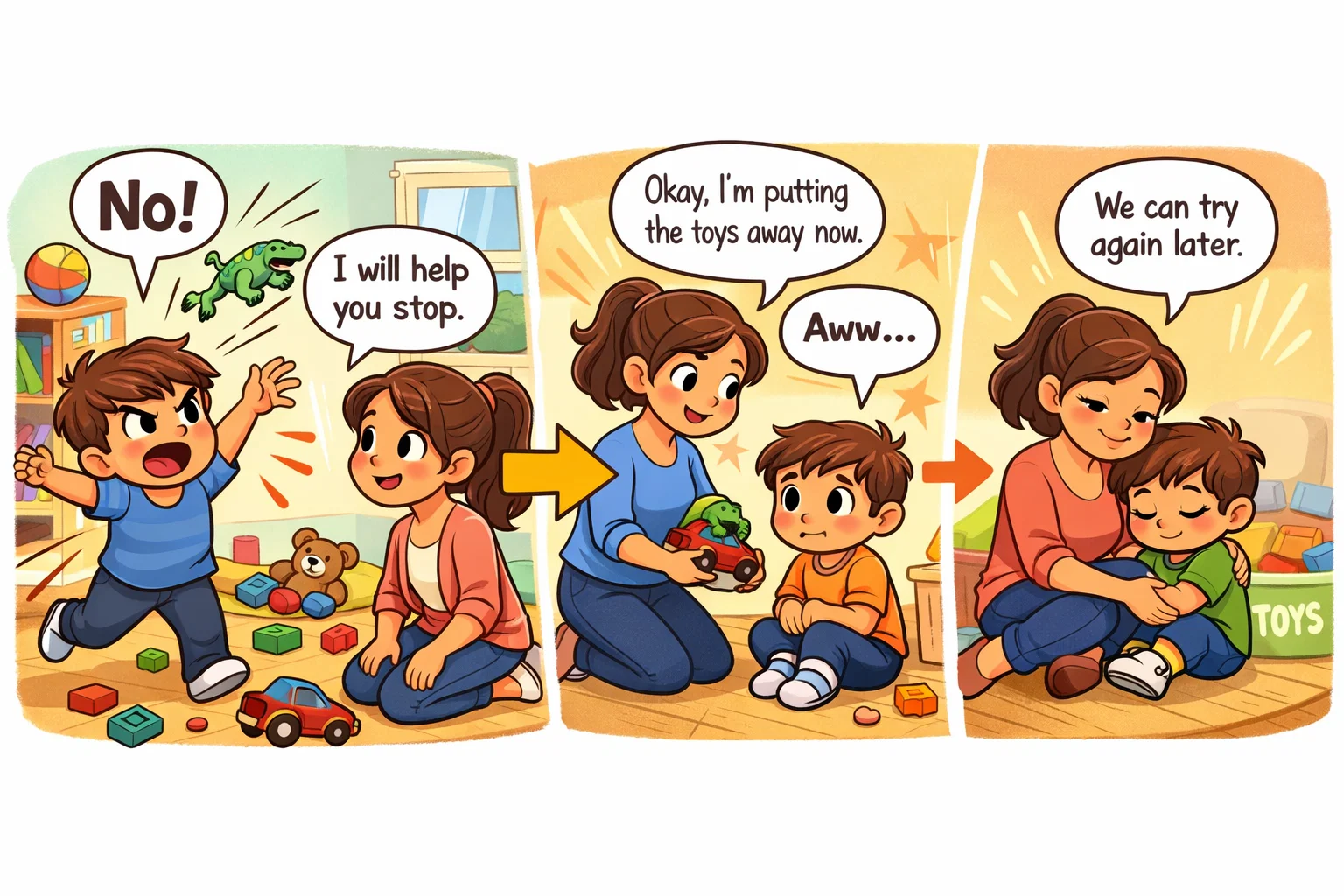
Consistency is the “glue” that makes boundaries stick together. If a boundary only exists 50% of the time, the child will gamble every time to see if today is the day it breaks.
Stay Consistent Across Situations
If you set a boundary that screens are not allowed at the table, that must apply on weekends, at restaurants, and when you are tired. Follow suit with your own actions to show that the rule is about a family value, not just a whim.
Use Natural Consequences Effectively
Natural consequences are the most powerful teachers because the parent isn’t the “bad guy.”
- Action: Child refuses to wear a coat.
- Consequence: The child feels cold outside.
(Note: Only use this if the situation is not truly unsafe).
Use Logical Consequences
Logical consequences are created by the parent but are directly related to the behavior.
| Misbehavior | Logical Consequence |
| Writing on the wall | The child helps scrub the wall clean. |
| Not stopping screen time | No screens the following day. |
| Throwing a toy | The toy is put away for the rest of the day. |
Use Positive Reinforcement
Praise when your child stays within the boundary. “I noticed how quickly you put your toys away today; that really helped us get to the park faster!” This uses positive language to foster future cooperation.
Common Challenges and Solutions
Handle Pushback and Tantrums
When you first set a boundary, the child may escalate their behavior to test if you will back down. This is called an “extinction burst,” which does not mean the boundary isn’t working. It means the child is testing the strength of the new limit. Stay firm and empathetically wait for the storm to pass.
Avoid Power Struggles
Don’t attend every argument you are invited to. If a child begins to bargain, simply repeat your initial boundary once and then disengage. Over-talking fuels the struggle; silence holds the line.
Reset Boundaries After Mixed Signals
If you have been permissive and want to create healthy boundaries now, have a “reset” conversation. “I realized I haven’t been helping you with your bedtime lately. Starting tonight, we are going to turn off the light at 8:00 PM so your brain can rest.”
Involve Child in Process
As children grow, boundary-setting should become more collaborative. This increases their sense of responsibility and helps them make decisions that align with family values.
Ask Yourself Key Questions
Before setting a new limit, ask:
- Is this about safety or my own convenience?
- Is the child developmentally capable of this?
- Can I offer a choice here?
Build Family Rules Around Values
Instead of a list of “don’ts,” create a list of family values. “In this house, we value respectful communication.” This makes the boundary about who you are as a family, rather than just a set of restrictions.
Use Family Meeting or Family Contract
For school-aged kids, a “Family Contract” for screen time or chores can be very effective. Writing it down and having everyone sign it makes the boundary feel official and fair.
Balance Boundaries with Emotional Support
Boundaries without affection and empathy often lead to rebellion. The goal is to be a “Warm Demand-er”—someone who holds high expectations but provides high levels of love.
Validate Feelings Without Backing Down
You can acknowledge a child’s feelings while still holding the line.
“I hear how much you don’t want to leave the party. It’s hard to leave friends! And, it is time to go to the car.”
Give Attention Before Correction or Discipline
Kids often act out because they are seeking emotional connection. Ensure you are filling their “emotional tank” with 10–15 minutes of undivided attention daily. When a child feels connected, they are much more likely to follow through when you set a boundary.
Avoid Smacking, Empty Threats, and Rash Decisions
Physical punishment or “empty threats” (e.g., “We’re never going to Disney if you don’t stop!”) undermine your authority. If you can’t follow through, don’t say it. Mean what you say, and your child will learn to trust your word.
Be a Role Model
You cannot expect a child to respect your boundaries if you do not model healthy boundaries. Children are excellent observers and will mimic your behavior more than your words.
Model Personal Space and Privacy Respectfully
If you want your child to respect your privacy, you must respect theirs. Knock before entering their room and ask before giving affection (e.g., “Can I have a hug?”). This teaches consent in a respectful way.
Model a Respectful No
When someone asks you for a favor you cannot do, say “no” in a respectful, calm way in front of your children. This shows them that “no” is not an act of aggression, but an act of self-care and clarity.
Adapt Boundaries as Child Grows
Boundary-setting is not a static process. It must evolve as the child’s cognitive and emotional needs change.
- Toddlers: Focus on safety, physical redirection, and visual cues.
- School-Age: Focus on logical consequences, chores, and screen time limits.
- Teens: Focus on trust, digital boundaries, and collaborative problem-solving.
Path Forward: 7-Day Boundary Kickstart
Ready to transform your home? Start with these steps:
- Pick One Area: Choose one struggle (e.g., bedtime).
- Communicate Early: Tell your child the new limit during a calm time.
- Use a Script: “At 8:00, the light goes off. I love you too much to let you be tired.”
- Hold the Line: Expect a tantrum on Day 2 or 3. Stay calm.
- Acknowledge Progress: “I saw how you turned the TV off the first time I asked. That shows great self-control!”
When Extra Support Makes Sense
If a child exhibits extreme aggression or persistent unsafe behavior, or if you feel a total loss of well-being as a parent, consider consulting a child psychologist. Sometimes, underlying sensory or developmental needs require a specialized approach.
FAQ
What are healthy boundaries for kids?
They are clear limits regarding physical safety, respectful language, and daily routines that help a child feel secure.
How can I help my child set boundaries?
Model saying “no” and respect their right to say “no” regarding their own body or personal space.
How do I set boundaries without yelling?
Prepare the child for transitions, use fewer words, and ensure you have their eye contact before speaking in a calm, firm tone.

Take a short quiz to find out what your everyday choices say about your parenting style
When your child is curious about something new, what’s your instinct?
Take a short quiz to find out what your everyday choices say about your parenting style
“Can I download this app?” What happens next?
Take a short quiz to find out what your everyday choices say about your parenting style
When it comes to rules at home, which sounds most like you?
Take a short quiz to find out what your everyday choices say about your parenting style
If you could give your child one life skill today, what would you pick?
Take a short quiz to find out what your everyday choices say about your parenting style
Your child gets to choose what to watch. What would your ideal setup look like?
Take a short quiz to find out what your everyday choices say about your parenting style
Pick your parenting superpower ✨