100+ Fun Riddles for Kids With Answers: Perfect for 8 Year Olds

 Discover a Free Education Video App for Kids
Pastory uses AI to personalize educational video content based on your child’s interests and personality. Safe, engaging, and built for curious young minds. Sign up now to stay updated and enjoy early access with a free trial
Riddles are a great way to spark children’s curiosity, whether you’re looking for activities at home, in the classroom, on road trips, or at holiday parties. For children who are 8 years old or in third grade, riddles offer the right balance of challenge and accessibility. This collection includes a wide range of topics, including easy, funny, math, animal, science, and holiday riddles to keep kids engaged and entertained. These puzzles can help kids think creatively, strengthen their problem-solving skills, and make learning more fun.
What Are Riddles?
Riddles are questions or clues that describe an object, concept, or person indirectly, requiring the listener to figure out an unexpected answer. These brain teasers can help children develop lateral-thinking skills. Teachers often use riddles to encourage students to think critically instead of simply recalling facts.
Types of Riddles for Kids
- Wordplay: Riddles that rely on puns, homophones, or multiple meanings of words.
- Logic: Puzzles that require deductive reasoning and sequence analysis.
- Joke-Style: Riddles that function as short, punchy jokes with a humorous twist.
- Descriptive: Classic riddles that describe attributes like shape, color, or function to help kids solve them.
How Old Are Riddles?
Riddles have a long history that dates back to ancient civilizations, including Mesopotamia and Ancient Greece. Historically, riddles were often used to test wisdom and pass down cultural knowledge in a memorable oral form.
Why Riddles Work Well for 8-Year-Olds
By age 8, many children enjoy patterns, puns, and more complex wordplay, which makes riddles especially appealing. Children this age can usually handle short, descriptive riddles and enjoy the challenge of figuring out clever answers.
How to Show Answers Without Spoilers
To avoid spoilers, place answers in a collapsible section, at the end of each category, or in a separate answer key. Make the answers easy to find so kids can check their reasoning without getting frustrated.
Riddle Rules for Kids
Establishing a few simple guidelines ensures that riddles remain a positive, low-pressure activity for parents and teachers. These ground rules prevent frustration and keep the focus on the joy of discovery.
Choose the Right Difficulty
For 8-year-olds, mix easy and medium riddles to build confidence, and introduce harder ones as an extra challenge. A challenge level that is neither too easy nor too difficult helps children stay engaged.
Give Topic Clues First
Before asking a riddle, mention the category, such as “animal,” “math,” “school,” or “food.” This strategy provides context, which helps kids narrow their guesses and feel less frustrated.
Keep Sessions Short and Fun
Limit each session to 5 to 10 riddles so kids stay interested without feeling overwhelmed. Whether you’re at home, in the classroom, or in the car, short bursts of activity usually work better than long, drawn-out sessions.
Make Wrong Answers Part of the Fun
Treat incorrect answers as part of the creative process rather than failures. Encourage children to explain their reasoning, because their answers often lead to funny conversations and show that creative thinking matters.
100+ Riddles for 8-Year-Olds
This section includes riddles grouped by category for easy browsing. Whether you need a quick brain break or a structured activity, these riddles are designed especially for 8-year-olds.
Easy Riddles for Kids
- I’m tall when I’m young, and I’m short when I’m old. What am I? (A candle.)
- What month of the year has 28 days? (All of them.)
- What is full of holes but still holds water? (A sponge.)
- What question can you never answer yes to? (Are you asleep yet?)
- What is always in front of you but can’t be seen? (The future.)
- What can you hold in your left hand but not in your right? (Your right elbow.)
- What gets wetter the more it dries? (A towel.)
- Where does Friday come before Thursday? (In the dictionary.)
- What has many keys but can’t open a single lock? (A piano.)
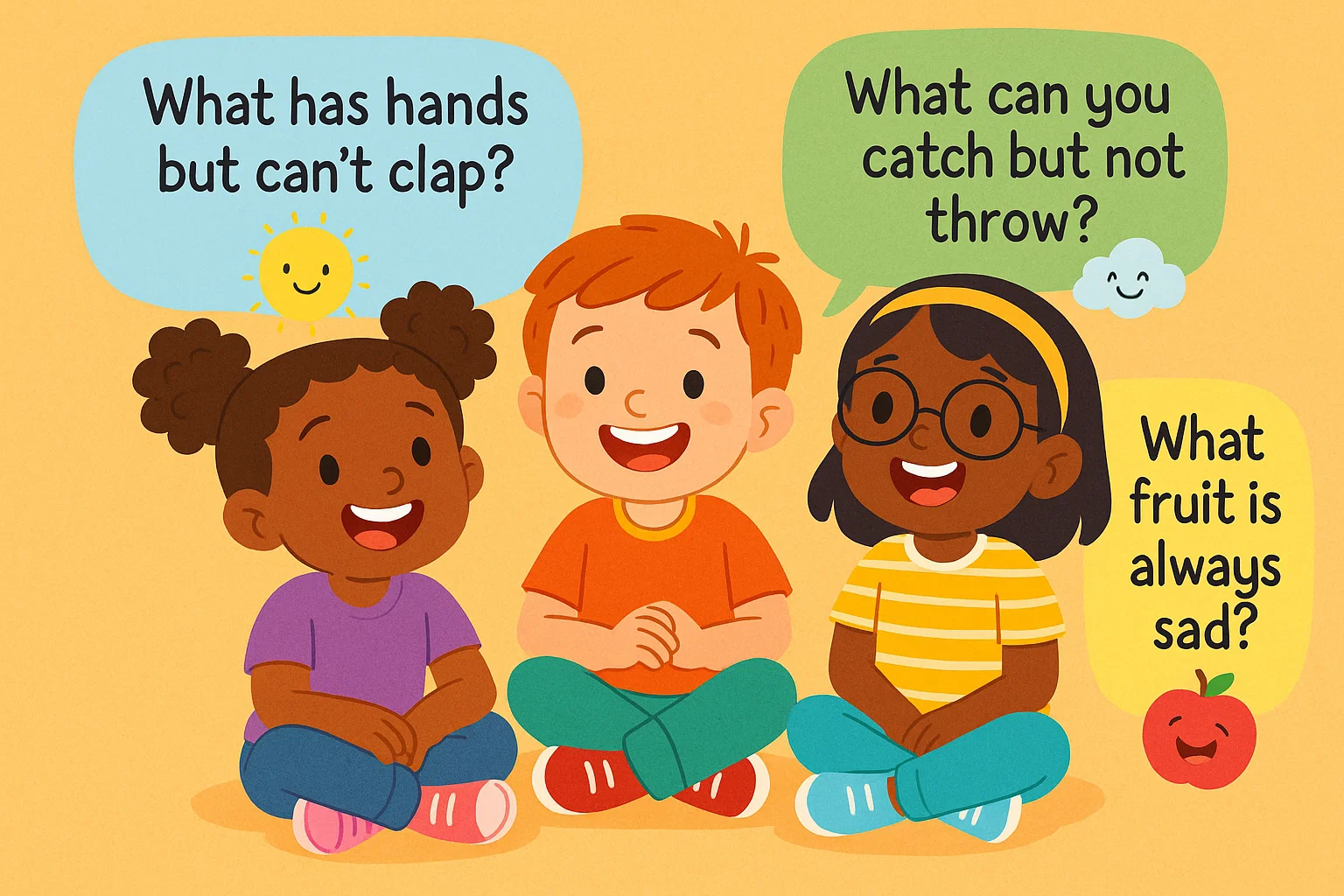
- What has hands but can’t clap? (A clock.)
- What has a neck but no head? (A bottle.)
- What begins with T, finishes with T, and has T in it? (A teapot.)
- What has one eye but can’t see? (A needle.)
- What goes up but never comes down? (Your age.)
Medium Riddles for Daily Play
- I follow you all day long, but when the sun goes down, I disappear. What am I? (Your shadow.)
- What can travel around the world while staying in a corner? (A stamp.)
- I am light as a feather, yet the strongest man can’t hold me for much more than a minute. What am I? (Breath.)
- What has to be filled first before it can be emptied? (A hole.)
- If you have me, you want to share me. If you share me, you haven’t got me. What am I? (A secret.)
- I have keys but no locks. I have a space but no room. You can enter, but never leave. What am I? (A keyboard.)
- What has many teeth but can’t bite? (A comb.)
- I am an odd number. Take away a letter and I become even. What number am I? (Seven.)
- What building has the most stories? (A library.)
- I start with an E and end with an E, but I contain only one letter. What am I? (An envelope.)
- What can you catch but not throw? (A cold.)
- I’m not alive, but I grow; I don’t have lungs, but I need air; I don’t have a mouth, but water kills me. What am I? (Fire.)
- What has a thumb and four fingers but is not alive? (A glove.)
- I have no voice, but I can tell you many things. What am I? (A book.)
Tricky Riddles for Confident Solvers
- What kind of room has no doors or windows? (A mushroom.)
- What is so fragile that saying its name breaks it? (Silence.)
- A man calls his dog from the other side of the river. The dog crosses the river without getting wet, and without using a bridge or a boat. How? (The river was frozen.)
- What can run but never walks, has a mouth but never talks, has a head but never weeps, has a bed but never sleeps? (A river.)
- What comes once in a minute, twice in a moment, but never in a thousand years? (The letter M.)
- I possess cities but no houses, mountains but no trees, and water but no fish. What am I? (A map.)
- What gets larger the more you take away from it? (A hole.)
- A girl has as many brothers as sisters, but each brother has only half as many brothers as sisters. How many brothers and sisters are there? (4 sisters and 3 brothers.)
- What has words, but never speaks? (A book.)
- What is black when you buy it, red when you use it, and gray when you throw it away? (Charcoal.)
- I am always coming, but never arrive. What am I? (Tomorrow.)
- You see a boat filled with people. It has not sunk, but when you look again you don’t see a single person on the boat. Why? (All the people were married.)
- What word is spelled incorrectly in every dictionary? (Incorrectly.)
- I am taken from a mine, and shut up in a wooden case, from which I am never released, and yet I am used by almost every person. What am I? (Pencil lead.)
- What can you break, even if you never pick it up or touch it? (A promise.)
Hard Riddles for Extra Challenge
- I have no eyes, no legs, and no ears, but I can move the earth. What am I? (Wind.)
- What belongs to you, but other people use it more than you do? (Your name.)
- I have cities, but no houses. I have mountains, but no trees. I have water, but no fish. What am I? (A map.)
- What can you hold in your right hand, but never in your left hand? (Your left hand.)
- What has one head, one foot, and four legs? (A bed.)
- I am the beginning of everything, the end of everywhere. I’m the beginning of eternity, the end of time and space. What am I? (The letter E.)
- A cowboy rode into town on Friday, stayed for three days, and left on Friday. How did he do it? (His horse’s name was Friday.)
- What has to be broken before you can use it? (An egg.)
- I am a word of five letters; people eat me. If you remove the first letter, I become a form of energy. If you remove the first two letters, I become needed by people. What am I? (Wheat.)
- What can fill a room but takes up no space? (Light.)
- If you drop me I’m sure to crack, but give me a smile and I’ll always smile back. What am I? (A mirror.)
- I am tall when I am young, and I am short when I am old. What am I? (A candle.)
- What has many needles but cannot sew? (A pine tree.)
Riddles for 3rd Graders
Teachers often use brain teasers to move students beyond memorization and into critical thinking. For third graders, riddles can be a great transition between more demanding lessons.
Classroom Riddles for 3rd Grade
- I have a spine but no bones. I have pages but no story of my own until you read me. What am I? (A textbook.)
- I am a place where you go to learn. I may have classrooms and a bell, but I am not a person. What am I? (A school.)
Matching the Reading Level to Age 8
For this age group, riddles should use vocabulary that children can read independently while still giving them something to think about. Keeping the wording concise helps children feel successful rather than discouraged.
Logic Riddles for School Skills
- What is a three-digit number where the first digit is four times the last digit, and the middle digit is zero? (802.)
- I have four legs, but I cannot walk. I am used in a classroom for writing. What am I? (A desk.)
Animal Riddles for Kids
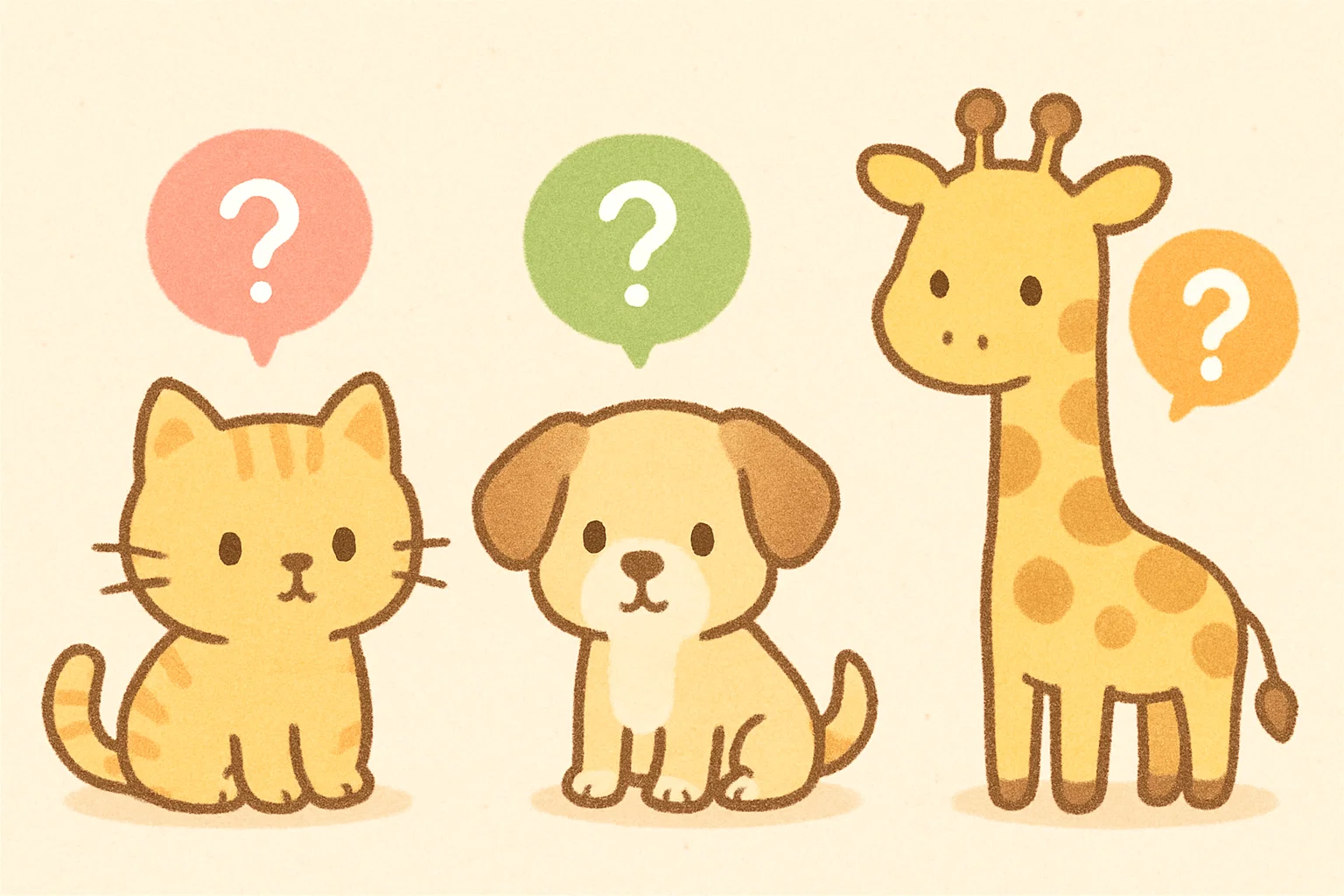
Animal riddles work well because most children already know basic animal traits. They allow kids to practice categorization and deduction.
Farm Animals
- I have a tail, a mane, and I like to run in the fields. I say neigh. What am I? (A horse.)
- I am pink, have a curly tail, and love the mud. What am I? (A pig.)
Wild Animals
- I am known as the king of the jungle and have a loud roar. What am I? (A lion.)
- I have a very long trunk and large ears. What am I? (An elephant.)
Ocean Animals
- I have eight arms and I live in the sea. What am I? (An octopus.)
- I am known for my sharp teeth and powerful swimming. What am I? (A shark.)
Funny Riddles for 8 Year Olds
Humor is a great way to keep 8-year-olds engaged, especially as they begin to enjoy wordplay more and more. Funny riddles build positive associations with learning.
Silly Wordplay
- What do you call a bear with no teeth? (A gummy bear.)
- Why are fish so smart? (Because they live in schools.)
Joke-Style
- What has to be broken before you can use it? (An egg. What has to be cracked to be eaten? An egg!)
- Why did the teacher wear sunglasses to school? (Because her students were so bright.)
Short Laugh-Out-Loud
- What did the ocean say to the shore? (Nothing, it just waved.)
- Why can’t your nose be 12 inches long? (Because then it would be a foot.)
Food Riddles for Kids
Food is a familiar and relatable topic for children, which makes these riddles easy to understand and enjoy.
Fruits and Veggies
- I am red, round, and crunchy. I grow on trees and doctors say I keep them away. What am I? (An apple.)
- I am long, orange, and rabbits love to eat me. What am I? (A carrot.)
Snacks and Desserts
- I am cold, sweet, and I come in a cone. What am I? (Ice cream.)
- I am round, have a hole in the middle, and I am a delicious breakfast treat. What am I? (A donut.)
Lunch Boxes
- You put meat, cheese, and vegetables between two slices of bread. What am I? (A sandwich.)
- I am a drink that comes in a box with a straw. What am I? (A juice box.)
Math Riddles for Kids
Math riddles can help children see math as something playful instead of something stressful. These puzzles require simple arithmetic and logic.
Number Pattern Riddles
- I am an even number. If you add 1 to me, I become odd. What am I? (Any even number, e.g., 2, 4, 6.)
- Count from 1 to 10, skipping every other number. What are you counting? (Odd numbers.)
Time and Money Riddles
- I have two hands but no arms, and I tell time. What am I? (A clock.)
- In the U.S., I am a coin worth 5 cents. What am I? (A nickel.)
Logic Math Riddles
- If you have 3 apples and you take away 2, how many apples do you have? (2 apples.)
- What number do you get if you multiply 5 by 2 and then subtract 3? (7.)
Science Riddles for 8 Year Olds
Science riddles introduce basic concepts through everyday observation and encourage children to think about how the world works.
Space and Planet
- I am the big, yellow star that gives you light and heat. What am I? (The Sun.)
- I am the planet known for having beautiful rings around me. What am I? (Saturn.)
Weather and Nature
- I am frozen water that falls from the sky in winter. What am I? (Snow.)
- I appear in the sky after it rains, showing many colors. What am I? (A rainbow.)
Simple Science
- I am a force that pulls everything toward the ground. What am I? (Gravity.)
- I am a mountain that can erupt and send out hot lava. What am I? (A volcano.)
Word and Language Riddles for 8-Year-Olds
These riddles are designed to build vocabulary, spelling, and sound awareness, which makes them useful for language arts practice.
Wordplay Riddles
- What word becomes shorter when you add two letters to it? (Short.)
Letter and Sound Riddles
- I am the first letter of “tree,” the second letter of “star,” and the last letter of “cat.” What letter am I? (T.)
- What starts with P, ends with E, and has thousands of letters? (A post office.)
Vocabulary Riddles
- I am the opposite of “up.” What am I? (Down.)
- I am the opposite of “day.” What am I? (Night.)
School and Seasonal Riddles for 8 Year Olds
Riddles about school and the seasons feel more relevant because they connect to children’s everyday lives.
Back to School
- I hold your books and pencils and you carry me on your back to school. What am I? (A backpack.)
- I am a tool you use to write, and my marks can be erased if you make a mistake. What am I? (A pencil.)
Summer
- I am a giant ball of light in the sky, and I am very hot in the summer. What am I? (The sun.)
- You build me out of sand on the beach. What am I? (A sandcastle.)
Halloween
- I am orange, have a carved face, and often hold a candle at Halloween. What am I? (A jack-o’-lantern.)
- I am a spooky creature that spins a web. What am I? (A spider.)
Holidays
- I am a jolly man who brings gifts on a sleigh. Who am I? (Santa Claus.)
- You build me out of snow in the winter. What am I? (A snowman.)
December
- I am a green tree that you decorate with lights in December. What am I? (A Christmas tree.)
- I am a sweet, cane-shaped treat that you might hang on a tree. What am I? (A candy cane.)
Benefits of Riddles for 8 Year Olds
Riddles are useful because they give children a fun mental workout. They are fun and effective, and they help build thinking skills without feeling like extra work.
Logic and Reasoning Skills
Riddles encourage children to look for clues, evaluate potential answers, and eliminate incorrect options through deduction. This process builds the foundation for complex problem-solving in subjects like math and science.
Vocabulary Growth
Riddles also allow students to explore double meanings, sounds, and word relationships. As children encounter new words within the safe context of a game, they naturally expand their vocabulary without feeling the pressure of a formal lesson.
Family and Classroom Fun
Riddles are versatile enough to use in almost any setting. Whether you use them as a quick brain break in class, a road-trip activity, or a bonding game at home, riddles encourage conversation and shared fun.
How to Create Your Own Riddles
Teaching children how to create their own riddles is a powerful way to reinforce the creative thinking skills they have practiced while solving. Follow this step-by-step process to help your child draft their first riddle.
1. Start With the Answer
Choose a familiar object – like a bicycle, a tooth, or a favorite toy – that your child knows well. By starting with the answer, the child can focus on the specific attributes they want to highlight.
2. Brainstorm Clues
List everything associated with the object: color, shape, function, sound, and where it is usually found. For a bicycle, list “two wheels,” “handlebars,” “you pedal,” and “it goes fast.”
3. Think Like the Answer
Encourage the child to take the perspective of the object itself to add a personal touch. Instead of saying “It has two wheels,” try “I have two wheels and I take you for a ride.”
4. Play With the Sentence Structure
Help the child change the sentence structure to make the riddle a little trickier. Add a playful twist or a slightly misleading clue to turn a simple description into a clever puzzle.
5. Write and Test Riddle
Once the draft is finished, have the child read it to a friend or family member to test the difficulty. If the answer is too easy to guess, ask the child to add one more tricky clue.
FAQ
Why are riddles and brain teasers such effective activities for kids?
Riddles are great because they make learning fun while helping kids think in new ways. Engaging with a wide variety of riddles helps keep children’s minds active, which is vital for developing critical-thinking skills. Whether you are looking for funny riddles or more challenging ones, these activities can improve children’s focus and encourage creative thinking during play.
How can I choose the best riddles for kids based on their age?
When choosing riddles, it is important to consider a child’s developmental level. For children in 1st grade and slightly older, start with simple or easy riddles to build confidence. As kids enjoy a challenge, you can gradually introduce more clever riddles, math riddles, or nature-themed ones. The goal is to offer enough variety to challenge kids without making them feel stuck or frustrated, so they stay engaged as they build their problem-solving skills.
What are the main benefits of riddles for kids of all ages?
The benefits of riddles for kids go far beyond entertainment. Using riddles with answers helps children expand their vocabulary and strengthen their logical reasoning. Whether you are using animal riddles, food riddles, or more difficult ones, these activities offer a productive way to keep kids engaged during travel or quiet time. Ultimately, riddles help children develop sharper thinking and a more creative approach to problem-solving.
Take a short quiz to find out what your everyday choices say about your parenting style
When your child is curious about something new, what’s your instinct?
Take a short quiz to find out what your everyday choices say about your parenting style
“Can I download this app?” What happens next?
Take a short quiz to find out what your everyday choices say about your parenting style
When it comes to rules at home, which sounds most like you?
Take a short quiz to find out what your everyday choices say about your parenting style
If you could give your child one life skill today, what would you pick?
Take a short quiz to find out what your everyday choices say about your parenting style
Your child gets to choose what to watch. What would your ideal setup look like?
Take a short quiz to find out what your everyday choices say about your parenting style
Pick your parenting superpower ✨