Fun Riddles for Kids with Answers: Smart Picks for 8-Year-Olds

 Discover a Free Education Video App for Kids
Pastory uses AI to personalize educational video content based on your child’s interests and personality. Safe, engaging, and built for curious young minds. Sign up now to stay updated and enjoy early access with a free trial
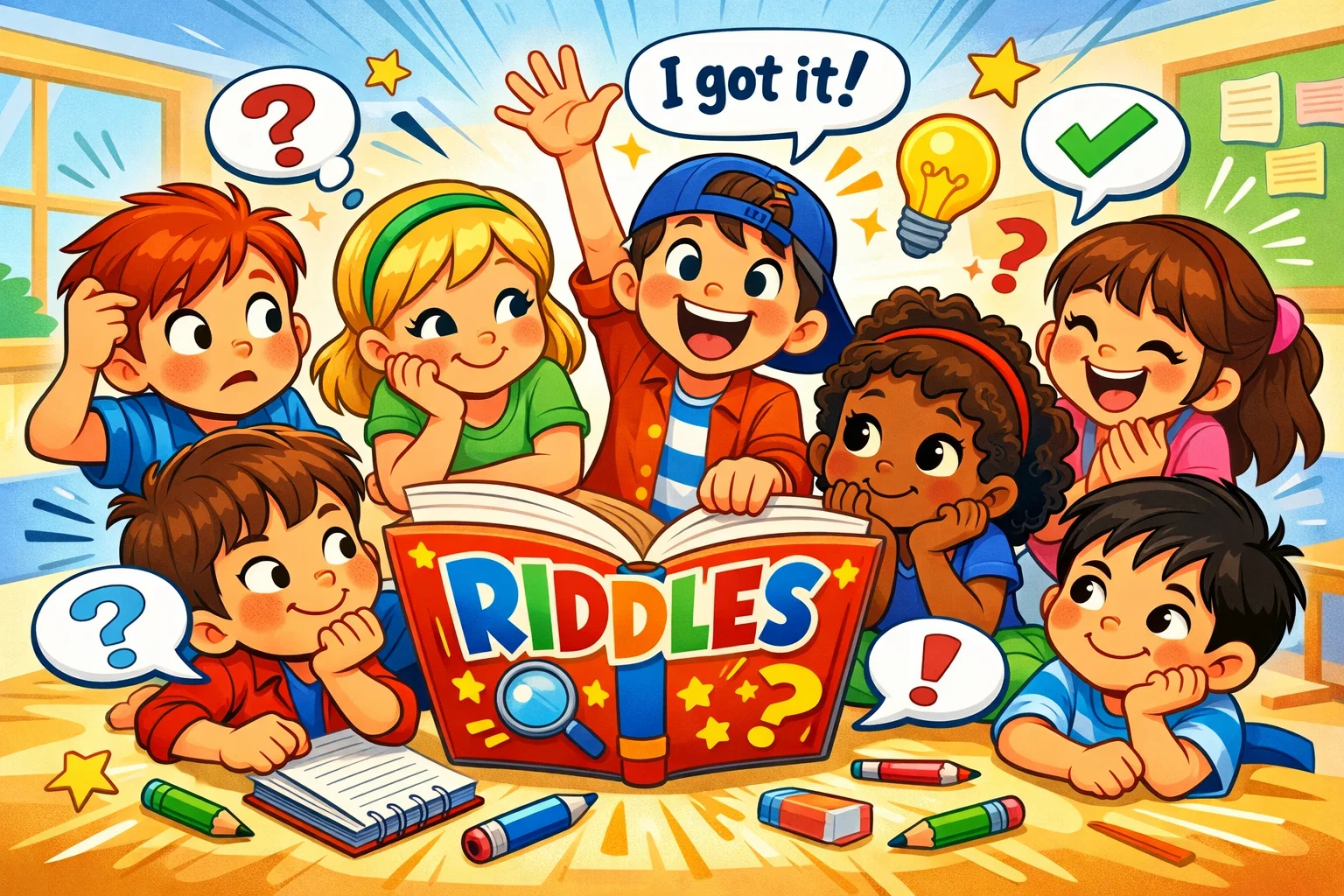
Solving riddles is a classic childhood activity that combines thinking skills with fun. At around age eight, many children are becoming stronger readers and more confident problem-solvers, which makes this a great age for wordplay. This comprehensive collection features over 100+ carefully selected brain teasers, including animal riddles, math riddles, and holiday riddles. Whether you are looking for fun activities for the classroom, riddles for kids with answers for a long road trip, or fun puzzles to challenge kids at home, these picks are designed to get their brains working and keep young minds engaged.
What Makes Riddles Great for 8-Year-Olds
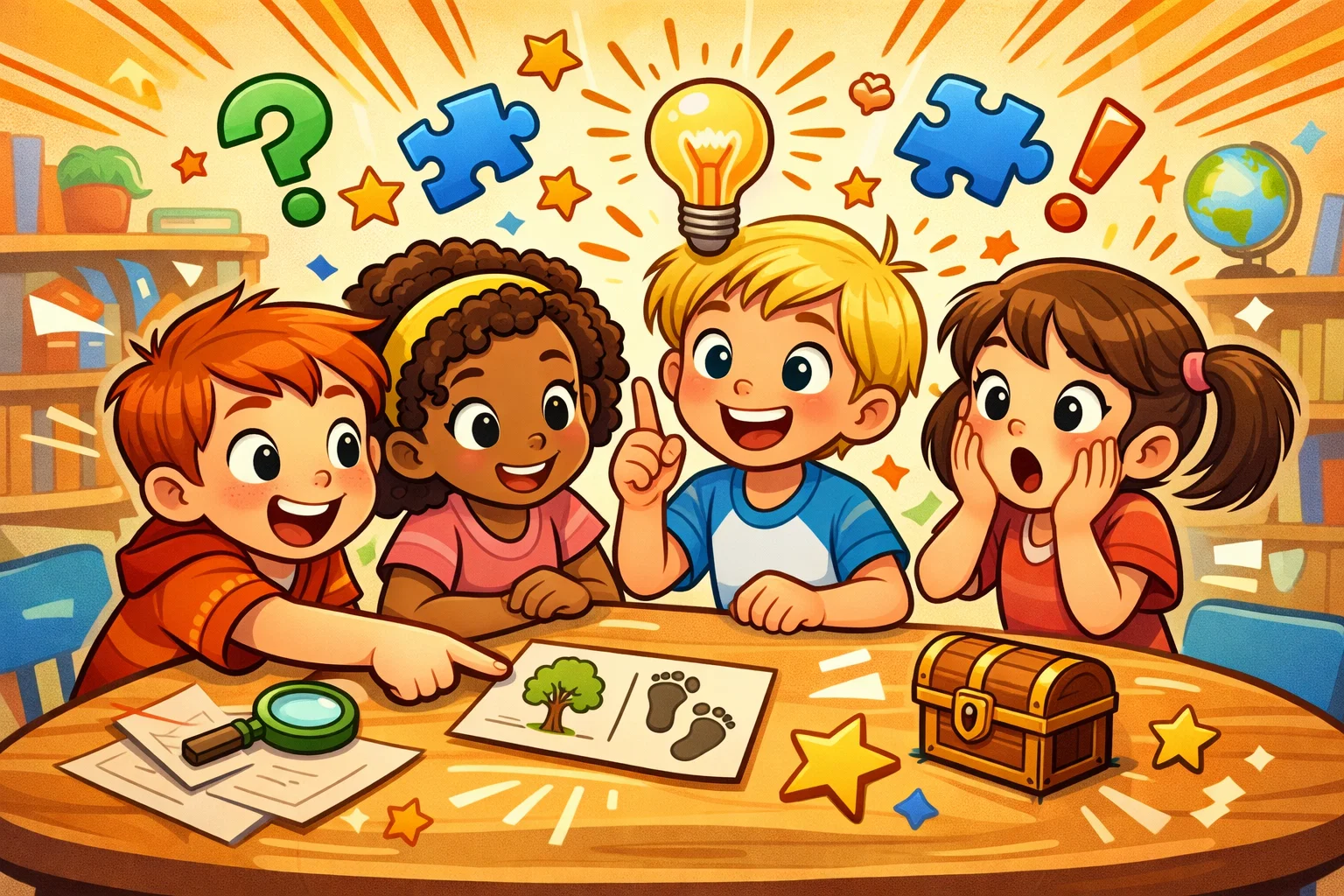
At around age eight, many children are ready for more structured logic, wordplay, and multi-step clues. In Piaget’s theory of cognitive development, many 8-year-olds fall within the concrete operational stage. This means they can use logical thought to solve physical problems but are just beginning to grasp the nuances of abstract language, metaphors, and double meanings. Riddles work well for this age because many children are ready to process multiple clues and combine them into a logical answer.
Funny riddles give children a low-pressure way to guess, revise, and try again. When a child tries to stump a parent or friend, they are practicing confidence, timing, and playful communication. Furthermore, riddles encourage lateral thinking—the ability to solve problems through an indirect and creative approach. By shifting the focus from memorization to active deduction, riddles can make learning feel more like play.
Riddle Basics for Age 8
A riddle is a statement or question presented as a puzzle to be solved. For 8-year-olds, the most successful formats involve “What Am I?” descriptions or simple logic scenarios. Unlike a standard quiz question, which relies mostly on factual recall, a riddle asks children to use deduction and inference. Kids often enjoy riddles because solving them creates a satisfying ‘aha’ moment.
Right Difficulty for 8 Year Olds
Finding the best riddles for kids requires balancing “easy but not too easy.” If a puzzle is too simple, the child becomes bored; if it is too hard, they may become frustrated. A good mix for this age is mostly easy riddles, some medium ones, and a smaller number of harder challenges.
Skills Riddles Build
Fun brain teasers can help children practice several useful skills, such as:
- Vocabulary Growth: Introduces synonyms, homonyms, and descriptive adjectives.
- Problem-Solving Skills: Teaches kids to break down complex descriptions into smaller, manageable clues.
- Pattern Spotting: Helps younger kids identify recurring themes in language and logic.
- Listening & Focus: Requires the child to listen closely to each riddle in order to catch hidden clues.
- Cognitive Flexibility: Encourages the child to think outside the box and view a single object from multiple perspectives.
Best Riddles for 8 Year Olds
This section contains a curated list of awesome riddles for kids categorized by style. To maintain a natural flow and avoid repetitive labeling, the solutions are provided immediately in parentheses.
Easy Riddles
These selections focus on building confidence by using everyday objects and clear descriptions that help kids feel successful.
- What has to be broken before you can use it? (An egg)
- I have a neck but no head. (A bottle)
- I have a face and two hands but no arms or legs. (A clock)
- What has a thumb and four fingers but is not alive? (A glove)
- I am tall when I’m young, and I’m short when I’m old. (A candle)
- I have many teeth but cannot bite. (A comb)
- Something that goes up but never comes down. (Your age)
- I have a bed but never sleep. (A river)
- What is always in front of you but can’t be seen? (The future)
- I have a head and a tail but no body. (A coin)
Funny Riddles
Humor is a powerful tool for engagement. These funny riddles utilize puns and safe humor suitable for activities for kids.
- Why did the teacher wear sunglasses to school? (Because her students were so bright!)
- What do you call a bear with no teeth? (A gummy bear)
- What did the zero say to the eight? (“Nice belt!”)
- Why can’t Elsa hold a balloon? (Because she’ll ‘let it go!’)
- What animal is best at hitting a baseball? (A bat)
- Why did the cookie go to the doctor? (Because it was feeling crummy.)
- What is a witch’s favorite subject in school? (Spelling)
- What do you call a sleeping dinosaur? (A dino-snore)
- Why was the math book sad? (Because it had too many problems)
- What kind of dog does a magician have? (A Labracadabrador)
Silly Riddles
Silly riddles help keep the mood light and energetic, especially on road trips.
- What kind of tree can you carry in your hand? (A palm tree)
- I have legs but cannot walk. (A table)
- What can you catch but never throw? (A cold)
- Why do bicycles fall over? (Because they are “two-tired”)
- What building has the most stories? (The library)
- Which fish costs the most? (A goldfish)
- What do you call a pile of cats? (A meow-ntain)
- What do you call a fly without wings? (A walk)
Tricky Riddles
These tricky riddles include short explanations so adults can show children how the logic works.
- You’re running a race and you pass the person in second place. What place are you in now?
- (Second place. Logic: You took the spot of the person who was second, not the leader.)
- This belongs to you, but other people use it more than you do.
- (Your name. Logic: Other people say your name more often than you say it yourself.)
- I have cities but no houses, mountains but no trees, and water but no fish.
- (A map. Logic: These are symbolic representations on paper.)
- David’s father has three sons: Snap, Crackle, and…?
- (David. Logic: The riddle begins by identifying David’s father.)
- I am light as a feather, but even the world’s strongest person can’t hold me for long.
- (Your breath. Logic: No one can hold their breath forever.)
- This has one eye but cannot see.
- (A needle. Logic: The “eye” is a functional hole for thread.)
- If a one-story house is all blue, what color are the stairs?
- (There are no stairs. Logic: It is a one-story building.)
- What is full of holes but still holds water?
- (A sponge. Logic: Porous material absorbs and retains liquid.)
Hard Riddles
For kids who love a serious challenge, these require deeper contemplation and patience.
- What comes once in a minute, twice in a moment, but never in a thousand years? (The letter M)
- I follow you all day long, but when the sun goes down, I am gone. (Your shadow)
- What has words but never speaks? (A book)
- What gets wetter the more it dries? (A towel)
- I have keys but no locks. I have a space but no room. You can enter, but you can’t leave. (A keyboard)
- The more of this there is, the less you see. (Darkness)
- What has a thumb and four fingers, but is not a hand? (A glove)
What Am I Riddles
The ‘What Am I?’ format is especially popular because it matches the way children naturally identify objects through clues.
- I have a trunk, a tail, and big ears, but I do not wear clothes. What am I? (An elephant)
- I’m red, I grow on a vine, and I’m often used to make sauce. (A tomato)
- I am made of water, but if you put me in water, I die. (An ice cube)
- I have a long neck, I am yellow with spots, and I love to eat leaves. (A giraffe)
- I fall from the sky, and you need an umbrella to stay dry. What am I? (Rain)
- I am round, orange, and you carve me for Halloween. (A pumpkin)
- I am a bird, but I cannot fly. I swim in the cold and wear a “tuxedo.” (A penguin)
- I have a ring but no finger. (A telephone)
Math, English, Science, Logic Riddles for 8 Year Old
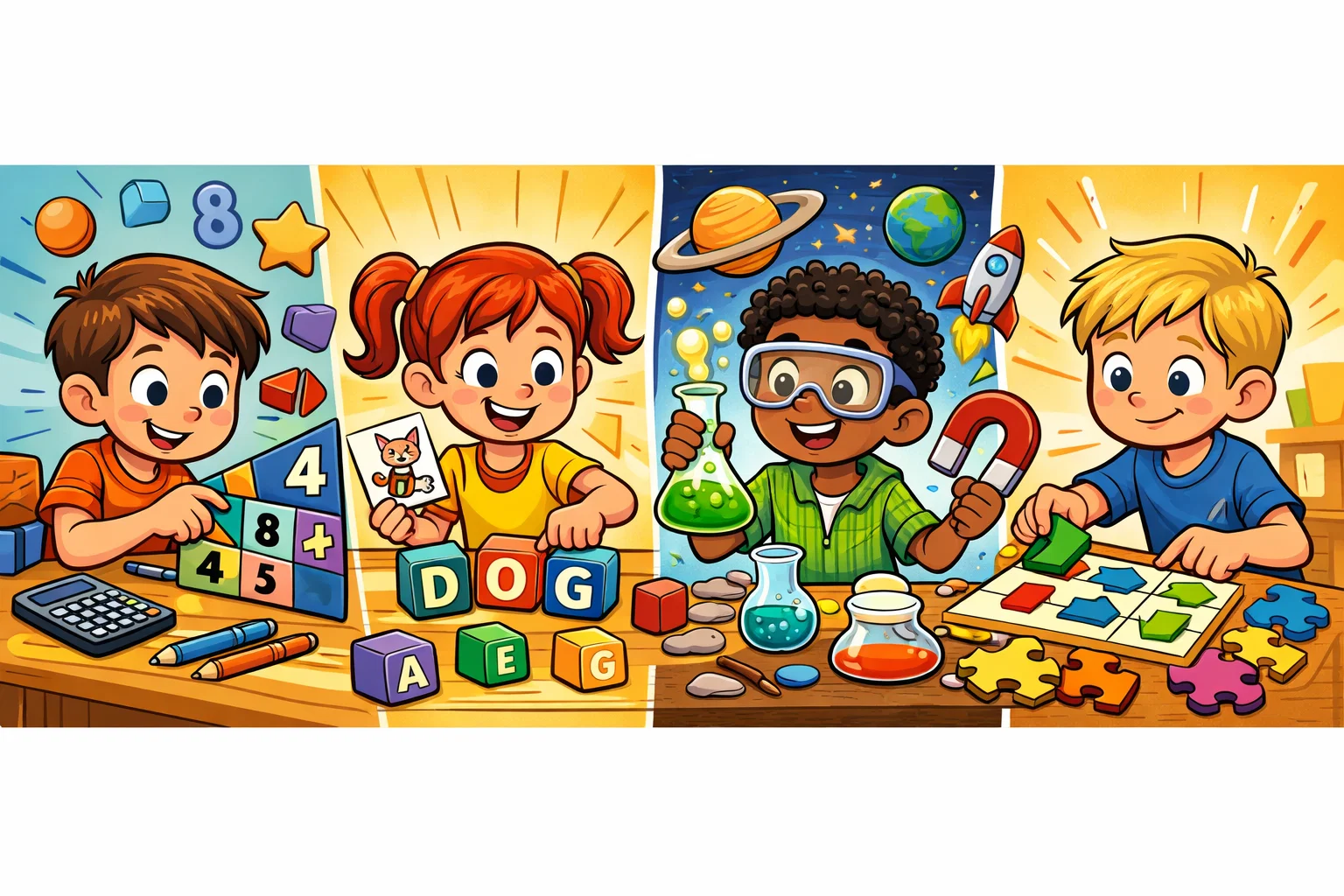
Adding math, language, and science themes to riddles can make practice feel more playful. This helps children see subjects like Math and Science as fun rather than strictly academic.
Math Riddles
These focus on logical counting and basic geometry without becoming overwhelming.
| Concept | The Riddle | The Answer |
| Weight | Which weighs more: a pound of feathers or a pound of bricks? | They weigh the same (a pound is a pound). |
| Ages | When I was 6, my sister was half my age. Now I am 70. How old is she? | 67 (the 3-year gap remains constant). |
| Decimals | What can you put between a 7 and an 8 so that the result is greater than 7 but less than 8? | A decimal point (7.8). |
| Spelling/Math | I am an odd number. Take away a letter and I become even. | Seven (S-even). |
| Geometry | I have no corners and no straight sides. What am I? | A circle. |
English Riddles
These promote literacy and an understanding of the English language’s unique quirks.
- What is the longest word in the English language? (Smiles—because there is a mile between the two S’s)
- What starts with “P,” ends with “E,” and has thousands of letters? (The Post Office)
- Which letter of the alphabet has the most water? (The “C”—Sea)
- What word is spelled incorrectly in every dictionary? (“Incorrectly”)
- I am the beginning of everything and the end of everywhere. (The letter “E”)
Science Riddles
These riddles use simple ideas from nature, matter, and everyday science.
- I can travel around the world while staying in one corner. (A stamp)
- I have no life, but I can die. (A battery)
- I’m not alive, but I grow; I don’t have lungs, but I need air. (Fire)
- I can be cracked, made, told, and played. (A joke)
- I have no weight, but you can see me. If you put me in a bucket, I make it lighter. (A hole)
Planet Riddles
Space is a topic many kids find fascinating. These riddles introduce simple space-related ideas in a playful way.
- I am known as the Red Planet. (Mars)
- I am the closest star to Earth and give you heat. (The Sun)
- I have beautiful rings made of ice and dust. (Saturn)
- I am the only planet where humans are known to live. (Earth)
- I change my shape every night but I stay in the sky. (The Moon)
Logic Riddles
Pure logic riddles encourage deductive reasoning and careful observation.
- A man was outside in the rain without an umbrella or a hat. Not a single hair on his head got wet. How? (He was bald)
- What can you hear but not see or touch, even though you control it? (Your voice)
- Mary has four daughters, and each of her daughters has a brother. How many children does Mary have? (Five—four daughters and one brother for all of them)
- What goes up a chimney down, but can’t go down a chimney up? (An umbrella)
Technology Riddles
Reflecting the modern world, these address common household devices.
- I have a screen but I am not a TV. I have a mouse but I am not an animal. (A computer)
- I allow you to talk to people far away, and I fit in your pocket. (A smartphone)
- I am a web that has no spiders. (The Internet)
- I have keys but I can’t open a door, and I can play music for you. What am I? (A piano)
Animal, Food, Nature, Object Riddles for 8 Year Olds
This thematic cluster is broad and easy for younger kids to understand because it focuses on familiar animals, foods, and everyday objects.
Animal Riddles
Using sounds, movements, and habitats to describe animals is a classic way to help kids notice how animals differ from one another.
- I have a large mane and a loud roar, and people sometimes call me the king of beasts. What am I? (A lion)
- I carry my house on my back and move very slowly. (A snail or turtle)
- I am black and white and look like a horse with stripes. (A zebra)
- I have no legs, but I can slither and hiss. (A snake)
- I am the tallest animal with a very long neck. (A giraffe)
- I have a pouch to carry my baby and I love to hop. (A kangaroo)
Food Riddles
Perfect for mealtime activities for kids.
- I am yellow, I come in a bunch, and monkeys love to eat me. (A banana)
- I am white on the inside and red on the outside. (An apple)
- I am a cold treat that comes in a cone. (Ice cream)
- I have many “eyes” but cannot see. (A potato)
- I am a fruit, I am a color, and you can squeeze me for juice. (An orange)
Nature Riddles
Connecting children to the environment through word riddles.
- I come down but never go up. I am wet and come from clouds. (Rain)
- I am big and yellow, and I disappear at night. (The sun)
- I have leaves but I am not a book. I have bark but I do not bite. (A tree)
- I am always running but I have no legs. (A river)
- I whistle but have no mouth. I blow but have no breath. (The wind)
Object Riddles
Household items provide endless inspiration for puzzles.
- I have many keys but cannot open a single door. (A piano)
- I have a head and a tail but no body. (A coin)
- I get shorter as I get older, but I’m not a candle. I’m used for writing. (A pencil)
- I have a handle and I help you open a room. (A doorknob)
- I have one eye and I am very sharp. (A needle)
Household Riddles
Focusing on items in the kitchen, bedroom, and bathroom.
- I make a “ding” when your food is hot. (A microwave)
- I show you exactly what you look like. (A mirror)
- I have a soft top and you lay on me at night. (A bed)
- I have four legs and you sit on me to eat. (A chair)
- I have teeth but I never eat food; I only eat hair. (A comb)
Family Riddles
Gentle, playful riddles about home life.
- Who is your father’s sister? (Your aunt)
- I am your mother’s mother. (Your grandmother)
- I am not your brother, but I am your father’s son. Who am I? (You)
School and Grade Fit Riddles for 8 Year Olds
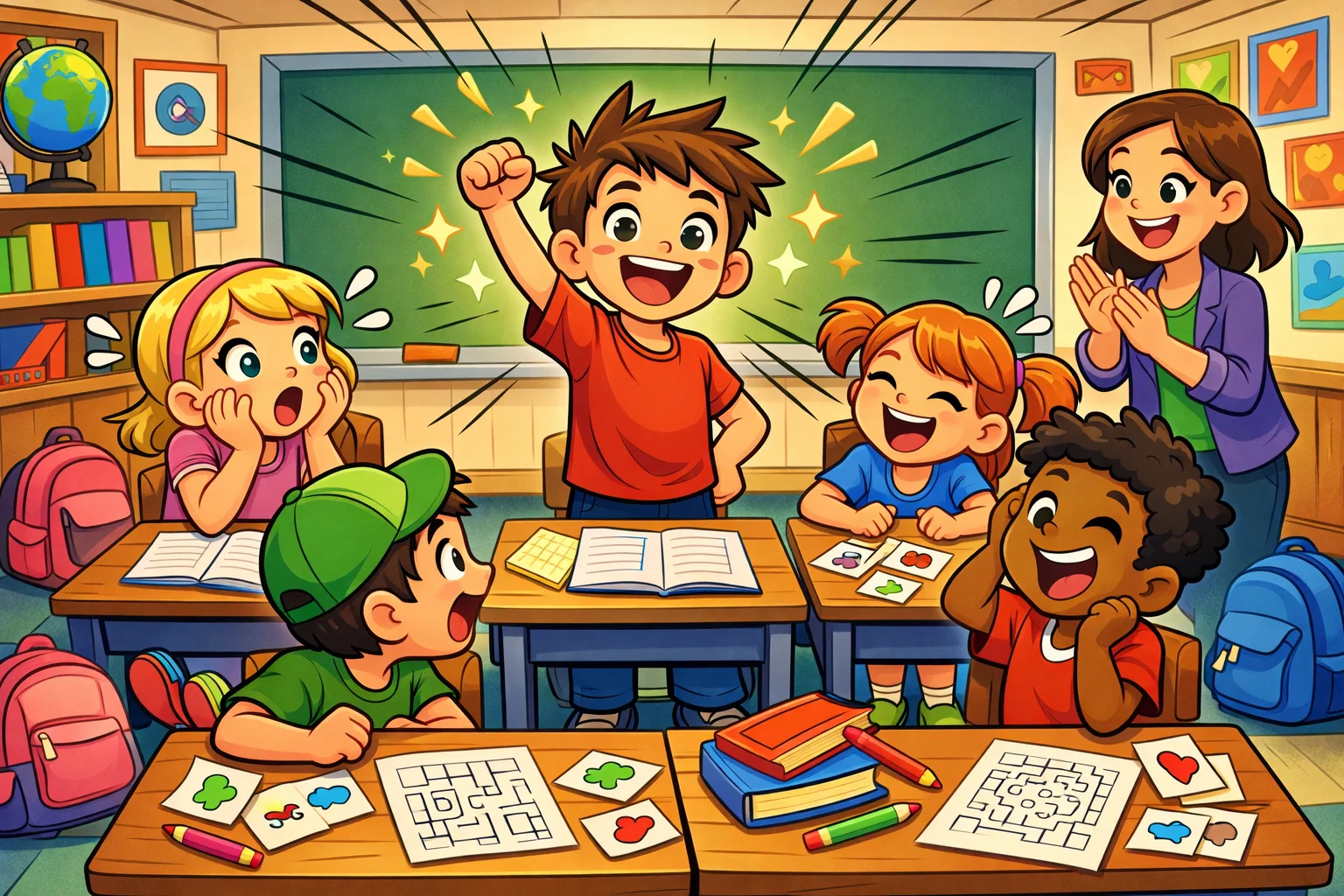
Teachers and parents often search for riddles are a great way to fill transition times in the school day.
Back to School Riddles
Helping ease the transition into the school year with fun riddles.
- I hold your books and sit on your back. (A backpack)
- I am the big yellow vehicle that takes you to school. (A school bus)
- I am the time of day when you go outside to play. (Recess)
- I hold your lunch and keep it cool until noon. (A lunchbox)
Classroom Riddles
Short, one-line friendly riddles for teachers to use as “brain breaks.”
- I am white and you can write on me with a marker. (A whiteboard)
- I help you find where countries are and where they sit on Earth. (A globe)
- I am a box of colors used for drawing. (A crayon box)
- I have many pages and a cover. (A book)
2nd Grade, 3rd Grade, and 4th Grade Challenges
Adapting the complexity to the child’s academic level.
- 2nd Grade: What has a neck but no head? (A shirt)
- 3rd Grade: What is a tree’s favorite drink? (Root beer)
- 4th Grade: What has cities with no buildings? (A map)
Seasonal and Holiday Riddles for 8 Year Olds
Holiday riddles are excellent for long-tail search intent and keeping kids entertained during festive gatherings.
Summer and Winter Riddles
- Summer: I am hot, I am bright, and I make the beach fun. (The Sun)
- Summer: I am a cold treat on a stick that melts in your hand. (A popsicle)
- Winter: I am a man made of snow who melts in the sun. (A snowman)
- Winter: What falls from the sky in winter but does not splash like rain? (Snow)
Halloween and Christmas Riddles
- Halloween: I am an orange vegetable with a scary face. (A Jack-o’-lantern)
- Halloween: I have no skin or hair, just white bones. (A skeleton)
- Christmas: I have a red nose and lead Santa’s sleigh. (Rudolph)
- Christmas: I am a green tree that lives inside your house in December. (A Christmas tree)
Benefits of Riddles for 8 Year Olds
NAEYC emphasizes that playful language and literacy experiences support children’s language development and early reading growth.
Vocabulary and Reading Growth
When children read riddles for kids with answers, they encounter words used in non-literal ways. This improves their ability to infer meaning from context. Riddles often introduce double meanings and homophones in a way that makes language more interesting.
Problem Solving and Flexible Thinking
Solving riddles requires a child to mentally filter information. If a riddle describes something with “teeth but no bite,” the child must scan all objects with teeth and discard those that bite (like sharks). This can help children practice attention, inference, and flexible thinking.
Family Time, Road Trips, and Classroom Warm-Ups
Riddles are low-cost, high-engagement tools. They turn a boring car ride into a fun way to pass the time and transform a quiet classroom into an interactive environment.
How to Create Riddles with 8 Year Olds
Teaching a child to write a riddle helps them move from solving puzzles to creating their own.
- Start with the Answer: Pick a common object, like a “pencil.”
- Brainstorm Clues: What color is it? What does it do? (Writes, gets shorter).
- Think Like the Object: ‘I have a point, but I am not a needle.’
- Use Wordplay: “I have an eraser for a hat.”
- Write the Final Version: “I am yellow, I get shorter the more you use me, and I wear an eraser hat. What am I?”
Riddle Games for 8 Year Olds
- Treasure Hunt Riddles: Use riddles as clues to lead a child from one room to another.
- Car Ride Riddles: A quick-fire round to keep kids busy during traffic.
- Riddle of the Day: A morning routine to get their brains working before school.
FAQ about Riddles for 8 Year Olds with Answers
What Are the Best Riddles for 8-Year-Olds?
The best riddles are short, involve everyday objects, and have a “funny” twist. They should provide a moderate challenge without being unsolvable.
How Hard Should Riddles Be for 8 Year Olds?
They should feel challenging but not discouraging. If a child pauses to think and still has a fair chance of solving the riddle, the difficulty is probably about right. If they answer immediately, it’s too easy.
How Do Riddles Help 8 Year Olds Learn?
They improve focus, listening skills, reading comprehension, and the ability to think outside the box. They also build social confidence when the child successfully “stumps” someone else.
Take a short quiz to find out what your everyday choices say about your parenting style
When your child is curious about something new, what’s your instinct?
Take a short quiz to find out what your everyday choices say about your parenting style
“Can I download this app?” What happens next?
Take a short quiz to find out what your everyday choices say about your parenting style
When it comes to rules at home, which sounds most like you?
Take a short quiz to find out what your everyday choices say about your parenting style
If you could give your child one life skill today, what would you pick?
Take a short quiz to find out what your everyday choices say about your parenting style
Your child gets to choose what to watch. What would your ideal setup look like?
Take a short quiz to find out what your everyday choices say about your parenting style
Pick your parenting superpower ✨