
Recycling Activities for Kids: Creative, Educational Ideas and Projects

 Discover a Free Education Video App for Kids
Pastory uses AI to personalize educational video content based on your child’s interests and personality. Safe, engaging, and built for curious young minds. Sign up now to stay updated and enjoy early access with a free trial
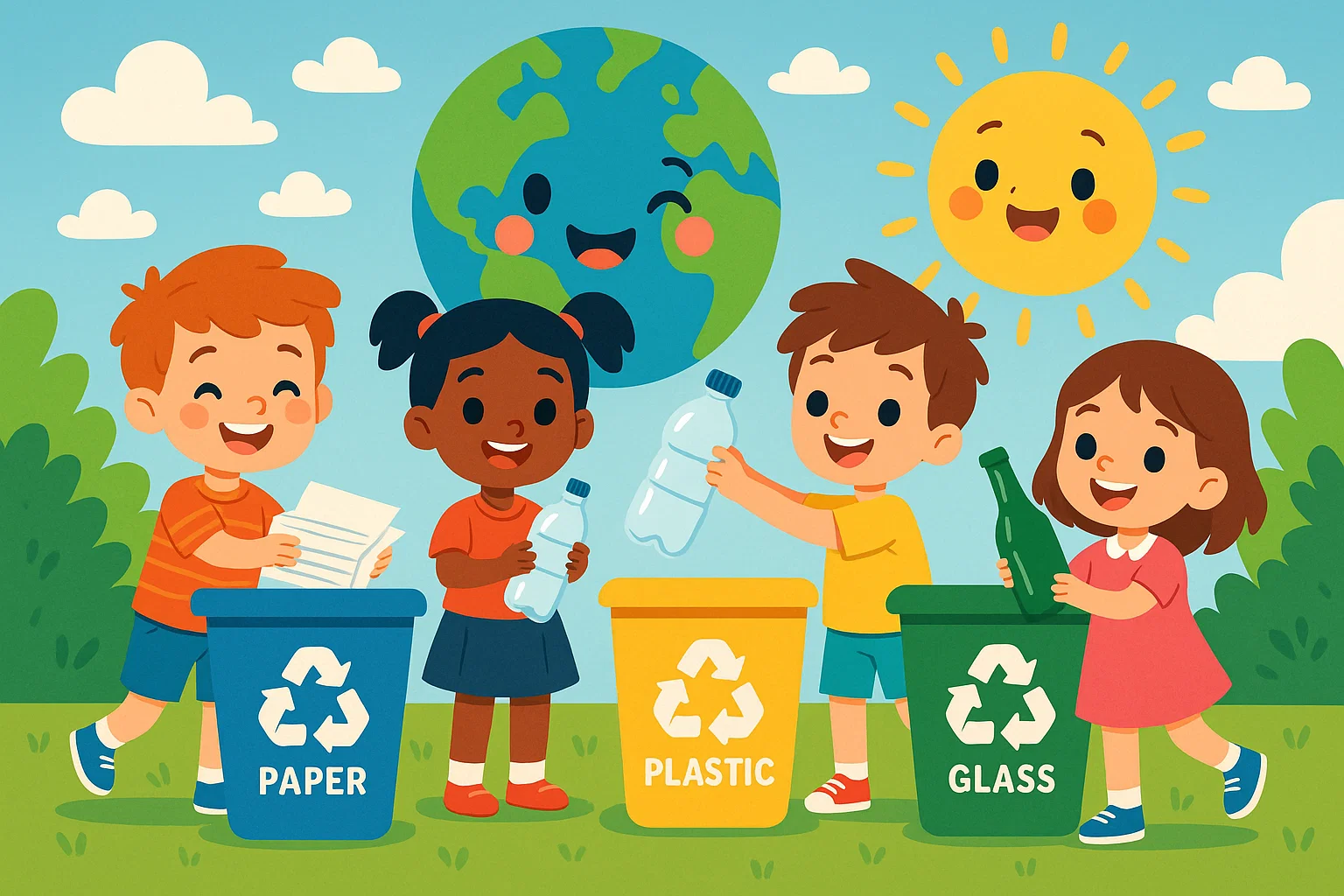
Teaching children about recycling goes far beyond sorting trash. When kids engage with hands-on activities, they develop environmental awareness, creative thinking, and early STEM skills — all at once.
This guide covers recycling activities for kids across age groups, settings, and learning styles — from fun games and recycled crafts to classroom lesson plans and community projects.
Easy Recycling Games for Kids
Games are one of the most effective ways to introduce recycling concepts because they make abstract ideas concrete and memorable.
Sorting Game Ideas
A sorting game teaches children to categorize paper, plastic, and metal using labeled bins or colored containers. Set up three boxes — one for each material type — and give kids a pile of clean household items to sort. This hands-on activity builds classification skills and introduces the basics of what goes where in a real recycling bin.
Bingo and Quiz Activities
Recycling bingo uses printable cards with images of recyclable items instead of numbers. Teachers and parents can call out items like “egg carton” or “plastic bottle,” and kids mark their cards accordingly. DIY quiz-based games work equally well — ask questions like “Is a cardboard box recyclable?” to get students thinking critically about everyday materials.
Scavenger Hunt
A scavenger hunt challenges kids to find recyclable items around the house or classroom within a set time. Indoor versions work well for younger children, while outdoor variations can incorporate community spaces. This activity encourages students to look at everyday objects differently — as resources rather than garbage.
Songs and Music-Based Activities
Songs and rhythmic chants help young children memorize recycling rules through repetition. Simple songs that name materials — paper, plastic, glass, metal — set to familiar tunes make the content stick. Music-based activities are especially effective for preschool and kindergarten learners who benefit from multi-sensory learning experiences.
Creative Recycling Crafts and Art Projects
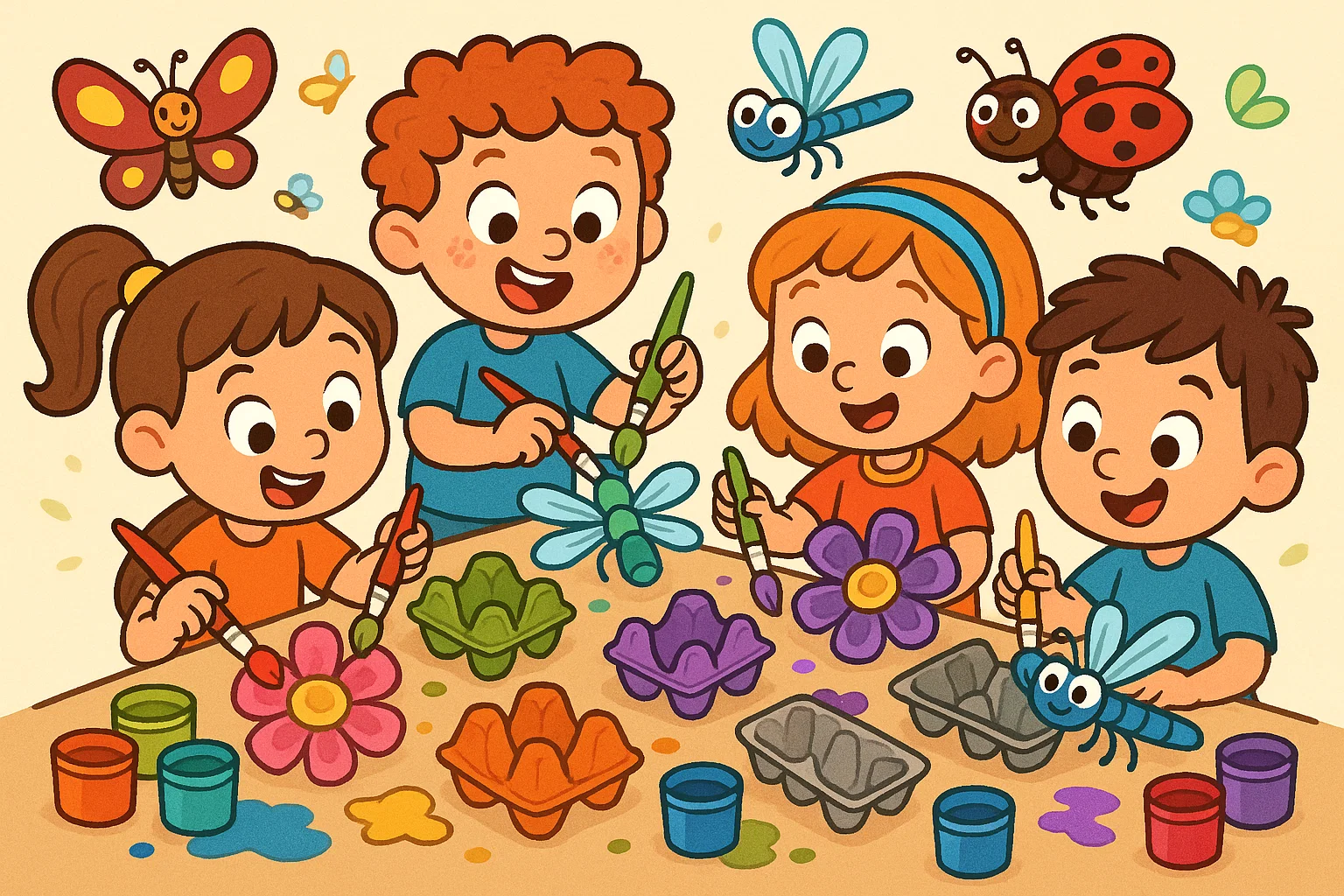
Recycled crafts for kids transform waste into something meaningful, building both creativity and an understanding of reuse.
Trash to Treasure Crafts
Trash to treasure projects turn items like cardboard tubes, egg cartons, and plastic containers into useful or decorative objects. These crafts teach children that instead of throwing things away, materials can serve a second purpose. Popular project ideas include:
- Egg Carton Flowers — cut individual cups from an egg carton, paint them, and stack them to create layered blooms
- Toilet Paper Roll Pencil Holders — decorate and cluster cardboard tubes to organize desk supplies
- Tin Can Wind Chimes — punch holes in the base of clean tin cans, thread string through, and hang shells or buttons to create outdoor chimes
- Glass Jar Desk Organizers — paint or wrap jars in twine to store pens, scissors, or brushes
Making Art from Recycled Materials
Collages, sculptures, and mixed media artwork made from scrap paper, bottle caps, and fabric scraps give children a creative outlet while reinforcing eco-friendly habits. Art projects using recycled materials are inexpensive to set up and can be adapted for any age group. Many kids find this kind of open-ended creation especially engaging because there are no wrong answers. Project ideas to try:
- Cork Creatures — glue wine corks together and add googly eyes, pipe cleaners, and felt to build animals or fantasy characters
- Bottle Cap Mosaics — arrange colorful bottle caps on cardboard to form pictures or abstract patterns
- Cardboard Tube Dragonflies — flatten and shape paper towel rolls into wings, add a clothespin body, and paint for a nature-inspired craft
- Scrap Paper Collage Portraits — tear magazine pages or colored scrap paper into pieces and layer them to create faces or landscapes
DIY Recycled Paper and Seed Paper
Making recycled paper involves soaking torn scrap paper in water, blending it into pulp, and pressing it flat to dry. Seed paper follows the same process with the addition of flower or herb seeds embedded in the pulp. When planted, seed paper grows — giving children a tangible example of how recycled materials can give rise to something new. Variations to explore:
- Wildflower Seed Cards — press pulp into greeting card shapes embedded with wildflower seeds, perfect for gifting
- Herb Seed Bookmarks — make thin strips of seed paper embedded with basil or mint seeds that can be planted after use
- Textured Handmade Notepads — blend in dried petals or leaves for added color and texture before pressing into sheets
Upcycling Plastic Containers and Household Items
Plastic bottles, cartons, and cardboard boxes can be transformed into planters, bird feeders, or storage containers. Upcycling activities work well as take-home projects and help students see the value of materials they might otherwise discard. This approach also connects recycling to sustainability in a practical, visible way. Specific ideas include:
- Plastic Bottle Bird Feeders — cut openings in a clean bottle, insert wooden spoons as perches, fill with birdseed, and hang outdoors
- Milk Carton Planters — rinse and cut the top off a milk carton, add soil, and plant herbs or small flowers
- Egg Carton Seed Starters — fill each cup with compost and plant a single seed per section, then transplant seedlings once they sprout
- Tin Can Planters — paint or wrap clean cans in burlap or twine and use them as mini pots for succulents or herbs
STEM Recycling Projects for Kids
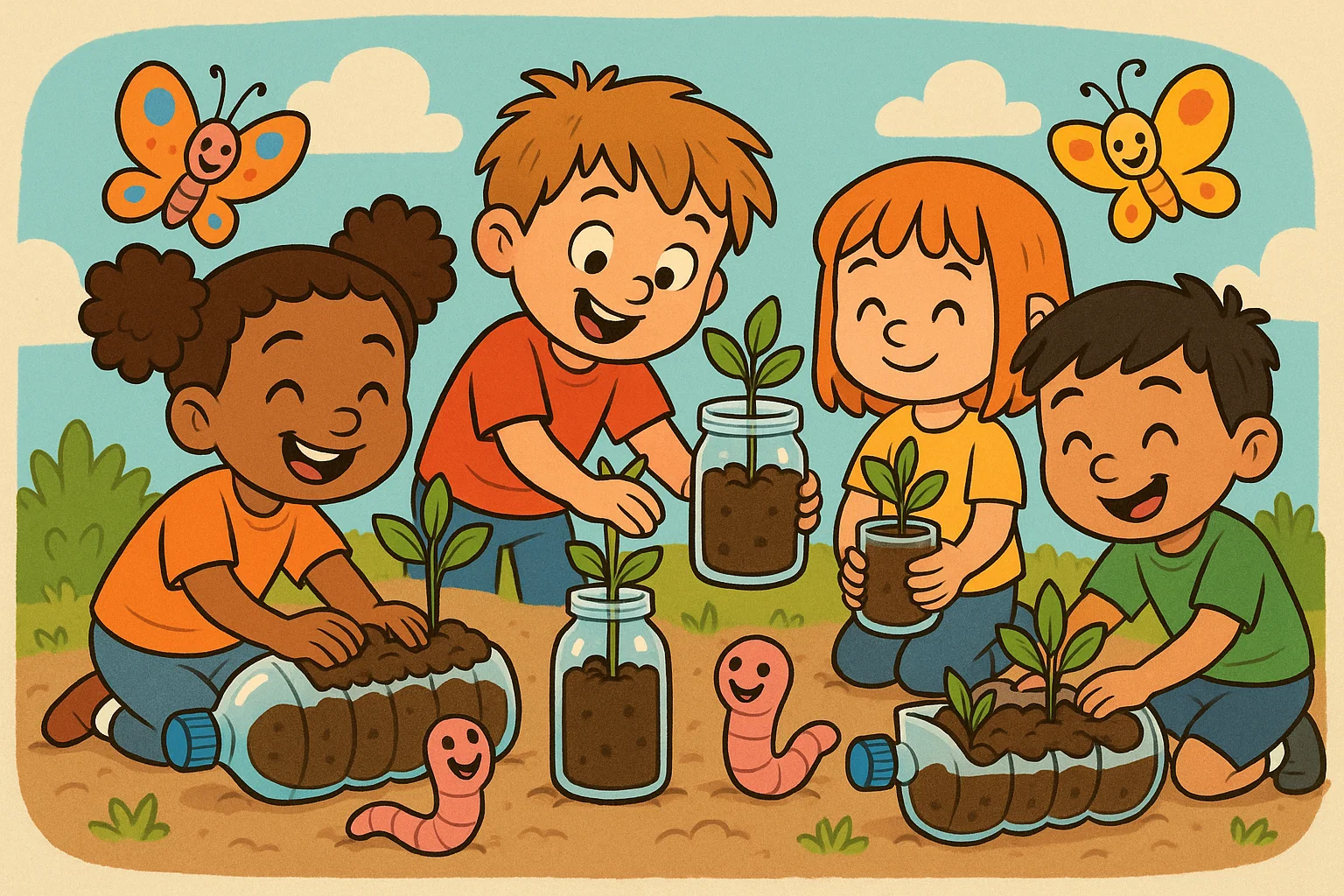
Activities that incorporate science, technology, engineering, and math help students see environmental responsibility as part of problem-solving.
Cardboard and Paper Engineering Projects
Cardboard engineering challenges invite children to build bridges, towers, or tunnels using only recycled materials and basic adhesives. These projects develop spatial reasoning, measurement skills, and persistence. A classic activity asks students to build the tallest freestanding tower using only cardboard boxes and tape.
Simple Machines Using Recycled Materials
Pulleys, levers, and wheels can all be demonstrated using materials sourced from the bin. Building a simple pulley from a cardboard box and string, for example, introduces mechanical concepts in an accessible, hands-on way. These projects align well with elementary science curriculum standards and make excellent science fair entries.
Here are a few simple machine ideas using recyclable items:
- Lever: a ruler balanced on a cardboard tube
- Pulley: string threaded through a hole in a box lid
- Wheel and axle: pencil through a cardboard circle
Environmental and Renewable Energy Projects
Solar ovens made from cardboard boxes and aluminum foil demonstrate how sunlight can generate heat. Wind-powered vehicles built from recycled plastic bottles and cardboard show basic aerodynamic principles. These projects connect recycling directly to renewable energy concepts, giving kids a broader understanding of sustainability.
Classroom Recycling Activities and Lesson Ideas
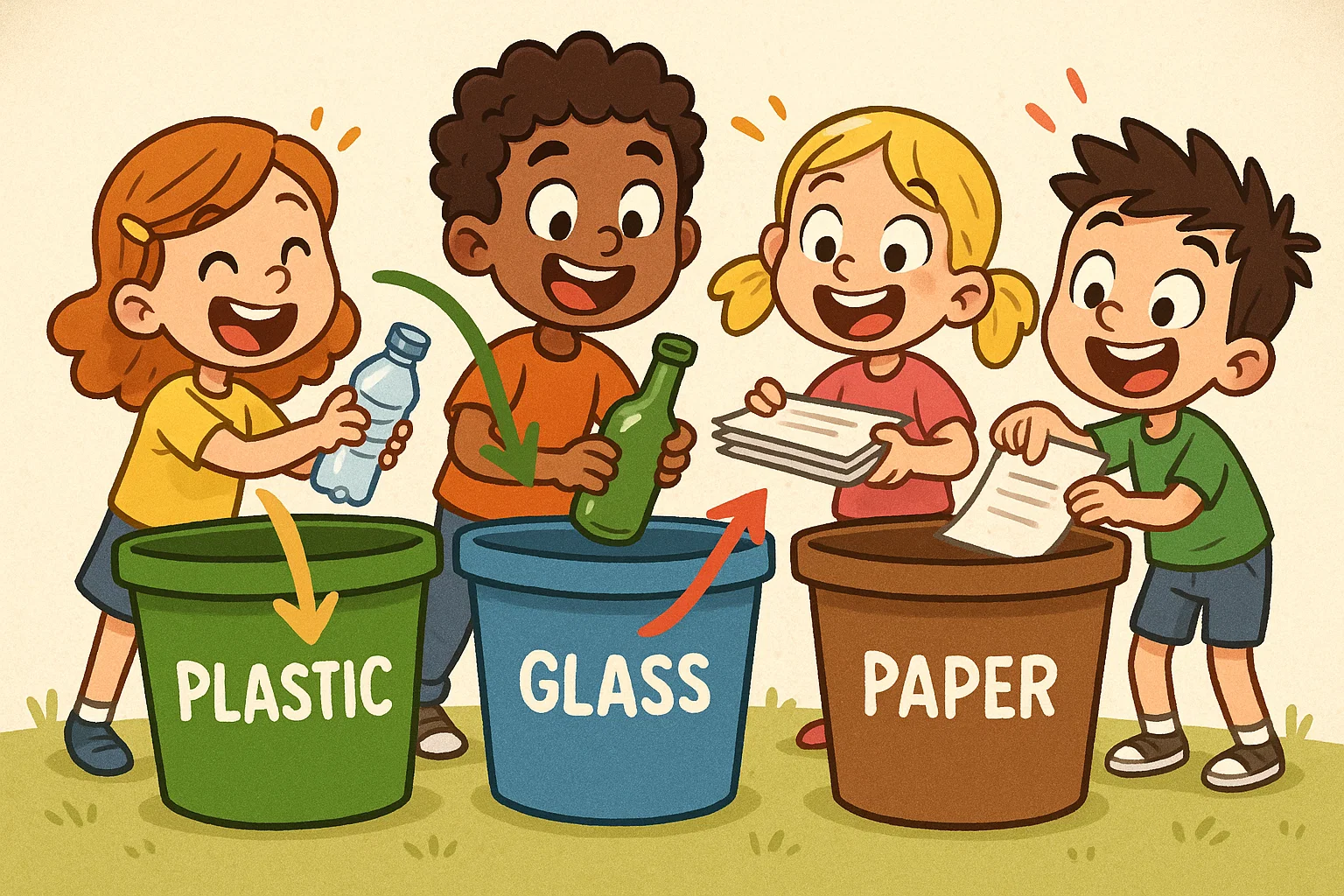
Incorporating recycling into daily classroom routines helps students understand environmental responsibility as part of their regular learning — not just a special event.
Adding Recycling Lessons to the Curriculum
These themes integrate naturally into science, math, and language arts. In science, students can explore decomposition and material properties. In math, they can graph how much paper the class uses each week. In language arts, recycling writing prompts encourage students to think critically about waste and environmental impact.
Recycling Anchor Charts and Infographics
Visual tools like anchor charts and student-made infographics help reinforce what goes into each bin. Encourage students to create their own classroom recycling station labels or design posters explaining why certain materials should be separated. These visual learning tools support retention and give students ownership of the classroom environment.
Math Activities
Counting, sorting, and measuring activities take on added meaning when connected to real recyclable items. Students can count plastic bottles collected during a week, measure the weight of paper scraps, or calculate the percentage of waste that is recyclable. These math activities for kids build numeracy skills while reinforcing eco-friendly thinking.
Recycling Activities by Age and Grade Level
Recycling activities for kids work best when matched to developmental stage and cognitive ability.
Activities for Preschool and Kindergarten
Young children learn best through sensory play and simple tasks. Activities at this level include sorting objects by material type, playing matching games with pictures of recyclable items, and listening to recycling-themed stories. The focus should be on familiarity — helping kids recognize what recycling looks like in daily life.
Ideas for Elementary Students
Elementary-age children can engage with more structured activities, including craft projects, classroom challenges, and basic science experiments. At this stage, students can begin to understand why recycling matters — reducing landfill waste, conserving resources, and making a difference for the environment. Incorporate recycling station setups where students manage their own sorting responsibilities.
Advanced Projects for Older Kids
Older students benefit from research-based tasks, community projects, and complex STEM challenges. A science fair project measuring the environmental impact of different packaging materials, for example, combines data collection, analysis, and presentation skills. These activities empower students to engage with sustainability at a deeper, more analytical level.
Tips to Encourage Kids to Recycle Daily
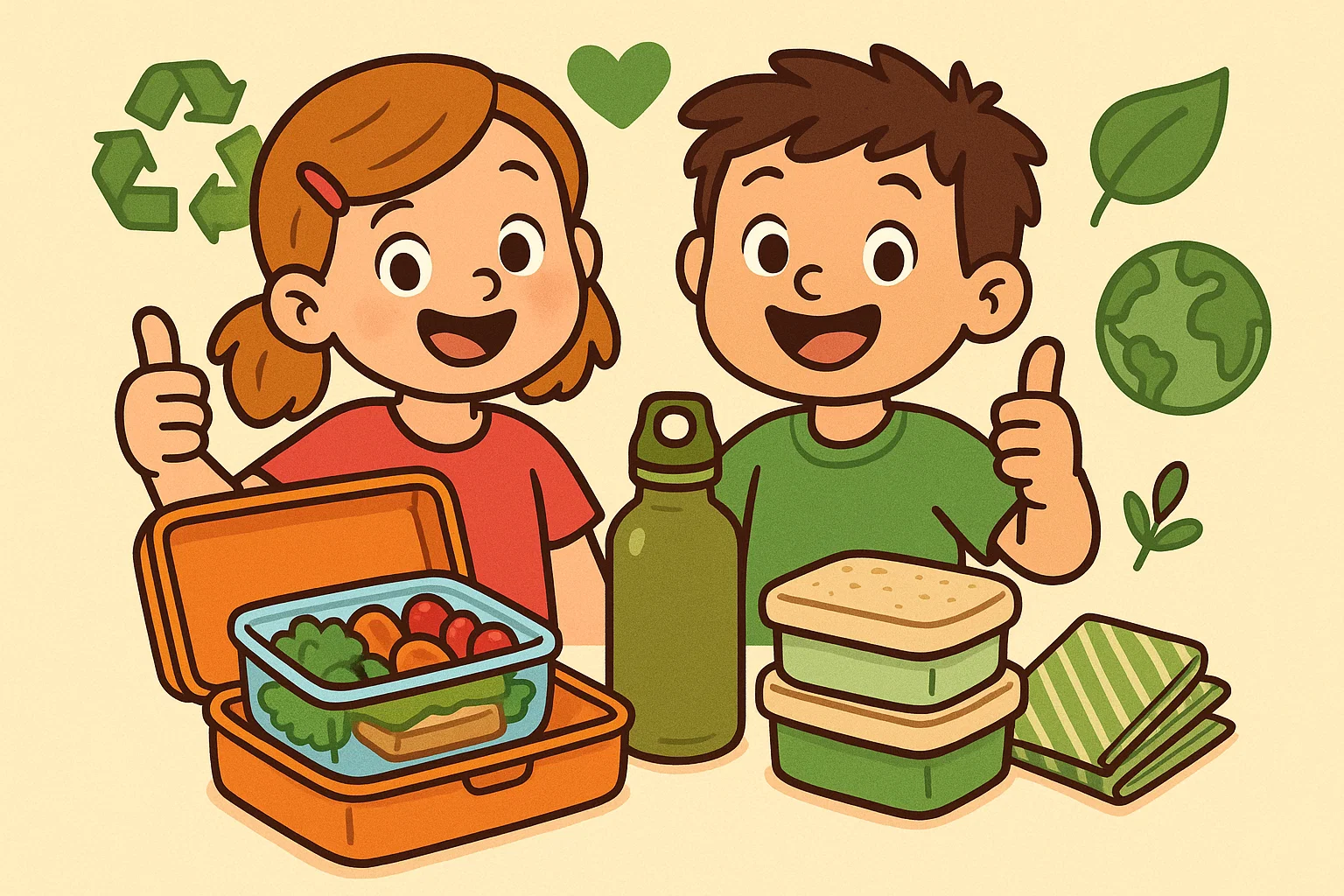
Building recycling habits in children requires consistency, modeling, and positive reinforcement.
Leading by Example at Home and School
Children mirror the behavior of adults around them. When parents and teachers consistently use recycling bins, sort materials correctly, and talk about why it matters, children internalize those habits naturally. Modeling eco-friendly behavior is one of the most effective ways to encourage students to adopt sustainable practices.
Using Rewards and Motivation Techniques
Classroom prize systems — like a tally chart with small rewards for reaching milestones — motivate students to participate consistently. At home, sticker charts or special recognition for eco-friendly actions help young children connect effort with positive outcomes. Rewards work best when they celebrate participation and awareness, not just quantity.
Here are practical daily habits to build long-term recycling behavior:
- Place clearly labeled recycling bins in the kitchen, classroom, and workspace
- Review what can and cannot be recycled once a week as a family or class
- Celebrate Earth Day with a special challenge or community cleanup
- Rotate responsibility for managing the classroom recycling station among students
Turning Recycling into a Long-Term Habit
Sustainable mindset development happens when recycling becomes second nature rather than a chore. Framing it as a form of problem-solving — “How can we reuse this instead of throwing it away?” — shifts children’s thinking over time. When kids understand the why behind recycling, the behavior tends to stick well beyond a single lesson or activity.
Getting Started with Recycling Activities at Home or School
Starting recycling activities with kids does not require special equipment or large budgets. Begin by collecting clean household items — cardboard boxes, plastic bottles, egg cartons, scrap paper — and designating a simple recycling station with labeled containers.
Choose one or two activities from this guide that match the age and interest of your child or students. Start simple: a sorting game, a collage project, or a scavenger hunt. As confidence grows, introduce more complex challenges like STEM builds or community initiatives.
The most important step is to get kids involved early and often. When activities feel fun and engaging rather than obligatory, children are far more likely to carry those habits with them — at school, at home, and into the next generation.
Frequently Asked Questions
What Are the Best Recycling Activities for Kids?
The best recycling activities for kids combine hands-on learning with clear environmental context. Top options include sorting games, recycled crafts, STEM engineering challenges, and classroom recycling stations. Activities that let children touch, build, and problem-solve tend to be the most memorable and effective.
How Do You Teach Recycling in Fun Ways?
Teaching recycling in a fun way involves turning lessons into games, challenges, or creative projects. Bingo, scavenger hunts, and trash-to-treasure crafts make eco-friendly concepts engaging without relying on lectures. Music, storytelling, and friendly competitions are also effective tools.
What Age Should Kids Learn About Recycling?
Children as young as 2 or 3 can begin learning recycling basics through simple sorting activities. Structured recycling education is most effective starting around age 4 or 5, when children can understand cause and effect. More complex concepts — like the environmental impact of waste — become appropriate around ages 7 to 10.
How Do You Start Recycling at Home with Kids?
Start by setting up two or three clearly labeled bins for paper, plastic, and general waste. Walk children through what belongs in each bin using real examples from around the house. Make it a shared routine — when kids help decide what gets recycled and what gets tossed, they feel ownership over the process and are more likely to continue the habit independently.

Take a short quiz to find out what your everyday choices say about your parenting style
When your child is curious about something new, what’s your instinct?
Take a short quiz to find out what your everyday choices say about your parenting style
“Can I download this app?” What happens next?
Take a short quiz to find out what your everyday choices say about your parenting style
When it comes to rules at home, which sounds most like you?
Take a short quiz to find out what your everyday choices say about your parenting style
If you could give your child one life skill today, what would you pick?
Take a short quiz to find out what your everyday choices say about your parenting style
Your child gets to choose what to watch. What would your ideal setup look like?
Take a short quiz to find out what your everyday choices say about your parenting style
Pick your parenting superpower ✨



