Pros and Cons of AI in EducationAI in Education: 12 Key Pros and Cons, Real Examples, and Best PracticesPros and Cons of AI in Education

 Discover a Free Education Video App for Kids
Pastory uses AI to personalize educational video content based on your child’s interests and personality. Safe, engaging, and built for curious young minds. Sign up now to stay updated and enjoy early access with a free trial
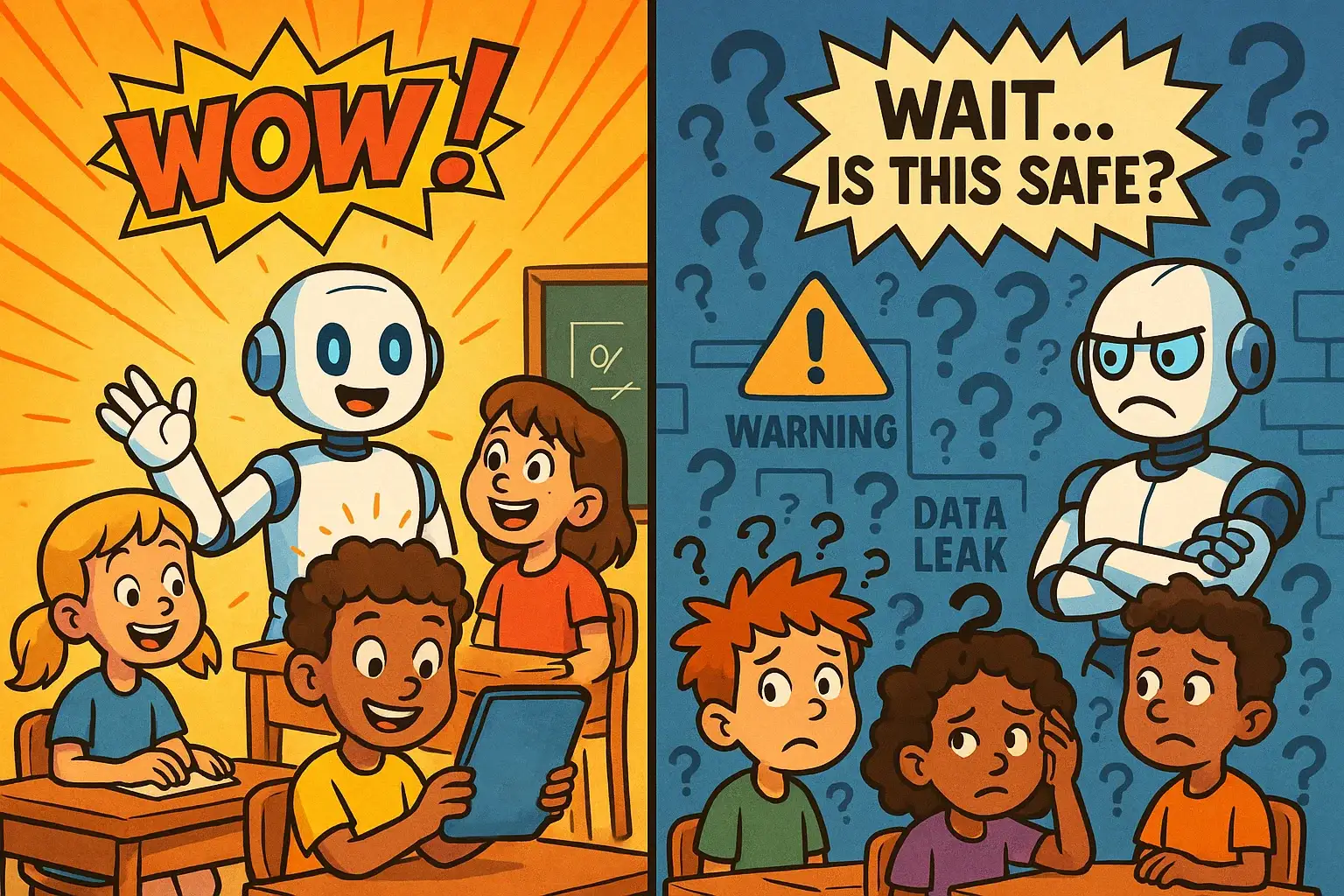
Understanding the pros and cons of AI in education requires a nuanced view of how these technologies fit into classroom environments. As digital tools evolve, educators and administrators must weigh AI’s potential for personalized learning against its ethical, practical, and pedagogical risks. This article examines the benefits and risks of AI in schools and offers a practical roadmap for using generative AI while maintaining pedagogical integrity and prioritizing student safety.
Key Takeaways
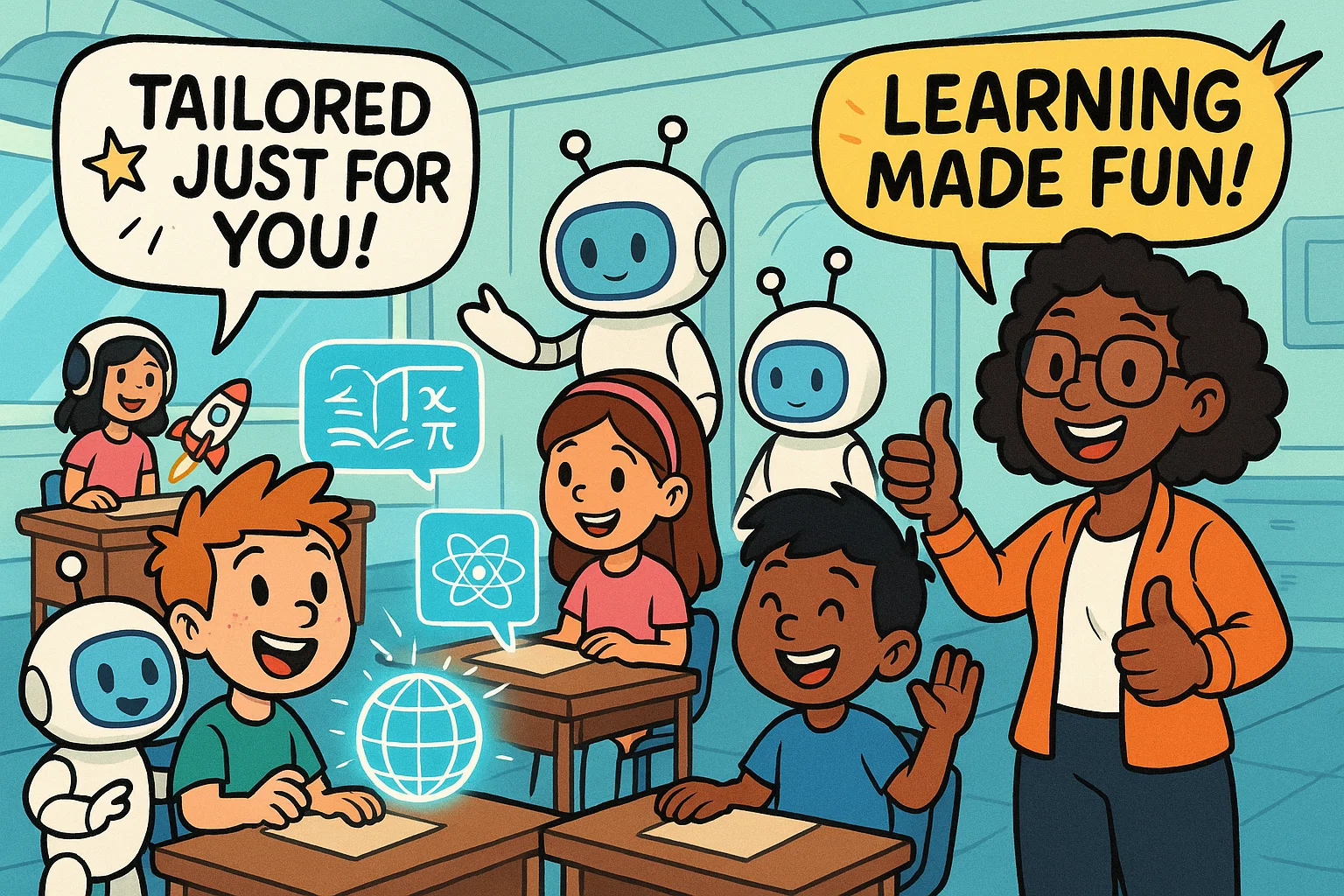
- Human-centered approach: AI improves efficiency by automating administrative tasks, allowing teachers to focus on mentorship, emotional support, and higher-level instruction.
- Personalization and access: AI-driven adaptive systems tailor content to individual student needs and can improve learning outcomes for students with disabilities and multilingual learners.
- Critical risks: Major concerns include student data privacy, algorithmic bias, academic dishonesty, and over-reliance on automated outputs.
- Implementation strategy: Successful adoption depends on clear school policies, comprehensive staff training, and strict human review of all AI-generated content.
AI supports teaching rather than replacing teachers
Artificial intelligence functions as a support layer for modern educators. While AI systems excel at data processing, they lack the empathy, cultural nuance, and behavioral management skills essential for effective instruction. The educator remains the primary authority in the classroom, ensuring that technology serves as a tool to enhance, rather than supplant, the teacher-student relationship.
AI saves time on routine work
AI tools drastically reduce the hours educators spend on low-level administrative duties. For instance, generative AI can draft lesson plans, create formative quizzes in seconds, and produce rubrics aligned with specific curriculum standards. This automation allows teachers to redirect their energy toward providing high-quality, one-on-one support to students.
AI improves access and personalization
Artificial intelligence in education enables true adaptive learning by adjusting the complexity and pacing of tasks to match each learner. AI programs identify specific knowledge gaps in real-time, providing targeted practice for struggling students while offering extension activities for advanced learners. This approach ensures that the learning environment remains responsive to the unique requirements of every individual in the classroom.
AI creates risks around privacy, bias, accuracy, misuse
The rapid deployment of AI technologies introduces tangible challenges. Schools must address risks such as the unauthorized collection of student data, the potential for biased outputs in assessment models, the phenomenon of “hallucinations” where AI provides inaccurate information, and the threat of academic misconduct. These factors necessitate a cautious, compliance-focused approach to implementation.
Schools need policy, training, human review
Safe use of AI in schools is contingent upon clear, enforceable policies. Educational institutions must require consistent human review of all AI-generated materials, provide rigorous staff training, and be transparent with parents about how student data is used and what data these models are trained on.
6 Pros of AI in Education
The advantages of AI in education center on scalability, efficiency, and personalized support.
| Benefit | Description | Practical Note |
| Enhanced Personalized Learning | Tailors content to individual needs, skill levels, and pace. | Use data to group students by skill, not just age. |
| Reduced Teacher Workload | Automates administrative and routine tasks. | Focus time saved on high-impact student coaching. |
| Immediate Student Feedback | Provides instant corrections during practice. | Use AI for formative work; save final assessment for humans. |
| Improved Accessibility | Supports students with disabilities or language barriers. | Implement tools that offer multiple modes of output. |
| Better Use of Data | Highlights learning patterns and skill gaps. | Use insights to inform small-group instruction. |
| Greater Student Engagement | Offers simulations and interactive prompts. | Ensure content aligns with curriculum objectives. |
6 Cons of AI in Education
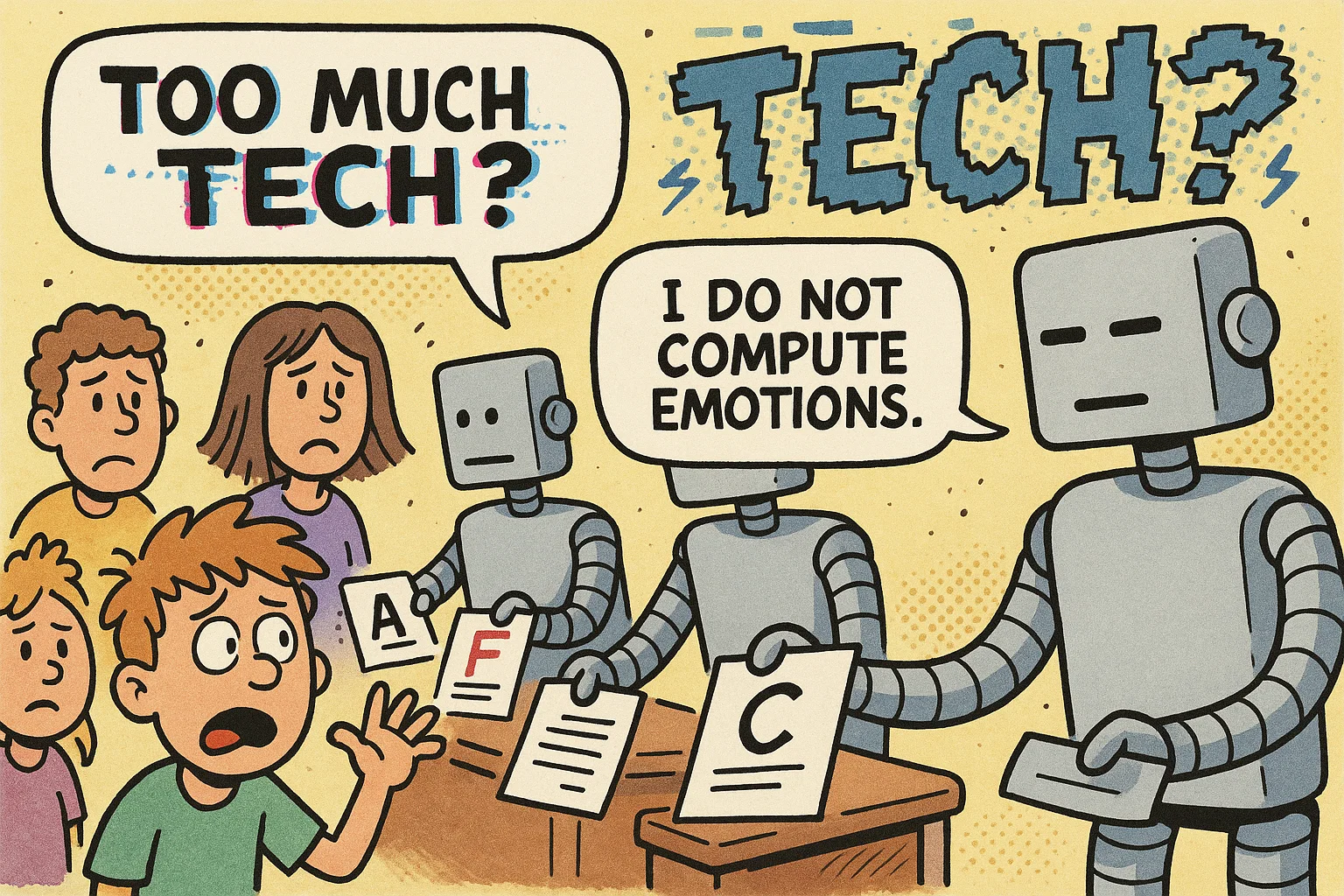
The disadvantages of AI in education include significant risks that institutions must mitigate through clear oversight and policy.
- Protecting student data: Schools often rely on third-party tools that may collect or store sensitive personally identifiable information (PII). Institutions must ensure full compliance with regional data protection laws (like GDPR or FERPA).
- Potential bias in AI systems: AI models are often trained on large datasets that may reflect historical or social biases. This can result in unfair feedback or skewed recommendations that disadvantage specific student demographics.
- Inaccurate or Misleading Outputs: Generative AI can generate “hallucinations” – confidently presented false information. Both teachers and students need to approach AI outputs critically and verify factual claims independently.
- Reduced Human Interaction: Over-reliance on digital interfaces can diminish critical face-to-face discussions. Schools and classrooms must remain spaces for social interaction and emotional development.
- Over-reliance on Technology: When students use AI writing tools to complete entire assignments, they risk losing the ability to develop original thoughts and stamina for independent research.
- High Implementation Costs: The financial burden includes not only the software subscription but also the necessary IT infrastructure, secure hardware, and continuous staff professional development.
What Does AI in Education Mean
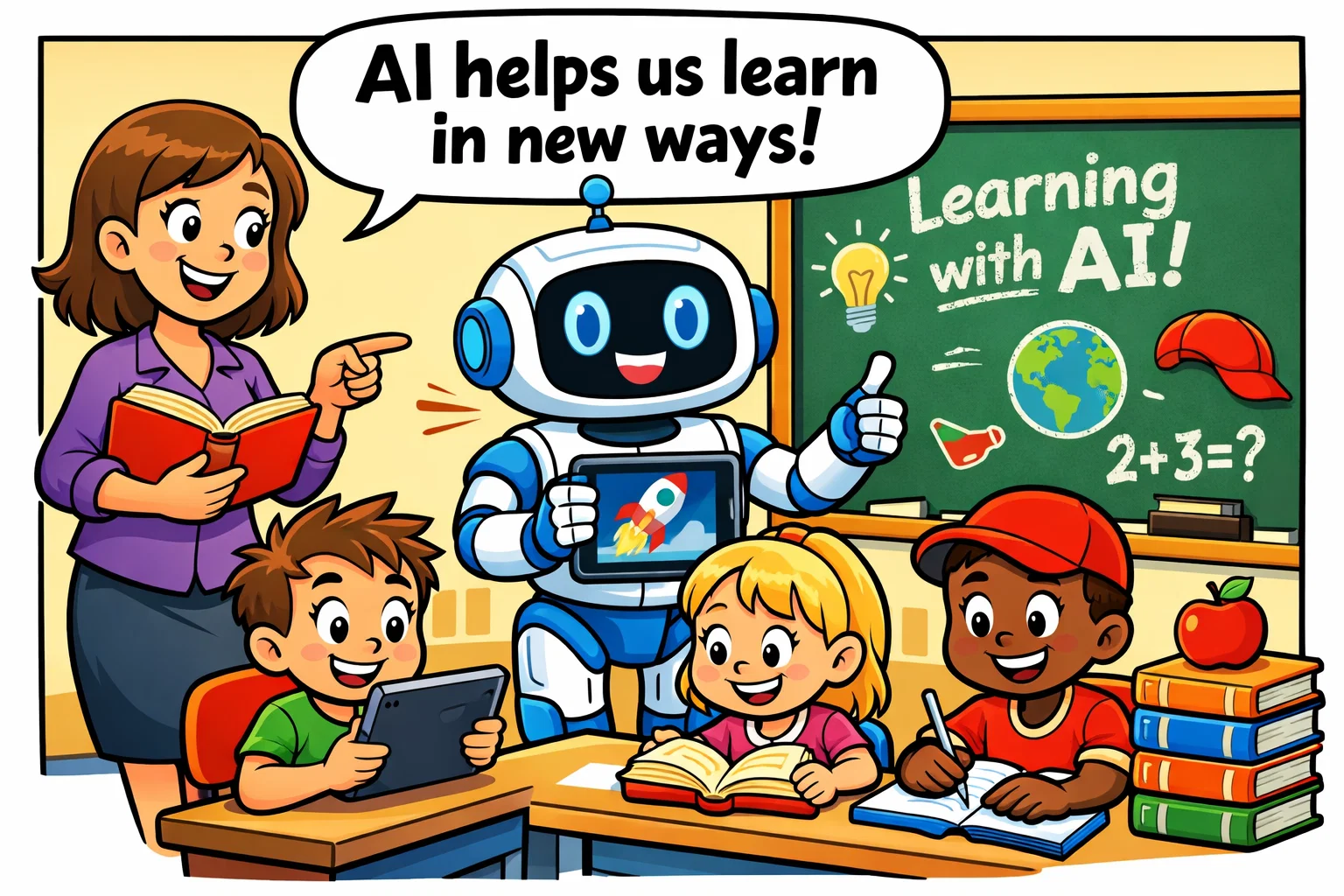
Understanding the meaning of artificial intelligence in education is essential for any institution looking to implement these tools effectively. It represents a significant shift in how instructional content is delivered, managed, and analyzed.
Definition of AI in education
AI in education refers to the development and application of computational systems that simulate human cognitive functions to assist in teaching and learning. These systems analyze vast datasets to provide personalized feedback, automate content creation, and offer predictive insights into student performance.
A brief history of AI in education
AI in education has evolved from early rule-based tutoring systems in the 1980s to today’s dynamic generative AI tools. The field has moved from simple feedback loops to sophisticated multimodal tools that can converse, generate content, and adapt in real time.
Generative AI vs traditional EdTech
While traditional EdTech platforms act as content repositories or progress trackers, generative AI provides interactive capabilities. It can generate new explanations, create writing prompts, and support deeper learning through dialogue rather than simple linear navigation.
What are some examples of AI in education?
Common applications of AI tools include:
- AI Tutors: Providing 24/7 support for specific subject queries.
- Grading Assistance: Tools that suggest feedback on drafts based on provided rubrics.
- Predictive Analytics: Identifying students at risk of falling behind based on attendance and assignment patterns.
- Accessibility Tools: Real-time captioning, translation, and text-to-speech support for diverse learners.
How AI Is Used in Schools Today
AI is now visible across many parts of the education sector, moving from pilot programs to everyday use.
Personalizing learning
AI supports the creation of adaptive pathways where assignments automatically scale in difficulty based on student performance. This helps keep students appropriately challenged – neither bored by work that is too easy nor discouraged by tasks that are too difficult.
Giving teachers time back
Teachers now use generative AI to draft emails to parents, create differentiated worksheets, and summarize long documents into digestible notes. By reducing time spent on drafting and routine preparation, AI gives teachers more time to work directly with students.
Supporting early intervention
By identifying patterns in missed assignments or repeated errors, AI can support earlier intervention in schools. Educators can receive data-informed alerts suggesting when a student may need additional one-on-one support, making intervention more proactive than reactive.
Expanding access to learning
AI technologies are bridging gaps for multilingual learners through immediate translation services. In addition, materials that would otherwise be difficult for students to access – such as dense academic papers – can be simplified or converted into audio formats to support students with learning disabilities.
Improving writing and feedback
AI writing tools assist students with brainstorming and structural outlining. While these tools can help with brainstorming and structure, students should still develop their own voice and argument, and teachers should retain responsibility for final assessment.
Academic Integrity, Literacy, Writing Risks
The intersection of AI and education demands a re-evaluation of how schools measure academic progress.
Academic misconduct and cheating concerns
AI programs have made it easier for students to outsource homework or generate essays. Schools are responding by moving away from take-home essays and toward in-class, evidence-based assessments that require critical thinking.
Students need stronger critical literacy skills
As artificial intelligence continues to integrate into daily life, students must learn to question AI outputs. They need to be trained to detect manipulation, assess the credibility of sources, and identify the limitations of automated suggestions.
AI could weaken students’ writing skills over time
There is concern that if students rely on AI to do their drafting, they may not develop their own voice. Educators should use AI as a tool to refine work after the initial draft is written by the student.
Teachers need guidance to use AI effectively
Without structured AI literacy training, teachers may struggle to distinguish between useful automation and unhelpful classroom distraction. Providing clear frameworks for how to use these tools is vital.
Strong literacy skills improve AI use
Perhaps counterintuitively, students with strong reading and writing skills are often better at writing effective prompts. They can refine their requests to the AI to get more accurate, relevant, and creative outcomes.
AI in Action: Real Examples and Case Studies
Case study: personalized practice in the classroom
A middle-school math department introduced an adaptive platform that generated practice problems for each student based on previous performance. Teachers reported spending less time creating practice problems manually.
Case study: teacher workload reduction
A history teacher began using an AI tool to create study guides from course textbooks. This change gave the teacher more time for discussion groups and individual student conferences.
Case study: multilingual and accessibility support
One high-school district used AI-powered speech-to-text and translation tools to support multilingual learners. As a result, teachers reported stronger participation from these students in core subjects.
Case study: district policy and safe rollout
One district implemented an “approved tools” policy that required all new AI applications to undergo a privacy review by the IT department. This process helped protect sensitive information while still allowing teachers to experiment with vetted tools.
Should AI be used in schools
The question of whether AI should be used in schools is best answered by analyzing the purpose and context of the implementation.
When AI adds real value
AI is most useful when it handles repetitive, high-volume tasks such as drafting routine emails, checking grammar, or providing extra practice in a specific skill area.
When AI should be limited
AI should not be the sole arbiter of high-stakes decisions, such as final grades, behavioral recommendations, or significant disciplinary actions, due to the risks of bias and inaccuracy.
Questions school leaders should ask
- Does this tool solve a specific, verified pedagogical problem?
- Has this tool been audited for data privacy compliance?
- Do we have a plan for equitable access across all student groups?
Teacher judgment must stay central
No matter how advanced AI becomes, educators should remain the final decision-makers. The goal is to help students achieve learning outcomes, not to automate the education process in its entirety.
Using AI in Schools With Purpose and Intention
Set clear policy for approved tools
Schools should clearly define which AI tools are permitted and for what purposes. A transparent, written policy minimizes confusion and ensures safety.
Train teachers before scaling use
Professional development must move beyond the “novelty” phase. Schools should host workshops that show teachers how to write effective prompts and integrate AI into existing curriculum standards.
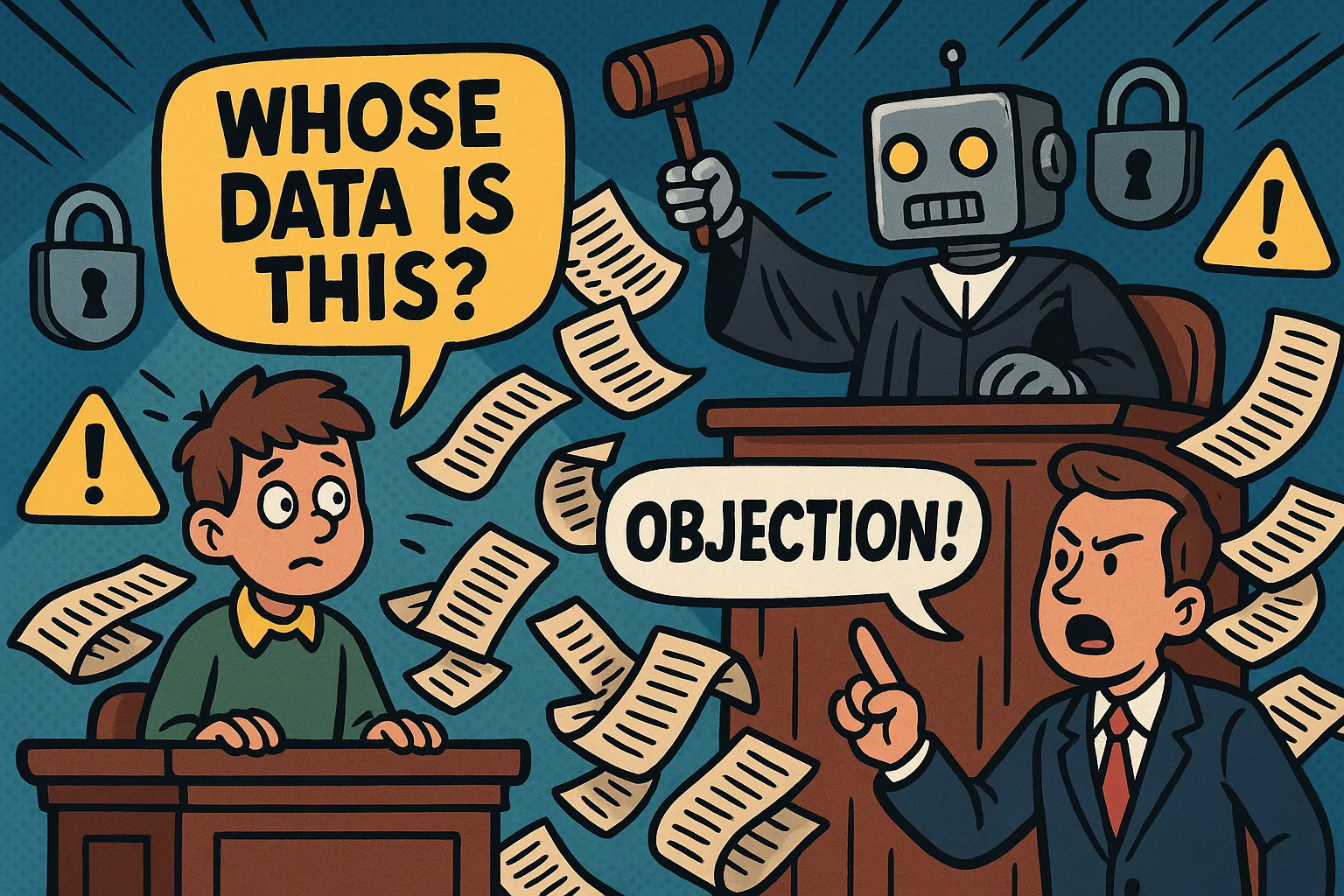
Protect privacy and security
AI without clear security protocols poses a threat. Schools should prohibit the upload of personal student information into public or consumer AI models unless those tools have been formally approved for secure educational use.
Review outputs with human oversight
Teachers should treat AI outputs as drafts. Every quiz, explanation, or feedback template needs to be validated for accuracy and appropriateness before it reaches the student.
Measure impact on learning outcomes
Implementation should be judged by meaningful outcomes – such as improved student proficiency or reduced teacher workload – rather than by how often the technology is used.
Challenges of AI Adoption in Schools and Districts
- Choosing the right AI tools: The market is crowded with products, so districts should prioritize those that integrate with their LMS and show clear pedagogical value.
- Budget, infrastructure, and device access: Many schools lack the hardware, bandwidth, and technical support needed to deploy advanced AI tools effectively.
- Unequal access and the digital divide: If only affluent districts can afford these tools, existing achievement gaps may widen.
- Slow adoption and policy gaps: Legal and bureaucratic hurdles often mean that schools are years behind the pace of innovation, causing frustration among tech-forward staff.
Final Thoughts on AI in Education Pros and Cons
Biggest benefits to remember
The potential for personalized learning, significant time savings, and increased accessibility for students with diverse needs are the most compelling arguments for integrating AI.
Biggest risks to control
Privacy vulnerabilities, data bias, the erosion of academic integrity, and the risk of over-dependence on technology are the primary threats that institutions must monitor.
Balanced verdict for schools, teachers, parents
AI has the potential to be a powerful support tool in the classroom. AI should be used as a supplement to professional teaching, provided that the school maintains rigorous oversight, enforces strict privacy policies, and prioritizes human-led instruction.
FAQ About AI in Education Pros and Cons
Can AI replace teachers?
No. AI is designed to support, not replace, the complex human role of a teacher, which involves empathy, mentorship, and nuance that current technology cannot replicate.
What are examples of AI in schools?
Examples include AI tutors for individualized practice, tools that assist in generating lesson materials, and software that provides real-time language translation for students.
What are the biggest risks of AI in education?
The biggest risks include data privacy breaches, algorithmic bias, inaccurate or fabricated outputs, and misuse that supports academic dishonesty.
Is AI good or bad for students?
AI is a tool whose impact depends on how it is used: it can support personalized learning, or it can undermine critical thinking if students become over-reliant on it.
How can schools implement AI responsibly?
Schools should implement AI by first establishing a clear policy on approved tools, ensuring all systems prioritize privacy, and providing rigorous training for staff to ensure that AI remains a supportive, secondary layer to human instruction.
What are the main advantages and disadvantages of using AI?
The advantages of AI in education include personalized content and reduced administrative tasks, while the disadvantages of artificial intelligence involve data privacy risks, the potential for inaccurate outputs, and the need to maintain strong student-teacher interactions.
How does AI help teachers with lesson planning?
AI helps teachers by automating repetitive tasks, allowing them to quickly generate lesson drafts, create diverse quizzes, and produce scaffolding materials. This lesson planning support significantly reduces the time spent on preparation, letting educators focus on the unique needs of their students.
How can AI improve accessibility for students with disabilities?
AI tools can make complex or inaccessible material available to students by providing real-time text-to-speech, automated captioning, and simplified reading versions. This potential benefit ensures that students and teachers have the resources needed to create a more inclusive learning environment, where technology actively removes barriers to participation.

Take a short quiz to find out what your everyday choices say about your parenting style
When your child is curious about something new, what’s your instinct?
Take a short quiz to find out what your everyday choices say about your parenting style
“Can I download this app?” What happens next?
Take a short quiz to find out what your everyday choices say about your parenting style
When it comes to rules at home, which sounds most like you?
Take a short quiz to find out what your everyday choices say about your parenting style
If you could give your child one life skill today, what would you pick?
Take a short quiz to find out what your everyday choices say about your parenting style
Your child gets to choose what to watch. What would your ideal setup look like?
Take a short quiz to find out what your everyday choices say about your parenting style
Pick your parenting superpower ✨