Parenting Tips for 3 Year Old: Complete Guide for Growth, Behavior, and Development

 Discover a Free Education Video App for Kids
Pastory uses AI to personalize educational video content based on your child’s interests and personality. Safe, engaging, and built for curious young minds. Sign up now to stay updated and enjoy early access with a free trial
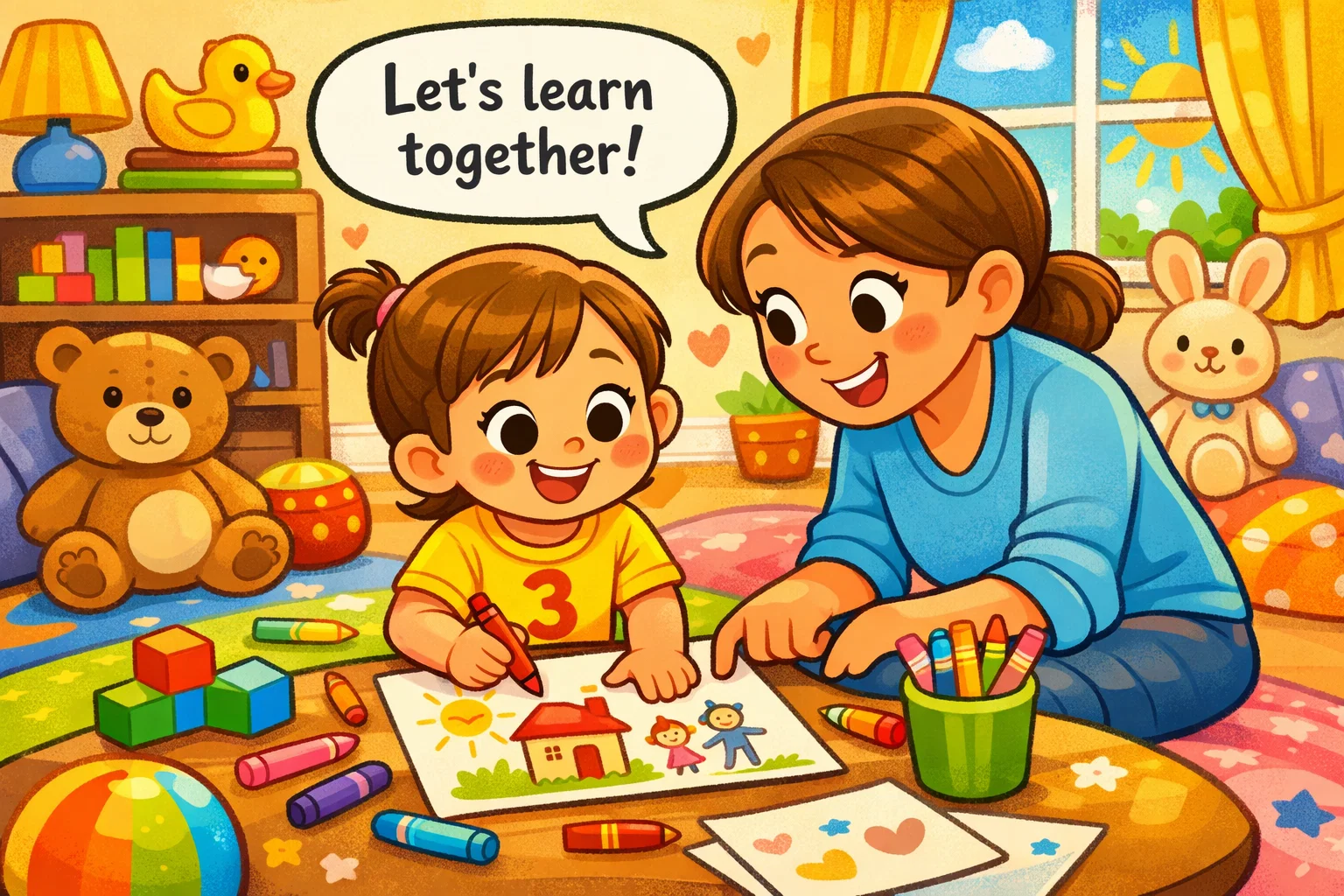
Age 3 is one of the most dynamic stages in early childhood. Toddlers at this age are testing limits, expanding their vocabulary by the day, and developing a strong sense of self — often summarized in one word: “No!” For many parents, parenting a preschooler feels like navigating a moving target. One moment your child is laughing and cooperative; the next, they’re mid-tantrum over the wrong color cup.
This guide covers everything you need to know about child development at age 3 — from developmental milestones and typical behavior to positive parenting tips, healthy routines, and safety guidelines. Whether you’re looking to manage behavior more confidently or help your child grow and thrive, you’ll find practical, research-backed strategies here.
Developmental Milestones at 3 Years
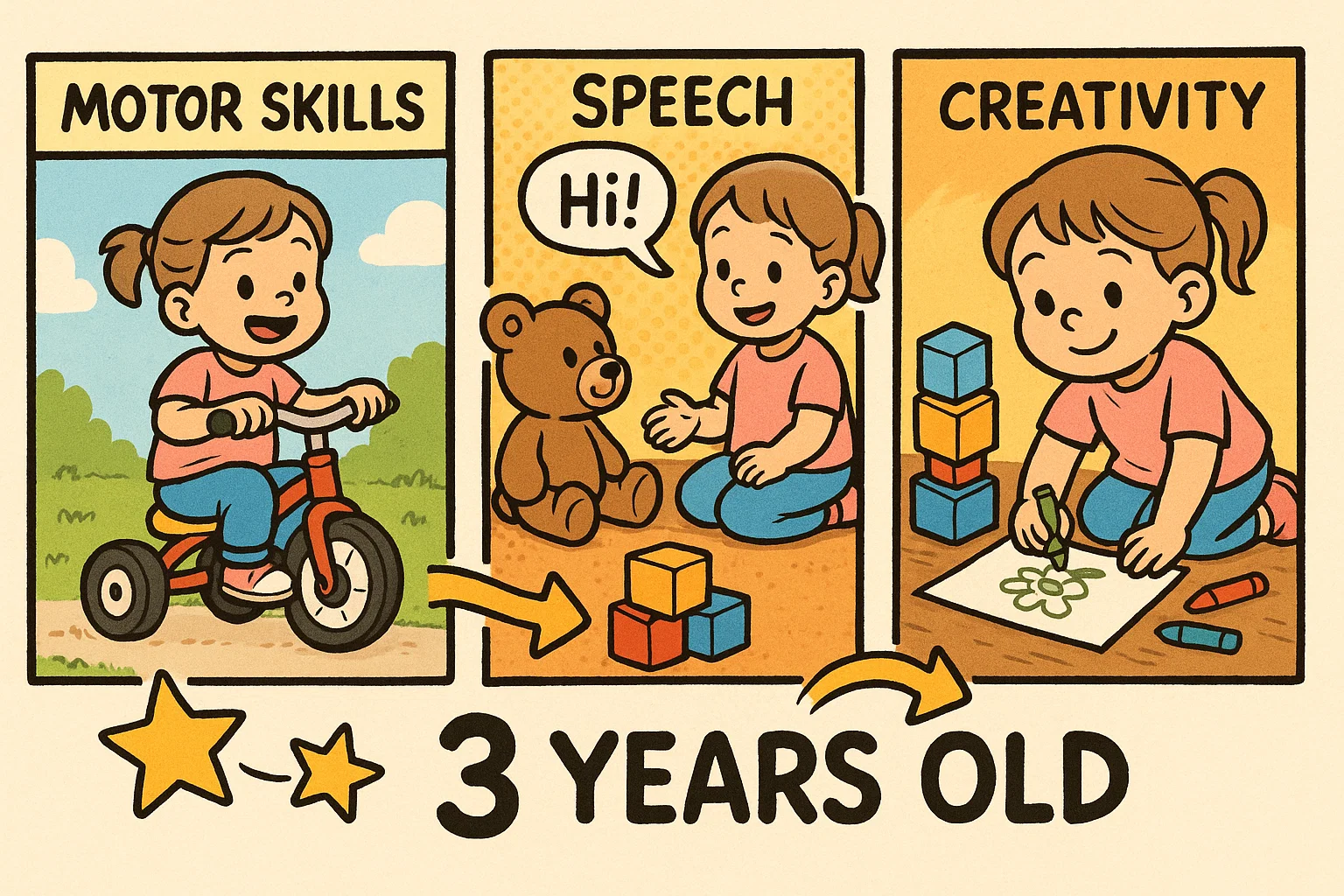
Developmental milestones are skills and behaviors that most children reach by a certain age. The CDC defines these called developmental milestones as useful checkpoints — not rigid deadlines — for tracking how young children grow and develop. Understanding what’s typical helps parents know what to expect and when to seek support.
Physical Growth and Movement Skills
Most 3 year olds weigh between 12–18 kg and stand around 90–100 cm tall. Motor skills at this age develop rapidly — children reach the ability to run, jump, climb stairs with alternating feet, and pedal a tricycle. Fine motor skills also strengthen, enabling children to draw simple shapes, use scissors with support, and begin dressing themselves.
Speech and Language Abilities
A typical 3 year old uses 200–1,000 words and speaks in sentences of three to five words. Strangers should be able to understand about 75% of what a preschooler says. Children at this stage ask frequent “why” and “what” questions, showing growing curiosity about the world around them.
Thinking and Learning Skills
Cognitive development at age 3 includes imaginative play, basic problem-solving, and early understanding of concepts like size, shape, and color. A child’s brain at this age is absorbing information rapidly — research from Harvard’s Center on the Developing Child shows that over 1 million new neural connections form every second in early childhood. Preschoolers begin to understand simple cause-and-effect relationships and can follow two-step instructions.
Social Interaction and Play Behavior
Three year olds are beginning to shift from parallel play (playing alongside others) to more cooperative interaction. They enjoy playing with peers, are learning taking turns, and show early signs of empathy. Social development at this stage is closely linked to how children feel safe and supported within their family environment.
Typical Behaviors of Toddlers
Understanding common behavioral patterns in preschoolers helps parents respond with patience rather than frustration. Many behaviors that feel challenging are developmentally normal at this stage.
Emotional Expression and Mood Swings
Emotional regulation is still very much a work in progress at age 3. A child’s brain — particularly the prefrontal cortex responsible for impulse control — won’t fully mature until their mid-20s. Tantrums, crying over small setbacks, and sudden mood shifts are expected. These behaviors indicate that a preschooler is learning to manage big feelings, not that something is wrong.
Independence and Testing Limits
Three year olds are developing a sense of autonomy. Saying “no,” refusing help, and testing rules are all signs of healthy psychological development. According to psychologist Erik Erikson’s stages of development, children this age are navigating the “autonomy vs. shame and doubt” stage — asserting independence is a core developmental need.
Transitions and Daily Challenges
Leaving the playground, stopping screen time, or switching from play to dinner can feel catastrophic to a preschooler. Transitions are difficult because young children live in the present moment and lack the cognitive tools to easily shift attention. Giving advance warnings — “Five more minutes, then we’re going home” — significantly reduces resistance.
Attention Span and Activity Levels
The average attention span for a 3 year old is approximately 6–9 minutes for structured tasks. High energy levels are normal and healthy. Physical activity is essential for a preschooler’s wellbeing — it supports brain development, sleep quality, and emotional regulation.
Effective Parenting Tips for 3 Year Olds
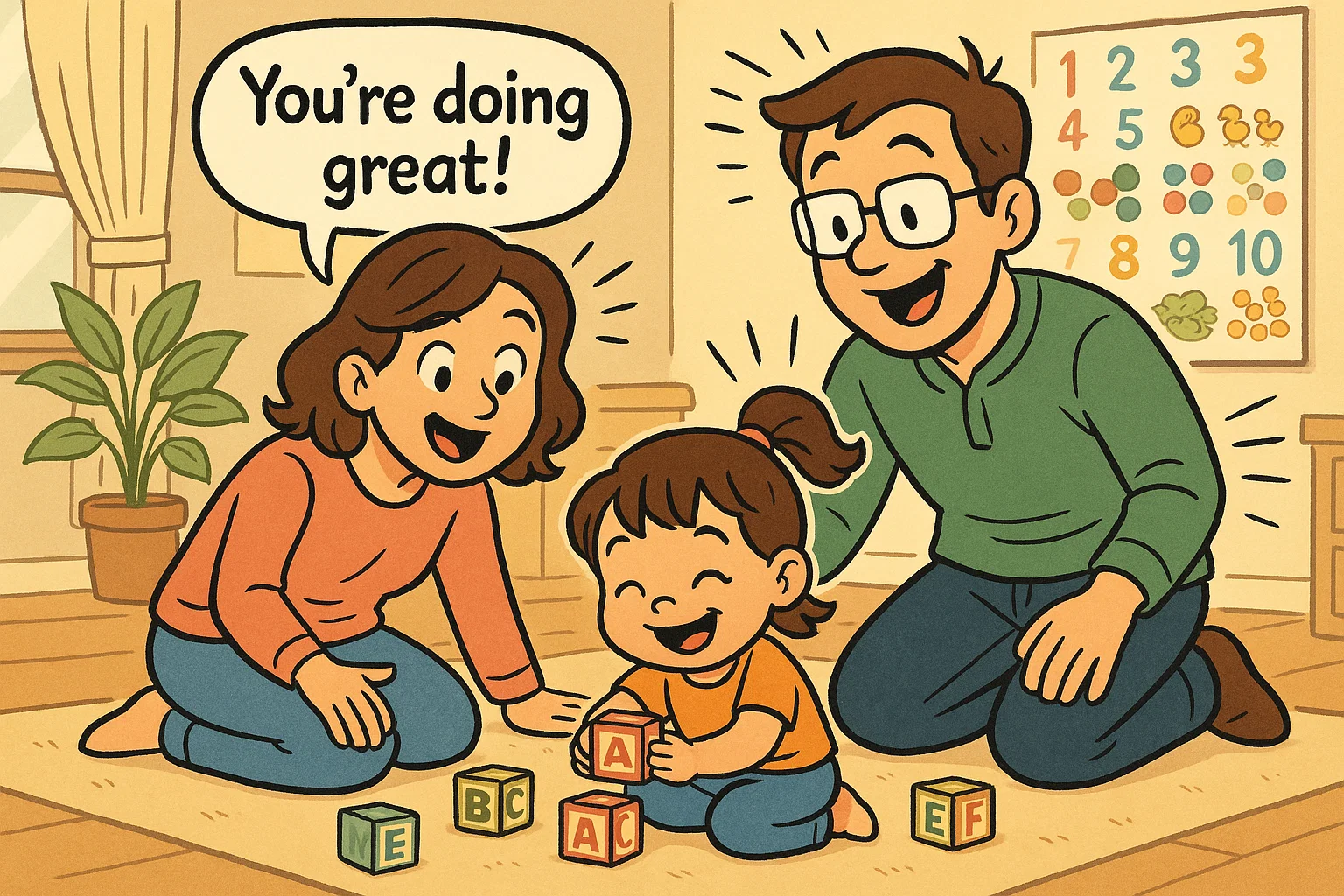
This section addresses the core parenting challenges that parents of preschoolers face most often. These positive parenting tips are grounded in child development research and are practical enough to apply starting today.
Set Clear Limits and Enforce Rules Consistently
Children feel safe when they know what to expect. Setting clear, age-appropriate boundaries and enforcing them consistently helps a preschooler understand what behavior is acceptable. Mixed signals — allowing something one day and disciplining for it the next — create confusion and increase testing behavior.
Create Structured Daily Routines
Predictable routines reduce anxiety and improve cooperation in 3 year olds. A consistent schedule for waking, meals, nap, play, and bedtime gives a child a sense of control and security. Research published in the journal Pediatrics links regular family routines to better sleep, fewer behavior problems, and stronger language development in early childhood.
Praise Good Behavior and Effort
Positive reinforcement is one of the most effective tools in a parent’s toolkit. Acknowledge specific behaviors — “I noticed you shared your blocks with your sister, that was kind” — rather than vague praise like “good job.” This helps children understand exactly what they did well and encourages them to repeat it.
Offer Simple Choices to Build Independence
Giving a preschooler two acceptable options — “Do you want to wear the red shirt or the blue one?” — reduces power struggles while honoring their need for autonomy. Controlled choices teach your child decision-making skills within safe boundaries.
Validate Feelings and Teach Emotional Skills
Emotional coaching begins with acknowledging how a child feels before redirecting behavior. Saying “I can see you’re really frustrated” before setting a limit helps a child feel understood. Teaching emotional words — angry, sad, excited, worried — builds a preschooler’s emotional vocabulary and supports long-term psychological wellbeing.
Respect Challenges with Transitions
Use countdown warnings before transitions: “Two more minutes, then bath time.” Visual timers can also help a preschooler grasp the concept of time. These simple strategies acknowledge a child’s experience while making daily routines smoother for everyone.
Encourage Outdoor Physical Activity
The American Academy of Pediatrics (AAP) recommends at least 3 hours of physical activity daily for children ages 3–5, including active outdoor play. Playing outside — running, biking, climbing — supports gross motor skills, sleep quality, and emotional regulation. Outdoor play also reduces screen time naturally.
Limit Screen Time Effectively
The AAP recommends no more than 1 hour per day of high-quality programming for children ages 2–5. Keep television sets and tablets out of the child’s bedroom and avoid screen use during meals and the hour before bedtime. When screen time does occur, watch together and talk about what your child is seeing to make it an interactive experience.
Helping Learning and Emotional Security
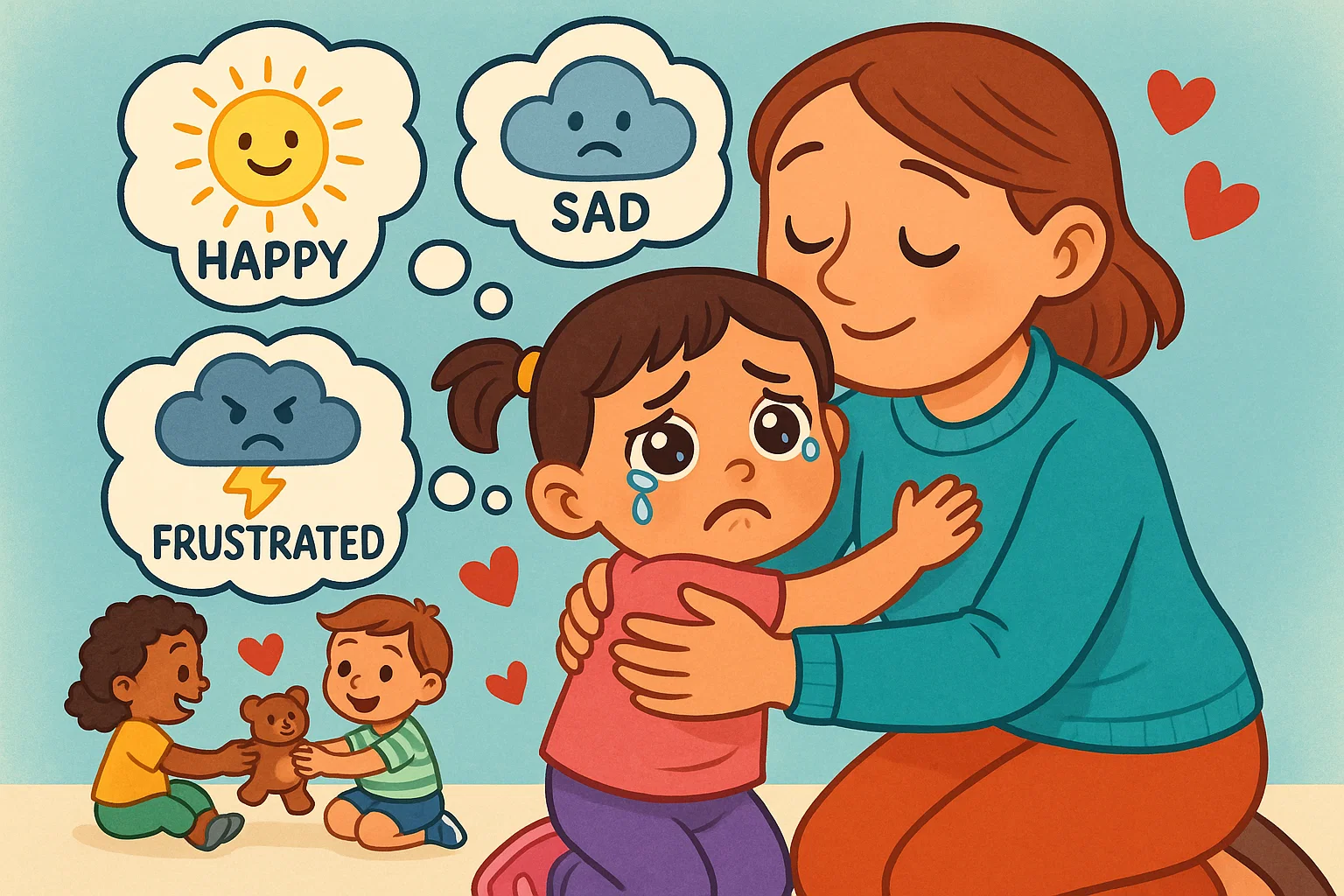
Supporting a child’s cognitive and emotional development doesn’t require expensive programs or complicated strategies. Everyday interactions are the most powerful learning opportunities available to parents.
Read Together Daily
Reading aloud to a preschooler for just 15–20 minutes per day has measurable benefits for vocabulary, listening skills, and later reading success. The AAP recommends reading as a daily routine from infancy through early childhood. Choose books with rich language, repetition, and questions that invite your child to predict what happens next.
Encourage Play-Based Learning
Play is the primary way young children learn. Pretend play, building, drawing, and storytelling all support a preschooler’s cognitive development, creativity, and social skills. Unstructured play time — where a child leads — is as valuable as structured activities. Let your preschooler guide play scenarios and resist the urge to always direct.
Support Confidence and Self-Esteem
Children develop self-esteem through small, repeated experiences of mastery and encouragement. Allowing a 3 year old to attempt tasks independently — even imperfectly — builds confidence far more effectively than doing things for them. Saying “You worked hard on that” teaches children that effort matters.
Build Secure Parent-Child Connection
Attachment research, pioneered by John Bowlby and expanded by Mary Ainsworth, shows that a secure parent-child bond is the foundation of healthy child development including emotional, cognitive, and social growth. Simple daily habits — eye contact, physical affection, responsive listening — strengthen this connection meaningfully.
Healthy Lifestyle for a 3 Year Old
A child’s physical health directly supports their behavior, mood, learning, and development. Establishing healthy habits early creates a foundation that children carry into later childhood.
Nutrition and Balanced Diet
Three year olds need a varied diet rich in fruits, vegetables, whole grains, protein, and dairy to support rapid growth and brain development. Picky eating is common at this age — studies suggest it affects up to 50% of toddlers. Strategies that help include:
- Offering small portions of new foods alongside familiar favorites
- Avoiding pressure or bribing with food
- Modeling healthy eating habits at shared mealtimes
Sleep Routines and Bedtime Habits
Children ages 3–5 need 10–13 hours of sleep per day, including naps, according to the AAP. A consistent bedtime routine — bath, books, quiet time — signals the child’s brain to prepare for sleep. Poor sleep is directly linked to increased tantrums, difficulty concentrating, and challenging behavior in preschoolers.
Physical Activity and Movement
In addition to outdoor play, encourage movement throughout the day — dancing, tossing a ball, obstacle courses indoors. The goal is to limit sedentary time and support gross motor development through varied, joyful activity.
Managing Screen Time and Digital Exposure
Screen time management at age 3 goes beyond limits — content quality matters. Choose educational, slow-paced programming over fast-cut media. Avoid apps or shows that are purely passive. Co-viewing and discussing content helps a child understand and learn from what they watch.
Child Safety Considerations
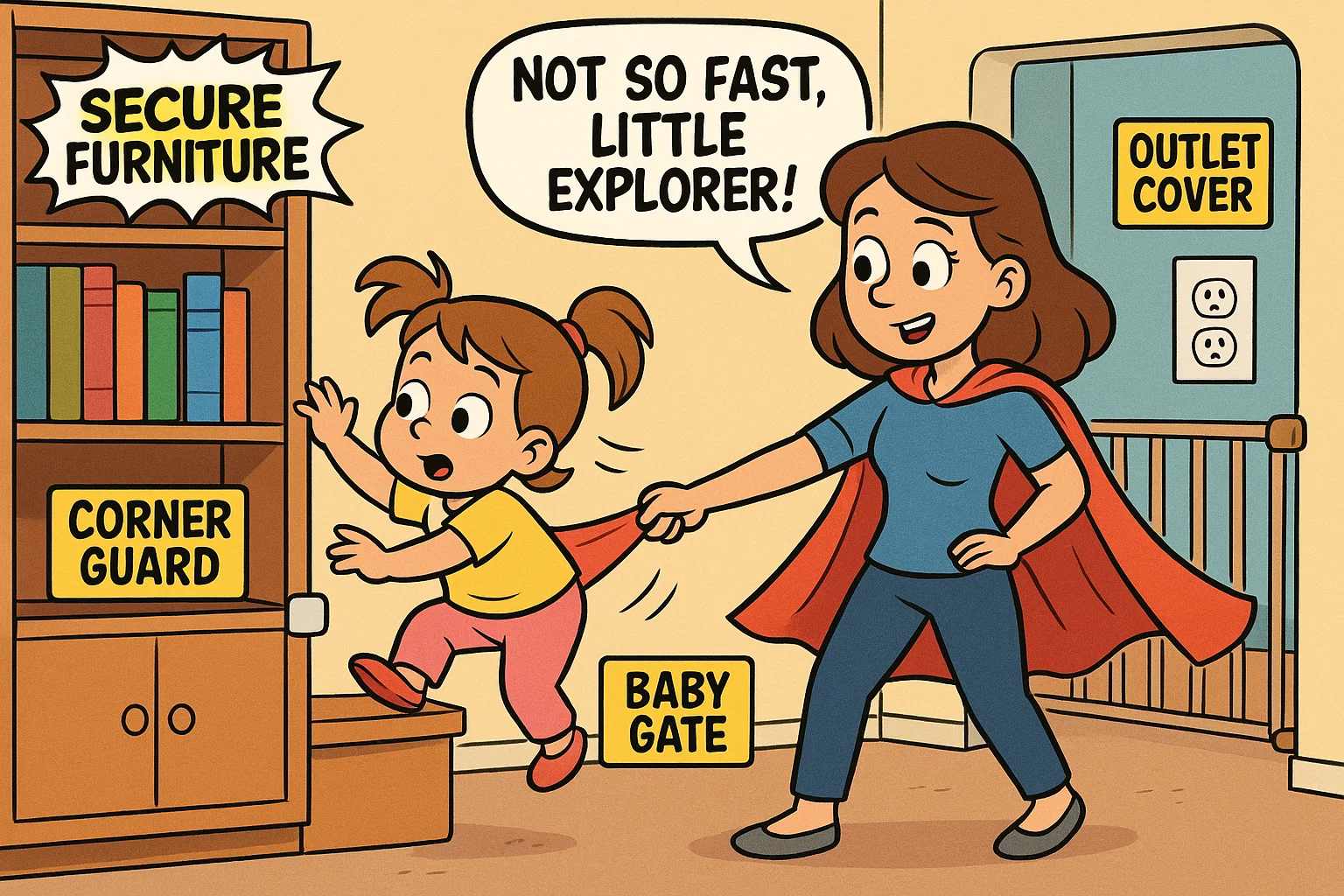
Protecting your child from harm is a foundational part of parenting a preschooler. Age 3 brings increased independence and mobility, which creates new safety considerations.
- Car seat safety: The National Highway Traffic Safety Administration (NHTSA) recommends keeping children in a rear-facing car seat for as long as possible, then transitioning to a forward-facing seat with a harness. Never place a child under 13 in the front seat.
- Home safety: Childproof cabinets containing cleaning products, medications, and sharp objects. Install stair gates and secure heavy furniture to walls.
- Outdoor and water safety: Always supervise a preschooler around water — drowning can occur in seconds, even in shallow water. At playgrounds, stay close and check equipment for sharp edges or loose parts.
Common Parenting Mistakes to Avoid
Even experienced parents fall into patterns that can unintentionally reinforce challenging behavior. Awareness is the first step toward change.
Inconsistent Discipline
When rules change based on a parent’s mood or energy level, preschoolers receive mixed messages and test limits more frequently. Consistent follow-through — even when it’s tiring — builds trust and reduces power struggles over time.
Reinforcing Negative Behavior Unintentionally
Children seek attention, and negative attention is still attention. Responding intensely to whining, tantrums, or hitting while ignoring calm behavior teaches a child that disruptive behavior is the most effective way to connect. Increasing attention for positive behavior while staying calm during unwanted behavior changes this equation.
Allowing the Child to Control the Rules
Giving a 3 year old too much decision-making power creates anxiety rather than confidence. Preschoolers need adults to lead with warmth and authority. A parenting style that combines clear expectations with emotional responsiveness — known as authoritative parenting — consistently produces the best outcomes in child development research.
When to Be Concerned About Development or Behavior
Most preschoolers develop at slightly different rates, but certain signs may indicate a need for early intervention. The CDC’s “Learn the Signs. Act Early.” campaign encourages parents to trust their instincts and seek evaluation when concerns arise.
Contact your child’s pediatrician if a 3 year old:
- Cannot be understood by familiar adults at least 75% of the time
- Does not use sentences of three or more words
- Shows no interest in playing with other children or in pretend play
- Has extreme difficulty with transitions or emotional regulation beyond typical tantrums
- Shows regression in previously mastered skills like toilet training or language
Early intervention programs have the strongest outcomes when support begins before age 5. If you have concerns, act early — evaluation is always a better choice than a wait-and-see approach.
Daily Activities to Support Growth and Development
Incorporating development-supporting activities into everyday life doesn’t require a structured curriculum. Simple, consistent interactions make the biggest difference.
Make Time for Play
Offer a balance of structured activities (puzzles, simple board games) and free play. Even 20–30 minutes of child-led play per day — where a parent follows the child’s lead without directing — strengthens the parent-child connection and supports creativity.
Involve the Child in Family Life
Giving a 3 year old simple chores — putting toys away, helping set the table, sorting laundry — builds responsibility and self-esteem. A preschooler who contributes to the household feels capable and valued.
Encourage Creativity and Imagination
Drawing, storytelling, building with blocks, and dramatic play all support cognitive and emotional development. These activities develop a child’s ability to think flexibly and express themselves — skills that matter far beyond the preschool years.
Parenting Stress and Self-Care
Parenting a 3 year old is genuinely demanding. Acknowledging that is not weakness — it’s honesty. Research consistently shows that parental wellbeing is directly linked to child outcomes.
Strategies that help include setting realistic expectations (no parent gets every interaction right), building a support system of other parents or caregivers, and asking for help without guilt. Balancing discipline with patience is easier when parents have their own basic needs met — sleep, social connection, and time away from the caregiving role, however brief.
Next Steps for Parents of 3 Year Olds
Parenting a preschooler is both challenging and deeply rewarding. The most effective approach combines clear boundaries, emotional warmth, consistent routines, and a genuine curiosity about who your child is becoming. No single strategy works for every child — but the consistent presence of a caring, responsive adult is the single most important factor in healthy child development.
Start small: choose one or two tips from this guide to implement this week. As each becomes a habit, add another. Over time, these small, consistent actions help your child grow and thrive — and make the parenting journey more enjoyable for you, too.
Frequently Asked Questions About Parenting 3 Year Olds
How to discipline a 3 year old effectively?
Effective discipline at age 3 focuses on teaching rather than punishment. Set clear, consistent limits, follow through calmly when rules are broken, and use natural consequences when safe and appropriate. Positive reinforcement for good behavior is more effective than repeated correction of unwanted behavior.
How to deal with tantrums in a 3 year old?
Prevent tantrums where possible by ensuring adequate sleep, consistent routines, and transition warnings. During a tantrum, stay calm, avoid negotiating, and wait for the storm to pass before talking. Validate the feeling afterward: “You were really upset. That’s okay. Let’s talk about what happened.”
How much screen time is appropriate for a 3 year old?
The AAP recommends no more than 1 hour per day of high-quality content for children ages 2–5. Prioritize interactive, educational programming and always watch together when possible. Keep tablets and screens out of the child’s bedroom and away from mealtimes.
What are normal behavior problems in a 3 year old?
Defiance, whining, hitting, difficulty sharing, and emotional outbursts are all common at age 3. These behaviors reflect normal developmental processes — not a parenting failure. Consistent, calm responses over time are more effective than reactive discipline.
How to encourage speech development in a 3 year old?
Talk frequently with your child throughout the day, narrating activities and asking open-ended questions. Read aloud daily and limit passive screen use, which does not support language development the way real conversation does. If a child is not meeting speech milestones, consult a pediatrician or speech-language pathologist.
How to handle picky eating in a 3 year old?
Offer variety without pressure — a child’s job is to decide whether and how much to eat; a parent’s job is to decide what is offered. Repeatedly exposing a preschooler to new foods alongside familiar ones (without forcing) gradually increases acceptance. Avoid using food as a reward or punishment.
How to support emotional development in a 3 year old?
Name emotions regularly — both your child’s and your own. Model calm behavior during stress. Validate your child’s feelings before redirecting behavior. Books and pretend play are also excellent tools for helping a preschooler explore and understand a range of emotions.

Take a short quiz to find out what your everyday choices say about your parenting style
When your child is curious about something new, what’s your instinct?
Take a short quiz to find out what your everyday choices say about your parenting style
“Can I download this app?” What happens next?
Take a short quiz to find out what your everyday choices say about your parenting style
When it comes to rules at home, which sounds most like you?
Take a short quiz to find out what your everyday choices say about your parenting style
If you could give your child one life skill today, what would you pick?
Take a short quiz to find out what your everyday choices say about your parenting style
Your child gets to choose what to watch. What would your ideal setup look like?
Take a short quiz to find out what your everyday choices say about your parenting style
Pick your parenting superpower ✨