3 Activity Types and Parenting Tips for 5 Year Olds: Full Guide

 Discover a Free Education Video App for Kids
Pastory uses AI to personalize educational video content based on your child’s interests and personality. Safe, engaging, and built for curious young minds. Sign up now to stay updated and enjoy early access with a free trial
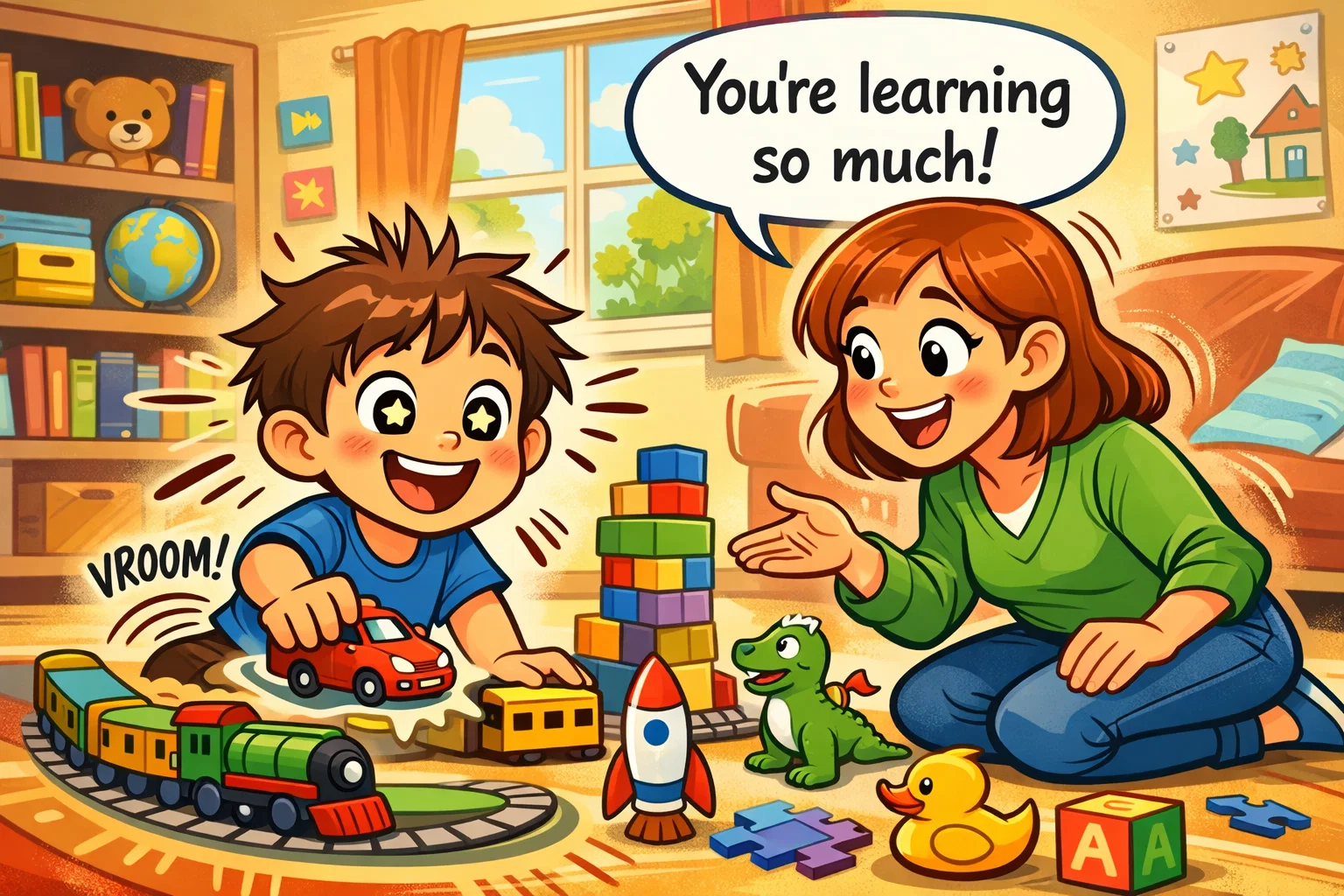
Good parenting tips for 5 year olds cover more than behavior — they address how children grow socially, emotionally, physically, and academically all at once. At five, kids are forming friendships, expanding their language, testing limits, and beginning structured learning. This guide brings together developmental milestones, daily parenting strategies, and activity ideas so parents can respond with confidence at every stage.
From handling tantrums and mood swings to encouraging independence and creative play, the sections below offer a practical, age-specific look at what 5-year-olds need and how parents can best support them.
Key Takeaways
- Five-year-olds develop rapidly across social, emotional, physical, and cognitive areas — knowing the milestones helps parents respond with confidence.
- Core parenting strategies include encouraging physical activity, reading together daily, and talking openly about feelings.
- The article covers 3 types of fun activities for 5-year-olds: educational games, outdoor play, and creative ideas.
- Gentle parenting approaches such as consistent boundaries, positive reinforcement, and calm conflict resolution support everyday behavior.
- Guidance on common challenges like tantrums and boundary-testing includes clear advice on when to seek professional support.
Child Development at 5–6 Years
- Physical: Runs, hops on one foot, catches a bounced ball, uses scissors, and begins writing recognizable letters.
- Cognitive: Counts to 20, recognizes most letters, understands cause and effect, and follows two- to three-step instructions.
- Language: Uses a vocabulary of around 2,000 words, tells simple stories, and asks frequent “why” questions.
- Social: Engages in cooperative play, forms genuine friendships, negotiates rules, and begins resolving conflicts with peers.
- Emotional: Shows empathy, names feelings more precisely, and is developing early self-regulation skills.
- Self-care: Dresses independently, brushes teeth with some supervision, and makes simple daily choices.
Five-year-old child development is marked by rapid growth across every domain — physical, cognitive, emotional, and social. Kids this age are transitioning from the free-form play of preschool into more structured environments, and their brains are absorbing new information at a remarkable rate. Understanding what’s typical at this stage helps parents support their child’s development with realistic expectations and the right kind of encouragement.
Playing and Interacting with Others
Five-year-olds move from parallel play into cooperative play, meaning they actively engage with peers rather than simply playing alongside them. Children this age begin forming genuine friendships, negotiating rules in games, and learning how to resolve conflicts — skills that form the foundation of lifelong social development.
Group activities like building projects, pretend play, and simple board games give children opportunities to practice sharing, taking turns, and understanding other perspectives. Many parents notice that kids grow more socially confident as they spend more time in structured group settings like kindergarten or after-school programs.
Feeling and Connecting
Emotional development at age 5 is marked by growing empathy and a stronger attachment to caregivers and close friends. A 5-year-old child may become easily upset when things feel unfair, or show genuine concern when a friend is sad — both signs of healthy emotional growth.
Children this age are beginning to name their feelings more precisely, moving beyond “sad” or “mad” to more nuanced expressions. Letting them know their emotions are valid — and helping them find words for what they feel — builds emotional intelligence that supports their well-being well into adulthood.
Key emotional milestones at age 5 include recognising and naming a wider range of feelings (such as pride, guilt, embarrassment, and excitement), showing genuine concern for others, and beginning to manage impulses in structured settings like school. Children this age may still cry or become overwhelmed when tired or overstimulated — this is entirely normal and reflects the ongoing development of the prefrontal cortex, which governs self-regulation.
For parents, a few practical strategies make a meaningful difference: narrate your own emotions calmly in everyday moments (“I’m feeling a bit frustrated right now, so I’m going to take a breath”), use picture books or storytelling to explore feelings safely, and create a predictable daily routine that reduces emotional overload. Boys and girls at this age both benefit from the same emotional coaching — research does not support withholding emotional language from boys, and doing so can make emotional regulation harder over time.
Thinking and Learning
Cognitive development at this stage is characterized by curiosity, imagination, and a growing ability to think logically. Five-year-olds begin to understand cause and effect, recognize patterns, and engage in early academic skills like counting to 20, recognizing letters, and understanding basic story structures.
Encouraging your child to ask questions — and taking those questions seriously — nurtures critical thinking and a love of learning. The kid’s brain at this age is especially receptive to hands-on, play-based exploration, which research consistently shows supports deeper understanding than rote instruction.
Talking and Communicating
A typical 5-year-old has a vocabulary of around 2,000 words and can construct grammatically correct sentences with ease. Children this age love to tell stories, ask “why” questions endlessly, and follow multi-step instructions — all signs of strong language development.
Reading together every day remains one of the most effective tools for expanding vocabulary and comprehension. Conversations during mealtime, bedtime, and everyday routines also give kids practice expressing themselves clearly and listening to others.
Moving and Physical Development
Physical development at age 5 includes significant gains in both gross and fine motor skills. Kids can typically run, jump, hop on one foot, and are beginning to show early sports readiness. Fine motor skills — like using safety scissors, drawing recognizable shapes, and beginning to write letters — are also developing rapidly.
Playing outside daily supports not only physical fitness but also attention, mood regulation, and sensory development. The American Academy of Pediatrics recommends at least 60 minutes of physical activity per day for children this age.
Practising Independence
Five-year-olds are becoming more independent in daily self-care tasks. Most kids this age can dress themselves, brush their teeth with some supervision, pour a drink, and make simple decisions like choosing what to wear or which snack to have.
Supporting this growing independence — rather than doing everything for your child — builds confidence and a sense of competence. Household chores appropriate for this age, like tidying toys or setting the table, give children a sense of contribution to family life.
Parenting Strategies for 5 Year Olds

Effective parenting at this age blends structure with warmth, encouraging independence while maintaining clear boundaries. The strategies below are grounded in child development principles and designed to support your little one across all areas of growth.
Get Moving and Encourage Physical Activity
Physical activity has a direct impact on a child’s behavior, focus, and emotional regulation. Kids who get enough active play during the day tend to sleep better, manage frustration more easily, and engage more productively in learning.
Encourage physical activity by building active time into daily routines — morning walks, after-school outdoor play, or family bike rides. Playing outside also supports social development when children interact with peers in unstructured settings.
Keep Play Central to Daily Routine
Play is not a break from learning — it is learning for a 5-year-old. Through imaginative play, children this age develop creativity, language, problem-solving, and emotional regulation simultaneously.
Protect unstructured play time in your child’s schedule, even as school demands increase. Resist the urge to over-schedule activities. Kids grow most fully when given time to direct their own play and follow their curiosity.
Read Together Every Day
Reading together remains one of the most research-supported parenting tips for this age group. Daily shared reading builds vocabulary, comprehension, and listening skills — and strengthens the parent-child bond.
Continue to read a mix of picture books, early chapter books, and non-fiction to expose your child to diverse language and ideas. Ask your kid questions about the story — “What do you think will happen next?” — to develop critical thinking alongside literacy.
Talk About Feelings Openly
Helping your child identify and express emotions is one of the most valuable things a parent can do. When a child feels heard, they’re better able to regulate their behavior and develop resilience over time.
Use simple language: “It looks like you’re feeling frustrated. Is that right?” Letting them know their feelings make sense — even when their behavior needs redirecting — teaches emotional intelligence without shaming.
Practise Classroom Behavior at Home
Many parents find that preparing children for school expectations at home reduces stress for everyone. Practice skills like sitting quietly for short periods, taking turns in conversation, and following two- or three-step instructions.
Simple activities like family board games, storytelling circles, or cooking together naturally build the listening, patience, and cooperation skills children need in a classroom setting.
Involve Your Child in Family Life
Involving your child in household tasks builds responsibility, self-esteem, and a sense of belonging. Age-appropriate chores — like sorting laundry, feeding a pet, or helping prepare simple meals — teach kids that they are capable contributors.
Give your child choices within boundaries: “Would you like to set the table or wipe the counters?” This approach supports autonomy while keeping structure intact.
How to Raise a Happy and Confident Child
Raising a confident, emotionally healthy child is a long-term process built through hundreds of small daily interactions. The following strategies support your child’s inner life as much as their outward behavior.
- Learn to read your child’s emotions — Watch for changes in mood, energy, and behavior that signal your kid needs connection or support before a meltdown occurs.
- Have fun together — Shared laughter and play build the parent-child relationship more powerfully than structured teaching. Prioritize moments of pure enjoyment.
- Help your child master new skills — Introduce manageable challenges and celebrate effort, not just outcomes. This builds a growth mindset.
- Cultivate healthy habits — Consistent bedtime routines, a healthy diet, limited screen time, and regular physical activity all contribute to emotional stability and focus.
- Let your kid figure things out — Resist solving every problem immediately. Allowing children to struggle briefly with age-appropriate challenges builds persistence and self-confidence.
- Allow your child to feel sad or angry — Validating difficult emotions teaches kids that all feelings are acceptable — it’s behavior that has limits, not feelings.
- Listen actively — Get down to your child’s level, make eye contact, and reflect back what you hear. Active listening builds trust and shows your child they matter.
- Teach sharing and caring — Model empathy in everyday situations and give your child language for kindness: “How do you think she felt when that happened?”
- Be a role model — Children learn far more from what they observe than what they’re told. Your child sees how you handle frustration, disappointment, and connection.
Fun and Educational Activities for 5 Year Olds

Educational Games and Activities
Games that blend learning with play are ideal for this age group. Consider:
- Board games like Snakes and Ladders or simple card matching games to build counting and memory skills
- Alphabet and number puzzles to reinforce early literacy and numeracy
- Simple science experiments like mixing baking soda and vinegar to spark curiosity and observation
Outdoor and Physical Activities
Playing outside every day supports physical health, imagination, and social development. Activities like obstacle courses, nature scavenger hunts, and ball games develop coordination while keeping children engaged and active.
Creative Play Ideas
Creative activities nurture imagination and emotional expression. Art projects using safety scissors, glue, and paint build fine motor skills alongside creativity. Encourage storytelling through puppet shows, dress-up play, or collaborative drawing — all of which support language development in a joyful, low-pressure way.
Gentle Parenting Tips for Daily Life
Gentle parenting focuses on connection, empathy, and mutual respect — while still maintaining clear boundaries. It does not mean permissive parenting. It means guiding behavior with understanding rather than fear.
Set Clear and Consistent Boundaries
Children this age feel most secure when they know what to expect. State rules clearly and apply them consistently. When your child knows the boundary won’t shift based on their persistence, testing behavior often decreases over time.
Use Positive Reinforcement
Positive parenting works by reinforcing the behaviors you want to see more of. Specific praise — “I noticed how gently you shared your toy with your sister” — is more effective than general praise like “good job.” It helps your child understand exactly what they did well.
Stay Calm During Conflicts
A child’s behavior during a tantrum or meltdown is driven by emotional flooding — their developing brain genuinely cannot self-regulate easily at this age. A calm, grounded parent response helps co-regulate the child’s nervous system and models the emotional management you want them to develop.
Build Routines That Support Stability
Consistent daily routines around waking, mealtimes, school, and bedtime give children a predictable structure that reduces anxiety and improves cooperation. When transitions are predictable, children are less likely to resist them.
Common Behavior Challenges in 5 Year Olds
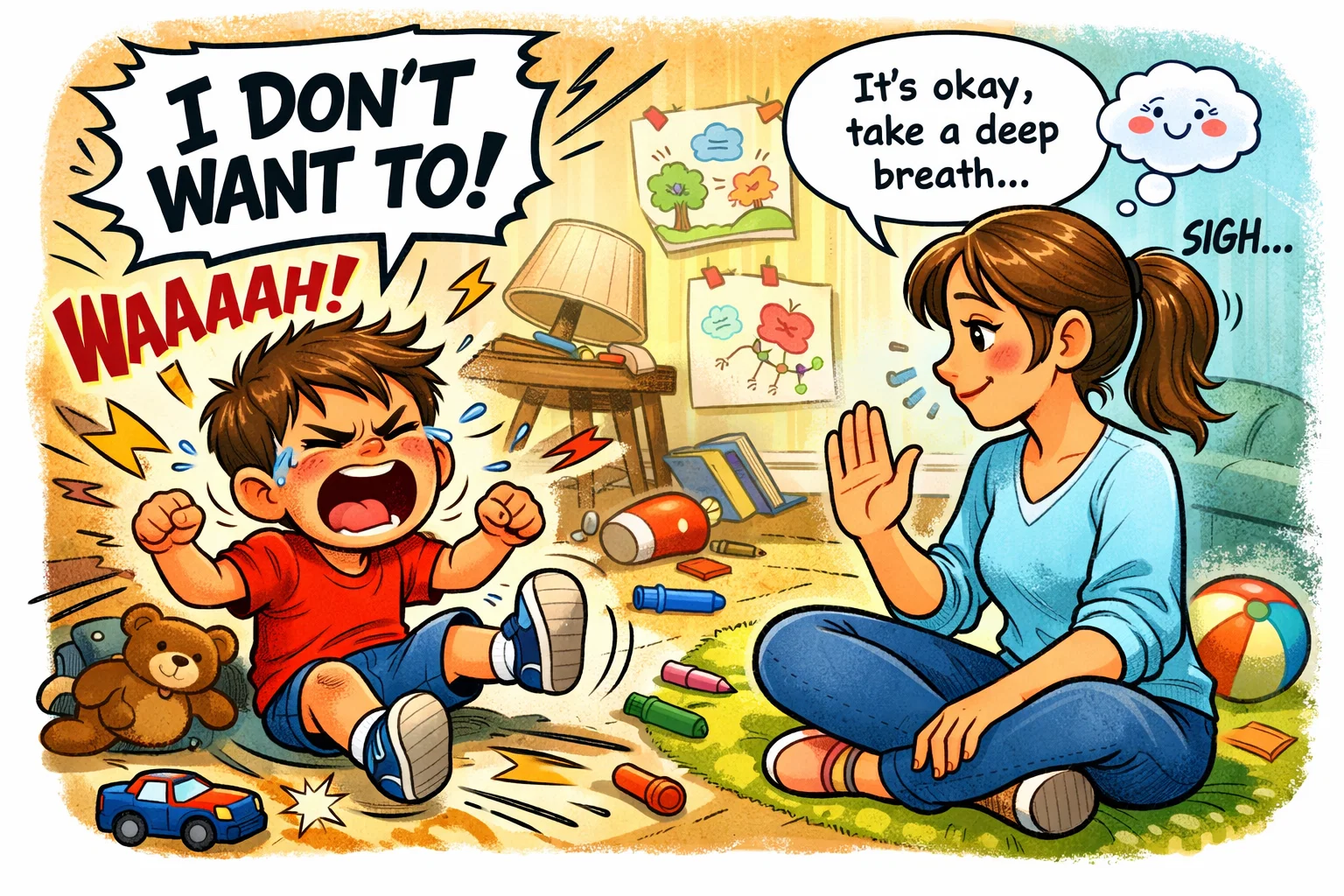
Temper Tantrums
Tantrums in 5-year-olds are less frequent than in toddlers but still common, particularly when children are tired, hungry, or overwhelmed. The most effective response is calm acknowledgment of the feeling followed by a firm, consistent limit on the behavior.
Testing Boundaries
Five-year-olds test limits as a normal part of developmental independence — they are checking whether rules are real and whether adults mean what they say. Consistent, calm follow-through is more effective than escalating reactions.
Mood Swings
Mood variability is normal at this age due to the demands of school adjustment, social complexity, and emotional immaturity. Ensure your child is getting enough sleep — including naps for those who still need them — and adequate nutrition, as both have a significant impact on emotional regulation.
What Is Normal 5-Year-Old Behavior?
Normal behavior for a 5-year-old includes a mix of cooperation and defiance, silliness and seriousness, affection and frustration — sometimes within the same hour. Age-appropriate behavior at this stage typically includes testing rules to understand their limits, seeking adult approval while also asserting independence, and showing strong emotions that they cannot yet fully control.
Typical 5-year-olds may argue, negotiate, tell small lies to avoid trouble, or become upset when plans change unexpectedly. These behaviors reflect healthy cognitive and social development, not a parenting failure. The key distinction between normal behavior and a concern worth discussing with a professional is persistence, intensity, and whether the behavior significantly interferes with daily life or relationships.
5-Year-Old Boy and Girl Behavior: What to Expect
While individual temperament varies far more than gender, parents of 5-year-old boys often notice higher levels of physical play, rough-and-tumble activity, and impulsive reactions. Boys at this age may find it harder to sit still for extended periods and can be more prone to physical expressions of frustration. This is developmentally normal and does not indicate a behavioral problem.
Five-year-old girls tend to show strong interest in social relationships and may be more verbally expressive about feelings. They can be sensitive to perceived unfairness in friendships and may experience more complex social dynamics earlier. That said, both boys and girls benefit equally from consistent boundaries, emotional coaching, and warm, responsive parenting. Age-appropriate behavior for 5-year-olds of any gender includes a wide range of emotional expression, social experimentation, and boundary-testing.
When to Be Concerned About Development
Most developmental variation is normal, but some signs may warrant a conversation with your child’s pediatrician.
Communication Difficulties
If your child struggles to be understood by unfamiliar adults, rarely initiates conversation, or has difficulty following simple instructions, discuss these observations with a pediatrician. Early intervention for speech delays is most effective when started early.
Behavior and Play Concerns
Signs to watch for include persistent social isolation, significant aggression toward peers, or an inability to engage in cooperative play by age 5. These may indicate a need for further assessment rather than a behavioral problem requiring discipline.
Everyday Skills Challenges
Difficulty with age-appropriate independence tasks — like dressing, feeding themselves, or managing basic hygiene — may suggest developmental delays worth exploring. A pediatrician or occupational therapist can help assess whether extra support is needed.
When to Seek Professional Help
Trust your instincts as a parent. If something about your child’s development feels significantly off compared to peers, consult your child’s pediatrician. The CDC’s “Learn the Signs. Act Early.” program provides free developmental milestone resources and guidance on when to seek evaluation.
What to Expect From a 5-Year-Old: Key Milestones at a Glance
If you are wondering what a 5-year-old should know or be able to do, the short answer is: quite a lot, and across many areas at once. The following checklist summarises the key milestones most children reach around their fifth birthday. Keep in mind that development is a range, not a fixed point — children reach milestones at different rates.
Physical Milestones
- Runs, skips, and hops on one foot with control
- Catches a bounced or thrown ball most of the time
- Uses safety scissors to cut along a line
- Draws a person with at least six body parts
- Begins writing some letters and numbers independently
Cognitive and Learning Milestones
- Counts to 20 or beyond and understands basic number concepts
- Recognises most letters of the alphabet and some sight words
- Understands cause and effect (“If I do this, then that happens”)
- Follows two- to three-step instructions reliably
- Sorts objects by colour, shape, and size
Language and Communication Milestones
- Speaks in full, grammatically correct sentences
- Tells simple stories with a beginning, middle, and end
- Uses around 2,000 words and learns new vocabulary quickly
- Can be understood clearly by unfamiliar adults
- Asks frequent “why”, “how”, and “what if” questions
Social and Emotional Milestones
- Plays cooperatively with other children and negotiates rules
- Shows empathy and concern when others are upset
- Wants to please friends and be liked by peers
- Distinguishes fantasy from reality most of the time
- Manages transitions better with advance warning
Self-Care and Independence Milestones
- Dresses and undresses independently
- Uses the toilet independently and manages basic hygiene with reminders
- Pours a drink and prepares simple snacks
- Tidies toys and completes simple household tasks
Supporting Growth Every Day
Parenting a 5-year-old well doesn’t require perfection — it requires presence. Small, consistent actions build the foundation your child needs: a bedtime story, a calm response to a tantrum, a question asked with genuine curiosity about their day.
Children grow most confidently when they feel seen, safe, and supported. By combining nurturing warmth with predictable structure, parents provide exactly the environment in which a 5-year-old’s potential can fully unfold.
Frequently Asked Questions
What should a 5-year-old be able to do?
By age 5, most children can run, hop, and use scissors with control; count to 20; recognise most letters; speak in full sentences; dress themselves; and play cooperatively with peers. Development varies, so a range of abilities is normal at this age.
What is normal 5-year-old behavior?
Normal behavior for a 5-year-old includes testing rules, asserting independence, showing strong emotions, telling small lies to avoid trouble, and shifting between cooperation and defiance. These behaviors reflect healthy development. Persistent, intense behavior that significantly disrupts daily life is worth discussing with a pediatrician.
What should I expect from a 5-year-old emotionally?
Five-year-olds are developing empathy, learning to name a wider range of feelings, and beginning to manage impulses — but they still need adult support to regulate big emotions. Tantrums and mood swings remain common, especially when children are tired or overstimulated.
What are the key characteristics of a 5-year-old?
Key characteristics include curiosity and constant questioning, a growing sense of fairness, strong attachment to friends and family, imaginative play, early academic skills, and a desire for independence alongside a continued need for parental reassurance.
What should a 5-year-old know before starting school?
Helpful skills include recognising their own name in writing, counting to at least 10, following simple instructions, holding a pencil, taking turns, and managing basic self-care tasks like using the toilet and putting on shoes. Social readiness — being able to separate from a caregiver and interact with peers — is equally important.
How do 5-year-olds act differently from 4-year-olds?
Five-year-olds are generally more cooperative, better at following rules, and more interested in peer relationships than 4-year-olds. Their language is more complex, their attention spans are longer, and they show greater awareness of social expectations — though they still need significant adult guidance and emotional support.
How to Discipline a 5 Year Old Effectively?
Effective discipline at this age combines clear expectations, consistent follow-through, and natural or logical consequences. Avoid punishment that shames or frightens. Instead, calmly state the rule, explain the consequence, and apply it consistently. Time-outs, loss of a privilege, and redirection are all appropriate tools when used calmly and predictably.
How Much Independence Should a 5 Year Old Have?
A 5-year-old should be able to handle basic self-care tasks independently, make simple choices, and engage in play without constant adult direction. Age-appropriate independence — choosing their own outfit, pouring cereal, tidying their bedroom — builds confidence. Hovering too closely can undermine a child’s developing sense of competence.
How to Deal with Defiance in a 5 Year Old?
Defiance is most effectively managed by staying calm, keeping instructions simple, and offering limited choices. “You can put your shoes on now or in two minutes — which do you choose?” gives your child a sense of control without undermining your authority. Picking battles thoughtfully also helps — not every moment of resistance needs a confrontation.
What Is Normal Behavior for a 5 Year Old?
Normal behavior for a 5-year-old includes occasional tantrums, boundary testing, emotional outbursts, fears, and a strong desire for autonomy. Children this age may whine, argue, or become easily upset — particularly during transitions or when tired. These behaviors are developmentally expected. Consistent, warm parenting helps children navigate this stage without these patterns becoming entrenched habits.

Take a short quiz to find out what your everyday choices say about your parenting style
When your child is curious about something new, what’s your instinct?
Take a short quiz to find out what your everyday choices say about your parenting style
“Can I download this app?” What happens next?
Take a short quiz to find out what your everyday choices say about your parenting style
When it comes to rules at home, which sounds most like you?
Take a short quiz to find out what your everyday choices say about your parenting style
If you could give your child one life skill today, what would you pick?
Take a short quiz to find out what your everyday choices say about your parenting style
Your child gets to choose what to watch. What would your ideal setup look like?
Take a short quiz to find out what your everyday choices say about your parenting style
Pick your parenting superpower ✨