Jumping Games for Kids: Fun, Fitness and Skill Development

 Discover a Free Education Video App for Kids
Pastory uses AI to personalize educational video content based on your child’s interests and personality. Safe, engaging, and built for curious young minds. Sign up now to stay updated and enjoy early access with a free trial

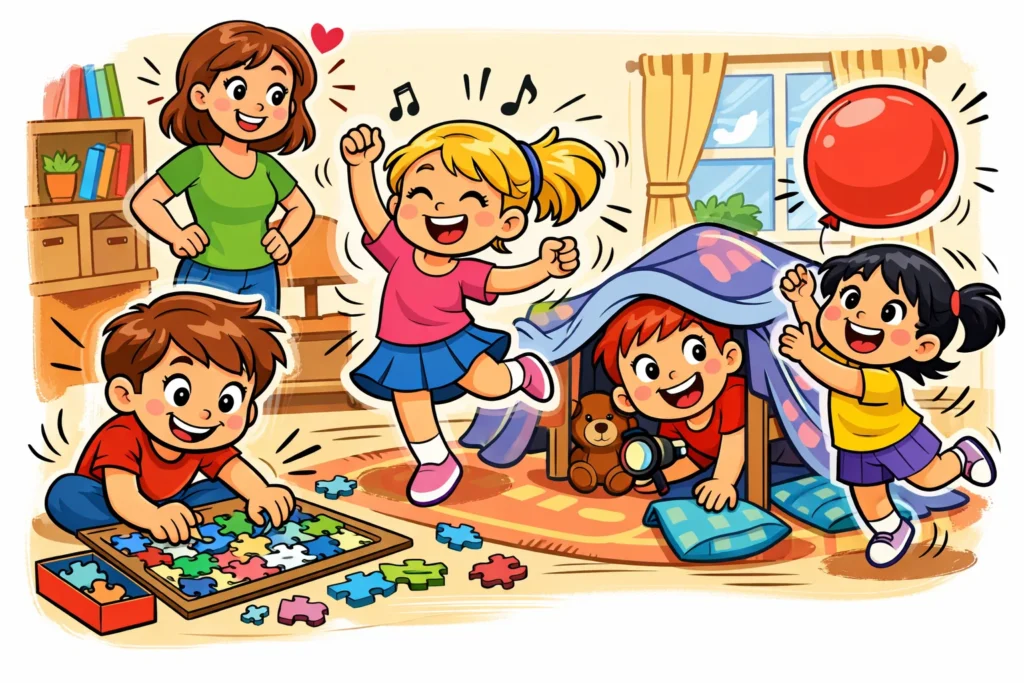
Jumping is more than just play—it’s a key part of childhood development. From a toddler’s first leap to a preschooler’s hop, these movements help children grow. Jumping games combine fun with physical activity, building essential skills and healthy habits while keeping kids active. Whether it’s hopscotch or creative new challenges, there are countless ways to engage kids of all ages and make movement exciting.
Benefits of Physical Activities for Kids

These activities offer a holistic approach to child development, addressing physical, cognitive, and social-emotional needs. Beyond the immediate fun, every leap and hop contributes to a child’s well-being in significant ways.
Boosts Physical Fitness
Regular jumping gives kids a fun cardio workout, strengthening their heart and lungs. It’s a key component of a child’s physical development, providing a fun and engaging way to improve overall fitness. Activities like jump rope, for example, can raise the heart rate and improve stamina.
Improves Balance and Coordination
Propelling the body into the air and landing safely requires a high degree of balance and coordination. The act engages the proprioceptive system and vestibular system. The proprioceptive system, with receptors in the muscles and joints, helps the body understand its position in space. The vestibular system, located in the inner ear, is responsible for balance and gaze stability. Games that involve hopping on one foot are especially effective for building these skills, which are crucial for quick reflexes and postural control.
Enhances Brain Function
Physical activity like bounding stimulates blood flow to the brain, which can improve concentration and cognitive function. Every movement provides proprioceptive input that helps a child’s body organize itself. Pediatric physiotherapy experts emphasize that proprioceptive input is vital for developing body awareness, which supports focus and self-regulation. Jumping and leaping activities are considered one of the effective ways to provide this input.
Classic Leaping Games for Kids

These timeless games have been loved for generations and are still a favorite way to stay active and have fun.
- Hopscotch: Hopscotch is fun and a classic for a reason. All you need is a piece of chalk or tape and a small object to toss. The game requires players to hop on one foot or two feet through a series of numbered squares, enhancing balance and coordination. For younger kids, you can simplify the grid and use larger squares. The goal is to make your way through the squares, pick up the marker, and return. This activity develops fine and gross motor skills simultaneously.
- The Floor Is Lava: A favorite for indoor leaping games, “The Floor Is Lava” turns the living room into an exciting challenge. Using pillows, couch cushions, or a mat, the goal is to hop from one safe surface to another without touching the floor (“lava”). This simple game combines physical activity with creative thinking and is perfect for burning off extra energy indoors, especially on a rainy day. It also helps with quick reaction and planning skills.
- Long Leap Challenge: This simple activity is a great way to introduce the concept of distance and friendly competition. Players simply take turns leaping as far as they can from a starting line. You can use a measuring tape to see who travels the farthest. This activity can be adapted with different types of movements, such as backwards hops or hops on one foot. It’s an excellent way to improve agility and power.
- Animal Hops: Encourage kids to leap like kangaroos, hop like frogs, or bounce like bunnies. This jumping game taps into their imagination while providing a full-body workout. For example, have them “move like kangaroos” by standing with their feet together and performing a series of continuous forward bounds. This playful activity builds motor skills and lets kids explore different ways of moving.
Jump Rope Activities for Kids

Jump rope is an amazing tool for physical development. It’s inexpensive, portable, and offers a huge variety of jumping games that can be played alone or with friends.
- Single Rope Challenges: For kids new to jump rope, start with simple goals. Can they clear the rope 10 times in a row without stopping? Can they perform a routine on one foot? Encourage them to get creative and try different types of passes, such as backwards hops or high clearances.
- Partner Jumping: Two kids can hold the ends of a rope and turn the rope while a third child goes in the middle. Players take turns crossing and turning the rope. This activity promotes cooperation, quick reflexes, and rhythm. It’s also a great way to provide cardiovascular exercise.
- Snake in the Grass: This game is perfect for younger kids who are still developing their timing. Two kids hold the ends of the rope and lay it on the ground. They then move it side to side, creating a “snake” that the other kids must hop over without getting “bit.”
- Helicopter: One player holds a rope by one end and spins it around in a circle, keeping it low to the ground like a helicopter blade. The other kids must spring over the rope as it passes. The goal is to clear the rope every time it comes around. This is a fun, fast-paced game that requires quick reaction and good timing.
Creative Movement Games for Fitness and Fun
Sometimes the most fun jumping games are the ones you create together. Here are a few ideas to get creative with movement.
Moving Over Laser Beams

Use yarn or string to create a “laser beam” grid in a hallway or doorway. The goal is to clear and crouch to get through the grid without touching the strings. This activity combines leaping with agility and problem-solving.
Trampoline Bounce Games
A trampoline can be a fantastic way to engage in jumping games safely.
| Game Name | How to Play | Skills Developed |
| Follow the Leader | One person performs a series of bounces or movements, and everyone else must follow. | Agility, Memory |
| Ball Bounce | Bounce a soft ball on the trampoline and try to catch it while bouncing. | Coordination, Timing |
| Popcorn | Sit on the trampoline with legs crossed. Someone else bounces and tries to “pop” you up. | Balance, Core Strength |
Musical Hops

Similar to musical chairs, players move around a play area. When the music stops, everyone must freeze in a posed stance (e.g., hopping on one foot, crouching low). This game is great for listening skills and developing postural control.
Leap and Catch
This simple game combines leaping with throwing and catching. Have kids spring up to catch a ball, or throw a ball to them while they are mid-air. The goal is to get their timing and coordination just right. This activity develops fine motor skills in addition to gross motor skills.
Moving Up and Down from Surfaces

Using safe, low surfaces like a step or a sturdy box, have kids take turns moving up onto the surface and then back down. You can challenge them to vary their landings, such as rising up with two feet and landing on one foot. This helps strengthen legs and improves balance.
Indoor and Outdoor Activities
Whether you’re indoors with stir crazy kids or enjoying a sunny day, there’s a jumping game for every environment.
Indoor Bouncing Activities
When you’re stuck inside, you can get creative with what you have. “The Floor Is Lava” is a perfect example, but you can also use couch cushions for a soft landing, or use painter’s tape to make a hopscotch grid on the floor. A simple mat can become a target.
Outdoor Leaping Games
The possibilities are endless outdoors. Use chalk to draw a colorful hopscotch grid. Set up an obstacle course with hoops to go through, lines to leap over, and cones to hop around. These games provide a fantastic opportunity for kids to burn off energy and enjoy the fresh air.
How to Make These Games Safe for Kids

Safety is paramount, especially when kids are engaged in vigorous physical activity.
- Choosing the Right Space: Ensure the play area is clear of hazards. Whether it’s indoors or outdoors, check for sharp objects, tripping hazards, or uneven ground. A soft, forgiving surface like a grassy lawn or a cushioned mat is ideal.
- Proper Footwear and Clothing: Make sure kids are wearing well-fitting, supportive shoes. Loose clothing should be avoided to prevent it from getting caught on things.
- Age-Appropriate Games: While younger kids can enjoy simple physical activities, older children can handle more complex games like double dutch. Always choose games that require the child’s developmental stage to prevent injury and frustration.
- Warm-up and Cool-down: Just like with any exercise, a short warm-up and cool-down are beneficial. A few minutes of stretching or light jogging can prepare muscles for activity, and a cool-down can prevent soreness.
Tips for Parents and Teachers
- Turn Games Into Learning: Incorporate educational elements into these activities. Call out colors or numbers for kids to hop on, or ask them to spell out words as they move. This turns a simple game into a fun learning experience.
- Encourage Participation for All Kids: Some children might be more hesitant to participate than others. Create a supportive, non-competitive environment. Encourage them to try, celebrate their effort, and remind them that the goal is to have fun, not to be the best. Play-based activities are a great way for kids to release their boundless energy while having fun!
- Mix in Daily Routines: Incorporate movement into a child’s daily routine. Have them hop to the dinner table, leap into bed, or step over a crack in the sidewalk. These small actions can add up to significant physical activity and promote a playful mindset.
FAQs About Bouncing and Leaping Games for Kids
What age is best for these activities?
Toddlers (ages 2-3) can begin with simple movements on a soft surface, while preschoolers and school-aged children (4+) can enjoy a wide variety of jumping games, from hopscotch to jump rope.
How often should kids play these games?
Children should get at least 60 minutes of physical activity daily. These games can be a great way to meet this goal, and they can be incorporated into daily play for 10-15 minute increments.
Can these games replace exercise?
Yes! Jumping games count as exercise. They get kids’ hearts pumping, build strength, and improve motor skills, making them a fantastic replacement for traditional, structured exercise, especially for young children.
Are trampoline activities safe?
With the right supervision and safety measures (like using a net enclosure and ensuring only one child is on it at a time), trampolines can be a great tool for these games. The American Academy of Pediatrics, however, recommends against the use of trampolines at home.
How to encourage reluctant kids to join?
Start with games that feel less intimidating, like “The Floor Is Lava” using couch cushions. Let them watch first, and then invite them to join when they feel comfortable. Focus on the fun, not on performance, and get down and participate with them.

Take a short quiz to find out what your everyday choices say about your parenting style
When your child is curious about something new, what’s your instinct?
Take a short quiz to find out what your everyday choices say about your parenting style
“Can I download this app?” What happens next?
Take a short quiz to find out what your everyday choices say about your parenting style
When it comes to rules at home, which sounds most like you?
Take a short quiz to find out what your everyday choices say about your parenting style
If you could give your child one life skill today, what would you pick?
Take a short quiz to find out what your everyday choices say about your parenting style
Your child gets to choose what to watch. What would your ideal setup look like?
Take a short quiz to find out what your everyday choices say about your parenting style
Pick your parenting superpower ✨