ChomChom vs. Joon App: Apps for Kids with ADHD for Routines, Motivation, and Daily Tasks

 Discover a Free Education Video App for Kids
Pastory uses AI to personalize educational video content based on your child’s interests and personality. Safe, engaging, and built for curious young minds. Sign up now to stay updated and enjoy early access with a free trial
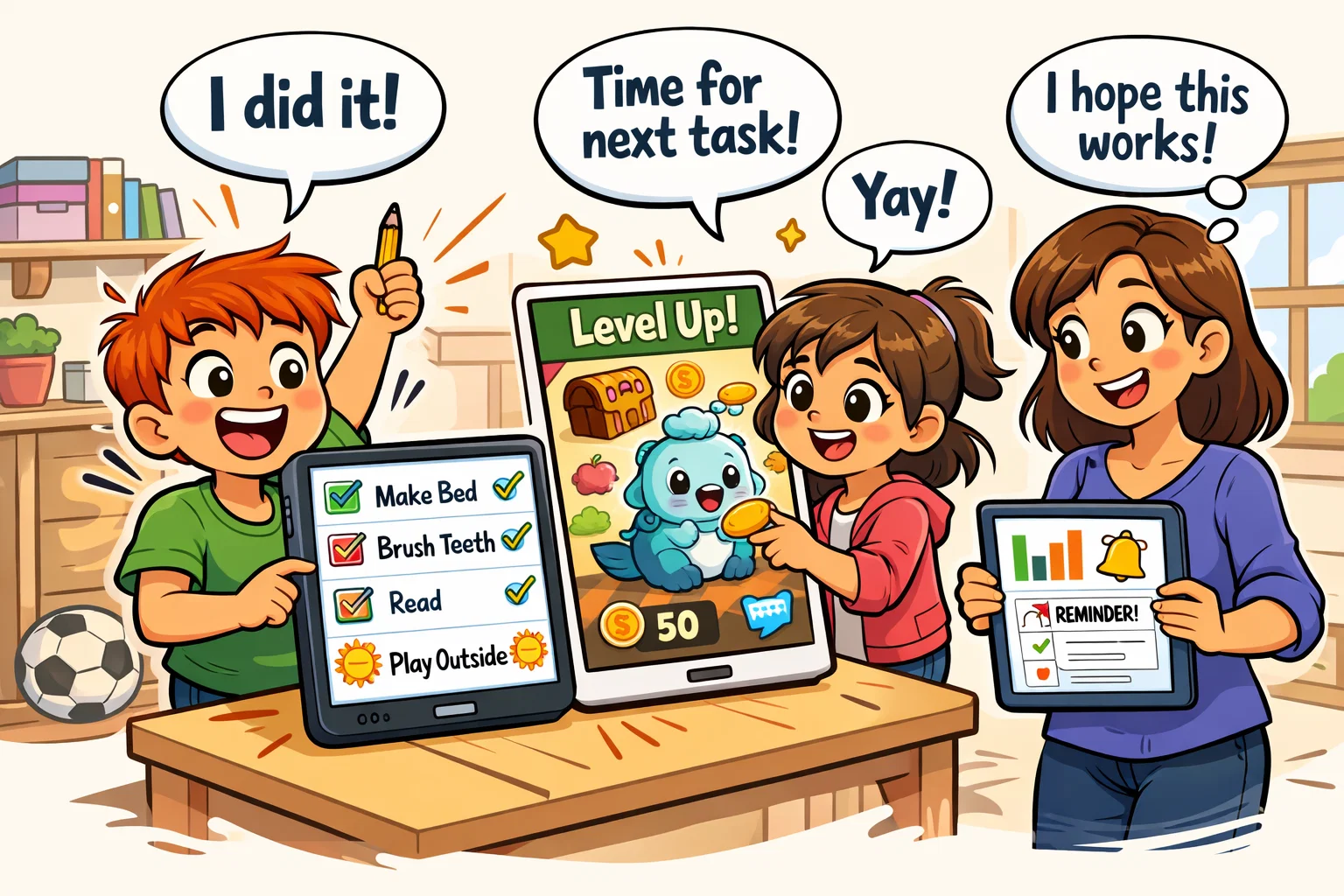
Managing daily routines for children with ADHD can be difficult, and some families choose digital tools over paper chore charts to support consistency and motivation. Joon (sometimes referred to as JoonApp) and ChomChom are two apps in this category that use gamified elements to help children manage routines, habits, and daily challenges.
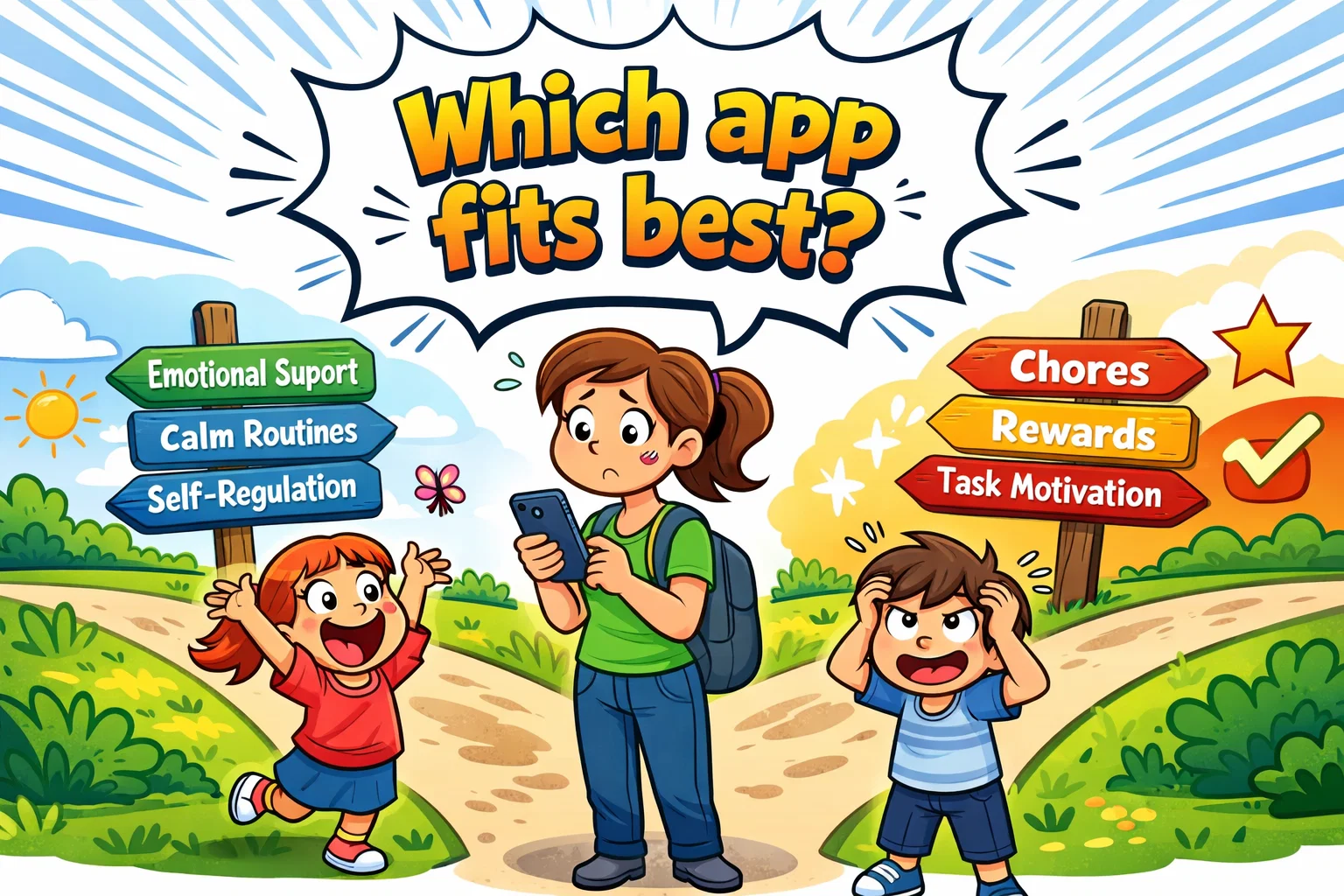
While both ADHD apps aim to motivate children to complete tasks, they emphasize different goals and outcomes. Joon functions primarily as a chore tracker and task-management system centered around a virtual pet, whereas ChomChom appears to focus more on emotional regulation, life skills, and a lower-stimulation approach to habit building.
Key Differences in App Focus
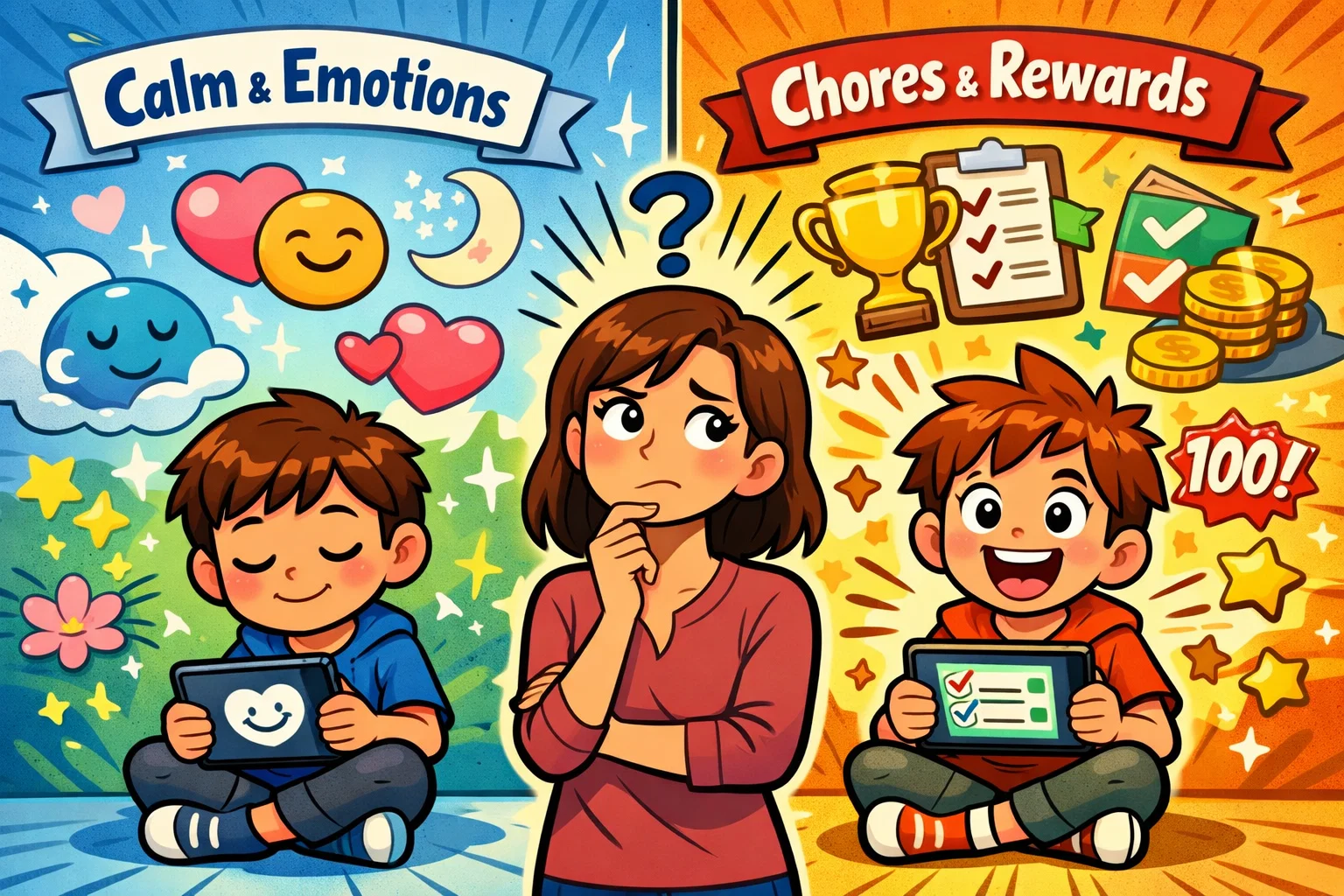
The core distinction between these two platforms lies in their primary focus: Joon is centered more on chores, routines, and task completion, while ChomChom appears to focus more on emotional regulation, habits, and life skills. Joon provides a structured environment where a child completes real-life daily tasks to progress in a high-engagement game. This “do-to-earn” model can be helpful for families struggling with morning routines and homework completion.
ChomChom offers a different experience by focusing on executive-function skills such as emotional regulation and resilience. Instead of simply tracking whether a chore was completed, ChomChom appears to provide tools that help children with ADHD better understand their feelings and behavioral challenges. Reward-based systems may help with short-term task completion, while skill-building approaches may support longer-term independence, but this should not be presented as a direct Joon-versus-ChomChom finding without a specific source.
| Feature Focus | JoonApp | ChomChom |
| Primary Goal | Task management & chores | Emotional regulation & habits |
| Game Mechanic | Virtual pet (Joon Pet) | Low-stimulation skill games |
| Parental Role | Assign tasks & approve rewards | Monitor skill-building progress |
| Incentive Type | External (coins/game progress) | Internal (mastery/emotional awareness) |
ChomChom Specialty Features
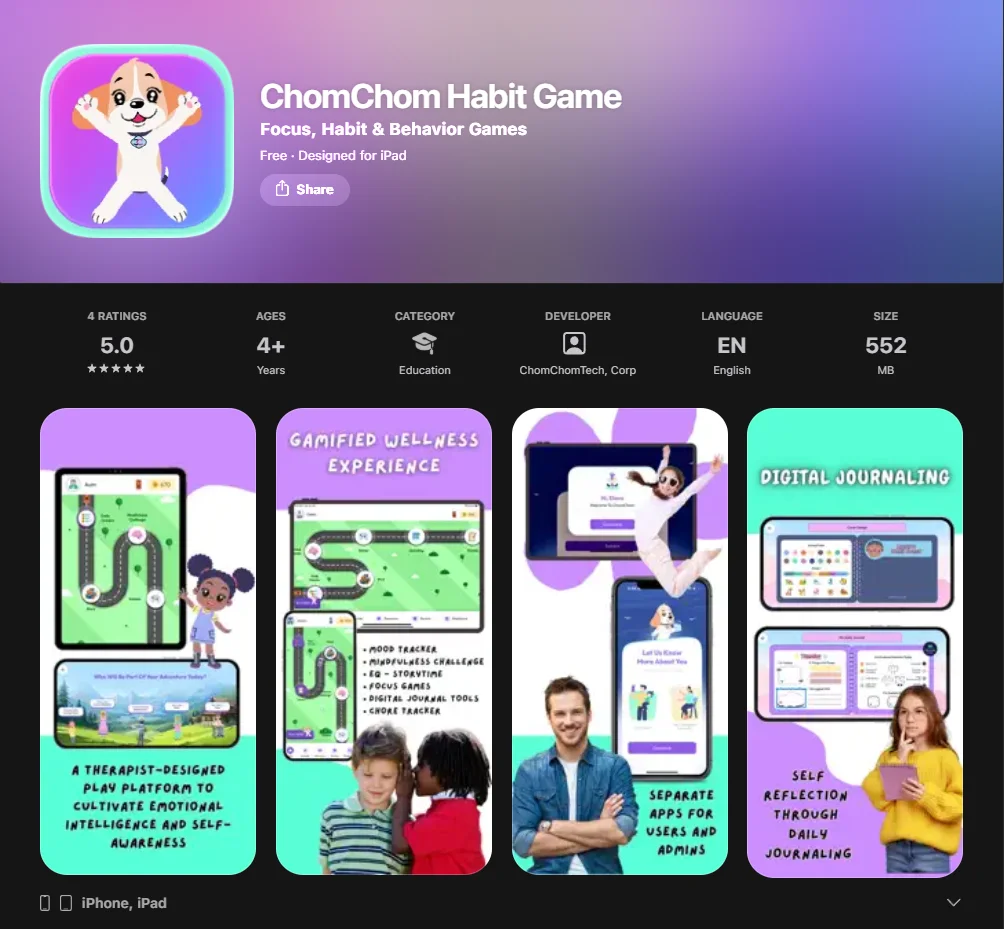
ChomChom appears to use a therapist-inspired framework aimed at addressing some of the underlying challenges associated with ADHD. The app allows kids to engage in bite-sized activities focused on resilience, problem-solving, and organizational skills. The app appears to use a calmer style of interaction, which some parents may prefer for children who are easily overstimulated.
JoonApp Core Functionality
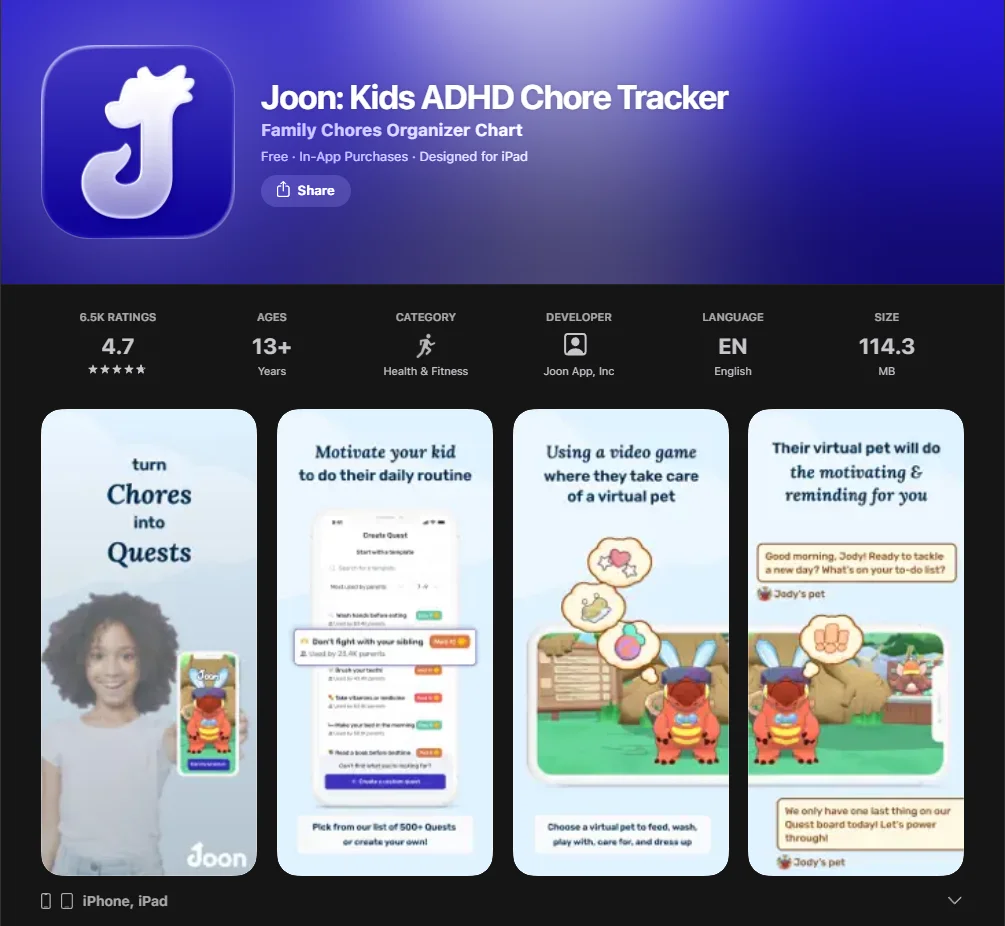
The Joon app uses a “level-up” model in which the parent app acts as the command center. Parents assign specific daily tasks, and when the child completes them, they earn rewards and experience points to care for their virtual pet. This gamified approach is designed to make everyday chores feel more immediately rewarding for children.
Emotional Regulation vs Task Completion
Choosing between these apps often depends on whether a child struggles more with task completion or emotional regulation. Joon is designed to support task completion and time management, acting as a digital reminder system that may reduce the need for repeated parental reminders. ChomChom appears to be designed to support habits, focus, and emotional-regulation skills, specifically helping kids manage overwhelm and navigate transitions more smoothly.
Best Fit by Family Goal
- If your goal is fewer reminders: Joon’s automated reminders and task management excel at helping families stay on track.
- If your goal is emotional coping: ChomChom may be better suited to helping kids build coping skills for frustration and other social-emotional challenges.
- If your child resists chore charts: The gamification in Joon can make completing chores feel more like play than work.
Target Age Group and App Usage
Age appropriateness is a critical factor in ADHD apps, as the complexity of executive function development changes rapidly between early childhood and the tween years. Both apps appear to target elementary-school-aged children, but their user experience caters to slightly different maturity levels.
ChomChom Age Range
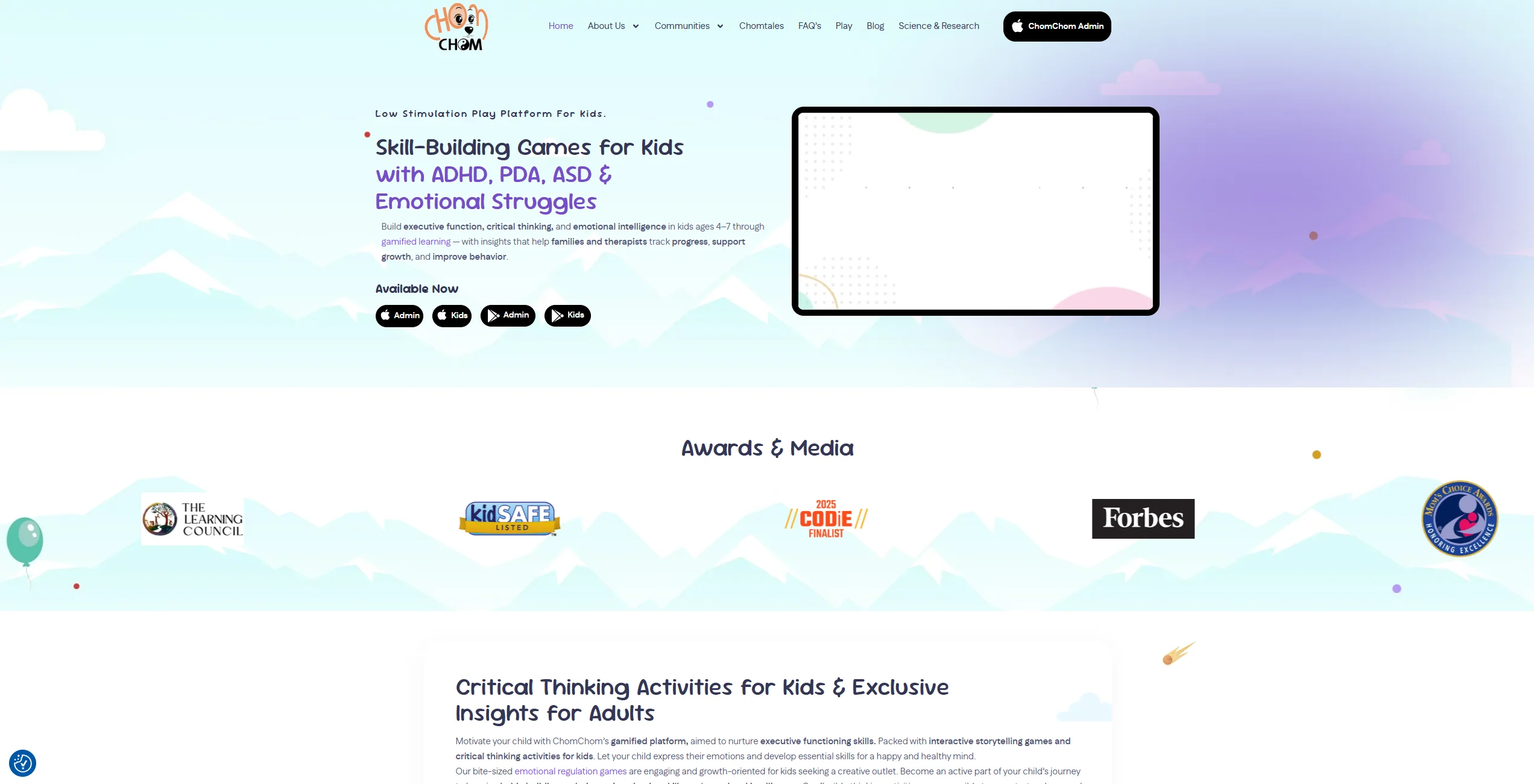
ChomChom appears to be aimed primarily at younger children, with app-store materials suggesting an age range from early childhood to the preteen years. The skill-building exercises match developmental stages where emotional awareness is just beginning to form. Its lower-stimulation visual style may be a better fit for kids who are easily distracted by flashy, fast-paced games.
JoonApp Age Range
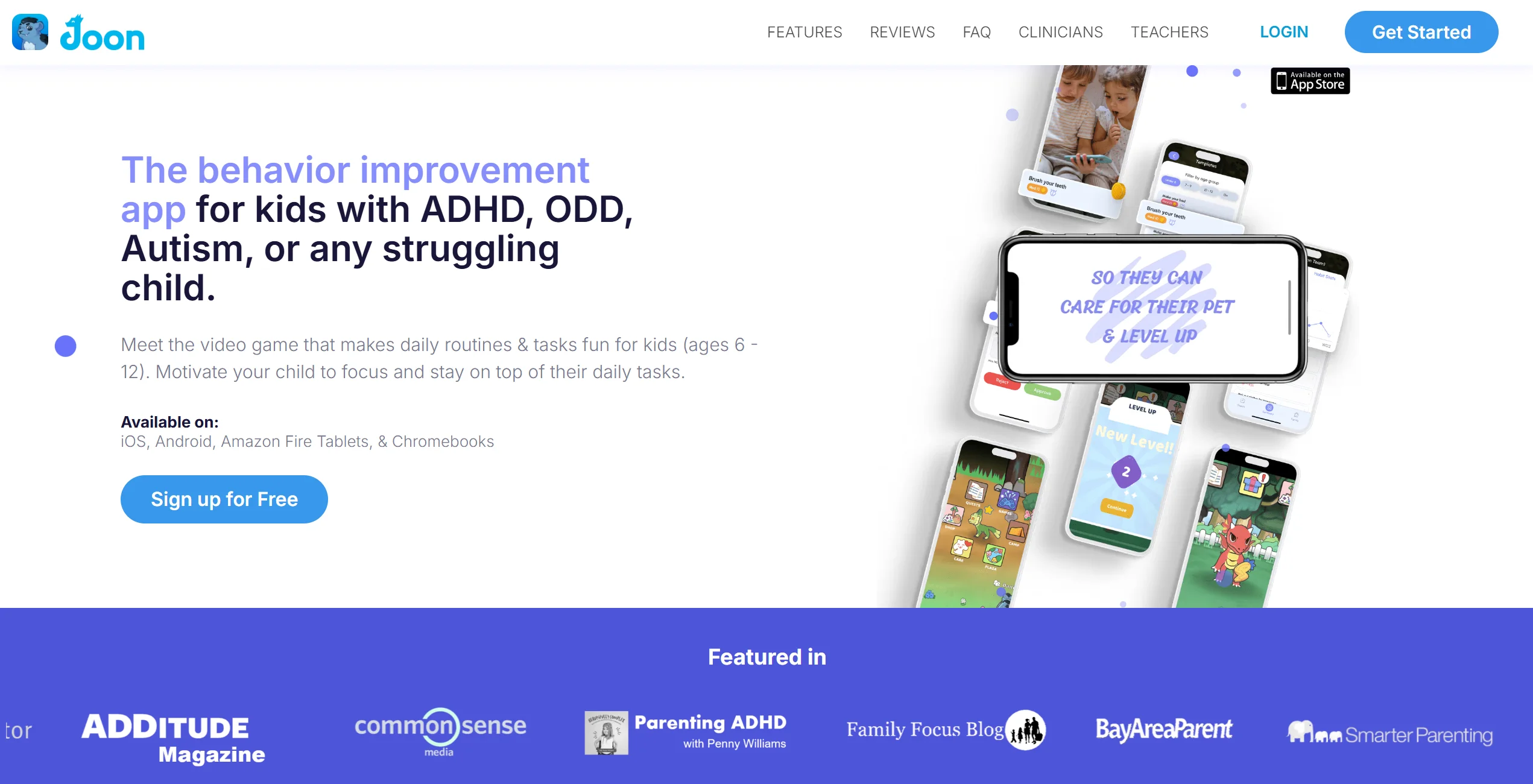
Joon is consistently marketed to ages 6–12. Because it requires a baseline level of responsibility and the ability to link real-world actions to digital rewards, it resonates well with older kids starting to manage their own homework and hygiene routines.
Which App Fits Younger Kids Better?
For kids aged 5–7, ChomChom’s focus on basic life skills and simple daily routines may feel less daunting. The app appears to emphasize playful learning for this age group without the pressure of more complex task management. Joon can also work for 6-year-olds, though they may need more parental assistance to navigate the virtual pet mechanics initially.
Which App Fits Older Kids Better?
As kids get older, some may lose interest in virtual-pet mechanics over time. However, Joon offers additional features and deeper customization that can keep older kids engaged longer than simpler apps. Joon also allows for more complex task assignment, which may better suit the growing independence of older children.
Gamification and Engagement Methods
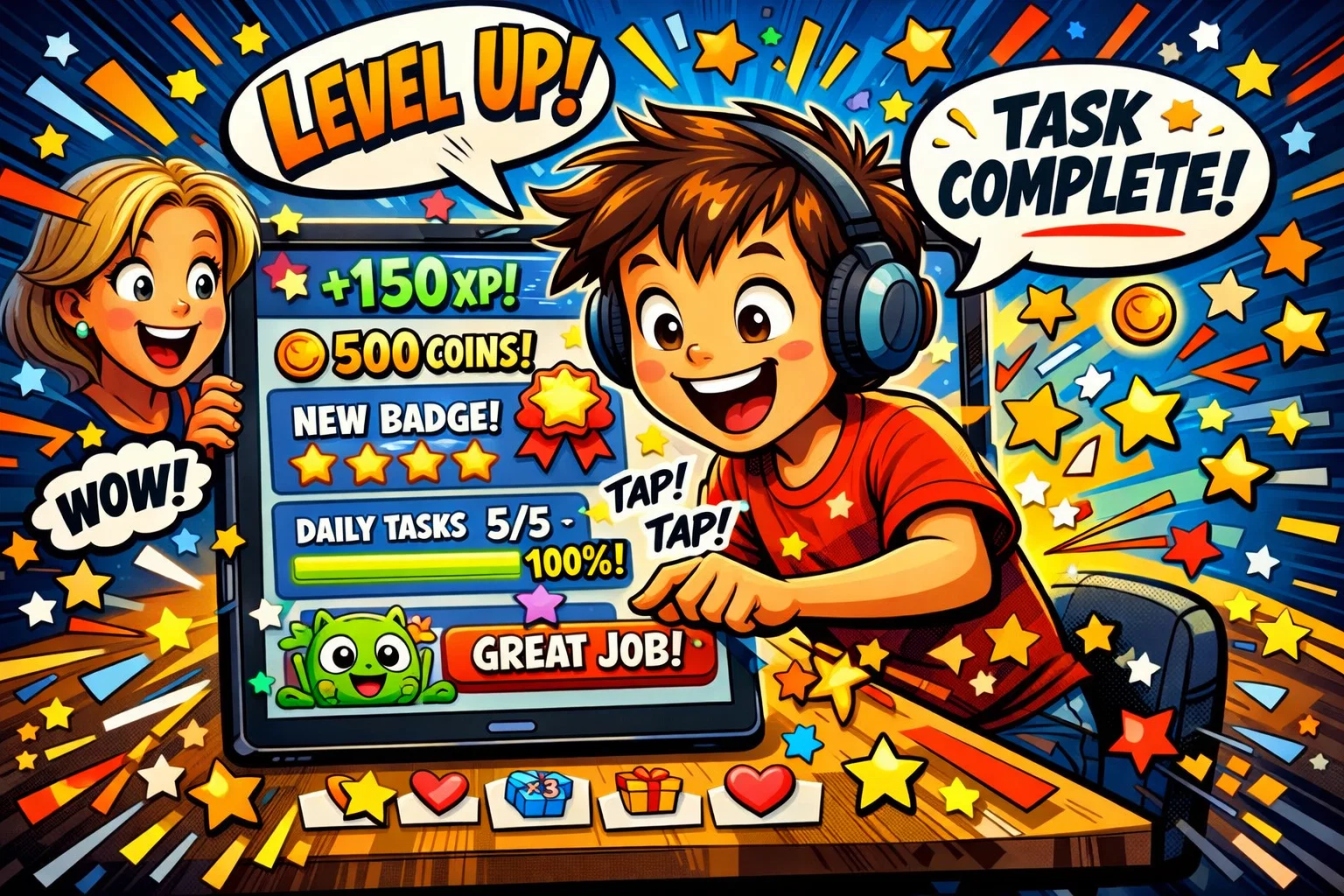
Gamification is one of the main drivers behind many ADHD apps. By turning a daily task into a quest, these tools may help reduce the executive-function challenges associated with boredom and procrastination. However, the type of stimulation matters for children with ADHD.
Motivation System Comparison
Joon uses an extrinsic motivation system: the child completes a chore, earns rewards, and uses them to progress with their virtual pet. ChomChom appears to focus more on skill-building and internal motivation, where satisfaction comes from completing activities designed to teach coping strategies and attention skills.
Reward Structures in Apps
In Joon, the reward loop is tight and visible. This can be especially helpful for kids who use Joon because it provides immediate feedback. Some parents have reported on forums such as Reddit that the coins and virtual-pet items can be motivating, though some families worry that the child may become too focused on the digital reward rather than the underlying habit or skill.
Task Management Mechanics
Joon uses a parent-assigned task-and-reward system. The parent app sends a reminder, the child sees a task, and upon completion, the parent verifies it. ChomChom focuses on behavioral micro-interactions. The activities are presented as tools to help children practice self-regulation and routine-building through repetition and playful engagement.
Low-Stimulation vs High-Excitement Design
- ChomChom: Appears to use a calmer presentation style, which may appeal to families who want a less intense experience than fast-paced games.
- Joon: Offers a more game-like experience, which some children may find motivating when starting tasks, but it may also require parents to set clear limits on play time.
Will Kids Lose Interest Fast?
The “novelty effect” is a common challenge among families using ADHD apps. Joon appears to maintain engagement through ongoing app content and customization features. ChomChom handles it by evolving the skill-building difficulty. To help prevent boredom, parents may need to vary tasks regularly and adjust rewards over time.
Parent Dashboard and Insights
An ADHD app is only as useful as the information it provides to the caregiver. Helping parents understand their child’s progress is a core feature of both platforms.
Joon Parent App
The Joon parent app is a dedicated space for household management. It allows for:
- Assigning and scheduling daily tasks.
- Reviewing and approving completed chores.
- Accessing a 7-day free trial to test the system.
- Tracking, approving, and managing the child’s completed tasks through the parent side of the app.
Parent Dashboard Insights
ChomChom appears to provide parents with insights into their child’s emotional and behavioral patterns. Instead of just a checklist, parents see patterns in how their child handles common challenges. Tracking these patterns may help families notice recurring triggers and problem areas over time.
Tracking Multiple Children
Joon may be useful for families managing routines for more than one child, depending on how they set up the app. The app allows for separate profiles where parents can assign age-appropriate chores to each sibling. This creates a sense of household fairness and allows kids to compete or collaborate in their task management.
Potential Issues and Constraints
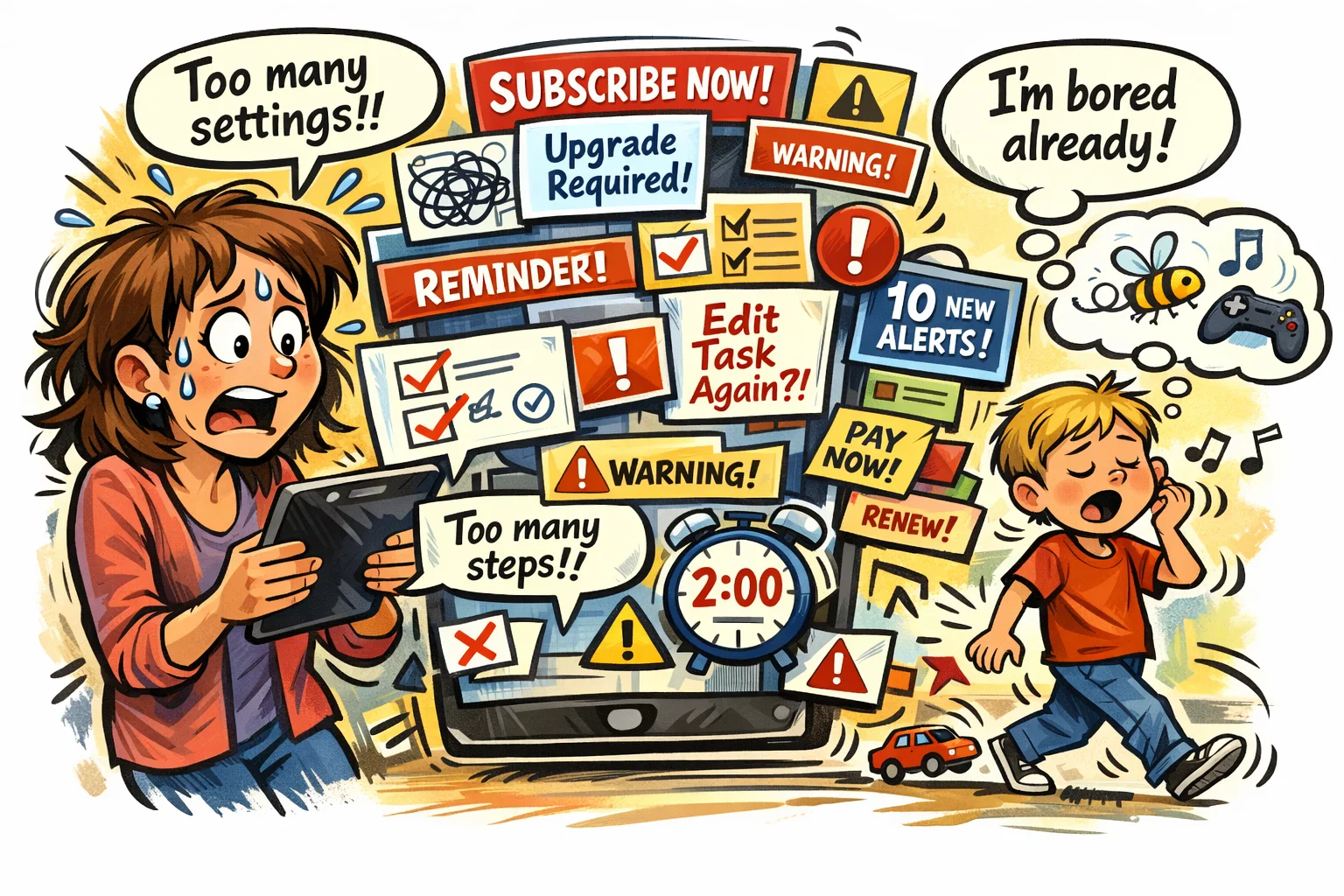
No app for kids is a magic wand. Parents should be aware of potential friction points before committing to a subscription.
- Initial Setup Time: Joon requires a thoughtful initial setup to assign the right chores and reward values. This can be time-consuming for busy families.
- Screen Time Concerns: Because both apps involve on-screen interaction, families may want to consider how they fit into the child’s overall screen-time habits. Parents must balance the benefit of task completion with the risk of device dependency.
- Novelty Fade: Some kids may lose interest after the first few weeks if the virtual-pet mechanic or reward loop starts to feel repetitive.
- Subscription Cost: The price can feel high for some. Joon is often described as a premium subscription app, and the price may feel high for some families.
Price Structure and Value
Understanding the price is vital for budget-conscious families. Most adhd apps offer a free trial to ensure the child actually engages with the mechanics.
Subscription Breakdown
Joon offers a 7-day free trial. After the free trial, the app shifts to a paid subscription model.
- Annual: ~$89.99 (Best value for long-term habit-building)
- Monthly: Often available at a higher relative price point.
- Free Version: Limited access to task management features.
Is Joon Worth the Cost?
The value of the Joon app lies in its potential to reduce household friction. If the app reduces the need for constant reminders and makes the morning routine easier, many parents may find the price justifiable. For some families, it may function as a structured digital tool for routines and task follow-through.
Final Verdict Selection
When to Choose ChomChom
Select ChomChom if your child struggles primarily with emotional regulation, overwhelm, and social-emotional skills. It may be a strong choice for younger kids (ages 5–8) who need a lower-stimulation environment to develop coping strategies.
When to Choose JoonApp
Select Joon if your primary pain point is task completion, chores, and daily routines. It may be a strong option for motivating kids ages 6–12 through a gamified approach that rewards responsibility and task completion.
Best for Morning Routine
Joon may be a particularly good fit for families trying to improve morning routines. Its task management and reminder system are specifically built to move a child from “waking up” to “out the door” with minimal parental nagging.
Frequently Asked Questions
Is Joon worth it for kids with ADHD?
Many families find Joon useful because it uses rewards and structure to support routines and task completion.
Can you use Joon for free?
Joon offers a 7-day free trial. While a limited free version may exist, the full gamification and parent app features typically require a subscription.
Does Joon work for ADHD kids?
Some parent reviews suggest that Joon can help with routines and task completion, but results vary depending on the child and the family’s consistency.
Is ChomChom less overstimulating than Joon?
ChomChom appears to use a calmer presentation style, but whether it feels less overstimulating than Joon will depend on the child. ChomChom appears to use a calmer visual palette and slower-paced interactions, which may be beneficial for kids who are prone to overstimulation.
Is ChomChom good for younger kids?
ChomChom provides a specialized environment where younger kids learn to manage adhd symptoms through low-stimulation play. The app designed for this demographic focuses on skill development, helping kids build executive function without the stress of high-speed gaming. Because kids love the intuitive interface, this app provides a gentle introduction to focus and executive function training.
Which app is better for chores?
Joon is the best app to help a child complete chores because its task management is specifically built around a pet care loop. While apps like ChomChom focus on habits, Joon offers a more direct way to help your child finish tasks by linking them to virtual pet rewards.
Take a short quiz to find out what your everyday choices say about your parenting style
When your child is curious about something new, what’s your instinct?
Take a short quiz to find out what your everyday choices say about your parenting style
“Can I download this app?” What happens next?
Take a short quiz to find out what your everyday choices say about your parenting style
When it comes to rules at home, which sounds most like you?
Take a short quiz to find out what your everyday choices say about your parenting style
If you could give your child one life skill today, what would you pick?
Take a short quiz to find out what your everyday choices say about your parenting style
Your child gets to choose what to watch. What would your ideal setup look like?
Take a short quiz to find out what your everyday choices say about your parenting style
Pick your parenting superpower ✨