How to Teach Your Child Responsibility: Practical Strategies by Age

 Discover a Free Education Video App for Kids
Pastory uses AI to personalize educational video content based on your child’s interests and personality. Safe, engaging, and built for curious young minds. Sign up now to stay updated and enjoy early access with a free trial
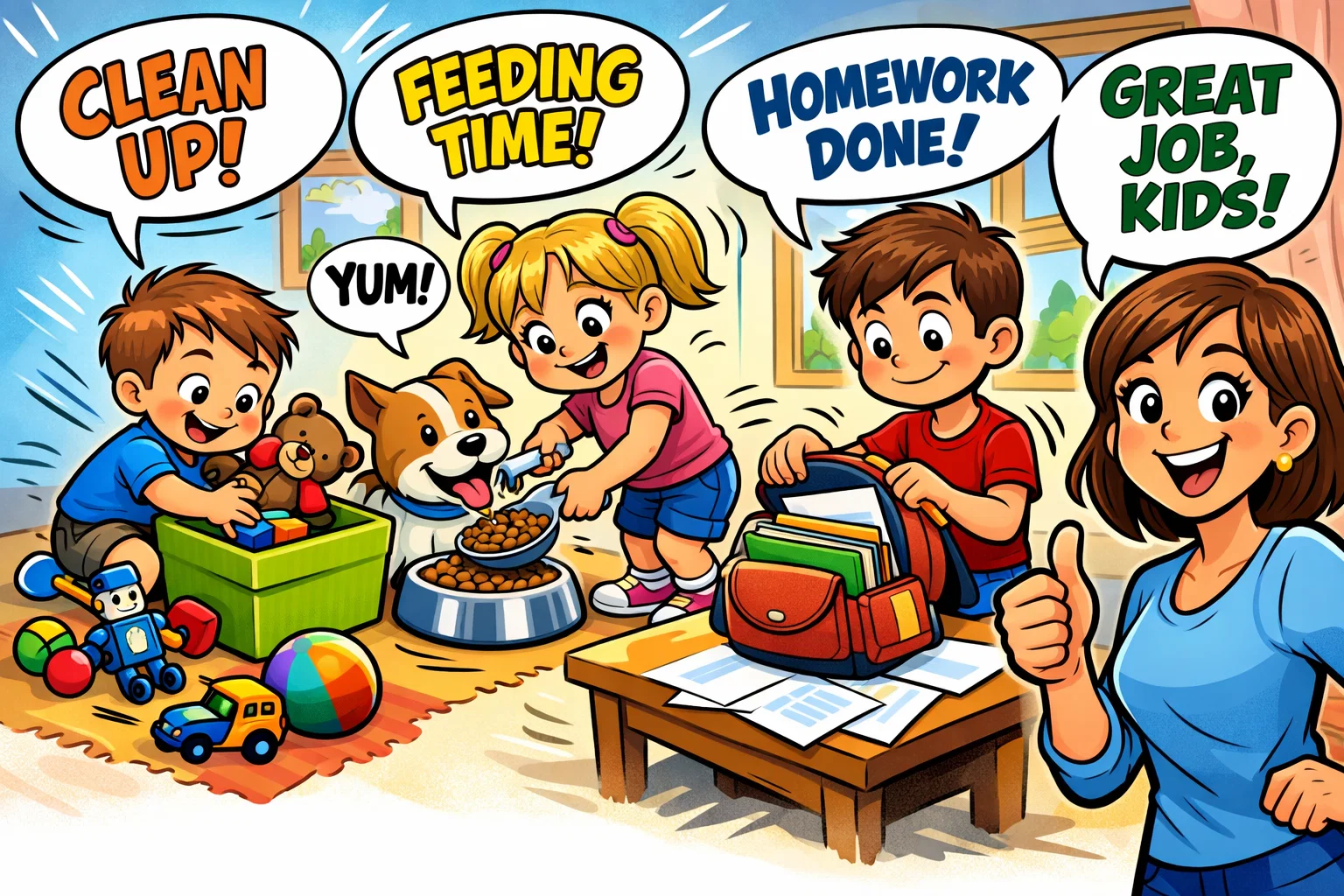
Teaching a child responsibility is one of the most meaningful things a parent or caregiver can do. It is not about perfection or strict discipline — it is about giving kids the tools they need to grow into capable, dependable, and confident people. This guide walks through what responsibility means for kids, how it develops by age, and practical strategies you can use every day at home.
Responsibility Meaning for Children
Responsibility means understanding that your actions have consequences and that you have a role to play — in your family, your school, and eventually your wider community. For children, responsibility isn’t an abstract concept. It shows up in small, everyday moments: putting away toys, getting ready for school on time, or remembering to feed a pet.
It helps to distinguish between three related ideas. Responsibility refers to the duties a child takes on. Accountability means owning the outcomes of those actions — even when things go wrong. Independence is the ability to act without being told. All three work together, and building one tends to strengthen the others.
Early development of responsible behavior supports emotional regulation, social competence, and academic performance. Research from the American Psychological Association suggests that kids who learn to manage tasks and meet expectations show stronger self-esteem and better mental health outcomes over time.
Why Responsibility Matters for Long-Term Success
A child who learns responsibility early builds habits that carry into adulthood. These include consistency, follow-through, and the ability to delay gratification — all of which are strongly linked to success in education, relationships, and work. Responsibility also builds confidence: when a kid completes a task independently, they learn to trust themselves.
Discipline and responsibility are closely connected. Children who understand expectations and routines tend to show fewer behavioral challenges, not because they are controlled, but because structure gives them a sense of security and purpose.
Common Misconceptions About Responsibility in Kids
One of the most common myths is that children will naturally “grow into” responsibility without intentional guidance. In reality, responsibility is a learned skill — like reading or tying shoelaces. Without consistent modeling and expectation-setting, many kids simply do not develop it on their own.
Another misconception is that assigning chores or tasks is about making children work. In fact, age-appropriate responsibilities help children feel like valued contributors to the household, which directly supports their sense of belonging and self-worth.
Effective Ways to Teach Responsibility
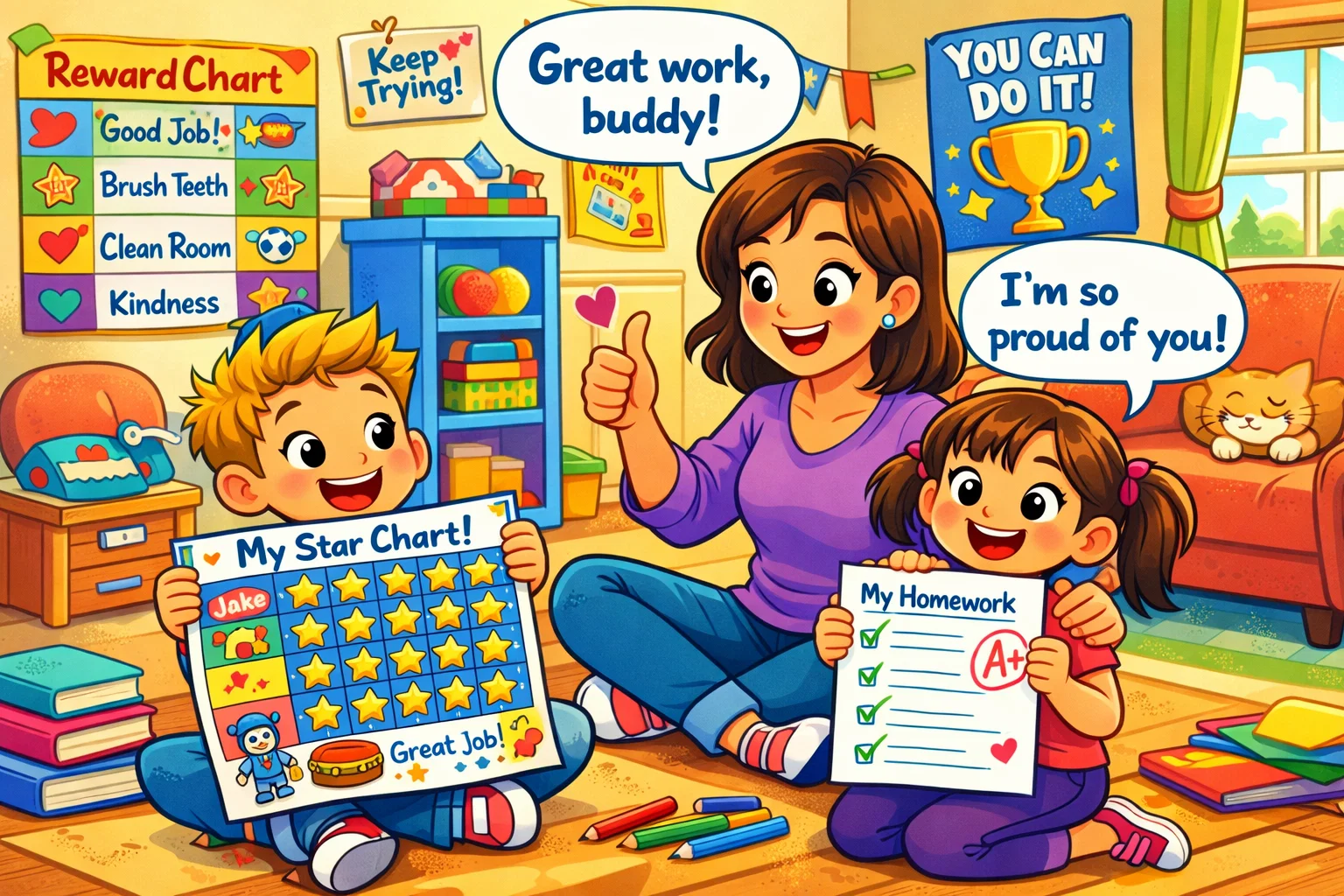
There is no single method that works for every child, but certain strategies consistently support the development of responsibility across age groups.
Start Early and Build Consistency
The most important tip for teaching kids responsibility is to begin young and stay consistent. A 3-year-old who learns to put toys on a shelf builds the same habit loop that a 10-year-old uses to manage homework. Consistency — not perfection — is what creates lasting behavior change.
Inconsistent rules create confusion. When expectations shift depending on mood, timing, or effort level, kids learn that rules are negotiable. Clear, steady expectations communicated calmly help children internalize responsibility as a value rather than a rule imposed from outside.
Set Clear Expectations and Responsibilities
Children cannot meet expectations they do not understand. When assigning a task, explain specifically what “done” looks like. “Clean your room” is vague; “put your clothes in the dryer, make your bed, and put books back on the shelf” is clear. Specific language reduces resistance and confusion.
It also helps to involve children in setting expectations where appropriate. A child who has participated in agreeing to a routine is more likely to follow it than one who has had it handed to them without discussion.
Encourage Problem-Solving and Independence
One of the most common parenting mistakes when teaching responsibility is over-helping. When a child struggles with a task, the instinct to step in is understandable — but doing the task for them teaches the opposite of what is intended. Instead, guide with questions: “What do you think you should do first?” or “What happened last time you tried that?”
This approach builds confidence and teaches children that difficulty is part of the process, not a reason to give up. It also supports the development of independence — a child who learns to solve small problems early is better equipped to handle larger ones as they get older.
Role Modeling Responsibility at Home
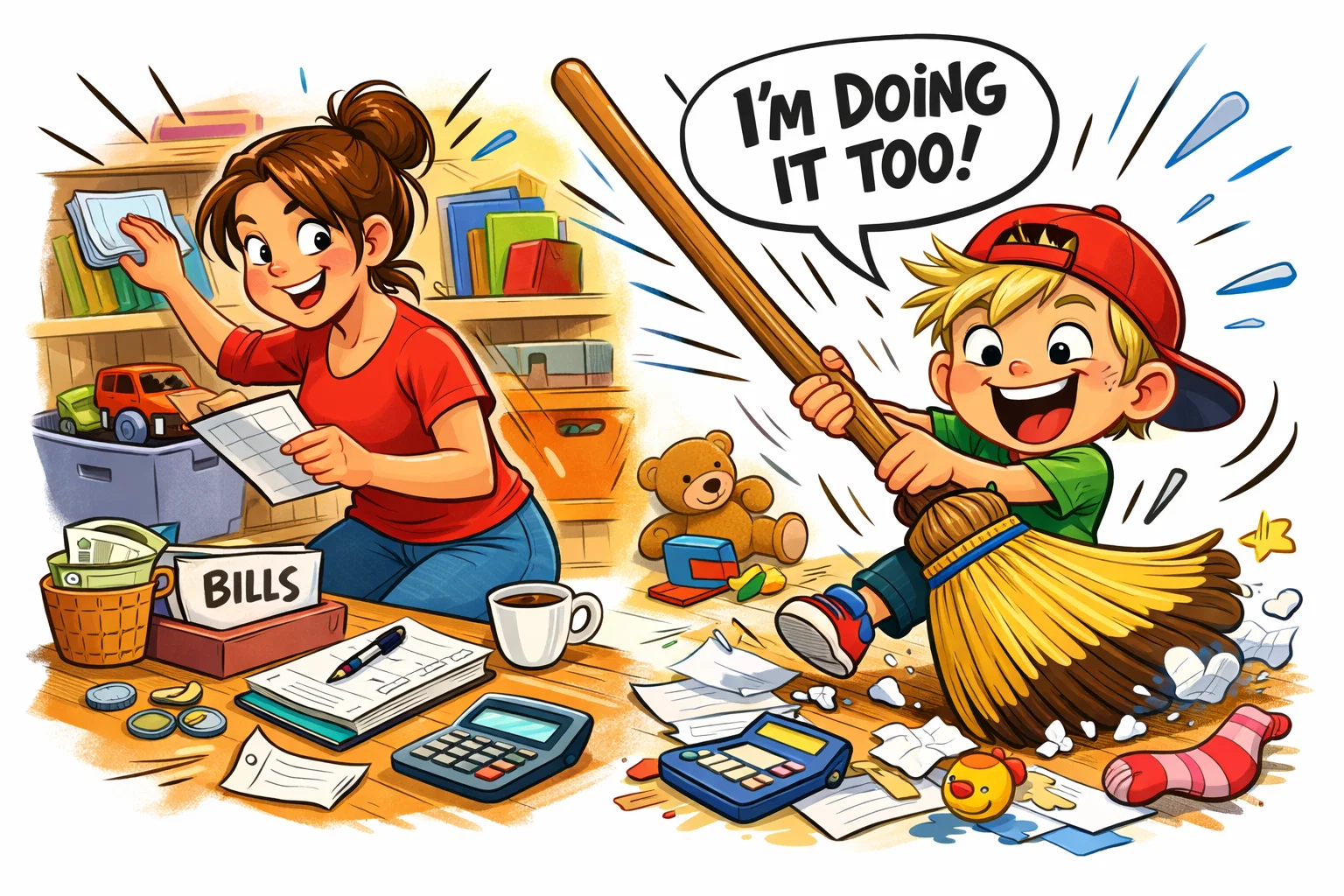
Children learn far more from what they observe than from what they are told. Parents and caregivers who model responsible behavior consistently — and visibly — provide one of the most powerful lessons available.
Demonstrate Accountability in Everyday Actions
When a parent says “I forgot to call the school — I need to do that now,” or “I said I would fix that shelf this weekend, so let me get to it,” they are showing a child what accountability looks like in practice. These small, unremarkable moments add up to a powerful model of personal responsibility.
Kids also benefit from seeing adults manage competing priorities, handle frustration calmly, and follow through on commitments even when it is inconvenient. This normalization of responsibility as a daily habit — not a special effort — is what shapes a child’s long-term behavior.
Admit Mistakes and Show Correction
One of the most underused parenting strategies is openly admitting when you got something wrong. Saying “I made a mistake, and here is what I am going to do about it” models accountability without shame — a crucial distinction. A child who sees this learns that mistakes are not something to hide, but something to address.
Building a responsible family culture also means ensuring that expectations apply to everyone, not just kids. Consistency across all family members reinforces the message that responsibility is a shared value, not a one-sided demand.
Teaching Responsibility Through Chores and Daily Tasks
Chores are one of the most research-supported tools for developing responsibility in children. A landmark study from the University of Minnesota found that involving kids in household tasks from an early age — even as young as age 3 or 4 — was one of the strongest predictors of success in young adulthood.
Age-Appropriate Chores by Stage
Matching chores to developmental ability is essential to success. Here is a practical guide:
- Ages 2–4: Put toys in a bin, help wipe spills, carry small items, put dirty clothes in a hamper
- Ages 5–7: Set the table, help clean surfaces, feed a pet, make their bed, sort laundry
- Ages 8–11: Load and unload the dishwasher, vacuum a room, fold and put away laundry, take out bins
- Ages 12–15: Do their own laundry (wash, dry, fold), prepare simple meals, clean a bathroom, walk the dog
- Ages 16+: Contribute to grocery planning, manage their own schedule and appointments, take on regular household responsibilities independently
How to Introduce Chores Without Resistance
Resistance is normal — especially at the start. Introducing chores gradually, starting with tasks the child already shows interest in, reduces friction. Framing chores as a contribution to the family (“we all help because this is our home”) is more motivating for most kids than framing them as an obligation.
Making chores part of a predictable daily routine — rather than an on-demand request — also reduces conflict. When a child knows that after school comes a snack, then homework, then setting the table for dinner, the task feels expected rather than imposed.
Rewards, Allowance, and Consequences
The question of how to motivate responsible behavior without creating dependency on external incentives is one of the most debated areas of practical parenting.
Do Reward Systems Help Build Responsibility?
Reward systems can be effective tools in the short term, particularly for younger children who are still building habits. A sticker chart for a 4-year-old learning to put shoes away is a reasonable scaffold. The goal, however, is to move toward intrinsic motivation — doing the task because it is the right thing to do, not because of a reward.
Over time, over-reliance on rewards can undermine responsibility by teaching kids that tasks only matter when there is something in it for them. Gradually fading external rewards as habits become established is a more effective long-term strategy.
Natural vs. Logical Consequences
Natural consequences — those that occur directly as a result of a child’s action — are among the most powerful teachers available. If a kid does not put their football kit in the laundry, it is not clean for Saturday’s match. If a pre-teen forgets their lunch, they will be hungry. These experiences, handled calmly and without excessive parental commentary, teach children that their choices matter.
Logical consequences are adult-designed responses that mirror the behavior. If a child leaves toys on the stairs, the toys are put away out of reach for 24 hours. The consequence is directly connected to the behavior, which makes the lesson clear and fair.
Age-Based Responsibility Guide for Children
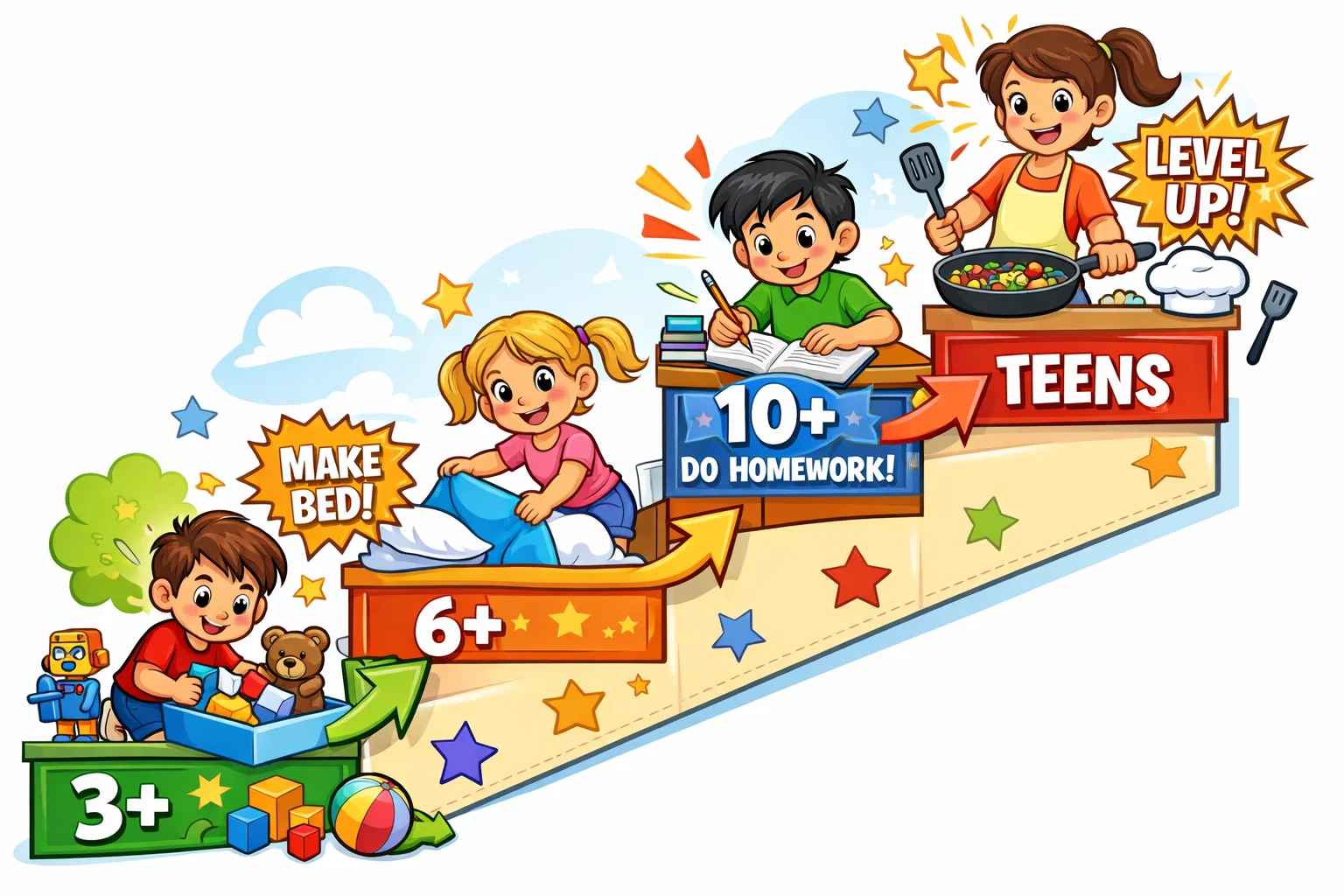
Responsible behavior develops in stages. What works for a 3-year-old looks very different from what is appropriate for a teenager. Matching expectations to the developmental stage is key to making learning responsibility feel achievable rather than overwhelming.
Responsibility for Toddlers (Ages 2–5)
At this stage, child responsibility begins with the simplest habits. Toddlers can put toys in a bin, help carry groceries, or place dirty clothes in a hamper. These tasks matter less for their practical outcome and more for the habit of contribution they begin to form.
Routines are essential at this age. A consistent sequence — wake up, get dressed, eat breakfast, put away pyjamas — teaches toddlers that certain actions belong to certain moments of the day. Repetition at an early age builds the neural pathways that make responsible behavior feel natural later on.
Responsibility for School-Age Children (Ages 6–10)
As kids get older, their capacity for responsibility expands significantly. School-age children can manage homework schedules, set an alarm, fold laundry, load the dishwasher, or help clean a shared space. These tasks introduce time awareness and the understanding that others depend on them.
This is also the stage where accountability becomes an important teaching tool. If a child forgets their homework, allowing them to experience the natural consequence — rather than rescuing them — is one of the most effective ways to build personal responsibility without a lecture.
Responsibility for Pre-Teens (Ages 11–13)
Pre-teens are ready for greater independence and planning. Responsibilities might include managing their own schedule, doing their own laundry (washing, drying, folding), walking the dog, or taking care of a sibling during short periods. At this age, children benefit from having genuine ownership over a few consistent household tasks.
Parents and caregivers should begin stepping back from reminders at this stage. A pre-teen who is gently expected to remember their own responsibilities — rather than being prompted constantly — develops stronger intrinsic motivation and a real sense of maturity.
Responsibility for Teenagers (Ages 14+)
Teenagers are capable of handling real-life responsibilities that connect directly to adult life. These include managing a part-time commitment, contributing meaningfully to household chores, budgeting a small allowance, and making decisions with awareness of their consequences.
Teen responsibility is less about chore charts and more about trust, autonomy, and open conversation. Research from developmental psychology suggests that teenagers who are given meaningful responsibilities — and treated as capable — show better outcomes in both academic performance and emotional wellbeing.
How to Support a Child Who Struggles With Responsibility
Some kids find responsibility harder to develop than others. This does not reflect poor parenting or a character flaw in the child — it often reflects temperament, learning style, or an environment that has not yet provided enough consistent structure.
Signs that a child may be struggling include consistent avoidance of tasks, frequent excuse-making, an inability to complete multi-step responsibilities independently, or a pattern of blaming others when things go wrong.
Common causes include overly inconsistent expectations, an environment where tasks are frequently done for them, or in some cases, developmental factors such as attention difficulties. When a child genuinely struggles despite consistent support, it may be helpful to consult with a teacher, pediatrician, or child psychologist. Early support almost always leads to better outcomes than waiting for the kid to “grow out of it.”
Small Steps Today Build Responsible Adults Tomorrow
Teaching kids responsibility is not a single conversation or a strict system — it is an ongoing, evolving process that looks different at every stage of childhood. The most effective parents and caregivers are those who stay consistent, model what they expect, and allow kids to experience the natural results of their own choices.
Start where your child is. Celebrate small wins. Adjust expectations as they grow. Responsibility isn’t built in a week — it is built in thousands of small moments across years. And every one of those moments is worth the investment.
Frequently Asked Questions About Teaching Responsibility
How do you teach responsibility to a child at home?
Start with simple, consistent daily tasks tied to your child’s routine. Clearly explain what is expected, model responsible behavior yourself, and allow natural consequences when tasks are not completed. Consistency over time is the most important factor.
At what age should a child learn responsibility?
Responsibility begins as early as age 2–3, with simple tasks like putting toys away or helping carry small items. Intentional, structured teaching becomes most effective around age 4 or 5, with expectations growing steadily as the child develops.
What are examples of responsibility for kids?
Age-appropriate responsibilities include making their bed (ages 5–7), managing homework independently (ages 8–10), doing their own laundry (ages 12+), and contributing to household planning (teens). The key is matching the task to the child’s developmental stage.
Should children be rewarded for being responsible?
Short-term reward systems can help build initial habits, particularly in younger children. However, the long-term goal is intrinsic motivation — children who take responsibility because it is the right thing to do, not because of a prize. Gradually reduce external rewards as habits become established.
Why is my child not showing responsibility?
Common causes include inconsistent expectations, tasks being done for them too often, or a lack of natural consequences for inaction. In some cases, developmental factors such as attention difficulties may play a role. Returning to basics — simple tasks, clear expectations, and consistent follow-through — is a good starting point.

Take a short quiz to find out what your everyday choices say about your parenting style
When your child is curious about something new, what’s your instinct?
Take a short quiz to find out what your everyday choices say about your parenting style
“Can I download this app?” What happens next?
Take a short quiz to find out what your everyday choices say about your parenting style
When it comes to rules at home, which sounds most like you?
Take a short quiz to find out what your everyday choices say about your parenting style
If you could give your child one life skill today, what would you pick?
Take a short quiz to find out what your everyday choices say about your parenting style
Your child gets to choose what to watch. What would your ideal setup look like?
Take a short quiz to find out what your everyday choices say about your parenting style
Pick your parenting superpower ✨