How to Get Your Child to Listen Without Yelling: 11 Calm Strategies

 Discover a Free Education Video App for Kids
Pastory uses AI to personalize educational video content based on your child’s interests and personality. Safe, engaging, and built for curious young minds. Sign up now to stay updated and enjoy early access with a free trial
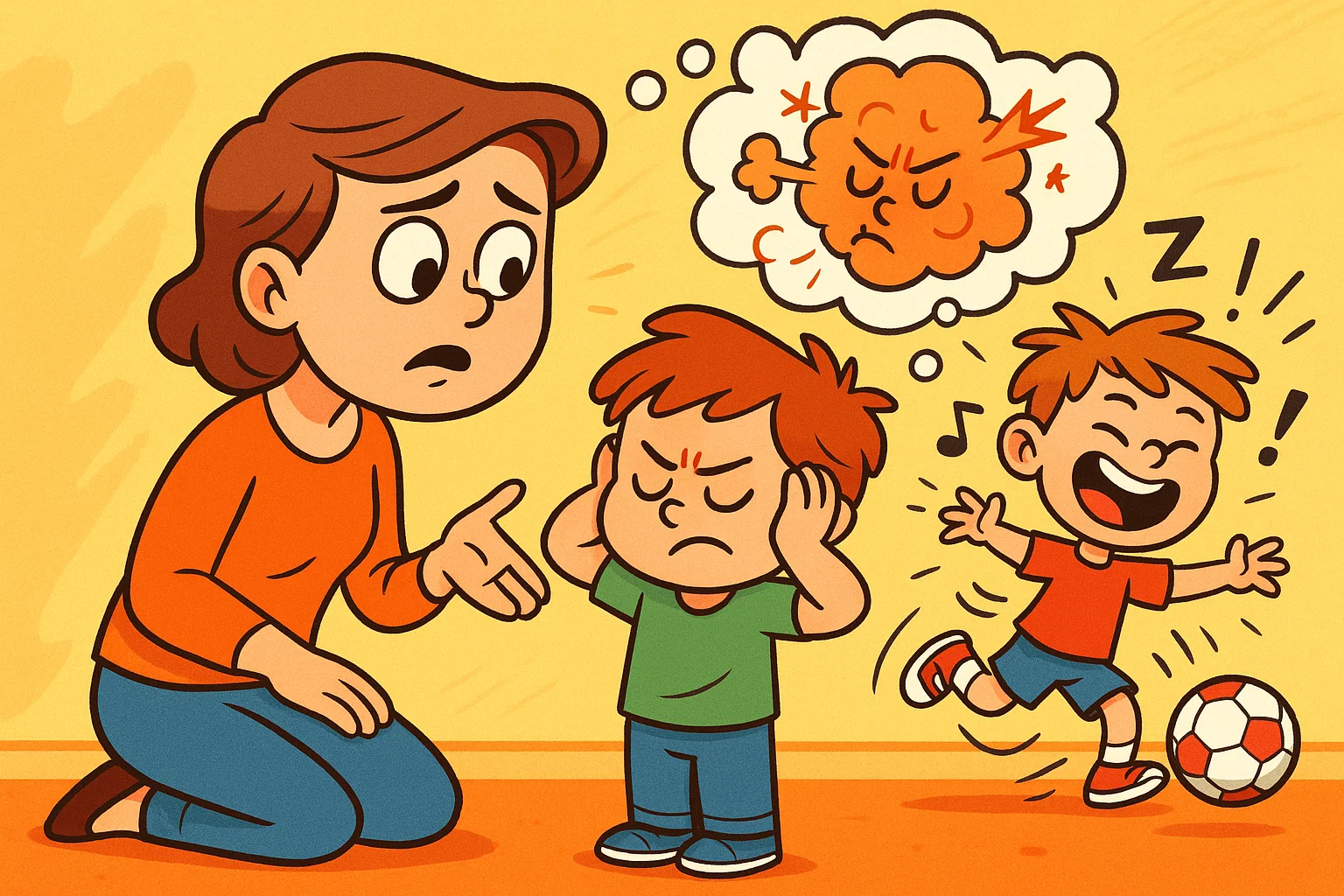
Many parents find themselves trapped in a cycle where they repeat requests, only to be ignored until their patience wears thin and they eventually resort to yelling. This pattern creates a stressful home environment for both parent and kid, often leaving the caregiver feeling guilty and the child feeling overwhelmed or resistant. Transitioning to calm parenting strategies and positive discipline does not require becoming a perfect parent; rather, it involves replacing reactive habits with proactive communication techniques that help kids learn and cooperate more effectively.
If you are wondering how to get your child to listen without yelling, the answer lies in understanding how communication works and what is developmentally appropriate for your child.By adjusting your approach to meet the child on their level, you can foster a healthier parent-child relationship while ensuring that your instructions are heard and followed. This guide provides practical steps to help parents stop yelling and build consistent, respectful, and effective communication habits.
Why Yelling Stops Working
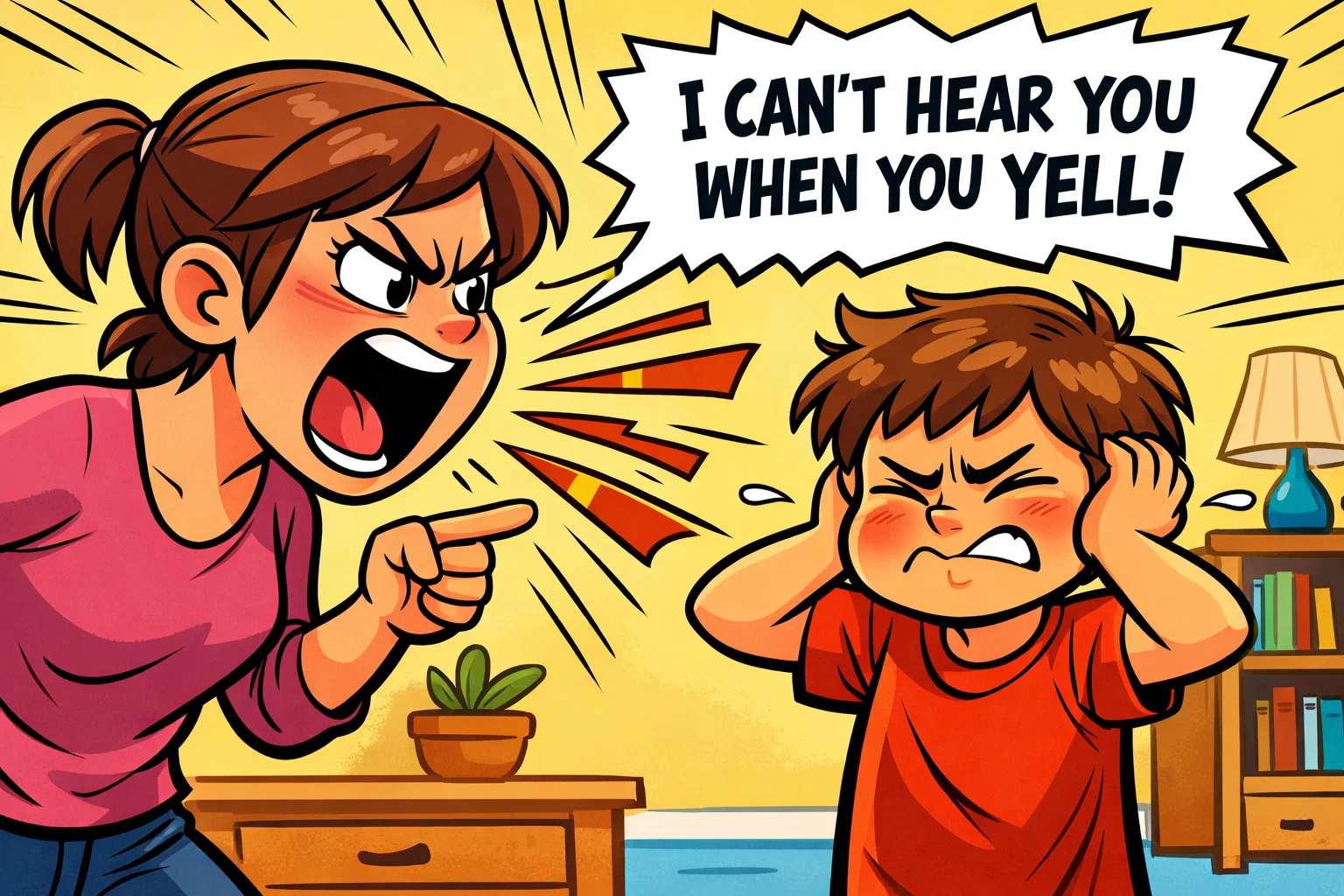
Yelling at your kids often provides only a temporary illusion of control, as it triggers a stress response that actually hinders long-term behavioral change. When parents get loud, children may shut down, become fearful, or mirror that aggression, which can escalate the conflict instead of resolving the underlying issue. Recognizing that the problem is not a “bad child” but an ineffective communication pattern allows parents to shift toward more sustainable methods.
Fear Creates Short-Term Compliance
Yelling at your little one may produce immediate obedience, but it does not teach children why cooperation matters. Research suggests that frequent yelling can increase children’s anxiety, which may make calm listening and cooperation harder over time. Compliance driven by fear is fragile and dissipates as soon as the threat of the parent’s anger is removed.
Repeated Shouting Trains Delayed Response
When parents get into the habit of shouting only after the third or fourth request, kids learn to ignore the quiet, initial prompts. Children become conditioned to wait for the “high-tension” level before they believe the request is serious. This dynamic effectively trains children to tune out normal speech, making it increasingly difficult for parents to be heard without raising their voices first.
Common Parent Habits Before Yelling
Many parents fall into predictable traps, such as shouting instructions from another room, engaging in long-winded lectures, or making empty threats. These behaviors create a barrier to effective communication, as the child is often distracted, overstimulated, or unable to process complex verbal information while playing or transitioning. Moving away from these habits is a foundational step in learning how to get your child to listen without raising your voice.
1. Get on Your Child’s Level
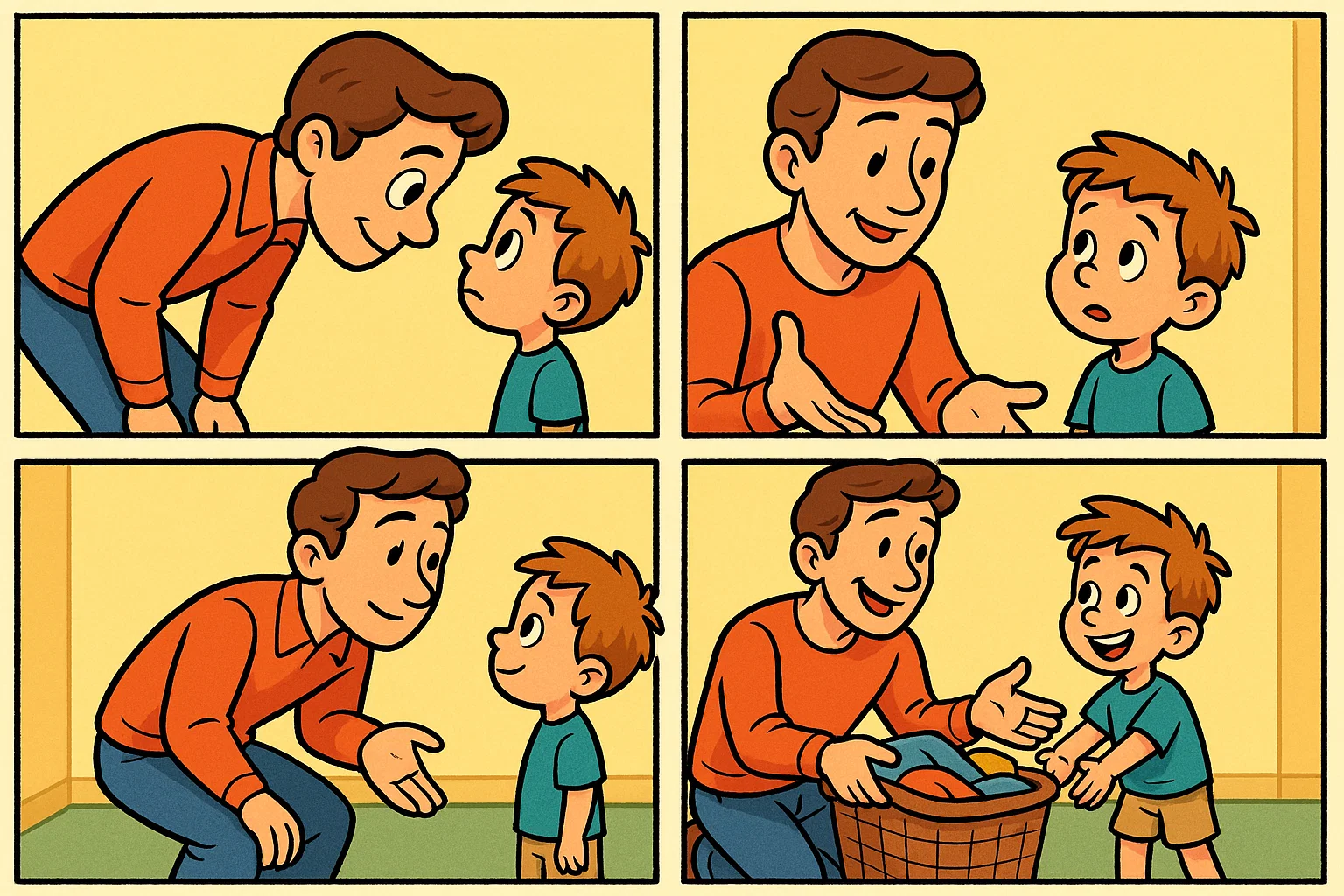
Physical positioning is one of the most effective tools for ensuring your child hears you the first time. By reducing the physical distance between you and your child, you signal that you need their attention and make it easier for them to focus on your request.
Move Close Before Speaking
Calling out instructions from across the room is usually ineffective because the child’s attention is still anchored to what they are doing. Moving closer signals that an important interaction is taking place. This physical shift helps cut through the “noise” of their environment, making them significantly more likely to listen to you.
Use Eye Contact and Child’s Name
The most effective way to initiate an interaction is to approach the child, use their name to gain their attention, and wait for them to meet your gaze. Once eye contact is established, the kids’ focus shifts from their task to your instruction. This brief two- to three-second ritual is a cornerstone of positive parenting because it signals respect and helps the child focus.
Replace Distance Commands With Direct Requests
| Before (Distance Command) | After (Direct Request) |
| “Stop playing and clean up now!” | [Walk over, touch shoulder] “Please put your blocks in the bin.” |
| “Why aren’t you ready for school yet?” | [Make eye contact] “It is time to put your shoes on.” |
2. Keep Commands Simple

For young children, complex language makes follow-through less likely. Keeping your language concise helps ensure that your child is not overwhelmed by extra words or emotional subtext.
Give One Step or Two Steps Max
Child development experts often emphasize that children are more likely to follow short, single-step directions. By breaking down larger goals – like “get ready for bed” – into individual steps like “put on your pajamas,” you allow the child to experience small, manageable successes. This incremental approach builds a habit of listening instead of leaving the child feeling overwhelmed by a long list of demands.
Cut Extra Words and Lectures
In the heat of the moment, many parents feel the urge to lecture on why the child should be listening, but this rarely helps. Extra words confuse the core instruction and give the child an opportunity to argue or lose focus. Giving the instruction clearly and concisely is the best way to help the child understand what is expected.
Pause Before Repeating
After giving an instruction, it is essential to pause and wait for the child to process the information. Often, parents repeat themselves too quickly, which leads to irritation and eventually yelling. Allowing a 5- to 10-second processing pause gives the child the time they need to shift attention and respond.
3. Set Clear Expectations
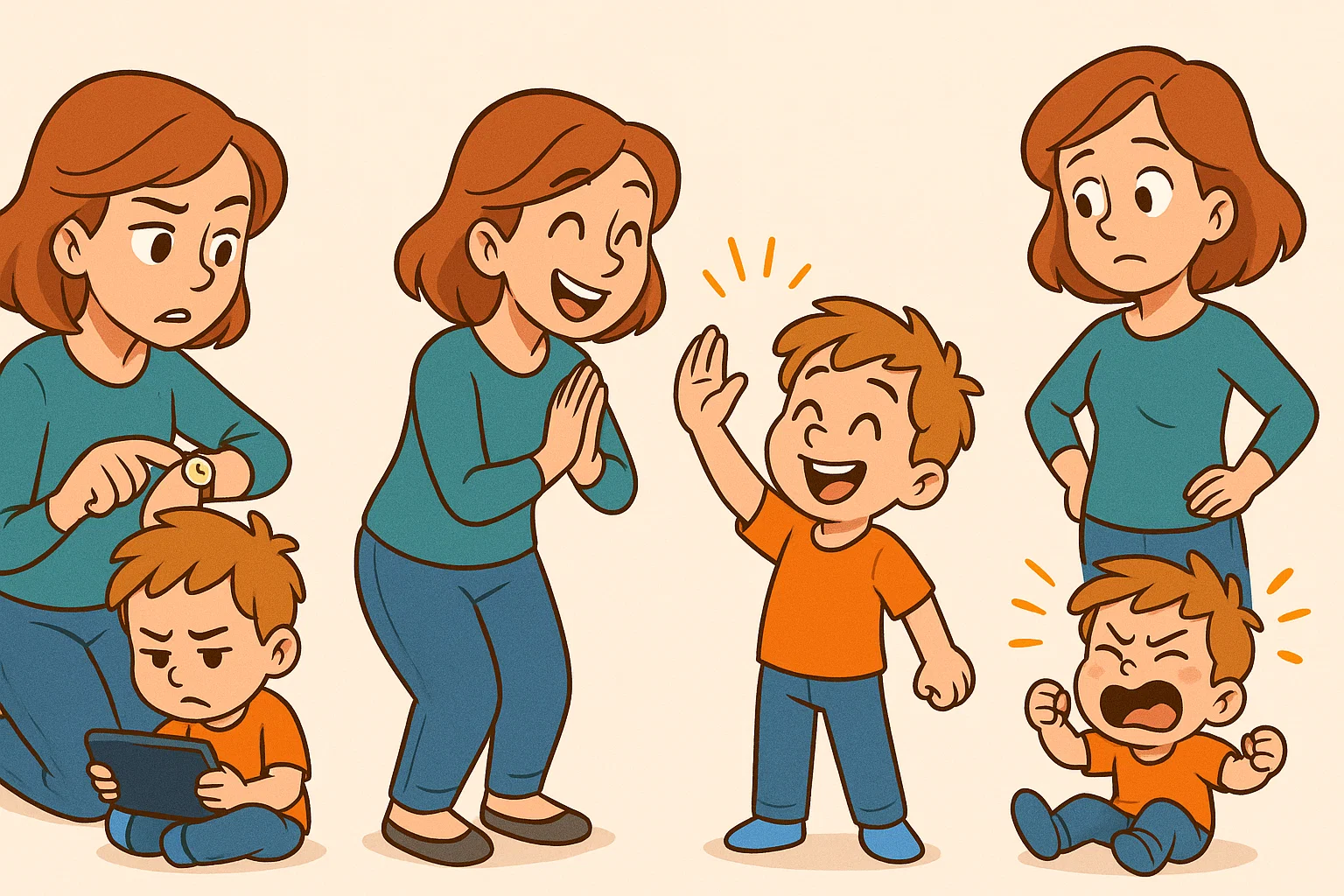
Kids thrive in environments where they understand what is required of them. Setting clear, realistic expectations transforms vague “misbehavior” into tangible, achievable tasks.
Say What to Do, Not What to Stop
Focusing on positive actions – what you want the kid to do – is more effective than highlighting what you want them to stop. For example, saying “Walk in the hall” is clearer than “Don’t run.” This approach helps the child understand the correct behavior immediately, reducing the need for constant correction.
Make Request Specific and Realistic
General phrases like “Behave yourself” or “Clean this up” are too vague. Instead, use specific language: “Put the cars in the box” or “Please sit quietly while I take this call.” When you align expectations with your child’s age and ability, you reduce the frustration that often leads parents to yell.
Use Consistent Household Rules
Predictability is essential for a positive parent-child relationship. If the rules change based on the parent’s mood, the child becomes confused and less likely to listen. Maintaining consistent expectations helps children understand their environment, making them feel secure and more willing to cooperate.
4. Make Requests Meaningful
Helping children understand the “why” behind an instruction makes them more likely to cooperate. However, the explanation must be brief to maintain its effectiveness.
Link Action to Immediate Outcome
Linking an action to an immediate, positive result helps the child see the value in listening. Instead of a long lecture, say: “Put your shoes on so we can get to the park before it gets crowded.” This connects the request to an outcome that the kid desires.
Preempt “Why?” Questions With a Brief Reason
You can often prevent the “Why?” debate by offering a brief reason upfront. Adding a single sentence of rationale – “It is raining, so we need to wear jackets” – provides context without turning the instruction into a negotiation.
Explain Safety and Timing Fast
For urgent safety situations, clarity is paramount. Use short, direct phrases such as “Stop – cars are coming” or “Hold my hand so you stay safe.” These should be the only times you use a stern, urgent voice, as it preserves the impact of that tone for genuine emergencies.
5. Request Rather Than Command
The way you phrase a request determines the tone of the interaction. Calm leadership – not commanding, pleading, or bargaining – is a hallmark of effective parenting.
Use Firm, Respectful Language
You can be both firm and respectful by using a calm, neutral tone. This communicates calm authority while still respecting the child’s dignity. Avoid sarcasm, shaming, or raising your voice, because these responses undermine your authority and damage trust.
Offer Limited Choices
Offering a limited choice empowers the child and reduces the need for power struggles. Ask, “Would you like to put on your blue shoes or your red shoes?” The child makes a decision, which creates a sense of autonomy while still ensuring the primary task is completed.
Avoid Pleading, Bargaining, Threats
Pleading and bargaining signal that the parent is not in charge, which creates anxiety in the kid. Similarly, threats that you rarely follow through on teach the child that your words do not carry weight. Keep your communication direct and avoid the temptation to negotiate.
6. Stay Positive and Show Gratitude
Reinforcing positive behavior is just as important as correcting negative behavior. By catching your child doing things right, you build a foundation of cooperation.
Catch Cooperation Early
Look for moments of cooperation throughout the day, no matter how small. Acknowledge these moments with a simple comment such as, “I appreciate you putting your toys away.” When a child feels noticed for their cooperation, they are more likely to repeat that behavior in the future.
Praise Effort, Not Only Results
Praising your child’s effort to listen and follow directions encourages a growth mindset. If a kid tries to clean up but leaves a few items out, focus on their effort: “I see you worked hard to put those blocks away.” This builds the child’s confidence and desire to continue trying.
Use Gratitude to Reinforce Listening
A brief “Thank you for listening so quickly” after a request is a powerful motivator. This short, positive feedback loop reinforces the behavior without turning it into a major event, helping the child feel successful.
7. Plan 1-on-1 Time
A strong connection is the best defense against power struggles. When a child feels seen and heard by their parent during non-conflict times, they are naturally more inclined to listen.
Build Connection Before Correction
Building a “connection bank” through shared activities means that when you do need to correct your kid, they are more responsive. If a child feels consistently connected to you, they view your instructions as helpful guidance rather than a threat to their autonomy.
Use Micro-Moments During Daily Routines
You do not need hours of dedicated playtime to build a bond. Use small pockets of time – five to ten minutes during dinner prep, on the drive to school, or while doing laundry – to talk, play a quick game, or simply be present. These micro-moments can be very effective in maintaining a positive parent-child relationship.
Reduce Power Struggles Through Attention
Sometimes, what looks like “misbehavior” is really a child’s way of seeking connection. By providing positive, undivided attention throughout the day, you satisfy this need, which naturally reduces the frequency of attention-seeking defiance.
8. Distract Creatively and Change Environment
Sometimes, changing the environment or the child’s focus is more effective than repeating a request. This strategy can prevent the kind of escalation that often leads to parental frustration.
Spot Escalation Early
Learn to recognize the early signs of frustration in your child, such as fidgeting, an argumentative tone, or physical tension. When you notice these indicators, you can intervene before a full-blown conflict occurs.
Shift Focus With Play, Humor, Movement
Humor is an underutilized parenting tool. If a kid refuses to go upstairs, turn it into a race or a “march like a soldier” challenge. Moving the body and changing the emotional energy of the room can stop a power struggle in its tracks.
Remove Screens, Noise, Visual Clutter
When the environment is overstimulating, a child’s ability to listen often decreases. Reducing sensory input – turning off the television, dimming bright lights, or removing extra toys – can help the child refocus their attention on your instructions.
9. Follow Through With Calm Consequences
Consequences are effective only when they are logical, predictable, and consistently applied without anger.
Warn Once, Then Act
Use a simple, calm structure: “Please turn the game off. If you don’t, I’ll turn it off for you.” If the child does not comply, follow through immediately and calmly. This creates a clear cause-and-effect relationship that the child can understand.
Keep Consequence Logical and Short
A logical consequence is directly related to the behavior. If the child does not pick up the toys, put them away for the rest of the day. Keeping the consequence brief ensures that the child spends time reflecting on the action rather than harboring resentment for a lengthy punishment.
Stay Consistent Without Anger
The goal is for the child to learn from the consequence, not from the parent’s anger. When you deliver a consequence calmly, you remain the steady authority figure. Consistency makes it less likely that the child will keep testing limits in the future.
10. Stay Calm in Stressful Moments
Your ability to stay regulated is one of the most important factors in how calmly and effectively you respond to your child’s behavior. When you stay calm, you provide a model for the kid to follow.
Pause, Breathe, Lower Voice
Before reacting to a difficult moment, take a 10- to 30-second pause. Focus on your breathing and consciously lower your voice. This “reset” prevents you from saying something you might regret and keeps the interaction on a productive track.
Notice Personal Triggers
Identify the times when you are most likely to yell – perhaps the morning rush, before dinner, or when you are tired. Recognizing these patterns allows you to plan ahead, whether that means simplifying the morning routine or building in a brief calm-down moment for yourself.
Repair After Slip With Apology
If you do yell, take responsibility. Apologizing to your child – “I’m sorry I shouted. I was frustrated, and I should have spoken more calmly.” – models emotional intelligence. It shows the child that everyone makes mistakes and teaches them how to repair relationships.
11. Adjust Approach for Younger Kids and Teens
Developmental stages require different levels of support and interaction. Tailoring your communication style to your child’s age is essential for success.
Toddlers Need Brevity and Proximity
Toddlers are impulsive and have limited self-control. Keep your requests extremely brief, follow them up with physical guidance (like holding their hand), and use consistent daily routines to create structure.
School-Age Kids Need Routine and Practice
School-age children often respond well to checklists and predictable routines. Practice these routines during calm moments so that when things feel rushed or stressful, the child already knows what to do.
Teens Need Collaboration and Respect
Teenagers require autonomy. Instead of demanding obedience, involve them in setting rules and discussing the consequences of their actions. An approach rooted in collaboration and mutual respect is far more effective than relying on power alone.
Why Kids Have Trouble Listening
It is a common misconception that kids fail to listen only when they are being defiant; in reality, many factors can affect how well a child responds to instructions. Understanding that kids sometimes struggle due to cognitive or environmental factors helps parents stay calm rather than taking the behavior personally.
Distraction, Transition, Overload
Children are often deeply engaged in play, screen time, or their own thoughts, which makes shifting attention to a parent’s request a real cognitive task. Transitions, such as stopping a fun activity to start a chore, represent common points of friction where kids may struggle to comply. When the environment is noisy or cluttered, the sensory load makes it even harder for the child to prioritize the parent’s voice.
Unclear Directions and Too Many Steps
When parents provide multi-step instructions, kids – especially younger ones – often experience cognitive overload. A request like “Go upstairs, put on your shoes, grab your backpack, and meet me at the door” contains too many steps for a kid to process effectively. Simplifying instructions to one or two steps significantly increases the likelihood that the child will follow through successfully.
Anxiety, ADHD, Sensory Triggers
Some children experience more profound challenges due to underlying conditions like ADHD, sensory processing differences, or generalized anxiety. These children may need more time to process what they hear or may become dysregulated by loud noises and abrupt transitions. Recognizing these patterns allows parents to offer support rather than reacting to the “misbehavior” with frustration.
When to Seek Help
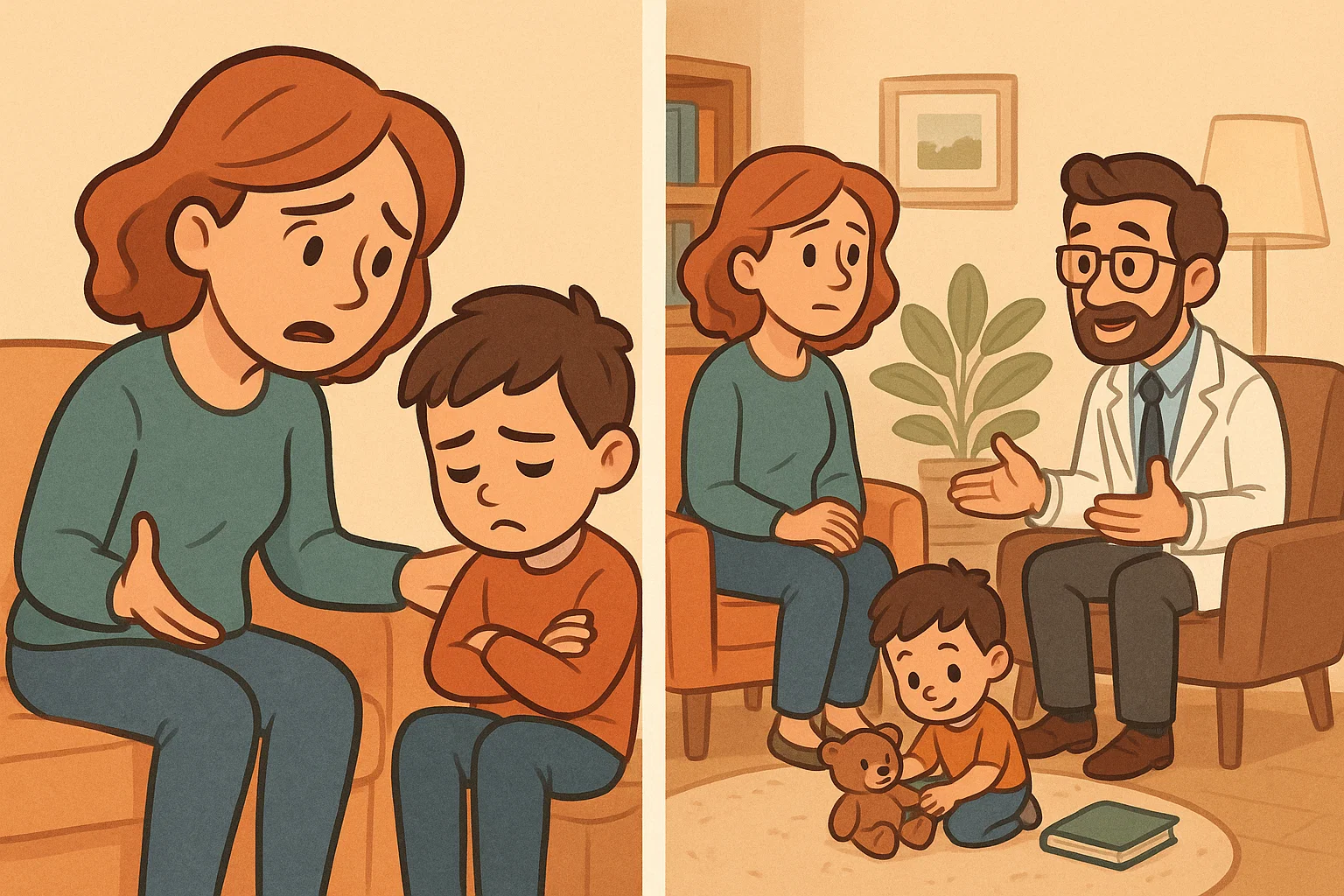
While these strategies help most families, some behaviors may indicate that a kid needs additional support. If you feel like your parenting challenges are unmanageable, seeking professional guidance is a proactive and positive step.
Signs Listening Problems Go Beyond Everyday Defiance
If the defiance is persistent, severe, and negatively affects your family’s daily life or your child’s performance at school, it may be time to consult a professional. Other signs include difficulty with self-regulation, frequent explosive outbursts, or little response to consistent boundaries.
When Behavior Points to ADHD, Anxiety, Sleep, Hearing
Sometimes, underlying physical or neurological factors are at play. If you suspect your child has difficulties with sensory processing, hearing, sleep, or attention, speak with your pediatrician. Addressing these issues can significantly improve a child’s ability to listen and cope with daily demands.
Specialists Who Can Help
If you need support, consider contacting:
- Pediatrician: To rule out physical or developmental health issues.
- Child Psychologist: To help manage emotional or behavioral challenges.
- School Counselor: To address behavior issues within the academic environment.
- Family Therapist: To improve communication patterns across the household.
FAQ About Getting Kids to Listen Without Yelling
Why Kids Listen Only After Yelling
Kids often only listen after yelling because they have been conditioned to interpret a calm voice as a “suggestion” and a loud voice as a “serious requirement.” To break this pattern, you must become consistent with calm follow-through so that your calm voice carries the same authority as your loud one.
How Many Times Should You Repeat a Request
Avoid repeating requests indefinitely, as this creates background noise that children naturally tune out. Instead, use the “ask, pause, act” cycle: give one clear instruction, provide a short pause for processing, and then follow through with a logical consequence if necessary.
What to Do When Your Child Says No
Assess whether the “no” comes from exhaustion, a struggle for control, or a lack of understanding. If it is a power struggle, offer a limited choice or reiterate the expectation calmly. If it is exhaustion, pivot to a quieter, more supportive approach rather than engaging in an argument.
How to Stop Yelling Every Day
To stop yelling daily, prioritize your own self-regulation, simplify your daily instructions, and build in more “connection” time. When you reduce the overall friction in the house, you will find fewer instances where you feel the need to raise your voice.
Does Yelling Make Me a Bad Parent?
Occasional frustration is a natural part of parenting and does not make you a bad parent. However, consistently yelling at your child can damage your relationship over time. Focusing on active listening and finding alternatives to yelling will help you reconnect and build a more trusting bond.
How Can I Get a Toddler to Listen Better?
The best way to get a toddler to listen is to get down on their level, make direct eye contact, and keep your instructions incredibly simple. Avoid using threats or long explanations; instead, use short, firm phrases like “it’s time to put your shoes on” to help them understand what is expected.
Should I Bribe My Child to Listen?
It is generally more effective to encourage good behavior through connection rather than using a bribe, which can create a transactional dynamic. Instead of paying for obedience, offer choices to help your child feel empowered, and use consistent routines to teach them how to manage transitions more independently.

Take a short quiz to find out what your everyday choices say about your parenting style
When your child is curious about something new, what’s your instinct?
Take a short quiz to find out what your everyday choices say about your parenting style
“Can I download this app?” What happens next?
Take a short quiz to find out what your everyday choices say about your parenting style
When it comes to rules at home, which sounds most like you?
Take a short quiz to find out what your everyday choices say about your parenting style
If you could give your child one life skill today, what would you pick?
Take a short quiz to find out what your everyday choices say about your parenting style
Your child gets to choose what to watch. What would your ideal setup look like?
Take a short quiz to find out what your everyday choices say about your parenting style
Pick your parenting superpower ✨