Best Games for 3-Year-Olds: Pretend Play, Learning and Digital Picks

 Discover a Free Education Video App for Kids
Pastory uses AI to personalize educational video content based on your child’s interests and personality. Safe, engaging, and built for curious young minds. Sign up now to stay updated and enjoy early access with a free trial
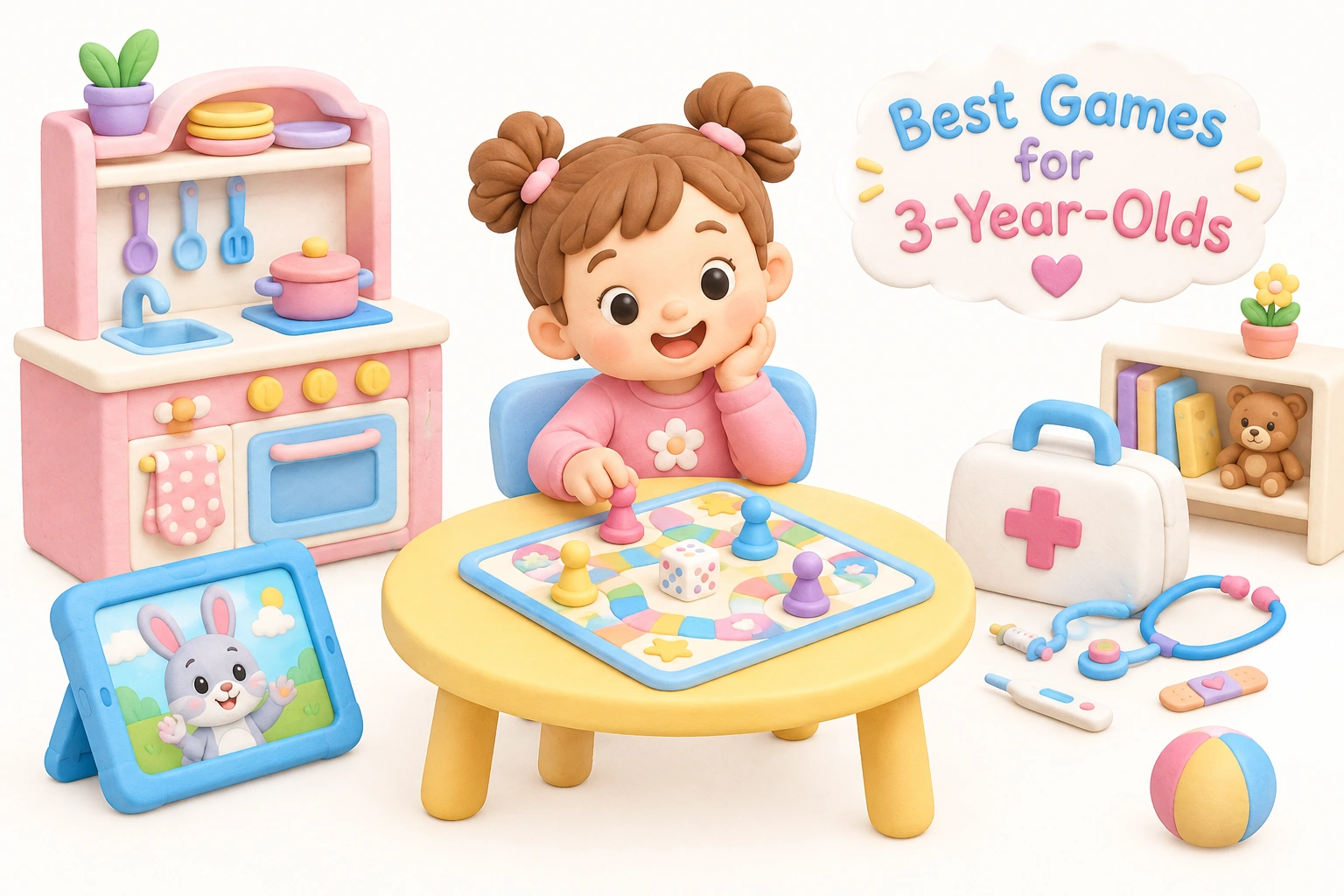
Three-year-olds are at a fascinating developmental crossroads: they are moving from solitary and parallel play toward genuine cooperative play, their attention spans are growing (though still short), and imaginative thinking is beginning to flourish. Choosing the right games at this stage is less about entertainment and more about matching activities to where a child actually is developmentally — and where they are heading next. This guide covers board games, pretend play, active movement games, and carefully selected digital options, with practical advice on what to look for and why it matters.
Key Takeaways
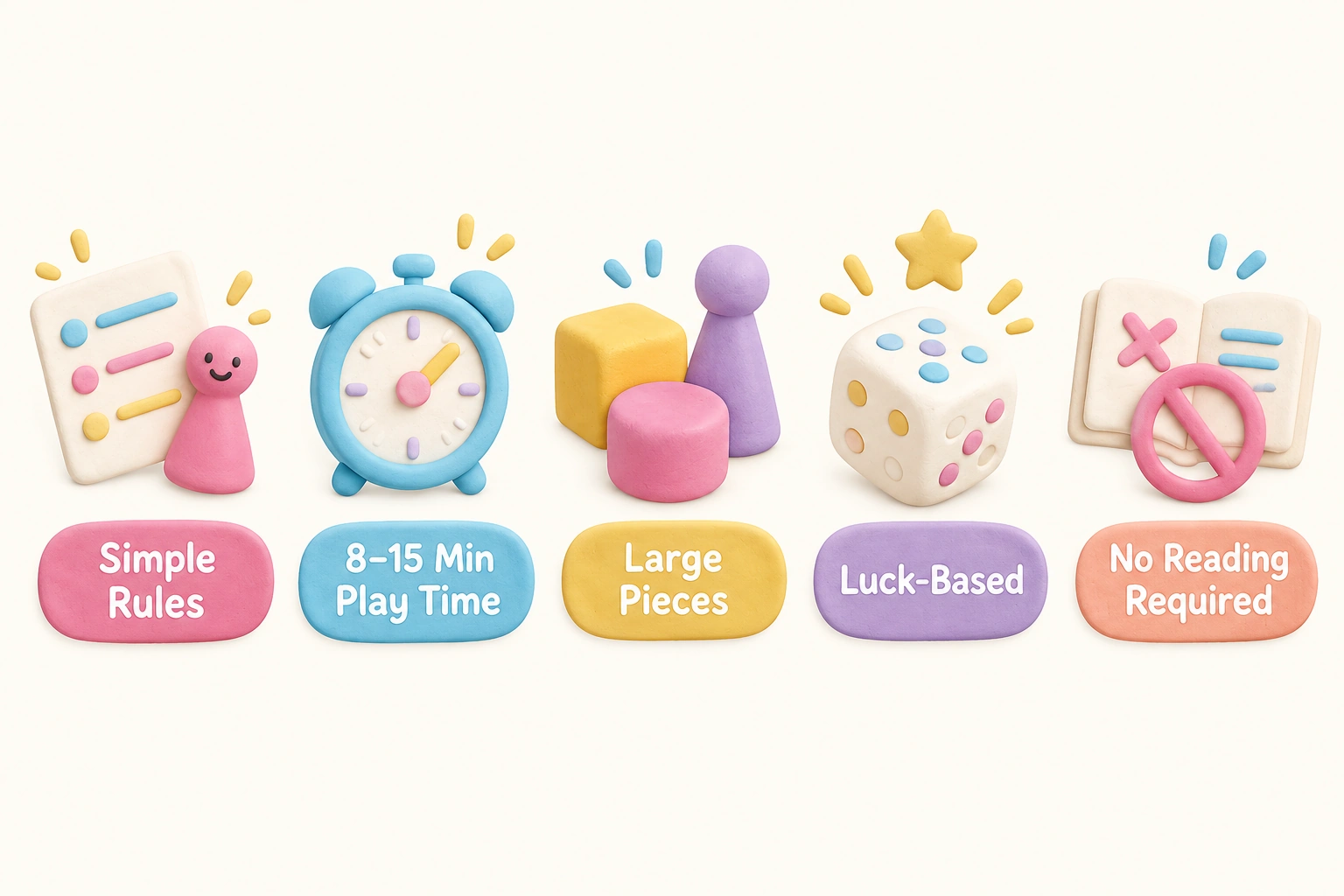
- Games for 3-year-olds work best when they have simple rules, short play times (roughly 8–15 minutes), and no reading requirement.
- Cooperative games for 3-year-olds are generally better suited to this age than competitive ones, because winning and losing can be difficult to process emotionally at this stage.
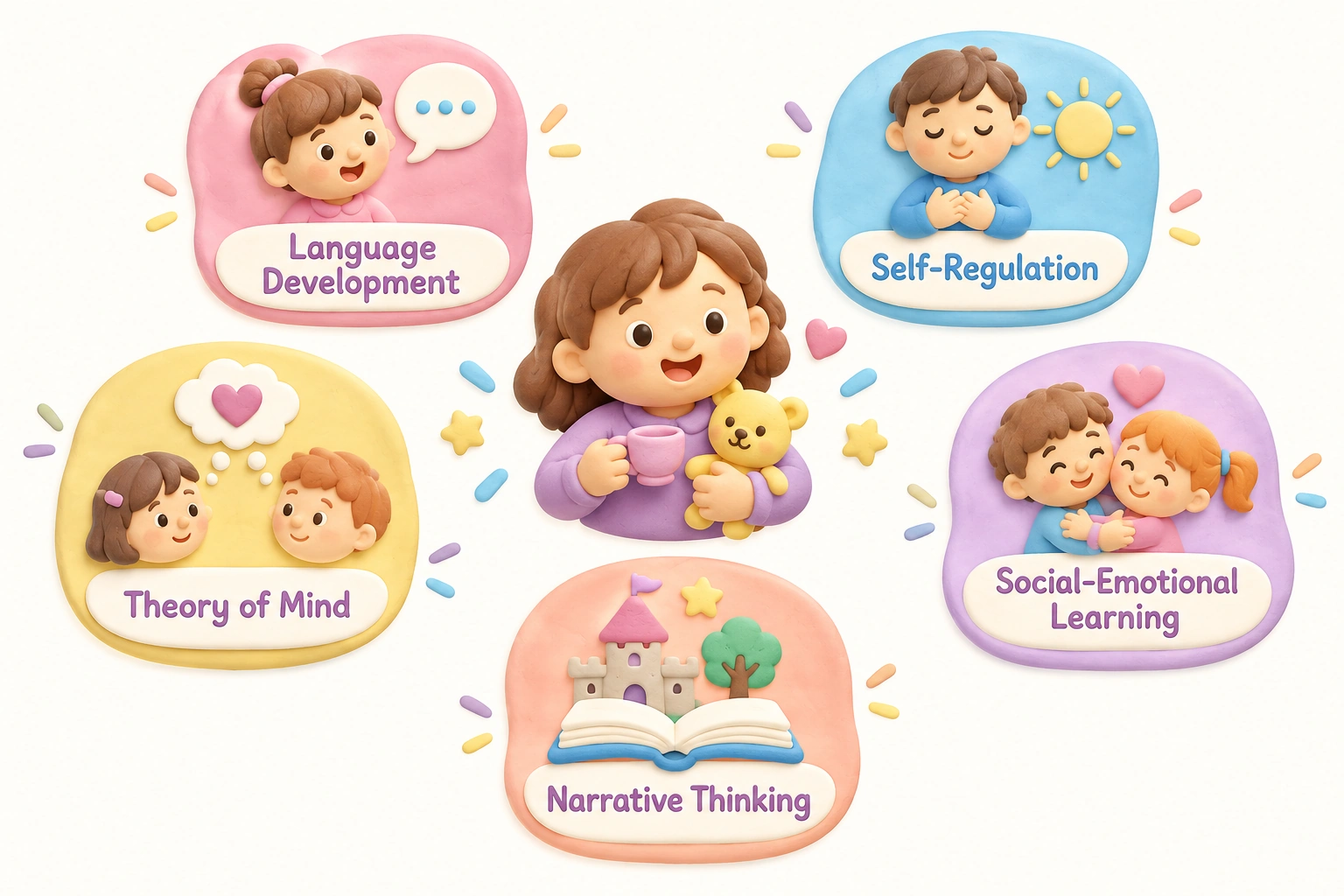
- Pretend play and imaginative play are not just fun — research links symbolic play to language development, self-regulation, and early social-emotional learning.
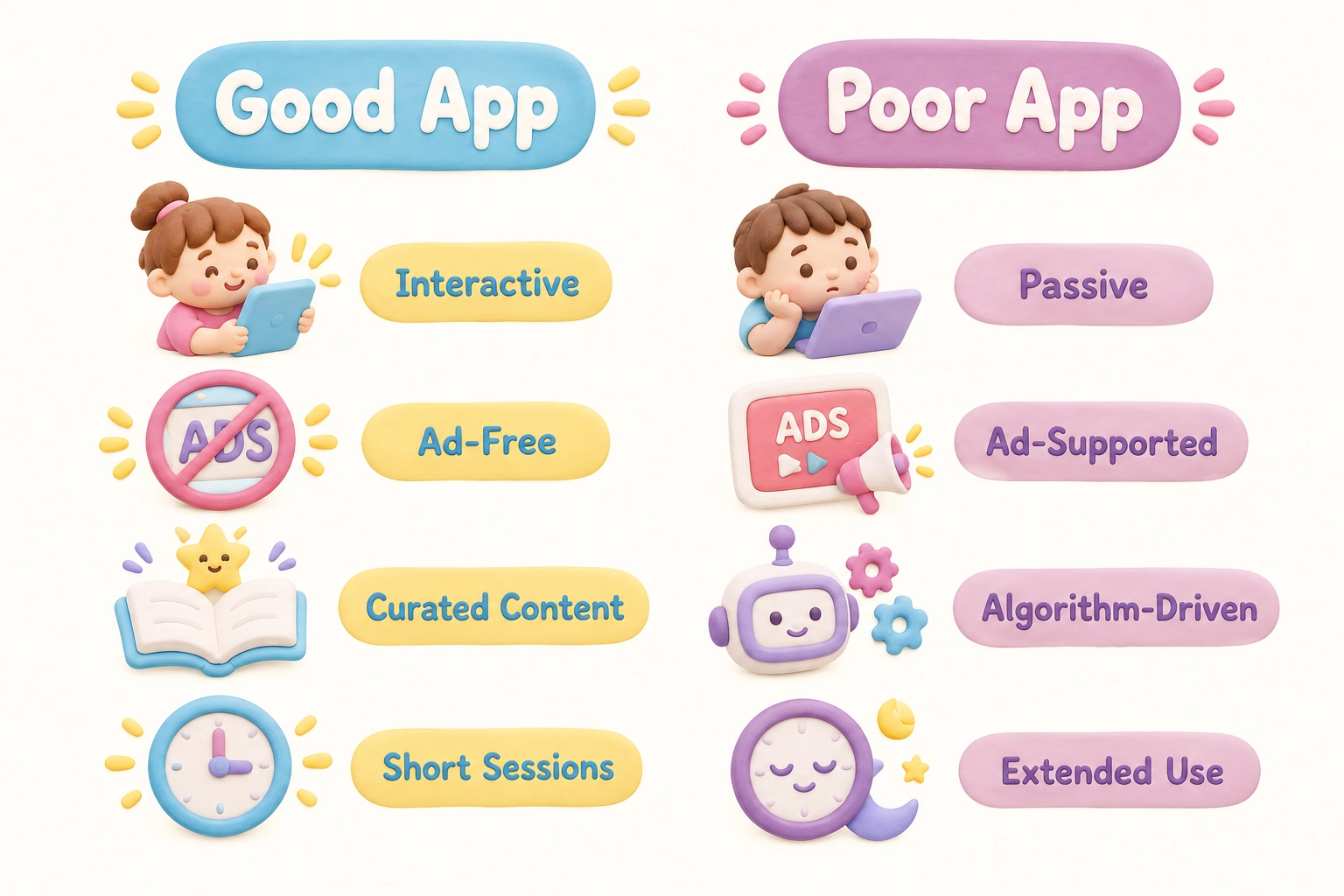
- Educational apps for 3-year-olds can support learning when they are interactive, ad-free, and used in short sessions alongside caregiver involvement.
- A balanced mix of board games, active play, open-ended play, and limited screen time tends to support the broadest range of developmental milestones at age three.
What Makes a Game Right for a 3-Year-Old?
Before diving into specific picks, it helps to understand what a typical 3-year-old can actually manage. At this age, most children have an attention span of roughly 8 to 15 minutes for a structured activity. They are beginning to understand turn-taking but may still struggle with waiting, losing, or following multi-step rules. Fine motor skills are developing — children can grasp pieces, stack objects, and sort by color or shape — but small or fiddly components can be frustrating. Cognitive abilities include basic color recognition, shape recognition, simple counting, and early cause-and-effect reasoning.
Age-appropriate games for this group share a few consistent features: rules that can be explained in one or two sentences, outcomes that depend partly on luck rather than skill alone (which levels the playing field), pieces large enough to handle safely, and a play time that fits within a child’s realistic attention span. Games that require reading, complex strategy, or long waits between turns tend to lead to frustration rather than learning.
Safety is also a practical concern. Many board games designed for ages 3 and up still contain small tokens or cards that could pose a choking risk for younger siblings. Always check the manufacturer’s age guidance and supervise play accordingly.
The Shift from Parallel Play to Cooperative Play
Understanding where a 3-year-old sits developmentally helps explain why certain game types work better than others. Younger toddlers typically engage in parallel play — playing alongside others without truly interacting. Around age three, most children begin transitioning toward cooperative play, where they share goals, take turns, and respond to what others are doing. This transition is gradual and uneven; a child may cooperate beautifully one day and revert to solo play the next.
Cooperative games for 3-year-olds are particularly well suited to this developmental window because they channel the emerging desire to play together without introducing the emotional complexity of winners and losers. When everyone works toward a shared goal — feeding animals, collecting fruit, helping an owl reach its nest — the game naturally scaffolds turn-taking and social-emotional learning without the meltdowns that competitive outcomes can trigger at this age. This is not a minor design detail; it is a meaningful developmental match.
Best Board and Card Games for 3-Year-Olds
Preschool board games have improved considerably in recent years, with many publishers designing specifically for the 3-to-5 age range. The picks below are chosen for developmental fit rather than brand recognition.
Cooperative and Turn-Taking Games
First Orchard (HABA) is widely regarded as one of the best first board games for children around age two and a half to four. Players work together to harvest fruit before a raven reaches the orchard. The rules are minimal, the pieces are chunky and satisfying to handle, and the cooperative structure means no child feels singled out as a loser. It directly supports color recognition, turn-taking, and early cooperative play.
Hoot Owl Hoot! is another cooperative preschool board game in which players work together to guide owls back to their nest before sunrise. It introduces simple color-matching and card play while keeping the shared-goal structure that works well for this age group. The play time is short enough to fit a 3-year-old’s realistic attention span.
Count Your Chickens (Peaceable Kingdom) combines counting with cooperative play. Players move a mother hen around the board, collecting chicks, and win or lose together. It supports number recognition and basic counting in a low-pressure context.
Sneaky Snacky Squirrel uses a squirrel-shaped spinner and a squeezing tool to pick up acorns and sort them by color. The fine motor skills element — squeezing the tool to grip small acorns — makes this game genuinely useful for hand strength and hand-eye coordination, not just entertainment.
Memory and Matching Games
Classic memory and matching games are excellent for 3-year-olds because they require no reading, support visual discrimination, and can be played with as few or as many pairs as the child can manage. Starting with six to eight pairs and gradually increasing the number keeps the challenge appropriate. Memory games also support early executive function skills, particularly working memory and inhibitory control — the ability to wait and think before acting.
Simple Competitive Games (Used Carefully)
Games like Hi Ho Cherry-O and Candy Land are familiar to many families and do involve a winner. At age three, these can work well when adults frame the experience around playing together rather than emphasizing who wins. The luck-based structure means a 3-year-old has a genuine chance of winning, which helps. However, if a child consistently struggles with losing, returning to fully cooperative games for a few months is a reasonable and developmentally sound choice.
Pretend Play: Why It Matters and How to Support It
Pretend play — also called imaginative play, dramatic play, or symbolic play — is one of the most developmentally significant activities available to a 3-year-old. Research published in peer-reviewed developmental psychology literature links pretend play to language development, narrative thinking, theory of mind (the ability to understand that others have different thoughts and feelings), and self-regulation. The Child Mind Institute notes that pretend play helps children process real-world experiences and practice social roles in a safe context.
At age three, children engage most readily with role-play scenarios drawn from their own experience. A child who has visited a doctor’s office will play doctor more fluently than one who has not. A child who has been to a restaurant will set up a play restaurant with more detail and sustained engagement. This is not a coincidence — familiar themes give children the narrative scaffolding they need to sustain imaginative play for longer periods. Parents can actively support this by introducing props related to recent real-world experiences: a toy stethoscope after a medical appointment, a small shopping basket after a trip to the grocery store.
Pretend Play Ideas That Work Well at Age Three
Play kitchens and food sets are among the most enduring pretend play resources for this age group. They support open-ended play — there is no single correct way to use them — and naturally invite role-play scenarios around cooking, serving, and sharing. Puppet shows offer a slightly different benefit: children can give voice to characters, which supports language development and narrative thinking. Doctor play sets, dress-up clothes, and simple dollhouses all fall into the same category of props that extend imaginative play without prescribing a single outcome.
Importantly, pretend play does not require expensive equipment. A cardboard box becomes a car, a blanket becomes a tent, and a wooden spoon becomes a magic wand. The developmental value lies in the child’s own symbolic thinking — the ability to let one object stand for another — not in the sophistication of the props. Open-ended play materials like building blocks, simple figures, and fabric scraps often sustain imaginative play longer than highly specific themed toys.
Active and Movement Games for 3-Year-Olds
Gross motor development is a central developmental task at age three, and movement games serve a dual purpose: they support physical development while also building social skills, self-regulation, and early rule-following. Many active games for this age require no equipment and can be played indoors or outdoors.
Freeze Dance (also called Stop-Dance) is particularly effective because it requires children to start and stop on cue — a direct exercise in inhibitory control and self-regulation. Hokey Pokey and Hopscotch combine movement with body awareness and early number concepts. Hide and Seek supports spatial reasoning and the understanding that objects and people continue to exist even when out of sight — a concept called object permanence that extends into more complex social understanding at this age.
Simple obstacle courses set up indoors with cushions, tunnels, and low steps support both gross motor skills and problem-solving. Scavenger hunts — even very simple ones with picture clues — combine movement with early literacy concepts and cause-and-effect reasoning. Ball-rolling games between a caregiver and child build hand-eye coordination and the back-and-forth rhythm of cooperative interaction.
Educational Apps for 3-Year-Olds: What to Look For
Digital games and educational apps for 3-year-olds occupy a genuinely useful space when chosen carefully, but the quality gap between well-designed apps and poorly designed ones is significant. The American Academy of Pediatrics (AAP) recommends that screen time for children aged 2 to 5 be limited and that parents prioritize high-quality, interactive content over passive viewing. For 3-year-olds specifically, sessions of around 15 to 20 minutes tend to be more productive than extended use, and co-viewing or co-playing with a caregiver meaningfully increases the learning value of any digital content.
When evaluating educational apps for 3-year-olds, the most important criteria are: whether the app is genuinely interactive (the child responds and the app adapts) rather than passive; whether it is ad-free or at minimum free from ads directed at children; whether it avoids manipulative design patterns like reward loops designed to extend session time; and whether the content is developmentally appropriate for the child’s actual stage rather than just their age in years.
Recommended App Categories and Examples
Khan Academy Kids is a free, ad-free app covering early literacy, numeracy, social-emotional learning, and creative activities. It uses a cast of animal characters and adapts to the child’s progress. The content is editorially curated rather than algorithm-driven, which means children are less likely to be pushed toward engagement-maximizing content at the expense of developmental appropriateness.
PBS Kids Games features characters familiar from public television — Daniel Tiger, Curious George, Dinosaur Train — in short, interactive games that support school readiness skills including counting, letter recognition, and social problem-solving. The app is free and ad-free for children.
Endless Alphabet introduces vocabulary through animated, interactive puzzles. Each word is presented with a short animated scene that illustrates its meaning, supporting both language development and cause-and-effect understanding. The app is paid but contains no in-app purchases or ads.
Toca Boca apps (particularly Toca Kitchen and Toca Life series) function as digital pretend play environments. Children can explore open-ended scenarios — cooking, building, role-playing — without prescribed outcomes or win/lose conditions. This mirrors the developmental value of physical pretend play in a digital format. The apps are paid and ad-free.
Sago Mini World offers a collection of gentle, open-ended mini-games designed specifically for the 2-to-5 age range. The interface is simple enough for a 3-year-old to navigate independently, and the content avoids competitive pressure or time-based challenges.
Offline Availability and Practical Considerations
Parents frequently ask whether educational apps work without an internet connection — a practical concern for travel or areas with unreliable connectivity. Khan Academy Kids, Endless Alphabet, and most Toca Boca and Sago Mini apps function offline once downloaded. PBS Kids Games requires an internet connection for most content. Checking offline availability before relying on an app during travel is worth the few minutes it takes.
A note on algorithm-driven versus editorially curated content: apps that use engagement-based algorithms to determine what a child sees next may prioritize content that keeps the child on screen longer rather than content that is developmentally appropriate. Editorially curated apps — where a team of educators or child development specialists has selected and sequenced the content — tend to be more reliable for genuine learning outcomes. This distinction is worth checking when evaluating any new app.
How to Play Games with a 3-Year-Old Who Doesn’t Follow Rules Yet
One of the most common frustrations parents report is that their 3-year-old wants to play games but consistently bends or ignores the rules. This is developmentally normal. At age three, children are still developing the executive function skills — particularly inhibitory control and cognitive flexibility — needed to follow external rules consistently. The goal at this stage is not strict rule adherence but rather building positive associations with game-playing, turn-taking, and shared attention.
A few practical approaches help. First, simplify the rules further than the box suggests — play with fewer pieces, shorten the board, or remove any rule that causes repeated conflict. Second, narrate what is happening rather than correcting: “Now it’s your turn to pick a card” is more effective than “You went out of turn again.” Third, follow the child’s lead occasionally — if they want to sort the pieces by color instead of playing the game as designed, that is still a valuable activity. Fourth, keep sessions short and end on a positive note before frustration sets in, even if the game is not finished. The habit of playing together matters more than completing any single game at this age.
Games for 3-Year-Olds with Short Attention Spans
Some 3-year-olds have attention spans at the shorter end of the typical range, and a small number may show early signs of attention difficulties. For these children, the standard advice to choose games with short play times applies even more strongly. Games that can be paused and resumed without losing progress — most cooperative board games and open-ended pretend play — are more forgiving than games with a fixed structure that must be completed in one sitting.
Movement-based games are often a better fit for children who struggle to sit still, because the physical activity itself helps regulate attention. Alternating between a short structured game (five minutes of a matching game) and a movement break (freeze dance) and then returning to a different activity tends to work better than extending a single game beyond the child’s comfortable window. If attention difficulties are persistent and significantly affecting daily functioning, consulting a pediatrician or developmental specialist is appropriate — games alone are not a therapeutic intervention.
Frequently Asked Questions
How long can a 3-year-old concentrate on a game?
Most 3-year-olds can sustain focused attention on a structured game for roughly 8 to 15 minutes, though this varies considerably by child, time of day, and how engaging the activity is. Choosing games with play times at or below this range — and being willing to stop early — tends to produce more positive experiences than pushing through to the end of a longer game.
Are cooperative games really better than competitive ones for this age?
For most 3-year-olds, yes. Cooperative games remove the emotional challenge of losing, which children at this age often find genuinely distressing rather than motivating. They also naturally reinforce turn-taking and shared goals, which align with where most 3-year-olds are developmentally. Competitive games can be introduced gradually, particularly when they are luck-based and when adults frame the experience around participation rather than outcome.
What makes an educational app genuinely educational for a 3-year-old?
The most reliable indicators are: active interactivity (the child does something and something meaningful happens in response), content developed with input from child development specialists, absence of ads or manipulative reward loops, and a play style that resembles open-ended exploration rather than passive watching. Co-playing with a caregiver and discussing what happens on screen significantly increases the educational value of any app.
How much screen time is appropriate for a 3-year-old?
The AAP recommends limiting screen time for children aged 2 to 5 to one hour per day of high-quality programming, with caregiver co-viewing where possible. For educational apps specifically, shorter sessions of 15 to 20 minutes tend to be more productive than extended use. Screen time should complement rather than replace physical play, pretend play, and face-to-face interaction.
Is pretend play really developmental, or is it just fun?
Both — and the two are not in conflict. Peer-reviewed research consistently links pretend play and symbolic play to language development, narrative thinking, theory of mind, and self-regulation in early childhood. The fact that children find it enjoyable is part of why it is so effective: sustained, motivated engagement is one of the conditions under which learning happens most readily at this age.
What should I look for when buying a board game for a 3-year-old as a gift?
Look for games with: a recommended age of 3 and up (not just “3+” on a game designed for older children), play times under 20 minutes, no reading requirement, large pieces with no small parts that could be a choking hazard for younger siblings, and a cooperative or luck-based structure. Games that teach a specific skill — color matching, counting, fine motor control — alongside the play experience tend to offer the most developmental value.
Choosing Games That Grow With Your 3-Year-Old
The best games for 3-year-olds are not necessarily the most elaborate or the most expensive — they are the ones that match where a child is right now while leaving room to grow. A cooperative board game that feels easy at three may become a launching pad for more complex cooperative play at four. A play kitchen that supports simple role-play scenarios at three may evolve into elaborate multi-character storytelling by age five. Educational apps that introduce letter sounds at three may support early reading at four and five when used consistently and with caregiver involvement.
The developmental window around age three is genuinely rich: children are curious, increasingly social, and beginning to use language and imagination in sophisticated ways. Games — whether physical, active, imaginative, or digital — are one of the most natural vehicles for supporting that development. The key is choosing age-appropriate games that fit the child’s actual attention span and emotional readiness, keeping sessions positive and pressure-free, and staying involved as a play partner rather than a referee. No single game or app will cover every developmental need, but a thoughtful mix of the categories covered here can support a wide range of skills — from fine motor control and school readiness to social-emotional learning and early literacy — in ways that feel like play, because at this age, they are.

Take a short quiz to find out what your everyday choices say about your parenting style
When your child is curious about something new, what’s your instinct?
Take a short quiz to find out what your everyday choices say about your parenting style
“Can I download this app?” What happens next?
Take a short quiz to find out what your everyday choices say about your parenting style
When it comes to rules at home, which sounds most like you?
Take a short quiz to find out what your everyday choices say about your parenting style
If you could give your child one life skill today, what would you pick?
Take a short quiz to find out what your everyday choices say about your parenting style
Your child gets to choose what to watch. What would your ideal setup look like?
Take a short quiz to find out what your everyday choices say about your parenting style
Pick your parenting superpower ✨