Speech Therapy Games for Kids at Home: Fun Activities for Language Skills

 Discover a Free Education Video App for Kids
Pastory uses AI to personalize educational video content based on your child’s interests and personality. Safe, engaging, and built for curious young minds. Sign up now to stay updated and enjoy early access with a free trial
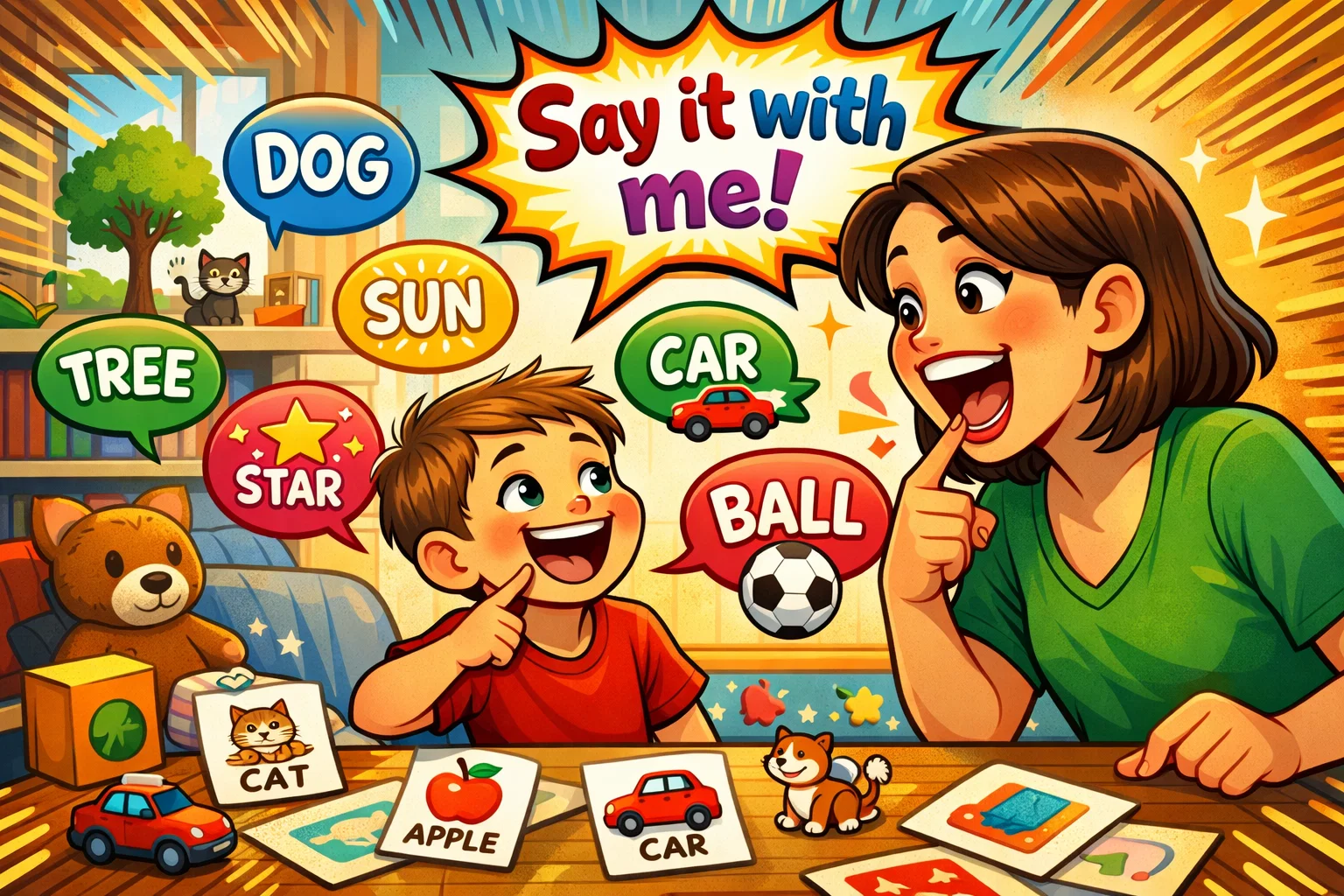
Learning to communicate is one of the most important milestones in a child’s early development — and it does not have to feel like work. Speech therapy games for kids offer a practical, engaging way to support speech and language skills at home, without the pressure of formal sessions.
This guide covers a wide range of speech therapy activities organized by skill area and age group, along with tips to help parents create a supportive environment for language development at home. From toddler-friendly games to more structured activities for school-age kids, every suggestion here is designed to be accessible, effective, and fun.
Speech Therapy Games for Turn-Taking Skills
Turn-taking is one of the foundational skills of communication. Before a child can hold a full conversation, they need to understand the rhythm of interaction — listening when someone else speaks and responding when it is their turn. Research in early childhood development suggests that turn-taking practice, even in non-verbal games, builds the social awareness needed for later conversational competence.
Board Games for Turn-Taking Practice
Simple board games like Chutes and Ladders or Snakes and Ladders are excellent tools for teaching children to wait, observe, and respond. These games require children to roll dice, count spaces, and verbally interact with other players — all within a structured, predictable format. For toddlers, even a basic game of rolling a ball back and forth establishes the same principle: you go, then I go.
Simple Verbal Turn-Taking Activities
A quick speech therapy activity like “my turn, your turn” with a set of picture cards works well for younger children. One player names an object on a card, then passes the deck to the next player. Games that involve rolling a die and naming something in a category — such as an animal that starts with a specific sound — combine turn-taking with vocabulary and articulation in a single activity.
Tips to Encourage Patience and Participation
Children who struggle with waiting may benefit from visual cues, such as a small object that signals whose turn it is. Keeping turns short and praise frequent helps maintain engagement. Using a consistent routine — same game, same rules — also reduces frustration and helps children internalize the structure of interaction.
Games for Articulation Practice
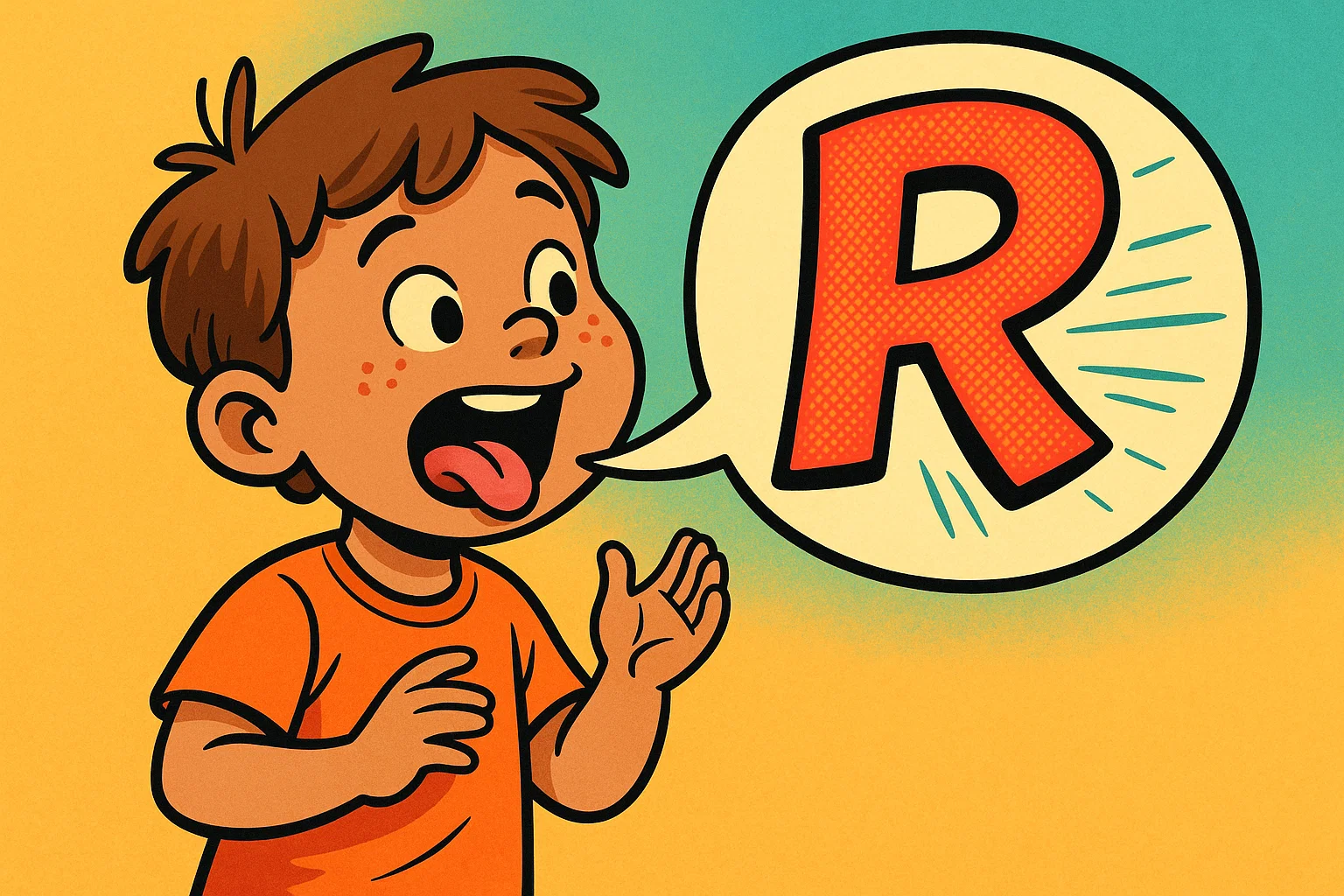
Articulation refers to the physical production of speech sounds. Children with articulation difficulties may substitute, omit, or distort sounds in ways that make their speech harder to understand. Effective speech therapy for articulation uses repetition, visual feedback, and engaging activities to help children practice target sounds without feeling self-conscious.
Sound Repetition Games
Sound repetition games focus on a single speech sound and repeat it across many words. For example, if a child is working on the /s/ sound, a game might involve sorting picture cards into groups of words that begin with /s/ versus other sounds. This kind of targeted practice reinforces the sound pattern and builds the muscle memory needed for clear pronunciation.
Tongue Twisters and Silly Sound Challenges
Tongue twisters like “She sells seashells” are a playful way to improve clarity and mouth movement. Children enjoy the silliness of getting tongue-tied, which lowers the emotional stakes of practicing difficult sounds. Starting with slower repetitions and building to speed helps children hear the difference between correct and incorrect productions.
Mirror-Based Speaking Activities
Using a handheld mirror during speech therapy activities gives children immediate visual feedback on their mouth positioning. A child practicing the /th/ sound, for example, can watch to confirm their tongue is between their teeth. This visual cue supports self-monitoring, which is an important skill for generalizing new sounds into everyday speech.
Play-Based Articulation Activities and Age-Appropriate Sound Targets
Play-based speech therapy activities are especially effective for articulation because they give children many repetitions of a target sound without the activity feeling like drilling. The key is to embed the target sound into a game the child already enjoys.
For example, if a child is working on the /f/ sound, a fishing game where every “catch” is a picture card of a word starting with /f/ — fish, fox, frog, fan — provides dozens of natural repetitions in a single session. Similarly, a simple card-flip game where a child names each picture before placing it in a pile keeps the pace quick and the engagement high.
Different ages tend to work on different sounds. Children around age 3 are typically developing sounds like /p/, /b/, /m/, /n/, /d/, and /h/. By age 4, sounds like /k/, /g/, /f/, and /y/ are usually emerging. Five-year-olds are often working on /l/, /v/, and blends like /bl/ and /gr/. Knowing which sounds are developmentally expected for your child’s age helps you choose the most relevant speech sound games and avoid targeting sounds that are not yet age-appropriate.
Speech sound therapy activities do not need to be elaborate. A set of picture cards, a simple board game, or even a scavenger hunt around the house can all become effective articulation practice when the target sound is woven into the activity naturally.
Matching and Sequencing
Language is not just about individual words — it is about putting ideas together in the right order. Matching and sequencing activities build the cognitive framework children need for sentence formation, storytelling, and reading comprehension. According to research in developmental psycholinguistics, narrative skills in early childhood are a strong predictor of later literacy success.
Memory Matching Games
Classic memory card games, where children flip cards and find matching pairs, support vocabulary recall and visual discrimination. Adding a language layer — such as asking the child to say each word aloud before flipping the card, or describe what they see — transforms a simple matching game into targeted language practice.
Sequencing Cards and Story Building
Sequencing cards show a series of events in an order that can be rearranged. A child might arrange four cards showing a character waking up, eating breakfast, going to school, and arriving home. Discussing why one card comes before another reinforces temporal language (first, then, next, finally) and helps children build logical narrative structures.
Daily Routine Sequencing Activities
Everyday routines are a built-in opportunity for sequencing practice. During bath time or while getting dressed, parents can prompt children to describe what comes next: “After you put on your shirt, what do we do?” This kind of routine-based practice helps children generalize language skills beyond formal therapy sessions.
Speech Therapy Games for Inferencing Skills
Inferencing — the ability to read between the lines and draw conclusions from incomplete information — is central to both receptive and expressive language. Children who struggle with making inferences often find it difficult to understand jokes, predict story outcomes, or interpret social cues. Building this skill through games and activities supports not just speech development, but broader communication competence.
Picture Guessing Games
Show a child a picture and cover part of it, asking them to guess what is happening or what they cannot see. This activity promotes making inferences from context and develops the habit of looking for clues rather than waiting for explicit answers.
“What Happens Next” Story Games
Read or tell a short story and pause before the ending, asking the child to predict what will happen. Discussing why they chose their answer — what clues led them there — reinforces the inferencing process. This kind of game also develops narrative comprehension and expressive language simultaneously.
Clue-Based Guessing Activities
Give a child a series of descriptive clues and ask them to identify the object or person being described: “It has four legs. It says meow. It likes to sleep in the sun.” This activity strengthens receptive language, vocabulary, and the ability to combine pieces of information into a conclusion.
Games for Categorization and Comparing Skills
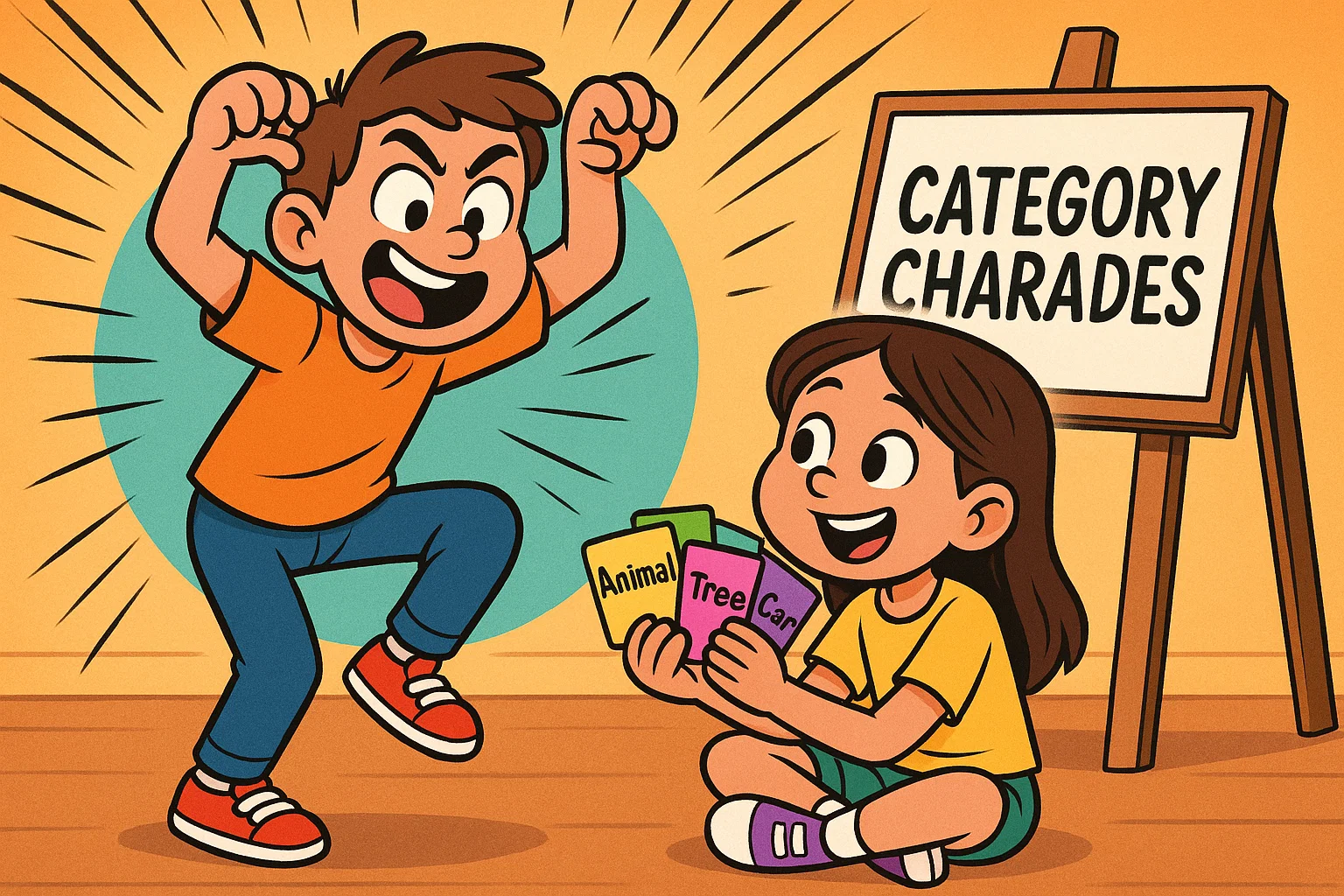
The ability to group, compare, and describe objects is a core language skill that supports vocabulary development and conceptual thinking. Children who can categorize objects and explain similarities and differences demonstrate a deeper understanding of word meaning than those who know only isolated labels.
Sorting and Grouping Games
Provide a set of objects or picture cards and ask a child to sort them into groups. Animals and vehicles, foods and clothing, or things found indoors versus outdoors — any sorting task encourages children to think about shared attributes and verbalize their reasoning.
Comparing and Contrasting Activities
Hold up two objects and ask: “How are these the same? How are they different?” A banana and a lemon are both yellow and fruit-shaped, but one is sweet and one is sour. This structured compare-and-contrast activity builds descriptive vocabulary and supports the kind of logical language used in academic settings.
“Name Ten” Style Word Games
Ask a child to name as many items in a category as they can in 30 seconds — animals, sports, foods that are red. This game strengthens vocabulary retrieval speed, builds category knowledge, and is a low-pressure way to practice expressive language at home.
Games for Social Communication Skills
Social communication — also called pragmatic language — covers the unspoken rules of conversation: how to greet someone, stay on topic, take turns, and respond appropriately. Many children, including those with autism spectrum disorder or social communication disorder, benefit significantly from structured practice in this area.
Role-Playing Scenarios at Home
Pretend play is one of the most powerful tools for building social communication skills. Set up simple scenarios — ordering food at a restaurant, answering the phone, introducing yourself to a new friend — and take turns playing each role. Role-playing allows children to rehearse real-life conversations in a safe, low-stakes environment.
Emotion Recognition and Expression Games
Use a set of picture cards showing different facial expressions and ask the child to identify the emotion. Then extend the activity by asking, “When might someone feel that way?” Emotion recognition supports empathy and helps children navigate social situations more effectively.
Conversation Practice Games
Structured conversation games — where each player must ask a question and the other must respond in a full sentence — target both receptive and expressive language. Using conversation prompt cards can help children who struggle to initiate dialogue. The goal is not perfect grammar, but the habit of engaging and responding appropriately.
Speech Therapy Activities by Age Group: Toddlers, Preschoolers, and School-Age Kids
Speech Therapy Games for Toddlers (Under 2)
For very young children, the best speech therapy games are barely distinguishable from ordinary play. Toddlers under two are building their first words and learning that sounds carry meaning, so activities should be simple, repetitive, and tied to familiar objects and routines.
Object Labeling During Play
Hold up a toy or household object, name it clearly, and pause to give your toddler a chance to attempt the word or sound. Repeating this across many objects throughout the day — a cup, a shoe, a ball — builds early vocabulary in a natural, low-pressure way. Toddler speech games like this require no materials beyond what is already in your home.
Sound Imitation Games
Make animal sounds, vehicle sounds, or simple consonant-vowel combinations (“ba-ba,” “ma-ma”) and wait for your toddler to copy you. This back-and-forth imitation is one of the earliest forms of turn-taking and directly supports speech sound development. Keeping sessions short — just a few minutes — matches a toddler’s natural attention span.
Peek-a-Boo and Anticipation Games
Games that build anticipation, like peek-a-boo or hiding a toy under a blanket, encourage toddlers to vocalize and communicate. The excitement of the reveal naturally prompts sounds and early words. These games for speech therapy with toddlers also reinforce object permanence, which supports cognitive development alongside language.
Adapting activities to a child’s developmental stage is essential for effective practice. A game that is too simple will not challenge a child enough to build new skills, while one that is too complex may cause frustration and disengagement.
Speech Therapy Games for Preschoolers
Preschool speech therapy activities should be visual, playful, and brief. Children aged 2 to 5 have short attention spans and learn best through repetition and sensory engagement. The activities below work well across this age range, though you can adjust the complexity to suit your child — simpler for 2- and 3-year-olds, and slightly more structured for 4- and 5-year-olds who are ready for more challenge.
Picture Searches and Hide-and-Seek
Hide picture cards around a room and ask the child to find them, naming each object as they discover it. This combines movement, vocabulary, and the natural excitement of discovery. It is also an effective way to target specific speech sounds — for example, only hiding pictures of words that begin with the /b/ sound.
Songs, Rhymes, and Repetition Games
Nursery rhymes and repetitive songs provide auditory patterns that support speech sound development. Songs like “Old MacDonald” reinforce animal vocabulary and vowel sounds. Clapping to the rhythm of a rhyme also builds phonological awareness, which is a foundational skill for reading.
Speech Games for 4-Year-Olds: Expanding Sentences
By age 4, most children are combining four or more words in sentences. A simple game is to start a sentence and ask your child to finish it: “The dog is running because…” or “I want to go to the park so that…” This builds expressive language and helps 4-year-olds practice more complex sentence structures in a playful way.
Speech Games for 5-Year-Olds: Storytelling and Retelling
Five-year-olds are typically ready to retell simple stories and describe events in sequence. After reading a short book together, ask your child to tell the story back to you using their own words. Prompt with questions like “What happened first?” and “How did it end?” This activity targets narrative language, vocabulary, and the sequencing skills that support early literacy.
Speech Therapy Games for School-Age Kids
Older children are ready for more structured, rule-based activities that incorporate higher-level language skills like description, inferencing, and narrative building.
I Spy and Guessing Games
“I spy with my little eye something that is round and orange” prompts descriptive language in a familiar game format. This activity builds spatial concepts, adjective vocabulary, and the ability to give accurate directions — all skills targeted in formal therapy sessions.
Card Games and Board Games
Games like Uno, Go Fish, and Bingo require children to follow directions, use numbers and colors, and interact verbally with other players. Many SLPs use these games in in-person therapy because they naturally incorporate language without drawing attention to it. Playing these games at home reinforces the same skills in a familiar, comfortable setting.
Tips for At-Home Speech Therapy Practice
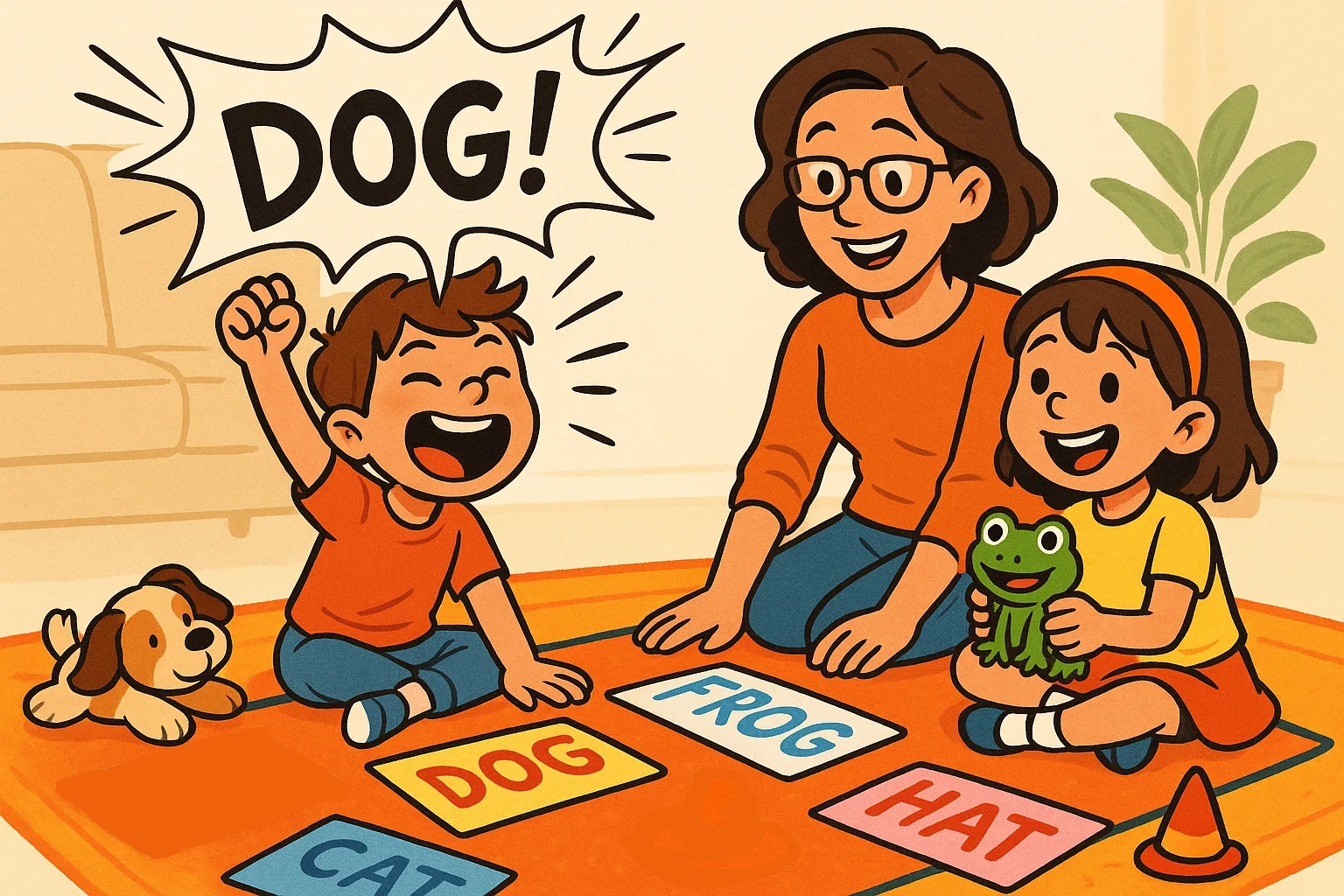
Consistency matters more than intensity. Ten to twenty minutes of daily practice is more effective than a long session once a week. The goal is to make speech and language practice a natural part of the day — not a separate chore.
The Power of Play in Speech Development
Play-based learning works because it reduces anxiety and increases engagement. When a child is focused on winning a game or completing a story, they are less self-conscious about their speech. This relaxed state supports risk-taking and faster progress in language development.
Here are some key principles to guide at-home practice:
- Follow the child’s lead and build activities around their current interests
- Offer specific praise for communication attempts, not just correct answers
- Model the target language naturally rather than drilling or correcting repeatedly
Active Listening and Reading Activities
Reading aloud together is one of the most research-supported activities for language development. Pausing to ask questions — “What do you think will happen next?” or “Why did the character do that?” — turns passive listening into active comprehension practice. Picture books with repetitive phrases are especially effective for toddlers and early readers.
Using Flashcards and Visual Aids
Flashcards targeting specific vocabulary or speech sounds can supplement games and activities. Used alongside other activities rather than in isolation, visual aids help reinforce learning and give children a reference point for new words and phrases.
Additional Resources and Support for Parents
Free Speech Therapy Materials and Communities
Many SLPs share free printable games, picture cards, and activity guides through platforms like Teachers Pay Teachers, Pinterest, and dedicated speech therapy blogs. Parent support communities on social media can also be a helpful source of ideas and encouragement.
When to Seek Professional Help
Home games and activities are most effective as a supplement to professional support — not a replacement. Signs that a child may benefit from a formal evaluation include limited vocabulary for their age, difficulty being understood by unfamiliar adults, or frustration when trying to communicate.
Early intervention leads to significantly better outcomes, and most speech-language pathologists offer initial consultations to help parents understand their options, including online speech therapy for families in areas with limited access to in-person services.
Play-Based Speech Therapy Activities
Play-based speech therapy is an approach where language goals are embedded into activities the child finds genuinely enjoyable. Rather than sitting at a table and repeating words on command, a child might practice the same skill while building with blocks, acting out a story, or playing a simple card game. The learning happens, but it does not feel like work.
Research in early childhood development consistently supports play as the primary vehicle for language learning in young children. When a child is engaged and relaxed, they are more likely to take communicative risks, attempt new words, and generalize skills to everyday situations.
Here are four concrete play-based speech therapy activities you can try at home:
- Pretend Play Narration: Set up a simple pretend scenario — a toy kitchen, a doctor’s kit, a farm set — and narrate what is happening as you play together. Encourage your child to describe their actions: “The cow is eating grass” or “I am making soup.” This builds expressive language and sentence structure in a completely natural context.
- Sensory Bin Word Hunt: Fill a bin with rice, sand, or dried pasta and hide small objects or picture cards inside. As your child digs out each item, they name it, describe it, or use it in a sentence. The sensory element keeps engagement high while the naming task targets vocabulary and articulation.
- Building Block Descriptions: While building with blocks or Lego, take turns describing what you are adding: “I am putting a big red block on top.” Ask your child to follow directions using positional language — “Put the blue one next to the tall tower” — to target both receptive and expressive language.
- Puppet Play: Use simple hand puppets or sock puppets to act out short conversations. Children who are reluctant to speak directly often find it easier to “speak through” a puppet. This lowers the emotional stakes and encourages more spontaneous language, making it one of the most effective fun speech therapy activities for hesitant communicators.
The common thread across all play-based activities is that the child’s interest drives the session. Following your child’s lead — joining their game rather than redirecting them to yours — creates the conditions where language naturally flourishes.
Final Thoughts on Speech Therapy Games for Kids at Home
Supporting a child’s speech and language development at home does not require special training or expensive materials. The most effective approach is a consistent, playful one — games that feel fun to the child, moments in the day that naturally invite communication, and a caregiver who listens with genuine interest.
Every child develops at their own pace, but with regular, positive practice, the building blocks of confident communication take root early and grow strong.
FAQs About Speech Therapy Games for Kids at Home
What are the best speech therapy games for kids at home?
The best games are simple, interactive, and adaptable to the child’s interests and goals. Board games like Chutes and Ladders, matching card games, storytelling activities, and role-play scenarios cover a wide range of speech and language targets. Choosing games based on the child’s age and current developmental needs ensures the practice is appropriately challenging.
How often should speech therapy games be played at home?
Short daily sessions of 10 to 20 minutes are more effective than longer, less frequent practice. Consistency helps children retain and generalize new skills, and regular engagement with language activities reinforces what is learned in formal therapy sessions.
Can speech therapy games replace professional therapy?
Home games and activities support progress and help children generalize skills into everyday life, but they do not replace the expertise of a licensed speech-language pathologist when professional support is needed. They are most effective as a complement to formal therapy, not a substitute.
Which games help improve pronunciation and articulation?
Sound repetition games, tongue twisters, mirror-based speaking activities, and word list games that target specific sounds are all effective for articulation practice. Regular repetition in different contexts helps children move from conscious effort to automatic, clear speech production.
How do you make speech therapy practice fun for kids?
Following the child’s lead, using their favorite themes or characters, offering specific positive feedback, and keeping activities varied all contribute to a low-pressure, enjoyable experience. When children feel safe and successful, they are more willing to take the communication risks that lead to real progress.

Take a short quiz to find out what your everyday choices say about your parenting style
When your child is curious about something new, what’s your instinct?
Take a short quiz to find out what your everyday choices say about your parenting style
“Can I download this app?” What happens next?
Take a short quiz to find out what your everyday choices say about your parenting style
When it comes to rules at home, which sounds most like you?
Take a short quiz to find out what your everyday choices say about your parenting style
If you could give your child one life skill today, what would you pick?
Take a short quiz to find out what your everyday choices say about your parenting style
Your child gets to choose what to watch. What would your ideal setup look like?
Take a short quiz to find out what your everyday choices say about your parenting style
Pick your parenting superpower ✨