12 Best Science Games for Elementary Kids: Digital and Classroom Picks

 Discover a Free Education Video App for Kids
Pastory uses AI to personalize educational video content based on your child’s interests and personality. Safe, engaging, and built for curious young minds. Sign up now to stay updated and enjoy early access with a free trial
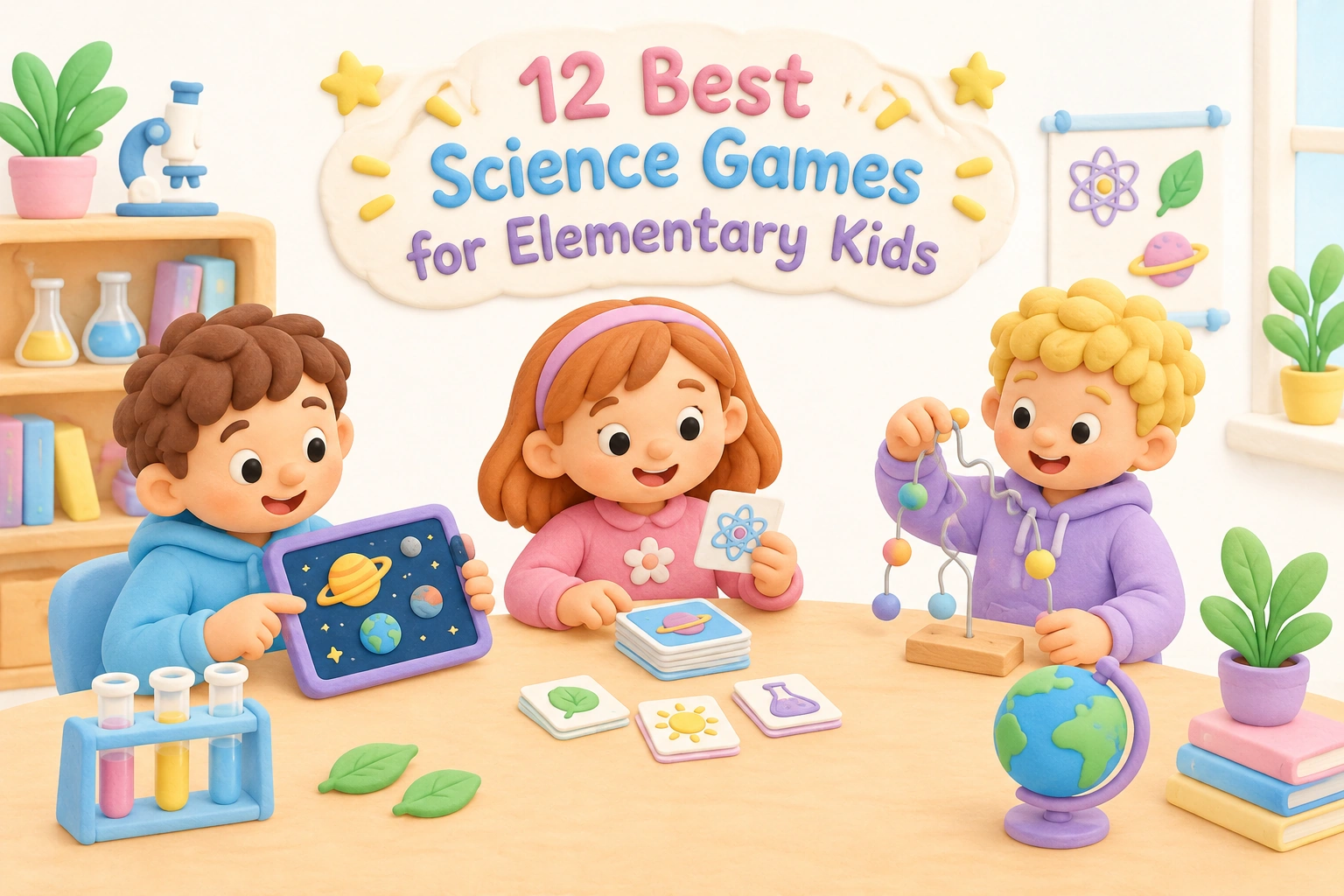
Finding fun science games that genuinely teach something — rather than just keeping a child busy — is one of the more practical challenges parents and teachers face. The good news is that game-based learning in science has a meaningful evidence base behind it, and the range of options available for elementary students has grown considerably. This guide covers 12 carefully selected science games for kids in grades K–5, split between digital platforms and classroom or physical formats, with grade-level guidance, cost notes, and honest notes on what each game actually develops.
Key Takeaways
- Game-based learning can support science understanding, student engagement, and critical thinking when games are well-matched to a child’s grade level and the concepts being taught.
- Digital science games work best as a complement to hands-on science activities, not a replacement for them — caregiver or teacher involvement improves outcomes.
- Several high-quality free online science games exist from trusted sources including NASA, PBS Kids, and the Smithsonian, making cost a manageable barrier for most families.
- Classroom science games and physical board games offer valuable offline alternatives for children with limited device access or those who benefit from tactile, social learning.
- NGSS alignment matters for teachers and homeschoolers who need games to connect to specific curriculum standards — not all platforms make this easy to verify.
Why Science Games Support Elementary Learning
Research from institutions including the Smithsonian Science Education Center suggests that well-designed games and simulations can help students engage with science concepts more deeply than passive instruction alone. The Smithsonian’s work on games in the classroom highlights that interactive formats encourage students to test hypotheses, observe outcomes, and revise their thinking — core elements of the scientific method — in a low-stakes environment. A study associated with Legends of Learning found that students who used curriculum-aligned science games showed measurable improvements in assessment scores compared to those who did not, though it is worth noting that the research was conducted in partnership with the platform itself, so independent replication matters.
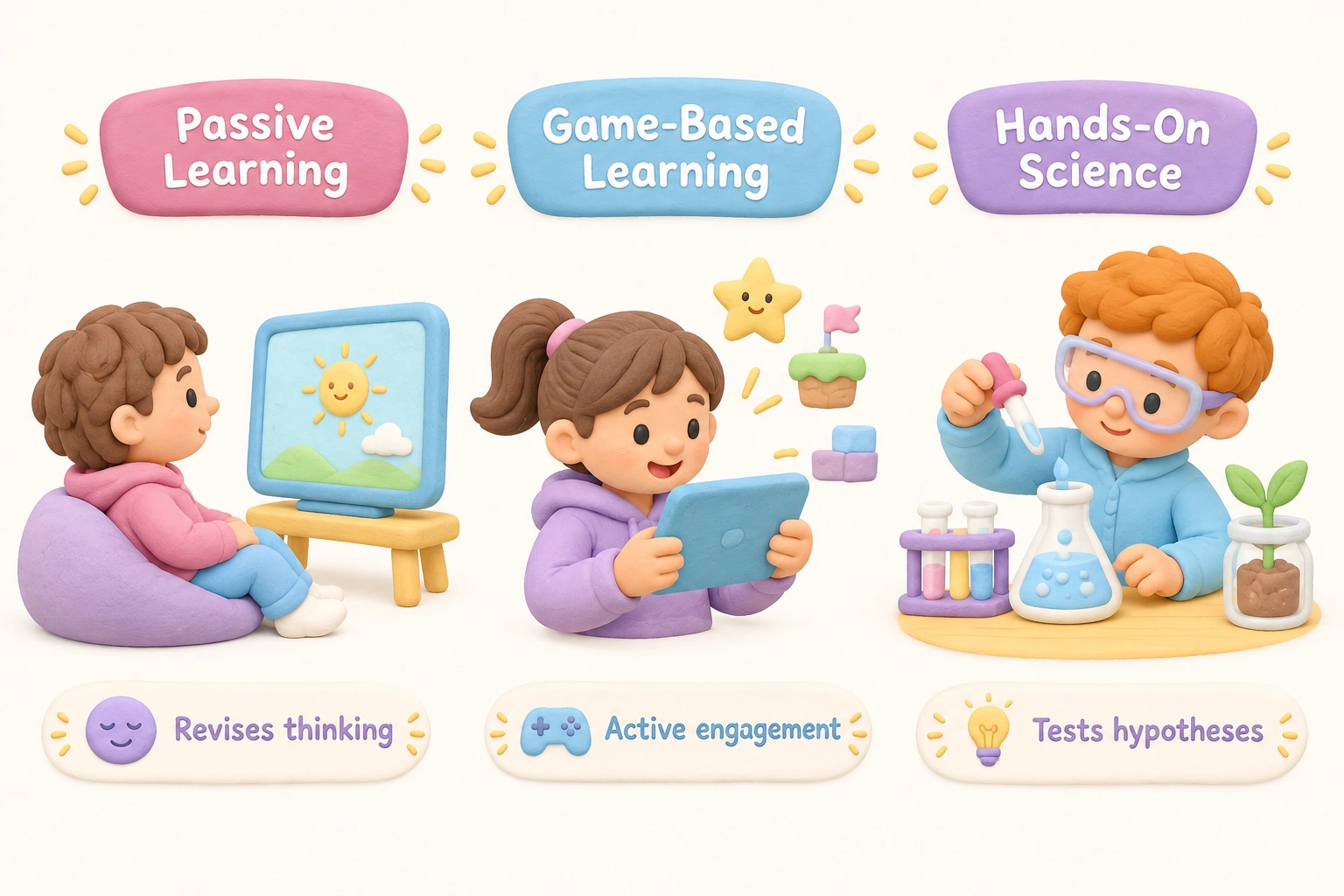
For elementary students specifically, game-based learning taps into the developmental reality that children aged 5–11 learn most effectively through active, exploratory engagement rather than passive reception. Games that require decision-making, pattern recognition, or cause-and-effect reasoning align well with the cognitive capacities developing during this stage. That said, not every game marketed as educational delivers meaningful learning — the quality of the underlying content, the clarity of feedback, and the connection to real science concepts all vary significantly between platforms.
Quick-Reference Comparison Table
| Game | Type | Grade Band | Science Topic | Cost | NGSS-Aligned |
|---|---|---|---|---|---|
| NASA Space Place | Digital | K–5 | Earth & space science | Free | Partial |
| PBS Kids Design Squad | Digital | K–3 | Physical science, engineering | Free | Partial |
| Legends of Learning | Digital | K–8 | Life, earth, physical science | Freemium (teacher account) | Yes |
| Sheppard Software Science | Digital | 2–5 | Food chains, human body, ecosystems | Free | No |
| BrainPOP Science Games | Digital | 3–5 | Multiple topics | Subscription | Partial |
| Smithsonian Aquation | Digital | 3–5 | Water cycle, conservation | Free | Yes |
| National Geographic Kids Games | Digital | K–4 | Animals, habitats, ecosystems | Free | No |
| ABCya Science Games | Digital | K–5 | Mixed science topics | Free (ads) / Subscription | No |
| Suspend | Physical | K–5 | Balance, forces, physics | Paid (one-time) | Partial |
| Professor Noggin’s Science | Physical | 2–5 | Science trivia, mixed topics | Paid (one-time) | No |
| Science Ninjas Valence | Physical | 4–5 | Chemistry, molecules | Paid (one-time) | Partial |
| Science Showdown Card Game | Physical | 2–5 | Science review, mixed topics | Low cost / printable | Flexible |
Digital Science Games: 8 Top Picks for Elementary Students
1. NASA Space Place
NASA Space Place is one of the most reliable free online science games available for elementary students, hosted directly by NASA and updated regularly. The platform offers browser-based interactive games covering earth science, space exploration, planets, the solar system, and weather — all grounded in real NASA data and imagery. Games are generally suitable for grades K–5, with simpler activities accessible to younger children and more concept-rich challenges appropriate for upper elementary. Because the content comes from a primary scientific source, parents and teachers can use it with confidence that the underlying science is accurate. No account or download is required, and the platform works on most browsers including Chromebook-compatible environments.
2. PBS Kids Design Squad
PBS Kids Design Squad focuses on engineering and physical science concepts through design challenges and interactive games aimed at children in grades K–3. Activities encourage children to think about forces, structures, and simple machines by building and testing virtual designs — a format that mirrors inquiry-based learning. The platform is entirely free, requires no account, and is browser-based. While Design Squad does not explicitly map every activity to NGSS standards, the engineering design process it models aligns broadly with the NGSS engineering practices strand. It works well as an introduction to physical science concepts for younger elementary students and pairs naturally with offline building activities using household materials.
3. Legends of Learning
Legends of Learning is one of the most comprehensively NGSS-aligned digital platforms available for elementary science, offering more than 2,000 curriculum-aligned games across grades K–8. Teachers can search by specific standard, grade level, and science topic — including life science, earth science, and physical science — making it genuinely useful for curriculum planning rather than just supplemental entertainment. The platform uses a game-world narrative structure that tends to sustain student engagement over multiple sessions. A free teacher account provides access to a meaningful subset of games; full access requires a school or district subscription. For homeschoolers, the free tier is worth exploring before committing to a paid plan. The research Legends of Learning has published on its own effectiveness should be read alongside independent evaluations, as the evidence base is still developing.
4. Sheppard Software Science Games
Sheppard Software offers a broad collection of free, browser-based interactive science games covering food chains, animal diets, the human body, ecosystems, and plant biology — topics that map well to life science content in grades 2–5. The interface is straightforward and low-distraction, which suits children who find visually busy platforms overwhelming. Games are not formally NGSS-aligned, but the content is accurate and the quiz-and-feedback format reinforces factual recall effectively. Sheppard Software works well as a science review game tool at the end of a unit, or as a self-directed exploration activity. It is entirely free with no account required, and it functions on most browsers without plugins.
5. BrainPOP Science Games
BrainPOP is a well-established educational platform that includes science games, animated videos, and quizzes searchable by grade level and topic. The science games section covers a wide range of physical science, life science, and earth science topics appropriate for grades 3–5. BrainPOP’s strength is the integration of games with short explanatory videos, which means children can watch a concept explained before engaging with it interactively — a sequence that research on multimedia learning suggests may improve retention. The platform requires a subscription for full access, which may be available through school accounts. Parents exploring it independently should check whether a school license is already in place before purchasing separately.
6. Smithsonian Aquation
Aquation is a free, NGSS-aligned digital game developed by the Smithsonian Science Education Center specifically for grades 3–5. The game focuses on water systems, the water cycle, and environmental conservation — topics that align with NGSS earth science standards including those related to Earth’s systems and human impacts. Players manage water resources across different regions, making decisions that reflect real-world conservation challenges. This systems-thinking format is more cognitively demanding than simple quiz games, making it better suited to upper elementary students who are ready to engage with cause-and-effect relationships across a complex system. The Smithsonian’s involvement provides a level of content credibility that many third-party educational games lack.
7. National Geographic Kids Games
National Geographic Kids offers a collection of free, browser-based games centered on animals, habitats, ecosystems, and geography — content that connects naturally to life science and earth science topics in grades K–4. The games are visually engaging and benefit from National Geographic’s extensive library of real wildlife photography and video, which adds authenticity to the science content. The platform does not formally align to NGSS standards, but it works well as a motivating entry point for children who are curious about the natural world. It is particularly effective for building background knowledge before a classroom unit on ecosystems or animal adaptations.
8. ABCya Science Games
ABCya is a broad educational games platform with a dedicated science section covering mixed topics across grades K–5. The science games vary in depth and rigor — some are straightforward matching or sorting activities, while others involve more substantive problem-solving. ABCya is free with advertisements, or available without ads via a low-cost subscription. It is not NGSS-aligned, but it offers a wide enough variety that teachers and parents can find grade-level-appropriate activities for most elementary science topics. The platform is Chromebook-compatible and requires no download, making it practical for classroom use. It works best as a supplemental engagement tool rather than a primary instructional resource.
Classroom Science Games: 4 Physical and Offline Picks
9. Suspend
Suspend is a physical balancing game in which players take turns hanging notched wire pieces from a central stand without toppling the structure. While it is not marketed explicitly as a science game, Suspend provides a concrete, hands-on experience of balance, forces, and center of gravity — concepts that align with physical science content in NGSS grades K–5. The game is suitable for children from kindergarten through grade 5, requires no reading, and works well in small groups or as a science center activity. It is a one-time purchase with no ongoing cost, and it is durable enough for repeated classroom use. Teachers can extend the learning by asking students to predict which piece will cause the structure to fall and explain their reasoning — a simple application of the scientific method.
10. Professor Noggin’s Science Card Games
Professor Noggin produces a series of science-themed trivia and matching card games covering topics including the human body, weather, ecosystems, and space. Each deck is designed for grades 2–5 and includes questions at two difficulty levels, making it possible to differentiate within a mixed-ability group. The card game format encourages verbal reasoning and recall, which complements the visual and interactive learning that digital science games provide. Professor Noggin games are a one-time purchase and require no technology, making them a practical option for classrooms with limited device access or for families who want to reduce screen time while maintaining science engagement. They work particularly well as science review games at the end of a unit.
11. Science Ninjas Valence Card Game
Science Ninjas Valence is a card game that introduces chemistry concepts — specifically how atoms bond to form molecules — through a competitive card-matching mechanic. It is best suited to grades 4–5, where students are beginning to encounter basic chemistry and matter concepts. The game does not require prior chemistry knowledge to play, but it reinforces the logic of chemical bonding through repeated gameplay in a way that abstract instruction alone rarely achieves. Valence is a one-time purchase and works for groups of two to four players, making it suitable for small-group classroom use or family play at home. It partially aligns with NGSS physical science standards related to matter and its interactions.
12. Science Showdown Review Game
Science Showdown is a flexible classroom science review game format — available in both printable card versions and commercially produced sets — that teachers can adapt to almost any science topic or grade level. Players compete to answer science questions correctly, with the competitive format driving engagement during review sessions. Because the content can be customized or selected by topic, Science Showdown can be aligned to specific NGSS standards depending on which card set or question bank a teacher uses. It is low-prep, low-cost, and does not require any technology, making it one of the most accessible classroom science games for teachers who want an engaging end-of-unit review without significant preparation time.
How to Choose the Right Science Game for Your Child
Selecting a science game that genuinely supports learning requires looking beyond surface-level engagement. A game that holds a child’s attention for twenty minutes is not automatically teaching science — the quality of the feedback, the accuracy of the content, and the connection to real concepts all matter. When evaluating any science game for elementary students, consider whether the game requires the child to apply a science concept to make progress, or whether correct answers are rewarded randomly. Games that provide meaningful feedback — explaining why an answer is correct or incorrect — tend to support deeper understanding than those that simply move the player forward after any response.
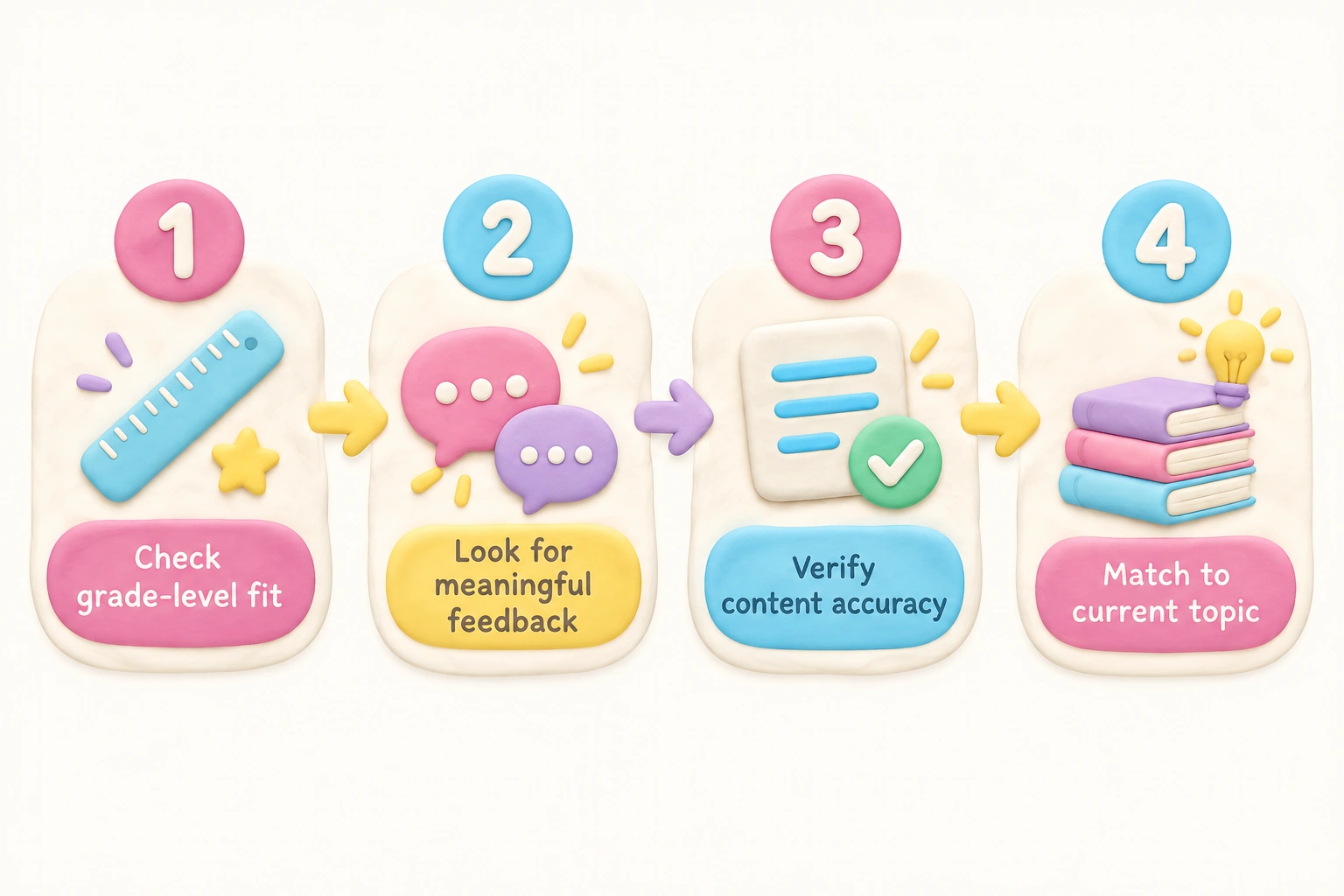
Grade-level appropriateness is a practical starting point. A game pitched too far below a child’s current understanding will feel boring; one that is too advanced may produce frustration rather than learning. The grade bands in the comparison table above are starting points, not rigid rules — a child who reads above grade level or has strong prior science knowledge may be ready for games in the next band up. For children who are newer to a topic, starting with a game that builds background knowledge (such as National Geographic Kids for ecosystems) before moving to a more complex simulation (such as Smithsonian Aquation) tends to work better than jumping straight to the more demanding format.
For teachers and homeschoolers who need games to connect to specific curriculum standards, NGSS alignment is worth verifying directly on the platform rather than taking marketing claims at face value. Legends of Learning and Smithsonian Aquation are among the most transparent about their standards alignment. For parents using games at home without a curriculum framework, NGSS alignment matters less than content accuracy and age-appropriateness.
Balancing Digital and Hands-On Science Activities
Digital science games offer genuine advantages — they can simulate phenomena that are too dangerous, expensive, or time-consuming to replicate in a classroom or at home, such as chemical reactions, space exploration, or ecosystem dynamics over time. However, the American Academy of Pediatrics and early childhood education researchers consistently emphasize that screen-based learning works best when it complements rather than replaces hands-on, physical engagement with the world. For elementary-aged children, direct sensory experience — touching, building, observing, measuring — remains a foundational part of how science understanding develops.
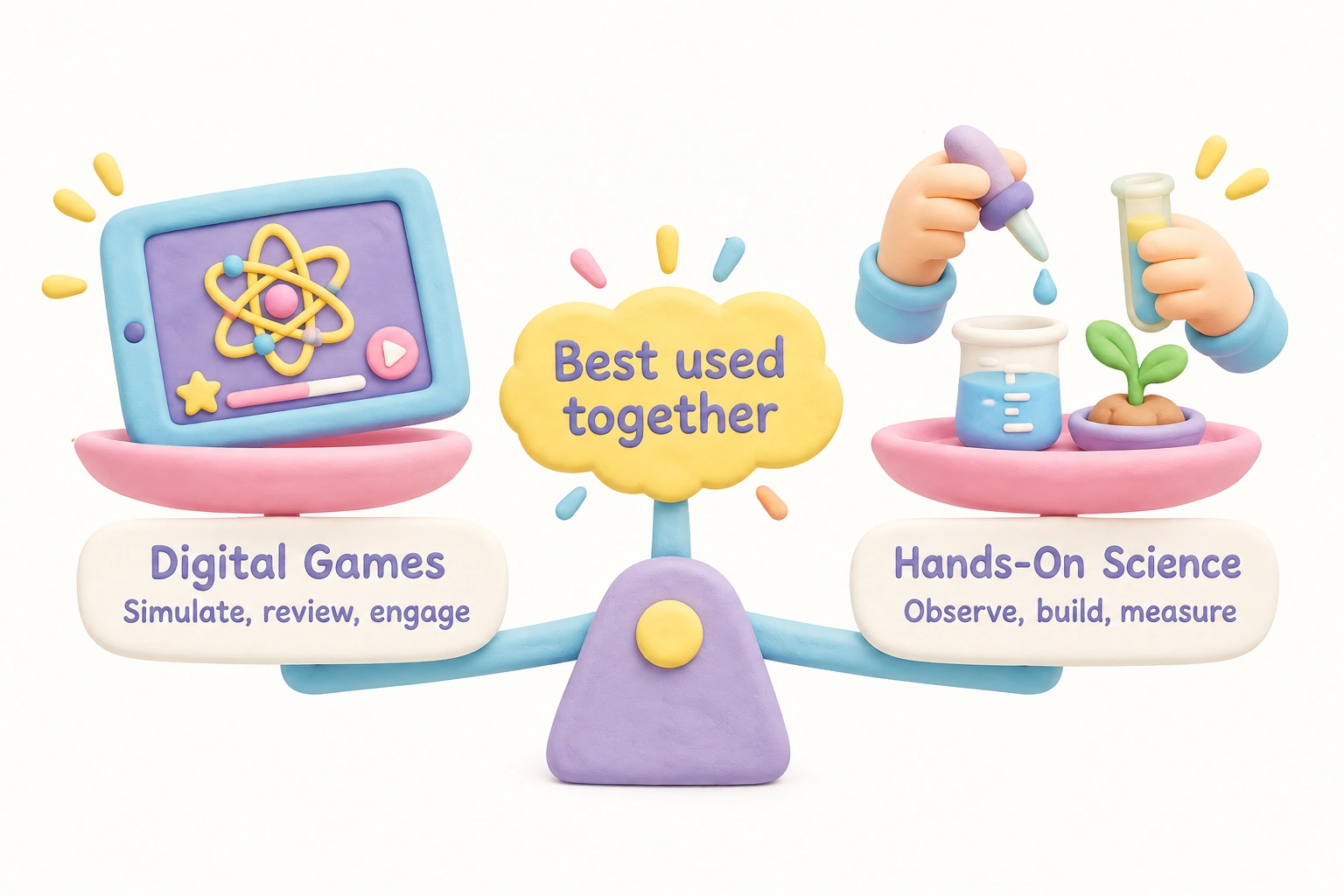
A practical approach for parents and teachers is to use digital science games as an introduction to a concept or as a review tool after hands-on science activities, rather than as the primary mode of instruction. For example, a child who has just completed a simple experiment with water and ice to explore states of matter will likely get more from a digital game on the topic than one who encounters the concept for the first time through a screen. Co-engagement — where a parent or teacher plays alongside the child, asks questions, and connects the game content to real-world observations — consistently produces better outcomes than independent screen use, particularly for children under age 8.
Frequently Asked Questions
Are free science games actually educational, or just entertainment?
Quality varies significantly. Free games from established educational sources — NASA Space Place, PBS Kids, and the Smithsonian — are developed with accurate science content and clear learning goals. Free games on general entertainment platforms may use science themes without meaningful educational content. Checking whether a game requires a child to apply a science concept to progress, rather than just clicking through, is a useful quick test of educational quality.
What science games work on Chromebooks without downloading anything?
NASA Space Place, PBS Kids Design Squad, Sheppard Software, National Geographic Kids, and ABCya are all browser-based and Chromebook-compatible without requiring downloads or plugins. Legends of Learning also works on Chromebooks through a browser with a teacher account.
Can science games replace classroom science instruction?
Science games are most effective as a supplement to direct instruction and hands-on science activities, not as a replacement. They can reinforce concepts, provide additional practice, and sustain engagement — but they do not replicate the observational, experimental, and collaborative dimensions of full science instruction. Teachers and parents should treat them as one tool among several rather than a standalone curriculum.
At what age can children start using digital science games independently?
Most developmental guidance suggests that children under age 6 benefit most from co-engagement with a caregiver during digital activities. From around age 6–7, many children can navigate simple browser-based games independently, though adult check-ins remain valuable. Upper elementary students (grades 3–5) are generally capable of more sustained independent use, particularly with platforms that provide clear instructions and meaningful feedback.
How do I know if a science game is NGSS-aligned?
Look for explicit standard codes (such as 3-PS2-1 or 4-LS1-1) listed on the game or platform page, rather than general claims of being

Take a short quiz to find out what your everyday choices say about your parenting style
When your child is curious about something new, what’s your instinct?
Take a short quiz to find out what your everyday choices say about your parenting style
“Can I download this app?” What happens next?
Take a short quiz to find out what your everyday choices say about your parenting style
When it comes to rules at home, which sounds most like you?
Take a short quiz to find out what your everyday choices say about your parenting style
If you could give your child one life skill today, what would you pick?
Take a short quiz to find out what your everyday choices say about your parenting style
Your child gets to choose what to watch. What would your ideal setup look like?
Take a short quiz to find out what your everyday choices say about your parenting style
Pick your parenting superpower ✨