130+ Kindergarten Facts for Kids: Animals, Space, Science & More

 Discover a Free Education Video App for Kids
Pastory uses AI to personalize educational video content based on your child’s interests and personality. Safe, engaging, and built for curious young minds. Sign up now to stay updated and enjoy early access with a free trial
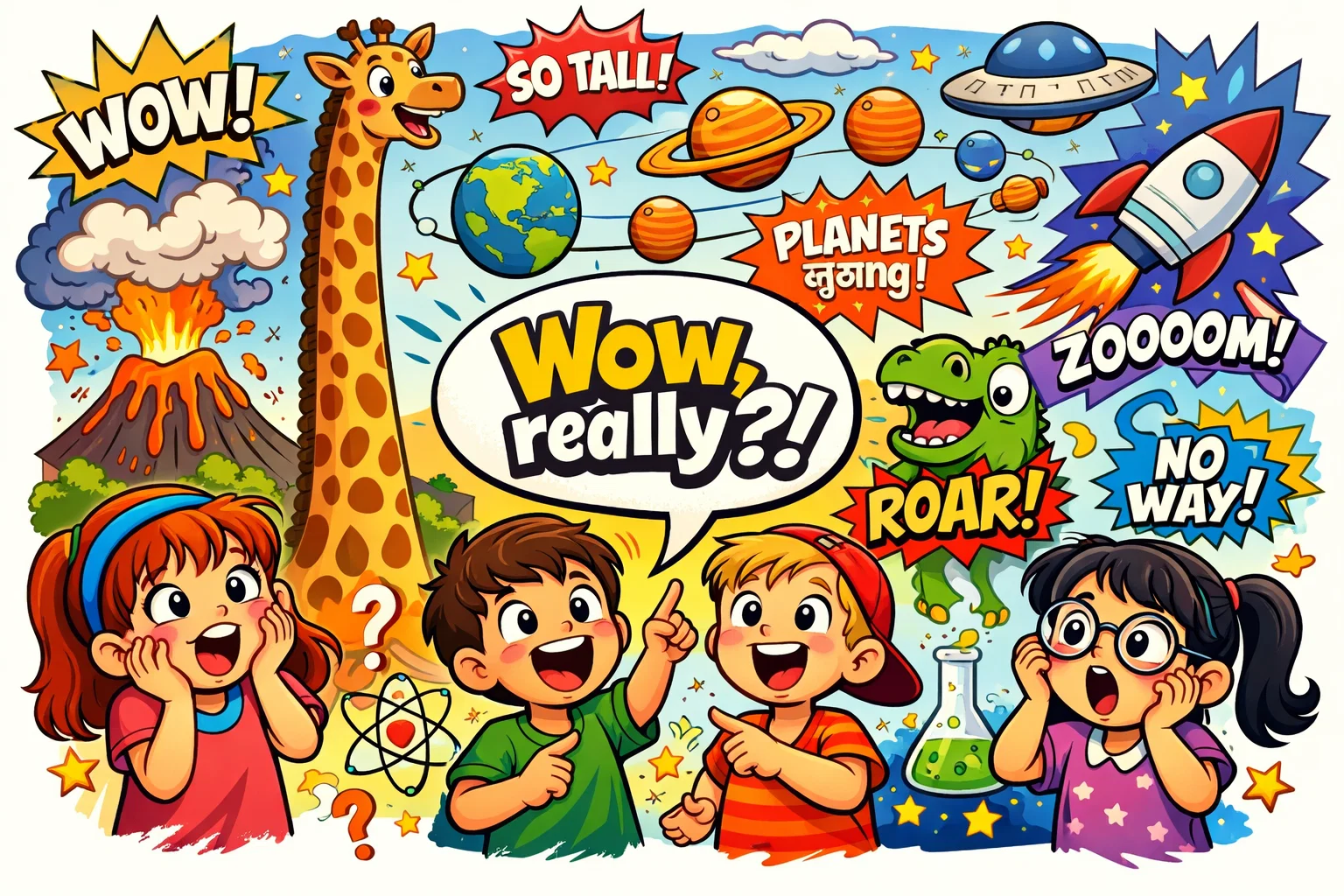
Looking for kindergarten facts for kids that are fun to read and easy to remember? This collection covers more than 130 surprising, silly, and educational facts across animals, space, the human body, food, history, geography, math, and more — each one chosen to spark real curiosity in young learners.
The facts are organized by topic, so you can jump straight to what your child loves most or explore the whole collection from start to finish.
Key Takeaways
- This article includes 130+ kindergarten facts for kids spanning 12 topic areas, from animals and space to history and math.
- Facts are organized by category, making it easy to find topics that match your child’s interests.
- Topics include wild animals, ocean creatures, planets, the human body, food, world geography, and more.
- Each fact is chosen to be age-appropriate, memorable, and easy for young learners to share.
- A FAQ section and tips on how to use the facts are included at the end of the article.
Random, Silly, and Surprising Fun Facts for Kids

Random facts are often the most memorable kind. They stick because they catch us completely off guard.
- A group of flamingos is called a “flamboyance.”
- Cats have a specialized collarbone that allows them to always land on their feet.
- Wombats produce cube-shaped droppings — the only known animal to do so.
- Polar bears have black skin under their white fur, which helps them absorb sunlight.
- Humans share approximately 60% of their DNA with bananas.
Mind-Blowing Facts That Sound Fake
- A day on Venus is longer than a year on Venus. Venus rotates so slowly that it completes a full trip around the Sun before it finishes one rotation on its own axis.
- Oxford University in England is older than the Aztec Empire — teaching began there around 1096, while the Aztec Empire wasn’t founded until the 1300s.
- Cleopatra lived closer in time to the Moon landing than to the construction of the Great Pyramid of Giza.
Short Quick Facts Kids Can Memorize
- Honey never spoils. Archaeologists have found 3,000-year-old honey in Egyptian tombs that was still edible.
- A snail can sleep for up to three years.
- There are more stars in the universe than grains of sand on all of Earth’s beaches.
- The Eiffel Tower grows taller in summer — heat causes the metal to expand by up to 15 cm.
Animal Fun Facts for Kids
Animals are one of the most searched categories of fun facts for kids — and it’s easy to see why. The animal kingdom is packed with behaviors that seem almost impossible.
Wild Animal Facts
Wild animals have developed extraordinary adaptations over millions of years of evolution.
- A lion’s roar can be heard from up to 8 kilometers away.
- Elephants are the only animals that cannot jump.
- Tigers have striped skin, not just striped fur — each pattern is unique, like a human fingerprint.
- Bears have been recorded to run at speeds of up to 56 km/h, faster than most humans can cycle.
- Polar bears in Alaska and Canada often travel hundreds of miles in search of food across sea ice.
Ocean Animal Facts
The ocean covers more than 70% of Earth’s surface, and the creatures living in it are among the most fascinating on the planet.
- Great white sharks can detect a single drop of blood in 100 liters of water.
- Octopuses have three hearts and blue blood.
- Dolphins sleep with one eye open, resting only half of their brain at a time.
- A blue whale’s heartbeat can be detected from 3 kilometers away.
- Sharks are older than trees — shark fossils date back over 450 million years, while trees appeared around 350 million years ago.
Insect Facts for Kids
Insects make up more than 80% of all known animal species on Earth, according to the Smithsonian Institution.
- A single ant can carry 10 to 50 times its own body weight.
- Butterflies taste with their feet using sensors called chemoreceptors.
- Fireflies produce “cold light” — nearly 100% of the energy they generate becomes light, with almost no heat wasted.
Cute Animal Facts Kids Love
- Baby pandas weigh only about 100 grams at birth, roughly the size of a stick of butter.
- Sea otters hold hands while sleeping so they don’t drift apart.
- Puppies are born blind, deaf, and without teeth. All three senses develop within their first few weeks of life.
Space Fun Facts for Kids
Space is one of the richest sources of amazing facts for any age. The scale, the mystery, and the sheer strangeness of the universe make it endlessly fascinating.
Planet Facts for Kids
The solar system contains eight planets, each with its own remarkable characteristics.
- Jupiter is so large that more than 1,300 Earths could fit inside it.
- Saturn’s rings are made mostly of ice and rock, and they are extraordinarily thin — often less than 100 meters thick despite spanning hundreds of thousands of kilometers.
- Mars has the tallest volcano in the solar system: Olympus Mons, which stands about 22 km high — nearly three times the height of Mount Everest.
- A year on Mercury lasts only 88 Earth days.
Moon and Sun
Earth’s closest neighbors in space hold some of the most surprising facts about space for kids:
- The Moon is moving away from Earth at a rate of about 3.8 centimeters per year. (Source)
- The Sun makes up 99.86% of the total mass of the entire solar system.
- Footprints left on the Moon by Apollo astronauts will remain there for millions of years — there is no wind or rain to erase them.
Astronaut and Space Exploration
Human space exploration has produced some of the most memorable moments in scientific history.
- The Apollo 11 mission’s guidance computer in 1969 had less processing power than a modern smartphone.
- Astronauts on the International Space Station witness approximately 16 sunrises and 16 sunsets every single day.
Science and Earth Fun Facts for Kids
Cool Science Facts
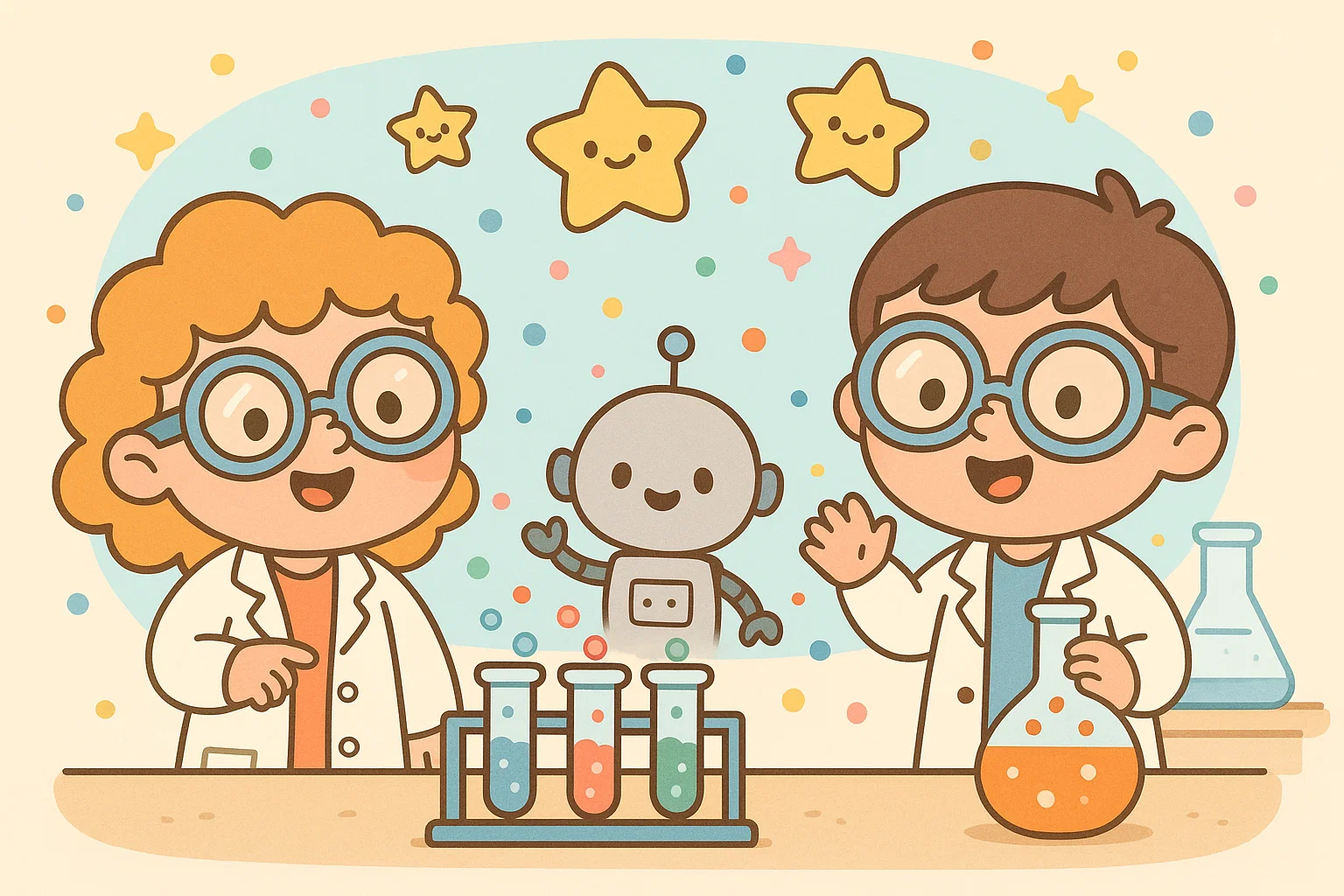
Physics and chemistry are full of surprising phenomena that challenge what we assume about everyday life.
- Hot water can freeze faster than cold water under certain conditions — this is known as the Mpemba effect.
- Gravity on Earth is not perfectly uniform. It varies slightly depending on location due to differences in Earth’s density.
- Sound travels about four times faster through water than through air.
- There are more possible iterations of a game of chess than there are atoms in the observable universe.
Earth Facts for Kids
Earth is approximately 4.5 billion years old, and its surface is constantly changing.
- Volcanoes can create new land — the Big Island of Hawaii is still growing due to ongoing volcanic activity.
- The Amazon Rainforest produces about 20% of the world’s oxygen. (Source)
- The equator is the imaginary line that divides Earth into the Northern and Southern Hemispheres.
- Brazil contains the largest portion of the Amazon Rainforest, covering roughly 60% of the total area.
Nature Facts Kids Find Amazing
- A single tree can absorb up to 22 kilograms of CO₂ per year.
- Mushrooms are more closely related to animals than to plants.
- Some jellyfish are considered biologically immortal — they can revert to their juvenile form when stressed or aging.
Human Body Fun Facts for Kids
Brain and Senses
The human brain is one of the most complex structures in the known universe.
- The human brain generates enough electricity to power a small lightbulb.
- Children’s brains are significantly more plastic (adaptable) than adult brains, which is why early learning experiences have a lasting impact on development.
- The human nose can detect over one trillion different scents.
Body Parts and Functions
- The human heart beats approximately 100,000 times per day.
- Bones are about five times stronger than steel of the same density.
- The human body contains approximately 37 trillion cells.
Weird Body Facts Kids Love
- Humans are the only animals known to blush.
- Fingernails grow faster than toenails — index fingernails tend to grow the fastest.
- The tongue is the only muscle in the human body attached at only one end.
Food Fun Facts for Kids
Fruit and Vegetable
- Strawberries are not technically berries — but bananas, avocados, and watermelons are.
- Carrots were originally purple, not orange. Dutch farmers selectively bred orange carrots in the 17th century.
- A cucumber is 96% water.
Sweet and Snack
- Chocolate was originally consumed as a bitter liquid by the Aztecs and Maya, not as a sweet solid.
- The world’s most expensive spice is saffron, which requires hand-harvesting of over 150,000 flowers to produce just one kilogram.
- The potato chip was reportedly invented by accident in 1853 in Saratoga Springs, New York.
Strange Food Facts Around the World
- In Japan, Kit Kat bars come in over 300 flavors, including wasabi and sweet potato.
- Greece consumes more cheese per capita than any other country in the world.
- In some parts of Brazil, fried insects are a popular and nutritious snack.
Geography Facts for Kids
Country and City
- Russia is so large it spans 11 time zones.
- Rhode Island is the smallest U.S. state by area, while Alaska is the largest.
- Vatican City is the smallest country in the world, covering just 0.44 square kilometers.
World Records and Natural Wonders
- The Amazon River discharges more fresh water into the ocean than any other river on Earth.
- The Sahara Desert is roughly the same size as the United States.
- Angel Falls in Venezuela is the world’s highest uninterrupted waterfall, dropping 979 meters.
Fun Map Facts Kids Should Know
- Africa is larger than China, the USA, India, and Europe combined.
- Arizona in the United States borders Mexico and has a climate that ranges from desert to mountain forest.
- The equator passes through 13 countries.
History Fun Facts for Kids
Ancient History
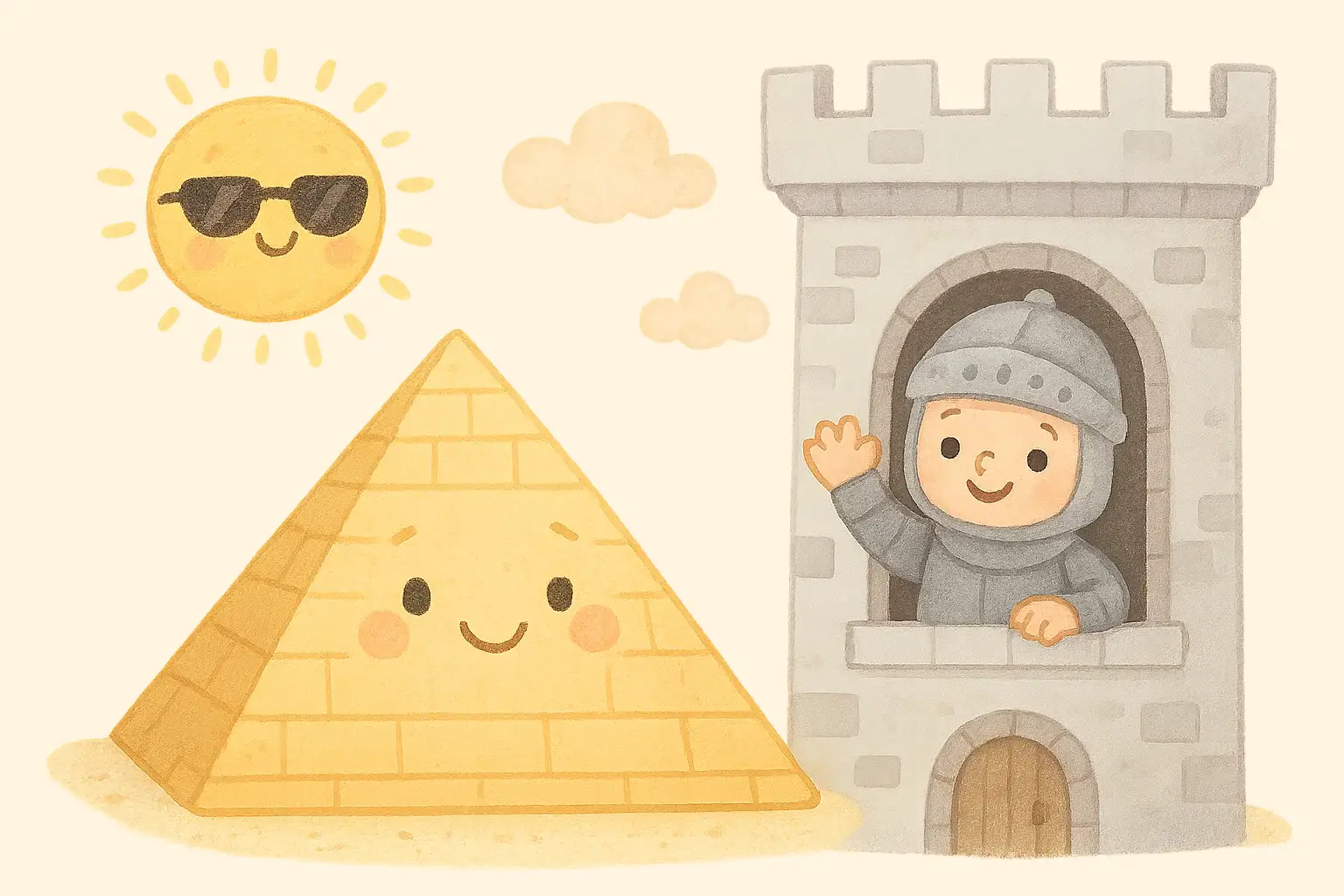
- Ancient Egyptians used moldy bread as an antibiotic — centuries before penicillin was discovered.
- The Great Wall of China took over 1,000 years to build, spanning multiple dynasties.
- Ancient Greece held the first recorded Olympic Games in 776 BCE.
Famous People
- Isaac Newton was born the same year Galileo died — 1642.
- Marie Curie is the only person in history to have won Nobel Prizes in two different sciences (Physics and Chemistry).
- Albert Einstein failed his first university entrance exam.
Weird History Facts
- Ancient Romans used crushed mouse brains as toothpaste.
- In the 1800s, it was fashionable in some parts of Europe to have a “hermit” living on your property.
- The Olympics in Ancient Greece allowed only men to compete — women had their own separate games called the Heraia.
Sports Fun Facts for Kids
Popular Sports
- Soccer is played in more countries than any other sport, making it the world’s most popular game.
- Basketball was invented in 1891 by Dr. James Naismith, who used a peach basket as the first hoop.
- The modern Olympic Games were revived in Athens, Greece, in 1896.
Strange Sports History Facts
- Tug of war was an Olympic event from 1900 to 1920.
- Golf was banned in Scotland in 1457 because the king worried it was distracting soldiers from archery practice.
- The first baseball gloves were flesh-colored so players wouldn’t be embarrassed to wear them.
Record-Breaking Sports
- The longest tennis match in history lasted 11 hours and 5 minutes at Wimbledon in 2010.
- Michael Phelps has won more Olympic gold medals than any other athlete in history — 23 gold medals in total.
- The highest-scoring NBA game ever ended 186–184, with the Detroit Pistons defeating the Denver Nuggets in 1983.
Math Fun Facts for Kids
Easy Number Facts
- Zero is the only number that cannot be represented in Roman numerals.
- The number 1 is neither prime nor composite — it is a special category on its own.
- A “googol” is a real number — it’s 1 followed by 100 zeros. Google named itself after this number.
Surprising Math Facts
- If you shuffle a deck of cards properly, the order is almost certainly unique in all of human history.
- Pi (π) has been calculated to over 100 trillion decimal places and never repeats.
- The sum of all numbers from 1 to 100 is 5,050 — a pattern discovered by mathematician Carl Friedrich Gauss at age 10.
School and Learning Fun Facts for Kids
Classroom Facts
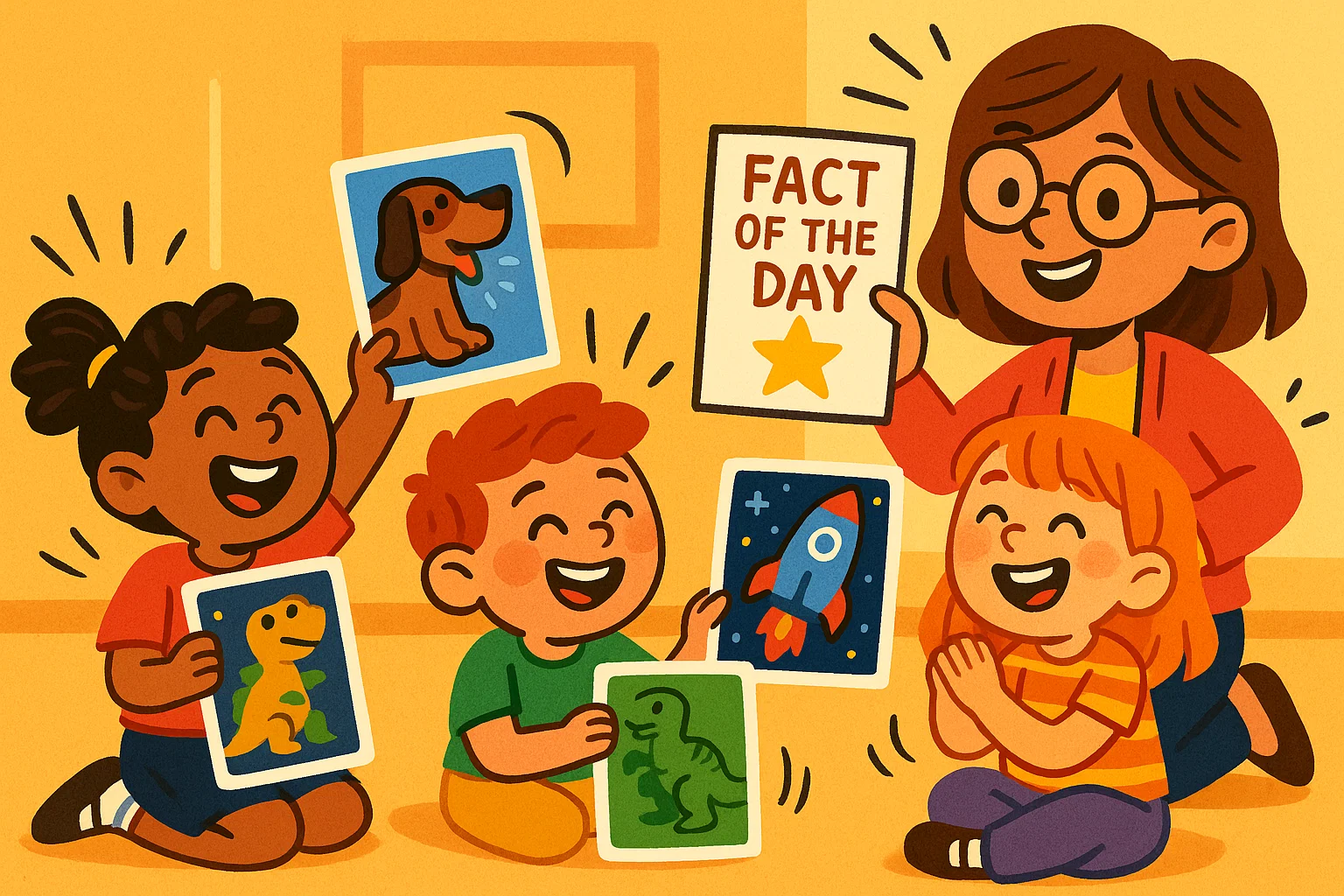
- Finland consistently ranks among the top countries for education quality, yet Finnish students have less homework than most countries.
- The world’s oldest university still in operation is the University of Bologna in Italy, founded in 1088.
- High school students in Japan clean their own classrooms — school cleaning is part of the curriculum.
Fun Study Facts
- Taking short breaks while studying improves focus and retention — this is known as the Pomodoro Technique.
- Drawing diagrams while learning helps many students understand complex concepts more quickly than reading alone.
- Teaching a concept to someone else is one of the most effective ways to reinforce your own understanding of it.
Fun Facts for Kids About the World
Culture and Traditions
- In Japan, it is considered polite to slurp your noodles loudly — it signals that you’re enjoying the meal.
- In Norway, there is a town called Hell — and yes, it does freeze over every winter.
- In some cultures across Southeast Asia and South America, beetles and crickets are considered delicacies and are sold in markets like snacks.
Language Fun Facts
- There are approximately 7,000 languages spoken in the world today, but over half of the global population speaks one of just 23 languages.
- The language with the most words in the world is English, with over 170,000 words currently in use according to the Oxford English Dictionary.
- “Sesame Street” has been translated into more than 30 languages and adapted for different cultures globally.
Global Weird Facts
- In Switzerland, it is illegal to own just one guinea pig — they are social animals and must have companionship.
- In Alaska, it is technically illegal to wake a sleeping bear to take a photograph. [Note: enforcement of this law is unclear, though regulations protecting wildlife exist]
- In South Korea, babies are considered 1 year old at birth, meaning age is calculated differently than in most other countries.
What to Do with These Fun Facts
The best part about collecting fun facts for kids is that they don’t have to stay on the page. They work in classrooms as conversation starters, at the dinner table as a nightly challenge, or as a basis for bigger projects — a child who learns that the Amazon produces 20% of the world’s oxygen might go on to research deforestation, biology, or environmental science on their own.
There are many effective ways to incorporate fun facts for kids into daily life:
- In the classroom: Use them as daily warm-ups or tie them to the subject being taught — space facts before a science lesson, history facts before a social studies unit.
- Through trivia games: Create a simple quiz based on facts from this list to combine friendly competition with learning.
- On the go: Keep a mental list of short, quick facts for car journeys or waiting rooms — they’re natural conversation starters that keep young minds active.
Parents and teachers can turn facts into quizzes, drawing prompts, or storytelling challenges. The goal isn’t memorization — it’s curiosity. When a child hears something surprising and asks “why?” or “how?”, that’s the exact moment learning takes root.
Fun Facts for Kids FAQs
What are fun facts for kids?
Fun facts for kids are short, engaging, and accurate pieces of information designed to surprise, entertain, and educate children. They typically cover topics children find naturally interesting — animals, space, the human body, food, and history — and are written in simple, accessible language. Organizations like National Geographic Kids have popularized this format as a way to support curiosity-driven learning.
Why do fun facts help kids learn?
According to research in cognitive psychology, novelty and surprise are powerful triggers for attention and memory encoding. When information feels unexpected or counterintuitive, the brain assigns it higher importance and is more likely to retain it long-term. Fun facts activate this response naturally, making them an effective educational tool — particularly for younger children whose attention spans are still developing.
Can fun facts improve memory and learning skills?
Fun facts can significantly boost memory and learning skills because they are short, engaging, and often surprising. When children encounter information that feels unusual or exciting, their brains are more likely to remember it. They also trigger curiosity, encouraging kids to ask questions and explore topics further. Over time, this builds stronger connections in the brain, improves recall ability, and helps develop critical thinking skills.
How to make learning fun with facts?
Learning becomes more enjoyable when facts are turned into interactive activities. Parents and teachers can create quizzes, trivia games, or flashcards to make learning feel like play. Storytelling is another effective method—wrapping facts into short stories helps kids remember them better. The key is to keep the experience playful, varied, and interactive so kids stay interested.
Where to find more reliable fun facts for kids?
Look for well-known children’s books, educational websites, and content created by museums, science centers, and schools. Libraries are also a great place to discover fact books tailored for different age groups. Online platforms that focus on education rather than entertainment alone tend to provide more accurate information. It’s important to check that facts are up to date and come from credible sources, ensuring children learn information that is both fun and correct.
Take a short quiz to find out what your everyday choices say about your parenting style
When your child is curious about something new, what’s your instinct?
Take a short quiz to find out what your everyday choices say about your parenting style
“Can I download this app?” What happens next?
Take a short quiz to find out what your everyday choices say about your parenting style
When it comes to rules at home, which sounds most like you?
Take a short quiz to find out what your everyday choices say about your parenting style
If you could give your child one life skill today, what would you pick?
Take a short quiz to find out what your everyday choices say about your parenting style
Your child gets to choose what to watch. What would your ideal setup look like?
Take a short quiz to find out what your everyday choices say about your parenting style
Pick your parenting superpower ✨