40 Best Grade 2 Drawing Ideas

 Discover a Free Education Video App for Kids
Pastory uses AI to personalize educational video content based on your child’s interests and personality. Safe, engaging, and built for curious young minds. Sign up now to stay updated and enjoy early access with a free trial
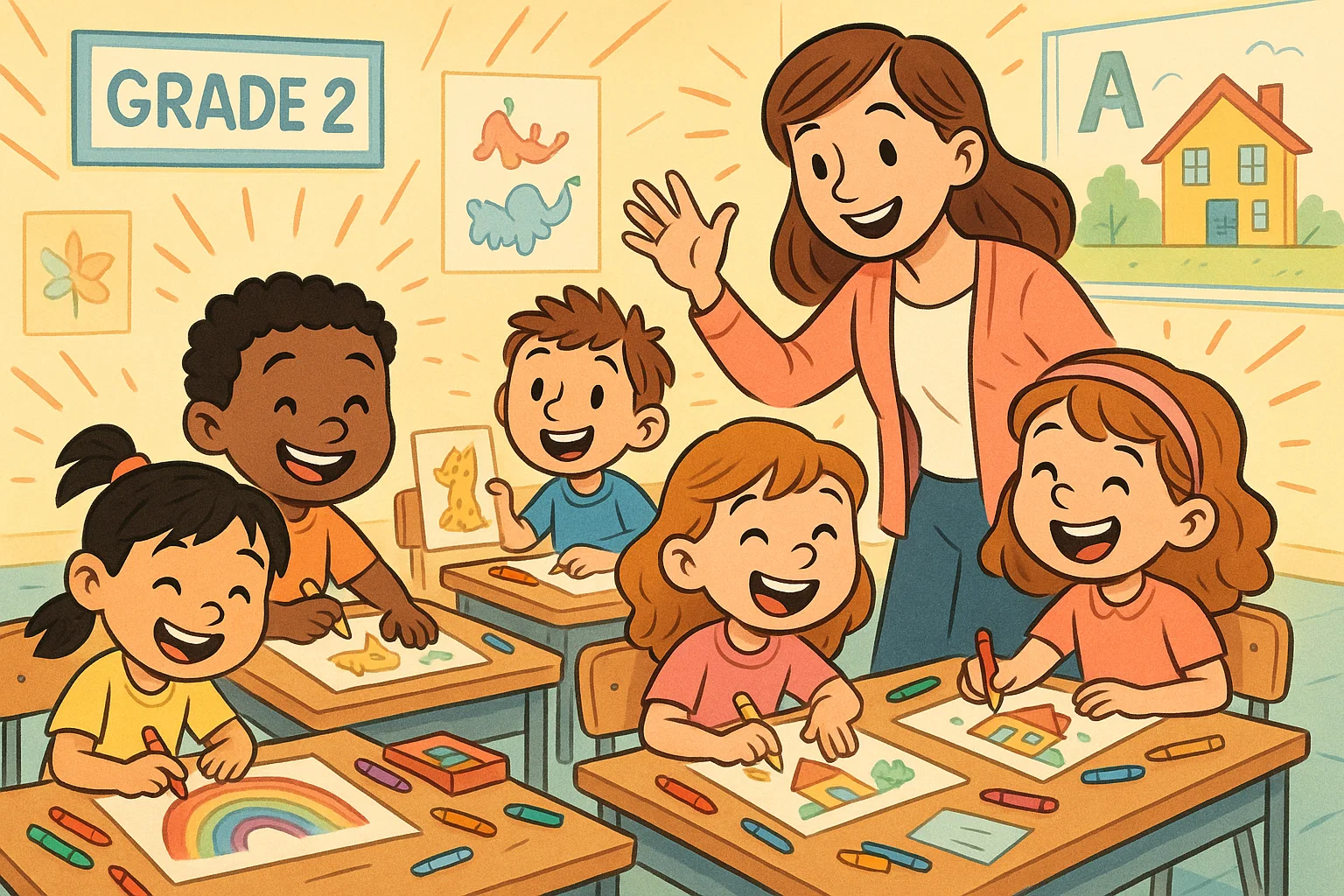
Drawing is a fundamental skill for 2nd grade learners, serving as a gateway to creative expression and fine motor development. This guide provides 40 engaging art project ideas perfect for 2nd grade art lessons or at-home exploration. Whether you are an art teacher looking to fill your art room with vibrant student artwork or a parent seeking fun art activities, these lessons range from step-by-step drawing to more open-ended, expressive projects. These ideas use simple materials such as markers, oil pastels, watercolor, and tempera paint to help children achieve strong results. By following these 2nd grade art lessons, children build confidence, and many teachers choose to save or download a PDF of the instructions for their 40-minute art classes.
Grade 2 Self-Portrait Drawing Ideas
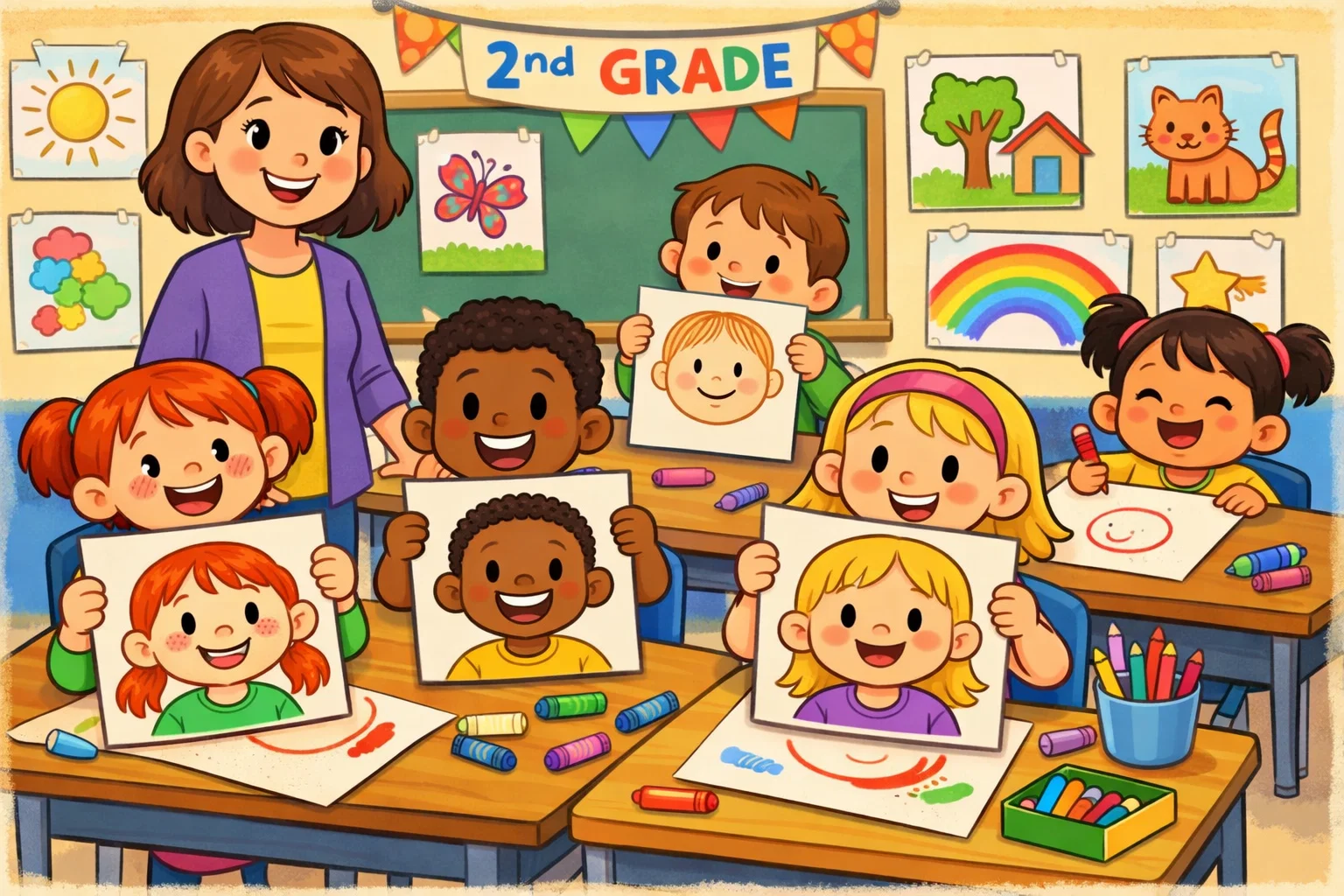
Self-portraiture is a cornerstone of 2nd grade art projects, allowing grade 2 students to explore identity while practicing observational skills. Many teachers find that children love these lessons because they create a personal connection to the elements of art, especially line and shape.
1. Abstract Self-Portrait Paintings
Teachers often offer freedom in this project, focusing on large shapes and bright colors. After looking at how artists such as Wassily Kandinsky or Pablo Picasso used color and shape to express emotion, students can create vivid portraits without the pressure of realism.
2. Silhouette Self-Portrait
This project focuses on the profile. Young artists trace a side-profile outline on white paper, fill the silhouette in with black crayon or marker, and then add patterns to the background. It is an excellent lesson for 2nd grade students who need extra fine-motor practice.
3. Thinking of Summer Self-Portraits
This activity connects art to personal storytelling. Children draw their faces and add details representing favorite summer memories. When asked to reflect on summer, they often include beach scenes, sunshine, or ice cream.
4. Catching Snowflakes Portraits
In this lesson, children draw faces tilted upward. It is best to keep the eye details simple so the focus stays on the movement of the falling snow.
Grade 2 Landscape Drawing Ideas
Landscapes help grade 2 learners understand composition. By working on projects such as birch tree landscapes, they learn how to place objects in the foreground and background.
5. Birch Tree Landscapes
Masking tape creates trunks on the sheet of drawing paper. After painting, the tape is removed to reveal sharp lines. It is popular with art teachers because of its high-contrast visual impact.
6. Arctic Landscapes
Using chalk pastels on blue paper, cold environments come to life. Students can use white paint for snow and gray for ice while practicing age-appropriate color blending.
7. Spacescapes
Planets and rockets are added to create depth. Built from simple lines and shapes, these scenes encourage imagination. It is common for 2nd and 3rd grade classes to complete these as part of a cross-curricular science unit.
8. Ocean Habitat Scenes
Young artists can choose between creating a coral reef or a deep-sea scene. Practicing layering helps them understand depth, an important artistic concept at this level.
Grade 2 Flower and Plant Drawing Ideas
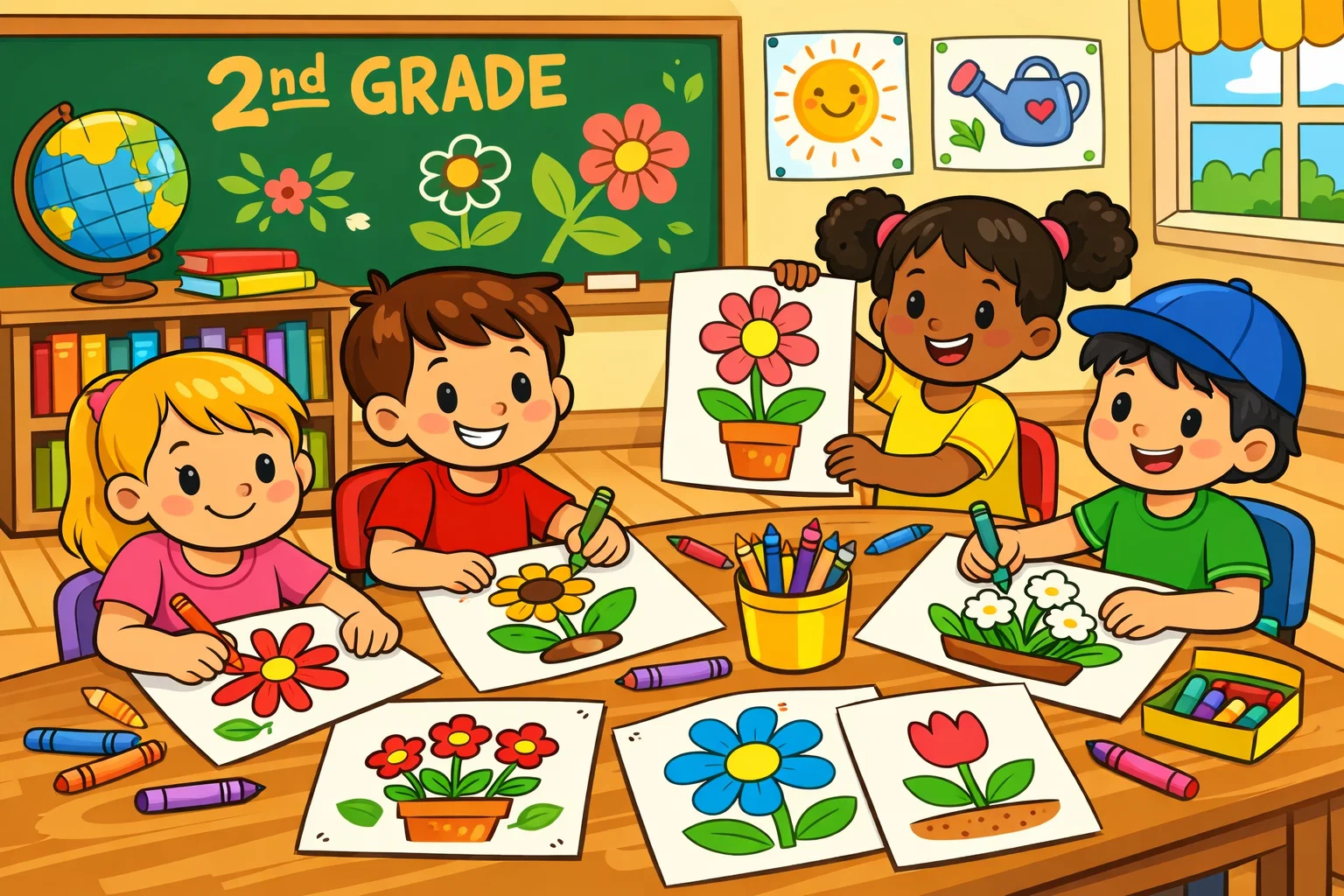
Flowers allow for exploration of watercolor and oil pastel resist techniques. Some of these lessons are inspired by Claude Monet and his famous gardens.
9. Water Lilies Inspired by Claude Monet
Pond scenes are painted with watercolor. Teachers can show the class how to overlap colors and lightly sketch the placement of the water lilies in pencil before painting.
10. Lois Mailou Jones Flower Paintings
Looking at a slideshow of Lois Mailou Jones’s work allows children to compare different floral styles. The group works to incorporate decorative patterns, a common goal in grade 2 curricula.
11. Flower Still Life Drawings
Drawing flowers in a vase encourages observational practice. Checking sizes and shapes is vital, and following the initial sketch, color is added to provide depth and shadow.
12. Textured Cactus Drawings
Using oil pastel, kids create prickly textures. This project is a hit due to the tactile nature of the materials, with fine details added to cacti to demonstrate the concept of surface texture.
Grade 2 Animal Drawing Ideas
Animals remain the most popular subject. Whether the theme is seasonal or nature-based, students love these prompts.
13. Springtime Bunny, Bear, or Fox
Children can choose their favorite animal. Many students use construction paper for a collage-style finish, creating a multidimensional project that works well during independent art time.
14. Winter Bears in Sweaters
After drawing bears, kids add sweaters with intricate patterns. As the teacher demonstrates the process, students can add sweater details with a fine-tip marker.
15. Owls at Night
These night scenes use a black crayon for the owl’s outline. The results are often very expressive, and tempera paint is used for the moon.
16. Big Cats in the Jungle
Large cats are the focus here. Leaves are often drawn around them to hide parts of the body, a technique taught to help grade 1 and 2 learners manage composition.
Grade 2 Bird and Insect Drawing Ideas
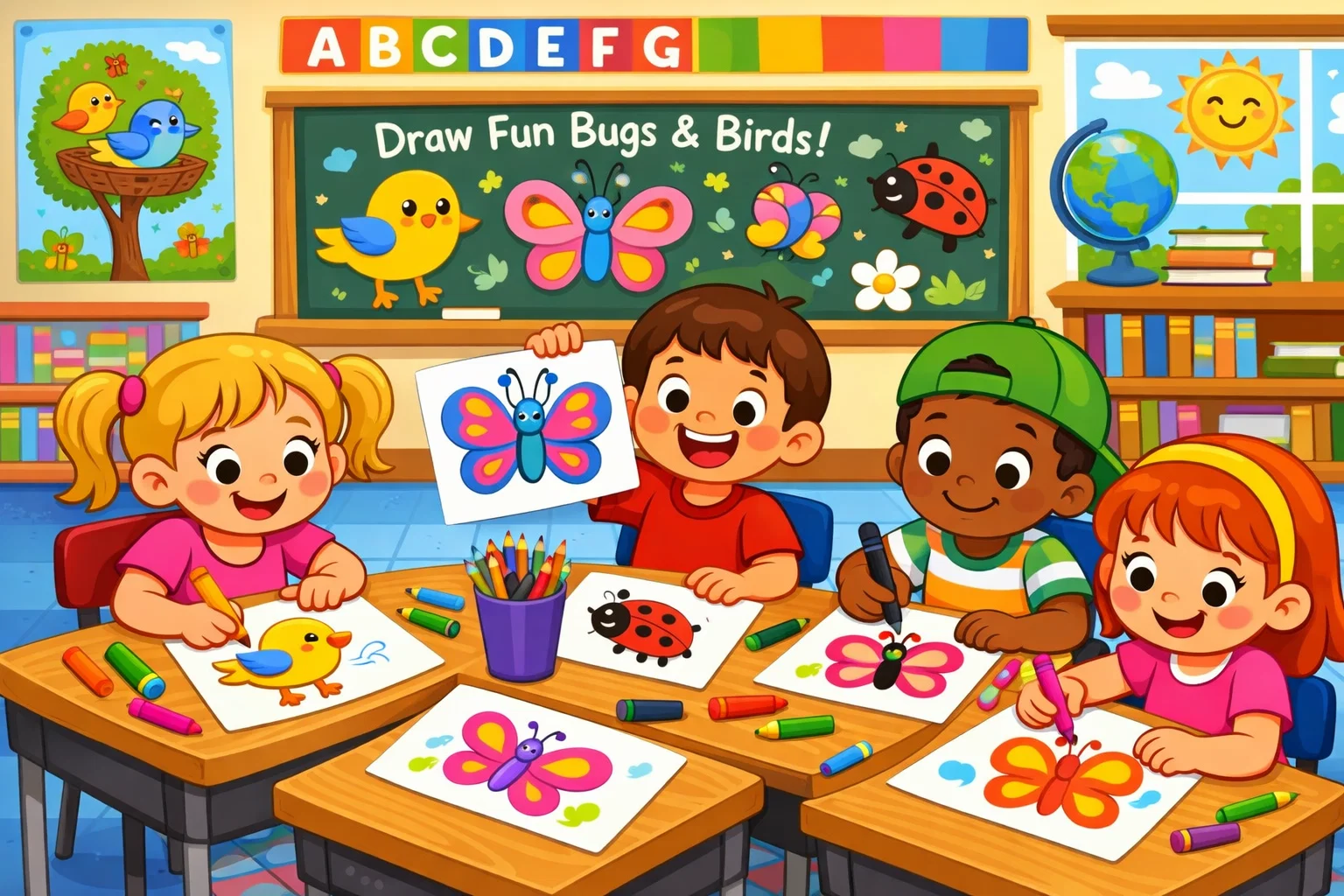
These lessons often overlap with science. Reference photos of bugs and birds ensure the drawings have recognizable traits.
17. Silhouette Birds
Birds on wire are drawn first, then colored black against vibrant chalk pastels. This is a great lesson when you need a quick but effective project.
18. Winter Cardinals
Painting bright red birds against snow is a perfect study in color theory, specifically how red provides a focal point against white and grey tones.
19. Scientific Insect Illustrations
Drawing insects with the help of a PDF featuring four hand-drawn reference examples improves accuracy. Adding labels for body parts makes this an ideal project for integrated learning.
20. Insect Terrariums
Drawing a jar and filling it with leaves and bugs is a fun way to practice drawing from observation.
Grade 2 Winter and Seasonal Drawing Ideas
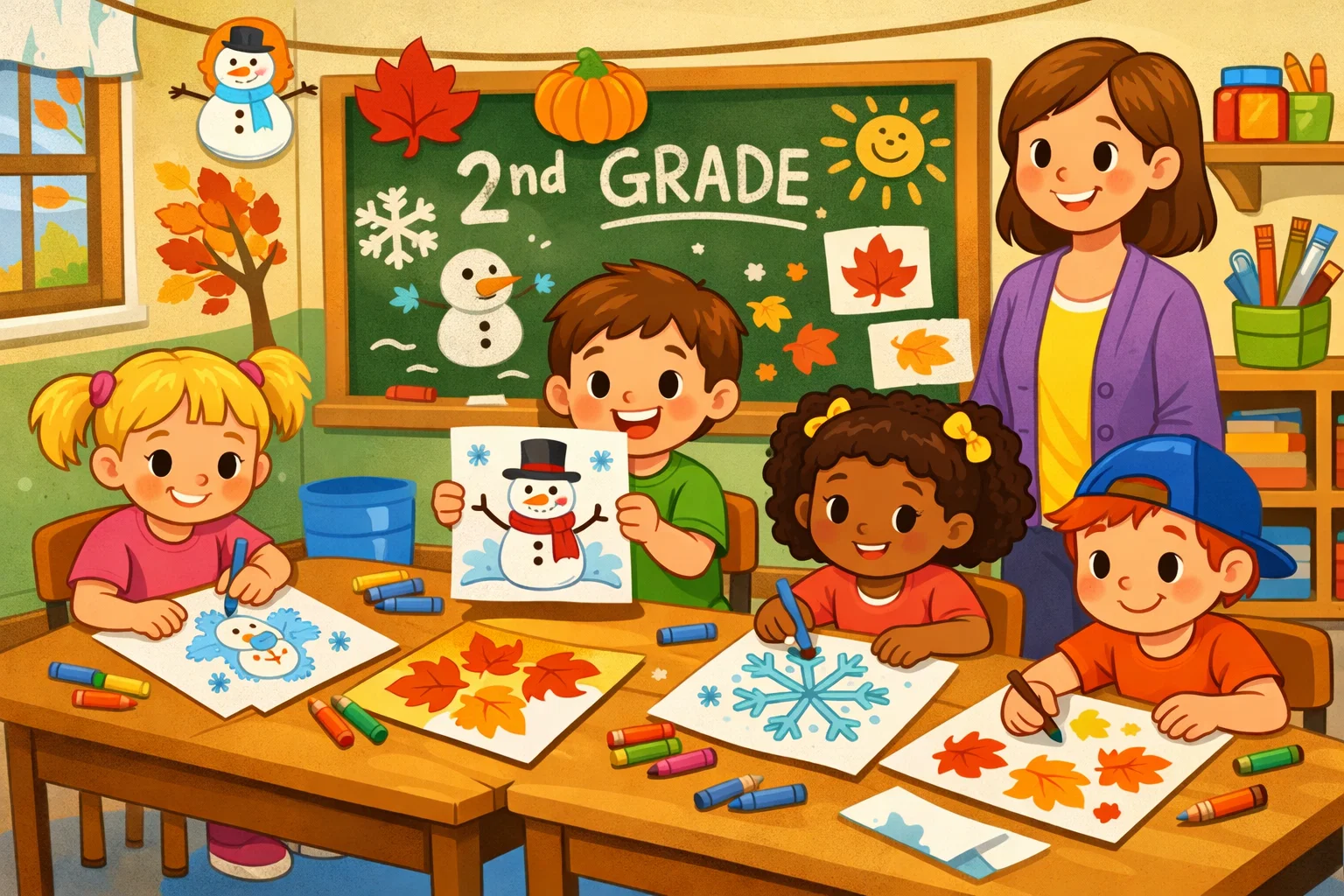
Seasonal themes keep the art room fresh. From pumpkin drawings to spring themes, these ideas are staples for 2nd grade students.
21. Snowmen at Night
Night skies are painted using cool tones. White paint forms the snowman, and colorful scarves are added to complete this classic grade 2 art lesson.
22. Birds-Eye View Snowmen
Drawing a snowman from above is a challenging but rewarding project that helps grade 2 learners understand spatial relationships.
23. Foil-Printed Snowflakes
Using foil to print patterns encourages symmetry. This is often one of the most exciting art classes to complete before winter break.
24. Symmetrical Fall Leaves
Painting leaves with warm colors allows the class to focus on symmetry, which acts as a great bridge between math and art.
Grade 2 Cultural and Holiday Drawing Ideas
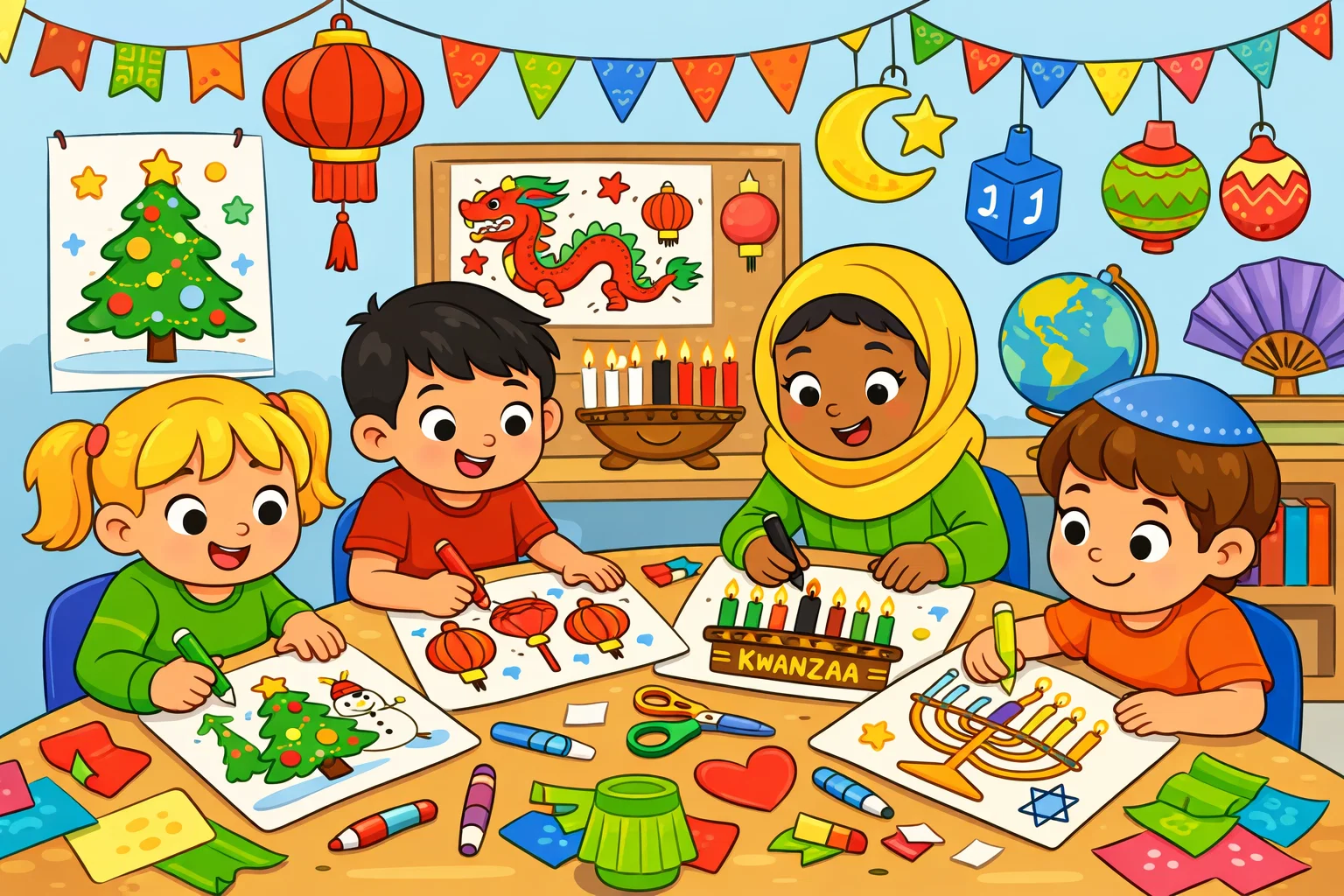
These projects provide context for global art. Traditions are explored while festive work is created for portfolios.
25. Chinese New Year Tiger
Tiger faces are drawn with vibrant colors like red and gold, which are culturally significant and visually striking.
26. Year of the Ox
Drawing the Ox, with a focus on bold lines and decorative patterns, works well for grade 2 because it allows for creative, symbolic interpretation.
27. Lunar New Year Street Scenes
Adding lanterns, banners, and street details makes the scene feel lively and festive. Construction paper is often used to collage different elements.
28. Christmas Ornaments
Drawing ornaments using circular forms is a favorite. Teachers often provide a PDF with four handouts to help students practice different ornament shapes.
Grade 2 Pattern and Design Drawing Ideas
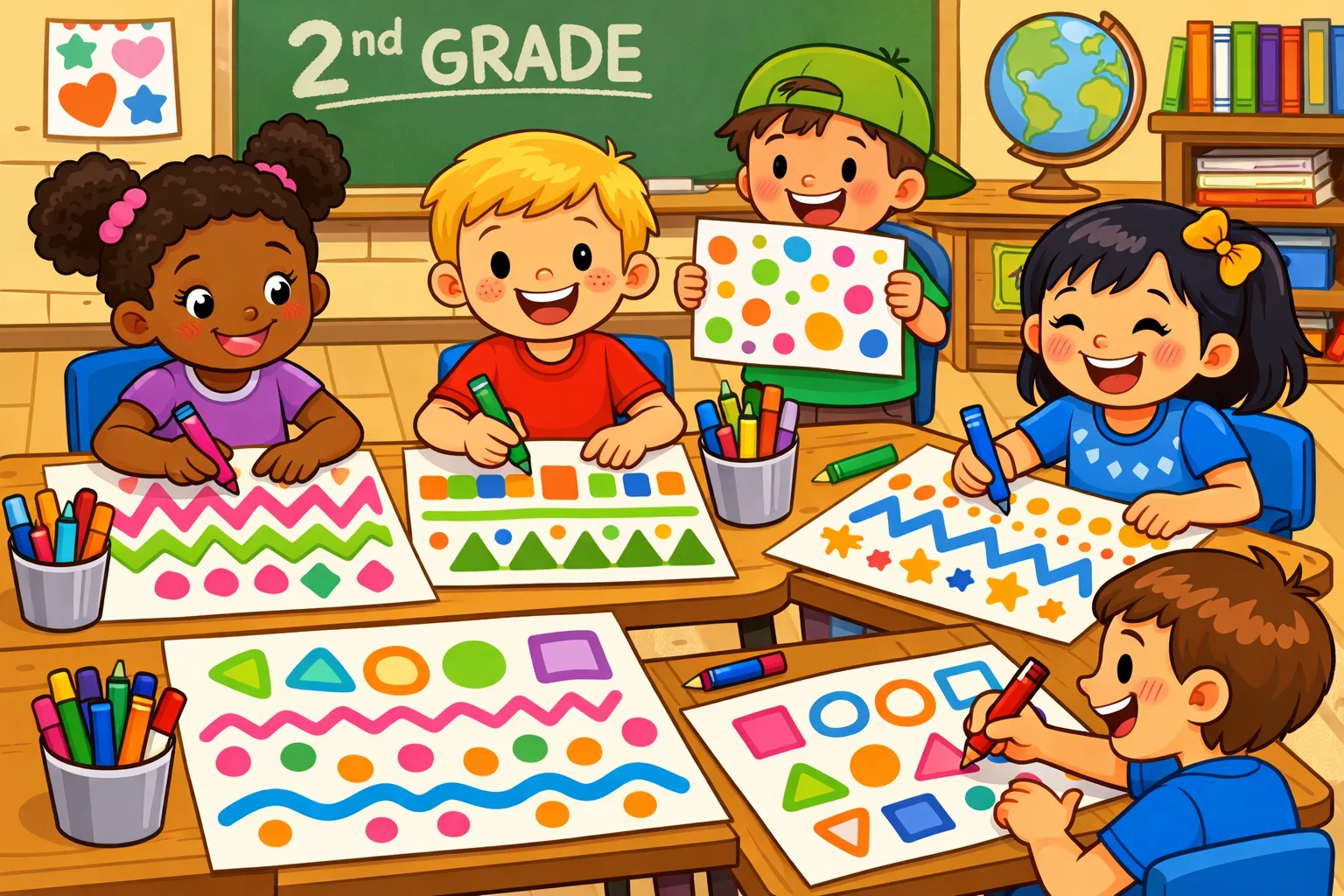
Patterns help learners repeat lines and shapes, an essential skill for grade 2 mastery.
29. Easy Black and White Op Art Drawing Tutorial
Wavy lines create the illusion of motion. It is a simple but effective way to teach the element of line.
30. Positive/Negative Hands
Tracing the hand and flipping colors is a standard lesson. Working with the entire page is a key skill for every grade.
31. Geometric Spheres
Drawing spheres with grids is a classic task. Using only lines and shapes, this project teaches how to create 3D form on a 2D surface.
32. Koi Pond Dots
Dotting techniques create texture. This project shows students how spacing and detail can work together to create depth.
Grade 2 Mixed-Media Drawing Ideas
Mixed-media is a favorite in the art room. Children love when they can use glue, paper, and paint together.
33. Fruit Mosaics
Drawing fruit and filling it with small pieces of paper teaches texture and color relationships.
34. Mosaic Masks
Making masks with pieces of colored paper to fill in patterns creates a beautiful piece of student artwork.
35. Foil-Embossed Flowers
Using foil to create texture while practicing drawing patterns makes the flowers pop.
36. Sunflower Quilt Collages
Drawing sections of a quilt and assembling them into a large, sunflower-filled collage is a rewarding multi-step process.
Grade 2 Imagination Drawing Ideas
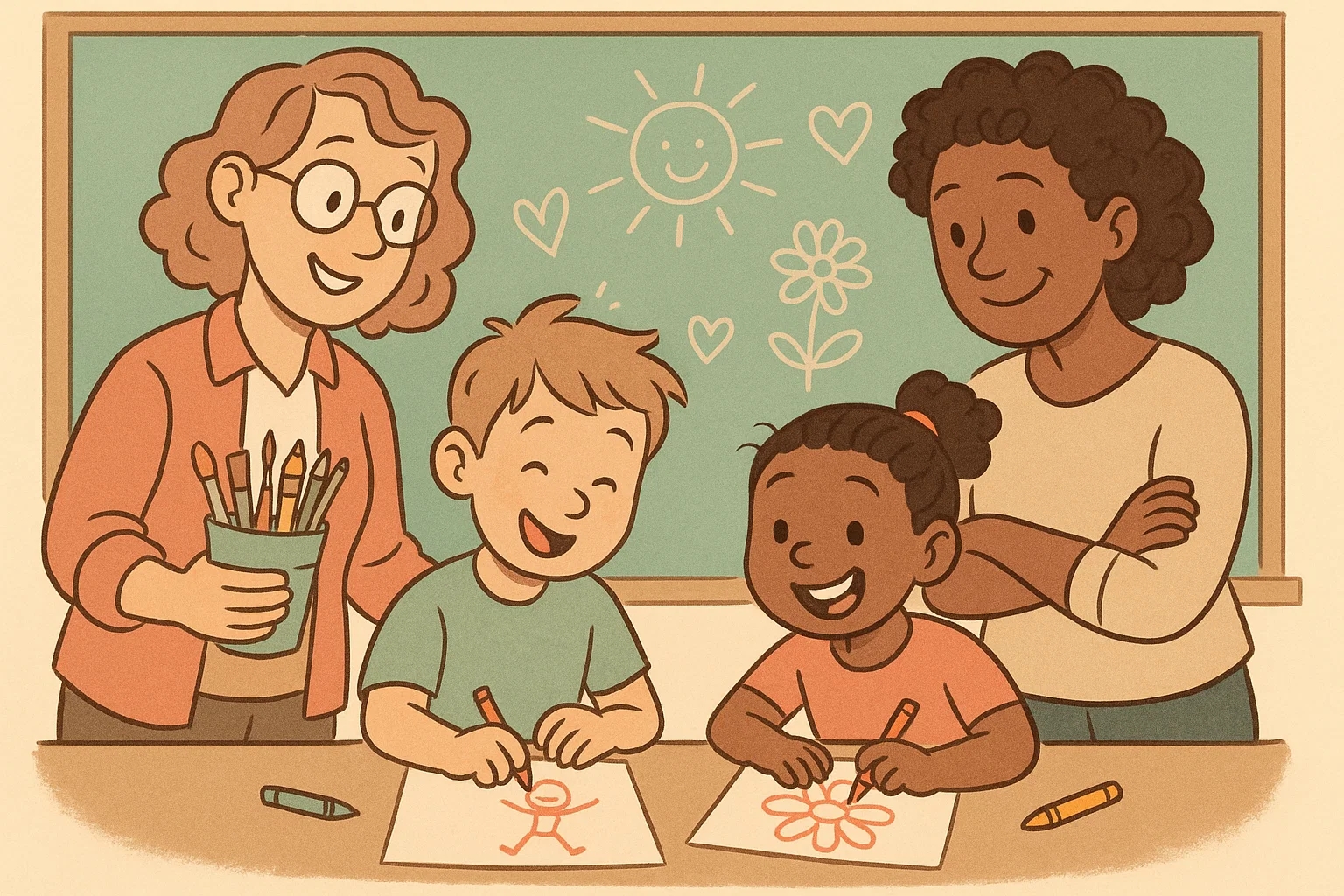
These are the most creative lessons, where kids can draw anything from a playful monster to a robot.
37. Love Monsters
Using hearts as inspiration for monsters is a fantastic lesson for expressing emotion through color.
38. Robot and Gear Collage
Drawing robots and using recycled materials turns a simple art lesson into a sustainable creative project.
39. Ghost in Jar
Ghosts are drawn and highlighted with white paint to look like they are glowing inside the jar.
40. Silly Animal Anatomy Drawings
Drawing animals with mismatched parts and giving them funny names consistently ranks as one of the best ideas for high engagement.
Frequently Asked Questions About 2nd Grade Art Projects
How can I adapt these lessons for different skill levels in my classroom?
For 2nd graders, providing choice is essential. Students can often choose between creating a simplified version of a project and adding more complex details. When students learn about art history, for example by studying Claude Monet and his gardens, teachers can ask what they notice about his brushwork. In 2nd grade, it is important to remember that students work at different paces, so an additional class period may be needed to finish longer projects.
Which materials are best for building confidence?
Start with simple supplies like markers, crayons, and painted paper for collage work. For students transitioning from 1st grade, a guided bear drawing is a great way to build technical skills. Always provide extra paper and pencils for brainstorming before students begin their final artwork.
How can I make my art lessons more structured?
Many teachers find it helpful to download a PDF with four lesson plans or a PDF with hand-gesture guides that students can use as visual references. It is also helpful to end the lesson by reminding students of the goals and asking them to reflect on their own progress. In elementary art, drawings often improve significantly when children have clear, step-by-step visual aids.
How do I integrate art history with hands-on practice?
Students often work with more enthusiasm when they understand the context behind the art. For example, after studying Impressionist landscapes, students can paint their own versions. When students draw flowers, teachers can discuss how Claude Monet observed light and color. In the next art class, students can reflect on what abstract elements might add to their compositions.
What are some tips for refining student work?
Have students draw their main outlines first and add colorful details as a final step. If children struggle with complex parts, encourage them to keep the eyes or other small features simple so they can maintain their confidence. Giving students creative freedom often increases engagement. As students use different techniques throughout the term, they draw with more confidence and begin to understand that every mark contributes to their growth.
How do I choose the right projects for second grade students?
The best projects for second grade are the ones that balance structure and creativity. At this grade level, it helps when students could choose between creating a simple version and adding extra details later. That kind of flexibility builds confidence, especially when students create at different speeds and need a project they can continue in the next class.
How do I plan art projects for 40 minute art classes?
For 40 minute art classes, it is best to choose lessons with a clear sequence and limited materials. Projects that are basically lines and shapes are often easier for young learners to manage, and they are also among the best art classes to finish in one session. If needed, students then drew the main shapes first, and students added color, pattern, or background details later.
Why do kids love guided drawing projects in elementary art?
Many kids love guided art lessons because they make drawing feel achievable from the start. A strong example is a seasonal animal lesson or even a guided drawing for their bear, where children can follow simple steps and still make the work feel personal. In these projects, students could draw with more confidence because the structure supports them while still leaving room for imagination.
How can I connect art history to hands-on drawing activities?
Art history becomes more meaningful when it is tied directly to making art. For example, when students learned about Claude Monet, they could explore color, brushwork, and observation before starting a garden or water-lily project. In one flower lesson, teachers asked students what they thought about the colors and textures they saw, and that discussion helped students notice the elements of art line and shape in their own work.
Take a short quiz to find out what your everyday choices say about your parenting style
When your child is curious about something new, what’s your instinct?
Take a short quiz to find out what your everyday choices say about your parenting style
“Can I download this app?” What happens next?
Take a short quiz to find out what your everyday choices say about your parenting style
When it comes to rules at home, which sounds most like you?
Take a short quiz to find out what your everyday choices say about your parenting style
If you could give your child one life skill today, what would you pick?
Take a short quiz to find out what your everyday choices say about your parenting style
Your child gets to choose what to watch. What would your ideal setup look like?
Take a short quiz to find out what your everyday choices say about your parenting style
Pick your parenting superpower ✨