
35 Drawing Ideas for the Classroom: Activities for Kids, Teens, and Art Teachers

 Discover a Free Education Video App for Kids
Pastory uses AI to personalize educational video content based on your child’s interests and personality. Safe, engaging, and built for curious young minds. Sign up now to stay updated and enjoy early access with a free trial
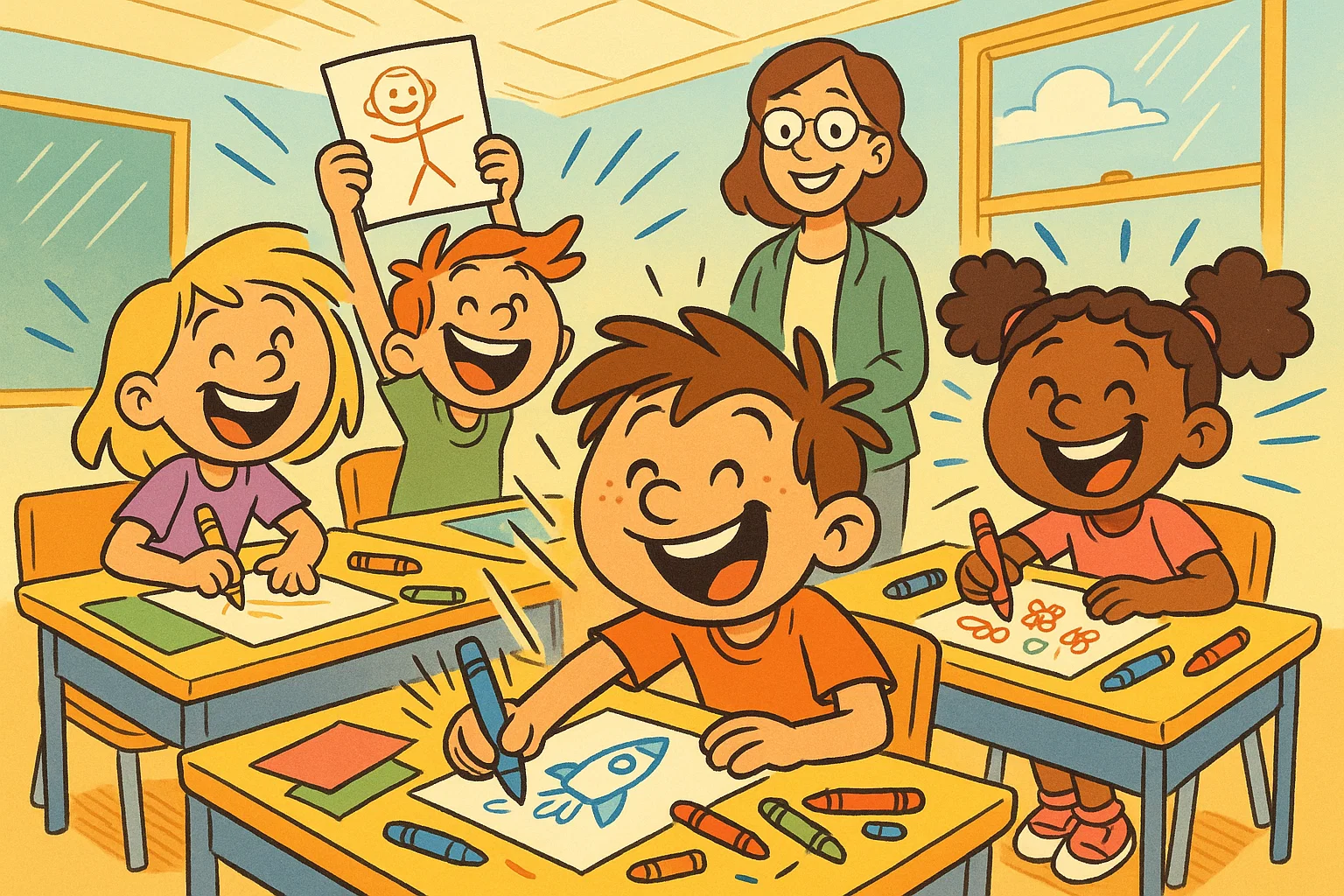
Drawing activities are a cornerstone of creative development, giving students a low-stakes way to experiment with visual expression. This collection offers versatile drawing ideas for a range of age groups, skill levels, and teaching formats, from high-energy warm-ups to more in-depth art projects. Whether you teach in a dedicated art room or a general classroom, these ideas support skill development, engagement, and self-expression.
Effective art lessons balance technical instruction with creative freedom so that every student feels confident participating in the creative process. By using a variety of prompts and materials – from pencils to watercolors and Sharpies – educators can create a classroom culture in which students make art with confidence. This guide organizes these resources to support both quick-start activities and longer, multi-day lesson plans that emphasize critical thinking and the elements of art.
Quick Bell-Work Drawing Prompts
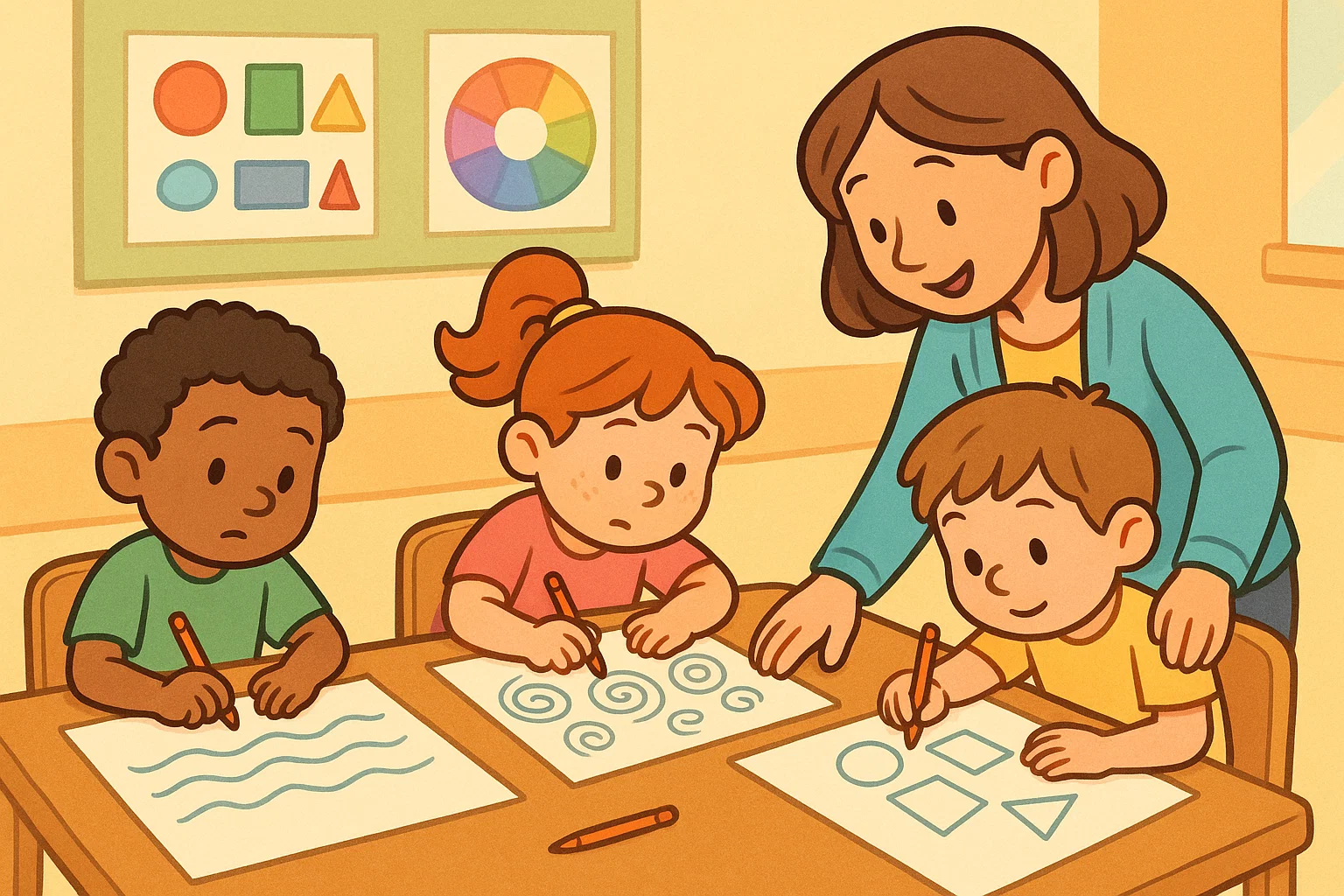
Quick drawing activities are an effective way to begin an art lesson, helping children shift from other subjects into a creative mindset in just five to ten minutes. These exercises also work well as early-finisher tasks and help reduce the intimidation of facing a blank sheet of paper. By establishing a consistent routine, teachers can lower student anxiety and improve focus.
Daily Draw Routine
A daily draw routine gives students a predictable structure in which they explore one theme for a set amount of time, usually in a dedicated sketchbook. A consistent 5-minute timer encourages kids to draw quickly without overthinking, while daily repetition helps develop muscle memory and observational skills. Teachers should keep sketchbooks and drawing materials in a central location, such as a bin or shelf, so students can access them as soon as they enter the room.
Fast Prompt Rotation
A Fast Prompt Rotation system keeps classroom engagement high by cycling through varied themes, preventing students from experiencing creative fatigue. By alternating between silly prompts, seasonal motifs, observational studies, and narrative themes, an art teacher ensures that every lesson offers a fresh challenge. Using a random prompt generator or a deck of cards adds an element of choice and surprise, since students never quite know what they will draw next.
Materials for Low-Prep Starts
Successful low-prep starts require a limited, accessible toolkit that students can manage independently. The following materials are sufficient to begin almost any drawing activity:
- Pencil: For initial sketching and layout.
- Black Marker/Sharpie: For defining contours and adding final details.
- Scrap Paper or Mini Whiteboards: To encourage risk-taking without the fear of wasting “good” paper.
- Colored Pencils: For adding color, layering, and visual depth.
Assessment Without Extra Grading
Educators can assess participation in bell work without increasing their grading burden by shifting the focus from product to process. Strategies include:
- Completion Check: A quick visual scan to ensure students have engaged with the prompt.
- Peer Share: Students spend one minute showing their sketch to a partner, which helps build classroom community.
- Gallery Walk: A brief rotation where students place their work on their desks for others to observe.
Silly Drawing Prompts
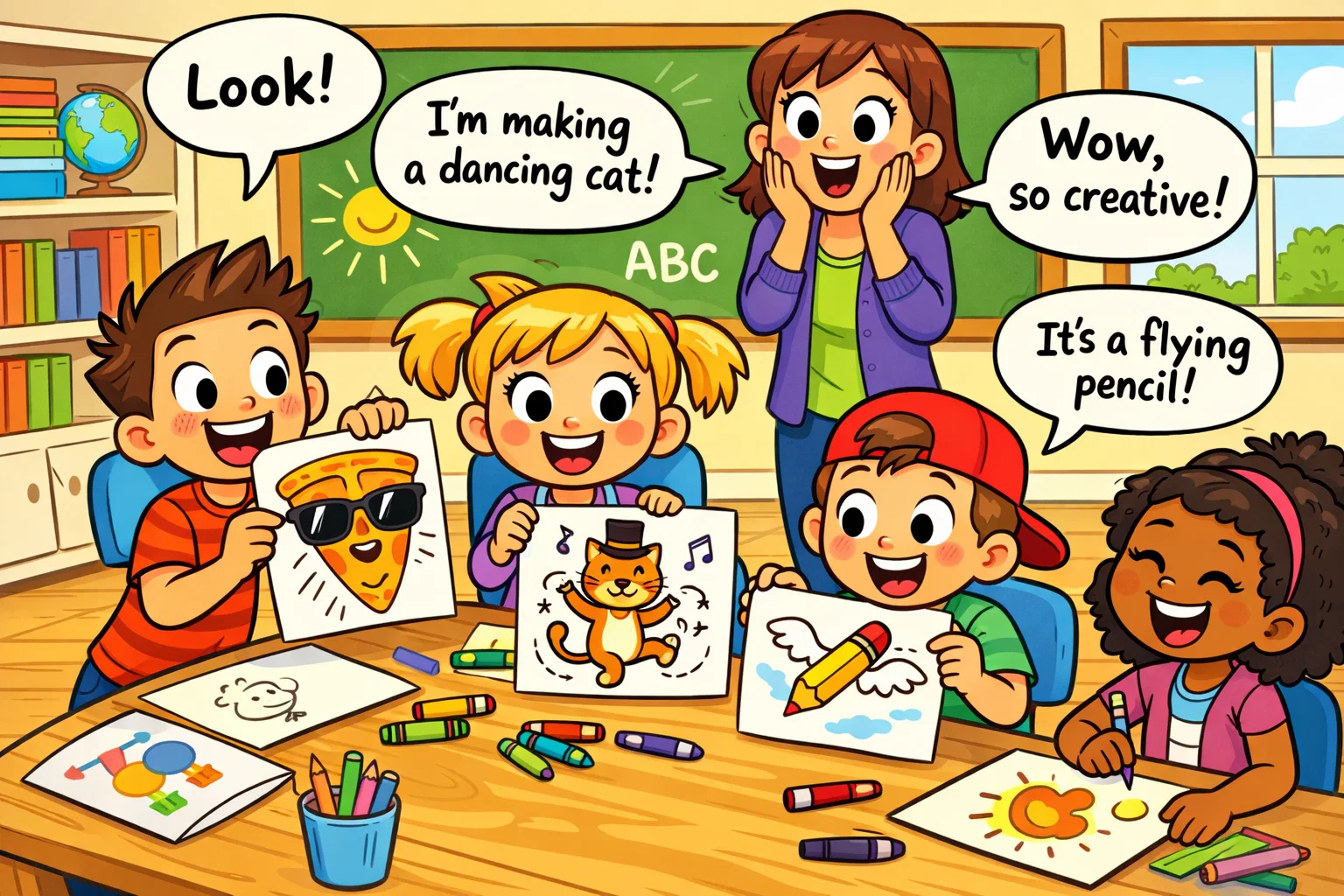
Silly drawing prompts are a high-engagement strategy that helps even hesitant students get past the fear of making mistakes. By introducing absurd and humorous scenarios, an art teacher can lower the pressure for “perfection” and encourage children to create for the sheer joy of visual storytelling.
Animals
Hybrid and humorous animal combinations provide endless opportunities for creative exploration. Examples include:
- A cat wearing roller skates
- A giraffe sitting at a school desk
- A shark carrying a backpack
- A unicorn eating a giant pizza
- A hamster in a tuxedo
- A dog flying a kite
- A penguin in a parka
- A lizard wearing a hat
Food
Drawing food with human characteristics teaches students how to represent emotions through facial features.
- A sad, melting ice cream cone
- A superhero cupcake
- A dancing taco
- A surprised banana
- A sleepy sandwich
- A cool slice of watermelon with sunglasses
People
Narrative drawing thrives when characters are placed in unexpected, humorous settings.
- A teacher riding a skateboard down the hallway
- An astronaut lost on a school bus
- A pirate trying to eat lunch at the cafeteria table
- A ballerina playing basketball
- A detective looking for a missing homework assignment
Make Believe
Fantasy prompts allow students to experiment with shapes that do not exist in reality.
- A dragon working as a librarian
- A city floating on a cloud
- Magic sneakers that allow the wearer to walk on the ceiling
- A tree that grows glowing lightbulbs
- A secret garden inside a backpack
Objects and Places
Animating inanimate objects helps students notice the forms within their immediate environment.
- A talking pencil trying to write a story
- A haunted school locker
- An upside-down classroom
- A playground located on the moon
- A giant coffee mug swimming in a pool
Other Funny Combos
- Combine Two Random Nouns: Use a hat and a toaster to create a “toasting hat.”
- Finish a Scribble: Give students a random scribble on a sheet of paper and ask them to turn it into a monster.
Easy Drawing Ideas for Kids
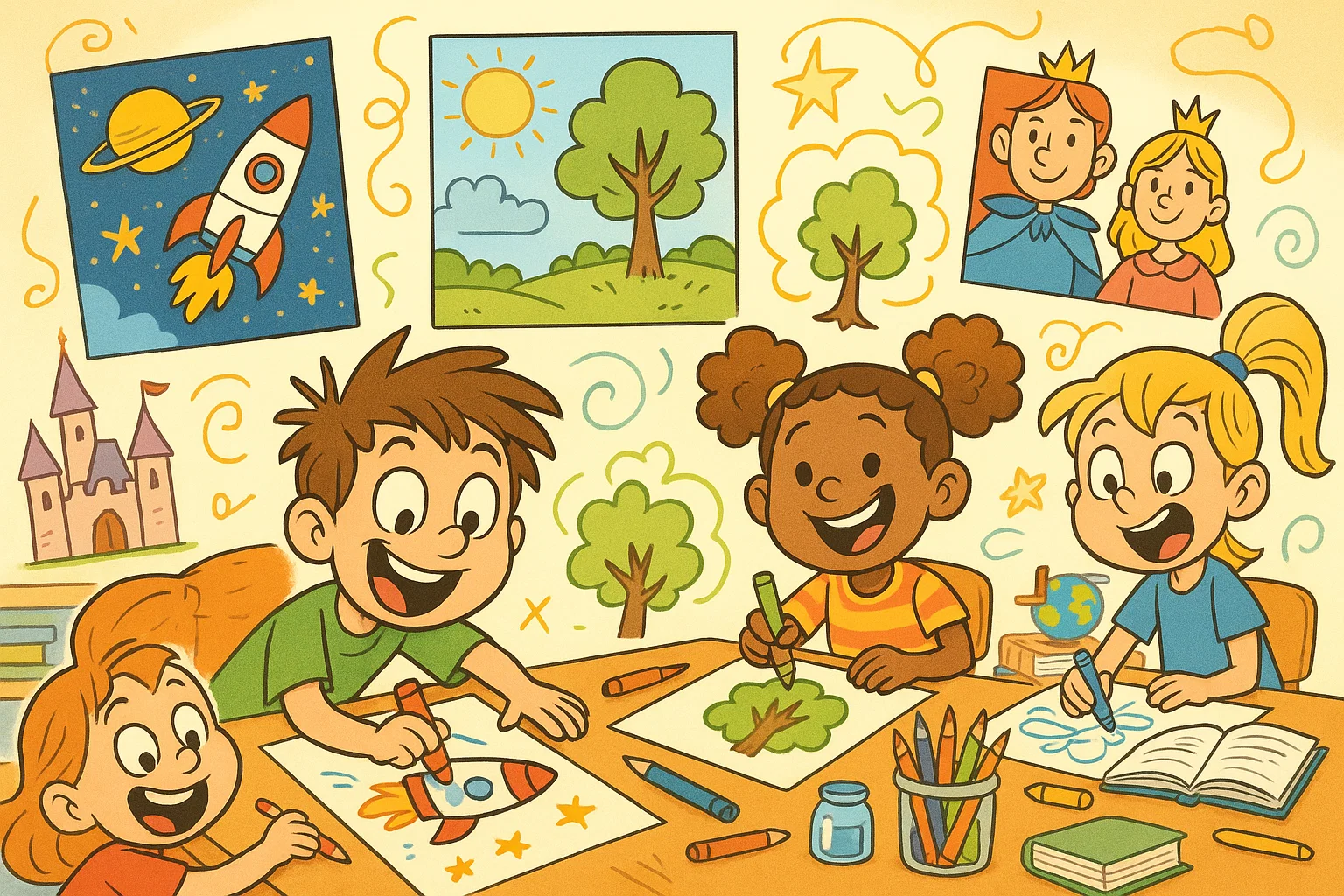
Easy drawing ideas focus on simple geometric shapes, allowing younger learners to achieve quick wins and build foundational confidence. These activities work well in 10–20 minute sessions and focus on basic shapes such as rectangles, circles, and ovals.
House
A house is an ideal subject for teaching simple shapes. Students begin by drawing a large rectangle for the body and a triangle for the roof, then add details like windows, a door, a fence, or a seasonal background to increase complexity.
Tree
A tree can be interpreted in multiple styles, from a simple lollipop shape to a more detailed silhouette. Students can practice line weight by varying the pressure on their pencils, or add texture to the bark using wavy or jagged lines.
Cat
Cats are a favorite subject for children and are easy to draw using basic shapes. By starting with an oval shape for the body and a circle for the head, students create a solid foundation, which they then customize with facial features, a furry outline, and a long tail.
Rainbow
A rainbow provides an excellent opportunity to practice curved lines and color theory. Students draw several large, overlapping curved lines, ensuring each arc is consistent, which helps develop fine motor skills and patience.
Self-Portrait
A self-portrait helps pupils express their identity and classroom presence. By focusing on facial features – such as eyes, nose, and mouth – students learn to observe their own characteristics and personalize their artwork with favorite colors or hobbies.
Line Art Lesson Ideas
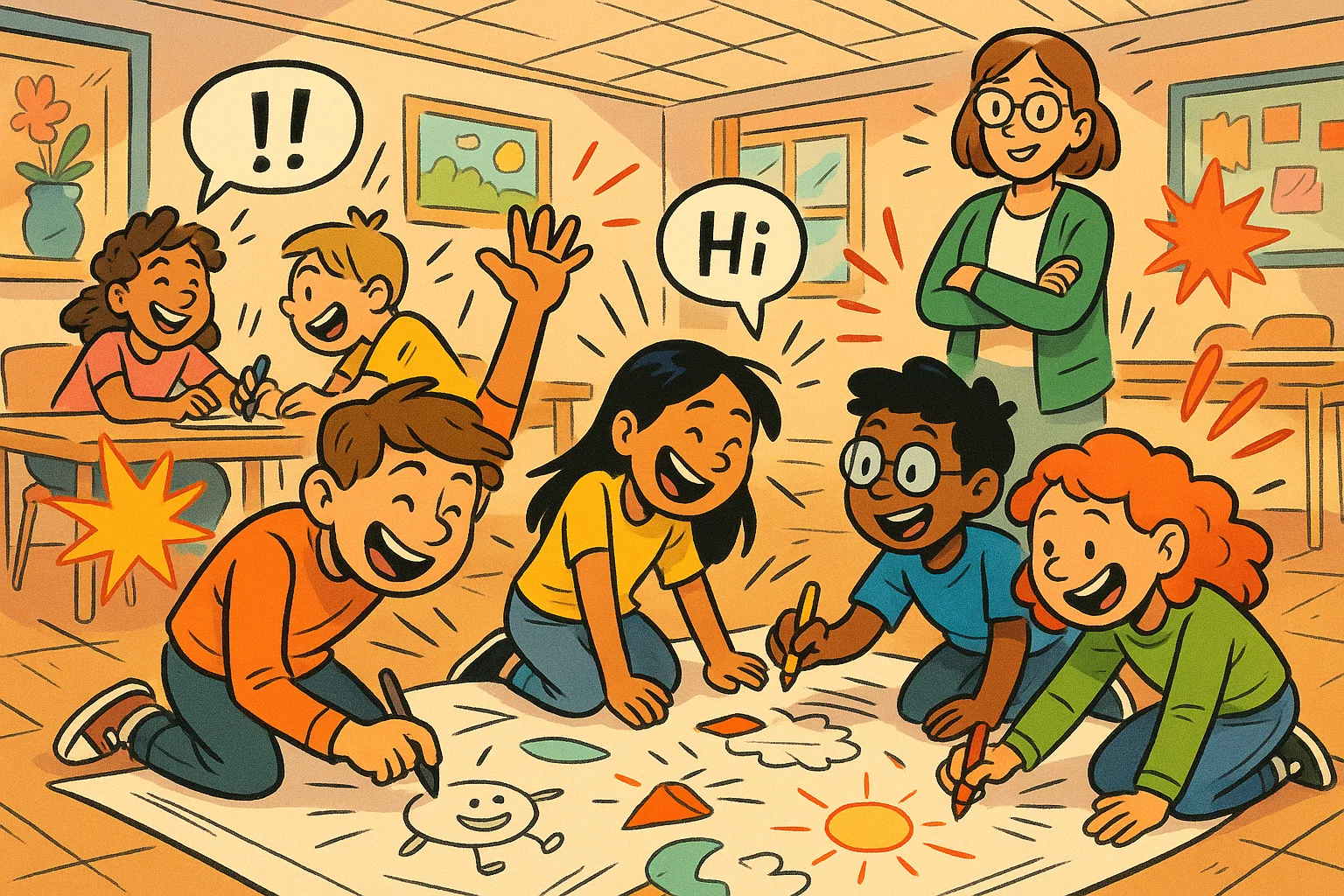
Line art lessons are a strong way to teach the elements of art, especially how different kinds of lines can define space and create visual interest.
Happy Lines
A “Happy Lines” warm-up activity introduces various types of lines: zigzag, spiral, wavy, and broken. When students connect these lines to specific emotions or music, they learn to translate internal feelings into visual form.
Hands With Lines
In this project, students trace their hand on a sheet of paper and fill the background with repetitive, curved lines. This activity creates the illusion of depth and is perfect for a classroom display wall, as it emphasizes precision and patience.
Weighted Contour Drawing
Weighted contour drawing teaches students to vary line weight to suggest shadow, emphasis, and spatial depth. By varying pressure with a pencil or using thicker marker lines in shadowed areas, students can create a stronger three-dimensional effect.
Nine Views of One Object
Students choose one object and draw it from nine different angles. This exercise forces pupils to move beyond symbolic drawing and instead engage in true observation, helping them understand how form changes in space.
Op Art Classroom Drawing Ideas
Op art is popular in the classroom because it creates a strong visual impact through simple, repetitive steps that most students can master.
| Project Name | Primary Skill | Visual Outcome |
| Op Art Hands | Contour tracing | 3D popping effect |
| Op Art Dots | Rhythm & Contrast | Depth variation |
| Op Art Onion | Curvature & Shading | Illusion of volume |
| Op Art Paper | Perspective | Bent paper illusion |
Op Art Hands
Students trace their hand on paper and draw parallel, straight lines across the page, but curve them when they pass over the hand shape. This simple transformation creates the illusion that the hand is rising from the page.
Op Art Dots
By drawing a grid of circles and varying their size or spacing, students learn about rhythm and contrast. This project encourages the development of fine motor control and patience as the student fills the space with repetitive shapes.
Op Art Onion
Students draw a series of concentric, curved lines to mimic the cross-section of an onion. By using varying shading techniques or alternating colors, students create a sense of depth and density within their artwork.
Op Art Bent Paper
To create the illusion of a bent sheet of paper, students draw several parallel lines and introduce sharp angles or “V” shapes at a designated fold line. Adding shadow on one side of the “fold” enhances the three-dimensional effect.
3D and Mixed-Media Drawing Ideas
Moving from flat, two-dimensional surfaces to three-dimensional structures deepens students’ understanding of form and materials.
Lines Paper Sculpture
Students create a series of line-based drawings on paper, then cut, fold, and staple them into a 3D sculpture. This bridge between drawing and physical construction helps students visualize how lines can define the boundaries of an object.
Foiled Scribble Flowers
This project involves drawing intricate, scribbled flower designs using a black marker on heavy paper, then applying metallic foil or colored paper accents. The high-contrast finish provides a sophisticated look that is deceptively easy to execute.
Folded Paper Illusions
By drawing on paper that has been pre-folded, students create an artwork that changes as the viewer moves. When the paper lies flat, the image may look distorted, but when it is folded or viewed from a different angle, the illusion of depth or motion becomes clear.
Marker and Collage Extensions
Enhance any drawing lesson by incorporating magazine scraps, patterned paper, or textured collage elements. This mixed-media approach teaches students that a drawing is often the foundation for a more complex piece of art.
Landscape and Still Life Drawing Ideas
Observation drawing is a foundational academic skill. By focusing on the environment within the classroom, teachers can make these lessons accessible and relevant.
Lines Landscape
Students create a landscape by layering different types of lines to represent hills, fields, and clouds. This activity serves as a bridge between abstract line art and scenery drawing, teaching students about the foreground, middle ground, and background.
Still Life Setup
Teachers can set up a still life using common items: books, mugs, sneakers, fruit, scissors, and pencils. Providing a stable light source helps students identify highlights and shadows, which is essential for understanding three-dimensional volume.
Seasonal Still Life Themes
- Autumn: Leaves, pumpkins, and twigs.
- Winter: Mugs, mittens, and pinecones.
- Spring: Flowers, garden tools, and seeds.
Classroom Object Studies
Focusing on objects students use every day, such as a backpack or a glue stick, grounds the art practice in reality. These studies require no special materials and help students appreciate the design of everyday items.
Creative Drawing Games for the First Week of School
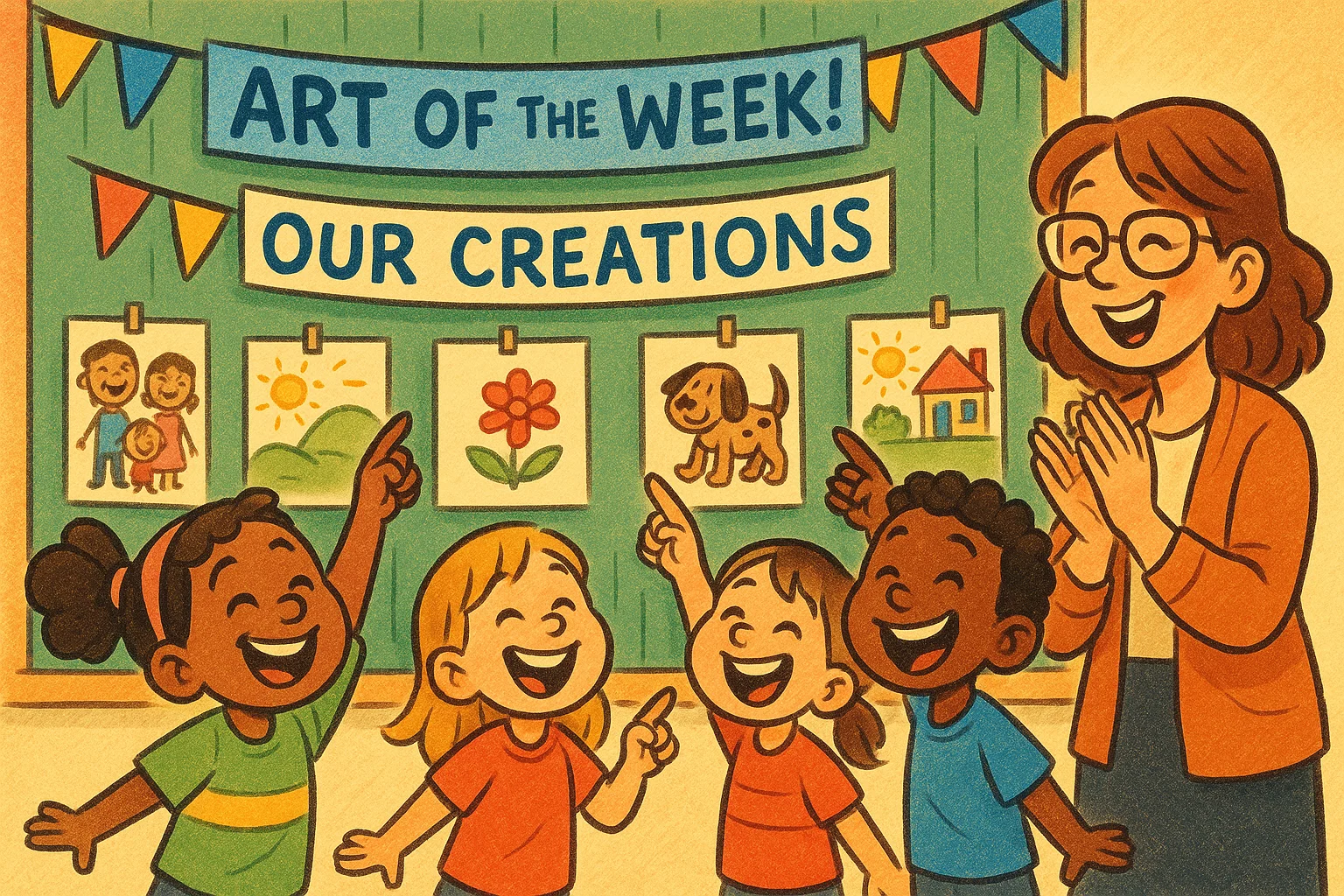
Creative drawing games are vital for building community, reducing anxiety, and establishing an energetic classroom atmosphere during the first week of school.
Exquisite Corpse
Students work in teams; the first student draws the head, then folds the paper over to hide the drawing, leaving only the neck visible for the next student. The process continues until the body and legs are complete, resulting in a collaborative and often hilarious final image.
Handshake Drawing
In pairs, students trace their partner’s hand while talking to each other, turning the activity into a simple icebreaker. This short, spontaneous activity is an excellent icebreaker that encourages physical engagement and quick, gestural drawing.
Bilateral Mirror Drawing
Two students sit opposite each other and try to mirror the same image on their own papers at the same time. This exercise develops coordination and requires students to work in tandem, mirroring their partner’s movements.
Marker Madness
With a time limit of 30 seconds, students pass their drawings to the left every time the teacher signals. Everyone must contribute to every drawing, creating a fast-paced environment where no one can be precious about their work.
Drawing Activities for the Language Classroom
Drawing can be a powerful tool for language learning, supporting vocabulary retention, listening skills, and storytelling.
Drawing as Physical Response
The teacher provides specific, step-by-step instructions (e.g., “Draw a small, circular sun in the top-right corner”). This activity strengthens listening skills and ensures that students are physically engaged with the vocabulary being taught.
Listen and Draw
In this teacher-led activity, the teacher describes a scene while students draw what they hear. This format is ideal for practicing descriptors, such as color, shape, size, and spatial relationships (e.g., “the cat is under the table”).
Describe and Draw
One student describes an image, while another tries to draw it without seeing the original. This communication exercise emphasizes the importance of clear, descriptive language and attentive listening.
Graffiti and Public Spaces
Teachers can lead a thoughtful discussion about street art and murals by having students design graffiti-style lettering or posters appropriate for the classroom. This activity integrates lettering and visual communication into the curriculum while exploring community themes.
Classroom Drawing Ideas for Older Students
Older students, such as those in middle or high school, require drawing challenges that demand greater precision, critical thinking, and visual maturity.
Observation Challenges
Introduce “no-eraser” challenges or timed contour studies. These tasks force students to commit to their lines and focus on observing the subject rather than perfecting a static image.
Multi-Angle Studies
Students select a complex object and draw it from four different angles on a single page. This helps them understand how an object occupies space and prepares them for more advanced perspective drawing.
Optical Illusion Projects
Encourage students to create works that play with negative space, distortion, and complex geometric patterns. These projects require a higher level of patience and planning, resulting in works that feel professionally finished.
Public Space Sketch Themes
Encourage sketchbook observation by having students draw parts of the school, such as the hallway, cafeteria, or library. These sketches act as visual journals, capturing the essence of their daily environment.
Classroom Drawing Ideas by Teaching Goal
Structuring lessons by teaching goal allows educators to address specific social-emotional or academic objectives.
Icebreaker Activities
Focus on games like “Exquisite Corpse” or “Handshake Drawing,” where the primary goal is not technical skill but building comfort and rapport among peers.
Collaboration Practice
Design projects where students must negotiate a shared vision, such as a group mural or a large-scale poster, emphasizing turn-taking and shared decision-making.
Creativity and Imagination
Use open-ended prompts where no “right” answer exists. This encourages students to develop their own style and voice, free from the constraints of rigid templates.
Confidence Building for Beginners
Prioritize projects that offer a guaranteed “beautiful” result, such as Op Art or line-based patterns. Achieving a successful result quickly is the fastest way to encourage a student to attempt more challenging work.
Frequently Asked Questions
What can seven-year-olds draw?
Seven-year-olds excel at drawing large, familiar objects using basic shapes, such as houses, trees, cats, and self-portraits. They benefit most from short, clear instructions that break complex subjects into manageable steps.
How to teach kids to draw in the classroom?
The most effective way to teach drawing is through demonstration and repetition. Keep instructions simple, provide clear examples, and create an environment where the learning process matters more than a perfect final result.
What are easy things to draw for beginners?
Beginners should focus on items they see daily: a coffee mug, a backpack, a piece of fruit, a leaf, or a basic house. These objects provide clear shapes that are easy to analyze and replicate.
How to keep students engaged during drawing time?
Engagement is maintained through variety, such as using timers for quick sketches, offering “choice boards” where students pick their own prompts, and facilitating peer sharing or gallery walks to celebrate completed work. Adding background music or rotating materials can also refresh the energy in the room.
How can I help students improve their line drawing skills?
You can help students build line-drawing skills by starting with simple exercises, such as drawing straight, curved, zigzag, and broken lines while experimenting with pressure. Using a variety of tools, such as pencils, fine liners, and markers, helps them understand how line weight can create emphasis, space, and depth in a drawing.
Are there any easy drawing tutorials for younger students?
Yes, many resources offer step-by-step tutorials for kids, such as turning a basic oval into a cartoon cat or a simple fishbowl scene. These lessons are easy to follow and help students create drawings they can feel proud of using simple shapes like circles and rectangles.
Should I use different mediums in my school art lessons?
Using different materials, such as watercolors, markers, or colored pencils, adds visual variety and keeps art lessons engaging. You can use printable drawing guides as a starting point, then encourage students to add their own details with the materials they prefer.

Take a short quiz to find out what your everyday choices say about your parenting style
When your child is curious about something new, what’s your instinct?
Take a short quiz to find out what your everyday choices say about your parenting style
“Can I download this app?” What happens next?
Take a short quiz to find out what your everyday choices say about your parenting style
When it comes to rules at home, which sounds most like you?
Take a short quiz to find out what your everyday choices say about your parenting style
If you could give your child one life skill today, what would you pick?
Take a short quiz to find out what your everyday choices say about your parenting style
Your child gets to choose what to watch. What would your ideal setup look like?
Take a short quiz to find out what your everyday choices say about your parenting style
Pick your parenting superpower ✨



