
List of Compound Words for Kids in English With Examples

 Discover a Free Education Video App for Kids
Pastory uses AI to personalize educational video content based on your child’s interests and personality. Safe, engaging, and built for curious young minds. Sign up now to stay updated and enjoy early access with a free trial
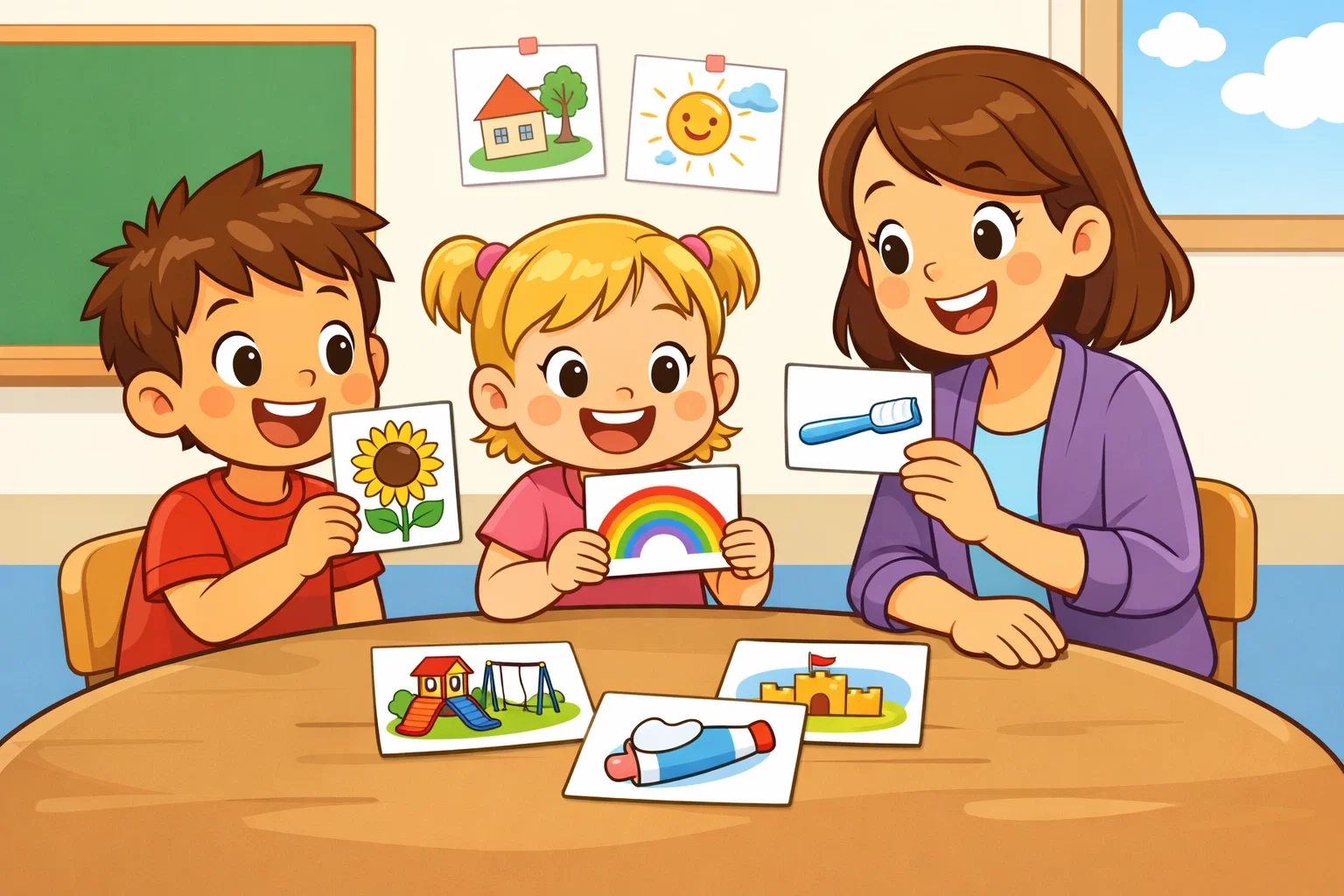
If you’re looking for a clear, practical guide to compound words for kids, this page gives you definitions, types, examples, sentences, and a ready-to-use list. It also includes simple explanations, sentence practice, fun activities, and grouped examples to teach kids compound words at home or in the classroom.
What Are Compound Words?
Compound words are formed when two smaller parts join to create a new form with one clear meaning. The result functions as a single vocabulary item. For example: sun + flower = sunflower, tooth + brush = toothbrush, rain + bow = rainbow.
Meaning of Compound Words
A compound word is made by combining two smaller parts, each with its own meaning. When those two parts come together, they often create a different meaning that refers to one specific object, idea, or action. Familiar examples include playground (a place to play), toothbrush (a brush for teeth), sunflower (a flower that faces the sun), and rainbow (an arc of color after rain).
How a New Meaning Forms
When two smaller units come together to form a compound word, the combined meaning is often more specific than either part alone. The pairing produces a new term referring to one unified concept. Here are four clear breakdowns:
- sun + flower = sunflower (a specific tall yellow plant)
- rain + coat = raincoat (a coat designed for rain)
- book + shelf = bookshelf (a shelf made for books)
- cup + cake = cupcake (a small individual cake)
Quick Examples Kids Already Know
Children come across these forms every day without even noticing it. Here are some familiar examples grouped by context:
- School: classroom, notebook, homework, backpack
- Home: bedroom, bathroom, doorbell, fireplace
- Food: popcorn, cupcake, lunchbox, pancake
- Weather: rainbow, raindrop, snowball, sunshine
- Animals: butterfly, ladybug, dragonfly, starfish
List of Compound Words for Kids: Examples by Topic and Alphabet
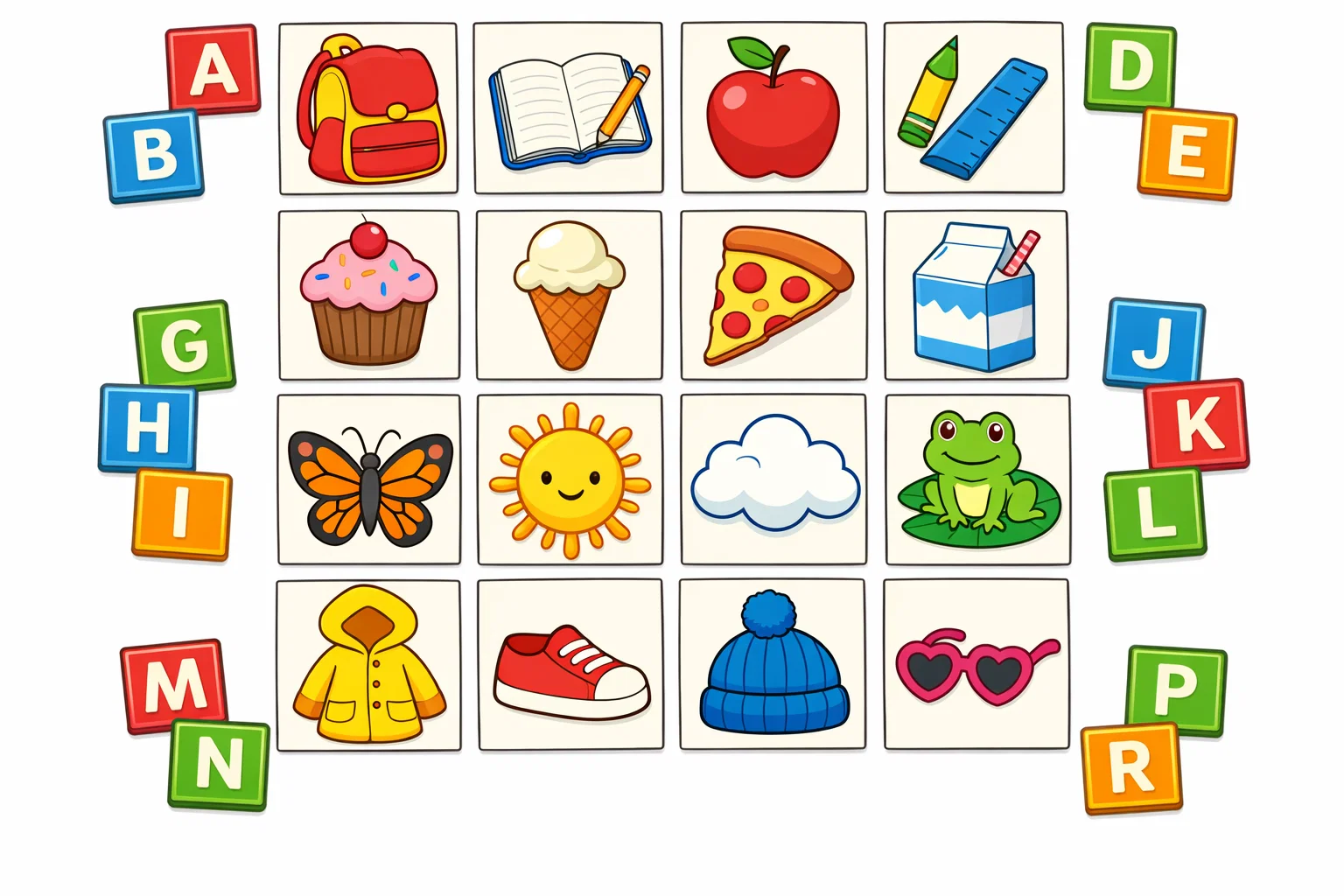
Common Compound Words Kids Should Know Early
These are the compound words kids should know from preschool through Grade 2. All parts are familiar, and the meaning is easy to visualize:
| Unit | Meaning |
| bedroom | a room with a bed |
| bathroom | a room with a sink and toilet, and often a bath or shower |
| football | a ball used to play football |
| rainbow | colored arc after rain |
| popcorn | popped corn kernels |
| toothbrush | a brush for teeth |
| cupcake | a small individual cake |
| classroom | a room for learning |
| backpack | a pack worn on the back |
| sunflower | a tall yellow flower that turns toward the sun |
| playground | a place to play outside |
| lunchbox | a box carrying lunch |
| snowball | a ball made of snow |
| raindrop | a single drop of rain |
| butterfly | a winged insect |
Sorted by Topic
Home bedroom, bathroom, doorbell, fireplace, staircase, hallway, bookshelf, dishwasher, cupboard, windowsill
School classroom, homework, notebook, blackboard, backpack, lunchbox, schoolyard, timetable, headteacher, whiteboard
Food popcorn, cupcake, pancake, oatmeal, cornbread, milkshake, gingerbread, watermelon, blueberry, applesauce
Animals butterfly, ladybug, dragonfly, starfish, bumblebee, grasshopper, catfish, seahorse, jellyfish, woodpecker
Nature rainbow, raindrop, snowflake, sunshine, sunflower, moonlight, thunderstorm, earthquake, waterfall, seashell
Body fingernail, eyelid, earring, kneecap, backbone, forehead, eardrum, toenail, armpit, collarbone
Transport aircraft, railroad, motorway, sailboat, skateboard, sidecar, motorboat, overpass, crossroad, carpool
From A to Z
A–B: airport, airline, backpack, baseball, bedroom, birthday, bluebird, bookmark, breakfast, bullfrog
C–D: campfire, carpool, classroom, cobweb, cupcake, daylight, daydream, doorbell, doorstep, downstairs
E–F: earthquake, eggshell, evergreen, eyebrow, firefly, fireman, flashlight, football, footprint, freestyle
G–H: gingerbread, goldfish, greenhouse, haircut, hallway, handshake, haystack, headband, homework, horseback
I–L: iceberg, inside, jellyfish, keyboard, kneecap, ladybug, landfill, lifeguard, lighthouse, lunchbox
M–N: mailbox, milkshake, moonlight, motorbike, mudslide, newspaper, nightgown, nighttime, notebook, nosebleed
O–P: outside, overcome, pancake, passbook, peppermint, pillowcase, pinecone, playground, popcorn, postbox
R–S: railroad, rainbow, raincoat, raindrop, sailboat, sandcastle, sandstorm, scarecrow, schoolyard, seashell, skateboard, snowball, snowflake, starfish, sunflower, sunshine
T–Z: tablecloth, teapot, thunderstorm, toothbrush, treetop, upstairs, volleyball, waterfall, watermelon, weekend, wildlife, windmill, woodland, workbook
Simple Examples of Compound Words for Kids
This section uses familiar, easy-to-picture examples for younger readers and early learners.
Everyday Examples
These examples appear in children’s daily routines:
- toothbrush — the brush used to clean teeth every morning and night
- backpack — the bag carried to school on a child’s back
- lunchbox — the container that holds a packed meal
- sidewalk — the paved path beside a road for walking
- playground — the outdoor space with climbing equipment and swings
Animal and Nature Examples
Nature-themed examples are memorable and easy to visualize, which makes them ideal for younger readers:
- butterfly — a colorful flying insect with large wings
- dragonfly — a long insect with shiny wings that hovers over water
- sunflower — a tall yellow flower that turns toward the sun
- rainbow — the arc of colors visible after rain and sunshine
- raindrop — one single drop of falling rain
- ladybug — a small red beetle with black spots
Objects and Places Examples
These combined forms relate to common locations and objects in a child’s environment:
- classroom — the room where lessons take place
- bedroom — the room where a child sleeps
- bookstore — a shop that sells books
- keyboard — the set of keys used to type on a computer
- bathroom — the room with a sink, toilet, and bath or shower
Compound Word Sentences for Kids
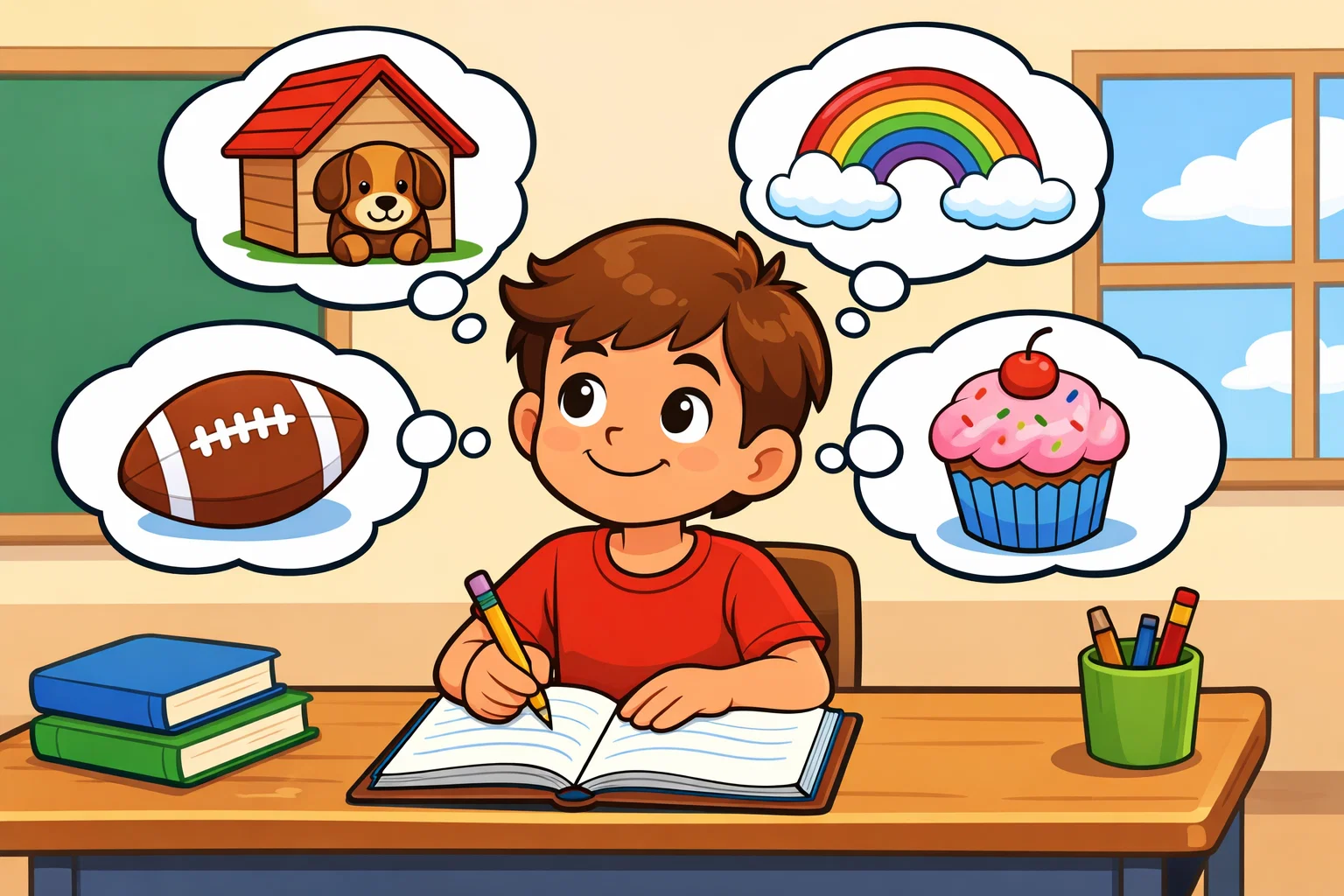
Easy Sentences for Beginners
These short sentences use compound words in simple, clear contexts:
- “I put my books on the bookshelf.”
- “We played on the playground after lunch.”
- “She brushed her teeth with a toothbrush.”
- “The rainbow appeared after the storm.”
- “He carried his lunchbox to school.”
Sentence Practice for School Use
Teachers and parents can use these fill-in-the-blank prompts for written practice:
- “After the rain, we saw a ________ in the sky.” (rainbow)
- “I keep my clothes in the ________ upstairs.” (bedroom)
- “We ran outside to play on the ________.” (playground)
- “She packed her books into her ________ each morning.” (backpack)
- “He ate a ________ at the birthday party.” (cupcake)
Mini Reading Passage With Compound Words
“On Saturday morning, Sam woke up in his bedroom and looked out of the window at the sunshine. He packed his backpack with a notebook and his lunchbox, then ran downstairs to eat a pancake for breakfast. Later, he walked along the sidewalk to the playground, where he found a butterfly resting on a sunflower. On the way home, a raindrop hit his nose – and soon a bright rainbow lit up the whole sky.”
This passage contains several familiar examples in context, making it useful for reading comprehension and identification practice.
How Compound Words Are Formed
Compound words are created when two or more standalone parts combine to express a single idea. Most of these forms in English combine exactly two parts, though the spelling and spacing can vary.
Two Smaller Words Joined Together
The simplest pattern is two smaller parts joined together with no space or hyphen:
- book + shelf = bookshelf
- rain + coat = raincoat
- class + room = classroom
- fire + place = fireplace
Both parts can stand on their own before joining. ‘Book’ and ‘shelf’ each have meaning on their own, and together they form one clear compound.
Meaning Changes After Joining
When two elements combine to form a compound word, the result often carries a more precise meaning than either part suggests on its own. “Butter” and “fly” are unrelated concepts individually, but butterfly names a specific insect. That shift is what makes the combination a distinct vocabulary item rather than two unrelated parts placed side by side.
Spelling and Spacing Patterns
Not all compound words are written the same way. Some appear as one solid unit, some as two separate terms, and some with a hyphen between parts. This is why understanding the three types of compound words matters, especially for accurate spelling in schoolwork.
Types of Compound Words for Kids

There are three main types of compound words in English, and each follows a different spelling pattern. The table below gives a quick comparison:
| Type | Spelling Pattern | Examples |
| Closed compound | Written as one unit | notebook, football, bedroom |
| Open compound word | Written as two separate terms | ice cream, post office, high school |
| Hyphenated compound | Joined by a hyphen | mother-in-law, long-term, part-time |
Closed
Closed compound words are written as a single, unbroken unit with no space or hyphen. This is the most common pattern children encounter in early reading. Such forms include:
- notebook
- football
- bedroom
- rainbow
- sunflower
Open
An open compound word consists of two separate parts that express one meaning together. The elements are not joined by a hyphen and are not merged into one spelling. Examples of this type include ice cream, post office, high school, full moon, and bus stop. Even though the parts stay separate on the page, they function as one concept in meaning.
Hyphenated
Hyphenated compound words use a hyphen between parts to link them into a single meaning. Some hyphenated forms are always written this way, while others are hyphenated mainly when they act as modifiers before a noun. Examples include mother-in-law, long-term, part-time, well-being, and self-control. This type is less common in early reading, but children usually see it more often as texts become more advanced.
Why Compound Words Matter for Kids
Research in early literacy consistently shows that morphological awareness – the ability to recognize and use meaningful units within language – is a strong predictor of reading comprehension and spelling accuracy (Carlisle, 2010, Reading and Writing). Learning about compound words builds this awareness from a very young age.
Vocabulary Growth
When kids understand that a compound word is built from two familiar parts, they can decode new vocabulary faster. A child who already knows rain and drop can immediately understand raindrop without a dictionary. This pattern-recognition skill accelerates vocabulary acquisition across subject areas, including science and social studies where such combined forms appear frequently.
Reading and Spelling Skills
The ability to spot compound words helps children break longer terms into manageable chunks during reading. Instead of seeing playground as a difficult 10-letter string, a child trained to identify compound words sees play + ground – two simple parts. This decoding strategy also improves spelling, since children can handle each smaller element confidently and combine them correctly.
Writing and Creative Expression
Compound words give young writers precise vocabulary to describe objects and places. Instead of writing “a box for lunch,” a child can write “lunchbox”. Instead of “the room with beds,” they can write “bedroom”. Using such terms makes sentences more efficient and helps children write more fluently in stories, reports, and everyday classroom tasks.
How to Identify Them Quickly
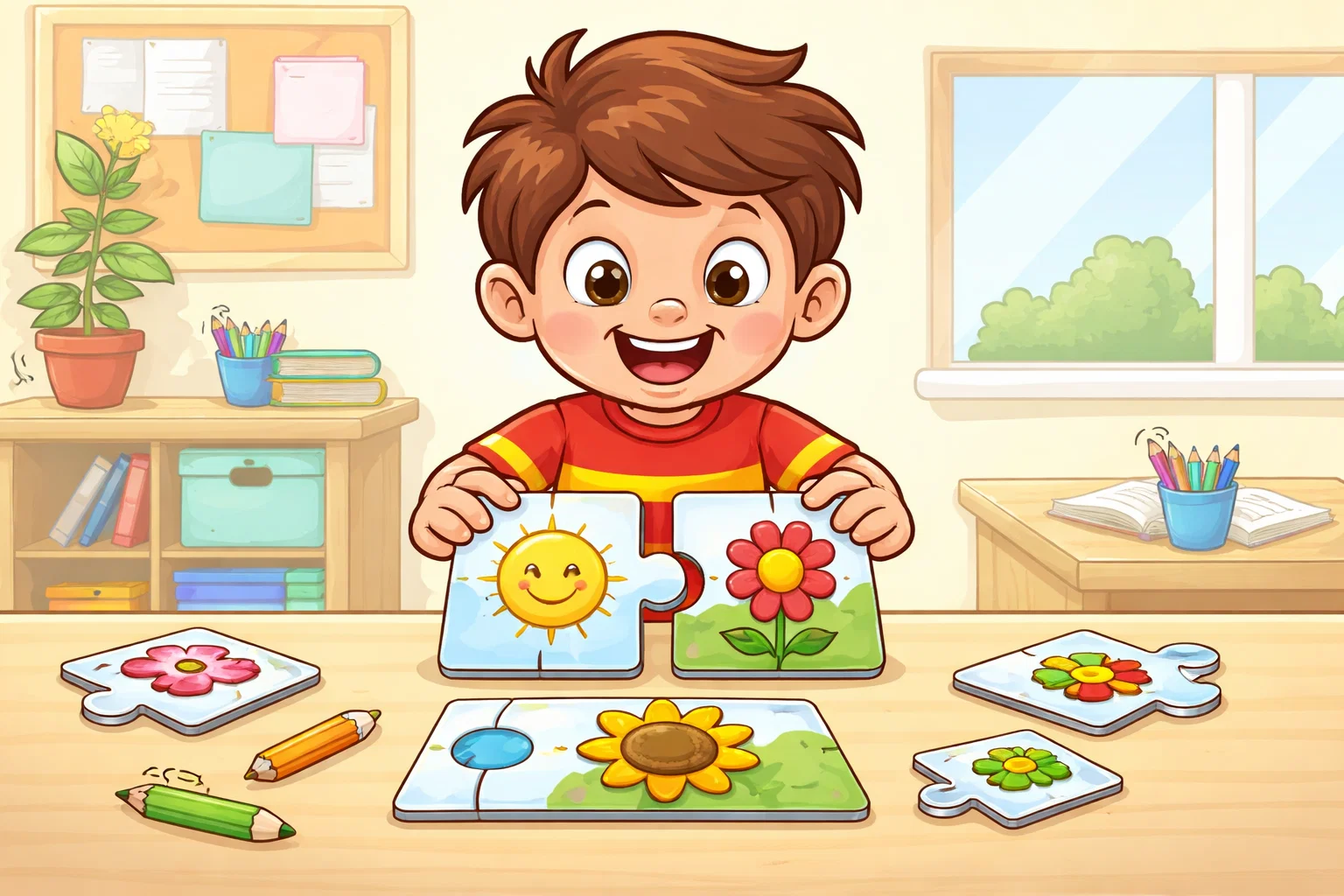
Children can learn to spot compound words in any text by following a simple three-step method. This process works during reading lessons, homework, and independent reading at home.
Break the Term Into Two Smaller Words
Ask children to look at an unfamiliar longer term and try splitting it into two recognizable parts:
- snowman → snow + man ✓
- cupcake → cup + cake ✓
- sunlight → sun + light ✓
- doorbell → door + bell ✓
- bookstore → book + store ✓
If both parts are real and familiar, there’s a strong chance the full form is a compound.
Check Whether Each Part Works Alone
After splitting the form, children should check that each part can stand on its own in English. Snow is a standalone term. Man is a standalone term. So snowman is very likely a compound word. This trick is reliable for most early-level examples, though some longer or borrowed forms may not follow this rule perfectly.
Test Meaning in a Sentence
Once children think they’ve found a compound word, placing it in a simple sentence confirms the meaning:
- “The snowman stood in the garden.” ✓
- “I brushed my teeth with a toothbrush.” ✓
- “She put the books on the bookshelf.” ✓
This sentence-testing habit strengthens comprehension alongside identification skills.
Compound Words vs Blends vs Phrasal Verbs
Difference Between Compound Words and Blended Terms
Compound words join two complete, independent parts, and both parts remain recognizable. Blends (also called portmanteaus) merge parts of two different terms into one new form. For example, smog comes from smoke + fog, and brunch comes from breakfast + lunch. In blends, the original parts are shortened. In compound words, both parts remain recognizable.
Difference Between Compound Words and Phrasal Expressions
Compound words function as single vocabulary items with a unified meaning. Phrasal verbs, such as look after and give up, are verb phrases whose meaning depends on usage and grammar, not simple combination. Some multi-word expressions may become closed or hyphenated over time as usage changes.
Quick Difference Chart
| Feature | Compound Words | Blends | Phrasal Verbs |
| Form | Two full elements joined | Parts of two terms merged | Two or more terms, grammatically linked |
| Spacing | Closed, open, or hyphenated | Always one unit | Always separate |
| Examples | sunflower, bedroom | smog, brunch | look after, give up |
| Meaning | Combined but traceable | New meaning, parts lost | Meaning depends on context |
Common Mistakes Kids Make With Compound Words
Confusing Spaces
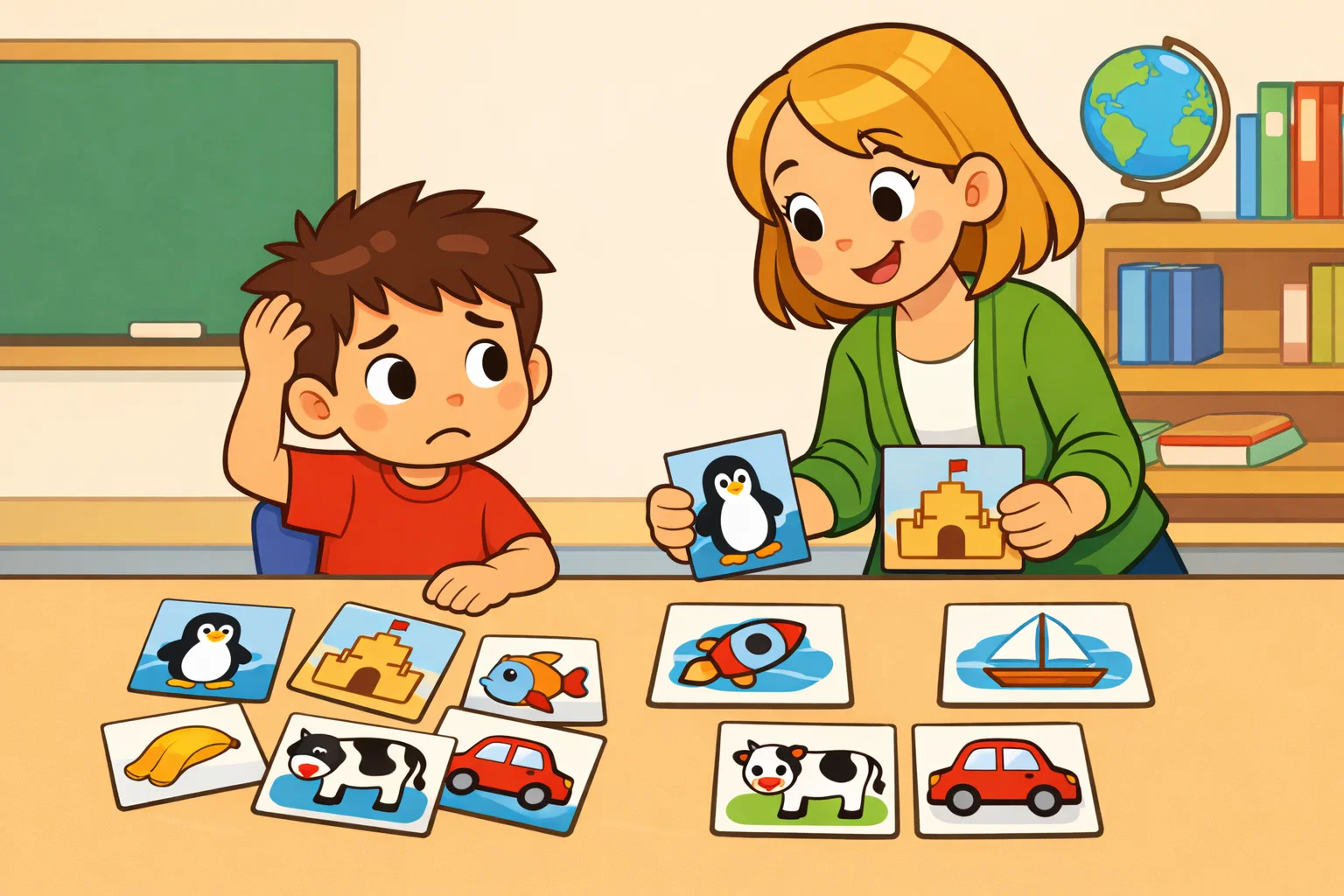
Children frequently write open compound words as one closed unit or split closed forms into two separate parts. For example, writing “icecream” (no space) instead of ice cream, or writing “book shelf” (with a space) instead of bookshelf. Regular exposure to correctly written examples – through reading and copywork – reduces this error over time.
Using Hyphens in Wrong Places
Some children add hyphens to long-looking compound words because the length feels unusual. A child might write sun-flower or rain-bow when neither requires one. Correct usage: hyphens appear in fixed forms like mother-in-law and well-being, and often in modifiers such as long-term plan, but not in common closed forms like sunflower or rainbow. Showing the correct form beside the incorrect form helps children internalize the distinction.
Guessing Meaning Too Fast
Some compound words have meanings that are not immediately obvious from their parts. Butterfly, for instance, cannot be understood literally by combining butter and fly. Encouraging children to test meaning in a sentence – rather than assuming based on parts alone – builds more reliable comprehension habits.
Easy Ways and Fun Activities to Teach Compound Words to Kids
Research in primary education consistently shows that kids learn best through hands-on, multi-sensory activities (National Reading Panel, 2000). The following activities support learning at home and in class.
Matching Game
Write the first half of a compound word on one card and the second half on another. Children match pairs to form a complete compound word. Sample pairs: sun / flower, rain / coat, book / shelf, door / bell. This activity builds recognition speed and reinforces spelling at the same time.
Word-Building Puzzles
Create puzzle pieces – one piece per element – that physically connect only when the correct two halves are paired. Many children in kindergarten and Grade 1 respond well to tactile, puzzle-based learning. You can also make simple paper versions at home or in class.
Draw and Guess
Children draw the two separate images that make up a compound word, then combine them into one final drawing. For sunflower, a child draws a sun and a flower, then merges them. For doghouse, they draw a dog and a house. This activity supports visual memory and reinforces the concept that two smaller words create one larger meaning.
Story Hunt
Give children a short printed story or picture book page. Ask them to circle every compound word they find. After circling, children write each item in two columns – first half and second half – to reinforce the structure. This activity transfers classroom learning directly into reading practice and helps kids identify combined forms in context.
Flashcards and Online Games
Flashcard drills – physical or digital – use repetition to build automatic recognition. For home learning, apps and online platforms include compound word matching, speed-sorting, and memory games that reinforce the concept through play. Consistent short sessions of 5–10 minutes are more effective than infrequent long ones.
Tips for Parents and Teachers
Use Real-Life Examples
The most effective way to help kids understand compound words is to point them out in everyday life. Product labels, street signs, food packaging, and children’s books are full of such combined forms. Asking “Can you spot a compound word on that sign?” during a walk or grocery trip turns everyday moments into micro-learning opportunities.
Turn Daily Conversations Into Learning Moments
Quick verbal prompts during routines reinforce learning without formal instruction. While a child brushes teeth, a parent can ask: “What are the two smaller words inside toothbrush?” This approach keeps awareness of these forms active between lessons and builds confidence through low-pressure practice.
Do’s and Don’ts for Teaching Compound Words to Kids
Do’s:
- Start with familiar forms your child already knows (bedroom, rainbow, cupcake)
- Use pictures alongside written entries for visual learners
- Repeat compound words in multiple contexts – reading, writing, speaking
- Celebrate when a child spots a compound word independently
Don’ts:
- Don’t introduce hyphenated compound words before a child is confident with closed forms
- Don’t rely only on memorization – teach the combining pattern, not just the list
- Don’t overcorrect spacing errors harshly; show the correct form calmly and move on
- Don’t skip sentence practice – seeing compound words in context is essential for retention
Frequently Asked Questions
What Are 10 Examples of Compound Words for Kids?
Here are 10 clear, beginner-friendly examples: rainbow, toothbrush, bedroom, playground, cupcake, sunflower, backpack, lunchbox, butterfly, notebook.
What Age Should Kids Learn Compound Words?
Most children begin encountering compound words in reading from age 5–6 (kindergarten to Grade 1). Formal instruction in identifying and forming compound words typically occurs in Grades 1–2, though readiness depends on a child’s overall reading level rather than strict age. Children with strong phonological awareness often grasp the concept earlier.
How Can Kids Practice It at Home?
Flashcard matching games using two-part cards. Hunting for compound words in books or on product labels. Fill-in-the-blank sentence exercises. Drawing activities where children illustrate both parts of a combined form. Short daily reading of picture books rich in such combined forms.
What Are 3 Types of Compound Words?
The three types of compound words in English are: closed – written as one solid unit (e.g., bedroom, rainbow); open – written as two separate terms sharing one meaning (e.g., ice cream, high school); hyphenated – linked by a hyphen (e.g., long-term, well-being).

Take a short quiz to find out what your everyday choices say about your parenting style
When your child is curious about something new, what’s your instinct?
Take a short quiz to find out what your everyday choices say about your parenting style
“Can I download this app?” What happens next?
Take a short quiz to find out what your everyday choices say about your parenting style
When it comes to rules at home, which sounds most like you?
Take a short quiz to find out what your everyday choices say about your parenting style
If you could give your child one life skill today, what would you pick?
Take a short quiz to find out what your everyday choices say about your parenting style
Your child gets to choose what to watch. What would your ideal setup look like?
Take a short quiz to find out what your everyday choices say about your parenting style
Pick your parenting superpower ✨



