Competency-Based Education: Examples for Kids in School and Learning Programs

 Discover a Free Education Video App for Kids
Pastory uses AI to personalize educational video content based on your child’s interests and personality. Safe, engaging, and built for curious young minds. Sign up now to stay updated and enjoy early access with a free trial
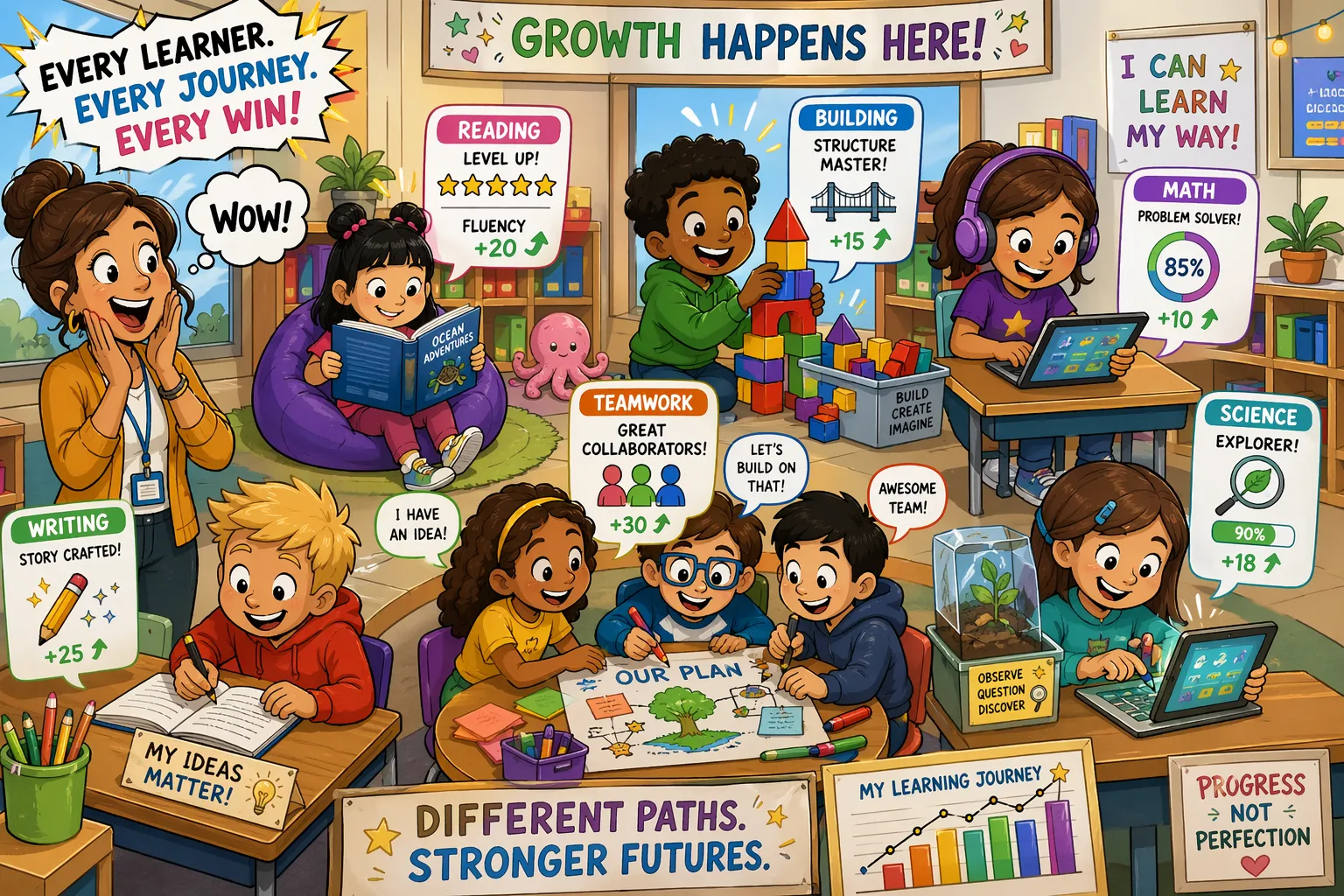
Children learn at different speeds — and a learning system that recognizes this can make a real difference. Competency-based education (CBE) is a structured approach to education where students move forward only after demonstrating mastery of specific skills and knowledge, rather than simply advancing with their age group.
This guide explains what CBE looks like in real classrooms, provides practical competency-based education examples across subjects, and covers the benefits, challenges, and future of this learning model for children.
What Is Competency-Based Education for Kids in Simple Terms
Competency-based education is an approach to education that measures student progress by what a learner can actually do, rather than by how much time they have spent in class. For children, this means a student moves forward in reading, math, or science once they can clearly demonstrate mastery — not simply because the school term has ended.
How Kids Progress by Mastering Skills Instead of Moving with a Class
In a competency-based learning model, a child advances through learning pathways only after demonstrating a specific skill. For example, a student learning to read does not move to chapter books until they can read short sentences fluently and with understanding. This approach ensures that no learner is pushed forward before they are ready, reducing gaps in foundational skills and knowledge.
Difference Between Traditional Grading and Competency-Based Learning for Children
Traditional education systems typically assess children using test scores and report cards, where a passing grade moves the student to the next level regardless of whether real understanding was achieved. Competency-based learning, by contrast, focuses on skill demonstration — a child must show they can apply what they have learned before progressing. This shift from grades to genuine mastery supports stronger long-term learning outcomes and builds more accurate student learning profiles.
What Competency Goals Look Like in Classroom Learning
Competency goals are specific, observable skills that a child is expected to master at each stage of learning. Examples include:
- Reading a short passage aloud with correct phrasing and comprehension
- Solving single-digit addition problems without counting on fingers
- Writing a complete sentence with correct capitalization and punctuation
- Listening to a peer’s idea and responding respectfully during group work
These goals give both teachers and families a clear picture of where a child is in their learning journey and what comes next.
Competency-Based Education Examples in Real Classrooms
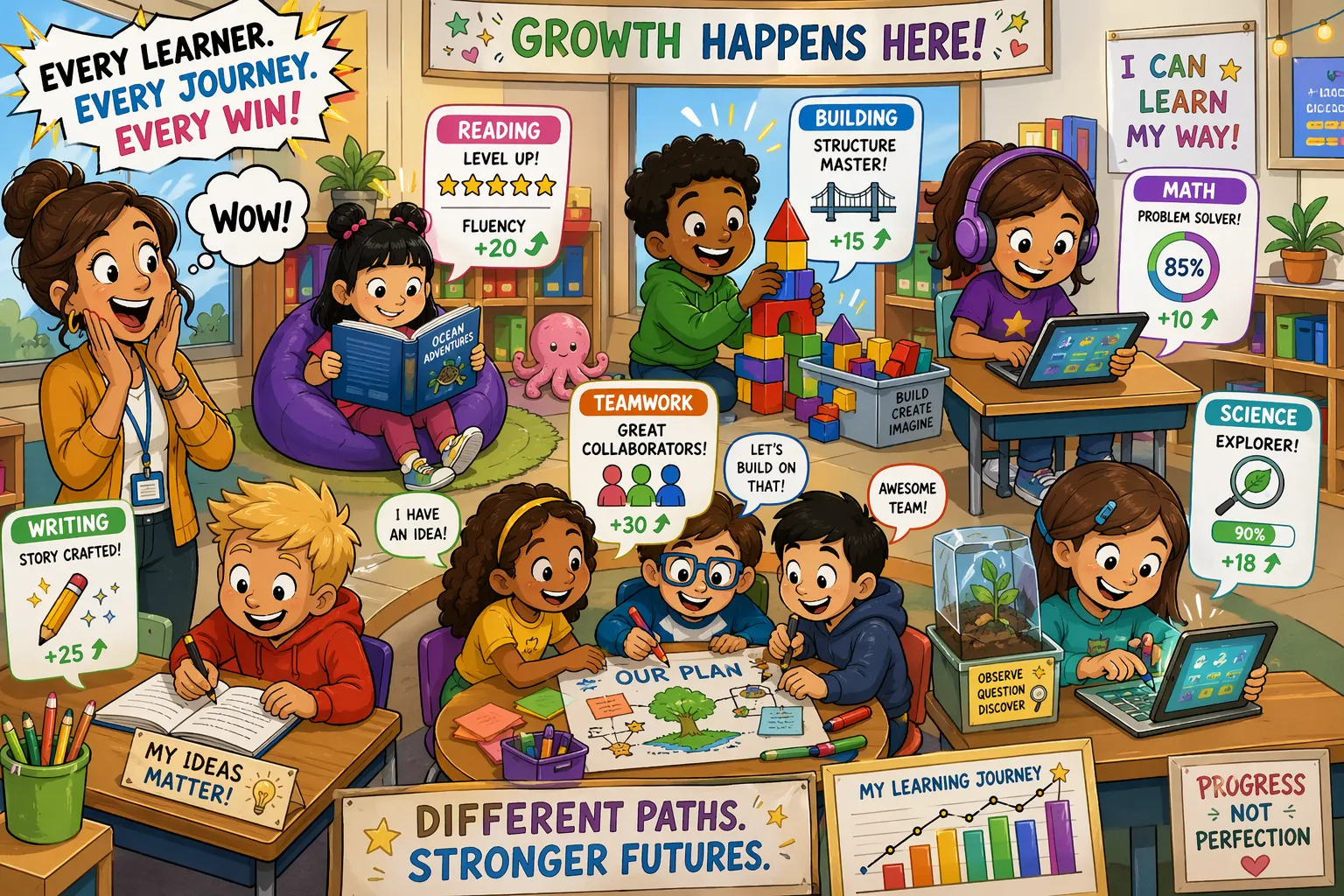
Real-world examples of CBE show how this approach works across different subjects and age groups. These competency-based education examples are drawn from primary and elementary school settings where mastery-based learning has been applied to daily instruction.
Reading and Literacy Competency Example in Elementary School
In a CBE literacy program, a child begins by mastering letter recognition and phonics before progressing to blending sounds, then reading simple words, short sentences, and eventually full stories. A learner only advances to independent reading once they have demonstrated fluency at each prior stage. Research by the National Institute for Literacy has consistently shown that structured, sequential reading instruction with clear mastery checkpoints produces stronger early literacy outcomes.
Math Skill Mastery Example in Primary School
A primary school math competency framework typically begins with counting and number recognition, then progresses to comparing quantities, basic addition, subtraction, and eventually simple word problems. Each stage in the competency framework requires the student to demonstrate mastery through hands-on tasks, short assessments, or teacher observation before moving forward. This mastery-based learning approach prevents children from carrying forward unresolved gaps in core numeracy.
Writing and Communication Competency Example for Kids
Writing competencies in elementary school follow a clear progression: forming letters correctly, building single words, writing complete sentences, constructing short paragraphs, and eventually organizing ideas into a short story or explanation. A learner moves through each stage only after their writing demonstrates the key competencies at that level, such as subject-verb agreement, punctuation, and logical sentence order.
Science Learning Competency Example in Classroom Activities
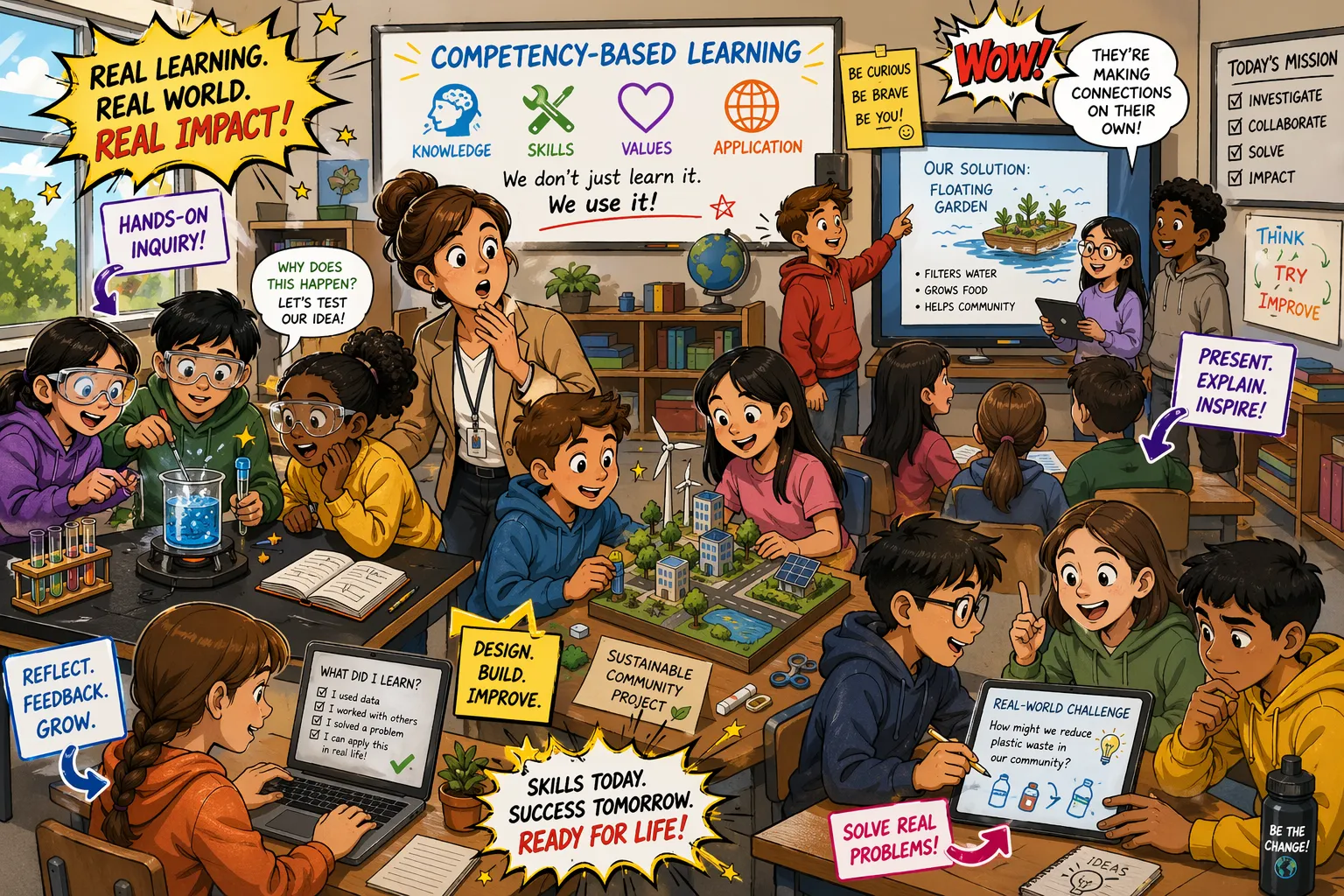
In a CBE science classroom, children develop specific skills and competencies through hands-on exploration. A student might begin by learning to observe and describe objects, then progress to making predictions, conducting simple experiments, and recording results. These learning experiences connect directly to scientific reasoning skills and prepare students for more structured inquiry in later grades.
Group Work and Social Skills Competency Example
Social and communication skills are also part of competency-based learning in many schools. Students are assessed on their ability to:
- Listen without interrupting during group tasks
- Share materials and take turns during collaborative activities
- Contribute a clear idea to a group discussion
- Resolve a disagreement calmly and respectfully
These teamwork skills among students are tracked through teacher observation and self-assessment, forming part of the child’s broader learning outcomes.
Types of Competency-Based Learning Models for Kids
Several structured learning models apply competency-based principles in different ways. Understanding these models helps educators and parents choose the most suitable approach for a given learning environment.
Self-Paced Learning Classrooms for Kids
In a self-paced classroom, children move through learning materials at a speed that suits their individual needs. A child who grasps addition quickly can progress to subtraction while a classmate spends more time reinforcing foundational skills — without either student feeling rushed or held back. This model allows students to progress at their own pace while remaining within the same classroom structure.
Mastery-Based Programs in Schools
Mastery-based learning programs use clearly defined competency frameworks where each skill must be fully demonstrated before the next is introduced. These programs often include structured reassessment opportunities, so if a learner does not meet a standard the first time, they receive targeted support and attempt the assessment again. The goal is not speed — it is genuine, demonstrated understanding.
Blended Models Using Digital Tools
Blended competency-based learning models combine teacher instruction with digital platforms that support personalized paths. Tools like Khan Academy or ST Math track student progress automatically, providing exercises that match each learner’s current competency level. These platforms engage students through adaptive content and give teachers real-time data to guide instruction.
Project-Based Competency Learning for Children
Project-based learning within a CBE framework asks children to apply their learning through real-world tasks and hands-on projects. For example, a class might design a small garden, requiring students to apply math skills (measuring and calculating area), literacy skills (writing labels and instructions), and collaboration skills (dividing tasks and making decisions together). This approach connects classroom competencies to practical, meaningful experiences.
Benefits of Competency-Based Education for Kids
The benefits of competency-based education for children extend beyond academic performance. This approach supports cognitive, emotional, and social development across the full range of learning abilities.
Learning at Individual Pace Without Pressure
CBE removes the pressure of keeping up with a class timeline, allowing each child to consolidate skills before moving forward. This flexibility reduces learning-related anxiety and supports a healthier relationship with school and academic challenge.
Stronger Skill Development and Long-Term Retention
Because students must demonstrate mastery before progressing, they build more durable understanding. Skills learned through repeated practice and application are better retained than knowledge acquired quickly for a test and then forgotten.
Improved Confidence in Classroom
Consistent small successes — reaching one mastery checkpoint, then the next — build genuine academic confidence. Children who experience this kind of structured progress tend to approach new challenges with greater motivation and persistence.
Better Support for Different Abilities
Competency-based learning supports both children who need more time to consolidate skills and those who are ready to move ahead quickly. Rather than being labelled as behind or ahead, every learner simply works within their current stage of the learning journey, reducing stigma and supporting inclusion.
Real-World Skill Preparation from an Early Age
CBE connects learning directly to skills children will use outside the classroom — communicating clearly, solving problems, working with others, and thinking critically. This approach to education helps better prepare students for the practical demands of everyday life from an early age.
Challenges of Competency-Based Education for Kids
Implementing competency-based education in school settings comes with real challenges that educators, school leaders, and families should understand.
Adjusting Traditional Classroom Systems
Moving from a grade-based to a mastery-based system requires significant structural change. Schools must redesign curriculum sequences, assessment methods, and reporting systems — a process that takes considerable time and institutional commitment.
Teacher Preparation for Competency-Based Instruction
Effective CBE requires teachers to track student progress individually, adjust instruction in real time, and manage multiple learning pathways within one classroom. Many educators need specific professional development before implementing CBE confidently and consistently.
Measuring Progress Consistently
Assessing whether a child has truly mastered a competency — rather than simply performed well on one task — is more complex than assigning a test score. Schools must develop clear rubrics and assessment tools that measure learning accurately and fairly across different learners and contexts.
Managing Different Speeds in One Classroom
When students progress at different rates, classroom management becomes more demanding. Teachers must plan differentiated activities, support children who are struggling, and extend learning for those who are ready to advance — all simultaneously. Without adequate planning time and support, this challenge can affect the quality of instruction for all students.
The Future of Competency-Based Education for Children
Competency-based education is growing in reach and sophistication. Advances in digital learning platforms are making it easier to create personalized pathways, track student progress in real time, and tailor learning to individual needs without requiring entirely manual oversight. Several education systems internationally — including those in Finland, parts of the United States, and Australia — are integrating CBE principles into national curriculum frameworks, reflecting a broader shift toward skills-focused learning.
As schools continue to evolve, the competency-based approach is likely to become more integrated into mainstream education rather than remaining a specialist model. The increasing availability of adaptive learning tools and the growing evidence base supporting mastery-based instruction suggest that CBE will play a significant role in shaping how children learn over the coming decades.
For parents and educators, understanding and engaging with these changes now — whether through school choice, home practices, or professional development — puts children in a stronger position to benefit from the learning models that best support their individual development.
Frequently Asked Questions
What Is Competency-Based Education for Kids in Simple Terms?
Competency-based education means that children advance in their learning only after showing they can perform a specific skill — such as reading a short story aloud or solving a set of addition problems — rather than moving forward simply because of their age or because a school term has ended.
How Do Teachers Track Progress in Competency-Based Learning?
Teachers use a range of tools to track student progress, including skill checklists, observation notes, rubrics that describe what mastery looks like, and digital platforms that log completed competencies automatically. These methods give educators a detailed picture of each learner’s development across subjects.
Can Kids Move at Different Speeds in Competency-Based Classrooms?
Yes. In a competency-based classroom, a child may progress quickly through literacy competencies while taking more time with math, or vice versa. This flexibility allows personalized learning paths and ensures every learner moves forward at the pace that matches their current abilities.
What Happens If a Child Does Not Master a Skill?
If a child does not demonstrate mastery, they receive additional practice, targeted feedback, and extra support before reassessing. There is no penalty for needing more time — the goal is genuine understanding, and students can attempt a skill assessment again once they are ready.
Is Competency-Based Education Better Than Traditional Grading for Children?
Competency-based learning and traditional grading each have their strengths. CBE focuses more directly on real skill development, individual progress, and long-term retention, while traditional systems offer familiar structures and straightforward reporting. For many children — particularly those who learn at a different pace from the class average — the competency-based approach provides more meaningful and motivating learning experiences.

Take a short quiz to find out what your everyday choices say about your parenting style
When your child is curious about something new, what’s your instinct?
Take a short quiz to find out what your everyday choices say about your parenting style
“Can I download this app?” What happens next?
Take a short quiz to find out what your everyday choices say about your parenting style
When it comes to rules at home, which sounds most like you?
Take a short quiz to find out what your everyday choices say about your parenting style
If you could give your child one life skill today, what would you pick?
Take a short quiz to find out what your everyday choices say about your parenting style
Your child gets to choose what to watch. What would your ideal setup look like?
Take a short quiz to find out what your everyday choices say about your parenting style
Pick your parenting superpower ✨