7 Colors of the Rainbow and Their Meanings for Kids

 Discover a Free Education Video App for Kids
Pastory uses AI to personalize educational video content based on your child’s interests and personality. Safe, engaging, and built for curious young minds. Sign up now to stay updated and enjoy early access with a free trial
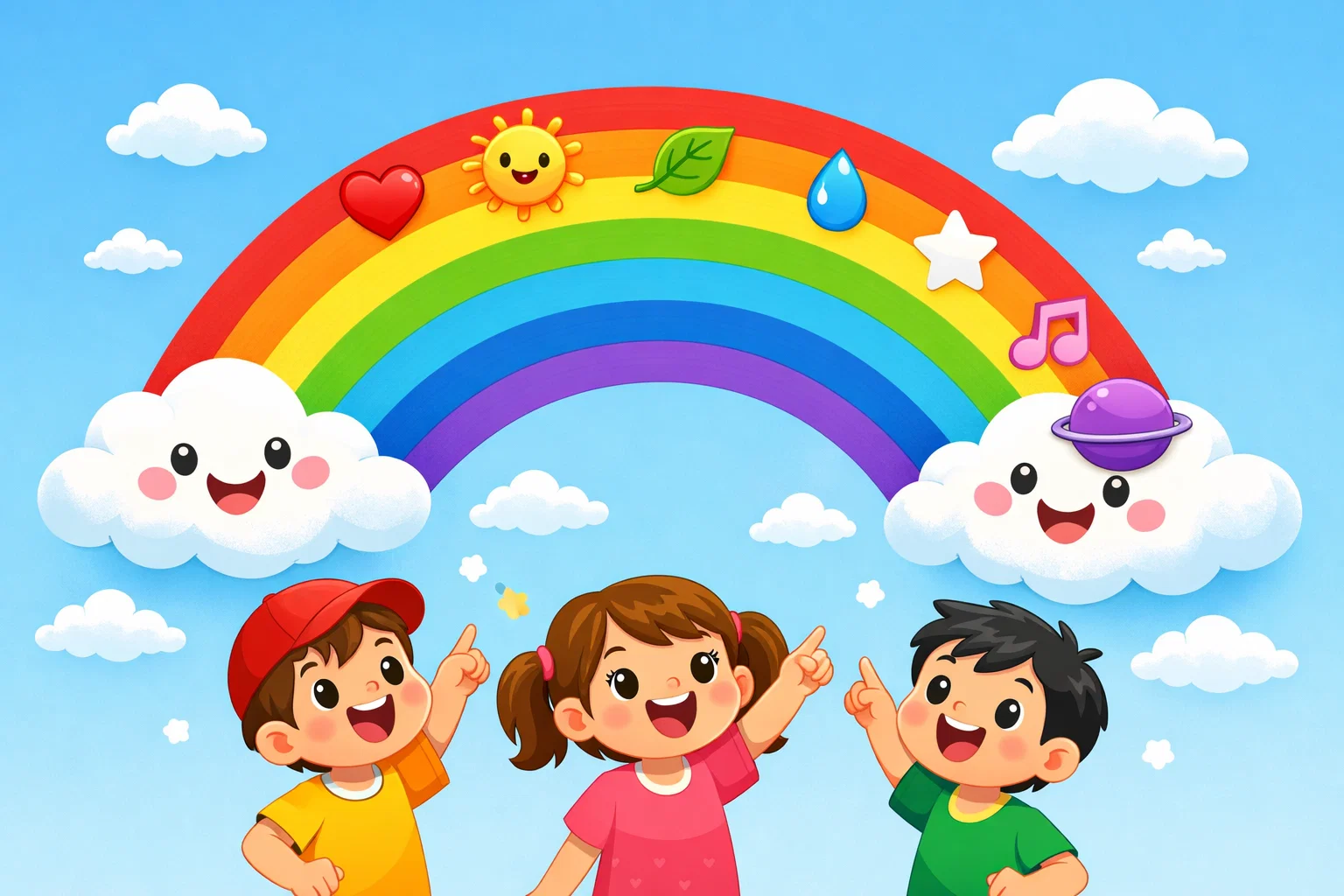
A rainbow is an optical phenomenon that happens when sunlight interacts with water droplets in the air. While the human eye can distinguish thousands of subtle gradients, the traditional educational model identifies seven distinct sections: red, orange, yellow, green, blue, indigo, and violet. To remember the colors, many children learn the mnemonic ROY G. BIV. In some countries, VIBGYOR is also used. Beyond science, each color is often associated with certain feelings and cultural meanings. This guide explains how rainbows form, what the seven colors are commonly associated with, and how parents and children can explore them together through simple creative activities.
What Is a Rainbow?
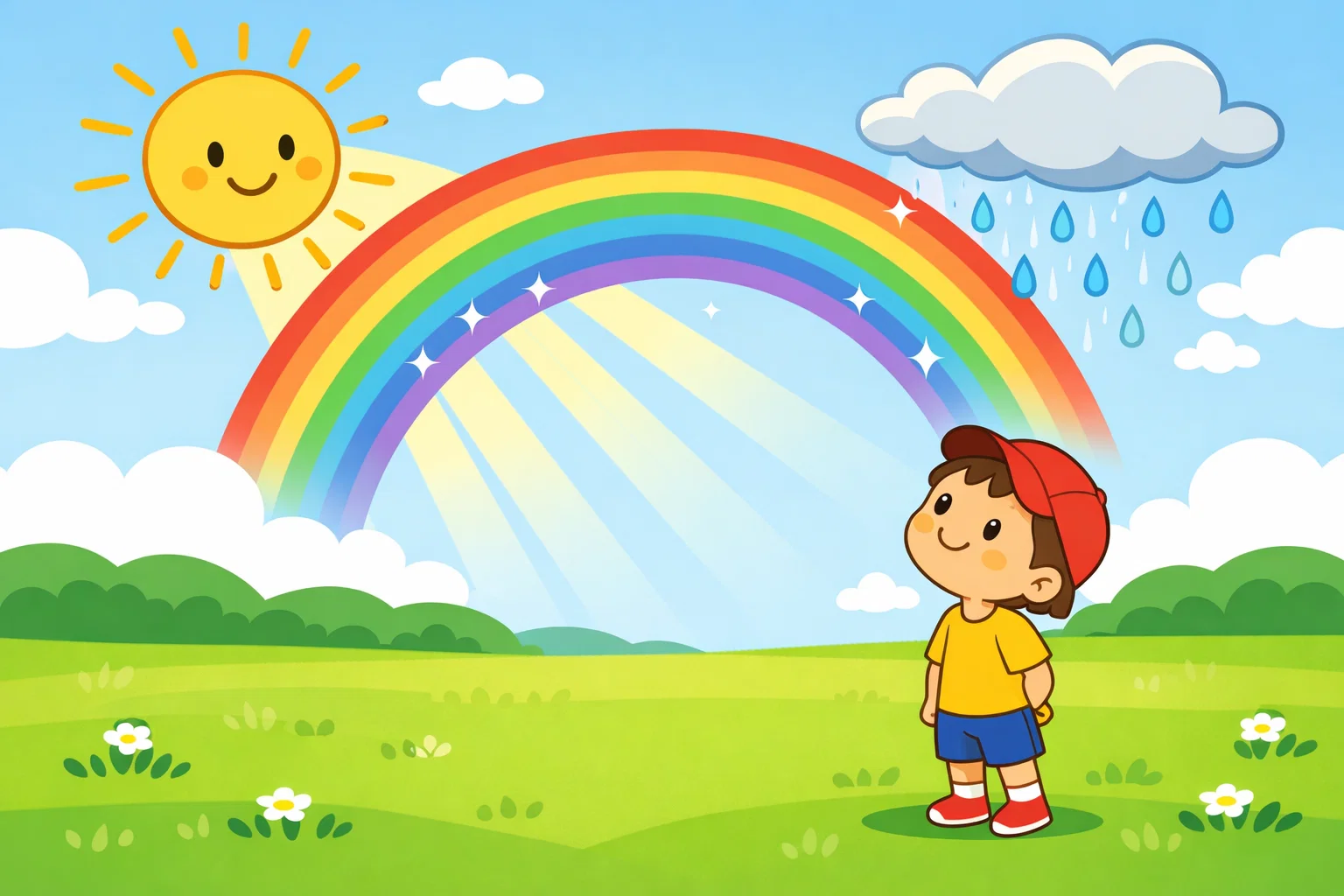
This optical and meteorological phenomenon is caused by the reflection, refraction, and dispersion of light within water droplets. This intricate process results in a spectrum of light appearing in the sky as a multicolored circular arc. To see a rainbow, the observer needs to stand with the Sun behind them and water droplets in front of them, such as rain or mist.
How the Arc Forms
The formation of this light display involves a specific sequence of physical interactions between sunlight and moisture. When rays enter a spherical raindrop, the light bends, a process scientifically known as refraction. After entering the droplet, the light reflects off the back interior surface of the water and refracts again as it exits, causing the white light to separate into its constituent wavelengths.
Why Sunlight and Water Droplets Create a Spectrum
Sunlight, often perceived as “white” light, is actually a mixture of all visible colors of the rainbow. Different wavelengths of light travel at different speeds when they enter a denser medium like water, causing them to bend at varying angles. Red light has the longest wavelength and bends the least, while violet has the shortest wavelength and bends the most, effectively “splitting” the white light into a visible spectrum.
Why the Phenomenon Looks Like an Arc
The spectrum appears as an arc because it represents a collection of droplets that happen to be at the correct angle (approximately 42 degrees) relative to the observer and the light source. While we see a semi-circle from the ground, the physics actually creates a full circle of light. From the ground, the horizon usually hides the lower half of the circle, which is why we normally see a bow instead of a full circle.
Color Order in a Rainbow
The sequence of hues within the arc is constant and determined strictly by the physics of light wavelengths. This order is fixed and is one of the first rainbow facts children usually learn.
Red to Violet Sequence
The standard sequence of the colours of the rainbow always begins with the longest wavelength on the outermost edge and ends with the shortest on the innermost edge. The full sequence is:
- Red
- Orange
- Yellow
- Green
- Blue
- Indigo
- Violet
VIBGYOR Memory Trick
In English-language materials, the most common mnemonic is ROY G. BIV, which follows the rainbow from red to violet. VIBGYOR lists the same colors in reverse order, so it should be introduced carefully to avoid confusing young readers. Another common method is the name “Roy G. Biv,” which lists the colors of the rainbow from the top down.
Why Indigo Is Still Included
Sir Isaac Newton originally identified seven colors to align with the seven notes of a musical scale and the seven known planets of his time. While many modern sources treat indigo as difficult to distinguish from blue, it remains a common part of school lists for historical reasons. Including indigo and violet preserves the historical and cultural framework of the Newtonian spectrum.
RGB and HEX Codes of Rainbow Colors
For digital designers and artists, these hues can be represented with approximate digital values. These codes can help keep colors consistent in digital projects, classroom materials, or children’s illustrations.
| Color | Hex Code | RGB Value | CMYK Value |
| Red | #FF0000 | (255, 0, 0) | (0, 100, 100, 0) |
| Orange | #FF7F00 | (255, 127, 0) | (0, 50, 100, 0) |
| Yellow | #FFFF00 | (255, 255, 0) | (0, 0, 100, 0) |
| Green | #00FF00 | (0, 255, 0) | (100, 0, 100, 0) |
| Blue | #0000FF | (0, 0, 255) | (100, 100, 0, 0) |
| Indigo | #4B0082 | (75, 0, 130) | (42, 100, 0, 49) |
| Violet | #8B00FF | (139, 0, 255) | (45, 100, 0, 0) |
7 Colors of the Rainbow and Their Meanings
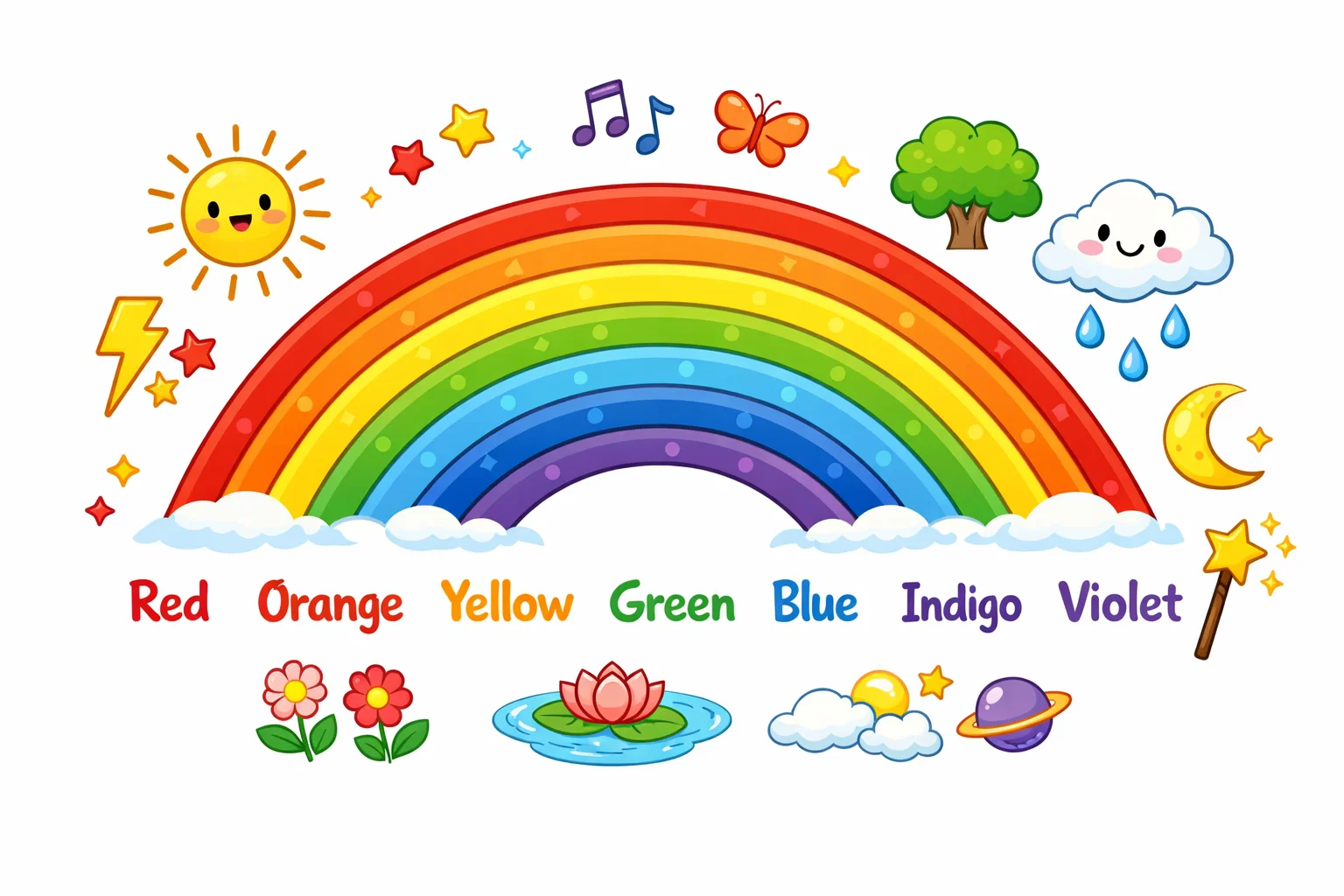
Beyond their physical properties, the seven colours are deeply embedded in human psychology and cultural symbolism. Each hue evokes specific responses and represents different concepts in art and therapy.
Red Meaning
Red is the color of energy, passion, and vitality. As the color with the longest wavelength, it is the most visible and is often used to signal importance or danger. In many cultures, red represents love, strength, and the “fire” of life, providing a grounding and powerful start to the spectrum. It is also the first color to appear at the top of the arc.
Orange Meaning
Orange represents warmth, enthusiasm, and creativity. It is a vibrant blend of the energy of red and the happiness of yellow. Psychologically, orange is thought to promote social interaction and confidence, making it a “friendly” color that bridges the gap between intensity and joy.
Yellow Meaning
Yellow is universally associated with sunlight, clarity, and optimism. It is commonly associated with brightness, attention, and cheerfulness. In design, yellow is used to grab attention and evoke a sense of cheerfulness and hope. It sits prominently between the warm and cool halves of the spectrum.
Green Meaning
Green sits at the center of the spectrum and symbolizes balance, nature, and growth. It is the color of the natural world and is often associated with healing and renewal. Green is often associated with harmony, balance, and nature, which is why it is commonly described as the center of the rainbow.
Blue Meaning
Blue evokes feelings of calm, trust, and depth. It is the color of the vast sky and the deep ocean, representing wisdom and serenity. Many organizations use blue in branding because it suggests reliability and a sense of peaceful authority. In the natural arc, it follows green and introduces the cooler, more tranquil tones.
Indigo Meaning
Indigo is often described as the color of intuition, mystery, and inner focus. It is a deep, midnight hue that bridges the gap between blue and violet. Historically, indigo was a rare and expensive dye, contributing to its association with luxury, spirituality, and the “unknown.” It adds a sense of depth between blue and violet in the inner part of the rainbow.
Violet Meaning
Violet represents imagination, spirituality, and transformation. It appears on the inner edge of the rainbow and has one of the shortest visible wavelengths. In art and history, violet (or purple) is frequently linked to royalty, nobility, and the highest reaches of human creativity. It completes the rainbow with a sense of imagination and mystery.
Beauty of Rainbow Colors
The aesthetic appeal of these light displays goes beyond simple visual stimulation. The combination of these specific hues creates a sense of completion and natural perfection that humans have admired for millennia.
Why Rainbow Feels Hopeful
The appearance of these arcs typically signals the end of a storm, which is why they are widely regarded as a symbol of hope and new beginnings. Seeing the seven colours emerge from dark clouds provides a psychological sense of relief and the promise of “calm after the storm.” This universal association helps people find peace during difficult transitions.
Usage in Art, Design, and Branding
Artists and designers use this specific palette to convey inclusivity and diversity. Because the rainbow spans a wide range of visible hues, it is often used in logos, children’s toys, and educational materials to create a fun, vibrant, and welcoming atmosphere. By utilizing all colours of the rainbow, brands can signal that their products are for everyone.
Emotional Effect of a Full Spectrum
A full range of colors can feel lively, balanced, and visually rich. The balanced presence of warm colors (red, orange, yellow) and cool colors (green, blue, indigo, violet) provides a sense of wholeness that can reduce stress and increase feelings of well-being. That is one reason rainbow imagery is often used in art, classrooms, and children’s design.
Do These Arcs Have an End?
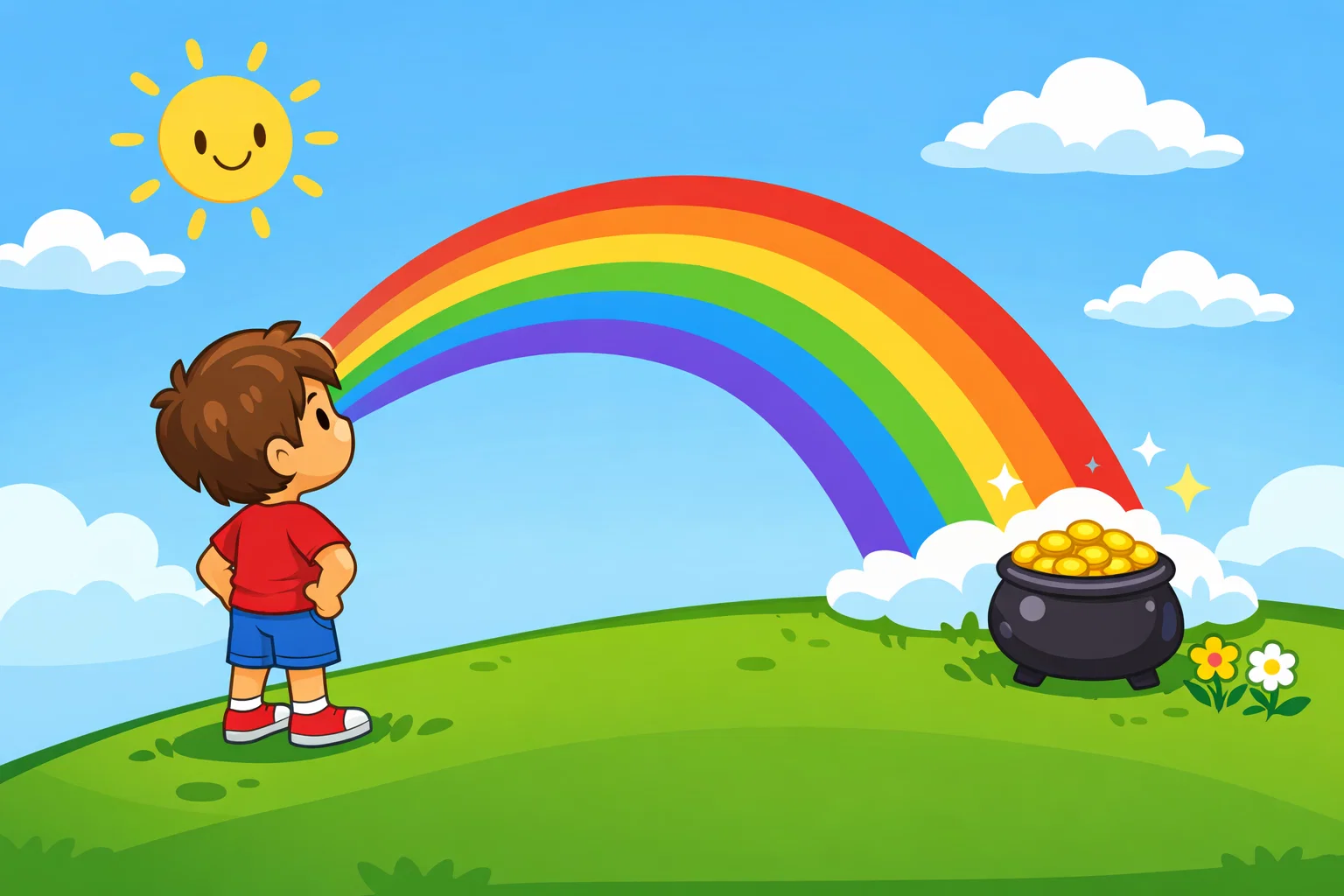
The idea of finding the “end” of a rainbow is a popular cultural trope, but the physical reality is quite different. Because these are optical effects rather than physical objects, their position changes as you move.
Why the Arc Seems to Touch the Ground
A light arc seems to touch the ground because of the observer’s perspective relative to the falling rain. The light is reflecting off droplets at a specific distance from your eyes; as you move, you are simply seeing the effect created by a different set of raindrops, making it impossible to ever reach the “base.”
Seeing a Full Circle
A full circular light display can indeed be seen, but usually only from high altitudes. Pilots or passengers in airplanes, or people standing at the top of tall cliffs, can sometimes see the complete circular spectrum because the ground does not block the bottom half of the light path. This view confirms that the arc is actually a perfect geometric circle of light.
Pot of Gold Myth and Popular Beliefs
The myth of the “pot of gold” originates from Irish folklore. It serves as a metaphor for an unattainable goal, as the physical properties of light ensure that the “end” of the arc remains forever out of reach. This story has encouraged generations to appreciate the journey and the beauty of the colors rather than just the destination.
What Is a Double Rainbow?
A double light arc is a rarer and more spectacular version of the standard phenomenon. It consists of a primary arc and a fainter secondary arc visible above it.
How the Second Arc Forms
The second arc forms when light undergoes two internal reflections inside each water droplet instead of just one. Because some light is lost during each reflection, the secondary display is always significantly fainter than the primary one. It happens because the light reflects inside each droplet one extra time, which makes the second bow fainter.
Why the Color Order Reverses
In a double arc, the color order of the secondary bow is reversed. Violet appears on the outside and red on the inside. This happens because the second internal reflection “flips” the light rays before they exit the droplet, creating a mirrored effect of the original spectrum.
Symbolic Meaning of the Double Arc
Many cultures view this rare sight as a sign of extraordinary good luck or spiritual transformation. It is often interpreted as a symbol of the connection between the physical and spiritual realms, representing a doubling of the hope and promise found in a single arc.
What Is a Fogbow?
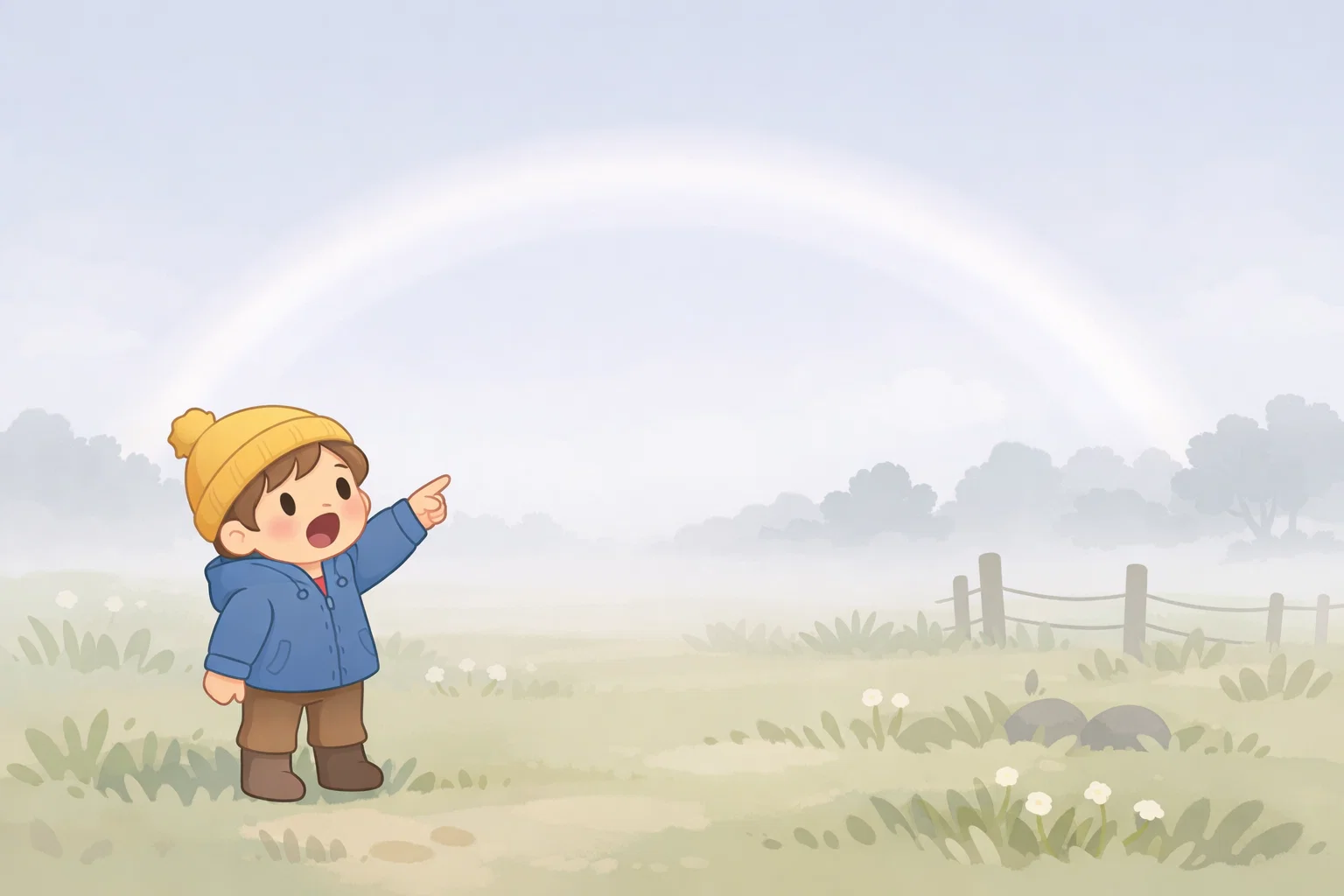
A fogbow is a related optical phenomenon that occurs in fog rather than rain. While it shares the same circular shape as a standard colored arc, its appearance is markedly different.
How Fogbows Form
Fogbows form when sunlight interacts with the very small water droplets found in fog or clouds. These droplets are much smaller than raindrops (usually less than 0.05 millimeters), which changes how the light is dispersed.
Why Fogbows Look White
Because fog droplets are so small, refraction and reflection still occur, but diffraction and interference blur the colors much more strongly. Because the colors overlap so strongly, a fogbow usually looks white or very pale, often with only faint hints of red on the outside and blue on the inside. It is sometimes called a “ghost arc.”
Fogbow vs Colored Arc Comparison
| Feature | Standard Arc | Fogbow |
| Source | Large raindrops | Tiny fog droplets |
| Primary Effect | Refraction | Diffraction |
| Appearance | Vivid seven colours | Pale or white |
| Saturation | High | Low to None |
| Common Time | Post-Rain | Morning Mist |
Cultural Myths and Legends
Throughout history, different civilizations have created stories to explain the presence of these shimmering bridges in the sky. These myths often highlight the arc’s role as a divine message or a path for the gods.
Bridges in Northern Traditions
In Norse mythology, the rainbow, known as Bifröst, was a burning bridge that connected the world of humans (Midgard) to the realm of the gods (Asgard). It was said to be guarded by the god Heimdall, ensuring that only those worthy could cross the shimmering path.
Asian and Indigenous Beliefs
In some Chinese traditions, the arc was seen as a slit in the sky mended by the goddess Nüwa using stones of five different colours. Many Aboriginal Australian cultures revere the Rainbow Serpent, a powerful creator being associated with water, life, and the lands.
Symbols of Promise and Fortune
In Judeo-Christian tradition, the arc appears after the Great Flood as a sign of a divine covenant. Today, the rainbow remains a widely recognized symbol of hope, peace, and renewal. It remains one of the most recognizable icons of positivity in the modern world.
Learning the Colors: A Guide for Kids
Teaching kids about light and color is an easy way to introduce basic science and art concepts. Preschoolers especially benefit from the high-contrast visuals and the fun nature of color identification.
Easy Way to Memorize the 7 Colors
A parent can use a rainbow song or a simple rhyme to help a child remember the colours. Many children learn the rainbow colors through songs that repeat the names in order, making them easier to remember. Sing a rainbow song with your child to turn a science lesson into a fun shared activity.
Simple Meanings Kids Can Remember
To help children connect emotionally with the spectrum, you can assign simple meanings or objects to each hue:
- Red: Like a fire truck (Energy)
- Orange: Like a yummy fruit (Creativity)
- Yellow: Like the bright sun (Happy)
- Green: Like the soft grass (Nature)
- Blue: Like the wide ocean (Calm)
- Indigo: Like the evening sky (Thoughtful)” / “Violet: Like a magic cape or flower (Imagination)
Mini Rainbow Activity for Home or Class
To learn how the spectrum is made, you can conduct a simple experiment at home. This activity helps children visualize the physics of light without complex equipment.
- Preparation: Fill a clear glass with water.
- Placement: Place it on a white piece of paper in a sunny window or under a strong flashlight.
- Observation: Adjust the angle of the glass until a small spectrum appears on the paper.
- Interaction: Ask the child to name the seven colours as they appear, reinforcing their understanding of the VIBGYOR order.
Conclusion: The Enduring Magic of Light
Whether seen by a scientist, an artist, or a curious child, the seven colors of the rainbow remain one of nature’s most captivating sights. By understanding the physics of refraction and the deep symbolic meanings of red, orange, yellow, green, blue, indigo, and violet, we gain a deeper appreciation for the world around us. Using a song, a rhyme, or a simple video, we can pass this knowledge on to the next generation, ensuring that the magic of the sky continues to inspire hope and creativity in every home.
FAQ: Frequently Asked Questions
Why Are Only 7 Colors Named?
While the spectrum is a continuous gradient of millions of shades, humans traditionally categorize it into seven sections. This was popularized by Isaac Newton to create a symmetrical system that matched the musical scale. Modern science recognizes that these divisions are somewhat arbitrary, but the seven-color model remains a common teaching convention.
Why Is Black Not in the Spectrum?
Black is the absence of visible light, whereas this phenomenon is the decomposition and display of light. Since black does not have a specific wavelength in the visible spectrum, it cannot be part of the light bands produced by refraction. Similarly, brown and pink are results of color mixing rather than pure spectral light.
Can You Make a Rainbow at Home?
Yes, a parent can create a miniature arc using a garden hose on a sunny day. By standing with your back to the sun and spraying a fine mist of water, you can see the light refract through the droplets. This provides a hands-on way to learn the science behind the sky’s most famous display.
Are All These Phenomena the Same?
No, the brightness and width of the colors depend on the size of the water droplets. Larger drops produce more vivid, narrow bands, while smaller drops create wider, more faded arcs. Environmental factors like the sun’s position and atmospheric dust also influence how vibrant the colors of the rainbow appear to the observer.
Why Do They Sometimes Look Faint?
The arc may look faint if the light source is obscured by thin clouds or if the rainfall is very sparse. The angle of the sun is also critical; these displays are most vibrant when the sun is low in the sky, such as during early morning or late afternoon. If the sun is too high, the arc may be cast below the horizon and remain invisible to the viewer.
Take a short quiz to find out what your everyday choices say about your parenting style
When your child is curious about something new, what’s your instinct?
Take a short quiz to find out what your everyday choices say about your parenting style
“Can I download this app?” What happens next?
Take a short quiz to find out what your everyday choices say about your parenting style
When it comes to rules at home, which sounds most like you?
Take a short quiz to find out what your everyday choices say about your parenting style
If you could give your child one life skill today, what would you pick?
Take a short quiz to find out what your everyday choices say about your parenting style
Your child gets to choose what to watch. What would your ideal setup look like?
Take a short quiz to find out what your everyday choices say about your parenting style
Pick your parenting superpower ✨