Best Funny Stories for Kids: Short Stories to Read and Enjoy Anytime

 Discover a Free Education Video App for Kids
Pastory uses AI to personalize educational video content based on your child’s interests and personality. Safe, engaging, and built for curious young minds. Sign up now to stay updated and enjoy early access with a free trial
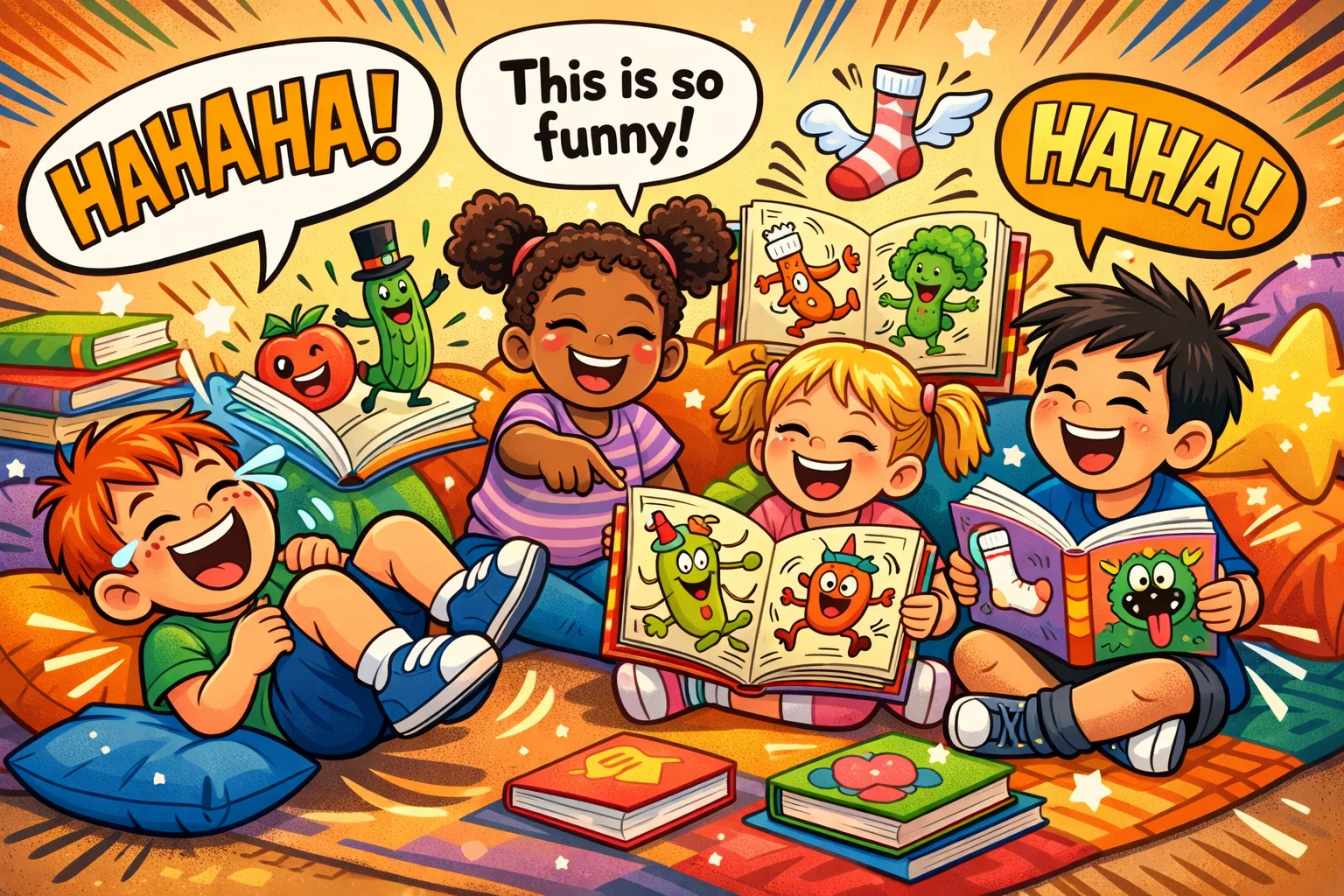
Funny stories for kids have entertained young readers for centuries, combining laughter with learning in ways that stick. This collection brings together the best funny short stories from classic fables, fairy tales, and modern children’s literature — all written by recognized authors with proven appeal for young children and older kids alike.
From Aesop’s clever animals to Dr. Seuss’s goofy rhymes, funny stories for kids span a wide range of styles, age groups, and reading levels. This guide helps parents, teachers, and caregivers discover a rich collection of funny stories that are perfect for bedtime, classroom reading, and everything in between.
Classic Funny Short Stories for Kids From Famous Authors
Traditional humorous tales remain popular across generations because their plots feel familiar and their comedic elements are timeless. Works by Aesop, Hans Christian Andersen, Charles Perrault, and the Brothers Grimm combine clever narration with lighthearted situations that appeal to all ages.
The Tortoise and the Hare by Aesop
This well-known fable builds humor through contrast — a slow tortoise competing against an overconfident hare. The turning point comes when the hare naps mid-race, allowing the steady competitor to win. Children enjoy the irony and the obvious mistake, which makes the ending satisfying and amusing.
The Boy Who Cried Wolf by Aesop
This story uses repetition to create a comedic pattern. A boy repeatedly tricks villagers with false alarms until no one believes him. The predictable structure builds anticipation, making the final outcome both funny and meaningful.
The Emperor’s New Clothes by Hans Christian Andersen
This tale uses absurdity and social humor. An emperor proudly wears invisible clothes while everyone pretends to admire them. The humor peaks when a child reveals the truth, exposing the ridiculous situation.
Puss in Boots by Charles Perrault
A clever cat uses bold tricks and confident storytelling to improve his owner’s life. Humor comes from exaggerated confidence and unexpected success in unlikely situations.
The Elves and the Shoemaker by Brothers Grimm
This gentle story introduces magical helpers who secretly complete a shoemaker’s work. The humor comes from surprise and the shoemaker’s confusion.
Funny Animal Stories for Kids With Real Literary Origins
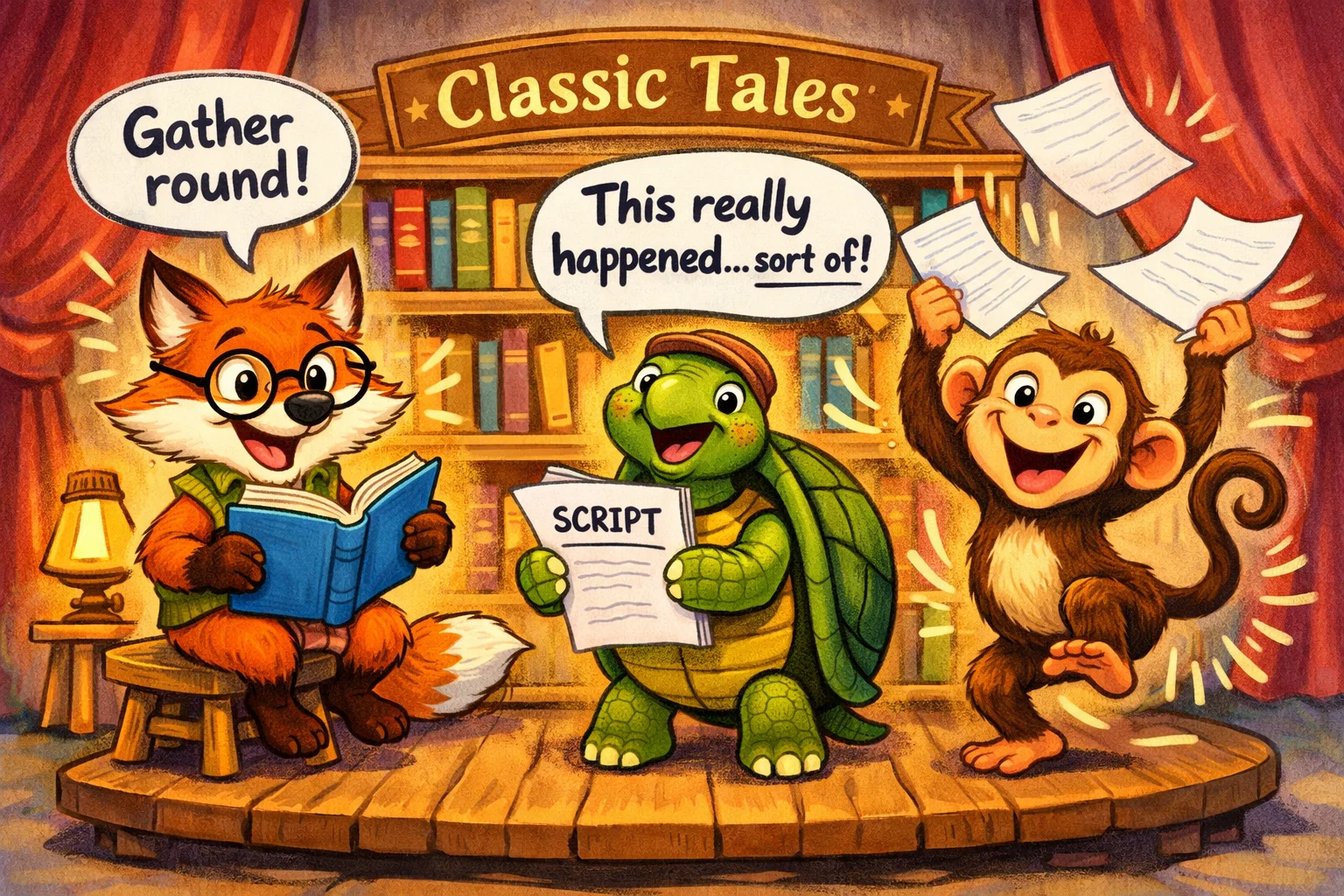
Animal-based storytelling is one of the oldest comedic traditions. These narratives use animals to reflect human behavior in a playful and accessible way.
Common themes in animal humor stories:
- Cleverness overcoming strength
- Friendship and cooperation
- Mistakes leading to funny consequences
- Exaggerated personality traits
The Lion and the Mouse by Aesop
This tale uses size contrast for humor. A tiny mouse helps a powerful lion, creating an amusing reversal of expectations.
The Town Mouse and the Country Mouse by Aesop
Humor comes from contrasting lifestyles. Each mouse reacts dramatically to the other’s environment, creating relatable and funny moments.
The Bremen Town Musicians by Brothers Grimm
A group of animals forms an unlikely team. Their chaotic performance scares away robbers, creating a memorable comedic scene.
The Frog Prince by Brothers Grimm
A princess reluctantly interacts with a persistent frog. The awkward situations and exaggerated reactions create strong comedic appeal.
The Tale of Peter Rabbit by Beatrix Potter
A mischievous rabbit sneaks into a garden, leading to a fast-paced and amusing escape filled with small but vivid details.
Modern Funny Stories for Kids by Well Known Writers
Modern children’s literature expanded humor through rhythm, repetition, and visual storytelling. Writers introduced playful language and creative formats that encourage repeated reading.
Why modern humorous books work well:
- Use simple and rhythmic language
- Include strong visual elements
- Encourage participation and prediction
- Maintain fast pacing and engagement
The Cat in the Hat by Dr. Seuss
This story builds chaos step by step. A mysterious cat turns a quiet day into a series of ridiculous events, keeping children engaged throughout.
Green Eggs and Ham by Dr. Seuss
Humor comes from repetition and stubborn refusal. The simple vocabulary and predictable structure make it ideal for early readers.
George and Martha by James Marshall
This series presents subtle humor through everyday interactions between two friends. The tone is calm and relatable.
Frog and Toad Are Friends by Arnold Lobel
Short episodes highlight friendship with gentle humor. Small problems lead to amusing outcomes.
Where the Wild Things Are by Maurice Sendak
A child imagines becoming ruler of wild creatures. Humor comes from role reversal and imaginative control.
Funny Stories for Kids With Life Lessons From Real Works
Many humorous narratives include meaningful messages. Laughter makes these lessons easier to absorb and remember.
The Honest Woodcutter by Aesop
A simple situation turns into a surprising reward. The humor lies in choosing honesty over obvious gain.
The Princess and the Pea by Hans Christian Andersen
Exaggeration drives the humor. Extreme sensitivity becomes both ridiculous and entertaining.
The Ugly Duckling by Hans Christian Andersen
This story blends light humor with emotional growth. Small ironic moments soften the deeper theme.
Rapunzel by Brothers Grimm
Absurd details, like extremely long hair used as a ladder, create playful humor within the story.
The Fisherman and His Wife by Brothers Grimm
Repetition and escalating wishes create a comedic pattern that children quickly recognize.
Funny Stories for Classroom and Bedtime Reading
Selecting the right funny story for kids depends significantly on the reading context — a bedtime story requires different energy than a classroom read-aloud, and early readers need different text complexity than grade 3 through 5 students. Matching funny short stories to the appropriate setting and reading level increases both comprehension and enjoyment.
The following recommendations organize classic and modern funny stories by context and age group to help parents and teachers make confident choices.
Short Funny Stories for Early Readers
Early readers aged 4 through 6 benefit most from funny short stories with simple vocabulary, strong rhythm, and visual humor — qualities that define Dr. Seuss books like The Cat in the Hat and Green Eggs and Ham. Both books use controlled vocabulary lists that align with kindergarten and grade 1 reading levels while delivering consistent comedic payoff. Aesop’s shortest fables, including The Lion and the Mouse, work equally well for early readers when presented in illustrated picture book editions.
Funny Stories for Grades 3 to 5
Children in grades 3 through 5 are ready for slightly longer funny stories with more complex character dynamics and subtle humor — making Frog and Toad Are Friends by Arnold Lobel and George and Martha by James Marshall ideal choices. Both books feature multi-chapter formats that build comedic relationships across several short stories, giving older kids the satisfaction of understanding character-based humor that develops over time.
Classic fairy tales like The Emperor’s New Clothes and The Princess and the Pea also work well at this level, where children can appreciate satire and social humor alongside straightforward funny situations. Reading comprehension activities built around these texts show measurable improvement in inference skills, according to literacy research from the International Literacy Association.
Bedtime Stories With Gentle Humor
Funny bedtime stories for children require content that entertains without raising energy levels, making Beatrix Potter’s Tale of Peter Rabbit and Arnold Lobel’s Frog and Toad the strongest choices for a bedtime routine. Both authors use quiet, observational humor with calm pacing — Peter’s chamomile tea recovery and Toad’s sleepy grumbling produce smiles rather than excited laughter.
The Brothers Grimm’s Elves and the Shoemaker also works well as a bedtime funny story because its magical nighttime setting and gentle surprise align naturally with the sleep environment.
Read Aloud Funny Stories With Dialogue
Stories rich in character dialogue are ideal for read-aloud sessions because they allow parents and teachers to use distinct voices, amplifying the humor significantly. The Frog Prince, Puss in Boots, and The Bremen Town Musicians all feature strong character voices — the princess’s barely polite responses, the cat’s confident boasts, and the animals’ cheerful declarations — that reward expressive reading.
Dr. Seuss books offer a different read-aloud advantage through their tight rhyme schemes, which create a rhythmic comedic momentum that children find irresistible. Research from the American Library Association identifies read-aloud sessions with expressive dialogue as one of the most effective methods for building listening comprehension and vocabulary in children aged 4 through 10.
Quick Funny Stories Under Five Minutes
For busy schedules or short attention spans, Aesop’s fables represent the strongest collection of quick funny stories that can be read in under five minutes while still delivering a complete narrative arc and a comedic payoff. The Tortoise and the Hare, The Boy Who Cried Wolf, and The Town Mouse and the Country Mouse each run approximately 300 to 500 words in standard illustrated editions, making them ideal when parents don’t have time to read stories for too long.
These short funny stories work equally well for classroom warm-up reading, morning circle time, or impromptu storytelling moments. Their brevity does not reduce their humor — Aesop’s economy of language ensures that every sentence contributes to the story’s comedic effect.
Tips to Make Funny Stories for Kids More Engaging
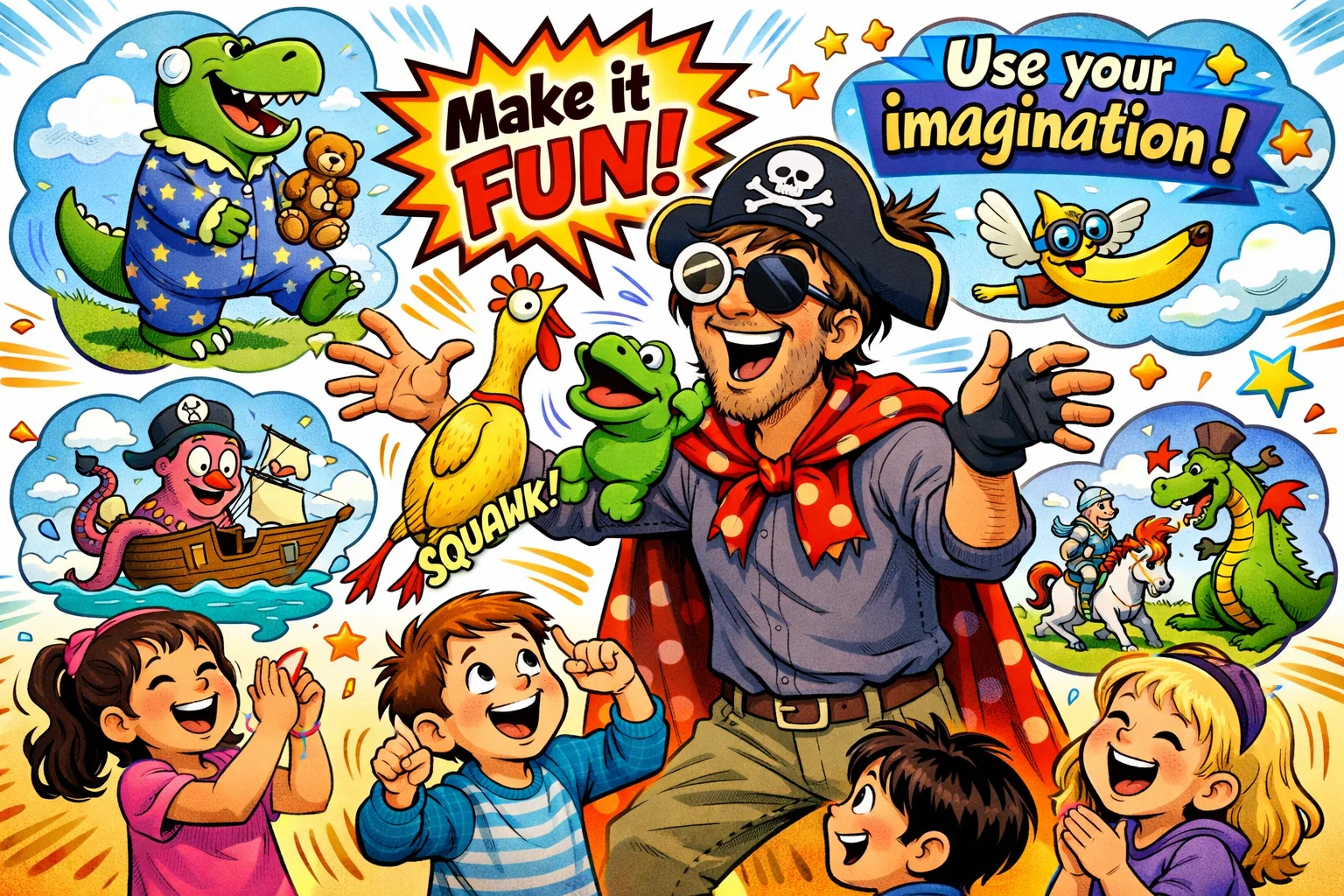
Delivering a funny story for your little ones effectively requires more than simply reading the words on the page — performance, pacing, and participation all significantly amplify the comedic impact.
Practical storytelling techniques:
- Use different voices for each character
- Pause before key moments
- Encourage predictions
- Add simple sound effects
- Maintain steady pacing
The most memorable moments in funny stories for kids are unexpected twists that subvert what young listeners assumed would happen — and readers can amplify these by building anticipation before the reveal. Pausing just before the tortoise crosses the finish line, or lingering on the emperor’s confident stride before the child speaks, creates comedic tension that makes the payoff land harder.
Adding spontaneous silly extensions — “And then the hare looked VERY silly indeed” with an exaggerated expression — personalizes the humor without changing the story. Child psychologists identify incongruity and surprise as the two primary triggers of laughter in children aged 4 through 8, confirming that unexpected twists are the engine of effective comedic storytelling.
Keep Sentences Simple and Playful
When retelling or adapting funny stories for very young children, keeping sentences short, clear, and playful ensures that the humor is accessible rather than lost in complex language. Simple constructions like “The cat wore a hat. A very tall hat. A very tall, very silly hat.” use rhythm and escalation to create comedy through language alone.
Encourage Interaction While Reading
Inviting children to participate actively in reading funny stories — predicting outcomes, finishing repeated phrases, or reacting to character choices — transforms passive listening into a shared comedic experience. Asking “What do you think the hare did next?” before the nap reveal, or letting children shout “I do NOT like them, Sam-I-Am!” alongside the text, creates moments of shared laughter that strengthen the reading experience.
Interactive reading also supports comprehension development: a 2020 meta-analysis in Early Childhood Education Journal found that dialogic reading techniques improve expressive vocabulary in young children by an average of 8.5 months of developmental progress. Funny stories for kids are especially well-suited to interactive reading because their humor creates natural pause points where children’s reactions are both welcomed and anticipated.
Conclusion
The collection of funny stories gathered in this guide represents centuries of proven storytelling — from Aesop’s clever fables to Dr. Seuss’s rhythmic nonsense — all sharing the common goal of making young readers laugh while learning. Every funny short story recommended here comes from an identifiable author or literary tradition, ensuring that the humor is grounded in genuine craft rather than generic content.
The best funny stories for kids are not simply distractions — they are developmentally rich experiences that build vocabulary, emotional intelligence, and a lifelong love of reading. Humor makes stories memorable, and memorable stories make readers. Start reading, keep laughing, and let this collection of funny short stories for kids grow alongside your child’s imagination.
Frequently Asked Questions
What are the best funny stories for kids?
The best funny stories for kids include The Tortoise and the Hare and The Boy Who Cried Wolf by Aesop, The Emperor’s New Clothes by Hans Christian Andersen, The Cat in the Hat and Green Eggs and Ham by Dr. Seuss, Frog and Toad Are Friends by Arnold Lobel, and The Tale of Peter Rabbit by Beatrix Potter. These titles represent the strongest combination of genuine humor, age-appropriate content, and proven literary quality across a range of reading levels from kindergarten through grade 5.
Why are funny stories important for children?
Funny stories for kids support cognitive, emotional, and social development simultaneously — making laughter a genuinely educational experience rather than just entertainment. Funny stories also reduce reading anxiety, build vocabulary through engaging context, and strengthen the emotional bond between adult readers and young children during shared reading sessions.
Can funny stories teach lessons?
Funny stories for kids are among the most effective vehicles for moral and ethical lessons precisely because humor lowers children’s resistance to instruction. Aesop built an entire educational tradition on this principle — every fable uses a funny or ironic situation to make its moral lesson memorable and emotionally resonant. The Boy Who Cried Wolf teaches honesty through comedic consequence; The Fisherman and His Wife addresses greed through escalating absurdity; The Honest Woodcutter rewards integrity through a situation that initially appears foolish.
Where can I find funny stories for kids?
Funny stories for kids are available through public libraries, which offer free access to illustrated editions of all classic fables, fairy tales, and modern picture books mentioned in this guide. Reputable online sources include Project Gutenberg (free public domain texts of Aesop, Andersen, and the Brothers Grimm), the International Children’s Digital Library, and Storyline Online, which features professional actor read-alouds of classic children’s books.
What age is suitable for funny stories?
Funny stories can engage children as early as 6 months old, as infants begin to respond to rhythm, tone, and expressive reading. For ages 2 to 7, simple stories with repetition, illustrations, and clear humor—such as works by Dr. Seuss, Beatrix Potter, Aesop, and Brothers Grimm—are especially effective and engaging. Children aged 8 to 10 can enjoy more advanced humor, including satire and character-driven comedy found in stories by Hans Christian Andersen and series like Frog and Toad and George and Martha.
Take a short quiz to find out what your everyday choices say about your parenting style
When your child is curious about something new, what’s your instinct?
Take a short quiz to find out what your everyday choices say about your parenting style
“Can I download this app?” What happens next?
Take a short quiz to find out what your everyday choices say about your parenting style
When it comes to rules at home, which sounds most like you?
Take a short quiz to find out what your everyday choices say about your parenting style
If you could give your child one life skill today, what would you pick?
Take a short quiz to find out what your everyday choices say about your parenting style
Your child gets to choose what to watch. What would your ideal setup look like?
Take a short quiz to find out what your everyday choices say about your parenting style
Pick your parenting superpower ✨