Alphabet Learning for Kids: A Complete Step-by-Step Guide

 Discover a Free Education Video App for Kids
Pastory uses AI to personalize educational video content based on your child’s interests and personality. Safe, engaging, and built for curious young minds. Sign up now to stay updated and enjoy early access with a free trial
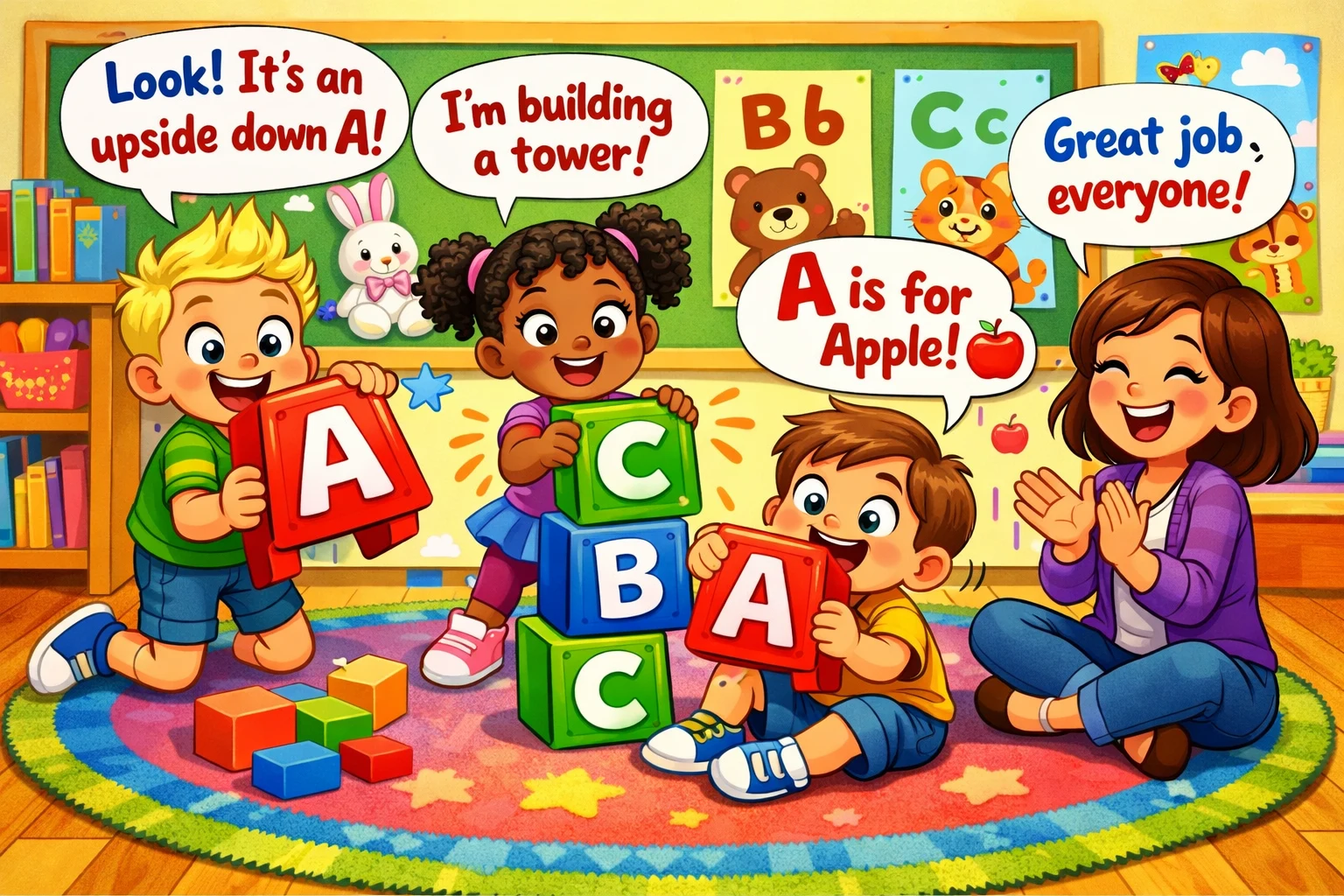
Alphabet learning helps children move from recognizing symbols to being able to read and write independently. According to early literacy research and organizations like the American Academy of Pediatrics (AAP), consistent exposure to the alphabet before age 5 significantly improves reading readiness. The goal is not only to help children learn their ABCs, but to guide them through a complete learning process that includes recognition, sound, and usage.
A strong approach to teaching the letters focuses on interaction, repetition, and real-life application. This learning journey should feel playful, personalized, and developmentally appropriate.
When to Start Alphabet Learning for Kids? (Age Guide)
Kids begin alphabet learning at different stages, and understanding when a child is ready helps parents choose the right way to teach.
| Age Range | Alphabet Learning Stage | Key Skills Developed |
| 18–24 months | Early exposure to alphabet | Shows interest in ABCs, points at symbols |
| 2–3 years | Letter recognition begins | Can identify the letter, especially the ones in their name |
| 4–5 years | Advanced alphabet learning | Knows all the sounds, begins to write |
| 5–6 years | Early writing and blending stage | Writes most letters independently, begins blending sounds into simple words (kindergarten/Grade 1 readiness) |
Children aged 18–24 months are in the early learning stage where letters are a great visual stimulus. At this stage, parents can introduce the ABCs by pointing them out throughout daily life. For example, pointing to letters on signs or books helps kids begin recognizing them.
Children aged 2–3 years begin letter identification and may start to recognize them in familiar contexts. This stage is ideal to introduce the ABCs through alphabet cards, magnets, and hands-on activities.
Children aged 4–5 years develop deeper alphabet recognition and start connecting shapes with sounds. At this stage, kids may begin to write and show readiness to learn names and sounds. This stage indicates that they are becoming ready to read.
5 Key Skills Before You Start Teaching the Alphabet
Before parents teach alphabet concepts, children benefit from foundational skills that support the learning process and improve results.
- Visual discrimination
Visual discrimination helps children distinguish between letters that look similar. They may confuse b, d, p, and q without this skill. - Fine motor development
Fine motor skills allow children to practice shaping through writing, tracing, or play-based tools like a worksheet or playdough. - Attention and focus
Children need short but consistent attention spans to engage in activities effectively. - Language development
A strong vocabulary supports reading and learning, helping kids connect the ABCs to meaningful words.
These skills are a practical way to help kids succeed when they begin structured alphabet learning.
The Best Order to Teach Letters for Alphabet Learning (Not A-Z!)
The traditional A-Z sequence does not align with how young brains learn. Researchers recommend this order to teach:
- First set (2–4 weeks): A, M, S, T, P, F (frequent in simple words)
- Second set: C, B, R, N, D, G (clear consonant sounds)
- Third set: E, I, O, U (vowels, one at a time)
- Fourth set: L, H, K, J, W, Y (less common consonants)
- Fifth set: Q, V, X, Z (low-frequency)
This sequence lets children build words after only six letters (“am,” “at,” “sat,” “mat”). Teach the alphabet to kids in an order that delivers early reading success. This approach helps them recognize patterns more effectively and reduces frustration during learning.
Why You Should Teach Uppercase First (And When to Switch to Lowercase)
Uppercase letters are easier for kids to recognize because they have distinct shapes. This makes them a useful starting point.
Lowercase letters should be introduced later because they are more common in books and essential for reading.
This progression supports a smoother learning process.
15 Fun & Effective Ways to Teach the Alphabet to Preschoolers
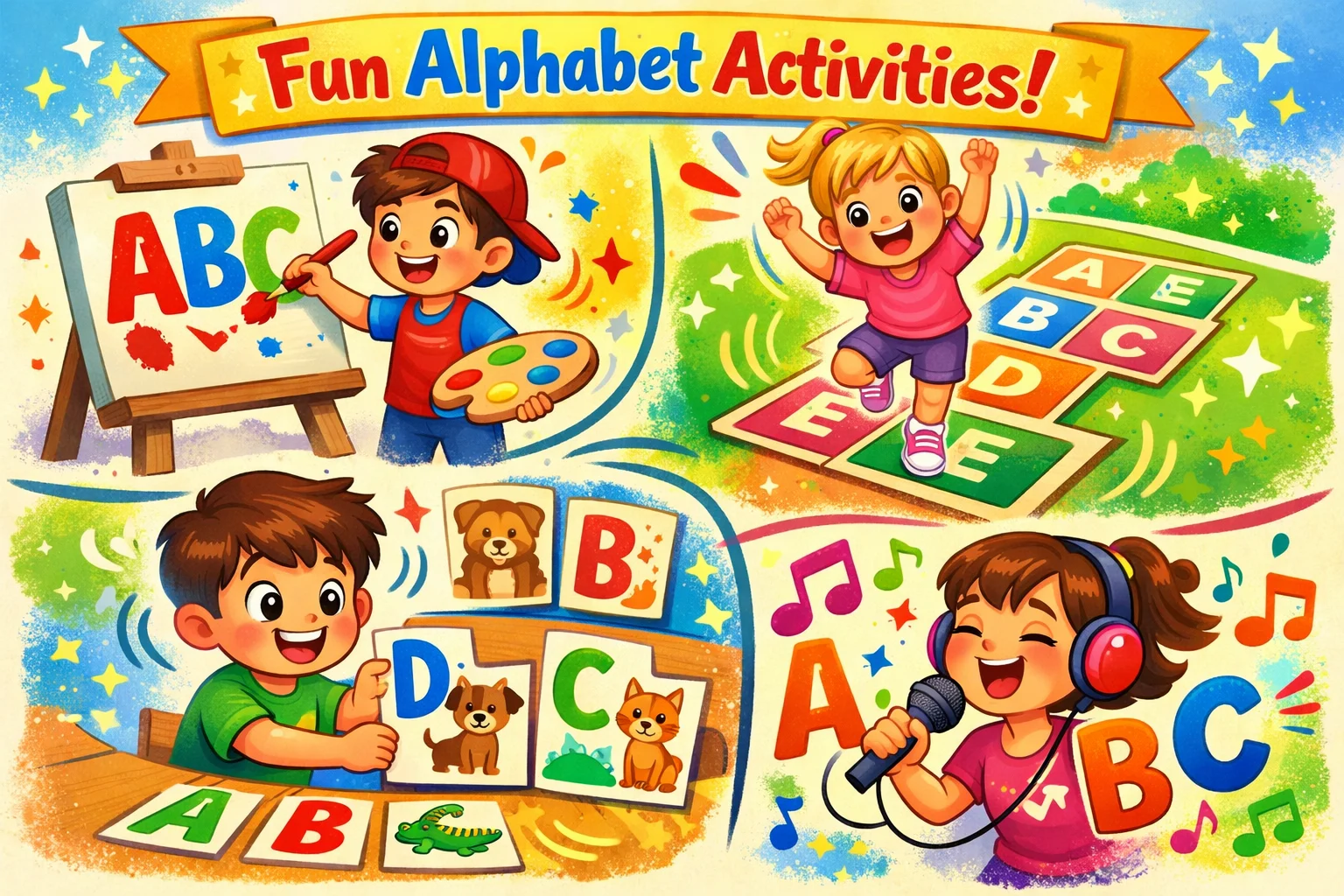
Engaging activities are a fun way to make learning enjoyable and effective. Children learn best through interaction, especially when activities are playful and meaningful.
1. Multi-Sensory Tracing
A kid traces a single letter of the alphabet in sand or shaving cream using an index finger while saying the sound aloud. Occupational therapists recommend 5-minute sessions to improve letter formation without the pressure of a pencil.
2. Alphabet Songs & Movement
Singing ABC songs that emphasize sounds helps children memorize phonemes through rhythm. Adding body movements—jumping for vowels, crouching for consonants—increases engagement and retention.
3. Letter of the Day Scavenger Hunt
A child searches for a specific letter of the alphabet on food packages, signs, or toys. This practical activity helps kids connect the ABCs to real-world objects.
4. Magnets on the Fridge
Magnetic letters allow a child to physically interact with uppercase and lowercase characters daily. Sorting them by color, shape, or case helps kids recognize them and distinguish visual differences.
5. DIY Alphabet Boxes
An alphabet box contains 26 compartments, each holding one letter of the alphabet and 3–5 small objects starting with that sound (e.g., “B” box: button, ball, bead). This Montessori-inspired activity builds vocabulary and phonemic awareness by connecting letters and sounds to tangible items.
6. Free Alphabet Coloring Pages
A dot-to-dot worksheet reinforces formation sequencing as a child connects numbered dots to complete a letter of the alphabet. This activity improves fine motor control and visual tracking.
7. Playdough Stamping
A kid rolls playdough into a flat ¼-inch slab and presses plastic alphabet letters into the dough to create impressions. This creative activity strengthens the same hand muscles needed for pencil grip while helping children practice recognition without a writing tool.
8. Alphabet Memory & Matching Games
A 24-card memory game requires a child to match each uppercase letter with its lowercase partner. They must say the sound after each successful match.
9. Reading Alphabet Books
Reading alphabet books like Chicka Chicka Boom Boom exposes a child to ABCs within a narrative context. A parent reads each book 3–5 times over two weeks and points to each letter of the alphabet while saying its name. This practice supports comprehension and builds a love for learning.
10. “I Spy” With Letter Sounds
The parent says, “I spy with my little eye something that starts with /b/” (using the sound, not the name). The kid guesses “ball,” “book,” or “blanket.” This game trains the ear to isolate initial phonemes, a skill that predicts later reading fluency.
11. Chalk Letters on the Driveway
A child uses sidewalk chalk to draw uppercase letters 12–18 inches tall on a driveway, then walks, hops, or stomps along the shape. This gross motor activity supports muscle memory and helps kids write more confidently. Physical therapists recommend it for children who resist tabletop writing.
12. Letter Sorting: Avoid Confusion (b, d, p, q)
A child places lowercase b, d, p, and q into four labeled bins while saying each sound aloud. This sorting activity helps children avoid confusion between letters that look similar.
13. Snacks Shaped Like Letters (Pretzel sticks, fruit slices)
A child uses pretzel sticks to form straight letters in the alphabet (A, E, F, H, L, T) and fruit slices to form curved ones (B, C, D, G, O, P, Q, R, S, U). This food-based learning reinforces alphabet shapes through everyday eating experiences. The child names the letter of the alphabet, says its sound, then eats the snack.
14. Alphabet Apps & Interactive Games
A well-designed alphabet app typically offers three core features: name and sound modeling, visual tracing guides for letter formation, and a reward system that reinforces correct responses. The most effective apps require the child to trace, tap, or verbally respond rather than passively watch. Co-play during each session—asking “What sound does that make?”—doubles learning outcomes compared to independent use.
15. Name Spelling First
Starting with a child’s name is an effective way to teach. The parent writes the first letter of the name on a sticky note and places it on the bedroom door. After the kid recognizes it with 90% accuracy over 3 days, the parent adds the second one. This personalized way to help a child learn letters in their name works because it has deep personal meaning.
Common Mistakes Parents Make During Alphabet Learning
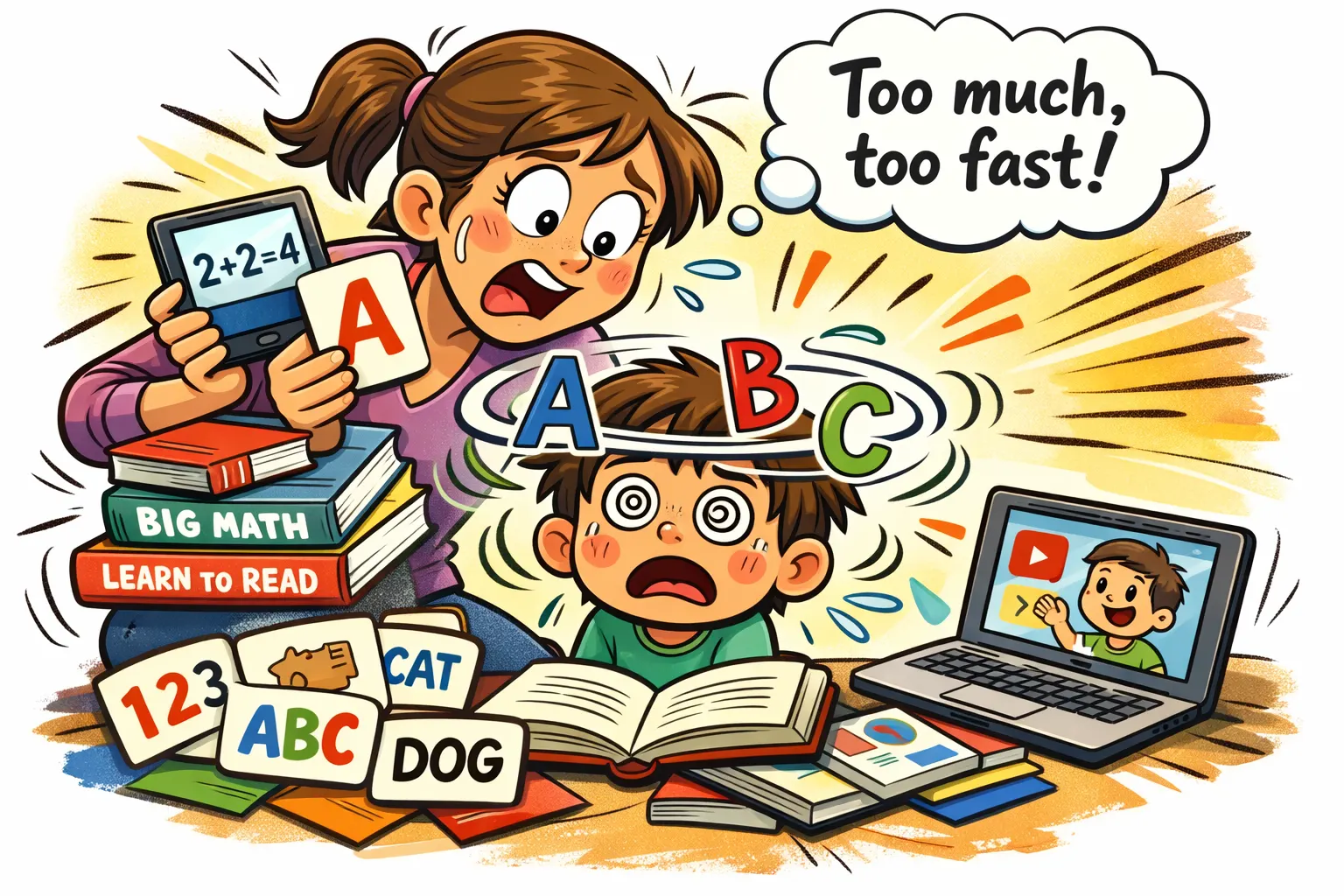
Avoiding these three common errors accelerates alphabet learning by weeks or months. Each mistake stems from good intentions but contradicts cognitive development research.
Mistake #1: Teaching in Strict A-Z Order
Forcing a child to learn A→B→C→D before moving to E delays early reading. A kid who only knows A through E cannot form a single word because no vowel appears until “E,” and no common consonant appears until “C.” In contrast, a child who learns M, A, T, S can immediately read “at,” “sat,” “mat,” “am,” and “as.” Teach the alphabet to kids in an order that prioritizes word-building utility, not alphabetical order.
Mistake #2: Forgetting Phonemic Sounds
Focusing exclusively on names while neglecting the sounds produces a child who can sing the ABC song but cannot sound out “cat.” Every time you introduce letters, say the sound twice as often as the name.
Mistake #3: Using Passive Watching (TV) vs. Active Play
Placing a child in front of alphabet videos for 30 minutes produces minimal learning compared to 10 minutes of active engagement. Passive screen time does not build letter recognition; interactive, conversational alphabet learning does.
3 Milestones of Alphabet Mastery (Recognition, Sound, Writing)
Reaching these milestones means a child is progressing well in their learning journey.
| Milestone | Definition | Typical Age |
| Recognition | Names 20+ letters in the alphabet randomly | 3.5–4.5 years |
| Sound | Produces primary sound for 15+ letters of the alphabet | 4–5 years |
| Writing | Forms letters legibly without tracing | 5–6 years |
How to Teach Alphabet Recognition: Step-by-Step for Parents
Teaching letter recognition does not require a formal curriculum. A simple, repeatable process works best for toddlers and preschoolers. Follow these steps each time you introduce a new letter:
- Introduce the letter. Show the letter on a card, magnet, or page. Say its name clearly: “This is the letter M.”
- Model the sound. Say the primary sound twice: “/m/, /m/ — M says /m/.” Point to a familiar object that starts with that sound (e.g., “milk,” “mom”).
- Practice with an activity. Choose one hands-on activity from the list above — tracing in sand, stamping with playdough, or a scavenger hunt. Keep sessions to 5–10 minutes.
- Review before adding a new letter. Before introducing the next letter, briefly review all previously learned letters. Ask the child to name each one and produce its sound.
- Connect letters to words. Once a child knows 4–6 letters, show how they combine into simple words (“sat,” “mat,” “am”). This early word-building moment is a powerful motivator.
Repeat this cycle for each new letter, following the recommended teaching order rather than A–Z. Consistent short sessions — even 5 minutes a day — build recognition faster than occasional long lessons.
Conclusion
Alphabet learning is a structured yet flexible learning process that helps children move from recognizing the ABCs to becoming confident readers. When parents teach your child using engaging, personalized, and research-based strategies, children develop strong literacy skills.
The most effective way to help your child includes:
- Using hands-on activities
- Focusing on both recognition and sounds
- Making learning engaging and meaningful
By creating a positive environment and incorporating letter activities into daily routines, parents can support children in building confidence, curiosity, and a lifelong love for learning.
Frequently Asked Questions (FAQ)
How long does it take for a kid to learn the alphabet?
A typically developing child needs 4–8 months of consistent exposure to recognize all 26 letters in the alphabet. Adding the sounds extends the timeline to 8–14 months. Children often learn 10 letters quickly, then plateau before another burst.
Should I teach letter names or sounds first?
Teach sounds first for children under 4. For children 4 and older, teach names and sounds together.
What if my 4-year-old refuses to learn ABCs?
Resistance may indicate that the child is not engaged or that the current method does not match their interests. Switching to a more playful and fun way—such as games like scavenger hunts or using magnetic ABCs—can help kids learn more naturally.
How to teach kids alphabet writing?
Teach alphabet writing in this sequence: (1) vertical lines (L, I, T), (2) horizontal lines (E, H), (3) circles (O, Q, C), (4) diagonal lines (A, V, W), (5) complex curves (B, D, P).
Is it normal for a child to reverse letters (b and d)?
Yes. Letter reversals are common in early alphabet learning, especially when children are still developing visual discrimination. Most children stop reversing them naturally by age 6 as their identification skills improve. However, consistent reversal beyond age 7—especially with difficulty rhyming—may indicate dyslexia.
Take a short quiz to find out what your everyday choices say about your parenting style
When your child is curious about something new, what’s your instinct?
Take a short quiz to find out what your everyday choices say about your parenting style
“Can I download this app?” What happens next?
Take a short quiz to find out what your everyday choices say about your parenting style
When it comes to rules at home, which sounds most like you?
Take a short quiz to find out what your everyday choices say about your parenting style
If you could give your child one life skill today, what would you pick?
Take a short quiz to find out what your everyday choices say about your parenting style
Your child gets to choose what to watch. What would your ideal setup look like?
Take a short quiz to find out what your everyday choices say about your parenting style
Pick your parenting superpower ✨