
15 Activities That Start With F for Kids

 Discover a Free Education Video App for Kids
Pastory uses AI to personalize educational video content based on your child’s interests and personality. Safe, engaging, and built for curious young minds. Sign up now to stay updated and enjoy early access with a free trial
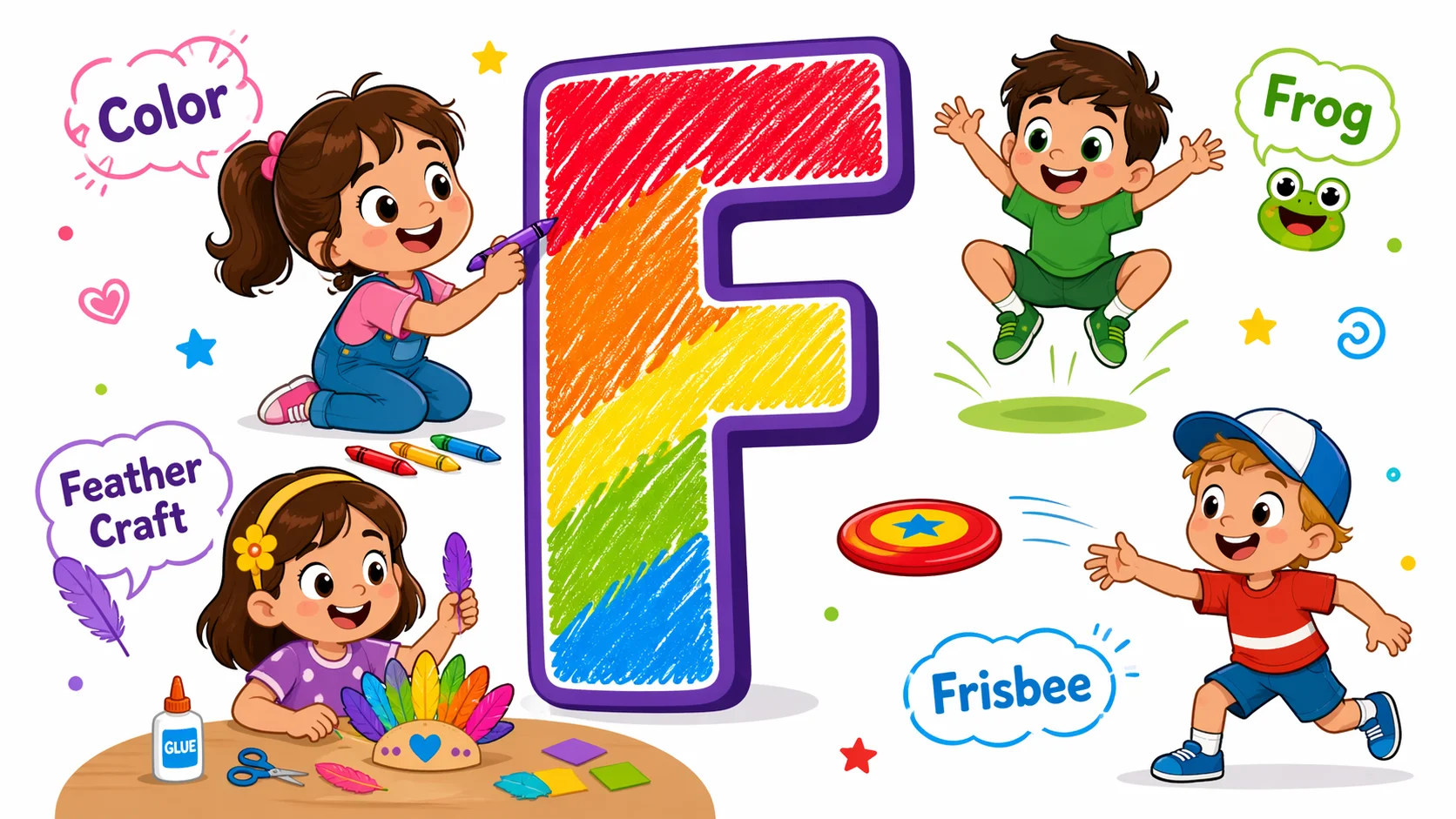
Learning the alphabet is an important milestone in early childhood education. If you are looking for activities that start with the letter F, you have come to the right place. This guide offers a curated selection of simple, fun, and educational F-activities for preschool and kindergarten, designed to spark curiosity and build early literacy skills. You’ll also find a helpful collection of ideas that works well at home or in the classroom, using simple household items, crafts, games, and hands-on activities to make alphabet learning feel playful and natural.
In the following sections, we explore a wide range of letter F crafts and activities, including creative projects, engaging games, snack ideas, and themed suggestions. Whether you are a parent helping your child at home or a teacher planning a letter F lesson, these ideas are designed to support letter recognition, phonics, and early writing skills. By the end of this article, you will have a practical toolkit of letter F activities, crafts, and words to make alphabet learning memorable and fun.
1. Find and Color Letter F
What the Child Will Do
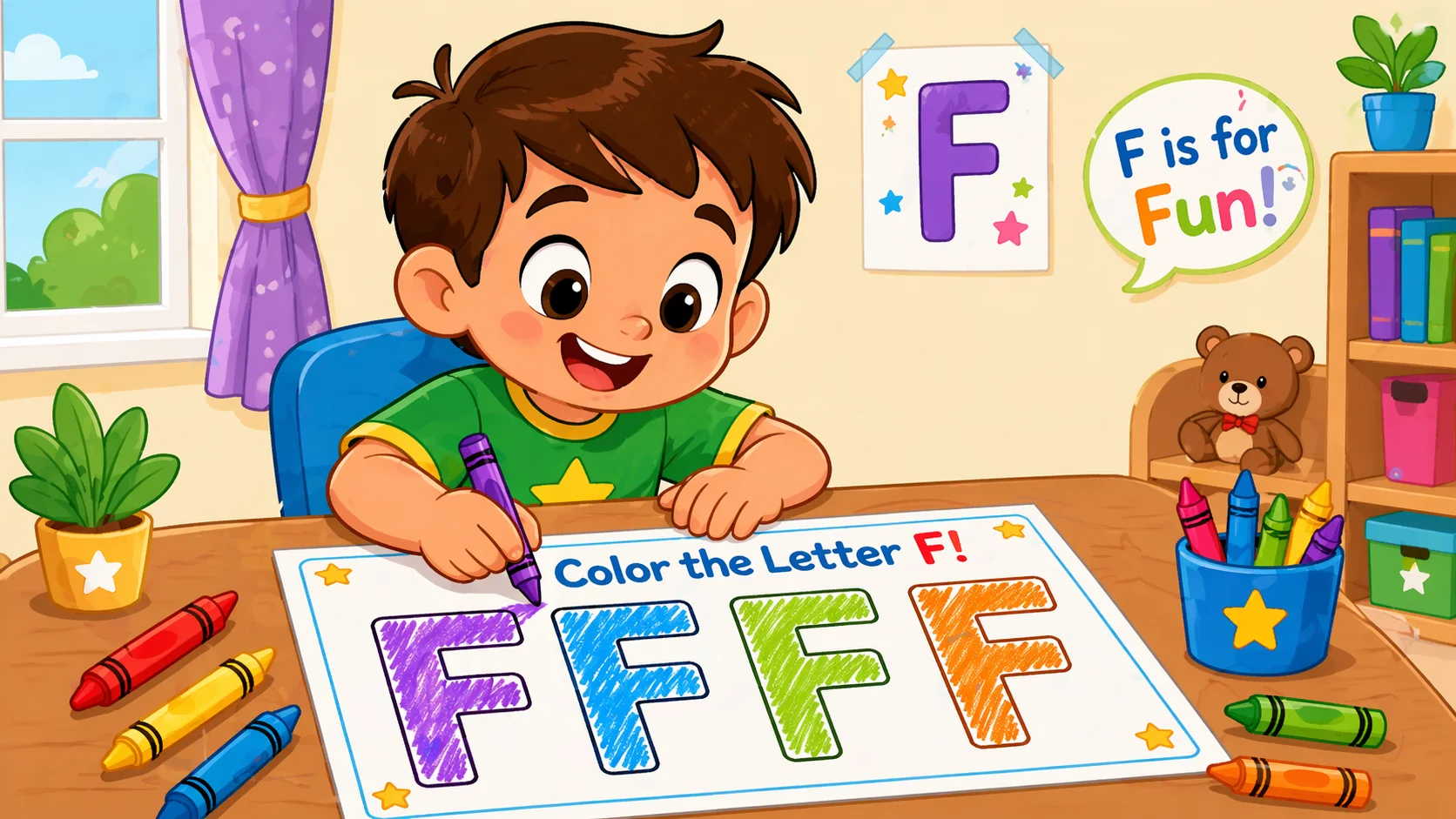
In this activity, the child works with a worksheet featuring a variety of letters scattered across the page. The child’s task is to find all instances of the letter F, both uppercase and lowercase, among other letters. Once the child finds an F, they use crayons or markers to color that section, eventually revealing a hidden image or colorful pattern.
Skills Child Builds
This activity supports early letter recognition and visual discrimination. By focusing on the target character, children develop:
- Letter recognition: Distinguishing F from similar-looking letters.
- Visual scanning: Training the eyes to move across a page, which is an early skill for reading and writing.
- Fine motor skills: Practicing grip and control while coloring within lines.
- Focus: Strengthening the ability to notice the target letter while ignoring unrelated letters.
Materials, Setup, and Variations
To begin, you will need a printed template and crayons or markers. Children can also paint the shape first, then decorate it with paper, feathers, flowers, or cardboard pieces for extra texture.
- Setup: Provide a quiet space where the child can settle in and focus on the page.
- Variations: Use dot markers for a sensory experience, turn the task into a timed challenge, or ask the child to use different colors for uppercase F and lowercase f to practice comparing letter forms.
2. Spot and Circle Lowercase f
What Child Will Do
While uppercase letters are often easier to identify, children also need to recognize lowercase letters because they appear more often in books and everyday print. In this activity, the child looks at a row of letters, a simple word list, or a short paragraph and circles every lowercase “f.”
Skills the Child Builds
Focusing on the lowercase “f” helps children notice its unique shape, including the hook and crossbar.
- Letter discrimination: This helps children distinguish “f” from similar letters, such as “t,” “l,” or “i.”
- Early reading: Recognizing lowercase letters is an important step toward reading real words in books.
- Attention to detail: Encourages the child to look closely at letter shapes.
Tips for Age Levels
| Age Group | Strategy |
| Toddlers | Use large, isolated letters on a simple worksheet or letter card. |
| Preschoolers | Place the lowercase “f” within short, simple words or phrases. |
| Kindergarteners | Use a short sentence or simple story and ask them to find “f” in context. |
3. Find and Match Uppercase and Lowercase F
What Child Will Do
This matching game asks the child to connect the uppercase “F” with the lowercase “f.” This can be done on a worksheet using lines to connect pairs, or physically by matching cards spread out on a table.
Why This Activity Matters
Many educators look for activities that bridge the gap between simple letter recognition and early literacy. Matching activities show children that two different letter forms can represent the same letter and sound.
Extension Ideas
- Memory Cards: Lay cards face down to add a cognitive challenge.
- Magnetic Letters: Have the child organize magnetic letters on a fridge into pairs.
- Floor Matching Game: Use large printouts on the floor and have the child jump from the uppercase F to its lowercase partner.
4. Uncover, Match, and Highlight F
What Child Will Do
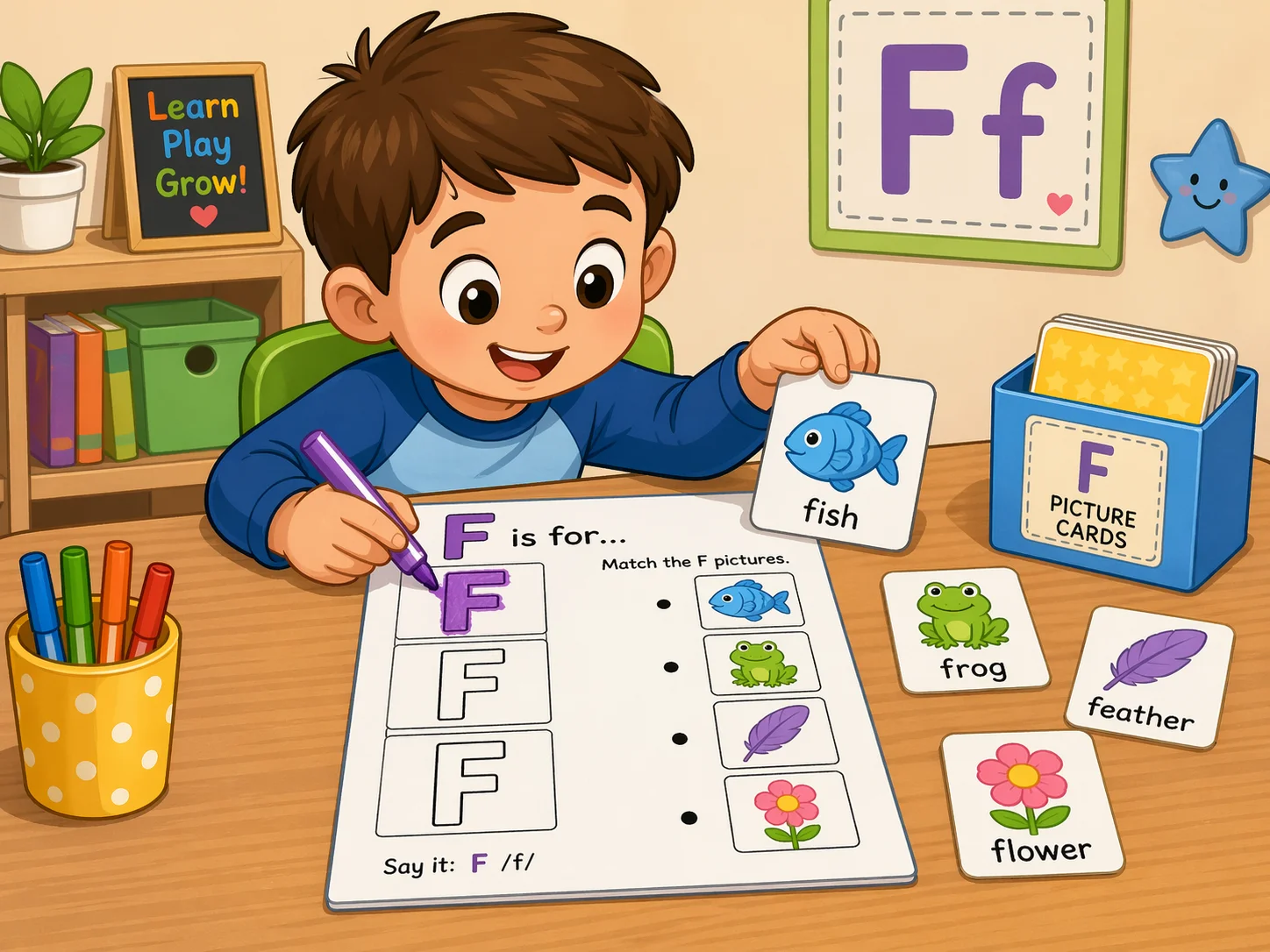
This is a multi-step recognition activity. First, the child uncovers letters, perhaps hidden under sand or stickers. Next, they match the letter to a word that starts with F, such as “fish” or “frog.” Finally, they use a highlighter to mark the letter F in a short sentence or paragraph.
Skills Child Builds
This layered activity helps children focus on several features of the letter at the same time.
- Phonics: Connecting the visual symbol to the “fff” sound.
- Beginning sounds: Building early vocabulary by connecting the letter F with familiar objects.
- Sequencing: Following steps in order – first, then, finally – to complete the task.
Best Words to Use
To help children build vocabulary, use these familiar F words:
- Fish, Frog, Flower, Fox
- Fire, Feather, Farm, Fruit
- Frisbee, Flag, Fan, Fork
5. Spot Letter F in Rhymes
What Child Will Do
Rhymes provide a predictable rhythm that is highly engaging for young learners. In this activity, you read a short nursery rhyme aloud while the child follows along, pointing to or circling the letter F whenever it appears.
Why Rhymes Work Well
Phonological awareness – the ability to hear and work with sounds in words – is an important predictor of later reading success. Rhymes support early literacy by providing rhythm, repetition, and sound patterns that make letter sounds more memorable.
Best Rhyme Themes
Focus on themes with high F-relevance:
- Five Little Speckled Frogs: Great for counting and F-sounds.
- Friendly Fish Rhyme: A simple rhyme about a fish in a fountain.
- Example rhyme: “Five fast foxes found funny flowers near a frying pan!”
6. Light Up and Trace Letter F
What Child Will Do
This activity focuses on early handwriting preparation. The child uses a light source, such as a flashlight in a dim room or a light table, to trace a large letter F. The goal is to follow the lines of the letter with steady movement.
Skills Child Builds
- Letter formation: Understanding the stroke order needed to write uppercase F.
- Muscle Memory: Guided practice helps the brain wire the shape.
- Pencil grip: Prepares the child for later handwriting practice.
Sensory Variations
To help students understand the shape through touch:
- Sand Tray: Trace F in a tray of colored sand.
- Shaving Foam: Spread foam on a table and write the shape with a finger.
- Glitter glue: Create a textured F that the child can feel with their fingers once it is dry.
7. Frog Jump Game
What Child Will Do
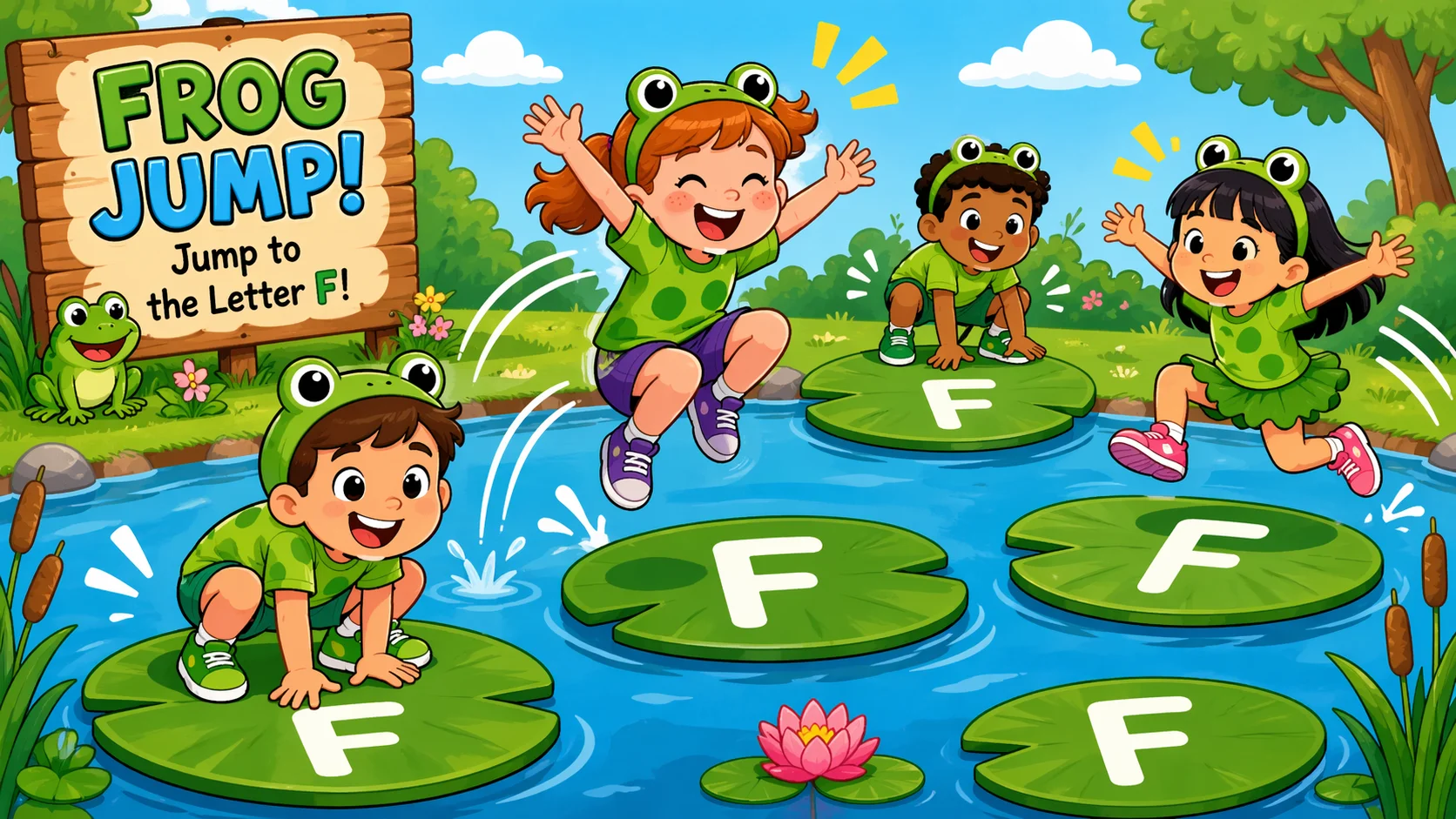
Transform your living room or classroom into a pond. Place lily pads, or green paper circles, on the floor. Some lily pads have the letter F, while others have different letters. The child pretends to ribbit and jumps only on the lily pads with the letter F to cross the pond.
This also pairs well with an “F is for Frog” theme or a fun frog craft, making the activity more memorable for preschoolers and kindergartners.
Skills Child Builds
- Gross Motor Skills: Integrating physical movement with cognitive learning.
- Active Recall: Forcing the brain to quickly identify key characters under physical pressure.
- Following directions: The child listens for the sound, finds the letter, and jumps.
How to Make the Activity More Engaging
- Timer: See how fast the frog can cross the pond.
- Obstacle version: Place toy flies or small cards with F words on the lily pads for the frog to catch.
- Partner Version: One child calls out the sound or word, and the other jumps.
8. Fish Paper Plate Craft
What Child Will Do
Making a fish out of a paper plate is a classic letter F craft. The child cuts a small triangle out of the plate, which becomes the mouth, and glues that triangle to the opposite side to serve as the tail. The resulting shape resembles a fish, reinforcing the “F is for Fish” connection.
Add a paper fin, tissue-paper scales, or a bubble background to turn the craft into a simple ocean-themed activity.
What to Emphasize
The purpose of this activity is to connect visual art with phonics. Emphasize the letter F sound in “fish” and, if desired, add a large F to the side of the fish. This makes the activity more accessible for visual learners who benefit from images and hands-on practice.
Materials, Setup, and Cleanup
- Materials: Paper plate, googly eyes, glue, markers, and scales made from tissue paper.
- Mess Level: Moderate, due to glue and markers.
- Prep time: 5 minutes; activity time: 20 minutes.
9. Flower Petal Letter F Collage
What Child Will Do
The child uses a large outline of the letter F as a template. They then glue flower petals onto the outline, using real petals, dried petals, or petals cut from construction paper. This creates a beautiful, textured floral F.
Skills Child Builds
- Fine Motor Practice: Handling delicate petals requires precision.
- Shape awareness: Filling the letter outline helps children understand boundaries.
- Color Vocabulary: Describing the petals, such as magenta, crimson, or yellow, expands language.
Seasonal Variations
- Spring: Use real petals from a nature walk.
- Fall: Use fallen leaves to create the collage.
- Winter: Use fluffy white cotton balls to represent frost.
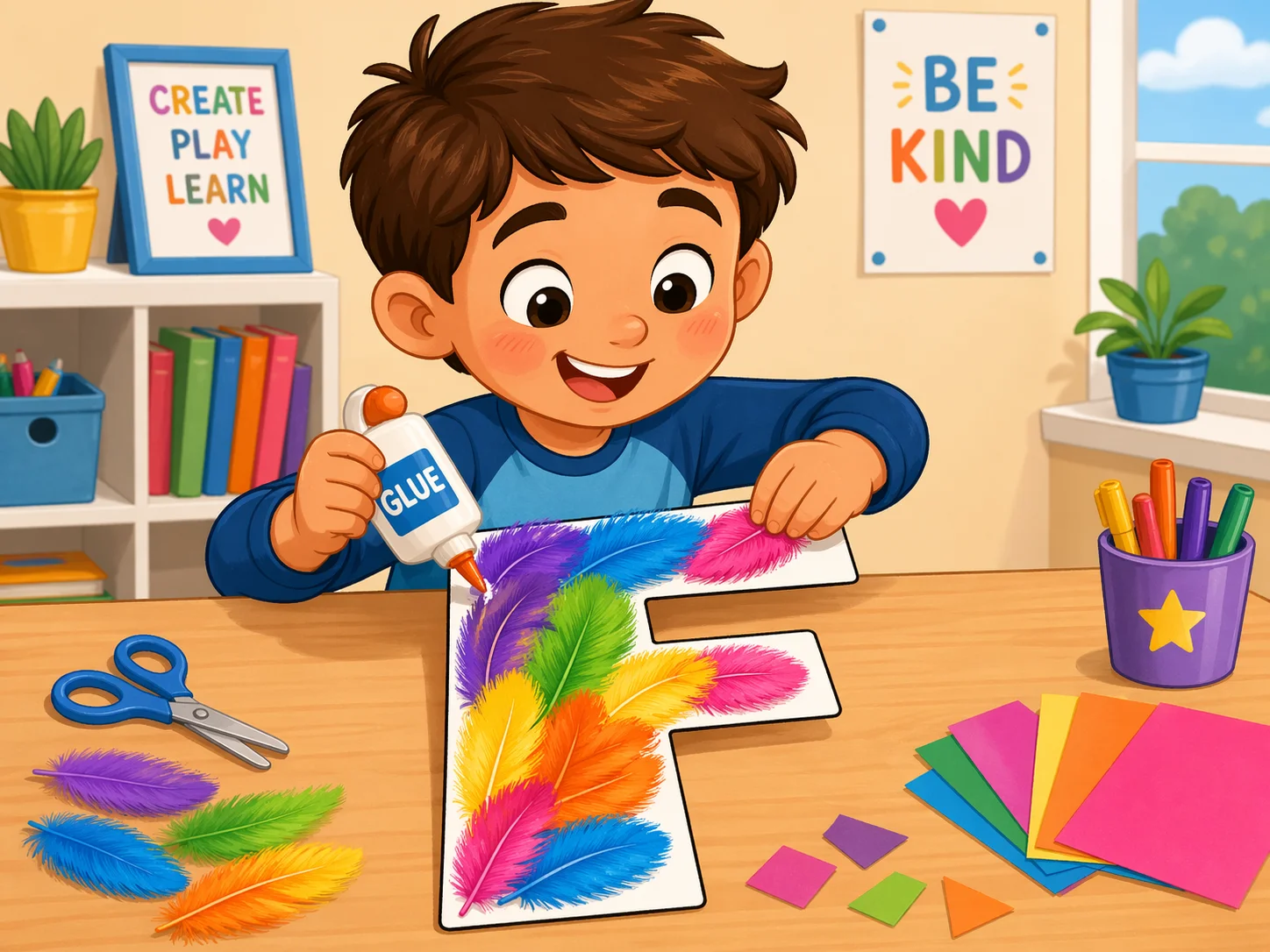
10. Feather Letter F Craft
What Child Will Do
Similar to the flower collage, this activity uses feathers to decorate a giant letter F. The tactile nature of feathers – soft, fuzzy, and light – provides a sensory contrast to the hard lines of the written shape.
Why This Activity Performs Well
Tactile crafts can help children remember letter shapes through touch. Multi-sensory play can support healthy development and make letter learning more memorable. When a child touches a feather while saying the /f/ sound, they connect sight, sound, and touch in one memorable experience.
Extra Learning Angles
- Sorting: Sort feathers by size, long vs. short, or by color before gluing.
- Counting: Count how many feathers it takes to cover the letter.
- Comparison: Use comparison words, such as soft, fluffy, light, and smooth.
11. Fire Truck Craft
What Child Will Do
Using a shoebox or a rectangular paper cutout, the child builds a fire truck. You can use a shoebox or a simple red paper cutout. Add ladders made from craft sticks or toothpicks and wheels cut from black paper. Label the truck with a large F for “Fire.”
This is also a natural place to introduce “F is for Fire” and basic fire safety vocabulary in a calm, age-appropriate way.
Vocabulary to Include
To build vocabulary and early writing skills, introduce related words:
- Firefighter, Ladder, Rescue, Siren.
- Explain what happens when a fire alarm rings and why people need to respond safely.
- Discuss the problem, such as a fire or emergency, and the solution, such as firefighters arriving to help.
Learning Extensions
- Pretend Play: Use the craft to act out a rescue story.
- Labeling: Have the child write a small “f” on the wheels.
- Sound effects: Practice the /f/ sound in words like “fire,” “firefighter,” and “flame.”
12. Fox Mask Craft
What Child Will Do
The child creates a fox mask using a paper plate or a printable template. They color the plate orange, add ears, and cut out eye holes. This activity can turn a simple craft into storytelling through role-play.
For an extra adorable version, use soft orange paper, a black nose, and white paper trim around the eyes.
Skills Child Builds
- Sequencing: Following steps to assemble the mask.
- Dramatic play: Using the mask to tell a story and build oral language skills.
- Cutting: Essential for developing the small muscles in the hand.
Photo and Visual Tips
When showing this activity, point out the shapes on the fox’s face: the triangular nose, pointed ears, and circular eyes.
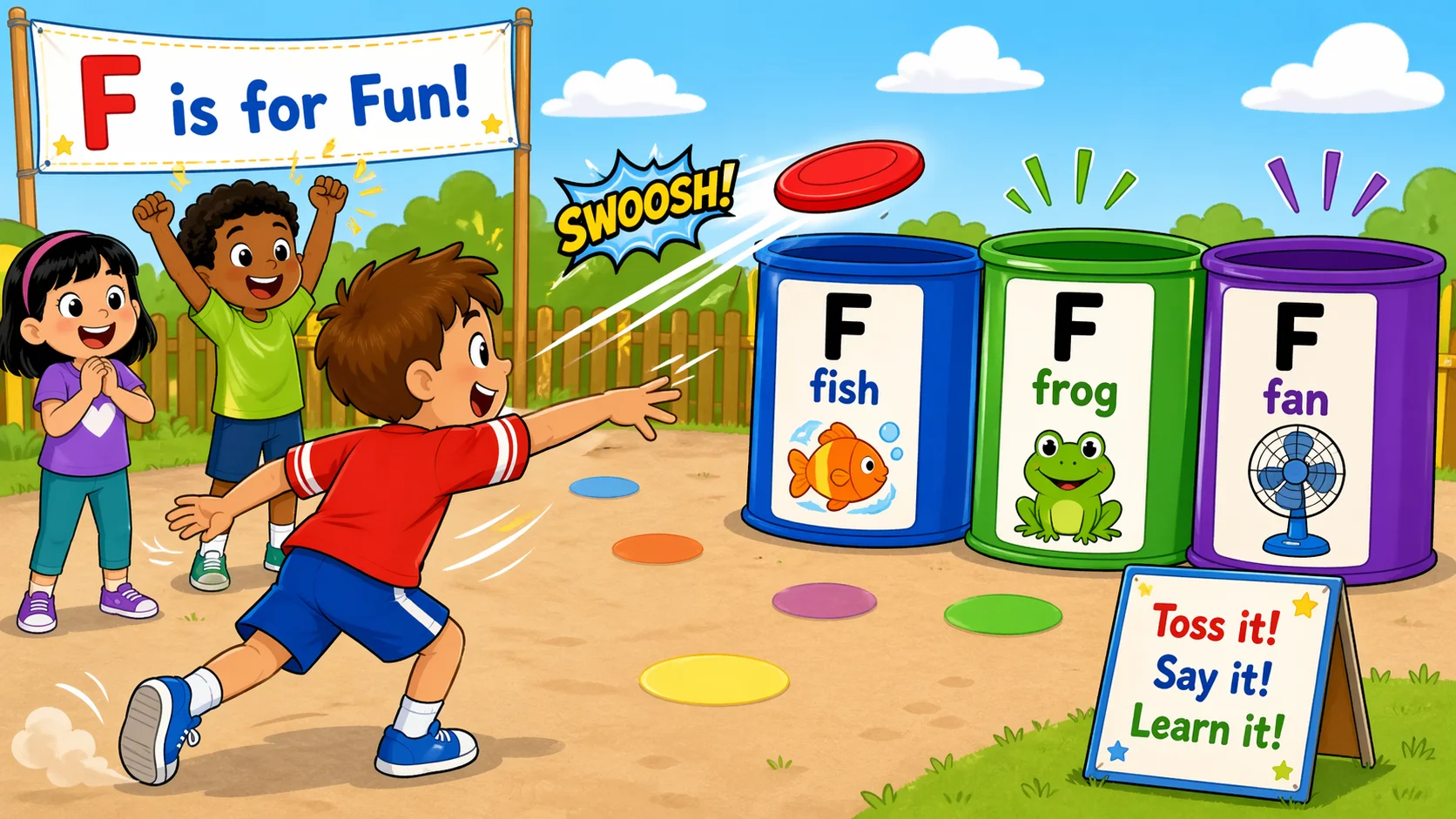
13. Frisbee Toss Phonics Game
What Child Will Do
Take the learning outside. Label three laundry baskets with different letters, such as F, B, and S. Give the child a frisbee or soft beanbag. Call out a word, like “Fish.” The child must toss the frisbee into the F basket.
This is a fun summer activity because it moves phonics practice outdoors while keeping the learning goal clear.
Why This Activity Stands Out
This adds an outdoor learning element to the lesson. It breaks up desk work and helps children connect the /f/ sound with movement and play.
Prompt Ideas
- “Toss the frisbee into the basket for words that start with the /f/ sound.”
- “Find the uppercase F and hit it.”
- “Can you find the lowercase f?”
14. Farm Sensory Bin
What Child Will Do
Fill a large container with corn kernels or dried beans. Add farm animals, such as pigs and cows, along with frogs, toy fences, and small plastic letters. The child digs through the bin to find all the items that start with F.
This type of sensory exploration is one of the easiest hands-on activities to adapt for different ages.
Words to Include
This activity can include several categories of F words:
- Animals: Frog, fox, foal, fly.
- Objects: Fence, fork, fan.
- Nature: Field, flower.
Safety and Age Guidance
Safety note: Always supervise children during sensory bin play. Small items like beans or plastic letters can be choking hazards for children under age 3.
15. Fruit Tasting and Sorting Activity
What Child Will Do
Food is a powerful motivator for learning. Set out a tray of different foods or picture cards. Include foods that start with F, such as figs, Fuji apples, flatbread, or French toast, along with a few foods that start with other letters. Ask the child to taste or look at each item and sort the foods or picture cards based on whether they start with the /f/ sound.
You can also turn this into a simple math activity by counting, sorting, and comparing the foods.
Best F Foods to Mention
| Food Item | Description | Sensory Experience |
| Fig | A sweet, seeded fruit. | Soft and chewy. |
| Feta | A salty white cheese. | Crumbly and tangy. |
| Fruit | A general category for foods like figs, Fuji apples, and other fresh fruit. | Juicy and sweet. |
| French Toast | A popular breakfast item. | Warm and soft. |
Skills Child Builds
- Sorting: A basic categorization skill that supports early reasoning.
- Comparison Language: Discussing similarities and differences between two tastes.
- Conversation practice: Using words and phrases to describe the food.
Letter F Theme Ideas for Preschool
Outdoor and Travel Things
To help children recognize F words in the real world, explore these categories:
- Outdoor: Frisbee, field, flowers, fireflies, fountain, forest.
- Travel: Ferry, freeway, freight train, float, flight.
Household Items That Begin With F
Use familiar household items such as a fork, fan, flashlight, foil, frame, folder, or piece of fabric. This gives children a practical list of objects that start with F and helps connect early literacy with everyday life.
Personal and Music Objects
- Personal: Face, feet, fingers, forehead, frown, freckles.
- Music: Flute, fiddle, French horn, fife.
Space and Small Items
- Space: Flare, fireball, full moon, fragment.
- Small Items: Fly, flea, fingernail, feather, button-sized flag, toy frog.
Seasonal Items: The Four Seasons
- Winter: Fleece, fireplace, frost, frozen.
- Spring: Flowers, fields, foals, frogs.
- Summer: Fireflies, fan, frisbee, flip-flops.
- Fall: Football, fog, feast, falling leaves.
How to Make Letter F Learning More Engaging
A strong, engaging letter F lesson does not need to be complicated. Combine one worksheet, one movement game, and one craft to create a balanced lesson. For example, start with a quick recognition worksheet, move into the Frog Jump Game, and finish with a fish or fox craft.
This keeps learning fun while giving children repeated exposure to the /f/ sound in different contexts.
Conclusion
Quick Recap
Teaching the letter F doesn’t have to be a chore. By using a variety of activities – from rhymes and movement games to crafts and sensory play – you provide a rich, multi-sensory learning experience. We have covered 15 letter F crafts and activities, including sensory bins, movement games, letter recognition activities, and creative projects that make early literacy fun.
Best Activities by Age
- For toddlers: Focus on sensory play, such as sand trays, and basic letter recognition activities, such as Find and Color.
- For preschoolers: Try crafts, movement games, and matching activities.
- For kindergarteners: Introduce phonics games, handwriting practice, sorting tasks, and simple early reading activities.
Next Step for Reader
Ready to make letter F learning more engaging? Choose three activities from this list to try this week. Download a worksheet or progress chart to track your child’s progress. Once they have mastered the letter F, you can move on to G.
Frequently Asked Questions
What are easy activities that start with F for preschoolers?
The easiest activities include Find and Color worksheets, the Frog Jump Game, and fruit tasting. These require minimal setup and focus on beginning sounds and letter recognition.
What are fun letter F crafts for kids?
Popular letter F crafts include a paper plate fish, a feather F, a flower collage, a fox mask, and a fun frog craft. These activities give children a hands-on connection to the letter’s sound and shape.
How do I teach letter F with games?
Combine movement with learning. Use Frisbee Toss for phonics practice or the Frog Jump Game for active recall. These games make it easier for children to understand the /f/ sound and letter shape through guided practice.
What foods can I use for activities that start with F?
Safe and recognizable options include figs, fries, flatbread, French toast, feta cheese, and fresh fruit. These can be used for sorting or tasting activities to build vocabulary and sound awareness.
What objects that start with F work best for classroom activities?
For a classroom, use objects that are easy to display or pass around, such as a fan, a flag, a flashlight, a flute, or a toy farm. These items help children hear and recognize the /f/ sound in a group setting.
What are some things that begin with F for kids?
Common things that begin with F include fish, frog, flower, fox, fan, fork, flag, feather, fruit, and fire truck. You can use this as a simple word list, object hunt, or sorting activity for young learners.

Take a short quiz to find out what your everyday choices say about your parenting style
When your child is curious about something new, what’s your instinct?
Take a short quiz to find out what your everyday choices say about your parenting style
“Can I download this app?” What happens next?
Take a short quiz to find out what your everyday choices say about your parenting style
When it comes to rules at home, which sounds most like you?
Take a short quiz to find out what your everyday choices say about your parenting style
If you could give your child one life skill today, what would you pick?
Take a short quiz to find out what your everyday choices say about your parenting style
Your child gets to choose what to watch. What would your ideal setup look like?
Take a short quiz to find out what your everyday choices say about your parenting style
Pick your parenting superpower ✨



