Activities That Start With C: Creative, Educational, and Fun Ideas for Kids

 Discover a Free Education Video App for Kids
Pastory uses AI to personalize educational video content based on your child’s interests and personality. Safe, engaging, and built for curious young minds. Sign up now to stay updated and enjoy early access with a free trial
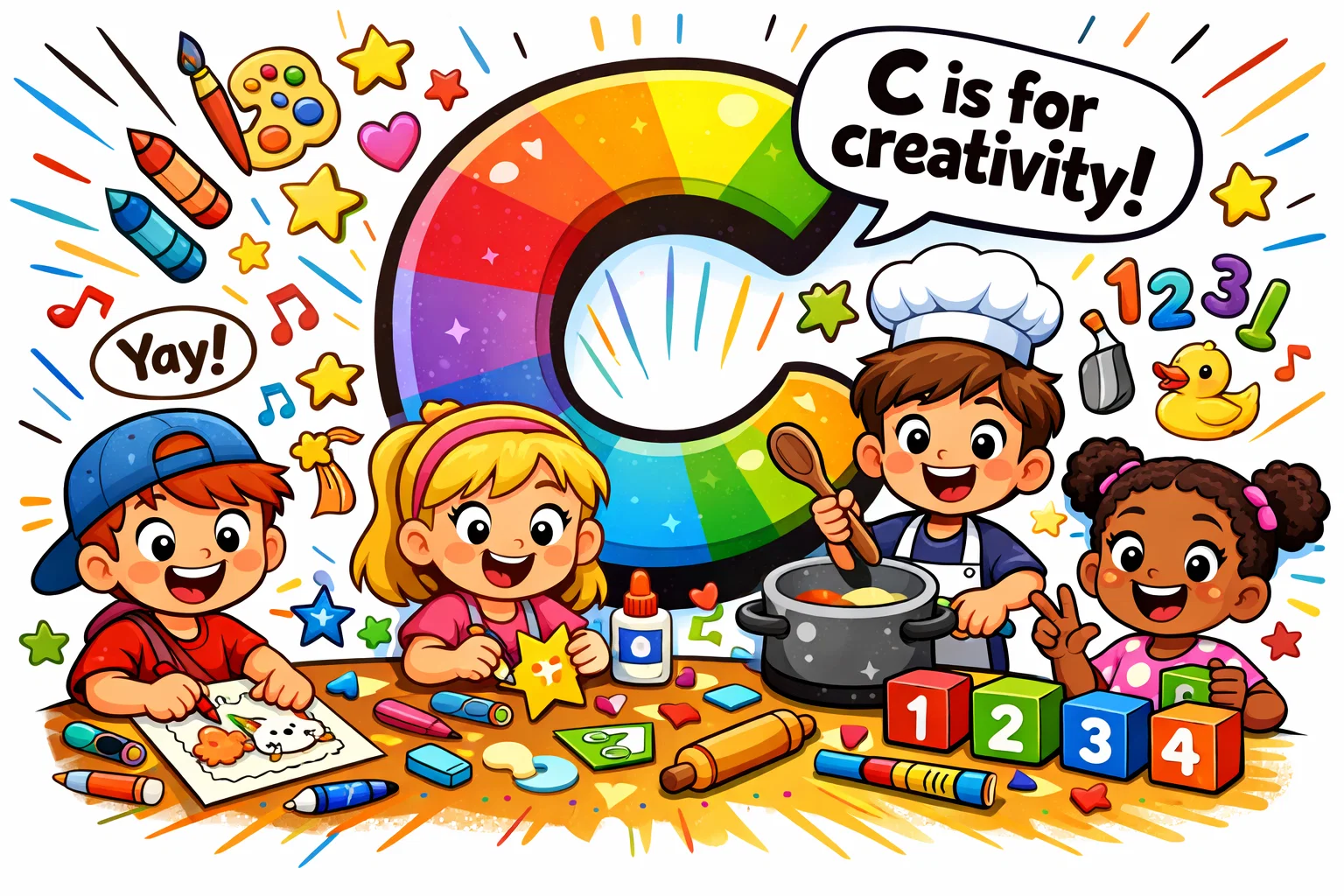
From classrooms to backyards, activities that start with C offer an impressive range of opportunities for children to learn, play, and grow. Whether you are a parent looking for alphabet activities at home, a teacher building letter C lessons, or simply searching for things to do starting with C, this guide has you covered.
The ideas collected here span four main categories — educational, creative, physical, and fun — and are organized by age group and learning goal. You will find letter C activities for preschoolers just beginning to explore phonics, hands-on crafts for developing fine motor skills, outdoor adventures for active kids, and date ideas for families who want to make everyday moments more meaningful.
Letter C Activities for Preschoolers
The preschool years are a critical window for early literacy and motor development. Activities that focus on the letter C during this stage help children connect sounds, symbols, and meaning in ways that feel playful rather than pressured. Research consistently shows that multisensory, play-based learning strengthens early phonics skills in children ages 3–5.
Letter C Sound Practice
The letter C has two main sounds: a hard sound (as in cat or cup) and a soft sound (as in circle or city). Helping preschoolers recognize both sounds early supports stronger letter recognition and vocabulary development. Simple games work well here:
- Say a word and ask the child whether it starts with the hard or soft C sound
- Point to objects around the room and identify those starting with C
- Repeat tongue twisters like “Cool cats catch clever creatures” to make pronunciation practice fun
Short, repeated sessions of two to five minutes are more effective at this age than longer, structured lessons.
Animals That Start With C
Animals are a natural entry point for letter C vocabulary. Common examples include cat, cow, camel, crab, crocodile, cheetah, and chameleon. These can anchor a range of learning activities:
- Flashcard matching games that pair an animal image with its name
- Simple storytelling where the child narrates what a camel or cat does each day
- Drawing or coloring an animal while repeating its name aloud
Animal-based vocabulary activities help build a child’s word bank while keeping engagement high.
Letter C Crafts for Preschoolers
Hands-on crafts support fine motor skills while reinforcing letter recognition. A paper caterpillar is a classic — children cut circles from colored cardstock paper, glue them into a chain, and label each circle with the letter C.
A paper cat face using a paper plate, marker, and glue is another straightforward option. These letter C crafts require minimal materials and deliver strong learning outcomes because children are physically interacting with the shape and sound of the letter while creating something they feel proud of.
Letter C Bible Activities
For families or classrooms with a faith-based approach, the letter C connects naturally to themes like compassion, courage, care, and creation. Activities can include coloring pages featuring the word “Care” with illustrated characters showing kindness, or simple storytelling sessions that highlight characters whose names or actions begin with C. These activities reinforce values alongside literacy, giving the letter C additional meaning for young learners.
Letter C Books for Kids
Read-aloud sessions using books rich in C words build listening skills, vocabulary, and a love of language. During reading, try these strategies:
- Pause and ask the child to spot words beginning with C on each page
- After reading, list together all the C words you found
- Revisit favorite C-themed books across multiple days to reinforce recognition
Books featuring characters like caterpillars, cats, or cowboys naturally concentrate C vocabulary and make word spotting feel like a game.
Foods That Start With C
Food-based learning is highly effective for preschoolers because it involves multiple senses. Foods that start with C include carrots, cookies, cheese, corn, cucumber, cherries, and cupcakes. Activities can include:
- A tasting activity where children try different C foods and describe them
- Sorting plastic or illustrated food items into “starts with C” and “does not start with C” piles
- Cooking a simple snack together, like carrot sticks with dip, while naming each ingredient
Connecting letters to tangible, enjoyable experiences helps preschoolers retain vocabulary more effectively.
Science Words That Start With C
Introducing simple science vocabulary early supports cognitive development and curiosity. Science words starting with C that are accessible to preschoolers include cloud, cold, color, cube, and cycle.
A cloud observation activity — going outside, looking up, and drawing what the child sees — pairs a science concept with creative expression. Dropping colored water onto coffee filters to watch color bleed outward is another simple experiment that brings the word “color” to life in a memorable way.
Music Activities With Letter C
Singing and rhythm are powerful memory tools. Clapping out the syllables of C words, creating a simple chant (“C-A-T spells cat, C-A-T spells cat!”), or singing familiar songs where C words appear frequently all reinforce phonics in an enjoyable way. Music is particularly effective for children who respond strongly to auditory input, and it integrates seamlessly into transitions, morning routines, or cleanup time.
Free Letter C Worksheets
Printable worksheets for tracing, coloring, and matching provide structured practice that complements play-based learning. Look for free printables that include uppercase and lowercase C tracing, simple dot-to-dot activities, and picture-word matching pages.
Worksheets should be used in short sessions and paired with hands-on activities, not used as the sole method of instruction. A tracing mat combined with a playdough offers a more complete learning experience than worksheets alone.
More Letter C Activities for Preschoolers
Beyond the core categories, several bonus ideas round out a strong letter C curriculum:
- A C scavenger hunt around the house, finding objects that start with the letter
- A sensory bin filled with items beginning with C — corn kernels, a small car, a toy cat, a cube
- Role-play games where children act out jobs that start with C, like cook or carpenter
Fun Letter C Activities for Kids
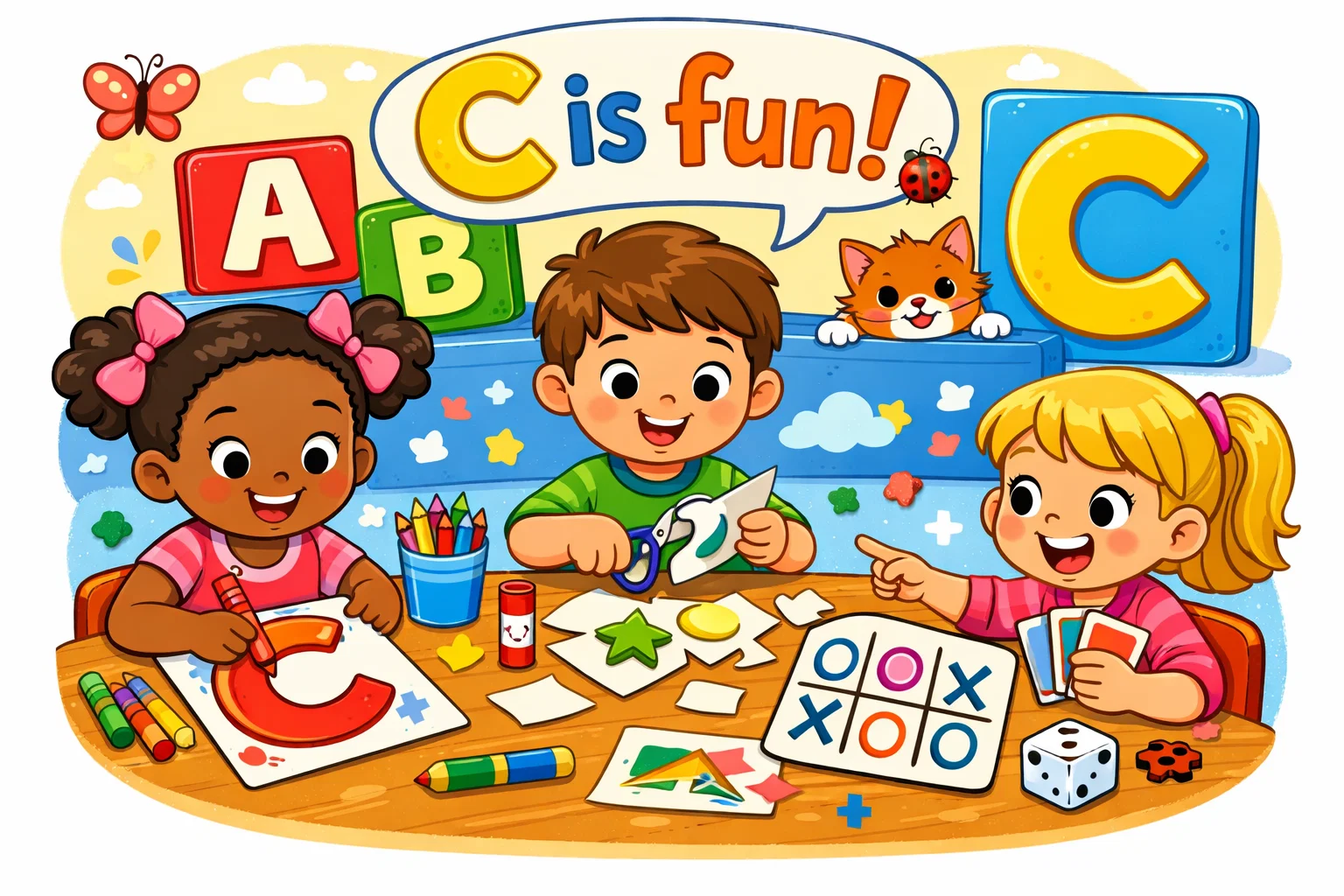
As children move past the preschool stage, letter C activities can become more complex and independent. The focus shifts from basic recognition to fluency, creative application, and word-level understanding.
Trace and Learn Letter C
Tracing remains a valuable exercise for early elementary students who are still developing handwriting consistency. Encourage children to trace both uppercase and lowercase C on lined paper, paying attention to the starting point, curve direction, and size. Adding a verbal cue like “start at the top and curve around” helps children internalize the movement.
Color and Identify Letter C Art
Coloring pages that feature C-themed images — a cactus, a castle, a crown — allow children to practice recognition while engaging creatively. Ask children to circle every letter C they spot on the page before coloring to add a recognition layer.
Match Uppercase and Lowercase C Games
Matching games using cards or a simple digital tool reinforce that uppercase C and lowercase c represent the same letter and sound. Simple homemade card sets work well: write one letter per card and ask the child to find its pair. This also builds concentration and working memory.
Cut and Paste Letter C Crafts
Cutting and assembling shapes into C-themed objects strengthens fine motor skills while reinforcing the letter. A collage of things that start with C — cut from magazines or printed images — gives children agency over their creation and builds vocabulary simultaneously.
Spot Letter C in Rhymes and Word Hunts
Nursery rhymes contain a high concentration of repeating sounds, making them ideal for phonics practice. Read a short rhyme aloud and ask the child to clap each time they hear a C sound. A circle letter C word hunt — where children circle every C they spot on a worksheet or page — builds both recognition and focus.
Educational Activities That Start With C
Beyond alphabet learning, many enriching educational activities begin with C. These extend learning across subjects and developmental domains.
Creative Activities Starting With C
Drawing, crafting, and cooking all fall under the creative umbrella. Creative activities support self-expression, fine motor development, and divergent thinking. A child who regularly engages in open-ended creative tasks develops stronger problem-solving skills, according to research on arts integration in early education. Activities in this category include collage-making, clay modeling, costume design, and collaborative mural painting.
Cognitive Activities Starting With C
Counting, categorizing, coding basics, chess for beginners, and critical thinking games all support brain development in meaningful ways. Sorting objects by color, size, or shape is a simple but highly effective categorization activity for young learners.
Cooperative Activities Starting With C
Cooperative games and classroom projects teach children to work together, communicate, and share responsibility. Building a block structure as a team, completing a group collage, or participating in a cooperative cooking project support social-emotional development alongside academic skills. These experiences are particularly valuable in classroom settings where relationship-building is a priority.
Cultural Activities Starting With C
Cooking dishes from different cultures, celebrating traditional holidays, and crafting items inspired by world traditions all open children’s perspectives while reinforcing C vocabulary. A simple cultural cooking activity — making a traditional corn dish, for example — connects food, geography, language, and history in a single session.
Outdoor and Physical Activities That Start With C
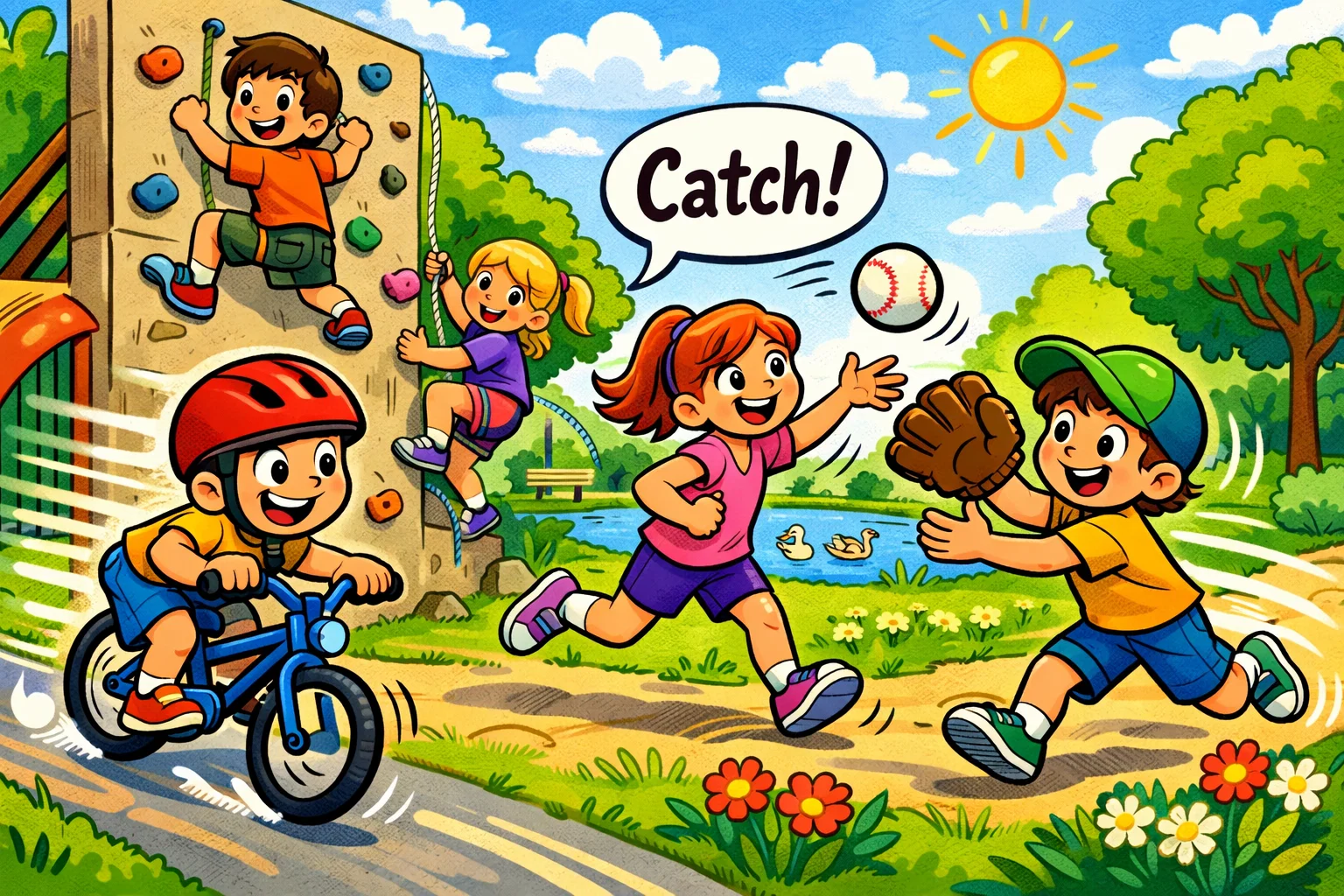
Physical activity is essential for children’s overall health and development. Activities beginning with C offer a wide range of outdoor options for different ages and fitness levels.
Camping
Camping introduces children to nature, self-sufficiency, and teamwork. Even a backyard campout counts. Beginner camping activities include building a simple shelter, identifying three types of clouds, cooking over a camp stove with supervision, and telling stories around a flashlight “campfire.” Camping develops resilience, curiosity, and an appreciation for the natural world.
Cycling
Bike riding builds coordination, balance, and cardiovascular fitness. For younger children, balance bikes without pedals are an effective starting point. Obstacle courses using cones, chalk lines, or garden objects add challenge and engagement. Always reinforce helmet use and basic road safety as part of the activity.
Climbing
Playground climbing structures and indoor climbing walls develop upper body strength, spatial awareness, and risk assessment skills. Children who climb regularly show improvements in both physical coordination and confidence, according to observations from physical education specialists. Supervised climbing on age-appropriate equipment is safe and highly beneficial.
Catching and Throwing Games
Simple games involving catching and throwing develop hand-eye coordination and gross motor skills. Activities range from basic two-person catch to team games like capture the flag or cooperative circle passing. These games are easy to adapt for different ages and require minimal equipment.
Creative and Fun Activities That Start With C
This category focuses on hobbies and activities that bring joy while building skills.
Cooking
Simple recipes offer rich learning opportunities. Children as young as three can help wash vegetables, stir ingredients, or decorate cupcakes. Cooking teaches measurement, sequencing, and cause-and-effect thinking. It also builds confidence. Start with no-bake recipes like fruit skewers or cookie decorating before moving to stovetop or oven activities with older children.
Coloring
Coloring supports concentration, fine motor development, and emotional regulation. For younger children, large simple shapes work best. Older children benefit from more detailed designs that require focus and color planning. Coloring is also an accessible, low-pressure activity for children who need a calm transition between tasks.
Crafting
Beyond preschool-level crafts, older children enjoy more complex DIY projects: building a cardboard castle, weaving a simple pattern with yarn, or constructing a model from recycled materials. Crafting develops planning skills, patience, and creative confidence.
Costume Making
Making costumes starting with C themes — cat, clown, cowboy, captain — combines sewing basics, creative design, and imaginative play. Even a simple cat costume made from a plain hoodie, felt ears, and a marker-drawn nose gives children ownership over their creative vision and provides a memorable hands-on experience.
Tips for Teaching Letter C Activities
Selecting and delivering activities effectively matters as much as the activities themselves.
- Age-Appropriate Activity Selection: Match activities to the child’s current developmental stage. Preschoolers need concrete, sensory experiences — touching, moving, and exploring. Early elementary students are ready for more symbolic and representational tasks, like worksheet exercises and word hunts. Older elementary children thrive with open-ended projects and cooperative challenges.
- Combining Fun and Learning: The most effective activities are ones children do not realize are educational. Frame every C activity as play first. A scavenger hunt is more motivating than a worksheet, even when both target the same skill. When children are engaged, retention improves significantly.
- Using Everyday Objects for Learning: Integrate C activities into daily routines without adding stress. At meals, name the foods on the plate and identify which start with C. During tidying up, ask children to collect all objects starting with C first. These micro-moments of learning accumulate meaningfully over time.
Best Ways to Use C Activities Daily
Consistency matters more than intensity when building early literacy and developmental skills. Short, regular engagement with C activities — five to ten minutes per day — produces better outcomes than occasional longer sessions. Incorporate C vocabulary into morning greetings, mealtime conversation, and bedtime reading.
Keep a small basket of C-themed objects on a shelf where children can explore freely. Rotate worksheets, crafts, and physical activities throughout the week to maintain variety. Over time, these simple habits build a strong foundation for letter recognition, vocabulary, and a genuine love of learning.
Frequently Asked Questions
What are some activities that start with C?
Activities that start with C include cooking, coloring, crafting, climbing, camping, cycling, counting games, clay modeling, costume making, and cooperative play. These span physical, creative, and educational categories suitable for a wide range of ages.
What things begin with the letter C?
Objects beginning with C include car, cat, cube, carrot, cup, clock, comb, crayon, coin, cloud, and crown. Animals include cat, cow, crab, and camel. Foods include cookie, cheese, corn, and cucumber.
What are sensory alphabet activities?
Sensory alphabet activities involve using touch, smell, taste, or movement to explore letters and sounds. For letter C, sensory activities include forming the letter C in a tray of sand or salt, pressing the shape into playdough, sorting objects in a sensory bin by whether they start with C, or using a pipe cleaner to build the letter’s shape. These hands-on learning experiences are particularly effective for toddlers and preschoolers whose learning is strongly driven by physical interaction with their environment.
Take a short quiz to find out what your everyday choices say about your parenting style
When your child is curious about something new, what’s your instinct?
Take a short quiz to find out what your everyday choices say about your parenting style
“Can I download this app?” What happens next?
Take a short quiz to find out what your everyday choices say about your parenting style
When it comes to rules at home, which sounds most like you?
Take a short quiz to find out what your everyday choices say about your parenting style
If you could give your child one life skill today, what would you pick?
Take a short quiz to find out what your everyday choices say about your parenting style
Your child gets to choose what to watch. What would your ideal setup look like?
Take a short quiz to find out what your everyday choices say about your parenting style
Pick your parenting superpower ✨