215 First Grade Writing Prompts: Journal, Opinion, and Creative Writing Activities

 Discover a Free Education Video App for Kids
Pastory uses AI to personalize educational video content based on your child’s interests and personality. Safe, engaging, and built for curious young minds. Sign up now to stay updated and enjoy early access with a free trial
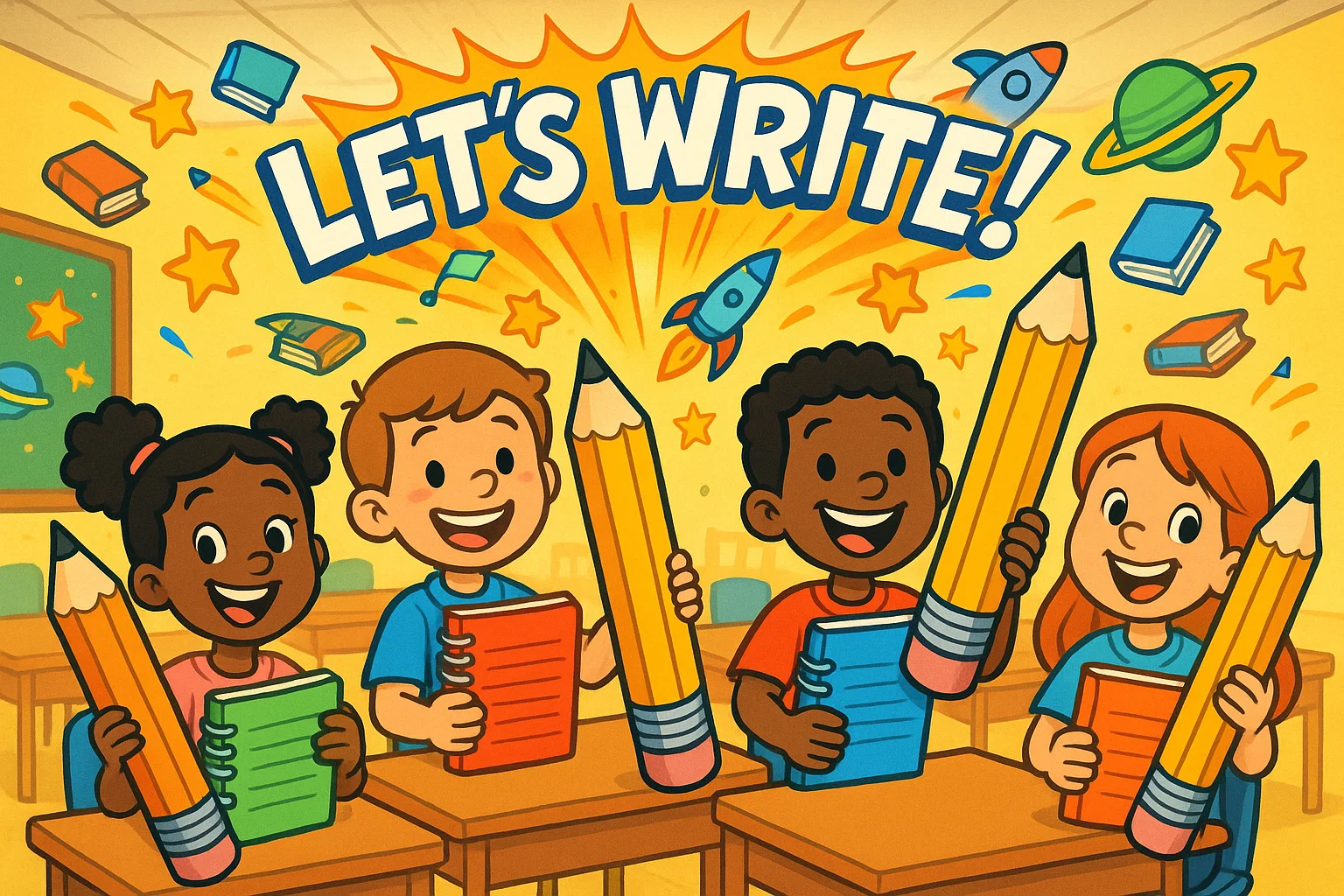
Engaging in daily literacy practice helps young learners build confidence, strengthen foundational writing skills, and discover the joy of self-expression. This collection of first-grade writing prompts gives parents, homeschooling families, and teachers a practical set of writing ideas they can use at school or at home for journals, stories, research, and seasonal topics. These first-grade writing prompts are designed to be fun and engaging, support handwriting practice, and help children move from letters and words to clear, complete sentences.
Whether you are looking for a quick worksheet, a simple writing activity, or a full week of classroom writing, these first-grade writing prompts can support students across a range of ability levels. The goal is to make writing feel approachable, meaningful, and creative while helping students develop sentence structure, vocabulary, and comprehension through short, consistent practice.
Key Takeaways
Effective instruction for first graders works best when it balances mechanics with creativity. The right first-grade writing prompts can build confidence, improve handwriting, and support writing practice in a way that feels playful rather than overwhelming. A varied mix of journal prompts, opinion prompts, narrative tasks, and descriptive writing topics helps students experience different types of writing while staying motivated.
These prompts are flexible enough to use for warm-ups, literacy centers, homework, printable worksheets, or a themed notebook routine. When chosen well, writing prompts help children express ideas, expand vocabulary, and strengthen the stages of writing from brainstorming to drafting and sharing.
What Parents, Teachers, and Homeschooling Families Will Get
Readers gain access to 215 ready-to-use ideas, strategies for implementing structured journaling, and tips for fostering long-term literacy success. This resource provides actionable concepts for narrative, opinion, informative, and seasonal practice, along with activity suggestions that streamline lesson planning.
Which Prompt Types Work Best for First-Grade Writers
First grade writers thrive when given clear support, such as sentence starters, picture-based prompts, and simple open-ended questions. These formats help students move from basic letter formation to constructing full sentences and short paragraphs with increasing independence.
How the List Is Organized by Skill and Season
The following prompts are grouped into categories – such as fiction, informative writing, and research writing – to target different skill sets. Seasonal sections and thematic categories provide additional opportunities for children to connect their work to their daily lives and the world around them.
215 First-Grade Writing Prompts
This collection serves as a flexible tool to help students practice daily. To get the best results, consider rotating through categories to keep interest high, or choose topics that directly connect to a specific lesson or a child’s current personal interests.
How the Prompt List Is Grouped
The list progresses from highly supported activities – like sentence starters – to more complex tasks such as research reports and creative storytelling. This structure allows caregivers to increase the level of challenge as a student gains fluency.
How to pick prompts by goal
Select topics based on the desired developmental outcome: use “Would-You-Rather” questions for opinion building, narrative ideas for sequencing practice, and journal topics for building emotional intelligence and daily reflection habits.
How to Rotate Prompts Across the Week
A recommended weekly schedule includes:
- Monday: Journal reflection (personal connection)
- Tuesday: Narrative task (sequencing a story)
- Wednesday: Opinion task (making a choice and explaining why)
- Thursday: Informative task (explaining a process)
- Friday: Funny or seasonal ideas (engaging creativity)
15 Sentence Starter Prompts
Sentence starters help students overcome the “blank page” feeling by giving them a starting point for their own ideas. These are ideal for morning work and classroom warm-ups.
Everyday sentence starters
- Today I felt…
- My favorite thing about school is…
- At home, I really like to…
- On the weekend, I plan to…
- My family is special because…
Story sentence starters
- Once upon a time, a small rabbit found…
- I woke up and realized I could fly to…
- If I had a pet dragon, I would…
- The mystery box under the bed was…
- One sunny morning, the toys started…
Opinion sentence starters
- I think that the best lunch is…
- My favorite color is… because…
- The best part of the playground is…
- I believe that recess should be…
- In my opinion, the funniest animal is…
15 Super Sentence Prompts
“Super sentences” encourage children to expand their initial thoughts by adding descriptive language and specific details, which is a key milestone in improving writing skills.
Expand short sentences
- Change “The dog runs” to include where and how.
- Turn “I play” into a sentence about who you play with.
- Transform “The cat sleeps” to mention where the cat is resting.
- Make “I ate” more detailed by describing what you had for lunch.
- Update “He walks” to include why he is moving.
Add describing words
- Describe your favorite fruit using size and color words.
- Share a sentence about a flower using words that describe its smell and look.
- Tell a story about a rainy day using at least two action words.
- Describe your favorite toy using feeling and size words.
- Share about your best friend using words that tell how they make you feel.
Practice punctuation, capitals, spacing
- Construct a sentence about your house and check for a capital letter at the start.
- Write three sentences about things you like, and make sure each one ends with a period.
- Practice a question about the weather with a question mark.
- Share a sentence about your teacher, checking for correct spacing between every word.
- Create a sentence about your favorite game and ensure it begins with a capital letter.
15 Narrative Writing Prompts
Narrative tasks allow children to share their personal experiences, which build confidence and create a strong foundation for storytelling.
Personal memory ideas
- Describe the most exciting thing that happened at your birthday party.
- Tell the story of your first day in first grade.
- Tell about a memorable trip you took with your family.
- Describe a time you helped someone at home.
- Share about the best weekend you ever had.
Story sequence practice
- Tell how to get ready for school using “first,” “next,” and “last.”
- Describe your morning routine from waking up to arriving at school.
- Share the steps of how you play your favorite game.
- Explain the process of making your favorite snack.
- Tell a story about cleaning your room using order words.
School and family moments
- Describe your favorite activity to do during recess.
- Write about a fun classroom job you have.
- Describe playing with your siblings or friends.
- Tell about a time you tried something new and felt proud.
- Tell about a time you helped your family at home and why it made you feel proud.
15 Fiction Writing Prompts
Creative activities engage the imagination and help students explore abstract concepts, such as magic and hypothetical scenarios, in a safe and structured way.
Imaginary characters
- Construct a story about a robot who wants to learn how to dance.
- Describe what a friendly monster does during the school day.
- Share about a fairy who lives in your garden.
- Tell a story about a talking crayon that loves to draw purple stars.
- Describe a superhero who saves the day using only kindness.
Fantasy places
- If you lived in a town made of candy, what would you eat first?
- Describe a school that is located inside a giant cloud.
- Share about an underwater classroom where the students are fish.
- Describe a playground that is hidden in the middle of a jungle.
- If you had a classroom on the moon, what would it look like?
Problem-and-solution stories
- A squirrel lost his acorn; how can his friends help him find it?
- A robot broke a toy. How does the robot fix it?
- You found a magical key; what door does it open and what is inside?
- A bird lost its song; how do you help it get its voice back?
- A puppy is stuck in a tree; how do you help it get down?
15 Opinion and “I Think” Prompts
Opinion tasks teach children how to formulate an argument and support it with a simple reason, which is a core skill in early elementary education.
Favorite things
- Which is better: chocolate or vanilla ice cream? Give one reason.
- What is the best book you have ever read and why?
- Is it better to have a cat or a dog? Explain your choice.
- Which season is your favorite and why do you like it?
- What is your favorite subject in school and why?
School opinions
- Do you prefer indoor recess or outdoor recess? Why?
- Is homework a good idea? Give one reason for your opinion.
- What is the best way to spend lunchtime?
- Should students have jobs in the classroom? Why or why not?
- What is the most important school rule?
Would-you-rather choices
- Would you rather be able to fly or be invisible? Why?
- Would you rather live in the jungle or in the ocean?
- Would you rather have a pet dragon or a pet dinosaur?
- Would you rather eat only fruit or only vegetables for a day?
- Would you rather play sports or read books all day?
15 Informative and Expository Prompts
Informative tasks shift the focus from the imagination to factual explanation, helping students practice clear, logical communication.
How-to topics
- Explain how to tie your shoes step by step.
- Write instructions for how to plant a flower seed.
- Describe how to make a peanut butter sandwich.
- Explain how to clean your desk after an art project.
- List steps for packing your school bag in the morning.
Explain everyday objects
- Describe what a pencil is used for and why it is important.
- Explain how a backpack helps a student during the school day.
- Describe how a clock helps us during the school day.
- Explain what a toothbrush does for your health.
- Describe why we use an umbrella when it rains.
Compare and classify ideas
- Explain the differences between cats and dogs.
- Describe how summer weather is different from winter weather.
- Compare a playground to a classroom.
- Explain the differences between a car and a bicycle.
- Describe how a tree is different from a flower.
15 Research Writing Prompts
Research-based ideas introduce children to the concept of finding information and summarizing it, which supports foundational literacy skills.
Animal mini-reports
- Choose an animal and provide three facts about where it lives.
- What do polar bears eat to stay strong?
- Describe how a kangaroo moves from one place to another.
- List three interesting facts about an elephant.
- What is a baby monkey called, and how does it stay close to its mother?
Nature and weather topics
- Provide three facts about why we need rain.
- Describe what happens to trees in the fall.
- What are clouds, and what are some different kinds you can see in the sky?
- Describe three animals or plants that live in the ocean.
- What changes do you notice in each season?
Community helper topics
- What are three tools a firefighter uses to stay safe?
- Explain what a doctor does to help sick people.
- Describe the daily routine of a mail carrier.
- What does a teacher do to help students learn?
- Explain how a farmer helps provide food for the community.
15 Journal and Personal Writing Prompts
Regular journal entries encourage self-expression and help students connect their personal lives to their daily writing practice.
Daily reflections
- What was the best part of your day today?
- Describe one hard thing you did today and how you finished it.
- What is one thing that made you smile today?
- What is one new thing you learned in class today?
- How are you feeling as you start writing today?
Personal connection topics
- Describe your favorite place in your home and why you like it.
- What is one thing you are very proud of doing lately?
- Who is a friend you like to spend time with and why?
- What is a special tradition your family has?
- Describe your favorite meal to eat with your family.
Weekend and family memories
- Share about the most fun thing you did this past weekend.
- Describe a game you like to play at home with your family.
- What is a trip you want to take with your family one day?
- Describe your favorite holiday memory.
- What is a special activity you like to do on Saturdays?
15 Funny Writing Prompts
Funny ideas are highly effective for engaging hesitant learners, as they remove the pressure of being “correct” and encourage creative risks.
Silly situations
- What if a giant sandwich appeared in the middle of your classroom?
- Construct a story about a pair of shoes that talk when you walk.
- What would happen if a cat tried to drive a school bus?
- You opened your lunchbox and a frog jumped out; what happened next?
- Imagine your dog learned how to speak; what is the first thing he would say?
Funny school moments
- Describe a day when your teacher brought a dragon to school.
- What would happen if your school was turned upside down?
- Share about a pencil that starts singing when you try to use it.
- Imagine the chairs in your classroom started floating; what would you do?
- What if the water fountain turned into lemonade for one hour?
Wild inventions
- Design a machine that helps you finish your homework.
- If you could build a robot to clean your room, what would it look like?
- Describe a backpack that could fly you to school.
- What if you had a hat that could read people’s thoughts?
- Invent a gadget that helps you get ready for bed faster.
15 Animal Writing Prompts
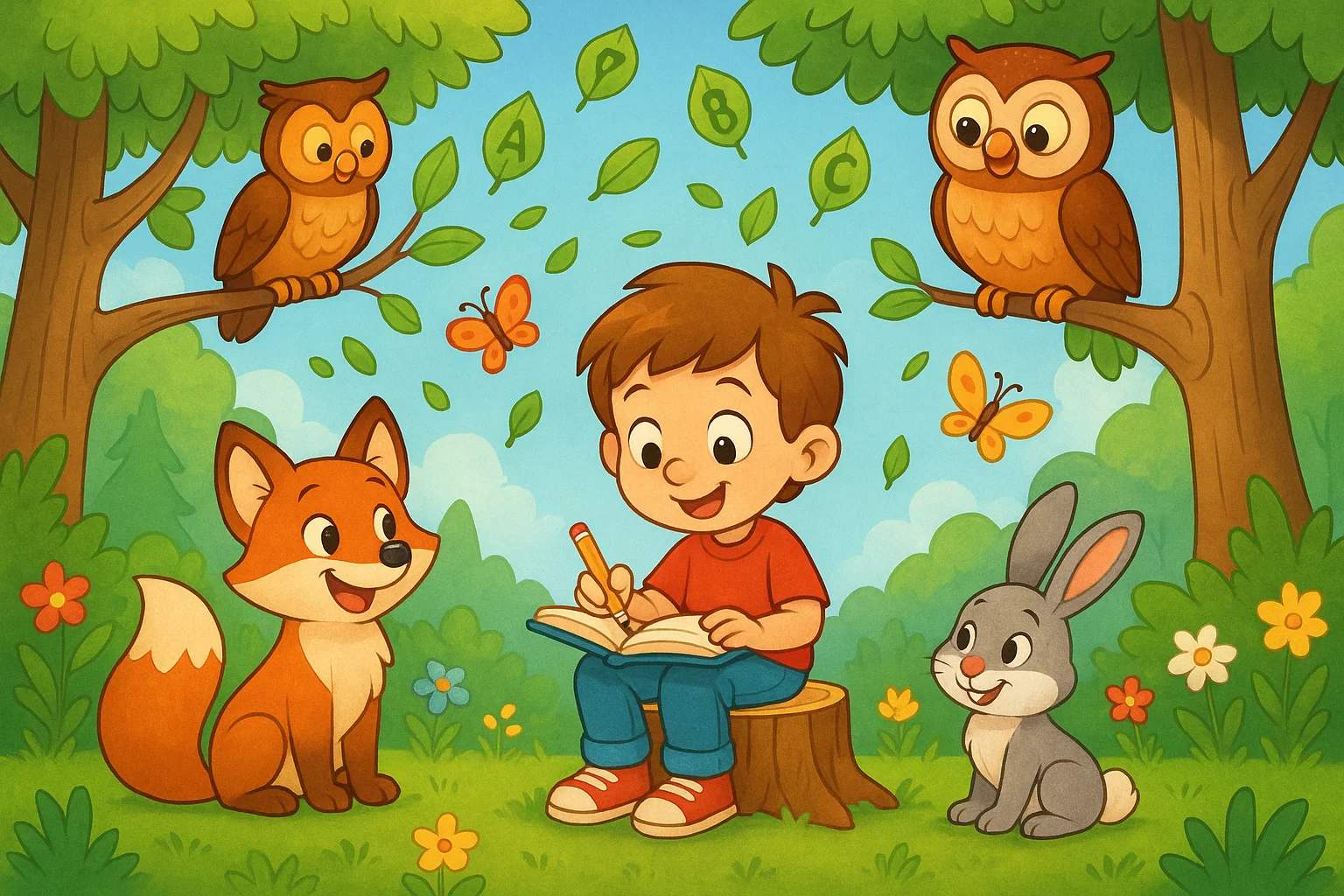
Animals are a perennial favorite for children, providing a versatile subject for both creative fiction and factual research.
Pets and farm animals
- If you could have any pet, what would it be and how would you care for it?
- Describe a day in the life of a farm cow.
- What does a rabbit need to be happy and healthy?
- Construct a story about a chicken who wants to be a pilot.
- Describe your favorite dog and why it is a great friend.
Wild animal adventures
- Share about a lion who is afraid of the dark.
- Describe how a penguin stays warm in the snow.
- What would you say to a dolphin if you could talk to it?
- Share about an elephant who discovers a secret map.
- Describe a monkey who finds a lost key in the jungle.
Make-believe animal ideas
- Invent a new animal that is half-cat and half-bird.
- What would a pet be like if it could change colors?
- Construct a story about an animal that has wings but cannot fly.
- Describe a creature that lives in your bathtub.
- What would a zoo for imaginary animals look like?
15 Emotion and Gratitude Prompts
These ideas help children build emotional intelligence by identifying their feelings and practicing gratitude, both of which are essential for social-emotional development.
Feelings check-ins
- Share about a time you felt very excited.
- When do you feel the most proud of yourself?
- What can you do when you feel sad or nervous?
- Describe how it feels to have a best friend.
- How do you feel when you learn something new?
Kindness and friendship moments
- Share about a time you helped a friend.
- Why is it important to share with your classmates?
- How can you show kindness to someone who is sad?
- Describe a time someone was kind to you.
- What does it mean to be a good teammate?
Gratitude and positive thinking
- List three things you are thankful for today.
- What are three good things that happened at school this week?
- Who are the people in your life who help you every day?
- Describe a small moment today that made you feel happy.
- What is one thing you love about your life?
15 Descriptive and Picture-Based Writing Prompts
For children who are visual learners, using images as an anchor for expression helps bridge the gap between observation and clear communication.
Describe what kids see
- Look at a picture of a park; describe what the people are doing.
- Describe a beach scene: what do you see, hear, and smell?
- Look at a farm picture; what animals do you see and what are they eating?
- Describe a picture of a birthday party; what is the best part?
- Look at a picture of a rainy day window; what do you see outside?
Use senses and details
- Share about your favorite food using words for how it looks, tastes, and smells.
- Describe your bedroom using at least four different adjectives.
- Share about the sounds you hear in your backyard.
- Describe the feeling of cold snow on your hands.
- Share about the smell of cookies baking in the oven.
Tell a Story from a Picture
- Look at a picture of a boy holding a map; where is he going?
- Look at a picture of a cat in a hat. Write a story about who gave the cat the hat.
- Use a picture of a treehouse to share about a secret club.
- Look at a picture of a mountain; share about who lives at the top.
- Use a picture of a broken toy; explain how it got fixed.
15 Class Closure and General Prompts
These ideas are ideal for teachers looking for quick, meaningful ways to wrap up a lesson or the school day.
End-of-day reflection
- What was the most interesting part of our class today?
- What was one task that was hard for you today?
- Describe one kind act you saw someone do today.
- What made you feel proud of your work today?
- If you could do one activity again tomorrow, what would it be?
What I learned today
- Provide one new fact you learned in class today.
- What is one thing you understand better now than this morning?
- Explain how to do one thing we practiced in class.
- What was the most important lesson from today?
- If you had to teach one thing to a friend, what would it be?
Goals for tomorrow
- What is one goal you have for your work tomorrow?
- What is something you want to get better at by tomorrow?
- How can you be a better helper in class tomorrow?
- What are you looking forward to doing in school tomorrow?
- What is one question you want to ask in class tomorrow?
20 Seasonal 1st Grade Writing Prompts
Seasonal topics provide a natural framework for connecting tasks to the calendar, keeping content relevant throughout the year.
Fall and October prompts
- Describe why you love the colors of the leaves in October.
- How do you get ready for a holiday with your family?
- Share about your favorite thing to do on a cool fall day.
- Describe a pumpkin you saw or carved.
- What are the changes you see outside in November?
Winter prompts
- Share about your favorite winter clothes.
- Describe how it feels to drink hot cocoa on a cold day.
- What are your goals for the month of January?
- Share about how you show kindness to others in February.
- Describe a snow day.
Spring prompts
- What do you see in the garden during the month of April?
- Share about how the rain helps flowers grow.
- What is one way you can help the Earth on Earth Day?
- Describe the animals you notice more often in spring.
- What are the colors of spring?
Summer prompts
- Share about your plans for June.
- What do you like to do on a sunny day in July?
- How do you feel as the new school year gets closer?
- Describe your favorite outdoor game to play in the summer.
- What is your favorite ice cream flavor for a hot day?
Sentence Starters vs Open-Ended Prompts
Understanding the difference between supported and independent formats helps in selecting the right tool for each student’s needs.
| Prompt Type | Best Use Case | Goal |
| Sentence Starters | Beginning learners or hesitant students | Fluency and confidence |
| Open-Ended | Independent learners | Creativity and critical thinking |
When sentence starters work best
Sentence starters work best for children who are just starting to put thoughts on paper, as they remove the hurdle of constructing the first few words. This support allows students to focus on their vocabulary and message without feeling overwhelmed.
When open-ended prompts work best
Open-ended tasks are ideal for students who have established basic writing habits and are ready to experiment with their own ideas. These ideas encourage students to structure their own sentences, use transitions, and develop a logical flow of information.
How to move kids from supported to independent work
Use a scaffolding approach: start with full sentence frames, move to partial starters, and then transition to simple open-ended topics. This gradual reduction of support empowers students to build confidence in their abilities.
1st Grade Writing Skills
First grade is a foundational period in which students begin to bridge the gap between oral language and written communication.
Phonics and structure
Literacy practice directly reinforces phonics, as students must apply their sound-letter knowledge to encode words. Furthermore, regular practice helps students internalize structural concepts such as left-to-right progression, proper spacing, and the use of capital letters and end punctuation.
Confidence, coordination, and expression
Consistent practice improves fine motor coordination and helps ideas flow, turning writing from a physical challenge into a form of self-expression. As students become more comfortable with the mechanics, they can focus more on the substance of their stories and opinions.
Skill Goals Across the School Year
At the beginning of the year, students typically focus on drawing and labeling with simple sentences. By the middle of the year, many students can write short 3–4 sentence pieces with support. By the end of the year, many first graders are capable of producing more detailed narratives and basic informative reports.
Quick Tips for Stronger 1st Grade Literacy Skills
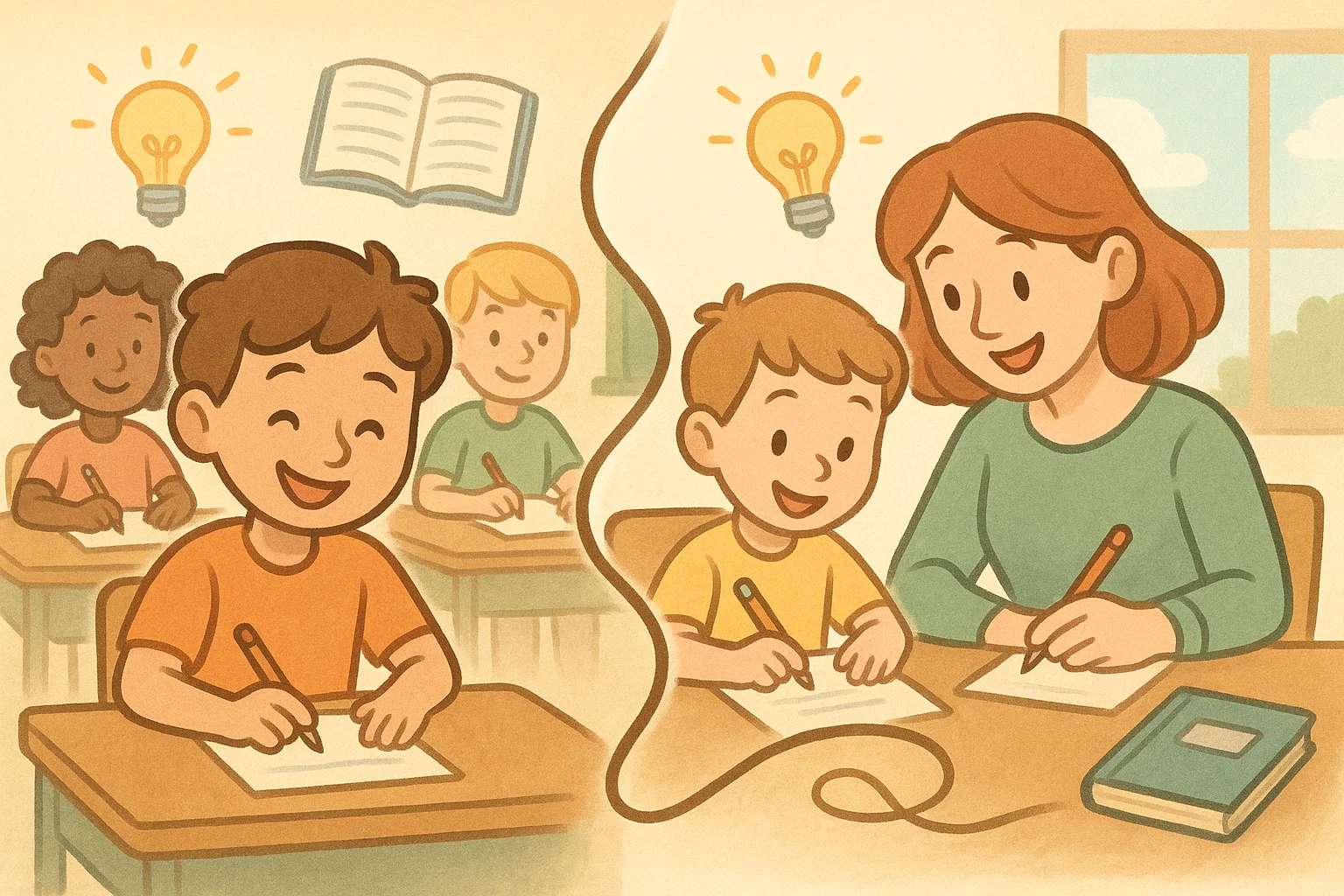
- Build a literacy station: Create a dedicated area with paper, various pencils, and word cards to make tasks accessible.
- Keep it simple and fun: Short, consistent sessions of 10–15 minutes are often more effective than long, exhausting lessons.
- Practice together: Engage in shared tasks where the adult models a sentence and the child adds their own.
- Encourage pre-drawing: Allow children to draw their ideas before putting them into words; this provides a visual map that helps them construct their sentences.
- Celebrate finished work: Displaying work or creating a family folder shows the child that their effort is valued.
More Writing Prompts and Activities
- Reading-response ideas: After finishing a book, ask the child to describe their favorite character or predict what happens next.
- Story retell activities: Use sequence words like “first,” “then,” and “finally” to retell a known story before putting it on paper.
- Draw-and-extend extensions: Combine drawing and literacy in mini-books, which can then be shared with family members as a “published” work.
Frequently Asked Questions
How long should first-grade writing be?
For a first grader, a piece can range from one strong sentence at the beginning of the year to a cohesive 3–5 sentence paragraph by the end of the year.
How often should 1st graders practice?
Short, frequent practice is better than long, sporadic sessions; aiming for 10–15 minutes several times a week is generally effective.
How do I choose the right prompts?
Choose based on the child’s interests, their current comfort level, and the specific goal (e.g., practicing punctuation vs. creative expression).
How do I improve participation and excitement?
Incorporate funny topics, choice boards, and visual aids like pictures to keep students motivated and reduce the pressure of perfection.
How do I know if my child is on track?
Signs of progress include increased willingness to start, the use of more detailed sentences, better attention to punctuation, and a growing ability to share personal ideas clearly.
How can I make learning writing more fun for my child?
To make learning enjoyable, choose fun writing prompts that allow students to tell stories about their own lives. Prompts can help turn a task into an adventure. Always look for writing prompts for first grade that spark curiosity, as these prompts that encourage creativity and boost writing abilities at an early age.
Take a short quiz to find out what your everyday choices say about your parenting style
When your child is curious about something new, what’s your instinct?
Take a short quiz to find out what your everyday choices say about your parenting style
“Can I download this app?” What happens next?
Take a short quiz to find out what your everyday choices say about your parenting style
When it comes to rules at home, which sounds most like you?
Take a short quiz to find out what your everyday choices say about your parenting style
If you could give your child one life skill today, what would you pick?
Take a short quiz to find out what your everyday choices say about your parenting style
Your child gets to choose what to watch. What would your ideal setup look like?
Take a short quiz to find out what your everyday choices say about your parenting style
Pick your parenting superpower ✨