Strategies for Kids Who Are Overwhelmed in Public Spaces

 Discover a Free Education Video App for Kids
Pastory uses AI to personalize educational video content based on your child’s interests and personality. Safe, engaging, and built for curious young minds. Sign up now to stay updated and enjoy early access with a free trial
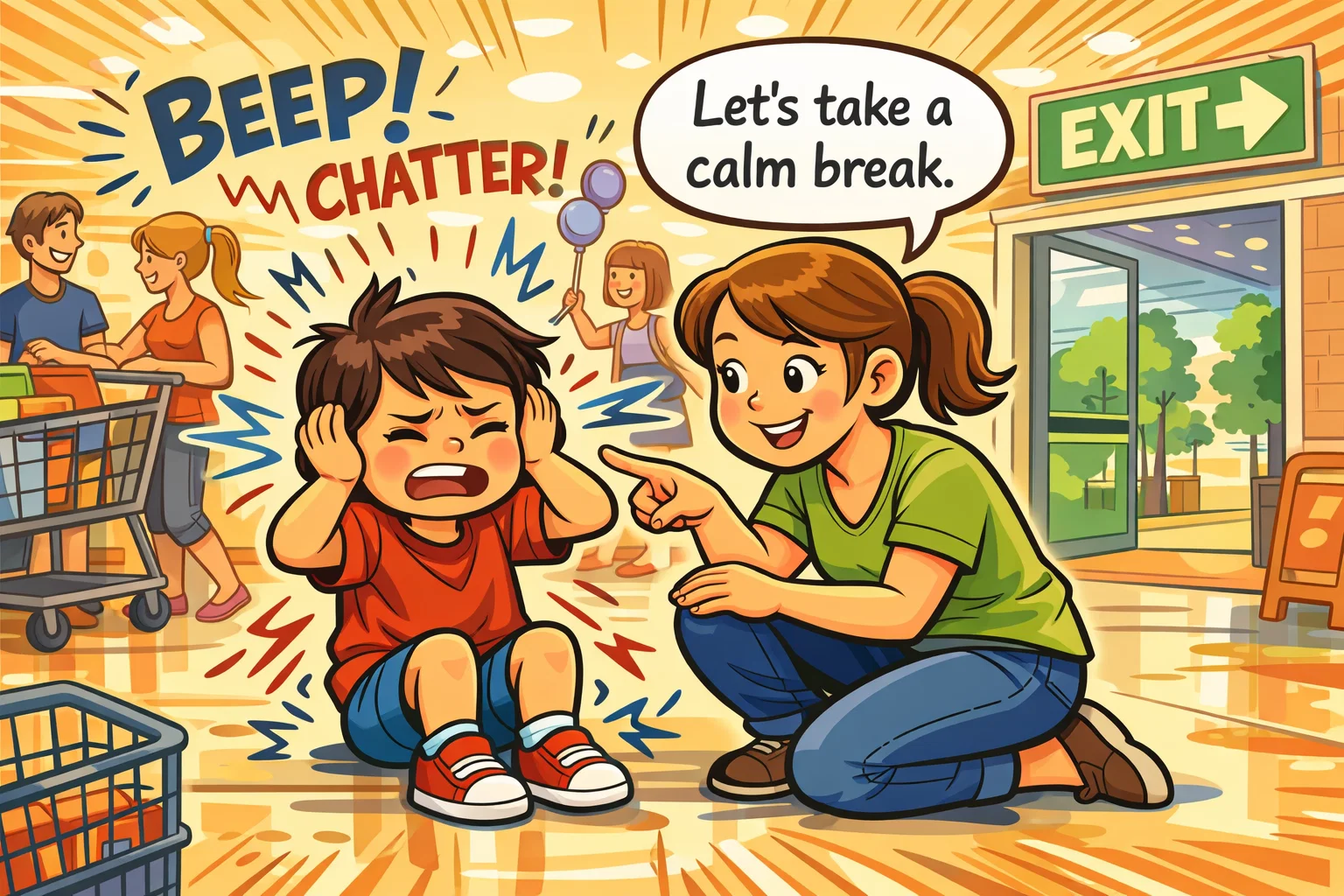
Navigating public spaces can be a daunting challenge for children who experience sensory overload. Whether it’s the humming fluorescent lights of a supermarket or the unpredictable echoes of a busy train station, the world often feels too loud, too bright, and too fast. This guide provides a comprehensive framework to help your child navigate these environments confidently. By learning how to spot sensory triggers, preparing effective sensory toolkits, and responding calmly during a meltdown, you can transform stressful public outings into manageable, and even enjoyable, experiences.
Quick Answer
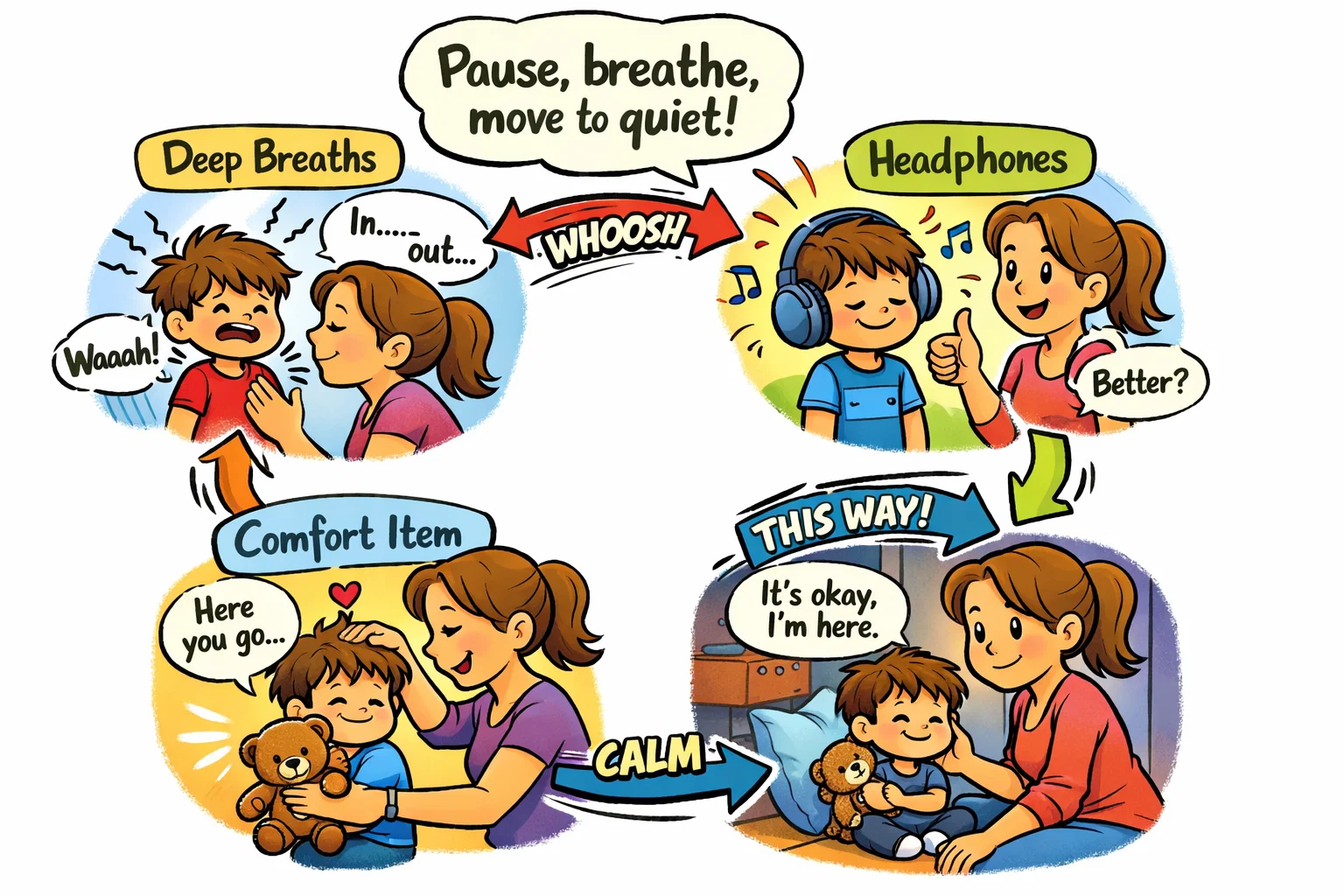
To manage sensory overload in public, parents should adopt a proactive ‘Predict, Prevent, Pivot’ framework. This involves identifying specific sensory triggers before leaving the house, preparing a sensory toolkit (including noise-cancelling headphones and fidget toys), and maintaining a flexible exit plan.
The core strategy for managing sensory overload includes:
- Spotting Triggers: Recognizing bright lights, busy crowds, and loud noises early.
- Preparation: Using visual schedules and social stories to explain the venue.
- In-the-Moment Support: Moving to a quieter spot and using deep breathing or sensory tools to help regulate the nervous system.
- Strategic Exit: Leaving the public place before the child becomes completely overwhelmed.
Who This Guide Helps
This guide is designed for parents and caregivers of children with autism, ADHD, sensory processing disorders, or anxiety disorders. It is equally valuable for any child who may not have a formal diagnosis but consistently finds busy environments or public venues difficult to handle.
What Readers Will Learn
- How to identify sensory information that causes overwhelm.
- The early signs of a looming meltdown.
- How to build a personalized sensory toolkit.
- Practical coping strategies for specific locations like shops and parks.
- Long-term skills to help kids feel more in control.
Fast Relief Snapshot
If your child becomes overwhelmed, follow these five steps:
- Pause: Stop all demands and instructions immediately.
- Reduce Input: Put on headphones or sunglasses.
- Move: Find the nearest quieter corner or centre exit.
- Regulate: Offer deep pressure or a fidget tool.
- Exit: If the child may need to leave to stay safe, do so without hesitation.
Why Kids Get Overwhelmed in Public
Sensory overload in public spaces occurs when the brain receives more sensory information than it can process at once. For a child with sensory sensitivities, a simple trip to a shopping centre is not just a chore; it is a neurological assault. The combination of bright lights, busy crowds, and competing smells creates a cumulative effect where the child feels unsafe.
Common Triggers in Public Spaces
Many public environments contain ‘invisible’ stressors that neurotypical adults typically filter out automatically. Common sensory triggers include:
- Auditory: Unexpected announcements, hand dryers, or background music.
- Visual: Flickering bright lights, mirrors, and high-contrast patterns.
- Tactile: Brushing against strangers in crowded spaces or uncomfortable clothing tags.
- Olfactory: Strong cleaning chemicals or food court smells.
Sensory, Social, and Transition Triggers
It is helpful to categorize overwhelm into three distinct types to better support a child:
| Trigger Type | Description | Example |
| Sensory | Overstimulation of the five senses. | Loud sirens or flickering LED shop signs. |
| Social | Pressure to interact or follow complex social cues. | A stranger asking the child questions in a queue. |
| Transition | Moving from one environment or activity to another. | Leaving the playground to enter a quiet library. |
Trigger Patterns by Place Type
Stressors vary significantly depending on the venue. In a supermarket, the primary trigger might be the “beep” of scanners and decision overload. In a park, the trigger is often the unpredictability of other children or the intensity of the sun. Recognizing these patterns allows you to plan ahead specifically for each outing.
Personal Trigger Map
Every child is unique, so their sensory needs are unique too. I recommend parents keep a “Trigger Map” to identify patterns.
- Location: Where did the overwhelm happen?
- Input: Was it loud, bright, or crowded?
- Time: Was the child hungry or tired?
- Action: What specific sensory tool helped them feel more at ease?
Early Signs Before Overload Peaks
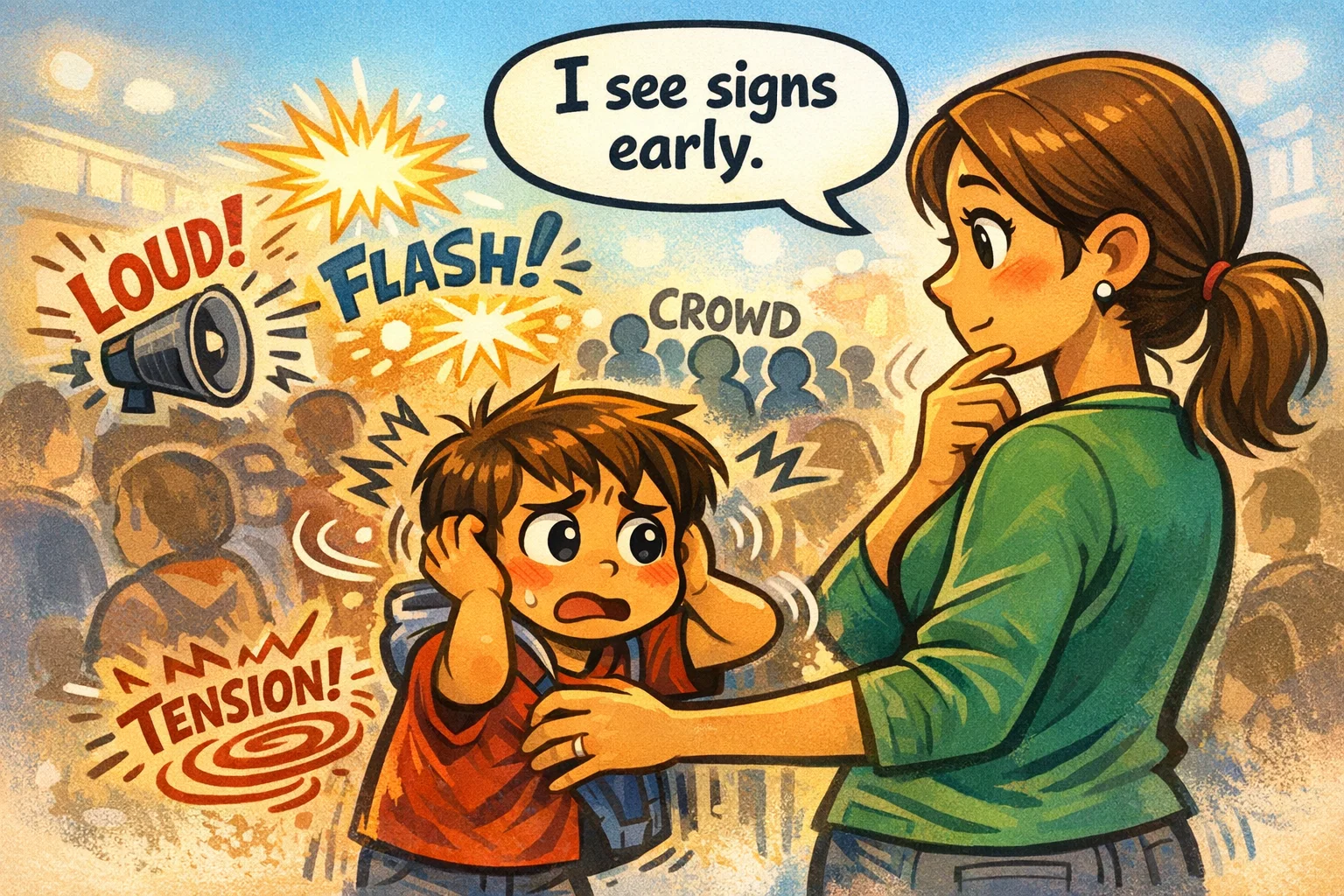
The key to managing sensory overload is early intervention. Waiting until a meltdown occurs makes regulation much harder. Recognizing ‘pre-meltdown’ behaviors can reduce the duration and intensity of the episode significantly.
Body Language Changes
Before a child becomes completely overwhelmed, their body often signals rising internal tension. Look for:
- Freezing: Stopping in place and refusing to move.
- Clinginess: Pulling at your clothes or staying too close.
- Avoidance: Covering their ears, closing their eyes, or hiding behind you.
- Pacing: Aimless, hurried walking or spinning.
Facial and Physical Signals
Subtle physical shifts can indicate that the child may experience a surge in cortisol (stress hormone).
- Facial Expressions: Squinting as if the lights are too bright or a sudden “blank” stare (zoning out).
- Autonomic Responses: Faster breathing, sweaty palms, or flushed cheeks.
- Motor Tensions: Tightening of the jaw or clenching fists.
Mood and Behavior Shifts
Changes in communication often precede a physical meltdown. A child might suddenly become hyper-active (“silly”) to mask their anxiety, or they may stop responding to simple questions entirely. This “shut down” is a protective mechanism to limit further sensory input.
Signs by Place Type
- In Shops: Constant asking “When are we leaving?” or grabbing random items.
- In Restaurants: Crawling under the table or refusing to look at the menu.
- During Travel: Kicking the seat in front or repetitive vocalizations.
Why Early Signs Matter
Recognizing these signals early allows you to help them feel safe before the “fight or flight” response fully takes over. It preserves the child’s dignity and reduces the “shame spiral” that often follows a public episode.
Preparation Before Outings
Proactive preparation is the most effective way to help your child feel more in control of their environment. By preparing your child, you reduce the element of surprise, which is a major contributor to anxiety.
Night-Before Plan
Discuss the public place with your child the evening before the visit. Use a neutral tone and focus on the “What, Where, and How.”
- What: We are going to the dentist.
- Where: It is near the big park.
- How: We will stay for 30 minutes, and you can wear your headphones.
Morning Visual Checklist
Children with autism spectrum conditions often process sensory information better through visual channels.
- Visual Schedule: A simple drawing or photo list of the steps (Car → Shop → Park → Home).
- First-Then Cards: “First we buy the bread, then we go to the swings.”
- Timers: Use a visual countdown so the child knows what to expect.
Social Story Mini-Version
Create a short narrative to teach your child how to navigate public spaces.
“Today we are going to the shopping centre. It might be quieter in the morning, but if it gets loud, I will give you your fidget. We will finish our list and then have a snack in the car.”
Role-Play Tricky Moments
Practice coping strategies at home where the child feels safe.
- The Queue Game: Practice standing still for two minutes.
- The Signal: Practice the “I need a break” hand sign.
- The Sound: Play a recorded “mall sound” at a low volume while doing a fun activity.
Secret Signal and Exit Route
Establish a non-verbal code word or hand signal. This allows your child to communicate overwhelm without feeling embarrassed. Additionally, identify the “Safe Zone” at the venue immediately upon arrival—this could be a quiet hallway, a family restroom, or the car.
Right Time and Place
Choose sensory-friendly events or ‘Quiet Hours’ offered by many retailers. Visiting a centre at 9:00 AM on a Tuesday is vastly different from 2:00 PM on a Saturday. Start with short visits (10–15 minutes) to build confidence before attempting longer missions.
Calm Kit and Sensory Tools
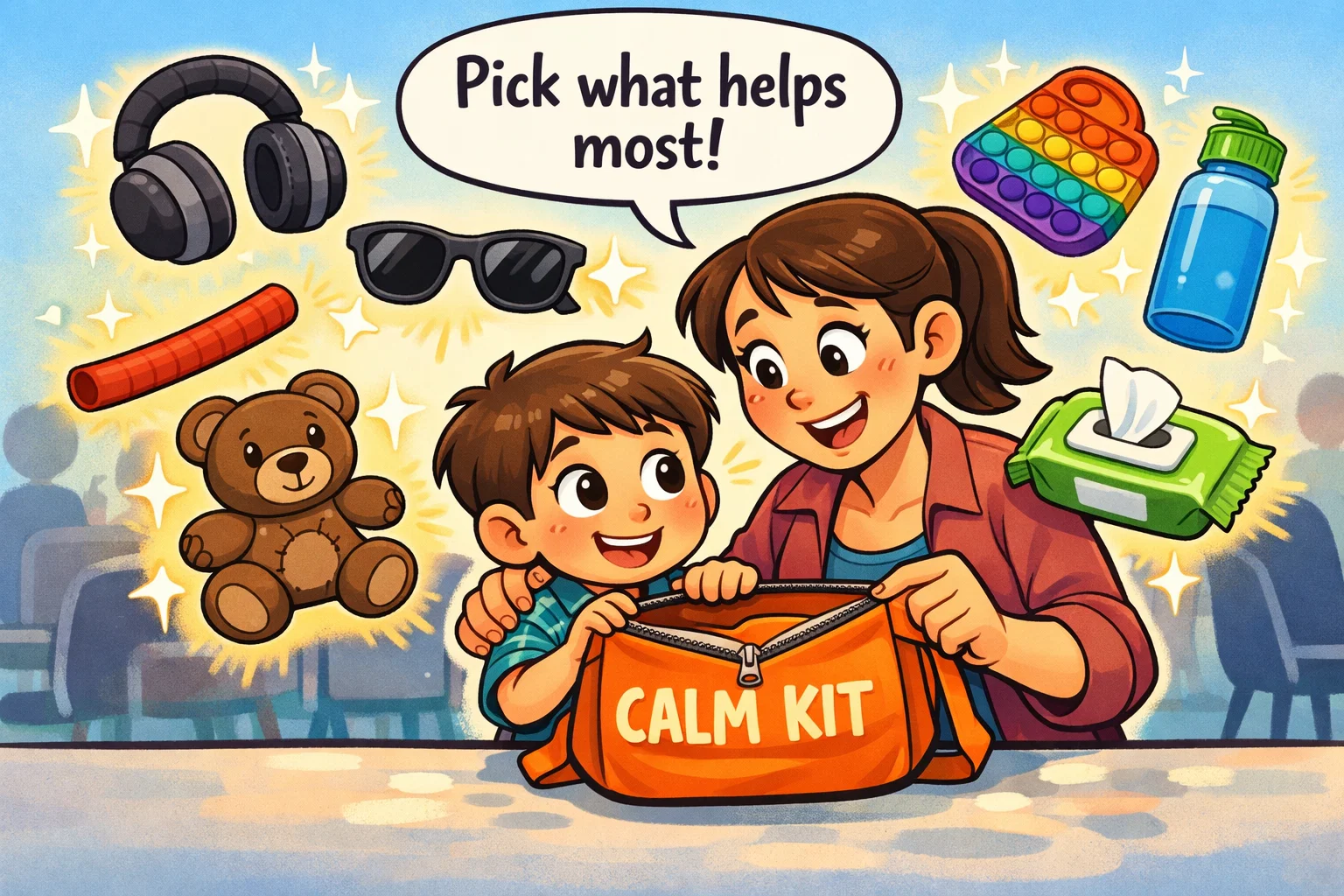
A well-prepared sensory toolkit acts as a portable ‘safety net’ for your child’s nervous system. This sensory tool collection should be easily accessible in a “Go-Bag.”
Go-Bag Essentials
- Noise-cancelling headphones or high-quality earplugs.
- Sunglasses to dampen bright lights.
- Two types of fidget toys (one for tactile input, one for visual focus).
- A weighted lap pad or a heavy scarf for deep pressure.
- A familiar, high-protein snack and water.
Tools for Different Senses
| Sense | Sensory Tool | Purpose |
| Sound | Noise-cancelling headphones | Blocks sudden triggers like hand dryers or alarms. |
| Sight | Sunglasses or a wide-brimmed hat | Reduces glare from fluorescent lighting. |
| Touch | Fidget spinners or “chewy” jewelry | Provides oral or tactile grounding. |
| Smell | Scented lip balm or a familiar cloth | Masks strong smells in public places. |
Choices by Age Group
- Toddlers: “Chewy” toys, a comfort blanket, and a stroller with a canopy.
- School-Age: Handheld fidgets, headphones, and visual “choice cards.”
- Teens: Discreet earplugs (like Loop), a smartphone with calming music, and a hoodie.
Calm Strategies During Outing
Once you are in the public environment, your goal shifts to maintaining a low-arousal state. Use these practical strategies to help regulate the child’s input.
Human Shield and Smart Positioning
Position yourself between the child and the main “flow” of people. If you are in a restaurant, request a corner table or a booth with high backs. In a shop, stay near the ends of aisles rather than the middle, where busy crowds are most dense.
Quiet Zones and Mini Breaks
Do not wait for a meltdown to take a break. A proactive 5-minute “reset” in a quieter area every 20 minutes can prevent cumulative overwhelm. Use the “Safe Zone” you identified during your plan ahead phase.
Breathing and Grounding Techniques
If you notice early signs, try simple grounding games:
- 5-4-3-2-1: Name 5 things you see, 4 things you can touch, etc.
- Color Spotting: “Can you find three blue things in this aisle?”
- Deep Breathing: Use “Balloon Breathing” (inhale to fill the balloon, exhale to let it go).
Meltdown Plan in Public
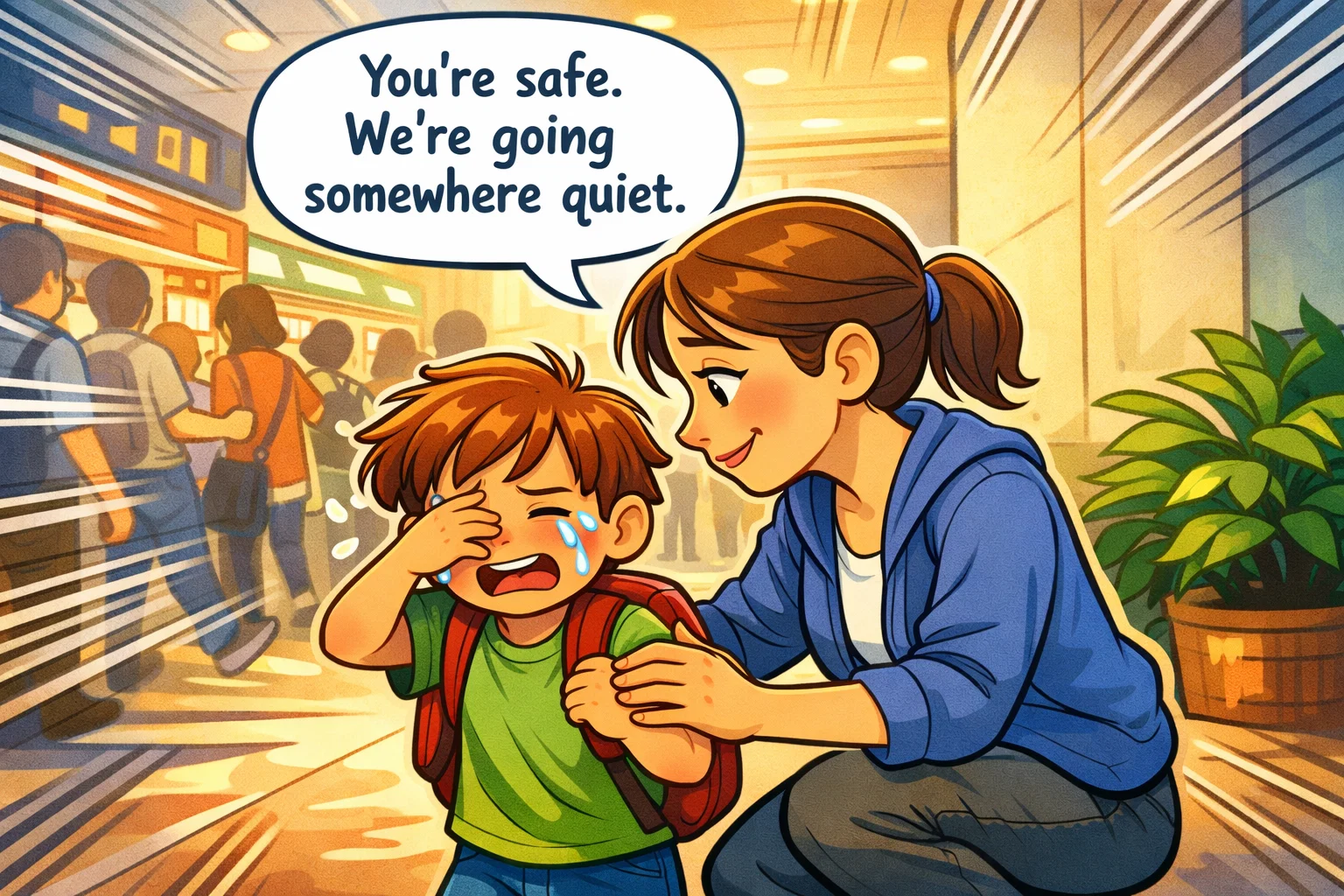
A meltdown is an involuntary physical response, not a “tantrum” or a choice. Your priority is safety and co-regulation, not discipline.
First 10 Seconds
When the child feels the peak of overwhelm, your own state of calm is your most powerful tool.
- Lower your voice: Speak in short, quiet sentences.
- Stop the demands: Don’t ask them to “calm down” or “explain why.”
- Scan for safety: Ensure they are not near traffic or sharp objects.
Words That Help
Use ‘low-demand’ language. The script should be predictable:
- “You are safe.”
- “We are going to the car now.”
- “I am right here.”
- “No need to talk.”
What to Do When Leaving Is Impossible
If you are on a bus or in a long queue and cannot exit immediately:
- Create a Physical Barrier: Use your body or a shopping cart to block the child from the view of others.
- Max Out the Tools: Put on the headphones and sunglasses immediately.
- Visual Anchor: Give them a phone or a book to focus on exclusively.
- Body Pressure: If they find it calming, provide a firm, “bear hug” style hold.
Strategies by Place Type
Shops and Supermarkets
Use a one-task mission. Give the child a specific job, like “finding the red apples,” to provide a sense of purpose and focus. Use the “Fast Lane” for checkout whenever possible to minimize waiting time.
Cafés and Restaurants
Order as soon as you sit down. Bring a “restaurant-only” fidget or activity that they find highly engaging. If the food takes a long time, take the child for a short walk outside rather than forcing them to sit at the table.
Public Transport
Choose the end of the carriage or a seat near the exit. If the vibration or noise of the engine is a trigger, ensure noise-cancelling headphones are worn before boarding.
Self-Regulation Skills Kids Can Practice
Long-term success depends on helping the child better understand their own body.
Naming Feelings
Help your child develop a “Sensory Vocabulary.”
- “My ears feel buzzy.”
- “This place feels squeezed.”
- “I need a quieter space.”
Asking for a Break
Teach the child that asking for a break is a “superpower.” Use a “Break Card” that they can hand to you if they are too overwhelmed to speak.
Celebrate Small Wins
Progress is rarely linear. If your child successfully used their headphones for the first time or told you they felt anxious before a meltdown started, celebrate that achievement. Positive reinforcement builds the confidence needed for the next outing.
Advocacy and Extra Support
You do not have to navigate this alone. Many public venues are becoming more aware of sensory processing differences.
Scripts for Staff and Strangers
If someone stares or offers unwanted advice during a meltdown, keep your response short:
- “My child is having a sensory overload; we are handling it, thank you.”
- “He has autism and needs a moment to feel safe.”
When Extra Help Makes Sense
Consider consulting an Occupational Therapist (OT) or a child psychologist if:
- The overwhelm leads to dangerous behaviors (bolting into traffic).
- The family has stopped going to all public spaces out of fear.
- The child’s recovery time after an outing is getting longer.
FAQ
What are early signs of sensory overload in kids?
Look for covering ears, squinting, increased “clumsiness,” sudden irritability, or repetitive questioning. Acting during these signs is the best way to manage sensory overload.
How can I prepare my child for a trip to the shops?
Use a visual schedule, go during quieter hours, and ensure your sensory toolkit is packed with headphones and sunglasses.
What should I do if my child has a meltdown in public?
Prioritize safety, reduce all sensory input, move to a quieter spot, and use minimal language. Leave the venue if the child cannot regulate.
How do I handle judgment from strangers?
Focus entirely on your child. You are their human shield. You owe no one an explanation during a crisis.
Is sensory overload linked to autism?
Yes, it is a core feature of the autism spectrum, but it is also common in children with ADHD, SPD, and anxiety disorders.

Take a short quiz to find out what your everyday choices say about your parenting style
When your child is curious about something new, what’s your instinct?
Take a short quiz to find out what your everyday choices say about your parenting style
“Can I download this app?” What happens next?
Take a short quiz to find out what your everyday choices say about your parenting style
When it comes to rules at home, which sounds most like you?
Take a short quiz to find out what your everyday choices say about your parenting style
If you could give your child one life skill today, what would you pick?
Take a short quiz to find out what your everyday choices say about your parenting style
Your child gets to choose what to watch. What would your ideal setup look like?
Take a short quiz to find out what your everyday choices say about your parenting style
Pick your parenting superpower ✨