Fun Campfire Games for Kids, Adults, and Families

 Discover a Free Education Video App for Kids
Pastory uses AI to personalize educational video content based on your child’s interests and personality. Safe, engaging, and built for curious young minds. Sign up now to stay updated and enjoy early access with a free trial
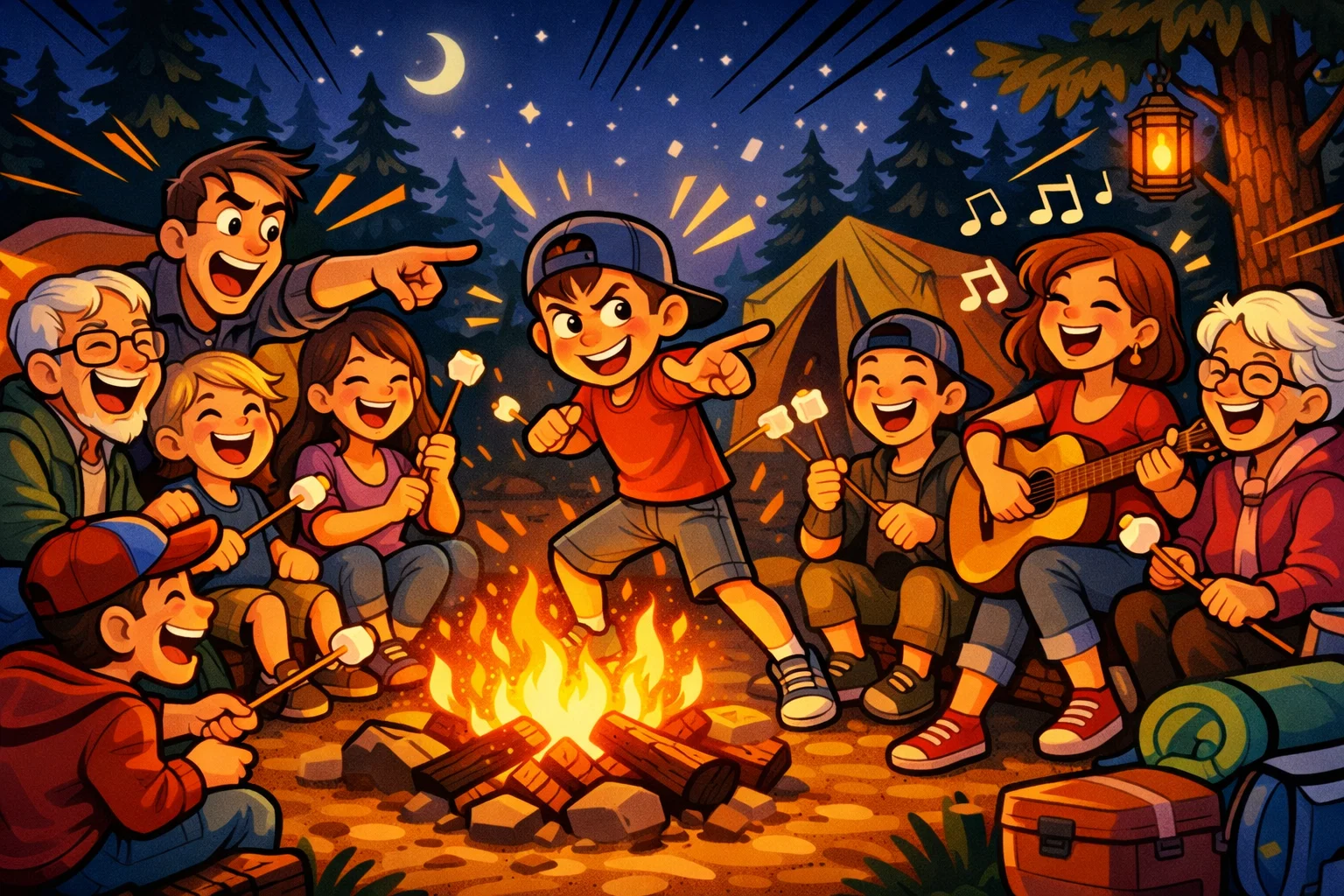
Gathering around a campfire is a timeless tradition that can strengthen social bonds and create shared memories. Whether you are planning a camping trip for a small group or a large family reunion, having a repertoire of the best campfire games ensures the evening remains fun and engaging. This guide offers activities for kids, campfire games for adults, and inclusive options for the whole family.
This list focuses on options that do not require expensive supplies, including word games, classic campfire games, and newer ideas that encourage laughter and conversation. From high-energy outdoor games to quiet stargazing prompts, these fun ideas will help you keep the fun going long after the sun sets. Explore our categorized lists to find the perfect campfire game for your next family adventure.
Fun Campfire Games for Kids and Families
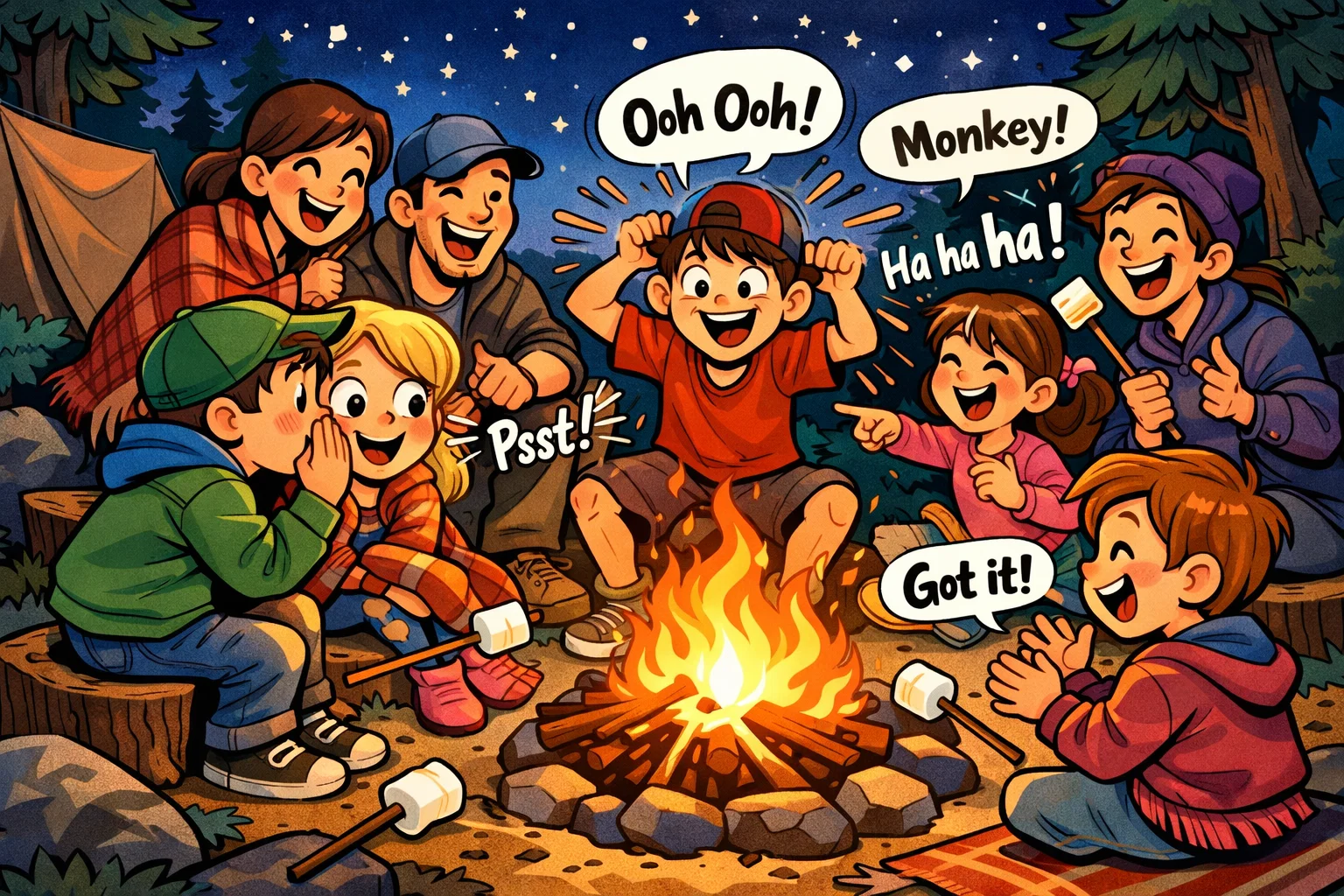
When selecting campfire games for kids, the focus should be on simplicity, safety, and inclusion. AAP guidance broadly supports play, turn-taking, and shared social activity as important for children’s development, but this sentence should avoid sounding more specific than the evidence provided. These family campfire games require minimal setup, allowing everyone to sit in a circle and enjoy the atmosphere without much distraction.
Heads Up, Seven Up
Heads Up, Seven Up is a classic game to play that transitions perfectly to a camp setting. If you keep the name Heads Up, Seven Up, note that this campfire version is a simplified variation; the traditional game usually uses several choosers, not just one. The chooser gently taps a thumb, and the seated player must guess who tapped them.
- Age Range: 5–12 years.
- Group Size: 6–15 players.
- Safety Tip: Ensure the “chooser” walks carefully on the outside of the seating area to avoid tripping near the flames.
In Pond, Out of Pond, On Bank
In Pond, Out of Pond, On Bank is a high-energy call-and-response activity. The leader calls out one of the three locations; “In Pond” means hands forward, “Out of Pond” means hands back, and “On Bank” means hands on hips. It is a fun game that tests reflexes and listening skills.
- Simplification: For younger children, use only two positions (“In” and “Out”) to reduce cognitive load.
- Benefit: This exercise can help children practice listening, attention, and self-control.
Telephone / Whisper Chain / Crazy Telephone
Telephone is a favorite campfire staple because it thrives in the quiet of the woods. The first player whispers a complex phrase to the person next to them, and the game continues around the circle until the last person says it aloud.
- Strategy: Keep phrases short (5–7 words) to maintain a fast tempo.
- Outcome: Usually results in fun and silliness as the phrase morphs into something nonsensical.
Wink Murder / Winking Assassin
In Wink Murder, a “murderer” is secretly designated by a moderator. The murderer “kills” other players by winking at them. If you are winked at, you must wait five seconds and then dramatically “die.”
- Visibility: This is a unique game to play around a campfire because the flickering light makes it harder to spot the wink, increasing the suspense.
- Group Size: Best for larger groups (8+ people).
Charades / Puppet Master Charades
Charades is a fun group activity where players act out a word or phrase without speaking. In “Puppet Master” charades, a next player moves the arms and legs of a “puppet” (another player) to act out the clue.
- Themes: Use camping tips, animals, or favorite games.
- Value: Enhances non-verbal communication and creativity in children and adults.
Name That Song
Name That Song works especially well around a campfire, where everyone is already gathered closely together. A player hums a tune or recites a single line of lyrics, and the group competes to guess the title.
- Formats: Try “Theme Rounds” like Disney movies, 80s hits, or classic campfire songs.
- Supplies: None required, making it a fave campfire choice for minimalist campers.
Numbers Challenge
The Numbers Challenge is a cooperative task that doesn’t require props. The group must count to 20 (or 50) one by one. However, if two people speak at the same time, the round continues only after restarting from one.
- Why it works: This challenge encourages listening, patience, and coordination as a group.
- Difficulty: Increase the challenge by having players sit with their backs to the campfire.
I Went to Market
This is a memory circle exercise where the first player says, “I went to market and bought [item].” Each next player repeats the list and adds a new item.
- Camp Twist: Change it to “I went camping and brought…” to include items like a sleeping bag or marshmallows.
- Age Range: Great for ages 6+ to help develop sequential memory.
Memory Circle
Similar to the market format, the Memory Circle involves sharing a fact about oneself that the next person must repeat. This is a fun and engaging way for adults and families to learn more about each other during the next round.
- Tone: Keep it lighthearted to act as an icebreaker.
- Benefit: Promotes active listening and empathy.
Animal Guessing Game
The Animal Guessing Game is a simplified version of 20 Questions. One player thinks of an animal, and the group asks yes/no questions to narrow it down.
- Example: “Does it have fur?” or “Can it fly?”
- Preschool Adaptation: Allow the child to act like the animal if the group gets stuck.
Chubby Bunny
Chubby Bunny involves placing marshmallows in the mouth and saying the phrase clearly.
- Safety Warning: This activity presents a significant choking hazard. Child development sources recommend replacing food with a “timed speech” challenge or using very small pieces of soft bread. Because marshmallows are a known choking hazard for children, this game is better removed from a kids-and-families list rather than softened with an age cutoff.
Make Me Laugh
In “Make Me Laugh”, one person is the “contestant” who must remain stone-faced while the rest of the group tries to make them giggle using only jokes or funny faces.
- Duration: Set a timer for 60 seconds per contestant.
- Engagement: It is a fun way to release energy before the group settles down for quieter activities.
Best Campfire Games for Teens and Adults
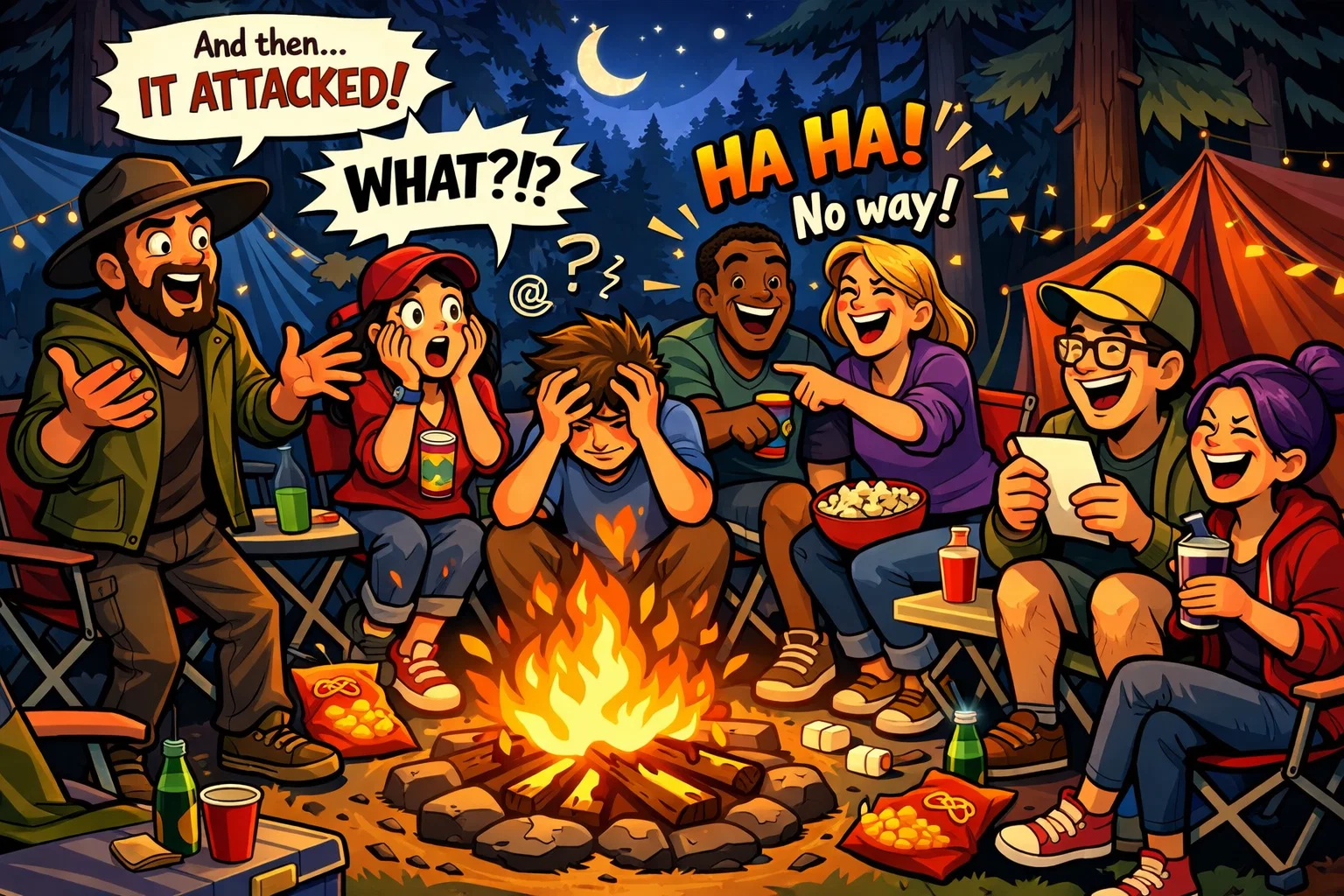
Adult-focused camping games often lean into social deduction, “getting to know you” prompts, and improvisation. These hilarious campfire games for adults prioritize conversation over physical movement, making them perfect campfire choices for late-night sessions.
Mafia / Werewolf
Mafia (or Werewolf) is a contest of social deduction where a small “informed” group must hide their identity from the “uninformed” majority.
- Atmosphere: The shadows cast by the campfire add a layer of psychological tension that is hard to replicate indoors.
- Why it works: Social-deduction games encourage players to pay attention to other people’s behavior, guesses, and reactions.
Hot Seat
In Hot Seat, one person is chosen to answer a series of rapid-fire questions from the group.
- Example Prompts: “What is your biggest irrational fear?” or “What is the best camping trip you’ve ever had?”
- Boundary Setting: Always allow a “pass” option to keep the environment safe and respectful.
Two Truths and a Lie
Two Truths and a Lie is a quintessential fun and engaging icebreaker. Each player shares three statements about themselves, and the group must guess which one is the lie.
- Pro Tip: For long-time friends, try to use “Micro-Truths”—obscure facts that even close friends might not know.
20 Questions
This is the best campfire game for those who want zero prep. One person thinks of an object, and the group has 20 questions to identify it.
- Categories: Usually limited to Animal, Vegetable, or Mineral.
- Efficiency: It is an ideal game to play while campfire cooking or waiting for the coals to get hot.
Would You Rather
Would You Rather sparks debate and laughter by presenting two difficult (or silly) choices.
- Categories: Travel, Spooky, Food, or Survival.
- Example: “Would you rather sleep in a tent with a bear or a swarm of mosquitoes?”
Where in the World Are We?
A travel-themed guess round where a player describes a famous landmark or city through subtle clues until someone identifies the location.
- Dynamic: Start with broad clues and move to specific details.
- Audience: Highly recommended for adults and families who enjoy geography.
What’s Yours Like?
One person is “it” and leaves the circle (or covers their ears). The group chooses a common object (e.g., a car, a toothbrush). The person returns and asks players, “What’s yours like?”
- Example: If the object is a “bed,” a player might say, “Mine is bouncy.”
- Goal: The “it” player must figure out the object based on the adjectives.
Five in Ten
Five in Ten is a fast-paced fun group activity. A player is given a category (e.g., “Types of trees”) and has 10 seconds to name five items.
- Pressure Point: The short time limit causes “cognitive blocking,” leading to hilarious answers.
- Format: Use a smartphone timer for precision.
Word Games, Puzzle Games, Guessing Games
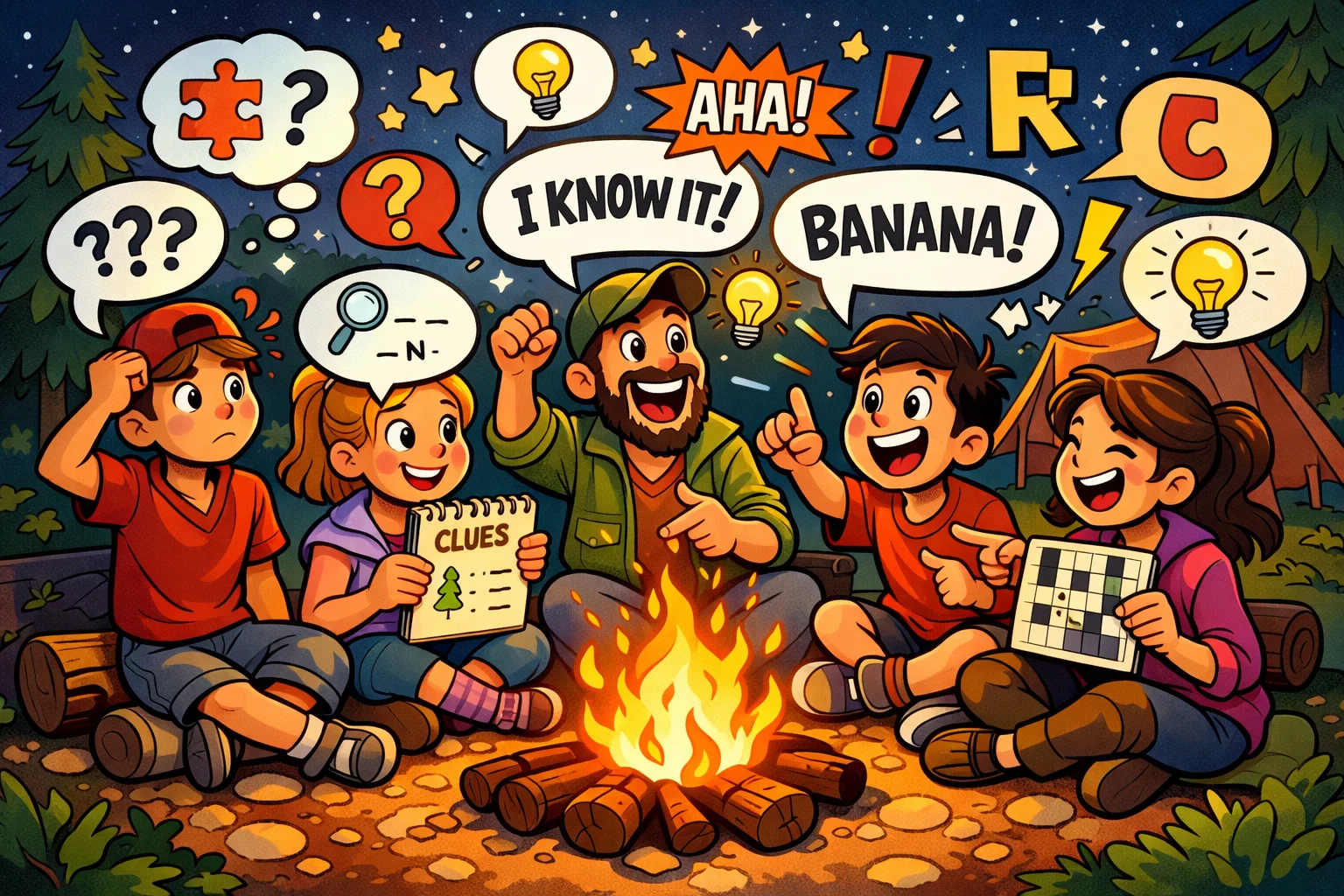
Quiet word games are often the favorite campfire choice for groups who want to relax without high-energy antics. These focus on lateral thinking and vocabulary.
Trifecta / Fish Bowl / Celebrities Hat Game
This is a favorite for large groups. Players write names or objects on scraps of paper and put them in a hat.
- Round 1: Describe the word using any words (except the word itself).
- Round 2: Use only one word as a clue.
- Round 3: Act it out (Charades).
- Why it works: The same set of words is used in each round, creating “inside jokes” within the group.
Word Association
The first player says a word, and the next player immediately says the first word that comes to mind. The game continues until someone hesitates or repeats a word.
Six Degrees of Kevin Bacon
A pop-culture game to play where you try to link any actor to Kevin Bacon in six steps or fewer through movie appearances.
- Variation: Use a different “hub” celebrity if the group isn’t familiar with 90s cinema.
Alphabet Game
Choose a category (e.g., “Camping Gear”). The first person says an item starting with A, the next with B, and so on. This is a great campfire game for kids because it reinforces vocabulary and letter recognition in a playful way.
Contact
A word-guessing format where one player (the Defender) thinks of a word and gives the first letter. Other players (Attackers) give clues for other words starting with that letter. If two Attackers realize they are thinking of the same word, they shout “Contact!” and count down.
Black Magic
A “hidden pattern” puzzle. A leader and a “psychic” partner demonstrate that the psychic can guess which object the leader is pointing to. The “secret” is that the object the psychic picks is always the one immediately following a black object.
Green Glass Door
“I can bring a book, but I can’t bring a pencil.” The secret to the Green Glass Door is that you can only bring things spelled with double letters. It’s a super fun puzzle that keeps the group engaged as they try to “crack the code.”
Geography Last-Letter Game
This is a place-name chain often recommended in travel forums. If the first player says “London,” the next player must say a city or country starting with “N,” like “Norway.”
- Adaptability: For younger children, broaden the category to “Any Object You See.”
- Competitive Edge: Eliminate players who cannot provide a location within 10 seconds.
Who Am I?
In this guessing task, a player has a name written on a sticky note placed on their forehead. They must ask yes/no questions to determine their identity.
- Visual Tip: Use neon sticky notes; they are easier to see in the dim light of a fun campfire.
- Educational Value: Helps children practice deductive reasoning and categorical thinking.
Sound Train
The Sound Train is a memory and rhythm exercise. The first player makes a noise (like a bird chirp). The next repeats it and adds a new sound (a clap). The chain grows longer with each round.
- Utility: This is an excellent “wind-down” activity for family camping before bed.
Storytelling, Music, Campfire Activities
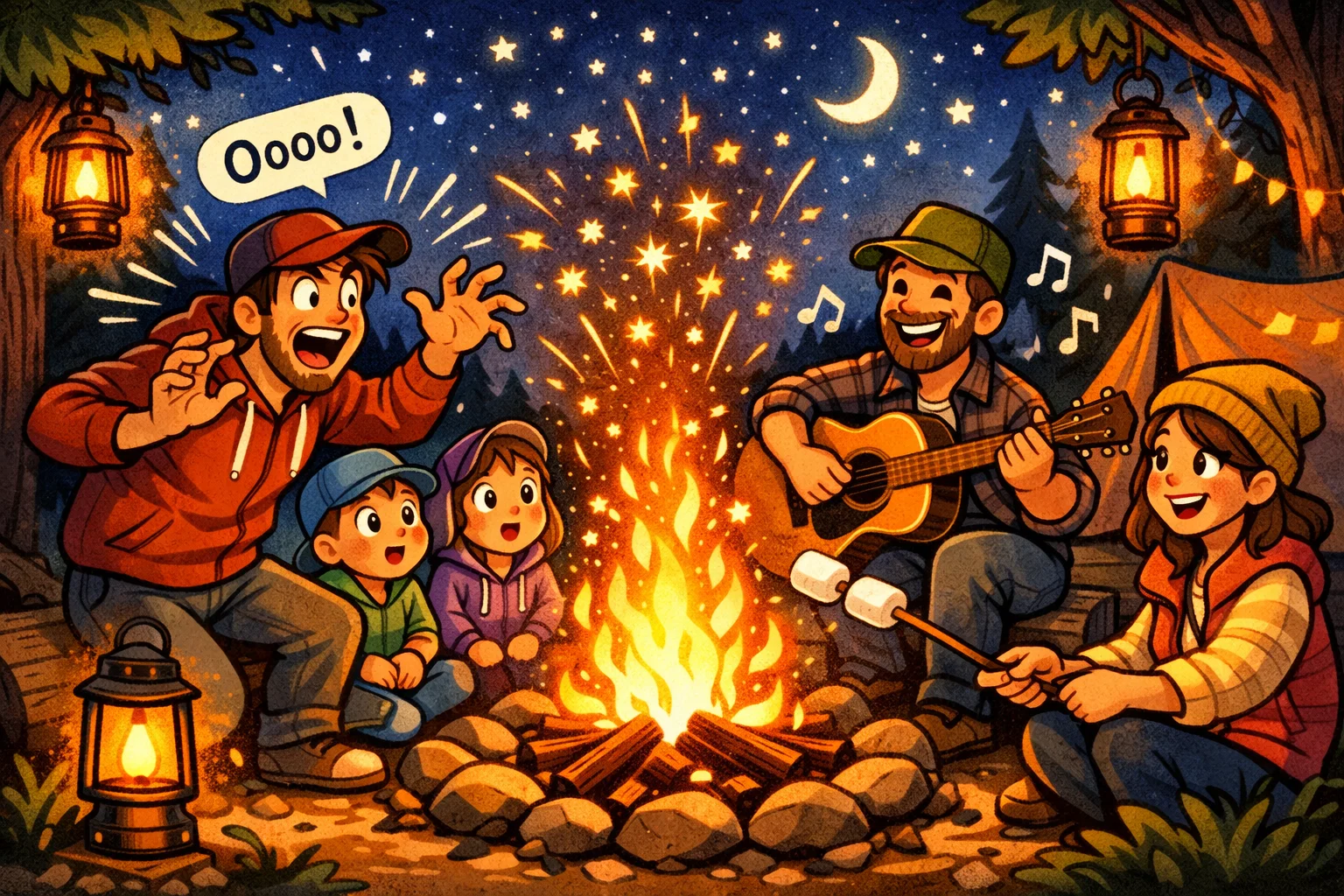
Beyond competitive formats, campfire activities like music and storytelling are essential for a well-rounded camping trip.
Campfire Story Chain / Once Upon a Time
The first player starts with “Once upon a time…” and provides one sentence. Each following player adds a sentence, building a collaborative, often hilarious narrative.
- Theme Control: Decide early if the story will be adventurous, spooky, or purely silly to keep everyone on the same page.
Ghost Stories with a Twist
To keep it family campfire friendly, tell “spooky” stories that end in a silly pun or a jump-scare that turns out to be a squirrel or a marshmallow man. This keeps the atmosphere light for kids of all ages.
Campfire Sing-Along
Music is a classic campfire activity. Group singing is a simple way to lower the energy of the moment and bring people together. Focus on easy-to-sing choruses from artists like The Beatles or John Denver. This is a great way to engage adults and families alike.
Campfire Cooking
Involve everyone in the process. Use foil packets or roasting sticks for hot dogs and corn. Making campfire cooking interactive turns a chore into a fun group experience.
- Creativity: Host a “best foil packet” contest to see who can create the most delicious dinner combination.
Make S’mores
No fun campfire is complete without s’mores. Try variations like using peanut butter cups instead of plain chocolate or adding a slice of strawberry.
- History: Did you know the first recorded recipe for s’mores appeared in a 1927 Girl Scout handbook? It is a tradition that has spanned nearly a century.
Whittling
Whittling is a calming, skill-based pursuit for older children and adults. Under strict adult supervision, players can carve simple shapes into fallen branches.
- Safety First: Always use a sharp, dedicated whittling knife and cut away from the body. This is a quiet camp activity for older kids and adults, but it should be done away from the fire area.
Glow Stick Ring Toss
As the fire dies down, set up a ring toss using activated glow stick necklaces. This adds a visual “wow factor” and provides a safe outdoor game away from the heat of the pit.
I Spy
I Spy is a classic that works during daylight and dusk. Around the campsite, focus on natural elements like “something green” or “something that sparkles in the firelight.”
Rock, Paper, Scissors
Go beyond the basics by organizing a tournament bracket for the whole family. The winner of the “Camp Championship” gets to pick the first marshmallows from the bag.
Find Planet / Stargazing Prompts
Transition from high-energy rounds to quieter nighttime activities. Use a stargazing app to find bright objects such as Jupiter or Mars, then ask questions like, ‘Which object in the sky looks brightest tonight?’.
Eco-Smart Campfire Setup
A safe environment is the foundation for any successful gathering. Leave No Trace principles emphasize minimizing environmental impact and handling campfires responsibly.
Safe Circle, Seating, Sightlines
Ensure all chairs are at least 3 feet from the fire pit. Arrange seating at a safe distance from the fire and leave a clear access gap so people can move safely if needed. This structure makes games around the fire much easier to manage.
Low-Risk Games Near Fire
Activities that require sitting—like 20 Questions, Telephone, or Word Association—are considered “low-risk.” Any game to play involving running or blindfolds should be moved to a clearing away from the flames to prevent accidents.
Supplies, Lighting, Backup Props
While many games like those listed need nothing, having a small kit can keep the fun going.
- The Essentials: A deck of cards, a notepad, a pen, and a flashlight if extra light is needed.
- Lighting: Use lanterns to illuminate the “stage” area without overpowering the natural glow of the fire.
Fire Ban Alternatives
If your camp has a fire ban, use a high-lumen LED lantern or a battery-powered “fire” in the center of your circle. You can still enjoy campfire stories and word games without a live flame. This is a responsible way to handle family camping during dry seasons.
Leave No Trace, Quiet Hours, Cleanup
Link your fun to respecting campsite rules. Ensure that loud hilarious campfire games for adults conclude before local “quiet hours” (usually 10 PM). Always clean up any trash or fallen marshmallows to avoid attracting wildlife.
How to Make Campfire Evening Unforgettable
To make the evening run smoothly, it helps to think about the order of activities. Using a “bell curve” of energy will ensure that everyone stays engaged from start to finish.
Best Opening Games
Start with 3–5 quick warm-up rounds that get people talking. Would You Rather, Two Truths and a Lie, and Name That Song are excellent choices to break the ice and build initial energy.
Best Middle-Session Games
Highlight options that work well once the group is warmed up and comfortable. Mafia, Fish Bowl, Charades, and Wink Murder are the best campfire games for this peak period of the night.
Best Wind-Down Games
As the fire burns down, move to calmer choices. Collaborative storytelling, I Went to Market, and stargazing prompts help transition the group toward sleep.
Best Picks for Small Groups and 2 Players
If you are looking for campfire fun for just two people, focus on 20 Questions, Word Association, or a story chain. These require high interaction but low participant count, making them perfect campfire options for couples.
Best Picks for Mixed Ages 5–17
Telephone and Charades are the gold standard for mixed ages. They allow younger children to be silly while older teens can use more sophisticated clues without feeling like the activity is “childish.”
FAQ
How do you keep kids safe around a campfire?
Maintain a “kid-free zone” (usually 3 feet) around the fire. Prioritize seated games and ensure an adult is always monitoring the fire. Use glow sticks to increase visibility of children after dark.
Can you play the same games in a small group?
Most classic campfire games scale well for small groups, though social deduction rounds like Mafia lose energy with fewer than six players. For small groups, stick to word-based puzzles.
Can you play these games outside a campfire setting?
Absolutely. Many of these work without a fire—on a picnic blanket, in a tent vestibule, on the beach, or during a backyard fire pit gathering.
Which campfire games need no supplies?
The most popular no-prop favorites include 20 Questions, Word Association, Telephone, Numbers Challenge, and I Went to Market.
Which campfire games work for large groups?
Mafia, Wink Murder, and Fish Bowl are the best campfire games for 10 or more people, as they utilize the energy and complexity of a crowd.
Which campfire games fit ages 5–17?
Telephone, Charades, and Name That Song truly fit a broad age range because they are based on creativity rather than specific knowledge or physical strength.
Which campfire games work as icebreakers?
Two Truths and a Lie, Hot Seat, and Would You Rather are the best options for groups who are meeting for the first time.
Which campfire games work for two players?
20 Questions, Black Magic, and storytelling chains are perfect for pairs who want to stay engaged without a large crowd.
20 Questions, Black Magic, and storytelling chains are perfect for pairs who want to stay engaged without a large crowd.
Most successful rounds—based on guessing, music, and group challenges—do not require alcohol to be enjoyable. The focus should be on social connection and the unique atmosphere of being around the campfire.
Take a short quiz to find out what your everyday choices say about your parenting style
When your child is curious about something new, what’s your instinct?
Take a short quiz to find out what your everyday choices say about your parenting style
“Can I download this app?” What happens next?
Take a short quiz to find out what your everyday choices say about your parenting style
When it comes to rules at home, which sounds most like you?
Take a short quiz to find out what your everyday choices say about your parenting style
If you could give your child one life skill today, what would you pick?
Take a short quiz to find out what your everyday choices say about your parenting style
Your child gets to choose what to watch. What would your ideal setup look like?
Take a short quiz to find out what your everyday choices say about your parenting style
Pick your parenting superpower ✨