Why Financial Literacy Is Important for Kids

 Discover a Free Education Video App for Kids
Pastory uses AI to personalize educational video content based on your child’s interests and personality. Safe, engaging, and built for curious young minds. Sign up now to stay updated and enjoy early access with a free trial

Financial literacy helps kids build smart money habits early, avoid debt later in life, and make confident decisions as adults. When parents and educators introduce basic concepts during childhood, young people learn how to handle everyday money decisions, such as saving an allowance or budgeting for a toy. Teaching children about money early can help them develop the critical thinking skills needed to set long-term goals, navigate complex money choices, and build lasting stability.
According to the Consumer Financial Protection Bureau, childhood money experiences help lay the foundation for adult financial capability. Children who participate in structured, age-appropriate financial education can develop stronger financial knowledge and may be better prepared to avoid serious financial challenges in adulthood. By equipping children with financial literacy skills, caregivers and schools help children build an important life skill that can protect them from common financial pitfalls and support a clearer path toward financial independence and long-term well-being.
Key Takeaways
- Core Skill Development: Financial literacy can help kids make better choices about spending, saving, borrowing, and financial planning throughout their lives.
- Practical Integration: Parents can teach money skills through daily family routines, shared financial goals, household chores, grocery shopping, and structured allowances.
- Age-Appropriate Pacing: Kids benefit most when financial education activities are hands-on, matched to their stage of cognitive development, and repeated consistently over time.
- Essential Curriculum Pillars: Comprehensive financial education covers key concepts, including budgeting, saving, credit management, debt prevention, investing, insurance, and emergency funds.
- Generational Impact: Early financial education can help establish strong financial habits that support future economic independence, personal confidence, and family wealth building.
Early Money Habits Shape Future Choices
A Money Advice Service report by University of Cambridge researchers suggests that many money-related habits and attitudes begin forming by around age seven. Young children observe adult behavior and absorb subconscious attitudes toward spending, saving, and decision-making. Introducing positive money lessons during these formative years can support healthier money habits later in life and help children build a more secure future.
When children practice delayed gratification through saving, they develop stronger self-regulation skills. This emotional and cognitive development helps them resist impulse spending when they encounter commercial advertising or peer pressure. Developing financial capability early gives children behavioral tools that can help them build financial resilience before they face high-stakes adult financial decisions.
Parents and Educators Both Matter
Collaboration between families and schools is central to comprehensive financial education. Schools can provide structured, objective instruction based on recognized financial capability frameworks, while the home environment offers practical opportunities for real-world money experiences. Together, these two influences can help close the financial literacy gap that leaves many young adults unprepared for the money decisions of adult life.
| Educational Setting | Primary Delivery Method | Core Measurement of Success |
| Home Environment | Daily routines, allowances, modeling, and real-world shopping choices | Children adopt healthy money habits and consistent saving patterns |
| School Classroom | Structured curricula, math integration, and simulated planning | Students demonstrate their understanding of core concepts and principles through assessments |
Simple Lessons Can Start at Home
Teaching kids about money does not require complex lectures or an advanced economics degree. Caregivers can integrate simple lessons into everyday activities, such as using clear physical saving jars to make the concept of accumulation visible to young minds. These practical interactions turn abstract numbers into concrete concepts that children can easily understand.
Family budgeting sessions and routine grocery shopping trips can serve as interactive learning opportunities. When children help choose items by comparing prices, they learn how to make smart money decisions within real-world limits. These micro-lessons build a solid foundation, helping kids understand how to manage limited resources effectively.
Financial Literacy Meaning for Kids
Financial literacy is the ability to understand how money works, including how people earn, save, spend, share, borrow, and invest it. For a child, this literacy means developing the cognitive framework required to manage personal resources responsibly. It turns abstract economic ideas into practical daily choices that support personal stability.
Financial Literacy Definition
The formal definition of financial literacy encompasses the knowledge and understanding of various money components, including budgeting, saving, spending, debt, credit, investing, and long-term financial planning. Financial literacy equips individuals with the decision-making skills needed to manage their money effectively and avoid costly money mistakes. Ultimately, it can help people work toward security and maintain long-term financial health.
Financial Literacy Explained to Kids
When explaining money to young children, complex economic terms can be simplified into four core choices: money can be spent now, saved for later, shared with others, or invested for future growth. Children can understand that a fixed amount of money gives them limited purchasing power, meaning that choosing one option often requires giving up another. This foundational lesson introduces the reality of opportunity cost without using overwhelming technical jargon.
Main Types of Financial Literacy
- Budgeting and Cash Flow: Tracking income against regular expenses to ensure that spending does not exceed total available funds.
- Savings and Goal Setting: Setting aside portions of income to fund specific short-term desires or long-term financial needs.
- Credit and Debt Management: Understanding the costs associated with borrowing money, including interest rates, repayment timelines, and credit scores.
- Investing and Wealth Building: Putting money into assets that may grow in value over time.
- Risk Management and Insurance: Using protective financial tools to reduce the impact of unexpected expenses or losses.
Why Financial Literacy Matters for Children

Financial literacy helps kids distinguish between immediate impulses and genuine needs, which can protect them from costly money mistakes. Children who do not receive basic financial education may be more likely to struggle with consumer debt and poor credit management when they enter adulthood. Teaching kids financial literacy can give them a buffer against aggressive marketing and modern commercial pressures.
Research supported by the National Endowment for Financial Education emphasizes the importance of evidence-based financial education and long-term well-being. Without these skills, young people may be more likely to rely on reactive decision-making, which can increase their vulnerability to predatory lending and persistent debt. Early instruction builds consumer resilience, preparing youth to navigate the modern economy safely.
Benefits of Financial Literacy
- Enhanced Consumer Savviness: Young consumers learn to analyze advertisements critically and evaluate a product’s true value before making a purchase.
- Reduced Money Anxiety: Early familiarity with banking systems and financial planning can reduce the fear and stress associated with adult money management.
- Proactive Debt Avoidance: Understanding how interest compounds helps protect young adults from accumulating high-interest credit card debt.
- Strategic Career Alignment: Financially literate young people can evaluate career options alongside realistic assessments of income potential, taxes, and education costs.
Confidence with Money Starts Early
When children learn why financial literacy matters, they can develop a sense of personal agency over their money lives. This early confidence can reduce the avoidance behaviors that often lead adults to ignore bank statements or delay essential retirement planning. Mastery of basic concepts fosters an optimistic, proactive attitude toward long-term milestones.
Best Age to Start Financial Literacy for Kids
Money education should align directly with a child’s developmental milestones, starting with sensory experiences in early childhood and progressing to abstract planning in adolescence. The shift from physical cash to digital payments requires a gradual teaching approach to support real understanding.
| Age Group | Core Money Lessons | Practical Activities |
| Preschool: Ages 3–5 | Coin identification, needs vs. wants, delayed gratification | Sorting coins, pretend stores, choosing between simple options |
| Elementary: Ages 6–11 | Allowance management, short-term savings goals, basic price comparison | Saving charts, grocery price comparisons, simple budgets |
| Teen Years: Ages 12–18 | Checking and debit accounts, part-time job taxes, credit and investing basics | Monitored banking, paycheck reviews, credit score discussions |
Preschool Money Lessons
For children ages three to five, money lessons should focus on tangible objects and basic self-regulation. Developmental psychologists often emphasize that young children learn best through play and hands-on interactions. Caregivers can use coins, pretend store setups, and simple binary choices to introduce the concept of limited resources.
- Coin Recognition: Sorting physical pennies, nickels, dimes, and quarters to understand that different coins represent different monetary values.
- Needs versus Wants: Categorizing household items to distinguish between essential needs, such as food or shelter, and optional wants, such as toys or candy.
- The Concept of Exchange: Practicing transactions using play money to discover that items require a specific payment before they can be taken home.
Elementary School Money Lessons
Children ages six to eleven usually have the basic math skills needed to track numbers, manage small amounts of money, and plan goals over several weeks or months. During this developmental stage, kids can start handling real money and experiencing the direct consequences of their spending choices.
- Structured Allowances: Receiving a consistent amount of money to practice dividing it among spending, saving, and giving categories.
- Short-Term Savings Goals: Identifying a desired item, calculating how many weeks of saving are needed, and tracking progress on a visual chart.
- Comparative Shopping: Evaluating multiple brands at the retail store to find the lowest per-unit cost or highest quality for the price.
Teen Money Lessons
Adolescents benefit from exposure to real-world banking systems, digital payment tools, and long-term planning concepts. As teens begin earning income through part-time jobs, high school financial education should shift toward practical consumer protection and the basics of wealth building.
- Digital Banking Management: Using a monitored checking account linked to a debit card to understand account balances and electronic transactions.
- Tax and Paycheck Analysis: Reviewing gross versus net income on pay stubs to see how federal, state, and local taxes affect take-home pay.
- Credit and Investment Basics: Learning how credit scores can affect interest rates on future auto loans and how compound growth can shape investment returns over decades.
Parents’ Role in Financial Literacy for Kids
Parents are often children’s primary money role models, shaping their attitudes through everyday choices and household conversations. Children observe how adults react to money-related stress, how often they use credit cards, and whether they prioritize saving over impulsive spending.
Modeling Healthy Money Habits
Adults can openly demonstrate positive money habits by explaining their choices aloud during routine transactions. For example, when a parent explicitly decides against a purchase because it does not fit the monthly budget, they demonstrate practical impulse control. Showing children that adult money choices have limits helps demystify planning.
Avoiding impulse buys at the cash register teaches children that purchasing requires deliberation rather than emotional reactions. When parents research major purchases openly, compare warranty options, and calculate long-term maintenance costs, they model the analytical behavior required for sound decisions throughout life.
Talking About Money Without Stress
Many families treat money as a taboo subject, which can unintentionally cause children to associate money matters with anxiety or secrecy. Parents should strive to keep money conversations calm, objective, and matter-of-fact, focusing on solutions rather than scarcity. Discussing money choices openly removes the emotional charge and helps children approach these concepts logically.
Editor’s Note: Children can pick up on parental stress. When parents frame money limits as strategic choices rather than crises, they can help children build a calmer, more analytical mindset toward money management.
Setting Family Money Rules
- Clear Savings Rules: Establishing a household standard that directs a specific minimum percentage, such as 10% or 20%, of all incoming money into savings.
- Structured Authorization Limits: Requiring children to wait 24 to 48 hours before purchasing any non-essential item above a predetermined cost threshold to reduce impulse buying.
- Digital Purchase Accountability: Requiring children to use their own money, such as allowance funds, to pay for in-app mobile game upgrades or digital entertainment subscriptions.
Everyday Ways to Teach Money Basics
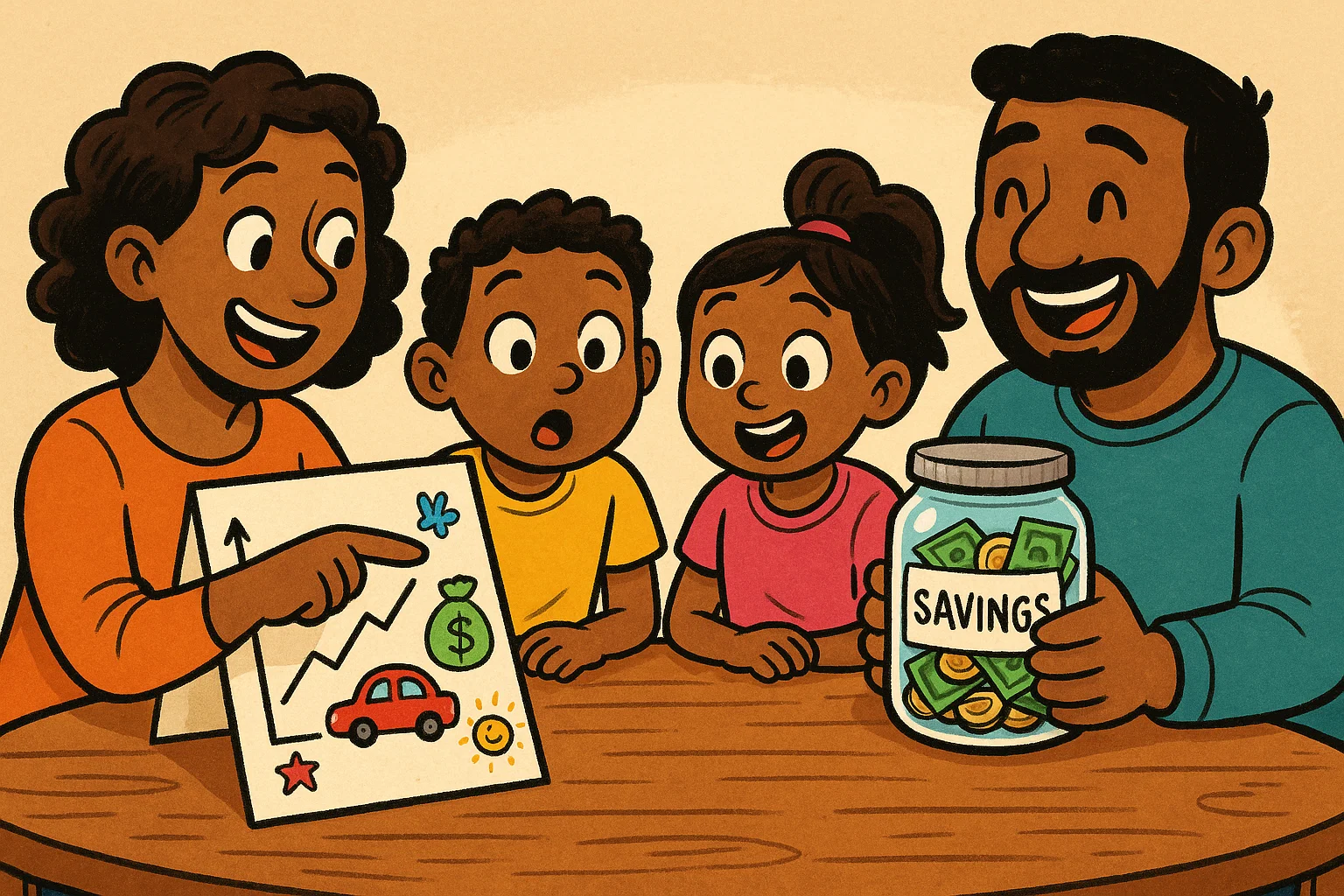
Transforming daily routines into interactive lessons ensures that financial education remains practical, engaging, and tied to real-world outcomes. These hands-on learning moments reinforce money lessons through immediate, tangible consequences.
Grocery Shopping Lessons
The supermarket can serve as an ideal place to practice math skills and consumer decision-making. Parents can give children a written list and a fixed cash budget, asking them to find the required ingredients without exceeding the spending limit. This exercise encourages children to evaluate brand trade-offs, identify discounts, and manage a limited budget in a real-world setting.
Children can also practice calculating unit prices, such as determining whether a bulk package offers genuine savings compared to smaller alternatives. This activity sharpens critical thinking skills and helps kids recognize how packaging and product placement can influence consumer choices.
Allowance and Chores
Giving children a regular allowance offers a practical tool for practicing money management, although families and educators differ on whether it should be tied to household chores. Many child development experts recommend separating basic household responsibilities from paid rewards, arguing that everyday chores are part of contributing to family life. Instead, parents can offer extra, specialized tasks for earning money to simulate real-world employment mechanics.
| Allowance Strategy | Behavioral Outcome | Financial Literacy Benefit |
| Separated from Chores | Fosters a predictable baseline for budgeting practice | Children can plan consistent, long-term saving and spending schedules |
| Tied to Extra Tasks | Reinforces the link between labor and money reward | Kids discover that taking on extra work can increase their earning potential |
Cash, Cards, and Digital Payments
The shift away from physical cash creates a modern teaching challenge, as cards and smartphone apps can make spending feel abstract and consequence-free. When money is invisible, children may struggle to understand that digital accounts can be depleted. Caregivers should make digital transactions visible so children can connect electronic payments with real money leaving an account.
Parents can use mobile banking apps to show children how an account balance decreases immediately after a purchase. Visualizing the real-time drop in digital funds helps kids connect digital cards with the depletion of limited household resources.
Games and Activities
- Monopoly and Other Financial Board Games: Playing classic games to explore asset ownership, cash flow, rent obligations, and the risk of bankruptcy.
- The Three-Jar System: Labeling three separate physical containers as “Spend,” “Save,” and “Give” to create a clear visual map of money allocation.
- Home-Based Mock Storefronts: Setting up an interactive toy store where children use play currency to purchase snacks, screen-time blocks, or special privileges.
- Kid-Friendly Small Business Projects: Launching simple projects, such as a summer lemonade stand or neighborhood dog walking, to learn about material costs, pricing, and net profit.
Budgeting, Saving, and Spending Basics

Basic financial competence starts with three actions: organizing incoming money, delaying gratification for future goals, and carefully evaluating spending choices.
| Money Category | Example Allocation | Purpose |
| Save | 40% | Long-term goals and future purchases |
| Spend | 50% | Immediate wants and planned purchases |
| Give | 10% | Charity, community support, or gifts |
How to Budget
A simple budget for children can use a basic formula: total incoming money minus planned savings equals available spending money. Children can maintain a simple paper ledger or use a spreadsheet to track every dollar they receive or spend. This continuous monitoring prevents the common habit of spending indiscriminately until an account hits zero.
By dividing money into clear categories before shopping, children learn to stay within self-set limits. Budgeting teaches kids that managing money requires active planning, not simply tracking expenses after the money is gone.
Saving for Goals
To keep children motivated, savings goals should be specific, attainable, and personally meaningful. When children identify a clear target, such as a specific bicycle or video game, the abstract concept of saving becomes an exciting personal milestone.
| Goal | Weekly Savings | Estimated Timeline | Current Progress |
| Bicycle | $10 | 12 weeks | $60 of $120 saved |
Visual tracking charts help sustain this motivation across longer horizons. Checking off squares on a chart provides an encouraging sense of momentum, helping children build the patience and discipline needed for complex adult financial planning.
Spending Choices
Every purchasing decision offers an opportunity to practice analyzing value, evaluating opportunity costs, and managing impulses. When a child expresses a desire for a trendy item, parents can prompt them to consider what other options they must give up to buy it. This kind of reflection shifts the mindset from emotional wanting to thoughtful evaluation.
- Analyzing Quality vs. Price: Reading online product reviews and warranty terms to determine whether a more expensive option will last longer than a cheaper alternative.
- Identifying Marketing Influences: Recognizing how store layouts, social media endorsements, and limited-time discounts try to pressure consumers into fast choices.
- Slowing Down Impulse Decisions: Enforcing a personal “cooling-off rule” where a child must wait three full days before buying a non-essential item to confirm it is a genuine desire.
Family Financial Goals
Involving children in shared family financial goals builds a strong sense of teamwork and demystifies the collective costs of maintaining a household. This collaborative planning teaches kids that major goals require teamwork, careful preparation, and shared priorities.
Setting Financial Goals as a Family
Families can use a simplified version of the SMART goal framework — Specific, Measurable, Achievable, Relevant, and Time-bound — to outline shared goals. For example, planning a summer vacation can be framed as a shared financial project with a specific target amount and clear timeline. This shared experience makes financial planning a normal, engaging part of household life.
Regular family money meetings allow everyone to review progress together and brainstorm ways to save. Children can contribute ideas, such as reducing utility waste or packing lunches, helping them feel valued and directly invested in the family’s financial success.
Short-Term Goals for Kids
Short-term goals provide quick positive reinforcement, making them ideal for younger children or families new to shared financial planning. These targets usually last from a few weeks to two months, giving children a clear and achievable timeline.
- Shared Entertainment Outings: Saving collectively to fund an upcoming weekend visit to an amusement park, museum, or movie theater.
- Seasonal Household Purchases: Budgeting together for collective items like family board games, outdoor sports equipment, or shared holiday decorations.
- Community Charitable Giving: Saving a set amount of money over a month to purchase supplies for a neighborhood animal shelter or local food bank.
Long-Term Goals for Kids
Long-term goals introduce older children and teens to the discipline required for milestones that take several months or years to achieve. These extended timelines show kids how small, consistent contributions build significant financial security over time.
- Teen Transportation Funds: Collaboratively saving for an older teen’s first used vehicle, insurance premiums, and ongoing maintenance costs.
- Advanced Personal Electronics: Planning over six to twelve months to purchase computers or specialized gear for schoolwork or creative hobbies.
- Higher Education Allocations: Reviewing college savings plans or vocational program tuition together to help teens understand the real costs of their post-graduation choices.
Emergency Funds and Safety Nets
A well-rounded financial education should teach children that money can be a tool for personal security and risk protection, not just consumption. Introducing safety nets early helps young people prepare for unexpected expenses, which can reduce anxiety and support overall financial health.
Emergency Funds
An emergency fund can be explained to children as a dedicated savings cushion reserved for unexpected events, rather than everyday wants. Parents can illustrate this idea with real-life examples, such as unexpected veterinary bills or sudden car repairs. This distinction helps children understand that true financial stability requires separating emergency cash from regular spending money.
| Fund Category | Primary Purpose | Authorized Use Example |
| Regular Savings | Funding anticipated future purchases or personal milestones | Buying a replacement laptop or financing a school trip |
| Emergency Shield | Absorbing unexpected financial shocks and urgent crises | Covering dental care or repairing a broken home heating system |
Insurance as Protection
Insurance can be introduced to older kids and teens as a cooperative risk-sharing tool that can protect families from sudden, overwhelming costs. Parents can use simple everyday examples, such as cell phone protection plans or pet insurance, to explain how paying small regular premiums can protect policyholders from major financial losses. This concept teaches young people that proactive risk management is an essential pillar of long-term financial security.
Saving Before Spending
The habit of “paying yourself first” is a cornerstone of adult financial health, and children can practice it early. Whenever children receive money — whether from an allowance, a gift, or a part-time job — a fixed portion should go straight into savings before they make any purchases. Automating or enforcing this order of operations helps saving become an effortless, lifelong reflex.
Credit Cards, Cash, and Credit Management
As digital payments become the standard, young people must learn that credit cards are borrowing tools, not sources of free money. Teaching kids how borrowing works early helps them make sound credit decisions and maintain financial stability as they grow.
Credit Cards vs. Cash
- Physical Cash: Provides immediate, sensory feedback during transactions, making the direct loss of purchasing power highly visible.
- Debit Cards: Pull funds instantly from an existing checking account, ensuring spending is limited to available cash.
- Credit Cards: Provide access to short-term borrowing that must be repaid later, often with high interest charges if the balance is not paid in full.
- Digital Wallets: Link accounts to smartphones or wearables, simplifying transactions but requiring extra monitoring to track actual cash flow.
Credit Management Basics
Teens need to know that their financial choices create a credit history that can affect their adult opportunities. Lenders use payment histories to help calculate credit scores, which can influence whether an applicant qualifies for apartment leases, auto loans, or competitive mortgage rates. Teaching young adults to pay bills on time and use credit lines cautiously can help reduce the risk of long-term setbacks.
Personal Relationship to Money
A person’s financial choices are rarely driven by logic alone; they are often influenced by emotions, advertising, and peer pressure. Children need to recognize how feelings of stress, envy, or a desire to fit in can lead to impulsive spending mistakes. Building this self-awareness helps young consumers pause, evaluate their motives, and make deliberate financial decisions rather than emotional ones.
Debt Prevention and Family Protection
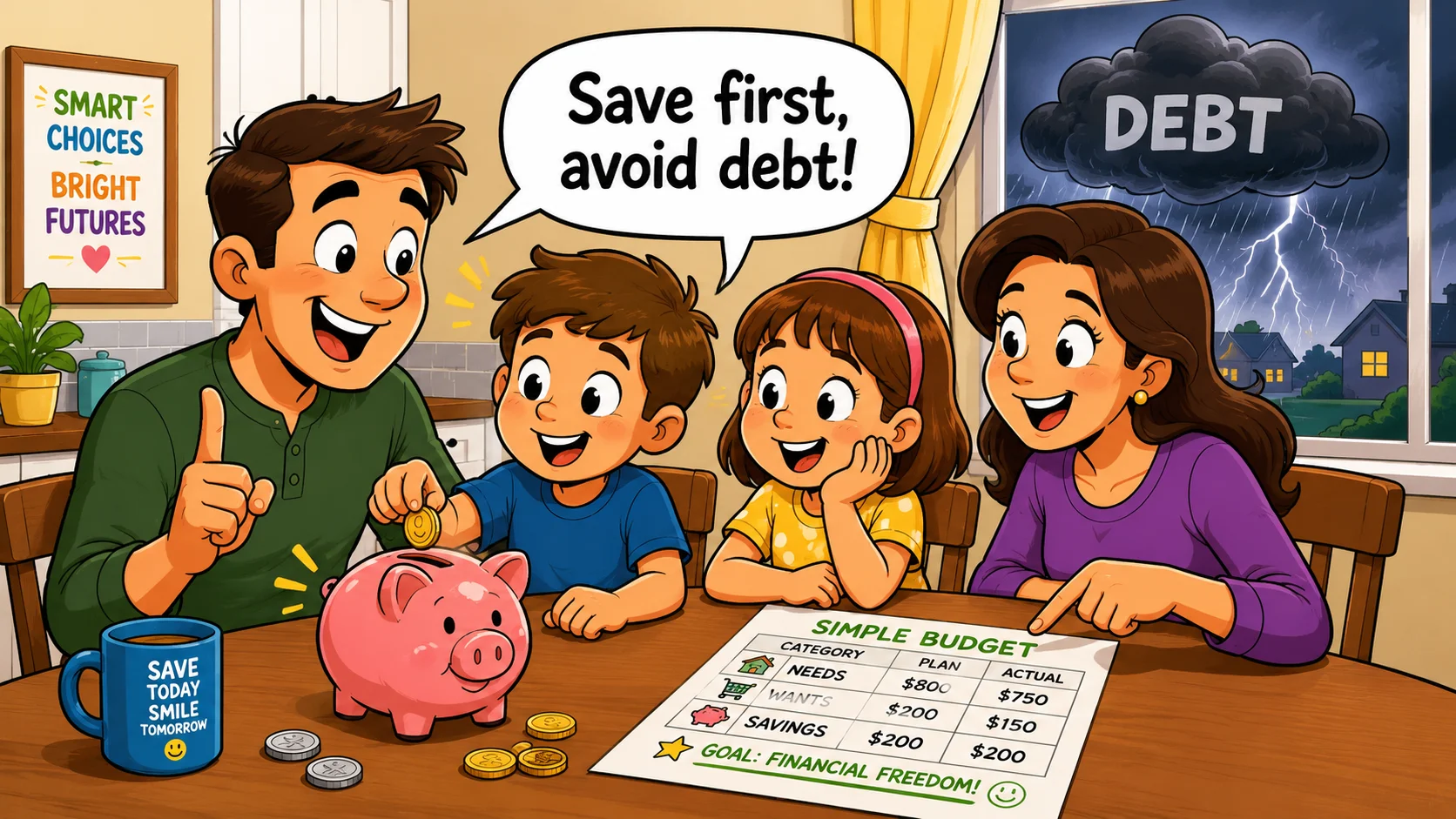
Unmanaged consumer debt can stall a family’s financial progress and create lasting household stress. Teaching children about the true costs of borrowing can help protect them from high-interest debt traps and preserve their future financial options.
How Debt Can Happen
Debt often builds quietly through small, routine choices, such as carrying a revolving balance on a retail store credit card or agreeing to deferred-payment terms for electronics. When consumers fail to pay their monthly balance in full, interest charges and late fees can quickly increase the total cost of the original purchase. Showing teens the real math behind compound interest can reveal how a small purchase may turn into a long-term debt burden.
A simple way to explain compounding debt is this: the longer unpaid debt remains, the more interest can be added to the original amount. If new interest is added repeatedly, the total balance can grow faster than many teens expect.
How to Avoid Harmful Debt
- The Cash-Only Rule for Desires: Committing to buying non-essential consumer products only when the full purchase price is available in cash or debit accounts.
- Building Independent Emergency Savings: Maintaining a personal emergency fund to cover unexpected costs without resorting to high-interest credit lines.
- Thorough Terms Evaluation: Researching interest rates, annual fees, and penalty structures before signing any financial contract or loan agreement.
- Distinguishing Good Debt from Bad Debt: Learning that borrowing may sometimes make sense for investments that can increase income or net worth, such as education or real estate, but should generally be avoided for depreciating consumer items.
Family Conversations About Debt
Parents should discuss debt with their children using clear, objective language rather than fear-based warnings. Sharing practical examples, such as how the family manages a mortgage or balances monthly accounts, helps demystify borrowing. These open, honest conversations show children that debt is a serious financial tool that requires careful management, rather than a taboo subject to be feared.
Investing, Planning, and Long-Term Wealth
Introducing children to investing expands their horizon from short-term saving to long-term wealth building. Understanding how money can grow over time helps young people plan for future financial independence.
Investing for the Future
Investing can be explained to children as putting money to work in assets that may gain value over time, rather than simply letting cash sit idle. Parents can introduce this concept by discussing how companies grow or how inflation reduces the purchasing power of uninvested cash. Highlighting the balance between risk, reward, and patience helps kids see investing as a consistent, long-term journey.
Financial Planning for Kids
Financial planning means deciding what money should do before it is spent. When kids create a simple roadmap for their funds, they align their daily choices with their longer-term goals. This early habit transitions naturally into mature adult financial planning, such as budgeting for higher education, home purchases, or retirement.
From Financial Literacy to Family Wealth
- The Power of Compound Growth: Starting to invest early can allow compound returns to turn modest savings into significant wealth over decades.
- Encouraging Entrepreneurial Thinking: Supporting child-led business ventures teaches real-world lessons about costs, value creation, and reinvesting profits.
- Prioritizing Education: Viewing specialized training and higher education as investments that can increase lifetime earning potential.
- Creating Generational Habits: Passing down consistent financial skills can help future generations preserve, grow, and pass on family assets.
Inclusive Financial Literacy for Every Child
Access to comprehensive financial education varies significantly across different communities, making inclusive instruction essential for closing the wealth gap. Providing every child with practical money skills builds a foundation for equal opportunity and long-term economic mobility.
Why Access Matters
Many children grow up in communities with limited access to mainstream banks, financial advisors, or structured school-based financial education. This disparity can leave young people reliant on costly alternative financial services, such as check-cashing storefronts or payday lenders. Expanding access to quality financial education can help students navigate the modern economy more safely and confidently.
Money Lessons for Different Backgrounds
Financial education should respect each family’s unique economic realities, cultural values, and lived experiences. Using rigid, idealized scenarios can alienate students whose families face systemic economic barriers or tight budgets. Instructors should use flexible examples that focus on universal strategies — such as maximizing community resources or avoiding predatory lending — making the lessons practical and useful for everyone.
Building Equal Opportunity Through Money Skills
- Connecting to Safe Banking Tools: Helping students open low-fee, insured accounts at credit unions or traditional banks to avoid expensive check-cashing fees.
- Navigating Financial Aid Options: Teaching teens how to complete student aid applications, compare grants and scholarships, and manage student loans responsibly.
- Demystifying Investment Options: Breaking down stock market basics and retirement accounts to show families how to build wealth outside of traditional real estate.
- Fostering Community Advocacy: Encouraging students to share their money knowledge, helping build economic resilience within their families and neighborhoods.
Strategies to Improve Financial Literacy Skills
Improving a child’s financial literacy requires a mix of structured lessons, hands-on activities, and community support. Combining these strategies can help money management become a natural, lifelong habit.
How to Teach Financial Literacy Basics
Teaching financial basics works best when lessons are short, visual, and directly tied to a child’s everyday experiences. Instead of using abstract economic theories, educators should focus on immediate examples, like planning a party budget or saving for a favorite game. Repeating these core concepts in different situations helps children understand and retain the information.
Using physical tools, such as clear savings jars or colorful progress charts, keeps younger learners engaged and motivated. As children grow into their teen years, these physical lessons can easily transition into digital spreadsheets and real banking applications, matching their changing needs and abilities.
Top Financial Literacy Activities
- The Supermarket Budget Challenge: Giving children a fixed cash amount and a shopping list, then asking them to find items and calculate totals without overspending.
- Family Money Meetings: Involving older children in open discussions about monthly utility costs or vacation budgeting to show how real households manage expenses.
- The Stock Market Simulation: Using simulated investing games to track real companies over time, helping teens learn about market trends and risk without putting real money at stake.
- Designing a Micro-Business: Creating a complete business plan for a simple venture, like a neighborhood car wash, to understand pricing, expenses, and net profit.
School and Community Programs
Local schools, public libraries, and credit unions can play a key role in making financial education available to all young people. Many community programs offer interactive workshops, free educational tools, and mentor-led projects that reinforce what kids learn at home. Supporting these local initiatives can help give every child, regardless of background, a path to building financial capability and long-term security.
FAQ About Financial Literacy for Kids
Why Is Financial Literacy Important for Kids and Students?
The importance of financial literacy starts with everyday choices. Children who understand how money works can develop good financial habits, compare needs and wants, avoid common pitfalls, and make informed financial decisions as they grow. These early lessons help kids build a secure financial future without making the topic feel intimidating.
What Financial Concepts Should Kids Learn First?
The basics of financial literacy should begin with earning, saving, spending, sharing, and planning. Kids also need simple explanations of debt, credit, interest, and risk, but those ideas should be introduced gradually. The importance of saving money is usually one of the easiest first lessons because children can see progress toward a goal and understand why waiting can be worthwhile.
How Can Parents Teach Kids About Money at Home?
Teaching your kids about money works best when lessons are practical and connected to real life. Parents can use grocery shopping, allowance planning, family budgets, or a savings jar to help kids understand trade-offs. Teaching kids about money early also gives them a safe place to practice choices before the stakes become higher.
Can Financial Literacy Help Kids Avoid Financial Mistakes?
Financial literacy doesn’t mean children will never make mistakes, but it gives them tools to pause, compare options, and ask better questions. When kids understand advertising, impulse spending, interest, and debt, they are more prepared to make wise financial decisions. It’s important to take these lessons step by step so children build confidence instead of feeling overwhelmed.

Take a short quiz to find out what your everyday choices say about your parenting style
When your child is curious about something new, what’s your instinct?
Take a short quiz to find out what your everyday choices say about your parenting style
“Can I download this app?” What happens next?
Take a short quiz to find out what your everyday choices say about your parenting style
When it comes to rules at home, which sounds most like you?
Take a short quiz to find out what your everyday choices say about your parenting style
If you could give your child one life skill today, what would you pick?
Take a short quiz to find out what your everyday choices say about your parenting style
Your child gets to choose what to watch. What would your ideal setup look like?
Take a short quiz to find out what your everyday choices say about your parenting style
Pick your parenting superpower ✨