Best Games for 4-Year-Olds: Board, Digital and Active Picks

 Discover a Free Education Video App for Kids
Pastory uses AI to personalize educational video content based on your child’s interests and personality. Safe, engaging, and built for curious young minds. Sign up now to stay updated and enjoy early access with a free trial
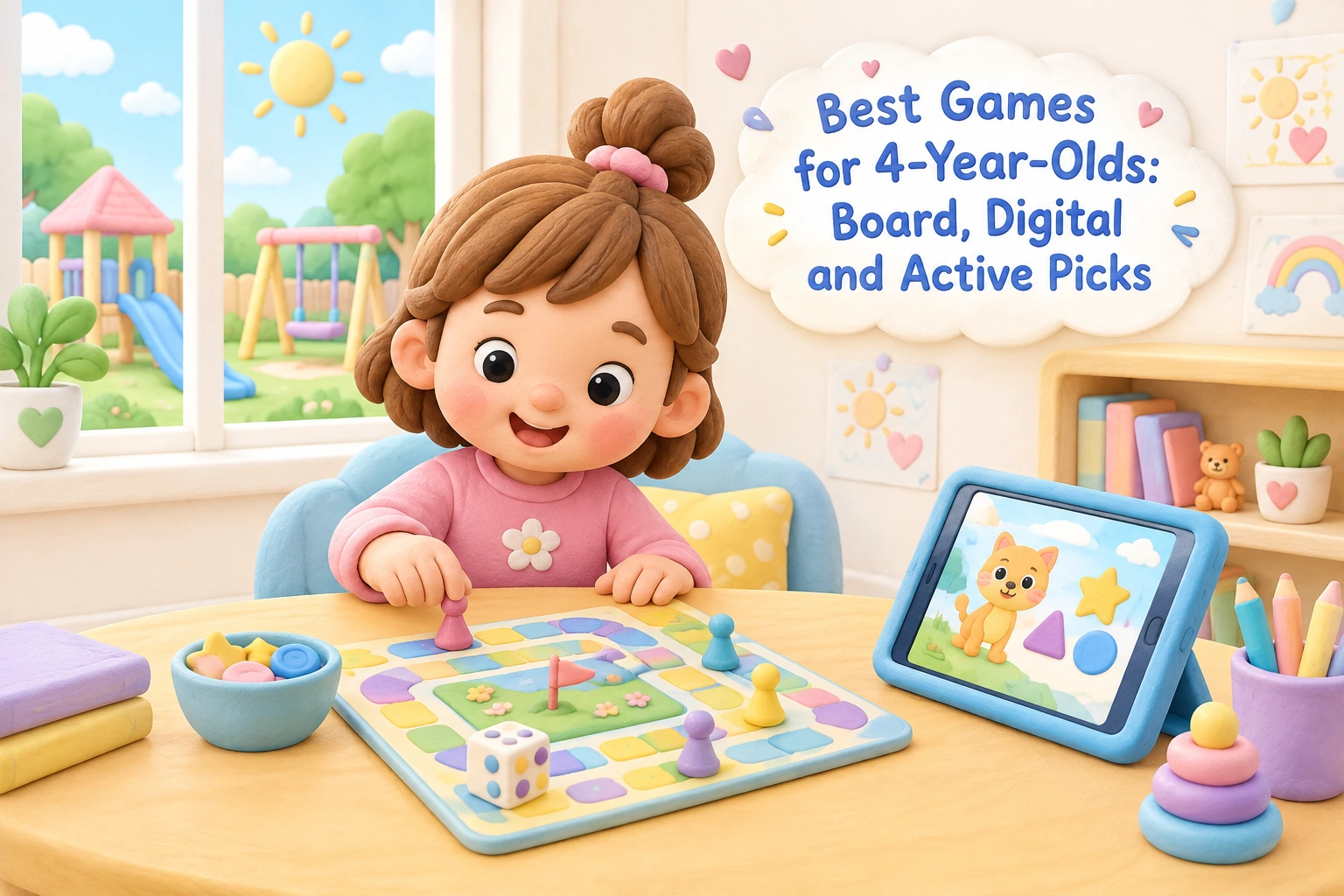
Finding the right games for 4-year-olds means balancing fun with developmental fit. At this age, children are building color recognition and counting skills, learning to take turns, managing frustration when things don’t go their way, and beginning to understand simple rules. The best games for preschoolers meet children where they are developmentally — short enough for a limited attention span, engaging enough to hold interest, and rich enough to support real skill growth. This guide covers board games, digital options, and active outdoor play, with developmental context to help you choose confidently.
Key Takeaways
- Four-year-olds typically have an attention span of around 15 minutes, so games with short play times and simple rules tend to work best.
- Cooperative board games can be especially valuable at this age, helping children practice turn-taking and frustration tolerance without the pressure of winning or losing.
- Digital games can support early math and literacy when they are ad-free, kid-safe, and used alongside caregiver involvement — not as a replacement for screen-free play.
- Active outdoor play builds gross motor skills, coordination, and social-emotional development in ways that board and digital games cannot replicate.
- A balanced weekly routine that includes all three game types — board, digital, and active — offers the broadest developmental support for preschool-age children.
What Makes a Game Developmentally Right for a 4-Year-Old?
A game is age-appropriate for a 4-year-old when it aligns with the developmental milestones typical of this stage. Most preschoolers at this age can follow two- to three-step instructions, recognize basic colors and shapes, count small quantities, and engage in simple pretend play. They are beginning to understand fairness and are developing the emotional regulation needed to handle disappointment — though this is still very much a work in progress.
Games that work well for this age group tend to share a few characteristics: play sessions that last roughly 10 to 20 minutes, rules that can be explained in under a minute, and mechanics that rely on luck or simple matching rather than complex strategy. This keeps the experience accessible and prevents the frustration that comes when a game is pitched too far above a child’s current abilities. Games that involve color recognition and counting, visual matching, or simple memory tasks are particularly well suited to where most 4-year-olds are cognitively.
It is also worth noting that games at this age serve an important social function. Whether a child is playing with a parent, a sibling, or peers at a playdate, games provide structured practice in turn-taking, sharing, and reading social cues. These are foundational skills for kindergarten readiness, and games offer a low-stakes environment to practice them repeatedly.
Best Board Games for 4-Year-Olds
Board games for preschoolers have improved considerably in recent years. Beyond the classic options, there is now a wide range of thoughtfully designed games that build specific developmental skills while remaining genuinely enjoyable for young children. The following picks represent a range of game types — cooperative, competitive, memory, and dexterity — so you can choose based on your child’s temperament and your family’s preferences.
Cooperative Board Games
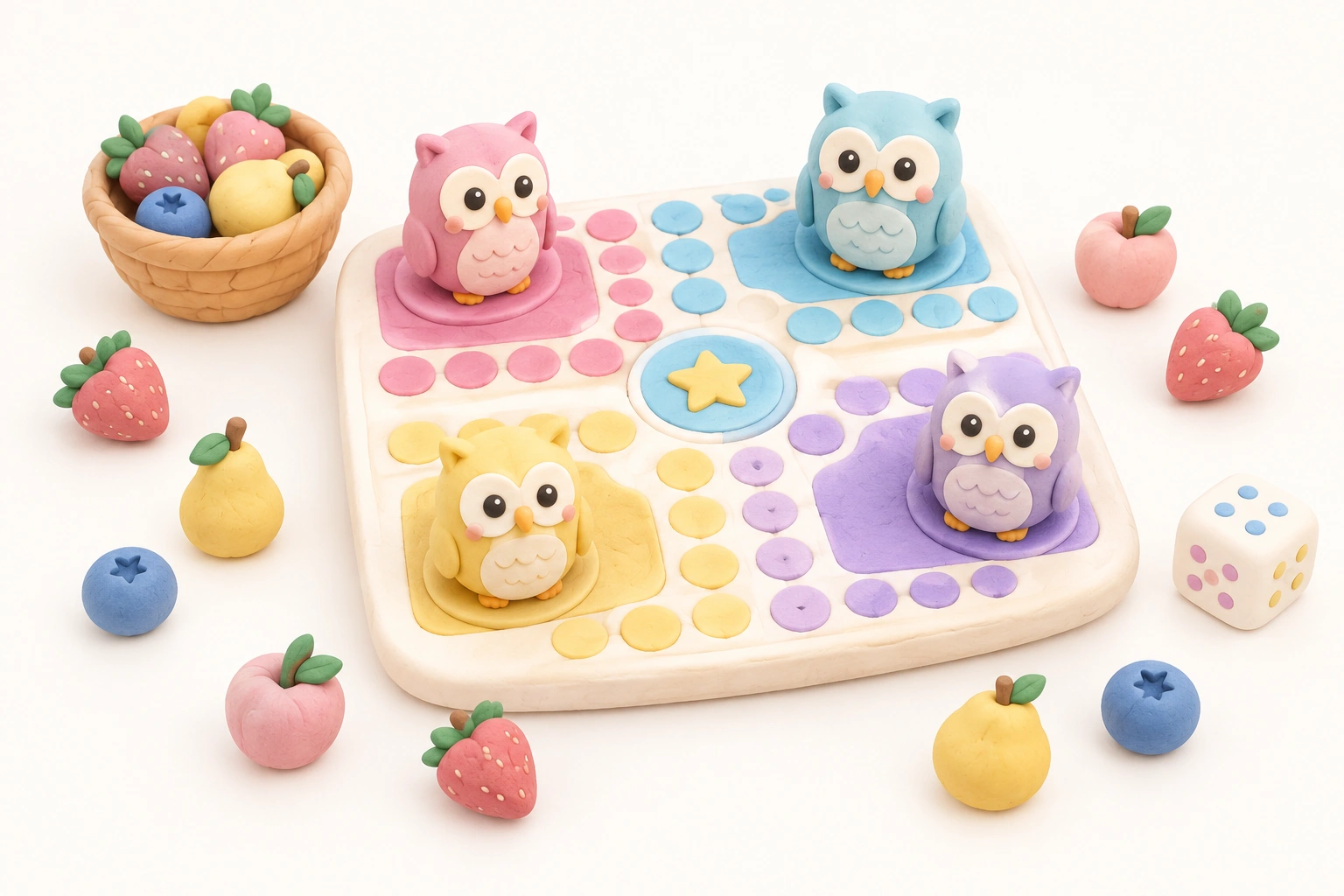
Cooperative games are among the most developmentally valuable options for 4-year-olds. In a cooperative board game, all players work together toward a shared goal rather than competing against each other. This removes the sting of losing, which can be overwhelming for preschoolers who are still developing frustration tolerance, while still teaching turn-taking, planning, and teamwork. Brands like Peaceable Kingdom have built their reputation on cooperative games designed specifically for young children.
Hoot Owl Hoot! is a widely recommended cooperative game for ages 4 and up. Players work together to fly owls back to their nest before sunrise, using color-coded cards. The mechanics are simple enough for a 4-year-old to grasp quickly, and the cooperative structure means adults and children are genuinely playing together rather than an adult holding back to let a child win. Count Your Chickens! is another Peaceable Kingdom title that adds basic counting to the mix, making it a useful early math game as well.
First Orchard by HABA is one of the most recommended games for children as young as 2 and remains engaging at 4. Players cooperate to harvest fruit before a raven reaches the orchard. HABA’s My Very First Games line is frequently cited as a gold standard for this age group because the components are sturdy, the rules are minimal, and the themes are child-friendly. Snug as a Bug in a Rug! and Race to the Treasure! are similarly structured cooperative options worth exploring.
Competitive Games with Simple Mechanics
Not every 4-year-old is ready for cooperative play, and some children thrive with the mild excitement of a competitive race game. The key is choosing competitive games where outcomes are driven largely by luck rather than skill, so no child feels outmatched. Classic titles like Candy Land and Chutes and Ladders have remained popular for decades precisely because they require no reading, no complex decisions, and no prior knowledge — just color recognition and the ability to follow a simple path.
Zingo! by ThinkFun is a bingo-style game that builds word and image recognition. It plays quickly, accommodates two to six players, and is easy to set up and pack away — useful for families who want a game that works at the kitchen table or on a trip. Spot It! Jr. (also sold as Dobble Jr.) uses visual matching and is fast-paced enough to hold a preschooler’s attention without overstaying its welcome. The standard play time for most of these games falls comfortably within the 10 to 20-minute range that suits a 4-year-old’s attention span.
Memory and Dexterity Games
Memory games — where players flip cards and try to find matching pairs — are a natural fit for 4-year-olds because they build concentration and visual memory without requiring literacy. Standard memory card sets with animal or object images are widely available, and many themed versions exist to match a child’s interests. Dragomino is a tile-laying game with a memory element that introduces slightly more complexity while remaining accessible to preschoolers.
Dexterity games add a physical challenge that many 4-year-olds find exciting. Don’t Break the Ice involves carefully tapping out ice blocks without toppling a figure — a game that builds fine motor skills and patience alongside the social experience of playing with others. Sneaky Snacky Squirrel uses a squirrel-shaped card to pick up acorns and sort them by color, combining fine motor practice with color recognition in a format that feels more like play than a structured task.
A Note on Small Pieces and Safety
Most 4-year-olds are past the stage of putting game pieces in their mouths, but it is still worth checking the choking hazard warnings on any board game before purchasing, particularly if younger siblings are present in the home. Games designed specifically for ages 3 and up tend to use larger components, while games rated 5 and up may include smaller tokens or cards that require closer supervision around younger children.
Digital Games for 4-Year-Olds: What to Look For
Digital games and educational apps can offer genuine developmental value for preschool-age children when chosen carefully. The American Academy of Pediatrics and similar organizations generally recommend that screen time for children aged 2 to 5 be limited, high-quality, and ideally co-viewed with a caregiver. For 4-year-olds, this means prioritizing apps that are ad-free and kid-safe, focused on specific learning goals such as early literacy or early math, and designed to encourage interaction rather than passive consumption.
The distinction between passive and interactive digital content matters significantly at this age. A child watching videos on an open platform is having a very different experience from a child working through a phonics activity in a structured educational app. The latter requires active engagement, decision-making, and often mimics the kind of problem-solving that supports executive function development. The former carries a higher risk of extended, unfocused screen time with limited developmental return.
Recommended Educational Apps and Platforms
Khan Academy Kids is a free, ad-free app covering early literacy, early math, social-emotional learning, and creative activities. It is widely recommended by educators and parents because the content is curriculum-aligned, the interface is child-friendly, and there are no in-app purchases or advertisements. The app adapts to a child’s progress, offering a degree of personalization that can help maintain engagement without overwhelming a child who is still developing foundational skills.
PBS KIDS Games offers a collection of free, ad-free games tied to familiar characters from public television programming. The games cover a range of developmental areas including letter recognition, counting, and problem-solving. Because the content is produced by a public broadcaster with an educational mandate, parents can generally trust the quality and appropriateness of the material without needing to evaluate each game individually.
Endless Alphabet focuses on vocabulary and phonics through animated, interactive word puzzles. Each word is introduced with a short animated scene that illustrates its meaning, and children drag letter characters into place to spell the word. The app is engaging without being overstimulating, and the vocabulary it introduces goes beyond basic sight words, which can be beneficial for children who are ready for more language challenge. Sago Mini World and Toca Life World offer open-ended creative play in a digital format, which can support imaginative thinking and narrative development, though they are less focused on specific academic skills.
HOMER and Starfall are literacy-focused platforms that use phonics-based approaches to early reading. Both are frequently cited by parents and educators as effective screen-free alternatives to passive video content for building early literacy skills. HOMER operates on a subscription model, while Starfall offers a significant amount of free content alongside a paid tier.
Free vs. Subscription Digital Games: A Quick Comparison
| App / Platform | Cost Model | Ad-Free | Primary Focus | Caregiver Involvement Needed |
|---|---|---|---|---|
| Khan Academy Kids | Free | Yes | Literacy, math, SEL | Low to moderate |
| PBS KIDS Games | Free | Yes | Mixed (literacy, math, logic) | Low |
| Endless Alphabet | Free / one-time purchase | Yes | Vocabulary, phonics | Low |
| HOMER | Subscription | Yes | Early literacy | Low to moderate |
| Starfall | Free / subscription | Yes (paid tier) | Phonics, early reading | Low |
| Sago Mini World | Subscription | Yes | Creative, imaginative play | Low |
Screen Time Balance for 4-Year-Olds
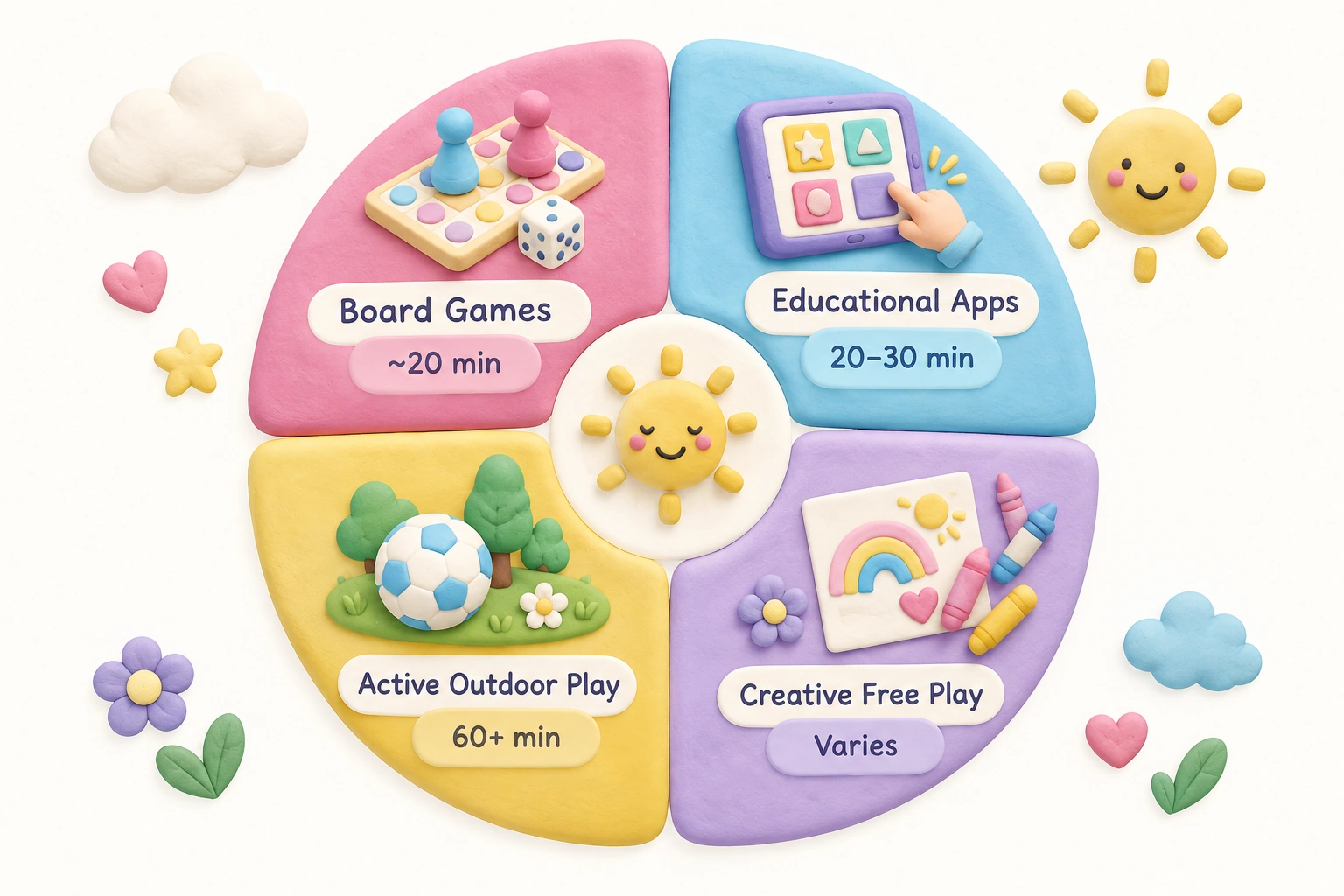
Screen time balance is one of the most practical considerations for parents choosing digital games. Even high-quality educational apps are most effective when they complement rather than replace other forms of play. A useful approach is to treat digital game time as one part of a varied daily routine — perhaps 20 to 30 minutes of structured app use alongside board game sessions, outdoor play, and unstructured creative time. Co-playing with your child during digital game sessions, asking questions about what they are doing, and connecting in-app learning to real-world experiences can significantly increase the developmental value of screen time.
Active Games for 4-Year-Olds: Building Gross Motor Skills and More
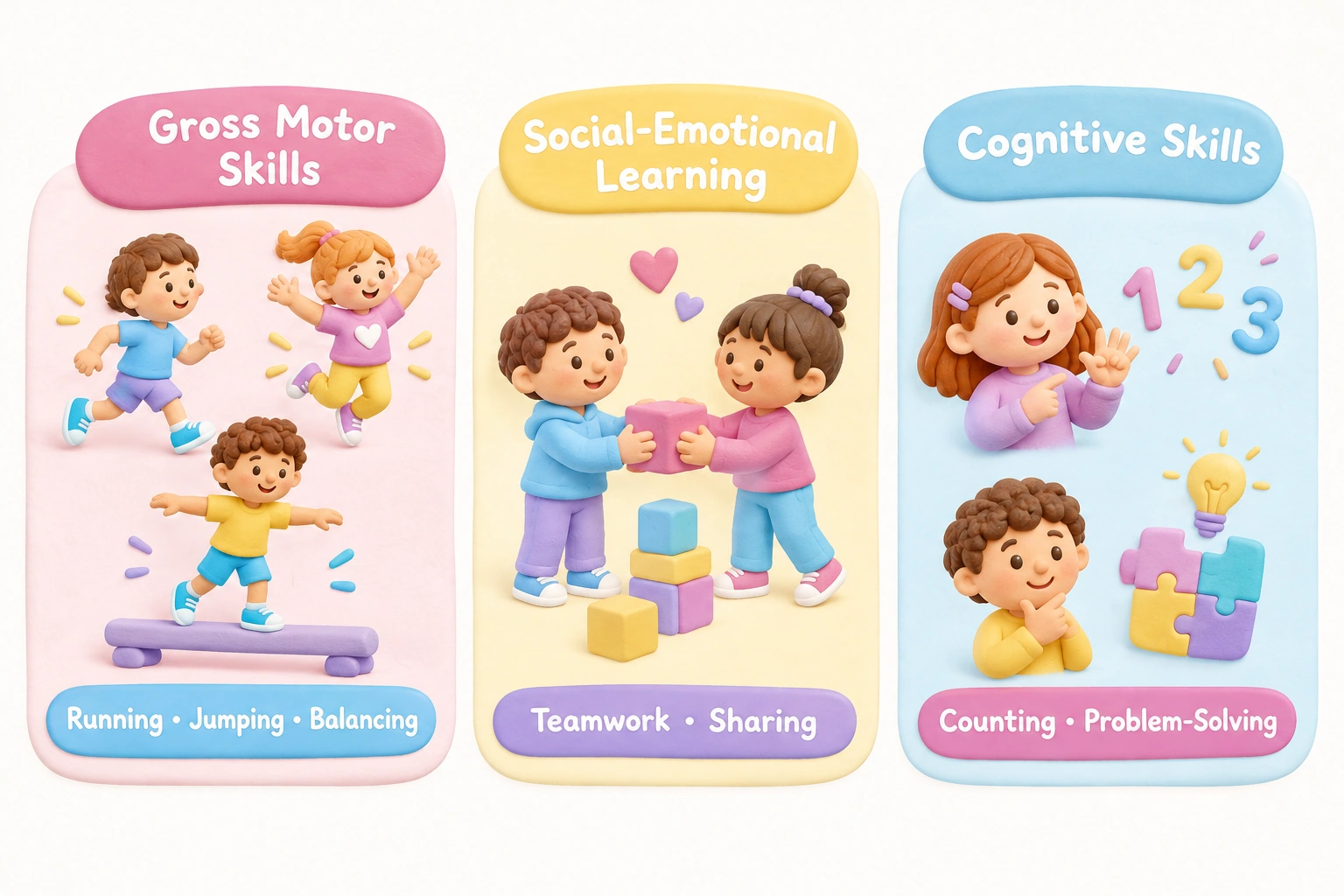
Active outdoor play is not simply a break from learning — it is one of the most important developmental activities for preschool-age children. Physical play builds gross motor skills including running, jumping, climbing, and balancing, and it also supports cognitive development, social-emotional learning, and language acquisition in ways that are difficult to replicate indoors. For 4-year-olds, active play is a primary mode of learning about the world.
Classic Outdoor Games
Many of the most effective active games for 4-year-olds require no equipment at all. Simon Says builds listening skills, body awareness, and impulse control — a child must hear an instruction, process whether it was prefaced with “Simon says,” and then decide whether to act. This kind of inhibitory control is a core component of executive function and is directly relevant to kindergarten readiness. Follow the Leader and Musical Chairs similarly combine physical movement with social awareness and rule-following.
Hide and Seek remains a perennial favourite because it engages spatial reasoning, patience, and perspective-taking — a 4-year-old hiding must consider where another person might look, which is a meaningful cognitive challenge. Hopscotch builds balance, counting, and number recognition simultaneously, making it one of the most naturally educational outdoor games available. Drawing a hopscotch grid with chalk and playing together takes minutes to set up and can hold a preschooler’s interest through multiple rounds.
Obstacle Courses and Scavenger Hunts
Outdoor scavenger hunts are particularly well suited to 4-year-olds because they combine active movement with cognitive tasks like counting, comparing, and categorizing. A simple nature scavenger hunt — finding five leaves, two rocks, and one flower — engages early math concepts while encouraging exploration and physical activity. The social-emotional benefits include teamwork when played with others, and the sense of accomplishment when the list is complete supports self-confidence and persistence.
Obstacle courses built from household items — cushions to jump over, a line of tape to balance on, a tunnel made from chairs and a blanket — build strength, coordination, and gross motor skills in a format that feels like pure play. These activities can be adapted for indoor use on rainy days, making them a versatile option for families who want to maintain active play regardless of weather. Relay races and sack races serve a similar purpose when multiple children are present, adding a cooperative or mildly competitive element that makes the activity more socially engaging.
Indoor Active Games for Rainy Days
Indoor active play is an underserved category that bridges the gap between board games and outdoor activities. Balloon Volleyball — keeping a balloon off the floor — requires coordination and sustained attention without the risk of broken objects. Freeze Dance combines music, movement, and impulse control in a format that works for one child or a group. A simple indoor ring toss using plastic rings and a bottle can build hand-eye coordination and fine motor skills while keeping energy levels up on days when outdoor play is not possible.
Handling Losing and Building Frustration Tolerance Through Games
One of the most valuable — and least discussed — developmental benefits of games for 4-year-olds is the opportunity to practice handling disappointment. Losing a game, missing a turn, or drawing an unlucky card are low-stakes experiences that give children safe, repeated practice with frustration tolerance. Over time, this practice can help children develop the emotional regulation skills they will need in school and social settings.
Parents can support this process by naming emotions without dismissing them: acknowledging that it feels disappointing to lose while also modeling a calm response. Cooperative board games are particularly useful here because they shift the emotional focus from individual winning and losing to shared effort and shared outcomes. When a cooperative game is lost, the whole group loses together, which distributes the emotional weight and opens a natural conversation about trying again. Choosing games that include an element of luck also helps, because luck-based outcomes are easier for young children to accept than outcomes that feel like a reflection of their ability.
Games for Different Situations: A Quick Reference
- Best for rainy days: Cooperative board games (Hoot Owl Hoot!, First Orchard), memory card games, indoor obstacle courses, Freeze Dance
- Best for playdates and groups: Zingo!, Spot It! Jr., Simon Says, Musical Chairs, scavenger hunts
- Best for travel: Spot It! Jr. (compact card format), memory card sets, Endless Alphabet app, PBS KIDS Games app
- Best for mixed-age siblings: Candy Land, Hoot Owl Hoot!, Hopscotch, Hide and Seek
- Best screen-free alternative to digital games: Zingo!, Sneaky Snacky Squirrel, Don’t Break the Ice, outdoor scavenger hunts
- Best for building early math and literacy: Count Your Chickens!, Khan Academy Kids, Hopscotch, Endless Alphabet
Parent Co-Play Tips: Getting More From Game Time
How a caregiver plays alongside a 4-year-old matters as much as which game is chosen. Research in early childhood education consistently shows that adult involvement during play — asking open-ended questions, narrating what is happening, and connecting game events to real-world concepts — significantly increases the developmental value of the activity. This does not mean taking over or directing the child’s choices; it means being a genuinely engaged co-player.
During a board game, a parent might count aloud with the child as pieces move, name the colors on cards, or ask “What do you think will happen next?” to build predictive thinking. During digital game sessions, sitting alongside a child and commenting on what appears on screen — rather than leaving the child to play independently — transforms passive screen time into a shared, language-rich experience. During active play, participating in the obstacle course or scavenger hunt rather than simply supervising models enthusiasm for physical activity and strengthens the parent-child relationship through shared enjoyment.
Frequently Asked Questions
How long should a game session be for a 4-year-old?
Most 4-year-olds have an attention span of roughly 10 to 20 minutes for structured activities. Games that fit within this window — or that can be naturally paused and resumed — tend to work best. If a child loses interest before a game is finished, it is usually more productive to stop and try again another time than to push through, which can create negative associations with the activity.
Are cooperative games better than competitive games for preschoolers?
Cooperative board games are often recommended for 4-year-olds because they remove the emotional difficulty of losing and emphasize shared effort. However, competitive games with luck-based mechanics can also be valuable, particularly for building frustration tolerance and understanding that outcomes are not always within our control. A mix of both types tends to offer the broadest developmental benefit.
How much screen time is appropriate for a 4-year-old?
Major pediatric health organizations generally recommend limiting recreational screen time for children aged 2 to 5 and prioritizing high-quality, interactive content over passive viewing. For digital games specifically, short sessions of 20 to 30 minutes with caregiver involvement are widely considered more beneficial than extended independent use. The quality and interactivity of the content matters as much as the duration.
What if my 4-year-old refuses to follow game rules?
Rule-following is a developing skill at age 4, and some resistance is entirely normal. Starting with games that have very few rules — two or three steps at most — and playing in a relaxed, low-pressure way tends to be more effective than insisting on strict adherence. Cooperative games can help here because the shared goal gives children a reason to follow rules that feels meaningful rather than arbitrary.
Can active games count as educational for a 4-year-old?
Active outdoor play supports a wide range of developmental domains including gross motor skills, language development, social-emotional learning, and early cognitive skills like counting and categorizing. Outdoor scavenger hunts, hopscotch, and obstacle courses all incorporate educational elements naturally. Active play should not be seen as separate from learning — for preschool-age children, it is one of the most important forms of learning available.
Are free educational apps as good as paid ones for 4-year-olds?
Several free apps — including Khan Academy Kids and PBS KIDS Games — are widely regarded as high quality and are ad-free. The cost model alone does not determine educational value. What matters more is whether the app is interactive rather than passive, free from advertising, aligned with developmental goals, and used with some degree of caregiver involvement. A free app that meets these criteria can be just as valuable as a subscription service.
Choosing the Right Mix of Games for Your 4-Year-Old
No single game type covers every developmental need a 4-year-old has. Board games build turn-taking, memory, and early math and literacy in a screen-free, social format. Digital games — when chosen carefully for their ad-free, kid-safe, and interactive qualities — can reinforce phonics, number sense, and problem-solving in an engaging format that adapts to a child’s pace. Active outdoor play develops gross motor skills, coordination, and social-emotional competencies that neither board games nor digital games can fully replicate.
The most developmentally supportive approach is a varied routine that draws on all three categories across the week, adjusted for the child’s energy, the weather, and the social context. A rainy afternoon might call for a cooperative board game followed by indoor Freeze Dance. A sunny morning might be better spent on a backyard obstacle course or a neighborhood scavenger hunt. An evening wind-down might include 20 minutes of a quality educational app with a parent nearby. The specific games matter less than the consistency of engagement, the quality of caregiver involvement, and the balance across different types of play. If you are unsure where to start, a cooperative board game like Hoot Owl Hoot! or First Orchard alongside a free app like Khan Academy Kids and a simple outdoor game like Hopscotch gives you a solid, low-cost foundation across all three categories.

Take a short quiz to find out what your everyday choices say about your parenting style
When your child is curious about something new, what’s your instinct?
Take a short quiz to find out what your everyday choices say about your parenting style
“Can I download this app?” What happens next?
Take a short quiz to find out what your everyday choices say about your parenting style
When it comes to rules at home, which sounds most like you?
Take a short quiz to find out what your everyday choices say about your parenting style
If you could give your child one life skill today, what would you pick?
Take a short quiz to find out what your everyday choices say about your parenting style
Your child gets to choose what to watch. What would your ideal setup look like?
Take a short quiz to find out what your everyday choices say about your parenting style
Pick your parenting superpower ✨